Admont, Austria Travel & Photography Guide: Best Photo Spots, Things to Do & Hidden Gems
I have a weakness for beautiful libraries. It started years ago, partly because of my workshops with Scott Kelby, and partly because a great library is one of those rare spaces where architecture and intellect exist in perfect proportion. When I first saw a photograph of the Admont Abbey Library, I put it on my bucket list immediately. That image lived in my head for years until I finally made the detour on a drive from Vienna to Salzburg.
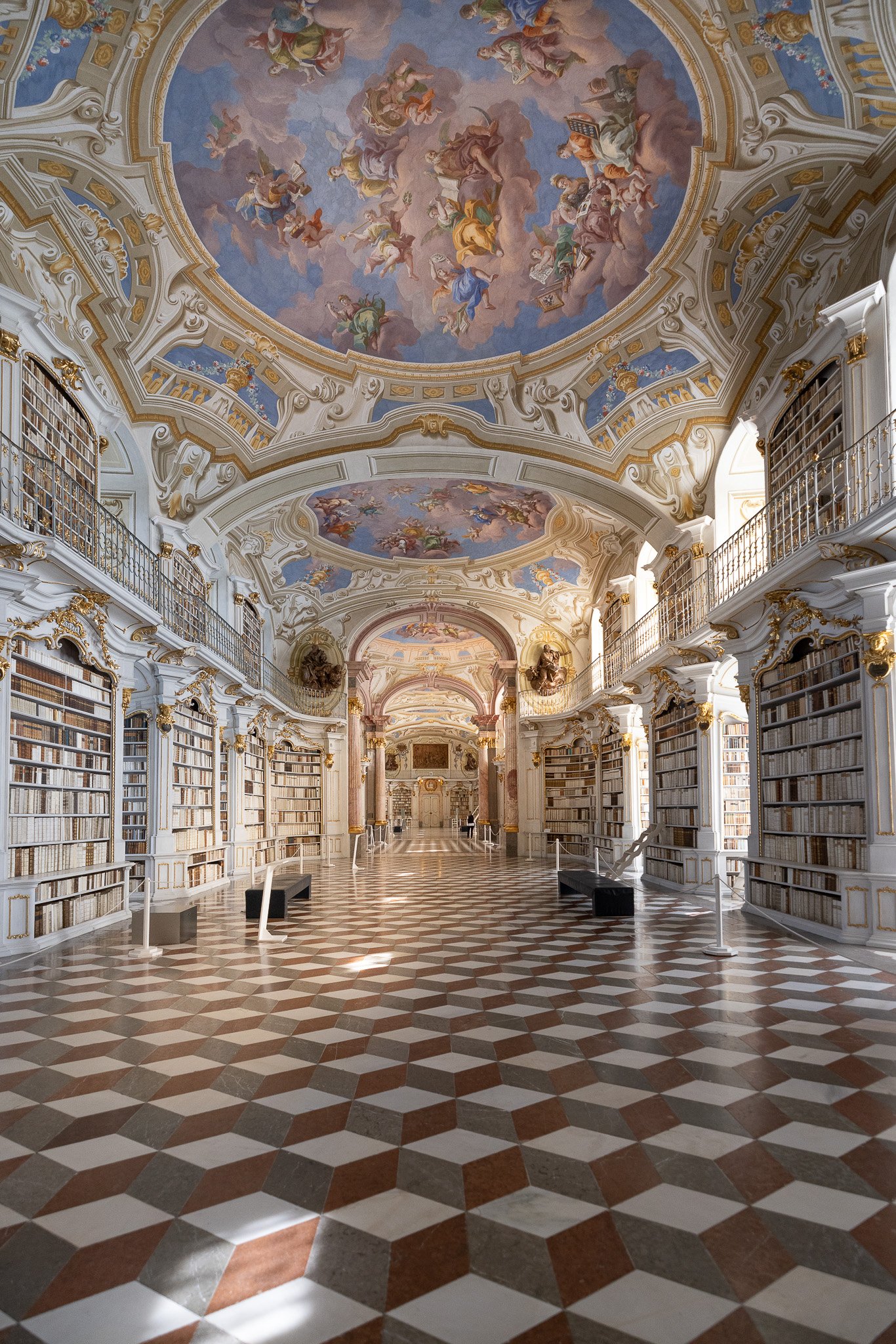
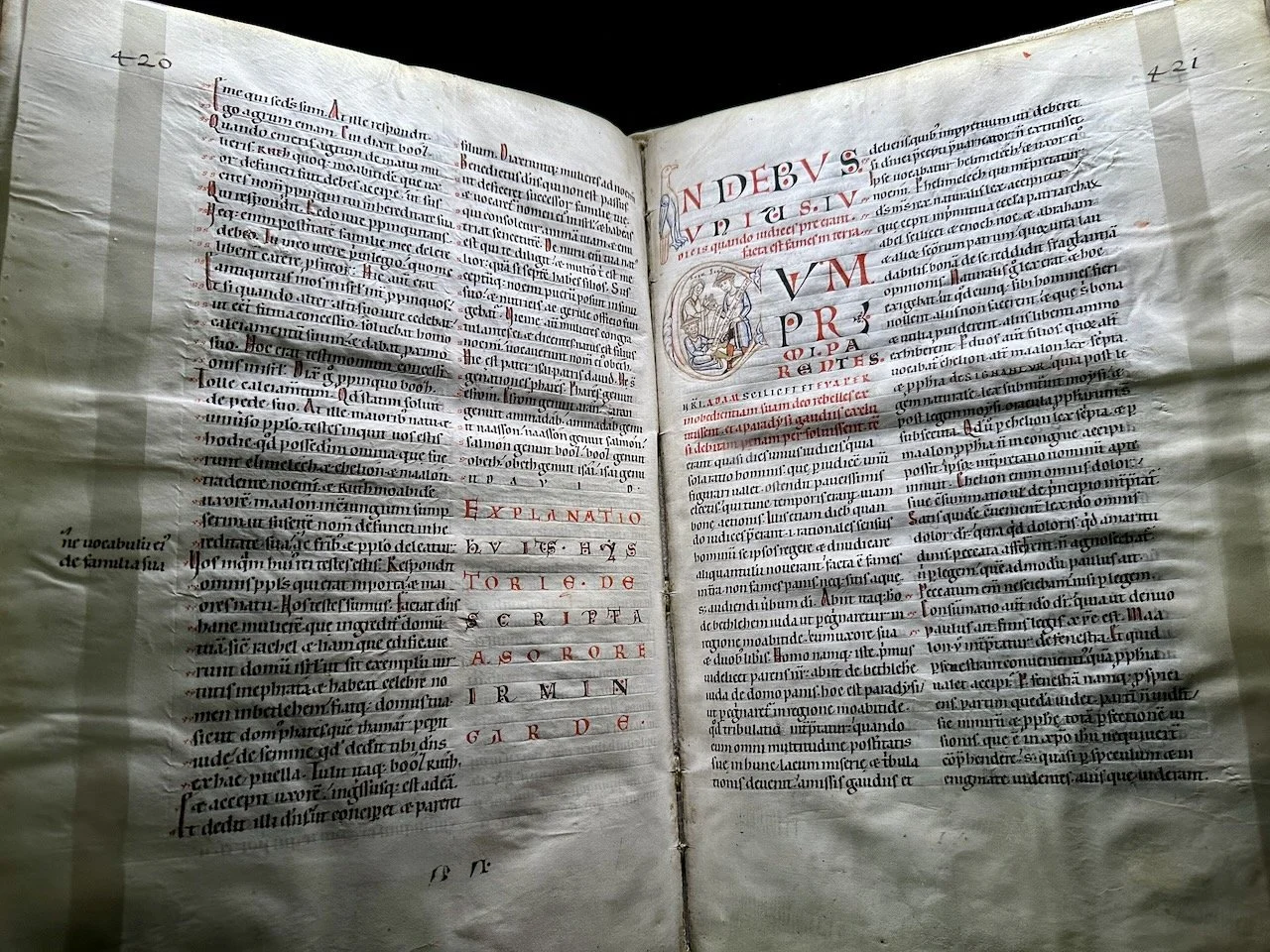
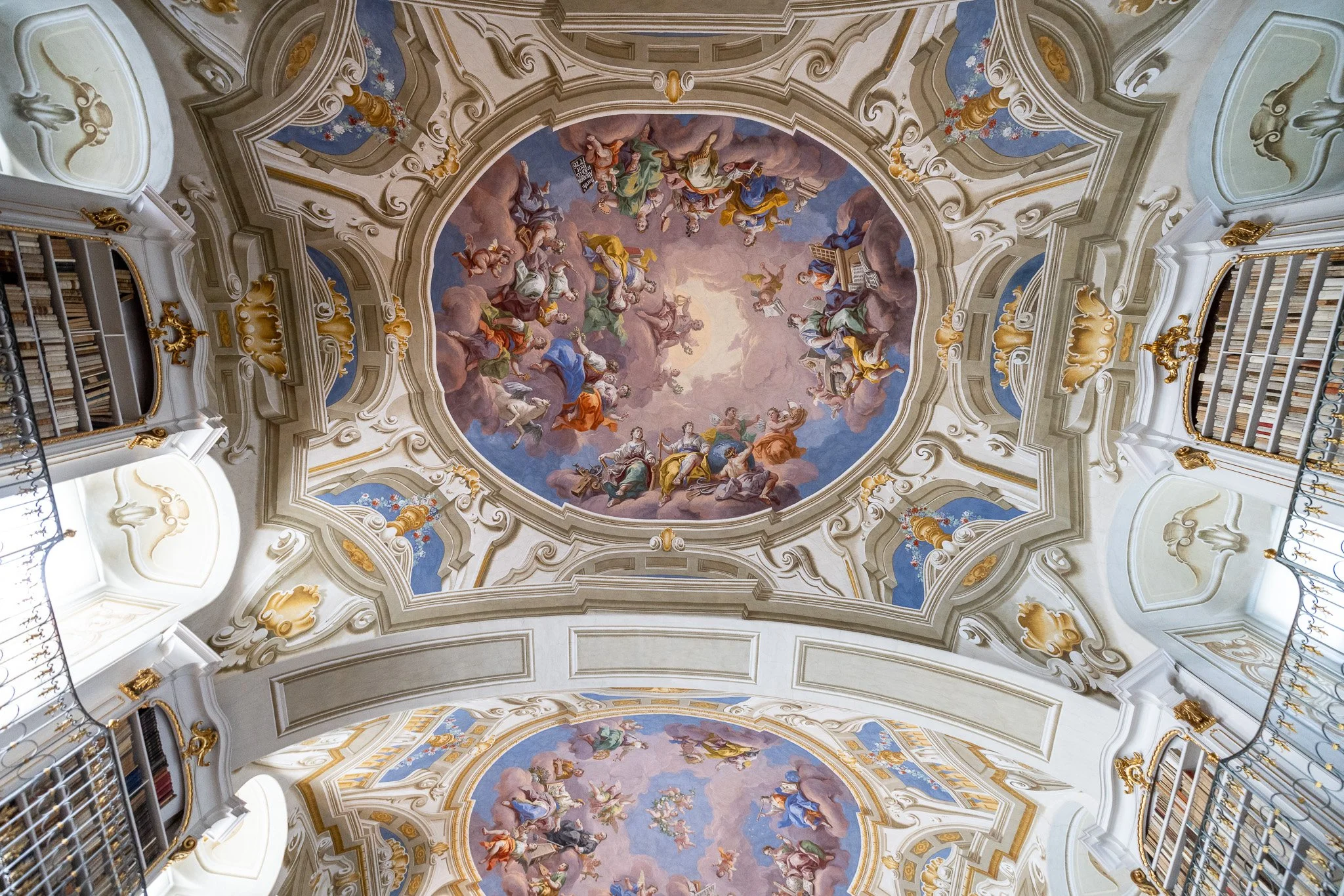
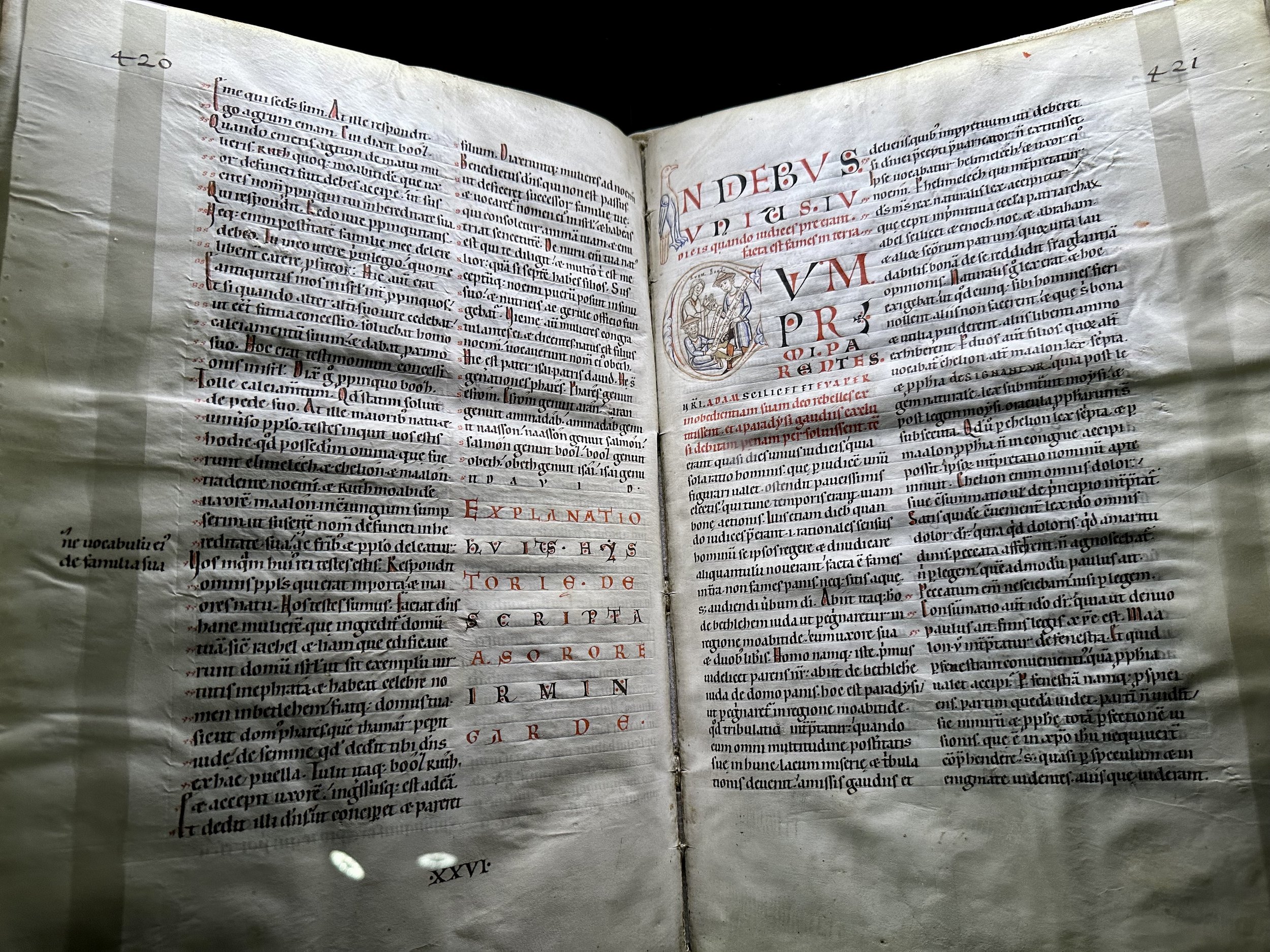
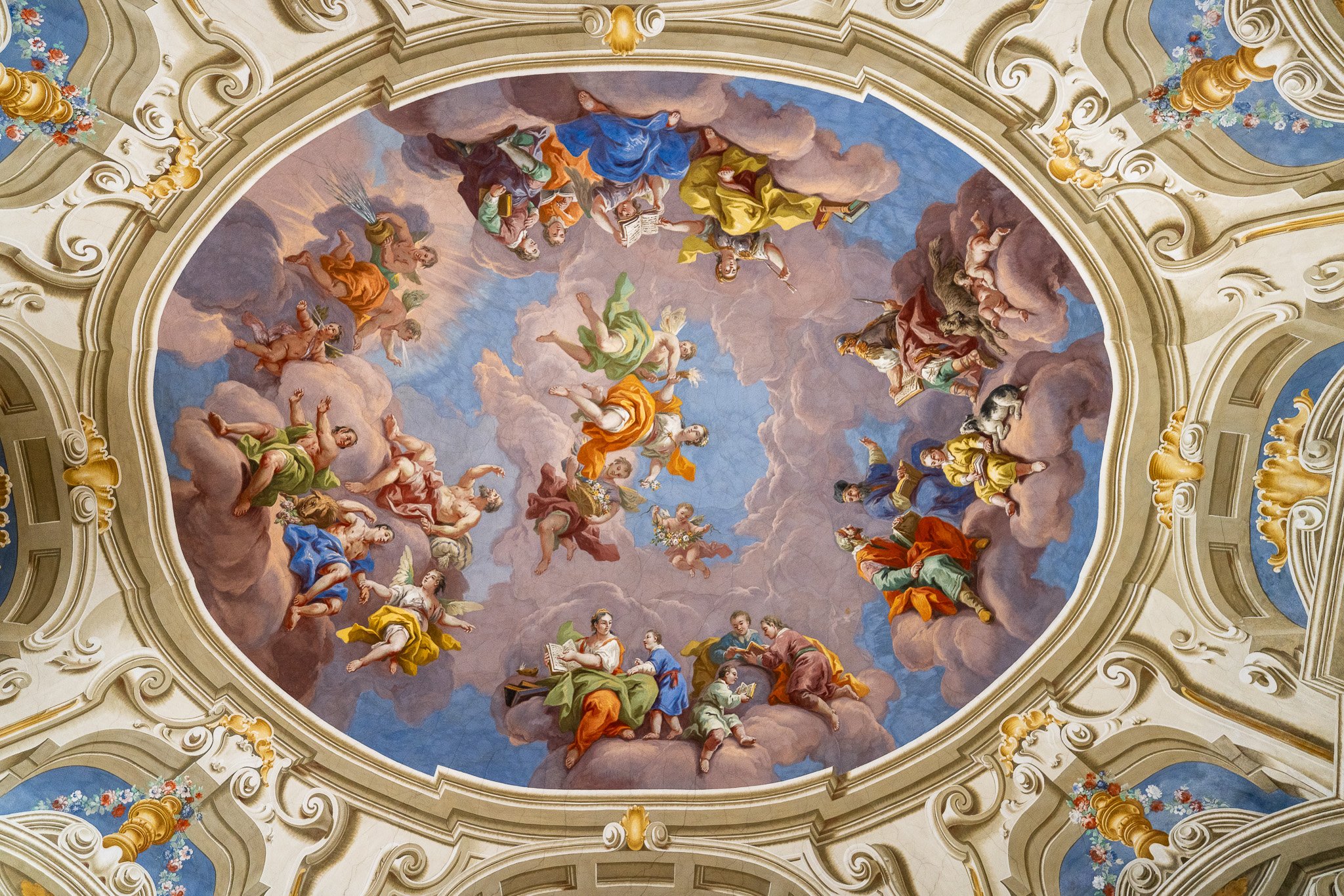
The Admont Abbey Library is the largest monastic library in the world, and it may well be the most beautiful room in Austria. The Baroque hall was completed in 1776, and it holds roughly 70,000 volumes on display from a total collection of more than 200,000. The ceiling frescoes by Bartolomeo Altomonte, painted when the artist was 80 years old, cover seven domes with scenes charting the progression of human knowledge toward divine revelation. The sculpted figures by Josef Stammel at the far end of the hall represent the Four Last Things: Death, Judgment, Heaven, and Hell. None of this is subtle, and none of it should be.
For photographers, this is a destination in its own category. You are not coming here for a city or a landscape. You are coming for one room, and that room will reward you if you bring patience and the right glass.
In this Photography Guide to Admont, I share the places and experiences that continue to draw me back. You will find my favorite photography locations, guidance on when and where to shoot, practical travel tips, and gear recommendations, along with cultural insights to help you explore and photograph Admont with confidence, respect, and ease.
Photographer's Notes
Before you go, here are my own takeaways.
Favorite Lens: 15-35mm/16-35mm
Would I Return? Yes, if I'm driving close by, it's worth the stop.
Where is the Admont Library?
The drive to the Admont Library from Vienna, Austria, is quite easy. We were driving to Salzburg from Vienna, so it was a perfect spot to stop along the way. Once you get close to Admont, the roads to the monastery are through the mountain passes, and you will gain a lot of elevation. So it’s definitely better to visit when there is no snow on the roads. The monastery has a huge parking area, a restaurant, and bathrooms.
Admont is located about an hour from Salzburg and 3 hours from Vienna.

Driving from Vienna to Admont to Salzberg
Where to Stay Near Admont
Admont is a small town. There are no luxury hotels here, and that is not the point. Most visitors come as a day trip from Salzburg, Hallstatt, or even Vienna. If you want to stay overnight and photograph the surrounding landscape, here are your best options.
In and Around Admont
Gesäuse Lodge (or equivalent local guesthouse in Admont): Small guesthouses in Admont village put you closest to the abbey and to Gesäuse National Park. Ask the abbey's official site for current accommodation partners.
Landhotel Donner (Admont area): A comfortable regional option in the Enns Valley with easy access to the abbey and the surrounding mountain terrain.
Hotel Garni Forelle (area): Smaller inn-style accommodation in the region. Confirm current availability directly.
Better base towns if staying overnight:
Schladming (40 min): A proper Alpine town with solid hotel infrastructure. Good choice if you are combining Admont with ski resort landscapes or want more dining options.
Liezen (30 min): Practical, unpretentious, close to the abbey with train access.
For most photographers, one night in Schladming or Hallstatt, with Admont as a focused day trip, is the most efficient approach.
Best Time to Visit Admont
Summer (June through September) is the cleanest window for visiting. The abbey is open Tuesday through Sunday from 10:00 AM to 5:00 PM. Roads through the mountain passes are clear, and the surrounding Gesäuse National Park is green and accessible for additional landscape photography.
Spring and Fall (late March through May, October through November) offer shorter hours, Wednesday through Sunday from 10:30 AM to 3:30 PM, but crowd levels drop significantly, and the light outside is better for landscape work.
Winter: The abbey closes to individual visitors from early January through mid-March. Group visits are possible by reservation, but for a solo photographer, this is not a practical window.
For photography inside the library specifically, midday on a weekday in the shoulder season gives you the best combination of good window light and manageable crowds. Avoid summer weekend afternoons, when tour groups tend to move through in waves. The library is lit primarily by tall windows, so overcast days can actually produce softer, more even interior light than direct sun.
Getting Around Admont
Admont is a day trip destination. You will almost certainly arrive by car.
By car is the preferred approach. From Salzburg, the drive is roughly two hours. From Vienna, plan on three and a half hours. From Hallstatt, you are looking at just over an hour. The roads through the mountain passes near Admont are beautiful, and driving lets you stop for landscape shots along the Enns Valley.
By train and bus: It is possible to reach Admont without a car, though it takes longer. From Salzburg, take a train toward Selzthal or Liezen and connect to a local bus into Admont. The train station in Admont has limited service, particularly on weekends, so confirm schedules before you travel. The abbey is a short walk from the station.
Parking: The abbey has a large dedicated car park directly on site. No issues there.
How Many Days in Admont
One focused day is enough for Admont Abbey itself. You need two to three hours inside, more if you want to work the library methodically and wait for clear compositions.
If you are combining Admont with Hallstatt (about an hour away) or the Gesäuse National Park trails, build in a full day on each side. A two-night stay in the region, with Admont as the anchor, gives you enough time to explore without feeling rushed.
For most people, Admont works best as part of a broader Austrian road trip: Vienna to Admont to Hallstatt to Salzburg, or the reverse. That route covers some of the most photogenic ground in central Austria without backtracking.
Where to Eat in Admont
The abbey complex has its own restaurant on site, which is the practical choice if you are spending a full morning or afternoon there. The food is regional and solid. It is not a destination meal, but it covers the bases.
For a more complete dining experience, the nearby towns offer better options.
In the region:
Stiftstaverne Admont: The abbey's own restaurant. Traditional Austrian food, convenient location, no reservations needed for lunch.
Gasthof Gesäuse (Admont area): [VERIFY] Regional Styrian cuisine with local trout and game. Worth a stop if you are heading into the national park.
Restaurants in Schladming: If you are staying overnight, Schladming has a proper restaurant scene. Ask your hotel for current recommendations, as specific spots change seasonally.
Coffee:
The abbey café is your best bet for a mid-visit break. Order the coffee, sit down, and let the afternoon crowd move through the library before heading back in for quieter compositions.
Photography Gear for Admont
DSLR / Mirrorless Kit
The Admont Library is an interior photography shot. Gear selection matters here more than at most destinations.
Camera body: Your Canon EOS R5 Mark II, Sony A7R V, or Nikon Z8 will all handle the job well. The library is bright enough during visiting hours that high ISO is rarely necessary, but good image stabilization makes a real difference for handheld work.
Lenses: A wide-angle in the 15-35mm range is the essential glass. The hall is large, but you will want the full sweep of the room from end to end, and a wider perspective lets you work the ceiling frescoes into the composition. A 24-70mm is useful for detail shots: individual book spines, the Stammel sculptures at the far end, and the architectural ornament on the balconies.
Tripod or Platypod: Tripods are restricted inside, and large setups will draw attention. A Platypod placed on a flat surface, a signboard, a ledge, or a bench gives you stable long exposures without the footprint. I placed mine on a signboard in the abbey church and had no problems. For the library itself, check the current photography policy at the ticket desk upon arrival.
Extra batteries and memory cards: You will not need much storage, but do not let a dead battery cut your time short in the library.
Samsung T7 SSD: Bring it for backup. Always.
iPhone Photography Tips
The library is genuinely one of the best interior iPhone photography subjects in Europe. Here is how to approach it.
Use the ultrawide lens (0.5x) for full-hall compositions. Stand at one end of the library and use the ultrawide to capture the entire depth of the room. Keep your phone level to avoid distortion at the edges.
Switch to ProRAW if your iPhone supports it. The interior light is mixed, warm from the book-filled shelves and cooler from the windows. ProRAW gives you full latitude to balance that in post without destroying the tonality.
Portrait Mode on the Stammel sculptures. The four large allegorical figures at the end of the hall respond beautifully to Portrait Mode. The subject separation against the white balcony architecture is clean and the detail in the carved robes is worth capturing close.
For the ceiling frescoes: lie on your back or brace against a wall, use Night Mode if the light is low, and shoot in bursts. The frescoes require a steady hand and a willing back.
Drone: No drone use inside the abbey or its immediate grounds. The site is a functioning monastery, and the airspace restrictions are strict. Leave it in the car.
Photography Locations in Admont
There are only 2 spots to photograph—The Library and the Church, which is just a 2-minute walk from the Library.
The Abbey Library
The library hall runs approximately 70 meters long, 14 meters wide, and 13 meters high. That scale is part of the experience, and it takes a moment to calibrate when you first walk in.
The primary composition is the full-length view of the hall from either end. Stand at the entrance end and shoot toward the Stammel sculptures, or walk to the far end and reverse the frame. Both directions work. Both give you strong leading lines from the bookshelves, pulling the eye toward the opposite wall. The white and gold color palette and the soft window light from both sides give the image a warmth that does not need enhancement.
Work the ceiling separately. The seven frescoed domes are individually worth photographing, and the overhead perspective is distinct from anything else in the room. Brace your back against a shelf, tilt straight up, and use a wide focal length to capture the full dome geometry.
The detail shots, close-ups of gilded lettering on book spines, the carved capitals on the balcony columns, and the brass fittings on the shelving are easy to overlook and worth your time.
📷 Pro Tip: Arrive as close to opening time as possible, or wait until the last 45 minutes before closing. Midday on weekdays in spring or fall is your best window for a quiet library. When a group tour comes through, step aside, wait, and do not rush. The room clears. Shoot from both ends of the hall with your 15-35mm, wide open if the light allows. Keep your horizon level and watch for distortion at the frame edges with wide glass. The center of the hall is where the symmetry is strongest, but slightly off-center compositions can be more interesting. Guided tours run at 11:00 AM and 2:00 PM daily; timing your visit around those windows gives you a cleaner floor.
Best time: Weekday mornings or late afternoon in shoulder season. Access: Paid admission; confirm current pricing at stiftadmont. at. Transit: Large car park on site. The train station is a short walk.
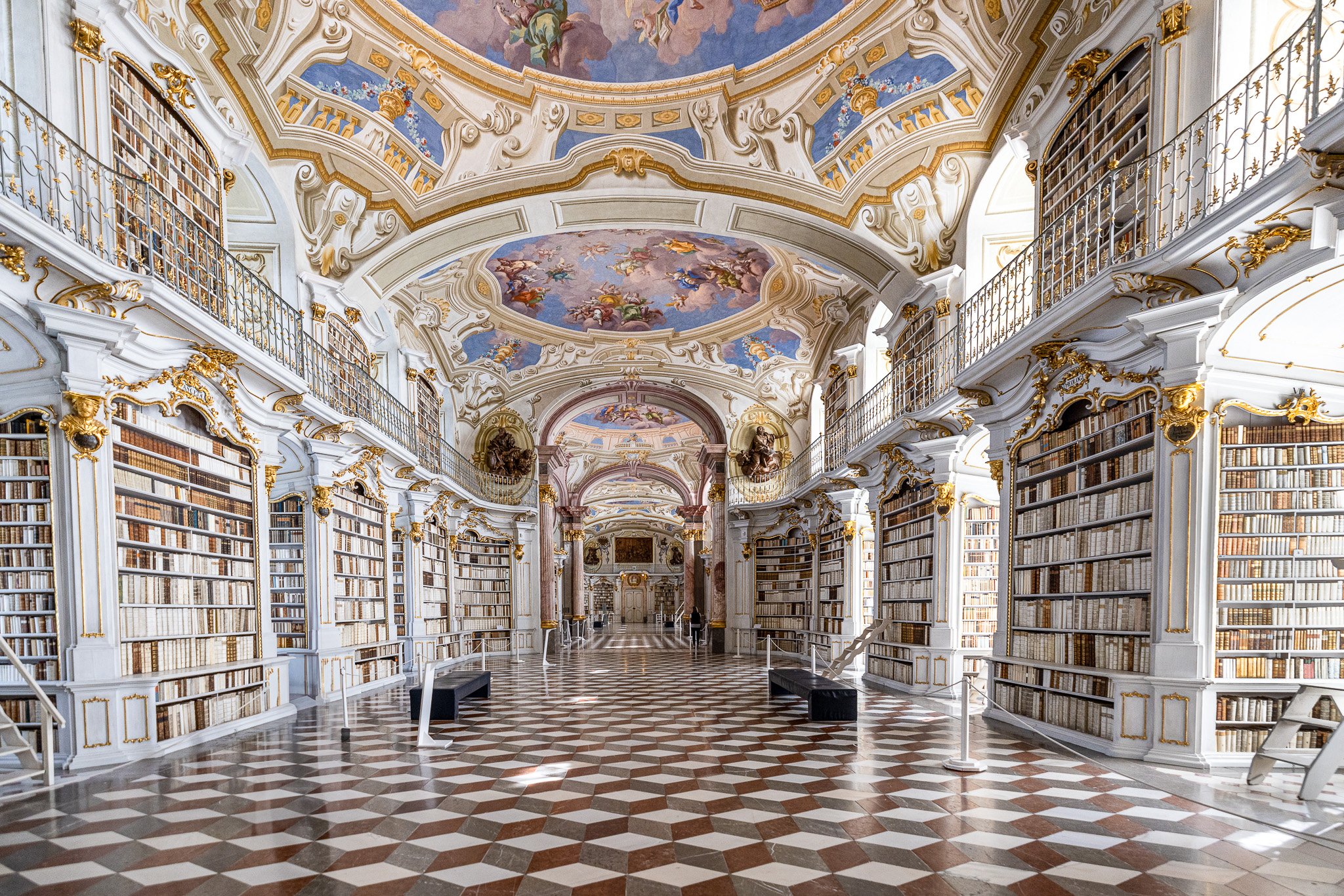
It is jaw-droppingly beautiful
You can also take some great images of details inside the Library, including books and the ceiling.
The Abbey Church
The church is a two-minute walk from the library and is included in your visit. It is a fully intact Baroque church, white and gold like the library, with a long nave, gilded side altars, and ceiling frescoes across the full vault.
The church is still an active place of worship, so approach it accordingly. Move quietly, avoid interrupting any services or private prayer, and keep your camera work unobtrusive.
The photography here is about the nave. Stand at the rear of the church and shoot toward the main altar with a wide-angle lens. The geometry of the barrel vault draws the eye forward, and the gilded altars on either side frame the composition. The light from the side windows is soft and directional, particularly in the morning.
📷 Pro Tip: Use your Platypod placed on a flat surface, a pew, a side shelf, or a stone ledge, rather than a standing tripod. A longer exposure at base ISO will capture the richness of the interior without noise. Shoot in the 15-35mm range for the full nave and switch to a 24-70mm for individual altar details. The side altars have strong compositional elements that reward a closer look. If a service is underway, wait outside and return. The church is worth the patience.
Best time: Midday light through the side windows. Morning is ideal if you are visiting in summer. Access: Included with abbey admission. Transit: Two-minute walk from the library entrance.
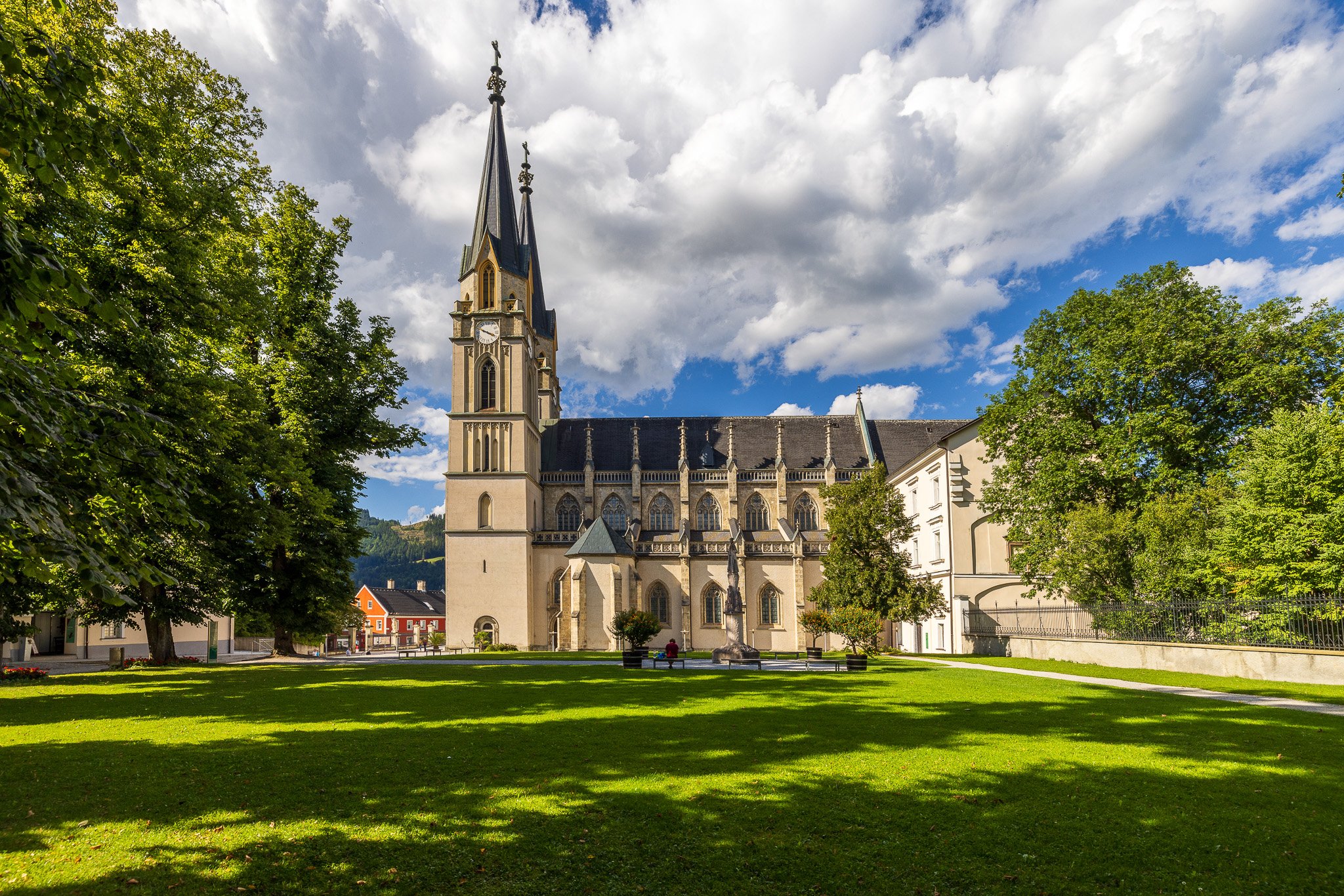
I used a Platypod and placed it on a sign board in the church to take a longer exposure shot.

Festivals & Events
Admont Abbey hosts occasional cultural events and concerts inside the library and church, typically in summer. These are rare opportunities to photograph the spaces with ambient lighting from candles or low artificial sources, which produces a completely different look from the standard daylight visit.
Check the abbey's official website for its current events calendar before your trip. The program changes year to year, but summer concerts in the church are a recurring feature.
The surrounding Styrian region celebrates traditional harvest festivals in September and October, with local markets, food, and folk music. These are not large-scale tourism events, which makes them more authentic and photographically interesting.
Frequently Asked Questions About Visiting Admont Abbey
Do you need a lot of time to photograph the library?
Yes, more than you'd expect for such a small space. Getting a clean shot without other visitors in the frame takes real patience; wait long enough, and there will eventually be a moment with no one there.
Is Admont Abbey worth a detour on a road trip?
Yes, absolutely, if you're already driving between Vienna and Salzburg, or anywhere nearby. It sits roughly an hour from Salzburg and three hours from Vienna, making it a natural stop rather than a dedicated trip.
What are the best photo spots at Admont Abbey?
The full hallway of the library, shot from both ends, and the ceiling frescoes looking straight up, are the two compositions worth prioritizing. The Abbey Church, a two-minute walk away, is the other stop.
Can you use a tripod inside the library?
Full tripods aren't typically permitted, but a small Platypod or table tripod works well and hasn't drawn any attention in the church. Image stabilization handles most handheld shots in the library itself given the strong natural light from the tall windows.
What surprised you most about Admont Abbey?
How much patience does the space actually demand? It's a small hallway, but getting an empty frame requires waiting out other visitors, sometimes for quite a while. The reward is worth it, but go in expecting to slow down rather than shoot quickly.
Is it better to visit in a specific season?
The interior is open year-round and doesn't depend much on outdoor light, but the mountain roads leading up to the monastery are easier without snow. Visiting in the warmer months makes the drive itself less of a concern.
Do you need to book tickets in advance?
Check the official Stift Admont website for current hours and admission before your visit, requirements can change seasonally.
Final Thoughts
Most people who visit Austria build their itinerary around Vienna, Salzburg, and Hallstatt. Those are all excellent choices. But Admont is the kind of place that serious photographers remember longer. There is no other room quite like that library anywhere in the world, and standing inside it with a camera is one of the more singular experiences I have had in 75 countries.
The detour is worth it. The patience inside is worth it. And if you build it into a Vienna-to-Salzburg road trip, it does not add a day to your journey, just a few hours that you will not forget.
Want to improve your photography while exploring some incredible destinations? Join me on one of my photography workshops! You can find all the details, including upcoming destinations and dates, through the links below.
Let's Stay Connected!
Explore More of Austria
My Photography & Travel Guide to Salzburg. Admont sits roughly halfway between Vienna and Salzburg, which makes it a natural stop on any Austria road trip. Salzburg is one of Europe's great Baroque cities, with the fortress, the old town, and the Salzach River delivering consistent photography from arrival to departure.
My Photography & Travel Guide to Hallstatt. About an hour from Admont, Hallstatt is one of the most photographed villages in the world for good reason. The combination of lake, mountains, and a compact historic core produces images that travel writers have been running for decades. My guide covers how to get the shots without fighting the crowds.
My Photography & Travel Guide to Vienna. If you are driving the Vienna-to-Salzburg route, that makes Admont a natural stop; Vienna is the logical starting point. My guide covers the photography locations, neighborhoods, and timing that make the Austrian capital work for photographers across all skill levels.
Finally—a beginner-friendly photography guide that makes sense.
If you've ever picked up a camera and thought, "Now what?" this is the book for you.
Photography Made Simple is written for adults who are just starting out and want a clear, encouraging, real-world approach to learning photography. Whether you're using a DSLR, mirrorless, or just your smartphone, this guide walks you through the basics—without the jargon or tech overwhelm.
Inside, you'll learn:
The only camera settings you really need to know to get started
How to shoot sharper, more intentional photos using light and composition
Simple tips for portraits, landscapes, travel, and everyday life
What gear you do (and don’t) need
How to create better photos without upgrading your camera
You’ll also get practical exercises, cheat sheets, and tips for organizing and editing your images—plus the confidence to shoot off Auto Mode for good.
This is not a textbook. It’s a friendly guide to seeing the world with fresh eyes—and finally capturing what you see the way you imagine it.
📸 Format: PDF download
Pages: 100+
Perfect for: Beginners, hobbyists, and anyone ready to take better photos without the stress
Are you carrying too much camera equipment, but still coming home disappointed with your travel photographs?
You are not alone. Many photographers fall into the packing trap. They bring too much, plan too little, and spend their trip scrambling to capture photographs instead of enjoying the experience.
Capture the World offers a better approach.
In this practical guide, travel photographer Vito L. Tanzi shares the five step system he uses to plan photography trips, pack with purpose, work with the best light, and return home with stronger images.
Inside, you will learn how to:
• Travel lighter without sacrificing image quality
• Choose destinations that match your photography goals
• Visit at the right time for weather, light, wildlife, festivals, or seasonal conditions
• Build a photography itinerary around sunrise, sunset, blue hour, and changing weather
• Select the equipment you will actually use
• Find promising locations before you arrive
• Avoid the stress and exhaustion that can ruin a photography trip
• Stay flexible when weather, crowds, or travel plans change
This guide includes practical planning advice, useful photography tools, real travel examples, and a complete system you can use again and again.
Whether you are preparing for your first international photography trip or planning a weekend closer to home, Capture the World will help you travel with greater purpose, photograph with more intention, and spend less time worrying about what is inside your camera bag.
Because the best photography trip is not the one where you carry everything.
It is the one where you are ready when the right moment appears.
📸 Format: PDF download
Instant Download