Cyprus Travel & Photography Guide: Best Photo Spots, Things to Do & Hidden Gems
When we lived in Beirut, Cyprus was thirty minutes away by plane.
That proximity, roughly ninety miles of Mediterranean between the Lebanese coast and the eastern edge of the island, made Cyprus feel like a neighbor rather than a destination. We made the short flight several times, and arriving always felt like stepping into a different version of the same sea. The light is similar. The warmth is immediate. But Cyprus has its own particular character, shaped by Greek and Turkish history, ancient mythology, and a landscape that moves from beach to mountain to ruin in the space of an afternoon.
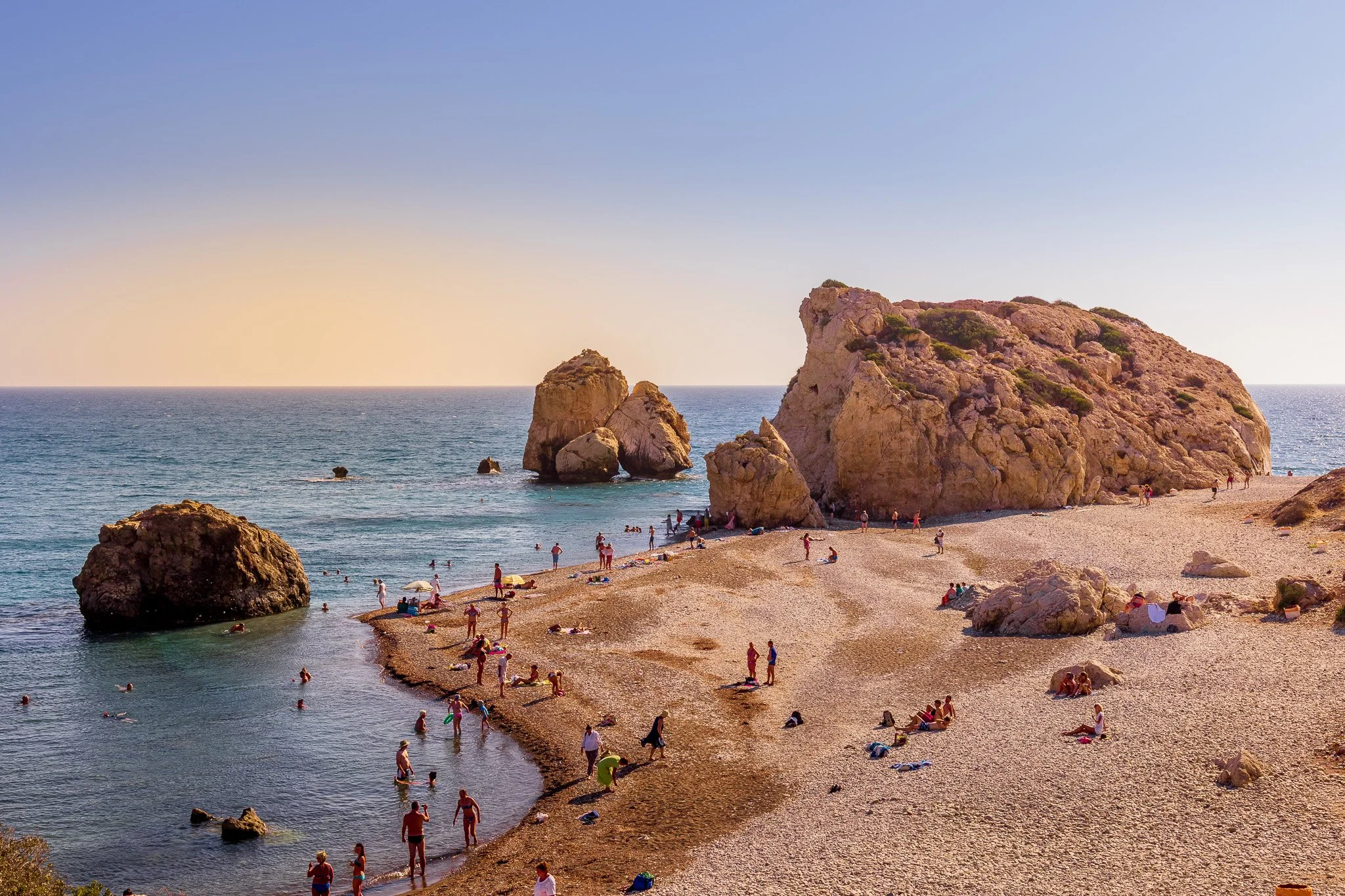
The drive from Larnaca Airport to Paphos runs along the southern coast, and somewhere along that road, about halfway there, Aphrodite's Rock appears. The legendary birthplace of the goddess rises from the water just offshore, a single dramatic limestone formation catching the late afternoon light. We were driving when we first saw it, and I had to resist stopping in traffic to photograph it. I went back the next morning before sunrise instead.
Cyprus is an island of layered histories: Phoenician, Greek, Roman, Byzantine, Crusader, Ottoman, British. All of it is visible if you know where to look. Kato Paphos holds some of the finest Roman floor mosaics in the Mediterranean, preserved under walkways two thousand years after they were laid. The Tombs of the Kings just up the coast are carved directly into the rock, open to the sky, and genuinely atmospheric at any hour. Cape Greco in the southeast pushes into the sea as a raw headland of sea caves and sea arches that the eastern Mediterranean light hits at golden hour in a way that is difficult to describe and easy to photograph.

For photographers, what makes Cyprus stand out in the region is the density. You can shoot ruins in the morning, coastline at midday, and mountain villages by late afternoon, all within a reasonable drive. The island is small enough to feel manageable and varied enough to keep you interested across a full week.
In this Photography Guide to Cyprus, I share the places and experiences that continue to draw me back. You will find my favorite photography locations, guidance on when and where to shoot, practical travel tips, and gear recommendations, along with cultural insights to help you explore and photograph Cyprus with confidence, respect, and ease.

Photographer's Notes
Before you go, here are my own takeaways.
Favorite Season: Spring and fall
Favorite Location: Aphrodite's Rock
Favorite Hotel: Annabelle Hotel
Favorite Restaurant: 7 St. Georges Tavern
Favorite Café: Omikron Brunch Bakery
Would I Return? Yes, I would.
Where to Stay in Cyprus
Base yourself in Paphos. It is the right choice for a first visit and for most photography-focused trips: historically rich, beautifully positioned on the southern coast, and close to both the coastal sites and the mountain roads that lead into the Troodos region. The harbor is a pleasant walk from most of the good hotels, the ruins are five minutes by car, and the evening light on the waterfront is as good as anything on the island.
Luxury Hotels in Paphos
Annabelle Hotel — The most complete luxury address in Paphos and one of the finest hotels in Cyprus. The Annabelle sits on the seafront in lush gardens that slope toward the Mediterranean, and the architecture has a retro colonial elegance that photographs well at any hour. Many rooms have sea-view terraces, and some include private plunge pools. The dining options include Amorosa for fine dining, Mediterraneo for Italian by the water, and the Ouranos Rooftop Restaurant with panoramic sea views. The rooftop pool and spa make it the most self-contained luxury property in the area.
Elysium Hotel — Rated among the highest in Paphos, and the design earns that distinction. The Elysium draws on Byzantine architectural tradition throughout: arched colonnades, mosaic details, stone courtyards, and a language that feels genuinely connected to the ancient history of the island. The hotel sits adjacent to the Tombs of the Kings, which means one of the finest photography locations in Cyprus is literally next door. For photographers interested in ancient Cyprus, there is no more logistically perfect hotel in Paphos.
Amavi, MadeForTwo Hotels — A couples-only property with minimalist luxury, clean white architecture, and a seafront position that produces some of the finest sunset views in the region. Rooms are designed around the couple's experience: large terraces, sea views from the bed, and the specific attention to detail that adults-only properties can sustain. If your trip to Cyprus is a romantic or anniversary visit, this is the right address.
Mid-Range Hotels
Almyra Hotel — The stylish younger sibling to the Annabelle next door, the Almyra is all-white seafront with 12 different room configurations, including suites with private sea-view terraces. The adults-only spa, infinity pool, and the on-site Ouzeri taverna with live guitar music and traditional Cypriot mezze are strong draws. Guests share facilities with the Annabelle.
Dionysos Central Hotel — A reliable, well-positioned mid-range choice near the harbor with comfortable rooms and a generous breakfast. The harbor, old town, and main restaurant strip are all within walking distance. Good value and honest about what it is.
Mayfair Hotel — A comfortable family-run property with pools and a position close to the main attractions. Consistently well-reviewed across thousands of guests, and a sensible base for travelers who want accessibility to everything without the full luxury price.

Best Time to Visit Cyprus
Spring and fall are the photographer's windows.
April through early June brings wildflowers across the landscape, mild temperatures in the low twenties Celsius, and light that is soft and directional from morning through late afternoon. The ruins at Kato Paphos glow differently in spring than in any other season. Crowds are manageable, and the beaches are not yet packed with summer visitors.
September and October bring harvest colors to the Troodos mountain villages, cooler mornings, and the same quality of light. The Aphrodite Festival in September means the Paphos harbor comes alive with outdoor opera performances that are genuinely spectacular to photograph, candlelit against the old castle walls.
July and August are hot, bright, and crowded. The midday light is harsh, and the popular sites fill quickly. If you must travel in summer, commit to early starts: be at Aphrodite's Rock by 6 am and at Kato Paphos before 9 am. The heat rewards discipline.
Winter (December through February) is quiet and cool, with occasional rain. The light can be softer and more atmospheric on overcast days, which photographers often prefer for ruins and interiors. Fewer tourists means more freedom at every location.
Getting Around Cyprus
Rent a car. Public buses exist and cover the main routes, but if you are photographing seriously, you need the flexibility to be at locations before sunrise and to stay past golden hour. Bus schedules will not accommodate that rhythm.
One important note: Cyprus drives on the left, like the United Kingdom. If this is your first experience driving on the left, my genuine advice is to follow another car for the first thirty minutes. It resolves itself faster than you expect, but that initial reorientation takes time. I know from experience.
There is no Uber or Bolt operating on the island. Taxis are available and can be arranged through the nTaXI Cyprus app or through your hotel. For longer day trips to Cape Greco or the Troodos villages, a rental car is the only practical option.
Paphos is compact enough to walk between the harbor, the old town, and the archaeological park. The Tombs of the Kings are a short drive north of the harbor. For anything beyond Paphos, you need the car.
How Many Days Should I Visit Cyprus
Five days is the right amount for a first photography trip to Cyprus. Seven days let you breathe.
A five-day structure works like this: two days in and around Paphos covering the archaeological park, Tombs of the Kings, the harbor at golden hour, and a sunrise at Aphrodite's Rock. One day, driving the southeastern coast to Cape Greco and the Avakas Gorge area. One day in the Troodos mountains, with a stop at Lefkara village on the way back. One day, as a float, which you will use for a second visit to somewhere you did not have enough time at on the first pass.
Seven days adds a day trip to Nicosia, time in a slower morning rhythm at Paphos harbor, and the kind of patience that lets you wait for the right light rather than shooting whatever light you arrive in.

Where to Eat in Cyprus
Cypriot food is excellent, and Paphos is where you will eat most of your meals. The proximity to the harbor means fish arrive fresh every morning. The halloumi is made locally and tastes nothing like the vacuum-packed version sold elsewhere. The mezze keeps coming in the way that good Mediterranean hospitality always ensures it does. And the fresh octopus, grilled over charcoal and served with lemon and Cypriot olive oil, is one of the finest simple dishes in the eastern Mediterranean.
7 St. Georges Tavern — One of the most respected local restaurants in the Paphos area, serving traditional Cypriot mezze built from seasonal ingredients grown on and near the property. The approach is farm-to-table in the original, unmarketed sense: what is grown is what is cooked. Go for a long, unhurried mezze lunch and let the dishes keep arriving.
Muse Restaurant — Set on a hillside with panoramic views over the coastline and sea below, Muse is the right choice for a golden hour dinner when the light coming in from the west turns the water pink. The menu is modern Mediterranean. The setting earns the visit regardless of what you order.
Koutourou Ouzeri — A neighborhood taverna away from the tourist strip with some of the best fresh seafood in Paphos. The grilled octopus is excellent. The Cypriot wine list covers the local producers honestly. This is a place where the locals eat, and the lack of a formal web presence is part of its character. Ask your hotel for the current address.
Theo's Seafood Restaurant — A harbor-side classic with tables overlooking the water and a kitchen built around whatever arrived on the boats that morning. Order whatever the waiter suggests. It will be the right choice.
Pelican Restaurant — A well-established waterfront spot on the Paphos harbor, good for a longer lunch where you can watch the fishing boats and let the afternoon slow down between shoots. The mezze platters are generous and the view is exactly what you want at midday.

Coffee in Cyprus
Omikron Brunch Bakery — The best morning stop in Paphos, with excellent pastries, properly made espresso, and a cozy garden terrace that invites staying longer than planned. A natural first stop before an early shoot at the archaeological park or the harbor.
Coffee Cantata — A charming café in Old Paphos with good coffee and the specific unhurried atmosphere that old town Mediterranean cafés achieve without trying. Good for editing sessions in the afternoon or a break between locations.
Aphrodite Hills Resort Lobby Café — Worth a stop if you are driving through the area between Paphos and Limassol. The views across the hillside toward the coast are worth the detour, and the terrace is a pleasant place to review your morning's shots.

What Photography Gear to Bring to Cyprus
DSLR and Mirrorless Kit
Cyprus is bright, diverse, and often breezy by the sea. Versatility matters more than specialization here.
Camera body: The Canon EOS R5 Mark II, Sony A7R V, or Nikon Z8 are all excellent choices. The high-resolution sensors on any of these will reward the detail in the Roman mosaics and the texture of the ancient stonework. Mirrorless is worth the weight saving for full-day walking at the archaeological sites.
Lenses:
16-35mm f/2.8: Essential for the sea caves at Cape Greco, the expansive mosaic floors at Kato Paphos, and the cliffside views. This is your most-used lens in Cyprus.
24-70mm f/2.8: The all-day lens for the harbor, village streets, and portraits.
70-200mm f/2.8 or f/4: For compressing the coastal scenes and photographing Aphrodite's Rock from the elevated viewpoint above the beach, where the compression is dramatic.
35mm or 50mm prime: For the narrow lanes of Lefkara and street scenes in old Paphos and Nicosia.
Accessories:
Tripod or Platypod: Essential for sunrise at Aphrodite's Rock, blue hour at the Paphos harbor, and long exposures at Cape Greco sea caves.
ND filters (3-stop and 6-stop): For silky water in the sea cave entrances and long exposures during the day at coastal locations.
Extra batteries: Heat drains them faster. Bring two spares.
Samsung T7 SSD for daily backup.
Rain cover: Unlikely to need it in summer, but in spring and fall a light shower can arrive quickly.
Drone: The DJI Mini 4 Pro is outstanding for the Cape Greco coastline and the mosaics viewed from above. Cyprus follows EU drone regulations. You will need to register your drone, fly below 120 meters, maintain visual line of sight, and avoid restricted zones around the airport and military installations. The areas around Akrotiri (British military base) are no-fly. Check the DroneRules.eu map before each flight and register with the Cyprus Department of Civil Aviation.
iPhone Photography in Cyprus
The eastern Mediterranean light in Cyprus is some of the most cooperative light you will find anywhere for iPhone photography. A few specific tips:
At Aphrodite's Rock: Shoot from the low angle on the beach in the final twenty minutes before sunset. Use the standard camera in Photo mode rather than Portrait, which at this distance will struggle to isolate the rock correctly. The reflection in the wet sand when the tide is right is the shot.
At Kato Paphos mosaics: Use the wide lens and shoot straight down onto the mosaic floors from the elevated walkways. The geometric patterns are made for overhead composition. ProRAW mode, if you have it enabled, will give you recovery latitude in the shadow detail of the tiles.
At Cape Greco sea caves: Use the ultrawide for the full cave frame and the water color below. Shoot in good light rather than forcing it in shadow. The Cinematic mode video is worth a short clip from the cliff edge, looking down into the caves.
General tip for Cyprus: The midday light is harsh in summer. If you are shooting in bright conditions with your iPhone, lock exposure on the sky before composing, or shoot into shadows and use the bright coastal light as a background element rather than fighting it.
Best Photography Spots in Cyprus
Aphrodite's Rock (Petra tou Romiou)
Aphrodite's Rock is a single dramatic limestone formation rising from the sea just offshore along the southern coast between Paphos and Limassol. According to Greek mythology, this is the birthplace of Aphrodite herself, and standing on the beach at sunrise, it is not hard to understand why the ancient world assigned the goddess to this particular piece of coastline.
The rock is most photographically interesting in two windows: the final thirty minutes of golden hour, when the limestone turns amber against deep blue water, and the minutes immediately after sunrise, when the beach is empty, and the sky behind the rock is still transitioning. The elevated viewpoint from the road above the beach gives you the compression shot with the 70-200mm. The beach itself gives you a wide, intimate frame with reflections in the wet sand.
📷 Pro Tip: Arrive at the beach forty-five minutes before sunrise and set up at the water's edge facing northeast toward the rock. Bring the 70-200mm for the elevated road shot, but the best composition is wide from beach level with the 16-35mm at around 20mm, low to the wet sand. The reflection in the receding waves is the frame to wait for. Parking is available at the official lay-by on the A6 highway. In summer, the site fills quickly after 8 am; go early. Access is free.
Best time: Sunrise and golden hour. Access: Free. Parking on the A6 highway.
Kato Paphos Archaeological Park (Roman Mosaics)
Kato Paphos is a UNESCO World Heritage Site containing some of the finest preserved Roman floor mosaics in the world. The mosaics cover the floors of four ancient Roman villas, and the detail and color in the geometric and figurative work are extraordinary even after two thousand years. The House of Dionysus alone contains scenes from Greek mythology rendered in thousands of individual tesserae.
Photographically, this is one of the most technically satisfying locations in Cyprus. The overhead compositions from the elevated walkways produce clean, graphic images with no horizon to manage. The morning light that enters from the east illuminates the warm tones in the mosaic tiles around 9 am. In the late afternoon, the ruins themselves cast long shadows across the open villa floors that make for strong architectural images.
📷 Pro Tip: Get to the park when it opens and go directly to the House of Dionysus before other visitors arrive. From the elevated walkway, shoot straight down with the 24-70mm at the wider end (around 28-35mm) to capture the full floor compositions. For the iPhone, shoot in ProRAW with the wide camera directly overhead. The light entering from the east is best in the first hour after opening. A polarizer helps cut glare on the mosaic surfaces. Admission is charged; the site is open daily, but check seasonal hours. Parking is available on-site.
Best time: First hour after opening. Access: Paid admission. Short drive or walk from Paphos harbor.



Tombs of the Kings (Tafoi ton Vasileon)
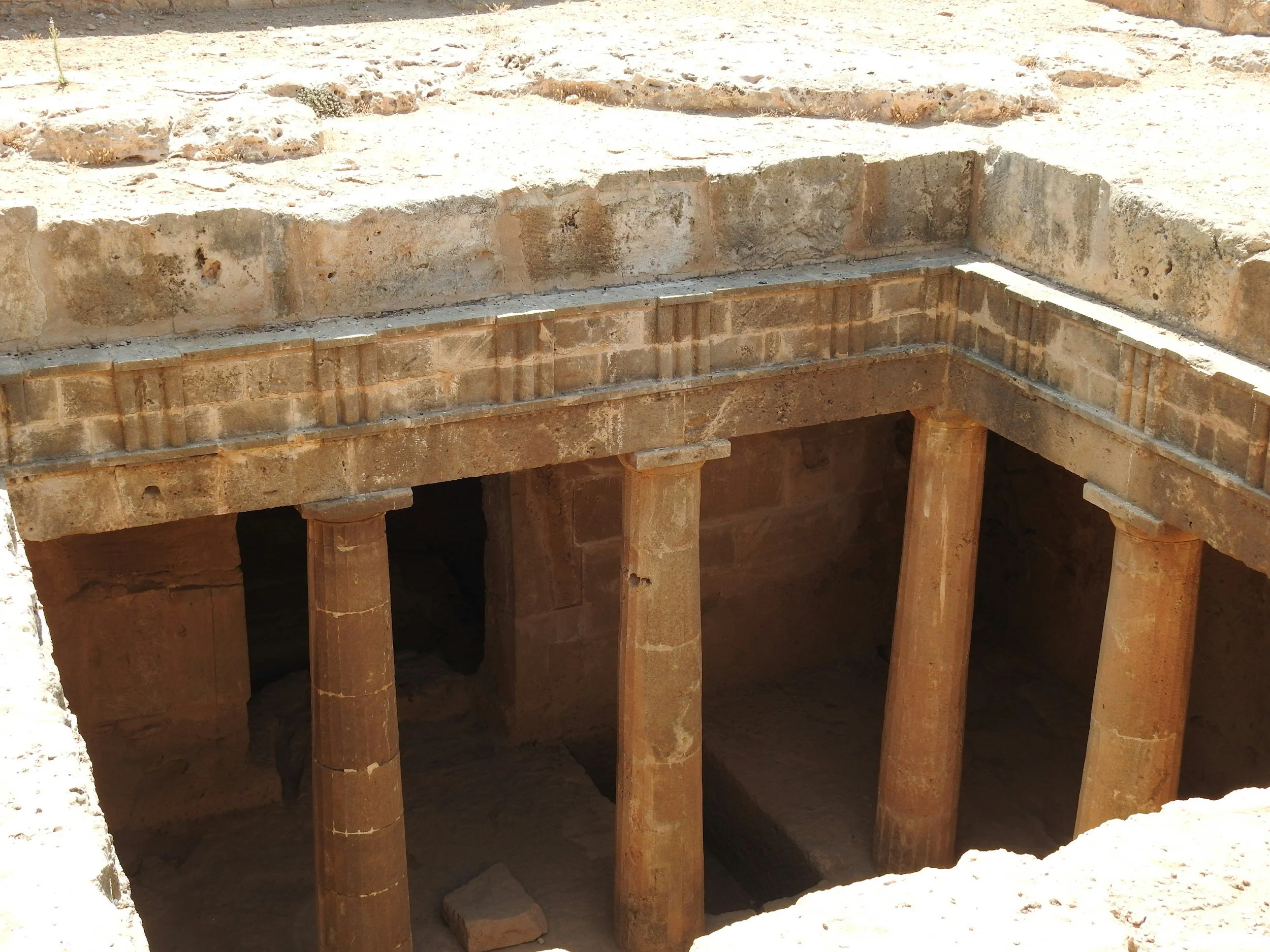
Despite the name, no kings were buried here. The Tombs of the Kings is a large necropolis carved directly into the rock on the coastline north of Paphos harbor, dating from the 4th century BC through the Roman period. Monumental underground chambers with Doric columns, carved from the living rock and open to the Mediterranean sky, create one of the most atmospheric photography locations in Cyprus.
The site is best photographed in two conditions: early morning when the low sun rakes across the rock surfaces and creates deep shadow in the chamber openings, and on overcast days when the diffuse light eliminates the harsh contrast between the bright limestone and the dark interiors. The scale of the largest tombs, particularly Tomb 3 with its stone columns and carved atrium, is difficult to convey without a wide lens that captures the relationship between the architecture and the sky.
📷 Pro Tip: Enter through the main gate and head directly to Tombs 3 and 4, which are the largest and most architecturally complete. For the column frame composition, position yourself inside the atrium looking up and outward to use the columns as leading lines toward the sky above. Shoot at 16-20mm. Sunrise is ideal: the low eastern light enters the atrium from the side and creates rim lighting on the columns. Bring a wide prime or your 16-35mm. Admission is charged. The Elysium Hotel is directly adjacent, which makes dawn visits logistically simple if you are staying there.
The Mermaid of Ayia Napa (Limanaki Fishing Harbor)
The Mermaid of Ayia Napa stands at the entrance to the Limanaki fishing harbor, a three-meter bronze sculpture unveiled in 2015 by the Community Council as part of an effort to restore the harbor's identity. She is not decorative in a generic sense. Inspired by the poetry of George Seferis and by the legendary sister of Alexander the Great, she has two tails, and wears a Vergina pendant bearing the Vergina Sun, her Byzantine bearing a reference to the roots and ancestry of the people of Ayia Napa. There is genuine iconographic weight in the sculpture that most visitors photograph without reading. Evedo + 3
The harbor setting is what makes this work photographically. The mermaid faces the sea, the fishing boats sit in the background, and depending on the time of day the light moves across her from different angles. Sunset silhouettes her cleanly against the western sky. Sunrise gives you warm raking light across the bronze surface with the harbor activity beginning behind her.
📷 Pro Tip: Arrive thirty minutes before sunset and position yourself low, shooting up slightly with the 70-200mm compressed against the sky, or wide with the 16-35mm to include the harbor and boats in the frame. The silhouette shot is the obvious one, but the more interesting frame is at blue hour when the harbor lights come on and the bronze picks up warm reflected light from the restaurant windows. For the iPhone, use Portrait mode from about four meters back to isolate the sculpture with subject separation against the harbor background. The statue is publicly accessible at all hours and free to visit.
Best time: Sunset through blue hour. Access: Free. Walkable from Ayia Napa town center, at the entrance to Limanaki fishing harbor.

Church of Panagia Theoskepasti
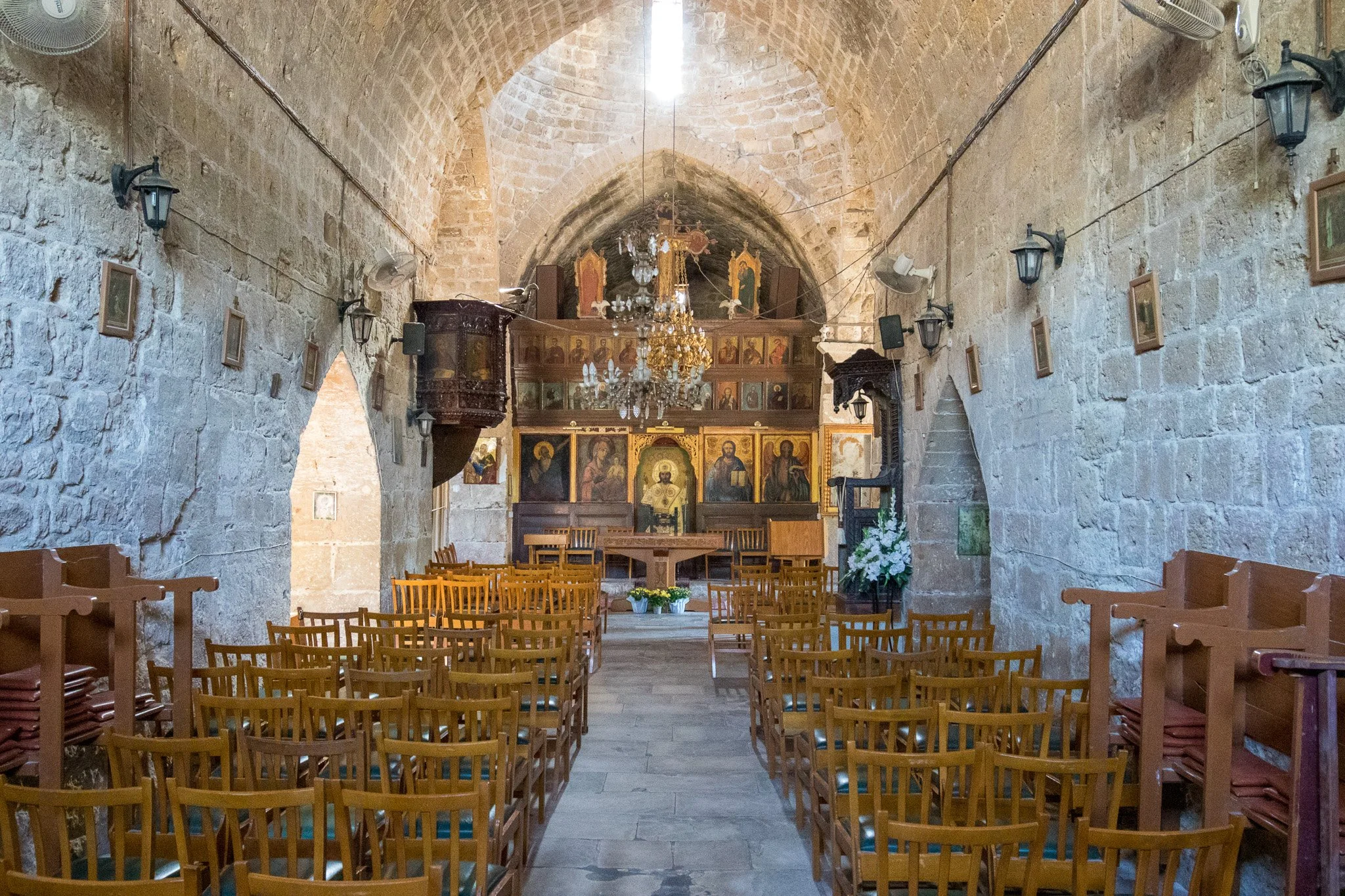
Panagia Theoskepasti is built on a protruding rock at Kato Paphos, close to the sea. A Byzantine Church of Cyprus, it is part of the area inscribed on the UNESCO World Heritage list in 1980, with origins tracing to the 10th century, when Cyprus was part of the Byzantine Empire. The present building was rebuilt in 1923 on the foundations of its Byzantine predecessor and fully restored in 2009.
The name is the thing that stays with you. Theoskepasti means "covered by God," tied to a legend that the Virgin Mary protected the church by covering it with mist during times of danger, hiding it from pirates and invaders. According to tradition, as Arab raiders approached the shore, a thick cloud of fog descended over the rock and made the church invisible. After that incident, the name held. Whether you take it as history, faith, or folklore, it gives the place a character that most churches near tourist harbors do not have.
Photographically, what makes Theoskepasti work is the position. Set on a rocky hill above the surrounding streets, it offers views toward the Mediterranean Sea and a facade that reads differently depending on the direction of the light. The exterior against the sea is the establishing shot. The bell tower against the sky is the detail shot. The interior holds a beautiful wooden iconostasis with excellent icons, and the silver icon of the Virgin Mary, believed to have been painted by the Evangelist Luke, is the interior subject, though photography inside should be approached with discretion.
📷 Pro Tip: The exterior is strongest at golden hour when the western light catches the facade and the sea behind the rock turns deep blue. Position yourself below and to the southwest to shoot up at the church against the sky, using the 24-70mm at around 35mm. The bell tower isolated against the sky is worth a tighter frame with the 70-200mm. The interior is dim; bring the 35mm or 50mm prime at f/1.8 or f/2 and shoot without flash, which is inappropriate here regardless of the light. The church may only be open during services, particularly outside peak season; check the notice board on arrival. Access is free. The site is a short walk from the Kato Paphos harbor.
Best time: Golden hour for the exterior. Morning for a quieter visit. Access: Free. Walkable from Kato Paphos harbor.

Festivals in Cyprus
Kataklysmos (Festival of the Flood) — Celebrated in early June, fifty days after Easter, Kataklysmos is a uniquely Cypriot festival tied to the biblical flood and to older water-based traditions. It is celebrated with particular energy in the coastal cities: Paphos, Limassol, and Larnaca all hold large gatherings along the seafront with water games, folk music performances, traditional dancing, and outdoor food stalls. For photographers, the combination of crowds in traditional dress, waterfront light, and genuine local participation makes this one of the most rewarding festivals in Cyprus to document. The atmosphere is joyful and completely unpretentious.
Pafos Aphrodite Festival — Held in the outdoor courtyard of the Paphos Medieval Castle in September, the Aphrodite Festival is an open-air opera festival that draws major productions from European companies to the harbor each year. The setting is extraordinary: the castle walls lit by stage lighting, the harbor in the background, and an audience spread across the waterfront in the warm September evening air. For photographers, the combination of architectural stage lighting and the Mediterranean night sky produces frames that are almost impossible to replicate anywhere else. Long lenses from the side allow you to capture the scale of the production against the castle backdrop without being in the middle of the audience.
Wine Festival in Limassol — Held in September in the Municipal Gardens of Limassol, the wine festival is one of the oldest in Cyprus and reflects the island's serious wine culture, particularly around the indigenous Commandaria wine, one of the oldest named wines in the world. The festival atmosphere is relaxed, evening-lit, and full of the kind of candid social photography that responds well to a 35mm or 50mm at wide aperture.
Orthodox Easter (Pascha) — The most visually and culturally significant religious celebration in Cyprus, Orthodox Easter is celebrated with a candlelight procession on Holy Saturday midnight that takes place in churches and their surrounding streets across the island. The combination of candlelight, church architecture, and the emotional weight of the occasion makes this one of the most powerful photography opportunities of the year. Paphos, Lefkara, and the mountain villages observe it with particular intensity. Be respectful: put the camera down when the service itself is underway and photograph the processions and the gathering outside.
Frequently Asked Questions About Visiting Cyprus
Do you need a car in Cyprus?
Yes, essential for serious photography. Public buses exist, but won't accommodate sunrise arrivals or late golden hour departures. Rent a car, and remember Cyprus drives on the left. Follow another car for the first thirty minutes if it's your first time.
Is Cyprus expensive?
Less than most Western European destinations, though luxury properties like the Annabelle run comparably high. Fresh octopus and mezze at local tavernas offer real value, and much of the best photography, ruins, coastline, and churches are free or very low cost.
What are the best photo spots in Cyprus?
Aphrodite's Rock at sunrise, the Roman mosaics at Kato Paphos in the first hour after opening, and the Tombs of the Kings at dawn are three that consistently deliver. The full list with Pro Tips is above.
Can you fly a drone in Cyprus?
Yes, under EU drone regulations. Register your drone, stay below 120 meters, and avoid restricted zones, particularly around Akrotiri, the British military base, which is a strict no-fly area. Check DroneRules.eu before each flight.
What surprised you most about Cyprus?
The beauty of the western part of the island. People tend to think of Cyprus as beaches and resorts, but the density of ancient ruins, dramatic coastline, and mountain villages packed into that western stretch around Paphos genuinely surprised me, even after living so close to it in Beirut.
How many days do you need in Cyprus?
Five days for a first photography trip, seven lets you breathe and add Nicosia or a slower rhythm at the harbor.
Is Cyprus worth combining with Lebanon or Greece?
Yes, both work well. Cyprus sits close to Beirut, a short flight away, and shares deep historical threads with Athens and Crete, all natural extensions of an eastern Mediterranean photography trip.
Final Thoughts on Cyprus
Cyprus stayed with me in the way that places do when you return to them, not as a tourist but as something closer to a temporary resident. Living in Beirut and treating the island as a long weekend destination gave us a relationship with it that was different from a single trip. We could be slow. We could go back to the same harbor restaurant twice in a week. We could drive back to Aphrodite's Rock on the second morning because the first morning had the wrong clouds.
That kind of familiarity is available to anyone who gives the island enough time. Five days is the minimum. Seven lets you find it.
The Roman mosaics at Kato Paphos are genuinely among the finest things I have photographed anywhere in the Mediterranean. The light at Aphrodite's Rock just before sunrise, when the water around the limestone is turning gold, and the sky above it is still deep blue, is the kind of light that reminds you why you get up early. And the octopus grilled in the Paphos harbor. Go back for that too.
Rent a car. Drive on the left, which you will adapt to faster than you expect. Follow another car for the first thirty minutes if you need to. Get up for sunrise at Aphrodite's Rock. Eat the octopus.
Want to improve your photography while exploring some incredible destinations? Join me on one of my photography workshops! You can find all the details, including upcoming destinations and dates, through the links below.
Let's Stay Connected!
More Photography & Travel Guides from the Region
My Photography & Travel Guide to Greece: Athens — Cyprus and Athens share a deep cultural thread. Athens is a natural companion to any Cyprus trip: fly into Athens, spend three days photographing the Acropolis, the streets of Plaka, and the National Archaeological Museum, then connect to Cyprus for the coast and the ruins. The two together tell a continuous story of the ancient Mediterranean.
My Photography & Travel Guide to Crete, Greece — Crete and Cyprus both carry layers of Venetian, Byzantine, and ancient Greek history in their architecture and their landscapes. Crete is bigger and more varied, but the mood is recognizable. If Cyprus left you wanting more of that eastern Mediterranean light and pace, Crete is the logical next island.
My Photography & Travel Guide to Lebanon — For anyone who, like me, has approached Cyprus from the Lebanese coast, the guide to Beirut and Lebanon is the context for understanding why Cyprus feels like it does. The sea between them is short. The historical relationship between the two coastlines is very long. Beirut, when it is well, is one of the most complicated and rewarding photography cities in the world.
✈️ Travel Photography Planning Sessions
One-on-One Trip Planning with a Professional Travel Photographer
Don’t miss the shot. Let me help you plan for it.
Overview
Planning a photography-focused trip can be overwhelming. From figuring out the best places to shoot, to when the light is just right, to knowing which lens to pack — there are a lot of decisions to make.
This one-on-one Zoom session is your chance to get personalized travel photography advice from someone who’s spent the past 25 years exploring cities, coastlines, and wild places around the world — camera in hand.
Whether you're headed to Paris, Patagonia, Tokyo, or Tuscany, I’ll help you make sure your photography trip is well-planned and creatively inspired, so you come home with the images you dreamed of (and then some).
What’s Included
✅ Photography Location Planning
I’ll help you create a customized itinerary of the best photo spots, including off-the-beaten-path gems and iconic views.
✅ Best Times to Shoot
Get expert advice on lighting, golden hour, blue hour, and seasonal conditions for each location.
✅ Gear Recommendations
Not sure whether to bring the telephoto or the prime? We’ll walk through your gear and make sure you’re bringing the right tools for your destination and style.
✅ Hotel and Base Recommendations
Stay where it’s convenient for sunrise shoots and late-night strolls with your camera. I’ll recommend hotels that are photographer-friendly and well-located.
✅ Custom Travel Tips
From sunrise entry times to tripod rules at major landmarks, you’ll get insider tips to save time, avoid tourist traps, and make the most of your trip.
Who It’s For
This service is for anyone who:
Is planning a trip and wants to prioritize photography
Wants expert insight on the best places to shoot and how to get there
Is tired of missing the shot because of poor planning or bad timing
Is a beginner, enthusiast, or professional photographer looking for guidance before a trip
How It Works
Book a Session
Choose a time that works for you and tell me where you're headed.Share Your Plans
You’ll fill out a quick questionnaire so I know your travel dates, interests, and photography style.One-on-One Zoom Call (60 minutes)
We’ll meet via Zoom and walk through your trip together — from location ideas to gear and timing. You'll leave with a custom PDF full of notes and suggestions.Follow-Up Support
Get one round of email Q&A after your session to clarify anything as your plans evolve.
Why Work With Me?
I’ve spent the last 25 years photographing the world — from major cities to remote islands. I know what it’s like to travel and shoot under pressure, and I love helping people get the most out of their trips. This is not just about hitting “popular spots” — it’s about crafting a creative and efficient plan tailored to your trip, your gear, and your goals.
Pricing
$125 / Session
Includes:
60-minute Zoom call
Custom PDF summary with photography spots, gear tips, and travel recommendations
One follow-up email with additional Q&A
Introductory rate available through September 2025
Ready to Plan Your Trip?
Let’s make sure you’re ready — so when the light is perfect, you’re in the right place with the right gear.
Questions?
Please email me at vito@chasinghippoz.com if you're not sure whether this is right for you. I'm happy to chat.
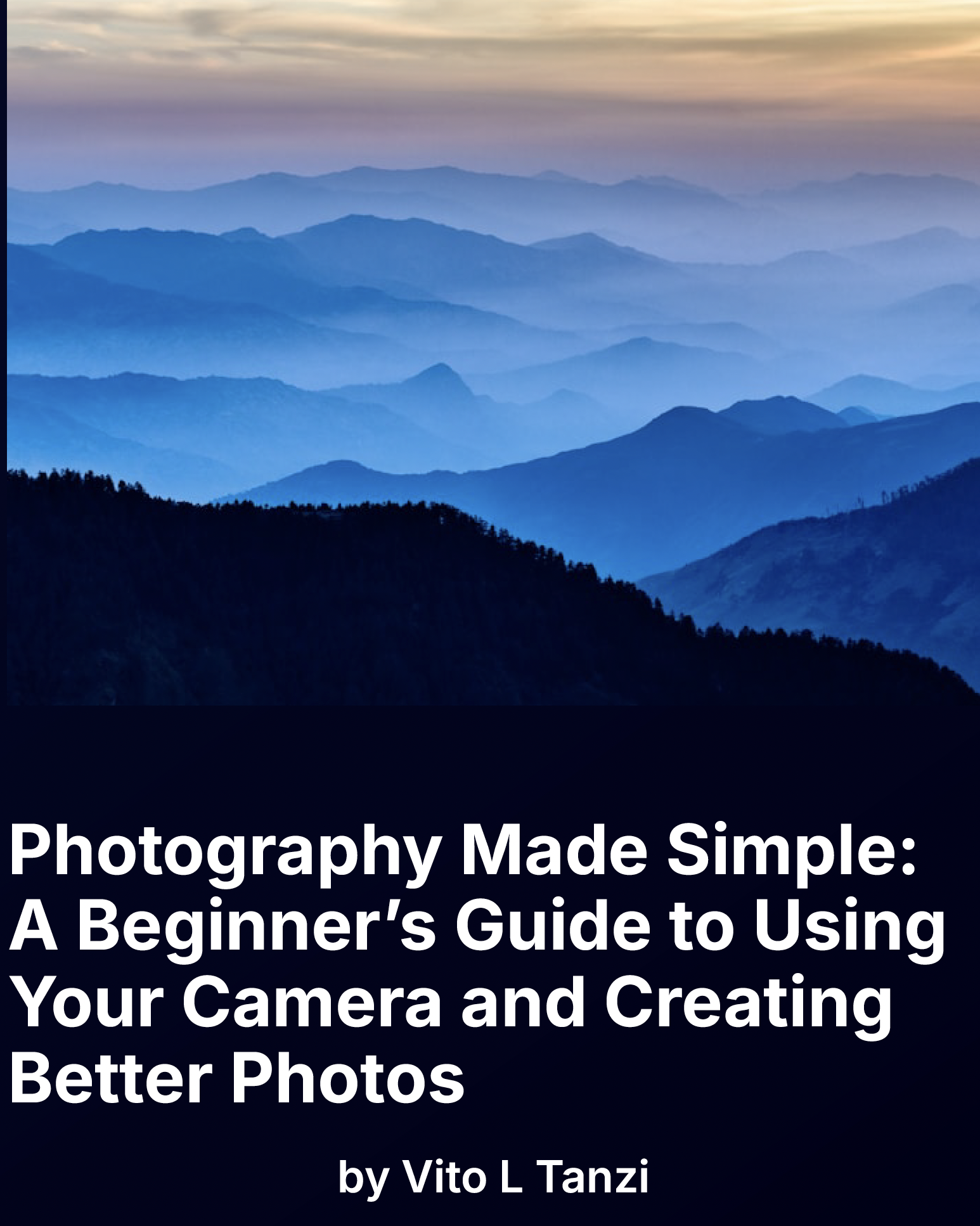
Finally—a beginner-friendly photography guide that makes sense.
If you've ever picked up a camera and thought, "Now what?" this is the book for you.
Photography Made Simple is written for adults who are just starting out and want a clear, encouraging, real-world approach to learning photography. Whether you're using a DSLR, mirrorless, or just your smartphone, this guide walks you through the basics—without the jargon or tech overwhelm.
Inside, you'll learn:
The only camera settings you really need to know to get started
How to shoot sharper, more intentional photos using light and composition
Simple tips for portraits, landscapes, travel, and everyday life
What gear you do (and don’t) need
How to create better photos without upgrading your camera
You’ll also get practical exercises, cheat sheets, and tips for organizing and editing your images—plus the confidence to shoot off Auto Mode for good.
This is not a textbook. It’s a friendly guide to seeing the world with fresh eyes—and finally capturing what you see the way you imagine it.
📸 Format: PDF download
Pages: 100+
Perfect for: Beginners, hobbyists, and anyone ready to take better photos without the stress