Salzburg, Austria Travel & Photography Guide: Best Photo Spots, Things to Do & Hidden Gems
Salzburg at Christmas is an argument for celebrating the season properly.
We have walked these streets in September, in April, and in December, and each season delivers something completely different and completely worth the trip. But December is where the city earns something extra. The Christmas markets at Residenzplatz and Domplatz fill the squares between the cathedral and the fortress with light and warmth and the smell of Glühwein and cinnamon. The Hohensalzburg Fortress rises above it all, lit against a dark sky that may or may not have snow coming. The whole city becomes a setting from a story you have been told since childhood, and the camera finds a composition in every direction.
What makes Salzburg work at any time of year is the scale. This is a compact city. You can walk from one end of the Old Town to the other in fifteen minutes. Every photography location worth visiting is within walking distance of the next. The fortress is a steep walk or a short funicular ride. Getreidegasse, the Makartsteg bridge, the Mirabell gardens, St. Peter's Church, the Residenzplatz: all of it on foot, all of it within a small and perfectly preserved historic core. For a photographer, that density of extraordinary subjects within such a short distance is genuinely rare.
Spring in Salzburg is soft green and early flowers along the Salzach. Autumn is amber and misty and produces some of the finest light of the year on the baroque facades. Summer brings festivals and crowds and long evenings. Each season has its reasons.
In this Photography Guide to Salzburg, I share what multiple visits at different times of year have taught me about this city. You will find my favorite photography locations, seasonal timing advice, hotel recommendations, the restaurants worth planning around, and the specific details that only reveal themselves when you walk slowly and look up.

Photographer's Notes
Before you go, here are my own takeaways.
Favorite Season: September-October for the weather, December for the Christmas markets
Favorite Location: The Makartsteg bridge, looking toward the fortress
Favorite Hotel: Hotel Sacher Salzburg
Favorite Restaurant: St. Peter Stiftskulinarium
Favorite Café: Sacher Café
Would I Return? It's just a wonderful town to visit for two nights.
Best Time to Visit Salzburg
There is no bad time to visit Salzburg. We have been in September, December, and April, and each season has its own character.
September and October are my top recommendations for photographers. The weather is reliably good, the summer crowds have thinned, and the light on the baroque facades in early autumn is extraordinary. Golden hour comes earlier, the Salzach takes on a quieter quality, and the surrounding hills turn amber. You get the city close to its best without the July and August pressure on hotels and restaurants.
December is worth the trip on its own. The Christmas markets at Residenzplatz and Domplatz are among the finest in Europe. The fortress lit against a dark sky is a photograph you will not forget. Crowds gather in the evenings around the market stalls, which works beautifully for photography. Dress for real cold and bring a tripod.
April and May bring the first flowers along the Salzach, soft morning light, and the city before the festival season fully ignites. Shoulder season pricing applies, and you will often have the early-morning streets almost entirely to yourself.
Summer (July and August) brings the Salzburg Festival, one of the great cultural events in the world, but also maximum crowds, peak prices, and queues at the funicular. The long evenings give you extended golden hour well past 8pm, which helps.
When to Go to Salzburg?
I don’t think there is a bad time to visit. We have visited several times during different times of the year, in September, December, and April. Each season has its charms. However, the weather from September to October is beautiful.
The only problem about visiting during the summer is the increased traffic, crowds, temperatures, and prices.
If you visit in December, you can visit the beautiful Christmas markets, which should not be missed. In fact, it’s worth visiting just to see the Christmas Markets.
Where to Stay in Salzburg?
Stay within walking distance of the Old Town. This is non-negotiable in Salzburg. The photography locations, the markets, the cafés, and the restaurants are all in a compact historic core that rewards proximity. A hotel outside the walking zone adds unnecessary transport to every early-morning and late-evening shoot.
Luxury Hotels in Salzburg
Hotel Goldener Hirsch, a Luxury Collection Hotel The finest address for photographers who want to be at the center of everything. The Goldener Hirsch has been on Getreidegasse since 1407, in the middle of the most photogenic street in Salzburg. Mozart's birthplace is a few doors down. The fortress is visible at the end of the street. The hotel's 70 rooms are decorated with Salzburg antiques and craftsmanship, and the in-house restaurant is one of the most atmospheric dining rooms in the city. This is the hotel that puts you inside the best part of Salzburg the moment you step out the door.
Hotel Sacher Salzburg This is where we have stayed on every visit, and the location remains extraordinary, right on the Salzach with direct views across to the Old Town and the fortress. The hotel's age is visible despite renovation efforts, and it is no longer the finest luxury property in the city, but the service is warm, the rooms along the river are genuinely beautiful, and the position for morning and evening photography along the waterfront is hard to match. The Sacher Café serves the hotel's own Sachertorte and an exceptional hot chocolate. A reliable and personally recommended choice.
Rosewood Schloss Fuschl Not in the city itself but approximately 30 minutes east of Salzburg on the shores of Lake Fuschl, this 15th-century castle is the finest luxury retreat in the greater Salzburg region. Michelin Guide recommended, with 98 rooms and suites, a full spa, and a lakeside setting of extraordinary beauty. If you want a resort experience with mountains and water, and are happy to arrange transport into the city for your photography, this is the right choice. Transport costs approximately €75 each way by private car, and the hotel does not operate a shuttle. Plan the logistics before booking.
Mid-Range in Salzburg
Hotel Stein A boutique hotel on the right bank of the Salzach with the best rooftop terrace view of the Old Town and the fortress in the city. Small and well-run, with rooms that look directly across the river. The rooftop Steinterrasse is one of the most photographed viewpoints in Salzburg and is accessible to hotel guests without the crowds found at other viewpoints. A strong mid-range choice for photographers specifically.
Arthotel Blaue Gans A stylish boutique hotel in a 14th-century building in the heart of the Old Town, close to the Franciscan Church and the Getreidegasse. Contemporary art throughout, warm service, and an ideal Old Town location at a price point well below the flagship luxury properties.
Hotel am Dom Directly next to Salzburg Cathedral in the center of the Old Town, with simple and comfortable rooms at accessible prices. The location for photography is unbeatable. Step outside and you are at the Domplatz.
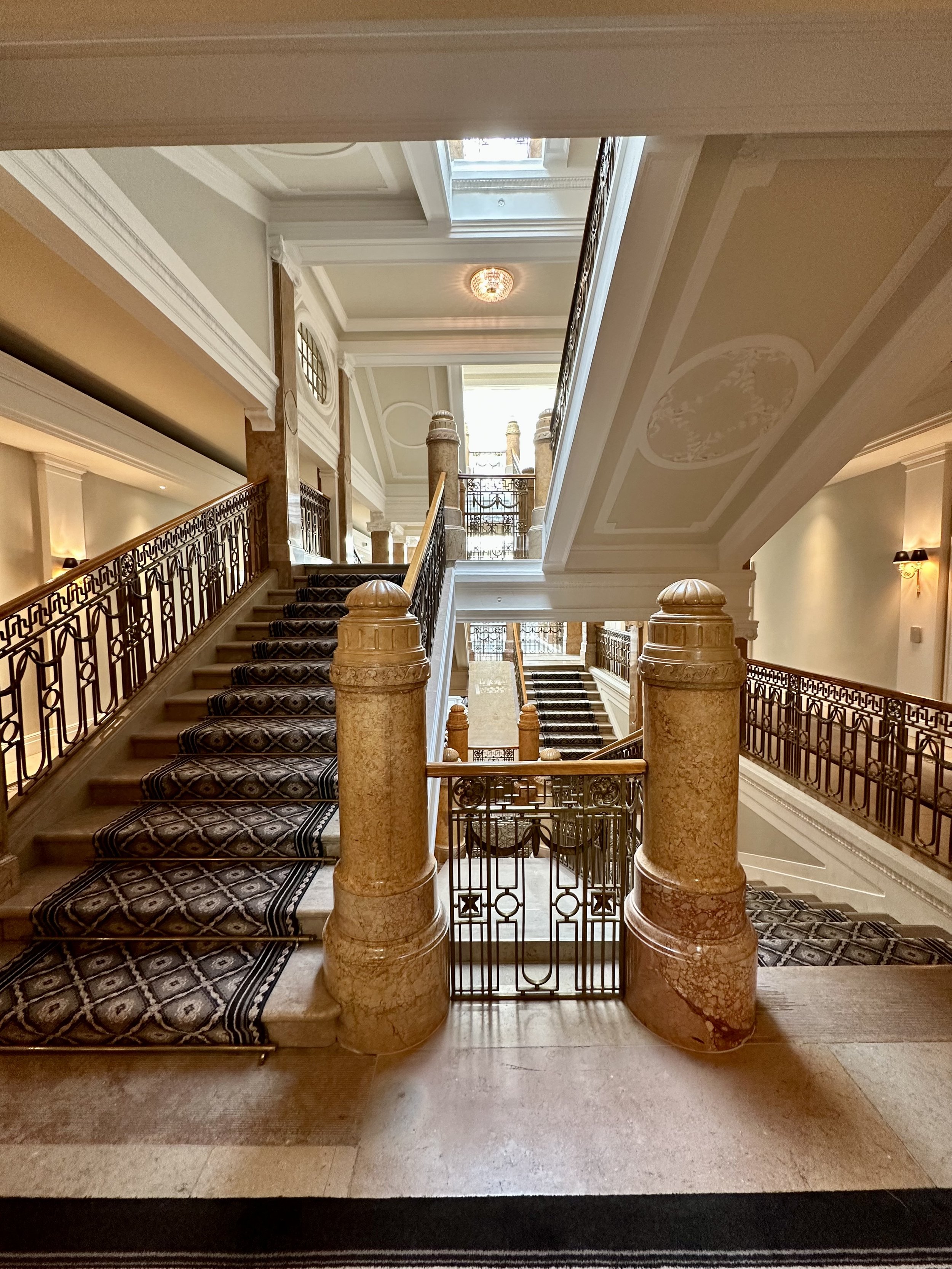
Sacher Hotel
Getting Around Salzburg
Salzburg rewards walking. The Old Town is compact enough that you can reach every major photography location on foot. This matters when you are carrying a full camera kit: fewer transitions, more spontaneity, and you will stumble onto compositions you would never find from a taxi window.
On foot is the default and the right call for everything within the Old Town. Getreidegasse to the Mirabell Gardens is about a 15-minute walk. The Makartsteg bridge to Kapitelplatz is five minutes. Give yourself the gift of slow movement here.
Funicular (Festungsbahn) is how you get to Hohensalzburg Fortress without the steep uphill climb. The funicular station is in the Old Town, and combined fortress and funicular tickets are available at the station. The walk up is possible but genuinely challenging with gear.
Taxis and Rideshare: Uber operates in Salzburg. Local taxi services are reliable and available throughout the city. For early morning shoots or late evening returns from dinner, both are useful.
Bus: The city bus network is efficient and covers the wider city. For photography purposes, you will rarely need it if you are based in or near the Old Town.
Day trips: A rental car opens up the surrounding region significantly. Hallstatt is about an hour's drive. The Maria Gern Church in Germany is 20 minutes. Lake Fuschl and the Salzkammergut lakes are all reachable within an hour.
How Many Days Should I Visit Salzburg
Three days is the minimum to cover the core photography locations at a relaxed pace. Four or five days lets you slow down, revisit locations in different light, and take a day trip without feeling rushed.
Day 1: Arrive and spend the afternoon walking Getreidegasse, the Makartsteg bridge, and the Kapitelplatz. Shoot the fortress from below at golden hour. Evening in the Old Town.
Day 2: Early morning at the Mirabell Gardens before crowds arrive. Funicular to Hohensalzburg Fortress for the terrace views and interior. Afternoon at St. Peter's Church and the Stiftskulinarium for dinner.
Day 3: Walk the Salzach at blue hour. Morning light on the Residenzplatz and the Cathedral. Afternoon free for street photography in the lanes off Getreidegasse or a drive to Maria Gern.
Day 4 or 5 (optional): Day trip to Hallstatt. Full day, early start, worth every minute.
Where to Eat in Salzburg
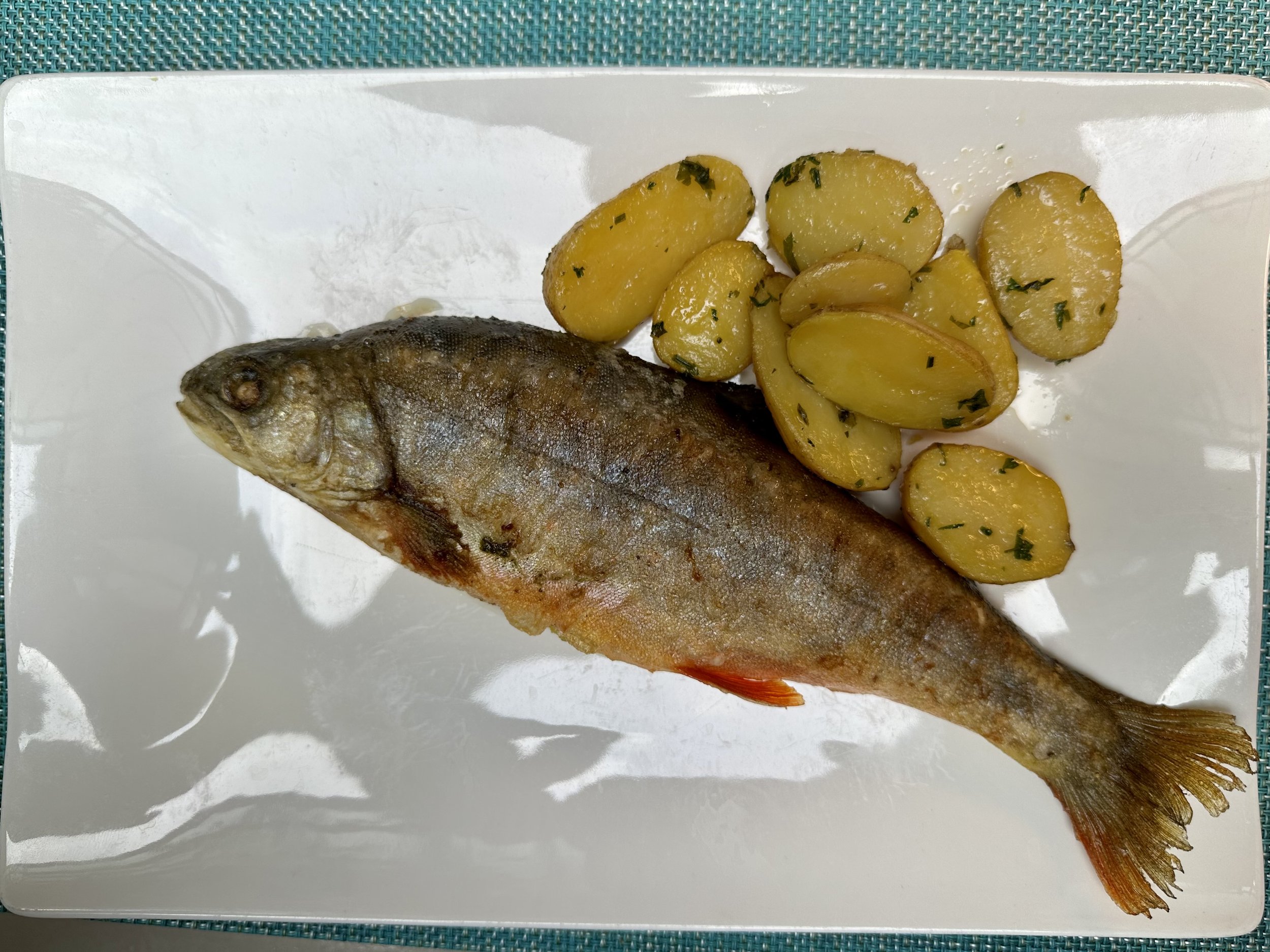
Salzburg punches above its size when it comes to food. The Old Town is anchored by some genuinely historic restaurants alongside strong modern options. You will not struggle to eat well here.
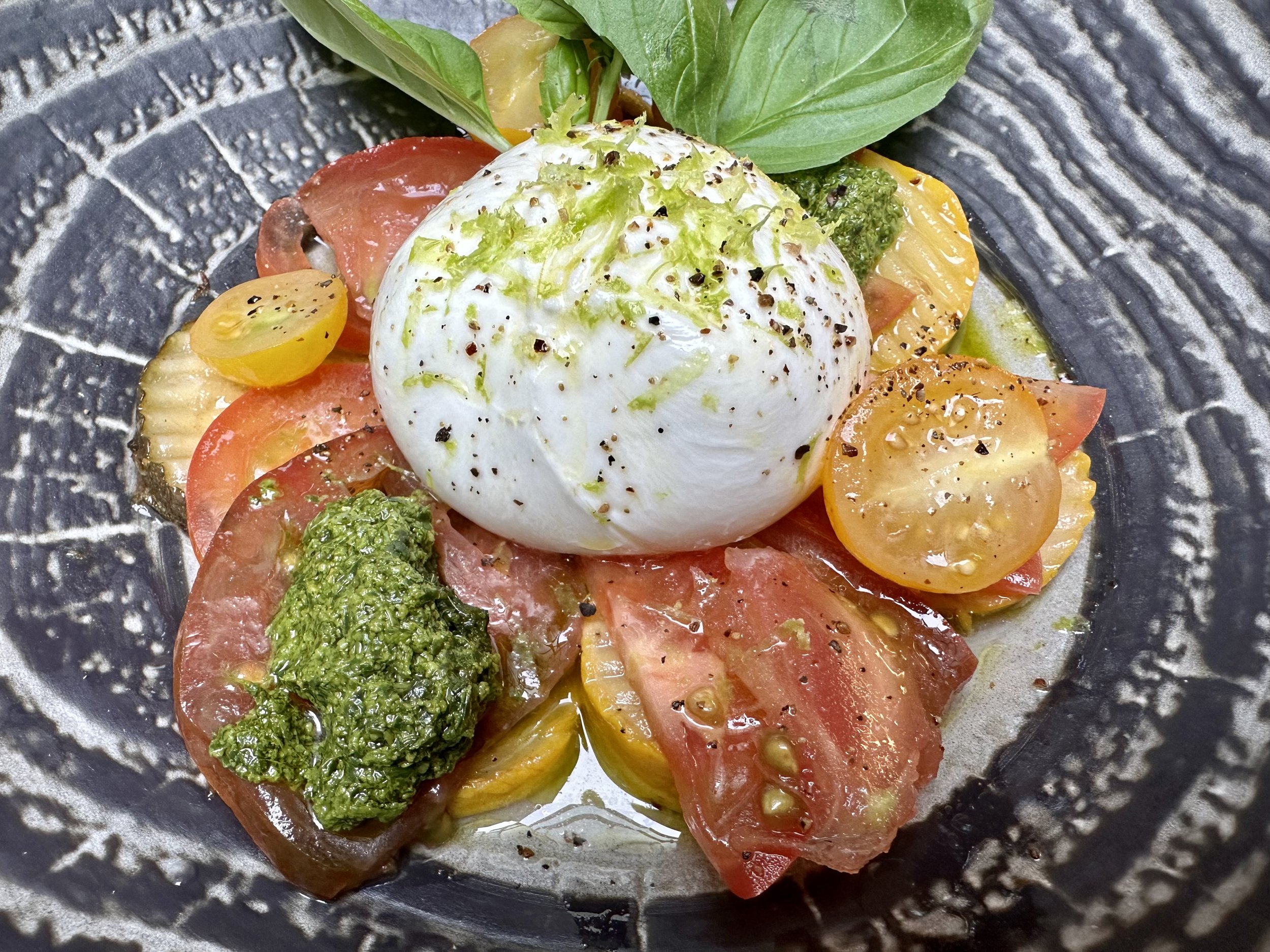
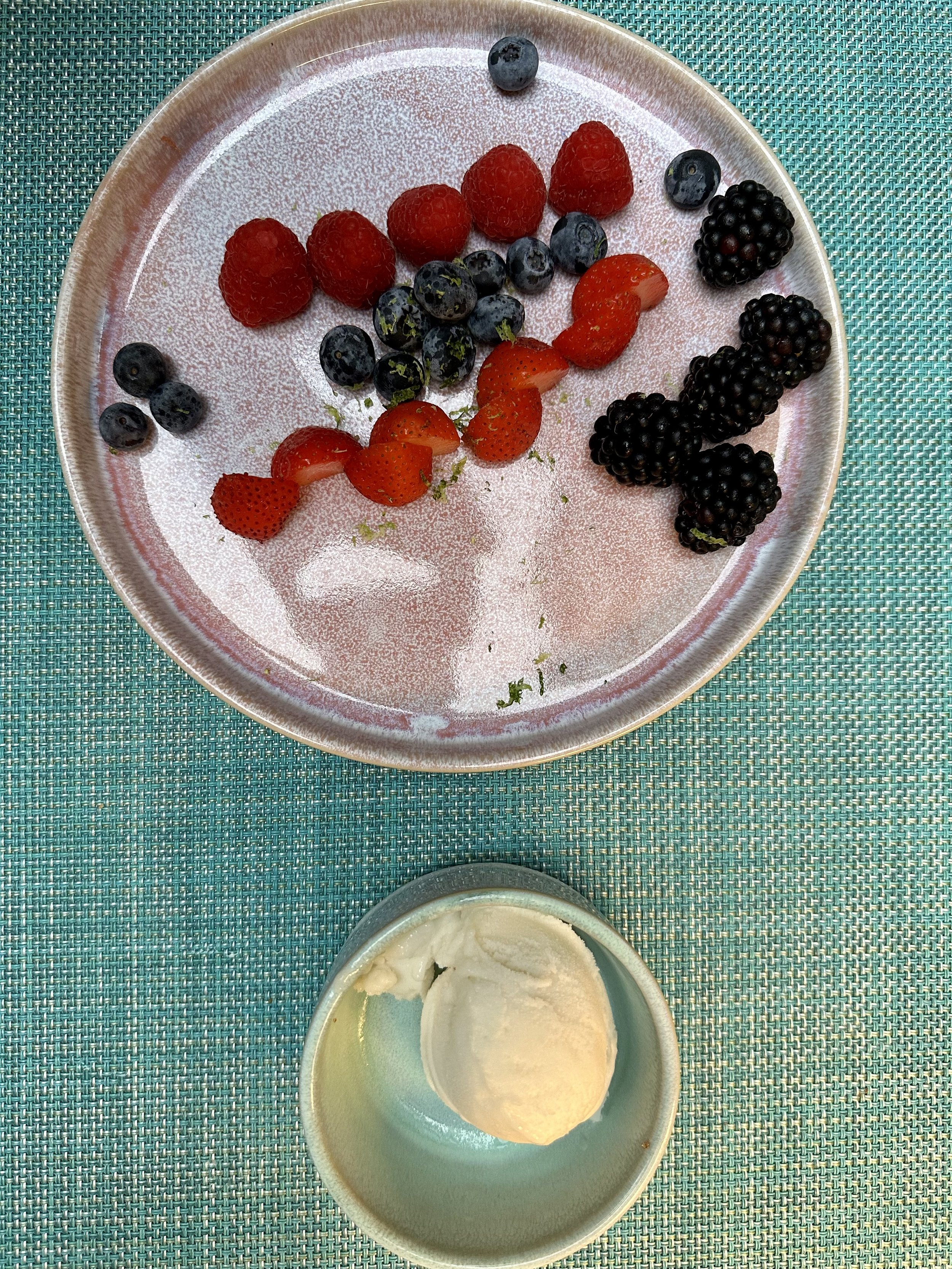
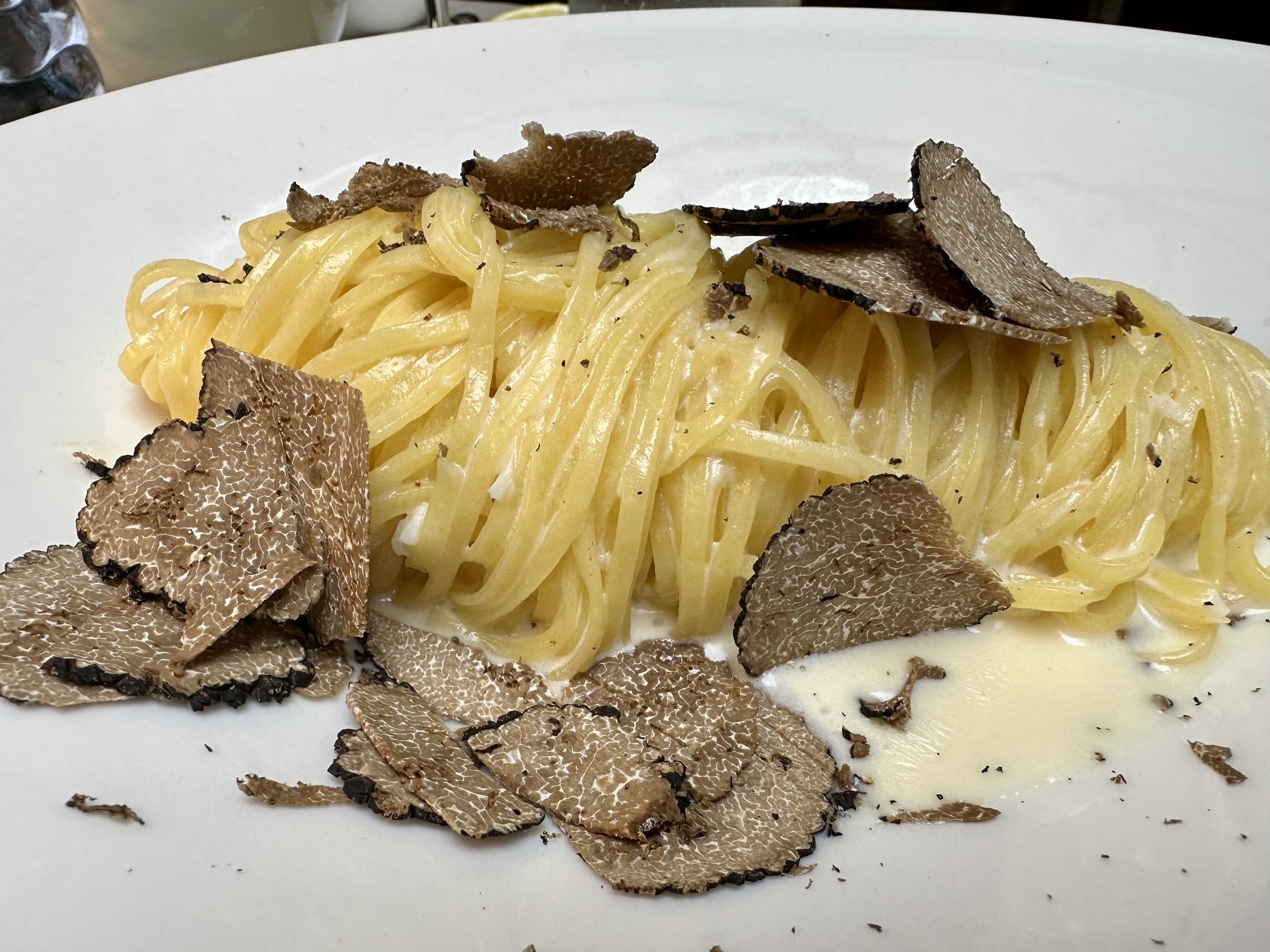
My personal must is St. Peter Stiftskulinarium. We absolutely loved it. Everything else below is excellent, but that one earns its own category.
St. Peter Stiftskulinarium One of the oldest restaurants in the world, with documented history dating to 803 AD. Located in the Old Town directly next to St. Peter's Monastery Church, between the Cathedral and the Festival Halls. In summer, you eat outside in a grotto by the mountainside, which is a genuinely extraordinary setting. The cuisine is Austrian-Mediterranean, and the Gault Millau 2026 rating of 13/20 reflects the quality of the kitchen. Book in advance. This is not optional.
Gasthof Alter Fuchs A classic Salzburg gasthaus in the Old Town serving traditional Austrian food done properly. Hearty, unpretentious, and priced for locals as much as visitors. Go for the Tafelspitz or the Wiener Schnitzel.
Zum Zirkelwirt A reliable Old Town address for Austrian classics. The courtyard seating in summer is excellent, and the atmosphere is warm without being performative. Good for a mid-trip dinner when you want something straightforward and good.
L'Osteria Salzburg If you want Italian at any point during your stay, L'Osteria is a solid choice. Consistent, well-run, and located conveniently in the city.
Restaurant M32 Perched on the Mönchsberg at 32 meters elevation with a terrace view over the Old Town rooftops. Contemporary Austrian cuisine in a setting that doubles as a photography location. The view alone earns a visit. Reservations recommended.
Coffee in Salzburg
Café Tomaselli On the Alter Markt in the heart of the Old Town, open since 1703 and still run as a traditional Austrian coffeehouse. Tables circled by waitstaff offering pastries, dark wood paneling, international newspapers, and an upstairs terrace perfect for watching the square below. Note that operational management recently transitioned from the long-standing Tomaselli family to a professional hospitality group, though the café remains open and operating as before. Go early. It opens at 7am.
Sacher Café Inside the Hotel Sacher on the Salzach. The house-made Sachertorte and the hot chocolate are both exceptional. A quieter, more refined alternative to the bustle of Tomaselli. Afternoon hours are ideal.
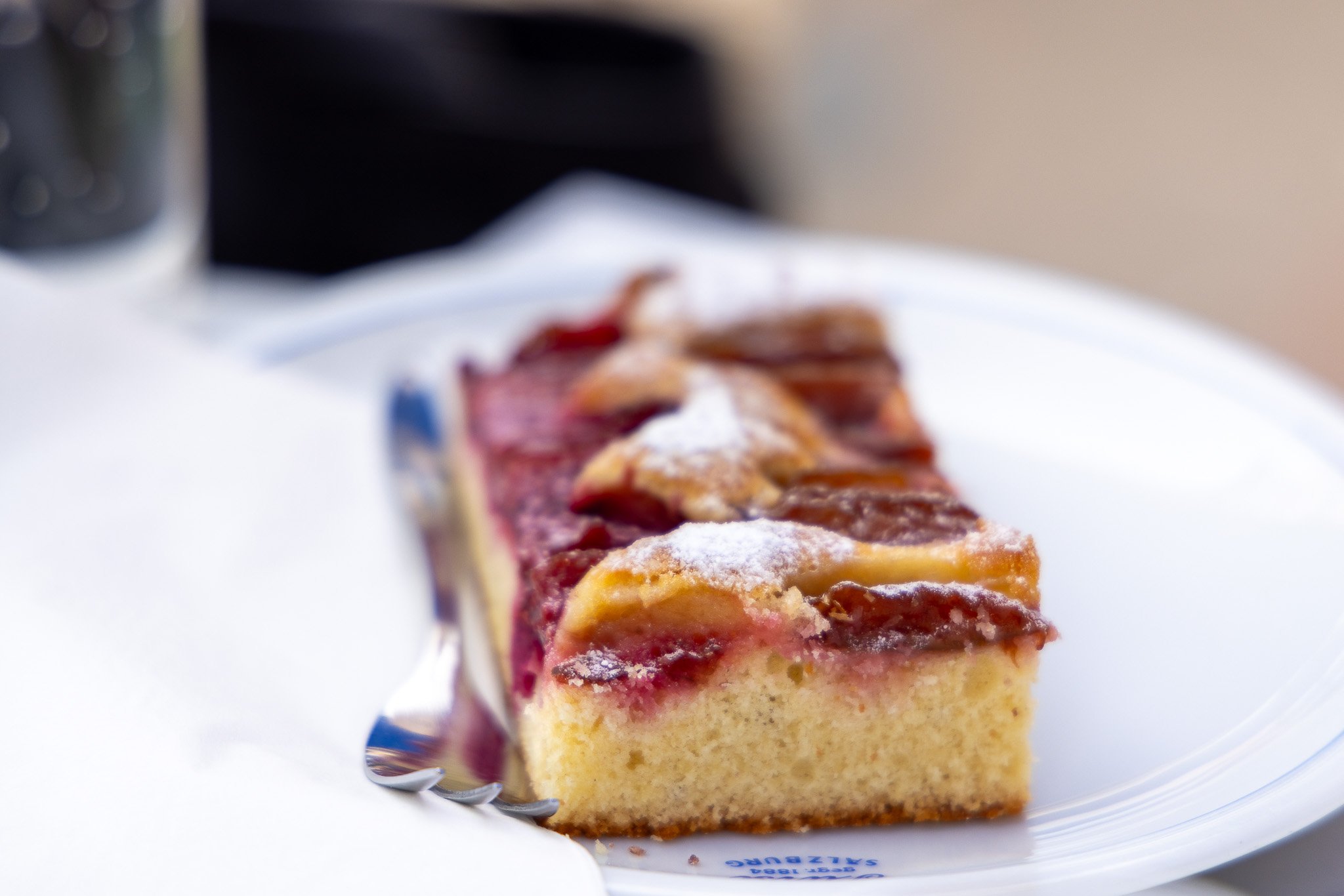
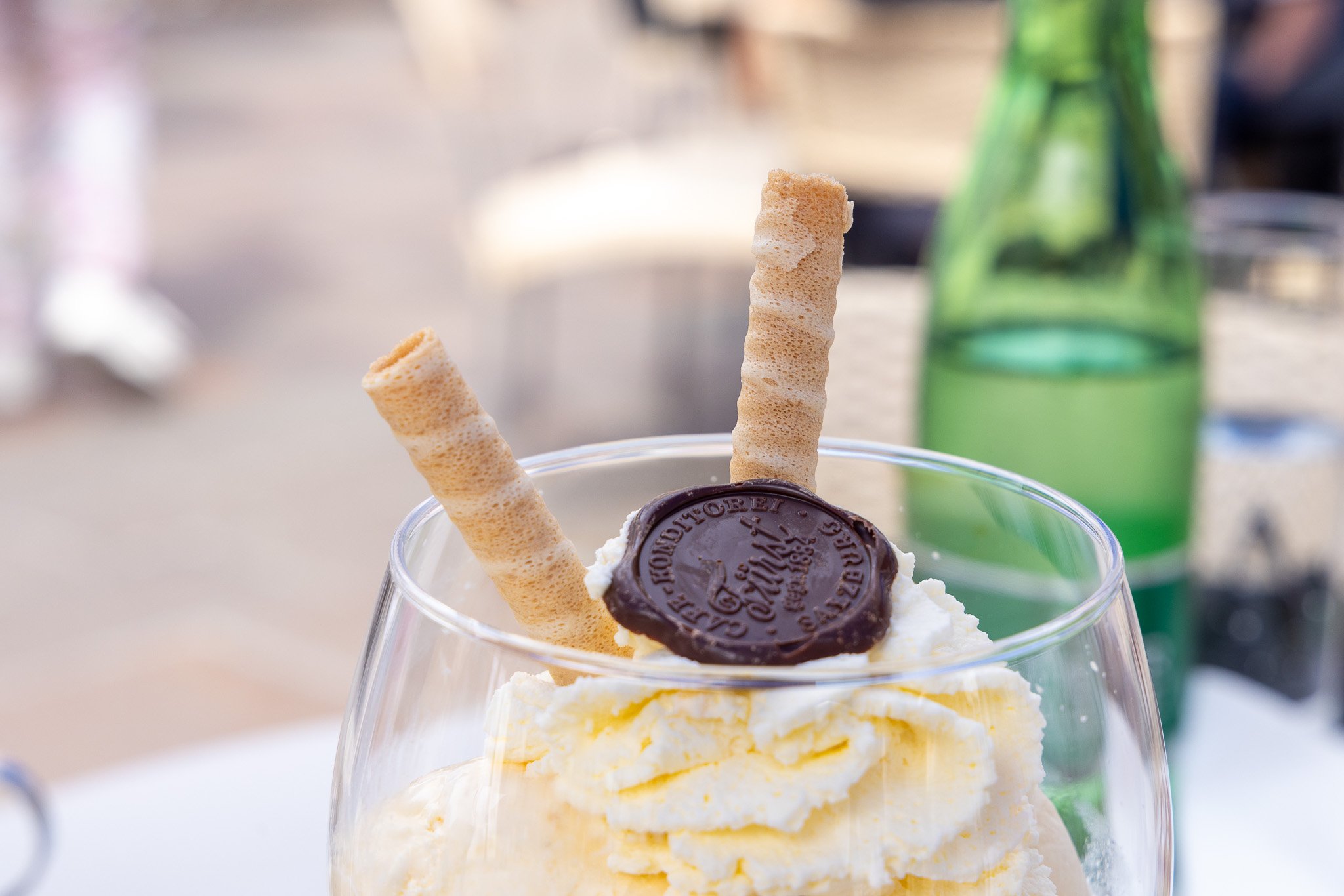
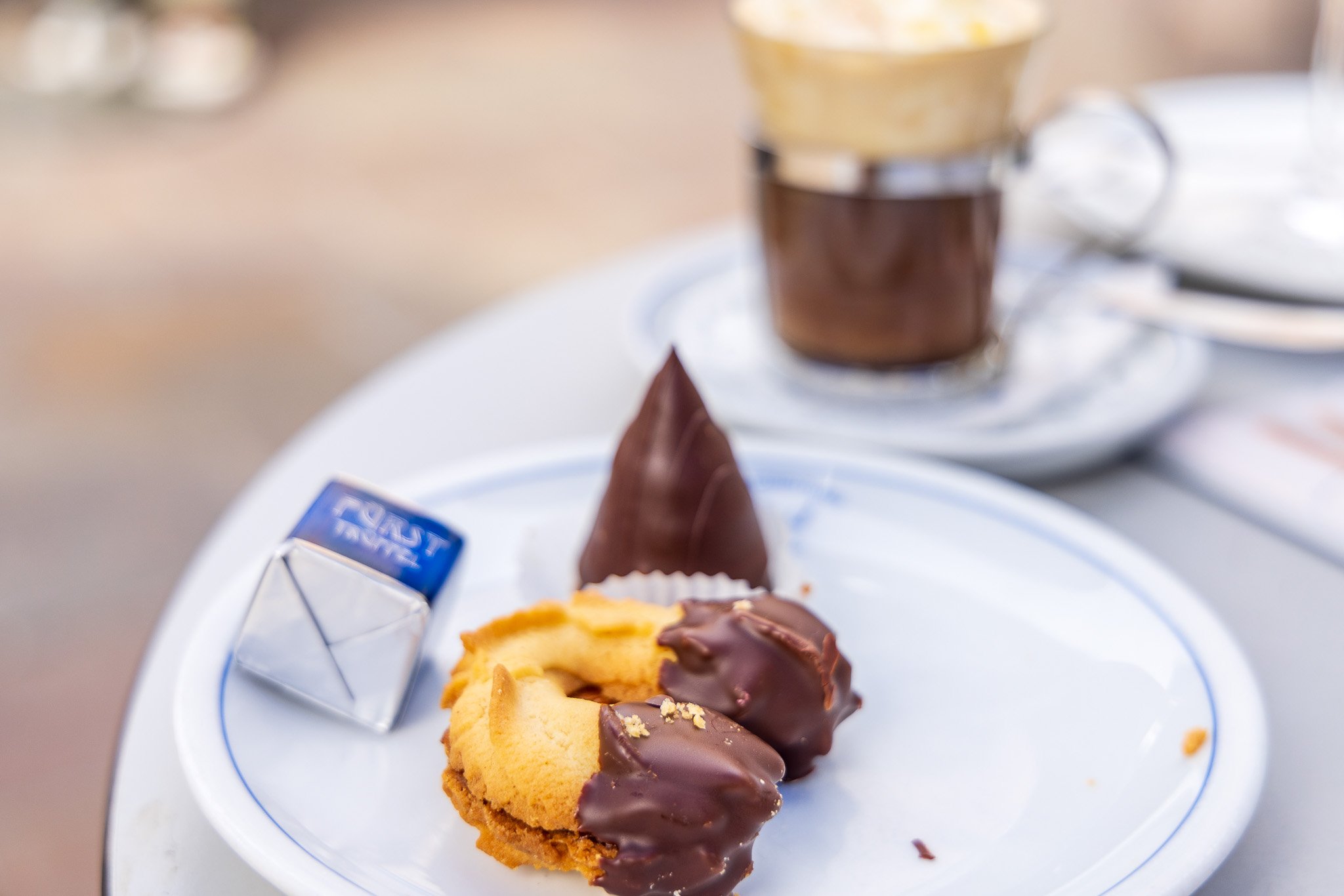
Café Fürst On Brodgasse in the Old Town, with more than 100 years of history and a classic Konditorei atmosphere. In summer, the outdoor seating is excellent for an afternoon edit session or a rest between shoots.
Photography Gear to Bring for Salzburg
DSLR and Mirrorless Kit
Salzburg is a compact, walkable city. You will not be hauling gear across large distances, which means you can bring a fuller kit without suffering for it.
Camera bodies: Any modern mirrorless body performs well here. The Canon EOS R5 Mark II, Sony A7R V, and Nikon Z8 all handle the wide dynamic range you encounter when shooting lit facades against dark evening skies. The Leica Q3 is an excellent walk-around option for the street and café work.
Lenses:
Wide zoom (15-35mm or 16-35mm): essential for Getreidegasse, the Residenzplatz, and interior shots at St. Peter's and the Mirabell Marble Hall.
Standard zoom (24-70mm): your workhorse for street photography and the markets.
Telephoto (70-200mm): valuable from the Hotel Stein rooftop for compressed views of the fortress, and for isolating architectural details at a distance.
35mm or 50mm prime: ideal for the cafés, the market stalls, and people photography.
Tripod or Platypod: Essential for Salzburg. Blue hour and long exposures along the Salzach are some of the finest shots you will make here. Bring it.
ND Filters: A 6-stop ND is useful for slowing the Salzach in daylight. A 3-stop ND works well during the softened light of late afternoon.
Extra batteries and cards: Cold December temperatures drain batteries faster. Bring at least two.
Samsung T7 SSD: Back up every evening. The number of compositions you will make here adds up quickly.
Drone: Drone flight in Salzburg's Old Town is heavily restricted. The city center is controlled airspace, and the UNESCO World Heritage Site designation adds further complexity. For any drone work in the wider Salzburg region, register with Austro Control and check the official drone map before flying. Do not assume you can launch from the Old Town. Outside the city, the Salzkammergut lakes offer outstanding aerial photography opportunities with fewer restrictions, but always verify current rules before each flight at the Austro Control portal.
iPhone Photography
Salzburg is genuinely one of the better cities for iPhone photography. The architecture is graphic, the light is warm, and the scale is human enough that a phone works without the distortion problems you get in vertically overwhelming cities.
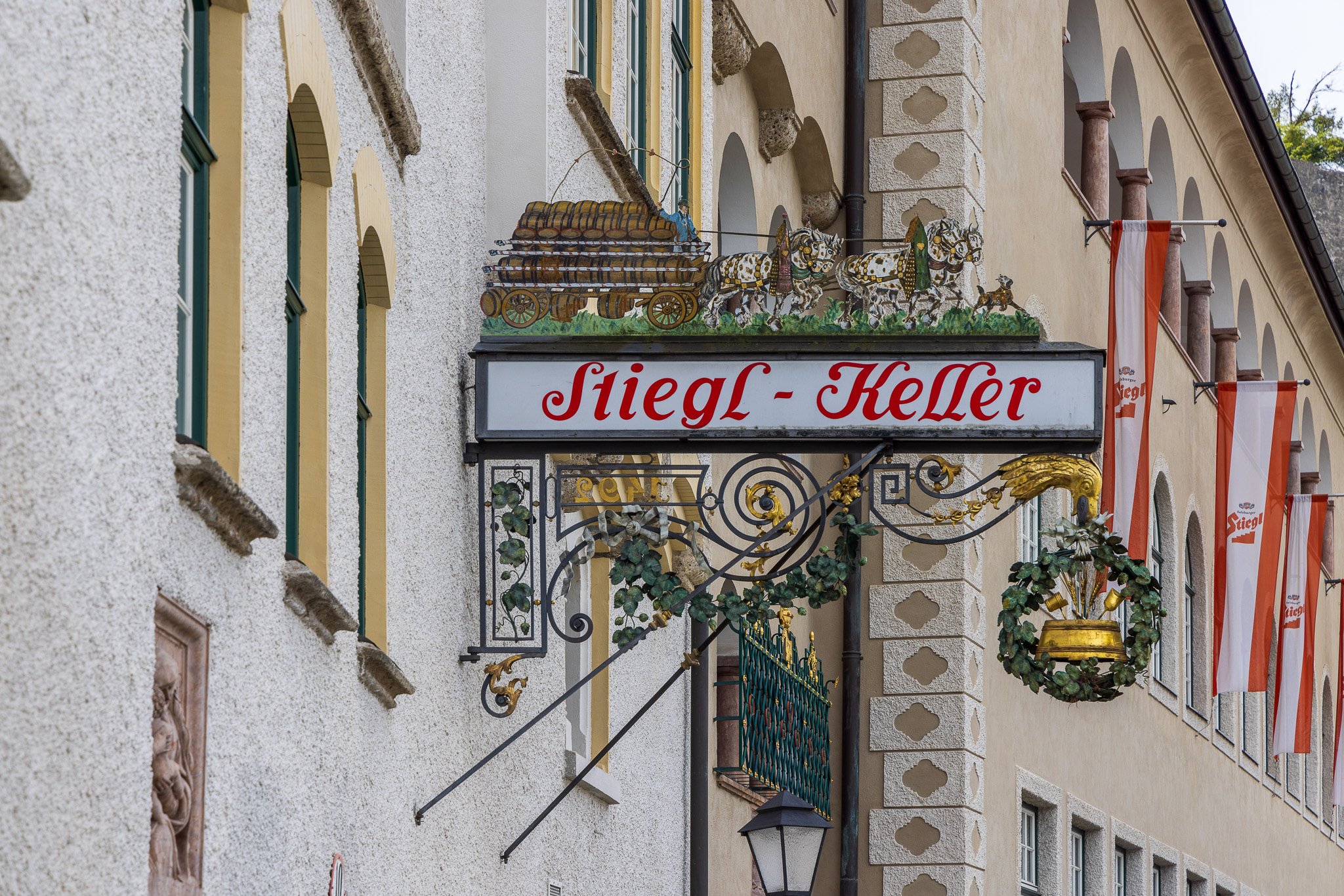
Getreidegasse shop signs: Switch to the standard lens (1x) and shoot the wrought-iron guild signs in late afternoon light when the warm tones hit the metal and the stone. The signs hang at a height that works perfectly at eye level with no cropping needed.
Mirabell Gardens: The formal geometry of the gardens photographs beautifully with iPhone's ultrawide (0.5x). Get low and let the symmetrical hedgerows lead to the fortress in the background. Early morning before the tour groups arrive.
Christmas market bokeh: In December, use Portrait Mode on the market stalls at dusk. The Glühwein lights blur into warm bokeh behind sharp foreground subjects. Works especially well for close-up shots of hands around cups or market goods.
Night Mode on the Salzach: At blue hour, switch to Night Mode and prop the phone on a railing or ledge along the river. The 3 to 5 second exposure smooths the water and captures the fortress reflection without a tripod.
Halide or ProRAW: If you shoot RAW on iPhone, the ProRAW format captures the full dynamic range of the lit fortress against the dark sky. Process in Lightroom Mobile for maximum recovery in the highlights and shadows.
Photography Locations in Salzburg
Salzburg is a small town. You can probably walk across the city in 10-15 minutes. So it is quite easy to find most of the locations. The only challenging location is the castle since it is a steep walk. However, they have a funicular that is much faster.
Getreidegasse
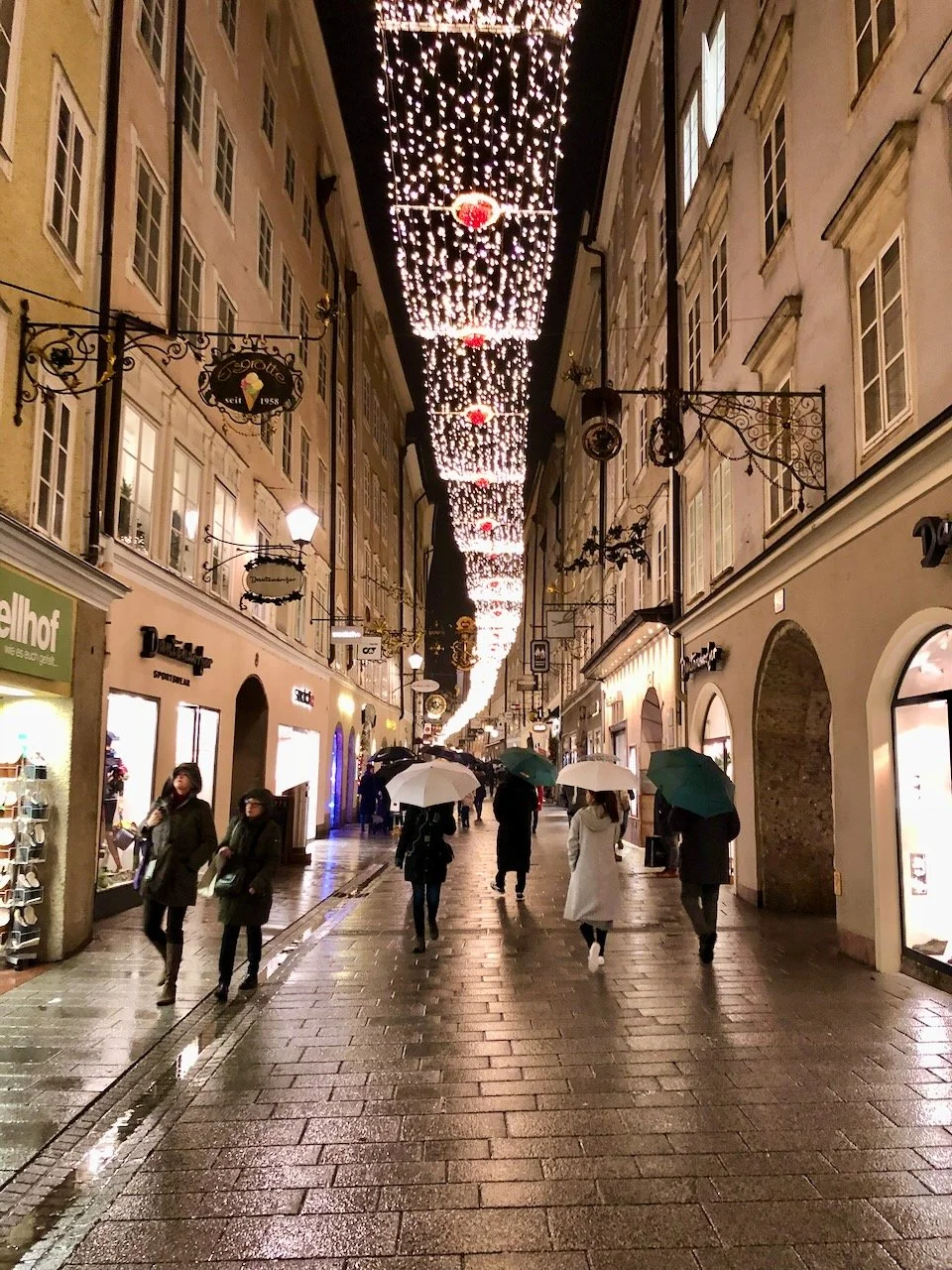
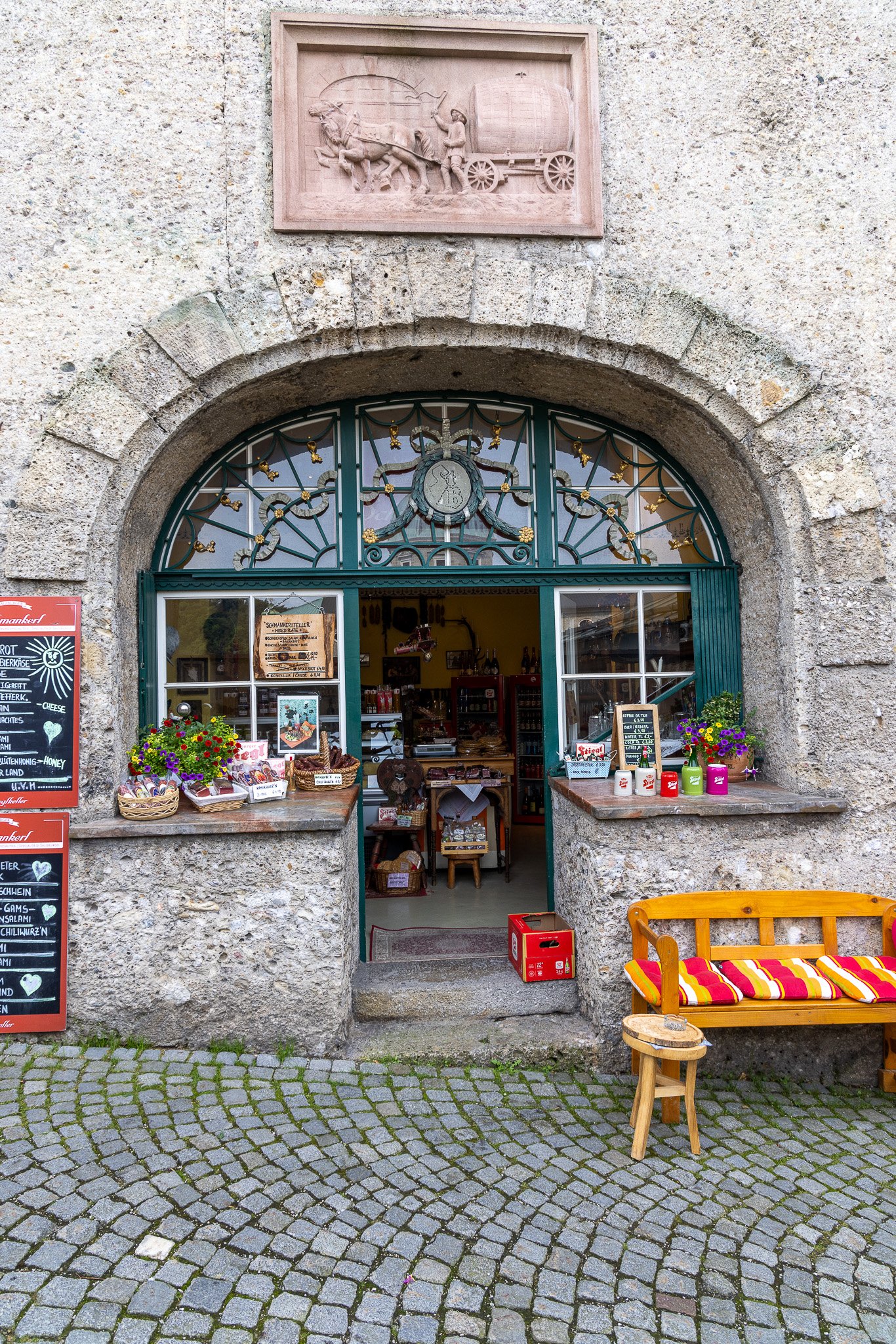
Getreidegasse is the most photographed street in Salzburg, and for good reason. The narrow lane is lined with buildings that date back several centuries, their facades decorated with the wrought-iron guild signs that have marked this street for hundreds of years. Mozart was born at number 9. The buildings are close enough together that the street channels light in a way that feels almost theatrical in the mornings and evenings. Hidden passageways connect the street to the Griesgasse and a series of inner courtyards that most visitors walk past entirely.
For photographers, this is a street that rewards patience. Walk it in the morning before the shops open and the crowds arrive. Walk it again at dusk when the signs catch the last warm light. The passageways off to the north are where you find the quieter compositions: tight alleys, stone archways, and the occasional local who actually lives in this neighborhood.
📷 Pro Tip: Arrive before 8am for clean street shots without crowds. Position yourself at the eastern end of the street and work westward into the light. A 24-35mm focal length captures the signs and the full width of the lane without distortion. The covered passageways on the north side of the street are best in midday light when the sun cuts directly through. For a completely different composition, find the arch that frames the fortress at the western end of the street. Evening at the Christmas season adds market lights that completely transform the atmosphere.
Best time: Early morning or late afternoon. Access: Free, public street. Old Town, 5-minute walk from Residenzplatz.
Makartsteg (Love Lock Bridge)
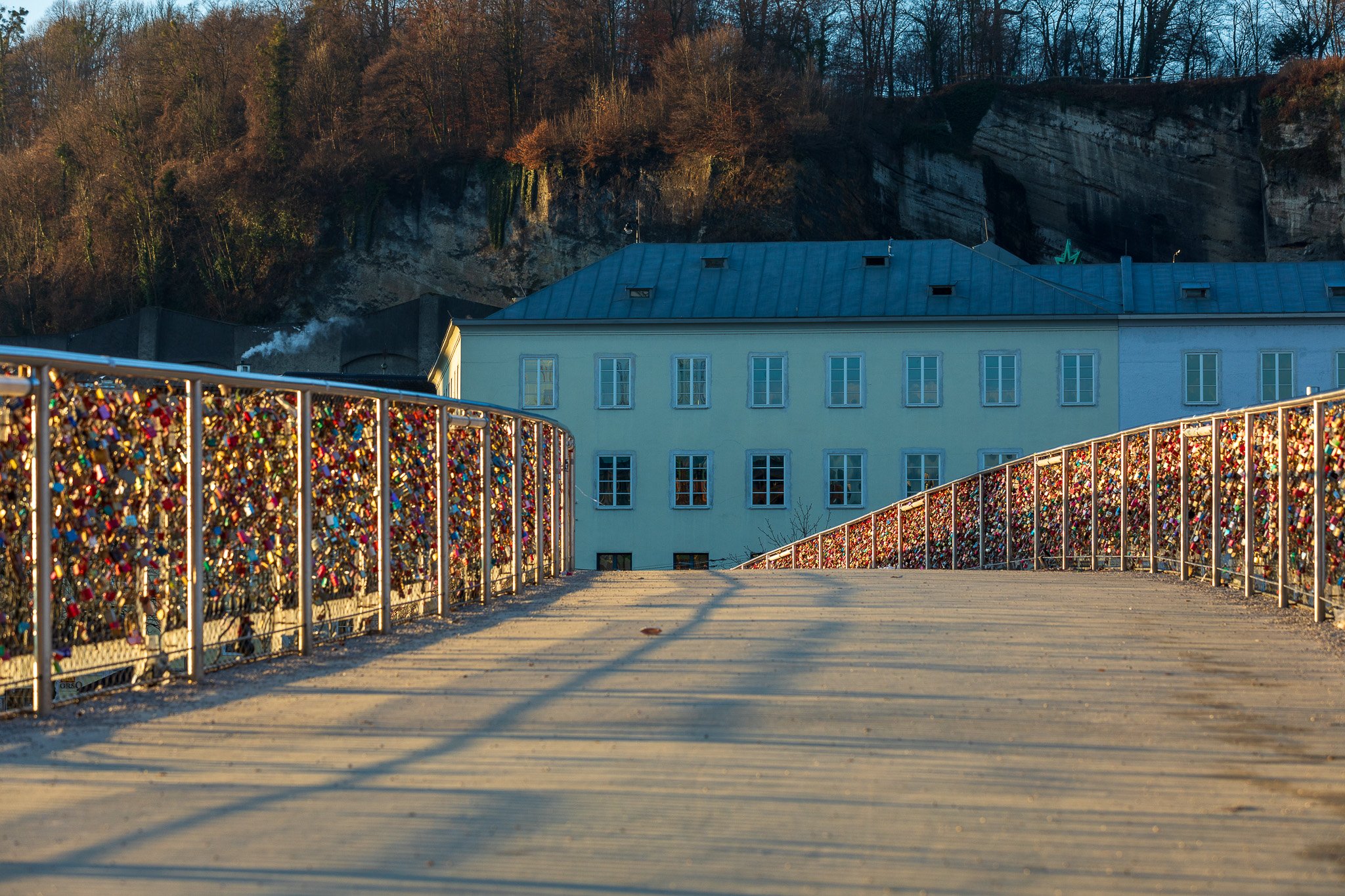
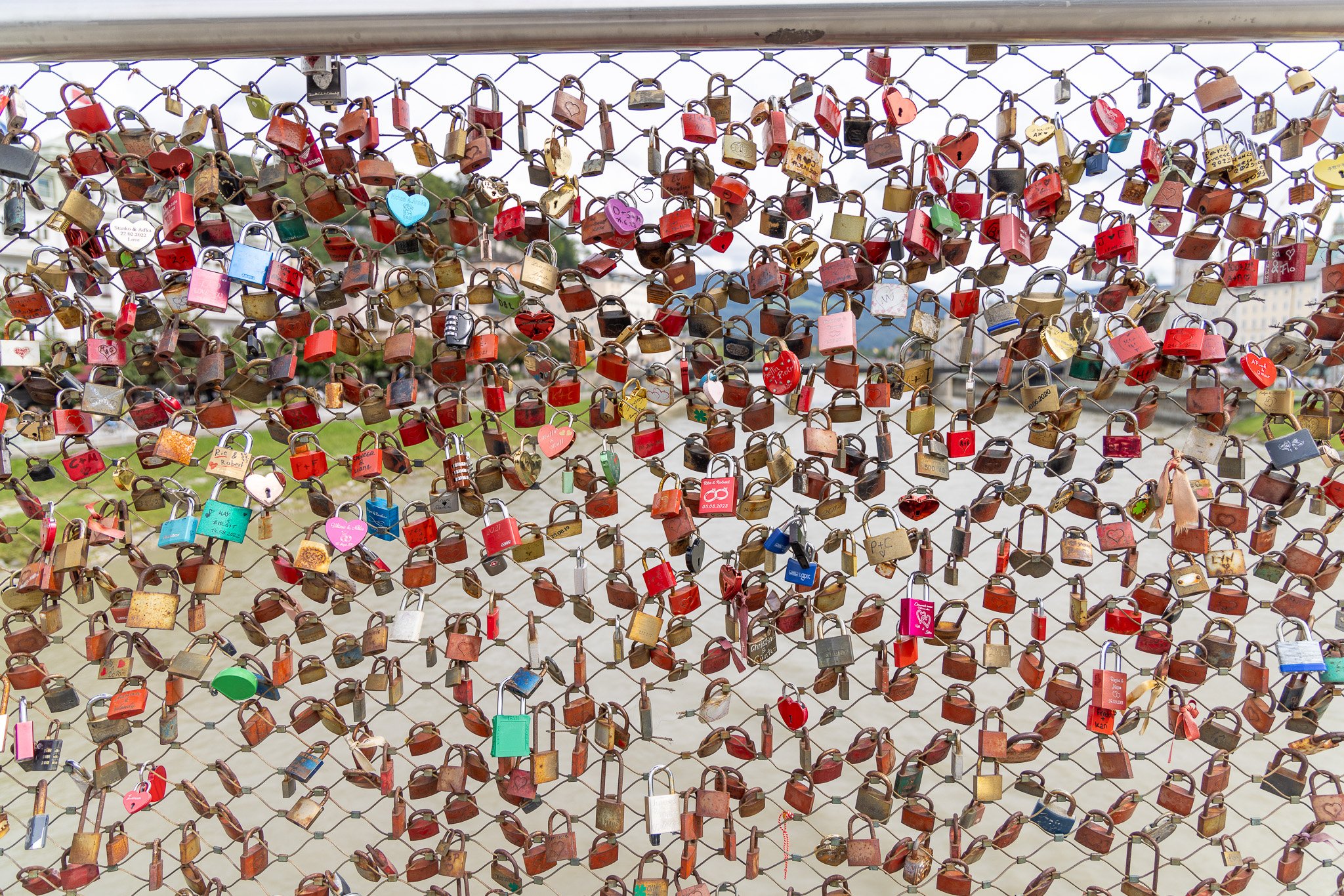
This footbridge connects the right and left banks of the Old Town across the Salzach, and for years, lovers have hung locks along its railings, only to have the city remove them once a year. Shooting through the lock-covered railing toward the Old Town and Hohensalzburg Fortress beyond gives you one of Salzburg's most distinctive compositions.
📷 Pro Tip: Position yourself at the midpoint of the bridge and shoot through the locks toward the fortress for the classic layered composition. A 24-70mm handles both the wide bridge shot and tighter crops on individual locks. Blue hour is the strongest window here, when the fortress is illuminated, and the river reflects the last color in the sky. Come back at different times of year, since the removed and re-added locks change the texture of the railing itself.
Best time: Blue hour. Access: Free, always open.
Getreidegasse Street Photography
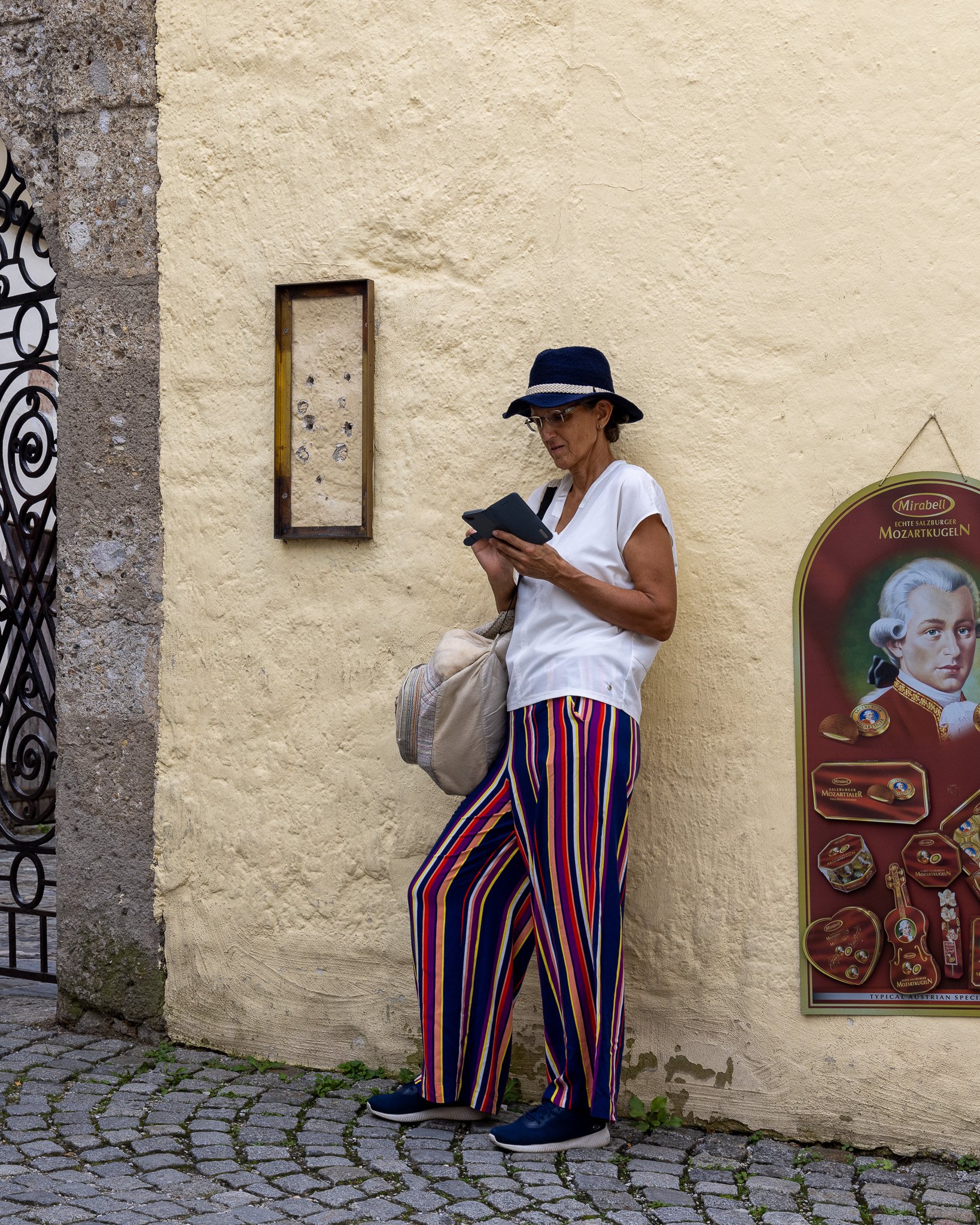
Salzburg's most famous street is known for its wrought-iron guild symbols hanging above the shops, many dating back centuries, and the public passageways that connect the street to hidden courtyards and the parallel Griesgasse. It's the best single stretch in the city for street photography.
📷 Pro Tip: Walk it slowly and look up constantly, the guild signs are the real subject, not just the street itself. A 35mm prime keeps you mobile and unobtrusive. Early morning before shops open gives you clean architectural shots of the signs against the building facades; midday brings foot traffic and genuine street life if that's what you're after. Duck into the passageways, several open onto quiet courtyards that most visitors walk straight past.
Best time: Early morning for architecture, midday for street life. Access: Free, public street.
Kapitelplatz & Sphaera
Stephan Balkenhol's golden globe sculpture, a man standing atop a sphere, has become the unofficial landmark of modern Salzburg since its installation in 2007. It sits in Kapitelplatz with the fortress rising in the background, a striking contrast between contemporary art and centuries-old stone.
📷 Pro Tip: Come early morning or during a quiet weekday window, this square draws crowds and the sculpture works best with clean sightlines around it. A 24-70mm captures the sculpture with the fortress behind it in one frame; move in closer with a 50mm for a tighter portrait-style composition of the figure alone.
Best time: Early morning or quiet weekday hours. Access: Free, public square.

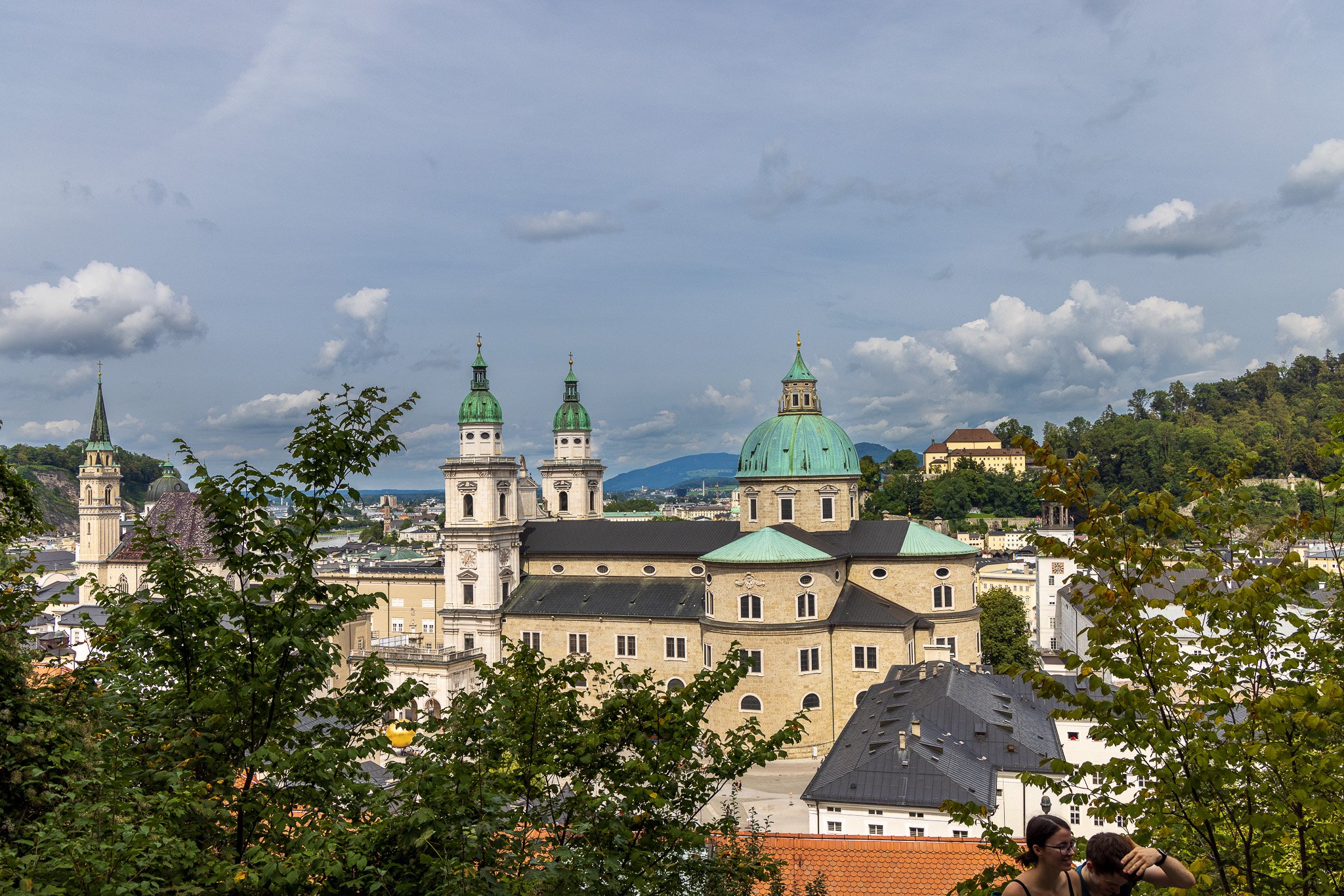
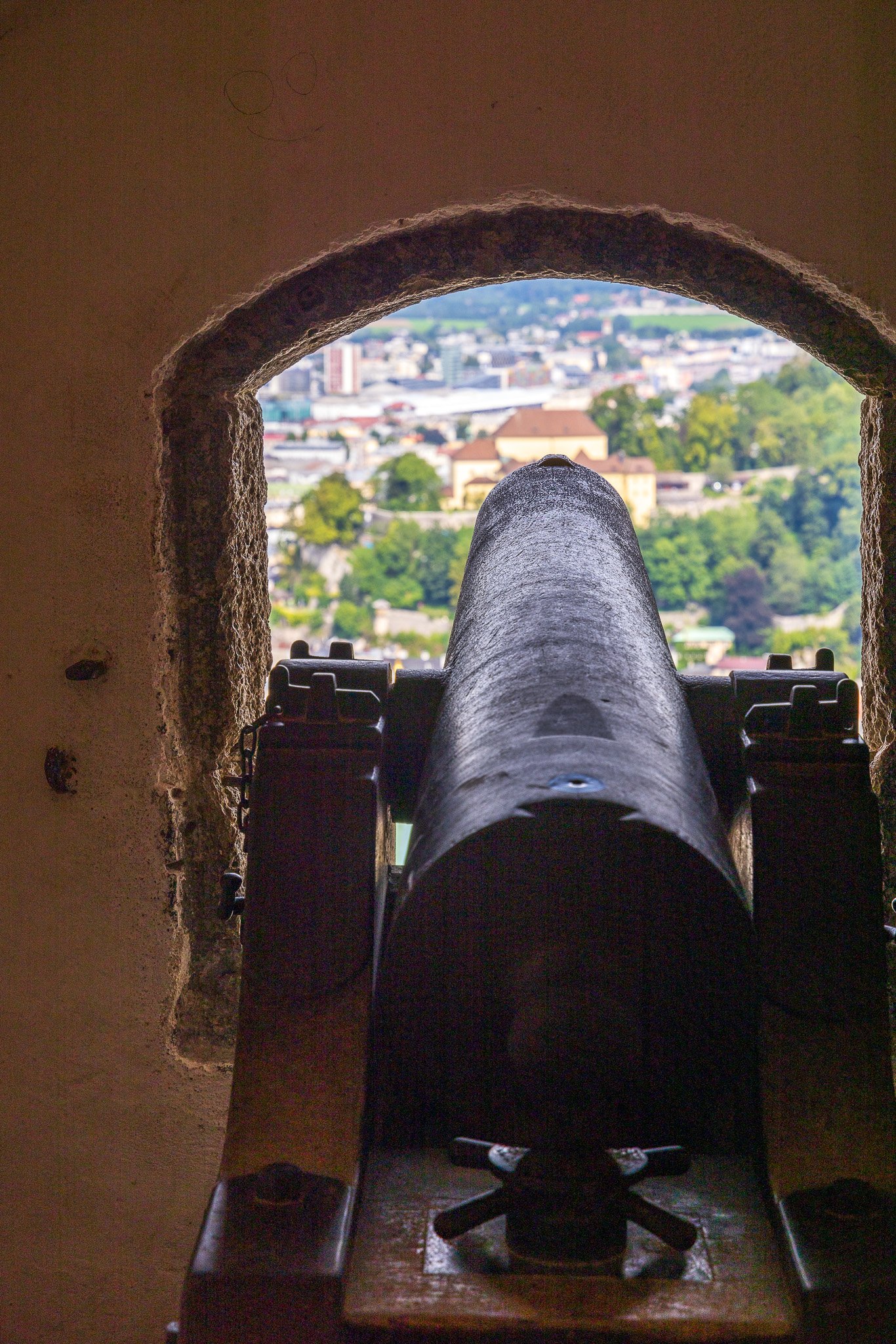
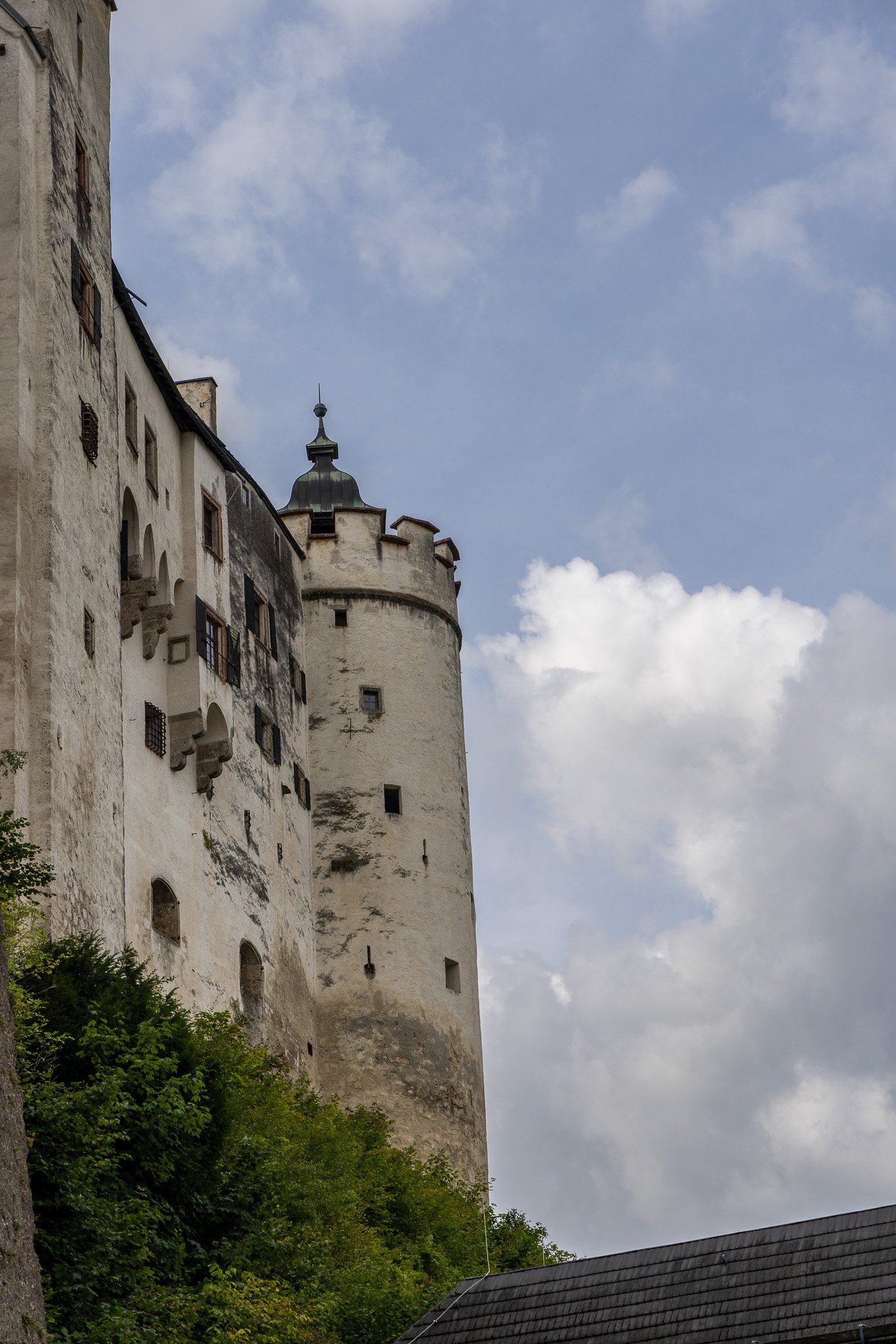
Fortress Hohensalzburg
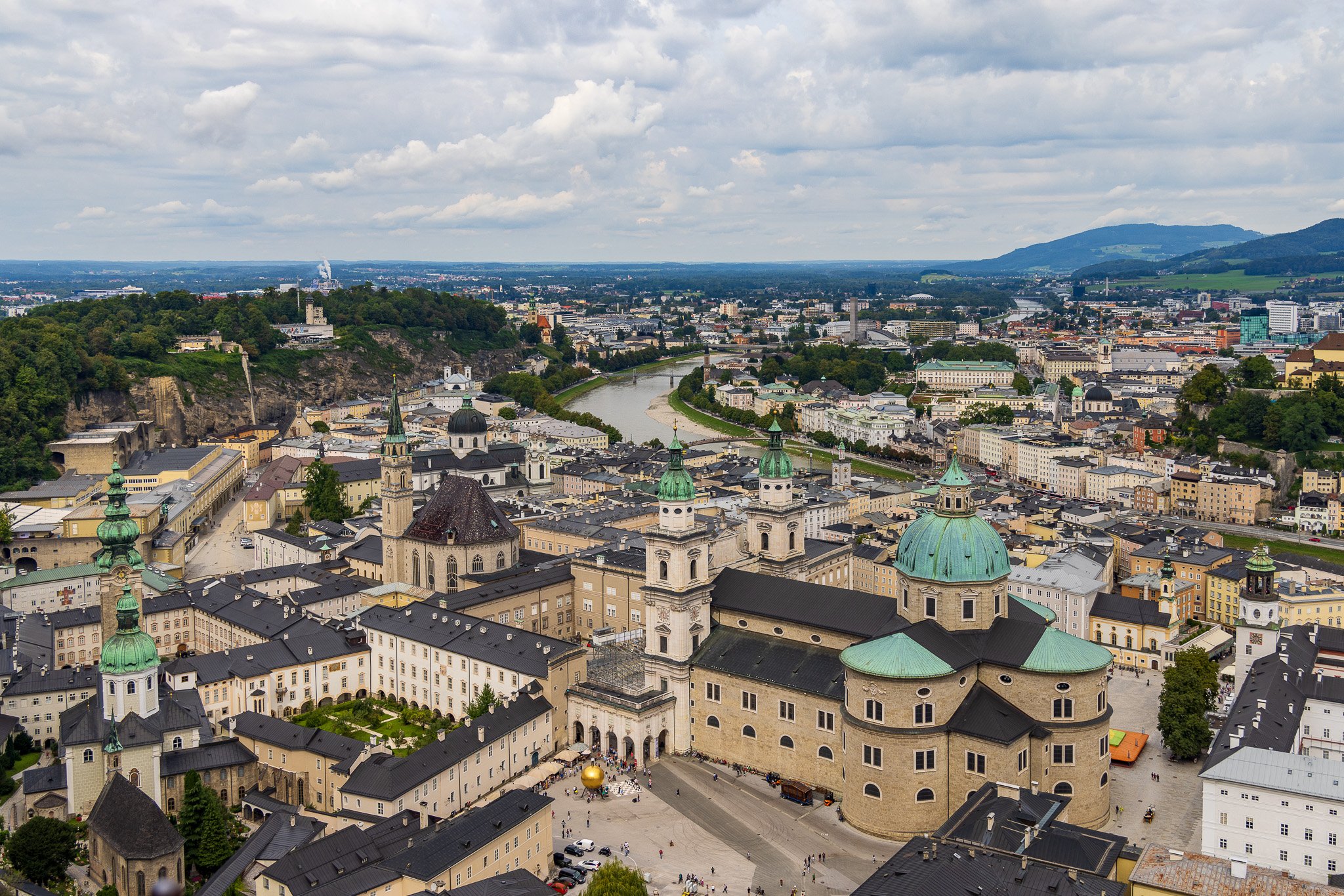
One of the largest surviving 11th-century fortress complexes in Europe, Hohensalzburg sits on a hilltop overlooking the entire city. Built to protect the prince-bishops, it was never actually attacked despite its imposing scale. The funicular (Festungsbahn) makes the ascent quick; walking up is a genuine challenge worth skipping unless you want the exercise.
📷 Pro Tip: Head straight for the terrace on arrival, that's your primary shot, sweeping views over Salzburg's baroque rooftops toward the Salzach and the surrounding hills. A 24-70mm covers the rooftop panorama; a 70-200mm compresses the layers of the Old Town below. Golden hour and blue hour both work well here, the warm stone of the fortress itself photographs beautifully in late afternoon light. Buy the combined funicular-and-entry ticket at the station to save time.
Best time: Golden hour to blue hour. Access: Funicular and entry ticket combined at the station.

To get to the castle, jump on the Festungs Bahn funicular located in the Old Town. Alternatively, you could walk up, which is quite challenging. Tickets for the funicular and entrance to the castle can be purchased as an all-in-one at the funicular station.
Mirabell Palace & Gardens
Built in 1606 by Prince Archbishop Wolf Dietrich, Mirabell Palace houses the Marble Hall and the ornate Angel Staircase, both genuinely striking interior subjects, while the palace itself now serves as Salzburg's municipal offices.
📷 Pro Tip: The gardens outside are the more accessible and reliable shoot, formal hedges and flower beds with the fortress visible in the distance across the river. A 24-70mm handles the garden compositions; if you can access the Angel Staircase, a 16-35mm captures its full sweep in the tight interior space. Morning light works best for the garden's symmetrical layout.
Best time: Morning. Access: Gardens free; interior access varies, check current visiting hours.

Mozarts Geburtshaus
Mozart was born here in 1756, at Getreidegasse 9, in what's now a museum dedicated to his life and work. Several other Mozart-related sites are scattered throughout the city, including his later residence and the Magic Flute House.
📷 Pro Tip: This is more of a cultural stop than a dedicated photography session, the exterior facade along Getreidegasse is worth a frame as you pass, but the real value is the context it adds to the rest of your Getreidegasse walk. A 35-50mm lens handles the tight street framing well.
Best time: Any time, as part of a Getreidegasse walk. Access: Museum admission required for the interior.
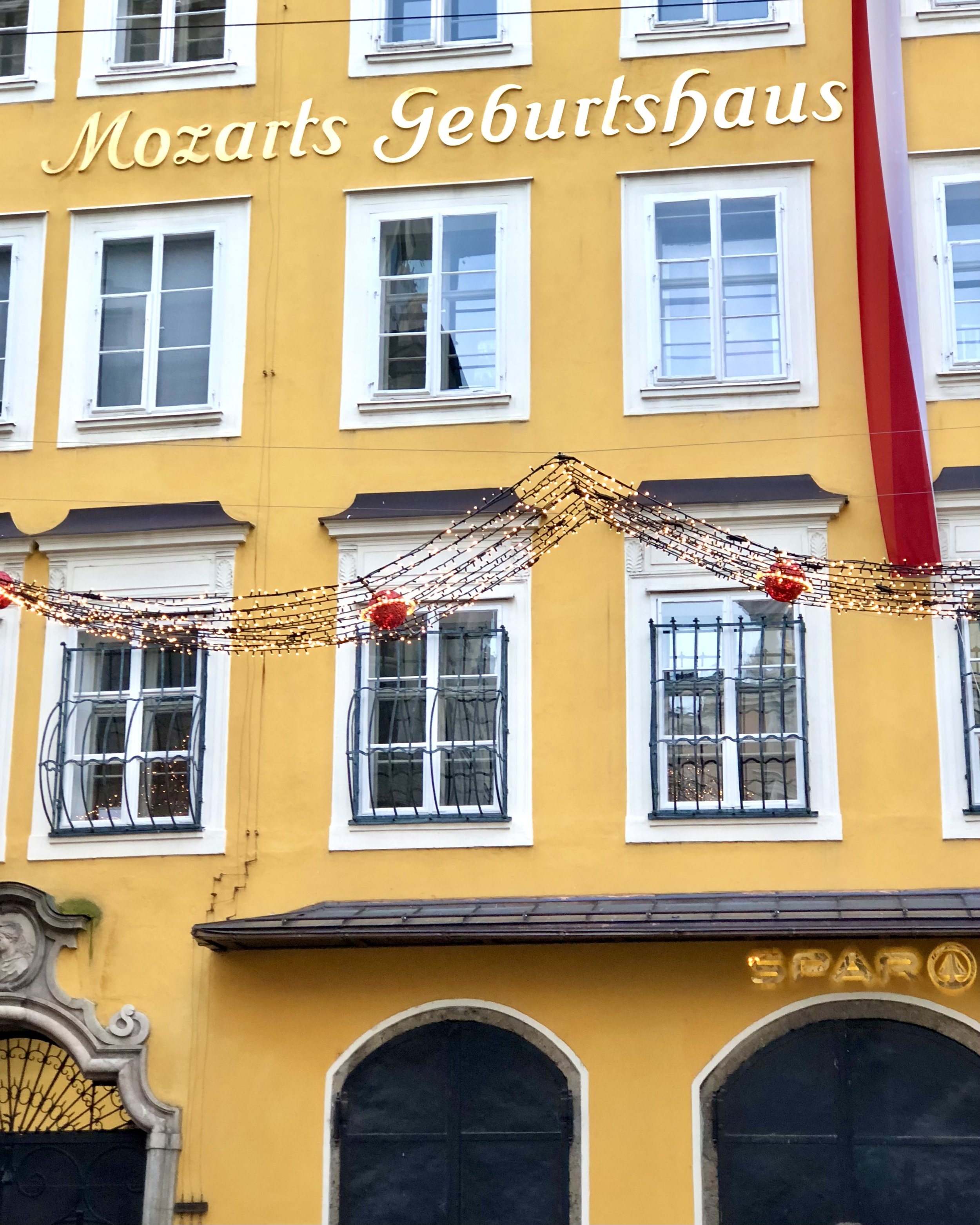
In addition to Mozart’s birth house, there are many other Mozart-related landmarks in Salzburg where he lived, composed, and performed during the course of his lifetime, including the Mozart Residence, the Mozart Sound and Film Collection, and the Magic Flute House.
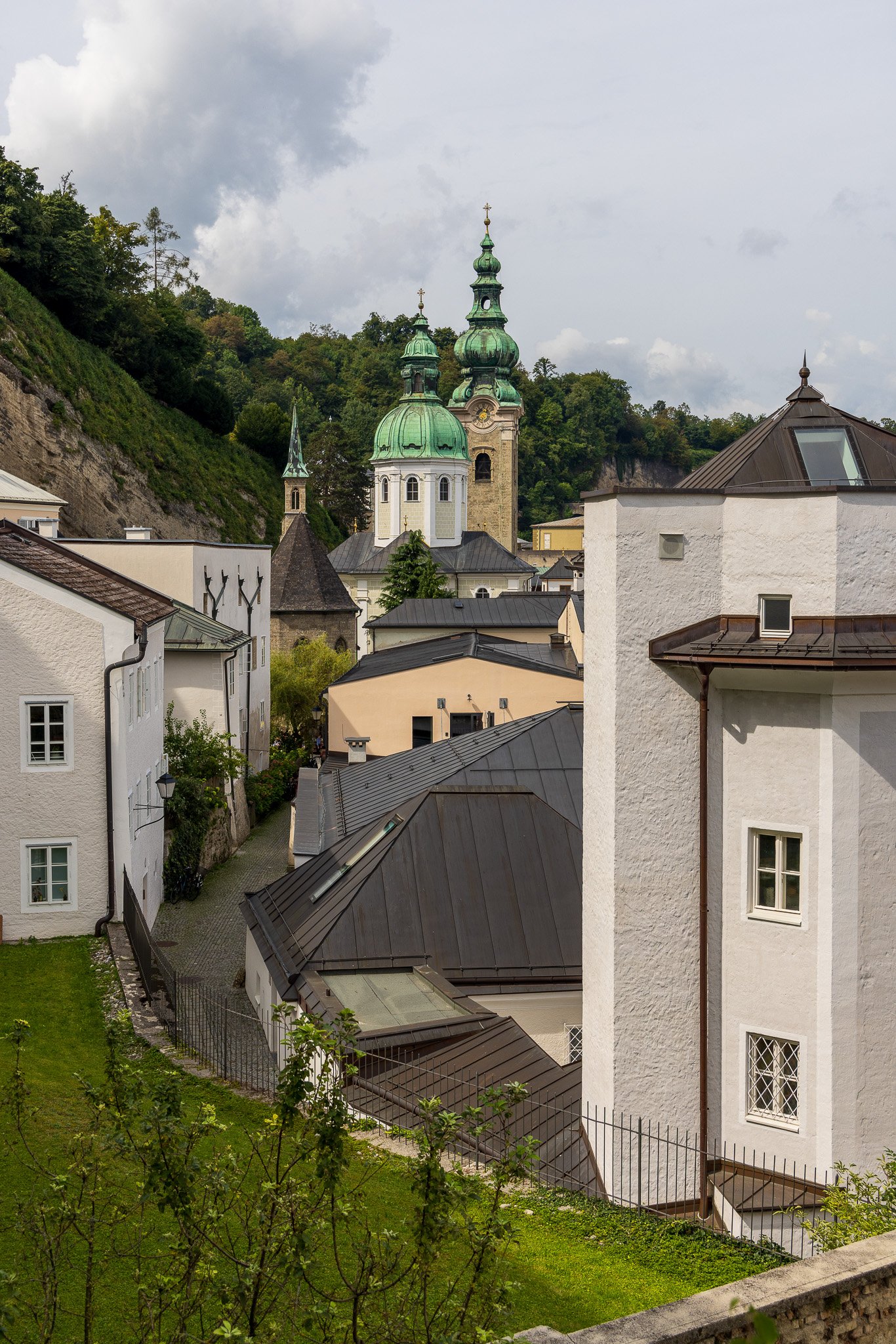
Petersbrunnen and St. Peter Church
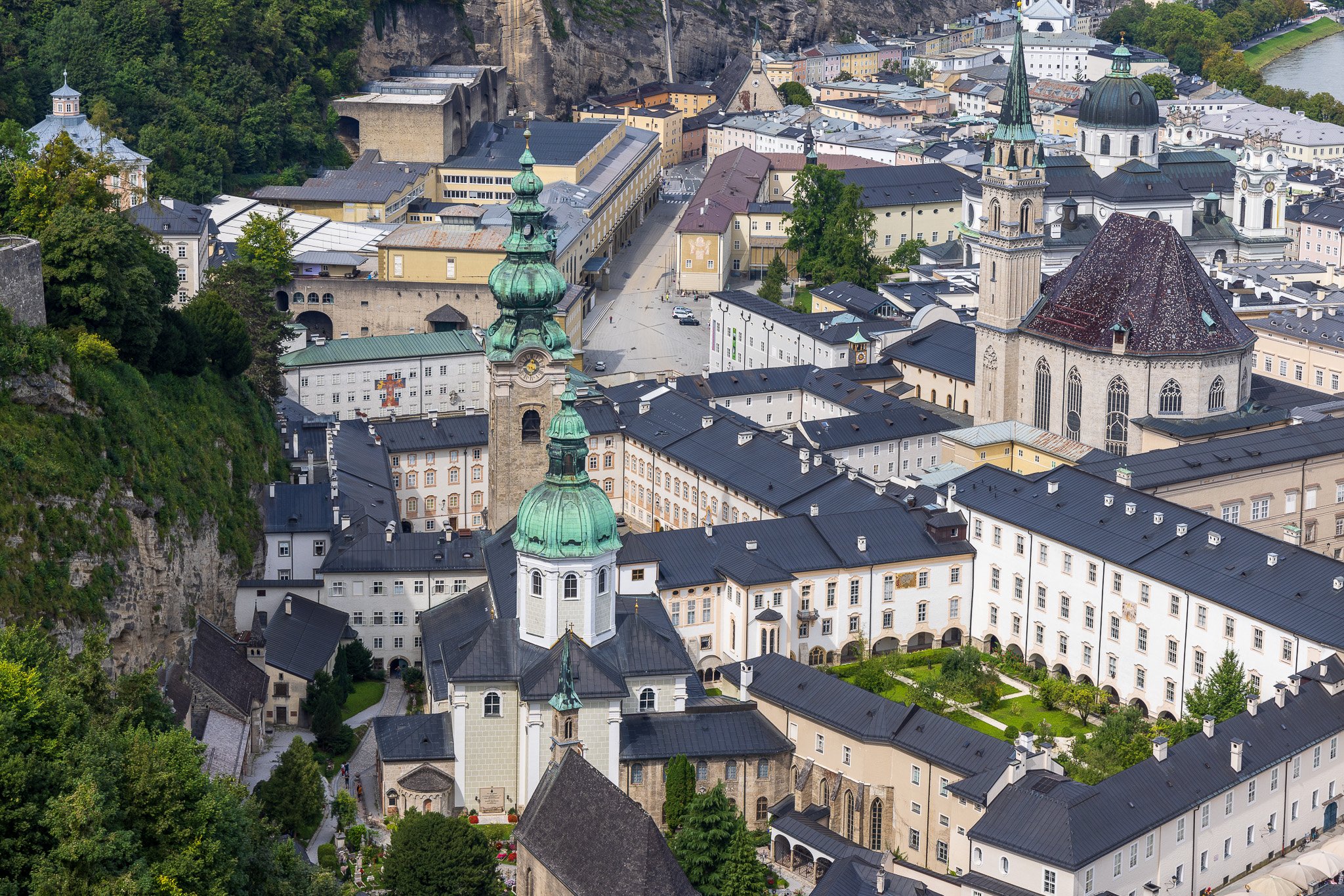
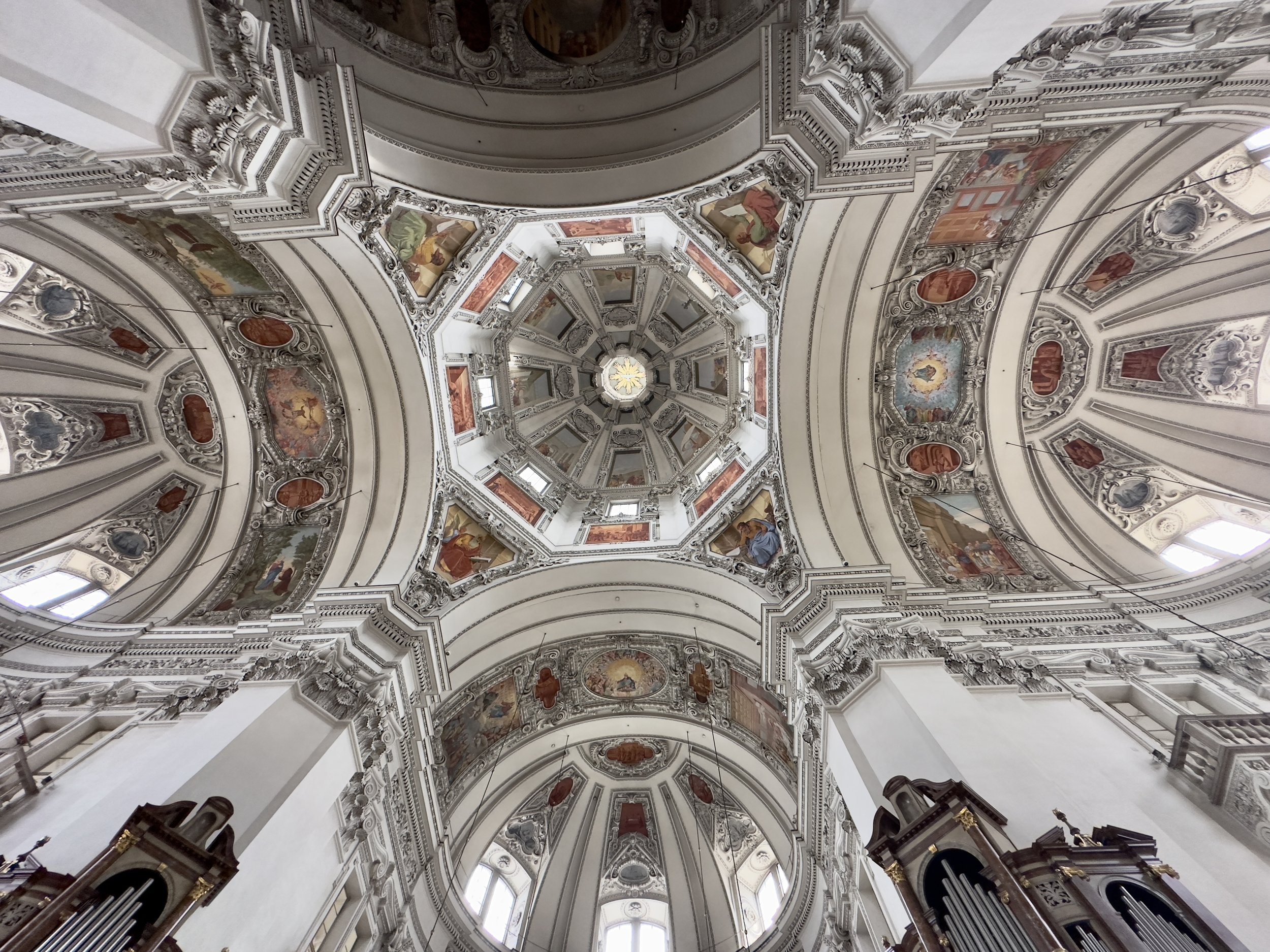
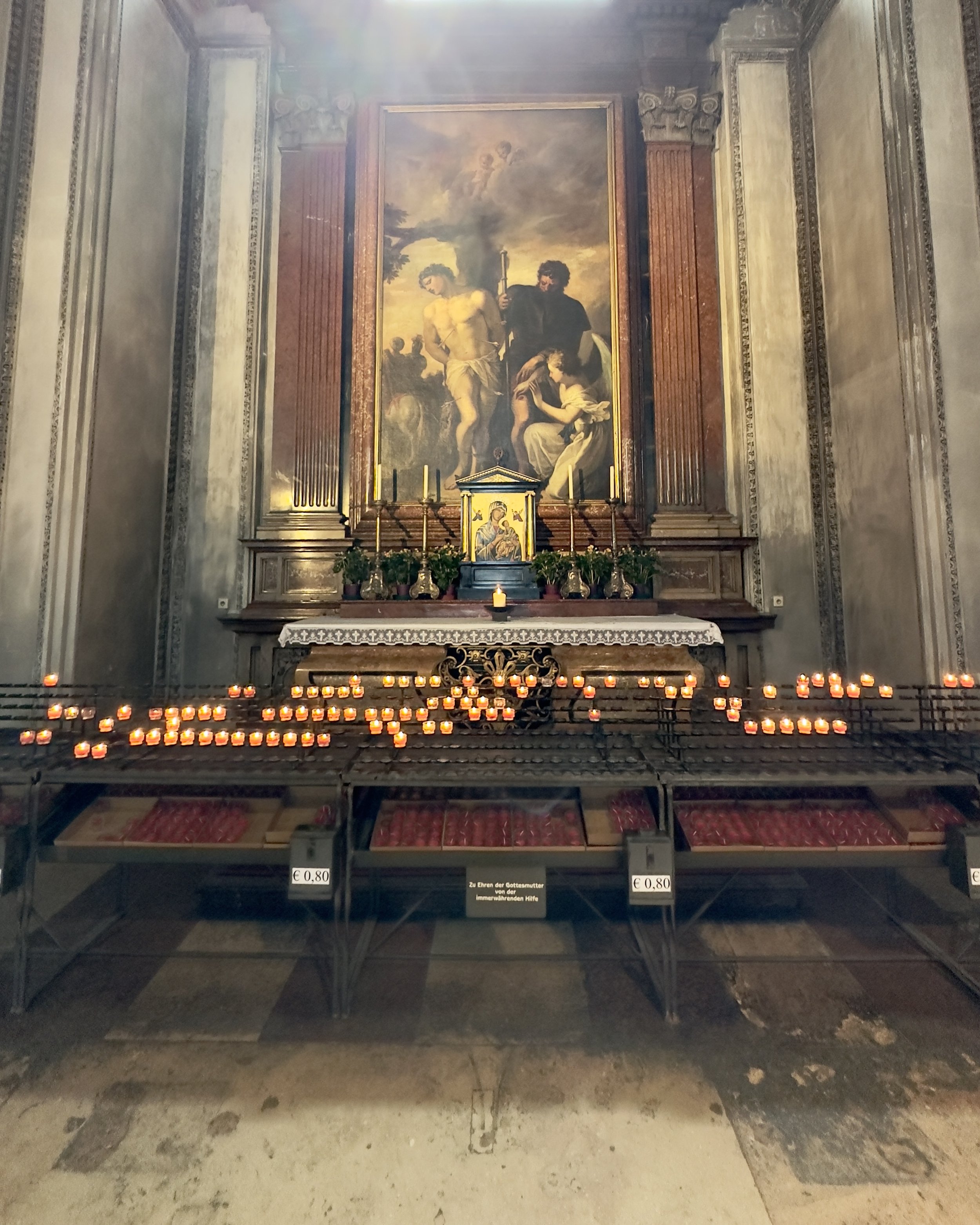
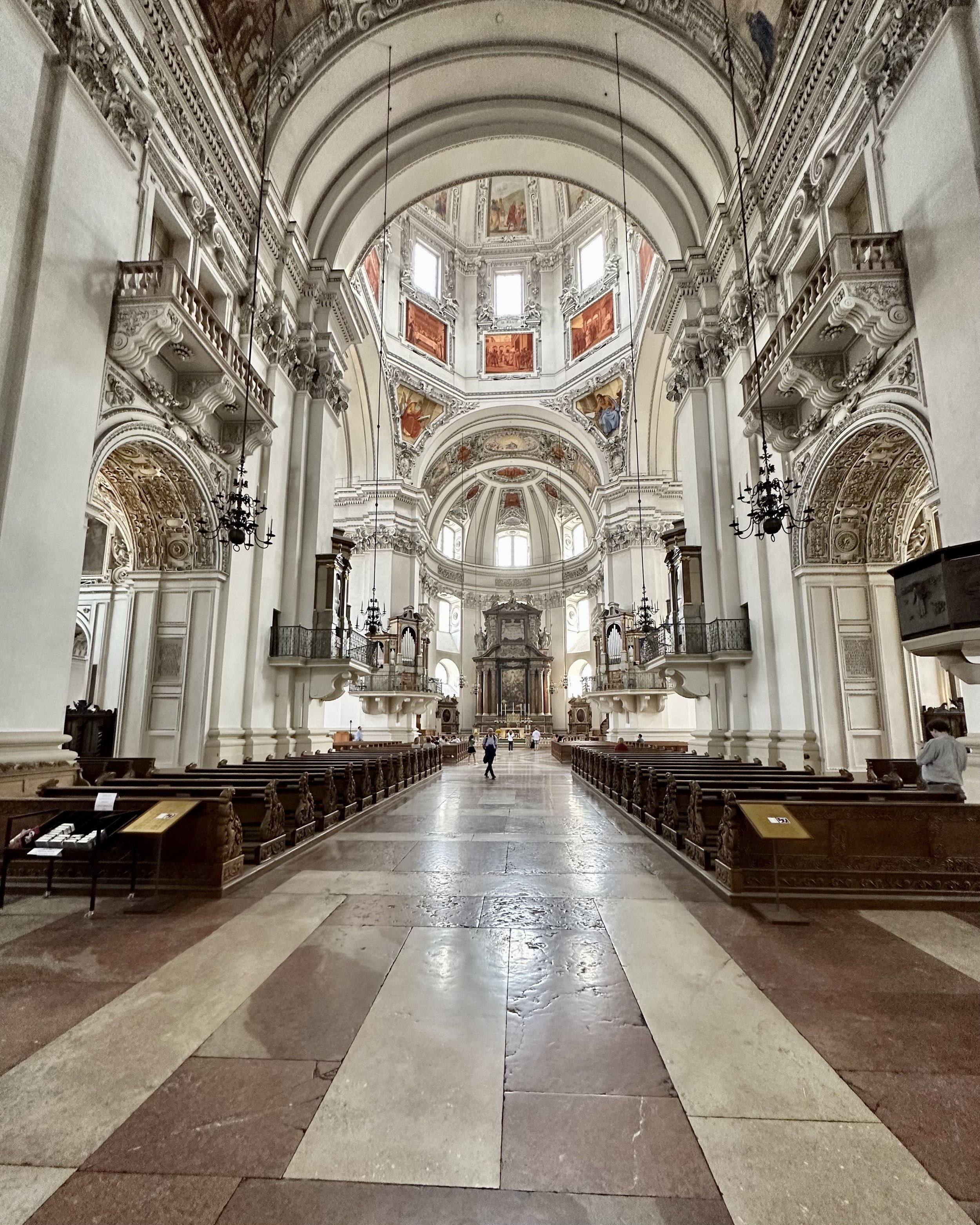
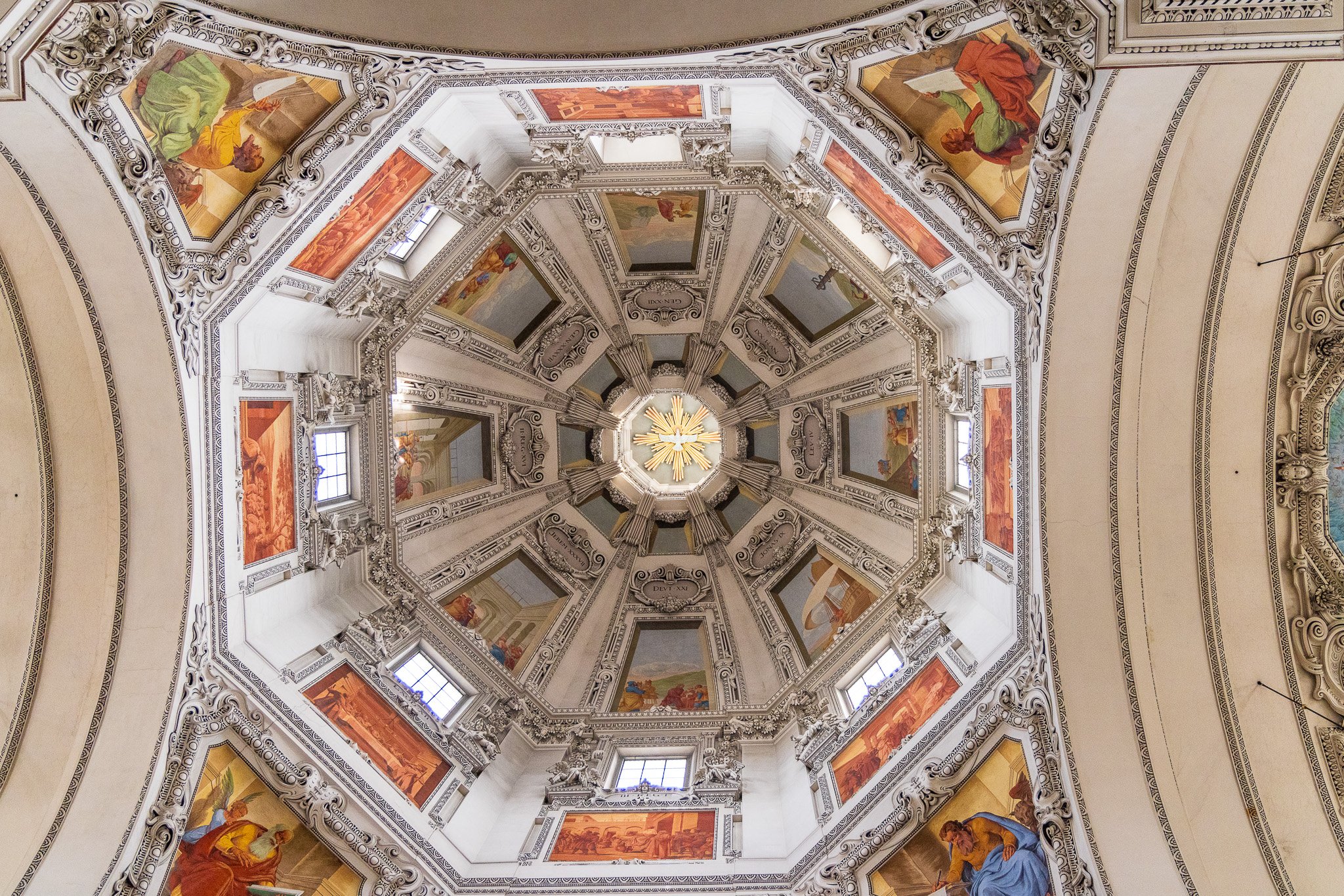
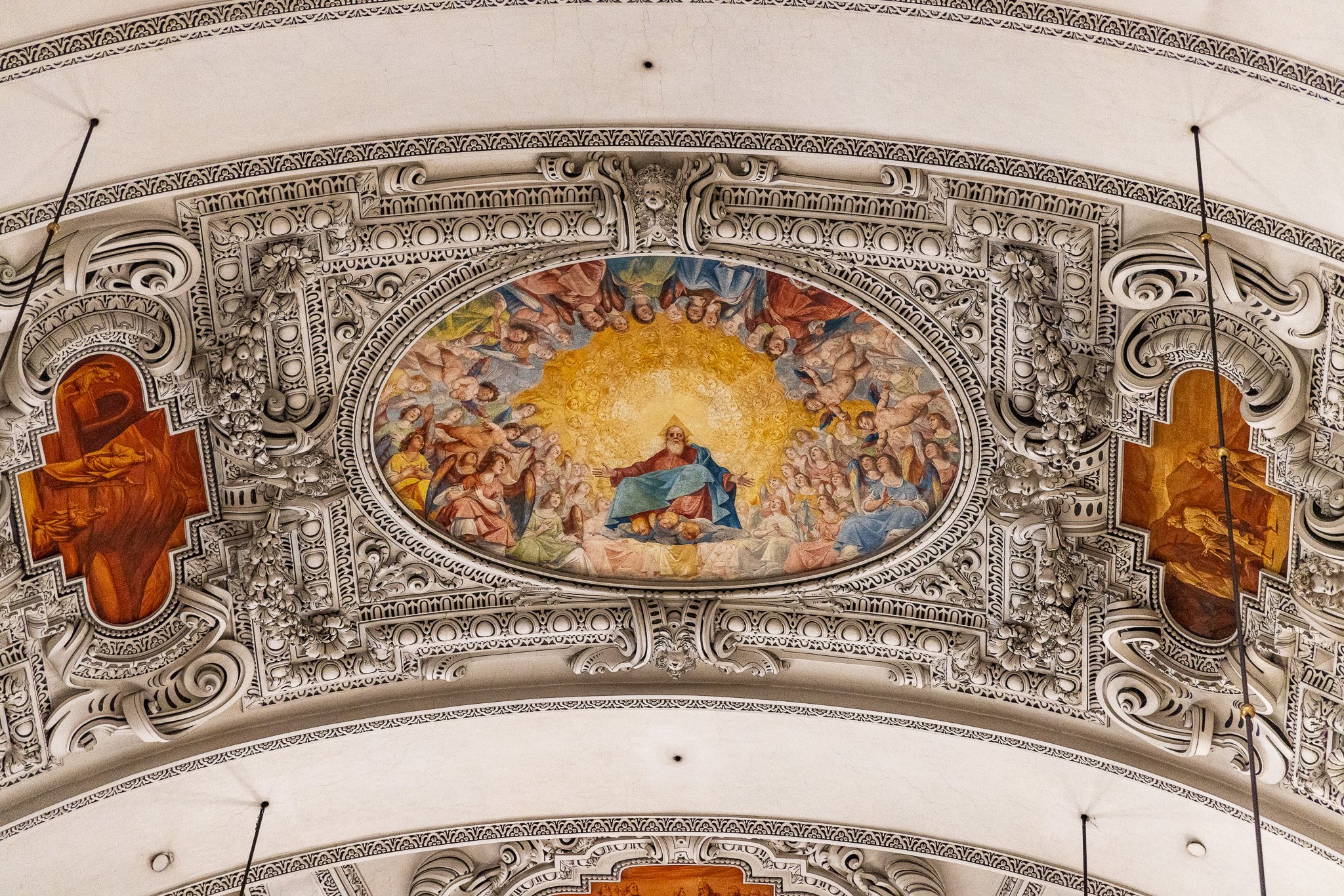
St. Peter's Church in Salzburg is one of the oldest churches in the German-speaking world, with origins in the 7th century and a baroque interior rebuilt in the 17th and 18th centuries. The interior is worth photographing for its gilded altars, frescoed ceiling, and the quality of light that comes through the nave at certain times of day. The small courtyard outside, with the Petersbrunnen fountain and the cemetery pressed against the cliff face, is photographically strong in any season.
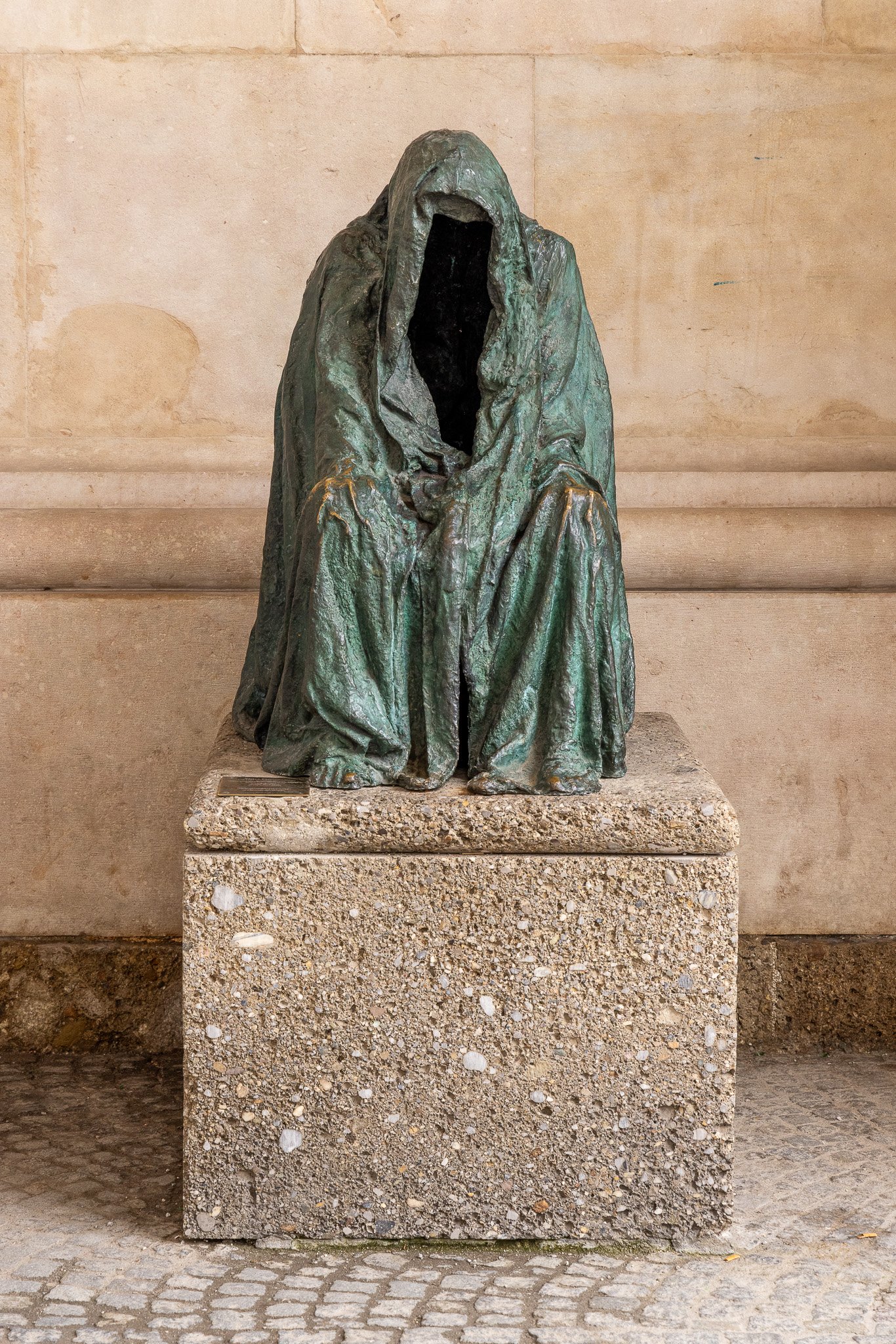
The cemetery adjacent to the church is one of the most unusual burial grounds in Austria: graves are cut directly into the Mönchsberg rock face, with chapels carved into the cliff. In November light, it is remarkable.
📷 Pro Tip: There is a small entrance fee for the church. Tripods are not always permitted; use a high ISO and image stabilization for interior shots. The nave is best photographed from the main entrance looking toward the altar at a 16-24mm focal length. For the cemetery, visit on an overcast day when the light is even across the rock face and the carved chapels. The Petersbrunnen fountain works well as a foreground element with the church facade behind it at 35-50mm. The courtyard catches warm afternoon light from the west in the hour before sunset.
Best time: Midday for interior light; afternoon for the courtyard. Access: Small entrance fee. Located directly next to St. Peter Stiftskulinarium, Old Town.
The Christmas Market
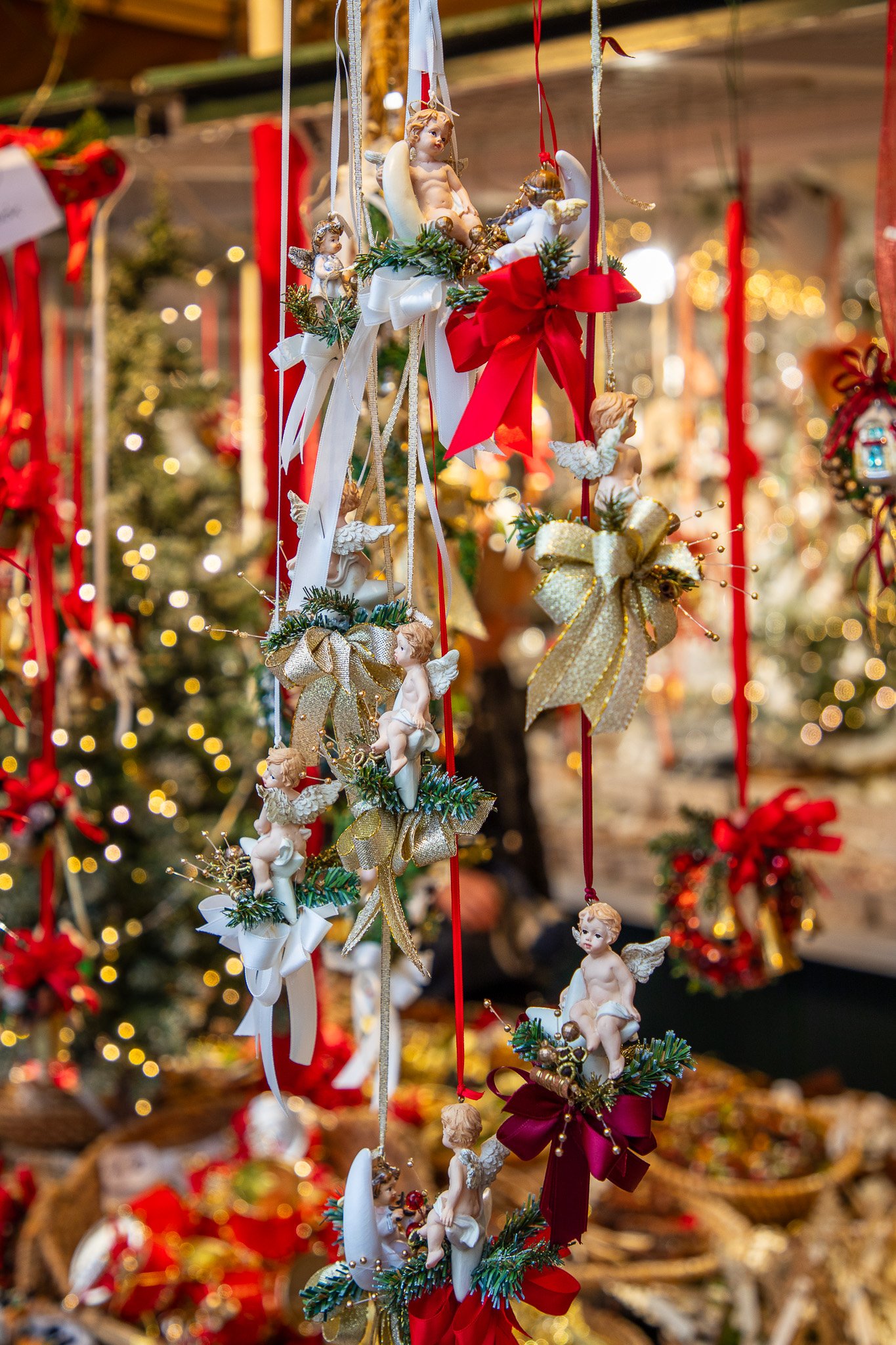
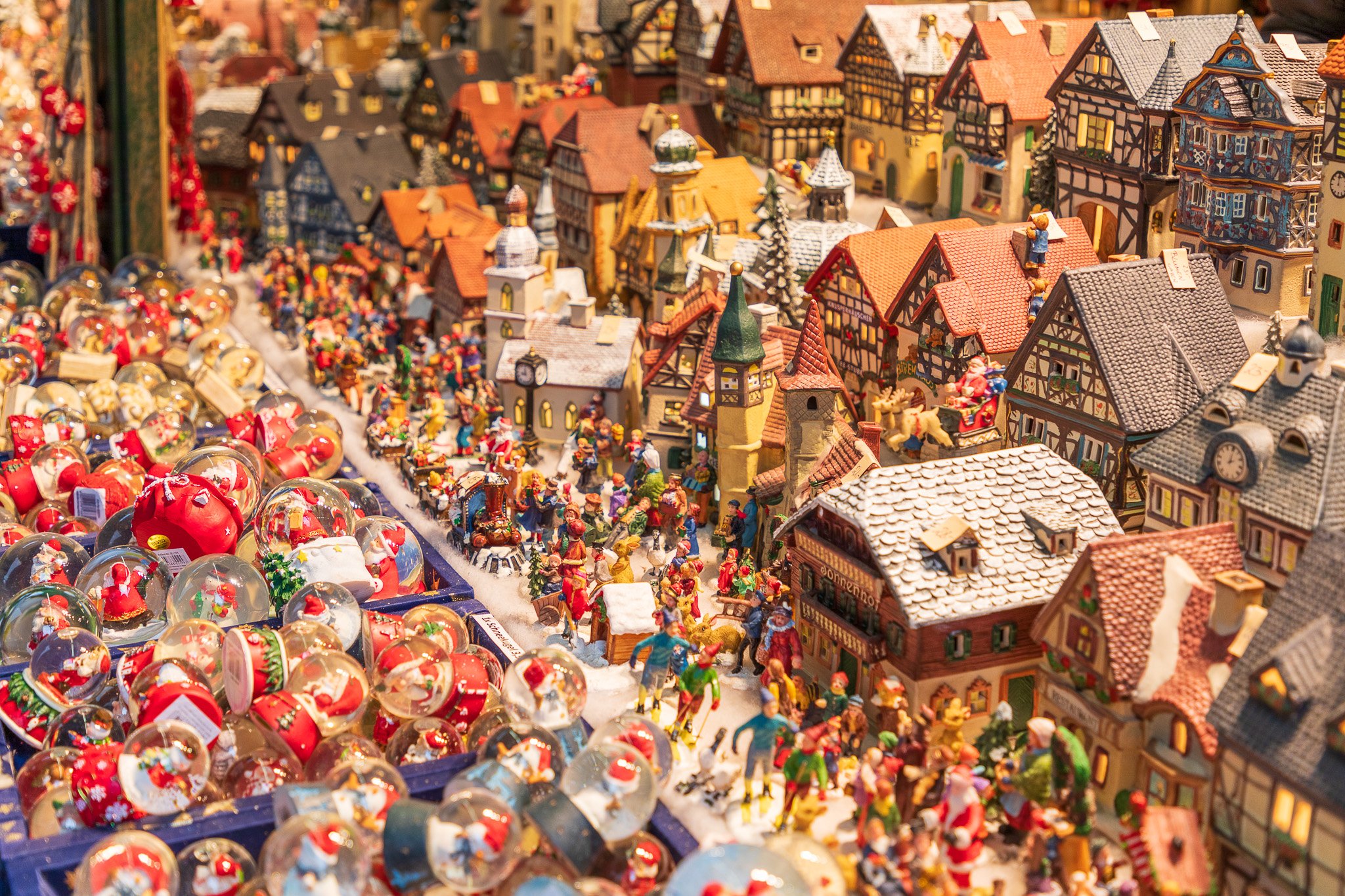
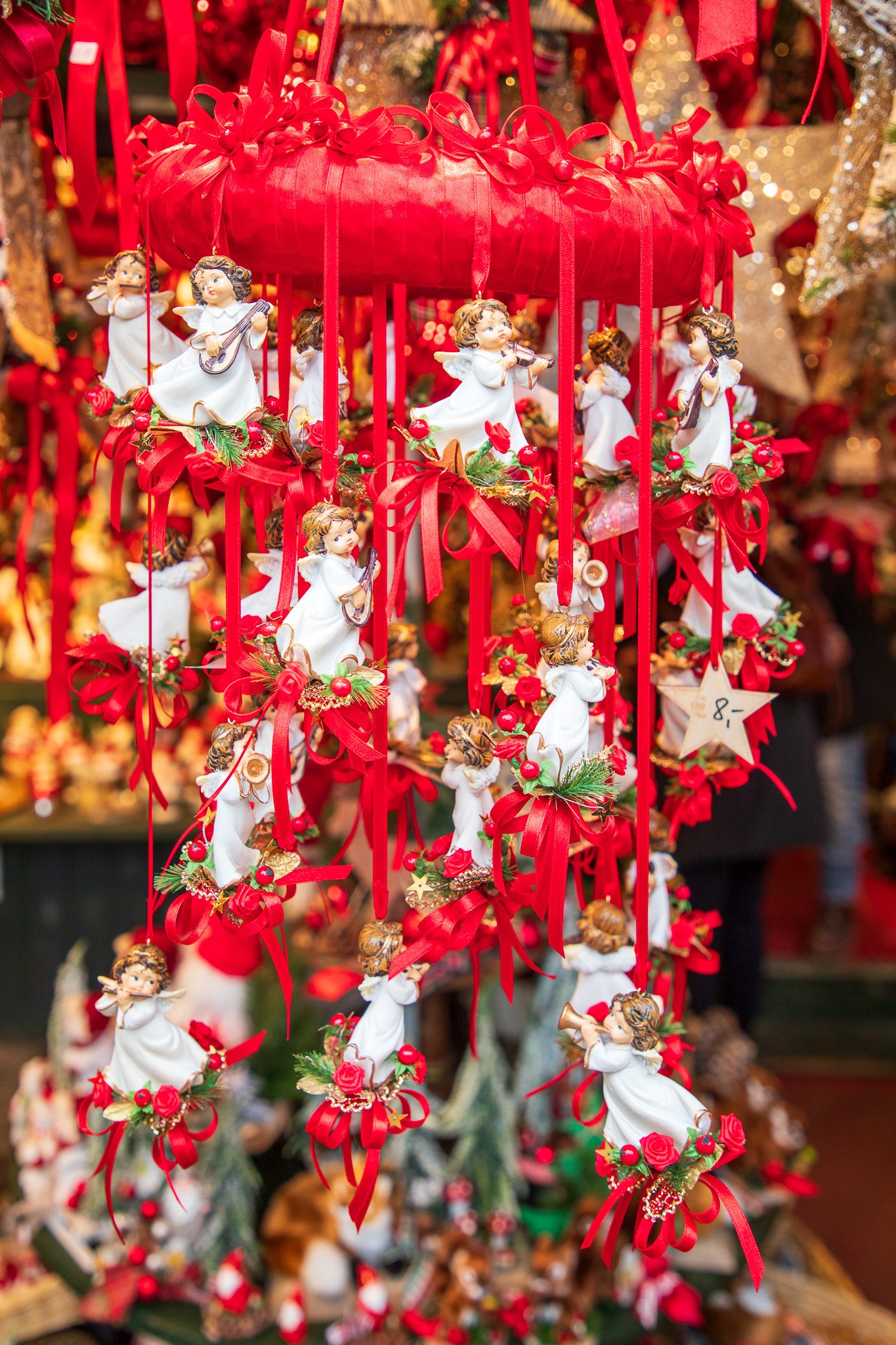
The Salzburg Christkindlmarkt at the Dom and Residenzplatz has deep historical roots and is one of the world’s oldest Christmas markets. Its unique setting in the heart of Salzburg’s World Heritage-listed Old City, the traditional market stands, and its long history make the Salzburg Christkindlmarkt a truly special market.

Day Trips from Salzburg
There are so many places you could visit for a day trip from Salzburg. I would highly recommend Hallstatt, which is a place everyone has most likely heard of visiting. Another excellent idea is to drive 20 minutes into Germany and visit the Maria Gern Church.

The Maria Gern Church in Germany
Festivals and Events
Salzburg Christmas Markets (Advent Season, late November through December) The Christkindlmarkt at Residenzplatz and Domplatz is one of the oldest and finest Christmas markets in the world. The combination of the baroque cathedral, the fortress rising above, and the warm market lights creates a photographic environment that is difficult to match anywhere in Europe. For photographers, the market is best in the first week, before the heaviest December crowds arrive. Arrive at dusk and stay through blue hour. The stalls stay lit until late evening, and the cold air adds a quality to the atmosphere that photographs very well. Dress for real winter temperatures.
Salzburg Festival (July and August) The Salzburg Festival is one of the premier classical music and opera events in the world, drawing the global cultural elite to the city for several weeks each summer. The city transforms during the festival period: black tie in the streets, sold-out restaurants, and a palpable energy that is unlike any other time of year. Photographically, the pre- and post-performance crowds outside the Felsenreitschule and the Grosses Festspielhaus are extraordinary street photography opportunities. Tickets for performances should be booked months in advance. Hotels and restaurants fill equally fast.
Rupertikirtag (September) The Rupertikirtag is Salzburg's traditional folk festival held annually in late September, celebrating the feast of St. Rupert, the city's patron saint. The Old Town fills with people in traditional Tracht, folk music, and fairground stalls. For street and people photography, it is one of the most visually rich events of the year. The celebration is genuine and community-rooted, not staged for tourists.
Mozartwoche (January) Mozart Week draws international orchestras and conductors to Salzburg every January for a concentrated festival of Mozart's work. The city is quieter than in summer, hotel rates are lower, and the winter light on the baroque Old Town can be exceptional on clear days. For photographers who want the city with space to breathe, January around Mozartwoche is a strong option.
Whit Monday Markets and Spring Festivals (May) The weeks around Pentecost bring open-air markets and the first significant outdoor activity of the spring season to the Old Town. Flowers in the market stalls, the Salzach running high with snowmelt, and the light beginning to extend into the evening hours. A quieter but genuinely photogenic time to visit.
Frequently Asked Questions About Visiting Salzburg
Is Salzburg worth visiting outside of Christmas season?
Yes, every season has real character here. September and October bring beautiful weather and some of the finest light of the year on the baroque facades; spring is soft and green along the Salzach. Christmas is special, but it's not the only reason to come.
Do you need a car in Salzburg?
No, the Old Town is compact enough to walk end to end in about fifteen minutes. A car becomes useful for day trips to Hallstatt or across the border to the Maria Gern Church in Germany.
Is the Christmas market worth planning a trip around?
Yes, absolutely. The Salzburg Christkindlmarkt at the Dom and Residenzplatz is one of the oldest Christmas markets in the world, set inside a World Heritage Old Town, and it genuinely transforms the entire city.
What are the best photo spots in Salzburg?
The Makartsteg bridge looking toward Hohensalzburg Fortress, Getreidegasse's wrought-iron guild signs, and Kapitelplatz with the Sphaera sculpture are three that consistently deliver. The full list is above.
Can you fly a drone in Salzburg?
Check current Austrian and EU drone regulations before flying, particularly around the fortress and the historic Old Town, both of which likely carry restrictions given the density and protected status of the architecture.
What surprised you most about Salzburg?
The Christmas markets. Knowing about them and actually standing in Residenzplatz with the fortress lit above you, the smell of Glühwein and cinnamon in the air, are two completely different experiences. It's worth planning a trip around.
How many days do you need in Salzburg?
Two nights is genuinely enough given how compact the city is, though three days lets you add a day trip to Hallstatt without feeling rushed.
Is Salzburg worth combining with Vienna or Hallstatt?
Yes, both work well. Hallstatt makes an easy day trip; Vienna is a natural extension for a longer Austrian itinerary, offering an entirely different, more grand imperial character.
Final Thoughts
Salzburg feels like a city that was designed with photographers in mind. Mountains in the background. A river cutting cleanly through the center. Fortress walls rising above baroque rooftops. It almost feels unfair how beautiful it is.
And yet, what keeps me coming back is not just the postcard view. It is the mood. Early mornings along the Salzach are quiet and reflective. The light hits the Hohensalzburg Fortress in a way that feels dramatic but never harsh. By late afternoon, the Old Town glows warm and golden. At blue hour, the bridges light up, and the whole city feels intimate and cinematic.
For photographers, Salzburg is about layers. Use the river as a leading line. Climb higher for perspective. Return to the same viewpoint at sunrise and again at sunset. You will get two completely different stories from the same frame.
For travelers, Salzburg invites you to slow down. Walk through narrow lanes without a plan. Step into a café. Listen to church bells echo between the hills. The city is compact, but it never feels small.
Salzburg does not overwhelm you. It gently wins you over. And by the time you leave, you realize you were not just taking photos. You were collecting moments that feel almost musical, lingering long after the shutter closes.
Want to improve your photography while exploring some incredible destinations? Join me on one of my photography workshops! You can find all the details, including upcoming destinations and dates, through the links below.
Let's Stay Connected!
If you enjoyed this guide, here are three more destinations worth adding to your Austria and Central Europe itinerary.
My Photography & Travel Guide to Vienna, Austria Two and a half hours east by train, Vienna is the natural bookend to a Salzburg trip. Imperial palaces, the Kunsthistorisches Museum, the Belvedere gardens, and a coffee house culture that operates at a completely different register from Salzburg's compact charm. The two cities together tell the full story of Austrian culture.
My Photography & Travel Guide to Hallstatt, Austria About an hour's drive southeast of Salzburg, Hallstatt is one of the most recognized landscapes in the world. The village sits on the edge of a lake with limestone peaks rising directly behind it. It is one of the most photographed villages in Europe, and the morning reflection shots are worth planning your entire trip around. Make the day trip from Salzburg. You will not regret it.
My Photography & Travel Guide to Munich, Germany Ninety minutes west by train, Munich is the natural extension of a southern German and Austrian photography circuit. The Englischer Garten, the Marienplatz, the Oktoberfest grounds, and the river surfing at the Eisbach are all strong subjects. In winter, the Christmas markets in Munich rival anything in Germany.
Finally—a beginner-friendly photography guide that makes sense.
If you've ever picked up a camera and thought, "Now what?" this is the book for you.
Photography Made Simple is written for adults who are just starting out and want a clear, encouraging, real-world approach to learning photography. Whether you're using a DSLR, mirrorless, or just your smartphone, this guide walks you through the basics—without the jargon or tech overwhelm.
Inside, you'll learn:
The only camera settings you really need to know to get started
How to shoot sharper, more intentional photos using light and composition
Simple tips for portraits, landscapes, travel, and everyday life
What gear you do (and don’t) need
How to create better photos without upgrading your camera
You’ll also get practical exercises, cheat sheets, and tips for organizing and editing your images—plus the confidence to shoot off Auto Mode for good.
This is not a textbook. It’s a friendly guide to seeing the world with fresh eyes—and finally capturing what you see the way you imagine it.
📸 Format: PDF download
Pages: 100+
Perfect for: Beginners, hobbyists, and anyone ready to take better photos without the stress
✈️ Travel Photography Planning Sessions
One-on-One Trip Planning with a Professional Travel Photographer
Don’t miss the shot. Let me help you plan for it.
Overview
Planning a photography-focused trip can be overwhelming. From figuring out the best places to shoot, to when the light is just right, to knowing which lens to pack — there are a lot of decisions to make.
This one-on-one Zoom session is your chance to get personalized travel photography advice from someone who’s spent the past 25 years exploring cities, coastlines, and wild places around the world — camera in hand.
Whether you're headed to Paris, Patagonia, Tokyo, or Tuscany, I’ll help you make sure your photography trip is well-planned and creatively inspired, so you come home with the images you dreamed of (and then some).
What’s Included
✅ Photography Location Planning
I’ll help you create a customized itinerary of the best photo spots, including off-the-beaten-path gems and iconic views.
✅ Best Times to Shoot
Get expert advice on lighting, golden hour, blue hour, and seasonal conditions for each location.
✅ Gear Recommendations
Not sure whether to bring the telephoto or the prime? We’ll walk through your gear and make sure you’re bringing the right tools for your destination and style.
✅ Hotel and Base Recommendations
Stay where it’s convenient for sunrise shoots and late-night strolls with your camera. I’ll recommend hotels that are photographer-friendly and well-located.
✅ Custom Travel Tips
From sunrise entry times to tripod rules at major landmarks, you’ll get insider tips to save time, avoid tourist traps, and make the most of your trip.
Who It’s For
This service is for anyone who:
Is planning a trip and wants to prioritize photography
Wants expert insight on the best places to shoot and how to get there
Is tired of missing the shot because of poor planning or bad timing
Is a beginner, enthusiast, or professional photographer looking for guidance before a trip
How It Works
Book a Session
Choose a time that works for you and tell me where you're headed.Share Your Plans
You’ll fill out a quick questionnaire so I know your travel dates, interests, and photography style.One-on-One Zoom Call (60 minutes)
We’ll meet via Zoom and walk through your trip together — from location ideas to gear and timing. You'll leave with a custom PDF full of notes and suggestions.Follow-Up Support
Get one round of email Q&A after your session to clarify anything as your plans evolve.
Why Work With Me?
I’ve spent the last 25 years photographing the world — from major cities to remote islands. I know what it’s like to travel and shoot under pressure, and I love helping people get the most out of their trips. This is not just about hitting “popular spots” — it’s about crafting a creative and efficient plan tailored to your trip, your gear, and your goals.
Pricing
$125 / Session
Includes:
60-minute Zoom call
Custom PDF summary with photography spots, gear tips, and travel recommendations
One follow-up email with additional Q&A
Introductory rate available through September 2025
Ready to Plan Your Trip?
Let’s make sure you’re ready — so when the light is perfect, you’re in the right place with the right gear.
Questions?
Please email me at vito@chasinghippoz.com if you're not sure whether this is right for you. I'm happy to chat.