Prague, Czech Republic Travel & Photography Guide: Best Photo Spots, Things to Do & Hidden Gems
I have been to Prague more than ten times, and I first visited in 2010 when it was popular but still genuinely off the beaten path. It has since become one of the most visited cities in Europe. The difference between then and now is significant. The crowds are real. But the city that drew me back then is the same city that keeps drawing me back now, because Prague is one of the few places in Europe that was not severely damaged during World War II and as a result looks very much as it has for centuries.
That preservation is what makes it extraordinary for photographers. Walk down a side street in Malá Strana, and the architecture tells you exactly where and when you are. The Old Town has a medieval geometry that survived when almost nothing else in Central Europe did. This is what I keep coming back for.
I have been in different seasons: spring with the blossoms on the embankment, autumn with orange light on the baroque facades, winter with snow on the rooftops, and the Christmas markets filling Old Town Square. Each visit is different. Each earns the next.
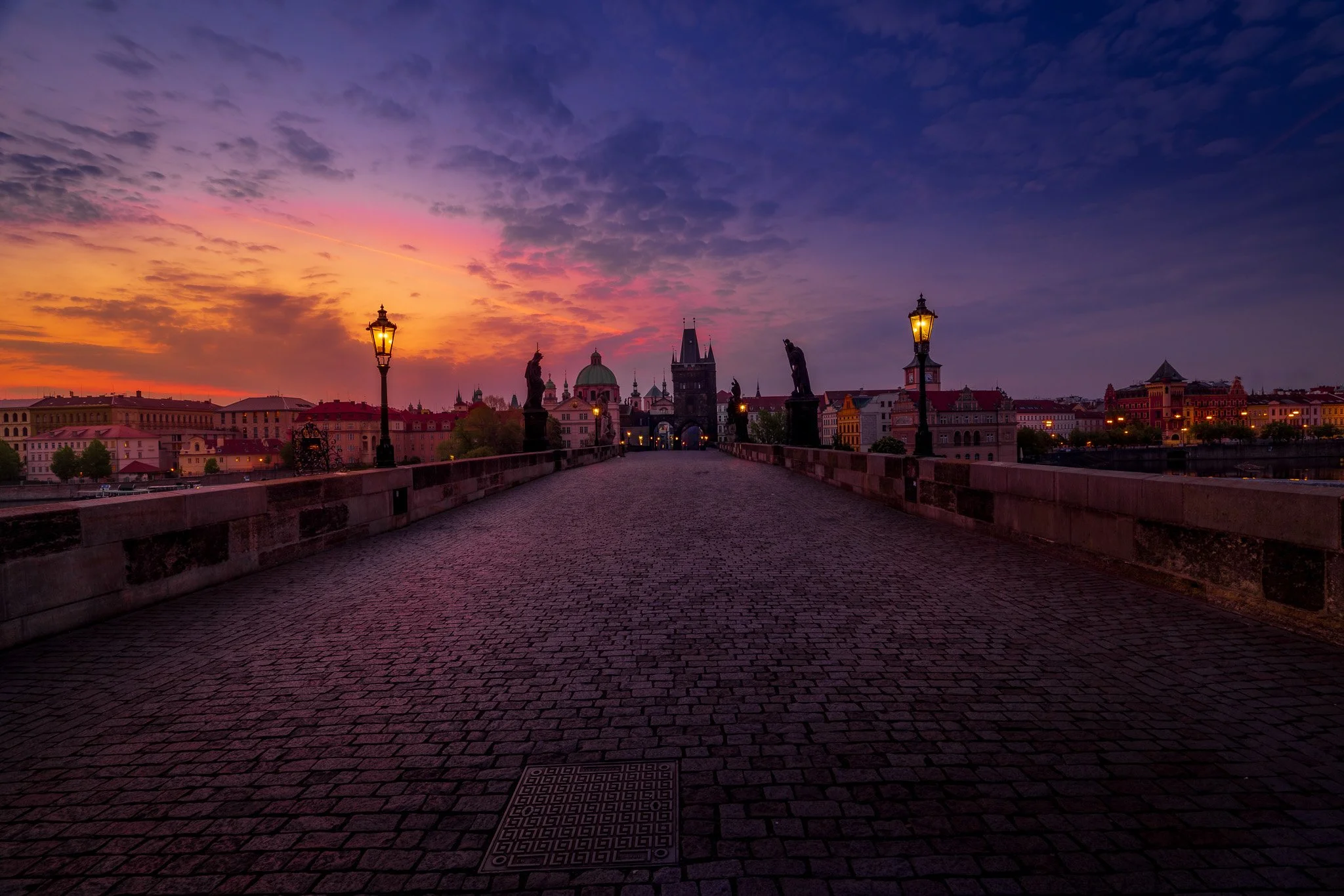
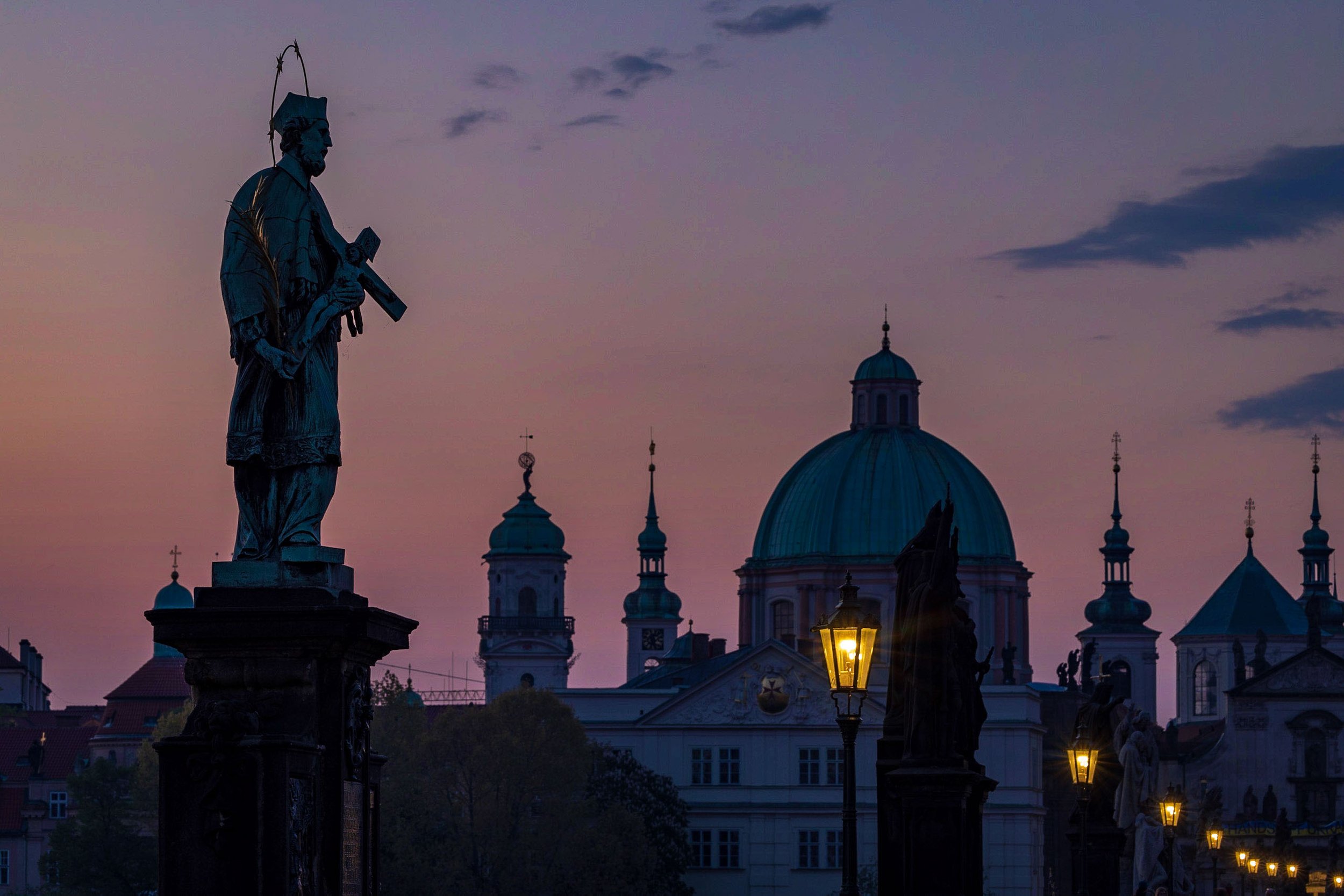
Charles Bridge at sunrise, when Prague is quiet and the first light begins to reach the Old Town.
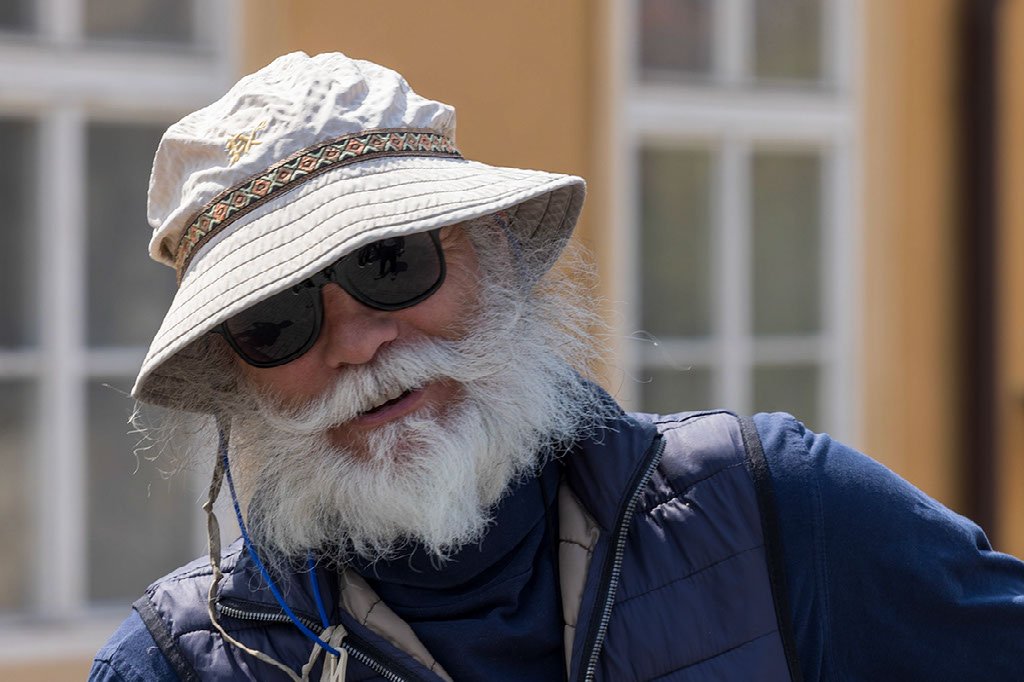
What I love most about Prague, beyond the architecture and the photography, is the people. The parks, the history, the beer. A city that holds its character not just in its buildings but in how its people inhabit them. Despite the crowds on the main tourist circuit, the side streets and neighborhood restaurants and beer halls are still genuinely Czech.
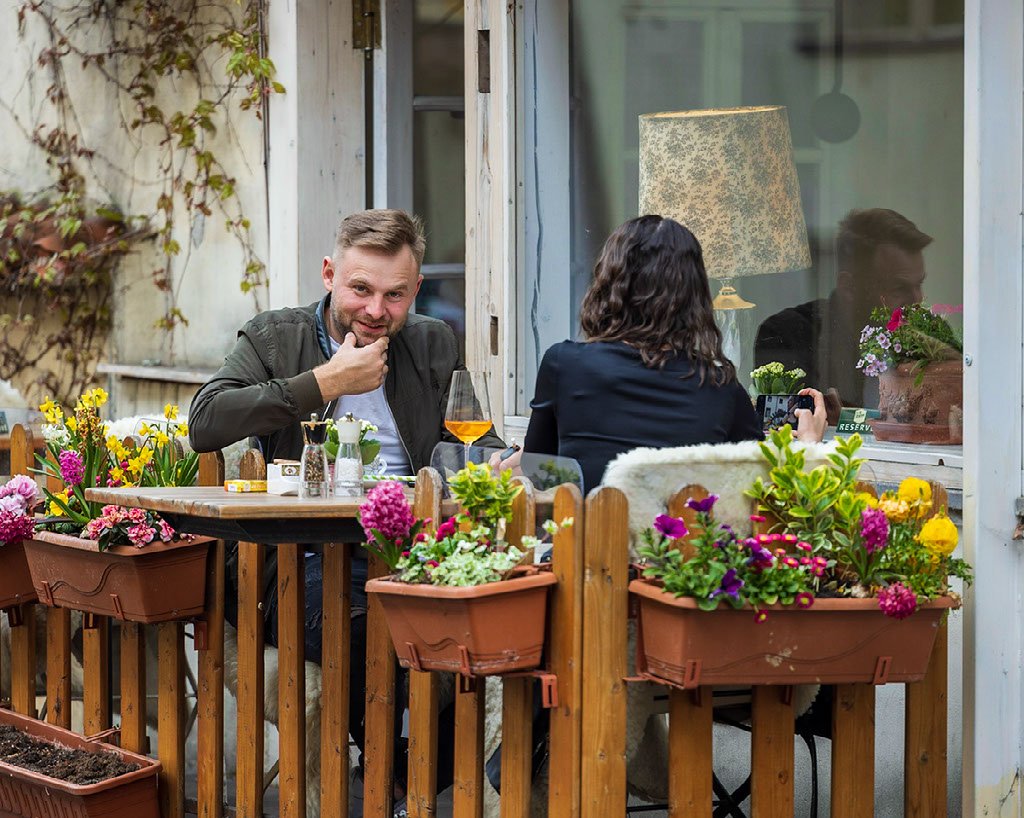
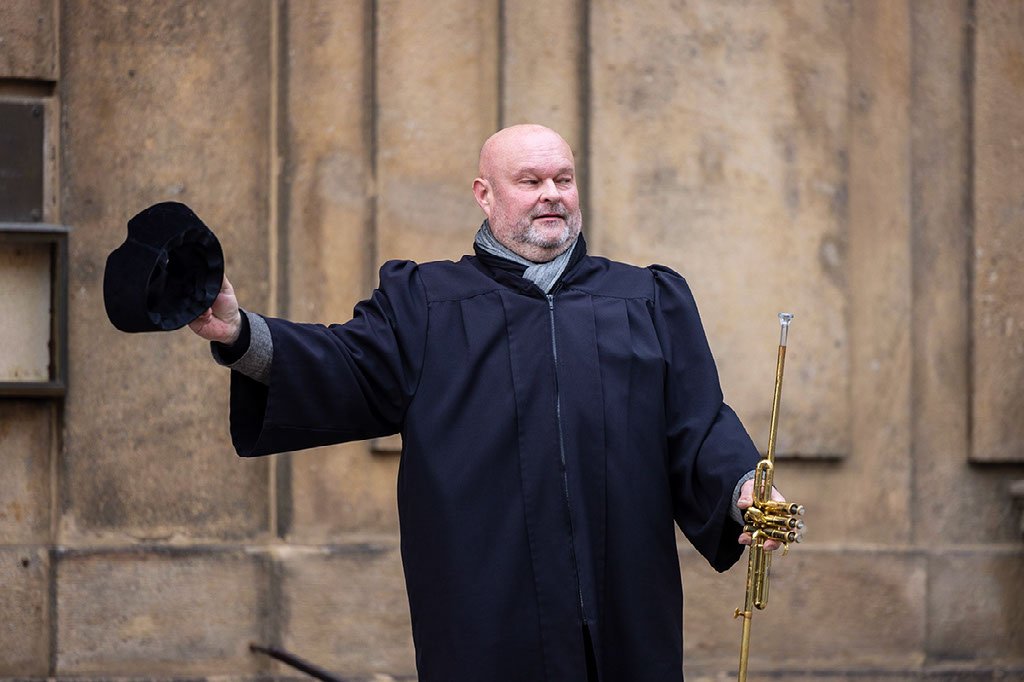
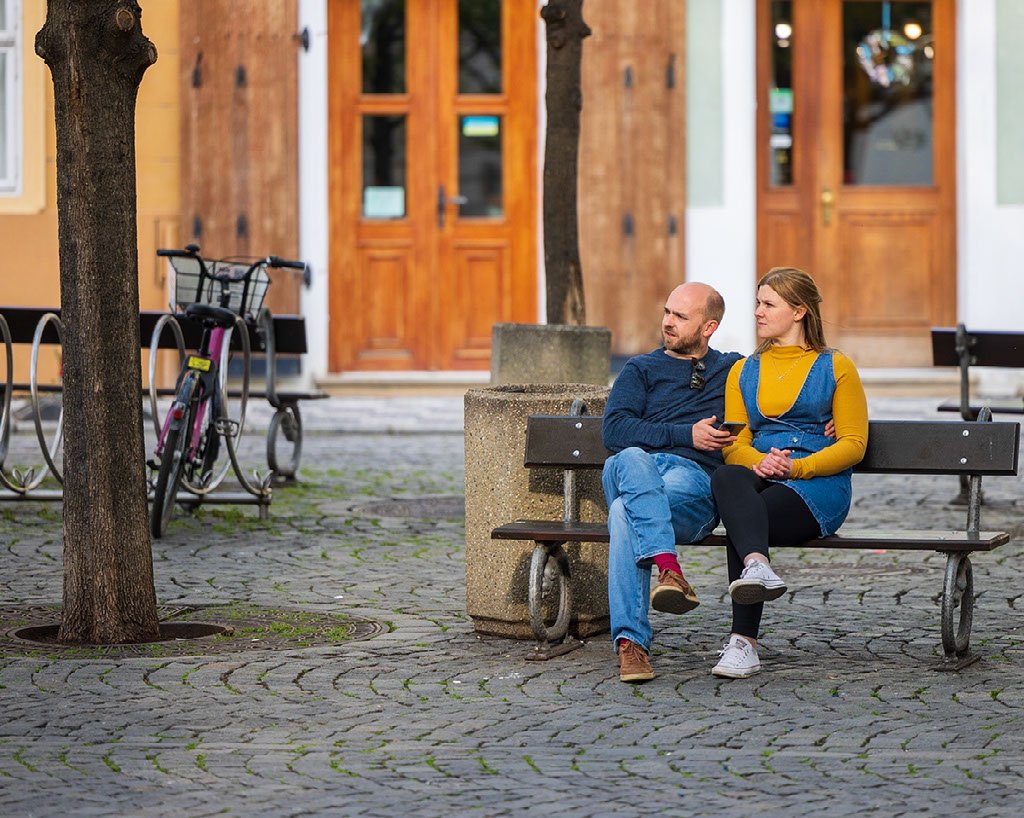
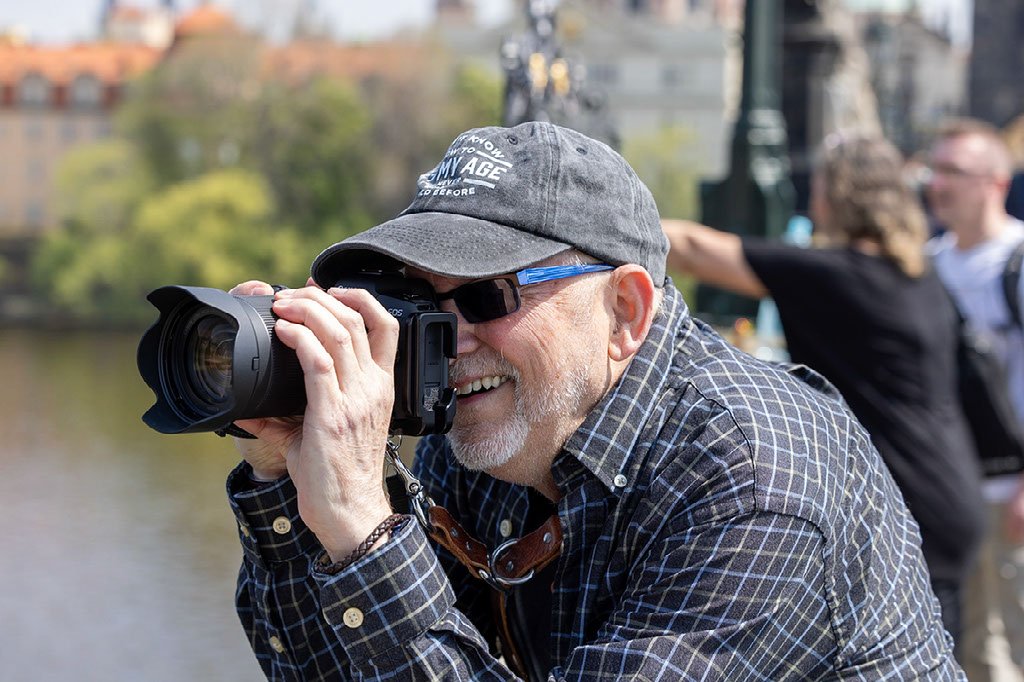
In this Photography Guide to Prague, I share the places and experiences that continue to draw me back. You will find my favorite photography locations, guidance on when and where to shoot, practical travel tips, and gear recommendations, along with cultural insights to help you explore and photograph Prague with confidence, respect, and ease.
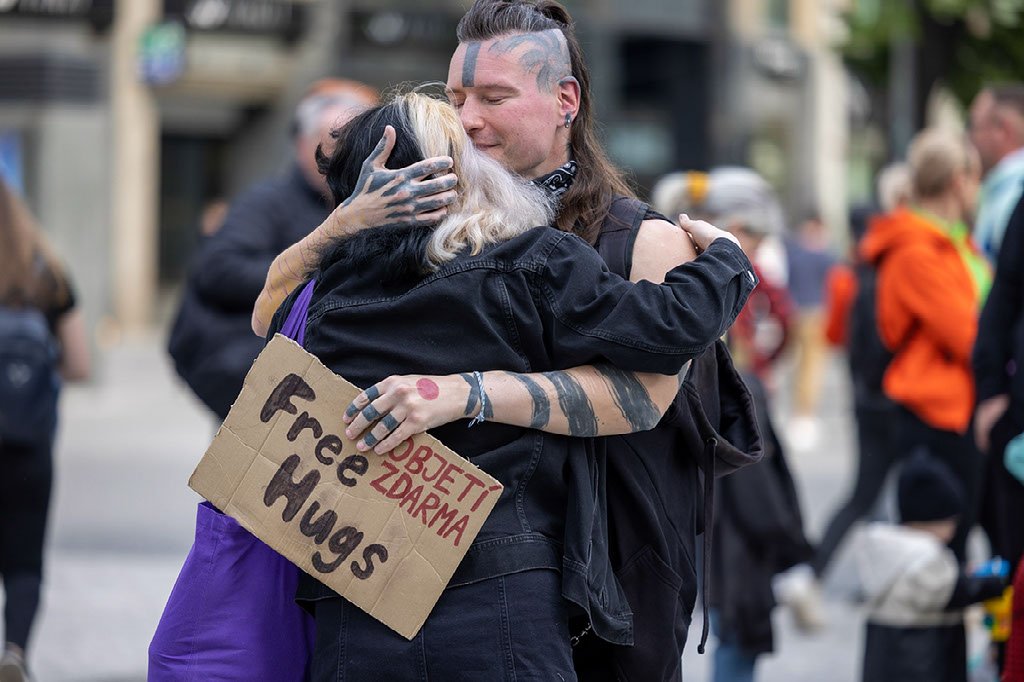
Photographer's Notes
Before you go, here are my own takeaways.
Favorite Season: Fall
Favorite Sunrise Location: Charles Bridge
Favorite Sunset Location: Petřín Hill
Favorite Neighborhood: Malá Strana
Favorite Hotel: Mandarin Oriental, Prague
Favorite Café: Café Savoy
Favorite Lens: 15-35mm f/2.8
Would I Return? Yes, definitely.
How Many Days Should You Spend in Prague?
Three to four days is the right amount for photographers. This gives you time for early morning Charles Bridge sessions, a full day on the Castle side, the Jewish Quarter, the side streets of Malá Strana, and still leaves room to sit in a café without watching the clock.
A suggested photographer's pace:
Day 1: Charles Bridge at sunrise, Old Town Square, the Astronomical Clock, Municipal House, and wander the Old Town lanes. Evening blue hour from the Kafka Museum side.
Day 2: Prague Castle complex in the morning (Uber up, walk down via Old Castle Stairs), Strahov Monastery and Library, John Lennon Wall, Vrtba Garden, Petřín Hill at sunset.
Day 3: Jewish Quarter and Spanish Synagogue in the morning, the Dancing House, Letná Park for the panoramic city view, Eska for dinner in Žižkov.
Day 4 (if you have it): Slower pace. Revisit your best locations at a different time of day. Chase a morning mist on the Vltava. Sit in Café Savoy for two hours. Walk the streets you have not turned down yet.

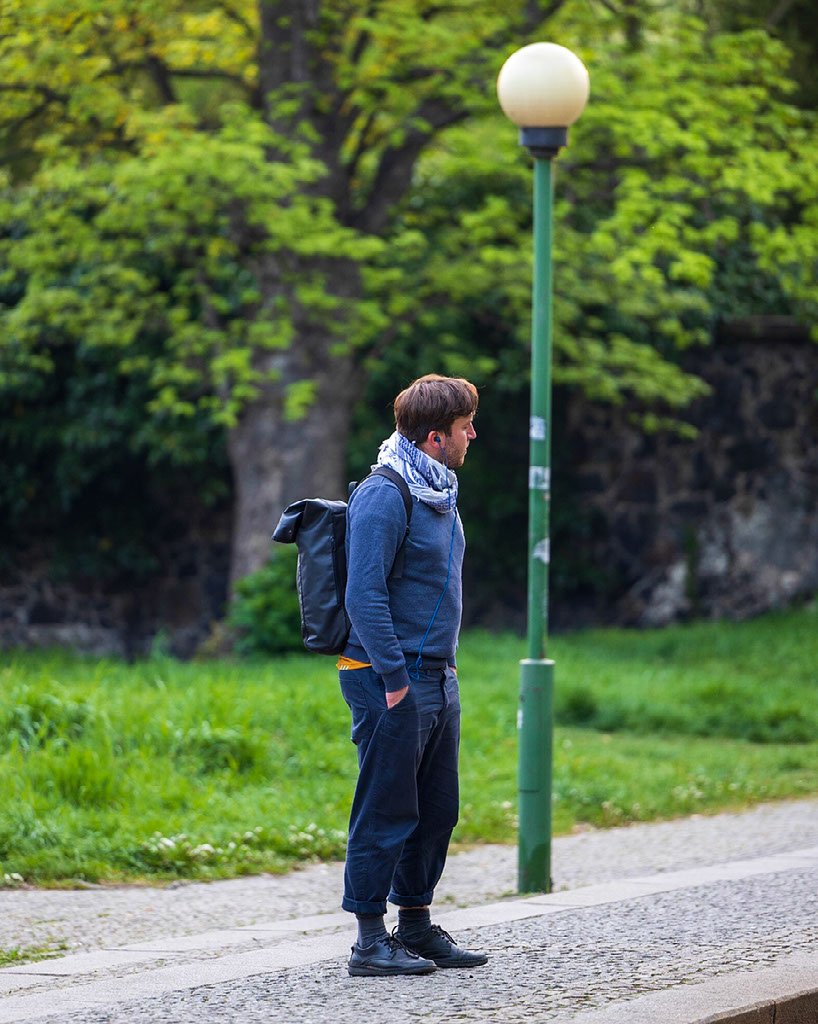
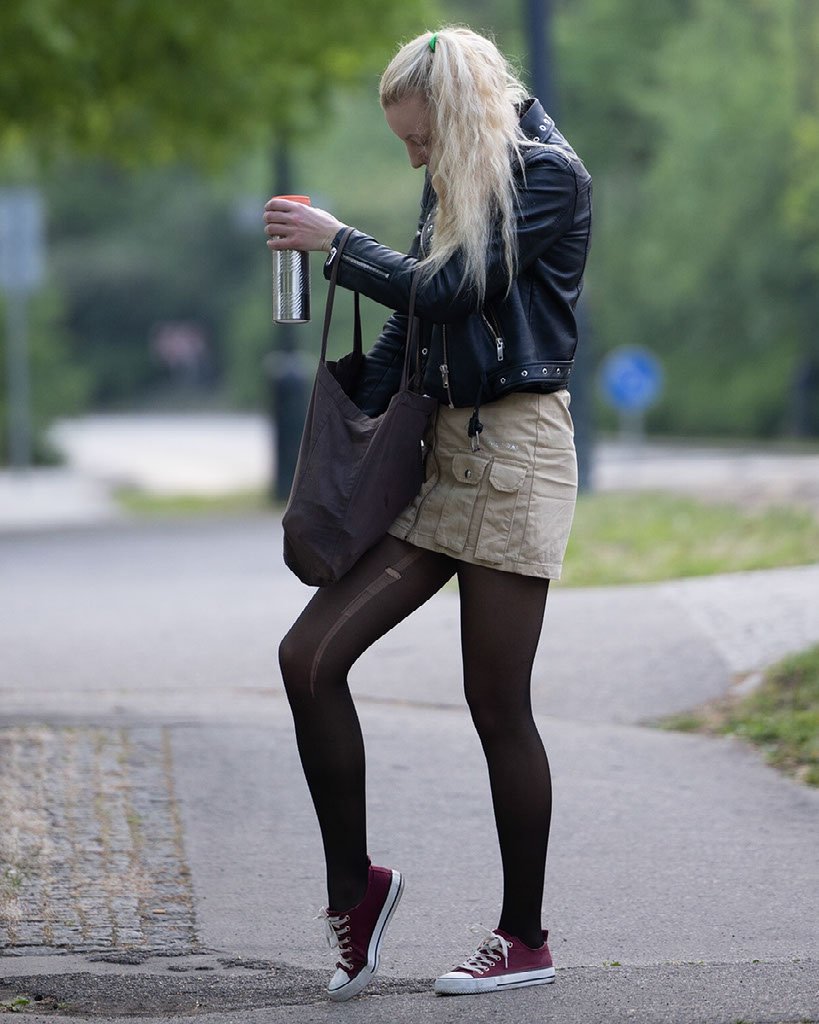
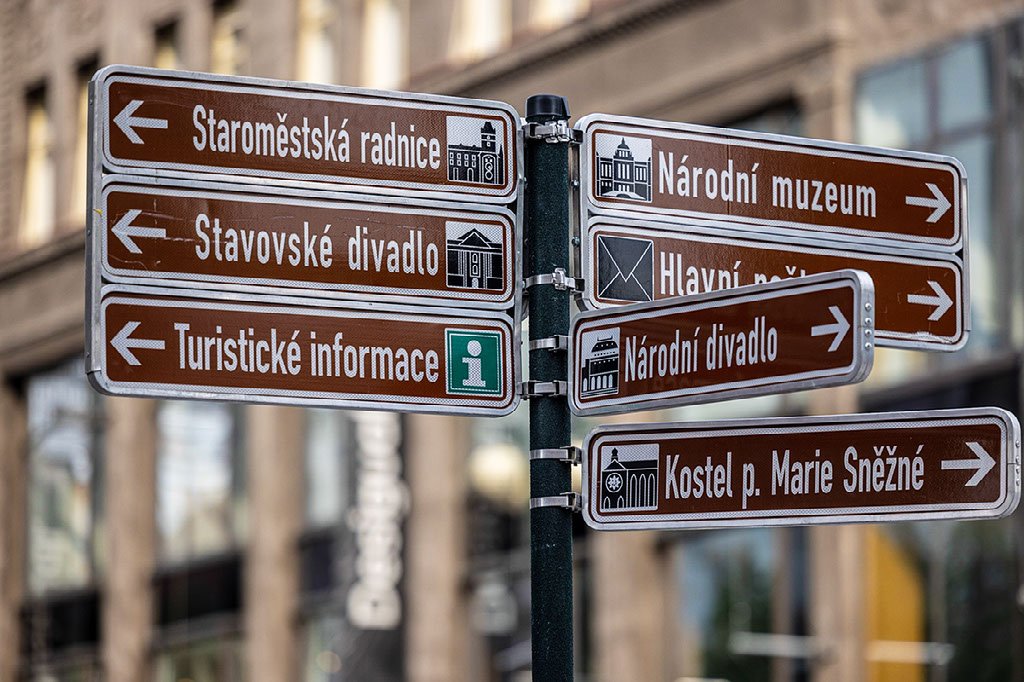
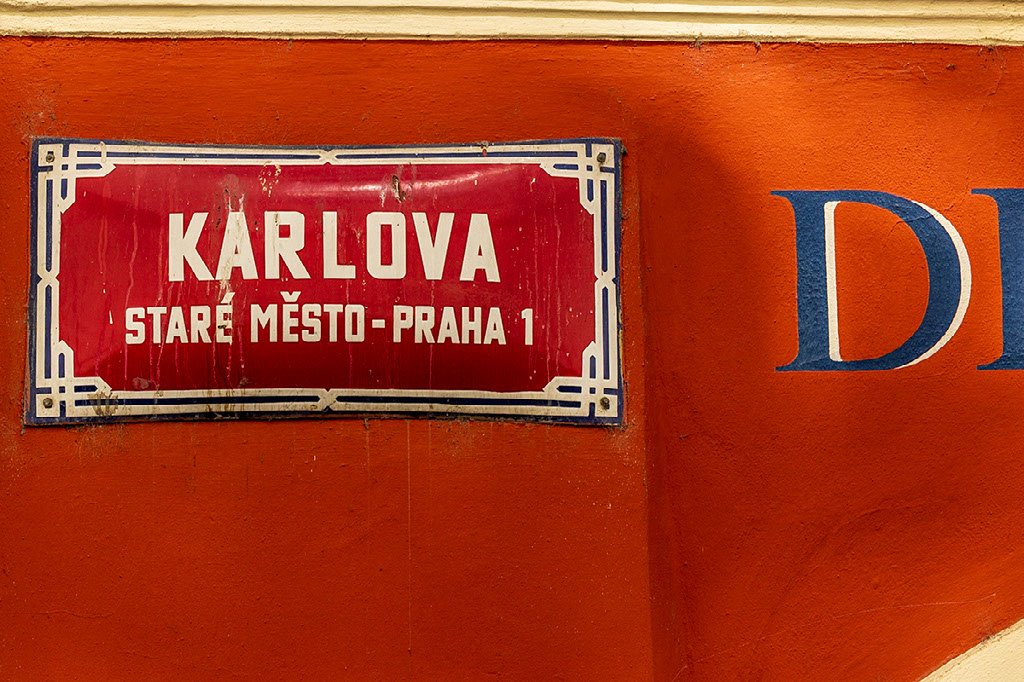
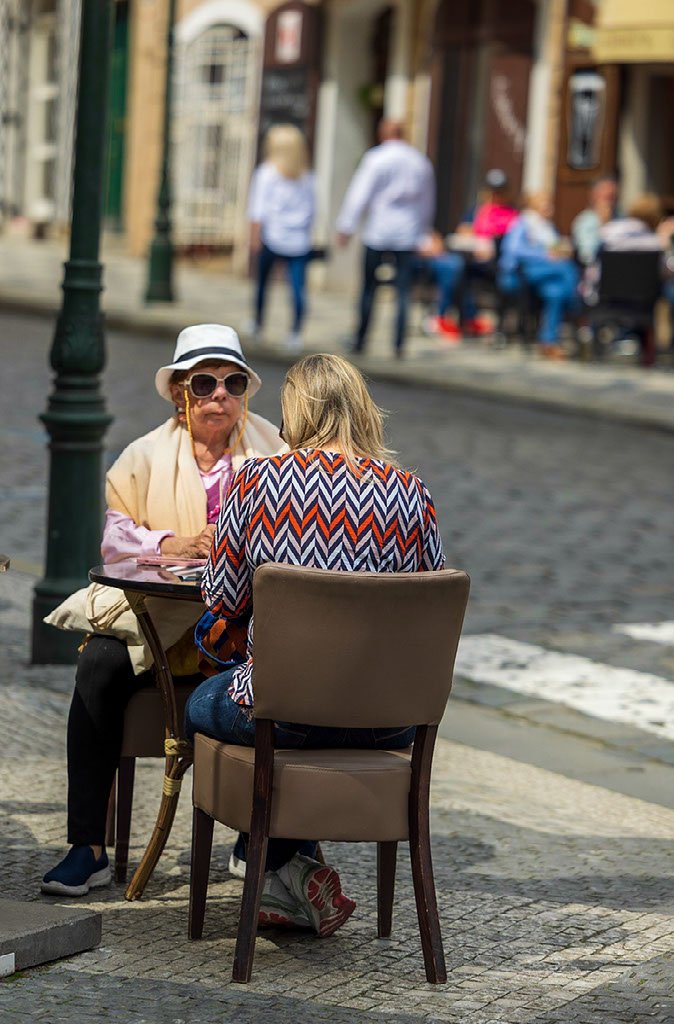
Street Photography in Prague
Best Time to Visit Prague
Spring (April through June) is the best window for photography. The light is warm, the days are long enough to shoot comfortably, the blossoms along the embankment add color to the riverside frames, and the crowds are manageable before the peak summer surge. Golden hour in May stretches to around 8:30 pm, giving you a long, workable evening session.
Autumn (September through October) is my personal favorite. The tourists thin out noticeably after the summer rush, the light turns golden and warm, and the baroque facades of Malá Strana glow in a way they simply do not at other times of year. September mornings on the Charles Bridge have a quality I have not found in any other city in Europe.
Winter is underrated. Snow on the Old Town Square is extraordinary, and the Christmas markets from late November through December fill the city with warm light and genuine atmosphere. Cold and quiet, but rewarding. Dress for it.
Summer (July through August) is the most crowded period. Charles Bridge can be packed by 9 am. Old Town Square is wall to wall by mid-morning. If you visit in summer, commit to pre-dawn shooting for the iconic locations and save the afternoons for neighborhoods and side streets where the tourist density drops off sharply.

The Dancing House, designed by Vlado Milunić and Frank Gehry, brings a completely different architectural style to Prague.
Where to Stay in Prague
Stay close to the Charles Bridge. Every hotel within walking distance of the Old Town gives you immediate access to the best photography in the city, and the early morning light on the Charles Bridge requires proximity. The neighborhoods of Malá Strana on the west bank and Staré Město (Old Town) on the east are where you want to be.
Luxury Hotels in Prague
Mandarin Oriental, Prague This was the first hotel Zena and I stayed at in Prague, and it remains the one I recommend without hesitation. The Mandarin occupies a former 14th-century Dominican monastery in Malá Strana, and the property carries that history in every corridor. The original chapel has been converted into an event space, the cloister gardens are quiet and beautiful, and the rooms combine centuries-old stone with the precision and quiet luxury the brand delivers. The spa is one of the most atmospheric hotel experiences I have had anywhere in the world. They illuminate it entirely with candles. No electric light. Just the water, the stone, and hundreds of candles. If you stay here, go to the spa. The hotel is a short walk from the Charles Bridge and minutes from Prague Castle.
Four Seasons Hotel Prague The Four Seasons has the finest position of any hotel in the city. It sits at the end of the Charles Bridge on the Old Town bank of the Vltava, which means the bridge is visible from the rooms, the terrace, and the restaurant. The views of Prague Castle rising above the Malá Strana rooftops from a riverside room at dusk are among the finest hotel views in Europe. We have stayed here on multiple visits. A Vltava-facing room is the most immersive way to experience Prague at golden hour, and for photographers, it is not just a comfortable base but a location in its own right.
InterContinental Prague Positioned on the Vltava riverbank in Josefov, the Jewish Quarter, directly across from the Old Town. The position is excellent for the Spanish Synagogue and the Jewish Museum, and the views from the upper floors across the Old Town rooftops are expansive. Roberto's rooftop bar is one of the better places in Prague to end an evening after a long day of shooting. A strong choice if you want riverfront access at a notch below the Four Seasons rate.

The medieval Prague Astronomical Clock on the Old Town Hall, one of the city’s most recognizable landmarks.
Mid-Range Hotels in Prague
Hilton Prague Old Town. I have stayed here three times. The Art Deco building sits about twenty minutes on foot from the Charles Bridge near the Old Town gates, and it delivers reliable quality in a genuinely handsome property. Within walking distance of Old Town Square, the main railway station, and the Jewish Quarter. For travelers who want Old Town access without the full luxury pricing of the riverside hotels, this is a consistently solid choice.
NH Collection Prague. The NH Collection property in Malá Strana has been a reliable mid-range option across several visits. The location on the west bank puts you close to the Charles Bridge, the John Lennon Wall, and the Kafka Museum. Modern and well-run, at a price point below that of the full luxury properties. A practical choice for the photographer who wants the right neighborhood without the Four Seasons rate.
Mosaic House Design Hotel A well-regarded design hotel in the New Town, about fifteen minutes on foot from the Old Town. Popular with photographers and creative travelers for its relaxed atmosphere and good communal spaces. A strong value option if the properties closer to the bridge are full or over budget.
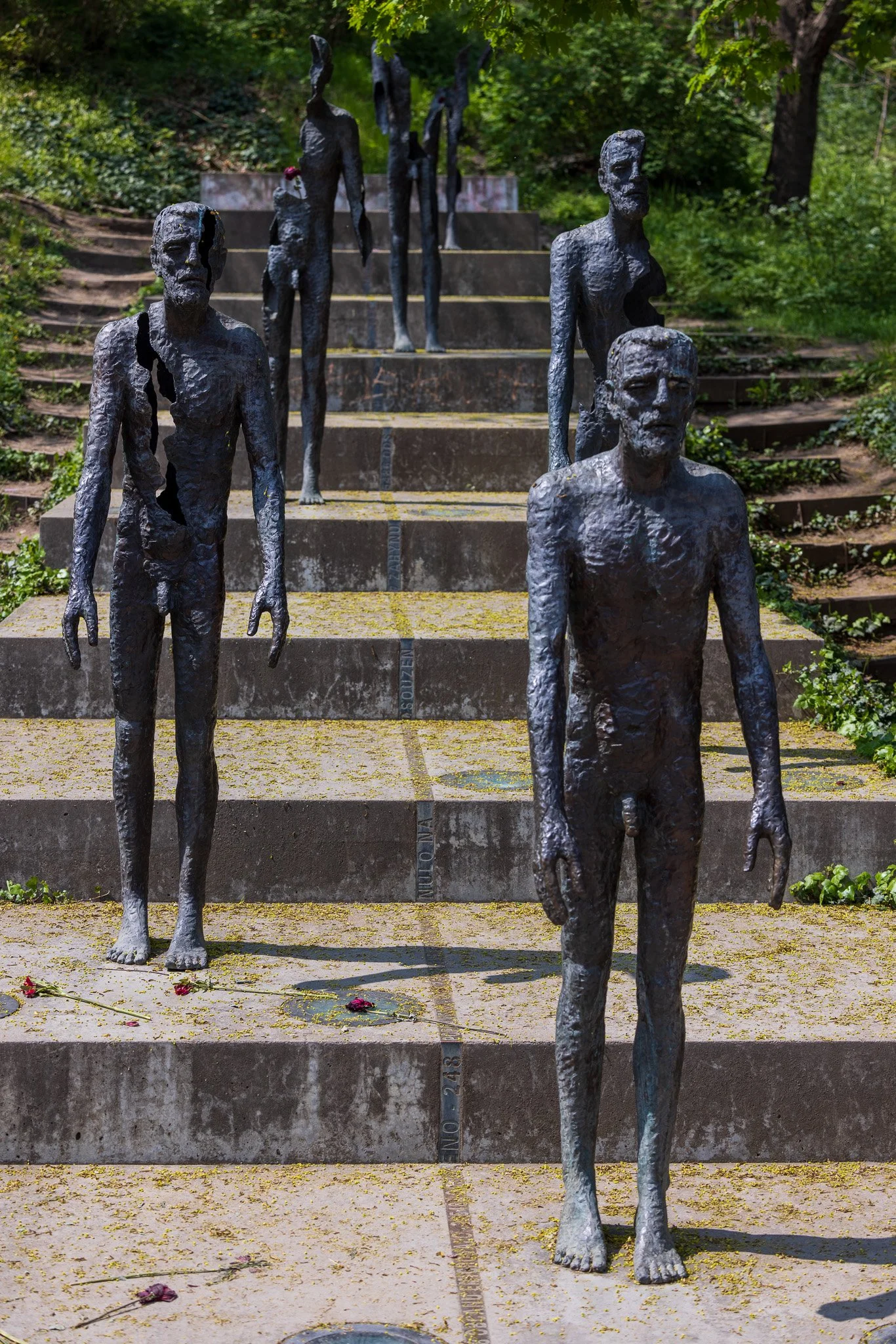
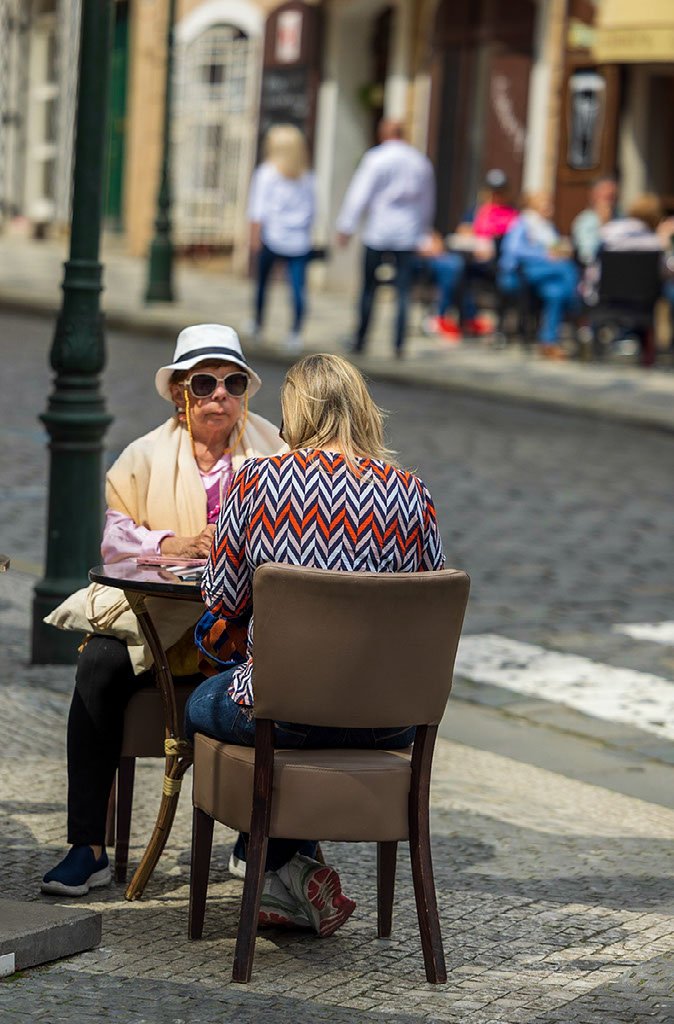
One of the small moments that makes wandering Prague with a camera so rewarding.
Getting Around Prague
Prague is a walking city. You can cross the historical center in about twenty minutes on foot, and most of the photography locations I cover in this guide are within a comfortable walk of each other. I do most of my shooting on foot.
That said, Uber works extremely well here, and I use it regularly. The specific situation where Uber earns its value is the Prague Castle and Petřín Hill. Both sit on the hill above Malá Strana, and walking up is a genuine climb. My recommendation: take an Uber up to Prague Castle or Petřín, then walk back down through the Old Castle Stairs or the terraced gardens. Trust me, your legs will thank you, and the walk downhill gives you photography angles you will miss if you go straight back to the center.
The metro is clean, reliable, and useful if you are moving between distant neighborhoods, but for the core Old Town circuit, walking is faster and more rewarding. Trams are excellent too, and photographically interesting in their own right, particularly the older models near the Royal Garden.
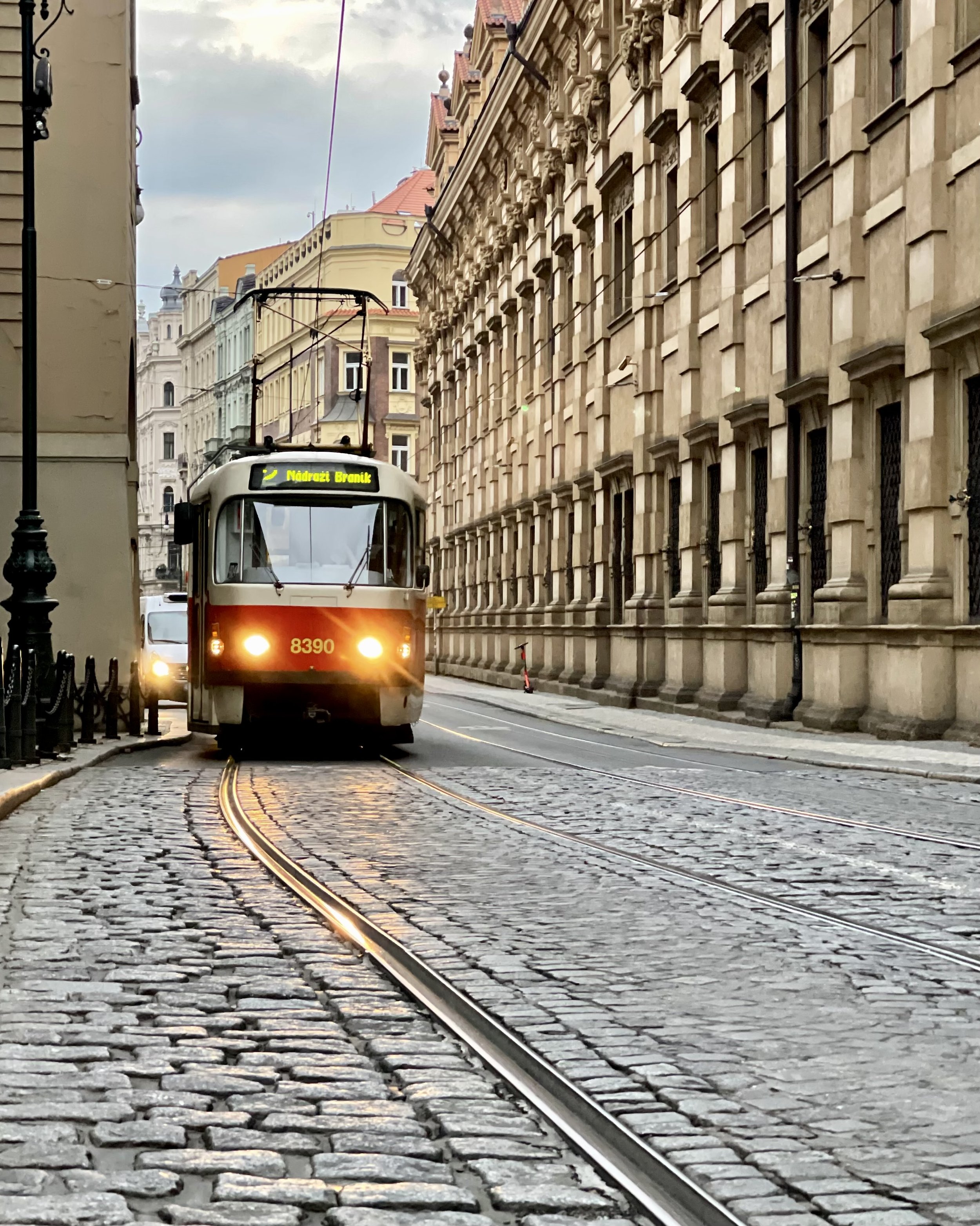
A classic Prague tram passing through the streets near the Charles Bridge
Where to Eat and Drink in Prague
The food in Prague is excellent. Prague’s food scene is a perfect mix of hearty Central European tradition, beer-soaked comfort, and creative modern takes—all with a visual style that photographers will appreciate. Think warm golden tones, rustic wooden interiors, and plates that lean into texture and richness.
Classic Czech Dishes to Try:
Svíčková: This is Prague on a plate. Tender beef sirloin in a creamy vegetable sauce, served with fluffy bread dumplings and topped with cranberry sauce and whipped cream. The colors may be muted, but the textures and layering are fun to shoot (and delicious to eat).
Vepřo knedlo zelo: Roast pork, sauerkraut, and dumplings. It’s a winter staple and a local favorite. The fermented tang of the cabbage balances the richness beautifully.
Trdelník: While not technically Czech (and mostly sold in tourist zones), these rolled pastries baked on a spit and dusted with sugar are incredibly photogenic, especially when filled with ice cream and handed to you steaming on a chilly day.
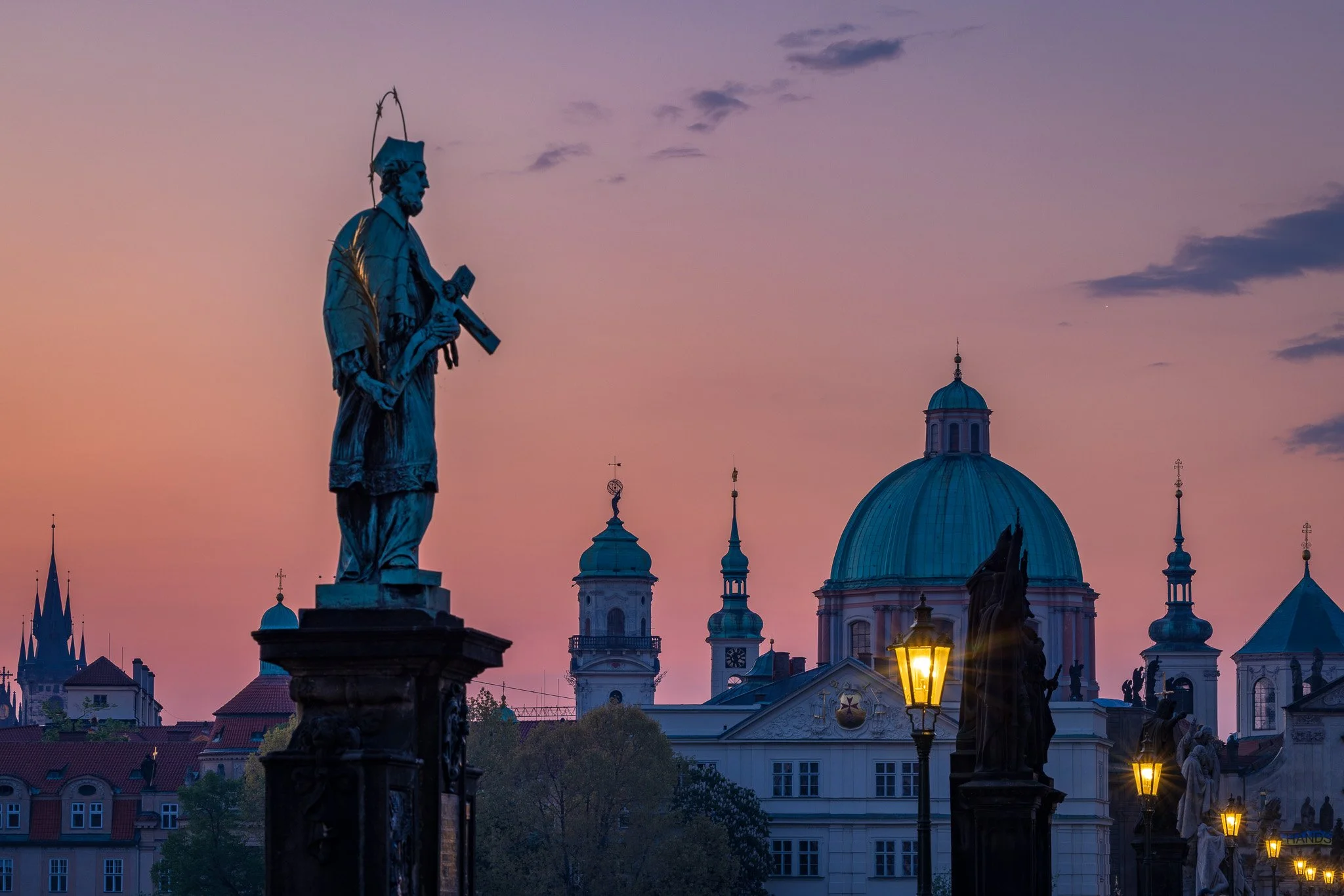
The Old Town Bridge Tower is framed by the statues and cobblestones of Charles Bridge.
Where to Eat in Prague
Prague's food scene earns more credit than it gets. The tradition is Central European, which means hearty, textured, and deeply satisfying. The modern cooking scene in neighborhoods like Žižkov and Vinohrady has evolved considerably over the past decade, and the city now has some of the most creative Czech kitchens in the country.
A few dishes worth knowing before you arrive: svíčková is Prague on a plate, tender beef sirloin in a creamy vegetable sauce with fluffy bread dumplings and cranberries. Order it at least once. Vepřo knedlo zelo (roast pork, sauerkraut, and dumplings) is the winter standard. And the trdelník you will see everywhere in the tourist zones is not technically Czech, but it photographs beautifully on a cold morning.
Mlýnec sits in a historic mill building beside the Vltava with windows that frame the Charles Bridge directly. The Czech and European menu is well-executed, and the position makes this the natural choice for a celebratory dinner with the bridge lit up outside. Reserve a window table.
Café Savoy is a beautifully preserved Art Nouveau café in Malá Strana that has been feeding Prague since 1893. The breakfast here is one of the finest in the city. Fresh pastries, excellent coffee, and a neo-gothic ceiling above you for the full hour you will spend over the first meal of the day. A morning here before a Charles Bridge shoot sets the right pace for everything that follows.
Kantýna is a Czech butcher-style eatery in the city center where the quality of the grilled meats is the whole point. No pretense, no decoration beyond the hanging cuts of meat. The beef tartare and grilled steaks are as good as anything in Central Europe. A strong lunch choice after a morning in the Old Town.
Eska brings modern Czech cooking to a stylish industrial space in the Žižkov neighborhood, slightly outside the tourist circuit. Chef Martin Štangl's kitchen works with fermentation, open-fire cooking, and local Czech ingredients in ways that feel genuinely inventive. One of the most creatively interesting restaurants in the city, and worth the short Uber ride.
Lokal Dlouhaaa on Dlouhá Street is the place to drink Czech beer in Prague. Not a tourist bar, but a proper long-form Czech pub serving tank-fresh Pilsner Urquell alongside svíčková, schnitzel, and the straightforward Czech standards. Full of locals and pleasantly loud. Go in the evening.
Café Louvre is a grand café where Franz Kafka and Albert Einstein are said to have sat in the early 20th century. The billiard room, the high ceilings, and the Art Nouveau details are as good as the coffee. A cultural institution and a photography subject in its own right.

The cakes baked on rotating rollers in Prague are called tvrdelnik often called chimney cakes in English
Coffee in Prague
Můj šálek kávy is the benchmark for specialty coffee in Prague. Serious espresso in the Karlín neighborhood, with a focus on the coffee itself rather than the atmosphere around it. Worth the trip.
EMA Espresso Bar offers minimalist design and consistently excellent brews in the New Town. A reliable editing stop between locations.
Kavárna Místo has a Scandinavian aesthetic and strong filter coffee. One of the more pleasant spaces in the city for a long sit with a laptop and a second cup.

A panoramic view across the historic rooftops of Prague from Letná Park.
Photography Gear to Bring to Prague
DSLR and Mirrorless Kit
Prague rewards a versatile kit. The city is compact, walkable, and full of distinct shooting situations: tight medieval lanes, wide river panoramas, dark Baroque interiors, and open squares that go from dead quiet at sunrise to densely crowded by mid-morning.
Camera bodies: My current kit includes the Canon EOS R5 Mark II, the Sony A7R V, and the Nikon Z8. For a walk-around day in Prague, I often carry the Leica Q3. Its fixed 28mm lens handles everything from wide street scenes to intimate café shots, and it attracts far less attention in crowded spaces than a full mirrorless body with a large zoom.
Lenses:
Wide-angle (15 to 35mm): Essential for interiors at the Spanish Synagogue and Strahov Library, and for capturing the full sweep of Old Town Square at sunrise.
Standard zoom (24 to 70mm): The workhorse for street scenes, cafés, and detail shots throughout the Old Town.
Telephoto (70 to 200mm): Use it from the Letná Park viewpoint to compress the Old Town spires, and from the riverbank to isolate Prague Castle against the sky.
Tripod: Required for the Charles Bridge at blue hour and for long exposure work under the bridge arches. A compact travel tripod works well here. The bridge surface is uneven, so bring a level or use in-camera horizon tools.
ND Filters: A 6 or 10-stop ND filter is useful at the Lower Charles Bridge position for smoothing the Vltava in daylight. Also effective on the river walk south toward the Dancing House.
Drone: Drone flying in Prague is regulated. The historical center and areas above the Vltava have restrictions. Check the Czech Civil Aviation Authority rules before your trip, and confirm the current no-fly zones. Do not assume any area is clear.
Extra batteries and cards: Golden hour in autumn starts around 6:30 am and ends quickly. Be ready before you leave the hotel.
Samsung T7 SSD: I back up to this every evening at the hotel. Do not risk two weeks of shooting on camera cards alone.
iPhone Photography in Prague
Prague is one of the best cities in Europe for iPhone photography. The compressed medieval streets, the warm stone tones, and the long golden hours make it forgiving and rewarding even without a dedicated camera body.
Charles Bridge at blue hour: Use Night Mode with your iPhone on the bridge railing or a small Joby GorillaPod for support. The warm lamp glow against the pre-dawn sky is exactly the kind of scene Night Mode handles well.
Strahov Library interior: The library is dim and ornate. iPhone ProRAW mode captures the warm gold tones of the ceiling better than standard JPEG. Switch to ProRAW in the camera settings before you go in, and expose for the ceiling, not the floor.
Old Town lanes: The ultrawide lens on the iPhone is excellent in the narrow alleys of the Old Town, where a standard lens cannot capture the full height of the buildings. Use it in Týnská Lane and the covered passages off Old Town Square.
Spanish Synagogue: The Moorish interior is all arching color and pattern. Use Portrait Mode to isolate architectural details against the ornate ceiling. The depth effect works well on the carved columns.
Letná Park panorama: Use the iPhone's panorama mode for the sweep of the Old Town below. Move slowly and keep the camera level. The spires of Týn Church and the Old Town Hall read clearly from this height.
Interactive Prague Map: Best Attractions, Photo Spots & Hidden Gems
My Favorite Photography Locations in Prague
Prague is a city made for Photographers. There are plenty of interesting street photography opportunities. The list below includes my favorite locations.
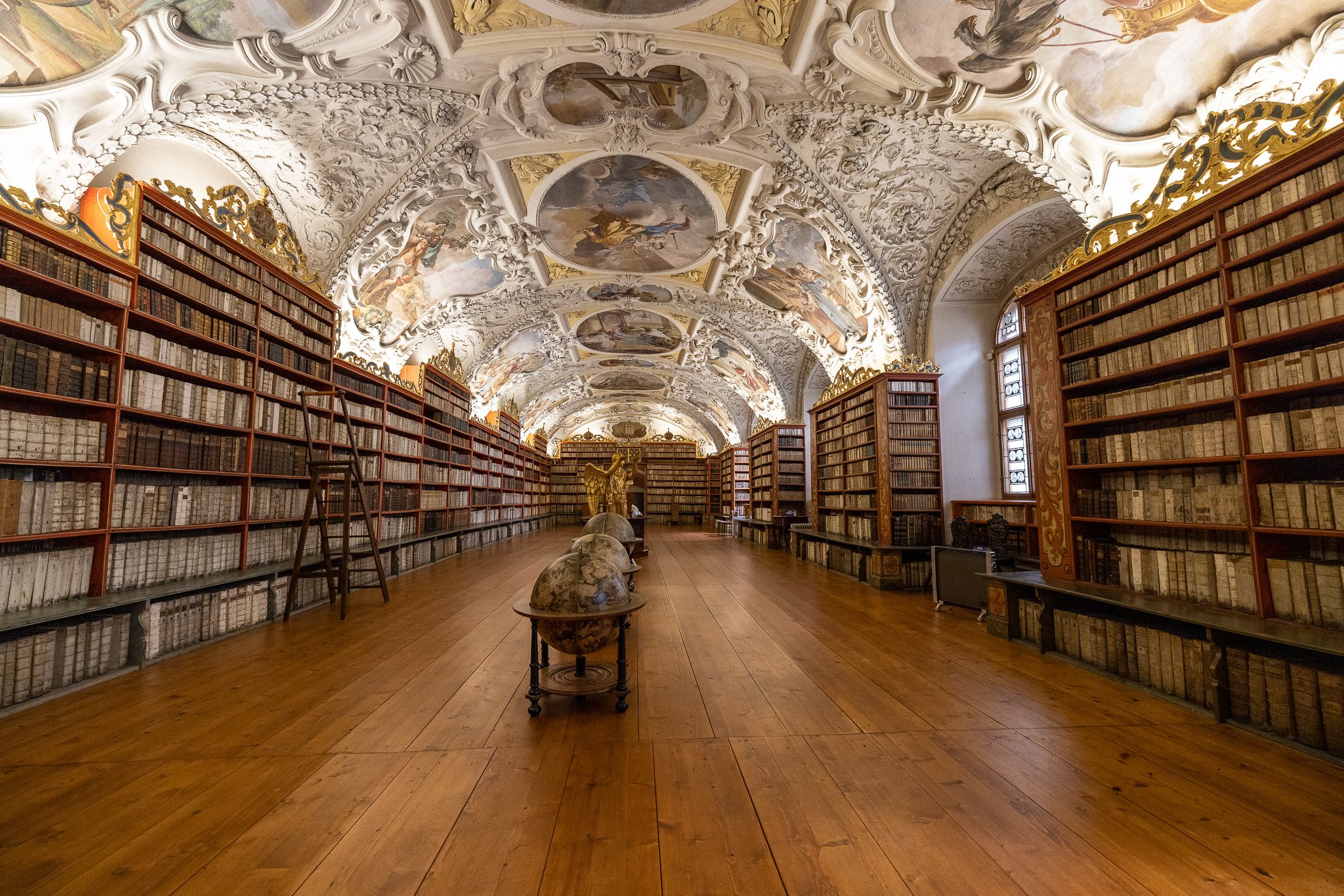
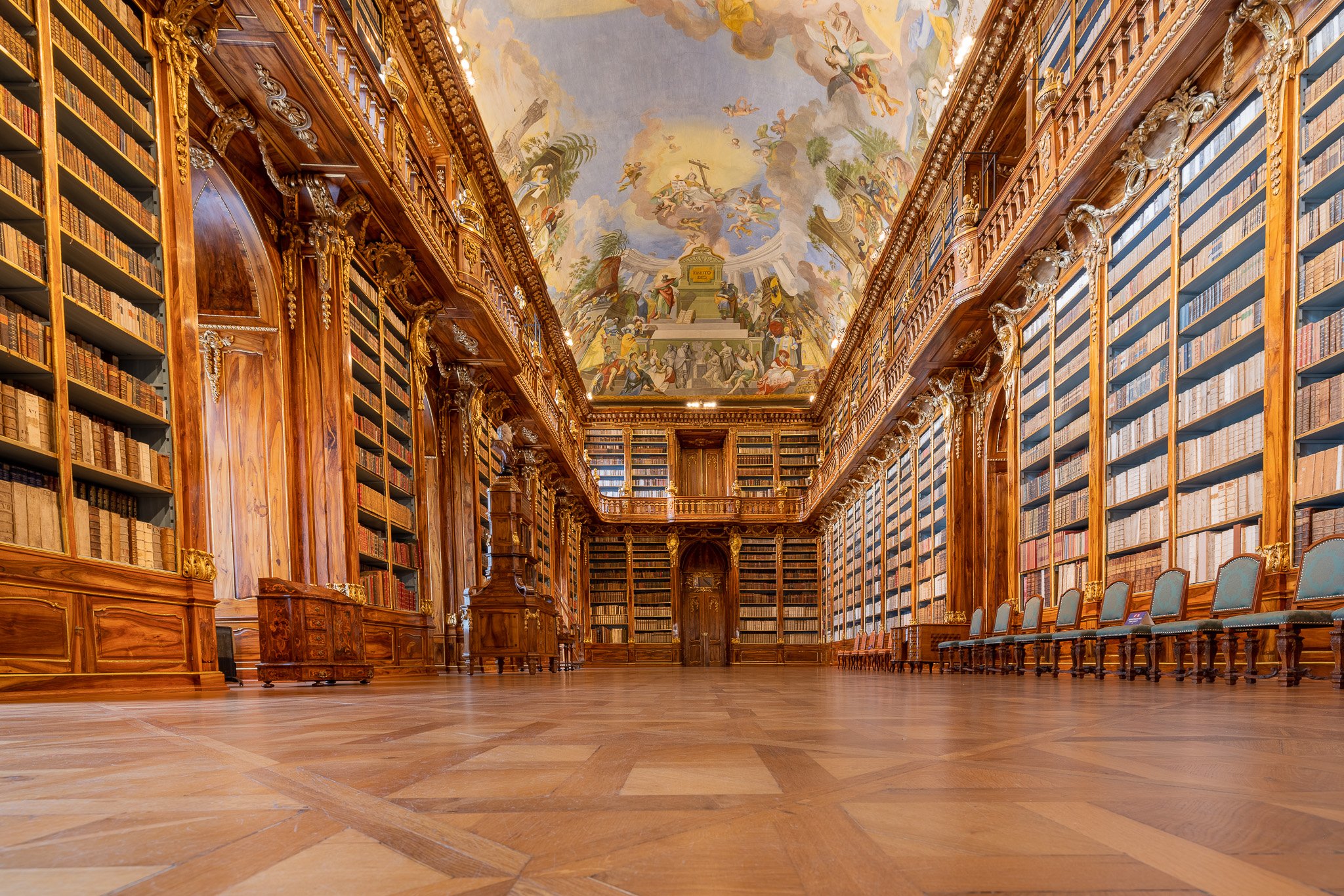
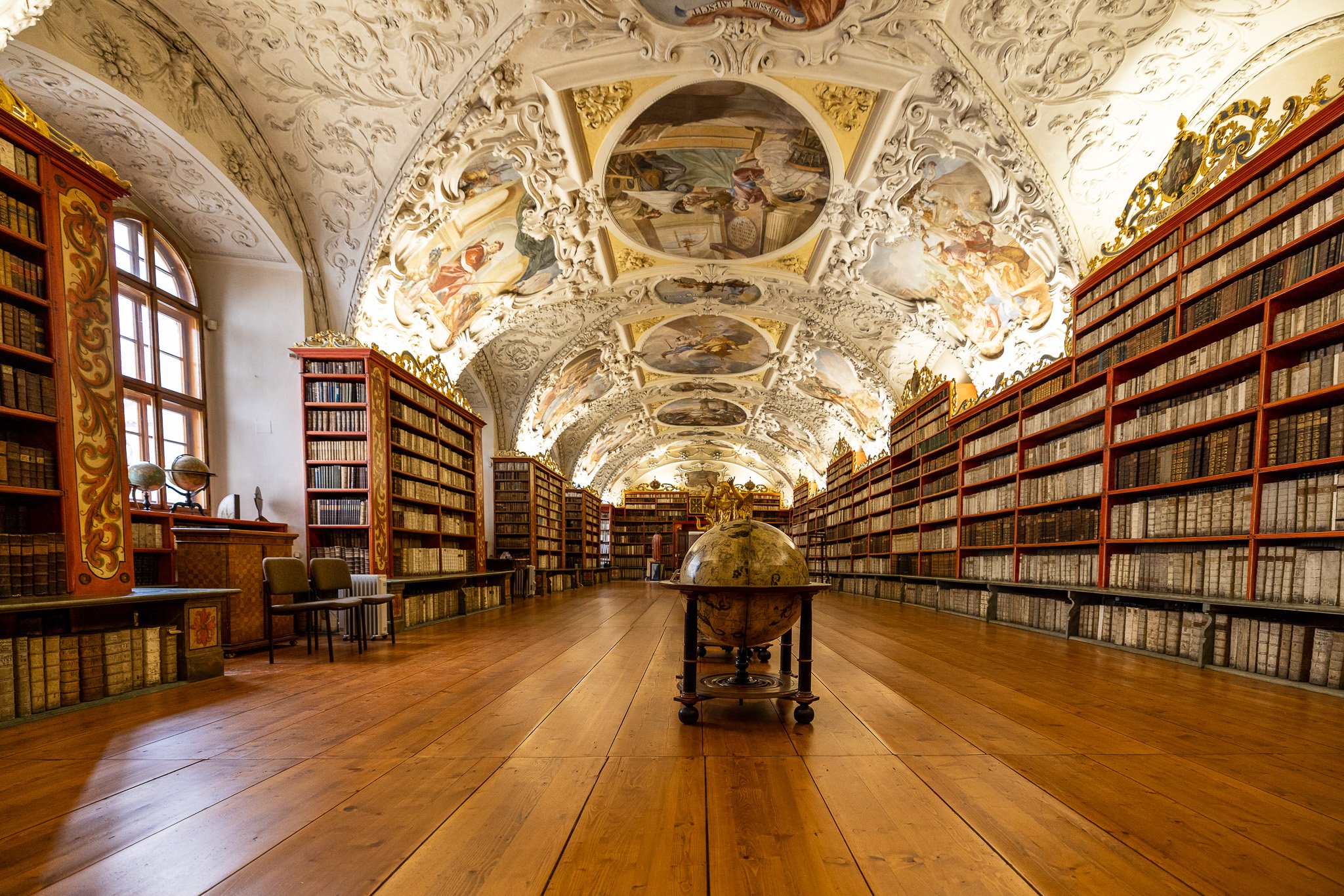
The Strahov Monastery was founded in 1143 and sits on the hill above Malá Strana near Prague Castle. The monastery complex includes the Church of the Assumption, a working abbey, a small brewery, and, most importantly for photographers, the Strahov Library: two baroque reading halls that are among the most photographically compelling interiors in Europe.
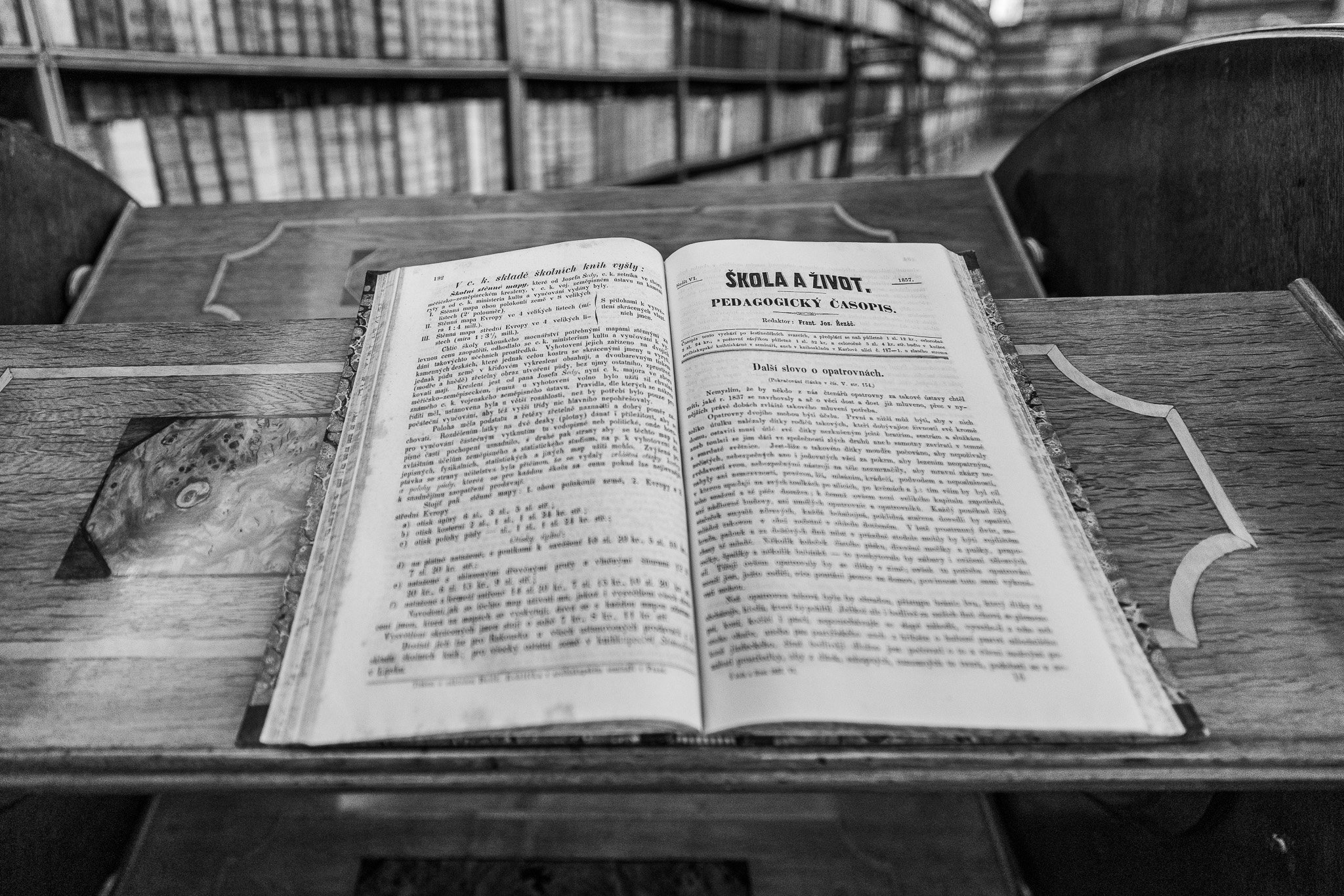
The Philosophical Hall and the Theological Hall are both extraordinary. Painted ceilings stretch above floor-to-ceiling walnut shelves holding tens of thousands of historic volumes. Globes, curiosities, and antique maps fill every surface. The light through the tall windows is warm and directional in the morning hours. This is genuinely one of the most beautiful rooms I have stood in anywhere.
📷 Pro Tip: You shoot from a roped-off entrance and cannot walk the full room freely, so your compositions are limited to what the entrance angle offers. A wide-angle (16 to 24mm) captures the full vault of the Philosophical Hall ceiling and the depth of the room in a single frame. Use the highest ISO your body handles cleanly, because flash is not permitted. On the Canon R5 Mark II, ISO 3200 to 6400 with the R5's in-body stabilization is workable. Get there when it opens to photograph without other visitors in the foreground. The monastery courtyard and the church exterior are also worth a visit, and the beer garden next to the abbey serves the monastery's own Strahov beer.
Best time: Opening time (morning). Morning light through the windows is optimal. Access: Paid entry to the library. [Verify current admission fee on site visit.].
Charles Bridge (Karlův most)
The Charles Bridge is the non-negotiable Prague frame. A medieval stone arch bridge crossing the Vltava, lined with 30 Baroque statues of saints, it connects the Old Town to Malá Strana and has anchored the visual identity of this city for 600 years. Construction started in 1357 under King Charles IV. The statues were added through the 17th and 18th centuries, and most of what you see today is replicas, with the originals protected in the National Museum.
At midday in summer, it is a wall of people and selfie sticks. At 5:30 am in September, it is one of the most compelling photography locations in Europe. The mist comes off the Vltava. The lamp posts are still lit. The castle glows behind you in the first light. The statues are silhouetted. I have shot this bridge across a dozen visits, and the best frames have always been before most people are awake.
📷 Pro Tip: Position yourself on the Old Town end of the bridge, looking toward the castle, for the classic compositional line: statues receding toward the illuminated Prague Castle in the background. Use a wide to standard zoom (24 to 50mm) to keep the statues in frame with the castle behind them. For long exposures of the river, work from the bridge itself or drop down to the embankment below. Arrive at civil twilight, before the sun breaks the horizon, when the sky is a deep blue, and the lamp posts still contribute warm contrast. Autumn is the best season. Early October mornings have mist and warm light simultaneously.
Best time: Sunrise, year-round. Autumn for the best light. Access: Free. Walk from Old Town or Malá Strana.
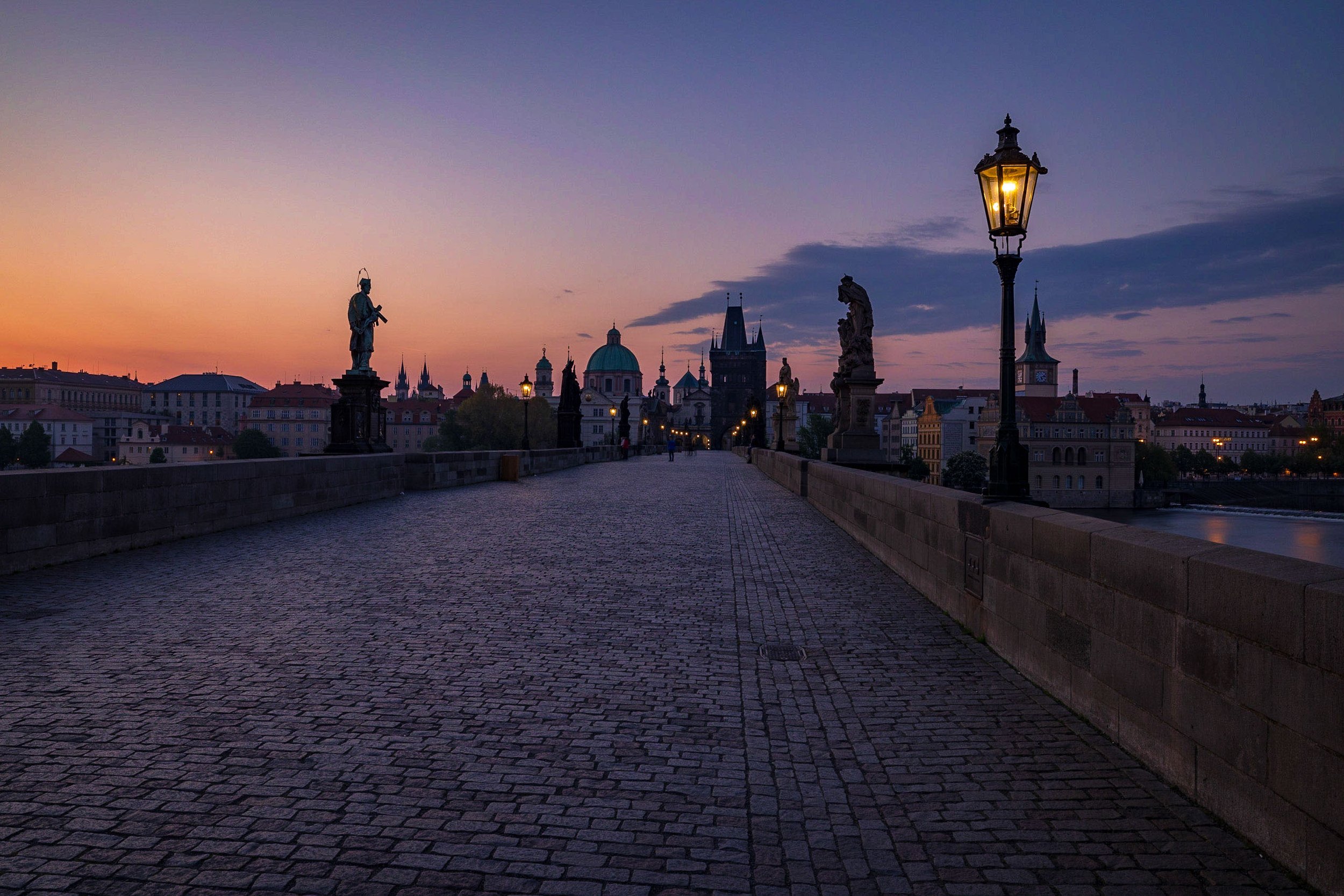
Charles Bridge at sunrise, one of the best times to photograph Prague without the crowds.
Lower Charles Bridge, Left Side (Na Kampě, Malá Strana)
Once you cross the Charles Bridge to the Malá Strana bank, a staircase on the left descends to the river level below the bridge arches. This is a completely different perspective on a location that most visitors never find. From here, the arch frames the river and the Old Town beyond it. With a tripod and an ND filter, you can smooth the Vltava into a mirror and work the long exposure that the location is built for.
📷 Pro Tip: Set up your tripod at the base of the staircase, framing through the nearest arch toward the Old Town bank. A 6 or 10-stop ND filter gives you a 15 to 30 second exposure in daylight, which is enough to flatten the water. Use a wide angle (16 to 24mm) and focus stack if you want front-to-back sharpness from the stone wall to the far bank. Shoot in the morning for the light direction. The arch provides natural shade from direct sun, which helps at any hour.
Best time: Morning for light direction; workable at any hour for long exposures. Access: Free. Descend the stairs on the Malá Strana side after crossing the bridge.
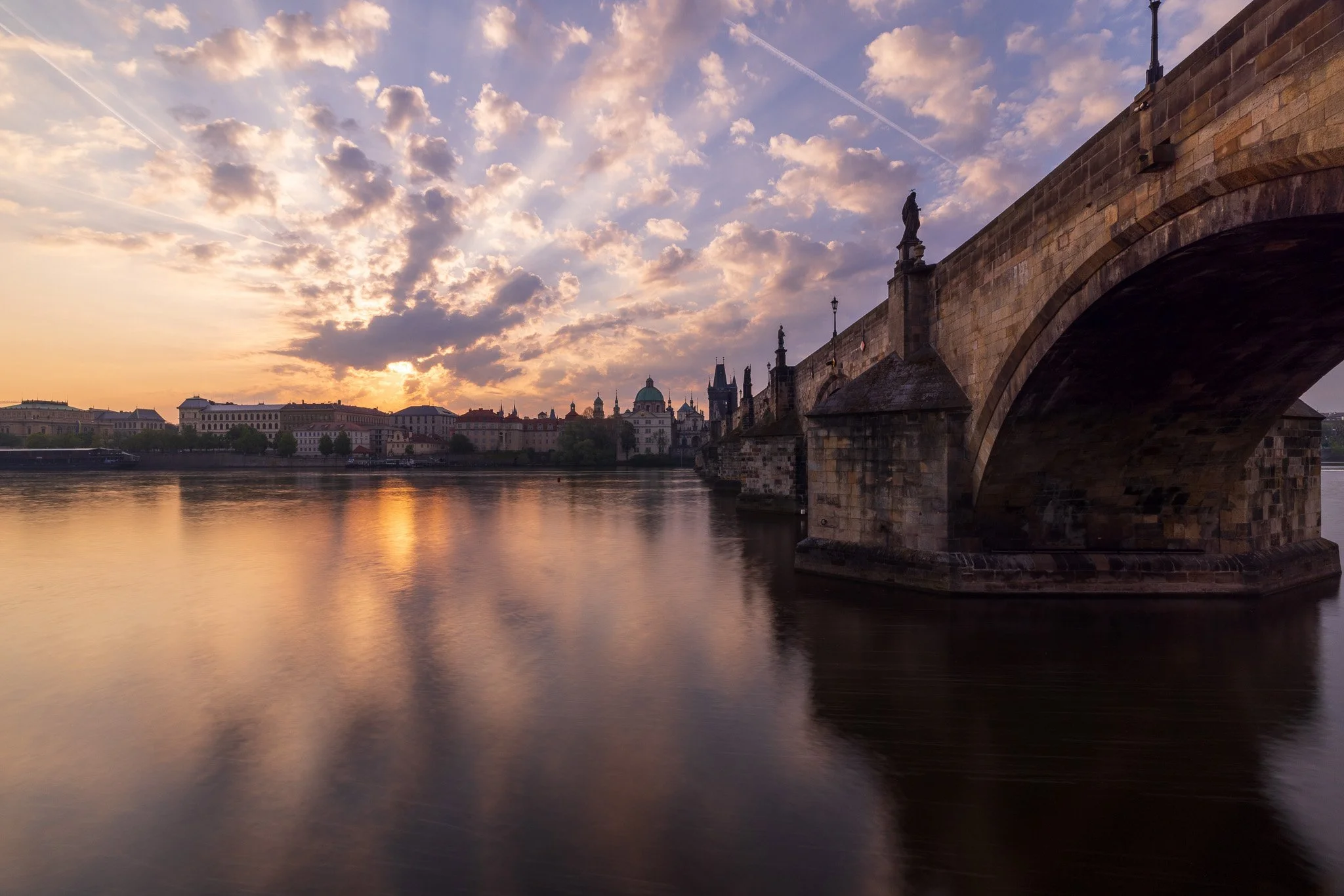
A different perspective beneath Charles Bridge, with its stone arch framing the Vltava River and Old Town.
Lower Charles Bridge, Right Side (Na Kampě, Malá Strana)
The opposite embankment below the bridge gives you the view back toward Malá Strana with the bridge arches overhead. A quieter and less visited angle than the left side, and from here you are two minutes on foot from the John Lennon Wall.
📷 Pro Tip: Frame with the arch in the upper portion of the composition and the Vltava surface filling the foreground. A 70 to 100mm focal length compresses the arch and the background architecture interestingly. This spot works well at blue hour when the lamp posts on the bridge above you contribute warm highlights to the upper frame. The Lennon Wall is a two-minute walk from here: shoot both on the same session.
Best time: Blue hour, evening. Access: Free.

Looking beneath the arches of Charles Bridge from the Malá Strana side of the Vltava River.
Old Town Square to Kafka Museum Side (Karmelitská 25, Malá Strana)
On the Malá Strana bank, on the small square to the left of the Kafka Museum on Cihelná Street, there is a straight-line view east across the Vltava to the Charles Bridge and the Old Town spires beyond it. This is the classic lit-bridge-at-night shot, and it is genuinely excellent. Prague Castle is above, and to the left, the lamp-lit arches of the bridge fill the middle ground, and the Old Town spires close the frame on the far bank.
📷 Pro Tip: Arrive at last light, when the sky is still deep blue, and the bridge lamps and castle flood lighting are at full intensity. Set up on a tripod on the riverbank walkway and shoot at 50 to 85mm to compress the bridge arches with the spires behind them. A 10 to 15 second exposure at ISO 200 to 400 gives you a smooth river surface. The exact position is just west of Cihelná Street, where it meets the embankment, with the Kafka Museum behind you to the right. This spot is quiet even when the Charles Bridge itself is full of people, because most visitors do not know it exists.
Best time: Blue hour, evening. Access: Free.
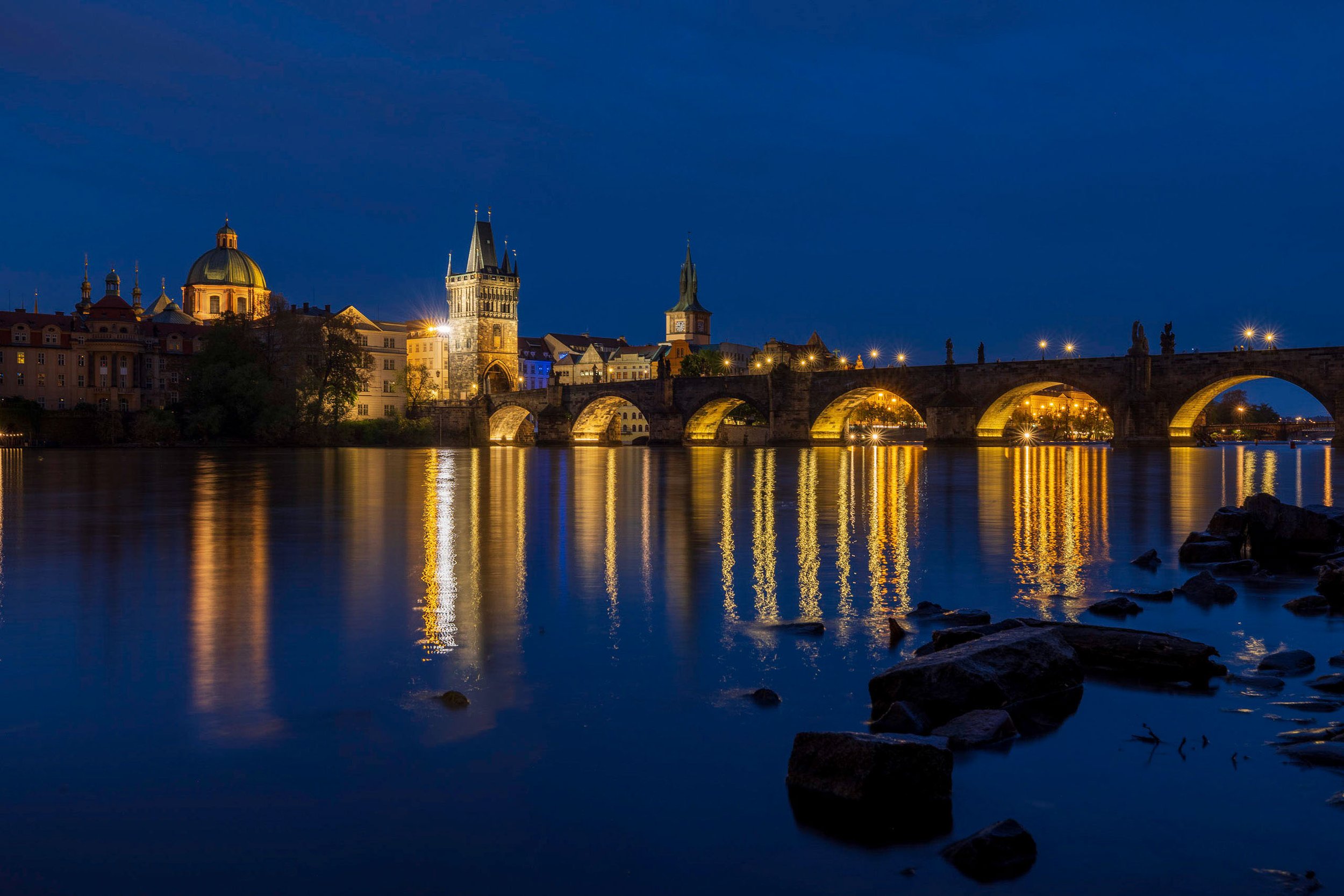
Charles Bridge illuminated at blue hour from the Vltava riverbank near the Kafka Museum.
Castle Sunset Shoot
This location is located on the Vltava River-look for Karlovy lázně on Google, and you will find it. If you are on the Charles Bridge looking at the castle, it is just to the left, about 150 yards along the river.
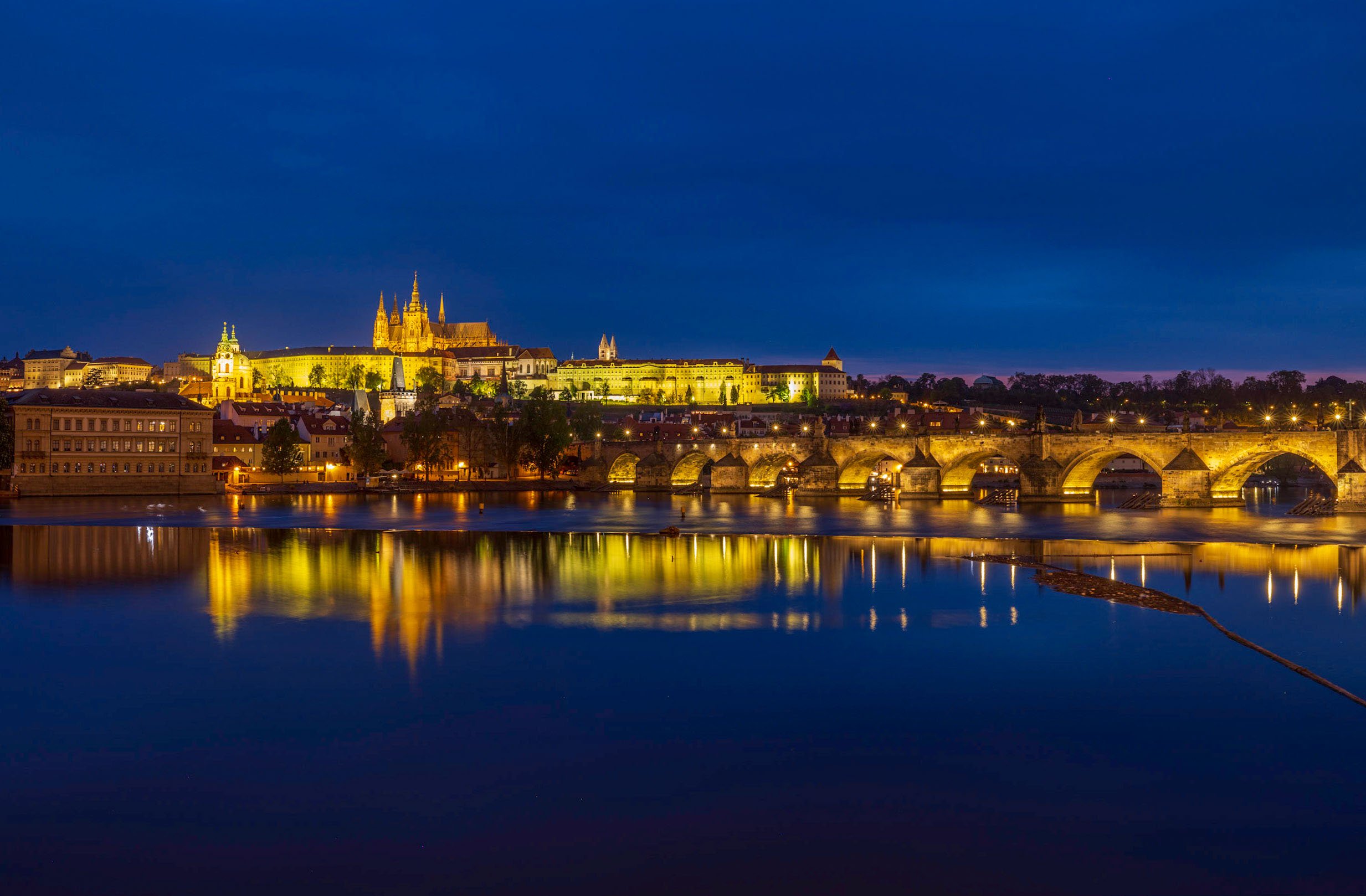
Prague Castle and St. Vitus Cathedral glowing above the Vltava River at sunset.
Old Town Square
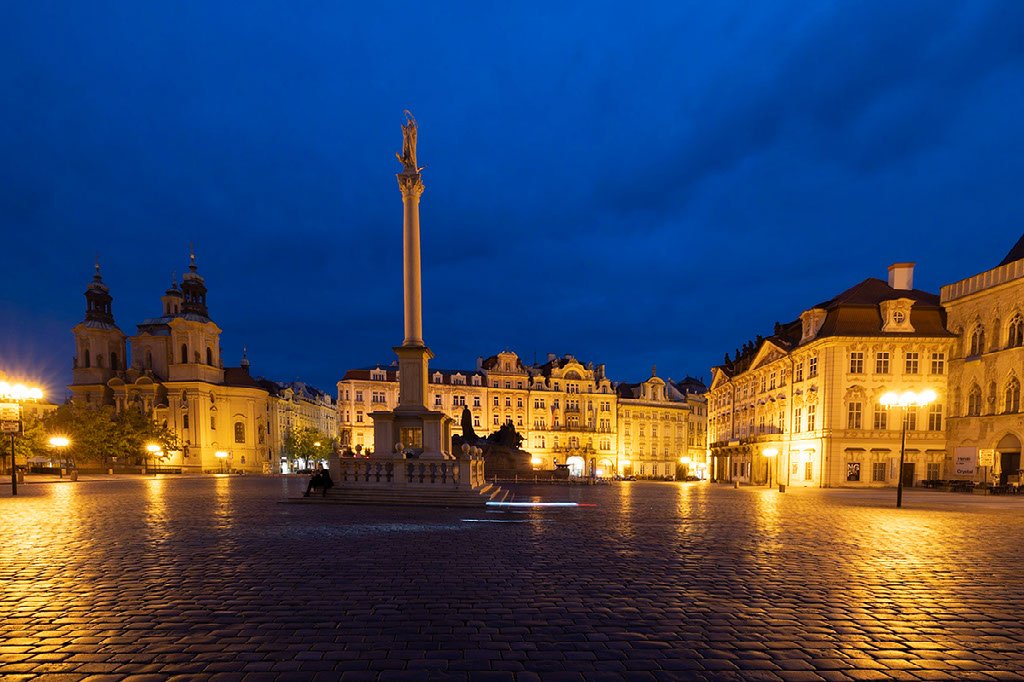
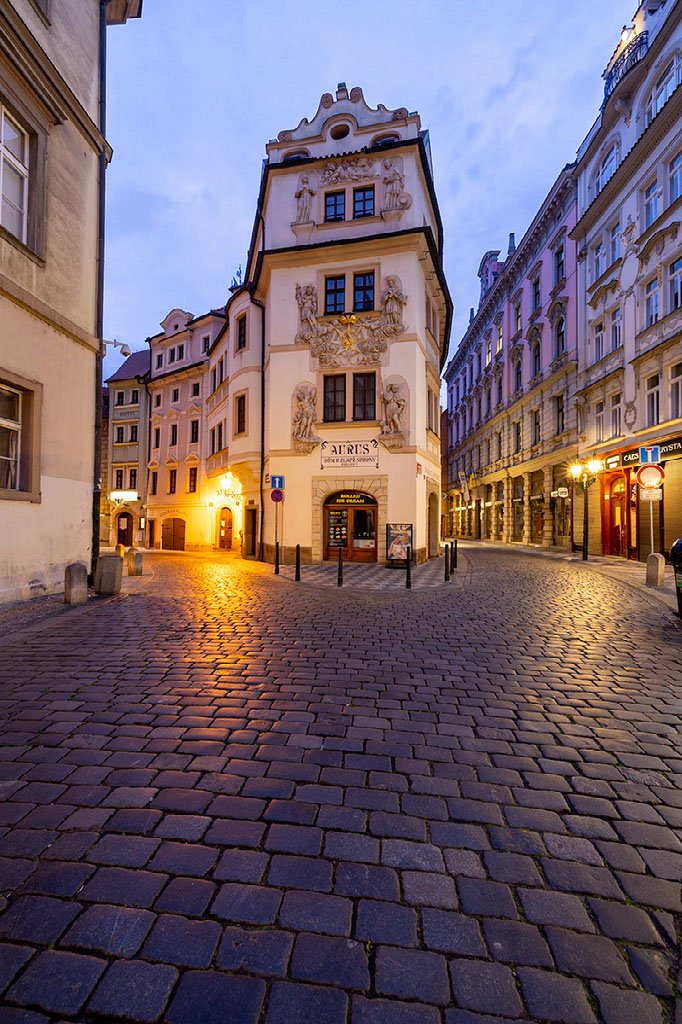
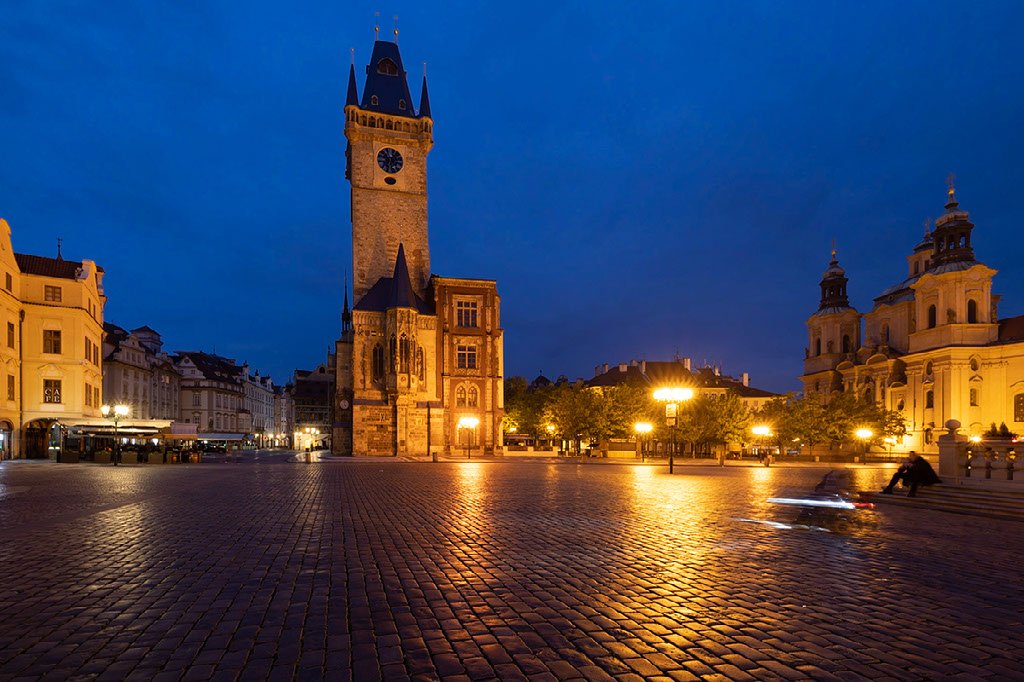
The Old Town Square is the heart of Prague and one of the most photographed public spaces in Europe. Founded in the 12th century, the square is anchored by the Church of Our Lady before Týn with its twin Gothic spires, the baroque St. Nicholas Church, the Art Nouveau Kinský Palace, and the Astronomical Clock on the Old Town Hall. At midday in July, it is completely overrun. At 5:30 am in October, it belongs entirely to photographers.
📷 Pro Tip: The best position for the full square panorama is from the middle of the square, facing the Týn Church, with the Old Town Hall clock tower on your left. Use a wide-angle (16 to 24mm) lens and shoot early morning when the low-angle light catches the facade of Týn from the east. The clock tower can be climbed for an elevated perspective over the square; go up before the tour groups arrive. In winter, the Christmas market fills the square with wooden stalls and warm light, and a wide shot from the southern edge of the square captures the full depth from the market to Týn in a single frame. A 24 to 35mm range works well for this composition.
Best time: Sunrise. Winter for Christmas markets. Access: Free to the square. Tower climb requires a ticket.
Prague Astronomical Clock (Staroměstské náměstí 1)
Installed in 1410, the Prague Orloj is the third-oldest astronomical clock in the world and the oldest still in operation. It sits on the south face of the Old Town Hall and displays the position of the sun and moon, the time of day, and the phases of the lunar calendar. On the hour, a procession of animated figures of the Apostles appears through the windows above the clock face. Photographically, the clock is extraordinary: the layered dials, the gold and blue enamel, and the skeletal figure of Death ringing a bell are all compressed into a two-meter face of mechanical detail.
📷 Pro Tip: For a full face shot, position yourself directly in front of the clock, centered on the lower astronomical dial, and use a focal length between 50 and 85mm to fill the frame with the clock face without excessive distortion. The best light on the clock face is in the morning when the east-facing facade catches direct light. For the Apostle procession, arrive a few minutes before the hour, move to a position slightly to the left or right of center (not directly below), and use a 70 to 200mm lens to isolate individual figures as they pass through the window. The crowd directly below the clock makes wide compositions noisy; work from the periphery for cleaner frames.
Best time: Morning for the clock face. Any full hour for the Apostle procession. Access: Free to view from the square. Old Town Hall tower ticket required for the interior and elevated view.

The medieval Prague Astronomical Clock on the Old Town Hall, one of the city’s most recognizable landmarks.
Dancing House (Jiráskovo náměstí 1981/6, Nové Město)
Designed in 1992 by Vlado Milunić and Frank Gehry, the Dancing House is one of Prague's most photographically contentious buildings. The deconstructivist form, nicknamed "Fred and Ginger" after Fred Astaire and Ginger Rogers, sits on the Rašín Embankment about fifteen minutes on foot south of the Old Town. It is worth visiting and worth photographing, but expect a crowd of photographers doing the exact same shot from the exact same spot across the street.
📷 Pro Tip: The standard exterior shot is from the embankment directly opposite the building, using a 35 to 50mm focal length to capture the full height. For something less generic, walk north along the embankment and use a 70 to 200mm to compress the Dancing House against the context of the river and the more conventional buildings beside it. The rooftop bar at the top of the building offers a view back toward Prague Castle that is worth the climb for a different angle. Go in the morning before the Instagram crowd arrives.
Best time: Morning. Access: Free to photograph from the street. Rooftop bar entry separate.

The Dancing House, designed by Vlado Milunić and Frank Gehry, brings a completely different architectural style to Prague.
Vrtba Garden (Karmelitská 25, Malá Strana)
The Vrtba Garden is one of the finest Baroque gardens in Central Europe, designed by František Maximilian Kaňka around 1720 on a steep, irregular slope in Malá Strana. The terraced layout, the sculpted vases and statuary, the views down to the red rooftops of Malá Strana from the upper terrace, and the intimate scale of the whole make it one of the most satisfying photography locations in Prague. It is not large, but it is extraordinary in its detail.
📷 Pro Tip: The upper terrace, accessible by a short climb from the entrance, gives you a framed view over the rooftops of Malá Strana with Prague Castle visible behind. A 50 to 85mm focal length is ideal here. The garden's statuary and urns make excellent foreground elements for layered compositions. Morning light from the east is best for the garden itself, and the narrow lanes leading to the entrance in Malá Strana add a secondary street photography opportunity en route. The garden is genuinely quiet mid-week. Arrive when it opens.
Best time: Morning. Access: Paid entry.
Spanish Synagogue (Vězeňská 1, Josefov)
The Spanish Synagogue is the youngest of the six synagogues in the Josefov Jewish Quarter, built in 1868 on the site of Prague's oldest house of prayer. The name refers to the style of construction: a Moorish Revival interior inspired by the Alhambra in Granada, with horseshoe arches, intricate geometric tilework, and a painted ceiling of interlocking stars and arabesques in gold, cream, and burgundy. For photographers, it is one of the most extraordinary interiors in Central Europe.
📷 Pro Tip: The Moorish Revival ornament is densely layered and rewards a medium telephoto more than a wide angle. A 50 to 85mm lens lets you isolate arches, ceiling medallions, and stained glass windows without the distortion of a wide. Shoot upward from the gallery level if access allows; the ceiling geometry from that angle is exceptional. Light is consistent (artificial) throughout the day, so timing matters less here than composition and patience. Arrive early in the museum opening window when the visitor numbers are lowest. This is part of the Jewish Museum complex; a combined ticket covers all six synagogues and the Old Jewish Cemetery.
Best time: Opening hour. Access: Paid entry (Jewish Museum combined ticket).

The extraordinary Moorish Revival interior of the Spanish Synagogue in Prague’s Jewish Quarter.
Municipal House (Náměstí Republiky 5, Staré Město)
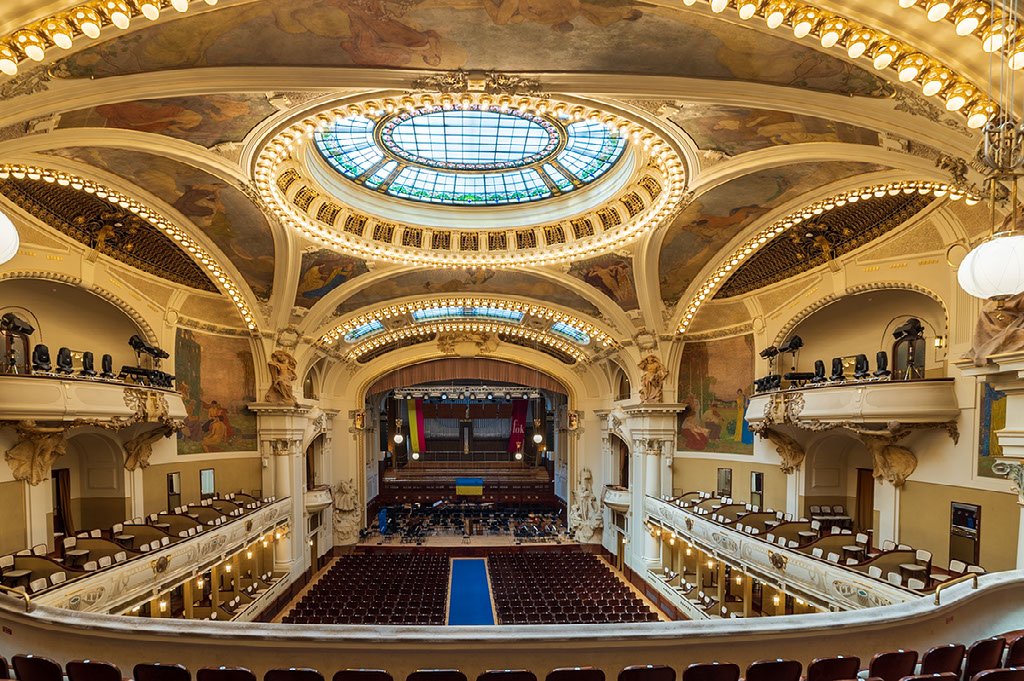
Built between 1905 and 1911, the Municipal House is Prague's most significant Art Nouveau building, decorated by nearly every major Czech artist of the era, including Alfons Mucha, Jan Preisler, and Ladislav Šaloun. The interior includes the Smetana Concert Hall, the Lord Mayor's Salon, a French restaurant, a basement American bar, and the Café Municipal on the ground floor. The exterior facade is a layered composition of carved stone, mosaics, and the famous mosaic lunette above the main entrance.
📷 Pro Tip: The exterior is best photographed from directly across Náměstí Republiky, using a 50 to 85mm focal length to fill the frame with the facade while keeping the building's full height. Morning light from the east catches the facade from a favorable angle. The Café Municipal interior is photographable and worth a visit: high gilded ceilings, art nouveau detailing, and warm table lamp light. A 35mm prime or a 24 to 70mm zoom handles the interior well. The building also sits adjacent to the Powder Tower (Prašná brána), which gives you a complementary Gothic counterpoint in the same frame if you position yourself correctly from Náměstí Republiky.
Best time: Morning for the exterior. Any time for the café interior. Access: Free to photograph the exterior. Café entry is free; guided tours of the interior are ticketed.
Letná Park Viewpoint (Letenské sady, Praha 7)
Letná Park sits on a plateau above steep embankments north of the Old Town, giving you one of the widest panoramic views of Prague available without climbing a tower. The park itself is peaceful, full of locals jogging and walking dogs, and the viewpoint above the river gives you the full arc of the Old Town rooftops from the Vltava bend east to the Old Town spires. A large metronome occupies the spot where a Stalin monument stood until 1962.
📷 Pro Tip: The panoramic ledge above the river is the shooting position. Use a standard zoom (24 to 50mm) for the wide city panorama and shift to 70 to 200mm to isolate individual spires and compress the rooftop depth. Sunrise works well here because the low eastern light catches the Old Town facades at an angle. Sunset is even better: the warm light from the west wraps the west-facing surfaces of the Old Town in gold, and the Charles Bridge is visible in the middle distance. A graduated ND filter helps balance the bright sky against the darker rooftops if you are shooting in strong light.
Best time: Sunrise or sunset. Access: Free. Walk up from the Vltava embankment or take a tram to Letná.
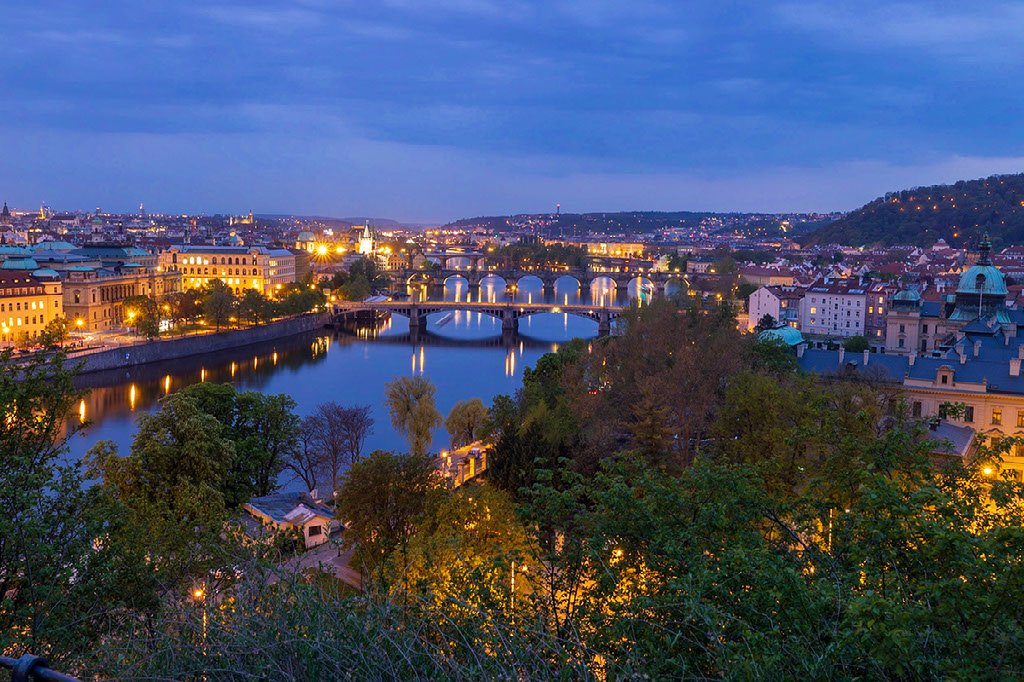
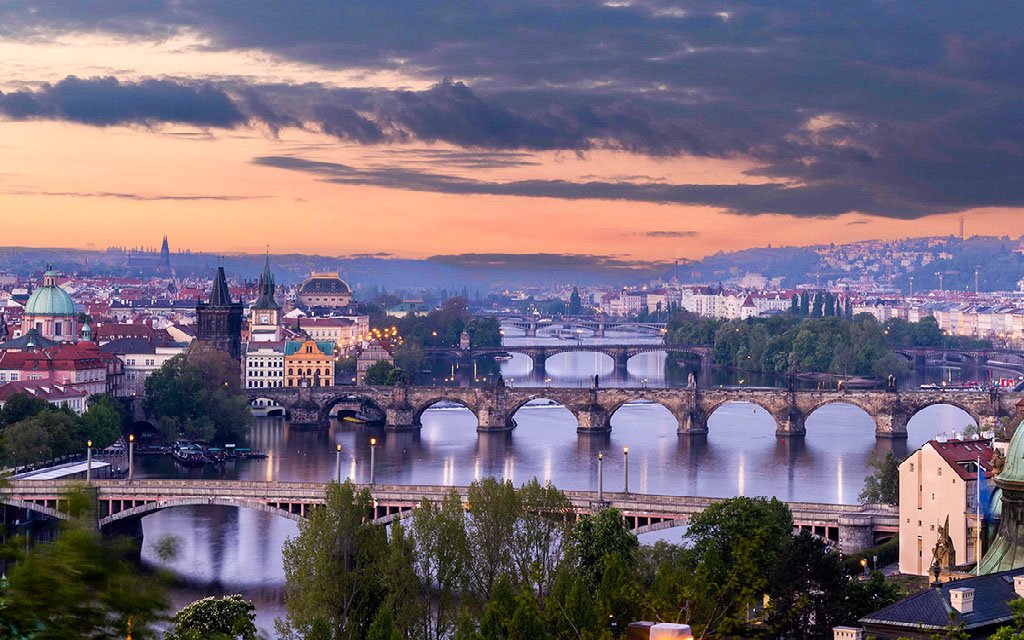
The House at the Black Madonna (Ovocný trh 19, 110 00 Staré Město, Czechia)
A cubist building in the "Old Town" area of Prague, Czech Republic. It was designed by Josef Gočár. It is currently in use as the Czech Museum of Cubism and includes the Grand Café Orient restaurant on the first floor. It is one of those buildings that you would walk by and miss it unless you know what's inside.

The House at the Black Madonna, one of Prague’s most important examples of Czech Cubist architecture.
Old Castle Stairs (Staré zámecké schody, 118 00 Malá Strana, Czechia)
At sunset from Prague Castle, you can take a set of stairs back down to the Old Town.

The Old Castle Stairs winding down from Prague Castle toward the rooftops of Malá Strana.
John Lennon Wall (Velkopřevorské náměstí, Malá Strana)
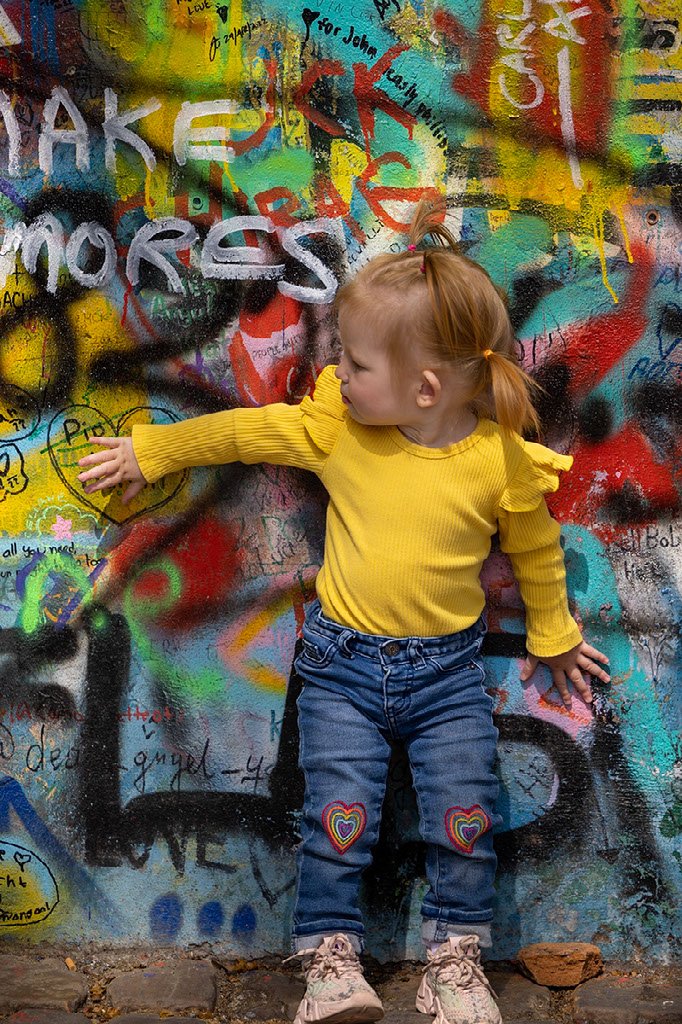
The Lennon Wall is a stretch of plastered wall near the Grand Priory Square in Malá Strana that has been continuously repainted with Lennon-inspired graffiti, Beatles lyrics, and messages about peace and solidarity since the 1980s. It has evolved to include references to current events, and the Ukraine sunflower imagery has been prominent in recent years. Two minutes on foot from the south end of the Charles Bridge.
📷 Pro Tip: The wall is best photographed in the morning before the tourist groups arrive. A 35mm prime or 24 to 70mm standard zoom works well for the full-wall composition. Stand directly across the narrow street to capture the width of the wall. For detail shots, compress specific sections with a 50 to 85mm. The wall is on a shaded lane, so the light is diffused throughout the day, which actually helps with color rendering. Include a human element in the frame when possible. People reading, painting, or photographing the wall add scale and context to what would otherwise be a flat record shot.
Best time: Morning. Access: Free.

Layers of colorful street art and messages of peace cover Prague’s famous John Lennon Wall in Malá Strana.
Petřín Hill (Praha 1, Hradčany)
Petřín Hill rises above Malá Strana on the west bank of the city. At the summit, you find the Petřín Lookout Tower, a miniature of the Eiffel Tower built in 1891, with a viewing platform offering a panorama that takes in the full city from above. The hilltop also holds a mirror maze, an observatory, and the statue of Karel Hynek Mácha, the Czech Romantic poet. In May, the hill is a meeting place for lovers, who by tradition leave flowers at Mácha's statue on the unofficial Czech day of love.
📷 Pro Tip: Take an Uber up to the top and shoot the city panorama from the tower viewpoint or from the wide lawns near the lookout. From the summit, a 70 to 200mm lens gives you compressed views of the castle and Old Town spires that work well in both golden and blue hour light. The walk back down through the orchard terraces gives you dappled light shots and framed views of Malá Strana rooftops through the trees. In spring, the cherry and apple trees on the hillside bloom in a way that makes this walk genuinely beautiful and worth a 24 to 70mm.
Best time: Golden hour or blue hour from the tower. Spring for the orchard blossoms. Access: Funicular ticket required if you ride up. Lookout Tower has a separate entry fee.
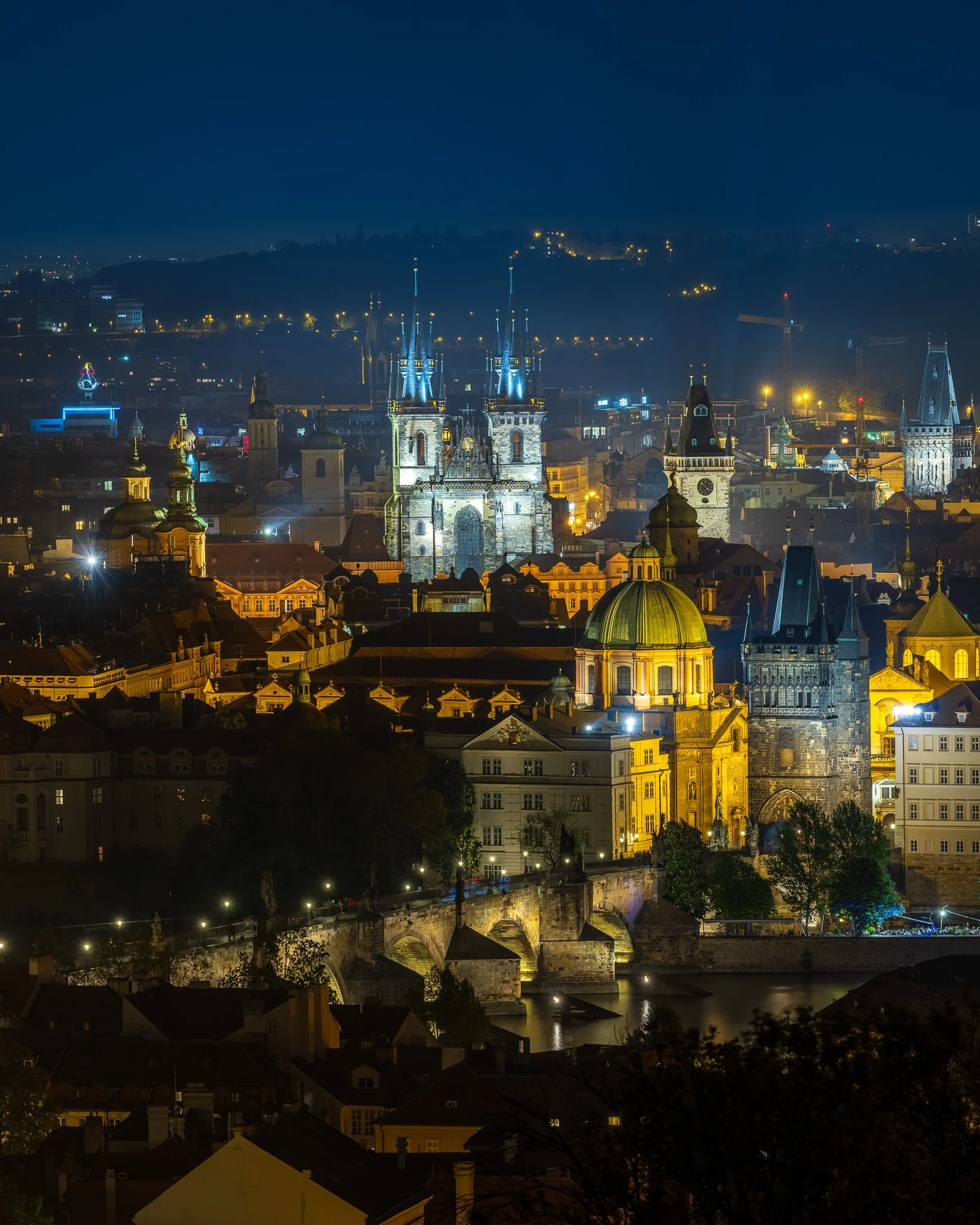
A panoramic view across Prague from Petřín Hill, one of the city’s best elevated photography locations.
Queen Anne's Summer Palace (Mariánské hradby 52/1, 118 00 Praha 1-Hradčany, Czechia)
Queen Anne's Summer Palace, sometimes called Belvedere, is a Renaissance building located in the Royal Garden of Prague Castle in the Czech Republic. Just across the street, you will find this tram line. The trick is to find the older-style trams. This is a Morning Location.
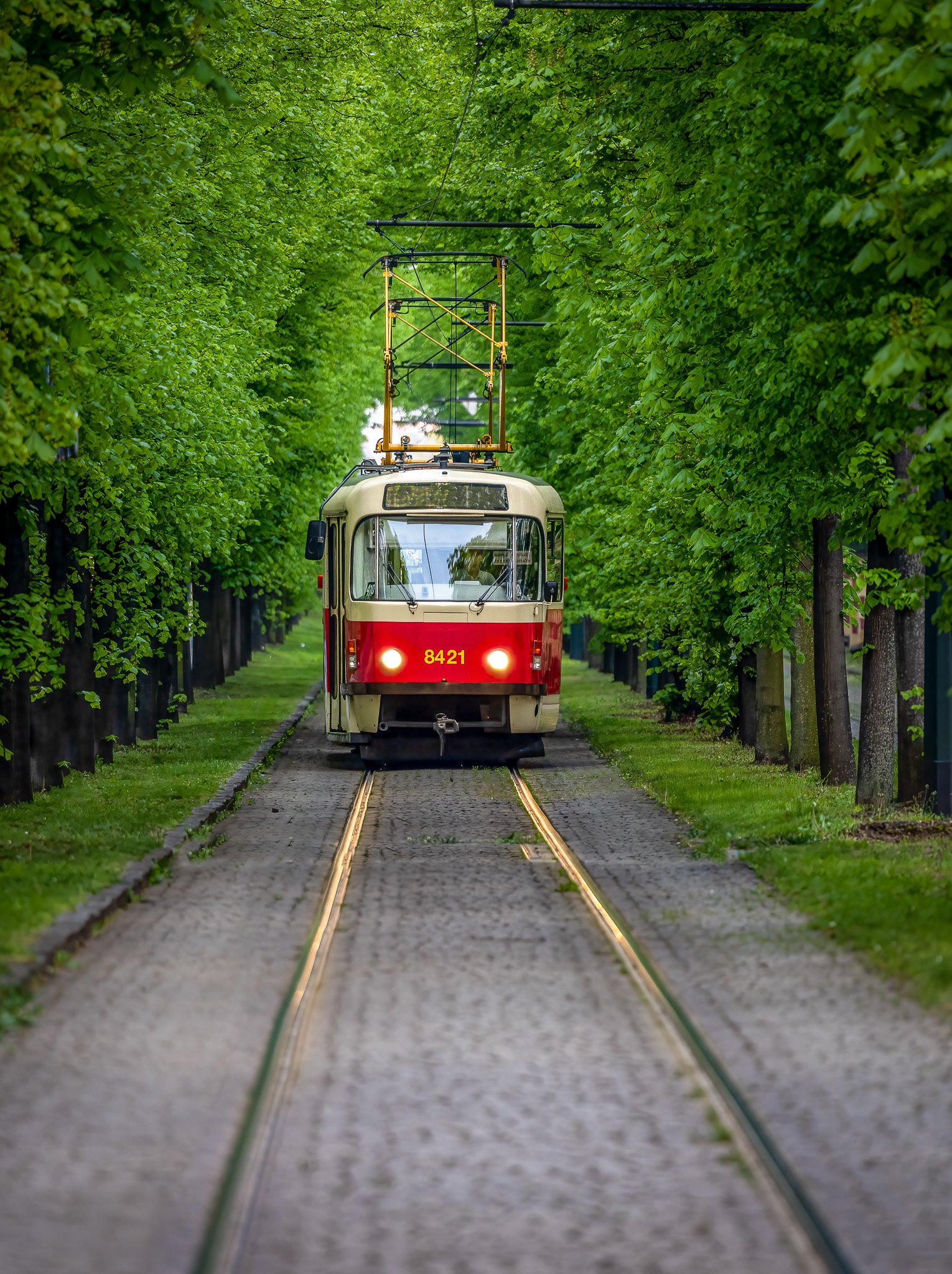
One of the small moments that makes wandering Prague with a camera so rewarding.
Festivals & Events in Prague
Prague Spring International Music Festival (May through June) is one of Europe's premier classical music festivals, held each year in historic venues across the city including the Municipal House's Smetana Hall. The festival draws audiences and performers from across the continent. For photographers, the concerts are primarily audio events, but the pre-concert crowd, the venue architecture, and the formal atmosphere offer strong documentary opportunities.
Signal Festival (October) is a city-wide light art installation event that transforms Prague's architectural heritage into illuminated canvases for four nights in mid-October. Buildings, bridges, public squares, and facades throughout the Old Town, Malá Strana, and beyond are used as projection surfaces. This is one of the most extraordinary photography events in Central Europe, full stop. Plan a dedicated Signal Festival trip if the timing works.
Christmas Markets (late November through December) fill Old Town Square and Wenceslas Square with wooden stalls, mulled wine, roasted chestnuts, and the warm amber light of thousands of lanterns. The contrast of the Gothic Týn Church spires rising behind the market stalls is one of the classic Prague winter frames. Visit in the first two weeks of December before the Christmas week crowds peak.
Easter Markets (March through April) bring decorated eggs, folk craft stalls, and spring blooms to Old Town Square. Smaller and more local in feel than the Christmas markets, with stronger craft and cultural content. A good time to be in Prague if you are photographing traditional Czech culture.
Frequently Asked Questions About Visiting Prague
Is Prague safe?
Yes, it's one of the safer major cities in Europe for visitors. Pickpocketing near the main tourist sites and on trams is the primary risk, not violent crime. Normal city awareness covers most of it.
Is Prague expensive?
Less than most Western European capitals, though the main tourist circuit around Old Town Square and Charles Bridge runs higher than the rest of the city. Step a few streets off the main path and prices drop noticeably for food and drink.
How many days do you need in Prague?
Three to four days is ideal for photographers. That's enough time to shoot Charles Bridge at dawn, explore Old Town, get up to the Castle, and still have room to slow down without rushing every frame.
What are the best photo spots in Prague?
Charles Bridge at sunrise, Petřín Hill at blue hour, and Old Town Square before the crowds are three I return to constantly. The full list with Pro Tips is below.
Can you fly a drone in Prague?
Only in specific zones. Much of central Prague, including the historic core, falls under restriction. Check current Czech drone regulations before you pack one.
What surprised you most about photographing Prague?
How much variety there is to photograph, and how well preserved the city is. Prague avoided the heavy damage most of Central Europe suffered during World War II, so the architecture genuinely looks like it has for centuries, which gives you an unusual amount to work with in a small walkable area.
Do you need to know Czech to get around?
No. English is widely spoken in hotels, restaurants, and the main tourist areas. A few basic phrases are appreciated but not necessary.
Is the Charles Bridge worth visiting more than once?
Yes, at different times. Sunrise gives you the bridge nearly empty. Blue hour from below, near Kampa Island, gives you the arches lit against the sky. It's different enough each time to justify returning across a single trip.
Final Thoughts on Prague
Prague keeps paying out. After more than a dozen visits, I am still finding compositions I have not made before. A particular light on the Vltava in November. A courtyard off a Malá Strana lane that I have walked past twenty times without turning into. The way the Charles Bridge statues look at 5:15 am in September, when the mist is still on the river, and the castle is glowing behind them. This is what keeps me coming back.
The city rewards preparation and early mornings. Get up for Charles Bridge at dawn. Walk the Jewish Quarter slowly. Give the Strahov Library more time than you think it needs. Take the Uber up to Prague Castle and walk back down. And at some point in your trip, just put the camera away and sit in Café Savoy with a coffee and a pastry for an hour. Prague is a city that also deserves to be experienced, not just photographed.
Want to improve your photography while exploring some incredible destinations? Join me on one of my photography workshops! You can find all the details, including upcoming destinations and dates, through the links below.
Let's Stay Connected!
You can explore all my other Photography and Travel Guides
My Photography & Travel Guide to Vienna, Austria Prague and Vienna have been connected for centuries, and the two cities make a natural pair. Vienna is an hour's train ride to the south, and its Ringstrasse architecture, imperial palace interiors, and coffee house culture offer a compelling contrast to Prague's medieval and baroque layers. If you are touring Central Europe, put these two together.
My Photography & Travel Guide to Budapest, Hungary. Budapest sits about four hours southeast of Prague and rounds out the three great cities of Central Europe for photographers. The Hungarian capital's thermal baths, the chain bridge at blue hour, and the sweeping view from Fisherman's Bastion are all worth the trip. Plan ten to twelve days and cover all three cities in a single journey.
My Photography & Travel Guide to Warsaw, Poland. Warsaw is a three-hour train ride north and offers a completely different kind of history. A city that was almost entirely destroyed in the Second World War and rebuilt from the ground up, it is the strongest argument in Central Europe for what determination and memory can accomplish. Photographically, the contrast with Prague could not be more complete, and that contrast is exactly why you should go.
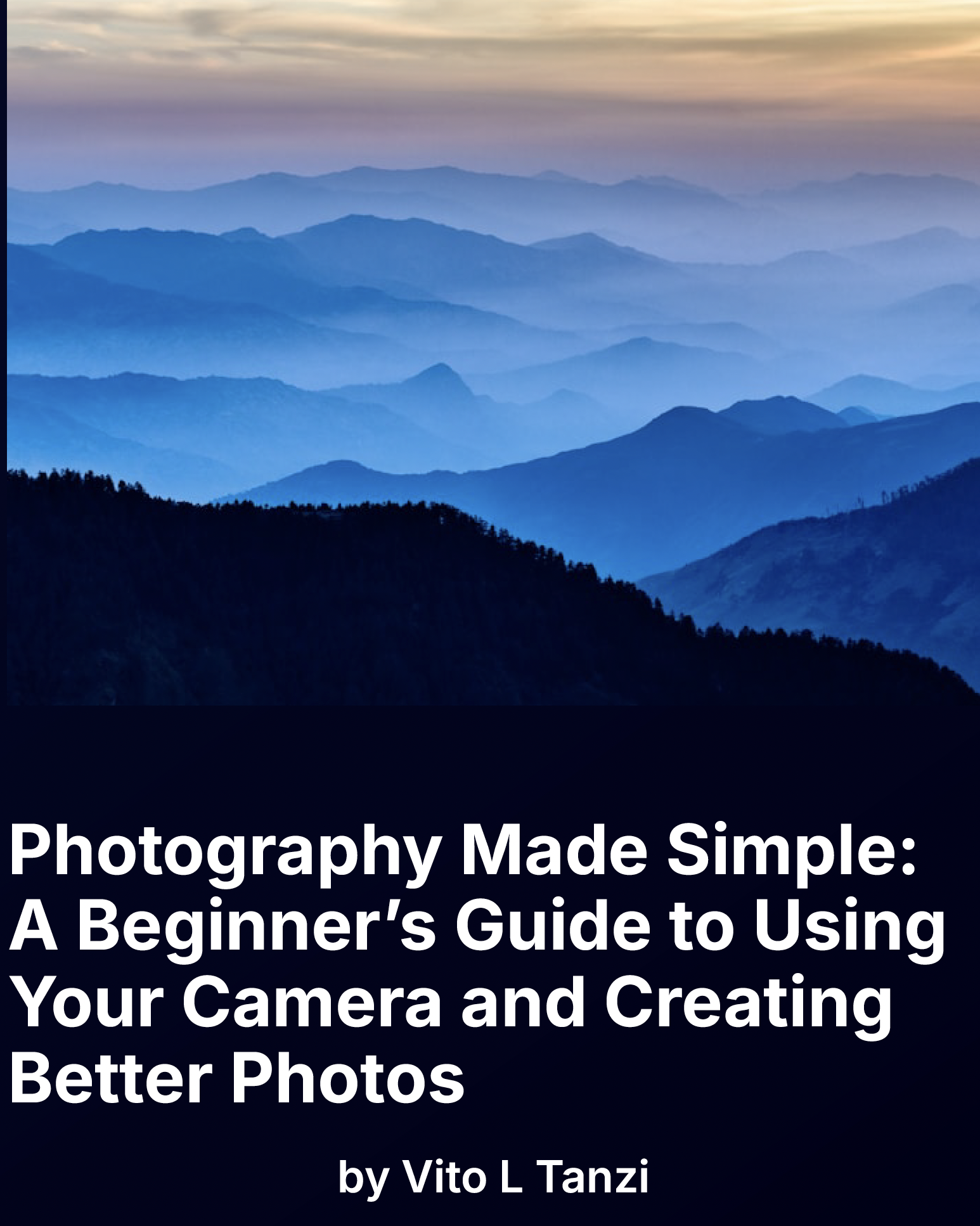
Finally—a beginner-friendly photography guide that makes sense.
If you've ever picked up a camera and thought, "Now what?" this is the book for you.
Photography Made Simple is written for adults who are just starting out and want a clear, encouraging, real-world approach to learning photography. Whether you're using a DSLR, mirrorless, or just your smartphone, this guide walks you through the basics—without the jargon or tech overwhelm.
Inside, you'll learn:
The only camera settings you really need to know to get started
How to shoot sharper, more intentional photos using light and composition
Simple tips for portraits, landscapes, travel, and everyday life
What gear you do (and don’t) need
How to create better photos without upgrading your camera
You’ll also get practical exercises, cheat sheets, and tips for organizing and editing your images—plus the confidence to shoot off Auto Mode for good.
This is not a textbook. It’s a friendly guide to seeing the world with fresh eyes—and finally capturing what you see the way you imagine it.
📸 Format: PDF download
Pages: 100+
Perfect for: Beginners, hobbyists, and anyone ready to take better photos without the stress