Warsaw, Poland Travel & Photography Guide: Best Photo Spots, Things to Do & Hidden Gems
I really did not know what to expect when we visited Warsaw. That honesty matters, because it shapes how you arrive, and arriving with low expectations turned out to be the best possible setup. We walked through Old Town on an October afternoon with soft, low light coming across the cobblestones and the pastel facades, and we stopped at a café for apple cake and coffee. That was the afternoon that settled it. Warsaw was a genuine discovery, the kind that happens when you let a city surprise you instead of trying to confirm what you already assumed.
The Old Town is beautiful in a specific way that other European old towns are not. Every building you see was rebuilt after the war, reconstructed from old photographs and paintings with a precision and collective determination that is itself extraordinary. You are walking through an act of memory as much as through a neighborhood, and that knowledge adds a layer to the photography that most picturesque European squares simply do not have. The colors are vivid but grounded. The light, especially in autumn, is warm and raking. The spaces are compact enough to shoot intimately but open enough to give you room to work.
Warsaw is also a city of genuine contrasts. The Soviet-era Palace of Culture and Science towers over a skyline of gleaming glass towers. A 14th-century Royal Castle anchors one end of a boulevard where people stop for coffee and scroll their phones. Łazienki Park, vast and forested, sits fifteen minutes from the financial district. For photographers, that range is the point. There is no single version of Warsaw. There are several, and they all reward careful attention.
Kraków gets most of the attention when people talk about Polish cities worth visiting. Warsaw deserves more of it.
In this Photography Guide to Warsaw, I share the places and experiences that continue to draw me back. You will find my favorite photography locations, guidance on when and where to shoot, practical travel tips, and gear recommendations, along with cultural insights to help you explore and photograph Warsaw with confidence, respect, and ease.

Old Town of Warsaw
Photographer's Notes
Before you go, here are my own takeaways.
Favorite Season: October
Favorite Location: Old Town Market Square
Favorite Hotel: Hotel Bristol, a Luxury Collection Hotel
Favorite Restaurant: Atelier Amaro
Favorite Café: Relax Café Bar
Favorite Lens: 15-35mm f/2.8
Would I Return? Yes, I definitely would.
Where to Stay in Warsaw
Base yourself in Śródmieście, Warsaw's central district, within walking distance of the Old Town, the Presidential Palace, and the main cultural institutions. The best hotels are concentrated along Krakowskie Przedmieście, Warsaw's most elegant boulevard, and within the compact area between the Old Town and the Palace of Culture and Science.

Route from Hotel Bristol to the Old Town
Luxury Hotels in Warsaw, Poland
Raffles Europejski Warsaw — One of the most storied addresses in Polish hospitality, the Europejski opened in 1857 as the finest hotel in Warsaw and was restored to its original grandeur by Raffles in 2018. The renovation preserved the building's neoclassical architecture while adding the full Raffles service standard: butler service, a comprehensive spa, and two restaurants, including the Europejski Grill, which has been a social gathering point for Warsaw's establishment since the 19th century. Located on the corner of Nowy Świat and Aleje Jerozolimskie, the hotel places you at the intersection of Warsaw's most important cultural and historical streets, within easy walking distance of the Chopin Museum, the National Museum, and the Old Town. For photographers, the hotel's architecture is itself a subject.
Hotel Bristol, a Luxury Collection Hotel — This is where we stayed, and it is our first recommendation in Warsaw. The Bristol opened in 1901 on Krakowskie Przedmieście, directly opposite the Presidential Palace, and survived the Second World War in far better condition than most of the surrounding city. The hotel retains an elegance that connects you directly to Warsaw's prewar history: the grand lobby, the period details, the warm service of a property that has been hosting guests for over a century. The location is exceptional for photographers. The Presidential Palace and its changing of the guard are across the street, the Old Town is a ten-minute walk north, and the boulevard itself is one of the finest morning photography walks in the city. Our unqualified recommendation.
InterContinental Warsaw — A 44-floor contemporary tower close to the Palace of Culture and Science, offering the most dramatic views of any hotel in the city. The rooftop swimming pool on the 43rd and 44th floors is one of the finest hotel amenities in Warsaw, with panoramic views in every direction that take in the Old Town to the north, the Vistula to the east, and the Soviet-era skyline to the south. For photographers who want to shoot Warsaw from above, the upper floors of the InterContinental provide access that no public viewpoint matches.
Mid-Range Hotels
Novotel Warszawa Centrum — A reliable and well-positioned mid-range choice in the heart of the business and cultural district. Sits close to the Palace of Culture and Science with comfortable, straightforward rooms, good city views from upper floors, and easy access to both the Old Town and the main transport hubs. A practical base for photographers covering the full city.
Mercure Warszawa Grand — A stylish Accor property in the city center with reliable quality at a mid-range price point. Well-positioned for walking access to the main photography locations. Good value for a two to three-night Warsaw stay.
Polonia Palace Hotel — A historic Art Deco property directly opposite Warsaw Central Railway Station, making it the most practical base for travelers arriving by train from Kraków or Gdańsk. The building dates from 1913 and retains its original character across the facade and public spaces. Comfortable rooms at competitive pricing with a location that suits anyone who wants to move efficiently between Warsaw and the rest of Poland.

Best Time of Year to Visit Warsaw, Poland
Late Spring (May to June) is excellent. Days are long, the parks are green and full of life, and the light has that particular European softness that comes before summer heat hardens it. Golden hour stretches toward 9 p.m. in June, which gives you plenty of time to finish dinner and still get to a shooting location with light to work with.
Early Autumn (September to October) is the window I prefer for photography. The crowds have thinned from their summer peak, the trees in Łazienki Park begin turning gold and copper, and the low-angle autumn light comes across the pastel facades of the Old Town at a sharp, raking angle that is genuinely difficult to replicate any other time of year. This is when we visited, and the October afternoon light in the Old Town Market Square was among the best light I shot in on that entire trip through Europe.
Summer (July to August) is warm, lively, and busy. The Vistula riverbanks fill up with locals, outdoor bars appear, and the city has an energy that is genuinely photogenic for street photography. Crowds are heavier at the main tourist sites, but the social life of the city is worth photographing in its own right.
Winter (December to February) is cold, often grey, and the days are short, but the Christmas markets in December add warm light and color to the Old Town in a way that rewards photographers willing to work in low temperatures. Snowfall, when it comes, transforms the Old Town into something quiet and extraordinary.
For photographers, the shoulder seasons are the intelligent choice. September and October give you the best combination of light quality, manageable crowds, and the specific autumn colors of the parks that summer visitors never see.
How Many Days Should I Spend in Warsaw?
Three days is the right minimum for a photographer visiting Warsaw for the first time. That gives you enough time to cover the Old Town properly at different hours, spend a morning at Łazienki Park, shoot the Palace of Culture and Science at blue hour, and still have time for a long dinner and the cafés.
Four to five days is the pace I would recommend if you want to do this properly. With that much time, you can hit the Old Town at dawn before anyone is awake, return at golden hour in the afternoon, explore Krakowskie Przedmieście at leisure, cross to the Praga district for street art, and spend a full afternoon in Łazienki without feeling rushed.
A rough outline for a four-day visit:
Day 1: Arrive, walk Krakowskie Przedmieście, photograph the Presidential Palace at sunset. Dinner in the Old Town.
Day 2: Old Town Market Square at dawn. Royal Castle mid-morning. Łazienki Park afternoon. Blue hour at the Palace of Culture and Science.
Day 3: Praga district and the Neon Museum. Vistula riverbank at sunset.
Day 4: Saxon Garden morning. Hala Koszyki for lunch. Final walk through the Old Town at your own pace.

Getting Around Warsaw, Poland
Warsaw is more walkable than most visitors expect. The Old Town, Krakowskie Przedmieście, the Presidential Palace, and the Saxon Garden are all within easy walking distance of each other, and the compact core of the city rewards the kind of slow exploration that street photography requires. A morning spent walking from Hotel Bristol north toward the Old Town and back through the boulevard's side streets will produce more images than any organized tour.
For longer distances, Warsaw has an efficient metro system with two lines, plus trams and buses that cover the full city. The metro is clean, fast, and straightforward to use; single-ride tickets are purchased at machines in every station. Łazienki Park is most easily reached by tram or bus from the city center, a short ride south along the Royal Route.
Uber and Bolt are both widely available and reliably cheap. For photographers carrying gear and wanting to move quickly between locations at blue hour without worrying about carrying a bag on the metro, Bolt in particular is an excellent and affordable option.
If you are exploring the Praga district on the east bank of the Vistula for street art and a grittier, more authentic Warsaw, a taxi or Bolt to cross the river is the most efficient approach.

Where to Eat in Warsaw, Poland
Warsaw's culinary scene surprised us entirely. We did not know what to expect and found that every meal was exceptional, from the Michelin-starred tasting menus to the simple pierogi in a neighborhood restaurant. The apple cake and coffee in the Old Town cafés were among the best we had anywhere in Europe on that trip. Polish cuisine rewards exploration, and Warsaw is the city where you see what it becomes when serious chefs apply contemporary techniques to deeply traditional ingredients.

Polish Dishes Worth Knowing Before You Sit Down
Bigos is Poland's national dish: a rich, slow-cooked stew of meat and sauerkraut traditionally served in a bread bowl, and the most warming meal in the cuisine. Pierogi, the stuffed dumplings available in sweet and savory forms, are the dish you will order repeatedly. The savory versions with potato and cheese, or with wild mushrooms, are the classic choices.
Atelier Amaro — The flagship of Polish fine dining and Warsaw's most celebrated restaurant. Chef Wojciech Modest Amaro holds a Michelin star and works with foraged and seasonal Polish ingredients in a way that has defined contemporary Polish cuisine for over a decade. The tasting menu draws on forest mushrooms, river fish, cured meats, and wild herbs in compositions that are genuinely inventive without being self-consciously modern. The setting is intimate and the service is knowledgeable. Reserve in advance.
Senses Restaurant — Another Michelin-recognized Warsaw dining experience, known for its creative tasting menus and elegant ambiance in a sophisticated setting near the Old Town. A strong alternative to Atelier Amaro for a special dinner, with a different creative direction and equally serious cooking.
U Fukiera — One of the oldest and most atmospheric restaurants in Warsaw, located in a beautifully preserved 15th-century townhouse in the Old Town Market Square. U Fukiera serves traditional Polish cuisine, bigos, żurek, roasted meats, and the full canon of hearty Mazovian cooking, in a setting of vaulted cellars and candlelight that makes the history of the square feel present rather than distant. The most atmospheric dining room in the city for a long, unhurried dinner.
Hala Koszyki — A beautifully restored 1909 Art Nouveau market hall that now operates as Warsaw's finest food market. Multiple vendors under one roof cover everything from excellent Polish deli products to international cuisines, with communal seating and a buzz that makes it one of the best lunch stops in the city. The architecture is outstanding: the original iron structure, the tile work, and the light through the high windows make it a photography subject as much as a meal.
Stary Dom — A classic Warsaw restaurant known for its hearty traditional Polish fare and warm, unpretentious atmosphere. The kind of place that has been feeding the neighborhood for decades without feeling the need to modernize what already works. A generous dinner after a long day of walking in the Old Town.
Atelier Amaro — The flagship of Polish fine dining and Warsaw's most celebrated restaurant. Chef Wojciech Modest Amaro holds a Michelin star and works with foraged and seasonal Polish ingredients in a way that has defined contemporary Polish cuisine for over a decade. The tasting menu draws on forest mushrooms, river fish, cured meats, and wild herbs in compositions that are genuinely inventive without being self-consciously modern. The setting is intimate, and the service is knowledgeable. Reserve in advance.
Senses Restaurant — Another Michelin-recognized Warsaw dining experience, known for its creative tasting menus and elegant ambiance in a sophisticated setting near the Old Town. A strong alternative to Atelier Amaro for a special dinner, with a different creative direction and equally serious cooking.
U Fukiera — One of the oldest and most atmospheric restaurants in Warsaw, located in a beautifully preserved 15th-century townhouse in the Old Town Market Square. U Fukiera serves traditional Polish cuisine, bigos, żurek, roasted meats, and the full canon of hearty Mazovian cooking, in a setting of vaulted cellars and candlelight that makes the history of the square feel present rather than distant. The most atmospheric dining room in the city for a long, unhurried dinner.
Hala Koszyki — A beautifully restored 1909 Art Nouveau market hall that now operates as Warsaw's finest food market. Multiple vendors under one roof cover everything from excellent Polish deli products to international cuisines, with communal seating and a buzz that makes it one of the best lunch stops in the city. The architecture is outstanding: the original iron structure, the tile work, and the light through the high windows make it a photography subject as well as a meal.
Stary Dom — A classic Warsaw restaurant known for its hearty traditional Polish fare and warm, unpretentious atmosphere. The kind of place that has been feeding the neighborhood for decades without feeling the need to modernize what already works. Good for a generous dinner after a long day of walking in the Old Town.
Coffee and Cafés
The cafés of Warsaw were among the highlights of the entire trip. The quality of the coffee is genuinely high, and the baked goods, particularly the apple cake and pastries on display in the Old Town cafés, are extraordinary. We were blown away by every café we stopped at.
Relax Café Bar — A warm, unhurried spot with excellent coffee and no reason to leave quickly. Our kind of café.
Ministerstwo Kawy — One of Warsaw's most respected specialty coffee shops with a loyal local following. Excellent single-origin espresso in a friendly and unpretentious space.
Kawiarnia Kafka — Near the University of Warsaw, a literary café that has been a student and intellectual gathering point for years. Good coffee, good bookshelves, and the specific atmosphere of a place that does not hurry its customers.

Photography Gear to Bring to Warsaw, Poland
Warsaw is a city built for walking, so travel light enough to keep moving. The architecture, street life, and scale of the city reward versatility more than a single specialty lens.
Camera Bodies: The Canon EOS R5 Mark II, Sony A7R V, or Nikon Z8 are all excellent choices. For walking around Warsaw all day, I often use the Leica Q3 as my primary walk-around body: compact, sharp, and low-profile enough to shoot candid street photography without drawing attention.
Lenses:
Wide-angle (16-35mm): Essential for the Old Town Market Square, the Palace of Culture and Science from street level, and Hala Koszyki's interior. This is the lens you will use most in Warsaw.
Standard zoom (24-70mm): The all-around workhorse for street photography along Krakowskie Przedmieście and in the parks.
Telephoto (70-200mm): Useful for isolating architectural details on the Old Town facades, compressing the symmetry of the Royal Route, and pulling subjects out of busy scenes along the Vistula.
Tripod: Essential for blue hour and night photography at the Palace of Culture and Science and for long exposures along the Vistula riverbanks. A compact travel tripod fits in a carry-on.
ND Filters: A 6-stop ND filter is useful for long exposures on the Vistula in flat midday light and for smoothing movement in busy squares.
Extra batteries and cards: Cold autumn and winter temperatures drain batteries faster than you expect. Carry at least two spares.
Drone: Warsaw's airspace is genuinely complex. The city sits under two CTR zones (Okęcie and Babice), a government protection area around the Presidential Palace and Royal Castle, and additional restrictions around national monuments and parks. Drone photography in the city center is effectively not feasible without advance permits. If aerial photography is a priority, check the official DroneTower app (the Polish Air Navigation Agency's required check-in tool) and verify current restricted zones before you travel. Violations carry serious fines. The Vistula riverbanks and parks outside restricted zones may offer limited opportunities for lighter category drones, but always verify current conditions.
iPhone Tips for Warsaw
Old Town Market Square: Use the ultrawide lens in the early morning to capture the full sweep of the pastel facades from a low angle. Get close to the cobblestones for foreground texture and let the buildings fill the frame above.
Palace of Culture and Science: Point straight up from directly beneath the tower and use the ultrawide lens for a vertigo-inducing compression of the Soviet architecture against the sky. Night Mode handles blue hour and artificial light on this building remarkably well.
Łazienki Park: Portrait Mode on a 2x telephoto works well for isolating the peacocks that wander freely through the park against the soft background of the trees. The Palace on the Water reflected in the lake is also a strong composition in the standard lens at dawn.
Cafés: Warsaw's café interiors have excellent natural light from large windows. Turn off flash, use the standard lens, and let the window light do the work for food and coffee photographs.
Photography Locations in Warsaw
I spent most of my time in Warsaw photographing the Old Town Center, which is very colorful and picturesque. It’s great that it is so easy to walk around the area and take photos. Here are some of my favorite spots.
Skwer ks. Jana Twardowskiego -
On your walk north toward the Old Town, this small square named after the beloved Polish priest and poet Father Jan Twardowski is worth slowing down for. It is not a major landmark, but it is the kind of place that rewards a photographer paying attention. The memorial elements, a quiet tribute to Twardowski's life and work, sit alongside a handful of cafés and the easy afternoon rhythm of locals stopping for coffee. In the afternoon, the light is soft and diffused, good for detail work and unhurried street moments. Shoot the memorial in context with the surrounding street life rather than in isolation, and use a 50mm or 85mm to pick out the textures and human scale of the square. Think of it as a warm-up stop, a place to loosen your eye before the more concentrated work of the Old Town ahead.

It’s a convenient stop on your way to exploring Old Town

Nearby, you’ll find a variety of cafes, restaurants, and shops. We really enjoyed visiting the cafes of Warsaw.

Krakowskie Przedmieście and the Presidential Palace
Krakowskie Przedmieście is Warsaw's most elegant boulevard, running south from the Old Town through a sequence of neoclassical churches, palaces, and university buildings toward Nowy Świat. It is the spine of Warsaw's historic core and one of the finest street photography walks in Central Europe. Hotel Bristol anchors the middle section of the boulevard directly opposite the Presidential Palace, making the morning walk north toward the Old Town from this position one of the city's great photography sequences.
The Presidential Palace, the Pałac Prezydencki, faces the boulevard with a neoclassical colonnade and the famous changing of the guard ceremony that runs daily. The combination of the palace, the guards, and the flow of pedestrians on the boulevard creates a layered street scene that rewards patience and a telephoto lens.
📷 Pro Tip: The changing of the guard at the Presidential Palace runs at noon on Saturdays and on national holidays, and a shorter change of guard ceremony occurs daily. Position yourself across the boulevard with a 70-200mm lens and shoot from a distance to capture the ceremony in context with the palace facade behind it. For the boulevard itself, early morning before the shops open produces the best street photography light: the sun comes from the east, the facades glow, and the few people on the street are locals heading to work. A 35mm or 50mm prime is ideal for this kind of walking street photography. The Church of St. Anne, just south of the Royal Castle, has an observation terrace with a good elevated view north over the boulevard.
Best time: Early morning for empty boulevard; noon Saturday for the full changing of the guard ceremony. Access: Free. The boulevard is the city's main pedestrian artery, walkable from any central hotel.

Makieta Starówki Warszawskiej Square
Makieta Starówki Warszawskiej, or Warsaw's Old Town. The heart of Warsaw's Old Town, the Market Square, is beautiful. The colorful facades of the surrounding townhouses and the charming cafes. This bustling square is fantastic for Street Photography.

Sigismund's Column
Sigismund's Column, or Kolumna Zygmunta in Polish. Erected in 1644, it was one of the first secular monuments in the form of a column in Europe. The column honors King Sigismund III Vasa, whose decision to relocate the capital to Warsaw marked the beginning of the city's prominence as Poland's political and cultural center.

Old Town Market Square (Rynek Starego Miasta)
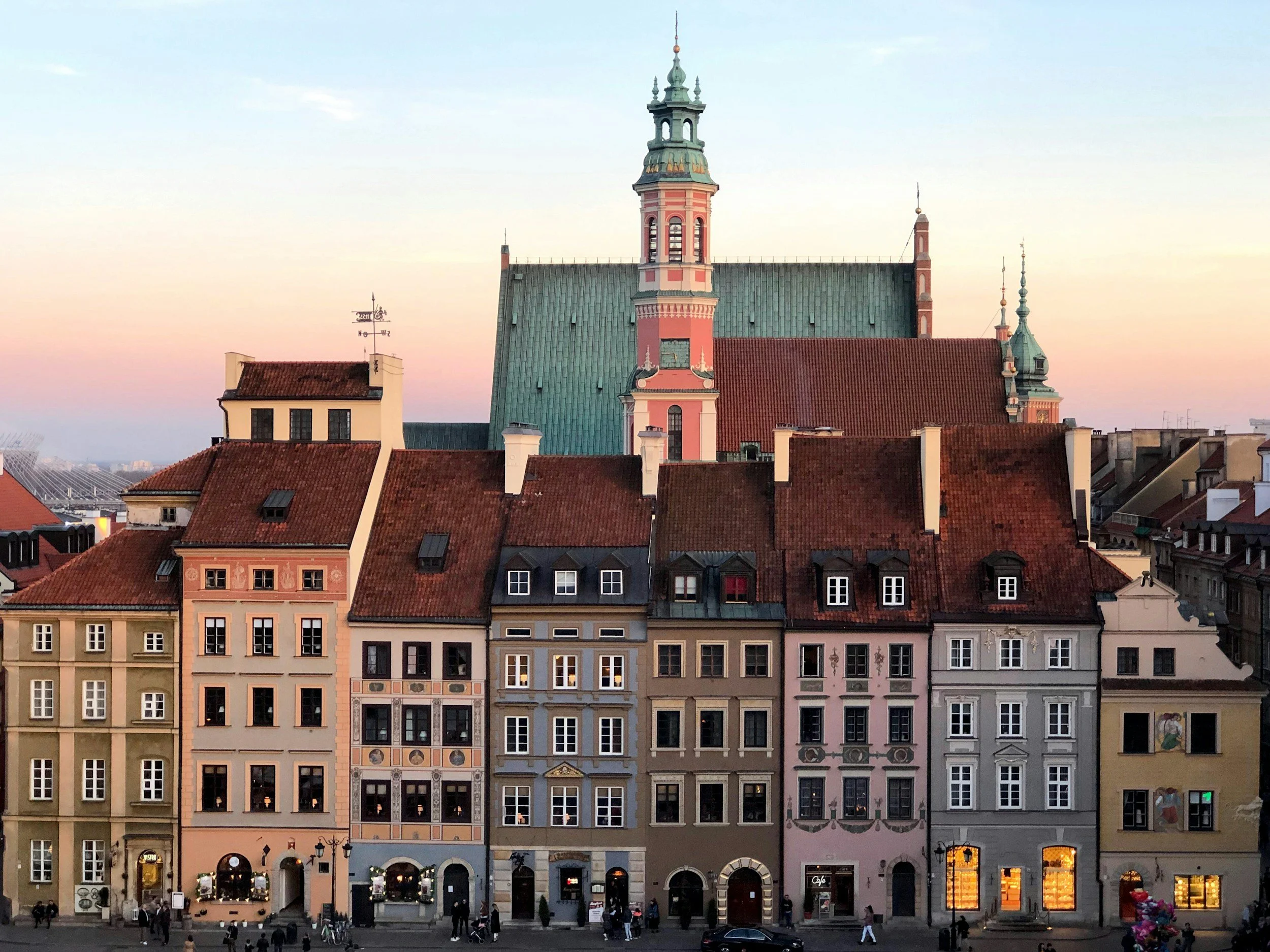
Old Town Market Square is the centerpiece of Warsaw's reconstructed historic core, and if you only have time for one location, this is it. The square is surrounded by colorful townhouses, each with a different painted facade, each one meticulously rebuilt after the war from old photographs and paintings. That reconstruction history adds a weight to the photography that most picturesque European squares lack. You are not just photographing a beautiful place. You are photographing an act of collective memory made physical.
The light in autumn is exceptional: raking, warm, and perfectly angled for the west-facing facades in the late afternoon. Early morning, before 8 a.m., the square belongs almost entirely to photographers and the occasional café owner setting up for the day.
📷 Pro Tip: Position yourself in the northwest corner of the square with a 16-35mm lens and shoot the full sweep of the colorful townhouses in the early morning. October is the finest month: the low autumn light comes in at a sharp angle across the pastel facades from the east and the square is essentially empty before 8 a.m. Use a 70-200mm from across the square to isolate specific facade details, window boxes, and architectural ornamentation. The Mermaid of Warsaw fountain at the center of the square works well as a foreground anchor with a wide lens. For evening photography, the illuminated facades against a deep blue sky produce some of the strongest images this location offers.
Best time: Dawn to 8 a.m. for empty square; late afternoon golden hour for warm facade light. Access: Free, open at all times. A ten-minute walk north from Hotel Bristol along Krakowskie Przedmieście.

The square is surrounded by picturesque townhouses, each adorned with colorful facades and intricate details that reflect the architectural styles of different periods. The houses were meticulously rebuilt after the war, using old photographs and paintings as references to restore them to their former glory.
Pro Tip: The square in October early morning, when the low autumn light comes in at a sharp angle across the pastel facades, is the finest light this location produces. Arrive before 8 a.m. A 16-35mm from the northwest corner captures the full sweep of the colorful townhouses. A 70-200mm isolates specific facade details from across the square.


The Royal Castle (Zamek Królewski, Plac Zamkowy)
The Royal Castle stands at the southern entrance to the Old Town, a Baroque and Neoclassical building originally from the 14th century that was blown up by the Germans in 1944 and rebuilt stone by stone in the 1970s and 1980s using wartime photographs, architectural records, and the collective labor of a nation that refused to let this place disappear. The castle square, Plac Zamkowy, with Sigismund's Column rising in the foreground, is one of the most recognizable compositions in Warsaw and a natural starting point for any photography session in the Old Town.
Sigismund's Column itself, erected in 1644, was one of the first secular monumental columns in Europe. It survived the war, physically damaged; the current column is a postwar reconstruction. The combination of the column, the castle facade, and the Old Town walls creates a layered composition with no equivalent elsewhere in the city.
📷 Pro Tip: Position yourself in the square to use Sigismund's Column as a foreground element with the castle's red facade behind it. A 24-70mm lens at around 35mm handles this composition well. Shoot at blue hour when the castle is illuminated, and the sky retains deep color above the roofline. For a wider architectural shot that includes the full castle facade and the surrounding walls, move back to the edge of the square and use a 16-35mm. Early morning light falls on the castle's east-facing facade cleanly from dawn; arrive before tour groups to have the square to yourself.
Best time: Blue hour for illuminated castle; dawn for empty square and clean east-facing light. Access: The castle exterior and square are free. Interior museum admission is paid. Five minutes north of Hotel Bristol on foot.

Originally built in the 14th century, the Royal Castle has undergone numerous expansions and reconstructions.

The castle is a stunning example of Baroque and Neoclassical architecture, meticulously restored after its destruction in the war.

Its grand facade, elegant interiors, and expansive courtyards invite visitors to step back in time and experience the grandeur of Poland’s royal history.

Łazienki Park and the Palace on the Water
Łazienki Park is Warsaw's largest park: 76 hectares of gardens, palaces, monuments, and the wandering peacocks that have made the park as famous among locals as any of its architectural subjects. The centerpiece is the Palace on the Water, a neoclassical summer residence built on an island in the park's central lake, reflected in still water that turns gold and copper in autumn. This is the classic Łazienki composition, and it earns that status.
The park also contains the Chopin Monument, a famous bronze sculpture of the composer beneath a weeping willow, which serves as the backdrop for free outdoor piano concerts on Sunday afternoons in summer. The scale and greenery of the park make it feel like a genuine refuge in the middle of a capital city.
📷 Pro Tip: The Palace on the Water reflected in the lake is best shot from the south bank of the lake, using the tree line and water as natural framing elements. A 70-200mm lens compresses the reflection beautifully and isolates the white facade against the treeline behind it. Arrive at dawn for still water and the possibility of mist in autumn. The east-facing facade catches the morning light directly from sunrise. Autumn, specifically late September through October, turns the surrounding trees gold and produces the finest seasonal photography in any Warsaw park. For the Chopin Monument, a 50mm or 85mm prime works well to isolate the sculpture against the willow branches behind it.
Best time: Dawn for reflections and mist; autumn for peak foliage color. Access: Free, open daily. Reached by tram or bus south along the Royal Route from the city center, or by Bolt.

The Palace of Culture and Science (Pałac Kultury i Nauki)
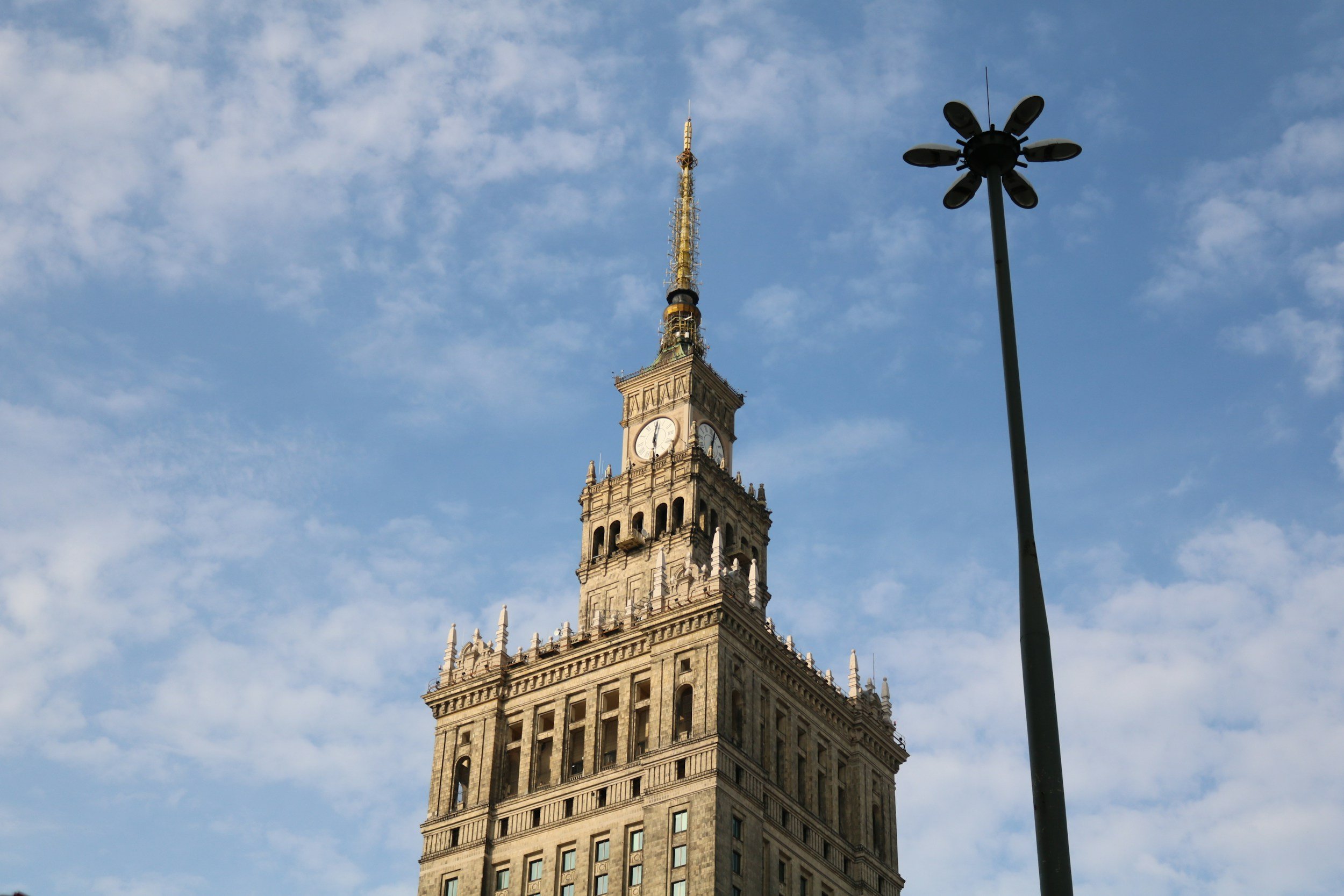
The most distinctive and contested building in Warsaw: a 231-meter Stalinist skyscraper gifted by the Soviet Union in 1955 that dominates the city skyline from every direction. The Polish relationship with the Palace is complicated, which is exactly what makes it a genuinely extraordinary photography subject. It is polarizing, massive, and impossible to ignore. From the observation deck on the 30th floor, the view over Warsaw tells the city's entire story: the reconstructed Old Town to the north, the glass towers of the financial district to the east, the parks and the Vistula to the south and west.
At street level, the building's scale is almost disorienting. The ornate Soviet-baroque detailing, the tiered spire, and the sheer verticality of the structure make it one of the most photogenic buildings in Central Europe, regardless of your opinion about its origins.
📷 Pro Tip: The Palace is best photographed at blue hour from street level, when the building is fully illuminated against the darkening sky and the surrounding modern towers are beginning to glow. Position yourself directly below the main facade on Defilad Square with a 16-35mm lens pointed upward: the compression of the vertical lines against the sky emphasizes the imposing scale in a way that longer lenses cannot replicate. From the observation deck, a 24-70mm lens handles the city panorama at any time of day. For a unique contrast shot, frame the Palace against the reflective glass towers of the modern financial district from the east, using a 70-200mm lens to compress the old and new Warsaw into a single frame.
Best time: Blue hour from street level; midday for observation deck panoramas. Access: The building exterior and Defilad Square are free. The observation deck has an admission fee. Central location, walkable from most city center hotels.
Festivals and Holidays
Warsaw Film Festival (October) — One of Central Europe's most respected film festivals, drawing international films, directors, and audiences to screenings across the city. The opening and closing ceremonies, along with the outdoor screenings at some locations, offer photography opportunities. The crowd of film enthusiasts and the evening atmosphere around the main venues is worth shooting regardless of whether you attend a screening.
Wianki (June) — A summer solstice festival held along the Vistula River, involving concerts, fireworks, and the traditional floating of wreaths on the water. The riverbanks fill with locals for an evening that is genuinely festive and photogenic. The fireworks over the Vistula are a strong subject from either bank with a telephoto lens.
Chopin Piano Concerts in Łazienki Park (May to September) — Free outdoor piano concerts at the Chopin Monument every Sunday afternoon throughout the warmer months. The combination of the monument, the weeping willow, the audience sitting on the grass, and live music makes this one of the most photographically rich regular events in any European city. Arrive early for front positioning. A 70-200mm lens lets you capture the performer and audience from a respectful distance.
Christmas Markets (December) — The Old Town Market Square and the area around the Palace of Culture and Science both host Christmas markets in December. The combination of the market stalls, warm light, and the Old Town facades at night is genuinely beautiful and worth braving the cold for. Bring a tripod for low-light work; the golden glow of the stalls against the dark sky is best captured with a longer exposure.
Frequently Asked Questions About Visiting Warsaw
Is Warsaw worth visiting compared to Kraków?
Yes, and it deserves more attention than it gets. Kraków usually wins the conversation about Polish cities, but Warsaw's reconstructed Old Town, rebuilt from old photographs and paintings after the war, carries a depth and story that most picturesque European old towns simply don't have.
Is Warsaw expensive?
No, it's genuinely affordable. Pierogi and bigos at neighborhood restaurants cost very little, and even Michelin-recognized tasting menus at Atelier Amaro are reasonable compared to equivalent experiences in Western Europe.
Do you need a car in Warsaw?
No, the public transit system, trams, buses, and metro, is efficient, and Uber and Bolt are widely available. Walking or renting a bike covers the Old Town and the central district well.
What are the best photo spots in Warsaw?
Old Town Market Square in early morning light, the Palace of Culture and Science at blue hour, and Łazienki Park's Palace on the Water are three that consistently deliver. The full list with Pro Tips is above.
Can you fly a drone in Warsaw?
Check current Polish and EU drone regulations before flying, particularly around the Old Town and government buildings like the Presidential Palace, which likely carry restrictions.
What surprised you most about Warsaw?
The food is exceptional, and so is the Old Town. We arrived with genuinely low expectations and left having had some of the best meals of the entire trip, alongside a historic center that earns every bit of its reputation.
How many days do you need in Warsaw?
Two to three days. That's enough time to explore the Old Town properly, eat your way through the city's surprisingly strong food scene, and still see the Palace of Culture and Łazienki Park.
Is Warsaw worth combining with Prague or Tallinn?
Yes, both make natural pairings, two other extraordinary rebuilt or preserved European capitals with their own distinct history and architecture.
Final Thoughts
Walking out into the Old Town Market Square on our first full morning in Warsaw, before the cafés had opened and before the tour groups had arrived, the light was low and raking across the pastel facades, and the cobblestones were still wet from overnight rain. I did not speak. I just started shooting. That is the feeling Warsaw eventually produces in almost everyone who gives it a proper chance.
This is a city that does not advertise itself the way Prague or Kraków do. It does not lean on its beauty as a calling card. What Warsaw does instead is reward the time you give it: the early mornings, the slow walks, the willingness to look at a rebuilt building and understand what the rebuilding means. For photographers, that depth is the whole point.
Go. Give it three days at minimum. Walk north from Hotel Bristol at dawn. Sit down for apple cake and coffee in the Old Town. Arrive at Łazienki before the peacocks figure out you are there. Stand beneath the Palace of Culture and Science at blue hour and feel the weight of the 20th century in a single frame.
Warsaw will earn your full attention.
Want to improve your photography while exploring some incredible destinations? Join me on one of my photography workshops! You can find all the details, including upcoming destinations and dates, through the links below.
Let's Stay Connected!
My Photography & Travel Guide to Prague, Czech Republic — The natural companion to a Warsaw trip, reachable in under an hour by air or overnight by train. Two rebuilt Central European capitals, both carrying the weight of the 20th century in their architecture and their streets.
My Photography & Travel Guide to Tallinn, Estonia — A preserved medieval city on the Baltic that shares Warsaw's status as one of Europe's most underrated photography destinations. Walk the Old Town walls at dawn, and you will understand why.
My Photography & Travel Guide to Budapest, Hungary— The grand capital of the Danube, one of the most photogenic cities in all of Europe. Warsaw and Budapest together tell the complete story of Central European history and resilience.
Finally—a beginner-friendly photography guide that makes sense.
If you've ever picked up a camera and thought, "Now what?" this is the book for you.
Photography Made Simple is written for adults who are just starting out and want a clear, encouraging, real-world approach to learning photography. Whether you're using a DSLR, mirrorless, or just your smartphone, this guide walks you through the basics—without the jargon or tech overwhelm.
Inside, you'll learn:
The only camera settings you really need to know to get started
How to shoot sharper, more intentional photos using light and composition
Simple tips for portraits, landscapes, travel, and everyday life
What gear you do (and don’t) need
How to create better photos without upgrading your camera
You’ll also get practical exercises, cheat sheets, and tips for organizing and editing your images—plus the confidence to shoot off Auto Mode for good.
This is not a textbook. It’s a friendly guide to seeing the world with fresh eyes—and finally capturing what you see the way you imagine it.
📸 Format: PDF download
Pages: 100+
Perfect for: Beginners, hobbyists, and anyone ready to take better photos without the stress