Budapest, Hungary Travel & Photography Guide: Best Photo Spots, Things to Do & Hidden Gems
I first visited Budapest in October 2016, a few months after I picked up a camera for the first time. I did not have great weather, and I was just beginning to understand what I was doing. Seven years later, I returned on a Scott Kelby photography workshop in April 2024 specifically to retake shots, find new locations, and see how much had changed between the photographer who arrived in 2016 and the one who came back in 2024.
The answer was: quite a lot. And Budapest was just as extraordinary the second time.
The Chain Bridge at sunset is the image most people associate with Budapest, and it earns that association completely. The Parliament lit at blue hour from across the Danube. Fisherman's Bastion at sunrise, before anyone else is there, with the stone towers catching the first warm light and the river below turning from grey to gold. These are not just photography subjects. They are the kind of views that stop you before the camera comes up.
Sunset by the Chain Bridge with the Parliament
Budapest divides itself neatly for photographers: the Chain Bridge and the Parliament on the Pest side for golden hour and blue hour, Fisherman's Bastion and Gellért Hill on the Buda side for sunrise and elevated views. The city is compact, walkable, and endlessly photogenic at every hour of the day.
In this Photography Guide to Budapest, I share what two visits have taught me: the photography locations, the specific timing for each, where to stay, what to eat, and the local guide who made the second trip extraordinary.
Photographer's Notes
Before you go, here are my own takeaways.
Favorite Season: Spring
Favorite Sunrise Location: Fisherman's Bastion
Favorite Sunset Location: Gellért Hill
Favorite Neighborhood: District I (Castle District)
Favorite Hotel: Four Seasons Hotel Budapest at Gresham Palace
Favorite Café: Café New York
Favorite Lens: 15-35mm f/2.8
Would I Return? Yes, though it might be some time until I go back.
Best Time to Visit Budapest, Hungary
The best time to visit Budapest for photography is during the shoulder season, from April through May and September through November. The weather is mild, the light is softer, and the crowds are noticeably thinner than in July and August.
April is my personal preference. I was there in April 2024, and the light during that week was exceptional. Sunrise arrives early enough to get Fisherman's Bastion to yourself, and golden hour lasts long enough into the evening for a full blue hour session at the Chain Bridge before dinner. The trees along the Danube were coming into leaf, and the air was clear.
Summer brings longer days and more predictable weather, but also the largest crowds. Fisherman's Bastion and the Chain Bridge area fill up quickly, and the diffuse summer light is less dramatic than the low-angle light of spring and autumn.
Winter is underrated. Budapest is cold from December through February, but the city handles it well. Snowfall, if you catch it, transforms the Castle District and Gellért Hill into something extraordinary. Christmas markets around Vörösmarty Square and St. Stephen's Basilica run through December and are worth photographing at dusk when the market lights come on. Crowds are minimal and the low winter sun creates long, warm shadows across the Danube bridges.
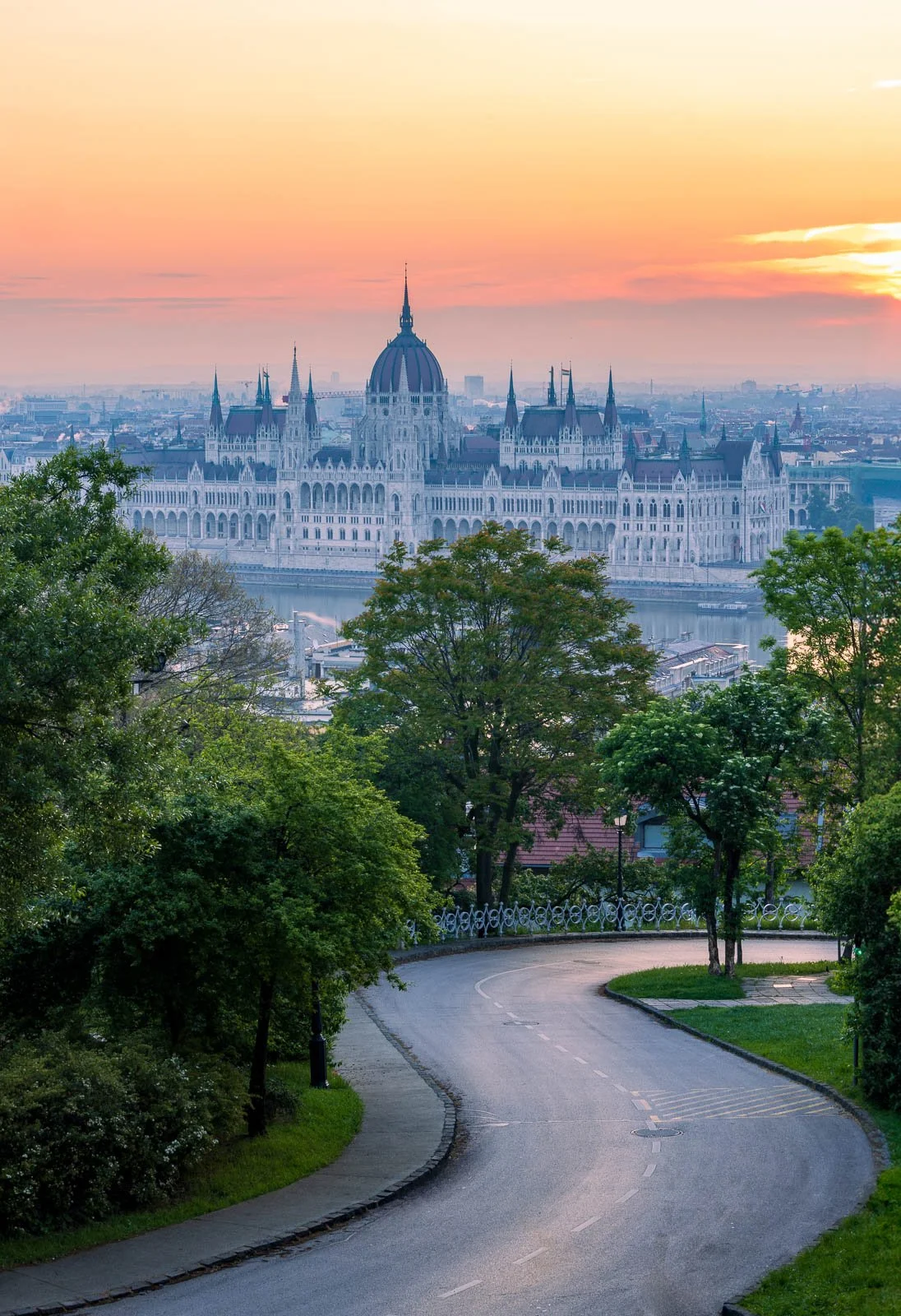
Sunrise at Fishermen’s Bastion
Where to Stay in Budapest, Hungary
Stay in District V (Belváros-Lipótváros) or District I (Castle District) for the best photography access. The Danube promenade, the Chain Bridge, the Parliament, and the Pest walkways are all within easy reach of central Pest. Buda Castle and Fisherman's Bastion are a funicular ride or a short walk from the Chain Bridge.
District V (Belváros-Lipótváros): The heart of the city and the best base for photographers. The Parliament, the Chain Bridge, St. Stephen's Basilica, and the Danube promenade are all within easy walking distance. Sunrise and blue hour are both reachable on foot.
District VII (Erzsébetváros): The old Jewish Quarter, now home to ruin bars, street art, and some of the best restaurants in the city. A strong second choice if atmosphere matters as much as proximity.
District I (Castle District): For staying on the Buda side close to Fisherman's Bastion and Matthias Church. The cobblestone streets and historic architecture make it a compelling option, though you will cross the bridge frequently.
Luxury Hotels in Budapest, Hungary
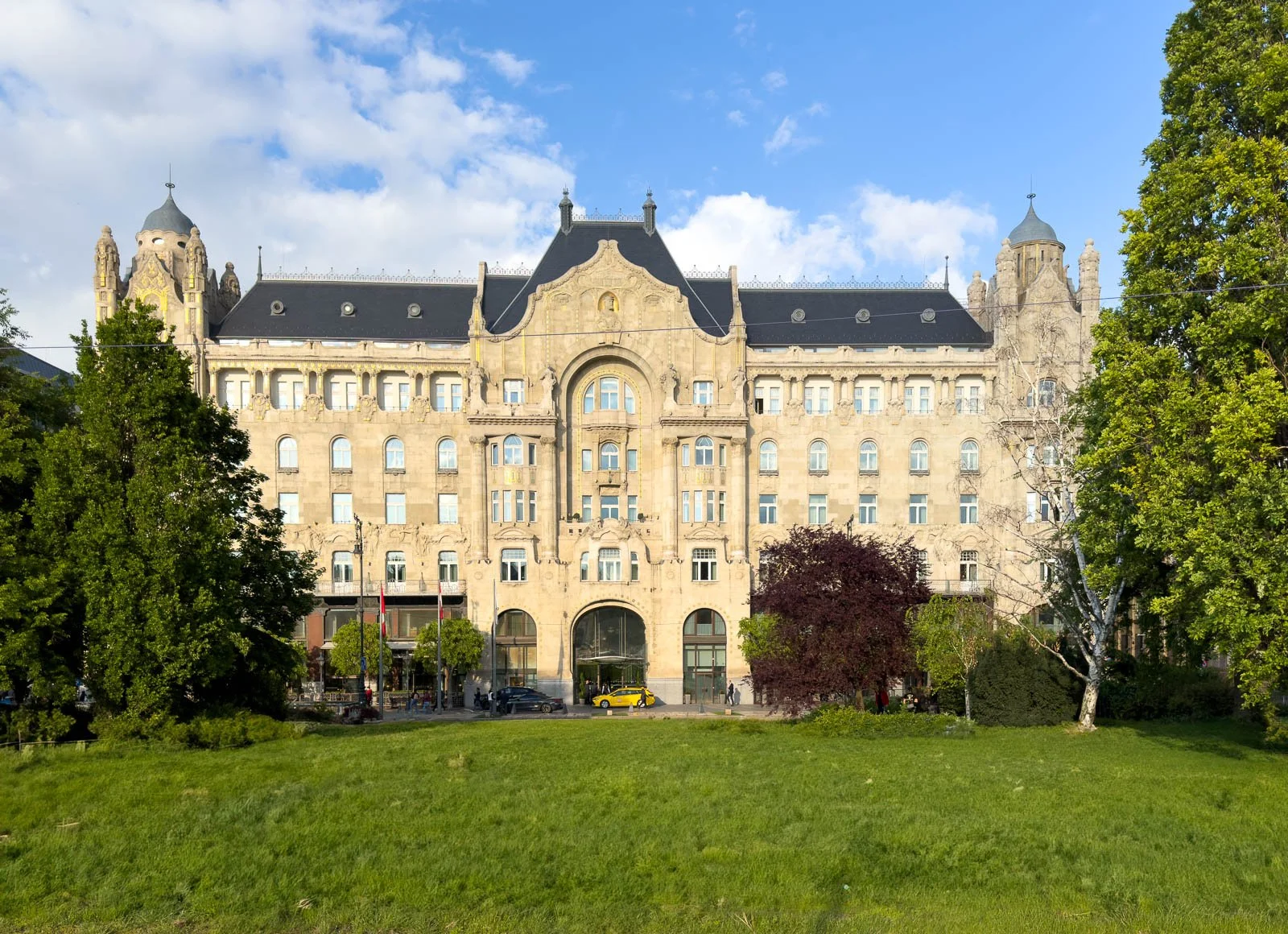
Four Seasons Hotel Budapest at Gresham Palace — The finest and most architecturally remarkable hotel address in Budapest. The Gresham Palace was built in 1906 as a prime example of Hungarian Art Nouveau, with a stained-glass atrium, hand-crafted iron gates, and mosaic floors that make the building itself one of the great photography subjects in the city. It sits directly opposite the Chain Bridge on the Pest side of the Danube, which means chain-bridge-facing rooms and the hotel terrace give you the most recognizable view in Budapest. For photographers, the combination of the hotel's exterior architecture, the Chain Bridge view, and the proximity to every major Pest location makes this the best base in the city.
Anantara New York Palace Budapest Hotel — One of the most dramatic hotel buildings in Europe. The New York Palace was completed in 1894 as an insurance company headquarters and contains the legendary Café New York on the ground floor, often described as the most beautiful café in the world, with painted ceilings, marble columns, bronze balustrades, and a ballroom scale that must be seen in person. The café is a photography destination in its own right and is accessible to non-guests. For photographers who want to stay inside one of Budapest's most extraordinary interiors, this is the standout choice.
Matild Palace, a Luxury Collection Hotel — An 1901 Art Nouveau palace on the Danube that opened as a Luxury Collection hotel in 2022 after an extensive restoration. The rooftop bar has outstanding Chain Bridge and Danube views that make it one of the best elevated photography positions in central Pest. The interiors are beautifully restored and the location on Váci Street places you at the center of everything.
Mid-Range Hotels
Corinthia Hotel Budapest — A landmark property on the Grand Boulevard, originally built in 1896, with a grand ballroom and a beautifully restored Art Nouveau lobby that are photography subjects in their own right. The Corinthia carries genuine elegance at a price point well below the top-tier luxury hotels. Centrally located for both Pest photography and easy access to Buda.
Párisi Udvar Hotel Budapest — The lobby of Párisi Udvar is one of the most extraordinary interior spaces in Budapest: a Moorish-Byzantine atrium with intricate tilework, stained glass skylights, and architecture that makes the hotel itself appear in the Photography Locations section of this guide. A Hyatt property that delivers good service in a building that deserves to be photographed.
Mercure Budapest City Center Hotel — A reliable mid-range property on Váci Street with comfortable rooms and a central location that puts you close to the Danube waterfront, the Central Market, and St. Stephen's Basilica. A practical and well-positioned base for photographers who want consistent quality without the full luxury pricing.
How Many Days Should I Visit Budapest, Hungary
Plan for four to five days minimum if photography is your primary goal. Three days is possible but rushed. Five days is comfortable.
A photographer's pace in Budapest might look like this:
Day 1: Arrive, get oriented, and hire a local photography guide for the first evening. Three hours with the right guide at blue hour near the Chain Bridge and Parliament will set you up for the rest of the trip. I did exactly this and it was the best decision of the visit.
Day 2: Sunrise at Fisherman's Bastion. Take the funicular up, spend the morning on the Castle Hill circuit (Matthias Church, the castle views, the cobblestone streets). Afternoon: rest, review images, explore the Central Market. Blue hour back at the Chain Bridge.
Day 3: Keleti train station early morning. Kálvin Tér metro station. Párisi Udvar lobby. Szabo Ervin Library (book in advance for the private tour). Afternoon: the Opera House.
Day 4: Gellért Hill at sunset. Liberty Bridge for the tram shots at sunrise or late afternoon. Shoes of the Danube memorial in the early evening when the crowds thin.
Day 5: Hero's Square early morning. St. Stephen's Basilica interior. Café New York for afternoon coffee. Final blue hour session from your preferred position on the Danube.
Where to Eat in Budapest, Hungary
Hungarian cuisine surprised us more than expected. It is hearty, specific, and deeply seasonal. The goulash (gulyás) is nothing like the version you may have encountered elsewhere: a rich beef-and-paprika stew that is its own category of comfort food. The chimney cake (kürtőskalács) sold by vendors around the castle and at the markets is the best warm street food in the city. And the wines of the Tokaj region, served in good restaurants throughout Budapest, are among the most underrated in Europe.
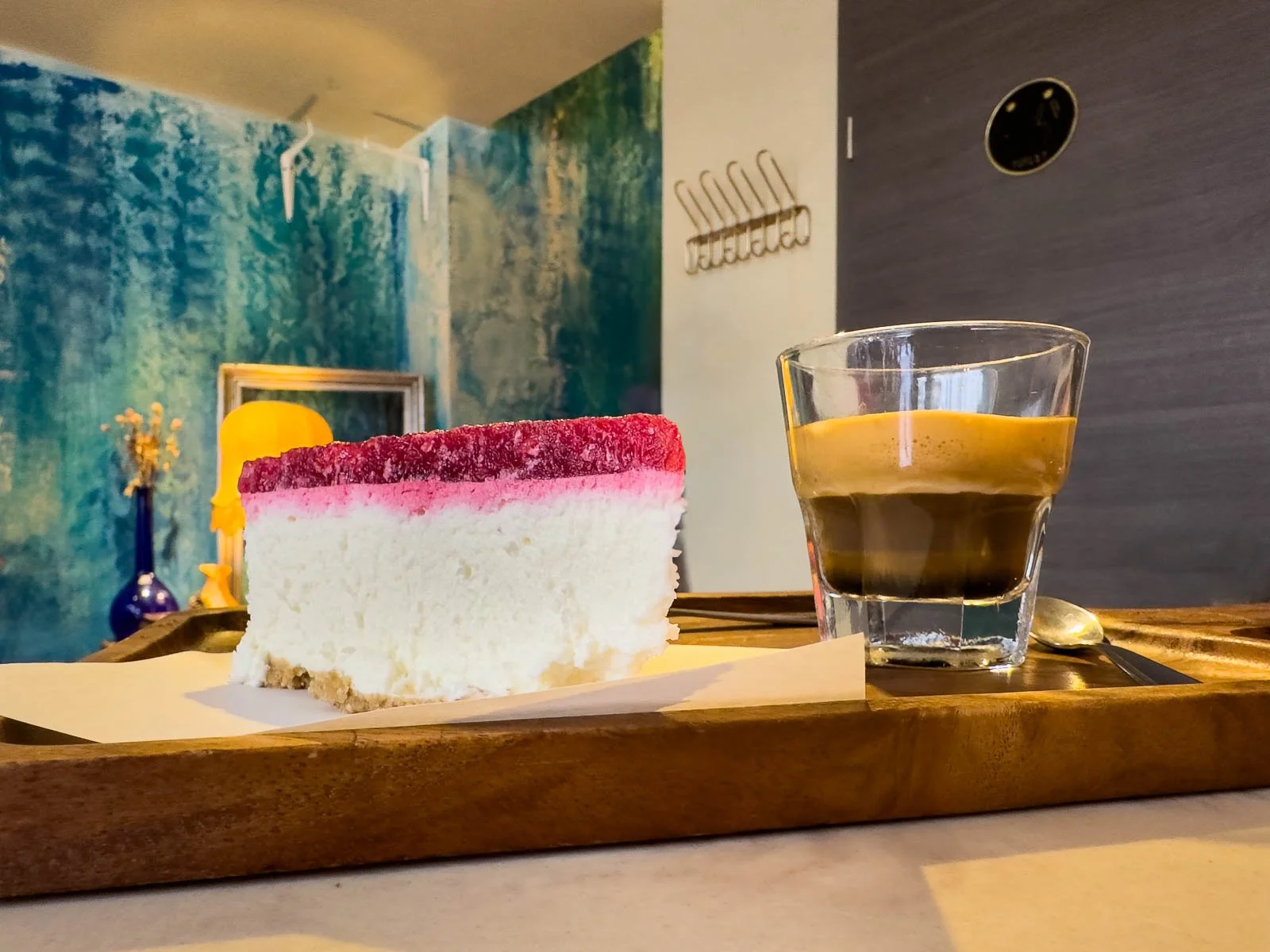
KOLLÁZS Brasserie & Bar at the Four Seasons — Excellent European brasserie dining in the extraordinary setting of the Gresham Palace. The menu combines Hungarian and continental influences with genuine quality. The interior is beautiful and the service attentive. We highly recommend this for a special dinner in Budapest.
Café New York at the Anantara New York Palace — As much a photography experience as a dining experience. The original Café New York opened in 1894 and became the gathering point for Budapest's literary and artistic community. The painted ceilings, the bronze and marble, and the specific scale of the room are extraordinary. Come for coffee and cake in the afternoon when the window light is at its best, or reserve for dinner. Either way, bring the camera.
Borkonyha Wine Kitchen — A Michelin-starred restaurant in the Jewish District serving modern Hungarian cuisine paired with an extensive selection of Hungarian wines. The menu celebrates local ingredients and seasonal produce with a creative intelligence that makes this one of the most interesting restaurant experiences in the city. Reserve in advance.
Gerbeaud Café — Budapest's most historic café, operating on Vörösmarty Square since 1858. The grand Austro-Hungarian interior, the pastries, and the specific atmosphere of a room that has been serving the city for nearly 170 years make it a mandatory stop. The Dobos torte and the Gerbeaud slice are the pastries to order.
Cucina — A reliable and genuinely enjoyable restaurant right next to the Mercure Hotel in the City Center. We ate here during the 2024 visit and would return without hesitation. Good food, warm service, and a convenient location for the central Pest photography circuit.
Coffee
Café New York (Anantara New York Palace) — Listed again here because the afternoon light through those windows is worth a second visit. Come between 2pm and 4pm with a laptop and an Americano and you will understand immediately why this room became the center of Budapest's creative life.
Café Muse — A cozy spot for coffee and cake that we appreciated for the quality and the unhurried atmosphere. The right place to sit between photography sessions and review the morning's work.
New York Café (Gerbeaud) — The ground floor café is a strong choice for coffee before heading out to Vörösmarty Square in the morning. The room fills up quickly; arrive early or late.
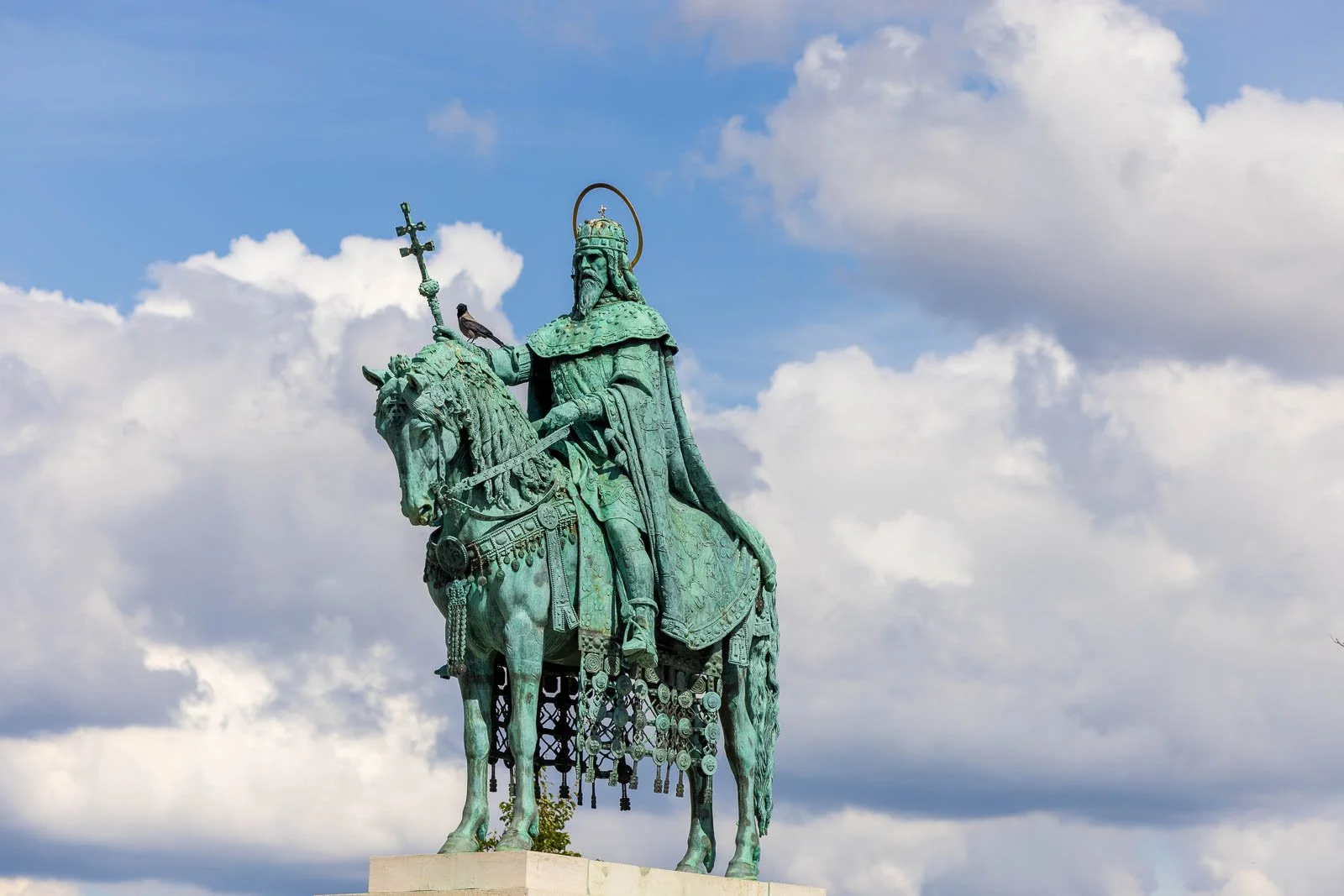
By the Budapest Castle
Getting Around Budapest, Hungary
The easiest way to get around Budapest is the Bolt app. Think of it as Uber, but Bolt is what operates in Hungary since Uber does not. The app is straightforward, pricing is clear before you confirm, and it works reliably across the city.
Budapest also has an excellent public transit network: metro, tram, and bus. The tram lines running along the Danube on the Pest side are particularly useful for photographers, as they connect the Central Market, the Chain Bridge, and the Parliament waterfront in a single line. Trams 2 and 2A run along the Pest riverbank and cover the key photography circuit efficiently.
For the Buda side, the funicular from the Chain Bridge level up to the Castle District costs a few euros and saves the steep walk. Walking down from the castle to the Chain Bridge at the end of the day is one of the more rewarding walks in the city, with the Danube and Parliament lit below you.
The city is compact and walkable for most of the central photography locations. Carry your gear in a sensible bag and you can cover Fisherman's Bastion, Matthias Church, the Chain Bridge, the Parliament waterfront, and St. Stephen's Basilica on foot in a full day. Gellért Hill and the Liberty Bridge require either a short Bolt ride or a thirty-minute walk from the center.
Photography Gear for Budapest, Hungary
Budapest is primarily a blue hour and low-light city. The best images here happen after sunset when the Parliament, the Chain Bridge, and the bridges are fully lit, and the Danube reflects everything. Your camera needs to handle high dynamic range and low light with confidence.
For camera bodies, bring a Canon EOS R5 Mark II, Sony A7R V, or Nikon Z8. Any of these will handle the dynamic range of blue hour, the interior low light of the Opera House and Szabo Ervin Library, and the long exposure work on the bridges.
Lenses:
15-35mm or 16-35mm wide-angle: Essential for Fisherman's Bastion, the Parliament interior, the Szabo Ervin Library staircases, and the sweeping panoramas from Gellért Hill.
70-200mm telephoto: Compresses the Danube bridges, pulls the Parliament into a tight composition from across the river, and frames the Chain Bridge towers against the Parliament dome. This lens does a lot of work in Budapest.
24-70mm standard zoom: A strong all-day walk-around lens for the Castle Hill streets, the Central Market, and street photography in District VII.
Tripod: Essential. The best Budapest photography happens at blue hour and after dark. Long exposures on the bridges and along the Danube produce the strongest compositions. Do not skip it.
ND Filters: A 6-stop and a 10-stop ND extend your options for long exposures during daylight, particularly for the Liberty Bridge tram shots where you want motion blur in the trams against a sharp bridge structure.
Extra batteries and cards: Budapest mornings start before sunrise and the evenings run through blue hour. Budget for full days.
Samsung T7 SSD: Back up every evening. Budapest is too good to lose to a card failure.
Drone: Drone use in Budapest requires advance authorization from the Hungarian Civil Aviation Authority (CAA). Do not fly over the Parliament, Castle Hill, or the Danube without verified clearance. Regulations change, so check the current rules before travel.
iPhone Photography
Budapest rewards iPhone photographers significantly, particularly at blue hour when Night Mode handles the Parliament reflections in the Danube better than most people expect.
Blue hour from the Danube: Turn Night Mode on and brace your phone against a railing or set it on a small Joby GorillaPod. The Parliament and Chain Bridge at blue hour in Night Mode, with a two-to-four second exposure, produces genuinely strong results. Keep your hands completely still during the exposure.
Interior spaces: For Café New York, the Szabo Ervin Library, and the Opera House, switch to Night Mode and resist the urge to use flash. The existing light in these rooms is beautiful. Flash kills it. Shoot slowly, brace against a wall or seat, and let Night Mode do the work.
Tram shots at Liberty Bridge: Use the standard camera with a fast shutter speed (your phone handles this automatically in good daylight). Position yourself on the Buda bank and shoot as the yellow tram crosses the green bridge. The color contrast alone makes the shot.
Portrait Mode at Fisherman's Bastion: The stone archways and towers create natural subject separation for Portrait Mode. Use the arches as framing elements with the Parliament across the river in the background. The bokeh in this setting is convincing.
ProRAW (iPhone 12 Pro and later): Enable ProRAW in Settings for the interior and blue hour shots. The additional latitude in post-processing makes a real difference in high-contrast scenes.
Photograper to Hire in Budapest, Hungary
If you want to photograph Budapest seriously, hire a local guide for at least one evening. I cannot overstate how much difference it made.
On our first night in 2024, we went out with Miklos Mayer of Hungary Photo Tours for about three hours. He brought us to locations we would not have found independently, including the specific position on the Liberty Bridge approach where the tram, the bridge, and the morning light all align. Three hours with the right guide produced images that three days of independent exploration might not. He is an excellent photographer and provides specific, practical guidance on composition.
His website is hungaryphototours.com , and his email is mayermiki@gmail.com. Book him before you arrive.
Photography Locations in Budapest, Hungary
The Trams
The yellow trams running along the Danube embankment on the Pest side are one of the most photogenic elements of Budapest, and most photographers walk right past them. The contrast between the saturated yellow of the trams, the green ironwork of the Liberty Bridge, and the Danube below is one of the strongest color combinations in the city.
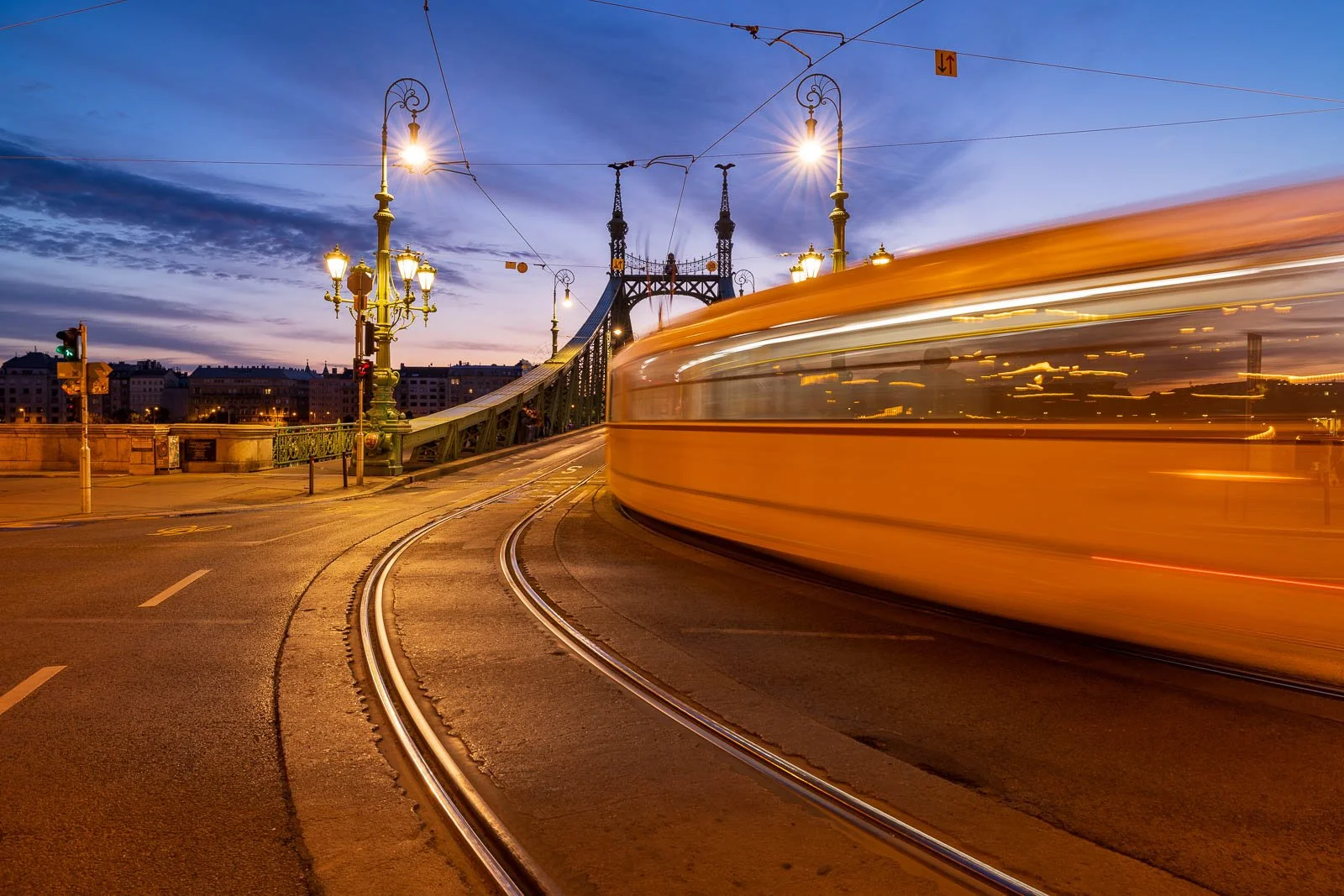
The key is shutter speed. A fast shutter freezes the tram against the bridge structure; a slow shutter turns it into a streak of yellow light. Both work well. Miklos showed us the specific position on the south side of Liberty Bridge at sunrise that makes this shot, and it was one of my favorite images from the entire trip.
📷 Pro Tip: Position yourself on the Buda bank of the Liberty Bridge at sunrise, looking toward the bridge from the south side. The yellow tram crosses from Pest to Buda and passes directly through the frame. At 1/500 second, the tram freezes against the green ironwork. At 1/30 second, it becomes a streak of warm light. The morning light hits the bridge structure at a low angle that catches the metal beautifully. Trams run frequently from early morning. A 70-200mm lens from the Buda bank gives you the compression you need to fill the frame with the bridge and tram together.
Best time: Sunrise and early morning. Access: Free (public street). Transit: Cross Liberty Bridge on foot from the Pest side; position on the Buda bank.
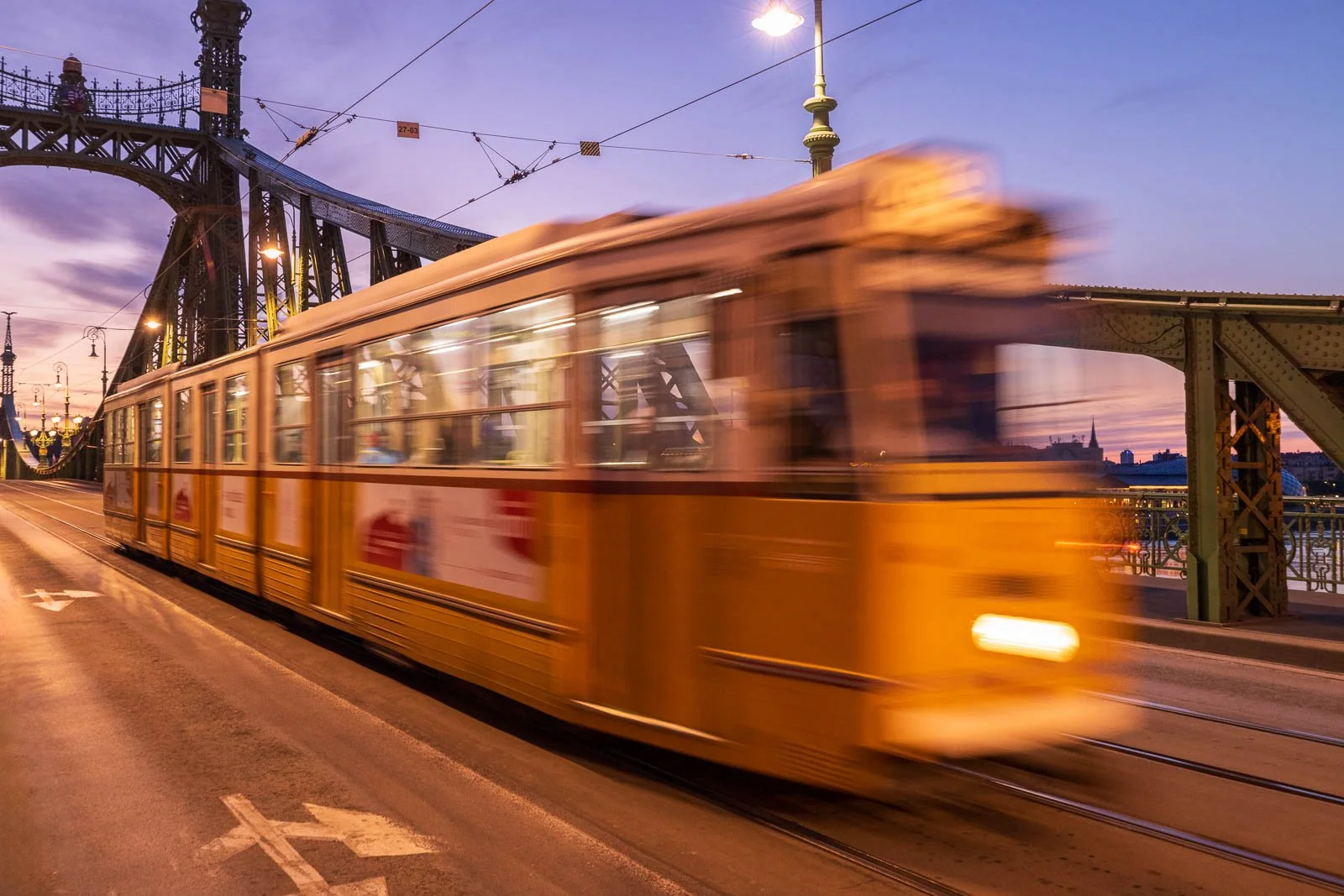
At Sunrise
I loved taking photos showing the trams' movements. The image below was taken from the Chain Bridge towards the Parliament.
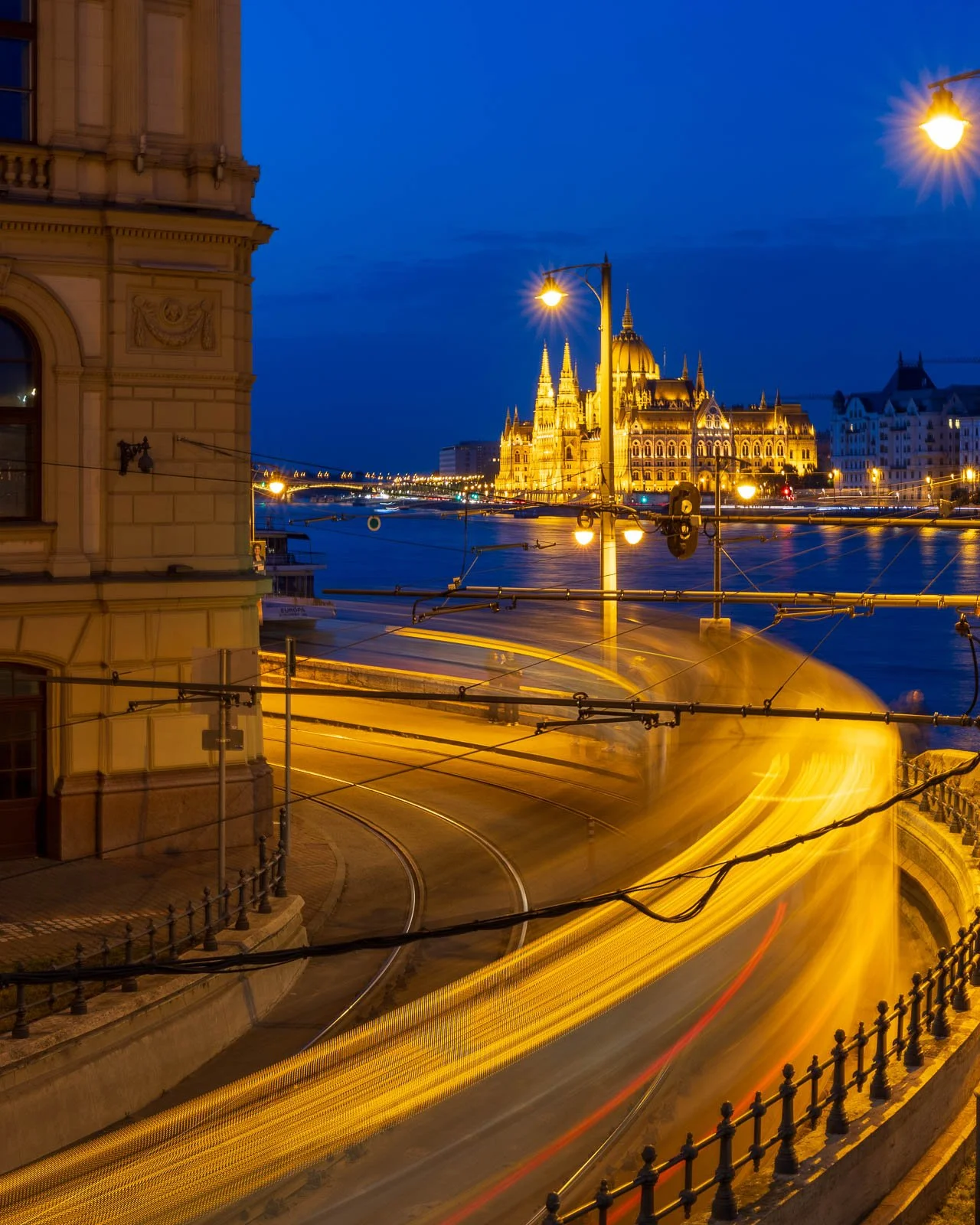
Long Exposure by Chain Bridge Towards Parliament
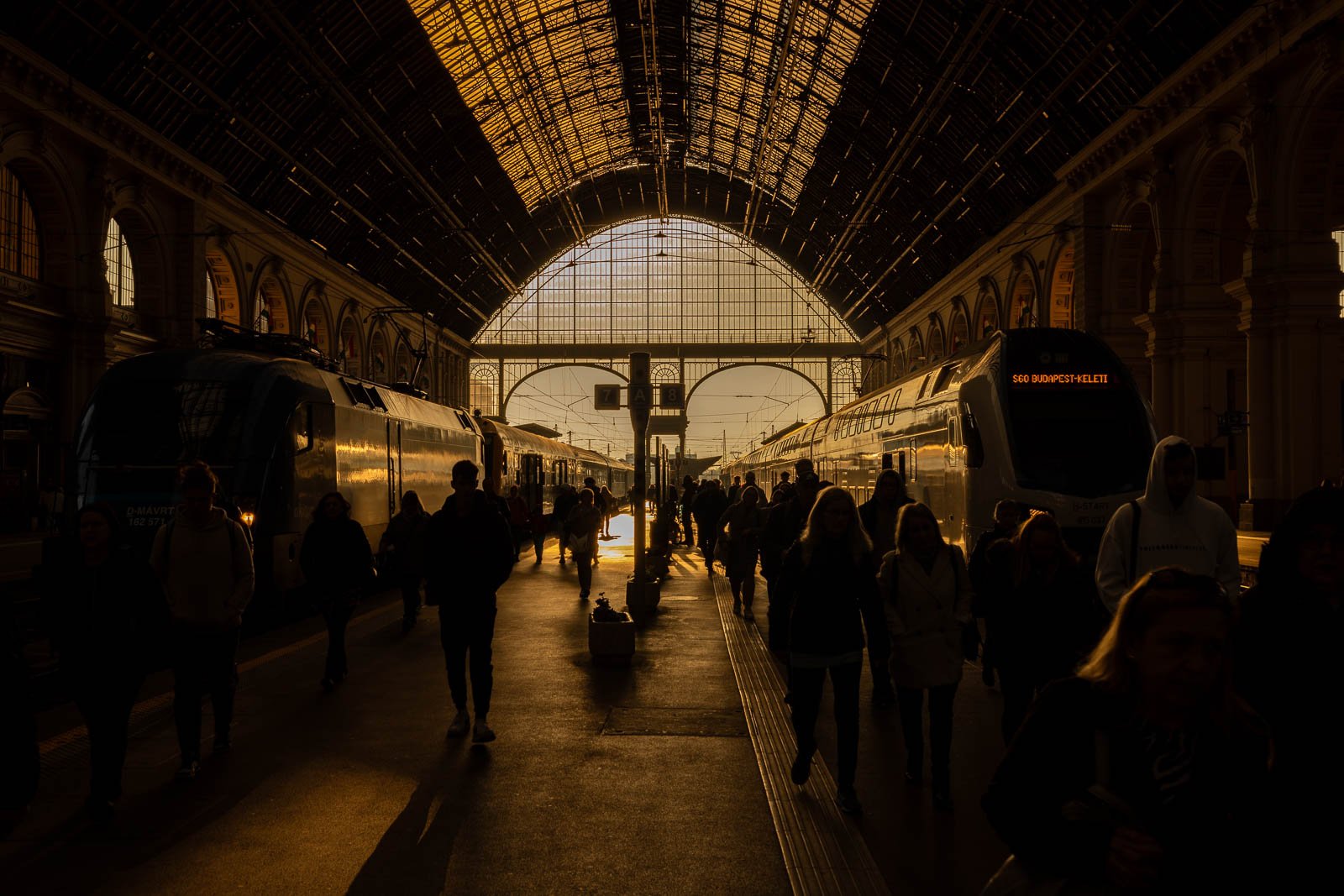
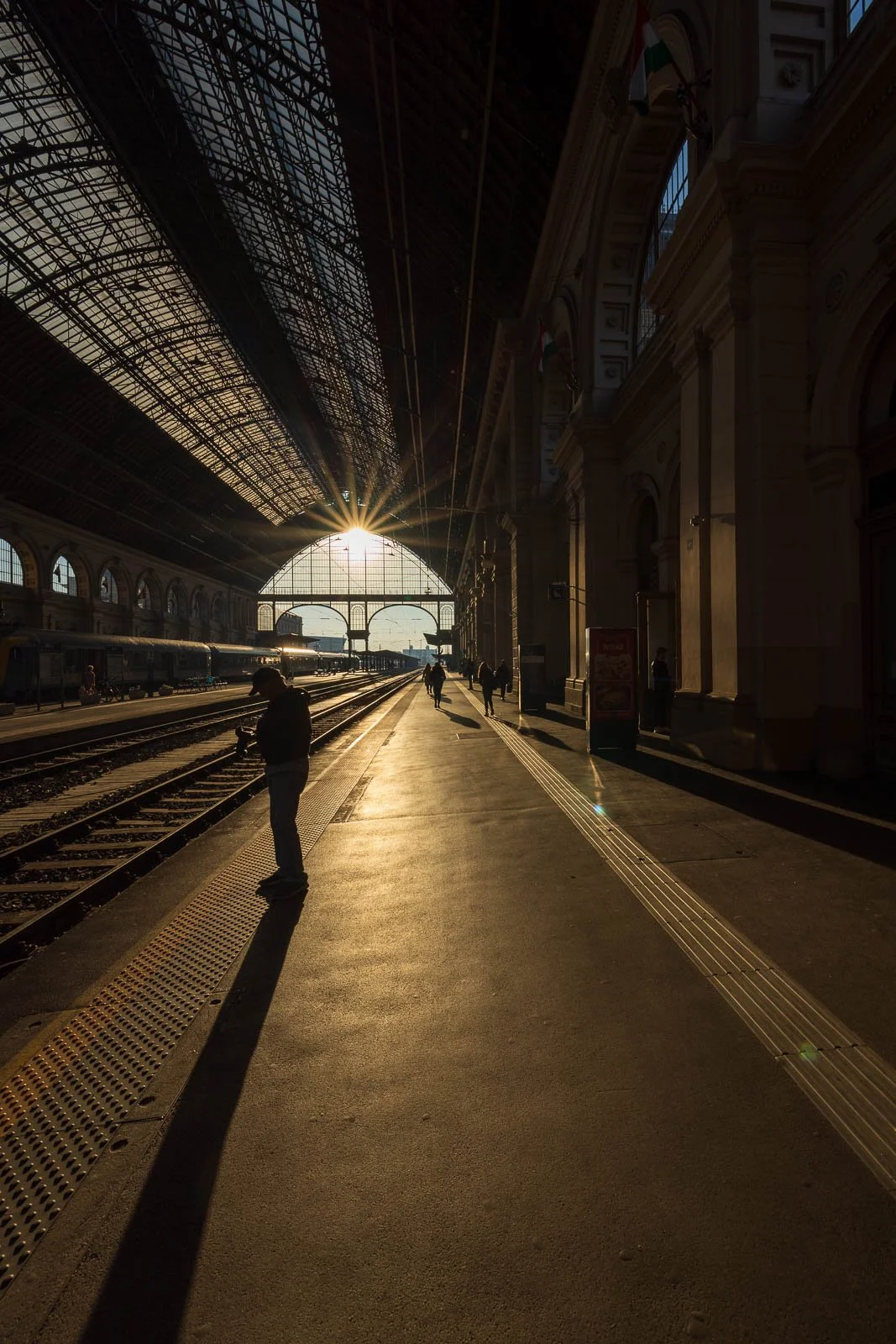
Keleti Pályaudvar Train Station
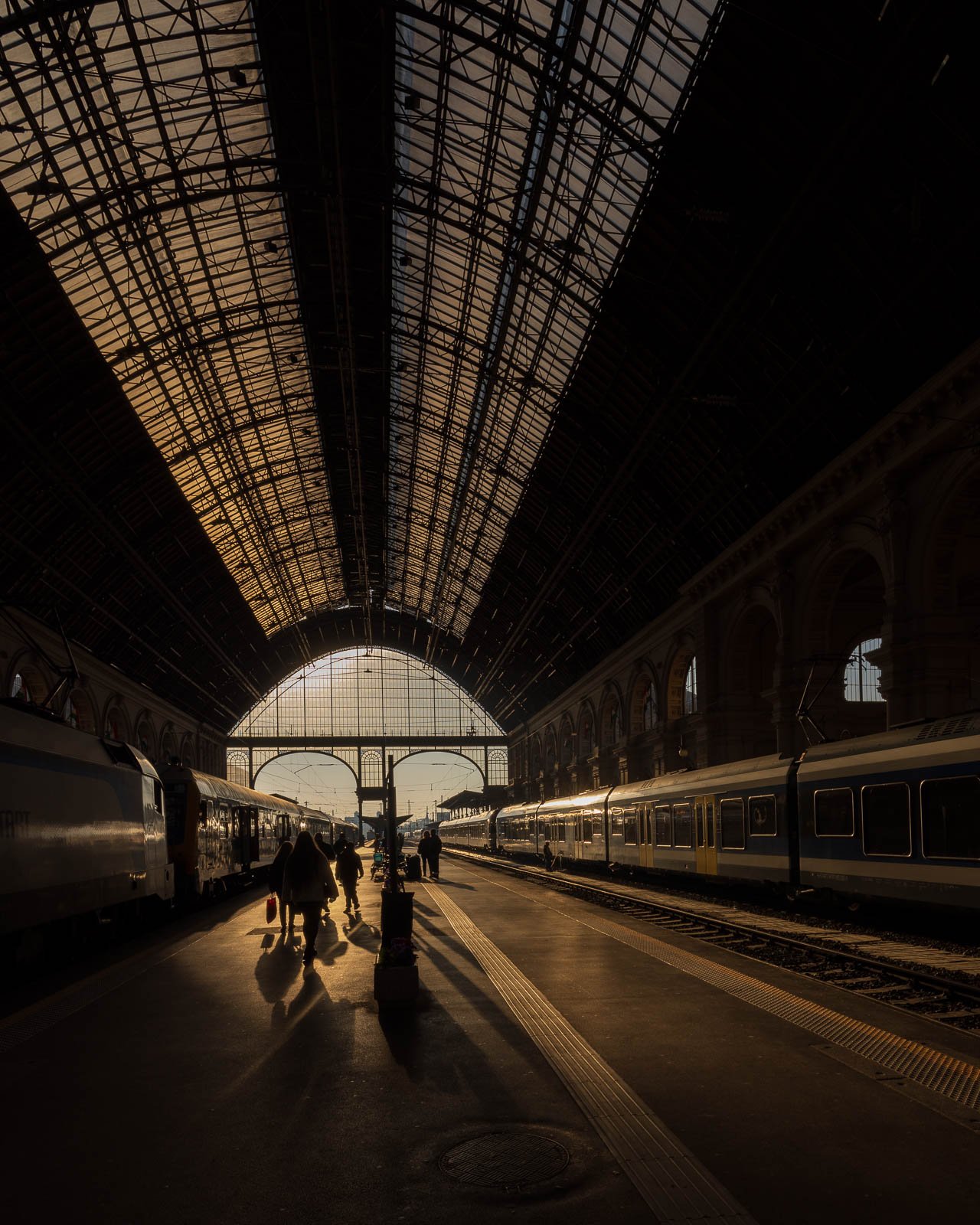
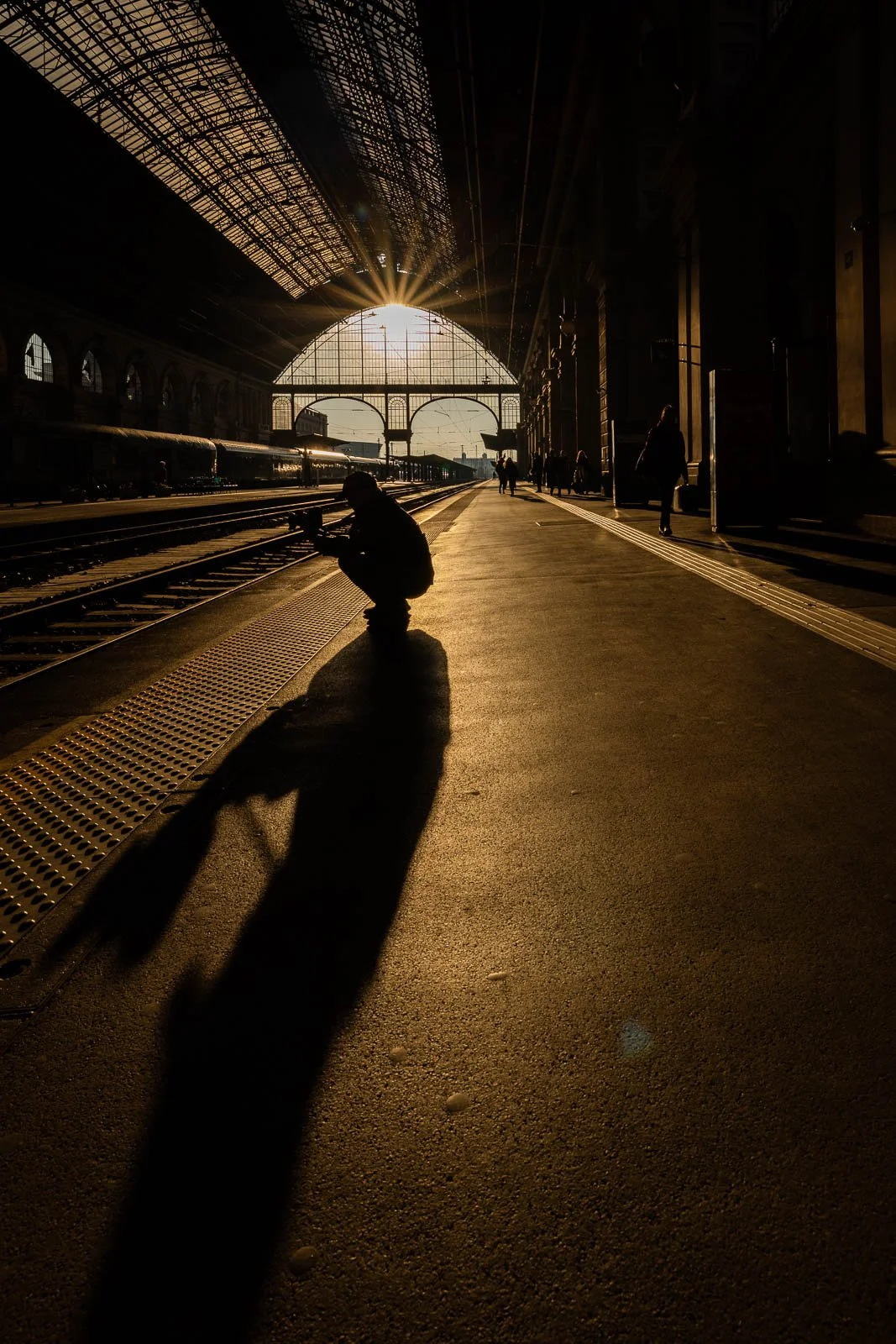
There are train stations, and then there are train stations. Keleti Pályaudvar is one of the great subjects of railway architecture in Central Europe, and most visitors pass through it without photographing it properly. The best time to be there is early morning, before the platforms fill up, when golden light catches the trains and creates strong reflections off the metal surfaces. I especially loved the shadows in the morning.
📷 Pro Tip: Arrive at the station between 6 am and 8 am when the morning light enters the terminal at a low angle and reflects off the train surfaces. Position yourself at the platform end, looking down the length of the trains for the strongest perspective compression. A 16-35mm works well for the full interior sweep; a 70-200mm compresses the platforms into a tighter architectural study. The exterior facade of the station is worth photographing in the late afternoon when the light hits it directly from the west.
Best time: Early morning (6 to 8 am) for interior; late afternoon for exterior. Access: Free (public train station). Transit:Metro line M2 to Keleti pályaudvar.
Kálvin Tér Metro Station
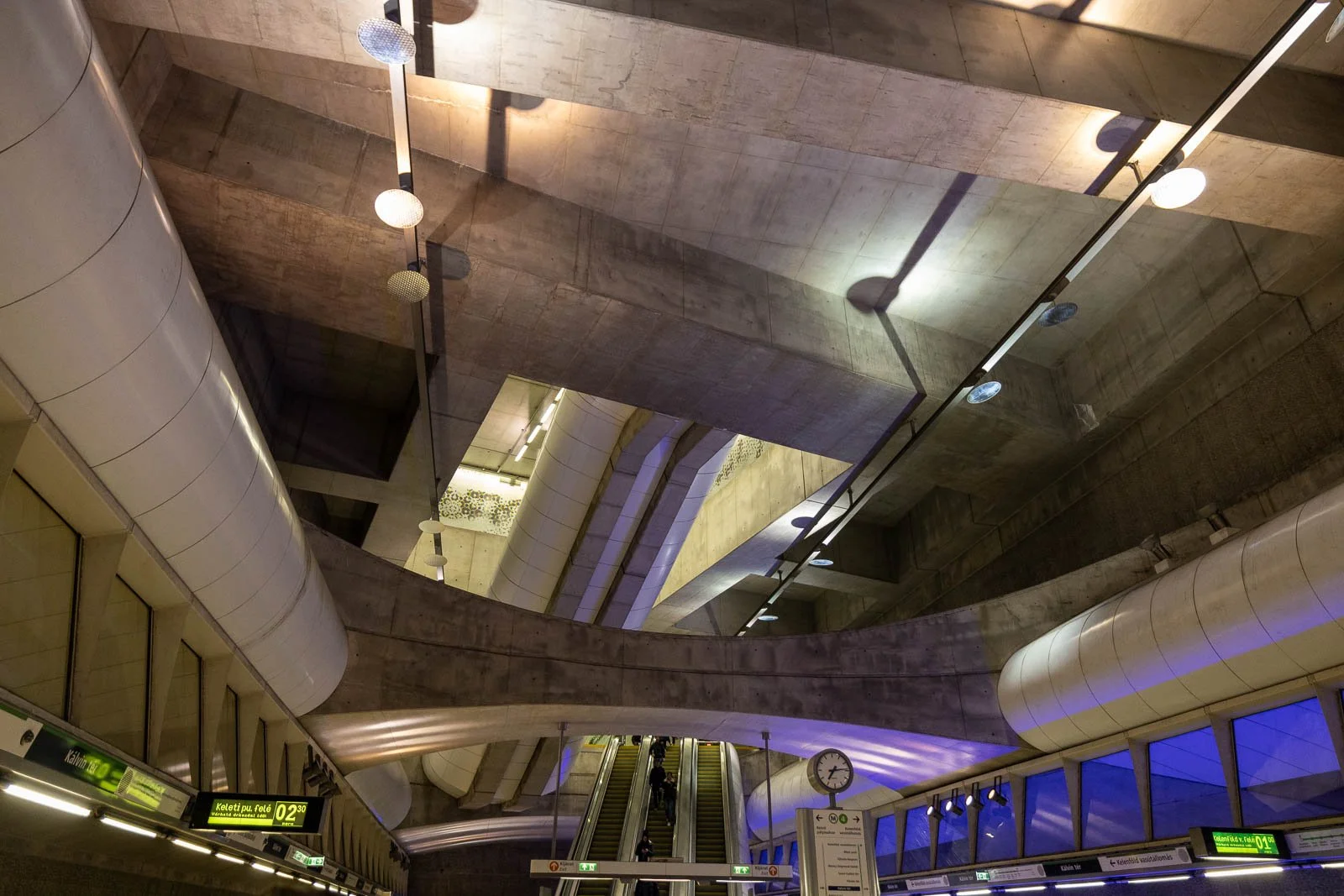
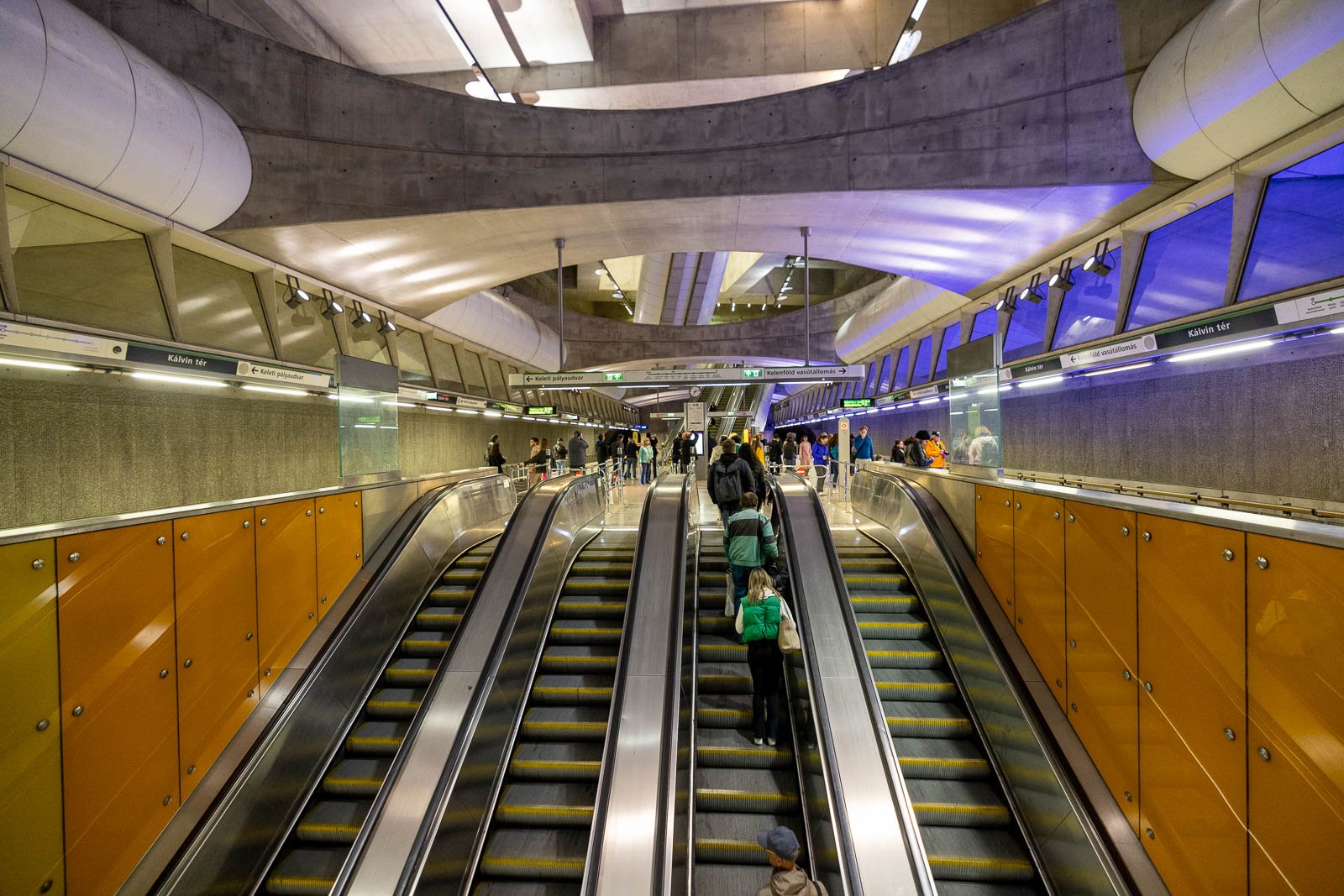
For the past few years, I have loved photographing metro stations, and this one in Budapest is worth the detour. Kálvin Tér is a modern, futuristic metro station with a design that rewards wide-angle photography. The London Underground stations are famous for it; Moscow's are arguably the most photogenic in the world. Kálvin Tér is Budapest's answer to that tradition.
📷 Pro Tip: Use a 16-35mm wide-angle and position yourself at the end of the platform looking down the length of the station for maximum perspective distortion. The geometry of the ceiling and the lines of the platform converge into a strong leading-line composition. Shoot during off-peak hours (before 8 am or after 8 pm) to minimize commuter crowds in the frame. The station's artificial lighting is consistent and does not change with the time of day, so timing is about crowd management more than light quality.
Best time: Off-peak hours. Access: Requires a metro ticket (standard transit fare). Transit: Metro line M3 to Kálvin tér.
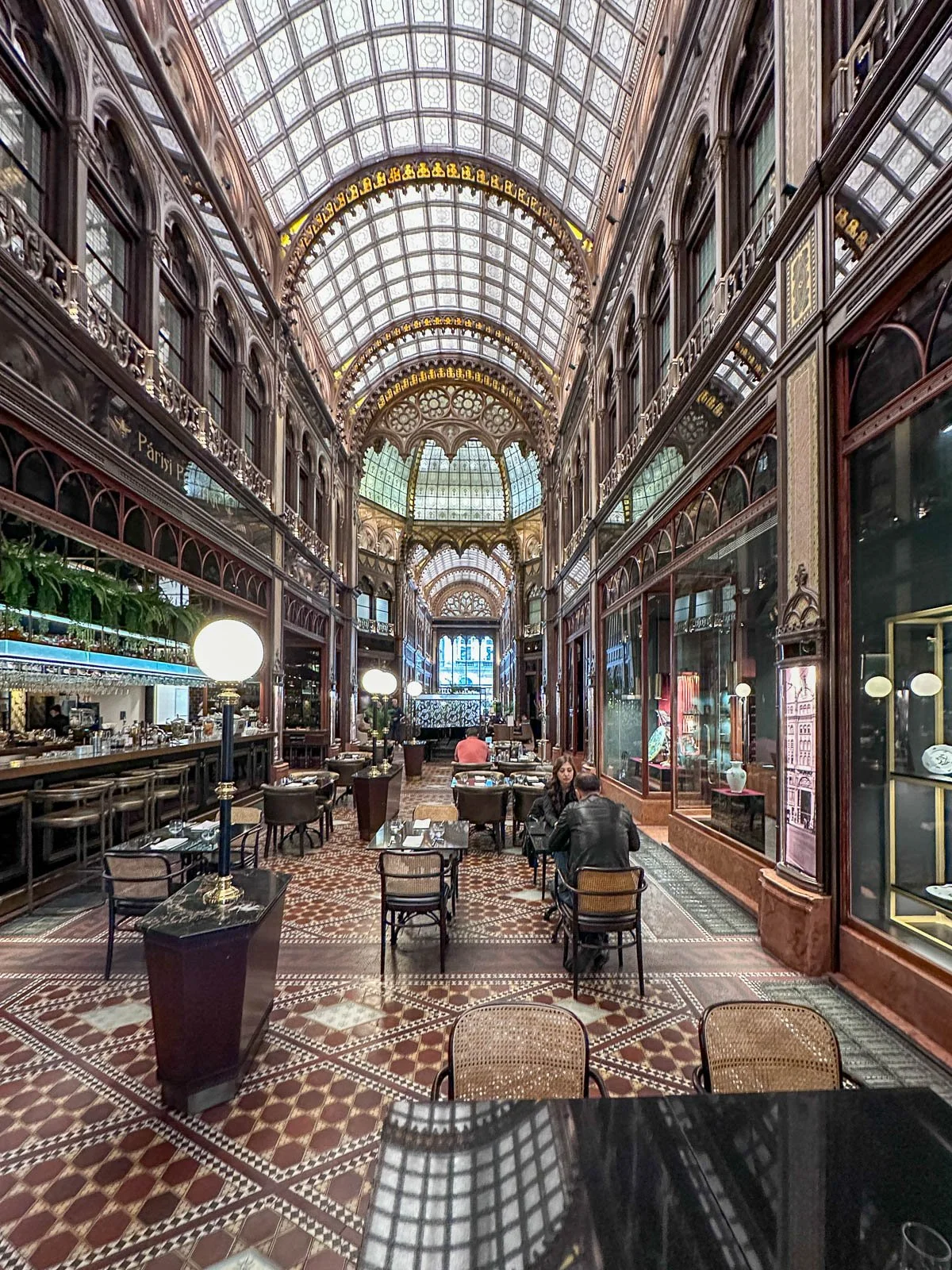
Párisi Udvar Hotel Lobby
Párisi Udvar must have one of the most extraordinary hotel lobbies in the world. The Moorish-Byzantine atrium, with its intricate tilework, ornate ironwork galleries, and stained glass skylights, is one of the finest interior spaces in Budapest. The hotel did not seem to mind people walking through and photographing the space when we visited.
📷 Pro Tip: Position yourself at ground level, looking straight up through the atrium to capture the full height of the space and the stained glass above. A 16-35mm is ideal. The light through the skylights is strongest between 10 am and 2 pm when the sun is overhead. For a different perspective, go to one of the upper gallery levels and shoot down into the atrium floor. Ask at the front desk whether photography is currently permitted; policies can vary.
Best time: Midday for natural skylight. Access: Hotel lobby (ask at the front desk). Transit: Walk from the Chain Bridge area (10 minutes).
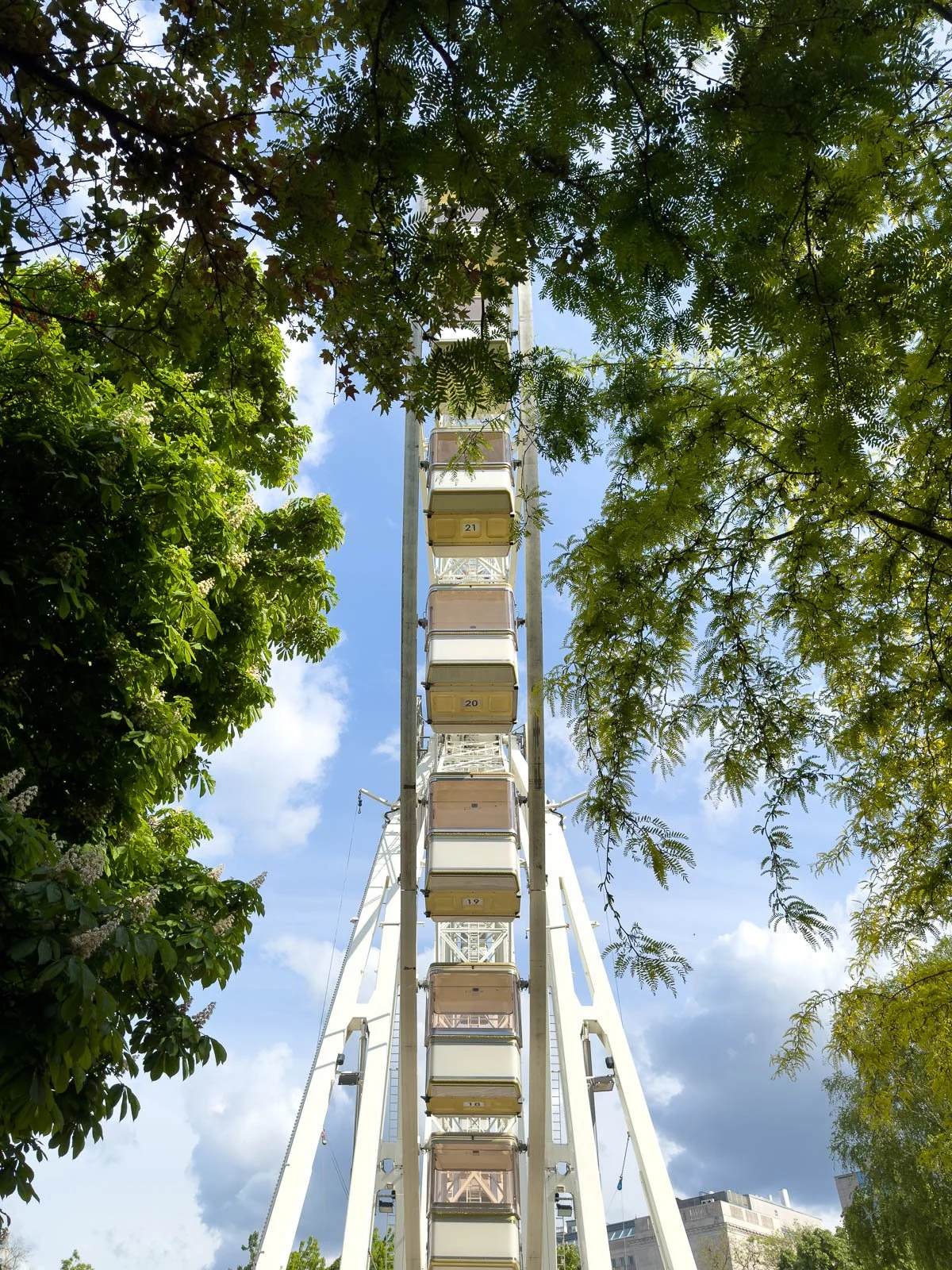
Erzsébet tér (The EYE)
So many cities have installed Ferris Wheels. This one in Budapest looks very similar to the ones in London and Dubai.
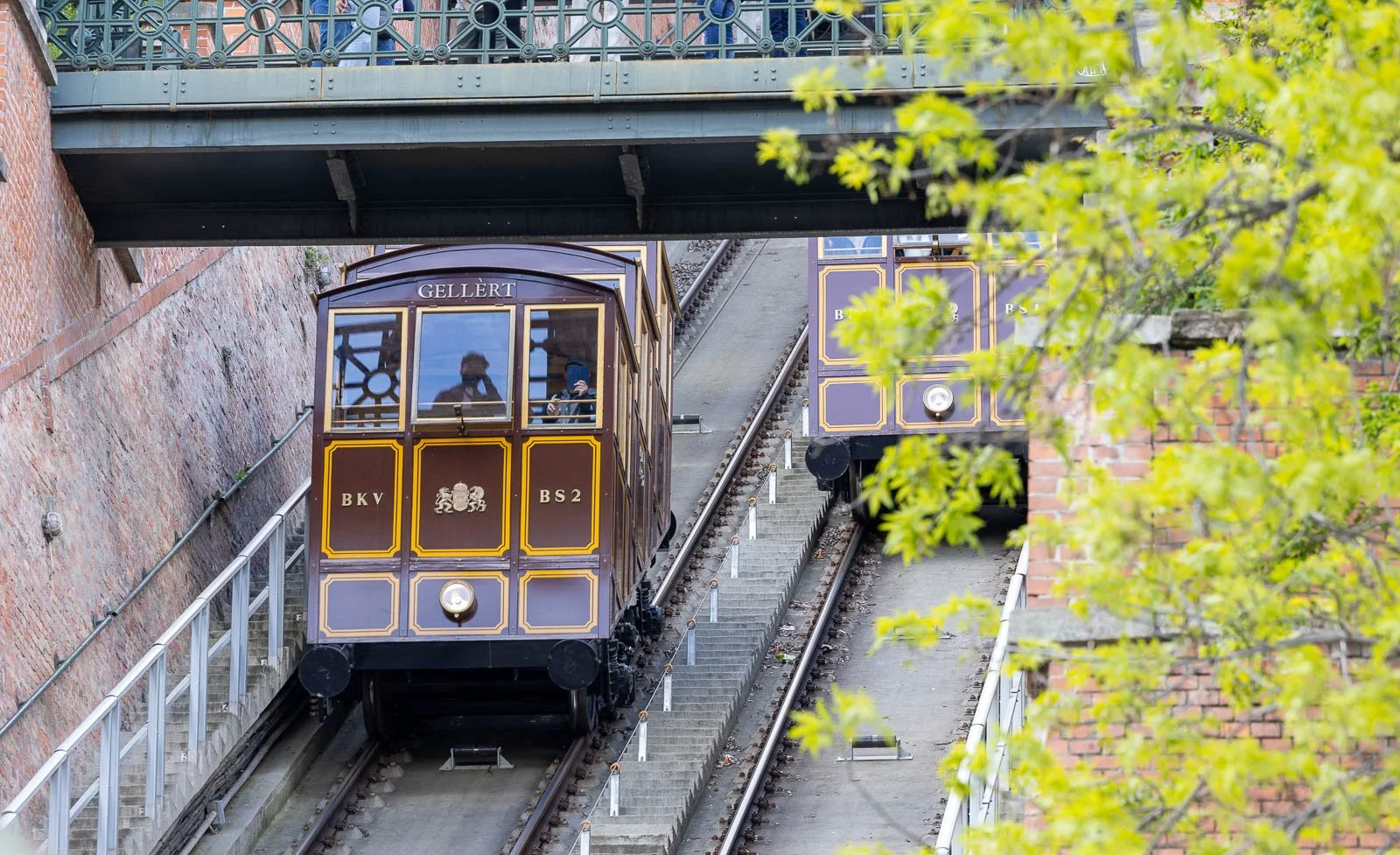
Szent Gyôrgy tér (Funicular)
The Buda Castle Funicular will make your trip to the Castle much easier. You do not want to walk up.
The funicular, a UNESCO World Heritage site, was constructed in 1870. Although the ride is only 95 meters long, you will appreciate how quickly you climb up. From above, you can enjoy incredible views of Budapest.
From the top you get an incredible overview of the city.
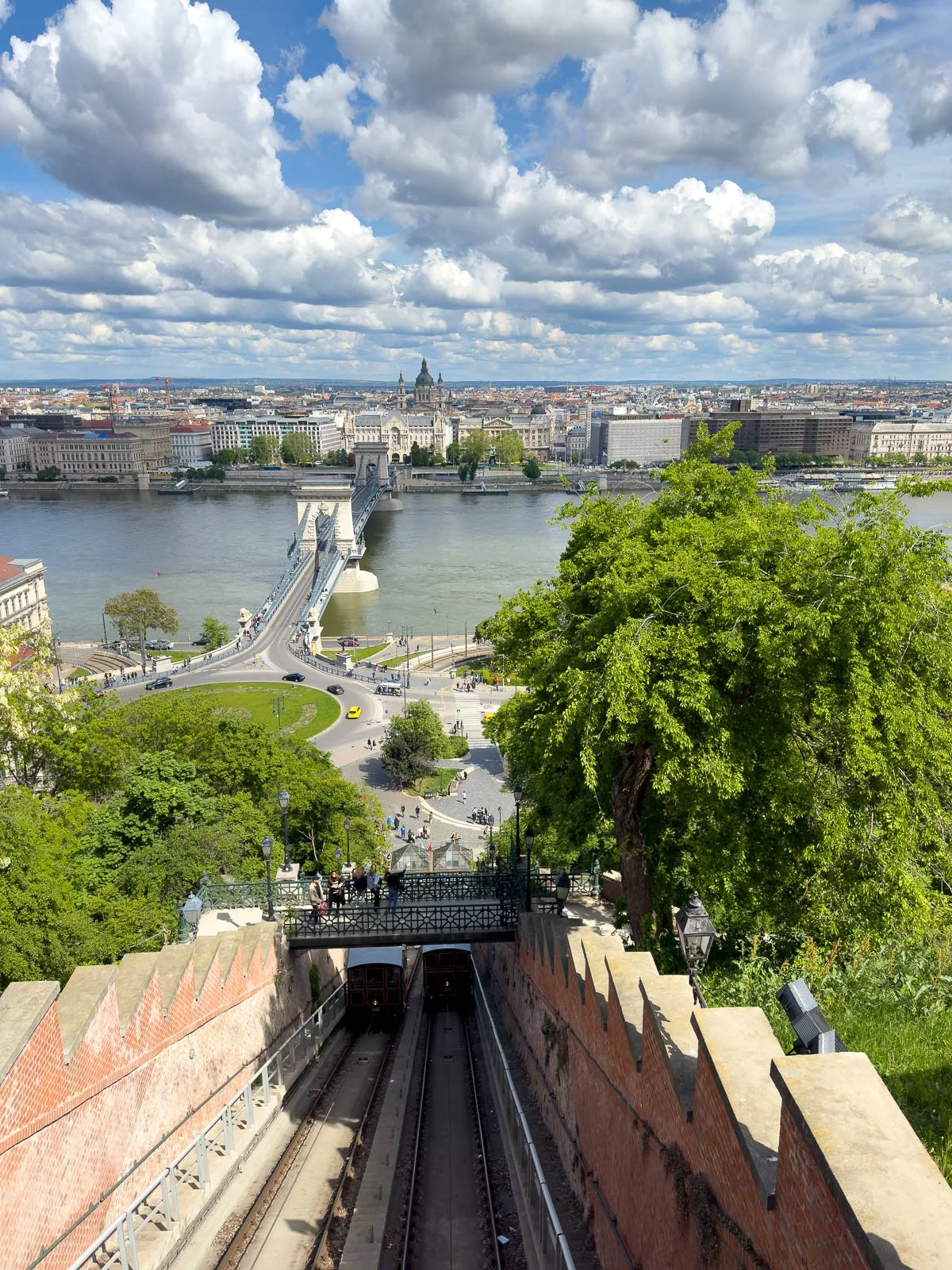
I would highly recommend going up at/after sunset. Walking back down towards the Chain Bridge, you can take some beautiful shots.
Shoes of The Danube Memorial
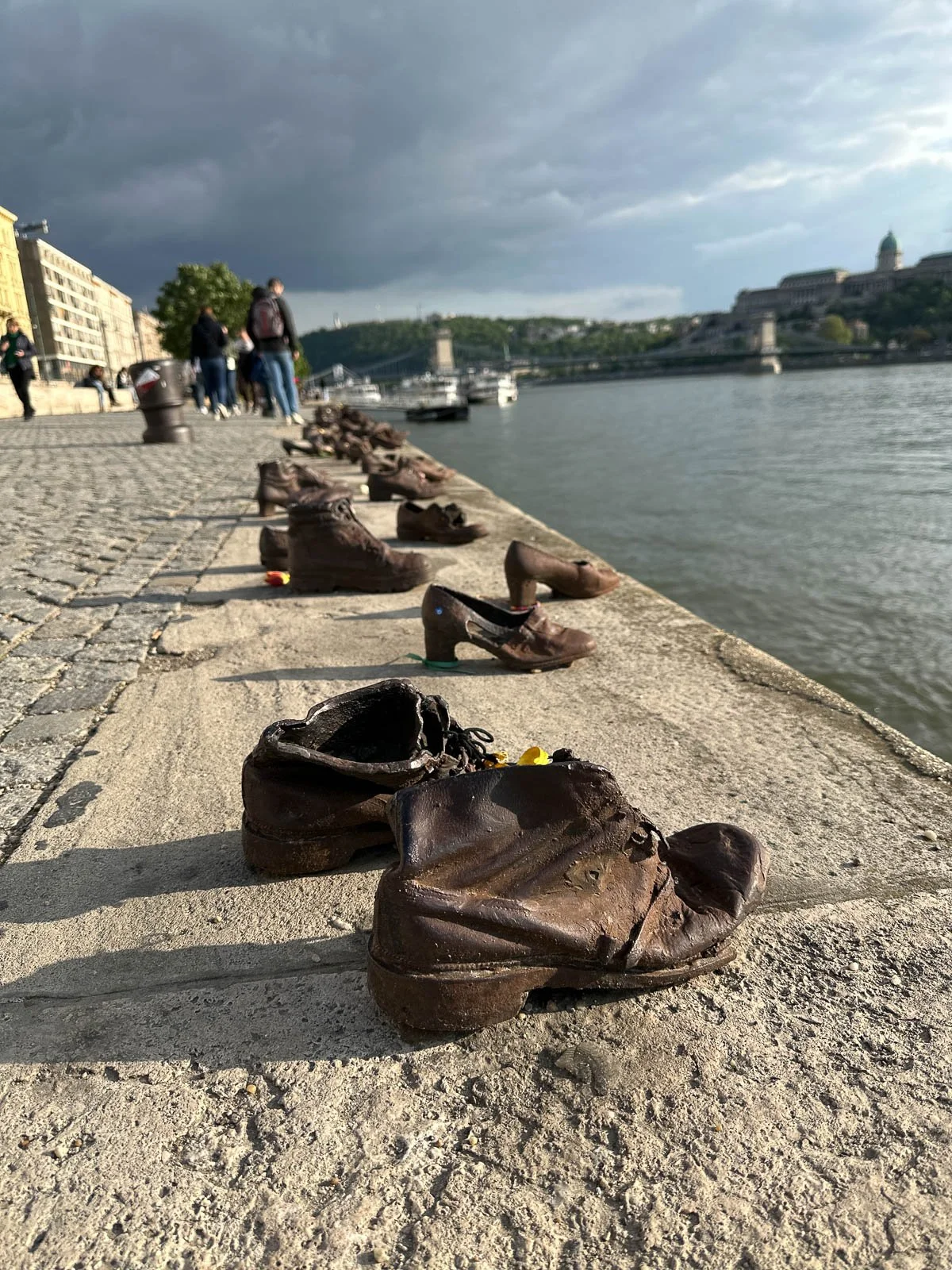
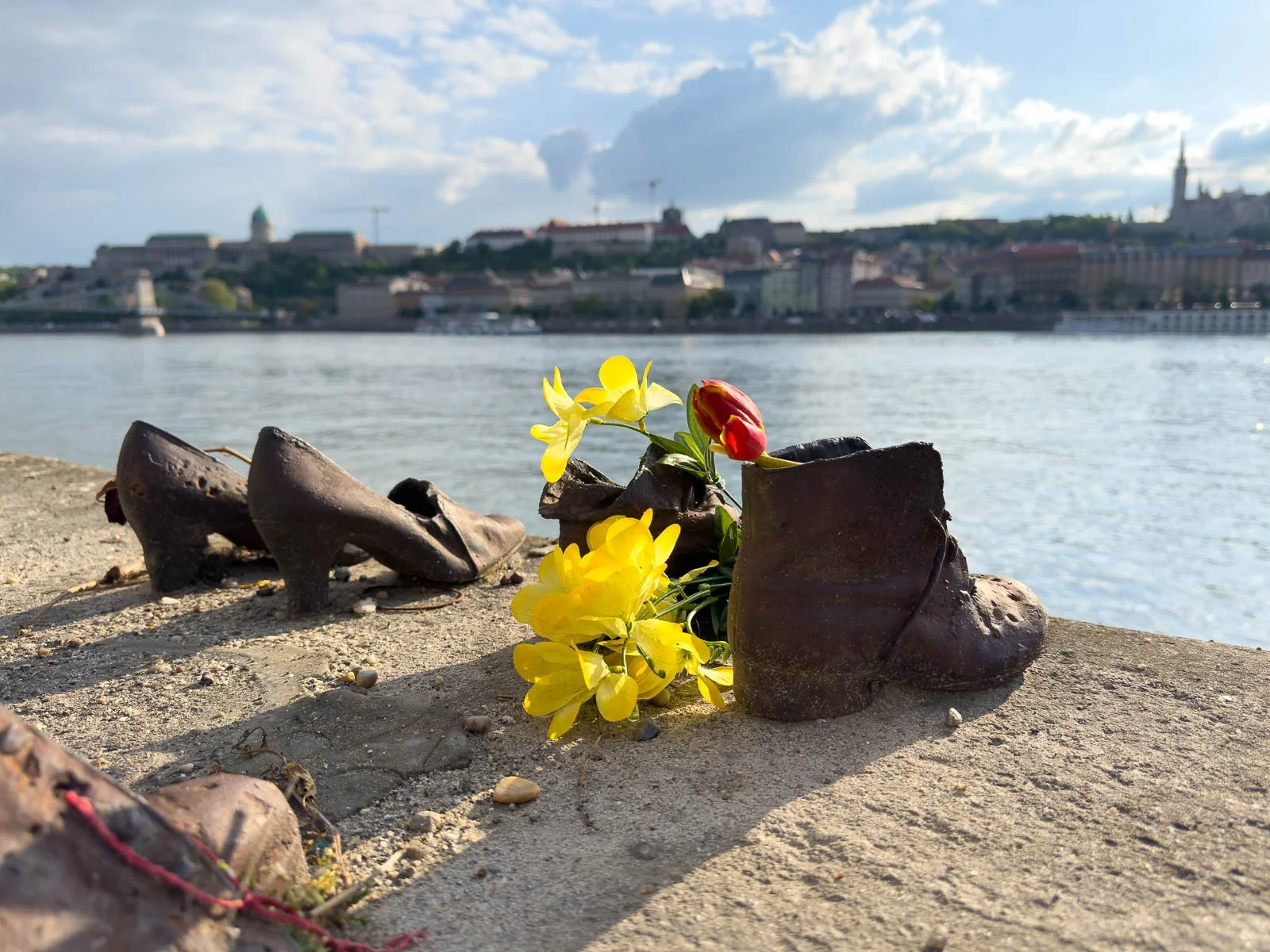
There is a somber memorial called Shoes on the Danube, located on the banks of the Danube not far from the Hungarian Parliament building. The memorial consists of sixty pairs of cast iron shoes sitting at the water's edge, scattered and abandoned, as though their owners had just stepped out of them and left. They honor the Jewish men, women, and children who were massacred by fascist Hungarian militias during World War II, shot at the riverbank and allowed to fall into the Danube.
Approach this location with the respect it requires. It is a memorial, not a photography prop.
📷 Pro Tip: The shoes photograph best in the early morning or late evening when the light is low and the Danube is calm. Position yourself at water level, as close as permitted, with a wide-angle to include both the shoes and the river surface in the same frame. A long focal length from slightly further back isolates individual shoes against the river for a tighter, more intimate composition. The Parliament in the background, visible to the north, adds geographic context. Overcast light works particularly well for this subject; harsh midday sun is the least appropriate.
Best time: Early morning or late evening. Access: Free (public riverside promenade). Transit: Tram 2 along the Pest riverbank.
Szabo Ervin Library
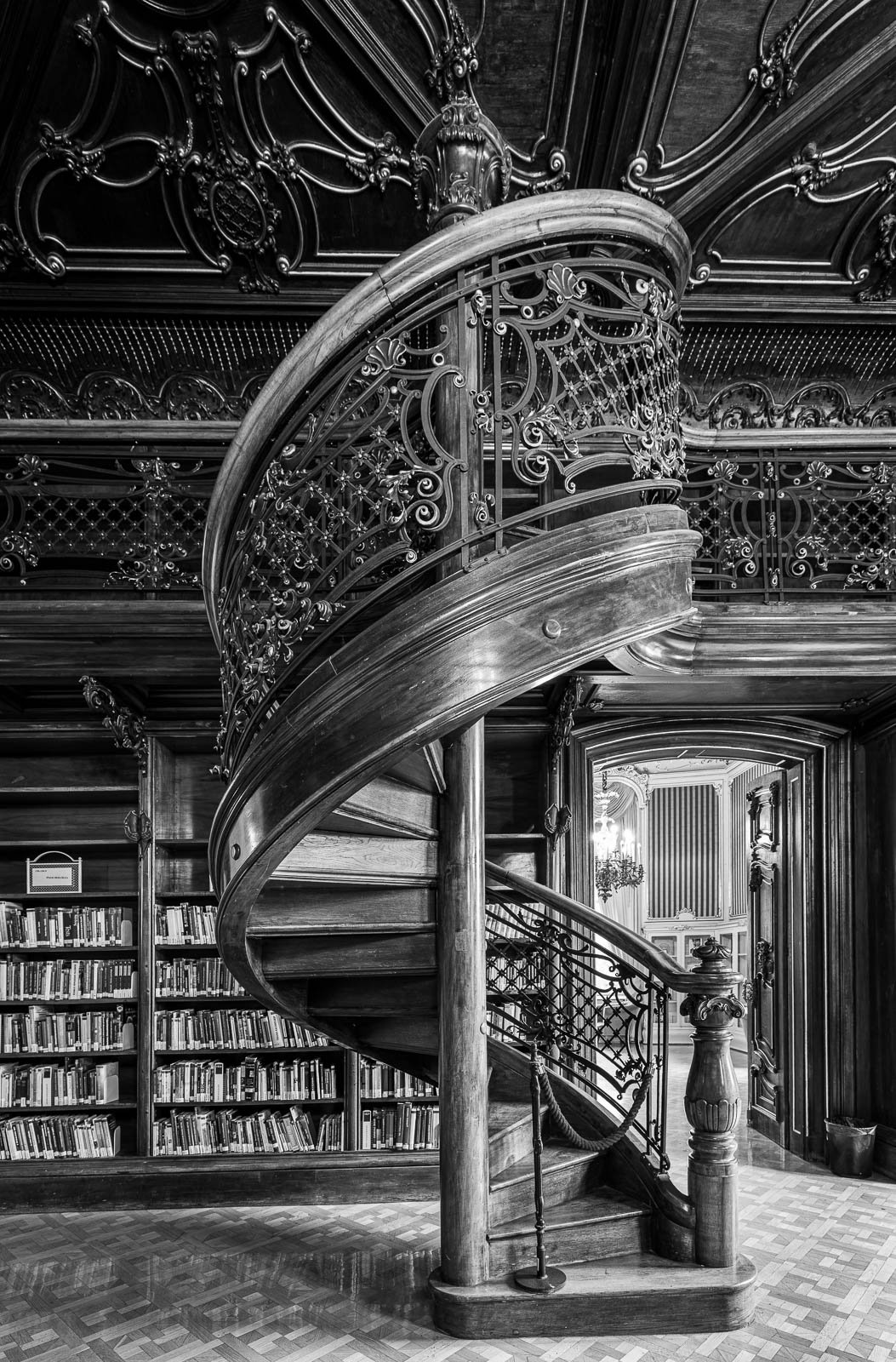
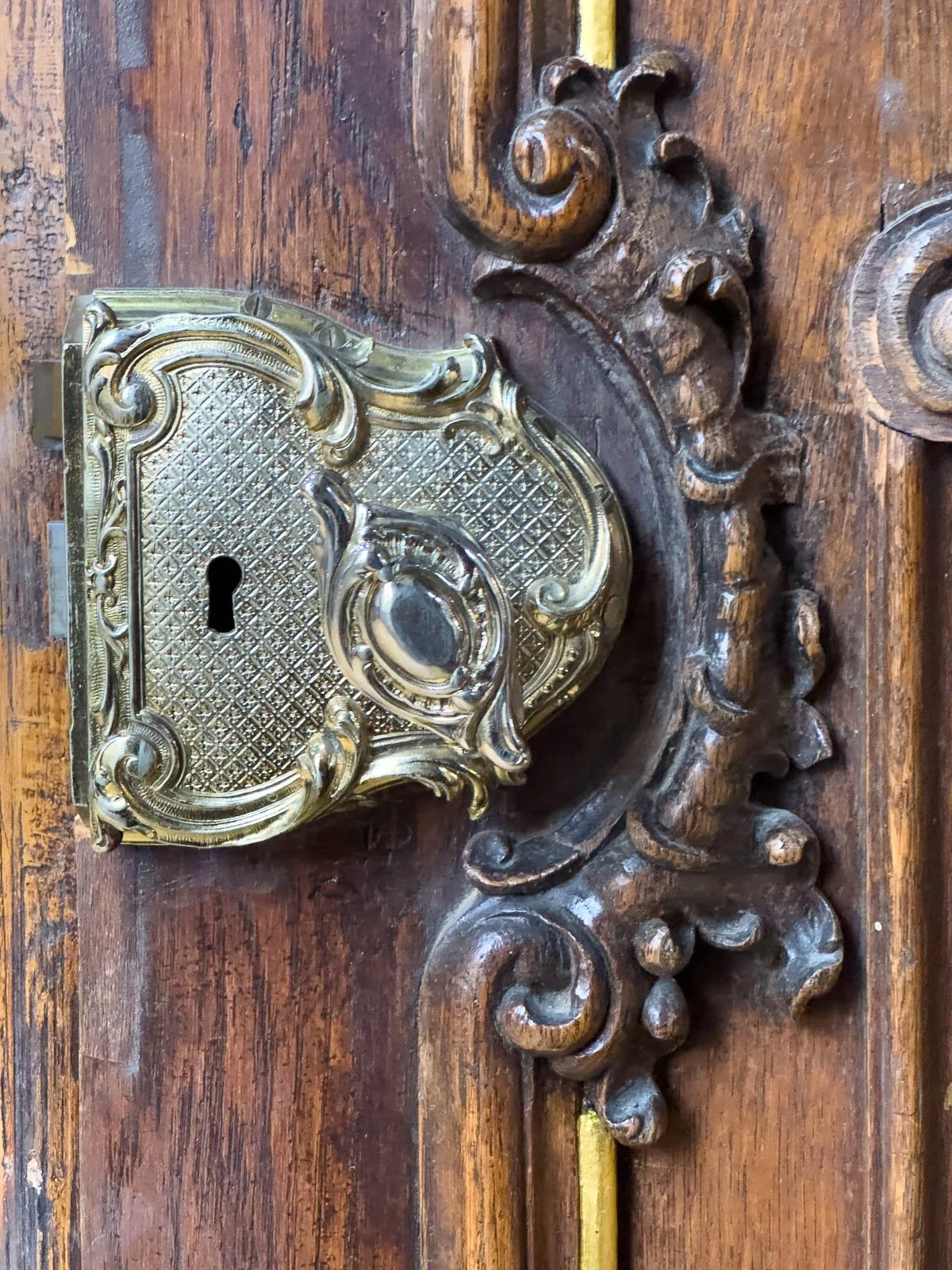
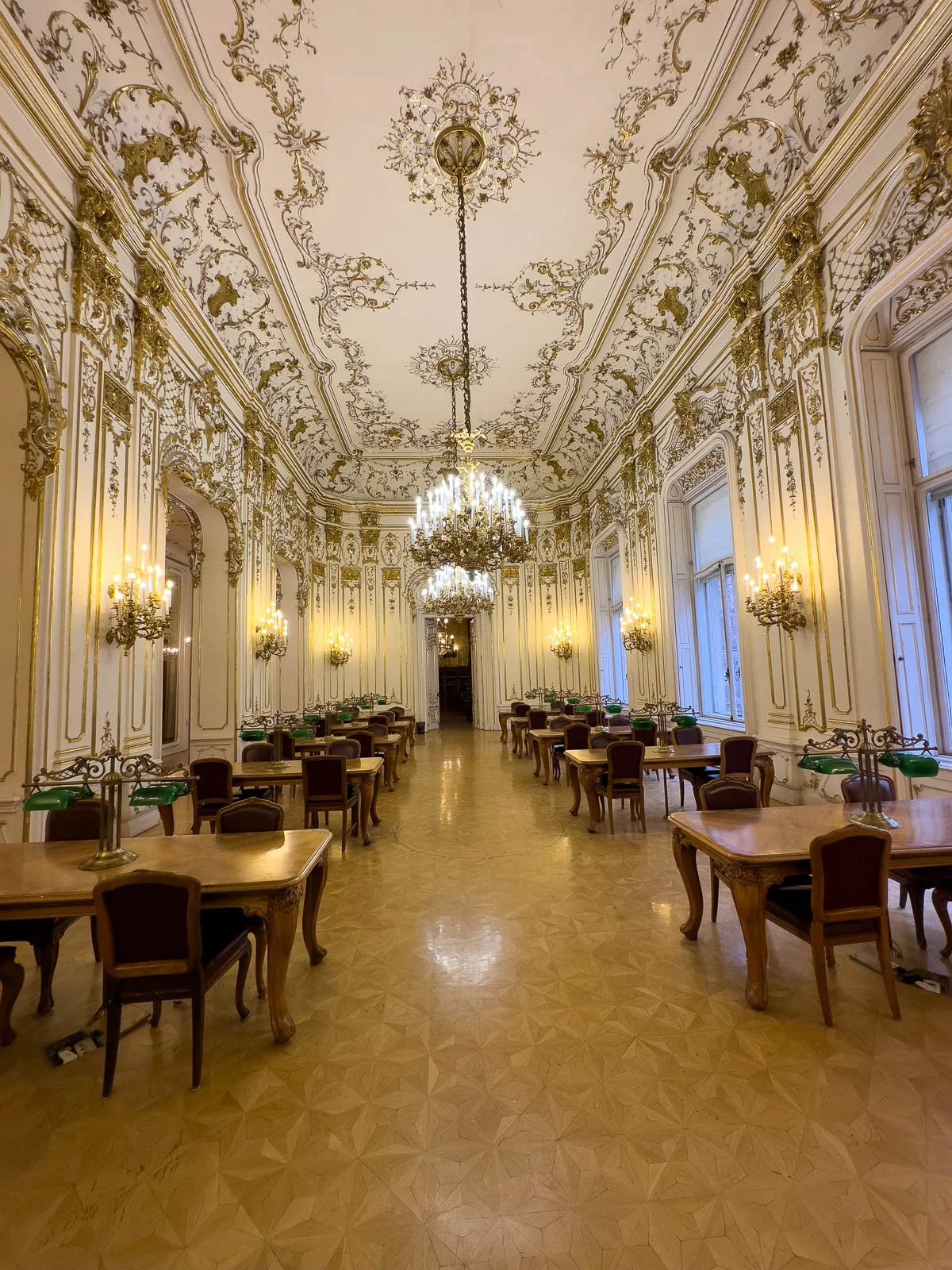
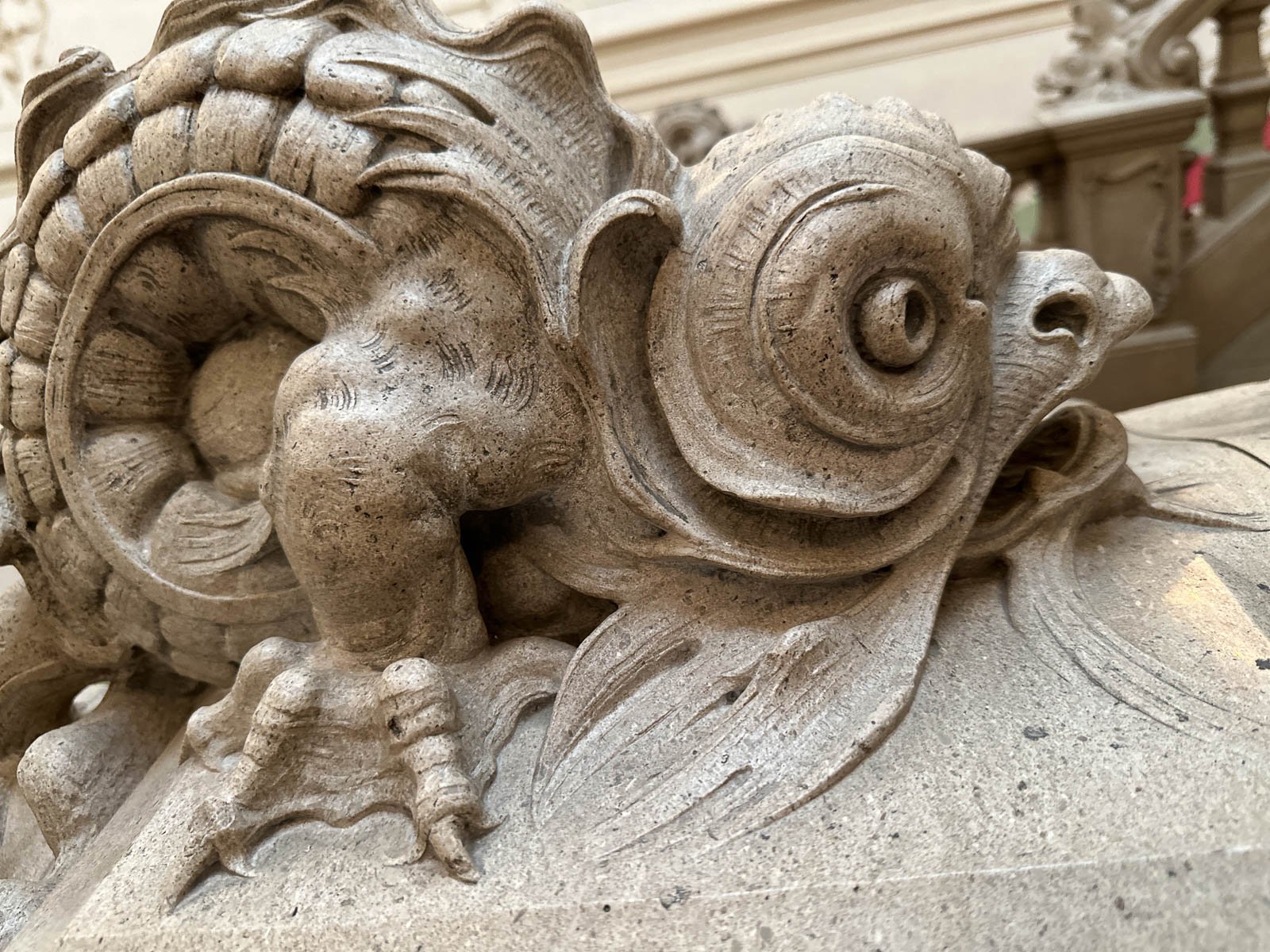
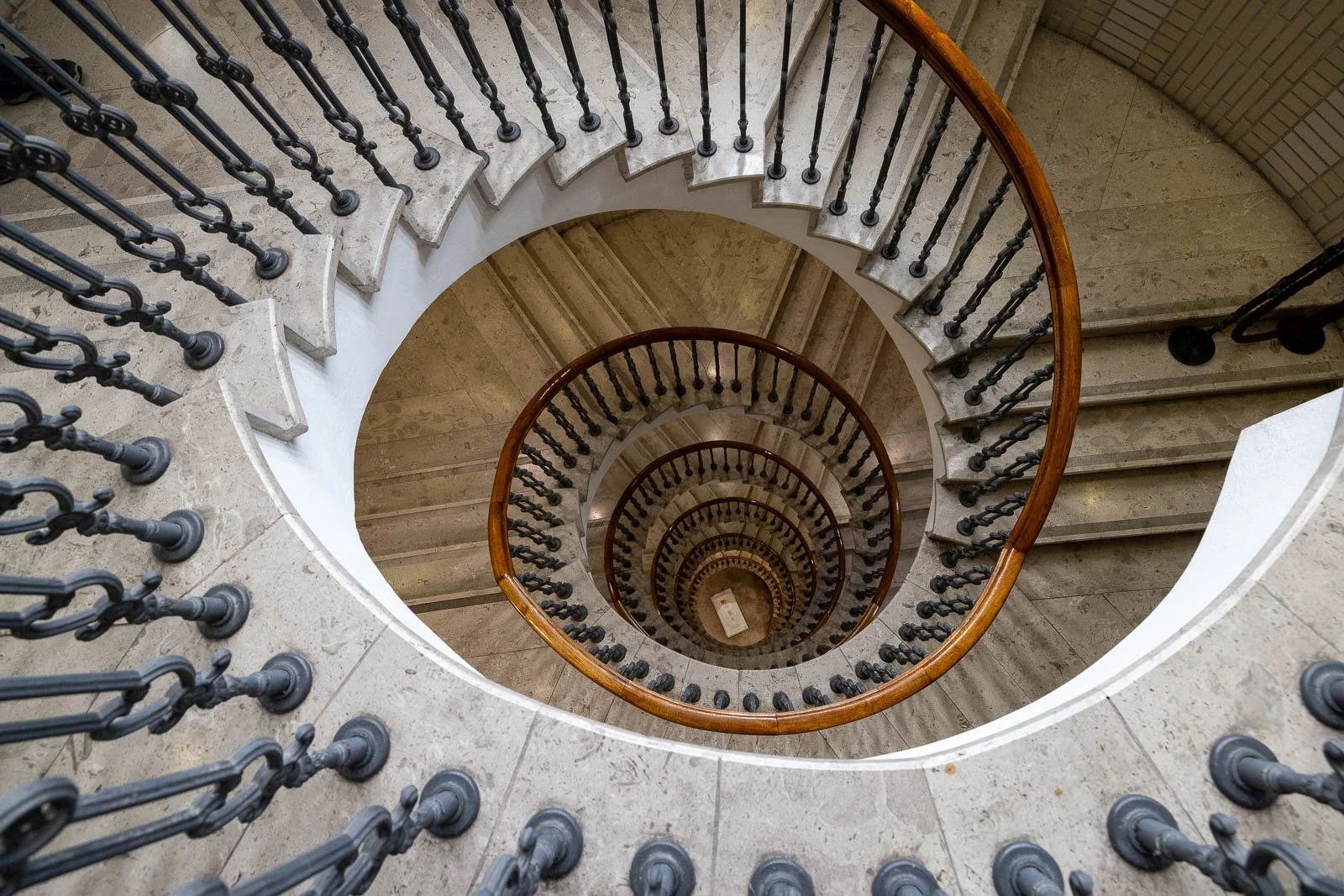
The Fővárosi Szabó Ervin Library is housed in the 19th-century neo-Baroque Wenckheim Palace and contains three spiral staircases that are among the most photographed interior architecture in Budapest. We visited on a private tour, which I recommend. The highlight is the staircases; the ornate detailing throughout the building rewards close attention.
📷 Pro Tip: Book a private or guided tour in advance through the library website. The tours give you access to the staircase areas before they fill with readers and students. Position yourself at the base of the spiral staircase and shoot straight up through the coiling steps with a 16-35mm wide-angle for the strongest geometric composition. The library's warm interior light is consistent; morning visits get slightly warmer tones from the east-facing windows. Bring a wide prime (24mm or 35mm) for the detail shots of the ornate ceilings and bookshelves.
Best time: Morning guided tour. Access: Entry fee for guided tours. Transit: Walk from the Central Market area (10 minutes) or metro to Kálvin tér.
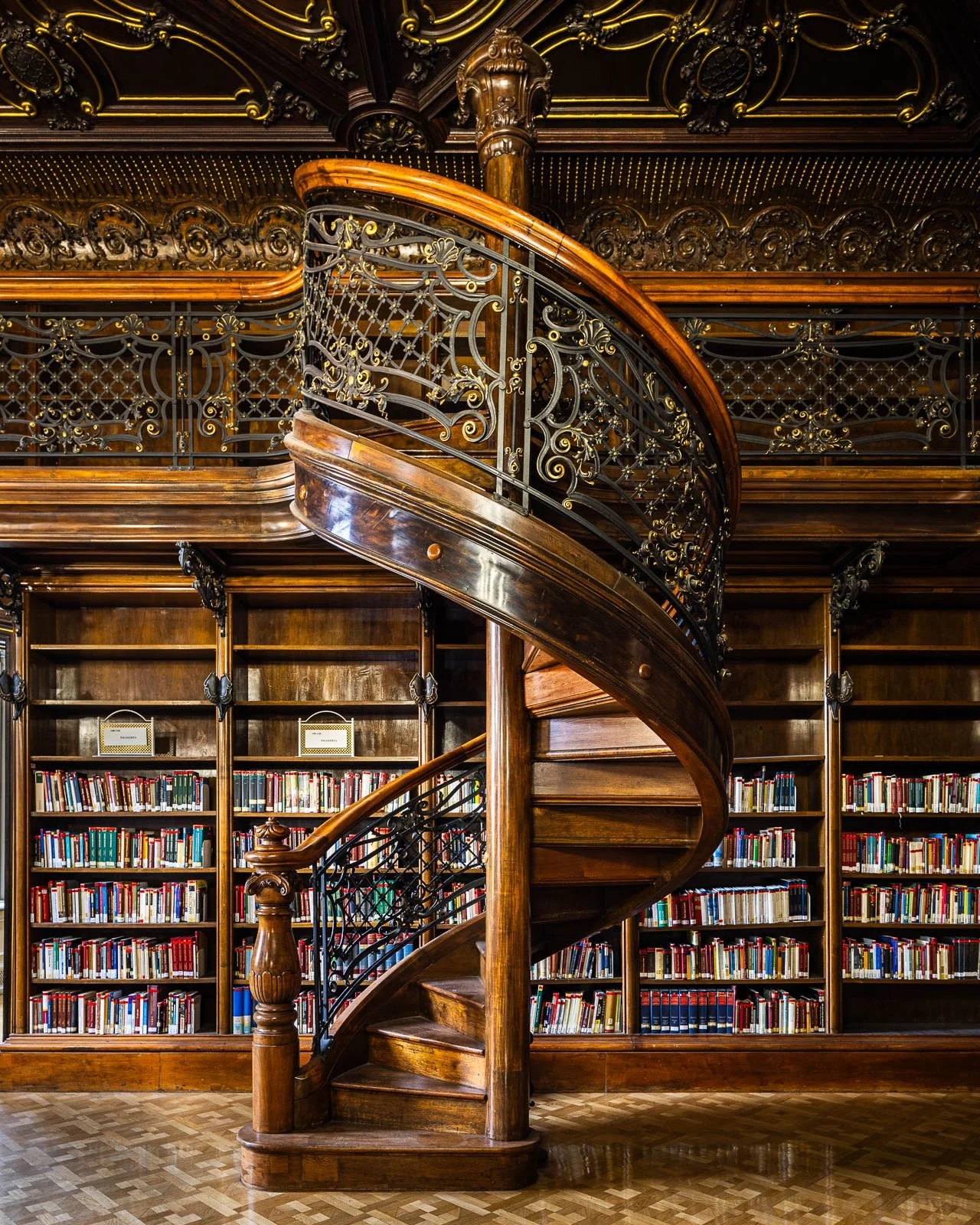
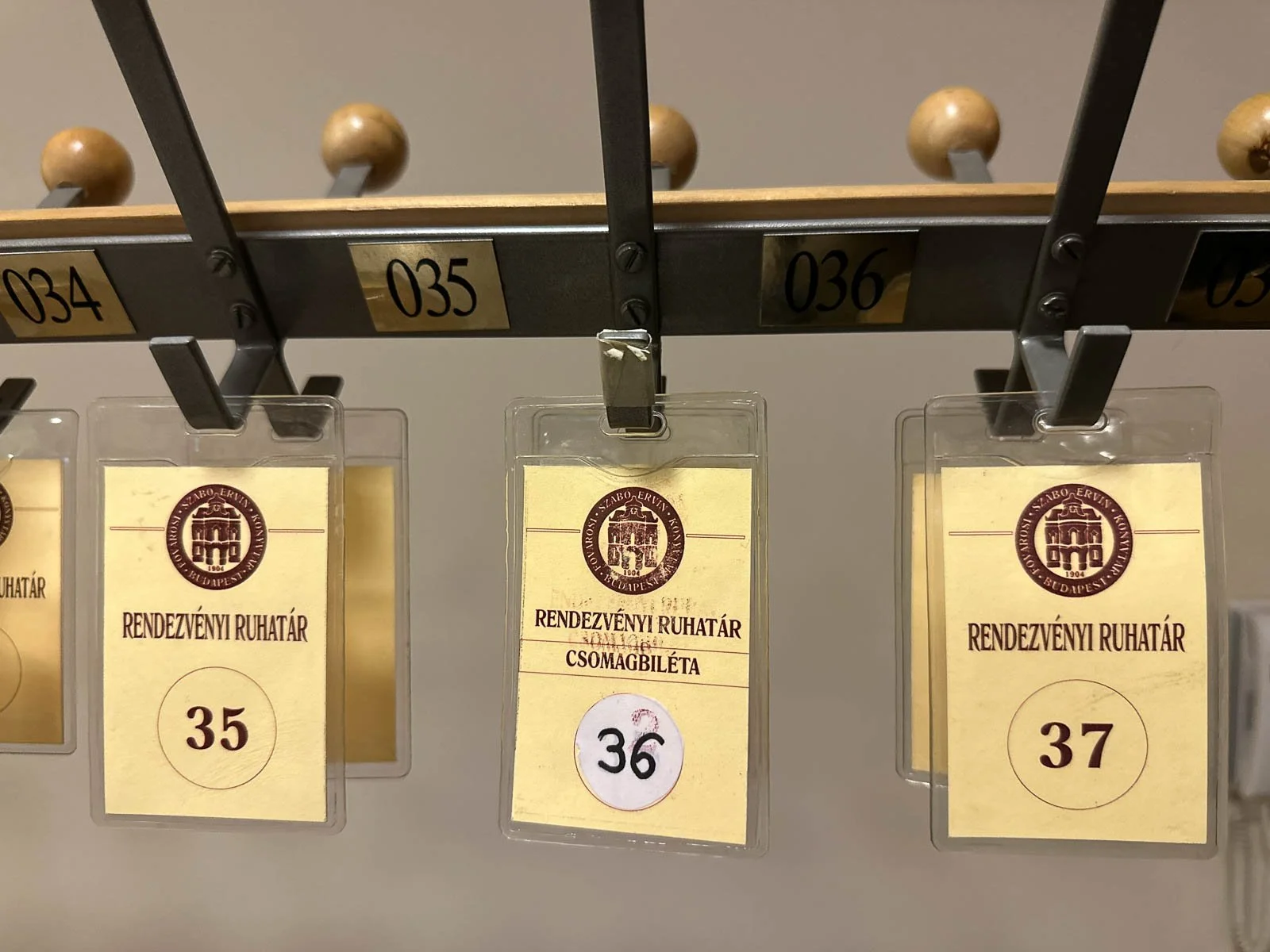
I also loved taking photos of the details in the library.
Liberty Bridge At Night
Liberty Bridge, also called Freedom Bridge, connects Buda and Pest on the southern side of the city. At night, when the green ironwork is fully illuminated and the reflection comes off the Danube, it is one of the most photogenic bridges in Europe. The view from directly below on the Pest embankment, looking up at the bridge structure, is a different and equally strong composition.
📷 Pro Tip: For the classic night shot, position yourself on the Buda bank looking back toward Pest with the bridge stretching across the frame. A 16-35mm captures the full span. For a more compressed view that shows the bridge and the Pest riverfront together, use a 70-200mm lens from further back on the Buda bank. Tripod essential for long exposures. The overlook position above the bridge on the Buda hillside gives you an elevated angle looking down at the lit bridge and the river reflections. Visit after 9 pm when the tourist foot traffic on the bridge has thinned.
Best time: After dark. Access: Free (public bridge). Transit: Tram 2 on the Pest side stops near the bridge; walk across.
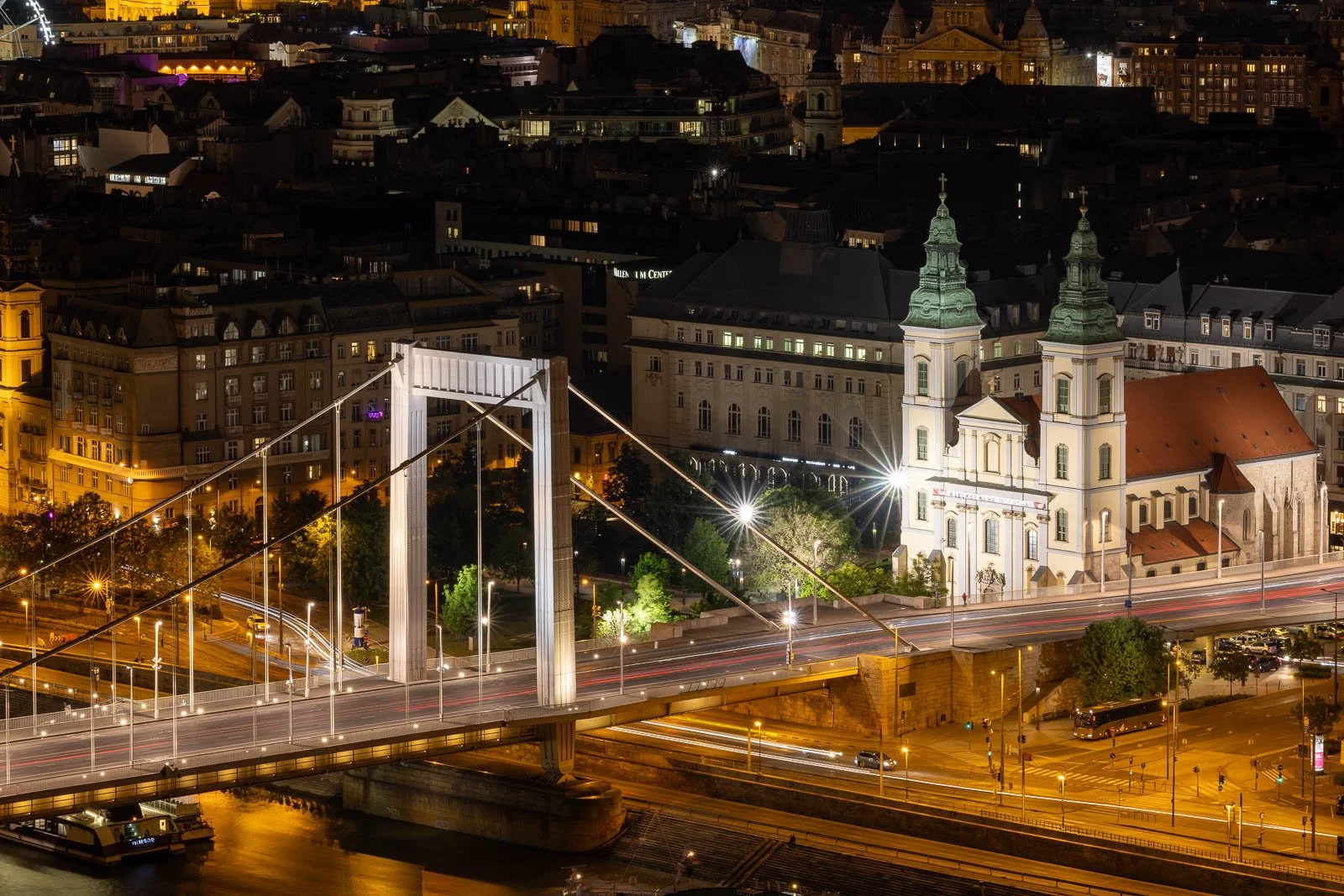
Here is another angle from an overlook above the bridge.
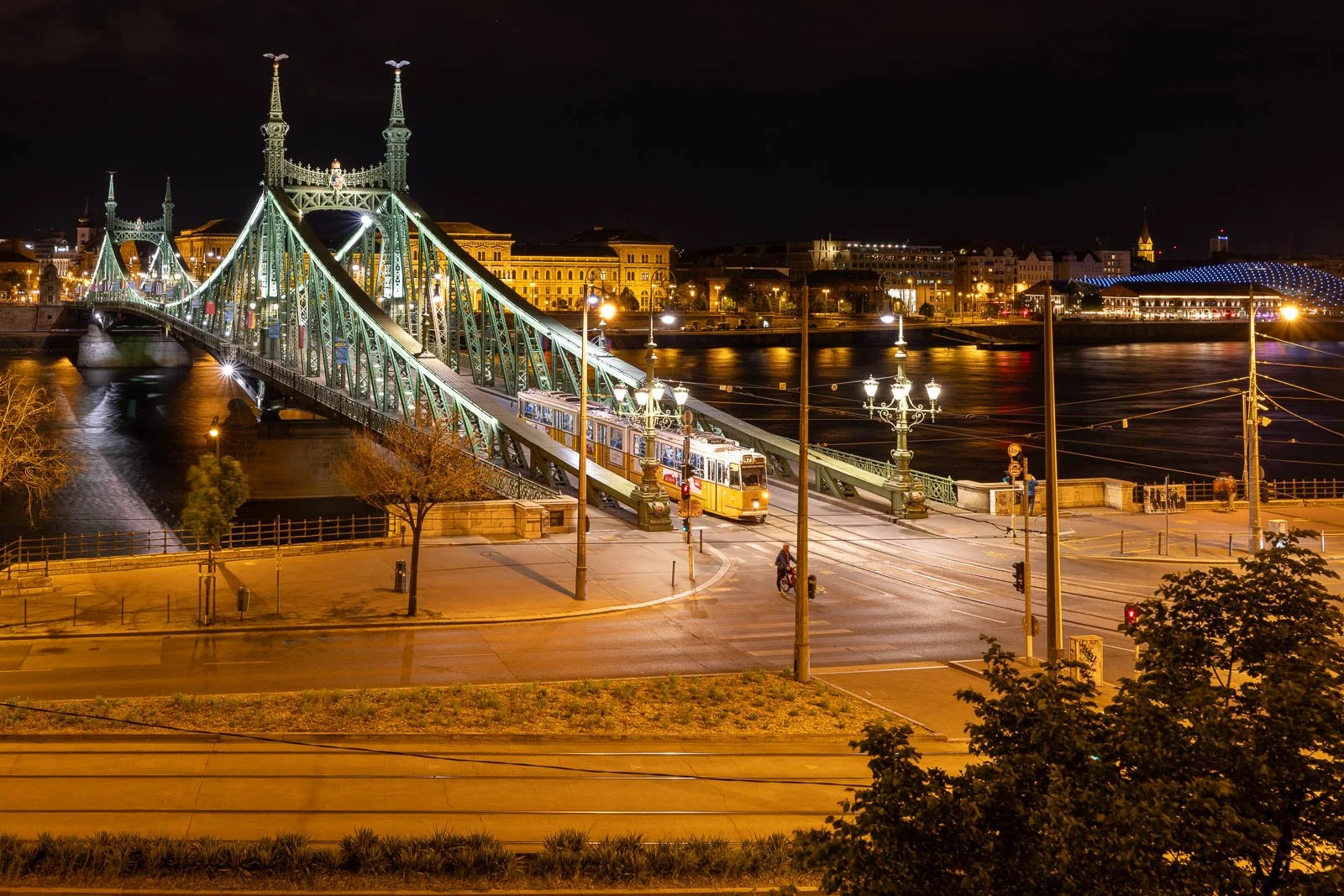
Liberty Bridge shooting trams
Liberty Bridge is a great place to go for breathtaking views of Budapest. Located in the heart of the city, it spans the Danube River and offers stunning views of the city's Buda and Pest sides.
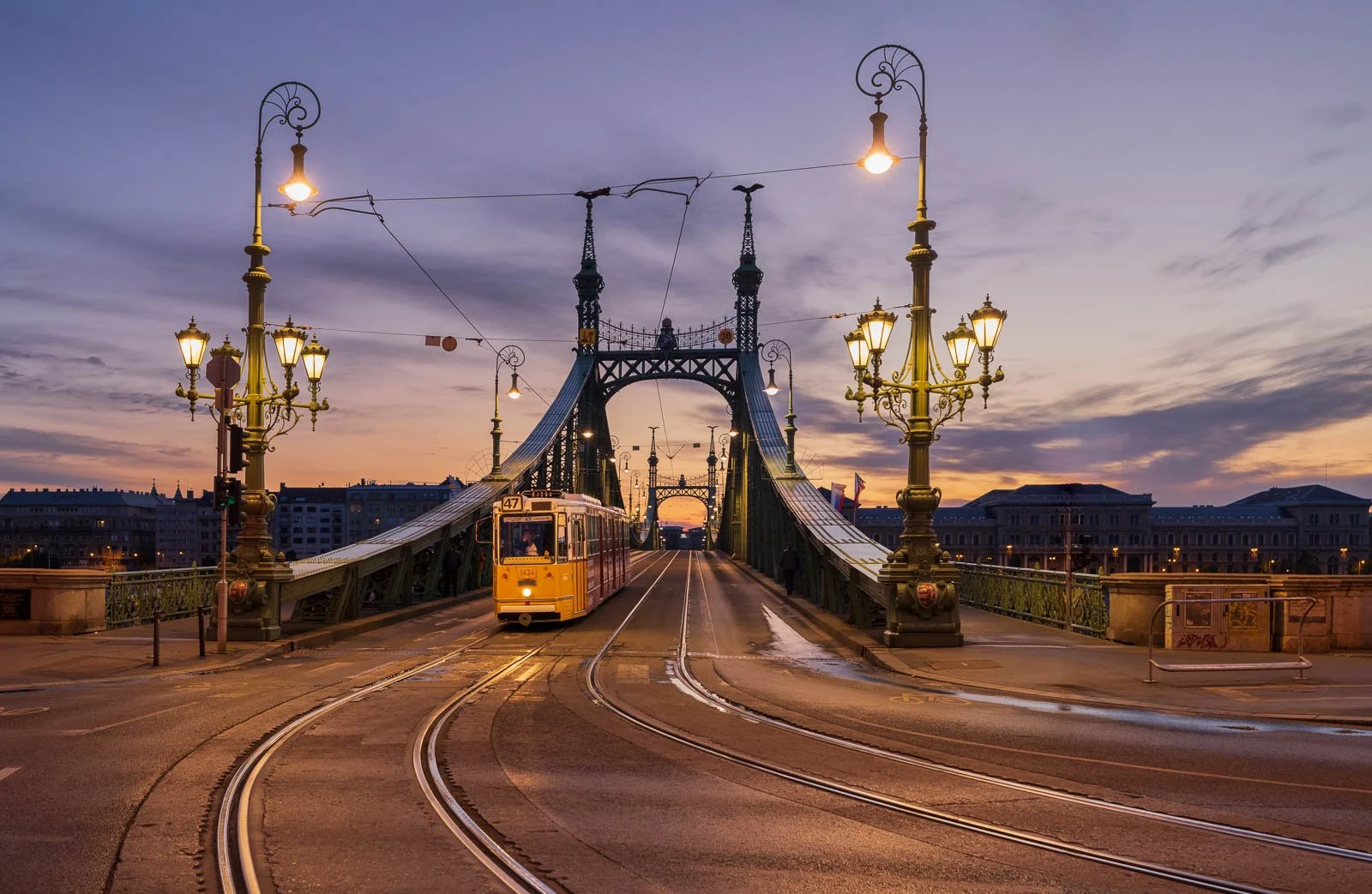
From the bridge, you can see some of Budapest’s most iconic landmarks, including the Hungarian Parliament Building and the Buda Castle. The views from the bridge are magnificent at sunset when the city is bathed in a golden glow.
Pro Tip: The best tram shot at Liberty Bridge is from the Buda bank looking toward the bridge, with the yellow tram crossing at the moment the composition is right. Shutter speed determines the story: 1/30 second blurs the tram into a streak of yellow light; 1/500 second freezes it against the green bridge ironwork. The spot Miklos showed us on the south side of the bridge at sunrise gives you the tram with the bridge in the background and the first light catching the metal at a perfect angle.
The Chain Bridge
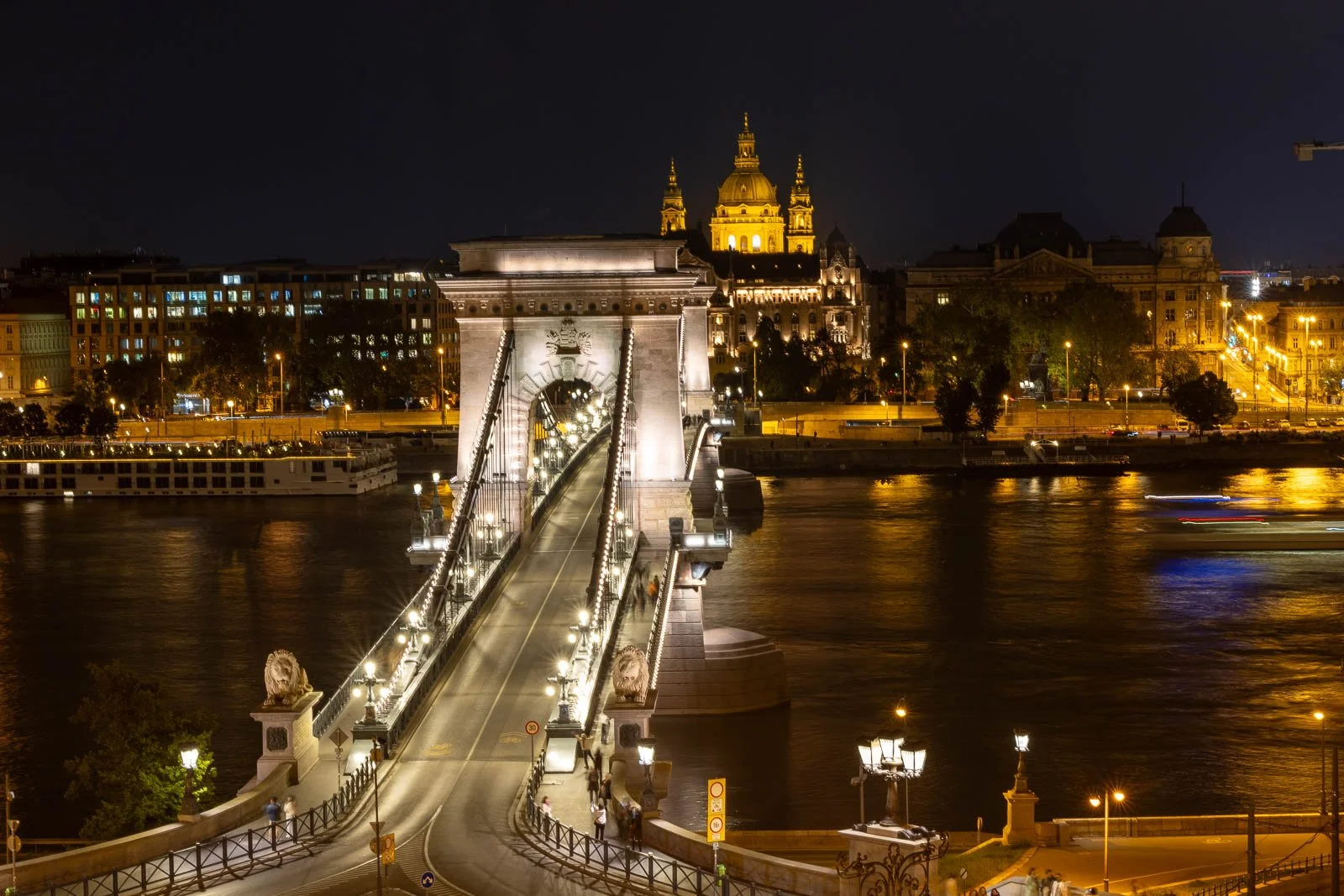
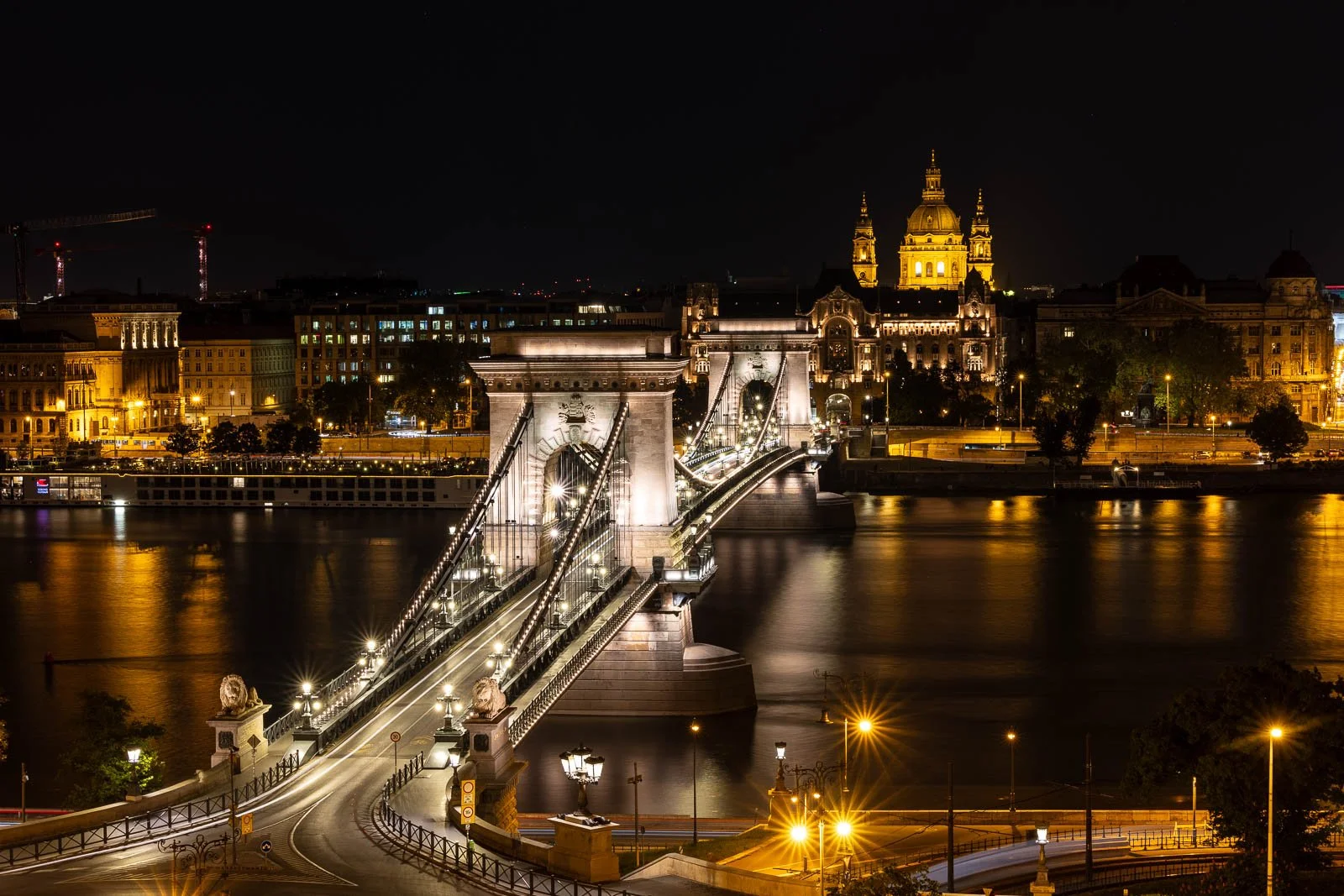
Completed in 1849, the Chain Bridge was the first permanent bridge across the Danube, connecting Buda and Pest. It was named after Count István Széchenyi, the Hungarian statesman who championed its construction. The bridge is photographically strong from multiple positions and at multiple times of day, but blue hour is when it becomes exceptional.
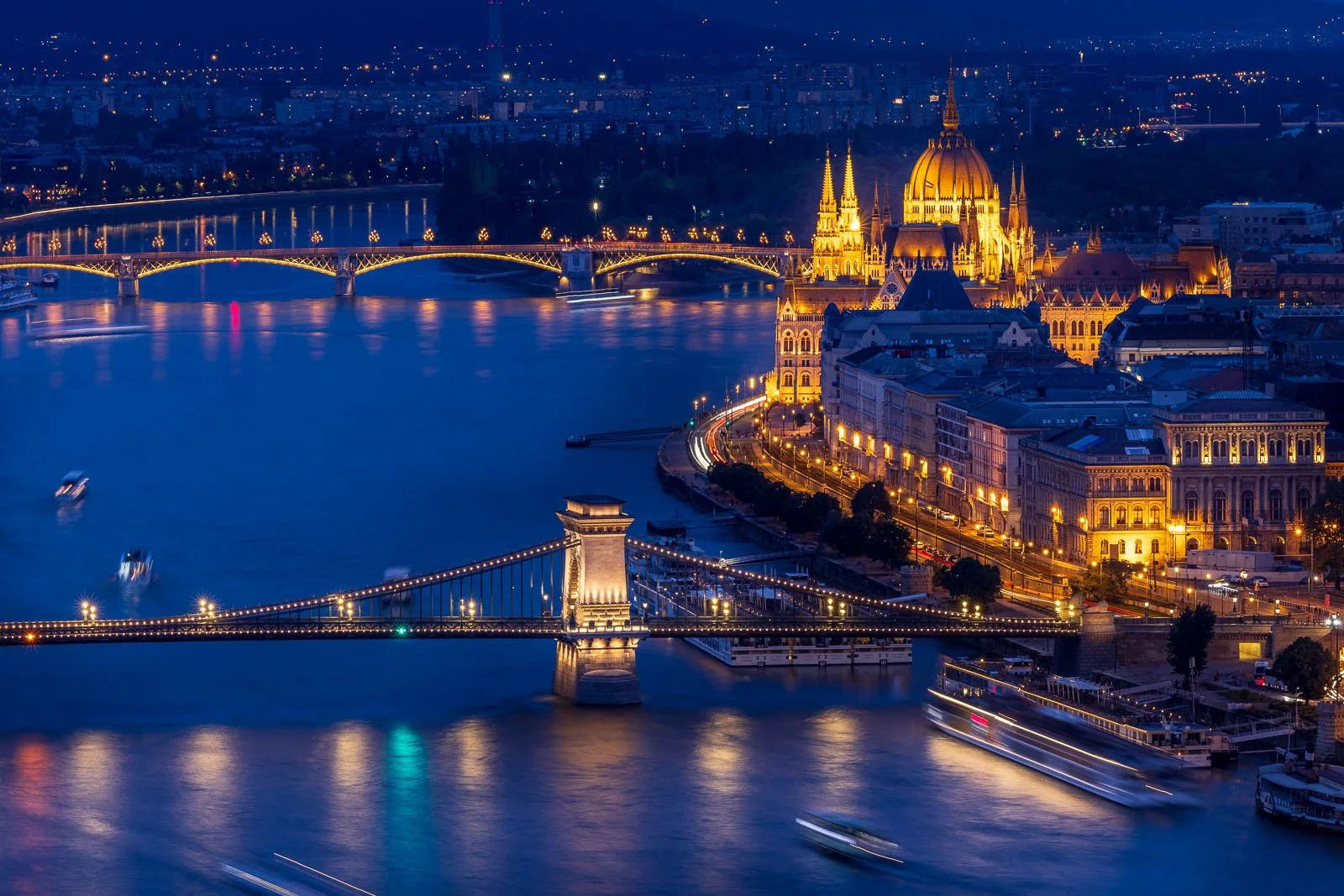
The combination of the lit bridge, the illuminated Parliament in the background, and the Danube reflections below produces the most reproduced image associated with Budapest. That image is a cliché because it is genuinely that good.
📷 Pro Tip: The finest Chain Bridge composition is from the Buda embankment looking east toward the Parliament, at blue hour after sunset when both the bridge and Parliament are fully illuminated and the Danube creates clean reflections. Position yourself on the Buda bank just south of the bridge with a 70-200mm to compress the bridge towers against the Parliament dome. Arrive thirty minutes before sunset to set up. For a second perspective, walk to the middle of the bridge itself for a symmetrical shot looking east toward the Parliament with the bridge cables converging on both sides. The view from Gellért Hill looking north captures the Chain Bridge, Parliament, and the full Danube sweep in one frame.
Best time: Blue hour after sunset; also strong at sunrise. Access: Free (pedestrian bridge). Transit: Walk from anywhere in central Pest; Bolt from further districts.
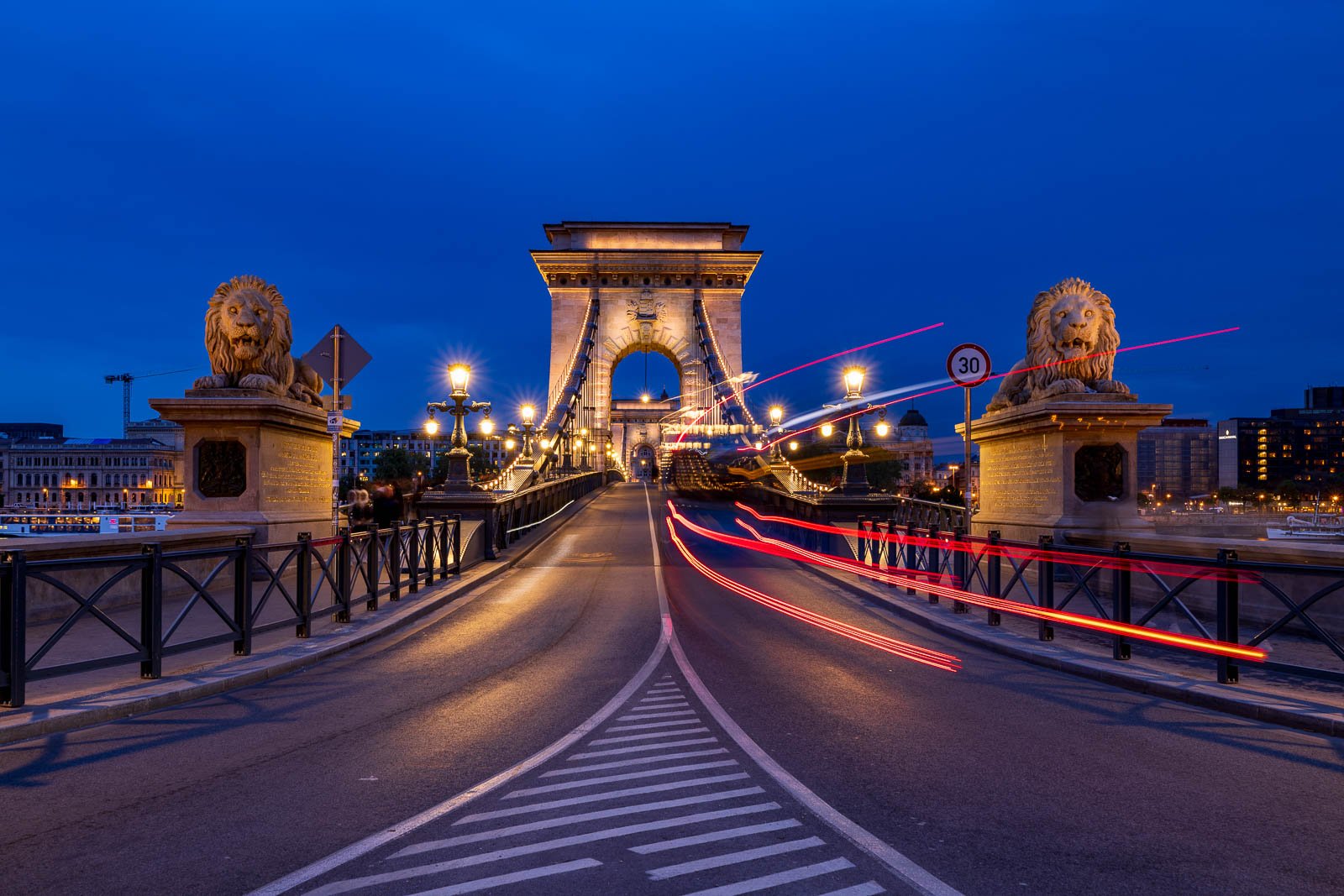
It really looks great at any time of day, but from my experience, the best view is at the blue hour/sunrise.
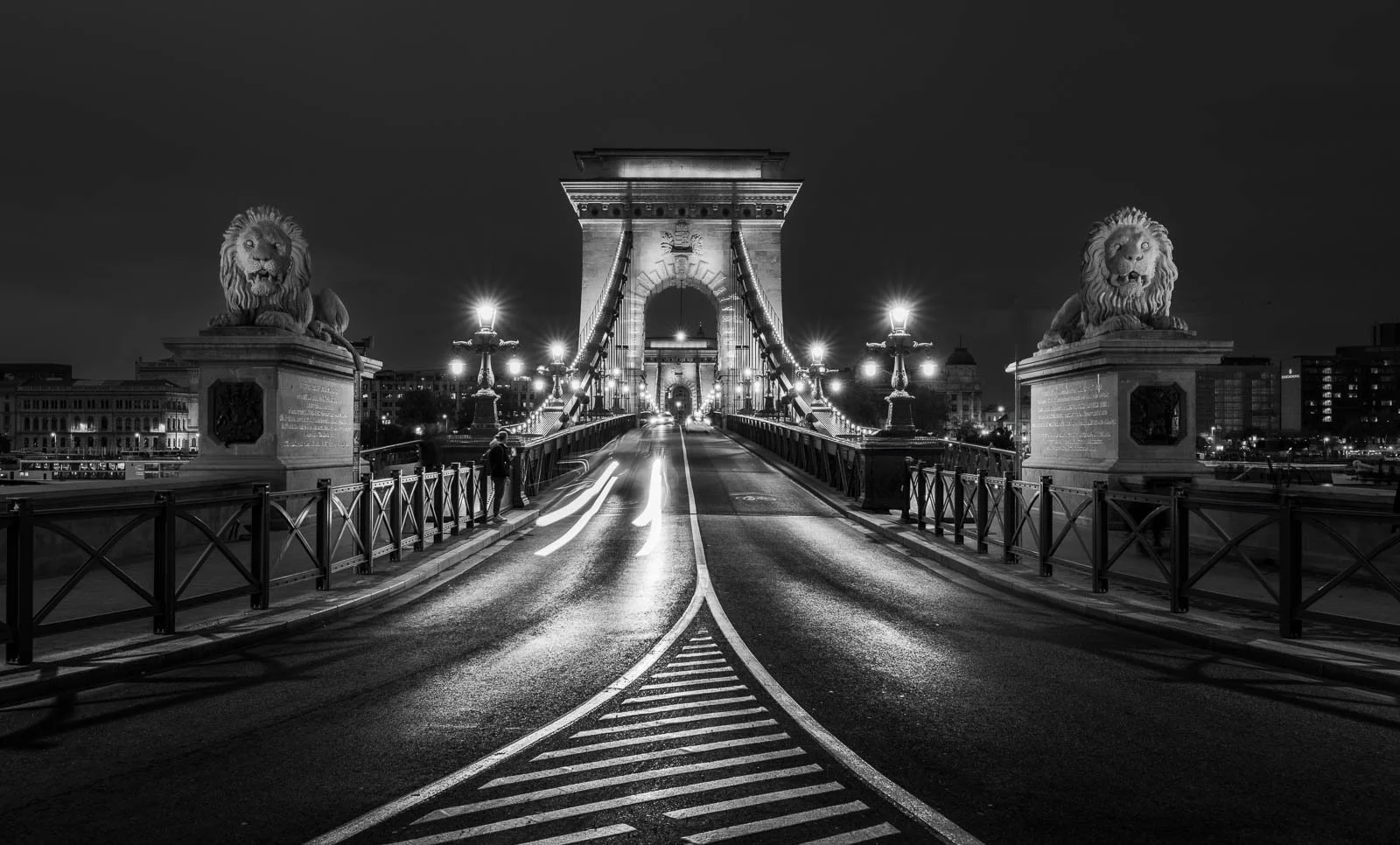
My B&W Version
It is especially charming at night when the lights illuminate the entire bridge, and the Danube creates reflections.

The Budapest Royal Castle
The Royal Castle, “Buda Castle,” is located on the Buda Side of the city and is a UNESCO World Heritage Site. Other sites in this area include Matthias Church and the Fisherman’s Bastion. On the way up to the castle, you can enjoy wonderful views of the city.

Here is a shot from the Buda Castle towards the Pesh part of the city.
Exploring Buda Castle Hill
The Royal Palace on Castle Hill is a UNESCO World Heritage Site, and the hill itself contains more photography subjects than most visitors have time to cover. Matthias Church, Fisherman's Bastion, Trinity Square, the Hungarian National Gallery, the Sandor Palace, and the long walks along the castle walls with views across the Danube to Pest all reward slow exploration.
Along the walk from Buda Castle toward Fisherman's Bastion in 2016, I found a classic American car parked on the cobblestones. That is the kind of detail that Castle Hill delivers when you slow down.
📷 Pro Tip: Spend a full morning on Castle Hill. Arrive at Fisherman's Bastion for sunrise (see dedicated entry above), then work your way through the hill as the light moves. The cobblestone streets between Trinity Square and the castle walls photograph well in the two hours after sunrise when the low light creates long shadows and the early visitors are still sparse. Walking back down toward the Chain Bridge at dusk, with the Danube and the lit Parliament below, is one of the more rewarding walks in the city.
Best time: Early morning through midday. Access: Castle Hill free; individual attractions have entry fees. Transit:Funicular from Clark Ádám Square (Chain Bridge level).
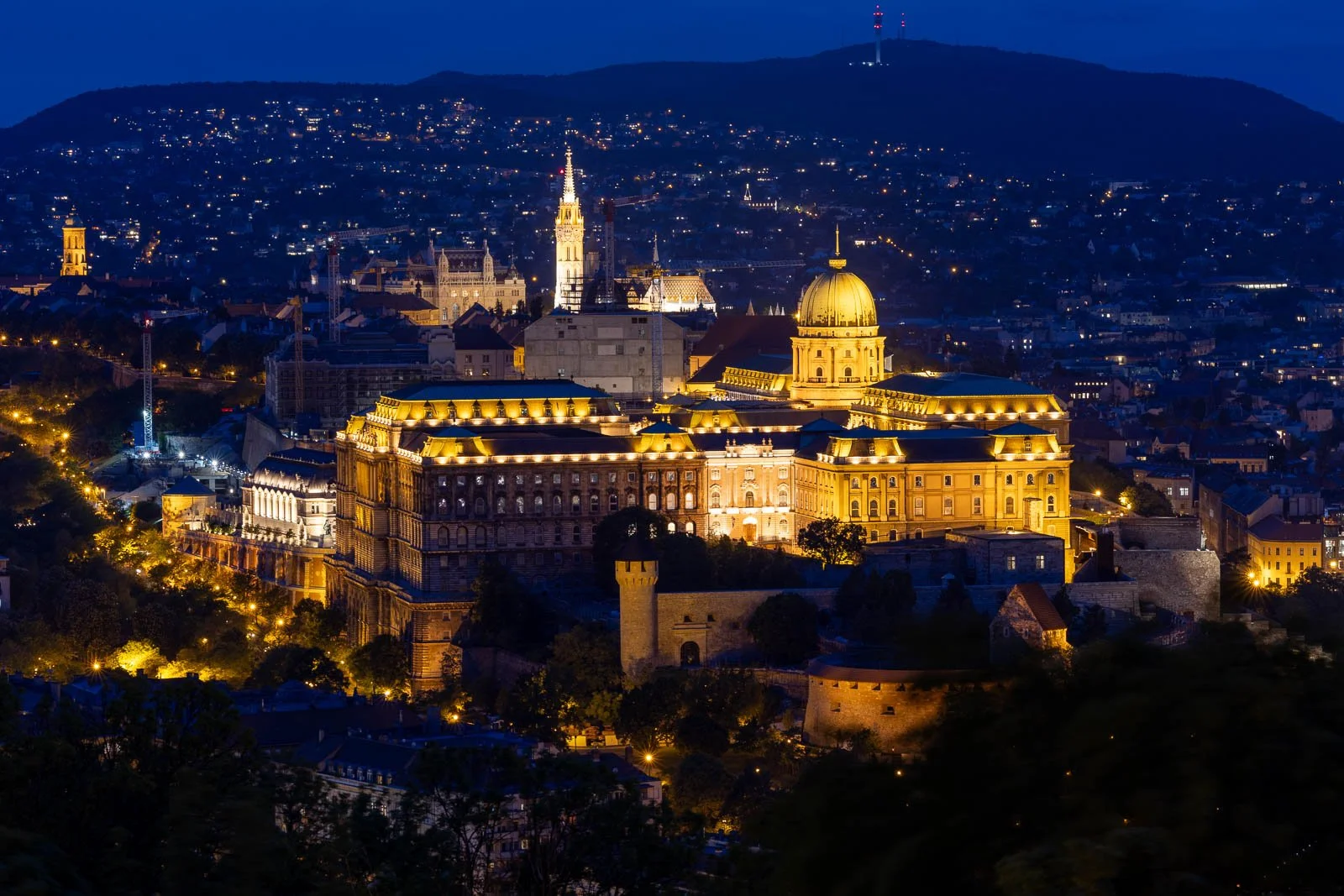
These locations offer fantastic photo opportunities and more scenic views of the Danube River and the Pest side. While exploring the cobblestone streets around Trinity Square, you will find unique buildings and architectural details hosting a variety of shops, galleries, bars, and local restaurants.
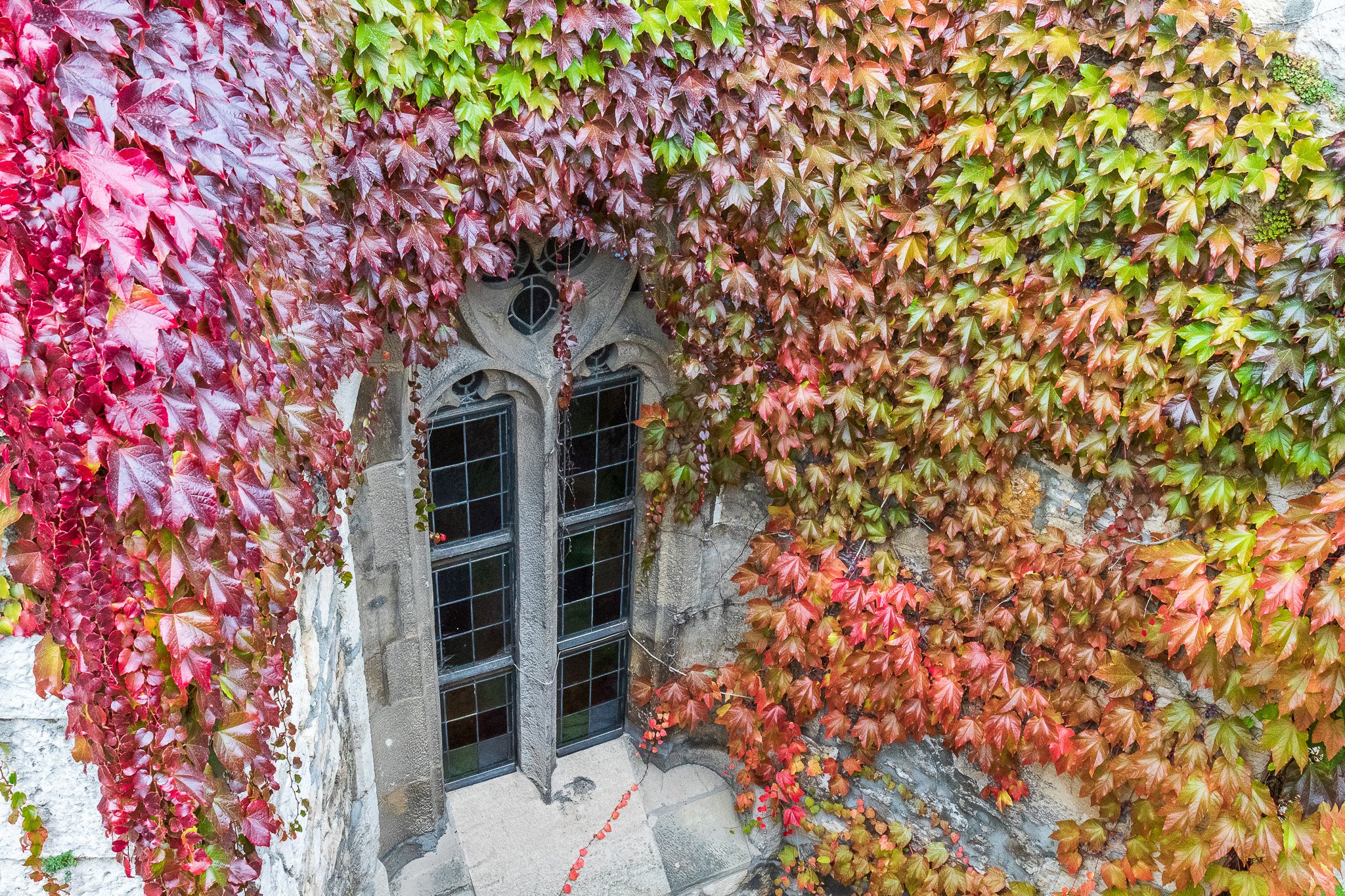
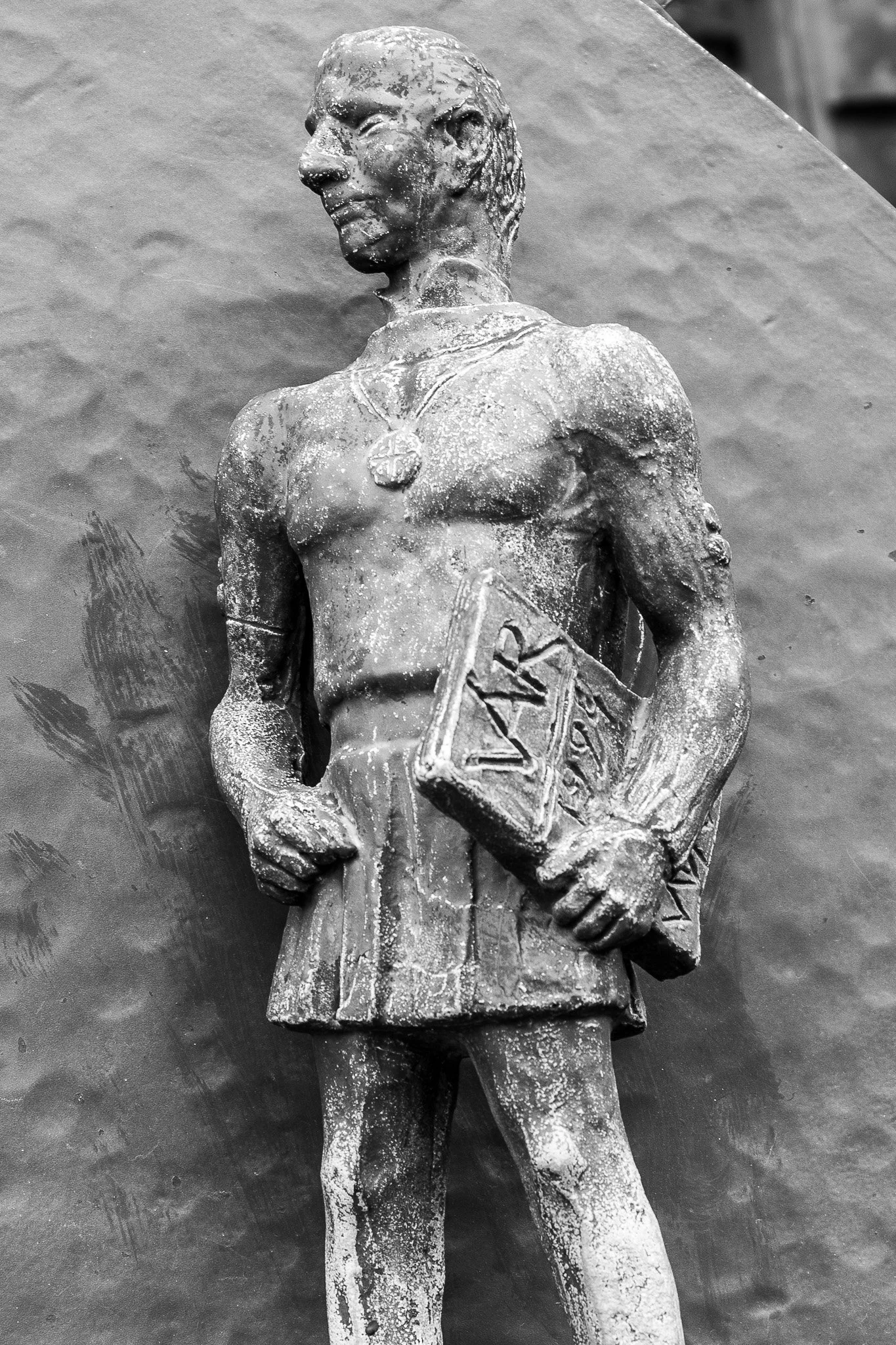
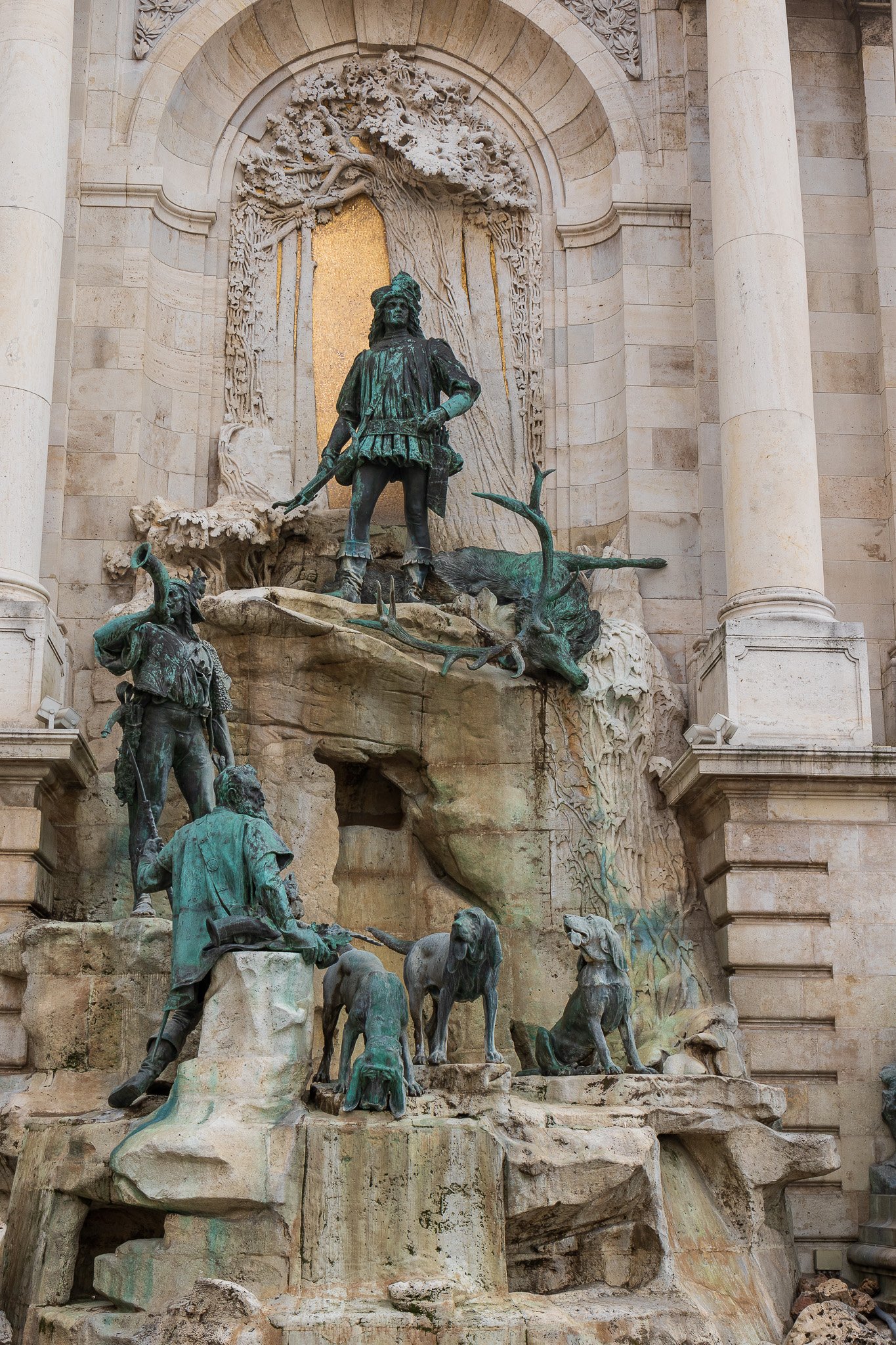
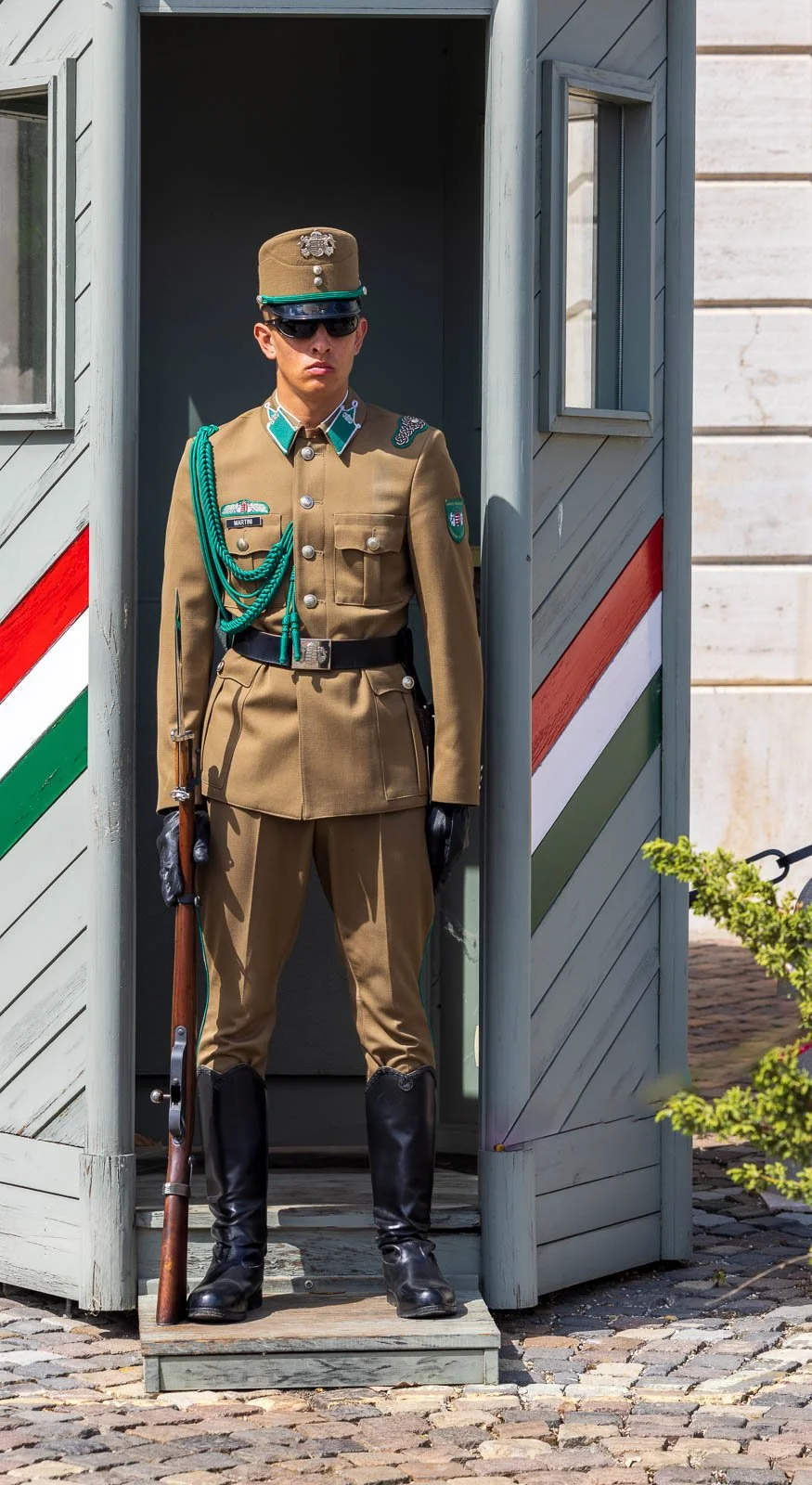
Along the walk from the Buda Castle to the Fishermen’s Bastion I found this classic American car.

On the Road to the Castle
Fisherman’s Bastion
Fisherman's Bastion is one of Budapest's most photographed locations, and it earns that reputation. The neo-Romanesque complex sits on Castle Hill above the Danube with seven towers representing the seven Magyar chieftains who founded Hungary. The intricate stonework, the arched arcades, and the direct sightlines across the river to the Parliament make it one of the most compositionally rich locations in the city.
The bastion faces east, which means sunrise comes directly onto the stone towers. The warm gold of the first light on the white stone, before the crowds arrive, is genuinely one of the best photography opportunities in Budapest.
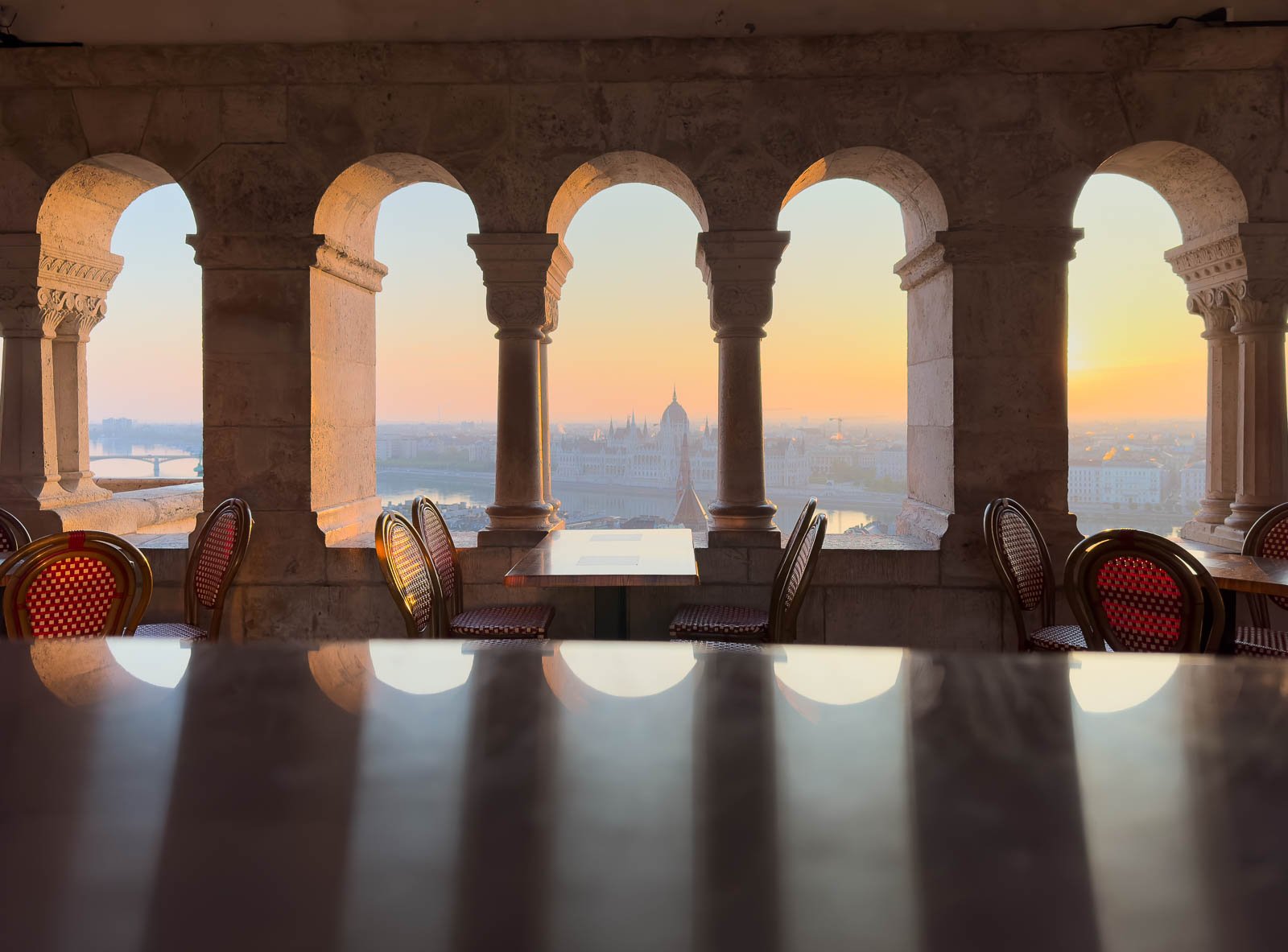
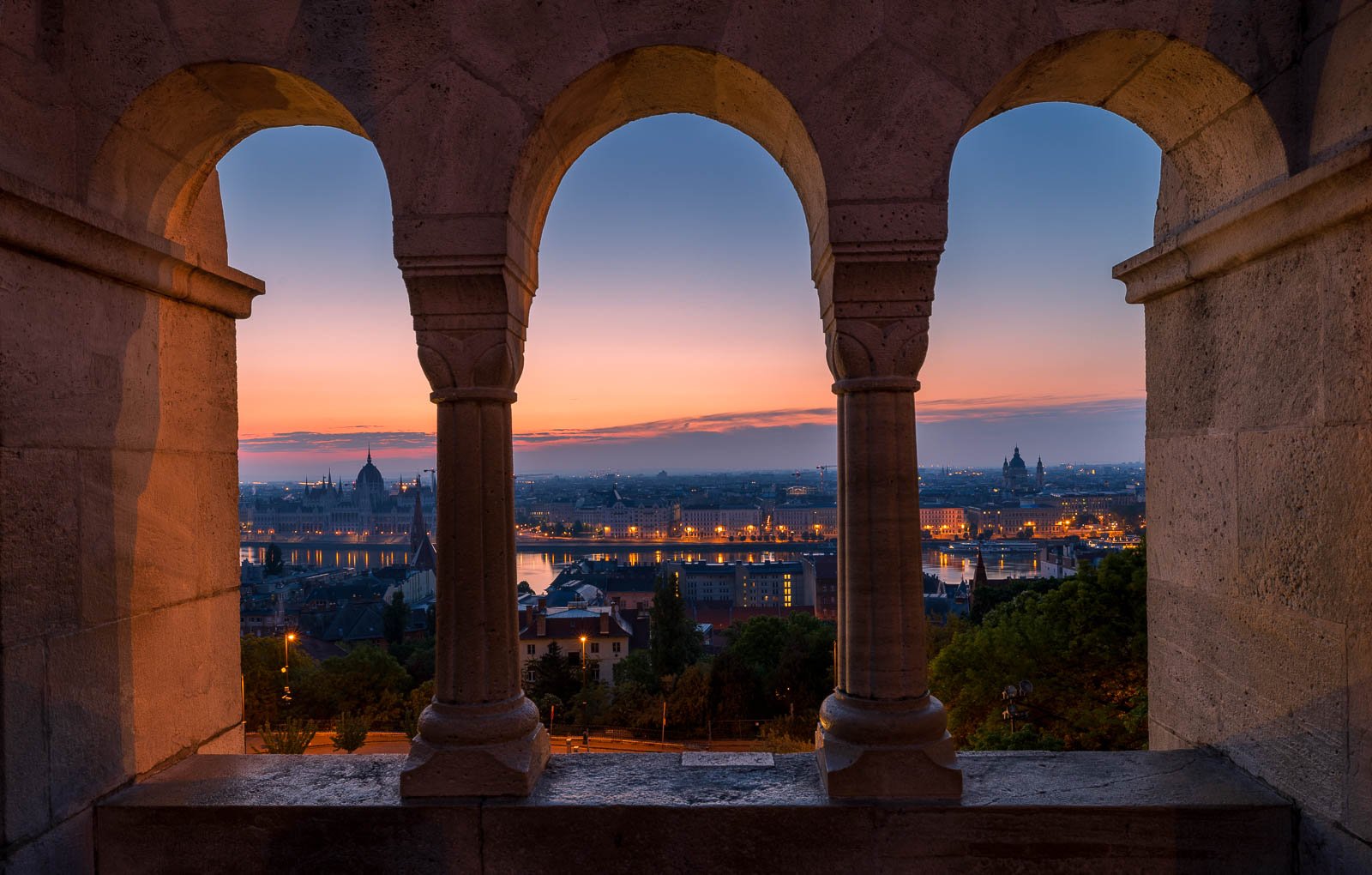
📷 Pro Tip: Arrive thirty to forty-five minutes before sunrise. The first light comes directly onto the stone towers and turns them warm gold. Use the arches to frame compositions toward the Parliament across the river: a 70-200mm from inside the arcade creates a compressed, layered shot with the Parliament perfectly framed. A 16-35mm captures the full bastion architecture from the courtyard. I returned to this location twice in April 2024 and the sunrise light here is as good as anywhere in the city. Entry to the upper terraces requires a small fee; the lower terraces are free. Arrive before the ticket booths open for the best unobstructed shots.
Best time: Sunrise. Access: Lower terraces free; upper terraces paid. Transit: Funicular from Clark Ádám Square, or walk up from the Chain Bridge (15-20 minutes).
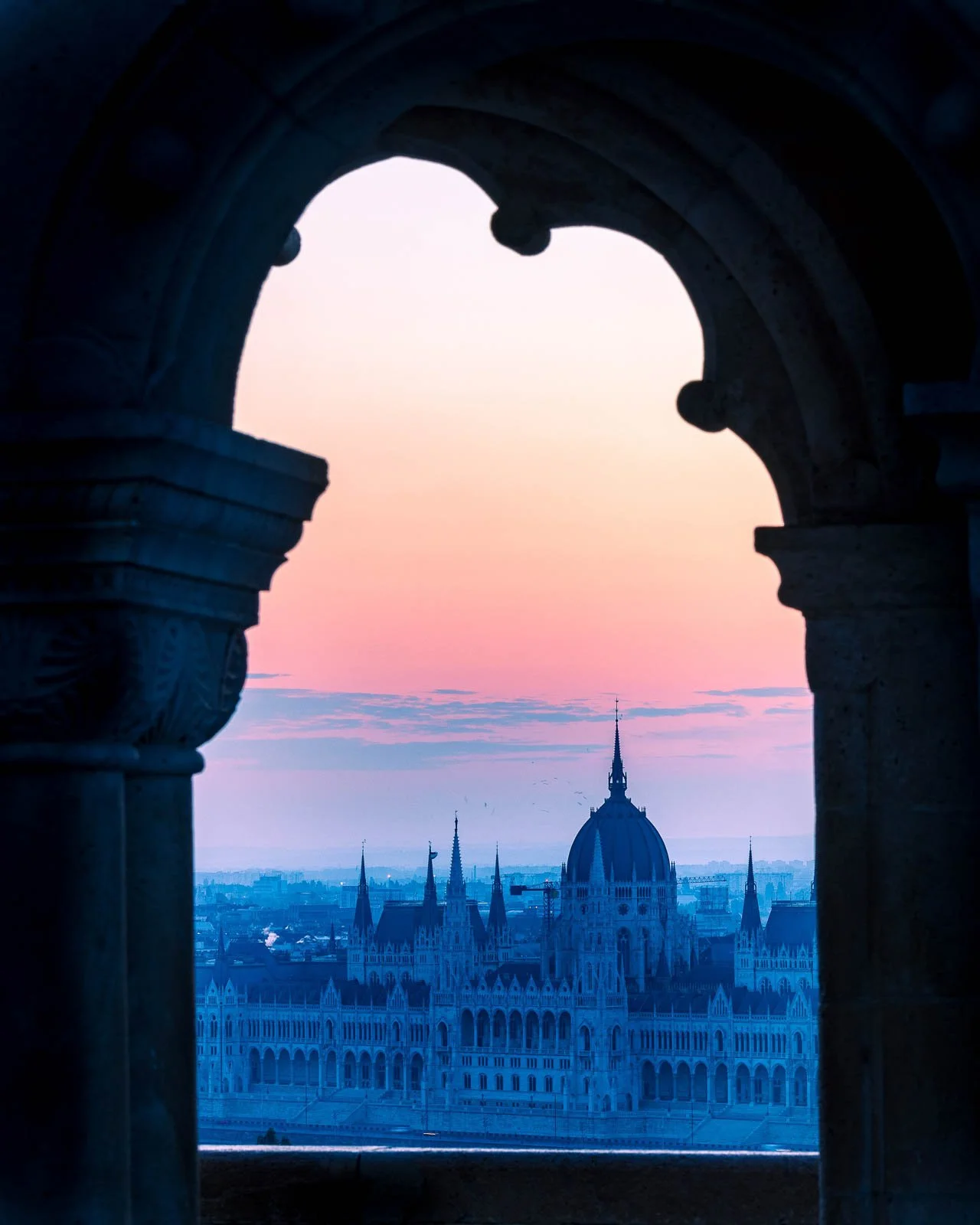
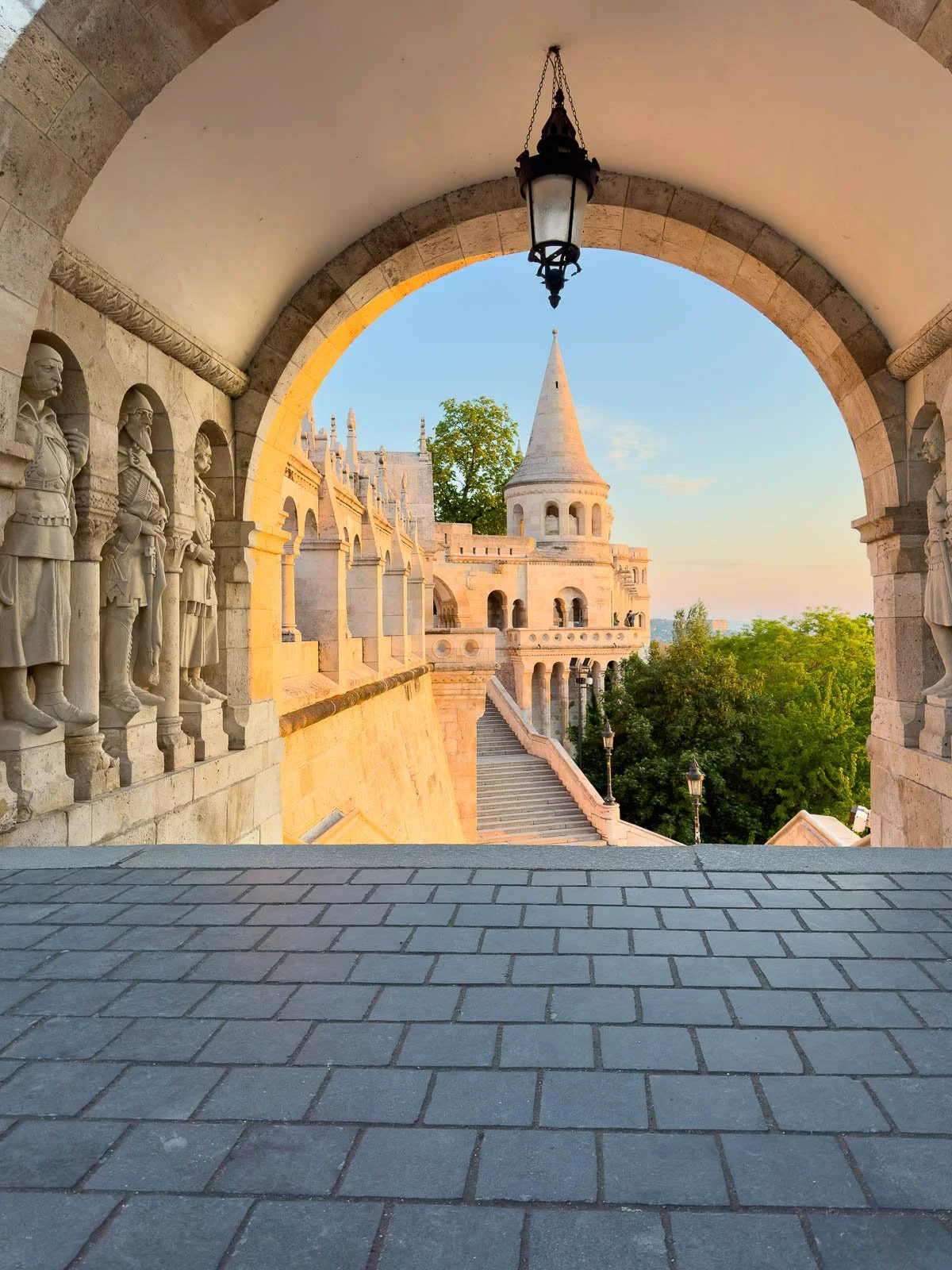
I loved using the arches to frame the shots towards the Parliament.
Matthias Church
Right next to the Fishermans bastion is the Matthias Church. The Matthias Church, also known as the Church of Our Lady, is a beautiful Gothic cathedral in the Castle District.
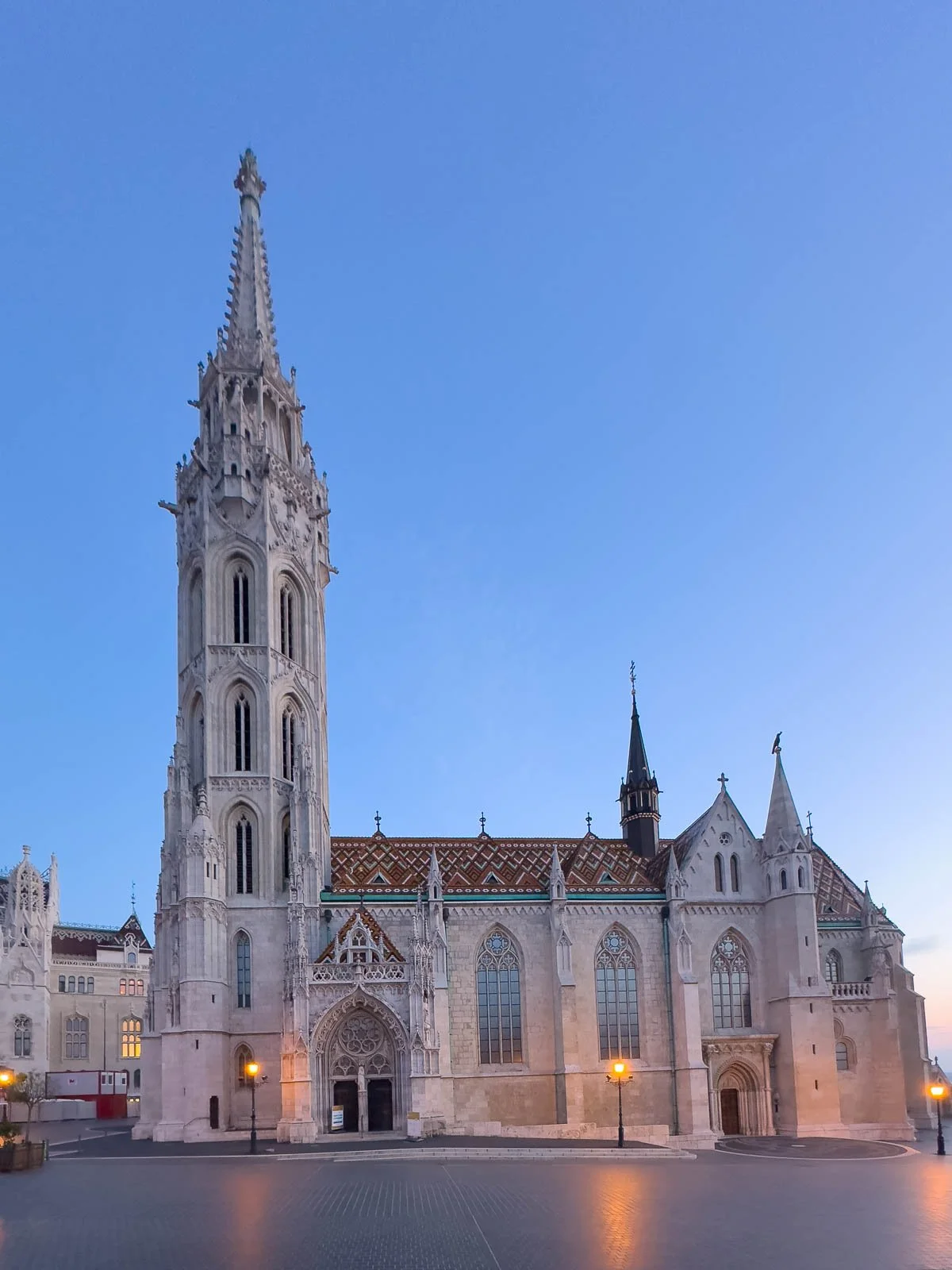
It is named after King Matthias, the first king of Hungary to be crowned in the church.
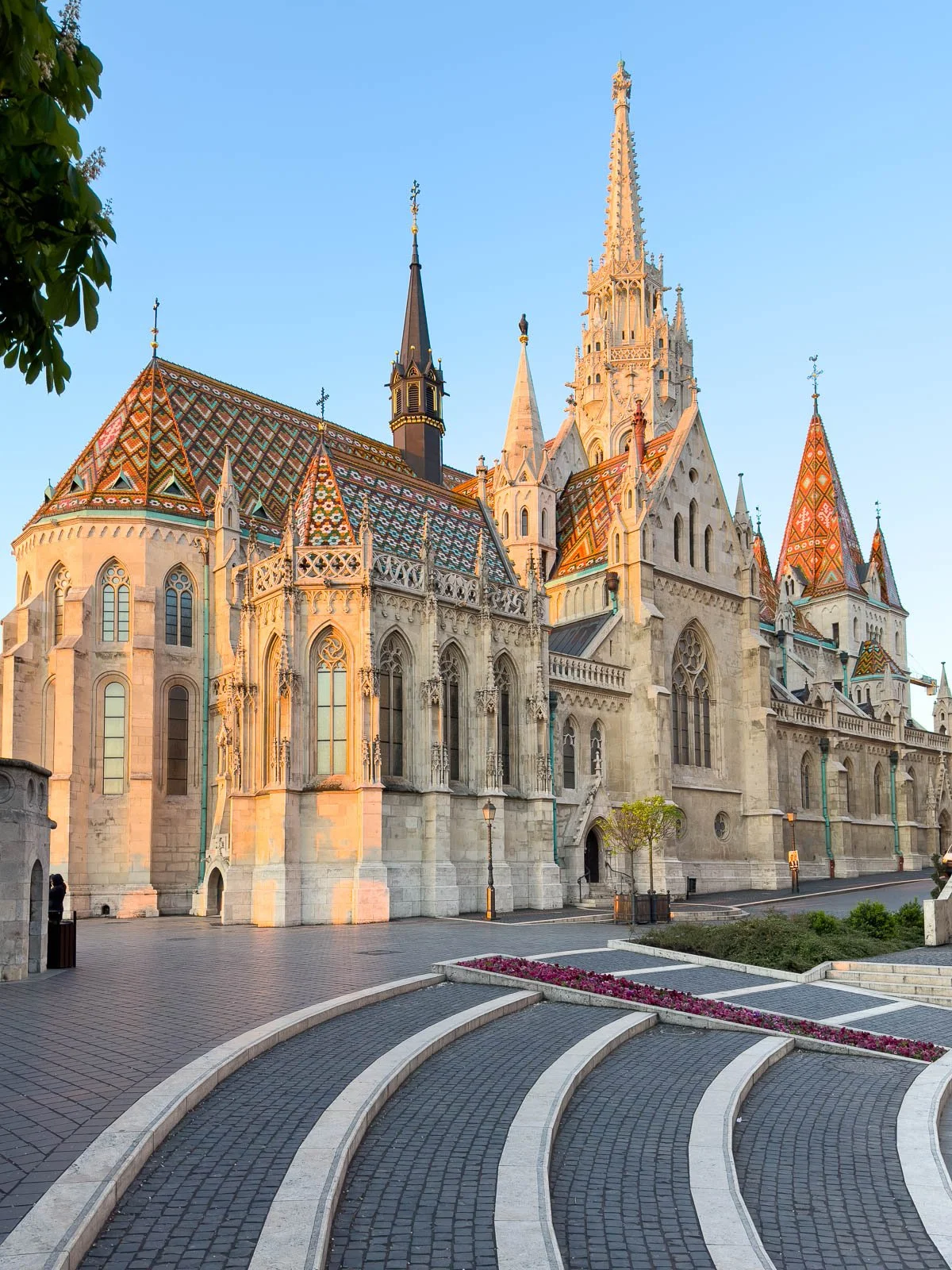
The church was originally built in the 13th century but has undergone several renovations and additions.
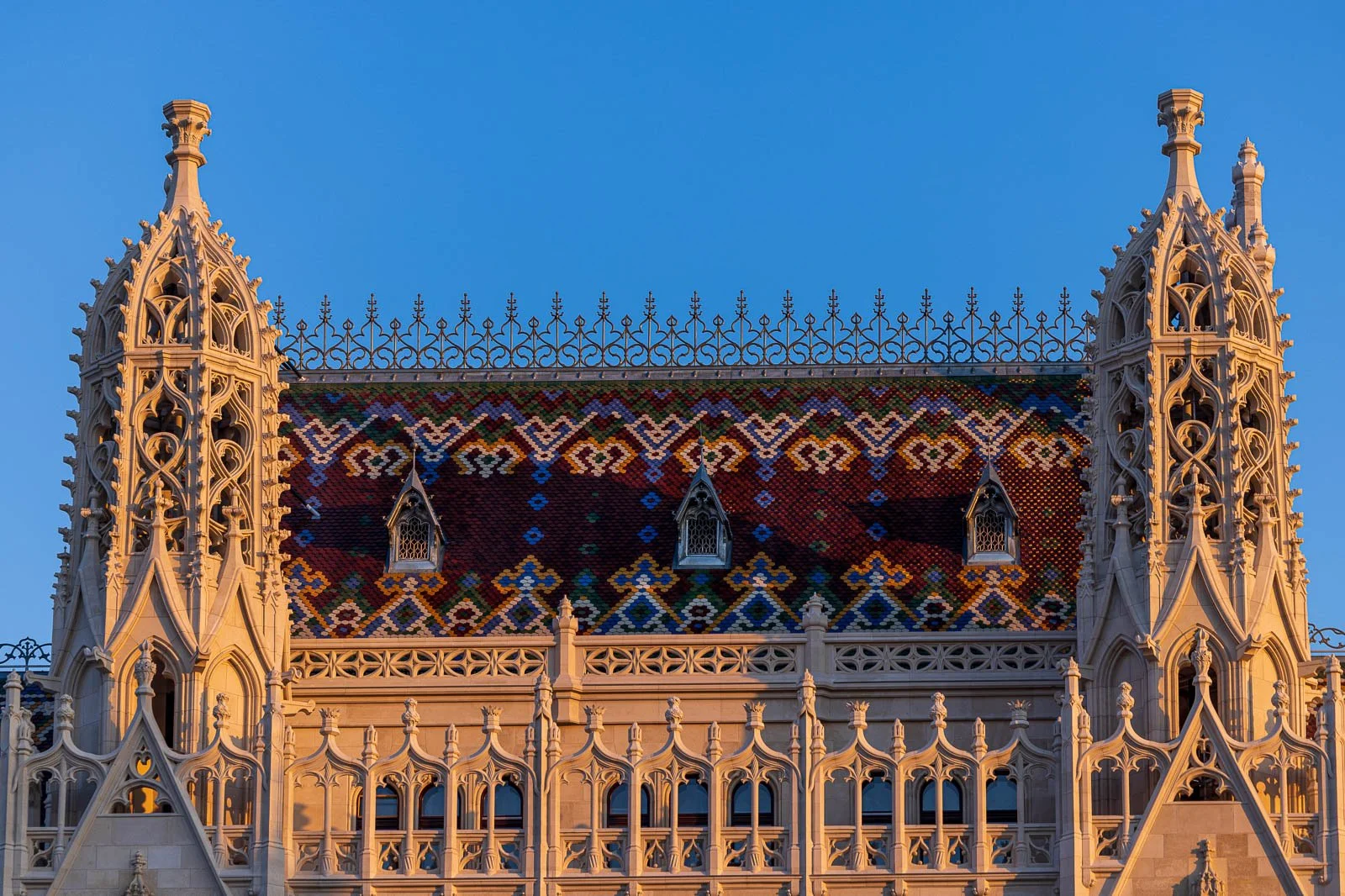
It is the highest spot in the city with outstanding views.
The Hungarian Parliament
The Hungarian Parliament Building is the most important photography subject in Budapest and one of the finest architectural subjects in Europe. It is the largest parliament building on the continent and one of the oldest legislative buildings in the world. Completed in 1904, it is a prime example of Gothic Revival architecture at a scale that you genuinely have to stand in front of to understand.
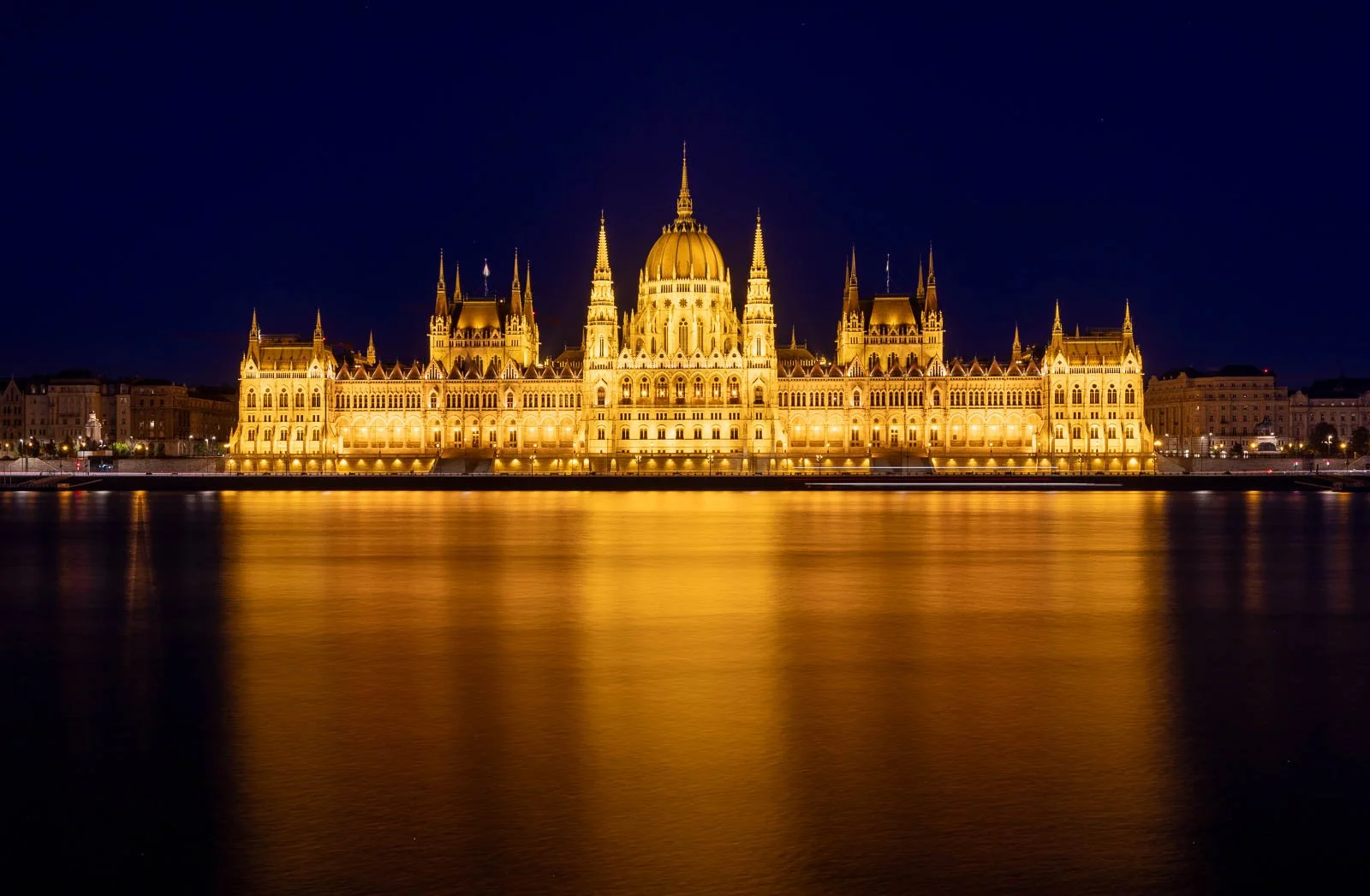
During Blue Hour after Sunset
This is both a sunrise and a blue hour location. The building faces west, so sunrise comes from behind it when you shoot from the Buda side, creating silhouettes and backlit reflections across the Danube. Blue hour from the same position, thirty minutes after sunset, gives you the fully illuminated Parliament reflected in the water with the deep blue sky above.
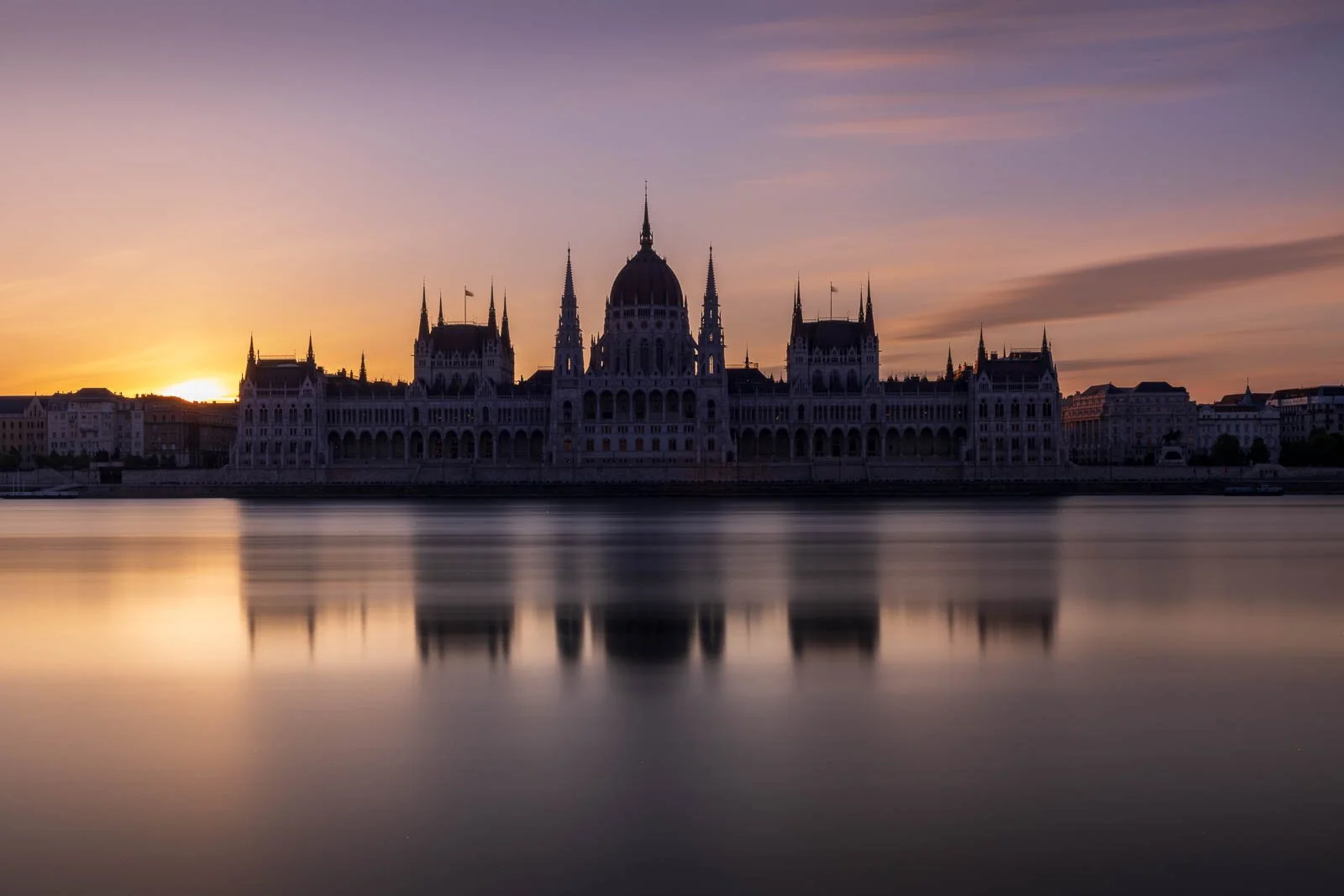
Sunrise
📷 Pro Tip: For sunrise, position yourself on the Buda side of the Chain Bridge or the Buda embankment looking northeast. The Parliament dome turns warm pink in the first light and the river reflects it if the water is calm. For blue hour, stay on the Buda embankment slightly south of the Chain Bridge and use a 70-200mm to compress the bridge towers against the Parliament dome. Arrive thirty minutes before sunset to set up and secure a position before other photographers arrive. A tripod is essential for the long exposures at blue hour. The Margaret Bridge slightly to the north provides an alternative angle that includes both the Parliament and river traffic.
Best time: Sunrise and blue hour after sunset. Access: Free (exterior). Interior tours require advance booking. Transit:Tram 2 along the Pest riverbank stops near Kossuth Square.
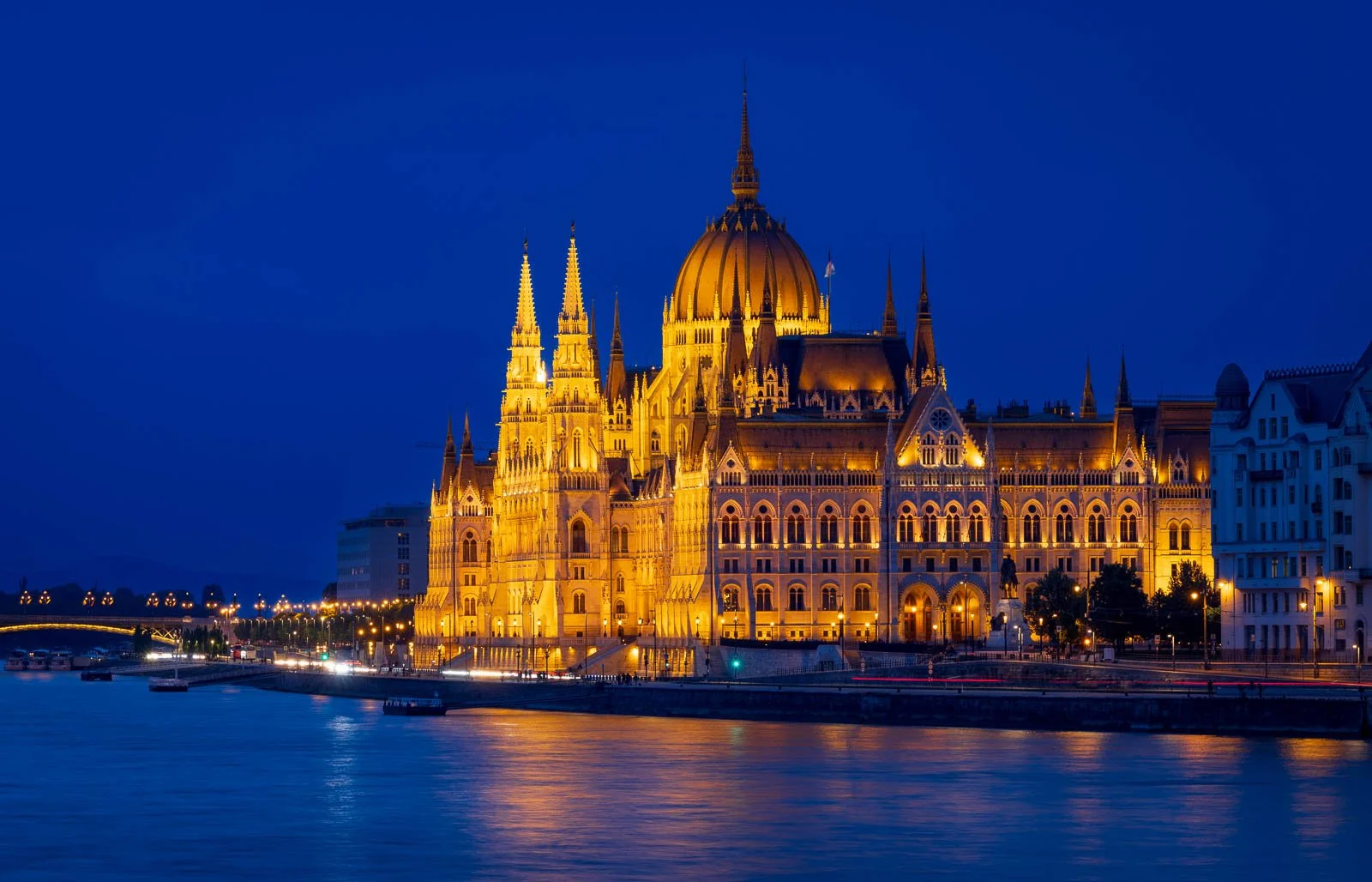
Blue Hour after Sunset
Gellert Hill
Gellért Hill is my favorite photography spot in Budapest. Once you visit, you will understand why immediately. Located on the Buda side, the hill rises directly above the Liberty Bridge and offers panoramic views of both the Danube and downtown Budapest that are unmatched from any other position in the city.
The view from the Citadella at the top encompasses the entire Danube, both the Liberty Bridge and the Chain Bridge, the Parliament to the north, and the Pest skyline facing you. At sunset, the light comes from the west and illuminates the full Pest side. At night, with both bridges lit and the Parliament glowing, the view is extraordinary.
📷 Pro Tip: Come for sunset. The light arrives from the west and illuminates the Pest side directly in front of you. A 70-200mm pulls the Parliament and bridges into a compressed panoramic composition; a 16-35mm captures the full sweep of the city from one side to the other. The Liberty Bridge directly below Gellért Hill is the finest single bridge composition in the city, particularly at night when the green ironwork is fully illuminated. For a wide panoramic shot that includes both bridges and the Parliament, position yourself at the Citadella parapet. The walk up takes about twenty to twenty-five minutes from the Liberty Bridge.
Best time: Sunset and into blue hour. Access: Free. Transit: Walk from the Pest side over Liberty Bridge and up the hill, or take a Bolt to the Citadella.
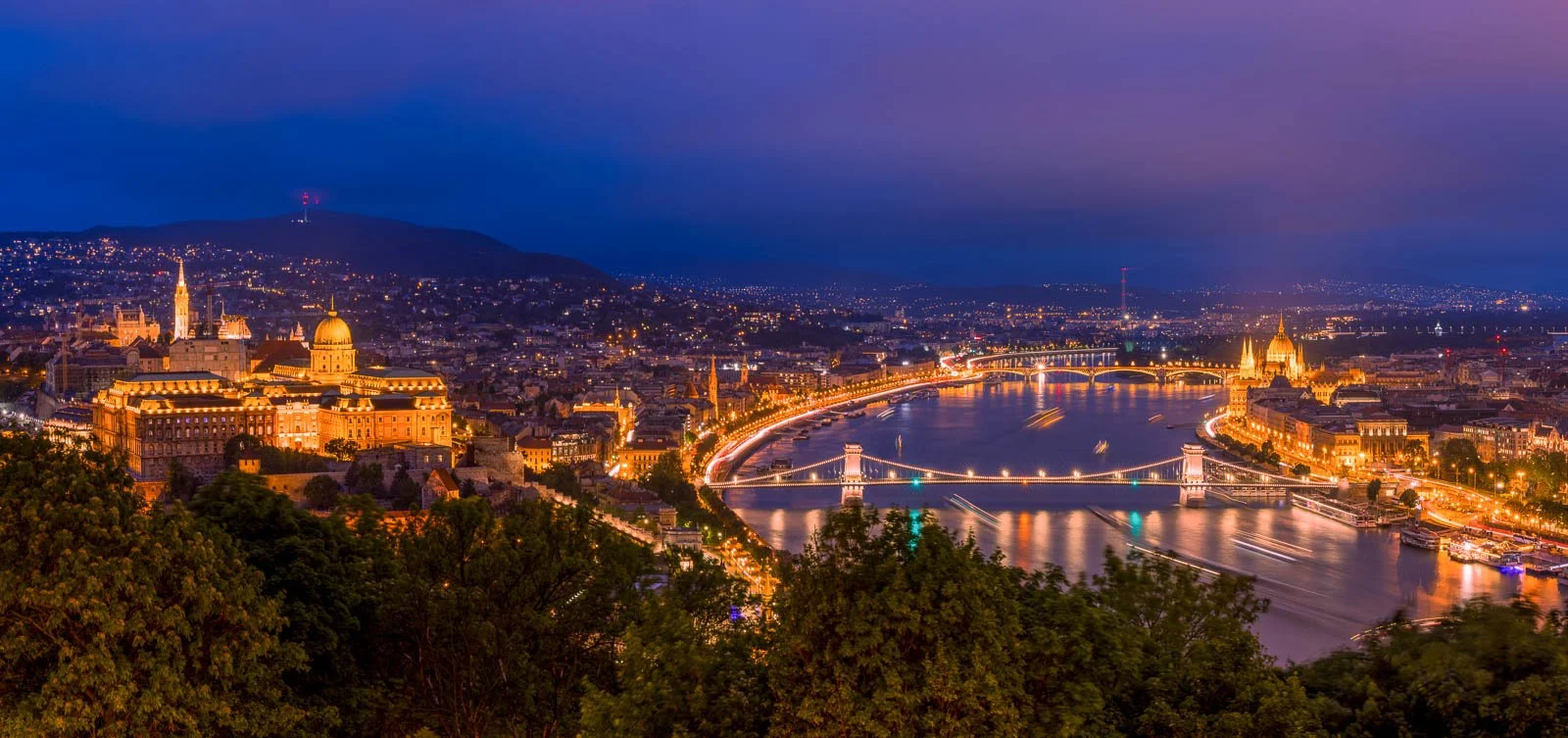
Gellért Hill is home to several important landmarks, including the Citadella, a 19th-century fortress atop the hill, and the Liberty Statue, a monument erected to honor the Soviet liberation of Hungary during World War II.
The Opera House
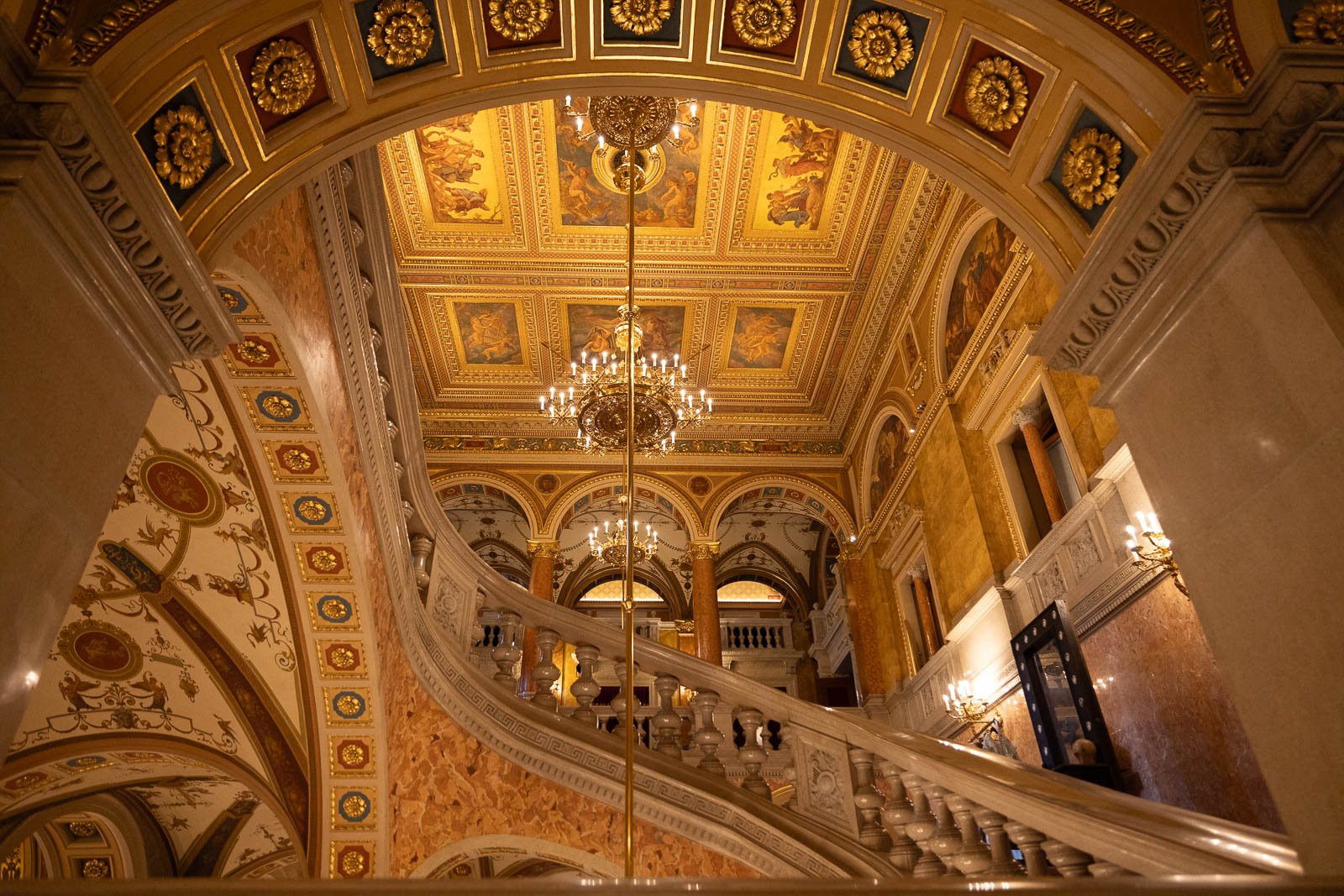
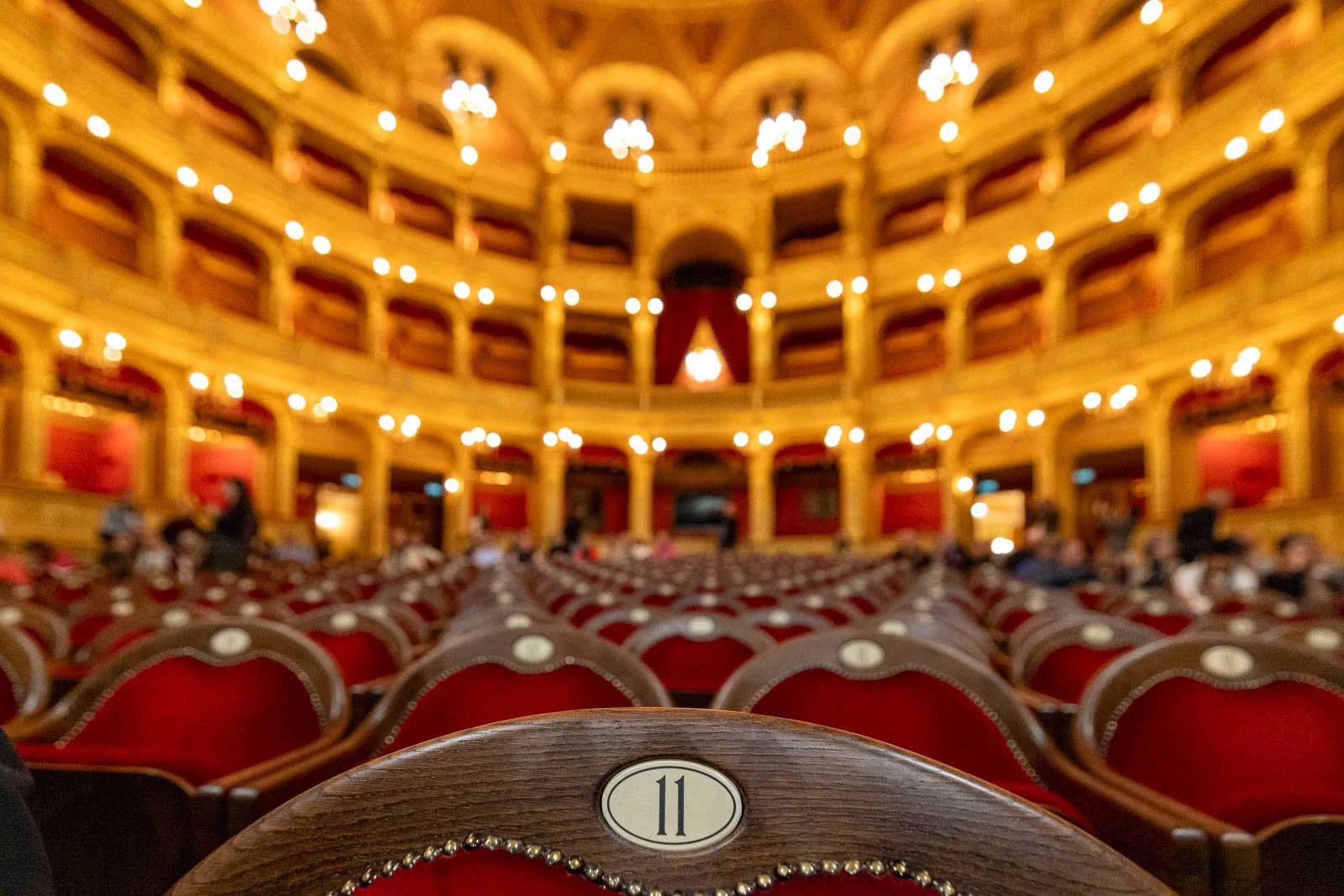
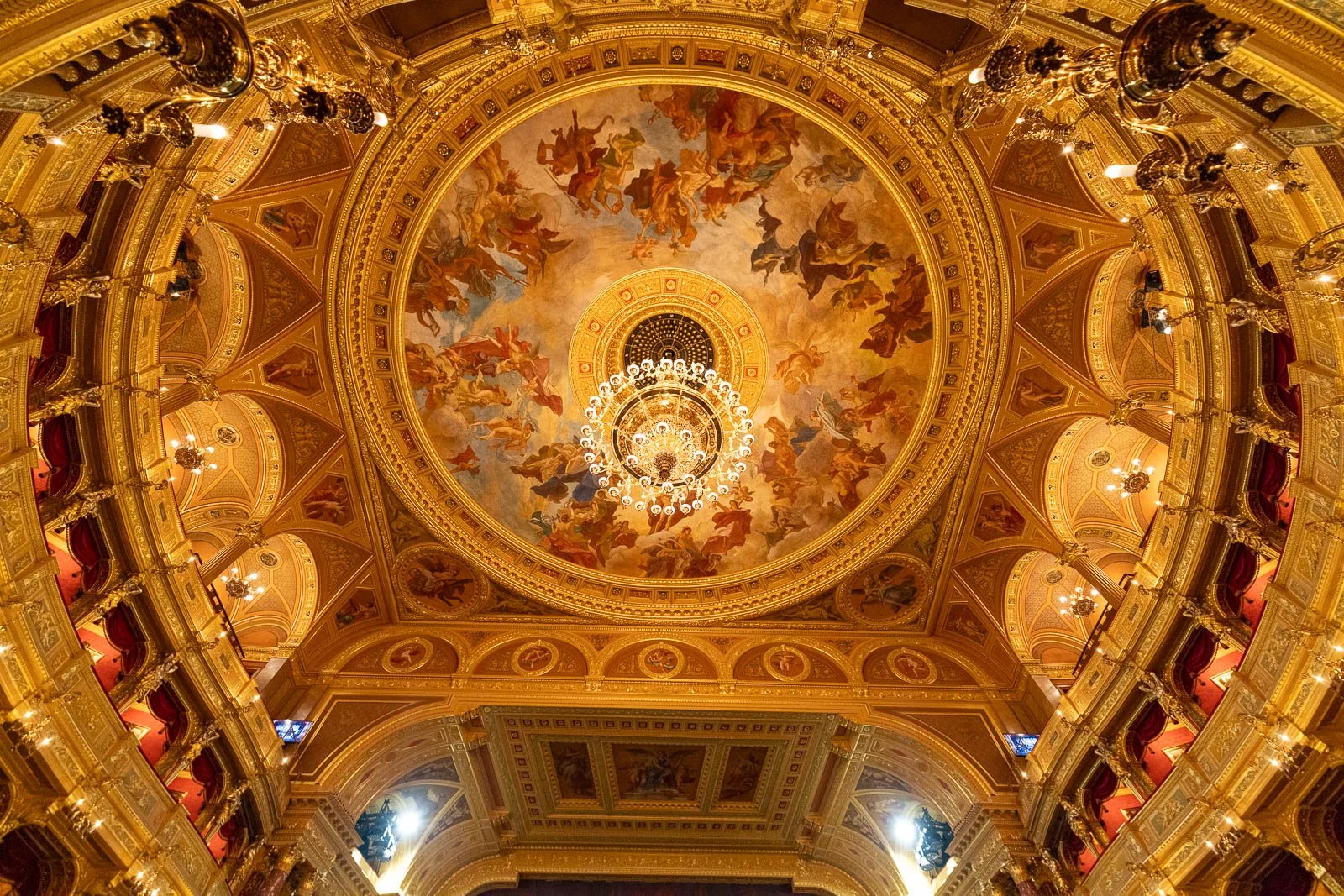
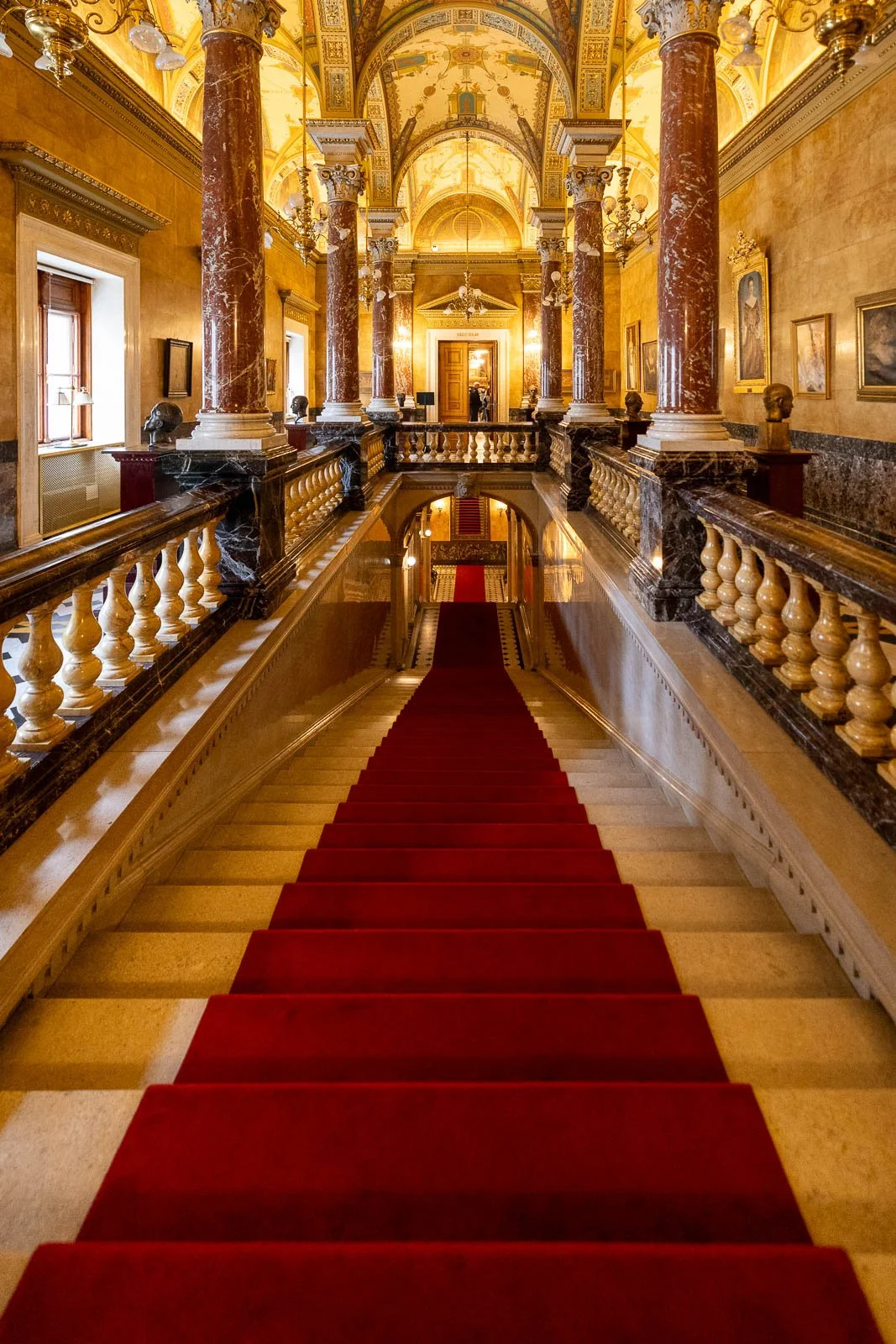
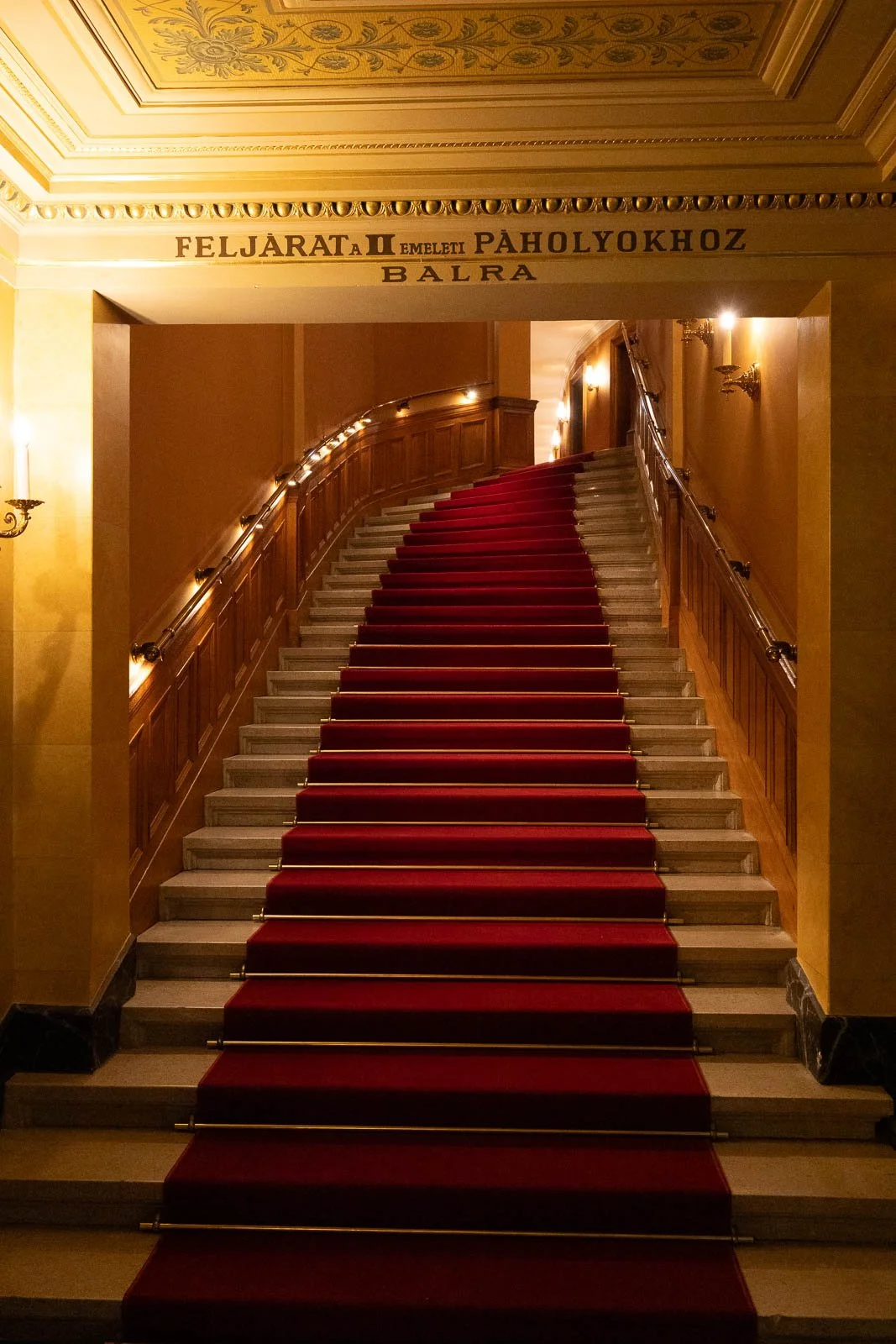
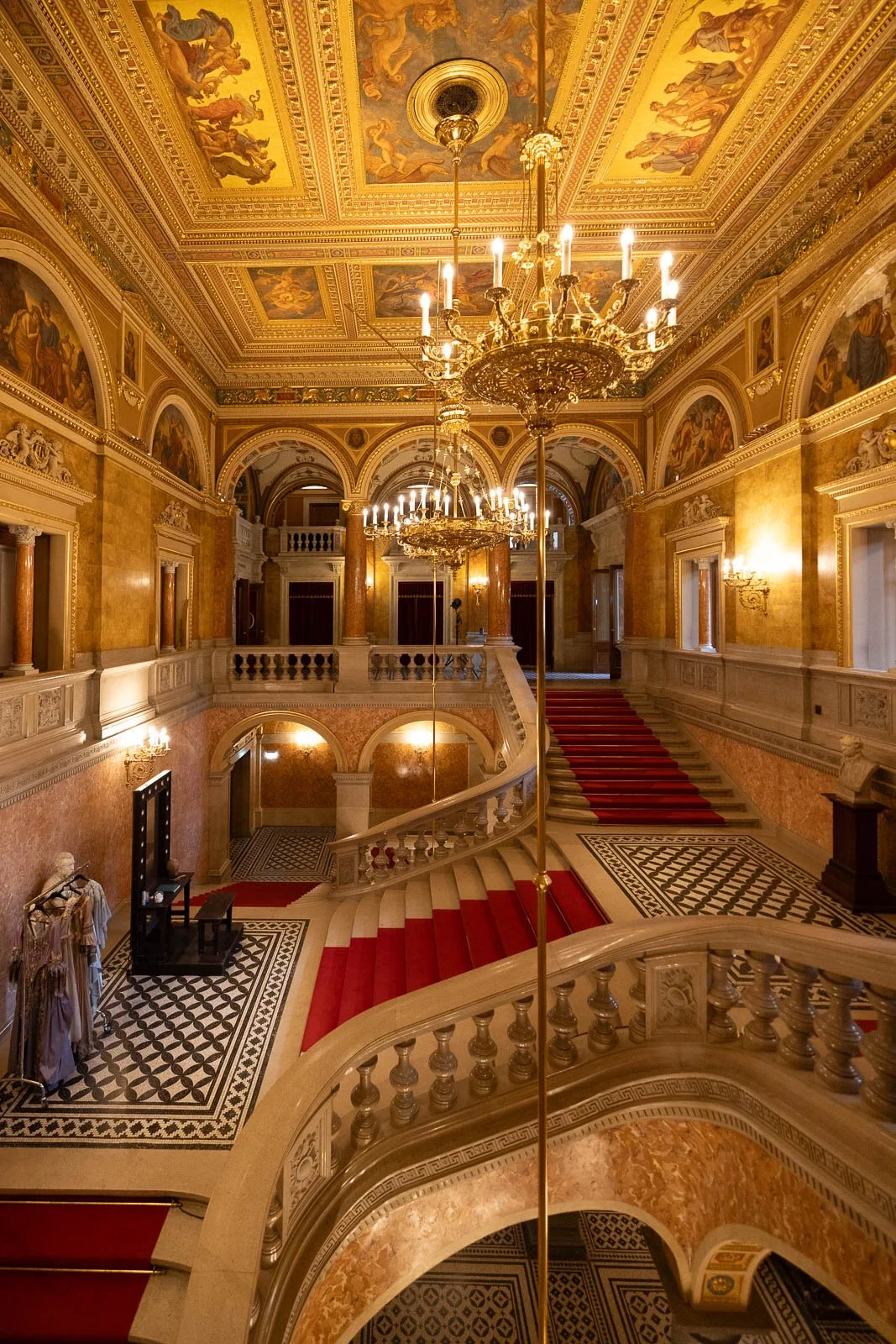
The State Opera House, completed in 1884 in the neo-Renaissance style and modeled after the Vienna Opera House, is home to both the State Opera and the State Ballet. The exterior is photographically strong from Andrássy Avenue; the interior is extraordinary. There are so many details to photograph inside the Opera House that a single visit is not enough.
📷 Pro Tip: Book a guided tour of the interior, which gives you access to the main auditorium, the grand staircase, the royal box, and the painted ceilings. A 16-35mm lens handles the full staircase and ceiling compositions; a 24-70mm lens works well for the decorative details. The auditorium is best photographed from the balcony level, looking down at the stage with a wide-angle lens. The exterior on Andrássy Avenue photographs well at dusk when the building is lit, and the avenue provides a strong leading line toward it. A 70-200mm from the far end of the avenue compresses the facade beautifully.
Best time: Guided tour for interior; dusk for exterior. Access: Paid guided tours; check the official website for current schedules. Transit: Metro M1 to Opera.
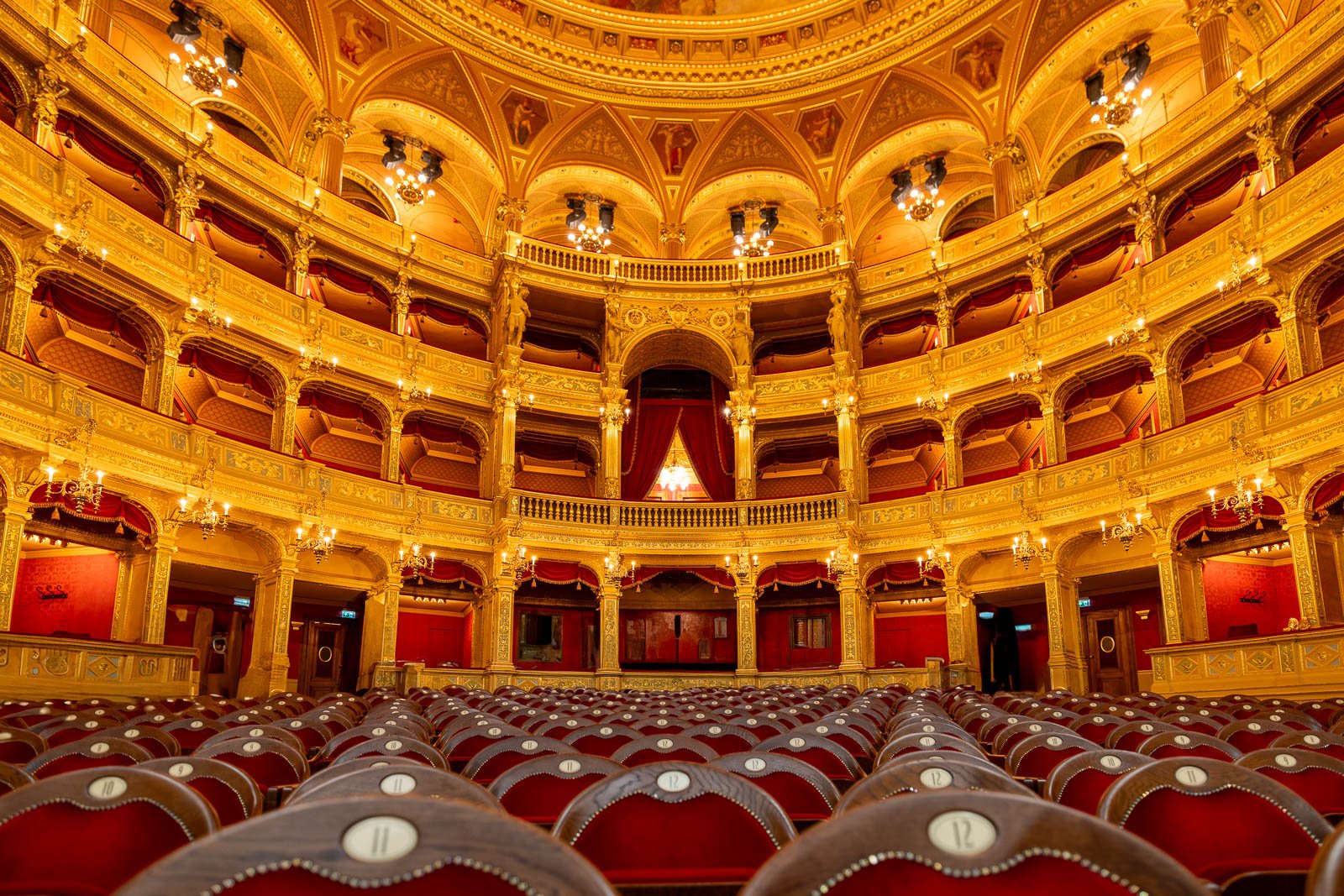
There are so many details to photograph inside the Opera House.
Photographing a Professional Model
We were lucky enough to photograph a model named Ági Koltai. Scott always includes a model shoot in every workshop.
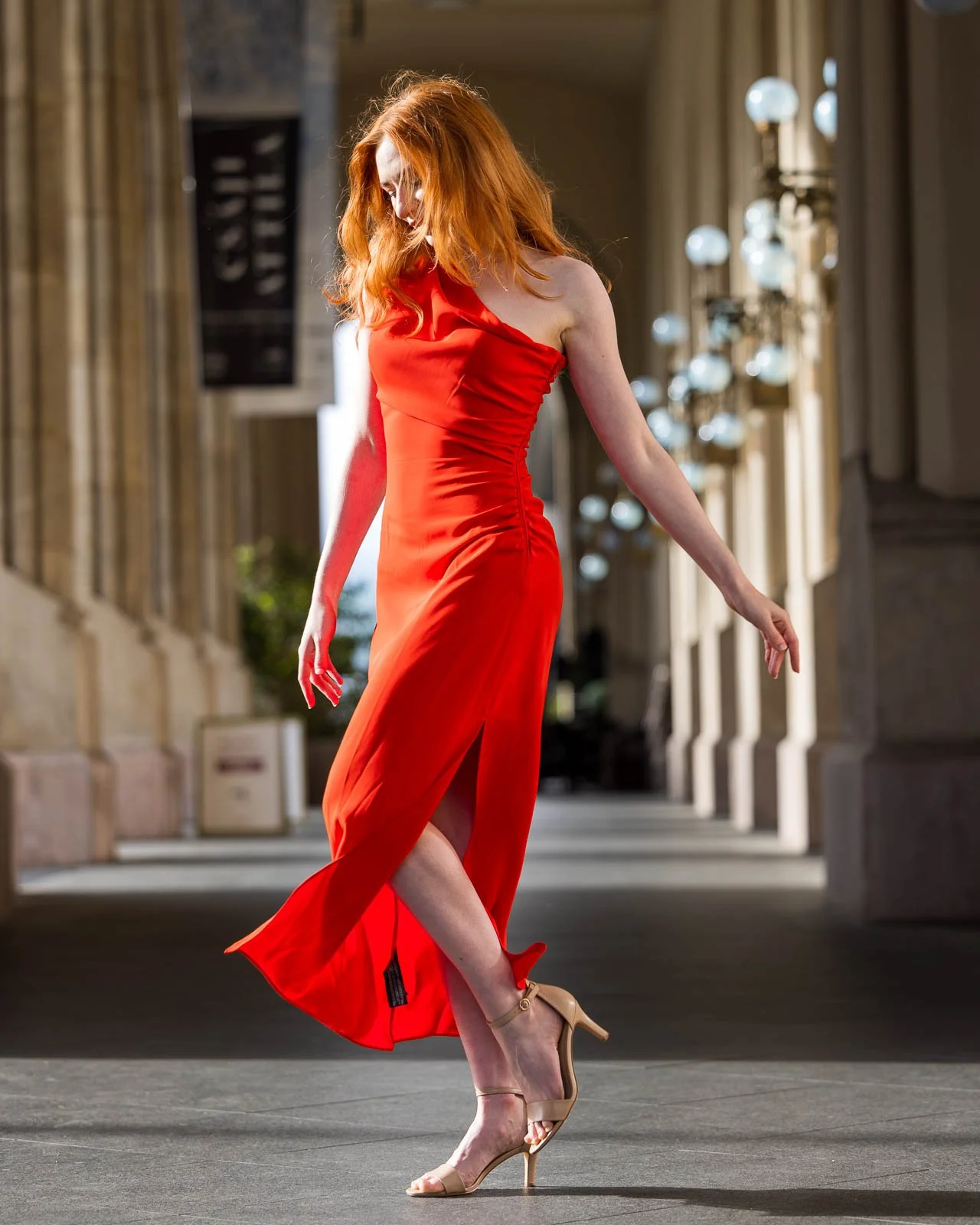
She is stunning and was so much fun to photograph.

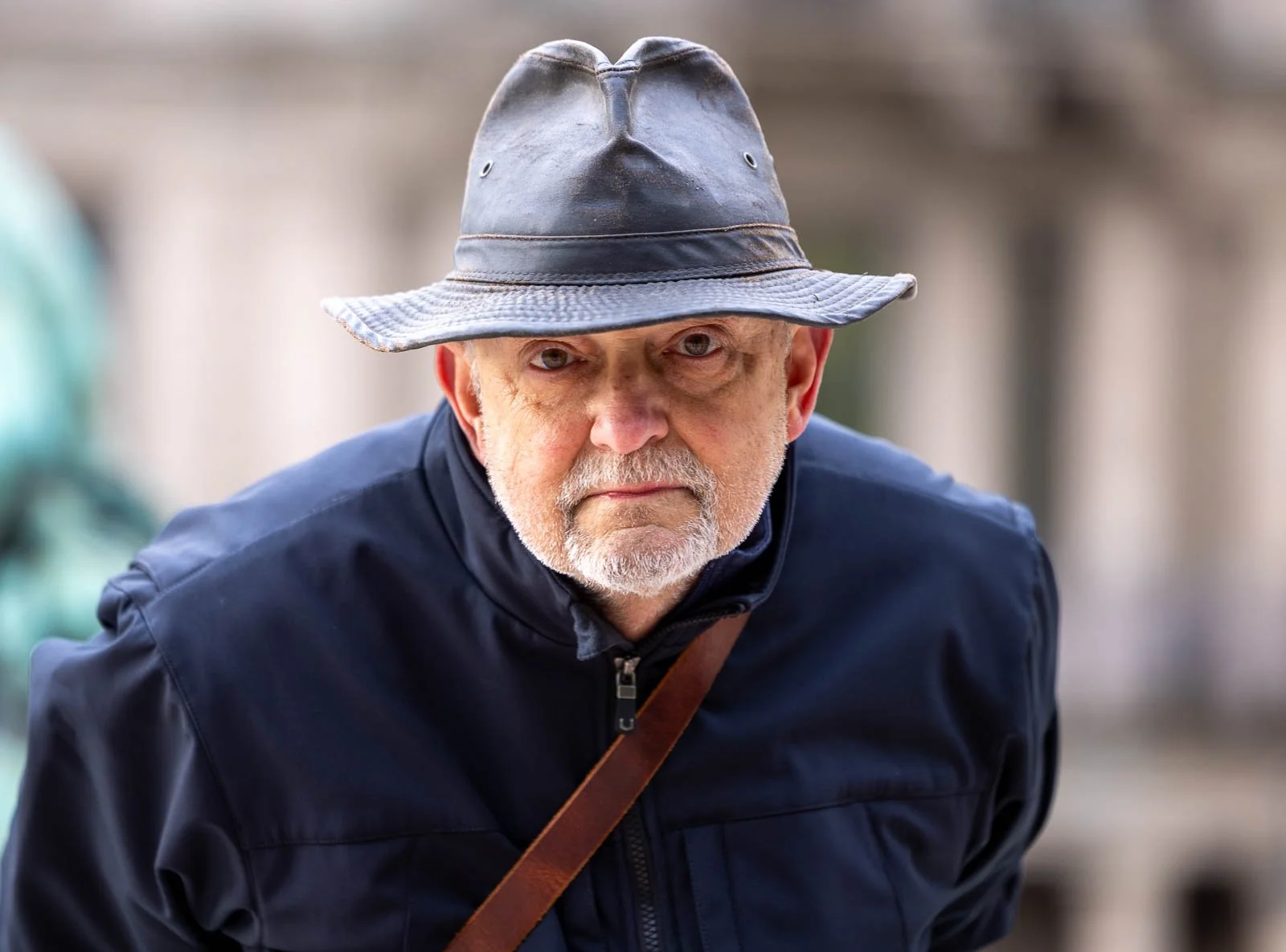
Of course, no workshop is complete without my buddy Willey.
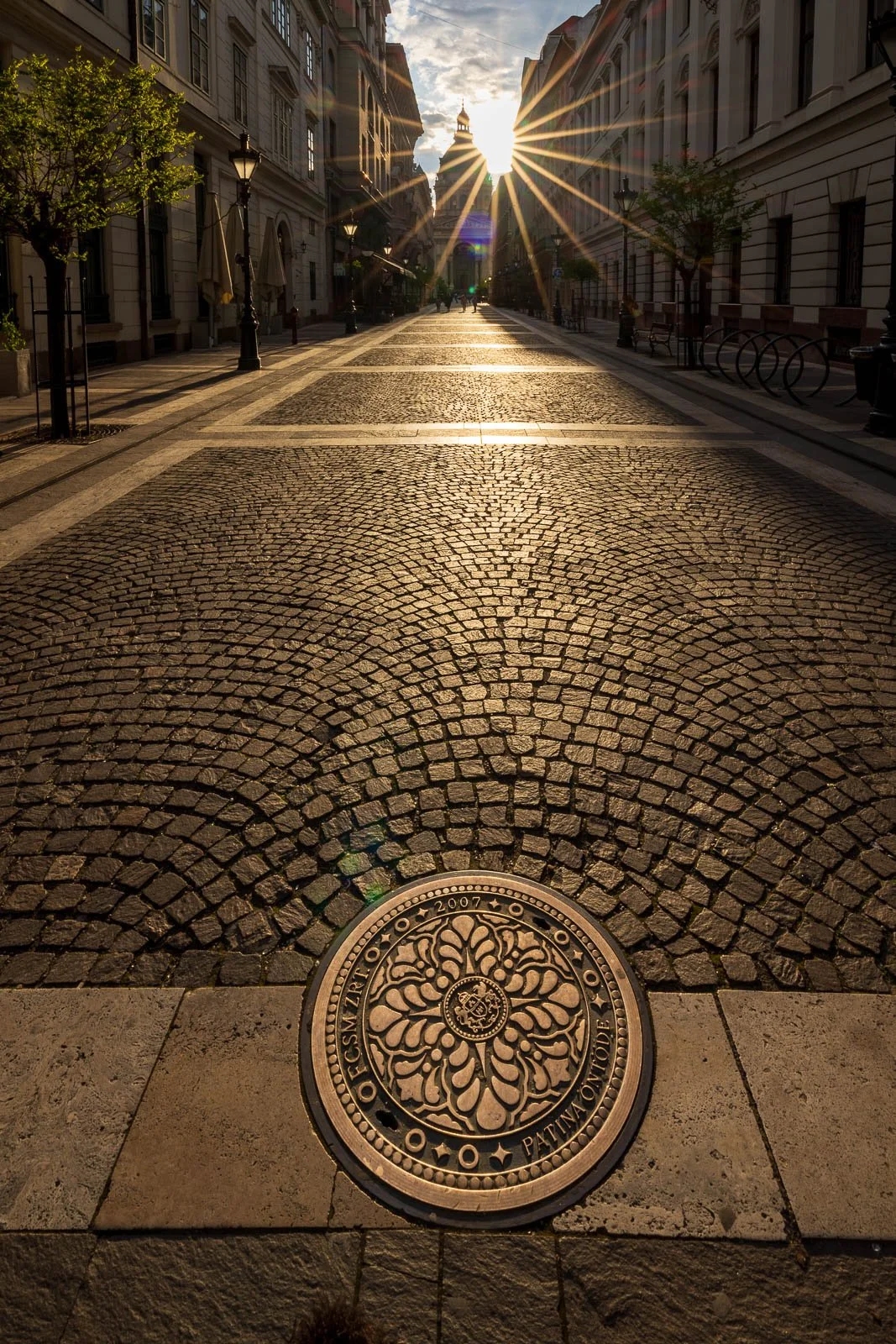
St. Stephen’s Basilica
St. Stephen's Basilica is the largest church in Hungary, completed in 1905, and one of the most architecturally detailed religious buildings in Budapest. Named after St. Stephen, the first king of Hungary, whose mummified right hand is kept here as a holy relic, it is named after one of the country's most significant historical figures. The interior dome, the ornate columns, and the colored stained-glass windows reward close attention with a wide-angle lens.
📷 Pro Tip: For the interior, use a 16-35mm and position yourself at the center of the nave looking straight up at the dome for the strongest geometric composition. The light inside is warm and consistent; shoot in the morning when the east-facing windows allow natural light to supplement the interior lighting. For the exterior, Vörösmarty Square and the surrounding streets provide clear views of the facade. Late afternoon light hits the front of the basilica from the west. The panoramic view from the basilica dome is worth the climb for elevated cityscape photography.
Best time: Morning for interior; late afternoon for exterior. Access: Free entry; small donation requested for dome access. Transit: Metro M1 to Bajcsy-Zsilinszky út, or walk from the Chain Bridge area (15 minutes).
The inside of church is beautiful. I loved the ceiling.
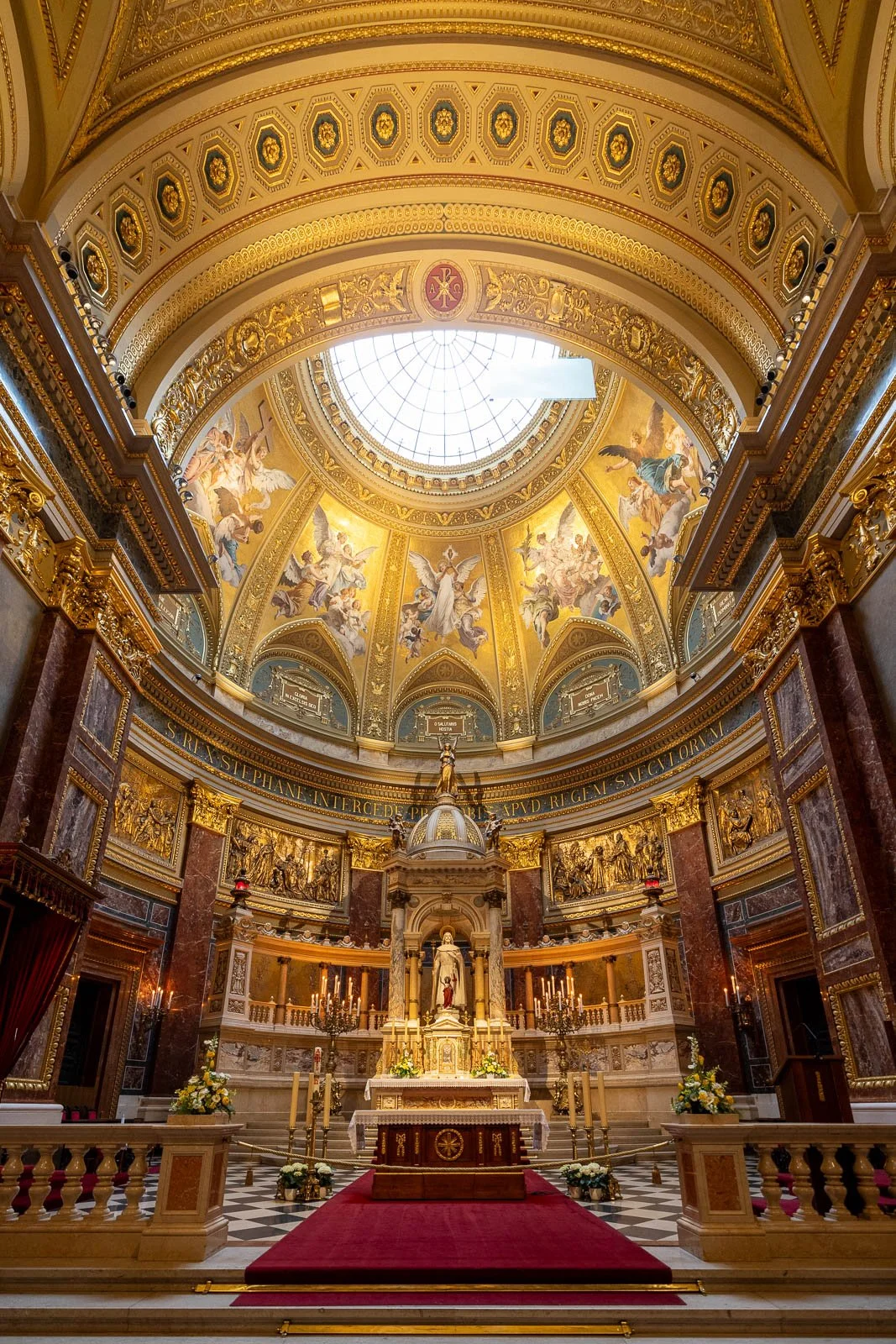
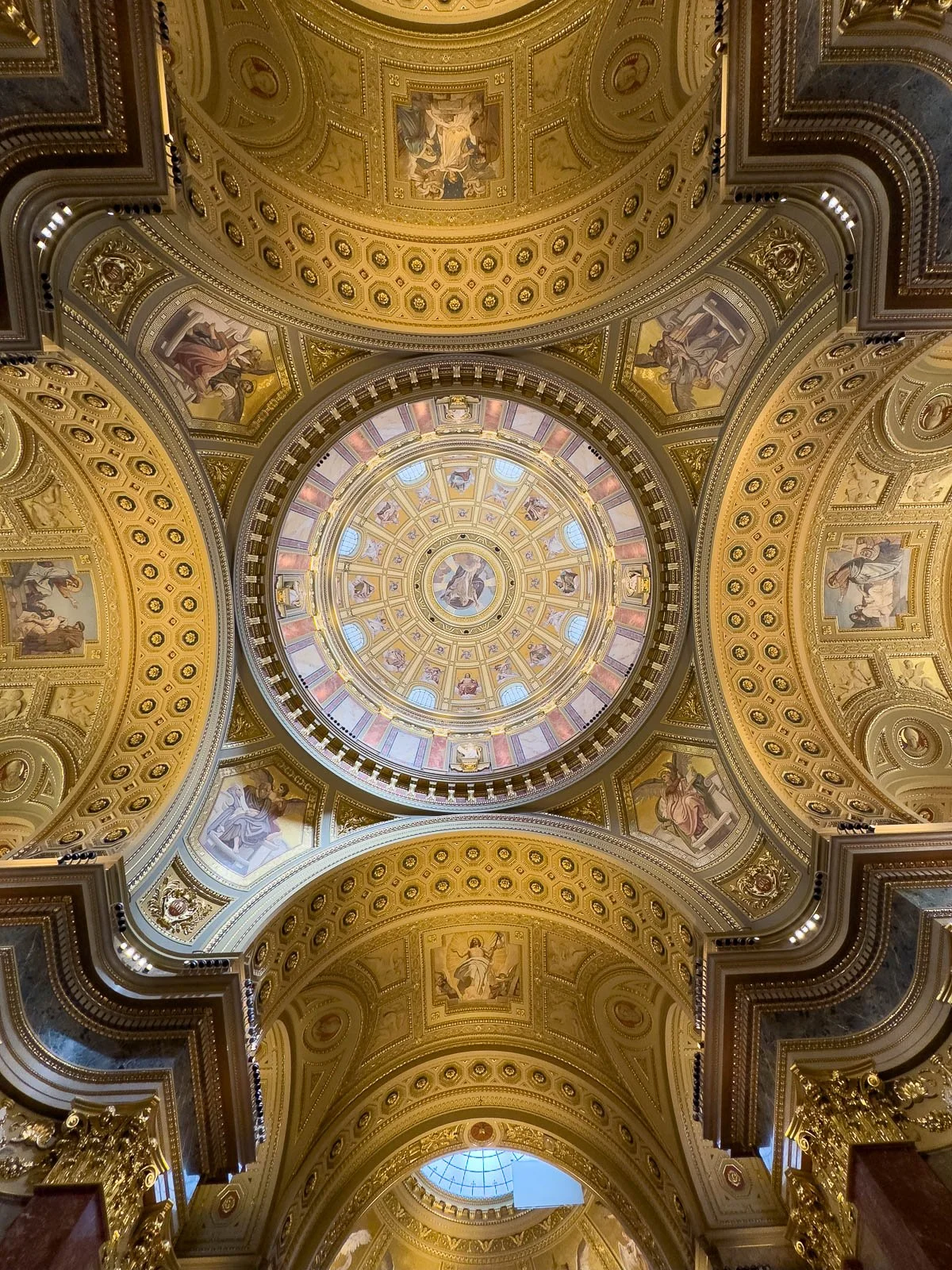
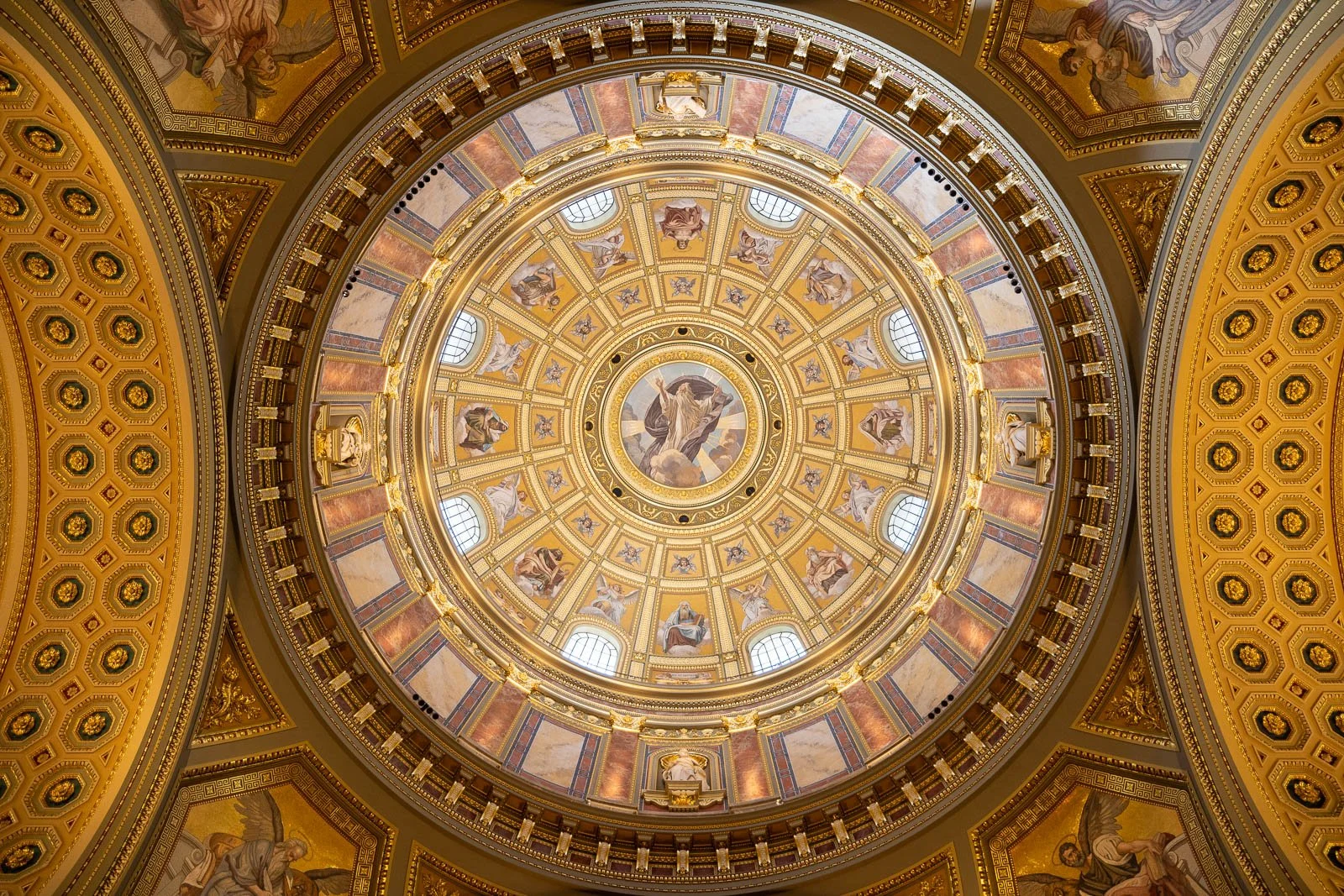
The basilica, completed in 1905, is known for its stunning architecture, including its grand dome, ornate columns, and colorful stained-glass windows.
The Central Market
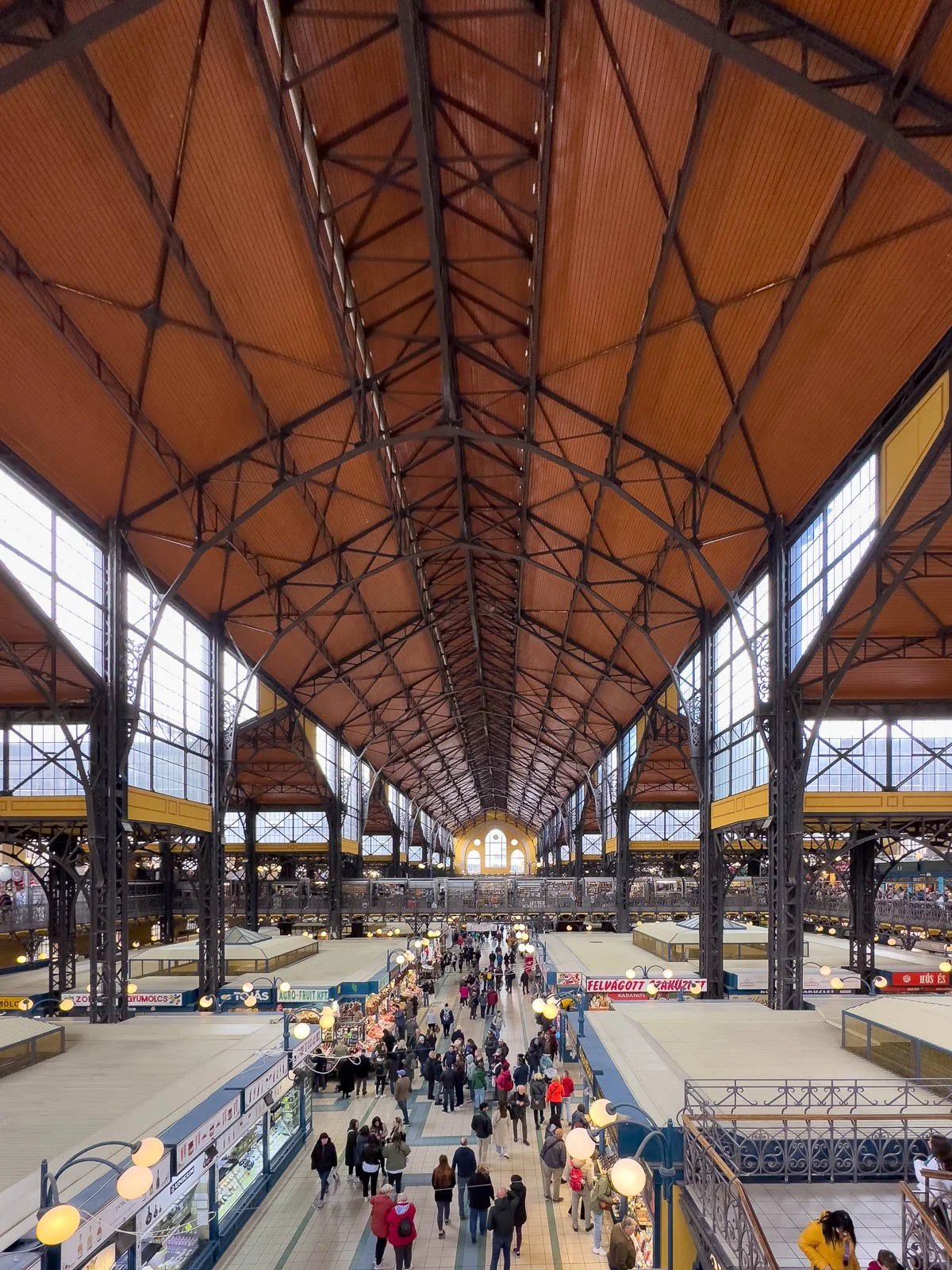
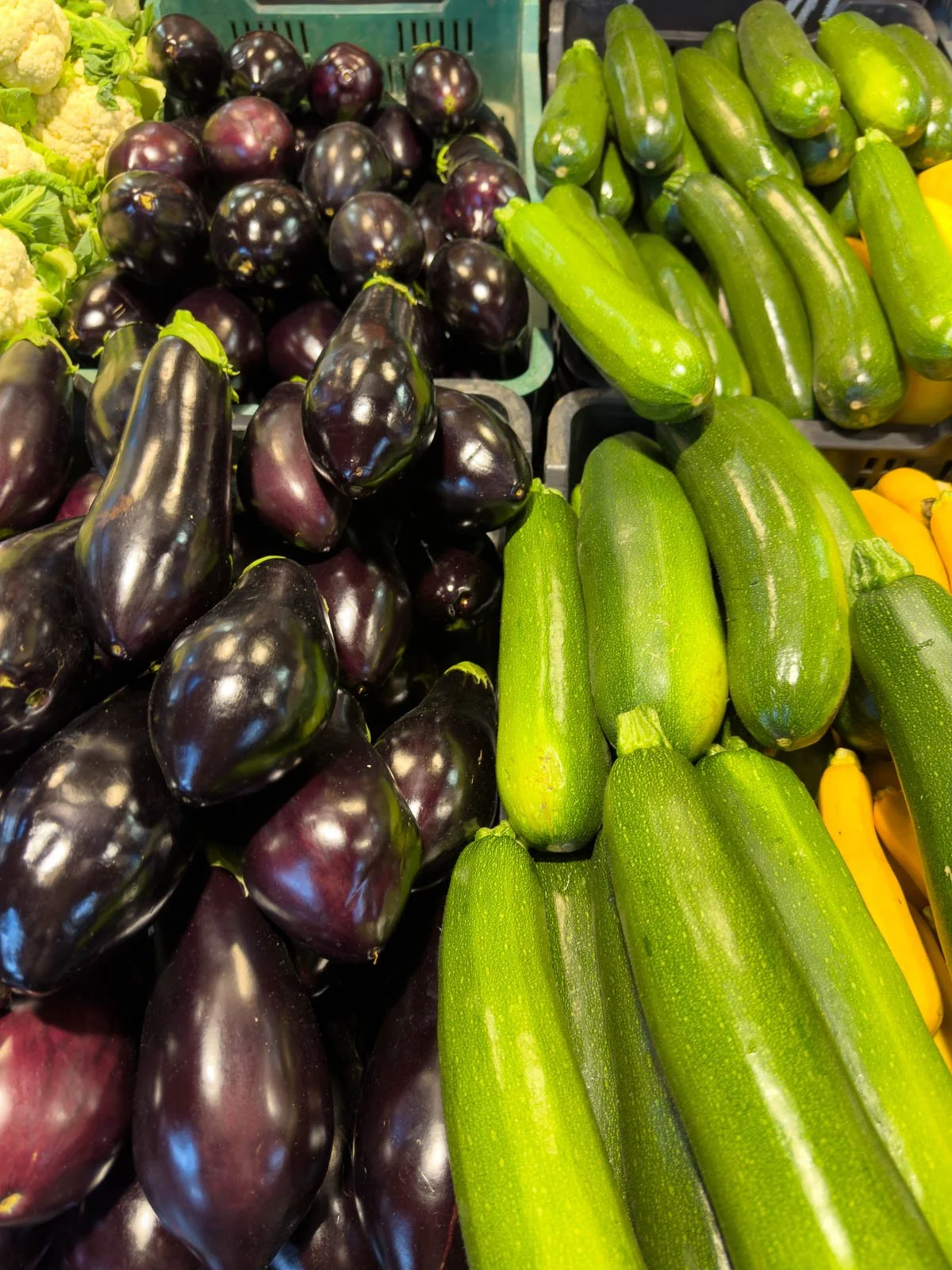
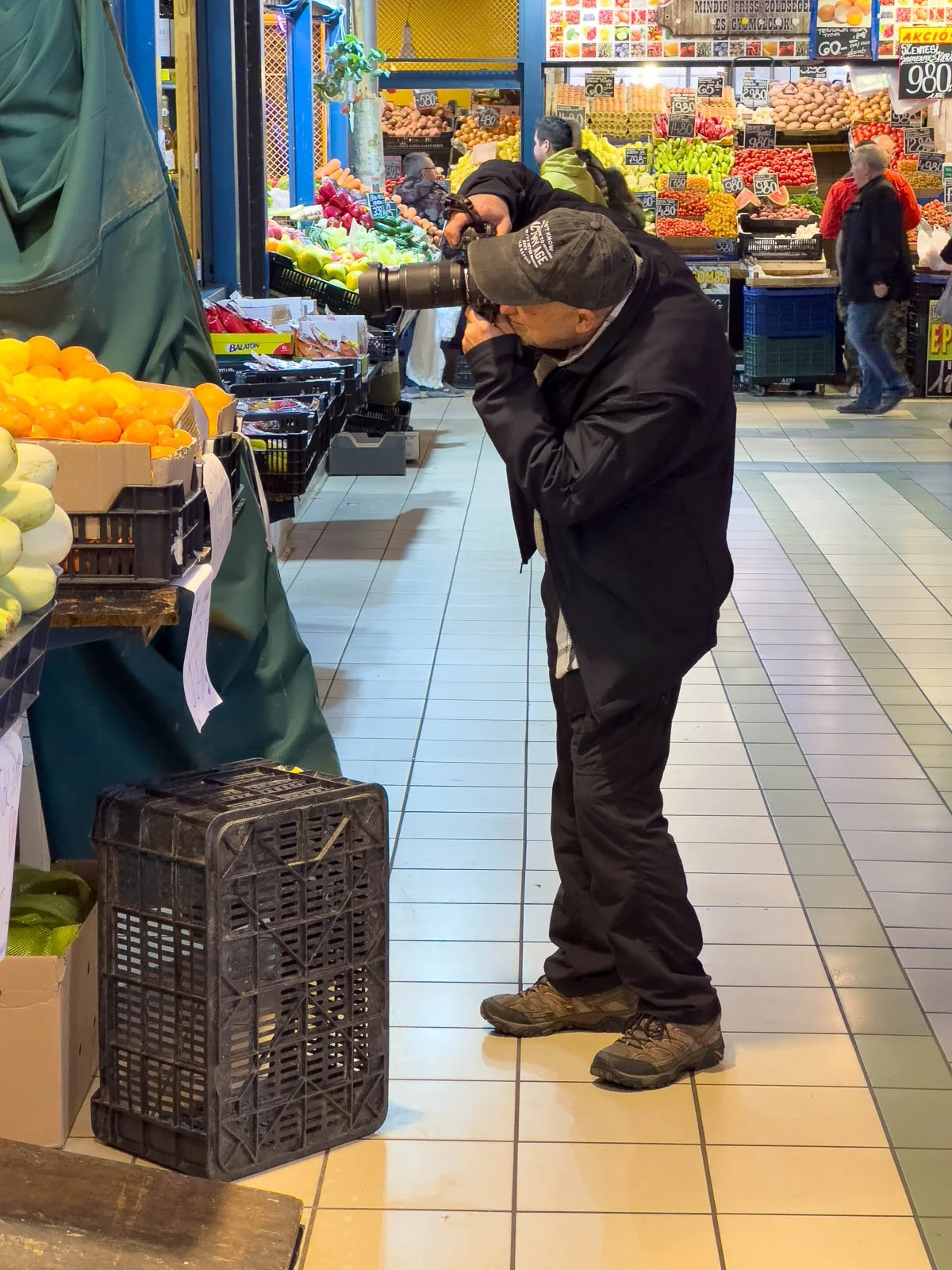
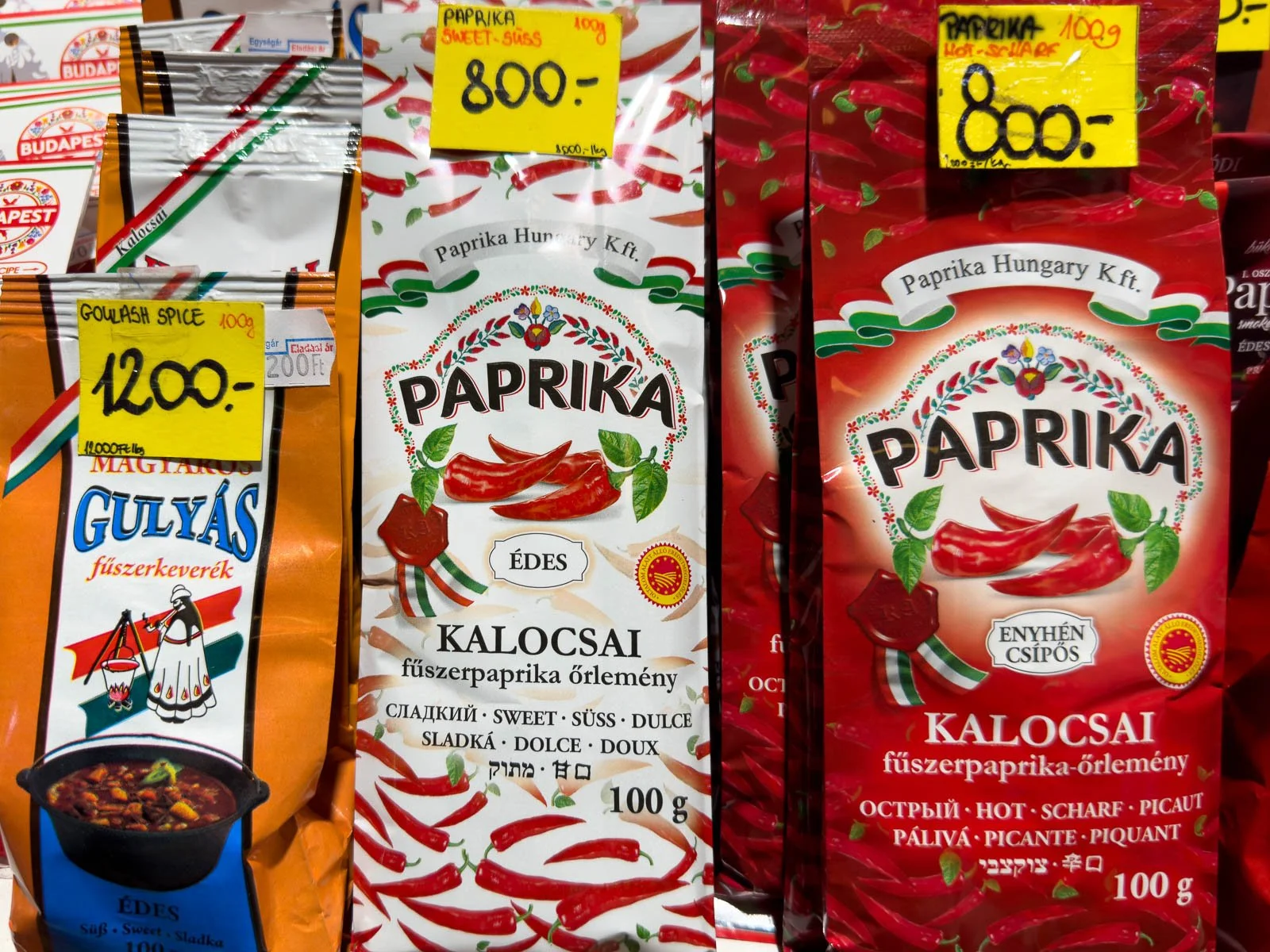
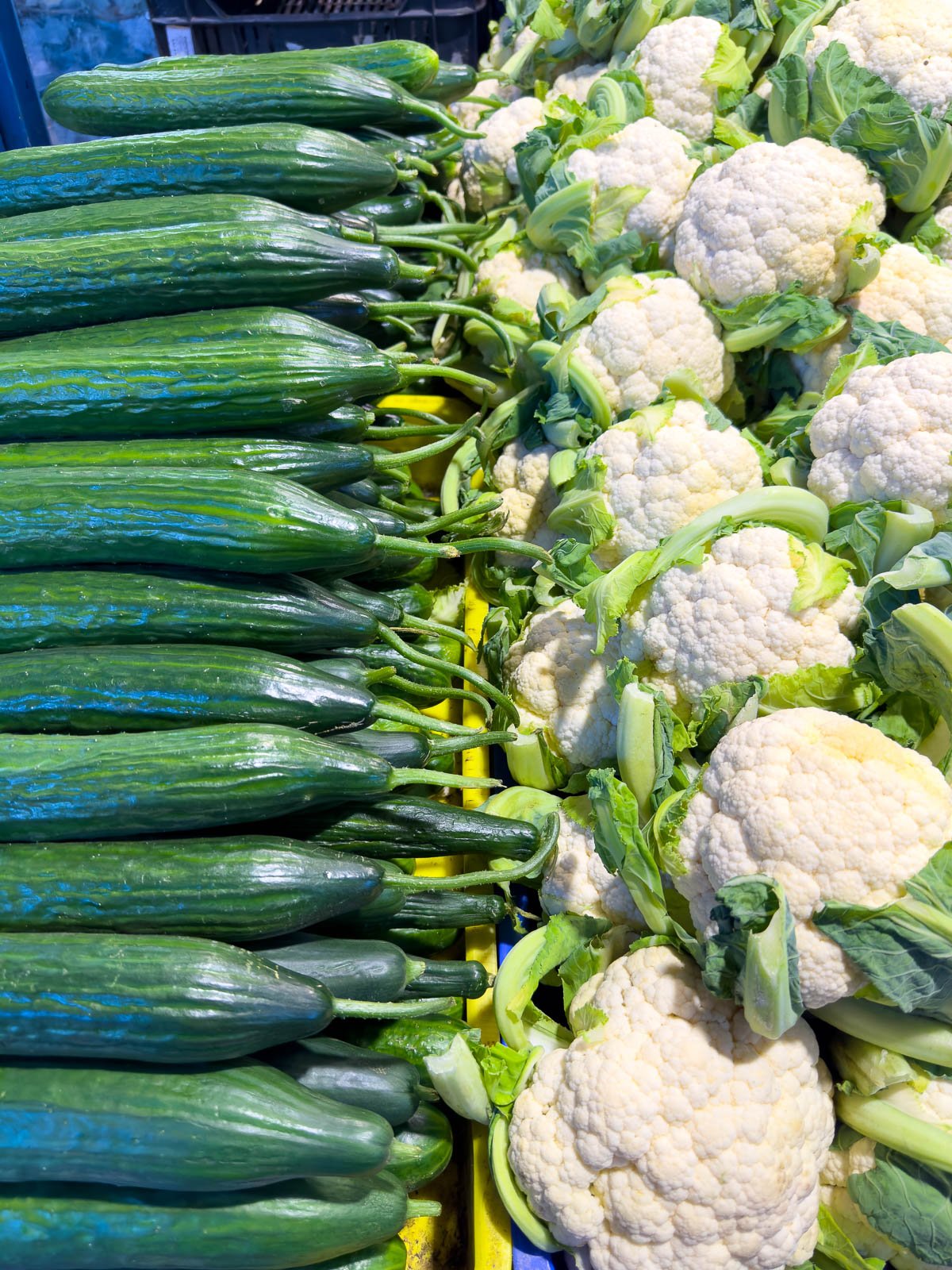
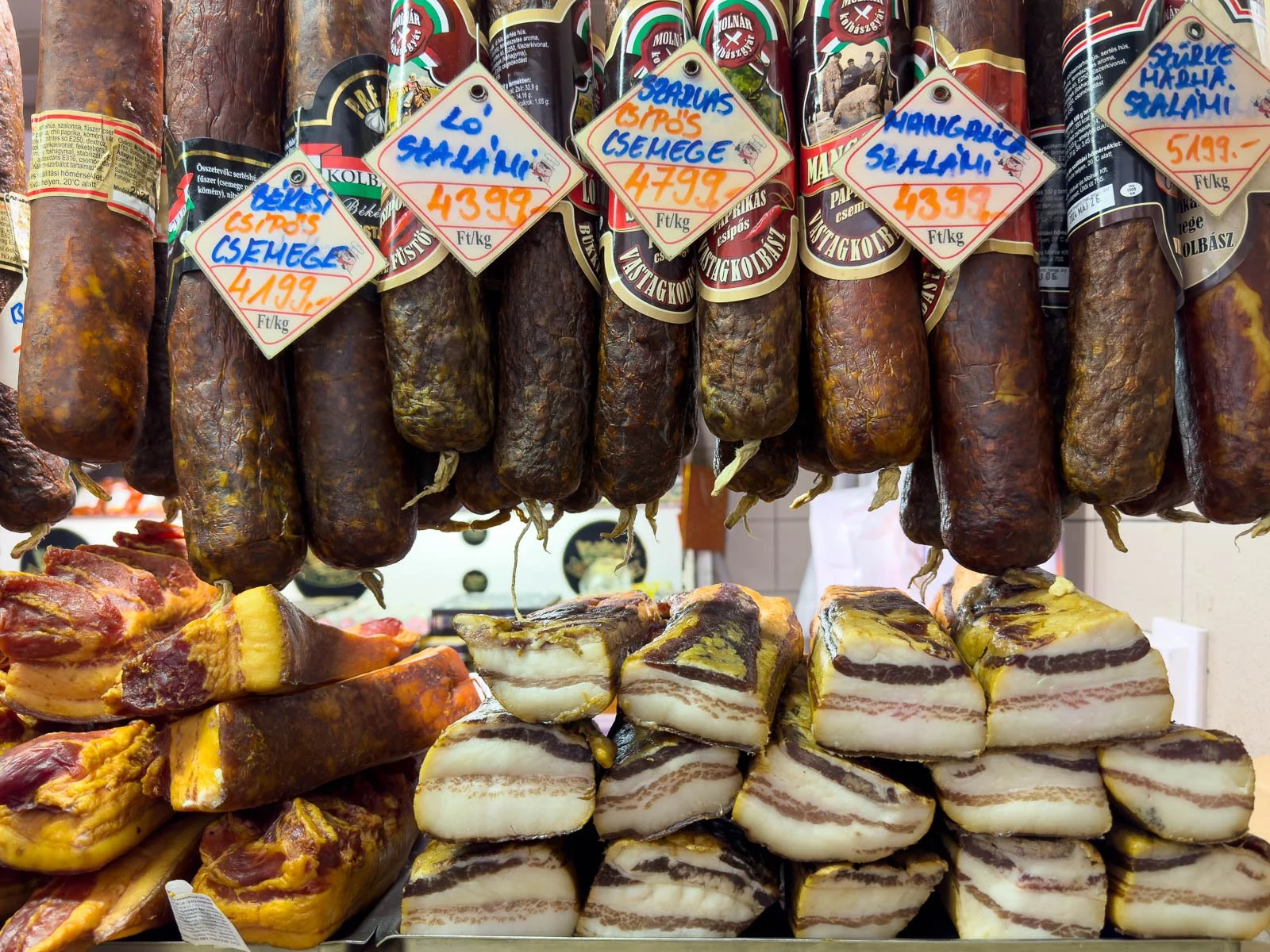
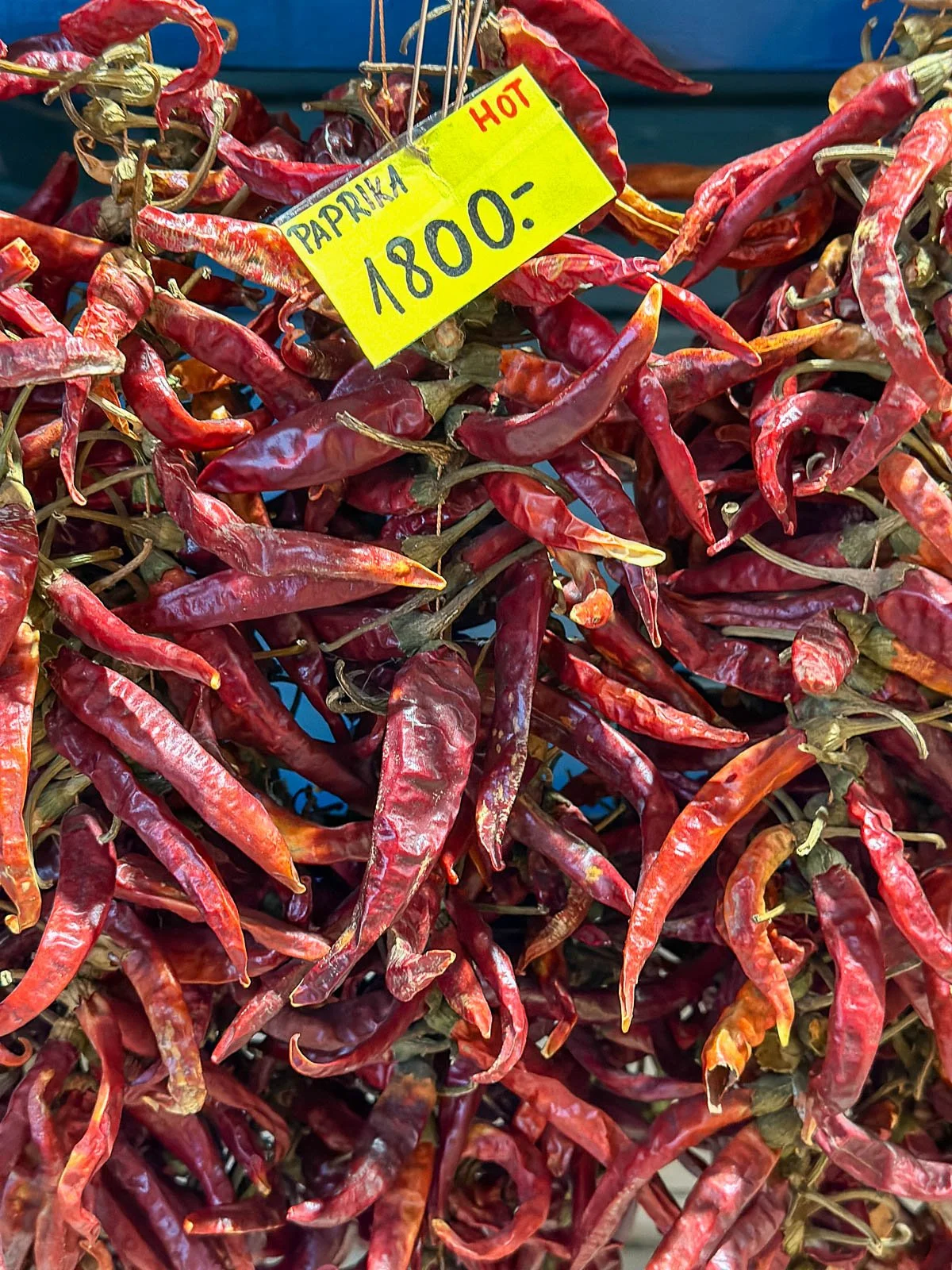
The Great Market Hall on the Pest side of Liberty Bridge is the largest and most architecturally impressive market in Budapest. The ornate brick structure was built in 1897, and the interior is as photogenic as any market I have visited. Colorful stalls filled with paprika, embroidered textiles, Hungarian sausages, pickled vegetables, and fresh produce create strong color compositions. The upper gallery level sells folk art and textiles and gives you an elevated view down over the market floor.
📷 Pro Tip: Arrive at opening time (around 6 am on weekdays) for the cleanest shots with minimal crowds. The market floor is wide and well-lit; a 24-70mm lens handles most compositions. For detail shots of spices, paprika, and produce arrangements, a 70-200mm lens from slightly further back allows you to isolate subjects without crowding the vendors. The upper gallery provides a strong bird's-eye view of the market floor below; a 16-35mm captures the full width from the gallery railing.
Best time: Opening time (6 am on weekdays). Access: Free entry. Transit: Tram 2 to Fővám tér.


Hero’s Square
Heroes' Square at the end of Andrássy Avenue is one of Budapest's great symmetrical compositions. The Millennium Monument, flanked by the Museum of Fine Arts and the Hall of Art, creates a perfectly symmetrical frame that rewards a wide-angle approach. I love the symmetry here. It is usually busy during the day, so I would suggest going in the early morning before the crowds.
📷 Pro Tip: Arrive before 8am for the cleanest shots. Position yourself at the center of the square looking directly at the monument for the strongest symmetrical composition. A 16-35mm at the standard shooting distance captures the full monument and flanking buildings in one frame. The monument photographs well in the late afternoon when the low western light hits the bronze statues directly. The area around the square also includes Városliget (City Park) which offers additional photography subjects including Vajdahunyad Castle, worth exploring if you have extra time.
Best time: Early morning and late afternoon. Access: Free. Transit: Metro M1 to Hősök tere.

It is located at the end of Andrássy Avenue, which is a popular shopping and cultural district in the city.
Liz & Chain Rooftop Bar in the Marriott Hotel
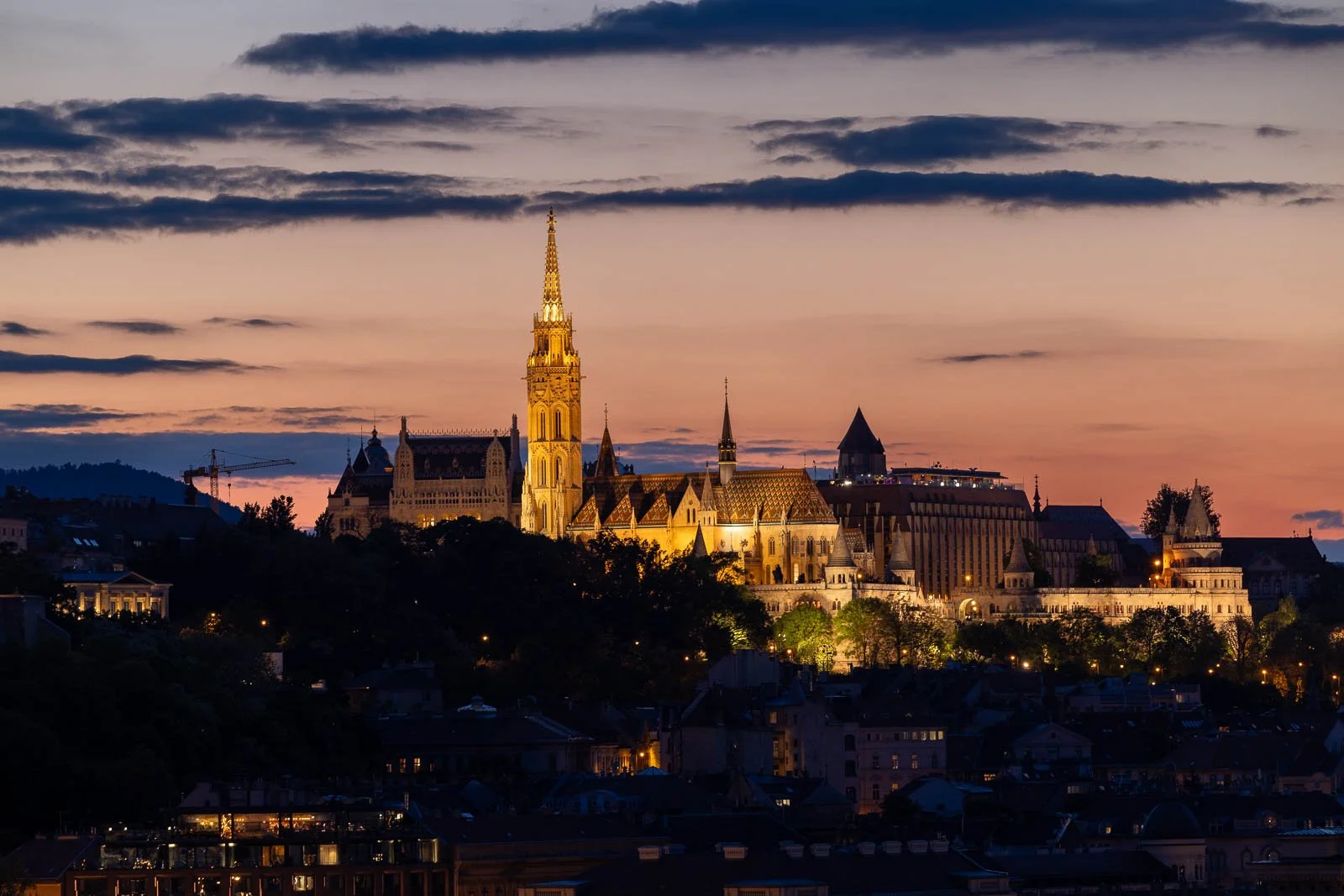
The rooftop bar at the Budapest Marriott Hotel is one of the better elevated photography positions in central Pest, directly overlooking the Danube. The views across to Buda Castle and the Chain Bridge are strong, and the drinks are excellent. We ended one evening here, and it was the right call.
📷 Pro Tip: Visit in the hour before sunset and stay through blue hour. The view from the rooftop faces west toward Buda, which means you photograph the castle and Gellért Hill with the setting sun behind you, illuminating both. A 70-200mm distance from the bar terrace compresses the Chain Bridge and Buda Castle into a tight composition. After sunset, the lit castle and Citadella are strong subjects for longer handheld exposures in the 1/30 to 1/60 second range with image stabilization.
Best time: Sunset through blue hour. Access: Hotel bar (open to non-guests). Transit: Walk from the Chain Bridge or Tram 2 along the Pest embankment.
Festivals & Events
Budapest Spring Festival (March/April): One of Hungary's most important cultural events, spanning two to three weeks with classical music, opera, dance, and theater performances across the city's major venues. The State Opera House and Liszt Academy of Music host the centerpiece concerts. Strong photography opportunities in and around the venues during festival evenings.
Sziget Festival (August): One of the largest music and arts festivals in Europe, held on an island in the Danube north of the city center. The festival runs for approximately one week and draws a large international crowd. The visual energy of the crowds, the stages, and the river setting make it a compelling photography subject if you are in Budapest during August. It is also extremely crowded; adjust your expectations accordingly.
Budapest Wine Festival (September): Held on the Castle Hill grounds with stunning views of the city below. Wine producers from across Hungary, including the Tokaj region, present their wines against the backdrop of the Buda Castle. The combination of the architecture, the autumn light, and the general atmosphere makes this one of the better festival photography subjects in the city.
Christmas Markets (December): The Christmas markets at Vörösmarty Square and around St. Stephen's Basilica run through December. The market at St. Stephen's is particularly well-designed, with the illuminated basilica facade as the backdrop. Visit at dusk when the market lights come on and the crowds are still manageable. The low winter sun during the day creates strong shadows across the cobblestones.
St. Stephen's Day (August 20): Hungary's national day, marking the founding of the state. The celebrations include a major fireworks display over the Danube, with the Parliament and the bridges as the backdrop. The fireworks launch from barges on the river, which makes the waterfront one of the best positions for photography. Arrive several hours early to secure a spot on the Buda embankment.
Frequently Asked Questions About Visiting Budapest
Is Budapest expensive?
Less than most Western European capitals, though the luxury hotels and standout restaurants run comparably high. Public transport and the Bolt app keep everyday costs manageable, and the thermal baths and markets offer genuine experiences at reasonable prices.
Is Budapest safe?
Yes, it's one of the safer major European cities to walk, including the Danube promenade at night. Normal city awareness covers most of what you need to know.
Do you need a car in Budapest?
No. The city is compact and walkable, and the Bolt app (since Uber doesn't operate in Hungary) handles anything walking or transit doesn't cover.
What are the best photo spots in Budapest?
Fisherman's Bastion at sunrise, the Chain Bridge at blue hour with the Parliament lit across the river, and Gellért Hill at sunset for the full panoramic sweep are three I return to constantly. The full list with Pro Tips is above.
Is it worth hiring a local photography guide?
Yes, without hesitation. Three hours with a guide who knows the city, its access points, and its light produced images that days of independent exploring might not have found on their own.
What surprised you most about photographing Budapest?
The beauty of the city at night with the monuments all lit up. Daytime Budapest is beautiful, but after dark, when the Parliament, the Chain Bridge, and the Castle District are all illuminated at once, the city becomes something genuinely cinematic.
How many days do you need in Budapest?
Three to four days for photographers. That gives you time to cover both the Pest and Buda sides properly, catch sunrise and blue hour more than once, and still leave room for a guided session on your first evening.
Should you stay on the Pest or Buda side?
Pest, for most photographers. District V or District I both put you within easy reach of the Chain Bridge, the Parliament, and the Danube promenade, with Buda Castle and Fisherman's Bastion just a funicular ride or short walk away.
Final Thoughts
Budapest is one of those cities that holds up. I came back seven years after my first visit, expecting to find something that had changed or faded or become too touristed to photograph seriously. What I found instead was a city that had gotten better, or more likely, I had gotten better and could finally see it properly.
The gap between the two visits is the best argument I know for returning to a city you love when your photography has grown. The light at Fisherman's Bastion was the same as it was in 2016. I just knew where to stand this time.
Hire Miklos. Get up for sunrise at Fisherman's Bastion. Stay for blue hour at the Chain Bridge. Budapest will do the rest.
Want to improve your photography while exploring some incredible destinations? Join me on one of my photography workshops! You can find all the details, including upcoming destinations and dates, through the links below.
Let's Stay Connected!
If you enjoyed this Photography and Travel Guide to Budapest, explore my other guides to Central Europe:
My Photography & Travel Guide to Prague, Czech Republic — Budapest and Prague make a natural pair. The two cities share a Central European sensibility and a similar approach to architecture, history, and atmosphere. Prague's Old Town Square and Charles Bridge at blue hour rival anything in Budapest. A few days in each city gives you the full picture of the region.
My Photography & Travel Guide to Vienna, Austria — Vienna is three hours from Budapest by train and one of the great photography cities in Europe. The Kunsthistorisches Museum, the Naschmarkt, the Ringstrasse architecture, and Schönbrunn Palace are all within easy reach. The two cities are natural companions.
My Photography & Travel Guide to Ljubljana, Slovenia — A smaller, quieter alternative to Prague and Vienna, Ljubljana rewards photographers who want a Central European city without the crowds. The old town, the castle, and the river setting are all exceptionally photogenic, and the proximity to Lake Bled makes it a natural base for a longer regional trip.
Finally—a beginner-friendly photography guide that makes sense.
If you've ever picked up a camera and thought, "Now what?" this is the book for you.
Photography Made Simple is written for adults who are just starting out and want a clear, encouraging, real-world approach to learning photography. Whether you're using a DSLR, mirrorless, or just your smartphone, this guide walks you through the basics—without the jargon or tech overwhelm.
Inside, you'll learn:
The only camera settings you really need to know to get started
How to shoot sharper, more intentional photos using light and composition
Simple tips for portraits, landscapes, travel, and everyday life
What gear you do (and don’t) need
How to create better photos without upgrading your camera
You’ll also get practical exercises, cheat sheets, and tips for organizing and editing your images—plus the confidence to shoot off Auto Mode for good.
This is not a textbook. It’s a friendly guide to seeing the world with fresh eyes—and finally capturing what you see the way you imagine it.
📸 Format: PDF download
Pages: 100+
Perfect for: Beginners, hobbyists, and anyone ready to take better photos without the stress