Zurich, Switzerland Travel & Photography Guide: Best Photo Spots, Things to Do & Hidden Gems
I first came to Zurich at Christmas, and the city gave me everything at once. It was early evening when I arrived in the Old Town, and the Christmas markets were already lit. Snow had settled on the medieval rooftops. The trams moved quietly through the crowds on Bahnhofstrasse while the smell of Glühwein drifted from the stalls. I set up my tripod on the Münsterbrücke bridge with the Grossmünster rising above me, its twin Romanesque towers illuminated against a deep blue winter sky, and stayed there for an hour watching the light change on the water below.
That was the night I understood Zurich. Not the financial center or the most expensive city in Europe. The city itself — medieval, elegant, quietly self-possessed, and in the right light, extraordinary. For photographers, Zurich is a city of reflection and contrast. The Limmat River runs through the heart of the Old Town, and the combination of illuminated churches, warm restaurant windows, and still water creates one of the finest night photography environments in Europe. By day, Augustinergasse and the Niederdorf streets offer pastel facades and carved wooden balconies that have barely changed in centuries. Above the city, Uetliberg offers a 360-degree panorama that stretches from Lake Zurich all the way to the full sweep of the Alps. And on the right autumn morning, the entire city disappears under a sea of fog while the summit stays clear. That alone is worth the flight.
For travelers who are not photographers, Zurich is just as rewarding. The food is exceptional. The museums are world-class. The public transport runs on a schedule that makes other European cities look chaotic. And the Christmas markets, if you time it right, are among the finest in Europe. Zurich is the kind of place that asks nothing of you — it just keeps delivering.
In this Photography Guide to Zurich, I share the places and experiences that continue to draw me back. You will find my favorite photography locations, guidance on when and where to shoot, practical travel tips, and gear recommendations, along with cultural insights to help you explore and photograph Zurich with confidence, respect, and ease.

Christmas lights and winter atmosphere in Zurich’s Old Town during the holiday season.
Photographer's Notes
Before you go, here are my own takeaways.
Favorite Season: Spring
Favorite Location: The Grossmünster
Favorite Hotel: Mandarin Oriental Savoy, Zurich
Favorite Restaurant: Kronenhalle
Favorite Café: Sprüngli
Favorite Lens: 16-35mm f/2.8
Would I Return? Yes, I will definitely return. It's such a fun city, and it's close to so many other amazing destinations.
Where Should You Stay in Zurich, Switzerland?
The best base for photographers is the Old Town (Altstadt) and the streets surrounding it. From there, you can walk to Augustinergasse, the Grossmünster, the Limmat riverbank, and Lindenhof Hill before the city wakes up. Lakefront hotels offer better views from the room; Old Town hotels give you better access to the light. Both are excellent. Here is where I would stay.
Luxury Hotels in Zurich, Switzerland
Mandarin Oriental Savoy Paradeplatz, Old Town
The Savoy has stood on Paradeplatz since 1838, making it the oldest grand hotel in Zurich, and Mandarin Oriental's full renovation — completed in late 2023 — transformed it into the finest hotel in the city center without erasing what made it worth preserving. The interiors are calm and beautifully appointed, with thick carpets, clean marquetry, and well-chosen art that feels considered rather than decorated. The location is almost impossible to beat: Bahnhofstrasse is directly outside, the Grossmünster is ten minutes on foot, and the lake is a short stroll south. Corner suites have balconies overlooking Paradeplatz, and waking up to hear Zurich's trams moving across the square below is one of those small urban pleasures that becomes hard to give up.
Baur au Lac Talstrasse 1, Lakefront
Since 1844, the Baur au Lac has been Zurich's most distinguished address, and it has been in the same family for seven generations. That continuity shows in everything: the discreet service, the immaculate private park on the edge of Lake Zurich, the sense that excellence here has simply become habit. The 120 rooms and suites are spacious and genuinely luxurious, with lake and garden views that reward a slow morning. The crown jewel is Pavillon, the hotel's Michelin-starred restaurant, which moves its tables onto the garden terrace in summer for one of the finest alfresco dining experiences in Switzerland. For photographers, the private park gives you early morning access to lake and Alps compositions without a single tourist in the frame.
The Dolder Grand Kurhausstrasse 65, Zürichberg
The Dolder Grand sits on the Zürichberg hill above the city, part castle, part modern spa retreat, and entirely its own category. It is the only five-star hotel in Zurich with a full spa, a panoramic pool, and the only property where you can look out from the terrace and see the city skyline, Lake Zurich, and the Alps in a single frame. Chef Heiko Nieder's restaurant is one of the most decorated dining rooms in Switzerland, and the hotel's art collection — over 100 works including Dalí and Warhol — gives the corridors the feel of a private gallery. For photographers, the terrace view is one of the best elevated positions in Zurich, and the surrounding forest park offers peaceful morning light in all seasons. Reach it in six minutes by the Dolderbahn cog railway from the city.
Mid-Range Hotels
Hotel Storchen Zurich Weinplatz 2, Old Town, directly on the Limmat
If location and atmosphere matter more to you than five-star facilities, the Storchen is one of the best-positioned hotels in Zurich. It sits directly on the Limmat River in the Old Town, with terrace dining on the water and rooms that look out onto the Grossmünster and the medieval riverbank. The hotel has operated on this site in various forms since the 14th century. For night photography, the position is exceptional — you are surrounded by illuminated architecture in every direction before you even leave the building.
Widder Hotel Rennweg 7, Old Town
The Widder was created from nine adjacent medieval townhouses, some dating to the 12th century, connected over years of careful restoration. The result is a hotel where 15th-century frescoes share wall space with works by Warhol and Rauschenberg, and where 49 individually designed rooms mix original stone floors and exposed timber beams with Le Corbusier furniture. The Widder Bar holds over 1,000 spirits and is a Zurich institution in its own right. For photographers who want to be in the most photogenic streets in the city, the position is unbeatable: Augustinergasse is a two-minute walk.
Hotel Adler Zurich Rosengasse 10, Niederdorf
In the heart of Niederdorf, Zurich's most lively pedestrian quarter, with easy walking access to the Grossmünster, the Limmat, and the Old Town's best photography streets. The hotel houses the Swiss Chuchi restaurant, one of the better places in the city for authentic fondue and raclette after a long day of shooting. A practical, comfortable base with genuine Old Town character and a price point that makes it the smart choice if you'd rather spend the money on a dinner at Kronenhalle.
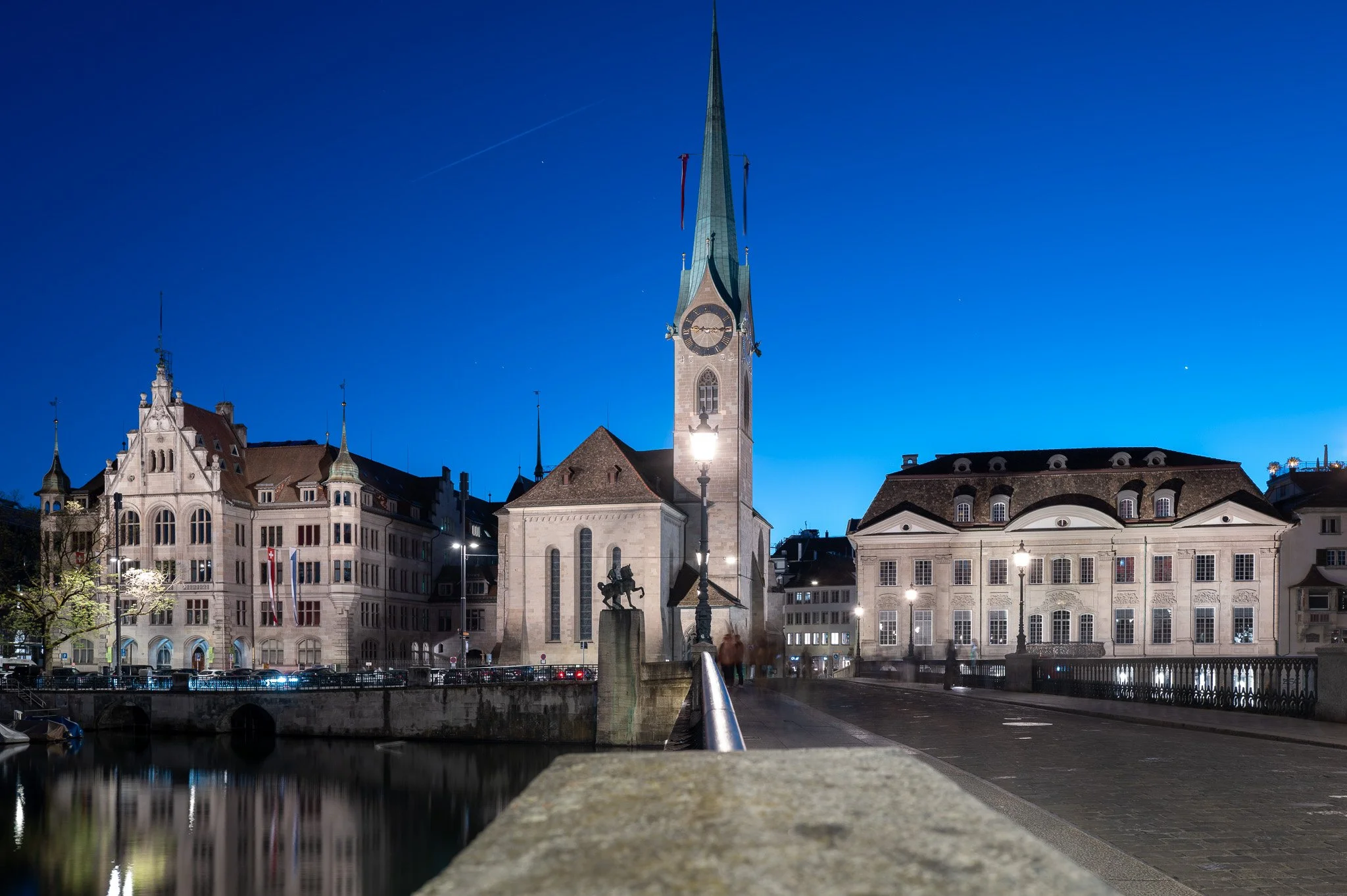
Zurich’s Old Town and the Limmat River glowing during blue hour, with the Grossmünster rising above the historic skyline.
How Many Days in Zurich, Switzerland
Three days is the minimum to cover Zurich's key photography locations at a reasonable pace. Five days lets you shoot everything properly and add at least one day trip outside the city. If you can manage five, take them.
A photographer's framework:
Day 1 — Old Town and the Limmat. Start at Augustinergasse before 7am. Move to Lindenhof Hill for the elevated view of the river bend and church towers. Spend the morning walking the Niederdorf streets and photographing the Grossmünster from the Münsterbrücke. Afternoon: the Fraumünster interior for the Chagall windows (come between 10am and noon on a sunny day). Evening: blue hour from the Münsterbrücke, then night photography along the Limmat.
Day 2 — Lake Zurich and Bahnhofstrasse. Early morning at the Quaibrücke for lake reflections and swan silhouettes with the Alps in the background. Walk the lakefront promenade south. Midday: Bahnhofstrasse for street photography and tram compositions. Afternoon: head up to The Dolder Grand or Uetliberg for the elevated city and lake view. If it is October or November and a temperature inversion is forecast, Uetliberg at dawn takes priority over everything else.
Day 3 — Zurich West and neighborhood exploration. The converted industrial district of Zurich West (around the Prime Tower and LaSalle restaurant) offers architectural and street photography that feels completely different from the Old Town. End the day with dinner at Kronenhalle and blue hour along Bellevueplatz.
Days 4 and 5 — Day trips. Lucerne is 45 minutes by train and offers the Chapel Bridge, Lake Lucerne, and the Alps. The Rhine Falls at Schaffhausen is an hour by train and worth it for any photographer. In summer, the lake boat routes south toward Rapperswil give you Alpine lake photography from the water.
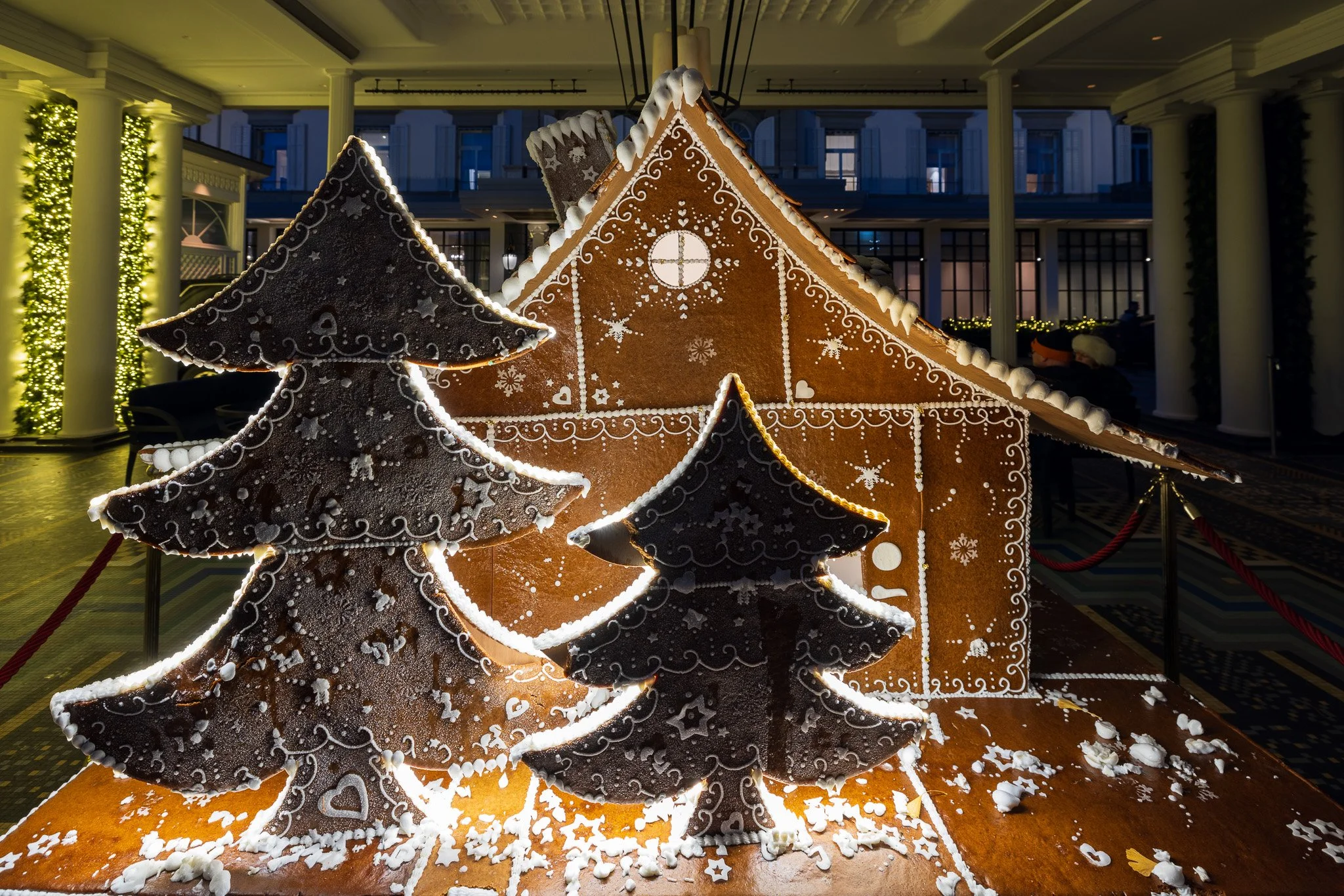
Christmas in Zurich
Best Time of Year to Visit Zurich, Switzerland
Zurich is a genuine year-round destination, but the seasons deliver very different photographic opportunities. Here is what to expect from each.
Spring (April to May) is when Zurich opens up. The city's parks and lakefront bloom, golden hour arrives earlier and lingers longer, and the crowds have not yet reached summer levels. The light in April is clean and directional — excellent for architectural photography. Golden hour falls around 8pm by mid-May, giving you a long evening shooting window. This is a strong photographer's window and arguably the best all-around season for the city.
Summer (June to August) brings warm evenings and the lake at its most appealing, with swimmers, sailboats, and an energy that makes street photography effortless. Golden hour stretches past 9pm in June, giving you extraordinary light late into the evening. The trade-off is crowds, particularly in July and August when tourist numbers peak. Expect competition at the classic viewpoints.
Autumn (September to October) is my personal favorite for Zurich photography. The tree lines around the lake and along Bahnhofstrasse turn gold and amber, the summer crowds begin to thin, and — most importantly — October and November bring the sea of fog effect on Uetliberg. When a temperature inversion sits over the city and you are standing above it on the summit with the Alps behind you and an ocean of white below, it is one of the most extraordinary photography conditions in Europe. Shoulder season crowds and the best atmospheric light: this is the smart photographer's window.
Winter (November to December) transforms the city for those willing to work in the cold. The Christmas markets — particularly the market inside the main train station and the one on Werdmühleplatz — are exceptional for night and long-exposure photography. The Lucy lights installation on Bahnhofstrasse turns the entire street into a tunnel of warm light. Blue hour comes early (around 4:30pm in December), which means long evenings for night photography without sleep deprivation. The downside is overcast skies, which can flatten the light for architectural shooting. Come in winter for atmosphere; come in autumn for light.
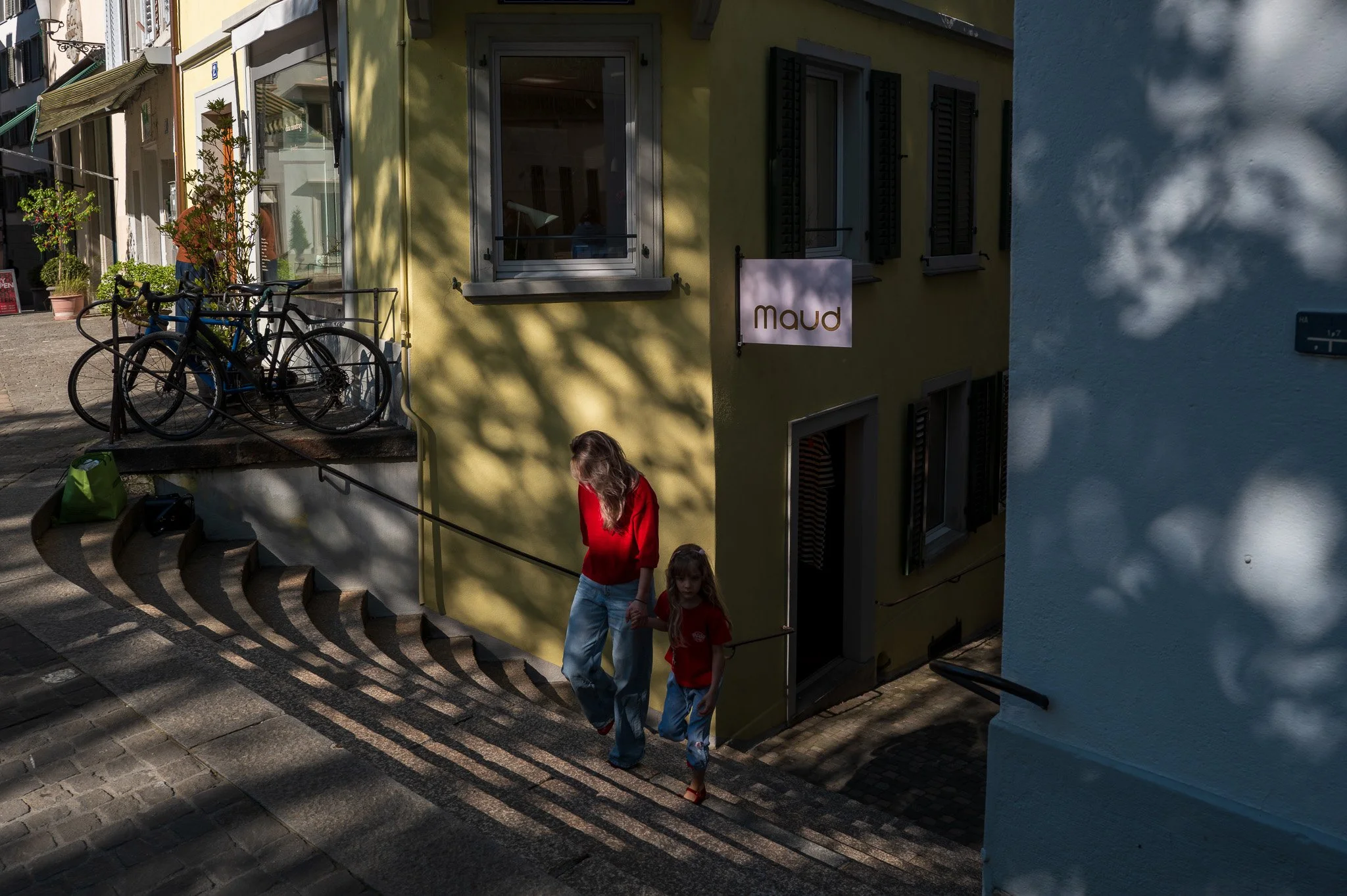
The narrow cobblestone streets and colorful historic buildings of Zurich’s Old Town.
Getting Around Zurich, Switzerland
Zurich's public transport system is one of the best in Europe, and you should use it. Trams, buses, and S-Bahn trains cover the entire city and connect to key photography destinations outside it. The ZVV app handles ticketing for everything — download it before you arrive. A day pass covers unlimited travel on the entire network and is worth it from day one.
For photographers, the key tram lines to know are the 6 and 10 (connecting the main station to Bellevueplatz, where Kronenhalle sits and where the lake begins) and the S10 suburban rail from Zurich HB platform 21/22 for the 20-minute ride to Uetliberg. The Dolderbahn cog railway to The Dolder Grand and the surrounding forest starts near the Römerhof tram stop.
The Old Town, Niederdorf, and the lakefront promenade are all walkable from each other. For photographers, walking is always the right choice in these neighborhoods — you find the best light and the best moments when you are on foot. Carrying a full camera kit is comfortable on foot; trams are easy but narrow. Uber operates in Zurich, and local cabs are easy to flag, but for most photography work in the city center, you will not need them.
Renting a car is useful only if you plan to drive outside the city for day trips to Lucerne, the Rhine Falls, or the Alps. For the city itself, a car is more burden than help.

A Long Exposure of a Tram in Central Zurich
Where to Eat in Zurich, Switzerland
Zurich is one of the most expensive cities in Europe, and its restaurants reflect that. But the quality, at every level, tends to justify the price. Swiss cuisine deserves more credit than it usually gets — the combination of French technique, German portion sizes, and exceptional local ingredients makes for some of the most satisfying food in Europe. Here is where I eat.

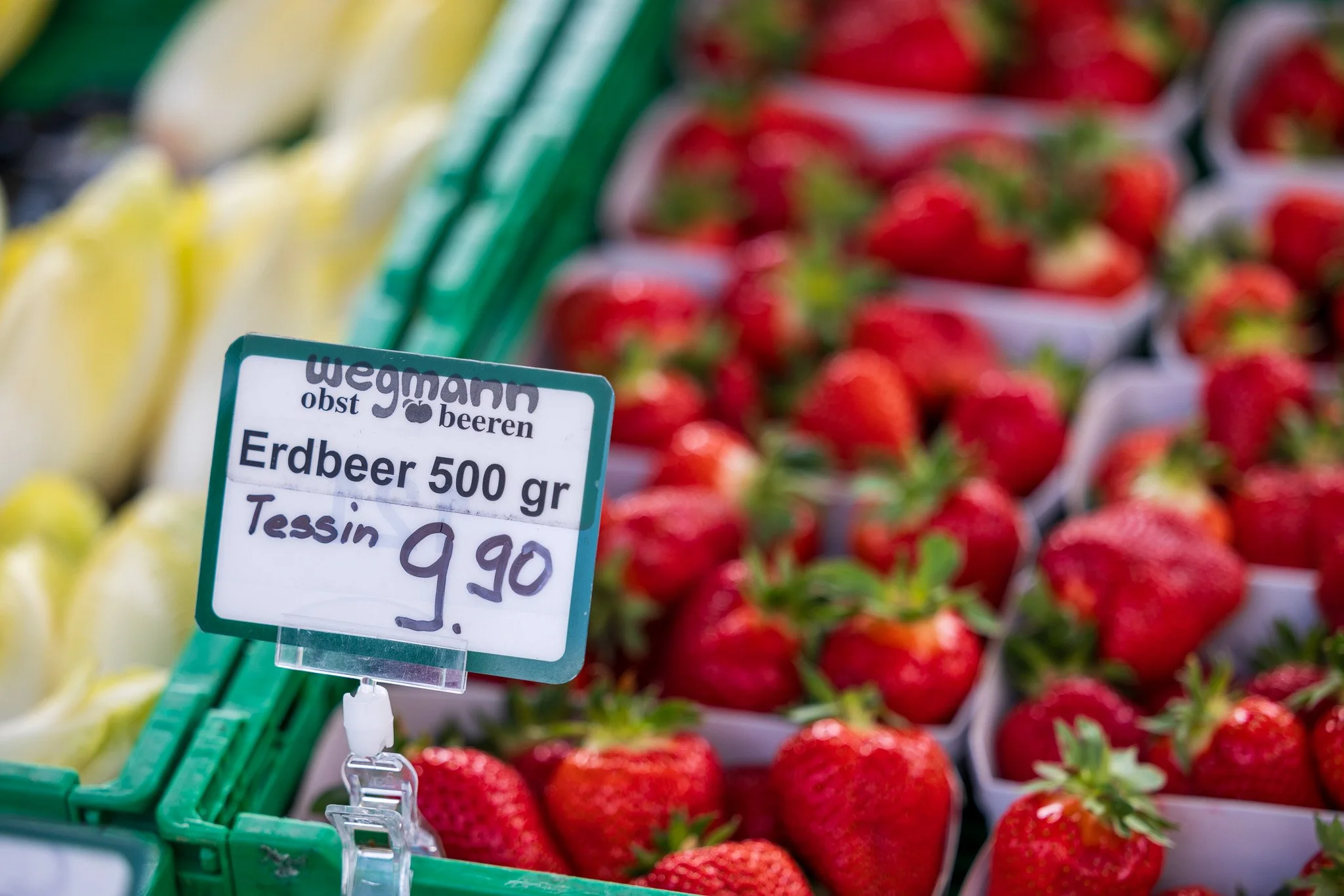

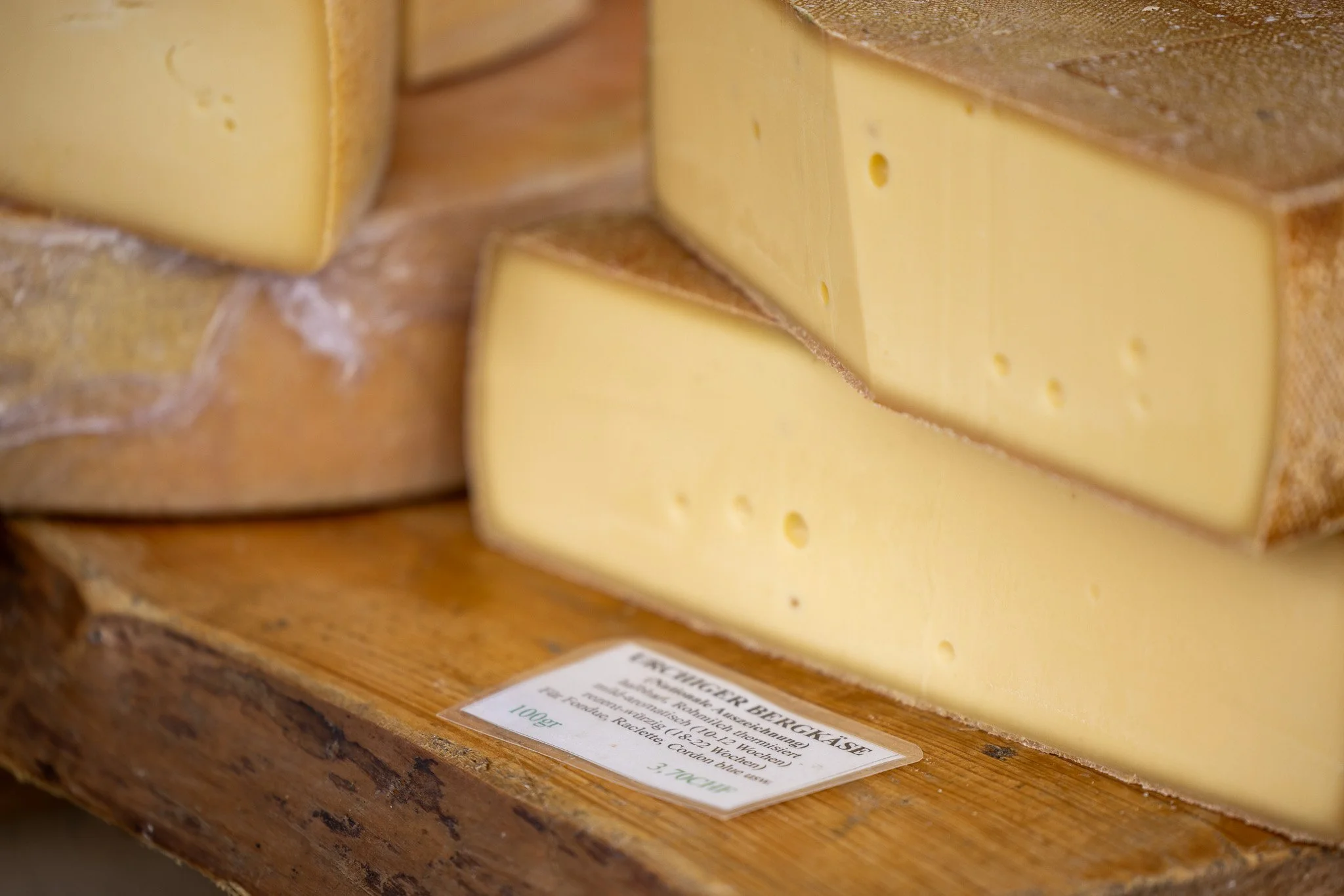
Restaurants in Zurich, Switzerland
Kronenhalle Rämistrasse 4, Bellevueplatz
Kronenhalle is not just a restaurant. It is a Zurich institution, operating since 1924, its walls hung with original works by Picasso, Chagall, Miró, and Bonnard. The dining rooms have the feel of a private club that has been letting in the right people for a century: conversations in three languages, the occasional celebrity at the corner table, servers who have been here long enough to remember when you last visited. Order the Zürcher Geschnetzeltes, thin strips of veal in cream and white wine sauce served with rösti, a dish that has been on the menu for decades and is the reason regulars book weeks ahead. The cocktail bar, a separate room with its own atmosphere and one of the finest whisky selections in Zurich, has been a city institution since 1965. Reserve well in advance.
Zeughauskeller Bahnhofstrasse 28a, near Paradeplatz
Built inside a genuine 15th-century armory, with vaulted ceilings and thick stone walls that have been here since Zurich was a medieval trading city, the Zeughauskeller is the most atmospheric traditional Swiss restaurant in the city. Long wooden tables, beer steins, servers in traditional dress, and a menu of Swiss classics in portions large enough to warrant a long walk afterward. This is where locals bring out-of-town visitors for a first taste of Switzerland, and it is exactly what it looks and sounds like.
Haus Hiltl Sihlstrasse 28, near Bahnhofstrasse
The world's oldest vegetarian restaurant, founded in 1898 and still family-run, is one of the best buffets in Europe. The choice is overwhelming in the best possible way: dozens of dishes from Indian, Mediterranean, Asian, and Swiss vegetarian traditions, all freshly prepared. Non-vegetarians should go at least once. The food is that good.
LaSalleSchiffbaustrasse 4, Zurich West
Located inside a converted 19th-century shipbuilding hall, LaSalle is one of the most visually arresting restaurant spaces in Zurich. Iron columns, soaring ceilings, and original crane rails create a backdrop for Mediterranean cooking that is consistently creative and well-executed. The evening energy is excellent, and the surrounding neighborhood is one of the best areas in the city for street photography and urban architecture — combine the two.
Clouds Prime Tower, Hardstrasse 201, Zurich West
On the upper floors of Zurich's Prime Tower, Clouds offers sweeping 360-degree views of the city, the lake, and the Alps on clear days. Come for dinner as the light fades and stay through blue hour. The transition from golden to deep blue outside the floor-to-ceiling windows, with the city lights rising below, is one of those photography-adjacent dining experiences that is genuinely worth planning around.
Coffee
Café Schober,Napfgasse 4, Old Town — A quintessentially Swiss café in the heart of the Old Town, with the kind of interior detail — carved wood, glass cases of pastries, warm light — that makes it genuinely photogenic. Good for coffee and editing between morning shoots. [VERIFY currently open before visiting.]
ViCafe — Small locations throughout the city and the best coffee-on-the-go in Zurich. A reliable stop between photography sessions.
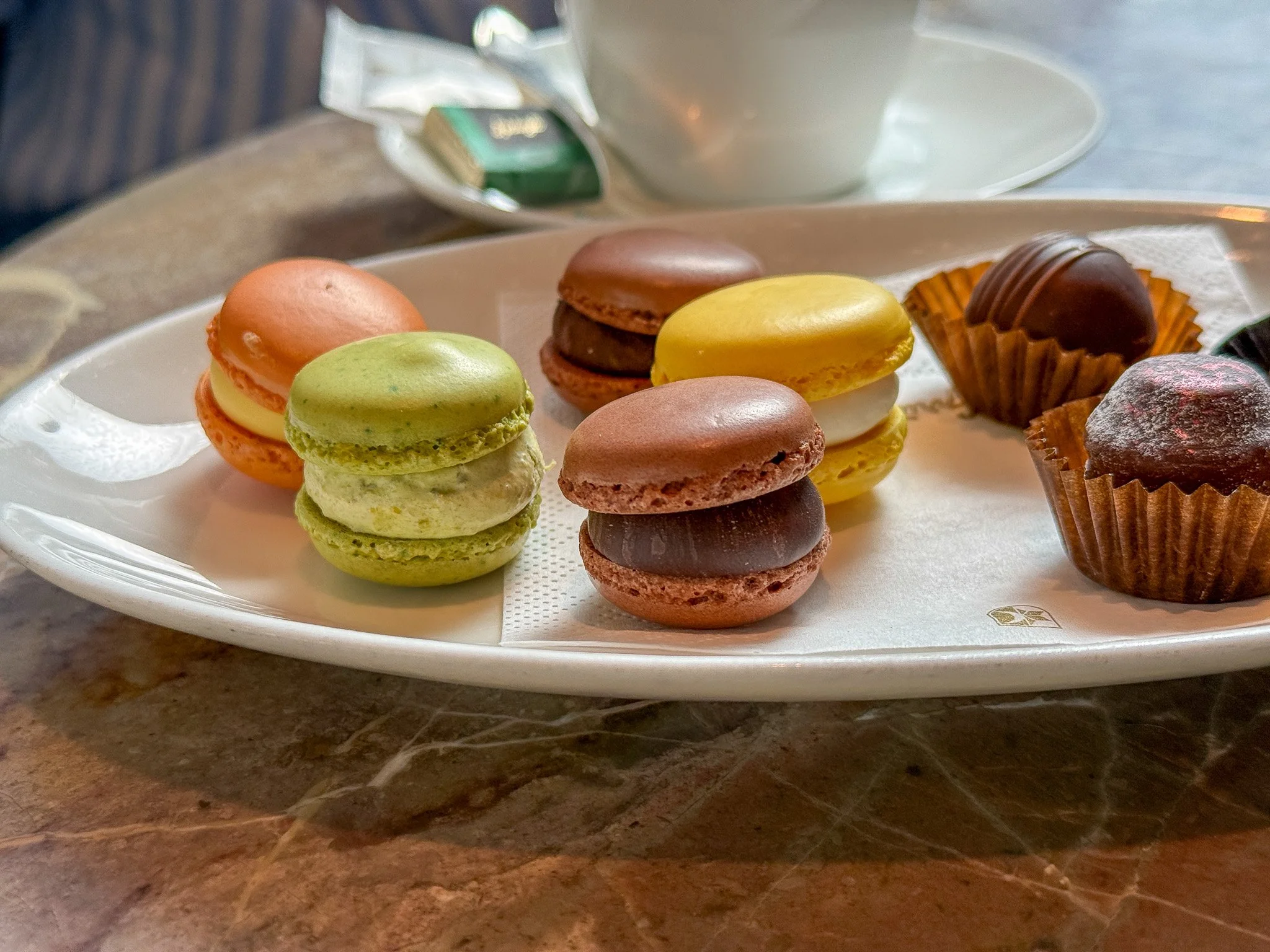
Coffee and Luxemburgerli at Café Sprüngli on Paradeplatz, one of Zurich’s classic café stops.
Café Sprüngli,Paradeplatz — Founded in 1836 and still operating from the same corner of Paradeplatz, Sprüngli is the Zurich confectionery institution. The ground floor café is warm, elegant, and full of photographic detail: glass cases of handmade chocolates and the famous Luxemburgerli macarons. The Luxemburgerli are smaller and lighter than French macarons, with a shelf life of a few days, which means they can only be eaten here. Try at least three flavors before you leave.
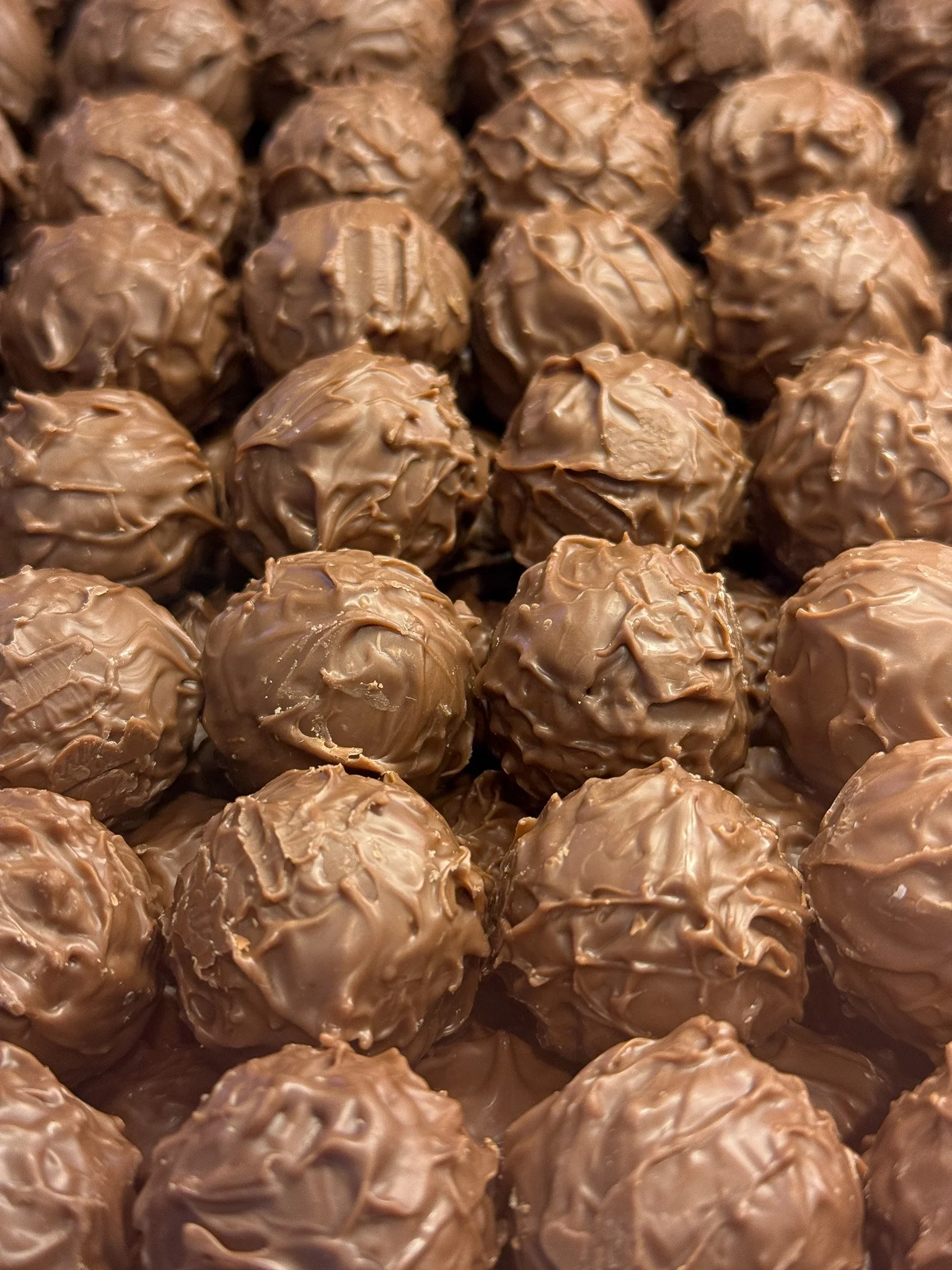
A beautifully presented dish of chocolates from Zurich’s excellent cafe scene.
Photography Gear to Bring to Zurich, Switzerland
Zurich rewards a versatile setup. You will shoot medieval architecture in tight lanes at dawn, wide lake panoramas in afternoon light, and long-exposure night scenes on the Limmat — sometimes all in the same day.
Camera bodies: I shoot Zurich with the Canon EOS R5 Mark II as the primary body, with the Leica Q3 for street work in the Old Town. The R5 Mark II handles the full range from architecture to low-light without compromise, and the Leica's fixed 28mm lens keeps you disciplined in the narrow streets of Niederdorf. The Sony A7R V's 61 megapixels is excellent if you plan to make large prints from the Alpine lake panoramas. The Nikon Z8 is a strong choice for weather-sealed shooting in winter, when Zurich's cold and occasional wet snow can test less-sealed bodies.
Lenses: The 16–35mm f/2.8 is the workhorse here. Most of your Old Town and architectural work happens at the wide end, and the tight lanes of Augustinergasse reward an ultra-wide perspective that shows the compressed layers of facades above the cobblestones. The 24–70mm f/2.8 handles the lake panoramas, street photography on Bahnhofstrasse, and the Fraumünster interior without needing to switch. The 70–200mm f/2.8 earns its weight at Uetliberg, where you want to compress the Alpine peaks against the city below, and along the lakefront for telephoto compositions with the Alps rising behind the church spires.
Accessories: A tripod is essential. Blue hour and night photography on the Münsterbrücke and the Limmat are the best shooting conditions in the city, and handheld long exposures will not cut it. Bring a polarizing filter for lake photography — it cuts glare and deepens the blue of the water significantly on sunny days. A 6-stop ND filter is useful for long-exposure tram trails on Bahnhofstrasse if you want to shoot in daylight. Pack extra batteries; the cold in winter drains them faster than expected. A Samsung T7 SSD for daily backup is standard on my kit for any trip.
iPhone Photography in Zurich
The iPhone performs extremely well in Zurich, and the city's combination of strong architectural geometry and reflective water surfaces plays to its strengths.
For the Augustinergasse facades, use the main lens (not ultrawide) and shoot in Portrait Mode to compress the background slightly and emphasize the carved bay windows and painted shutters in the foreground. Early morning with soft directional light gives you the cleanest result.
On the Münsterbrücke at blue hour, switch to Night Mode and brace the phone against the stone railing for a makeshift long exposure. The Grossmünster reflected in the Limmat is one of those shots that works beautifully on a phone screen and requires almost no editing.
For the Chagall windows inside the Fraumünster, turn off Night Mode — the AI processing tends to flatten the extraordinary color projection onto the walls. Shoot in standard Photo mode at the native resolution, keep the ISO as low as possible, and let the color do the work. ProRAW gives you more control in editing if your phone supports it.
At Uetliberg for the sea of fog, use the ultrawide lens to capture the full sweep of the fog layer with the Alps rising behind. The contrast between the white fog and the blue sky above reads beautifully on an iPhone sensor, and the wide angle keeps the scale honest.
Drone
Drone photography in Zurich is permitted but regulated under Swiss FOCA rules aligned with EASA European standards. Most operators will need to register with FOCA and pass a free online competency test before flying. You cannot fly within 5 kilometers of Zurich Airport (ZRH) without prior authorization, which restricts much of the greater city area. Flying over crowds, dense residential areas, or public spaces without a permit is prohibited. The city center of Zurich — the Old Town, Bahnhofstrasse, the lakefront promenade — falls into restricted territory for most hobbyist operators. If drone footage of the city is a priority, research the FOCA rules carefully at bazl.admin.ch before you travel and consider applying for a specific permit. Switzerland also has its own data protection law (DSG/FADP) requiring consent for aerial photography of identifiable persons. Outside the city, open Alpine terrain and rural lake areas offer far more practical drone opportunities within standard regulations.
Photography Locations in Zurich
Zurich is filled with photo-worthy spots. Start your day at Lindenhof for sunrise before wandering through the quiet streets of the Old Town. Stop for coffee along the Limmat River and spend the morning photographing Zurich's historic architecture and colorful trams. In the afternoon, explore the Bahnhofstrasse and the lakefront before making your way to Lake Zurich for sunset. End the day along the river during blue hour, when the city lights begin reflecting in the water, and Zurich becomes particularly photogenic.
Here are the must-visit locations for capturing the essence of the city:
Lake Zurich Promenade
The Quaibrücke bridge and the promenade stretching south from it offer the classic Zurich lakefront composition: still water, swan silhouettes, the city's church spires on the left bank, and on clear days, the snow-capped Alps rising above the far shore. On calm mornings, the reflections in the lake are mirror-sharp.

The twin Romanesque towers of the Grossmünster rising above the Limmat River in Zurich’s Old Town.
The scene changes dramatically with the season and the weather. In winter, early morning fog can sit low over the water while the peaks above are clear, creating a dreamlike layered composition. In spring and summer, the colors are vivid, and the light is warm well into the evening.

The twin Romanesque towers of the Grossmünster rising above the Limmat River in Zurich’s Old Town.
📷 Pro Tip: Position yourself on or near the Quaibrücke for both the wide lake and city composition. Shoot east in the morning for light on the water; shoot west in the afternoon for the light coming back across the lake and the Alps visible in the background on clear days. A polarizer cuts the lake glare and deepens the blue of the water. For long exposures of the moving boats and lake surface, arrive at blue hour with your tripod. A 16–35mm lens handles the panoramic; a 70–105mm lens compresses the Alps against the city beautifully.
Best time: Sunrise and early morning for reflections. Late afternoon for Alps visibility on clear days.
Old Town
Zurich’s Old Town (Altstadt) is one of the most captivating parts of the city, offering a blend of history, culture, and architectural charm.

The narrow cobblestone streets and colorful historic buildings of Zurich’s Old Town.
The Old Town is full of medieval buildings, narrow winding streets, and colorful townhouses. You’ll find well-preserved structures from various eras, ranging from medieval to Renaissance styles, with charming facades, unique doorways, and decorative details that make for great photography subjects.
Pro Tip: The street Augustinergasse is the most photogenic in the Old Town, lined with painted guild signs hanging from buildings that have barely changed in centuries. Shoot it at dawn before the shops open. A 35mm prime keeps things natural and unforced.
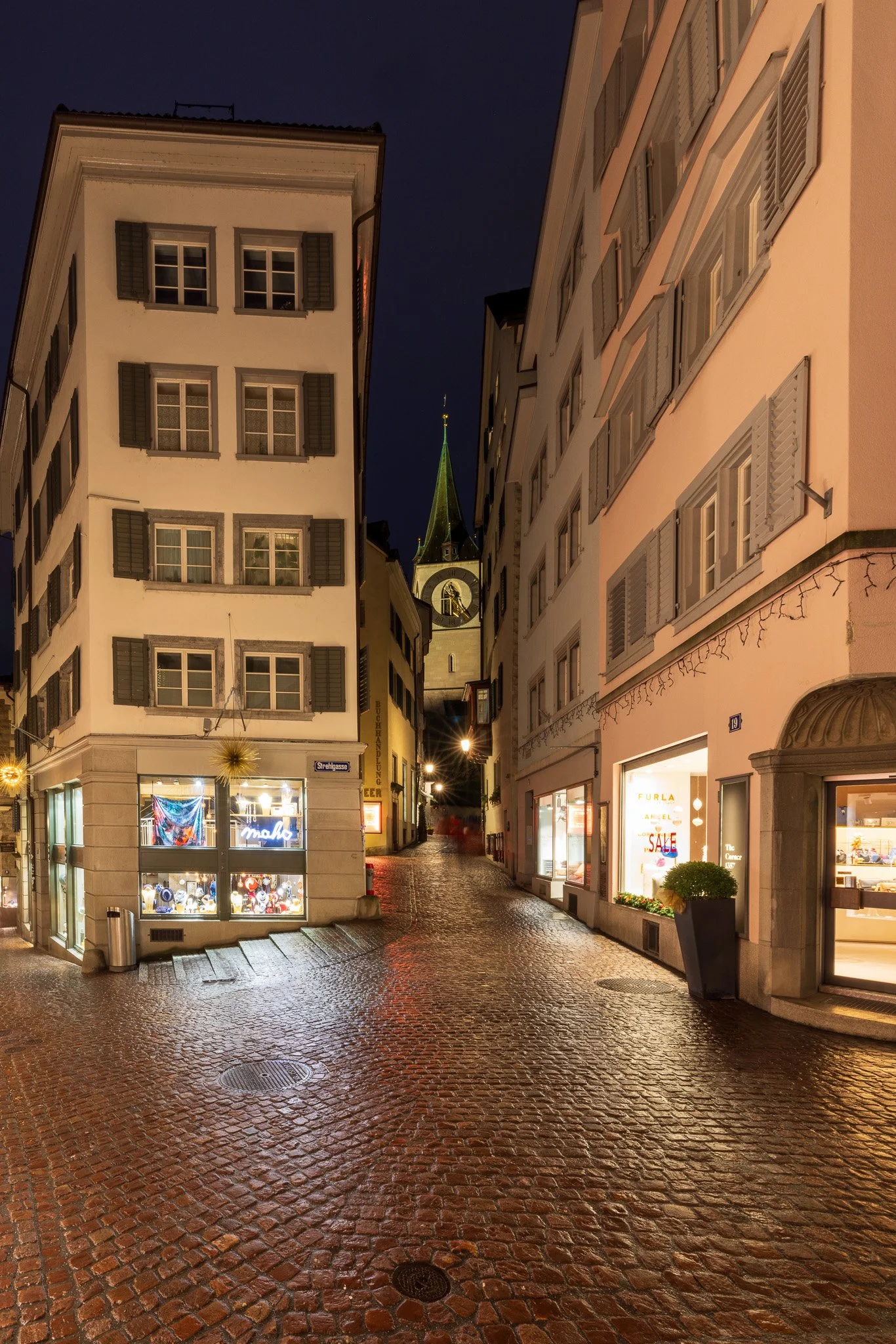
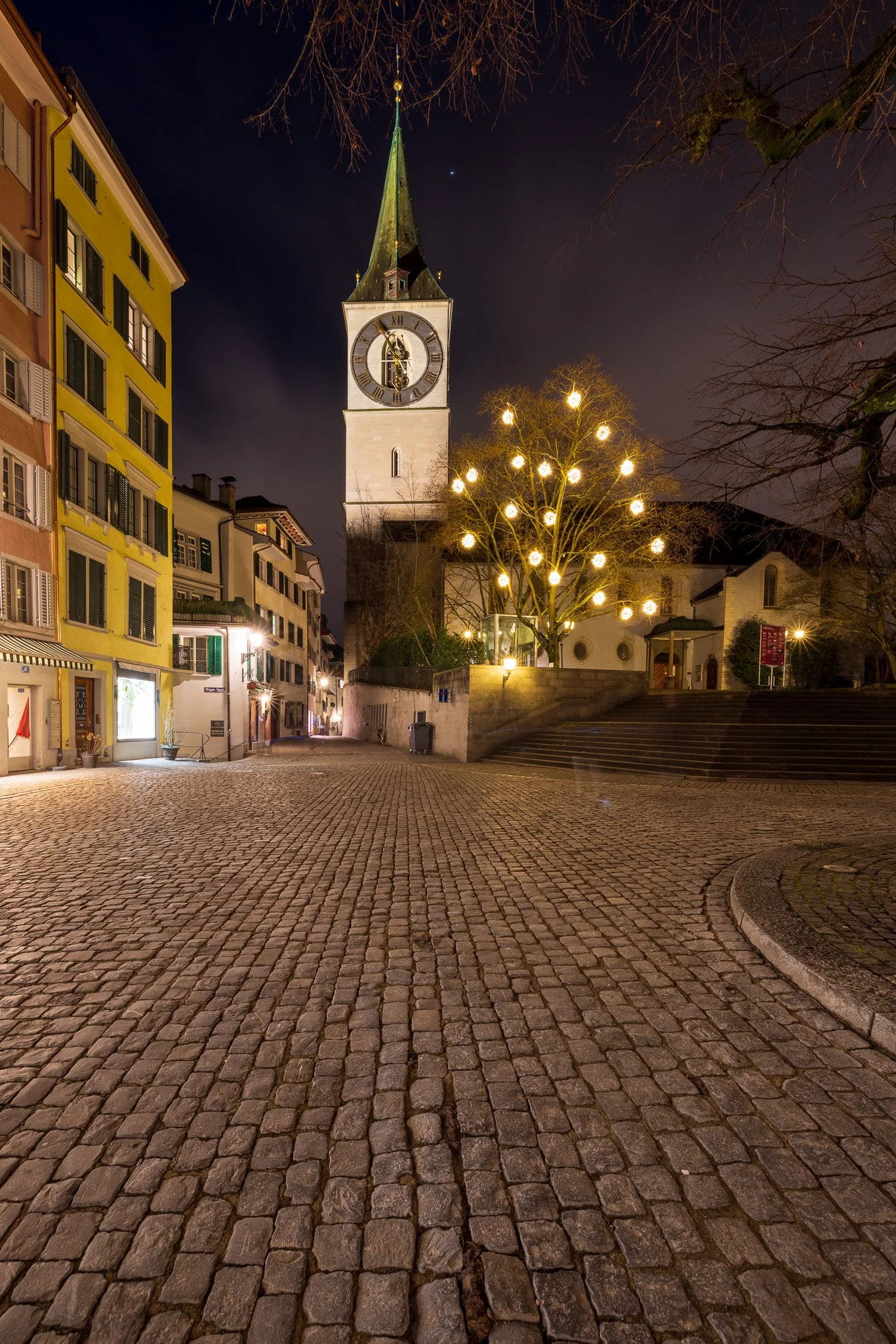


Grossmünster Church
The Grossmünster's twin Romanesque towers are Zurich's most recognizable silhouette, rising above the right bank of the Limmat and visible from almost every elevated position in the city. Founded, according to legend, by Charlemagne after his horse knelt at the graves of Zurich's martyred patron saints Felix and Regula, the church dates to the 12th century and anchors the skyline of the Old Town.
The exterior is where most photographers spend their time — the relationship between the towers, the river, and the Münsterbrücke bridge below creates the classic Zurich composition.
📷 Pro Tip: The definitive Grossmünster shot is from the Münsterbrücke bridge, shooting north toward the church with the Limmat River on both sides of the frame. A 35–50mm captures both towers and the river bend at once. At dusk, the church is illuminated and the bridge provides a clean foreground with moving water for long exposures. Inside the church, look up — the rose window above the west portal is a strong architectural shot with a wide angle.
Best time: Blue hour for the illuminated exterior. Sunny mornings for interior light. Admission: Free entry to the church; CHF 5 to climb the towers for panoramic city views.

The twin Romanesque towers of the Grossmünster rising above the Limmat River in Zurich’s Old Town.
Lindenhof Hill
This elevated park in the Old Town, built on the site of a Roman fort and a former Imperial palace, offers one of the finest elevated views of Zurich's left bank: the Limmat River curving below, the Grossmünster's twin towers rising above the medieval rooftops, and the university and ETH buildings climbing the hillside beyond. It is quiet, free, and almost entirely crowd-free before 9am.
📷 Pro Tip: Shoot from the stone balustrade at the northern edge of the hill, facing northeast toward the Grossmünster and the river bend. A 50–105mm focal length compresses the layers of the medieval skyline beautifully. At golden hour in the late afternoon, the light comes from the west and illuminates the east-facing facades of the Old Town below in warm amber. At blue hour, the river reflects the last color in the sky and the illuminated church towers glow against the darkness.
Best time: Early morning for quiet crowds. Golden hour from late afternoon for the best light direction.

The Limmat River and Grossmünster viewed from Lindenhof Hill above Zurich’s Old Town.
Fraumünster Church
The Fraumünster is one of the most significant photography interiors in Switzerland, and it is absent from your current guide despite being visible in almost every wide-angle shot of the city's waterfront.
Founded in the 9th century as a Benedictine women's abbey, the church sits on the left bank of the Limmat opposite the Grossmünster. Its defining feature is a set of five tall, narrow stained glass windows in the choir, designed by Marc Chagall in the early 1970s when he was in his eighties. Each window has its own color and a biblical theme — deep blue, intense red, vivid yellow, and the famous rose window in the transept. The combined effect, when sunlight falls through them on a clear morning, is one of the most extraordinary interior lighting conditions in Europe.
A separate stained glass work by Augusto Giacometti fills the north transept with equally vivid color.
📷 Pro Tip: Visit between 10am and noon on a sunny morning when the light falls directly through the choir windows from the east. The colors project onto the white walls and floor of the nave in a way that is genuinely breathtaking and nearly impossible to photograph badly. Shoot with a wide angle (16–24mm) from the back of the nave to capture all five windows in their full height. Photography is permitted without flash; the staff enforce this rule. Do not try to rush — sit for a few minutes and let the light work.
Best time: Sunny mornings, 10am–noon. Admission: CHF 5. Open Monday–Saturday 10am–6pm, Sunday after services.
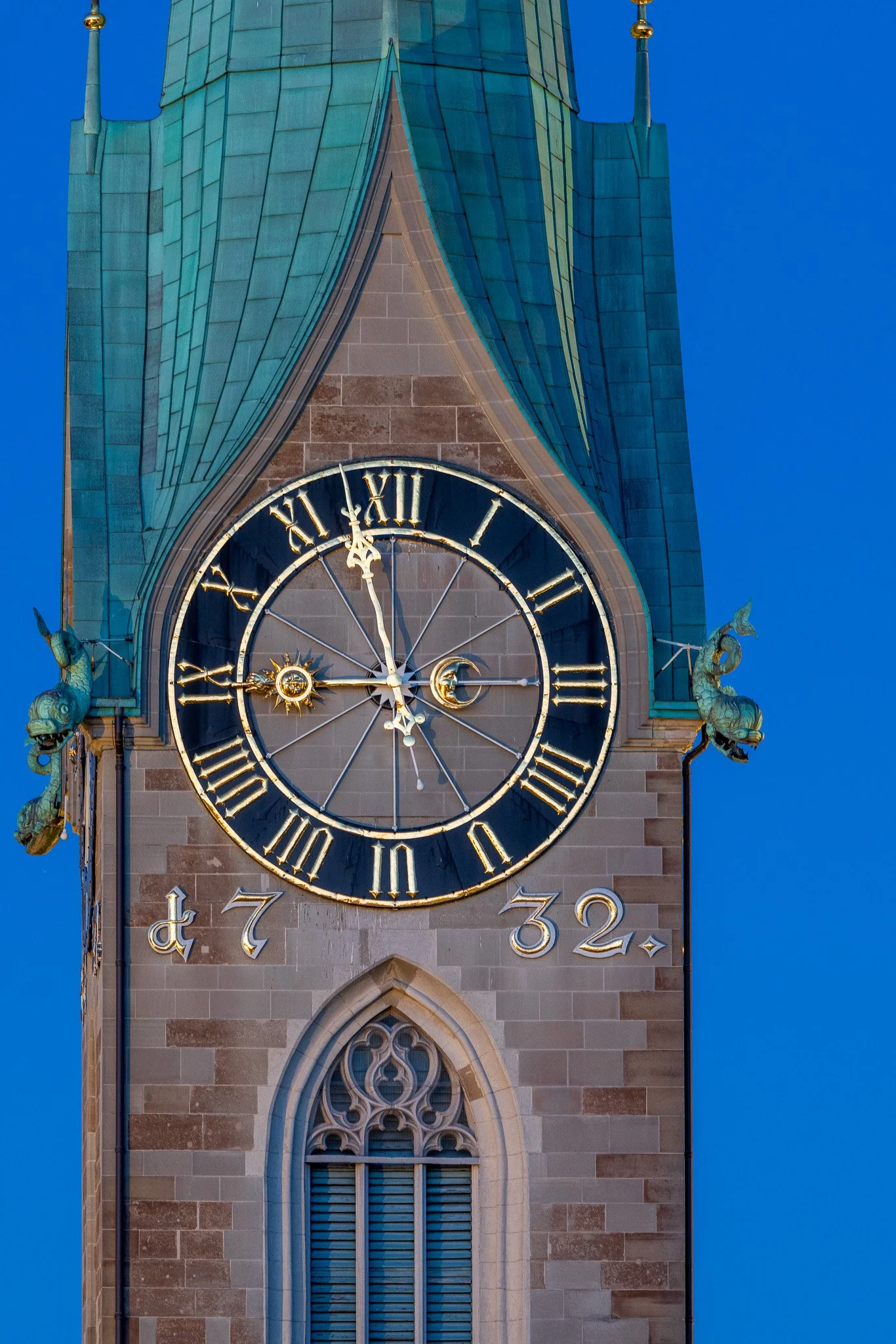
The distinctive green spire of the Fraumünster rising above Zurich’s historic riverfront.
Bahnhofstrasse
One of the most expensive shopping streets in the world runs 1.4 kilometers from Zurich's main train station to Paradeplatz and the lake, lined with luxury watch boutiques, Swiss confectioneries, tram tracks, and plane trees that turn gold in autumn. The contrast between the restrained elegance of the architecture, the quiet movement of the trams, and the extraordinary wealth concentrated in its display windows makes for compelling street photography at any time of day.

Trams, pedestrians, and elegant storefronts along Bahnhofstrasse in central Zurich.
At Christmas, Bahnhofstrasse becomes something else entirely. The Lucy lights installation (one of Europe's finest Christmas illuminations) turns the entire street into a tunnel of warm light, and the combination of the illuminated trees, moving trams, and pedestrians creates extraordinary night and long-exposure photography conditions.

Zurich’s Bahnhofstrasse illuminated by the Lucy Christmas lights during the holiday season.
📷 Pro Tip: For daytime street photography, the section between Paradeplatz and Bürkliplatz (where the street meets the lake) is the most interesting compositionally — the plane trees narrow the street visually and frame the view toward the water. For night photography and Christmas lights, shoot from the center of the street with a tripod during a quieter moment (early evening on a weekday) and use a slow shutter speed (2–8 seconds) to blur the trams into light trails. A 24–50mm handles both.
Best time: Daytime for architecture and street photography. Blue hour for tram light trails. December for the Lucy Christmas lights.

A tram moving beneath the Christmas lights along Bahnhofstrasse at blue hour.
Street Photography
Zurich is one of Switzerland's best cities for street photography. The Old Town, Niederdorf district, Bahnhofstrasse, and the riverside promenades offer a constant mix of architecture, local life, cafés, markets, and iconic trams. I found early mornings particularly rewarding when the streets were quieter, and the light was softer.
For street photography, I preferred carrying a smaller camera and limiting myself to a single focal length. A Leica Q3, a 35mm lens, or even a smartphone allows you to move through the city discreetly while remaining ready for spontaneous moments.

Calm water, swans, and Alpine views along the Lake Zurich promenade.
Zurich is known for its architectural diversity. From the medieval buildings in the Old Town (Altstadt) to the sleek modernity of the financial district, street photographers can capture striking contrasts in just a short walk.
The city’s streets are always buzzing with activity. Key areas like Bahnhofstrasse and Niederdorf are perfect for capturing candid moments of locals and tourists alike, whether they’re shopping, enjoying a coffee, or commuting. The variety of people and activities in these areas makes for dynamic and engaging photos.

Pastel façades and traditional architecture along the streets of Zurich’s Altstadt.


Night Photography
Once an industrial area, Zurich West is now a hip, modern district with cool architecture, street art, and trendy restaurants.
Zurich is excellent for night photography! The city offers a blend of modern architecture, historic charm, and vibrant urban life, making it a fantastic subject for photographers after dark.
Pro Tip: The best night composition in Zurich is from the Münsterbrücke bridge, looking north toward the Grossmünster with the Limmat reflecting the church lights below. A tripod is essential. Shoot between 15 and 30 minutes after sunset for the optimal blue hour balance between sky and artificial light. An ND filter is not needed at night; bring a remote shutter release instead to eliminate camera shake on long exposures.

The Grossmünster illuminated above the Limmat River during blue hour in Zurich.
The Limmat River, flowing through the city, offers beautiful reflections of illuminated buildings, churches, and bridges at night. The Grossmünster and Fraumünster churches, both iconic landmarks, look stunning when lit up, providing dramatic shots with reflections in the calm river.

Zurich’s historic buildings reflected in the Limmat River after sunset.
Zurich's Altstadt, with its narrow cobblestone streets and historic buildings, provides excellent low-light photography opportunities.

Warm streetlights illuminating the cobblestone lanes of Zurich’s Old Town.
The mix of soft streetlights and old-world charm creates a captivating atmosphere for night shots.

Night photography among the historic façades and narrow streets of Zurich.
One of the world's most exclusive shopping streets, Bahnhofstrasse, is beautifully illuminated at night, especially during the holiday season. The streetlights, luxury stores, and passing trams offer great opportunities for capturing vibrant street scenes and urban life.

Night photography among the historic façades and narrow streets of Zurich.
Uetliberg Mountain
Zurich's local mountain, at 871 meters, is accessible from the city center by the S10 Uetlibergbahn train in just 20 minutes from Zurich HB (platform 21/22), followed by a 10-minute walk to the summit. What it offers in return is a 360-degree panorama: the full arc of the city and Lake Zurich below, the entire Alpine chain from the Säntis to the Eiger on clear days, and — in autumn — Zurich's famous sea of fog.
The sea of fog effect occurs most reliably in October and November, when cold overnight air settles as low cloud over the city and lake while the summit remains in clear sunshine above. The city disappears. Only the cathedral towers and the Uetliberg summit push above the white expanse. It is one of the most extraordinary atmospheric photography conditions in Switzerland.
📷 Pro Tip: For the sea of fog, come on a cold, clear morning in October or November. Check the Swiss MeteoSchweiz forecast; a temperature inversion above 800m on a clear-sky day almost guarantees the effect. Climb the 30-meter lookout tower at the summit (CHF 2 fee) for an unobstructed 360-degree view. Bring a tripod for long exposures and a telephoto (70–200mm) to compress the Alpine peaks behind the sea of fog. For standard panoramic views, a 16–35mm handles the sweep of the lake and city. Arrive before sunrise for the best light and the fewest people.
Best time: October–November mornings for sea of fog. Clear days year-round for Alpine views. Access: S10 train from Zurich HB, platform 21/22. 20 minutes. Trains run from early morning.
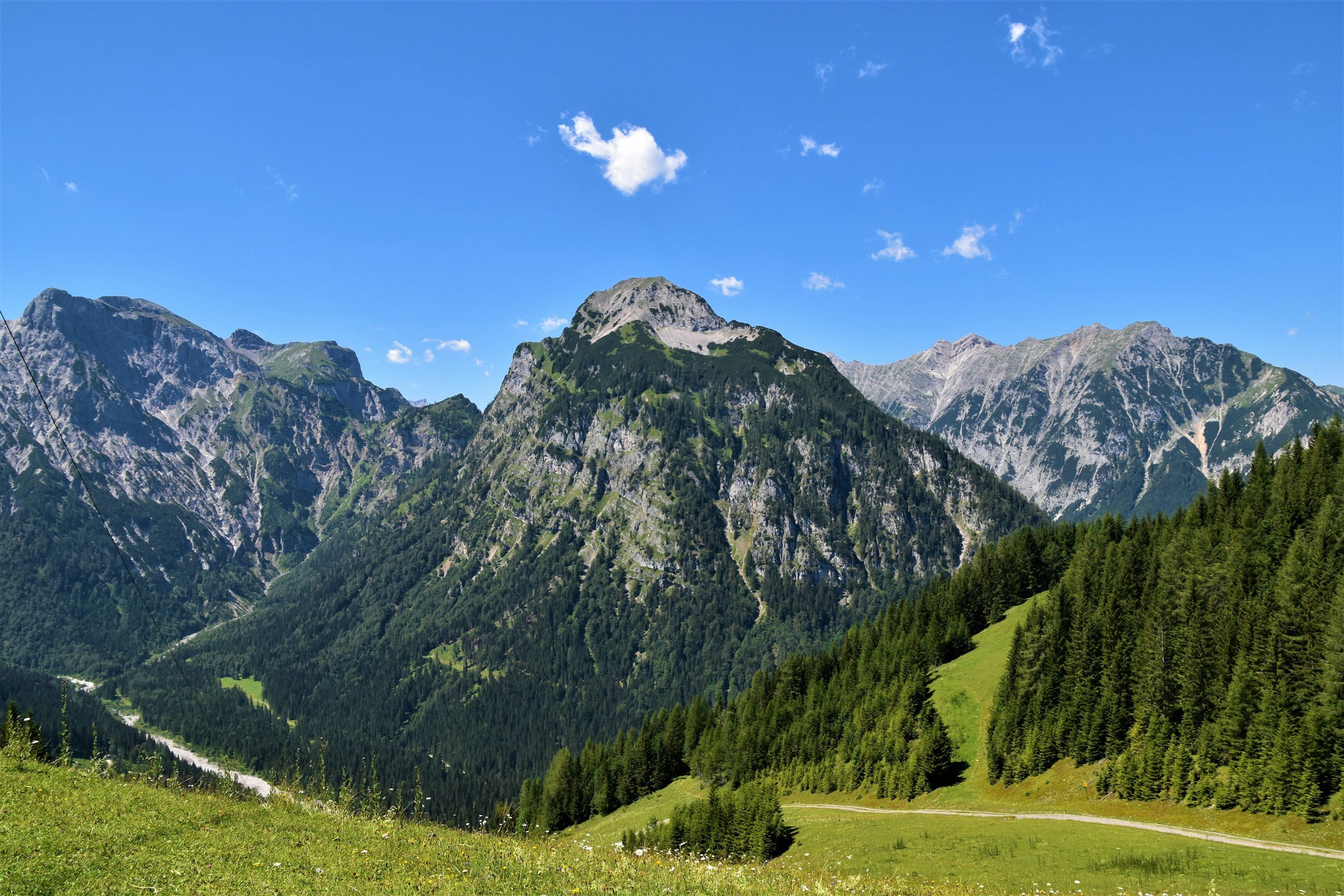
A panoramic view across Zurich, Lake Zurich, and the Swiss Alps from Uetliberg Mountain.
Augustinergasse
This narrow cobblestone lane in the Old Town is the most photogenic street in Zurich, and it is in your meta description and title tag, but is missing from your body. Fix that immediately.
Augustinergasse runs from the area of Bahnhofstrasse down toward the Augustinerkirche, lined with pastel facades in faded cream, sage, and dusty pink, with hand-carved wooden bay windows, flower boxes, and window shutters that have barely changed in centuries. The street feels like a film set, except it is simply how Zurich has always looked.
In the morning, before 8 am, the lane is completely quiet. The light is soft and directional, falling across the facades and illuminating the painted window frames from the side. This is the shot your title promises.
📷 Pro Tip: Shoot from the lower end of the street looking uphill, using a 35–50mm focal length to capture the compressed layers of facades and the architectural detail of the bay windows above the cobblestones. Come before 8am on a weekday. By 9am, tour groups arrive and the intimacy disappears. In winter, fog occasionally sits in the lane until mid-morning, creating an atmospheric, almost monochrome quality that is extraordinary.
Best time: Dawn to 8am. Winter mornings with fog add extra mood.
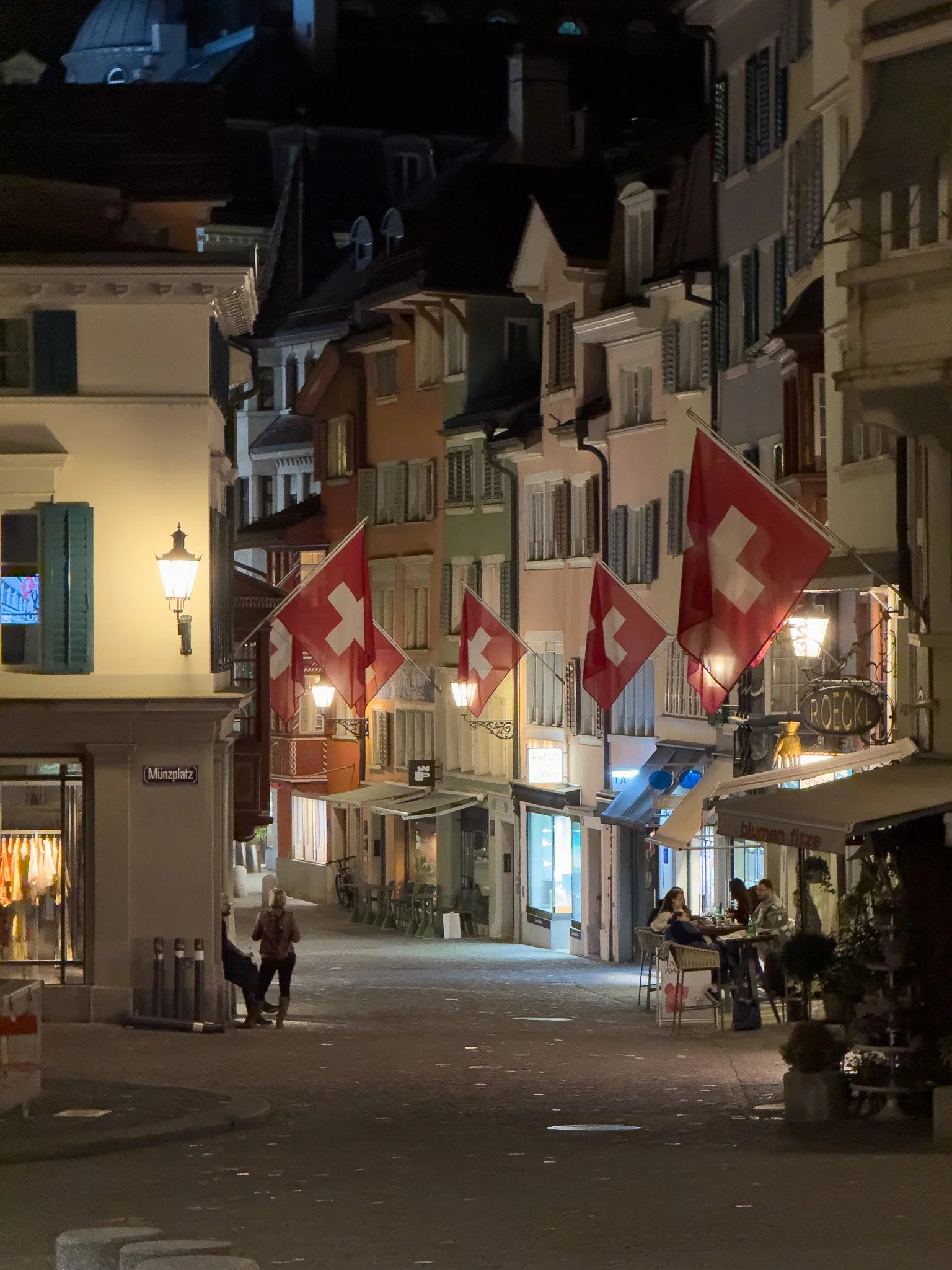
The colorful façades and traditional bay windows of Augustinergasse, one of Zurich’s most photogenic Old Town streets.
Venturing Outside of the City
If you drive 20 minutes outside of the city, you begin to experience the incredible beauty of Switzerland.
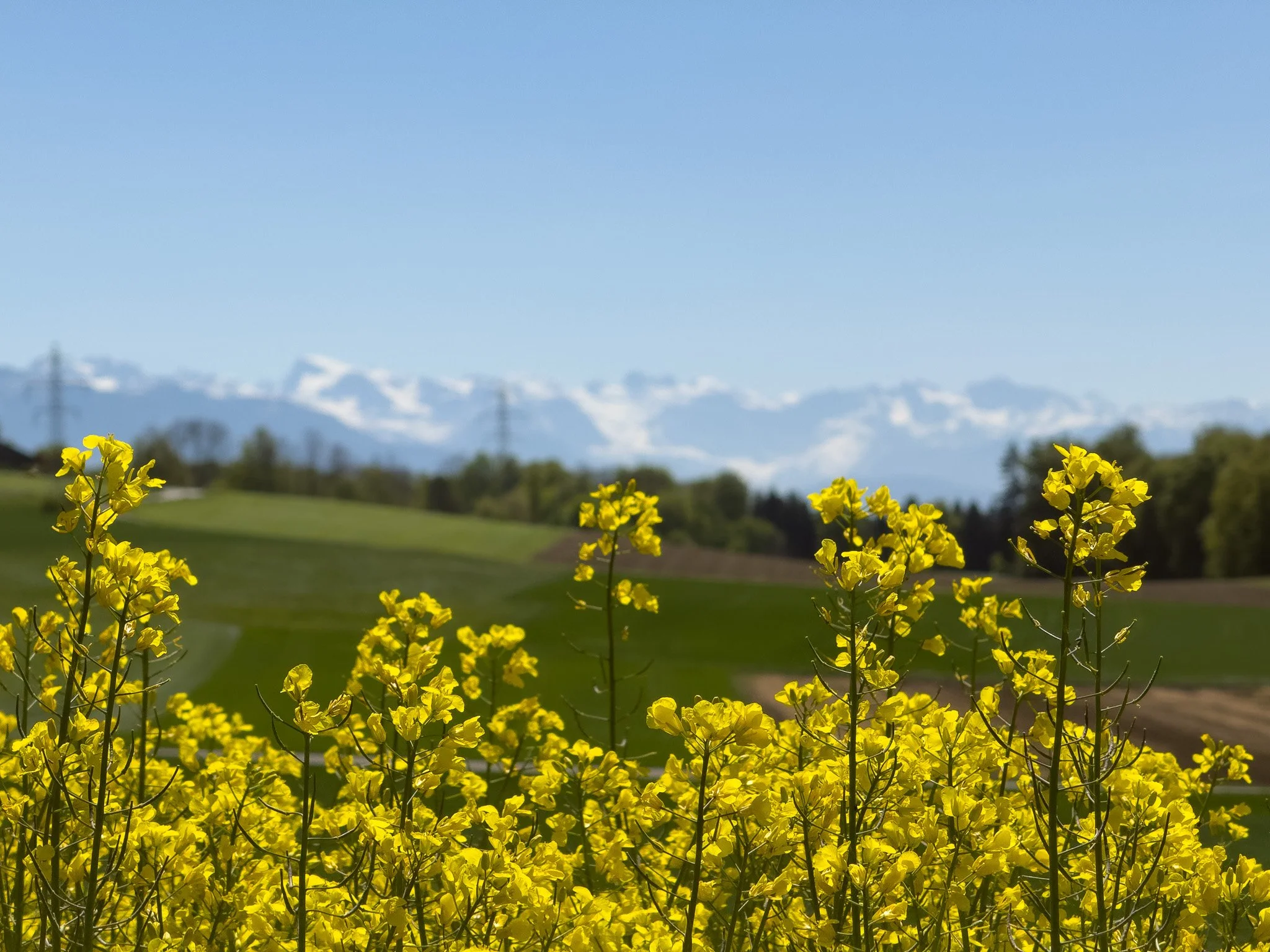
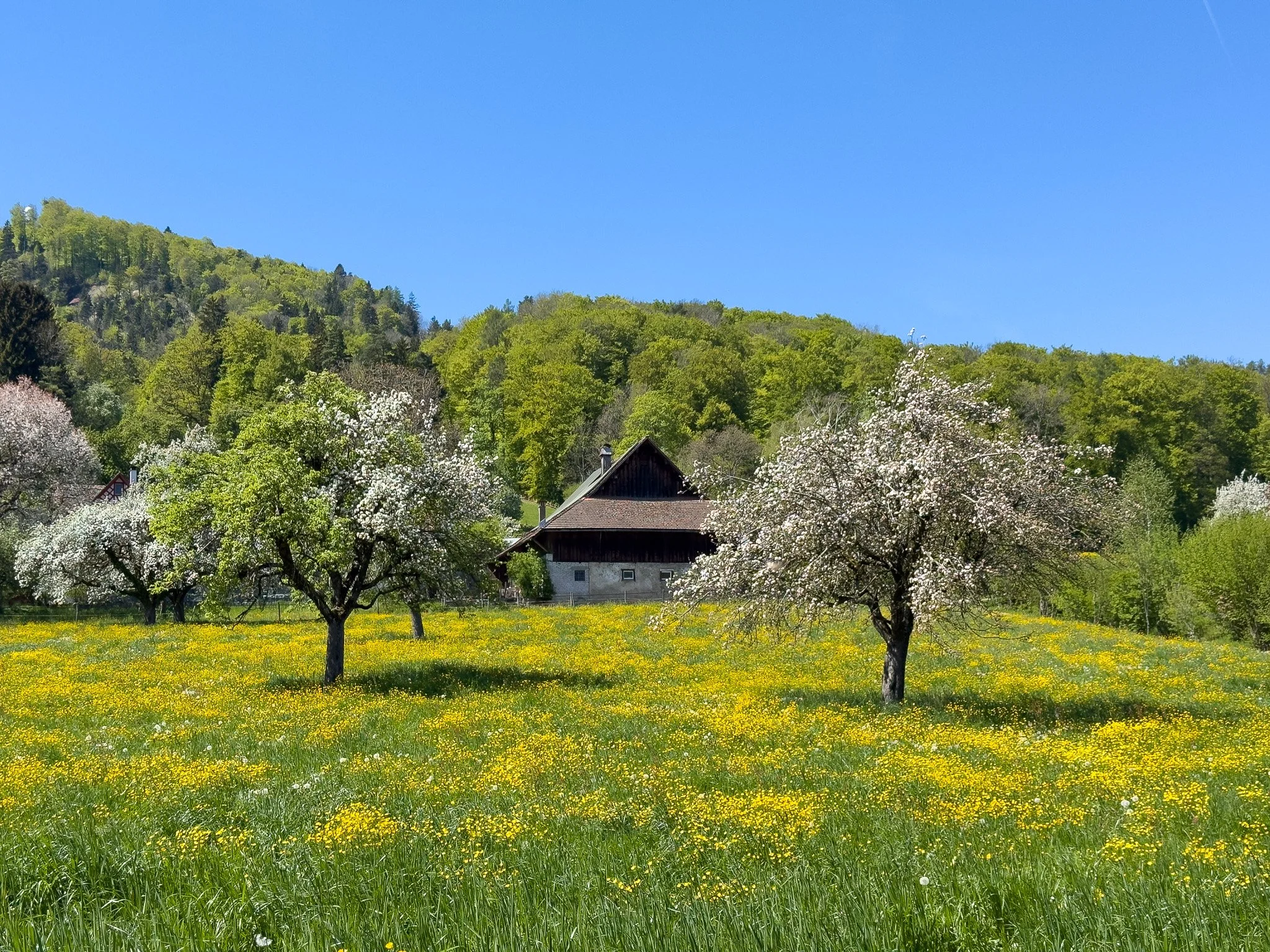
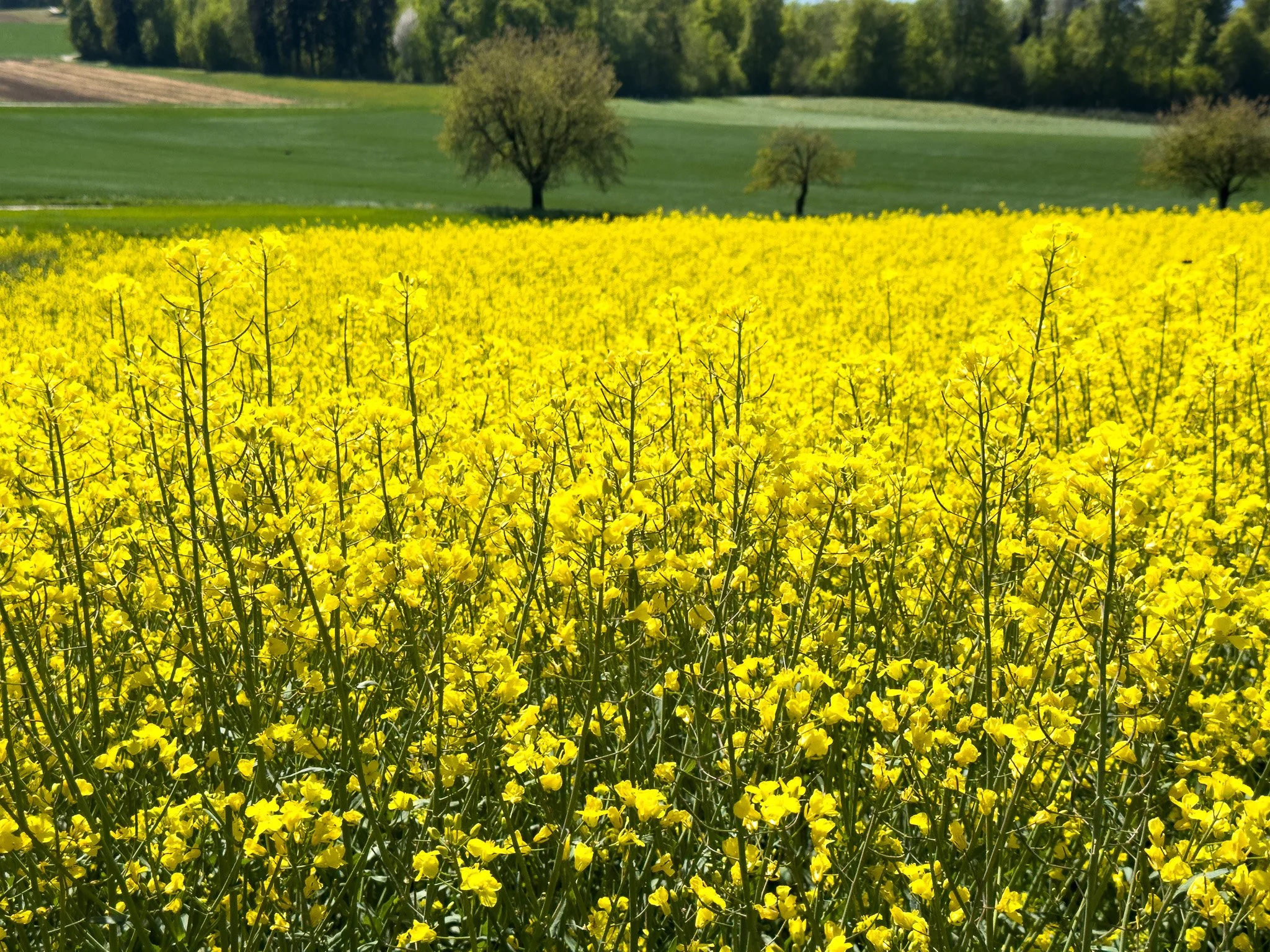
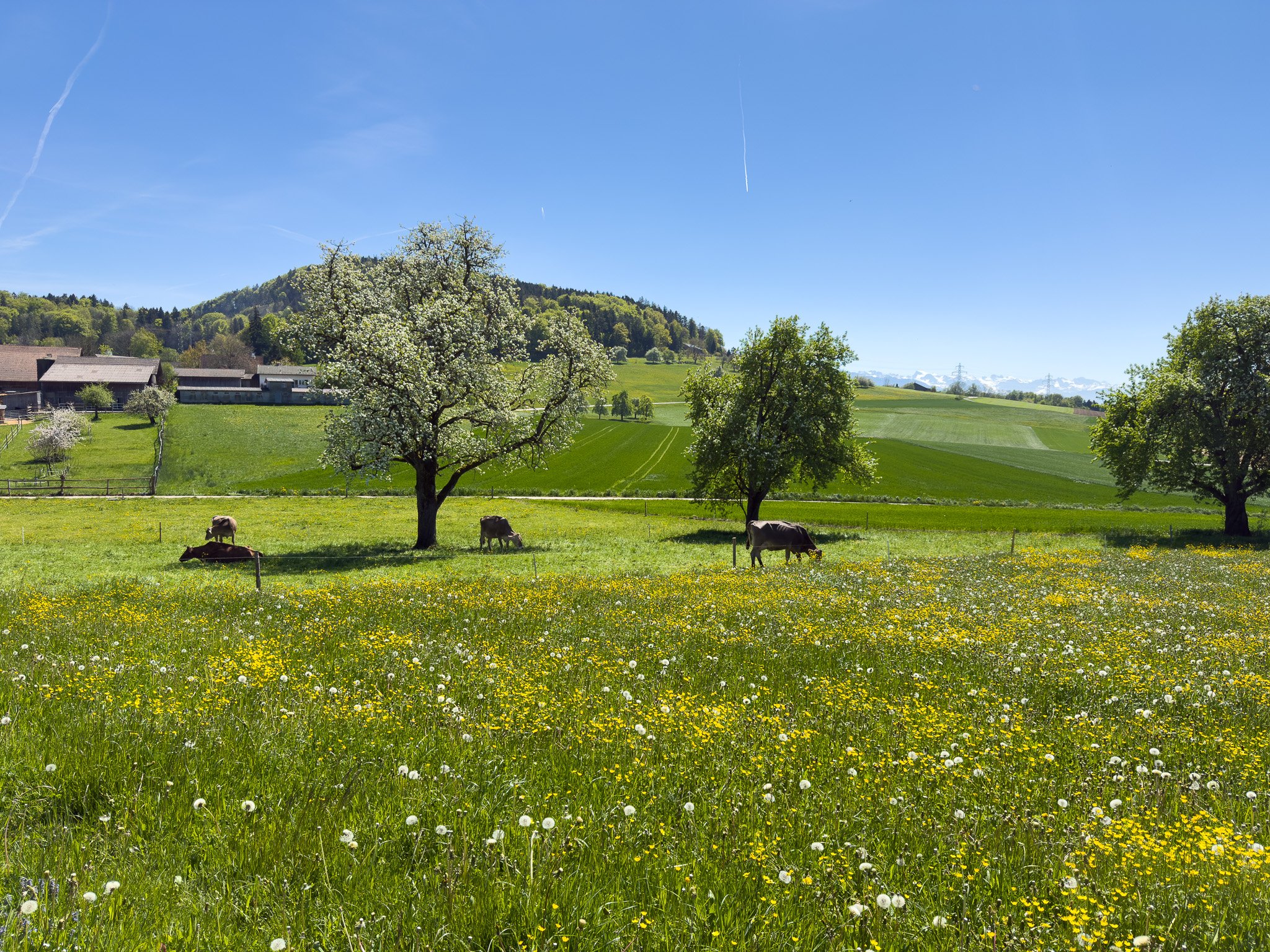
There are also some beautiful areas to walk around close to the airport.

Spring landscapes in the Swiss countryside near Zurich.
Festivals and Holidays
Zurich Christmas Markets (November to December) The Christmas markets are the most photogenic seasonal event in Zurich, and the city takes them seriously. The market inside Zurich HB (the main train station) is held under the station's vast vaulted roof, with a giant Christmas tree at its center and stalls selling ornaments, chocolate, and Glühwein surrounded by commuters and travelers. The outdoor markets on Werdmühleplatz and Bellevueplatz add open-air atmosphere. For photographers, the Lucy lights installation on Bahnhofstrasse — one of Europe's finest Christmas illuminations — is the headline subject. Blue hour comes early in December, which means long hours for night and long-exposure work. Bring your tripod every single evening.
Sechseläuten (April) Zurich's spring festival is unlike anything else in Switzerland. The guilds of the city march through the streets in historical costume, and the festival culminates with the burning of the Böögg — a large snowman effigy stuffed with fireworks — on the Sechseläutenplatz square by the lake. The time it takes the Böögg's head to explode is believed to predict the quality of the coming summer. For photographers, the guild parade through the Old Town is the main event: elaborately dressed groups on horseback and on foot, medieval banners, and the energy of a city genuinely invested in its own traditions. Position yourself along the parade route on the Bahnhofstrasse or in the Old Town streets for the most dynamic frames. The bonfire itself is surrounded by crowds, so arrive early and secure an elevated position if you can.
Zurich Street Parade (August) One of the largest techno music festivals in the world takes over the lakefront and the city center for a full weekend in August, drawing over a million participants. For street photographers, it is extraordinary: the costumes, the faces, the sheer concentrated energy of the crowd along the lake. A 35mm or 50mm prime and the willingness to be in the crowd rather than above it will produce the strongest work. Expect crowds that make normal photography logistics very challenging. Come early, stay mobile, and leave your tripod at the hotel.
Zurich Film Festival (September to October) The ZFF draws international talent and runs across multiple venues in the city center for about two weeks in late September and early October. The red carpet events at the Opera House and the Zurich main venues offer classic event photography opportunities, and the shoulder-season timing means you get the festival energy without the summer tourist peak. The surrounding street photography of the city in early autumn light — warm, long, directional — is excellent context for the ZFF visit.
Frequently Asked Questions About Visiting Zurich
Is Zurich expensive?
Yes, it's consistently ranked among the most expensive cities in the world, and the restaurant and hotel prices reflect that. There's still real range, Haus Hiltl's vegetarian buffet, and ViCafe's quick coffee stops keep everyday costs more manageable.
Do you need a car in Zurich?
No, and it's actively unnecessary. Public transport, trams, buses, and boats run on a schedule reliable enough to make driving pointless within the city. Most photography locations are walkable from the Old Town anyway.
What are the best photo spots in Zurich?
The Grossmünster from the Münsterbrücke at blue hour, Augustinergasse before 8 am, and Lindenhof Hill at golden hour are three that consistently deliver. The full list with Pro Tips is above.
Can you fly a drone in Zurich?
Check current Swiss FOCA (Federal Office of Civil Aviation) regulations before flying, particularly around the Old Town and lakefront, which carry additional restrictions given the density of historic architecture and crowds.
What surprised you most about Zurich?
Seeing the Alps rise above the lake on a clear day was stunning. You know intellectually that Switzerland has mountains, but nothing prepares you for standing on the Quaibrücke and watching the full Alpine chain appear above the water like a painted backdrop.
How many days do you need in Zurich?
Two to three days cover the essentials; four to five if you want to properly explore the neighborhoods and take your time with photography.
Is December worth planning a trip around for the Christmas markets?
Yes, absolutely. The Lucy lights installation on the Bahnhofstrasse and the Old Town's Christmas markets create some of the best night and long-exposure photography conditions the city offers all year.
Is Zurich a good base for exploring the rest of Switzerland and Europe?
Yes, genuinely. The Dolomites, Salzburg, and Cologne are all within a few hours by car or train, making Zurich a strong hub for a broader European photography trip.
Final Thoughts
Zurich stayed with me longer than I expected it to.
I came thinking I understood what kind of city it was: precise, expensive, efficient. A layover. What I found was a city with genuine warmth under the restraint, an Old Town that rewards early mornings the way few cities in Europe do, and a quality of everyday life that makes you reconsider what a city can actually be when it is run with care.
For photographers, Zurich is about the contrast between precision and age. Augustinergasse has looked essentially the same for 400 years. The trams run on six-second intervals. The Christmas lights on the Bahnhofstrasse are installed by October and maintained as seriously as any infrastructure project. Stand on the Münsterbrücke at blue hour with the Grossmünster illuminated above you, the Limmat reflecting the last color in the sky, and the city beginning to quiet — and you will understand why photographers keep coming back.
Come in December if you can. The city is at its most photogenic when the markets are running, the Lucy lights turn the Bahnhofstrasse into something extraordinary, and the early darkness gives you long hours of blue hour and night photography. Come in autumn for the sea of fog on Uetliberg. Come in spring for the lake at its clearest and the Old Town in early morning without a crowd.
However you time it, wake up early. Zurich gives its best light to those who show up for it.
My Photography & Travel Guide to the Dolomites, Italy- About four hours by car. Tre Cime di Lavaredo at sunrise, the meadows of Alpe di Siusi, and the most dramatic mountain light in Europe. A natural extension of any Swiss photography trip.
My Photography & Travel Guide to Salzburg, Austria- Four hours by train. Baroque rooftops, Hohensalzburg Fortress, and a river city that rewards photographers who get there before the Mozart tourists arrive.
My Photography & Travel Guide to Cologne, Germany - About four hours north by train. The Cologne Cathedral at sunrise from the opposite Rhine bank is one of the great Gothic architecture photography shots in Germany.
Want to improve your photography while exploring some incredible destinations? Join me on one of my photography workshops! You can find all the details, including upcoming destinations and dates, through the links below.
Let's Stay Connected!
Finally—a beginner-friendly photography guide that makes sense.
If you've ever picked up a camera and thought, "Now what?" this is the book for you.
Photography Made Simple is written for adults who are just starting out and want a clear, encouraging, real-world approach to learning photography. Whether you're using a DSLR, mirrorless, or just your smartphone, this guide walks you through the basics—without the jargon or tech overwhelm.
Inside, you'll learn:
The only camera settings you really need to know to get started
How to shoot sharper, more intentional photos using light and composition
Simple tips for portraits, landscapes, travel, and everyday life
What gear you do (and don’t) need
How to create better photos without upgrading your camera
You’ll also get practical exercises, cheat sheets, and tips for organizing and editing your images—plus the confidence to shoot off Auto Mode for good.
This is not a textbook. It’s a friendly guide to seeing the world with fresh eyes—and finally capturing what you see the way you imagine it.
📸 Format: PDF download
Pages: 100+
Perfect for: Beginners, hobbyists, and anyone ready to take better photos without the stress

Unlock the power of long exposure and take your photography to the next level.
Mastering ND Filters is your complete guide to understanding and using Neutral Density (ND) filters with confidence. Whether you’re a beginner or a hobbyist looking to expand your creative toolkit, this practical, easy-to-follow book walks you through everything you need to know—from gear choices and exposure calculations to creative shooting techniques and real-world examples.
Inside you’ll learn:
What ND filters are and how they work
How to choose the right strength and type of filter
Step-by-step workflows for photographing waterfalls, clouds, seascapes, and city scenes
How to calculate long exposures using apps and charts
Pro tips for reducing noise, focusing with dark filters, and getting tack-sharp results
Packed with clear explanations, inspiring images, and field-tested advice, this guide will help you shoot with intention, slow down your process, and create stunning photographs that capture not just motion—but mood.
Whether you're shooting with a DSLR, mirrorless camera, or even a smartphone, Mastering ND Filters will help you bring your creative vision to life.