Quito, Ecuador Travel & Photography Guide: Best Photo Spots, Things to Do & Hidden Gems
Quito is, quite literally, breathtaking. I mean that in two ways. First, the altitude gets you. At 9,350 feet, the thin Andean air hits before your eyes have a chance to take in what is in front of you. Second, once you do catch your breath, this city is genuinely one of the most photogenic capitals I have ever pointed a camera at.
I have visited Quito twice, and it is a city that rewards you immediately and keeps delivering the longer you stay. It holds the title of the first city ever declared a UNESCO World Heritage Site, and once you walk its cobblestone streets and stand in front of its gilded Baroque churches, you understand exactly why. There is nowhere else in the Americas where a colonial city of this scale and this quality has been preserved so completely. And that fact alone should be enough to put Quito on your travel radar.
For photographers, the visual range here is extraordinary. In a single morning, you can shoot golden light washing over Baroque church facades, frame the skyline against the cloud-forested flanks of Pichincha Volcano, and find street scenes that feel like they belong to another century. The equatorial light is clean and direct at altitude, and the deep blue skies you get during the dry season are the kind photographers dream about. Add to that the street art neighborhoods, the colonial plazas full of daily life, and the drama of cable cars climbing a live volcano, and you have a destination that will fill cards fast.

In this Photography Guide to Quito, I share the places and experiences that continue to draw me back. You will find my favorite photography locations, guidance on when and where to shoot, practical travel tips, and gear recommendations, along with cultural insights to help you explore and photograph Quito with confidence, respect, and ease.

Photographer's Notes
Before you go, here are my own takeaways.
Favorite Season: (confirm: June-September or Dec-March)
Favorite Location: La Compañía de Jesús
Favorite Hotel: Casa Gangotena
Favorite Restaurant: Zazu
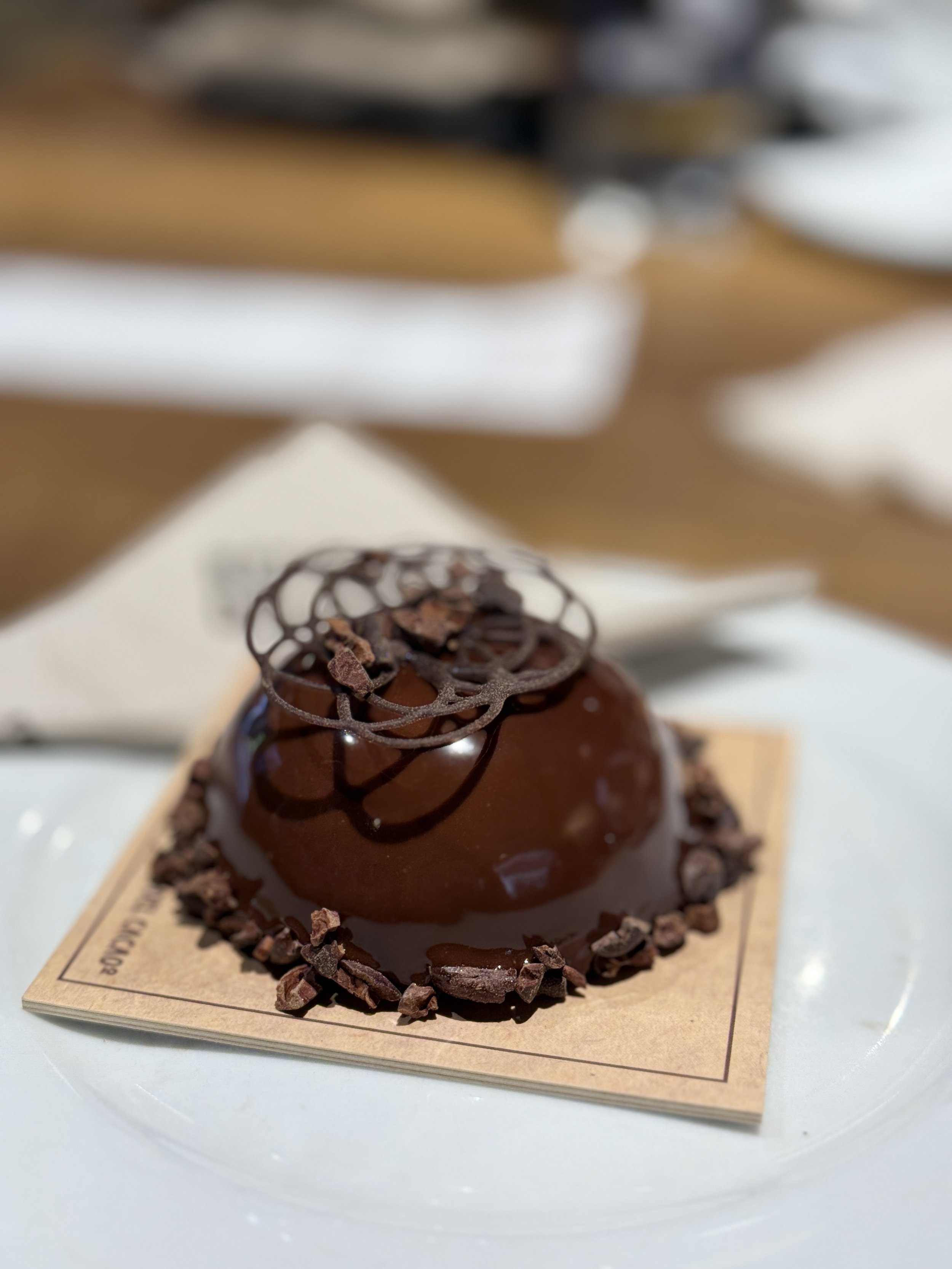
Favorite Café: Republica del Cacao
Favorite Lens: 15-35mm f/2.8
Would I Return? Yes, though I've already been three times, so it might be a few more years.
Where to Stay in Quito
The two neighborhoods best suited for photographers are Centro Histórico (Old Town) and La Mariscal. Old Town puts you within walking distance of every major colonial photography location and lets you shoot those empty-plaza mornings before the city wakes up. La Mariscal is more modern and lively, with better access to restaurants, coffee shops, and the contemporary side of the city.
My strong recommendation: if the budget allows, stay in Old Town for at least part of your trip. The early-morning light on those streets is something you do not want to commute to.
Luxury Hotels in Quito
Casa Gangotena — Old Town, on Plaza San Francisco. This is the best address in Quito for photographers. It is the only Relais & Châteaux property in Ecuador, an elegantly restored colonial mansion with a rooftop terrace that delivers some of the best views of the Old Town you will find from any hotel in the city. The restaurant is excellent, and waking up steps from Plaza San Francisco is a significant advantage for early-morning shoots.
Hotel Plaza Grande — Facing Plaza de la Independencia (Plaza Grande), this is a historic luxury property with grand colonial interiors and a location that cannot be beaten for centrality. The view from certain rooms directly onto the presidential palace and the main square is something special.
Illa Experience Hotel — In the San Marcos neighborhood, within Old Town, this high-end boutique property blends Ecuadorian design with modern comfort in a quieter corner of the historic center. A strong choice if you want the Old Town location without being directly on the busiest plazas.

Mid-Range Hotels in Quito
Hotel Mama Cuchara — An artsy boutique hotel in Old Town with a rooftop terrace that has solid views and a creative, locally rooted vibe. Good value and a great base for anyone spending most of their time in the colonial center.
Ikala Quito Hotel — In La Mariscal, with a colonial aesthetic and comfortable rooms. A good pick if you want to be closer to restaurants, nightlife, and the Parque La Carolina area.
Hotel Finlandia — A modern and well-priced option in the La Carolina district, suited for travelers who want a quieter, more residential neighborhood and easy taxi access to shooting locations across the city.

The Casa Gangotena has a stunning roof top restaurant with incredible views of the old town.

Best Option for Onward Travel to the Galápagos or Amazon
If you are flying out early for the Galápagos Islands, the Amazon, or a cloud forest lodge, the Wyndham Quito Airport Hotel is the smart choice. The drive from Old Town to Mariscal Sucre International Airport can take 45 minutes or more, depending on traffic, and for a 5 am flight, staying near the airport eliminates a significant variable. The rooms are spacious and modern.

Best Time to Visit Quito
The dry season, from June through September, is the prime window for photography. Skies are clearer, the volcanic peaks are visible more consistently, and you get reliable golden hour light without having to gamble on afternoon clouds rolling in and killing your shoot. June through August gives you blue-sky backgrounds for the Baroque facades that simply hit different than grey overcast days.
December through February is also a workable window with fewer crowds and some atmospheric drama in the skies. I visited in December on one trip and lucked into the Fiestas de Quito in early December, which is one of the great photographic events in South America. More on that below.
The rainy season, roughly October through May, brings afternoon showers that can clear quickly and leave beautiful wet cobblestones and moody cloud layers against the mountains. These are not necessarily bad photography conditions; they are just unpredictable. If you shoot in the rain season, work mornings hard and accept flexibility in your afternoon plans.
Crowds: Quito's Old Town is busy on weekends and during Ecuadorian public holidays. For solo plaza shots with clean compositions, weekday mornings before 8am are your best window.

How Many Days Should I Stay in Quito
Three days is the minimum. Five days is the right pace.
In three days, you cover Old Town thoroughly, make the trip up the Telefériqo, and get to Mitad del Mundo. You will not feel rushed, but you will not have time for day trips.
With five days, you can add a half-day in Guápulo or La Floresta for street art, do the Otavalo Market day trip (a two-hour drive north and absolutely worth it), and revisit your favorite locations at different times of day for different light. Five days also gives you buffer time to account for altitude acclimatization in your first day or two. Do not underestimate this. Take it easy on day one, drink water, skip the wine, and let your body adjust to nearly 9,400 feet before you start marching up hills with a camera bag.
A rough five-day outline:
Day 1: Arrive, acclimatize. Easy walk through Old Town in the late afternoon. Dinner in the colonial center.
Day 2: Early morning at Plaza San Francisco and La Compañía. Afternoon at El Panecillo and La Ronda. Night photography of the lit churches.
Day 3: Telefériqo morning. Basílica del Voto Nacional. Mitad del Mundo in the afternoon.
Day 4: Street art in La Floresta and Guápulo. Markets. Plaza de la Independencia at golden hour.
Day 5: Day trip to Otavalo Market, or slow morning revisiting your best locations.
Getting Around Quito
Walking is the best way to cover Old Town. Most major photography locations in the colonial center are within 15 to 20 minutes on foot of each other, and the narrow streets reward slow exploration. Be mindful of the altitude: what looks like a short walk on a map can leave you winded on uphill stretches.
Uber and Cabify are both available and work reliably in Quito. I used Uber throughout my visits and had no issues. Keep the app ready because street taxis can vary in reliability. If you do take a street taxi, confirm it has a working meter before you get in.
Official taxis are available and generally safe; the key is making sure they use the meter. Unlicensed taxis are a known concern, so stick to app-based rides or hotel-arranged cars when possible.
Public Transport: Quito has the Trolebús and Ecovía bus lines, which are inexpensive and connect the city north to south. They can be crowded during peak hours and are not ideal if you are carrying camera gear, but they are perfectly usable for simple commutes.
For day trips to Mitad del Mundo (about 30 minutes) or Otavalo (about two hours), arrange a private car through your hotel or use a trusted guide. Juan Carlos Guerra at JCG Logistics runs excellent private tours and comes highly recommended. He took us through Quito's history, included a chocolate tasting, and pointed out things we would never have found on our own.

Recommended Tour Guide in Quito
For a truly immersive experience in Quito, I highly recommend taking a tour with Juan Carlos Guerra JCG Logistics. He is a super friendly and knowledgeable guide. He gave us a fantastic tour covering Quito’s history, culture, chocolate tasting, and hidden gems, making our trip informative and unforgettable.

Where to Eat in Quito
Quito's food scene is more serious than most travelers expect. The Old Town is where you find the traditional Ecuadorian staples: locro de papa (a thick potato and cheese soup), seco de chivo (braised goat stew), patacones (fried plantain), and the local quesadillas quiteñas, which are nothing like a Mexican quesadilla. They are more like a sweet pastry filled with queso dulce and traditionally eaten with hot chocolate. Try one. You will not regret it.
The modern restaurant scene, concentrated mostly in La Mariscal and the northern neighborhoods, is legitimately world-class. Zazu has been one of the best restaurants in South America for years, and for good reason.

Restaurants in Quito
Zazu — La Mariscal neighborhood. This is the flagship of Quito's fine dining scene, a Relais & Châteaux restaurant with inventive modern Ecuadorian cooking, a legendary 25-foot cylindrical wine cellar, and consistently exceptional service. Go for the tasting menu if your schedule allows. Reserve well in advance.
URKO — A celebrated restaurant built around Ecuador's regional diversity and locally sourced ingredients. The kitchen draws from coastal, Andean, and Amazonian traditions, and the result is some of the most distinctive cooking in the country. Creative and serious.
Hasta La Vuelta, Señor — A fantastic spot in Old Town for traditional Ecuadorian food in a colonial setting. The locro de papa and empanadas de viento are the things to order. This is where you go when you want a meal that tastes like Quito.
Restaurante Casa Gangotena — Even if you are not staying at Casa Gangotena, the rooftop restaurant is worth a visit for the views of Old Town alone. The food is well-executed international and regional cuisine, and the setting at golden hour is genuinely special.
Ignis by La Birrería — A newer addition to the Quito dining scene with strong local buzz and an impressive approach to wood-fire cooking. Worth seeking out if you want something beyond the established names.
Coffee in Quito
Republica del Cacao — Part chocolate shop, part café. Ecuador produces some of the finest single-origin cacao in the world, and this is the best place in Quito to understand why. Get the drinking chocolate and a coffee, and take time to taste the bars. There are multiple locations in the city.
Pacari Chocolate Experience — Ecuador's most acclaimed organic chocolate brand has a café and tasting experience in Quito. Another essential stop for understanding what makes Ecuadorian cacao exceptional.
QUITO DELI (at the Swissotel) — For a reliable espresso, good pastries, and a comfortable seat to edit photos or plan the next day's shoot, the Quito Deli is a consistent choice with a loyal local following.
Photography Gear to Bring to Quito
Mirrorless/DSLR Kit
Quito rewards a versatile kit. The combination of wide-angle architecture work in tight colonial streets, landscape and volcano shots from elevated positions, and street photography in busy markets means you want options.
Camera body: Canon EOS R5 Mark II, Sony A7R V, or Nikon Z8. Any of these handles the full range of what Quito asks of you.
Wide-angle (15–35mm f/2.8): This is your primary lens for the colonial center. The interior of La Compañía requires it, and the narrow streets of Old Town are made for a wide perspective. Bring this and use it constantly.
Standard zoom (24–70mm f/2.8): Your walk-around lens for street photography, plazas, and markets. The flexibility keeps you ready for moments you cannot anticipate.
Telephoto (70–200mm f/2.8 or 100–500mm): Useful for compressing the volcanic landscape from elevated positions, for isolating architectural detail on the Basílica from across the plaza, and for market portraiture from a respectful distance.
Prime (35mm or 50mm): A fast prime is excellent for La Ronda and street art neighborhoods where you want to travel light and shoot candid moments.
Tripod or Platypod: Essential for blue hour in Old Town. The churches light up beautifully after dark, and long exposures of the candlelit plazas are some of the best images you can bring home from Quito. A carbon-fiber travel tripod is the practical choice given the walking distances involved.
ND filters (6-stop and 10-stop): Useful for smoothing water and motion in the market scenes, and for long-exposure work in high-altitude daylight where the light is intense.
Extra batteries and cards: The altitude and cold at the Telefériqo drain batteries faster than expected. Bring spares and keep one battery warm in an inside pocket.
Samsung T7 SSD: Back up cards every evening. Non-negotiable.
iPhone Tips for Quito
Use ProRAW at the Basílica del Voto Nacional. The facade detail and the depth of the Gothic architecture benefit enormously from the additional dynamic range ProRAW captures compared to standard JPEG. Shoot in the late afternoon when the warm light hits the front facade.
Use the ultrawide lens inside La Compañía. The narrow central nave covered in gold leaf is almost impossible to capture in a single frame with a standard lens. The iPhone ultrawide compresses the space in a way that reads as dramatic rather than distorted. Shoot from the entrance looking toward the altar.
Switch to Portrait Mode for market faces at Otavalo. The subject separation between colorful traditional dress and the busy market background is strong. At Otavalo, get close and ask permission with a smile, and Portrait Mode will do the rest.
Night mode at Plaza San Francisco. When the church facade is lit at night, iPhone Night mode handles the mixed lighting and deep shadows better than you might expect. Keep the phone against a wall or railing for the sharpest results.
Drone Note
Drone use is regulated by Ecuador's DGAC (Dirección General de Aviación Civil). Drones over 250g require registration. Flying over Quito's UNESCO-listed Centro Histórico requires additional municipal permits and is treated as a sensitive area due to the risk to historic structures and public safety. Do not assume you can simply launch from a plaza. Check current DGAC regulations and obtain proper permits before bringing a drone to Old Town. On the Galápagos Islands, recreational drone use is entirely prohibited.
Best Photography Locations in Quito
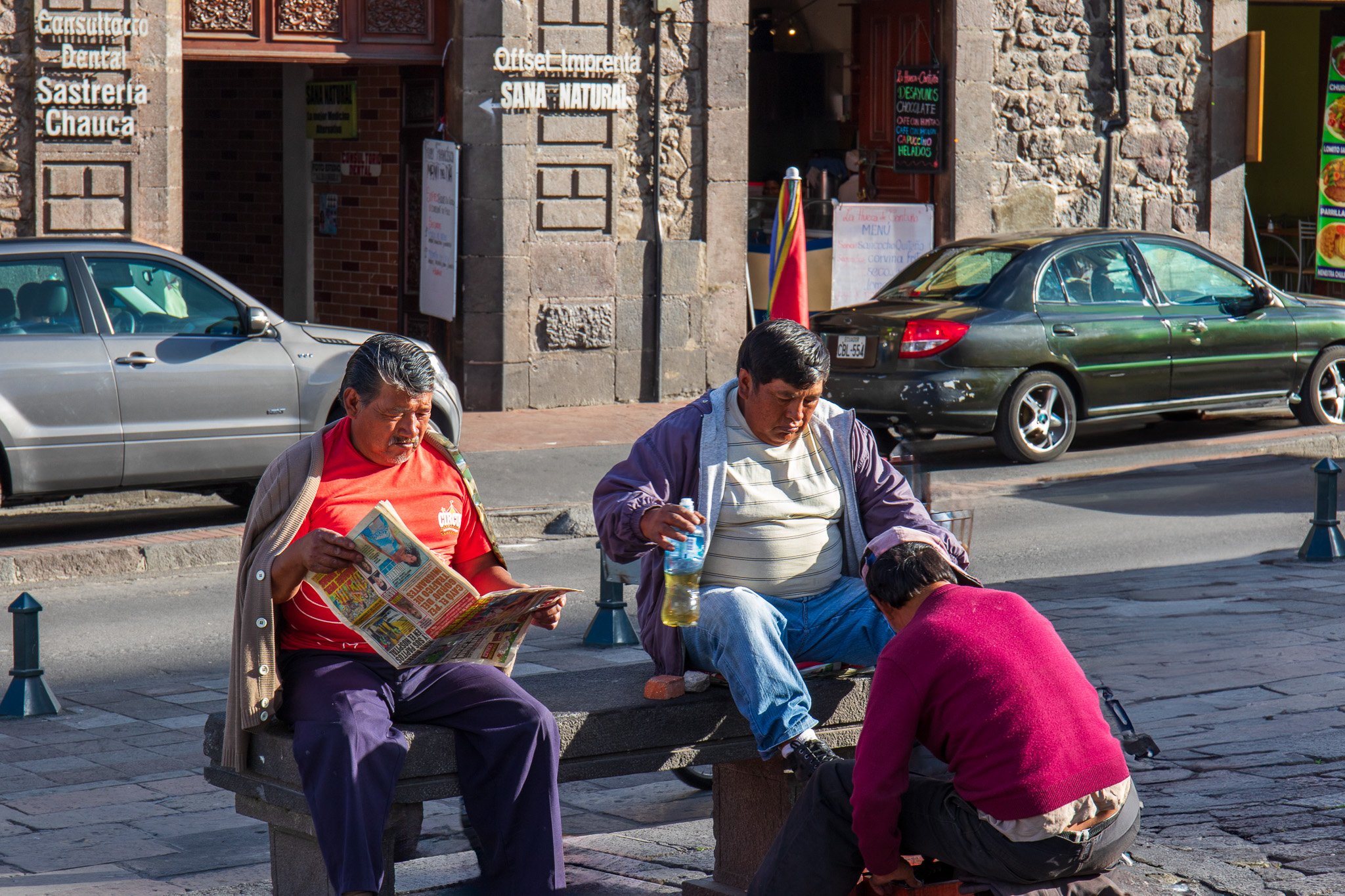
Quito’s historic center is recognized as having the best-preserved, least-altered historic center in all of Latin America. In 1978, it became the first city in the world to be declared a UNESCO World Heritage Site.


Plaza de la Independencia
Independence Square is the principal and central public square of Quito, Ecuador. This is a very busy and lively square full of people.
Plaza de la Independencia (Independence Square), also known as Plaza Grande, is one of the most iconic and historically significant landmarks in Quito, Ecuador. Situated in the heart of the city’s Old Town, a UNESCO World Heritage Site, it serves as a hub of cultural and political activity.

La Compañía de Jesús
This is the most extraordinary church interior I have photographed in Latin America. La Compañía took 160 years to build, from 1605 to 1765, and the result is a central nave covered almost entirely in gold leaf, approximately seven tons of it, layered over carved plaster in an overwhelming explosion of Baroque decoration. The architectural style blends Baroque, Churrigueresque, and Moorish elements, and the visual density of every surface makes it unlike anything else in the region.
For photographers, the challenge is dynamic range. The gold walls glow even in moderate interior light, while the upper nave and ceiling can be significantly darker. Shoot in RAW, expose for the highlights, and bracket if in doubt. The exterior facade is also worth photographing at night, when the building is lit up and glows against the dark sky. The narrow street in front of it compresses the perspective in a way that makes the facade appear even more dramatic.

📷 Pro Tip: Bring your widest lens, 15mm or 16mm, and shoot from just inside the main entrance looking toward the altar. This captures the full length of the nave and the layered gold ceiling receding into the distance. Avoid the midday rush when tour groups fill the interior; visit when it opens in the morning or late in the afternoon when attendance thins. Tripod use is generally not permitted inside, so bump your ISO and shoot wide open. The exterior at night: position yourself across the narrow street at 24mm to 35mm and use a doorway or wall for camera support.
Best time: Morning opening or late afternoon interior. Night exterior after 7pm. Access: Small admission fee. Check current hours as they vary.

The Churches Are Beautifully Lit at Night
The central nave is completely covered in gold and is incredibly ornate and lavish.

Telefériqo (Volcán Pichincha Cable Car)
The Quito Telefériqo is a cable car system that ascends the eastern flank of Pichincha Volcano to a station at approximately 13,000 feet above sea level. This is 3,600 feet above an already high city, and the altitude effects are real. Move slowly at the top, do not rush anything, and be aware that oxygen stations are present at the summit station for a reason.
The views, when you can stand still long enough to appreciate them, are extraordinary. On a clear morning, you can see Quito spread across its Andean valley below, with the city's colonial center identifiable by the white dome of the Basílica, and layers of mountains extending in every direction. The volcanic terrain around the summit station is stark, graphic, and almost abstract: black rock and sparse high-altitude vegetation under a very blue sky.
📷 Pro Tip: Go in the morning, as early as the cable car opens, because clouds and fog build quickly in the afternoon and can eliminate your view entirely. Bring your 16–35mm for the wide landscape shots and your 70–200mm for compressing the city below and isolating volcanic detail. Be aware that the cold at 13,000 feet will drain your batteries faster than expected; keep a spare in an inside pocket close to your body. Buy a round-trip ticket at the base; the walk down is very long and not recommended on a tight schedule. Shoot quickly when you arrive because cloud cover can move in within the hour.
Best time: First cable car of the day, ideally during the dry season (June through September). Access: Paid ticket required; round-trip recommended.

I would recommend buying a round-trip ticket since the walk down is very long. The views are completely worth it, though.


Basílica del Voto Nacional
The Basílica del Voto Nacional is the largest neo-Gothic church in the Americas, and unlike most neo-Gothic structures, which were built quickly in the 19th century, this one has been under construction since 1892 and is technically still unfinished. Local legend says the world will end if it is ever completed, so construction intentionally continues at a very slow pace. The scale of the building is extraordinary: twin Gothic towers rise above the surrounding colonial rooftops, and the gargoyles along the facades are sculpted as Ecuadorian animals, including iguanas, turtles, and jaguars, rather than the European creatures typically found on Gothic cathedrals.
You can climb the towers for panoramic views of Old Town and the surrounding volcanoes. The interior is cavernous and atmospheric, with stained glass that throws colored light across the stone floor in the late morning. From the outside, the best views come from the streets to the north and east, where you can frame the towers against the sky with colonial buildings in the foreground.
📷 Pro Tip: For exterior photography, walk to the corner of Venezuela and Carchi and shoot upward at 24mm to capture both towers against the sky. Do this at blue hour, just after sunset, when the building is lit from below and the sky holds color. For the interior, use the 15–35mm and position yourself in the central nave looking up toward the main rose window. The stained glass is most dramatic from mid-morning to noon when the sun is high enough to backlight it fully. The tower climb offers an excellent elevated perspective on Old Town; bring your telephoto for compressed cityscape shots.
Best time: Late afternoon exterior; mid-morning interior; blue hour for lit night shots. Access: Small admission fee for interior and tower access.


Plaza San Francisco
Plaza San Francisco is one of the oldest and most beautiful public squares in the Americas, and for photographers, it is the natural starting point for any serious session in Old Town. The Monastery and Church of San Francisco dominate the western edge of the square with a striking white facade that turns warm gold in morning light. The plaza itself is large, open, and full of life throughout the day. Vendors, pigeons, locals crossing to work, tourists consulting maps, and the occasional street musician give you layers to work with.
The best light hits the facade in the first hour after sunrise, when the low-angle sun comes in from the east and catches every detail of the carved stonework. The square is mostly empty at that hour, which gives you clean geometric compositions. By mid-morning, the human activity picks up and the square shifts into street photography territory.
📷 Pro Tip: Position yourself at the far eastern edge of the plaza, roughly 30 to 40 meters from the church entrance, and shoot at 24mm or wider. This gives you the full facade with the plaza foreground leading the eye. Arrive by 6:45am to catch the golden light and empty square. Tripod is useful for lower-light compositions early in the morning. No admission fee to the plaza; interior church visits may require a small entry fee during opening hours.
Best time: Sunrise to 8am for clean compositions. All day for street photography. Access: Free.

Behind it towers the striking white Monastery of San Francisco. This was traditionally an area where native people would come to trade.

Today you can take a seat at one of the cafés located here and watch the many tourists and Quiteno people strolling along as they get on with their business.

El Panecillo
El Panecillo is a hill in the center of Quito, visible from almost anywhere in the city, topped by the Virgen de El Panecillo, the tallest aluminum statue in the world and the world's tallest winged representation of the Virgin Mary. The statue stands 45 meters tall on a base that puts it well above the surrounding city, and from the base of the statue, you get one of the best 360-degree views of Quito available anywhere.
The view north looks over the entire Old Town with the Basílica towers rising in the middle ground and Pichincha Volcano behind it. On a clear day, which you are more likely to get during the dry season, the snow-capped cone of Cotopaxi is sometimes visible on the southern horizon. This is a view worth waking up early for.
📷 Pro Tip: Take a taxi directly to the base of the statue; the approach road is not safe for walking and the climb on foot is long and strenuous. Arrive at sunrise for the best light on Old Town below. Use a 70–200mm to compress the Basílica towers against the volcanic backdrop, and your wide angle for the full panoramic sweep. The statue itself is photographically interesting up close; the aluminum panels have a textured quality and the winged form against a blue sky makes for a striking image. Midday light here tends to be harsh; early morning is strongly preferred.
Best time: Sunrise to 9am. Access: Taxi recommended. Small fee may apply at entrance.

La Ronda
La Ronda is one of the best streets in Quito for street photography. It is a curving, narrow colonial street in the Old Town, lined with historic houses painted in deep colors, small artisan shops, cafés, and bars. It has become one of the city's most visited cultural streets, but it retains genuine local character, and on weekends especially, it fills with Quiteno families, musicians, and vendors in a way that feels authentic rather than performed.
On one of my visits, I walked into La Ronda in the middle of what turned out to be one of the largest festivals in the city. The street was packed with dancers and musicians and the colors and energy were extraordinary. That was pure luck, but La Ronda rewards showing up without a fixed plan.
📷 Pro Tip: Shoot here in the late afternoon and early evening when warm light comes in from the western end of the street and catches the painted facades. Use a 35mm or 50mm prime to blend into the foot traffic and capture candid moments without drawing attention. La Ronda is also excellent at night when the street is lit and the bars are open. For the artisan shops, ask permission before photographing craftspeople at work; most are happy to oblige, and a few words of Spanish go a long way. The narrow street is tight, so a 24mm gives you breathing room for environmental shots.
Best time: Late afternoon golden hour through evening. Access: Free.

We really enjoyed walking down the various streets.

You will find all sorts of artisanal shops on this street, which are well worth exploring.

We were super lucky to watch one of the largest festivals in the city during our visit.


Mitad del Mundo (The Middle of the World Monument)
About 30 minutes north of Quito by car, the Mitad del Mundo complex marks the location where French scientists measured the equatorial line in the 18th century. Here is the twist: they measured it slightly wrong. The actual equatorial line sits a few hundred meters away, at the Intiñan Solar Museum. The monument became famous before the error was discovered, and no one moved it. Both sites are worth visiting, and the story itself is photogenic.
The monument is a large stone tower topped by a globe, surrounded by a plaza with flags from the member nations of the equatorial line. You can straddle the painted line and have the classic photo with one foot in each hemisphere. It is a complete tourist moment, and there is nothing wrong with embracing it.
📷 Pro Tip: The main monument is most photogenic in the morning when the light comes in at an angle and the sky is clear. Use a 24–70mm for environmental shots of the monument in context and a 35mm for the classic "straddling the equator" portrait. The Intiñan Museum nearby offers interactive demonstrations of equatorial phenomena, including the famous water drainage experiment. The human activity around the site, vendors, families, school groups, is good street photography material and often more interesting than the monument itself. Allow two to three hours for the full complex.
Best time: Morning. Access: Paid entry to the complex and museums. Best reached by private car or taxi.


Calle de las Siete Cruces
Calle de las Siete Cruces, which means Street of the Seven Crosses, is officially García Moreno, named after the infamous early 20th-century President.

It is now home to an astonishing number of visitor sites, including the Museo de la Ciudad, the Carmen Alto Monastery, the Presidential Palace and Plaza Grande, the Numismatic Museum at the Ecuadorian Central Bank building, and La Compañía Church.

Explore the markets
Quito has many great markets, and they offer amazing opportunities to experience Ecuador’s cultural diversity. Mercado Artesanal La Mariscal has a wide selection of artisanal goods, including everything from alpaca blankets to Ecuadorian chocolates. Mercado Municipal Santa Clara is another popular market for purchasing local art and experiencing Ecuadorian craftsmanship.
The most famous market is Otavalo Market, a massive market about two hours from Quito. Seeing all the crafts made by indigenous people in the area is fascinating. You will find everything there, from traditional ponchos, hats, and outfits to local chocolate and spices.


Spend time in the Old Town
The old town is the heart of the city, and we loved exploring the area. A UNESCO World Heritage Site, the plaza features the Palacio del Gobierno, the Cathedral, and the Palacio Presidencial. Wander through the quaint streets as you take in colonial architecture and explore Quito’s rich history.

Street Art: La Floresta and Guápulo
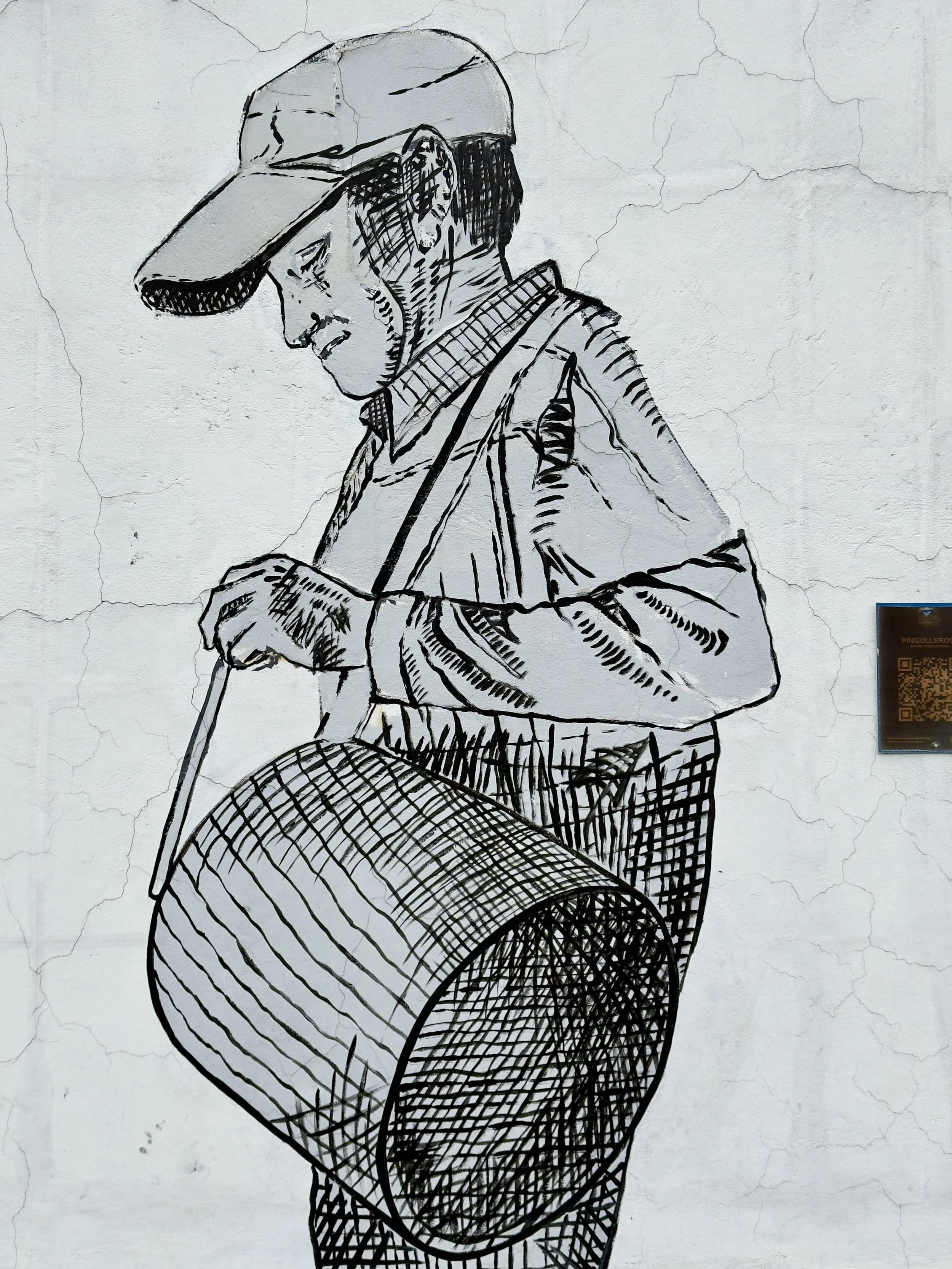
Quito has one of the most serious street art scenes in South America, rooted in political commentary, indigenous heritage, and urban identity. The neighborhoods of La Floresta and Guápulo, and parts of La Mariscal, have walls covered in large-scale murals that are genuinely impressive by any standard. These are not throw-ups; they are commissioned works by serious artists. The themes range from deforestation and environmental politics to indigenous cosmology and Ecuadorian social history.
La Floresta is a bohemian neighborhood with galleries, independent restaurants, and some of the best wall-to-wall mural coverage in the city. Guápulo is a hillside neighborhood below La Mariscal with a strong artistic community and spectacular views back toward the city.
📷 Pro Tip: Walk La Floresta methodically, block by block, rather than targeting specific murals. The best finds are often around corners you were not expecting to turn. Use a 24–70mm for environmental shots that include the surrounding architecture, and a 35mm prime for close details and textures. Midday is actually acceptable here because you are looking for graphic color and form rather than soft directional light. Include people when possible; the relationship between the murals and pedestrians passing by gives the images scale and context.
Best time: Any time of day for color; morning and late afternoon for directional light on textured surfaces. Access: Free, public streets.




Special Festivals and Holidays
Fiestas de Quito (Early December) This is the big one. Quito celebrates the founding of the city in early December with roughly two weeks of parades, open-air concerts, bull-running events (the Corrida de Toros in the Gonzalo Zaldumbide neighborhood), street performances, and cultural events across the Old Town. La Ronda becomes a focal point of nightly festivities. The energy and visual material are extraordinary. If your schedule can accommodate a December visit, plan it around this festival. Arrive a few days before it begins to secure accommodation, which fills up quickly.
Inti Raymi (June) The Andean Festival of the Sun, celebrated by indigenous communities across Ecuador and Peru around the time of the summer solstice. In and around Quito, including at Mitad del Mundo and in indigenous communities in the Andes, the festival features colorful traditional dress, music, dance, and ritual ceremonies. This is one of the most photographically rich events in the Andean calendar and requires sensitivity and respect; ask before photographing individuals, and follow the lead of local guides on where and how to observe.
Semana Santa (Holy Week, March or April) Easter processions in Quito's Old Town are among the most dramatic in Latin America. The most famous is the procession of the Cucuruchos, penitents dressed in purple and carrying heavy crosses through the streets of the colonial center. The combination of candlelit processions, colonial architecture, and intense religious devotion makes for powerful and emotional photography. Respect is essential: this is an act of faith, not a performance.
Carnival (February or March) Ecuador celebrates Carnival with water fights across the country, and Quito is no exception. Expect to get wet if you are on the streets during Carnival weekend. Seal your camera gear in waterproof protection before venturing out. The cheerful chaos is very photogenic if you come prepared.


Frequently Asked Questions About Visiting Quito
Is the altitude in Quito a real concern?
Yes, take it seriously. At 9,350 feet, the thin air hits immediately, before your eyes even catch up with what's in front of you. Take it easy on your first day, drink plenty of water, skip alcohol, and let your body adjust before tackling hills with camera gear.
Is Quito safe?
Yes, for the areas most visitors go to, particularly Old Town and La Mariscal. Stick to app-based rides or hotel-arranged cars over street taxis, and confirm that any taxi is using a working meter.
Do you need a car in Quito?
No, Old Town is best explored on foot, and Uber and Cabify both operate reliably for everything else. A private car or guide is worth arranging for day trips to Mitad del Mundo or Otavalo.
What are the best photo spots in Quito?
La Compañía de Jesús for the gold-leaf interior, Plaza San Francisco at sunrise, and El Panecillo for the best panoramic view over Old Town are three that consistently deliver. The full list with Pro Tips is above.
Can you fly a drone in Quito?
Not without permits, especially over the UNESCO-listed Centro Histórico, which is treated as a sensitive area given the risk to historic structures. Check current DGAC regulations and obtain proper permits before bringing one to Old Town. On the Galápagos, recreational drone use is prohibited entirely.
What surprised you most about photographing Quito?
How immediately the altitude hits you, before you've even had a chance to process what's in front of you. And at the top of the Teleférico, the oxygen stations are there for a real reason, not a novelty.
How many days do you need in Quito?
Three days minimum, five is the right pace. Five lets you add the Otavalo Market day trip and revisit your favorite locations in different light.
Is Quito worth combining with the Galápagos?
Yes, it's the natural extension. Quito is the main gateway, with direct flights from Mariscal Sucre Airport to Baltra or San Cristóbal, making the two together one of the best photography trips available anywhere.
Final Thoughts
Quito asks something of you the moment you arrive. The altitude makes you slow down. The narrow streets demand you look up. The gold-covered churches insist you stop entirely. That rhythm, slower and more deliberate than you expect from a capital city, turns out to be exactly what makes Quito so good for photography.
I came back from my first visit with stronger images than I expected. I came back from my second with a deeper appreciation for what the city is. It is preserved in a way that makes you feel the weight of centuries, and it is alive in a way that keeps those centuries from feeling like a museum. That combination is rare, and it is worth the flight.
Want to improve your photography while exploring some incredible destinations? Join me on one of my photography workshops! You can find all the details, including upcoming destinations and dates, through the links below.
Let's Stay Connected!
Explore More of South America & Latin America
My Photography & Travel Guide to the Galápagos Islands, Ecuador The natural extension of any Quito trip. The Galápagos are one of the greatest wildlife photography destinations on the planet, and Quito is the main gateway. Fly from Mariscal Sucre Airport directly to Baltra or San Cristóbal. The two together make for one of the best photography trips you can take in the world.
My Photography & Travel Guide to Costa Rica For the traveler who wants to follow Ecuador with another destination of extraordinary natural and wildlife photography, Costa Rica delivers rainforest, volcanoes, sloths, toucans, and one of the most photogenic coastlines in the Americas. A natural pairing if you are building a Latin American photography trip.
My Photography & Travel Guide to the Atlas Mountains, Morocco If dramatic mountain landscapes with deep cultural layers are what draw you to Quito's Andean setting, the Atlas Mountains of Morocco offer a comparable combination of altitude, traditional communities, and extraordinary light on ancient architecture. A different continent and a very different culture, but the same spirit of discovery.
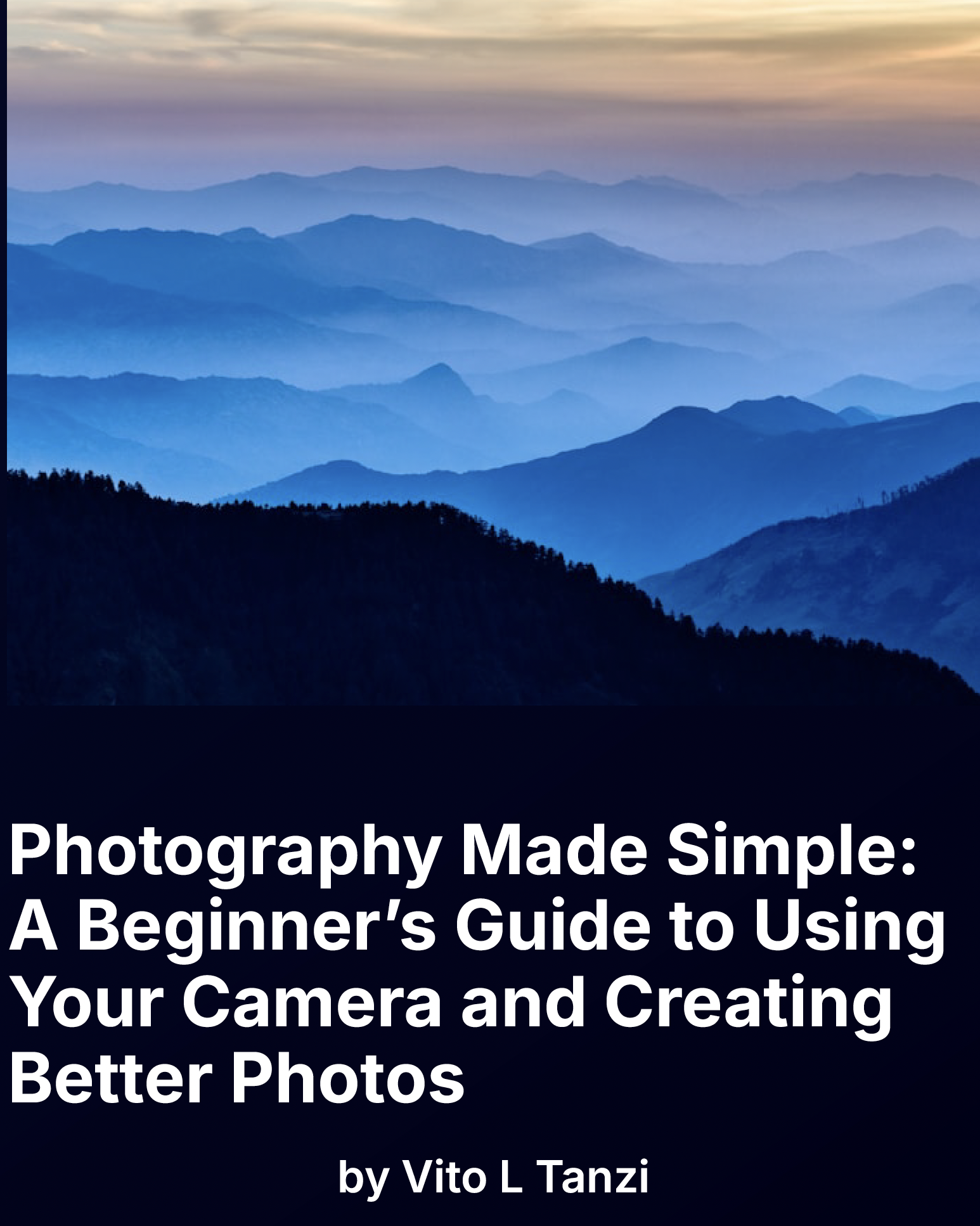
Finally—a beginner-friendly photography guide that makes sense.
If you've ever picked up a camera and thought, "Now what?" this is the book for you.
Photography Made Simple is written for adults who are just starting out and want a clear, encouraging, real-world approach to learning photography. Whether you're using a DSLR, mirrorless, or just your smartphone, this guide walks you through the basics—without the jargon or tech overwhelm.
Inside, you'll learn:
The only camera settings you really need to know to get started
How to shoot sharper, more intentional photos using light and composition
Simple tips for portraits, landscapes, travel, and everyday life
What gear you do (and don’t) need
How to create better photos without upgrading your camera
You’ll also get practical exercises, cheat sheets, and tips for organizing and editing your images—plus the confidence to shoot off Auto Mode for good.
This is not a textbook. It’s a friendly guide to seeing the world with fresh eyes—and finally capturing what you see the way you imagine it.
📸 Format: PDF download
Pages: 100+
Perfect for: Beginners, hobbyists, and anyone ready to take better photos without the stress
✈️ Travel Photography Planning Sessions
One-on-One Trip Planning with a Professional Travel Photographer
Don’t miss the shot. Let me help you plan for it.
Overview
Planning a photography-focused trip can be overwhelming. From figuring out the best places to shoot, to when the light is just right, to knowing which lens to pack — there are a lot of decisions to make.
This one-on-one Zoom session is your chance to get personalized travel photography advice from someone who’s spent the past 25 years exploring cities, coastlines, and wild places around the world — camera in hand.
Whether you're headed to Paris, Patagonia, Tokyo, or Tuscany, I’ll help you make sure your photography trip is well-planned and creatively inspired, so you come home with the images you dreamed of (and then some).
What’s Included
✅ Photography Location Planning
I’ll help you create a customized itinerary of the best photo spots, including off-the-beaten-path gems and iconic views.
✅ Best Times to Shoot
Get expert advice on lighting, golden hour, blue hour, and seasonal conditions for each location.
✅ Gear Recommendations
Not sure whether to bring the telephoto or the prime? We’ll walk through your gear and make sure you’re bringing the right tools for your destination and style.
✅ Hotel and Base Recommendations
Stay where it’s convenient for sunrise shoots and late-night strolls with your camera. I’ll recommend hotels that are photographer-friendly and well-located.
✅ Custom Travel Tips
From sunrise entry times to tripod rules at major landmarks, you’ll get insider tips to save time, avoid tourist traps, and make the most of your trip.
Who It’s For
This service is for anyone who:
Is planning a trip and wants to prioritize photography
Wants expert insight on the best places to shoot and how to get there
Is tired of missing the shot because of poor planning or bad timing
Is a beginner, enthusiast, or professional photographer looking for guidance before a trip
How It Works
Book a Session
Choose a time that works for you and tell me where you're headed.Share Your Plans
You’ll fill out a quick questionnaire so I know your travel dates, interests, and photography style.One-on-One Zoom Call (60 minutes)
We’ll meet via Zoom and walk through your trip together — from location ideas to gear and timing. You'll leave with a custom PDF full of notes and suggestions.Follow-Up Support
Get one round of email Q&A after your session to clarify anything as your plans evolve.
Why Work With Me?
I’ve spent the last 25 years photographing the world — from major cities to remote islands. I know what it’s like to travel and shoot under pressure, and I love helping people get the most out of their trips. This is not just about hitting “popular spots” — it’s about crafting a creative and efficient plan tailored to your trip, your gear, and your goals.
Pricing
$125 / Session
Includes:
60-minute Zoom call
Custom PDF summary with photography spots, gear tips, and travel recommendations
One follow-up email with additional Q&A
Introductory rate available through September 2025
Ready to Plan Your Trip?
Let’s make sure you’re ready — so when the light is perfect, you’re in the right place with the right gear.
Questions?
Please email me at vito@chasinghippoz.com if you're not sure whether this is right for you. I'm happy to chat.