Paris, France Travel & Photography Guide: Best Photo Spots, Map, Sunrise Tips & Hidden Gems
Paris is the most photographed city on Earth, and it has earned that reputation.
My mother was born just outside Paris, and I have been coming here for 50 years, first as a child visiting family and now as a photographer with more than 40 trips and counting. It is one of the few cities where I keep a running list of shots I still want to get. Every trip adds to the list instead of completing it. That is not a complaint. It is actually one of the things I love most about Paris. There is always more. A new neighborhood, a different light, a café I walked past a dozen times but never sat in. The city keeps giving.
For photographers, Paris works on every level. You have the iconic architecture, the grand boulevards, the Seine at golden hour, the Eiffel Tower from a dozen angles, and the kind of people worth pointing a lens at. But you also have the side streets of the 13th arrondissement, covered in murals; the spiral staircase at the Gustave Moreau Museum; the colorful houses of Rue Crémieux; and the covered passages where Parisians have been shopping since the 19th century. Paris is not just one photograph. It is a thousand of them.
The light here is something photographers talk about for a reason. Spring mornings produce a soft, diffused quality that feels almost cinematic. Autumn afternoons go warm and golden in a way that makes even a simple street corner worth shooting. Winter blue hours are extraordinary. The city is intentionally or unintentionally designed with visual composition in mind. Wide boulevards create leading lines. The Haussmann facades line up in perfect symmetry. The Seine reflects everything.

Pyramids at the Louvre
The scent of butter and sugar wafts from a boulangerie just as the morning sun spills gold over the rooftops of Montmartre. There’s a softness to the light in Paris, a kind of cinematic haze that turns everyday moments into stills from a film. The chatter from a nearby café, the glint of the Seine, the sharp rustle of a baguette being sliced open—these are the sensory notes that always hit me the moment I arrive. And no matter how many times I return, Paris still feels like a place that reveals something new with every frame.
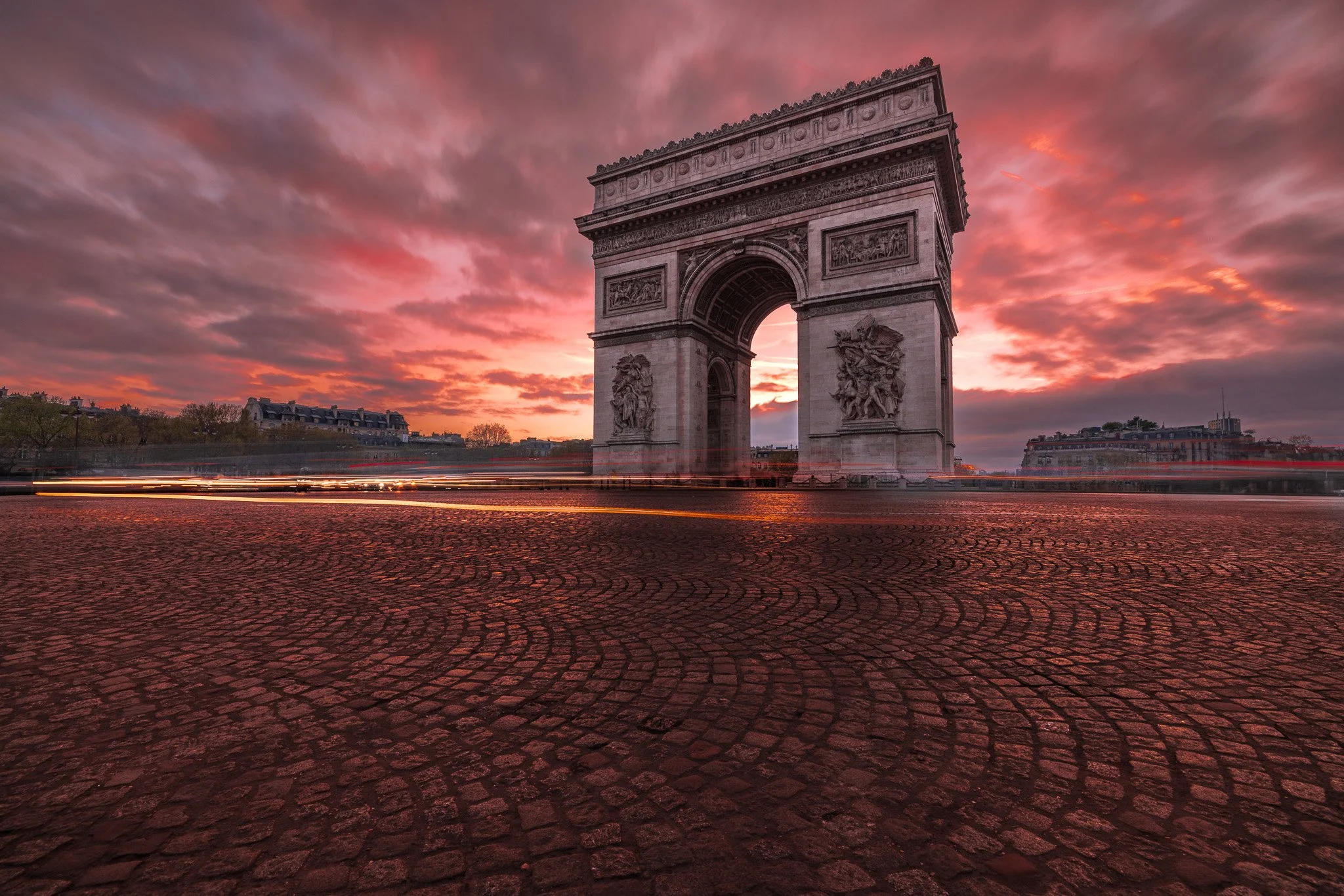
Sunset at the Arc De Triomphe
Paris also rewards repeat visits more than almost any other city. My first trip was about the monuments. Later trips were about the neighborhoods. Now I go back for specific shots I planned from previous visits, and I always come home with things I never expected.

This couple dancing in the morning is the picture of joy
In this Photography Guide to Paris, I share the places and experiences that continue to draw me back. You will find my favorite photography locations, guidance on when and where to shoot, practical travel tips, and gear recommendations, along with cultural insights to help you explore and photograph Paris with confidence, respect, and ease.
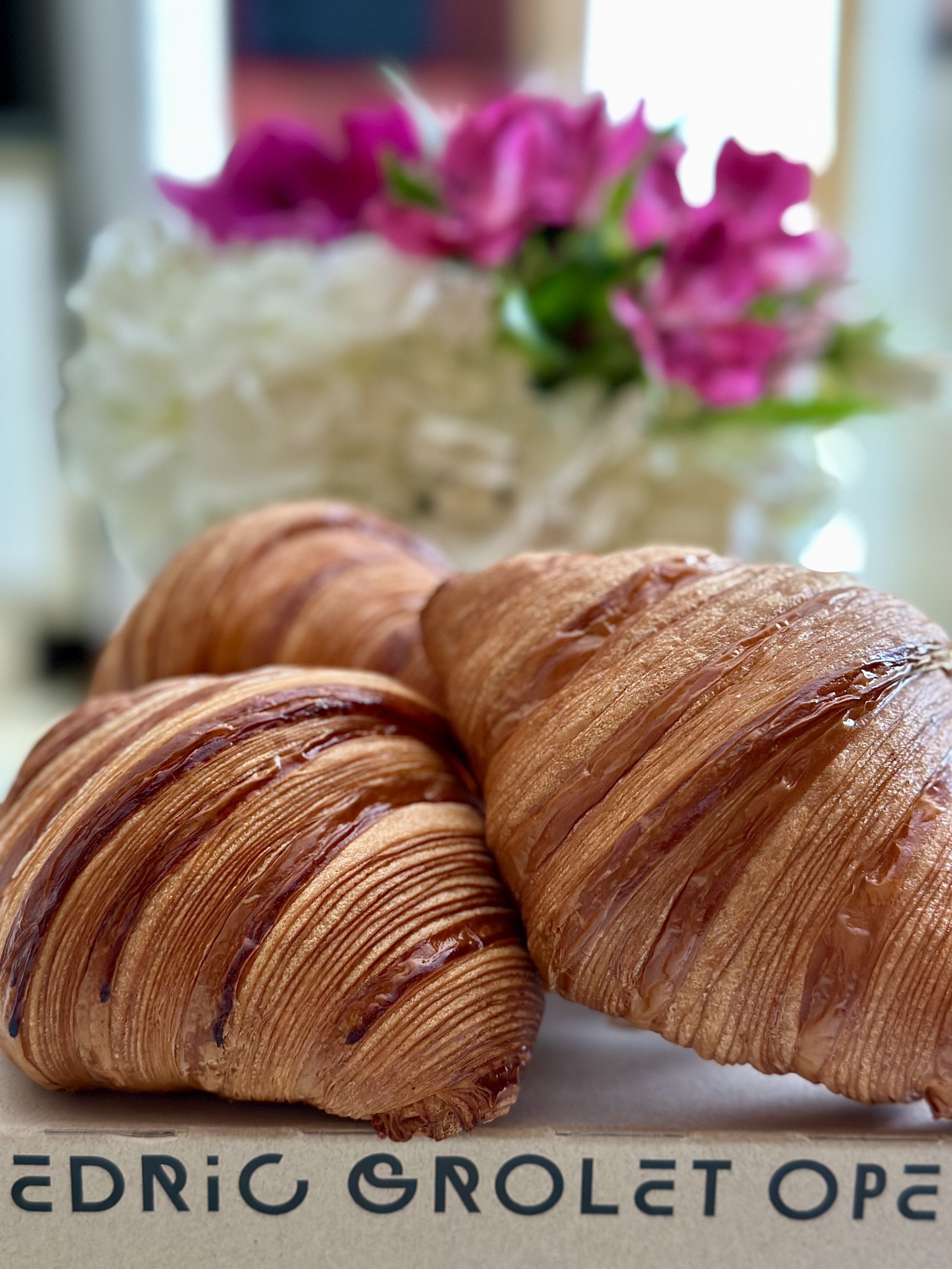
Credric Grolet Opera
Photographer's Notes
Before you go, here are my own takeaways after photographing Paris for years.
Favorite Season: Spring
Favorite Sunrise Location: Pont de Bir-Hakeim or Trocadéro
Favorite Sunset Location: Pont Alexandre III
Favorite Neighborhood: Saint-Germain
Favorite Hotel: Hotel Bristol
Favorite Café: La Maison d'Isabelle
Favorite Lens: Canon RF 15-35mm f/2.8
Would I Return? Absolutely. Paris is one of those cities that rewards repeat visits. Every season, every neighborhood, and every change in the light reveals something new.
Best Time to Visit Paris
Paris is photogenic in every season, but each one produces a different kind of photograph.
Spring (March through May) is my personal favorite. April especially. The light is soft and diffused. The parks start to bloom. Golden hour extends into the evening, and the whole city has an energy that winter suppresses. Crowds are manageable in March and April before the summer surge. The rain that Paris gets in spring is actually a gift for photographers: wet cobblestones in Le Marais at night are some of the best reflections you will find anywhere.
Summer (June through August) is Paris at its most crowded and most expensive. Golden hour does not happen until well past 9 pm, which is actually useful because the light quality at that hour is extraordinary. The problem is midday in July and August, when the harsh overhead light produces flat, unflattering results and the tourist density at major spots is genuinely frustrating. If you are going in summer, plan your photography for the first two hours of the day and the last two hours before sunset.
Autumn (September through November) is the smart photographer's window. The crowds drop after mid-September. The light goes warm and golden in a way that feels almost like a filter applied to the entire city. The Luxembourg Gardens in October, with fallen leaves and Parisians reading in the chairs, is one of the most genuinely Parisian photographs you can make.
Winter (December through February) produces the longest blue hours of the year and some of the city's most atmospheric conditions. Fog over the Seine, bare tree silhouettes against the sky, holiday markets with warm light in December. It is cold, and some days the light is flat and grey, but the mornings with mist on the river are worth every degree.
For photography specifically, April and October are the two months I would choose without hesitation.

Under the Trocadero a couple having wedding photos taken
How Many Days Should You Stay in Paris
For a photography-focused trip, I recommend a minimum of five days. Four days is workable, but it leaves you feeling like you have just scratched the surface. A week is ideal.
Here is how a five-day photography itinerary might look:
Day 1: Arrive, check in, walk to the Seine in the late afternoon. Golden hour from Pont Alexandre III or Pont des Arts. Do not try to do too much on arrival day. Let the city find you.
Day 2: Sunrise at Trocadéro for the Eiffel Tower. Back to the hotel for breakfast. Mid-morning in Le Marais, including Rue Crémieux and the covered passages. Afternoon at the Louvre Pyramids. Evening: Montparnasse Tower rooftop for blue hour and night shots.
Day 3: Montmartre at sunrise, starting with Rue de l'Abreuvoir and working toward Sacré-Cœur. Walk through to the back of Parc Marcel Bleustein-Blanchet for the clean Sacré-Cœur shot without crowds. Afternoon: Musée d'Orsay. Evening at Pont de Bir-Hakeim.
Day 4: Sainte-Chapelle on a sunny morning. Afternoon in Saint-Germain for street photography and coffee. Jardin du Luxembourg in the late afternoon. Sunset from the Arc de Triomphe rooftop.
Day 5: The 13th arrondissement for street murals. Graffiti along Boulevard Vincent Auriol, Rue Pinel, Rue Jean-Marie Jego, Rue Jonas, and Rue de la Butte-aux-Cailles. Final evening at Notre-Dame Cathedral and the bookstalls along the Seine.
If you have a sixth day, use it for Musée Rodin on a sunny afternoon and a repeat visit to whichever location produced your best work earlier in the trip.

Where to Stay in Paris
Choosing where to stay in Paris is one of the most important decisions you will make for a photography trip. The best neighborhoods are the ones you can walk out of before sunrise without needing a taxi.
For photographers, choosing where to stay in Paris is more than just finding a bed—it’s about what you can walk to before the city wakes up. Here are three of my favorite neighborhoods:
Le Marais – A maze of narrow streets, street art, old stone buildings, and charming courtyards. The light bounces in interesting ways here. Perfect for golden hour strolls.
Saint-Germain-des-Prés – Classic Parisian charm, ideal for café and people photography. Elegant architecture and close to the Seine.
Montmartre – Hilly, artsy, and dramatic. Great morning views and silhouettes, especially from Rue de l’Abreuvoir or the steps of Sacré-Cœur.

29 Rue de Bourgogne
Here is a map of Paris showing the different districts

Paris Map
My preference is the Left Bank, somewhere close to Saint-Germain. The neighborhood has a rhythm that suits photographers: local bakeries open early, the streets are relatively quiet before 8 am, and you are close to the Seine for morning walks. Le Marais on the Right Bank is also excellent, and Montmartre works well if you want to be close to those early morning cobblestone shots.
Left Bank or Right Bank? My answer is Left Bank every time. The energy is calmer, the streets are more walkable for early morning work, and the proximity to Saint-Germain, the Luxembourg Gardens, and the Musée d'Orsay makes it the right base for photographers.

Luxury Hotels in Paris
Le Meurice sits directly opposite the Tuileries Gardens on the Rue de Rivoli. Select rooms look out toward the Eiffel Tower, and the location puts you within walking distance of the Louvre Pyramids, Pont des Arts, and the Seine. The morning walk along the river from here is one of the best in Paris. The hotel itself is photographically interesting: the restaurant is a gilded hall worth seeing even if you do not eat there.
Hôtel Lutetia on the Left Bank is one of the most historically significant hotels in Paris. The building is a genuine Art Deco landmark, and the interior design after its major renovation is exceptional. It sits in the 6th arrondissement, which means you are a short walk from Saint-Germain, the Luxembourg Gardens, and the food markets on Rue de Buci. This is the hotel I would choose if I were spending two weeks and wanted a real Left Bank base.
Hotel Bristol on Rue du Faubourg Saint-Honoré is where seasoned Paris travelers tend to end up. It is refined and discreet without being showy. You are close to the Élysée Palace, the high-fashion streets near Champs-Élysées, and enough of central Paris to cover most major photography locations on foot or by a short Metro ride.
Mid-Range and Boutique in Paris
Hôtel des Grands Boulevards in the 2nd arrondissement is one of the best mid-range options in the city. The rooftop terrace gives you a working blue hour vantage point without paying for a room at a luxury property. The design is thoughtful and the location puts you within easy reach of both Le Marais and the Opera.
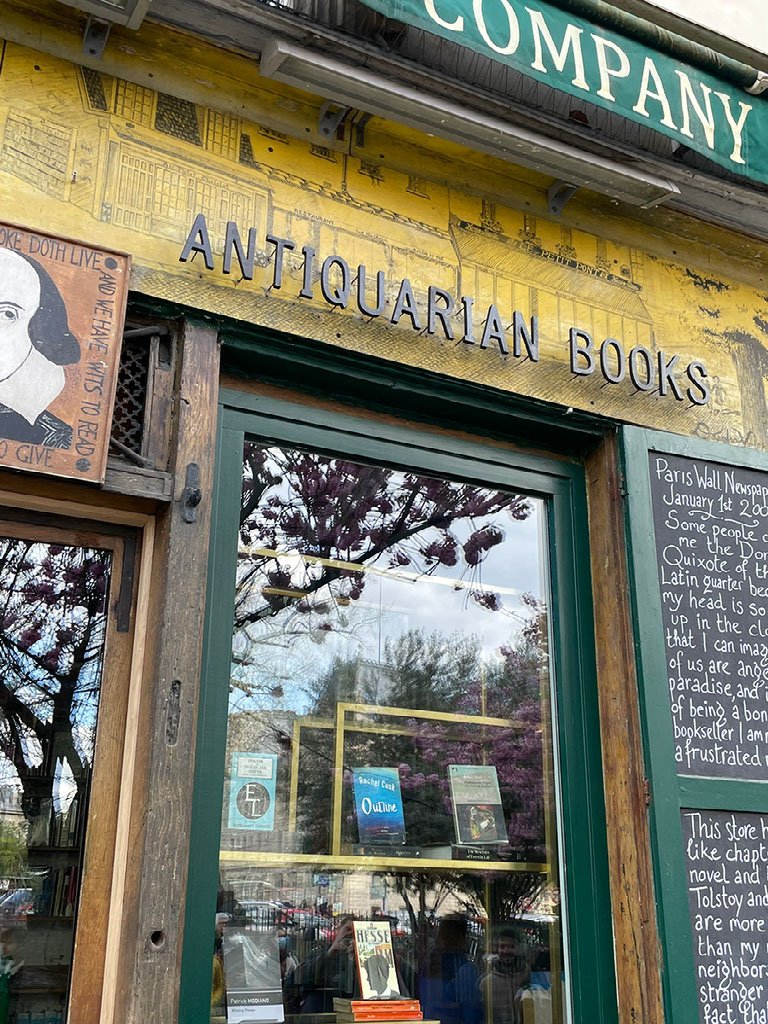
Hotel Henriette near the Latin Quarter is bohemian, bright, and well-run. It draws a creative crowd, and the interiors are worth photographing in their own right. A short walk takes you to the Seine, the bouquinistes, and Shakespeare and Co.
Le Relais Montmartre is a quiet, comfortable option for photographers who want to work the Montmartre streets early and late. It is a short walk to Sacré-Cœur and some of the best street scenes in Paris. If Montmartre is your primary photographic focus, this is the right base.
Getting Around Paris
Paris is one of the most walkable major cities in the world, and walking is genuinely the best way to photograph it. The best shots are rarely on the direct route between two Metro stops.
Walking covers most of what you need in the central arrondissements. From Saint-Germain to the Eiffel Tower, from Le Marais to the Louvre, from Montmartre to Pigalle. Budget more time than you think. You will stop constantly.
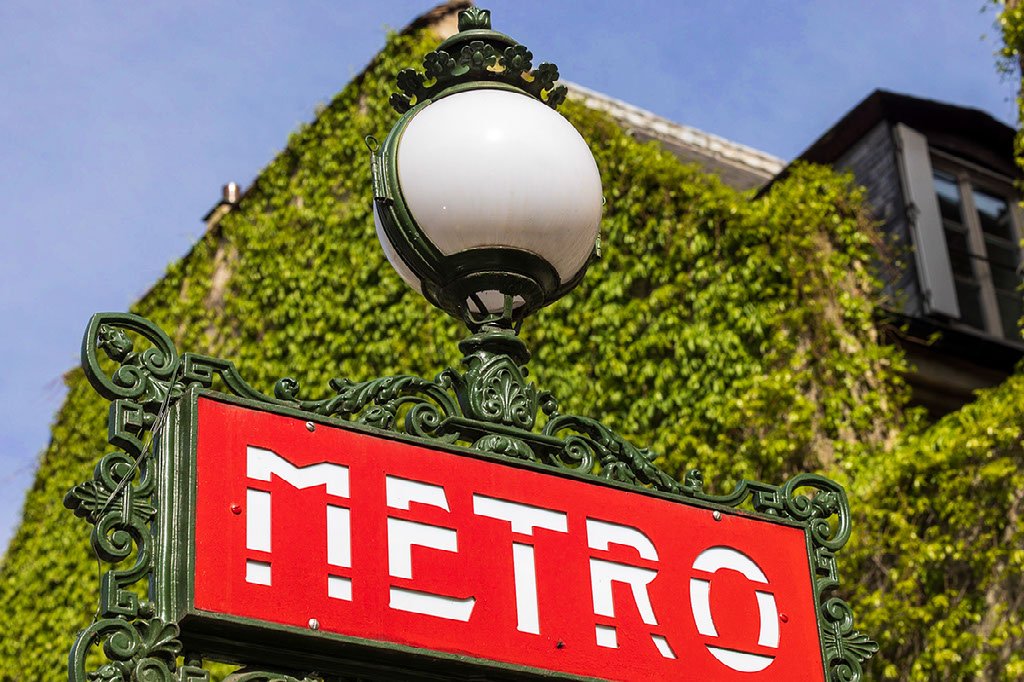
The Metro is fast, clean, and photographically interesting in its own right. The Art Deco station signs at Abbesses in Montmartre are worth a photograph. The tilework at many older stations is excellent. Buy a Navigo Easy pass and load it with tickets rather than dealing with individual purchases. Avoid the Metro with bulky gear during rush hour (7:30 to 9 am and 5:30 to 7:30 pm). Watch your equipment in crowded stations, particularly around Châtelet.
Vélib bikes work well on days when you are traveling light. Useful for covering the distance between, say, the Luxembourg Gardens and the Canal Saint-Martin without taking the Metro.
Uber and taxis are reliable and easy. Avoid them between 5 and 7 pm when traffic is genuinely painful, and fares can be unpredictable.
One note on gear: if you are carrying a full kit, including a tripod, factor that into your walking plans. The stairs at Montmartre with a heavy bag are not fun. Consider leaving the tripod at the hotel for midday exploration and picking it up before blue hour shoots.
Getting into Paris Safely
When you arrive in Paris, always use the official taxi line outside the terminal. Unfortunately, there are often people inside the airport offering rides. They are not official taxis, and you should politely decline and continue to the designated taxi queue.
To avoid the hassle altogether, I recommend asking your hotel to arrange an airport pickup. Your driver will be waiting for you with a sign displaying your name, making your arrival much easier. Another excellent option is to book a trusted service such as Welcome Pickups before your trip.
One more tip. Official taxis from Charles de Gaulle Airport to central Paris charge a fixed fare, so there is no need to negotiate the price.
Where to Eat in Paris
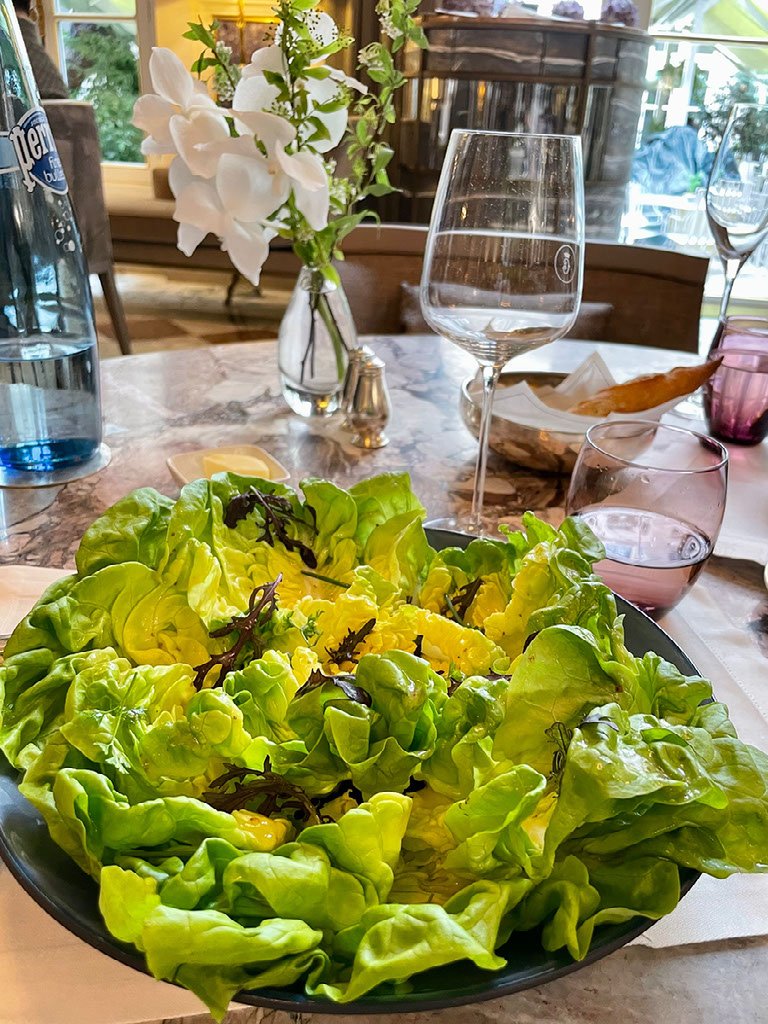
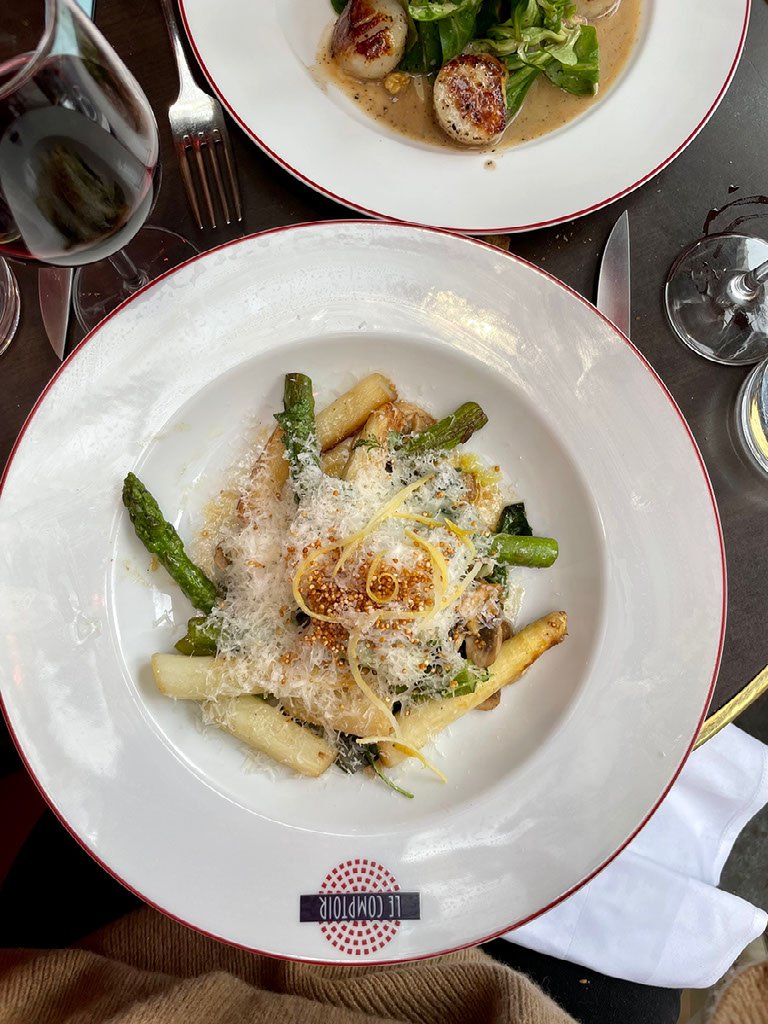
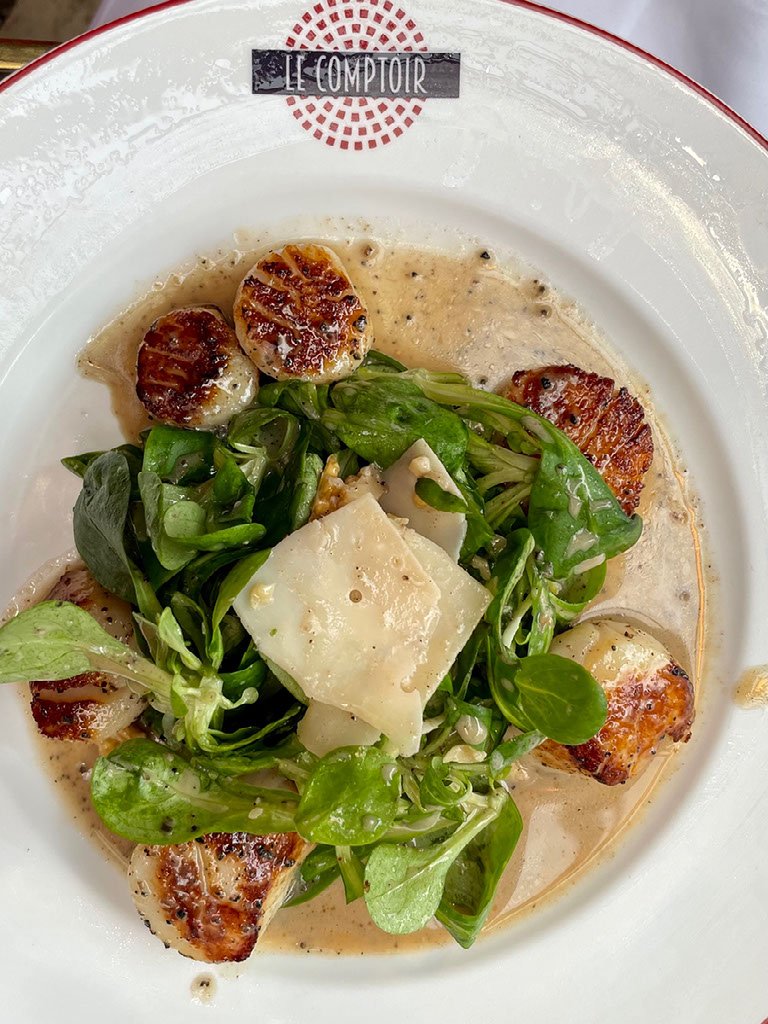
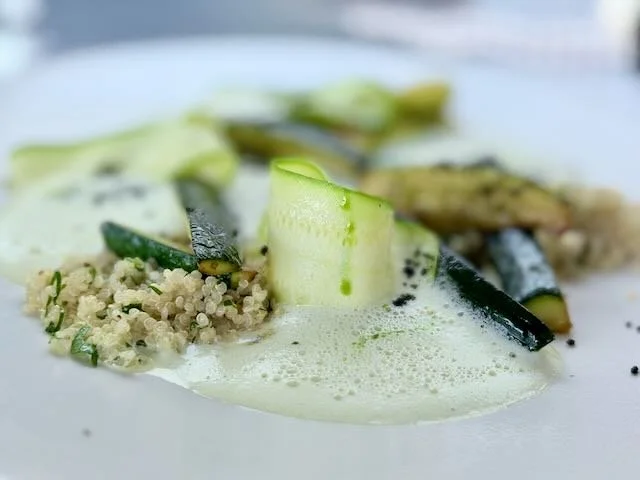
Paris has no shortage of places to eat well, but the gap between a great meal and a mediocre one here is significant. Do your research before you go, particularly for fine dining, where reservations need to be made weeks in advance.
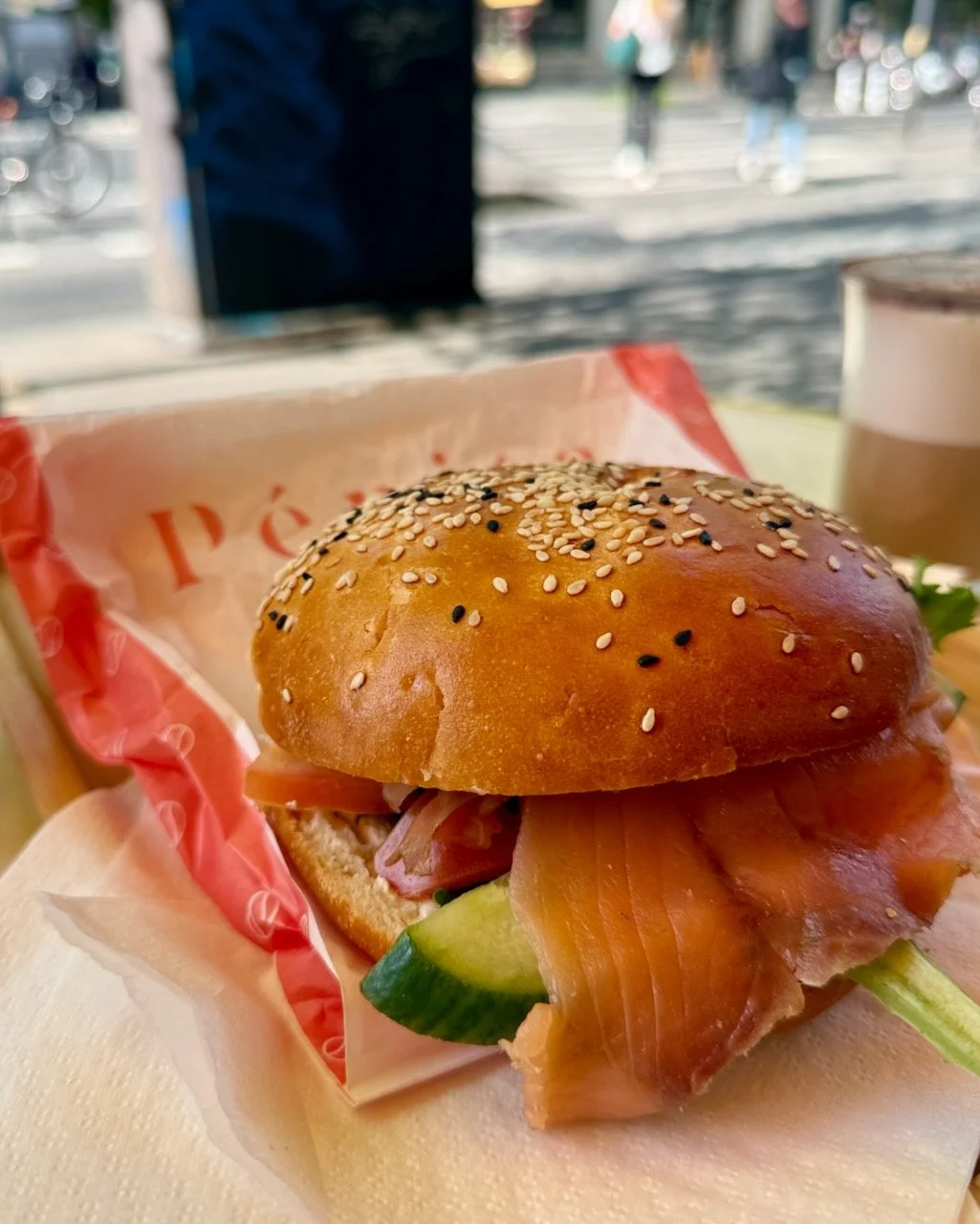
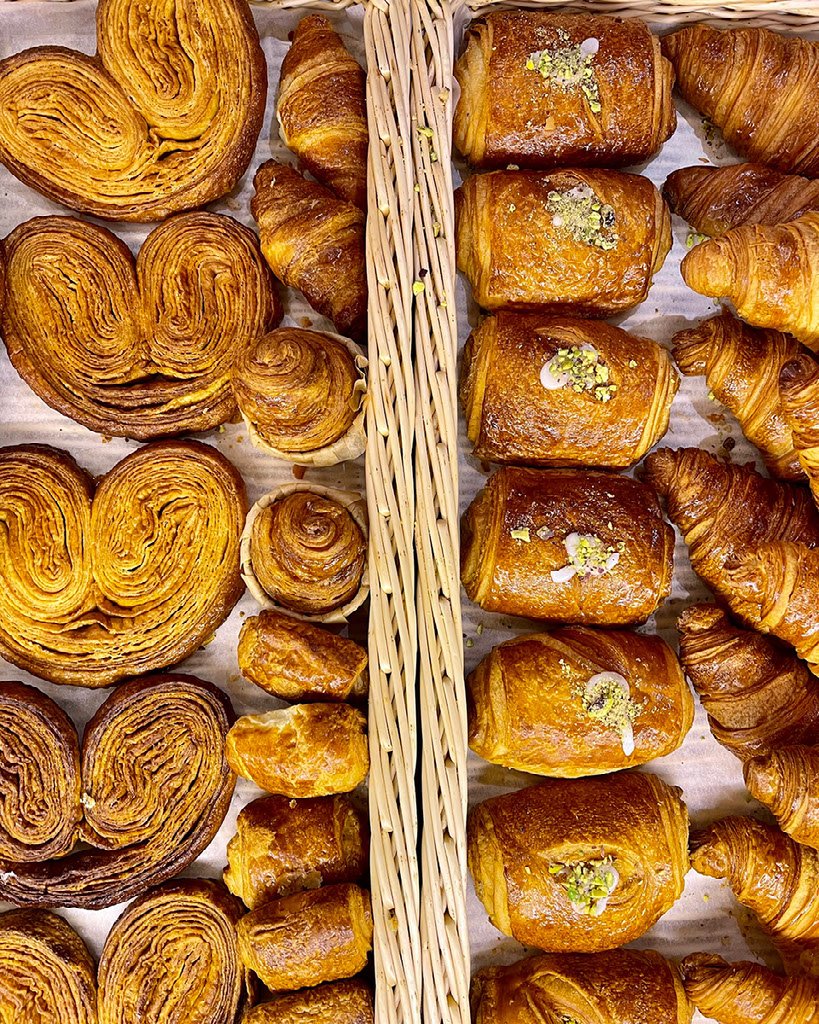
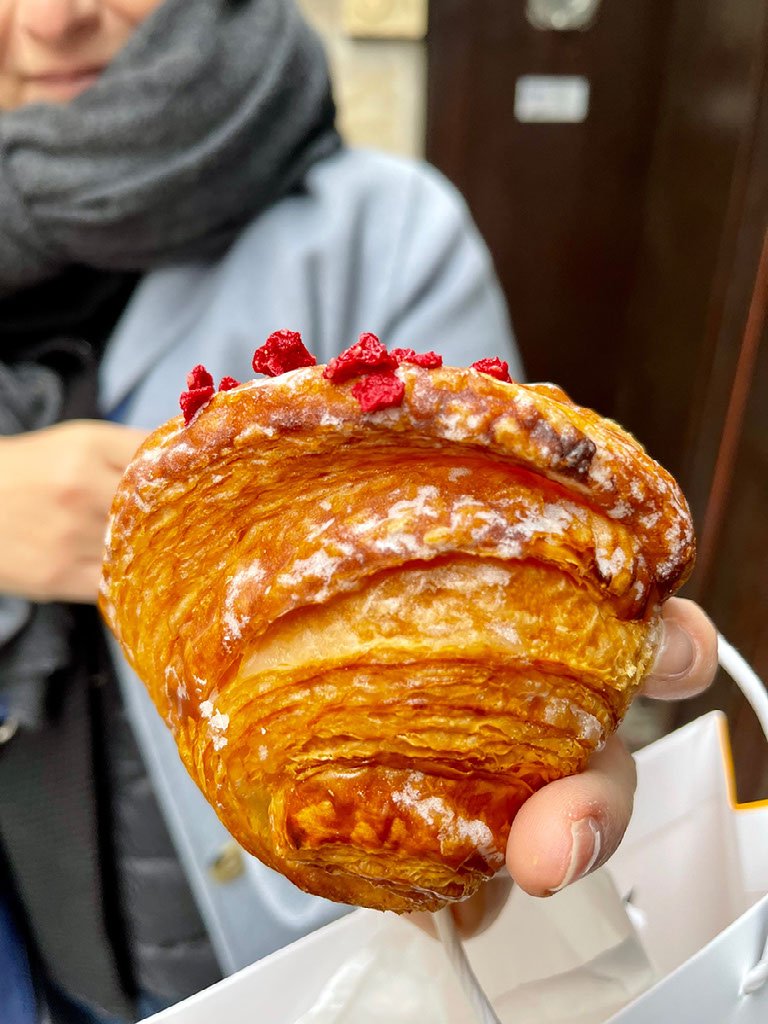
The croissant and baguette are not minor details in Paris. They are serious business. On a recent trip, we spent more time than we probably should have conducting what I am going to call systematic croissant research. The results were conclusive and delicious.
🥐 La Maison d'Isabelle — My favorite croissant.
🥖 Du Pain et des Idées — My favorite artisan bakery and baguette.
🛍️ La Grande Épicerie de Paris — Best gourmet food hall.
☕ Fringe Coffee — My favorite specialty coffee.
☕ Nami Coffee — Hidden gem for coffee lovers.
🍫 Angelina — Best hot chocolate.
🍦 Berthillon — Best ice cream.
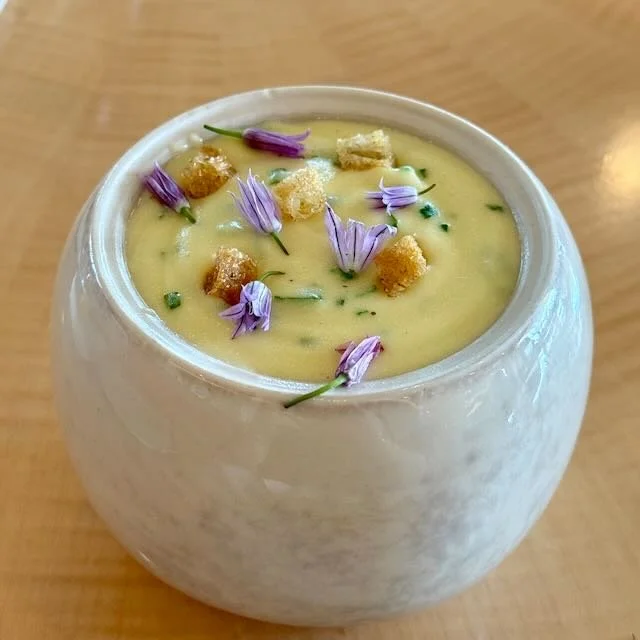
Our Favorite Paris Restaurants
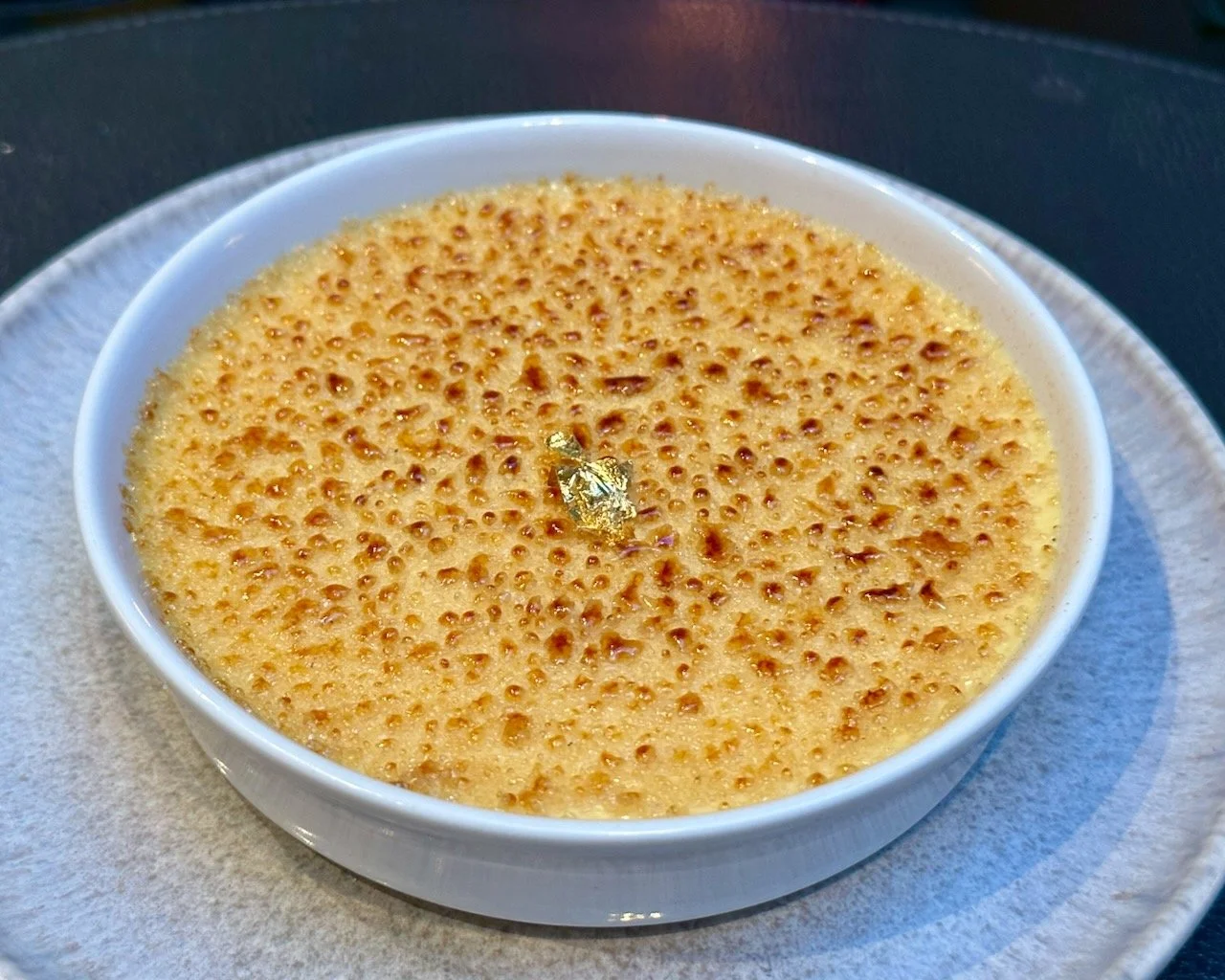
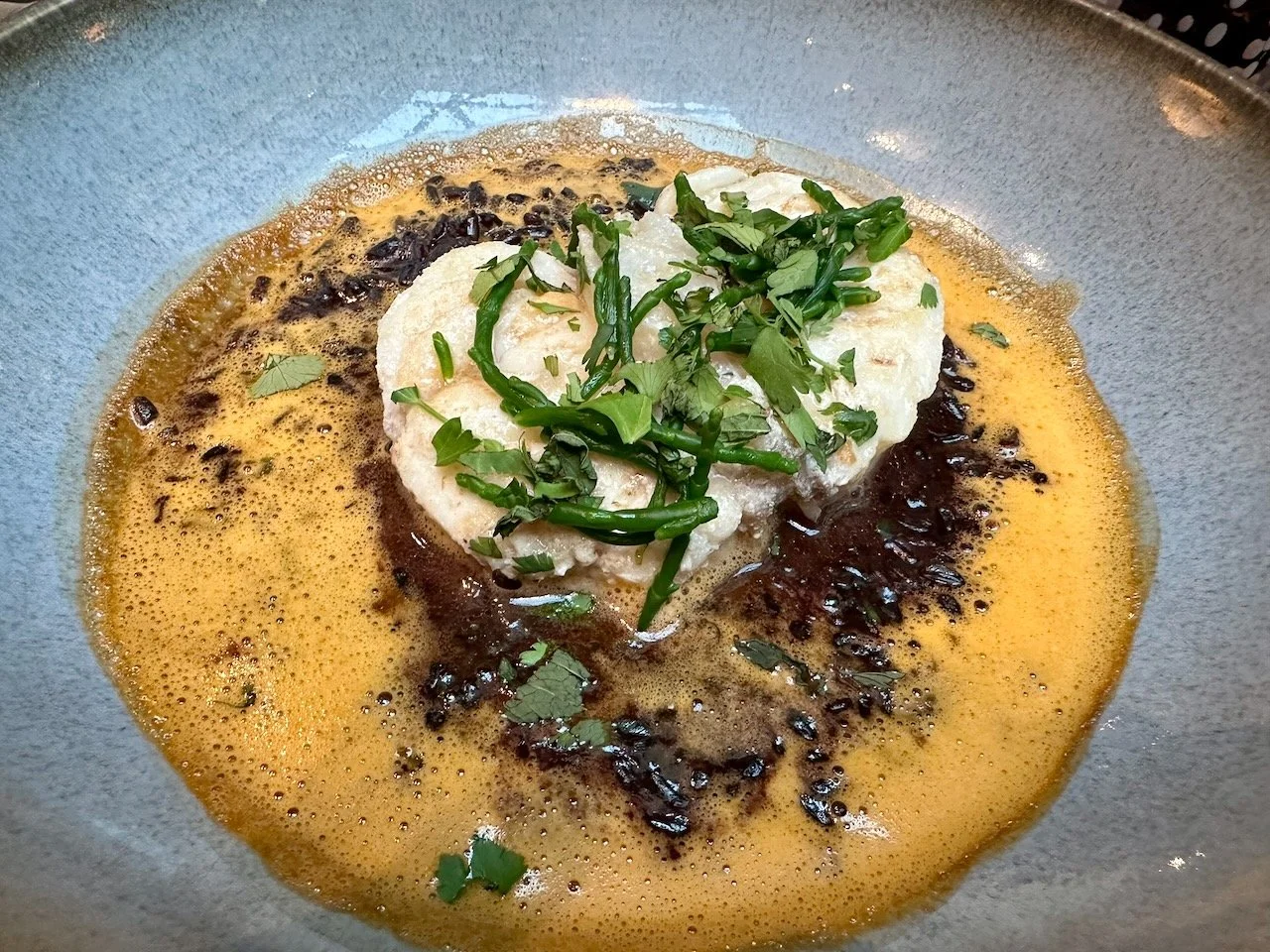
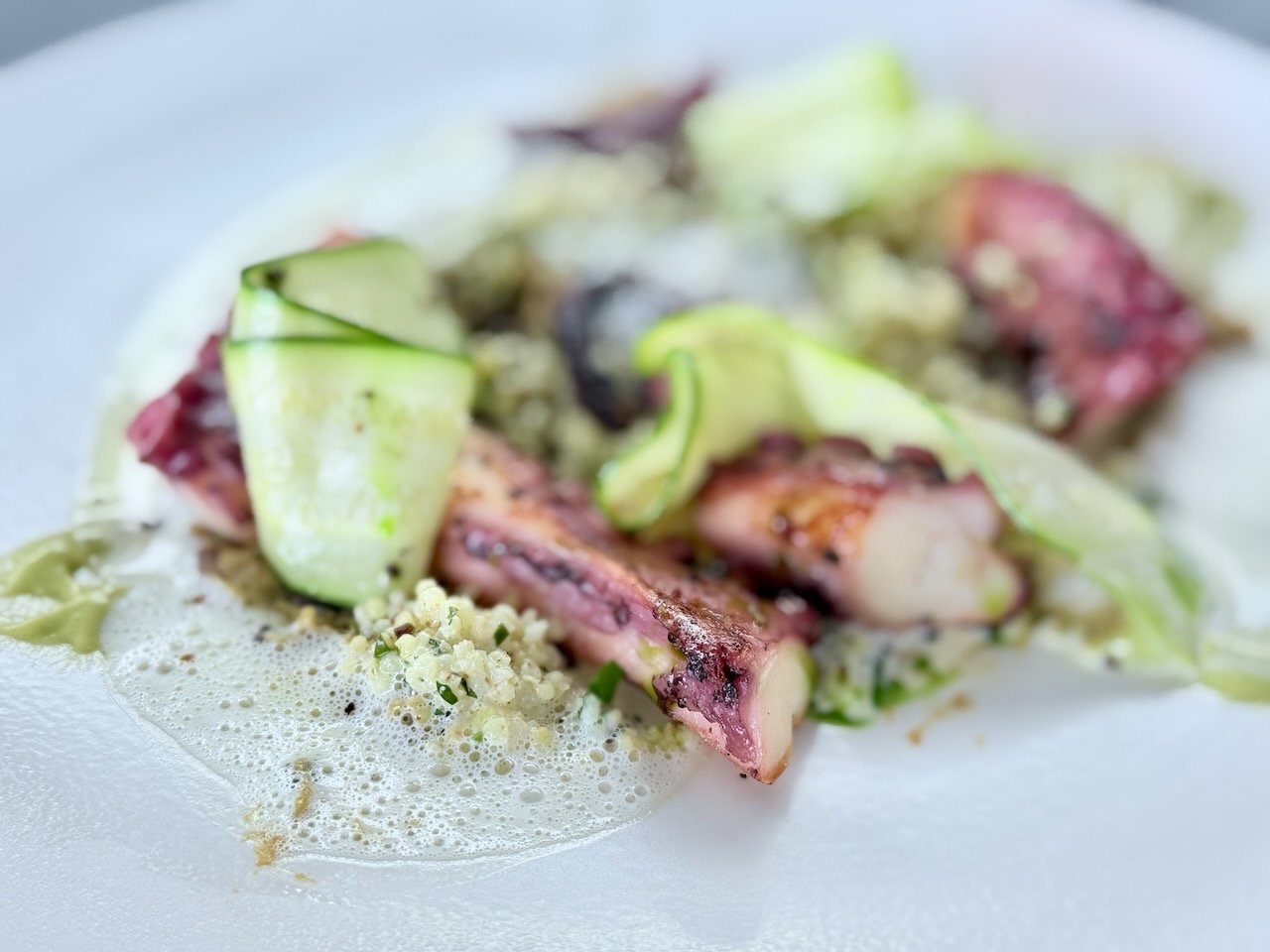
Cinq at the Four Seasons George V is as good as Paris gets. The dining room is formal, and the food is exceptional. Book well in advance.
Bistrot Paul Bert in the 11th arrondissement is the kind of French bistro that people imagine when they think of Paris. Good wine, good food, no pretension. The steak frites is the one to order.
Guy Savoy near the Pont Neuf is one of the most celebrated restaurants in France. The cheese cart alone is worth the trip.
L'Arpège in the 7th is Alain Passard's legendary restaurant. The vegetable-focused cooking is unlike anything else in Paris.
Pur in the Park Hyatt is a quieter, more intimate option for a special dinner without the formality of a palace hotel.
La Renommée in the 1st arrondissement is a genuine Parisian institution, open since 1823. The dining room sits above a classic cocktail lounge, and the cooking is traditional French done with the kind of confidence that comes from two hundred years of practice.
114 Faubourg is the hotel's one-Michelin-star brasserie. It is much more casual than the Epicure at Le Bristol
Jardin d'Hiver at the Hôtel de Crillon is one of my favorite spots in Paris for afternoon tea or a light lunch. The room is a genuine winter garden inside the palace, all glass and natural light, with the kind of calm that is hard to find in central Paris. The pastry work here is extraordinary. It is the right place to go when you want the Crillon experience without a full dinner reservation.
Qasti Bistrot in the Marais on Rue Saint-Martin is chef Alan Geaam's Lebanese bistrot, and one of the most enjoyable meals you can have in Paris outside of the classic French tradition. Qasti means "my story" in Lebanese, and the cooking reflects that: a menu built around mezze, with around thirty recipes to choose from, leaning heavily vegetarian, in a room with blue Matisse-style frescoes and cedar wood details. Recognized by Gault & Millau, and with three locations in Paris now, the original Marais address is the one to book. The Sunday Lebanese brunch is worth planning around.
Le Grand Café du Grand Palais is the most talked-about restaurant opening in Paris in 2025, and it earns the attention. Set beneath the Belle Époque colonnades of the newly renovated Grand Palais, with a direct view of the Petit Palais across Avenue Winston Churchill, the setting alone is worth the reservation. The design is by architect Joseph Dirand: brick, Pernice marble, terrazzo, and a circular bar at the heart of the room run by Colin Field, formerly of the Hemingway Bar at the Ritz. Chef Benoît Dargère's menu is classic French brasserie, executed well. Tables are hard to get without booking ahead, and for good reason. The terrace under the magnolia trees at lunch is one of the best seats in Paris right now.
Nanaumi near the Opéra is my go-to Japanese restaurant in Paris. The room is small and quiet, the fish is exceptionally fresh, and the kitchen does not overcomplicate things. Classic sushi, sashimi, gyoza, eel, and tempura, all executed with the kind of care that Gault & Millau recognized and regulars have known about for years. Book ahead; it fills up quickly and walk-ins are difficult.

Food Experiences Worth Seeking Out
Barthélemy cheese shop at 51 Rue de Grenelle in the 7th is one of the best cheese shops in France. It is small, the selection is extraordinary, and they only allow two people inside at a time. Do not miss it.
L'As du Falafel in the Marais is the best falafel in Paris. The line moves quickly, and eating it on the street is part of the experience.
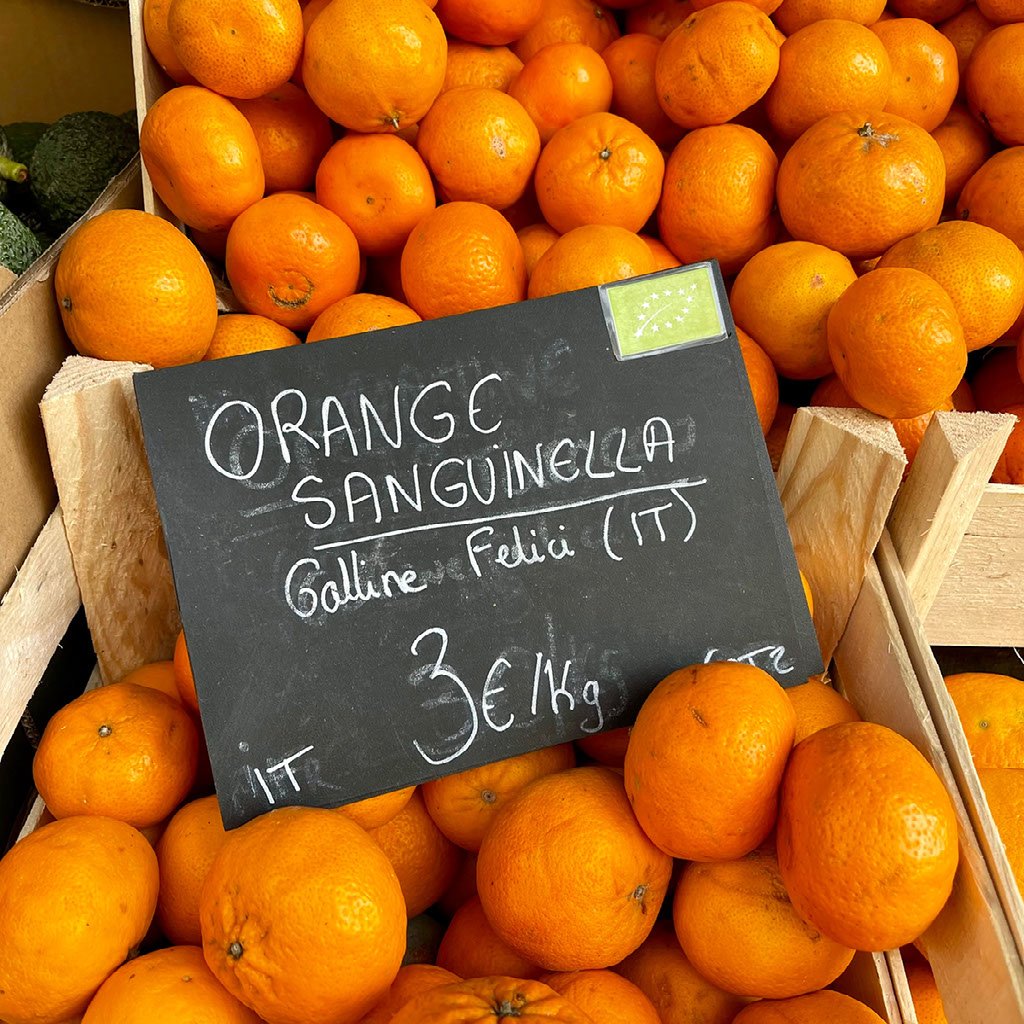
Le Grand Épicerie in the Bon Marché on the Left Bank is the best food hall in Paris. It is technically a grocery store, but calling it that does not do it justice. The cheese counter, the bread, the prepared foods, the wine selection, and the pastry section are all exceptional. It is worth an hour of your time even if you buy nothing. If you are self-catering or putting together a picnic to eat in the Luxembourg Gardens, this is where to start.
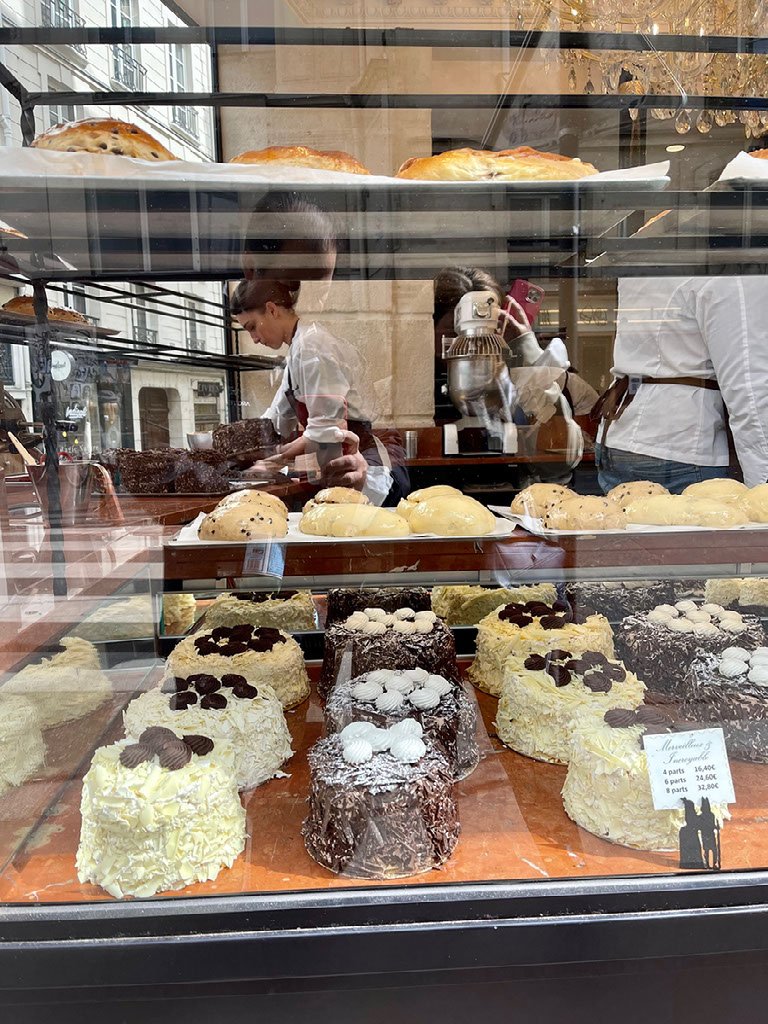
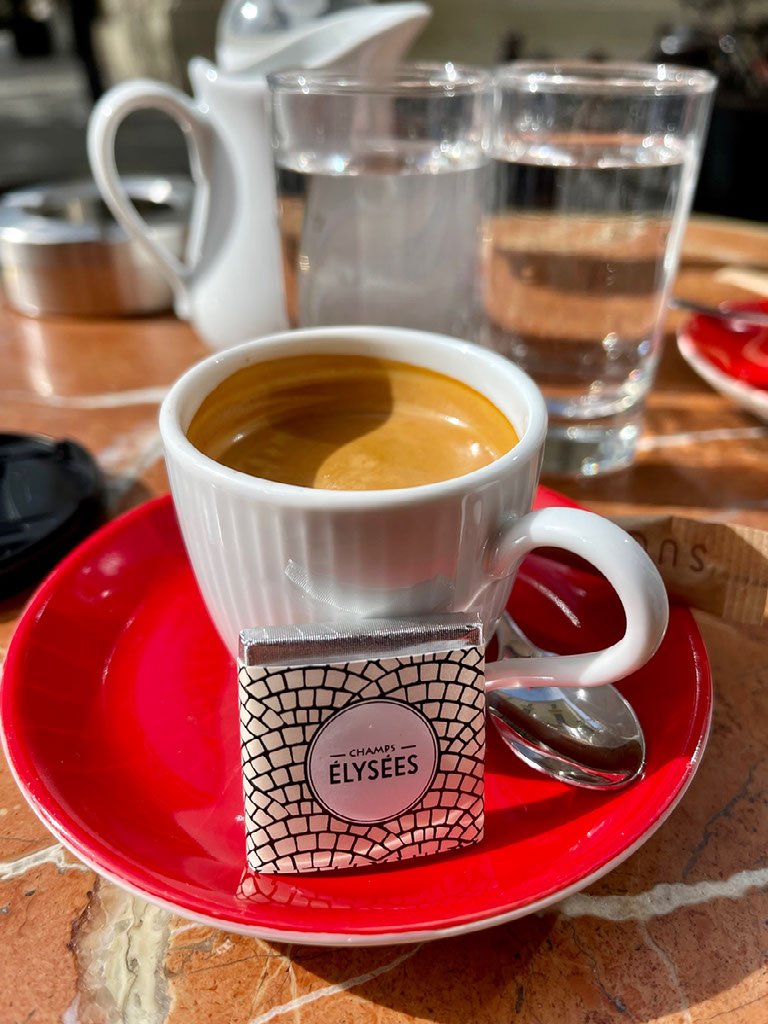
Cafés, Bakeries & Coffee in Paris
Poilâne Bakery has locations across Paris and makes the best croissant in the city. Go early.
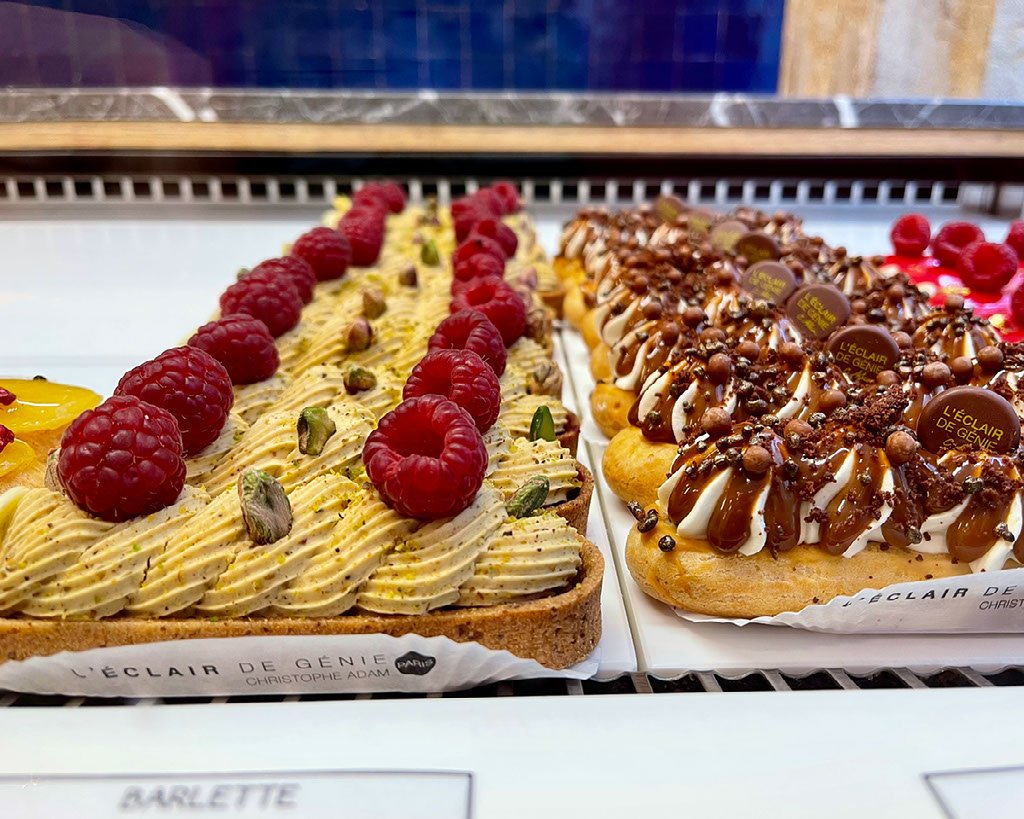
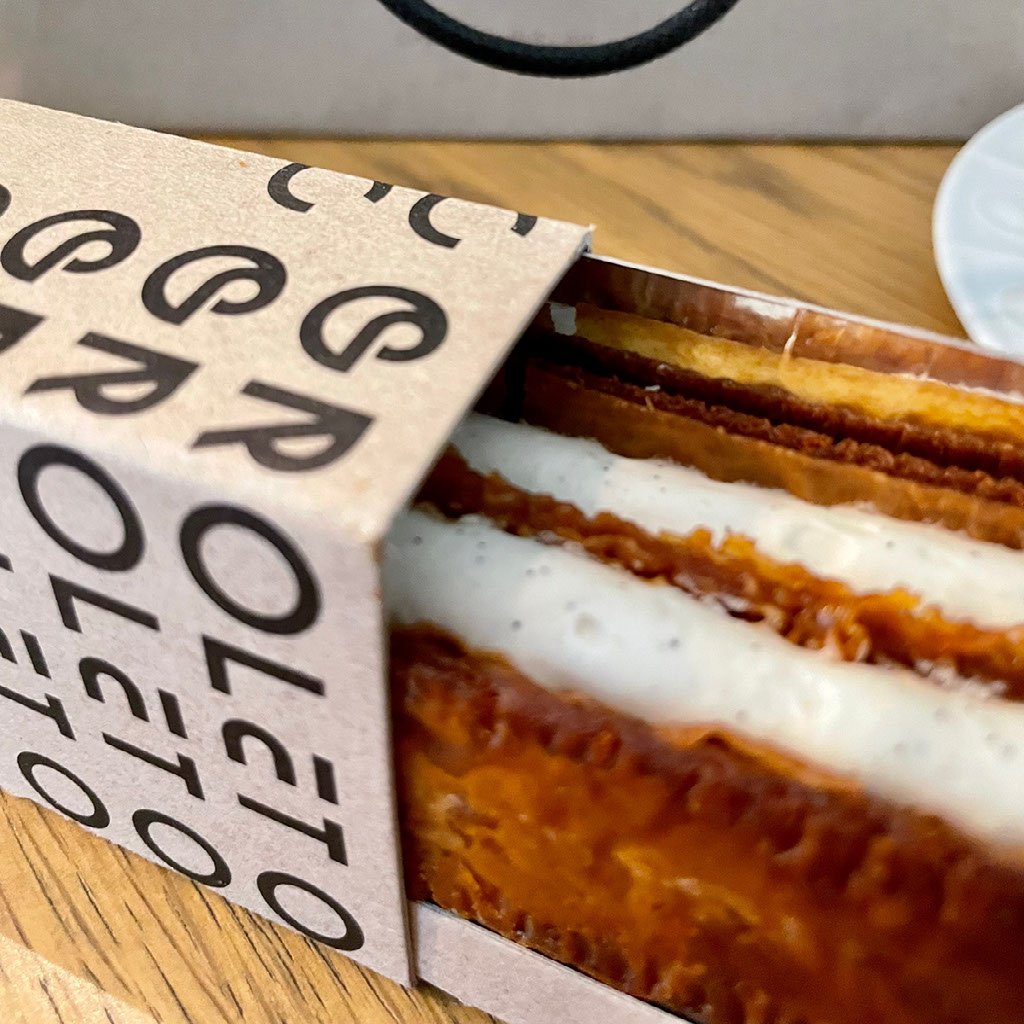
Cédric Grolet Opéra at 35 Avenue de l'Opéra is worth the queue. The pastry work is extraordinary.
Du Pain et des Idées on Rue Yves Toudic in the 10th is my favorite baguette in Paris. A short detour from the Canal Saint-Martin and worth every step.
Jacques Genin on Rue de Turenne in the Marais is the best chocolatier and caramel maker in Paris. The hot chocolate is exceptional.
Mariage Frères in Saint-Germain is my favorite tea shop in Paris. The room is calm, the selection is extraordinary, and it is one of the better places to sit and edit photos mid-afternoon.
Breizh Café in the Marais does the best galettes in Paris. Go for lunch.
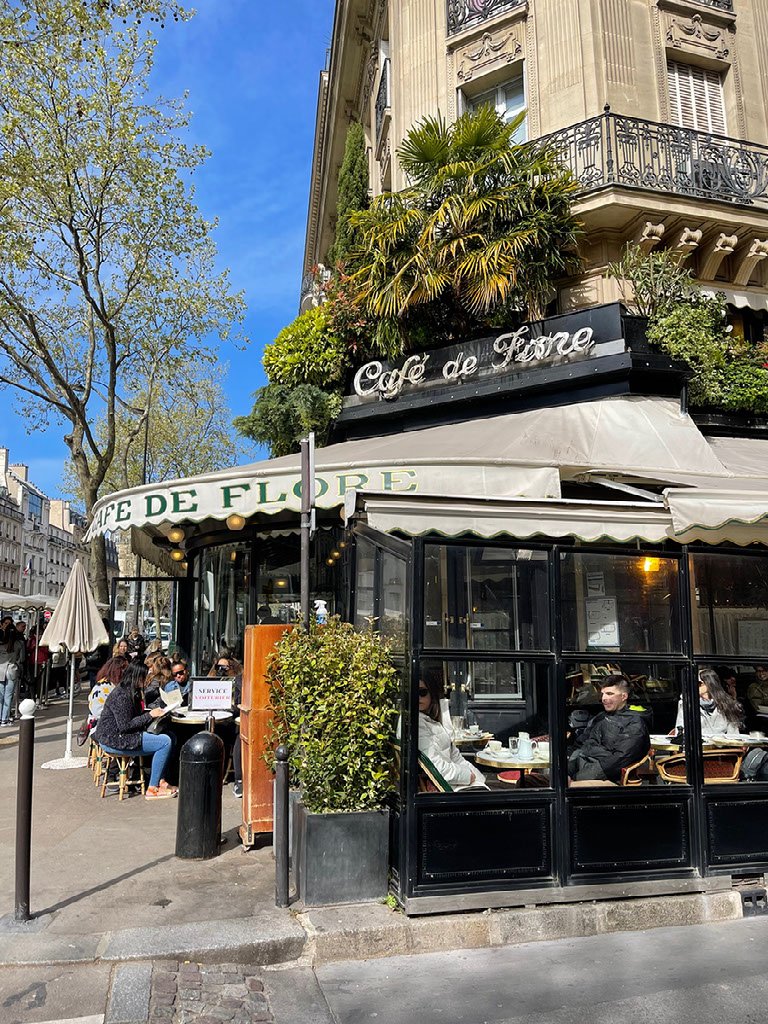
Les Deux Magots and Café de Flore in Saint-Germain are overpriced and touristy, but Hemingway sat in both of them, the terraces are photographically interesting, and the hot chocolate at Les Deux Magots is genuinely good. Go once for the experience.
Nami and Terres de Café are the two coffee shops I rely on for serious espresso. Both are unpretentious and consistent.
Fringe at 106 Rue de Turenne in the Haut Marais is the coffee shop I recommend most to photographers visiting Paris. It was founded by a large-format photographer and the DNA of the place reflects that: photography books, rotating exhibitions on the walls, and single-origin specialty coffee brewed with the same attention to precision a photographer brings to an exposure. Hugo, who runs the place, is one of the warmest hosts in Paris. Go for the cortado, browse the photography books and vintage prints, and stay longer than you planned.
Brigat at 6 Rue du Pas de la Mule, just above the Place des Vosges in the 3rd arrondissement, is one of the best patisseries in Paris right now. Thomas and Lucio run an elegant bakery recognized by Gault & Millau, where the pastries are as well-made as they look. The pistachio millefeuille is the one everyone talks about, the tiramisu is outstanding, and the focaccia with tomato and cheese makes it a legitimate casual lunch stop. The location is perfect: grab something here and take it to the Place des Vosges to eat in one of the most beautiful squares in Paris.
La Maison d'Isabelle - Located in the Latin Quarter, La Maison d'Isabelle is a small neighborhood boulangerie that has become a destination for pastry lovers after winning the Best Butter Croissant in the Île-de-France competition. The croissants are beautifully flaky, rich with French butter, and worth every calorie. While the croissant is the star, don't overlook the pain au chocolat, fruit tarts, or freshly baked baguettes.
📍 Location: Boulevard Saint-Germain, just a short walk from Notre-Dame and the Panthéon.
My Recommendation: Pick up a warm croissant and coffee early in the morning, then stroll through the nearby Luxembourg Gardens or along the Seine before the crowds arrive. It's one of my favorite ways to start a day in Paris
Cheese Shops in Paris
Did I mention that cheese is also good in Paris? One of the most magical locations is the Barthélemy cheese shop. This place is truly amazing and should not be missed. It is a small shop that only allows 2 people inside at a time. But the selection and quality is unparalleled.

Food Tours in Paris
By chance, we met Michelle, a chef and food tour guide. She owns a company called Sweet Secrets of Paris. She is super sweet (pun intended) and will take you on a food adventure you will not forget.
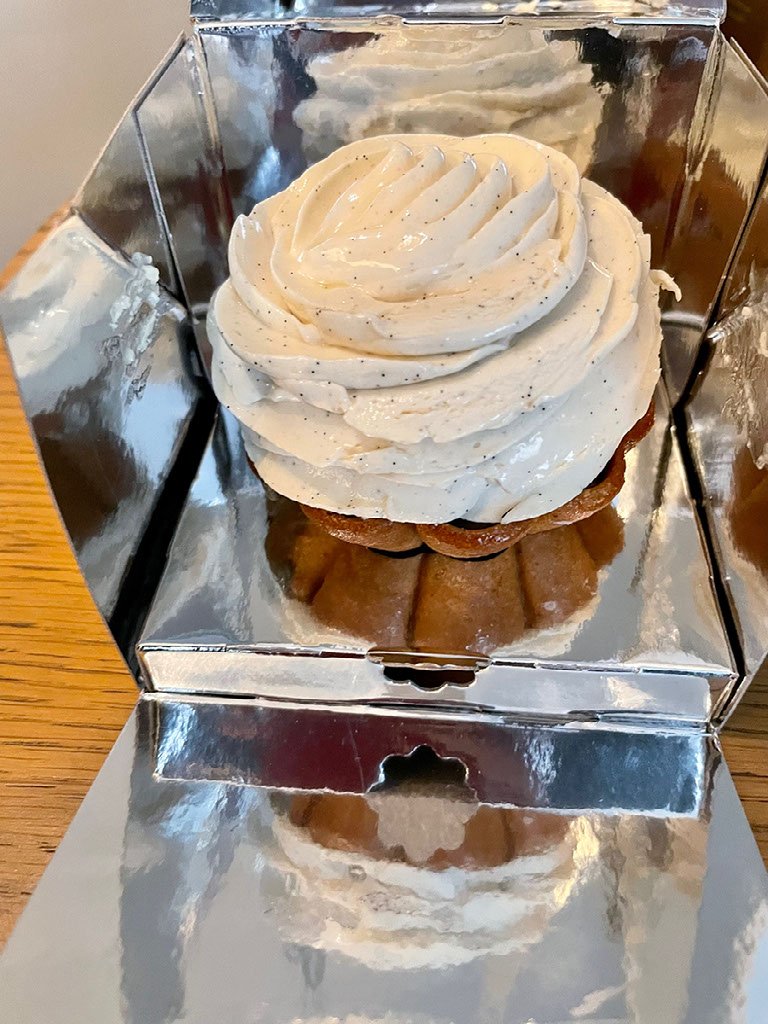
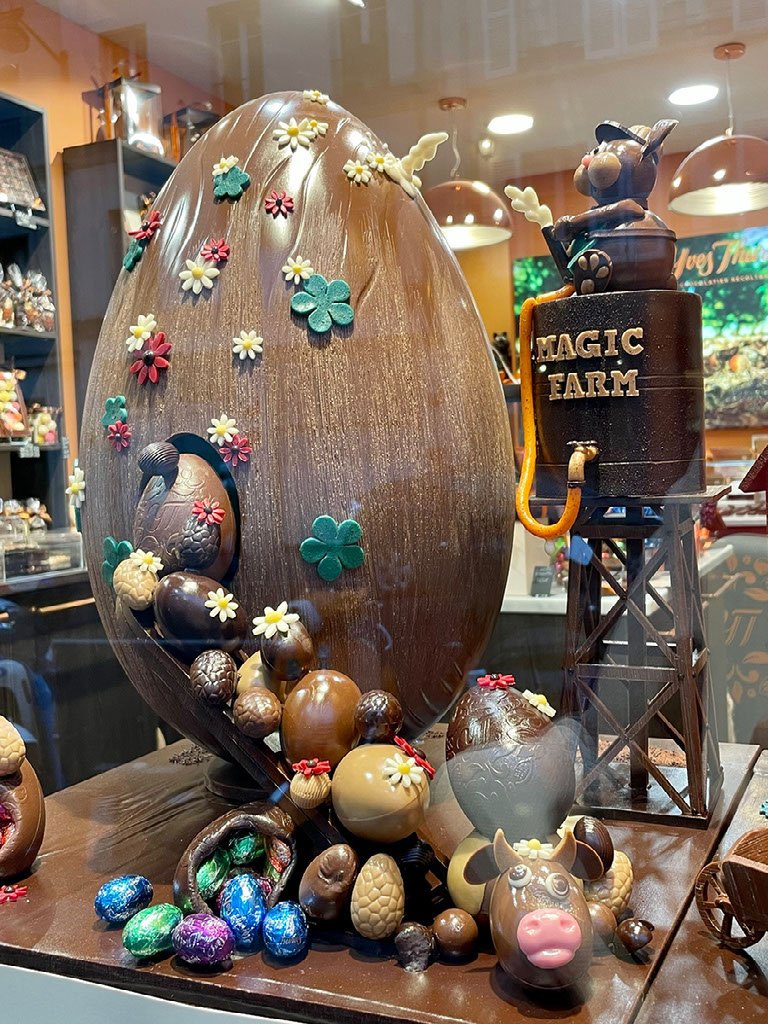
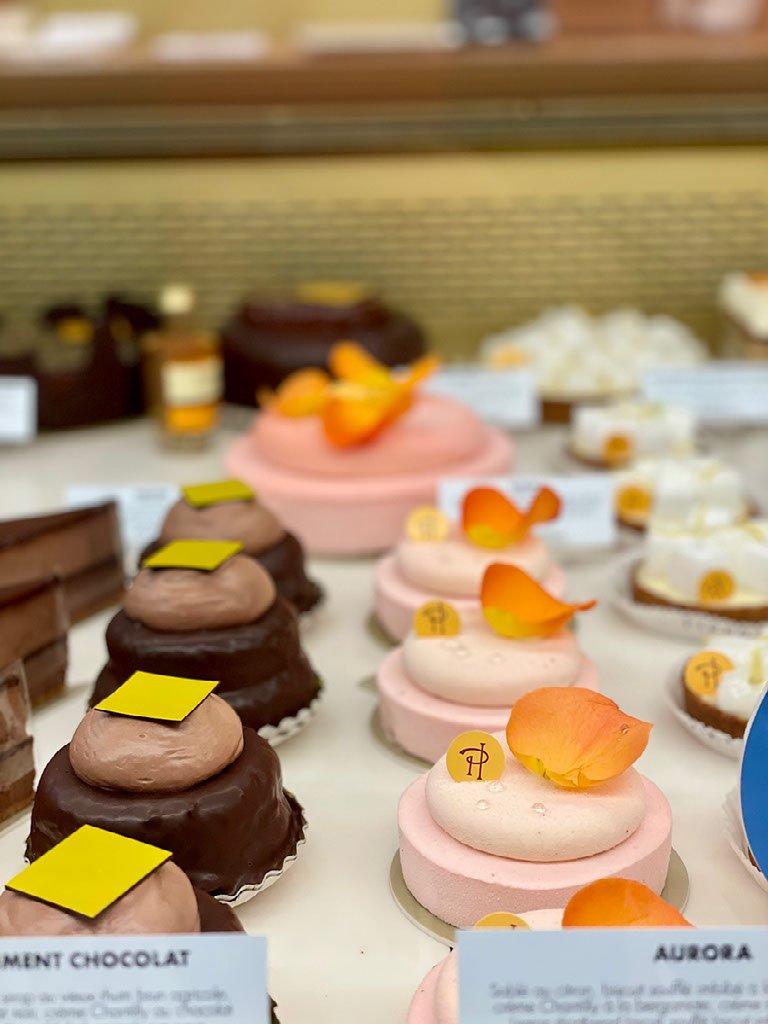
Crepes on from Street Vendors - One thing worth doing on your first evening in Paris: find a street crêpe vendor and get a Nutella crêpe. It sounds like a cliché. It is not.

Nothing Like Nutella!
Photography Gear & iPhone Advice for Paris
Paris is a camera-friendly city across most conditions. You do not need every piece of gear you own. Here is what I bring:
Camera bodies: I travel with the Canon EOS R5 Mark II as my primary body and the Leica Q3 as my walk-around camera. The Leica is exceptional in Paris: compact enough for street photography and cafés, and the 28mm focal length works beautifully for the city's scale. The Sony A7R V and Nikon Z8 are equally strong choices.
Lenses: The 15-35mm f/2.8 handles architecture, interiors, and wide environmental shots. The 24-105mm is my most-used lens for street and general work. The 70-200mm f/2.8 earns its weight at Trocadéro, where you can compress the Eiffel Tower against the skyline, and at Pont Alexandre III for the lamp post shots. A 35mm or 50mm prime is excellent for low-light street photography in Montmartre and Le Marais at night.
Tripod: Essential for blue hour and long exposures on the Seine and at the Arc de Triomphe rooftop. A compact travel tripod works; you do not need your full-size kit. Note that some locations prohibit tripods, including the Arc de Triomphe rooftop (though I will leave it at that).
ND filters: A 6-stop ND is useful for long exposures on the Seine in daylight. A 10-stop ND gives you more creative options on bridges during the day.
Extra batteries and cards: Cold weather drains batteries faster than you expect. Always bring at least two extra batteries. For storage, I use the Samsung T7 SSD for field backups.
Drone: Drones are restricted in central Paris. The airspace above the Seine, the monuments, and most of the historic center is controlled and effectively off-limits for recreational or commercial drone use without advance authorization. Do not bring a drone expecting to fly freely. Check the current DGAC regulations before your trip.
iPhone Photography Tips for Paris
For street photography in Le Marais and Saint-Germain: Use the 1x standard lens rather than the ultrawide. The natural field of view matches the way the street looks to your eye, and the compression is more flattering for candid portraits. Shoot during the golden hour when the warm light does the heavy lifting.
At Trocadéro: Try the panorama mode vertically rather than horizontally. It captures the full height of the Eiffel Tower in a way that a standard frame does not.
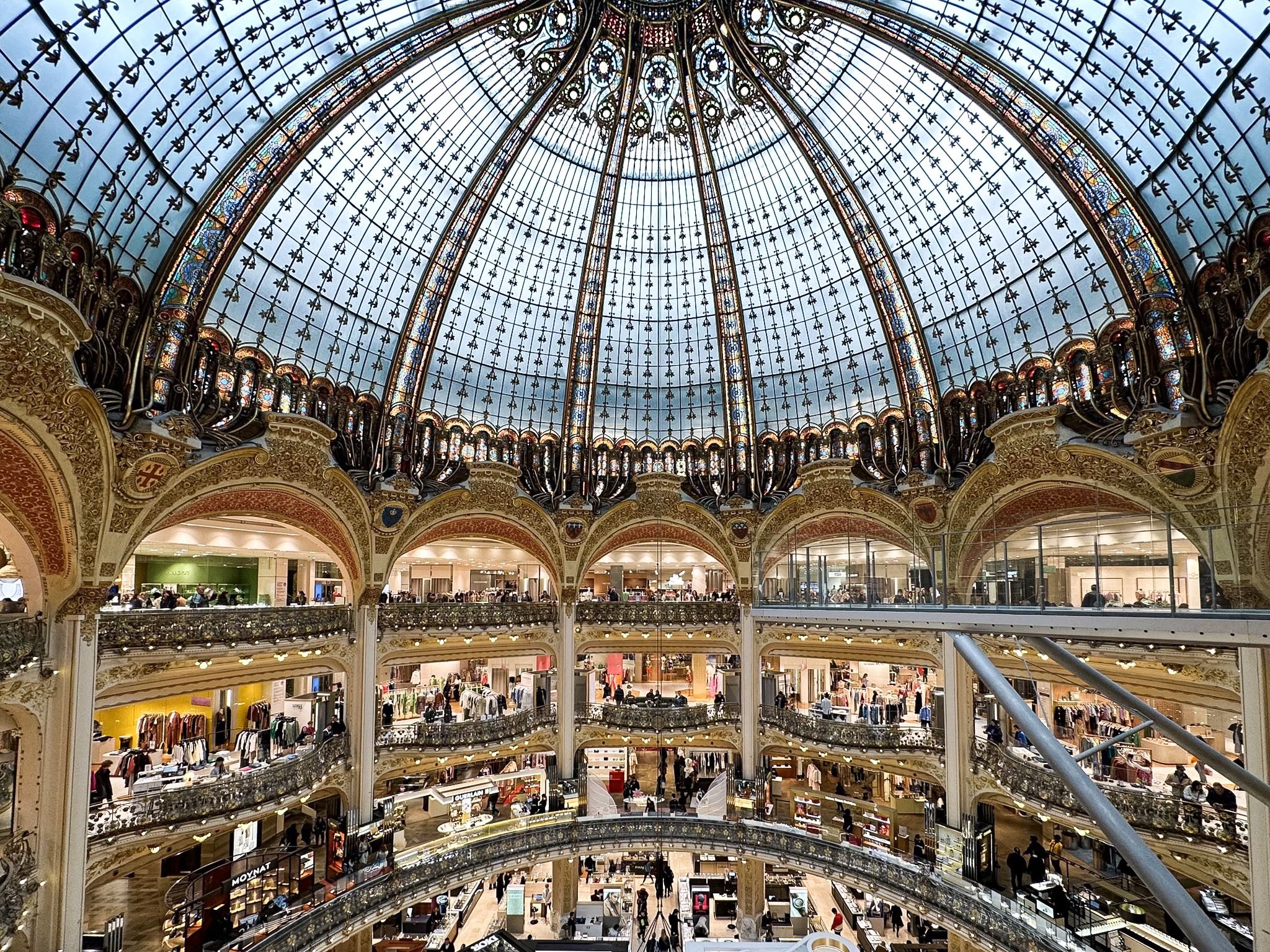
For interior photography at Galeries Lafayette and Sainte-Chapelle: Switch to the ultrawide lens. Both spaces are tall and narrow, and the ultrawide lets you capture the full height of the iron dome and the stained glass windows from a standing position. On a phone, tap the shadows in your exposure meter to avoid blowing out the windows.
At night on Pont Alexandre III: Night Mode is exceptional here. Set your phone on a railing or a small pocket tripod, lock the exposure on the brightest lamp, and let the long exposure capture the reflections in the Seine. The result on a modern iPhone is genuinely competitive with a DSLR setup.
For food photography, Paris is arguably the best city in the world for food photography. Use Portrait Mode for croissants, pastries, and plated dishes. Natural window light in a Parisian café is usually better than anything you can fake with flash.
Best Photo Spots In Paris
There are so many locations to shoot in Paris. There is something for everyone, depending on your interests. So if your interest is Architecture, Fashion, People, Food, or the Classic sights, it is all there to photograph. Like most locations, shooting early in the morning is best since you have great light with no crowds. In the evening, you will have great light but crowds.
Interactive Paris Travel & Photography Map
Explore Paris through the eyes of a travel photographer. Every location includes my photography tips, travel advice, the best time to visit, and practical planning information.
Trocadéro
The Trocadéro esplanade is the classic Eiffel Tower viewpoint, and it is classic for a reason. At sunrise, you will find anywhere from ten to thirty photographers lined up with tripods. There will also be wedding photographers working with couples. It is a competitive spot, but the image is genuinely extraordinary when the light is right.
The view from the center of the esplanade puts the Eiffel Tower perfectly framed against the sky, with the fountains in the foreground on days when they are running. The symmetry of the space rewards a tripod and a careful composition.
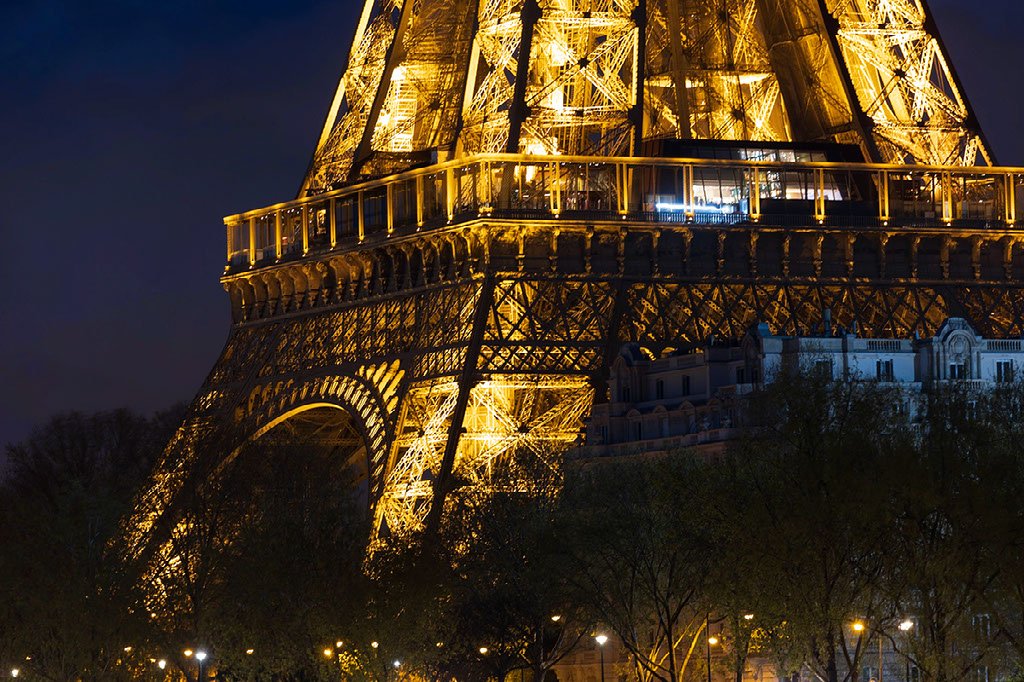
📷 Pro Tip: Arrive at least thirty minutes before sunrise to secure a central position. Position yourself at the center of the esplanade with the fountain in your foreground. A 24-70mm gives you the full composition; a 16mm or wider lets you include the esplanade floor and fountain for a dramatic foreground. At blue hour, use a 2-second exposure to smooth the water and capture the tower lights. The tower sparkles on the hour after dark for five minutes; position yourself and be ready. iPhone users: Night Mode on a railing with the tower slightly off-center produces a strong result.
Best time: Sunrise and blue hour. Access: Free. Metro: Trocadéro (Line 6 or 9).
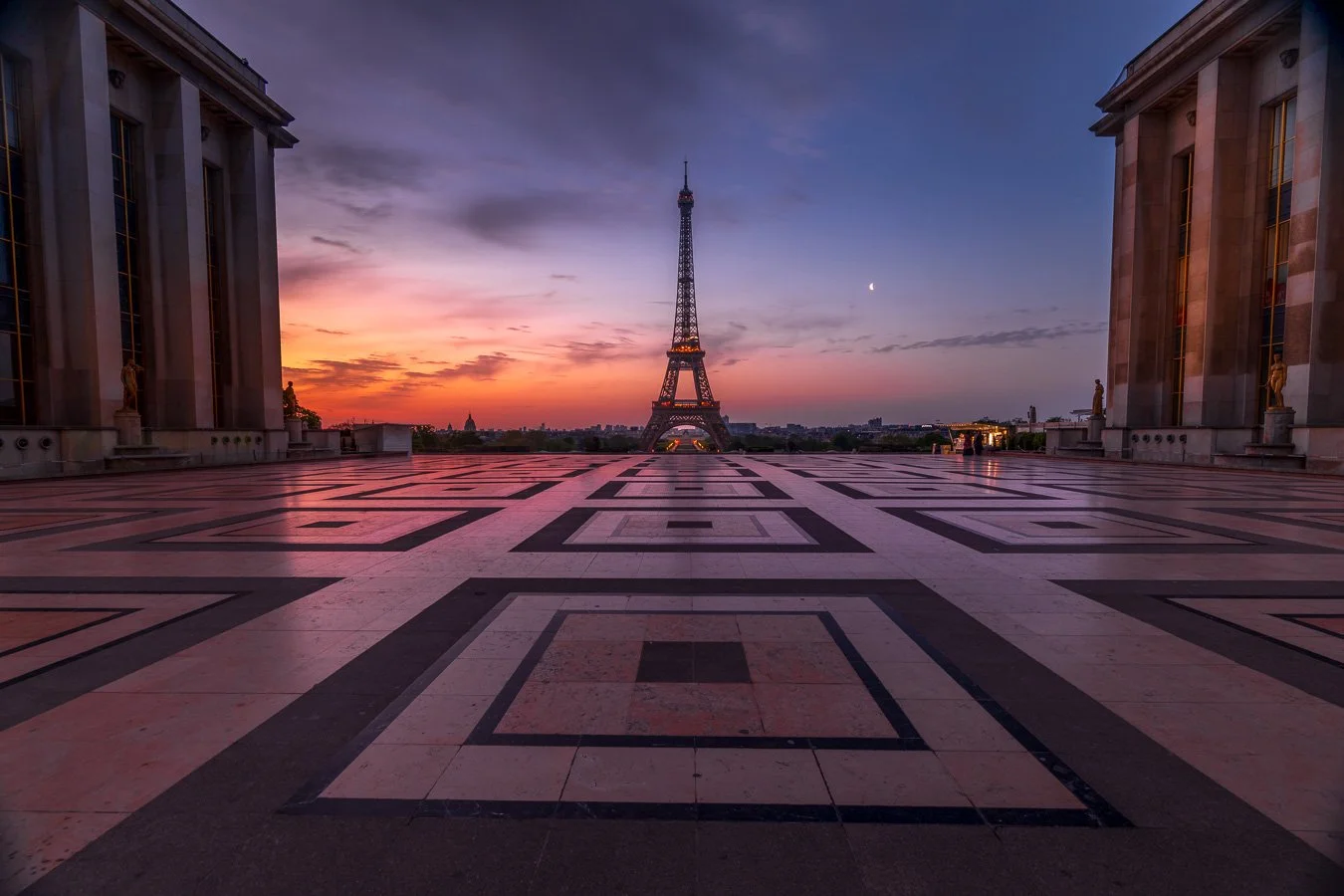
There will also be tons of wedding photographers taking shots of couples. I noticed this beautiful couple and had to take their photo

Sunrise at the Trocadero
Looking for different angles

Sunrise at the Trocadero
La Tour Montparnasse Rooftop
The Montparnasse Tower is the only tall building in central Paris that is open to the public, which means it is the only place in Paris where you can photograph the Eiffel Tower from an elevated position at the same height as the tower itself. The 58th-floor viewing deck has a small gap in the glass where you can fit a camera lens, which makes it significantly more useful than most observation decks.
There is a bar on the rooftop. The view is extraordinary in all directions, but the Eiffel Tower view to the north is the one you came for.
📷 Pro Tip: Bring both a wide lens (15-35mm) and a telephoto (70-200mm). The view gives you the full Parisian panorama with the Eiffel Tower in context. The 70-200mm lets you isolate the Eiffel Tower against the city grid in a way that no other publicly accessible viewpoint can match. Use the gap in the glass panel to shoot without the distortion or reflections of shooting through the window. A tripod fits on the outdoor deck. The best light is at sunset when the sun goes down behind the tower and the city lights begin to come on. A small entrance fee is required; book online to avoid queuing.
Best time: Sunset and night. Access: Paid entry. Metro: Montparnasse-Bienvenüe (Lines 4, 6, 12, 13).

Shot with a wider lens 15-35mm
Look at the difference when you shoot with a 70-200 mm

Using a 70-200 mm Lens
Cafe Au Canon Eiffel View
There are a few locations where you can get a photo of the Eiffel Tower using the leading lines of the roadways. (Best at SUNRISE/SUNSET/NIGHT)

Cafe Au Canon
Pont de Bir-Hakeim
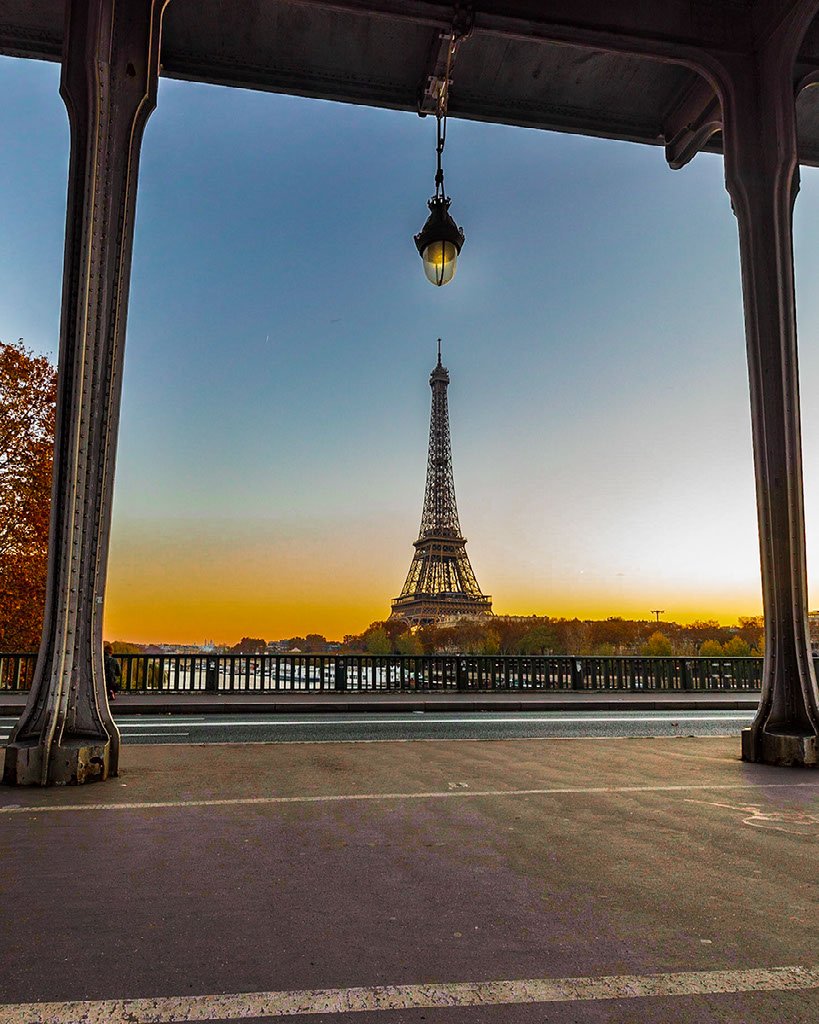
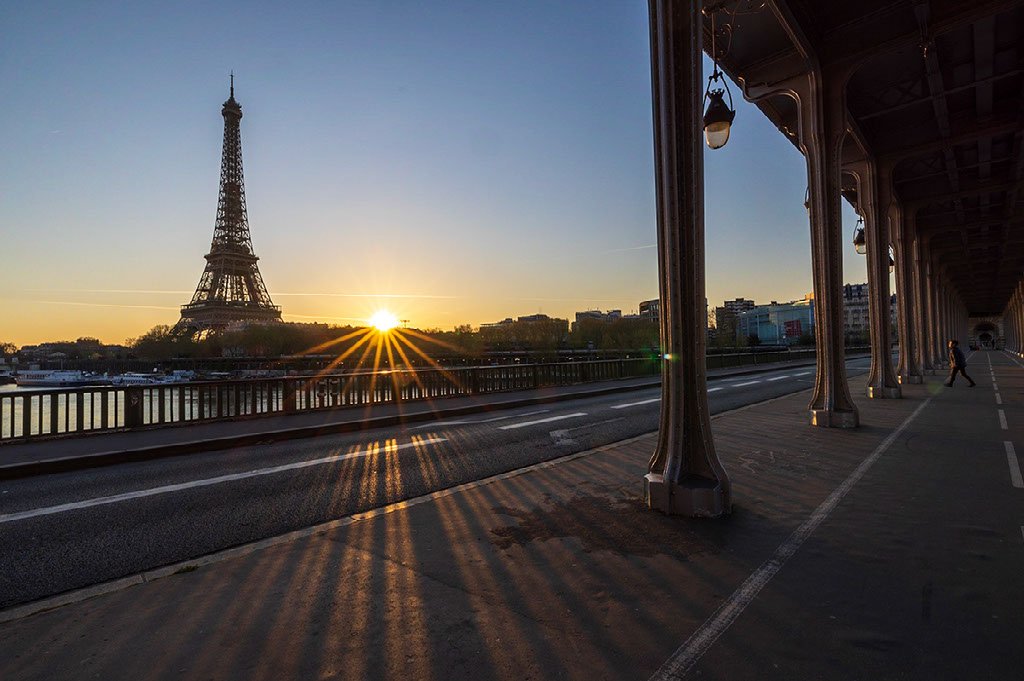
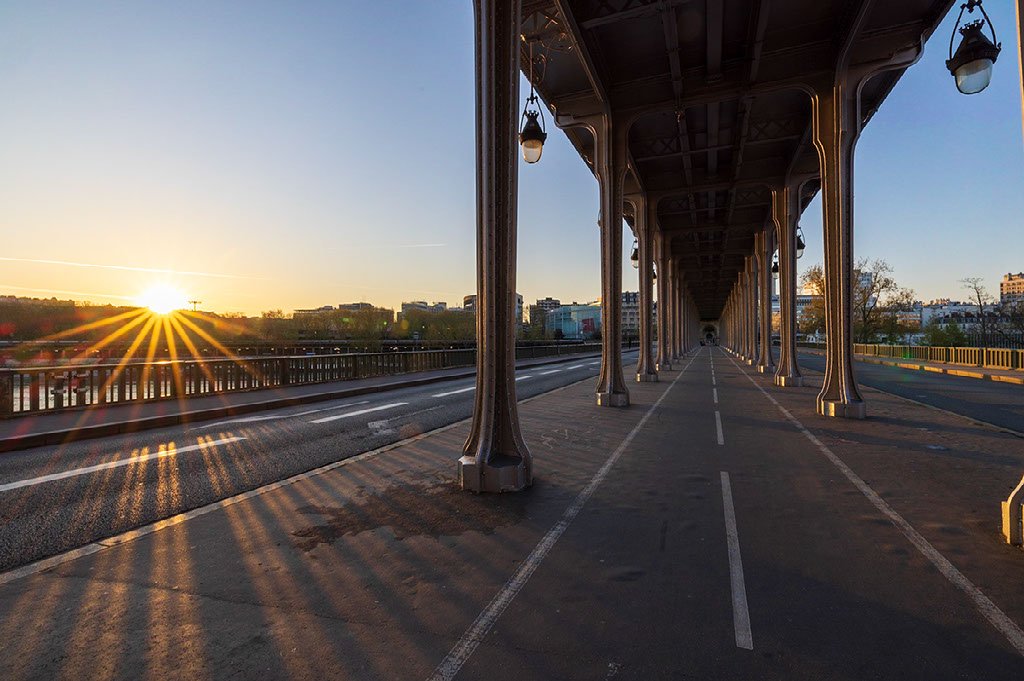
This is the location that separates photographers who have done their homework from those following the standard tourist map. Pont de Bir-Hakeim is a double-decker bridge with a Metro line running along the upper level and a pedestrian walkway below. The iron pillars, the perspective lines, and the Eiffel Tower framed at the far end of the bridge produce one of the most distinctive photographs in Paris.
Very few photographers who are not specifically seeking it out find this location. The bridge is best known internationally because it was used in the film Inception.
📷 Pro Tip: Position yourself at the far end of the pedestrian walkway on the south side, facing north toward the Eiffel Tower. The iron columns create a tunnel of perspective lines leading directly to the tower. Use a 24-70mm at the wide end, or a 16-35mm if you want to exaggerate the tunnel effect. The best light is at sunrise or blue hour when the tower is lit and the bridge is quiet. At sunset, the light comes from behind you and illuminates the iron structure beautifully. Avoid midday: the bridge gets crowded and the light is flat.
Best time: Sunrise and blue hour. Access: Free. Metro: Bir-Hakeim (Line 6).

Bir Hakim Bridge
You can take lots of great shots from Bir Hakim
Sacré-Cœur and Parc Marcel Bleustein-Blanchet
The front of Sacré-Cœur is one of the most photographed spots in Paris, and also one of the most difficult to photograph cleanly. The crowds on the main stairs are relentless from about 10 am onward.
📷 Pro Tip: From Parc Marcel Bleustein-Blanchet, use a 70-200mm at around 150-200mm to isolate the dome and upper facade. The compression flattens the background foliage in a way that keeps attention on the church. At sunset, position yourself to put the dome in the upper third of the frame with the garden in the foreground. For blue hour, switch to a wider lens at 35-50mm to include the park and the city lights below. A tripod is essential after dark. The park is accessible after sunset; arrive before blue hour to set up your composition in daylight and wait for the light to shift.
Best time: Sunset and blue hour. Access: Free. Metro: Abbesses (Line 12), then a short walk.
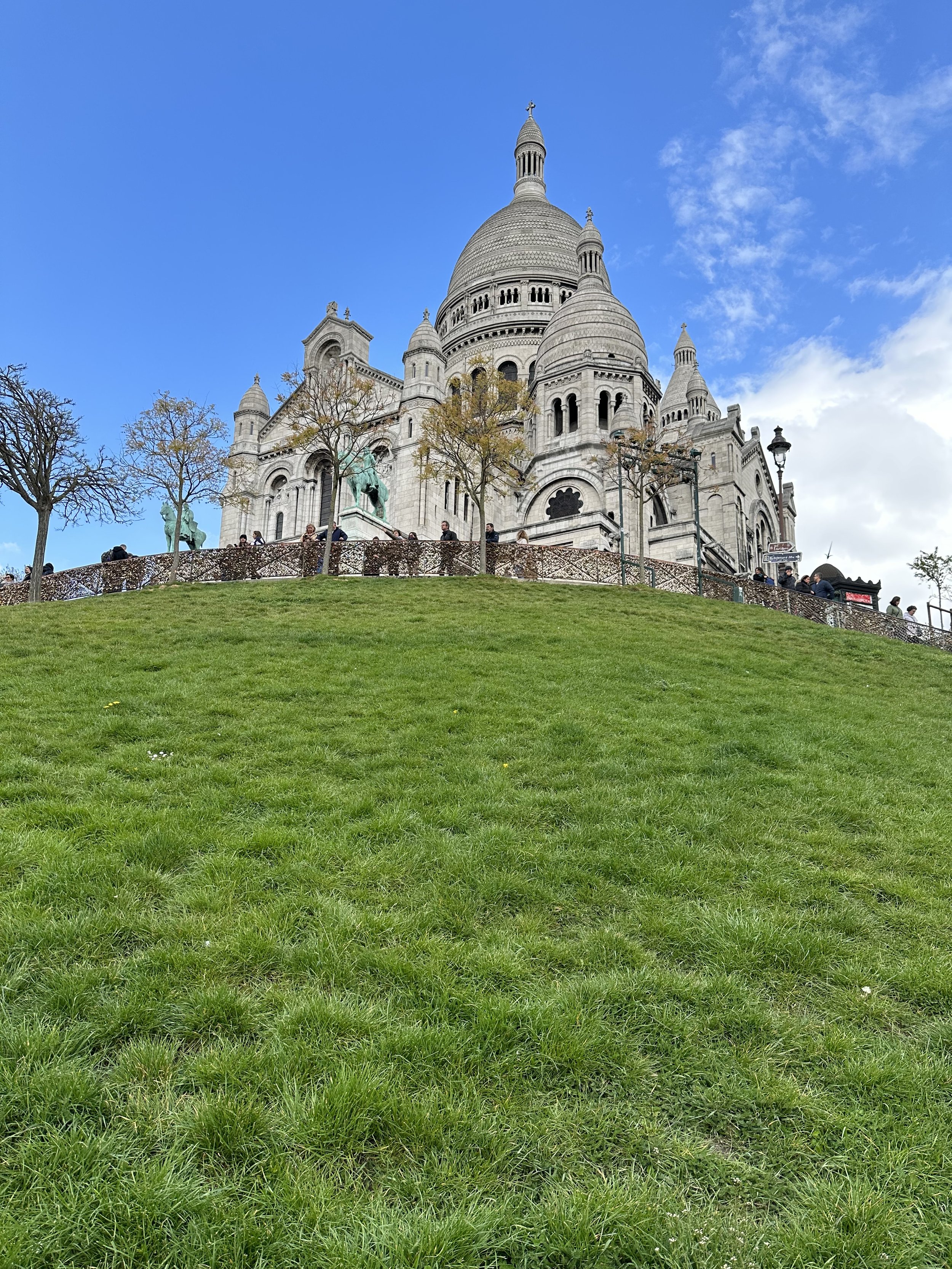
Sacre Coeur
The solution is the back of the hill. Walk around to Parc Marcel Bleustein-Blanchet, a small garden that sits behind Sacré-Cœur and gives you an elevated view of the dome and the church facade without the tourist density. At sunset, the warm light hits the white stone of the basilica and the result is significantly better than anything you will get from the crowded front stairs.

Parc Marcel Bleustein Square
At night, the blue hour view of Sacré-Cœur from this vantage point is one of the most underrated shots in Paris.

Sacre Coeur at Night
There is also the fun optical illusion of the “Sinking House” in Paris. The sinking house is one of those spots in Paris that is very popular to photograph. Obviously, this is just an optical illusion. If you have been to the Sacre Coeur then you have walked right by it.

The Sinking House
La Maison Rose
The artist Maurice Utrillo painted La Maison Rose, which he called “The Little Pink House” in the 1930s. You will see a lot of people taking selfies. Dead to Montmartre at sunrise to capture this charming café sans tourists.

La Maison Rose at Sunset
Le Consulat in Montmartre
This restaurant in Montmartre is beautiful to photograph during Blue Hour. You will need to go late so there are fewer people.

Le Consulat
Gustave Moreau Museum Spiral Staircase
This is a location most Paris visitors walk past without ever entering. The Gustave Moreau Museum in the 9th arrondissement is a small, specialized museum dedicated to the Symbolist painter, and the building itself contains one of the most photographable architectural details in Paris: a double spiral staircase connecting the studio floors. The light in the space, the ironwork of the staircase, and the scale of the paintings visible through the balustrades create a photograph that stops people on social media.
📷 Pro Tip: A 16-35mm at the widest end handles the staircase from a ground-floor position looking up. Position yourself directly below the staircase centerline and shoot straight up for the symmetrical spiral composition. A 24mm works equally well. The natural light from the skylights is best in the late morning. Bring a small tripod or a Platypod for stabilization since the interior is relatively dim. The entrance fee is modest and the crowds are light; you may have the staircase to yourself on weekday mornings.
Best time: Late morning on weekdays. Access: Paid entry. Metro: Trinité (Line 12).

Gustave Moreau Museum
Pont Alexandre III
This is my favorite bridge in Paris, and I have spent more time here than at almost any other single location. The bridge is extraordinary: gilded lamp posts, Art Nouveau sculptures, and views in both directions that are worth photographing. On one side, you look toward Les Invalides. On the other hand, you look toward the Grand Palais and the Seine stretching west.
I ran into photographer Serge Remelli here on one trip, which felt like running into someone at their office. This bridge is where serious Paris photographers work.
📷 Pro Tip: The lamp posts along the bridge are the primary subject. Position yourself low on the pedestrian walkway and use a 70-200mm lens at around 100-135mm to compress the lamp posts into a receding line. At sunset, shoot toward the west; the light hits the gilded sculptures, and the bridge glows. For a different composition, shoot from the north bank of the Seine looking back at the bridge with Les Invalides in the background. Bring a tripod for blue hour and long exposures with car light trails on the bridge. iPhone users: shoot in Portrait Mode on the individual sculptures for detail shots that hold up at full size.
Best time: Sunset and blue hour. Access: Free. Metro: Invalides (Line 8).

Pont Alexandre
There are so many compositions from this bridge

Pont Alexandre
Right Next to the Bridge Looking towards Les Invalides

Pont Alexandre towards Les Invalides
Instagrammers & Influencers
I find Instagrammers and "influencers" to be fun to photograph. They actually put in so much work into taking photos. They often have multiple outfit changes and really make an effort.
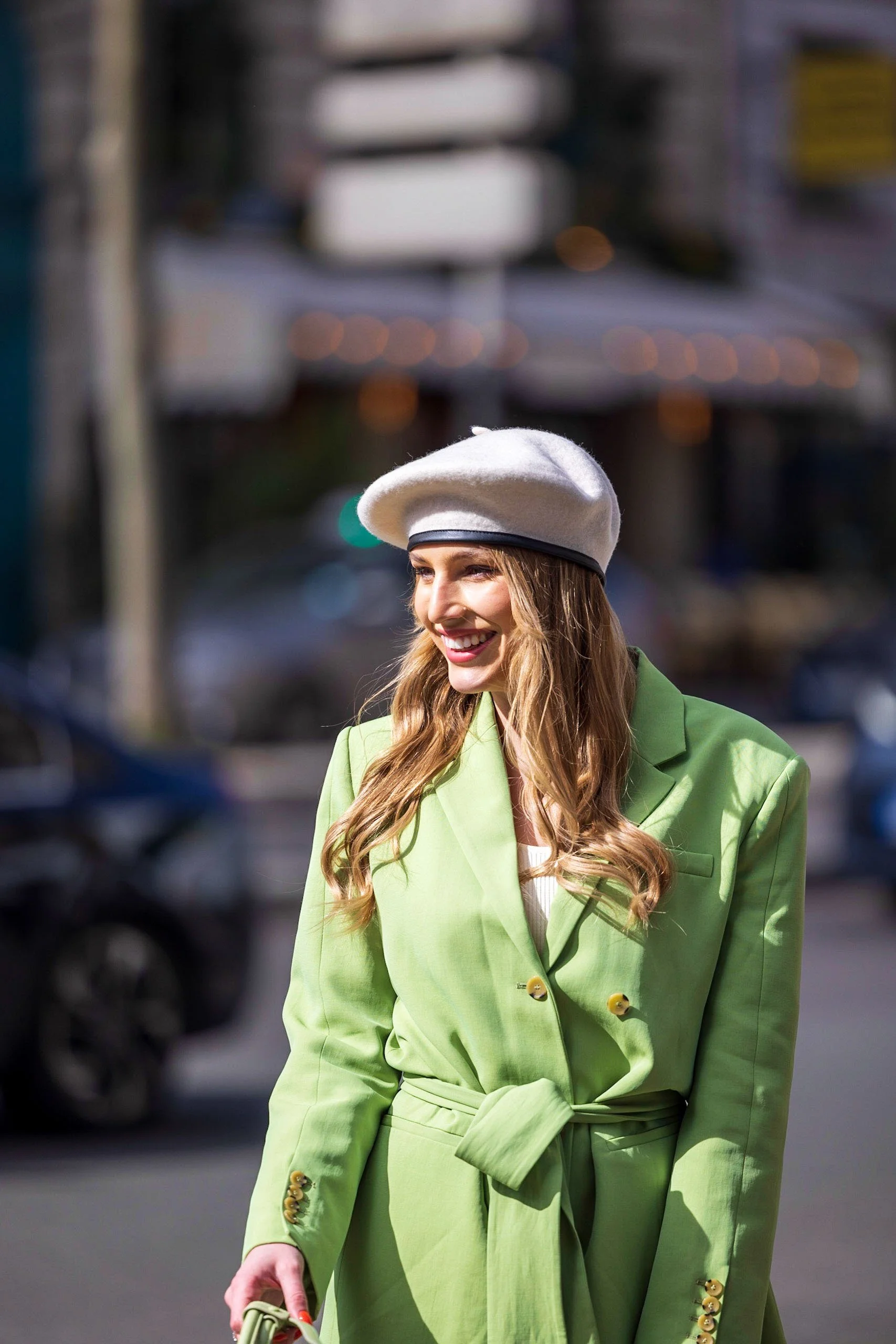
It is fun to photograph these people
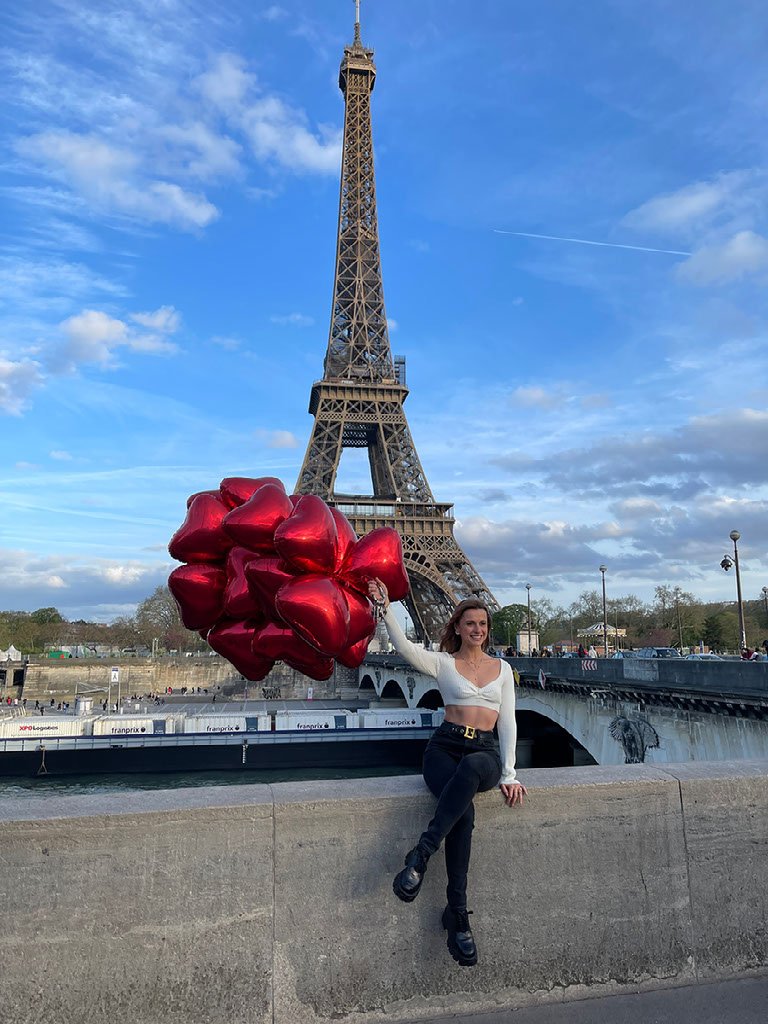
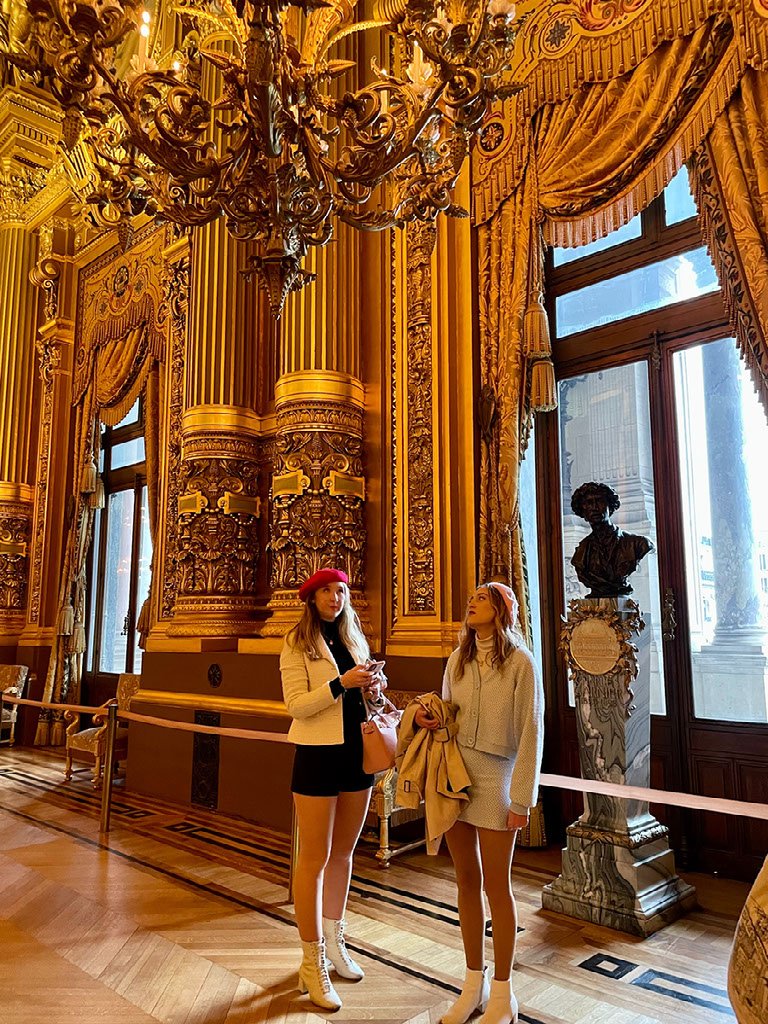
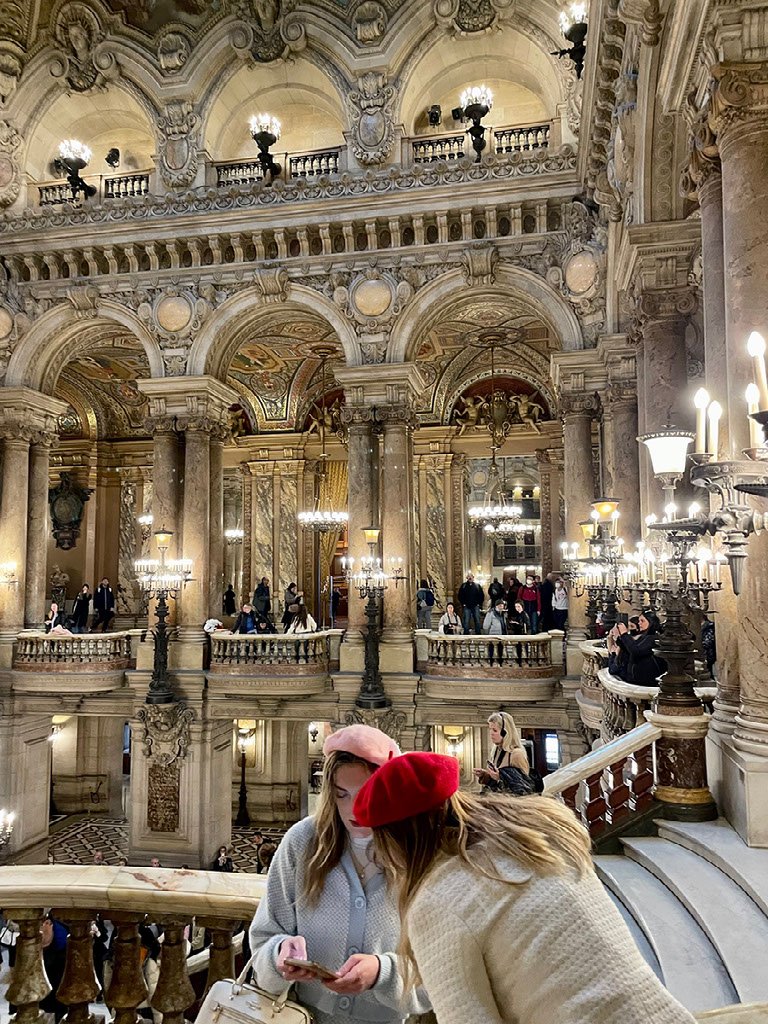
Booksellers along the Seine
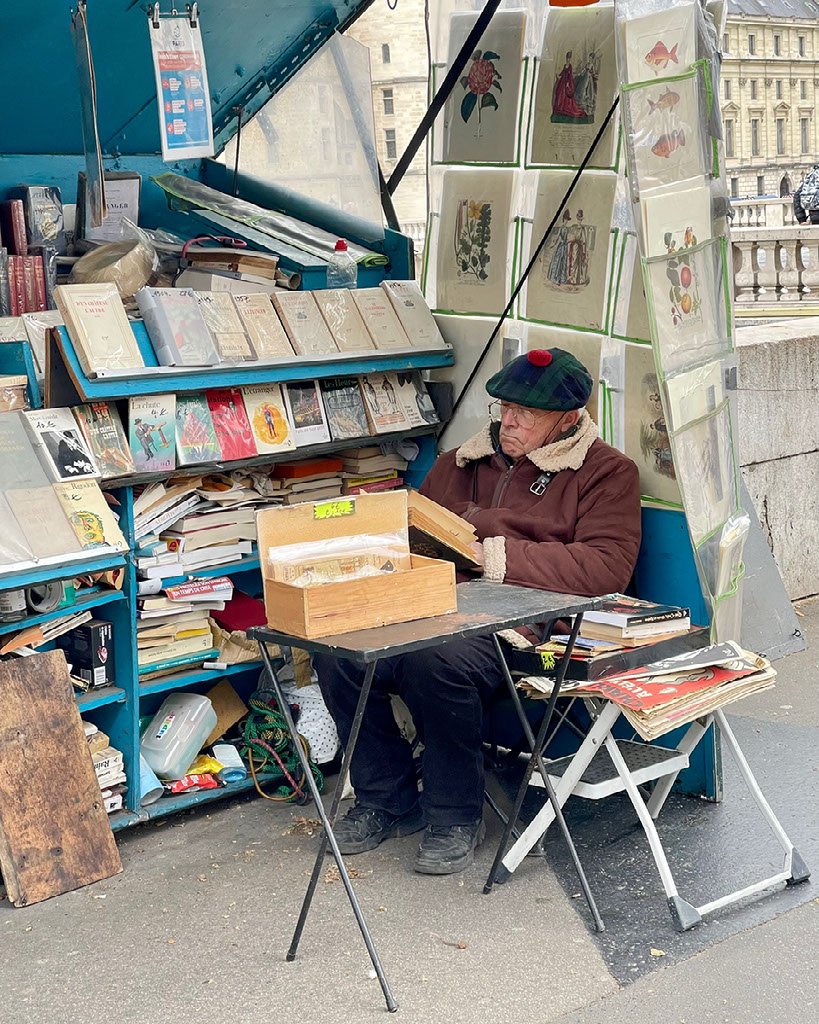
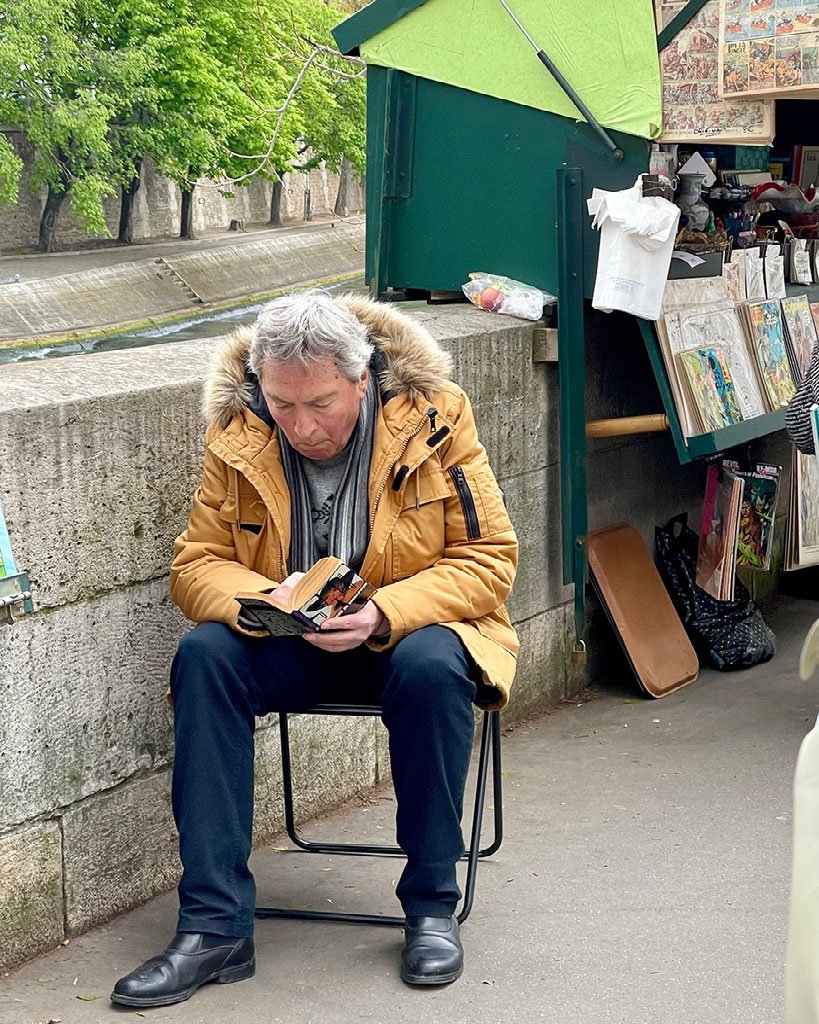
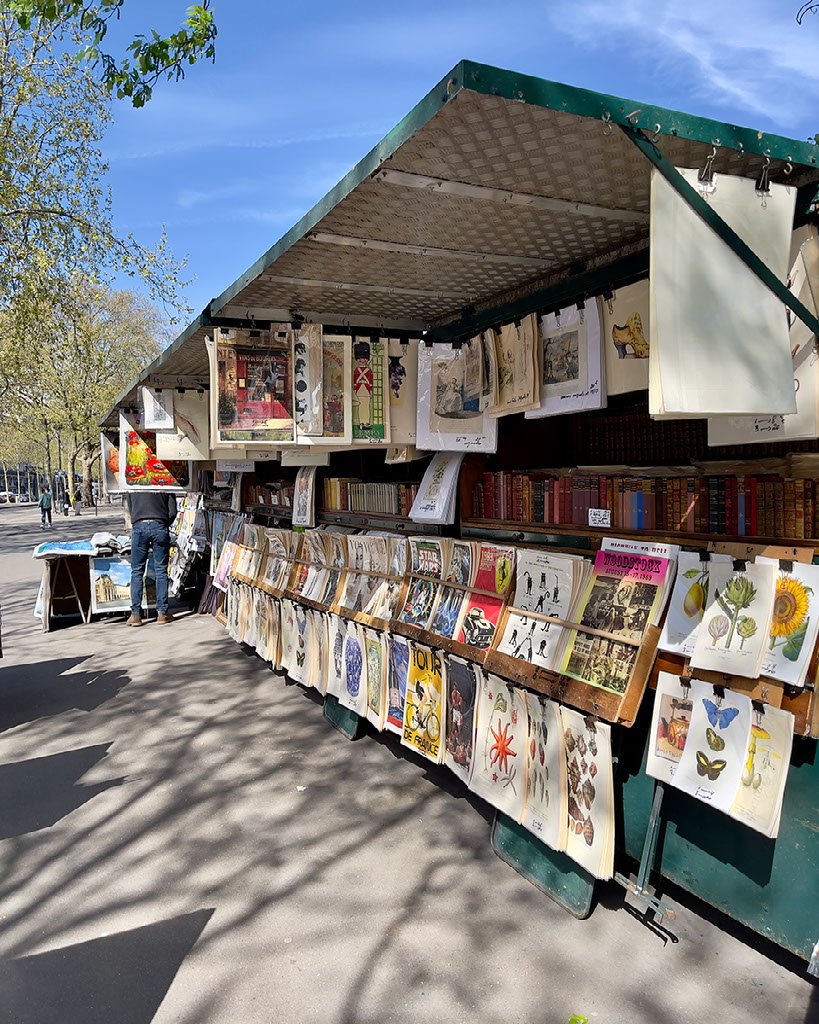
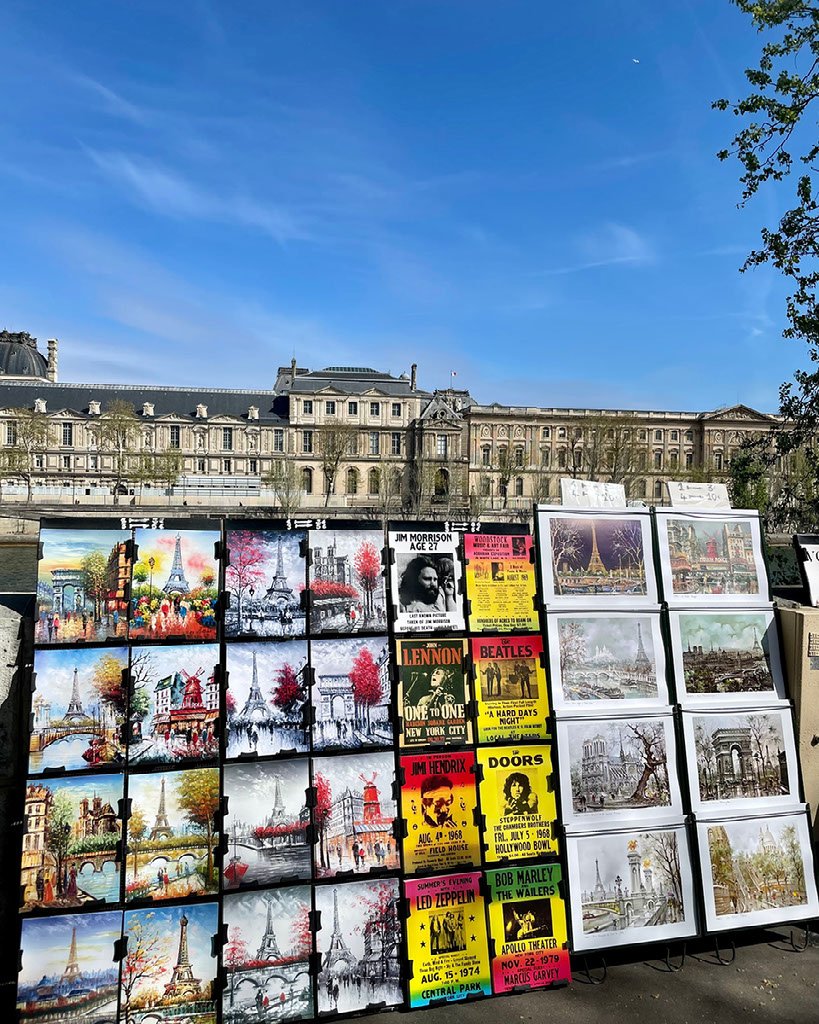
The bouquinistes, the green metal stalls lining the Left Bank of the Seine between Pont de la Tournelle and Quai Voltaire, are one of the most recognizably Parisian subjects in photography. The vendors sell old books, prints, postcards, and maps. The combination of green metal, aged paper, the Seine behind, and Notre-Dame visible in the distance is a scene that has been photographed for a hundred years and still works.
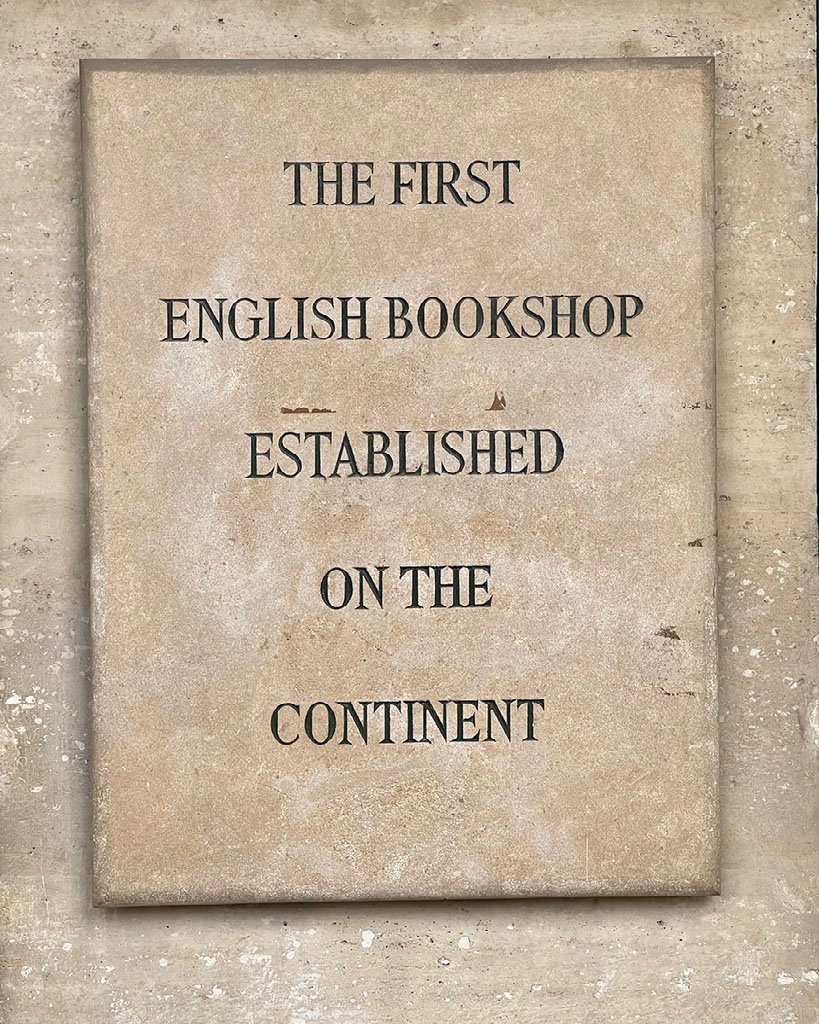
Shakespeare and Co, the famous English-language bookshop on Rue de la Bûcherie, is immediately adjacent.
📷 Pro Tip: Shoot the bouquinistes when the stalls are open and occupied. Early to mid-morning on weekdays gives you the best combination of open stalls and manageable crowd density. A 35-50mm focal length at eye level with a vendor as your subject and the stalls receding into the background produces a strong environmental portrait. For a wider scene, a 16-35mm from the riverside looking back toward the stalls with Notre-Dame behind them handles the full environment. Ask permission before photographing individual vendors up close; most are receptive when asked directly.
Best time: Weekday mornings. Access: Free. Metro: Saint-Michel (Line 4).
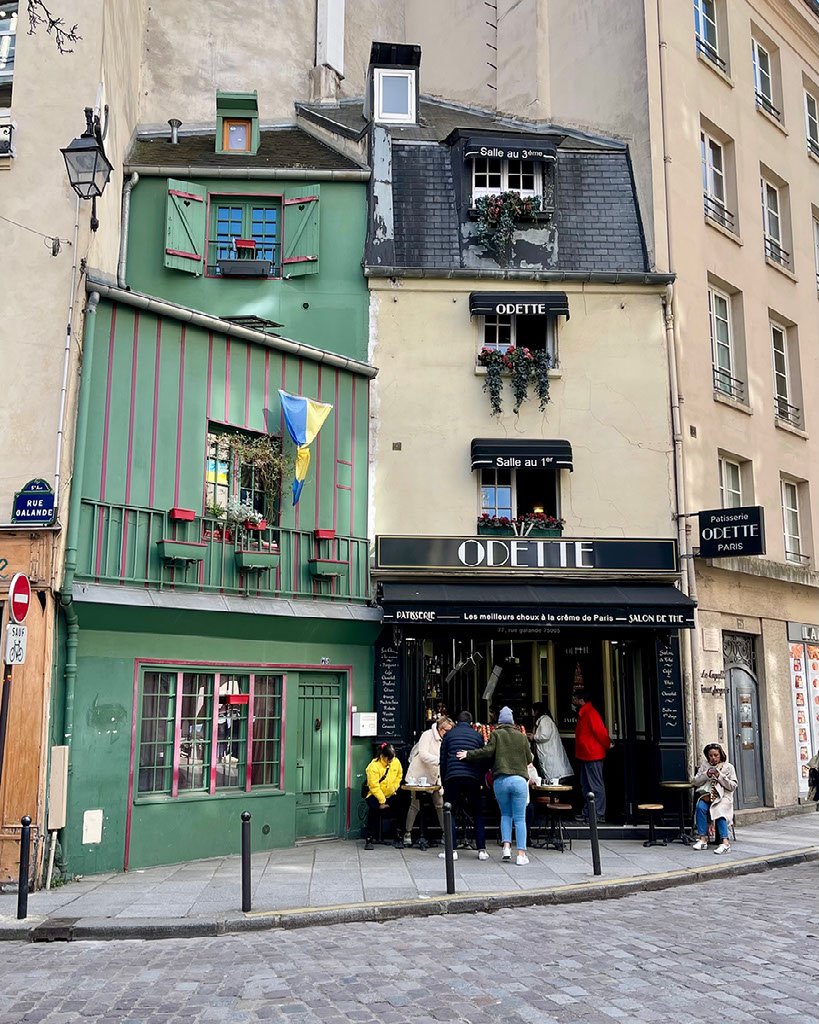
Street Photography Saint Germain
Paris is one of the great street photography cities in the world. People dress well here. The light in narrow streets falls at angles that create natural drama. The combination of old stone architecture and contemporary Parisian life produces a subject around every corner.
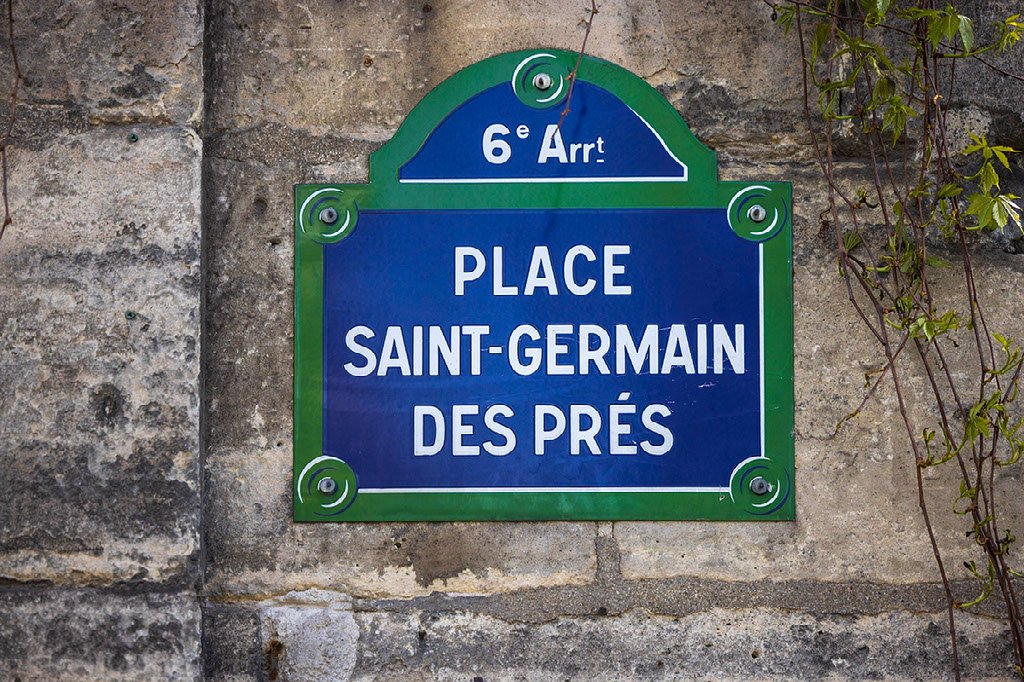
The two best areas are Le Marais on the Right Bank and the Saint-Germain/Quartier Latin area on the Left Bank. Le Marais has energy, diversity, and the Jewish Quarter around Rue des Rosiers. Saint-Germain has elegance and the café culture that defines a certain idea of Paris.
📷 Pro Tip: For street photography, I use the Leica Q3 with its fixed 28mm lens. On a DSLR or mirrorless kit, a 35mm f/1.4 or 50mm f/1.8 gives you excellent low-light performance and a natural field of view for candid work. In both neighborhoods, look for the intersections where pedestrian traffic crosses good light: the corner of Rue de Bretagne and Rue Charlot in Le Marais, the area around Les Deux Magots where people pause and gesture, the covered passages like Galerie Vivienne where the light filters through glass ceilings. Early afternoon produces strong side light in the narrower streets. Late afternoon in Le Marais goes warm and golden quickly.
Best time: Midday for harsh shadows and strong contrast; late afternoon for warm light. Access: Free.
Jardin du Luxembourg
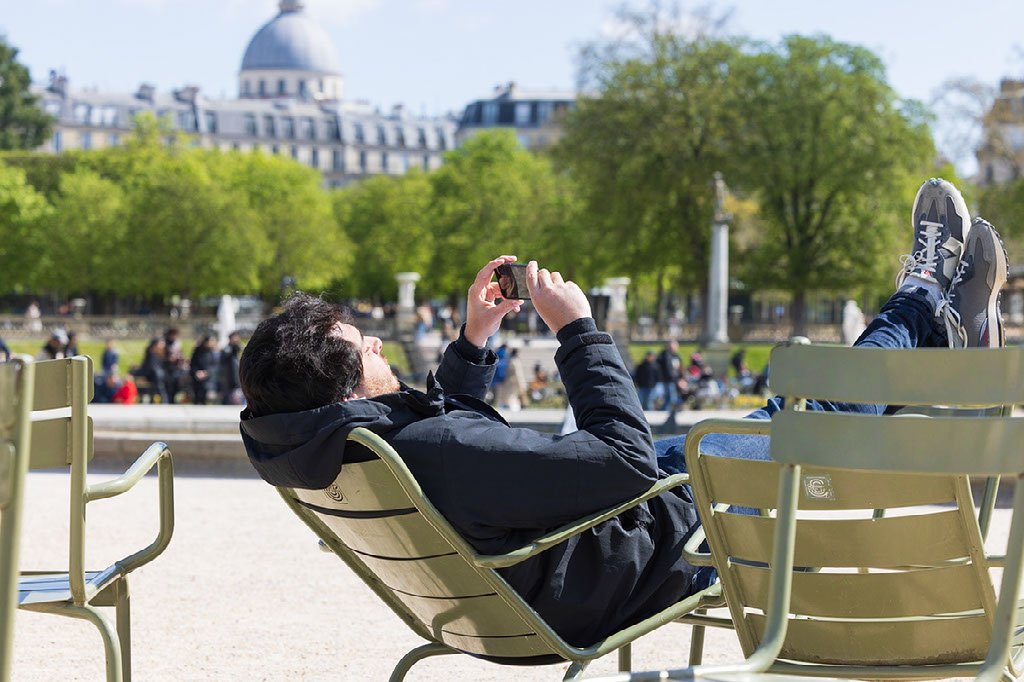
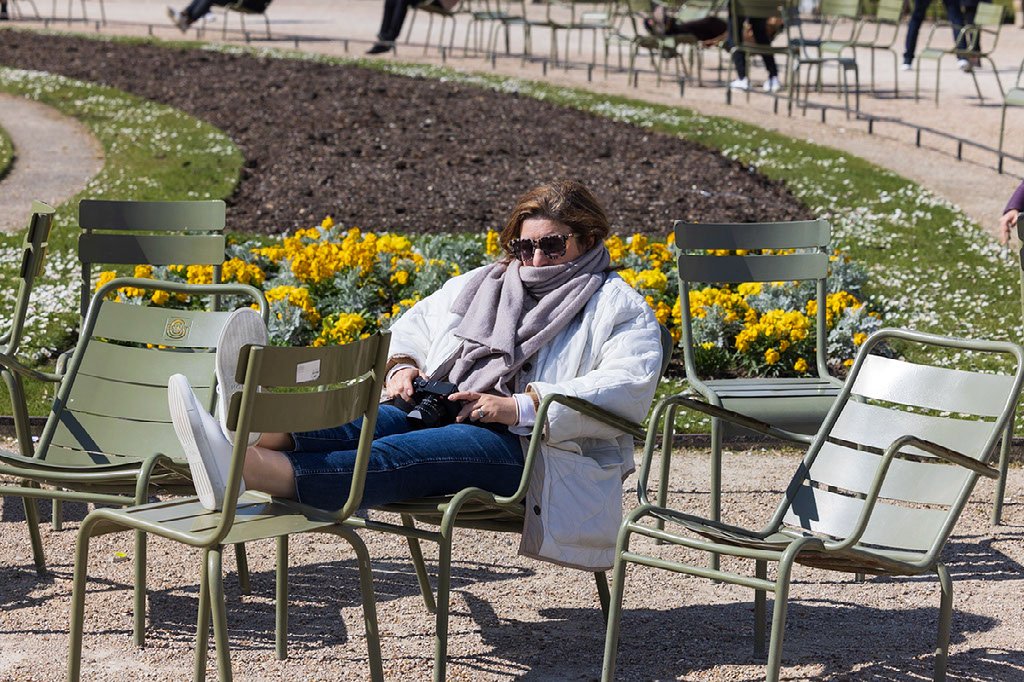
The Jardin du Luxembourg is the Central Park of Paris. It is just beautiful. What I especially love is that there are so many chairs for visitors to use. So you can sit, breathe, and watch the world. (Best at SUNRISE)
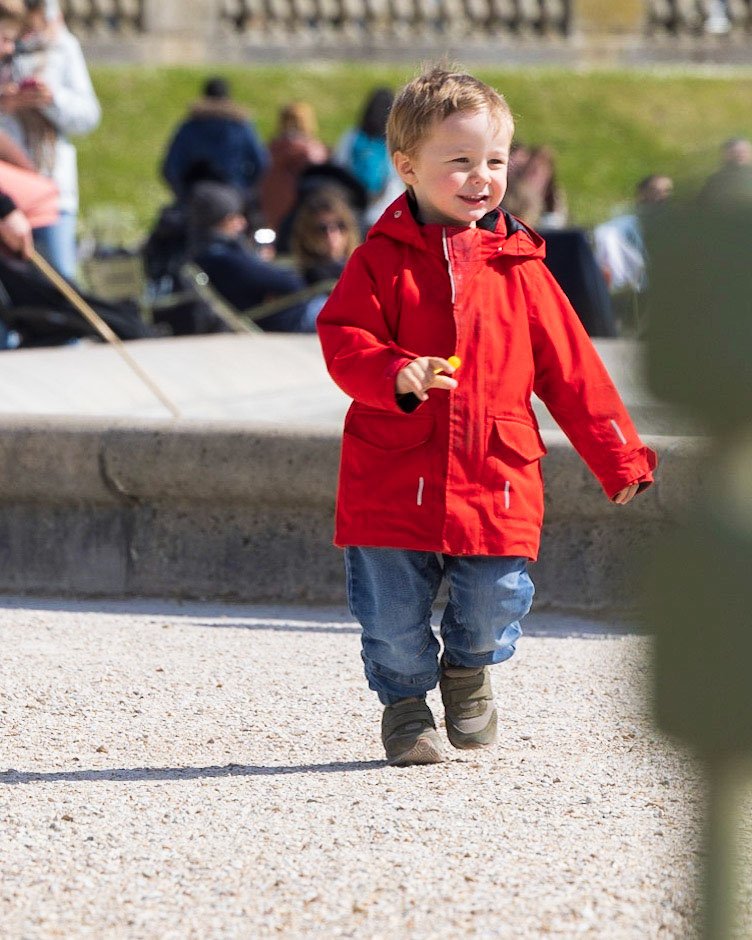
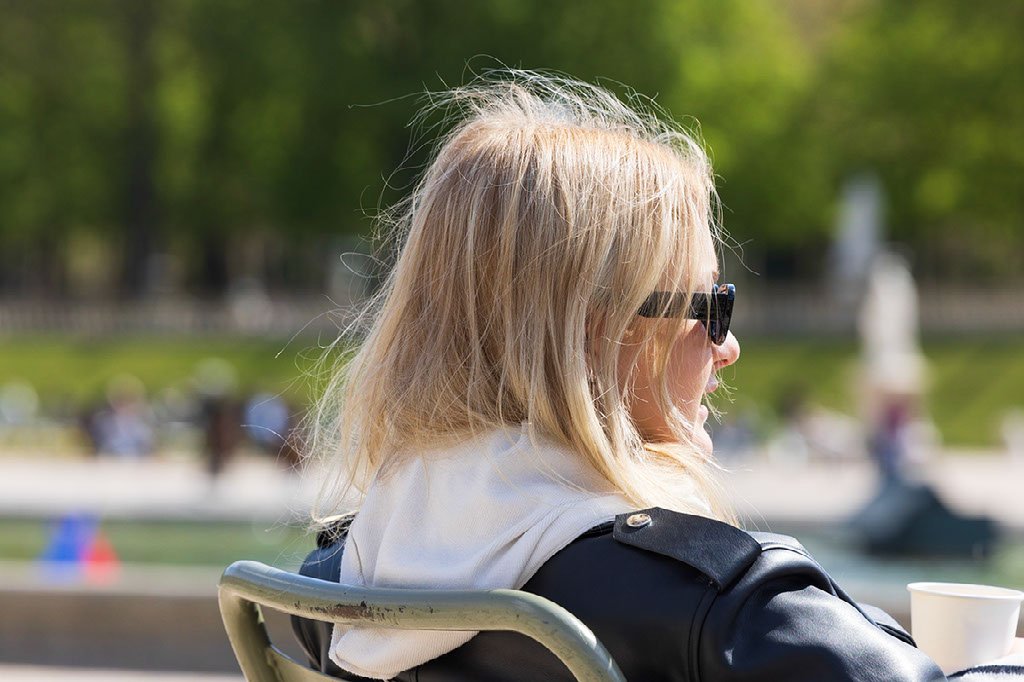
You can take wonderful people photos in the park
Sainte-Chapelle
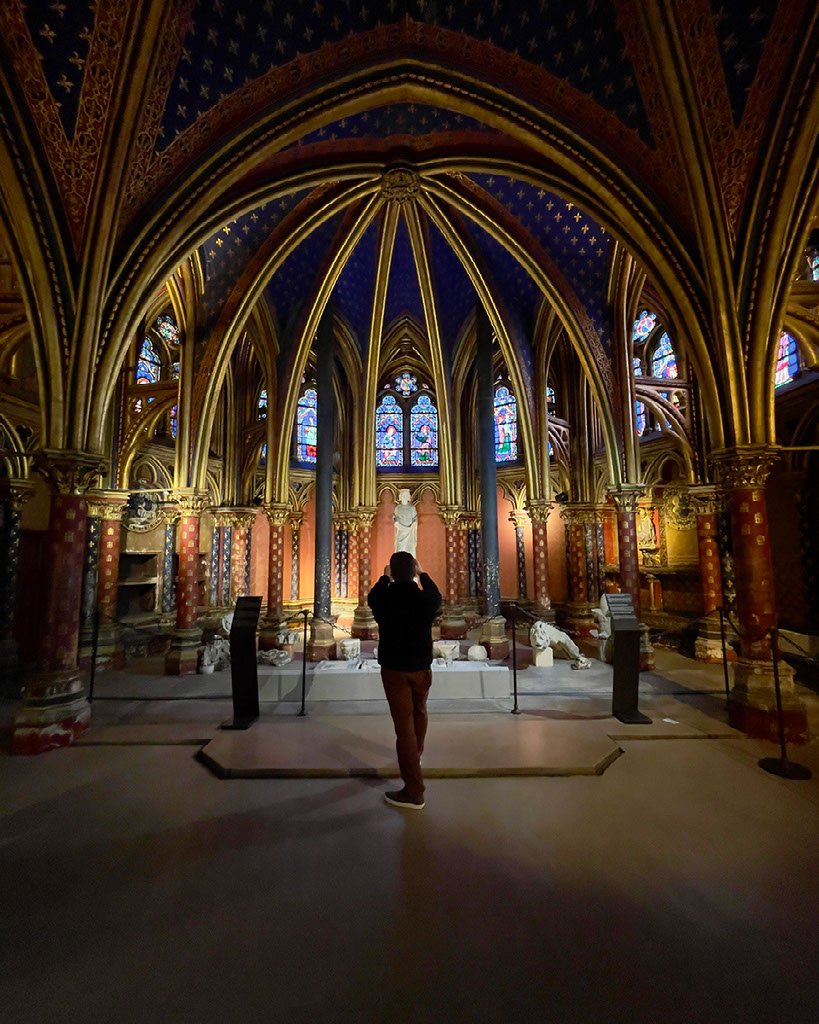
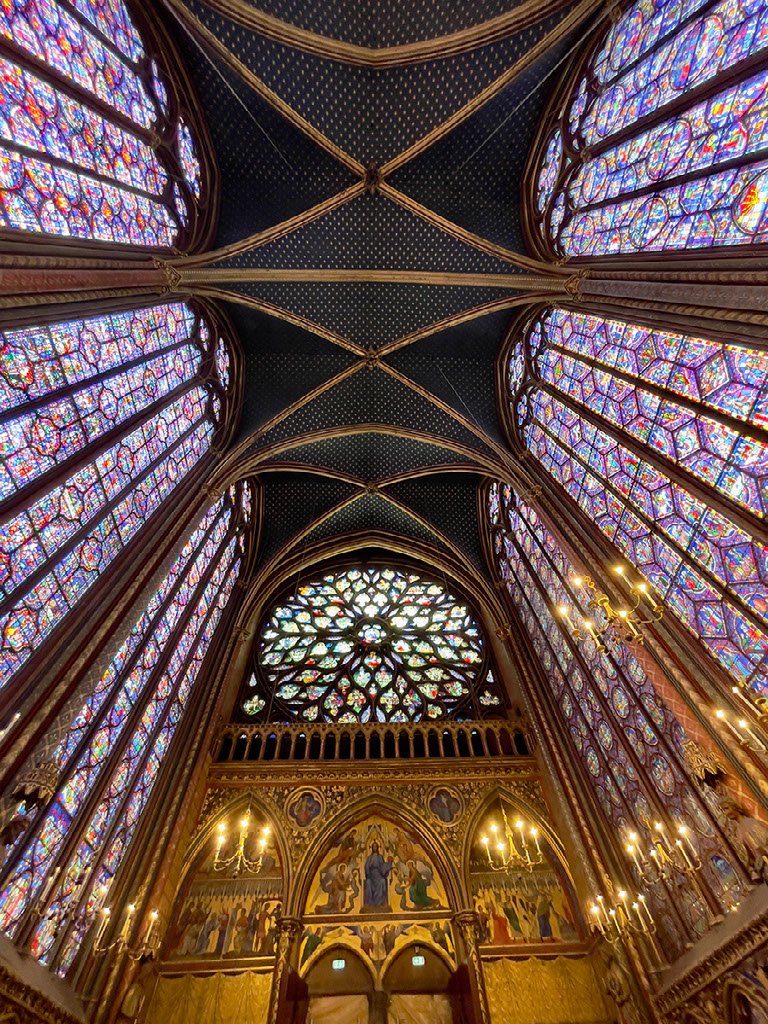
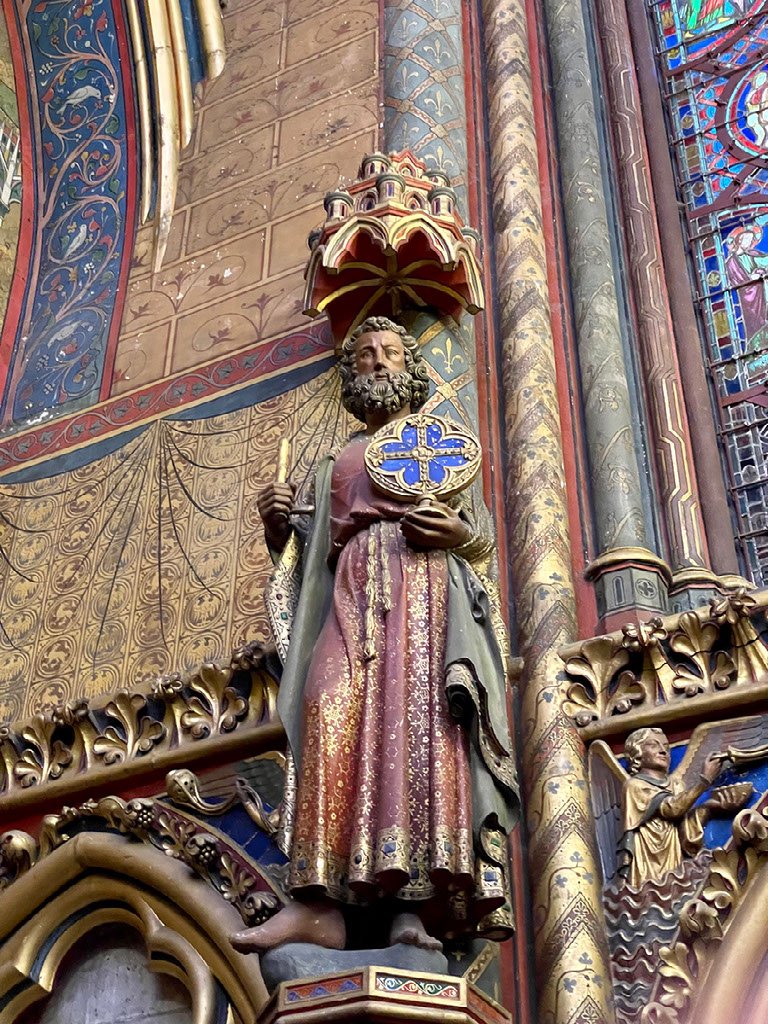
Sainte-Chapelle is one of those locations where people put down their cameras and simply stare for a few minutes before remembering why they came. The upper chapel has fifteen Gothic stained glass windows covering nearly the entire wall surface, floor to ceiling. On a sunny day, the light coming through the glass fills the entire space with color. It is one of the most extraordinary interior photography subjects in Europe.
The chapel is small and gets crowded quickly. The first entry of the day is the quietest.
📷 Pro Tip: Book the earliest possible entry time. The first thirty minutes are the cleanest in terms of crowd density. For the stained glass, use a wide lens and shoot from the far end of the chapel looking toward the apse to capture the full run of windows. The 15-35mm at the wide end handles this well. Expose for the glass rather than the interior, and recover the shadows in post-processing. Avoid using flash entirely: it flattens the color and is also prohibited. iPhone users: the ultrawide lens handles the full height of the windows from a standing position; tap the brightest glass to set your exposure and let the rest of the frame go slightly dark for drama.
Best time: Sunny mornings, first entry. Access: Paid entry. Metro: Cité (Line 4).

Saint Chapelle
I love Saint Chapelle there are so many photos opportunities
Les Invalides
The Hôtel des Invalides is one of the great architectural subjects in Paris, and consistently undershot compared to the monuments that get more attention. The golden dome is one of the most distinctive silhouettes in the city, and from the right position it reads against the sky with a clarity that the Eiffel Tower, surrounded by competing structures, rarely achieves. Napoleon is buried here, which means the building has a gravity that goes beyond architecture.
The best exterior photography comes from two directions. From the Pont Alexandre III looking south, the dome sits at the end of the Esplanade des Invalides with the formal gardens in the foreground. From the Trocadéro at sunrise, a 70-200mm pointed southeast captures the dome compressed against the skyline in a way most people overlook while everyone around them is shooting the Eiffel Tower in the opposite direction.
📷 Pro Tip: For the classic dome shot, position yourself at the north end of the Esplanade des Invalides on the Quai d'Orsay side and use a 70-200mm at 150-200mm to isolate the dome against the sky, cutting out the surrounding buildings. Early morning gives you clean light on the gilded dome before the sun moves to a harsh overhead position. At blue hour, the dome is lit from below and the gold reads beautifully against a deep blue sky. For a wider environmental shot, a 24-70mm from Pont Alexandre III includes the bridge's gilded lamp posts as foreground elements with the dome behind. The Esplanade itself is free to walk and photograph at any hour.
Best time: Sunrise and blue hour. Access: Esplanade free. Museum and Napoleon's tomb require paid entry. Metro: Invalides (Line 8) or La Tour-Maubourg (Line 8).

Les Invalides
Eiffel Tower viewed from the Champs-de-Mars
Unfortunately, you can no longer walk under the Eiffel Tower. You used to be able to walk right under it. It is now gated, and the visitor center is on the left, where people now queue to take the elevators to the top.

The Eiffel Tower during Autumn
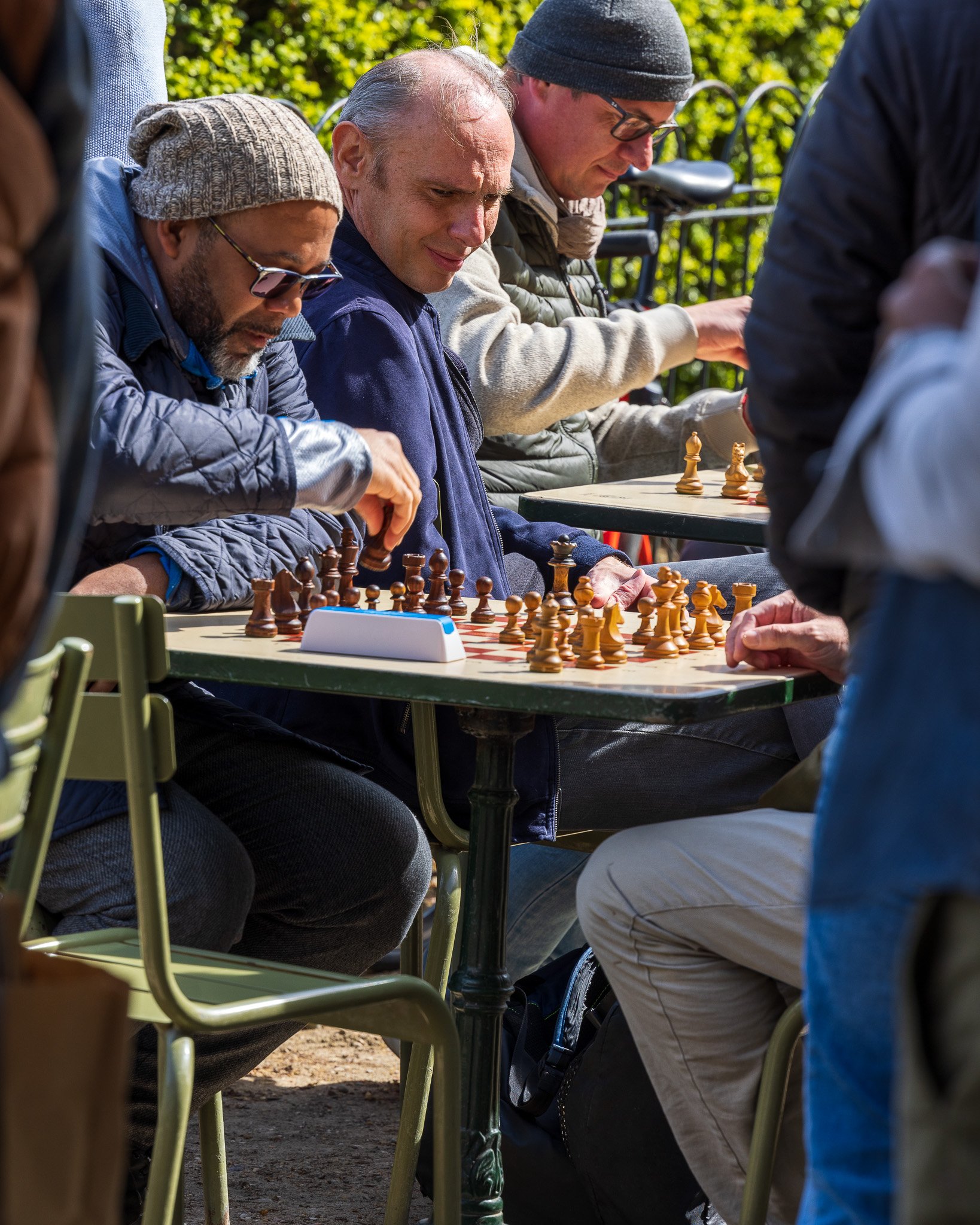
Street Photography
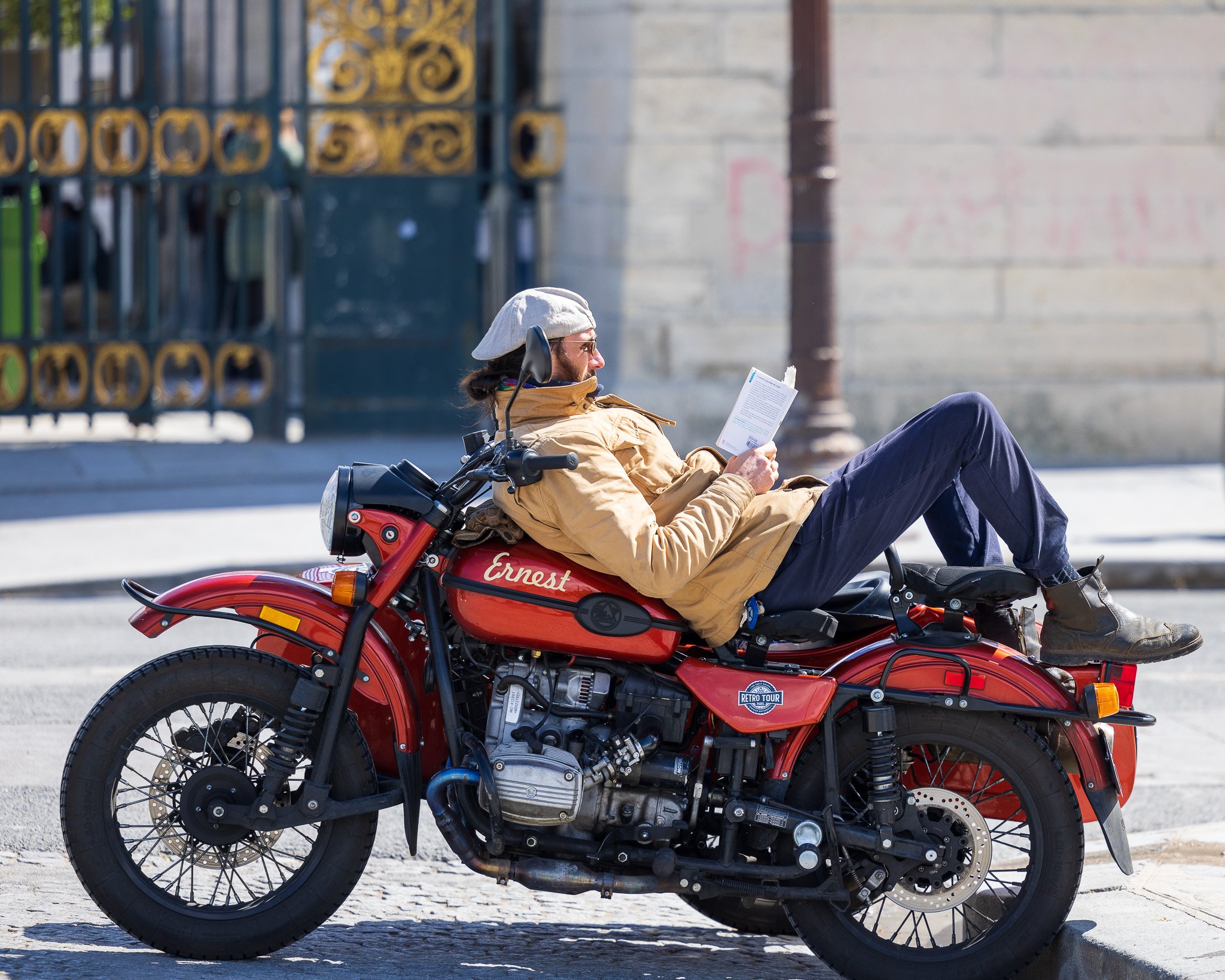
There are so many great opportunities for Street Photography in Paris. Everyone is well-dressed, and there are plenty of options.
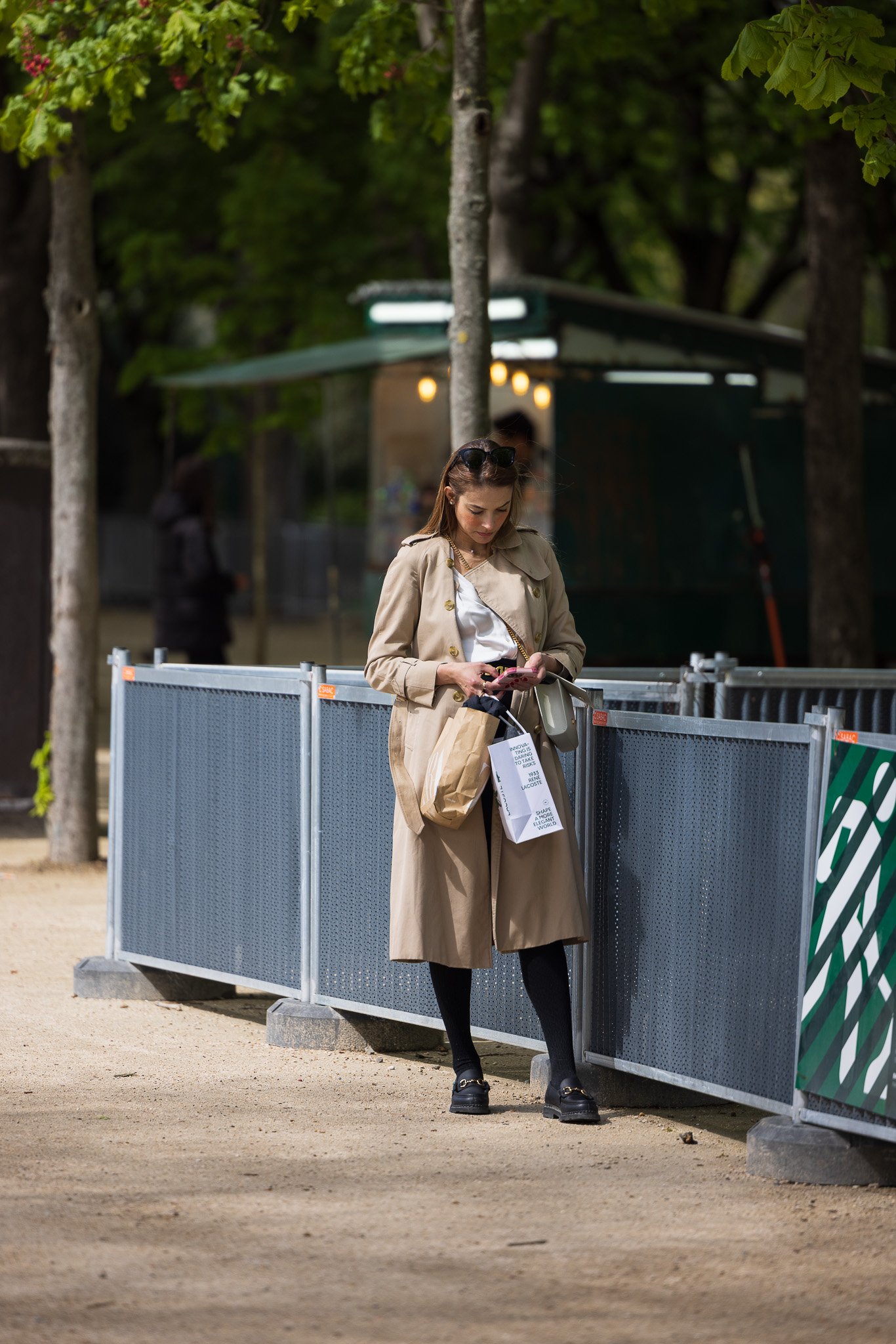
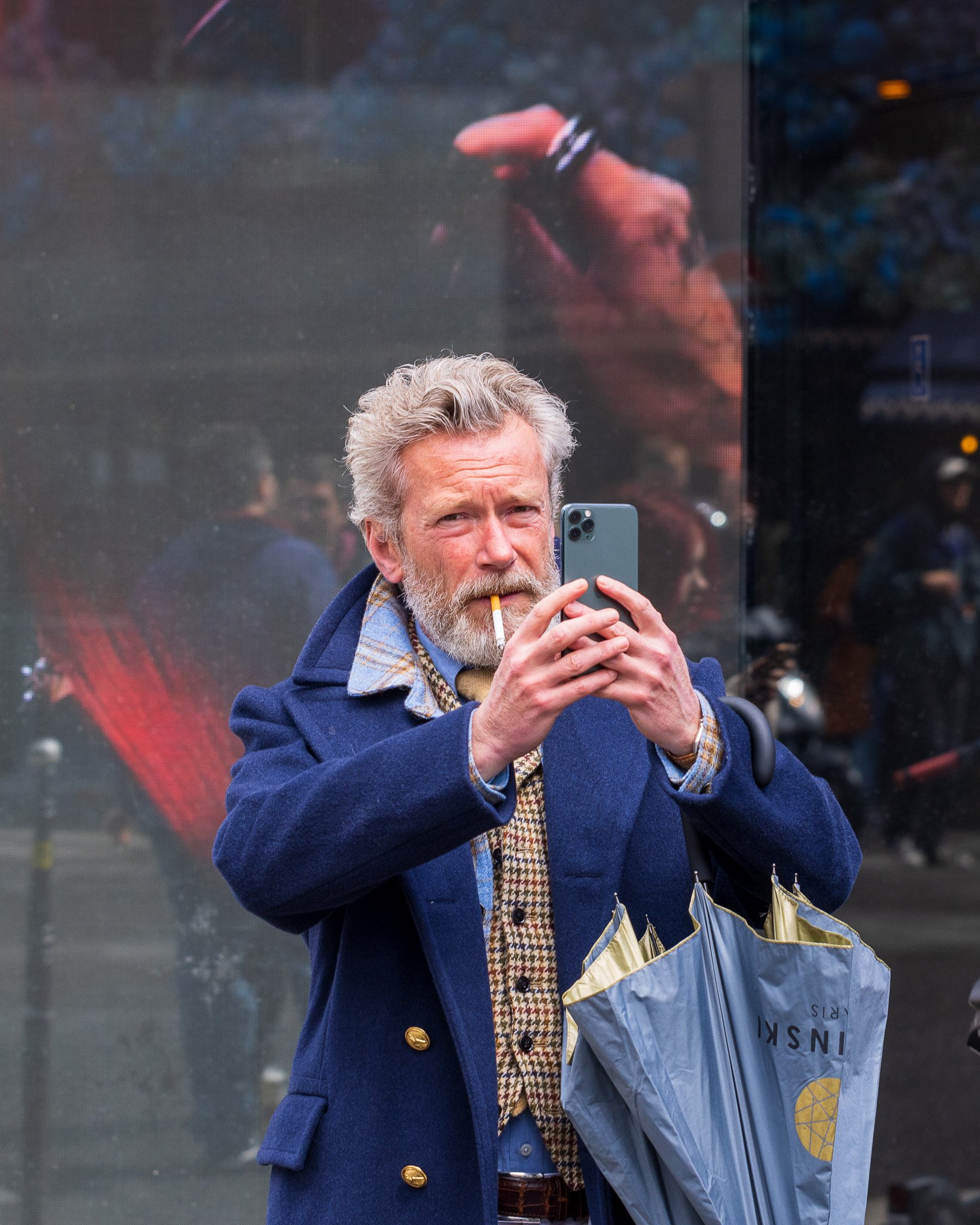
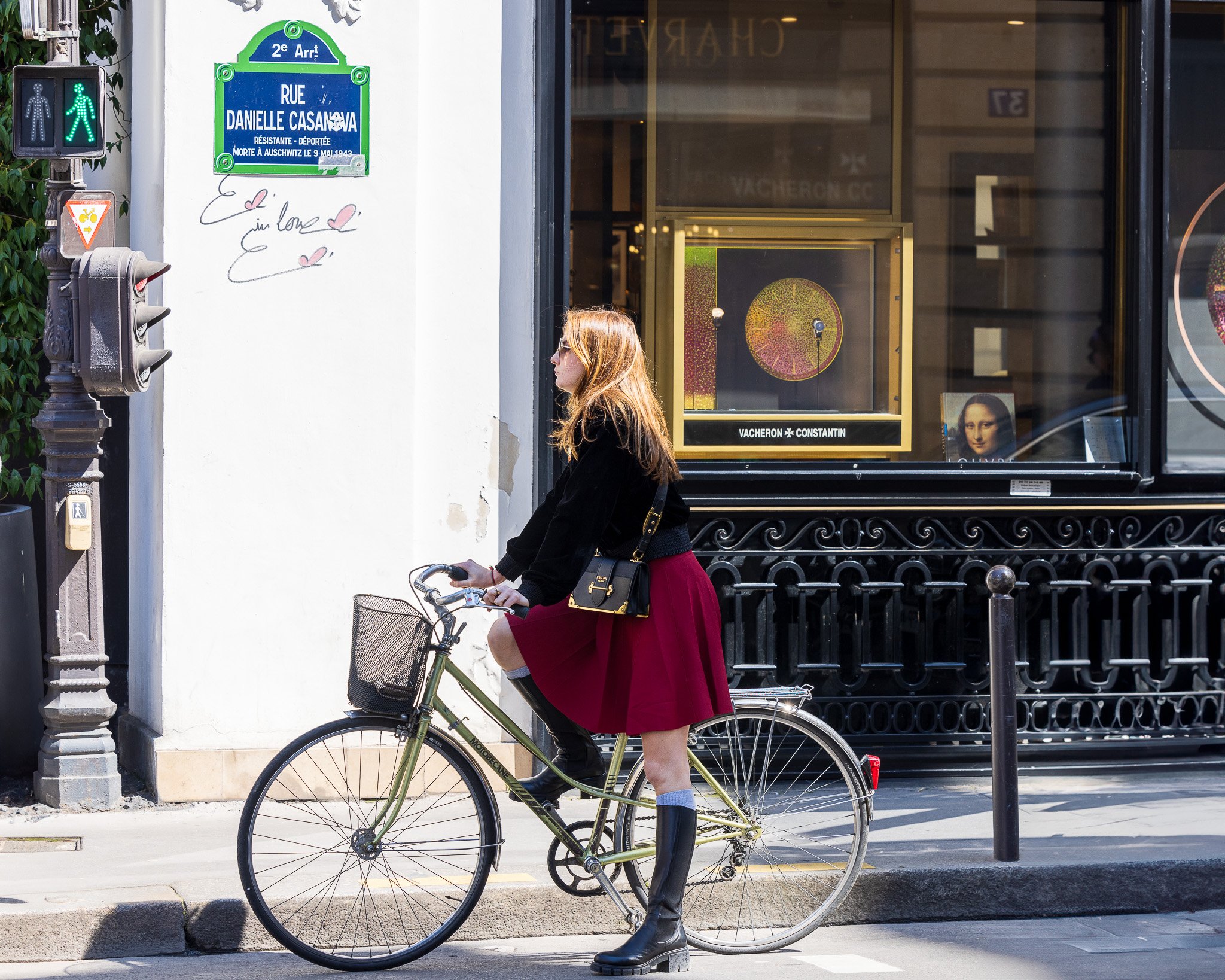
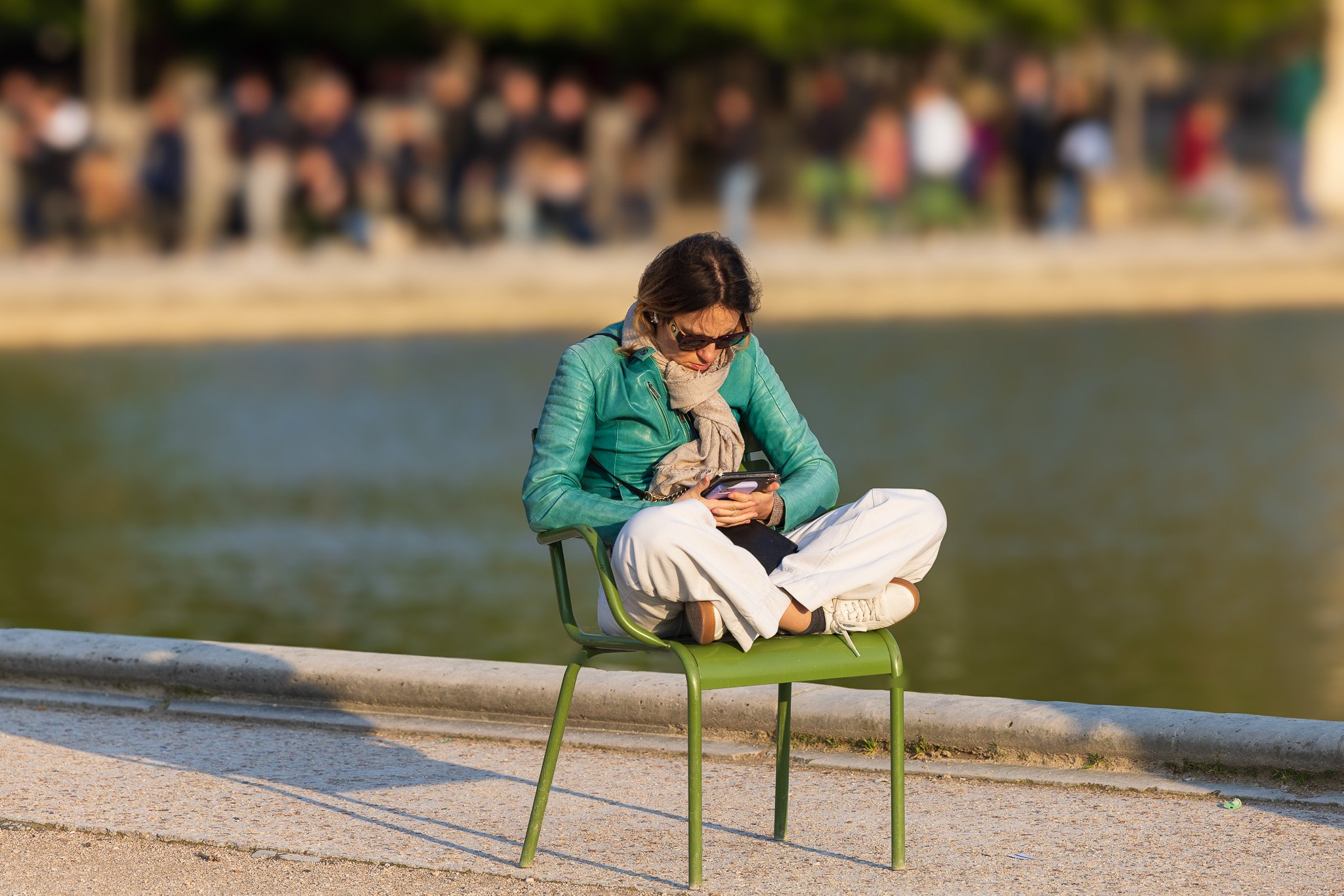


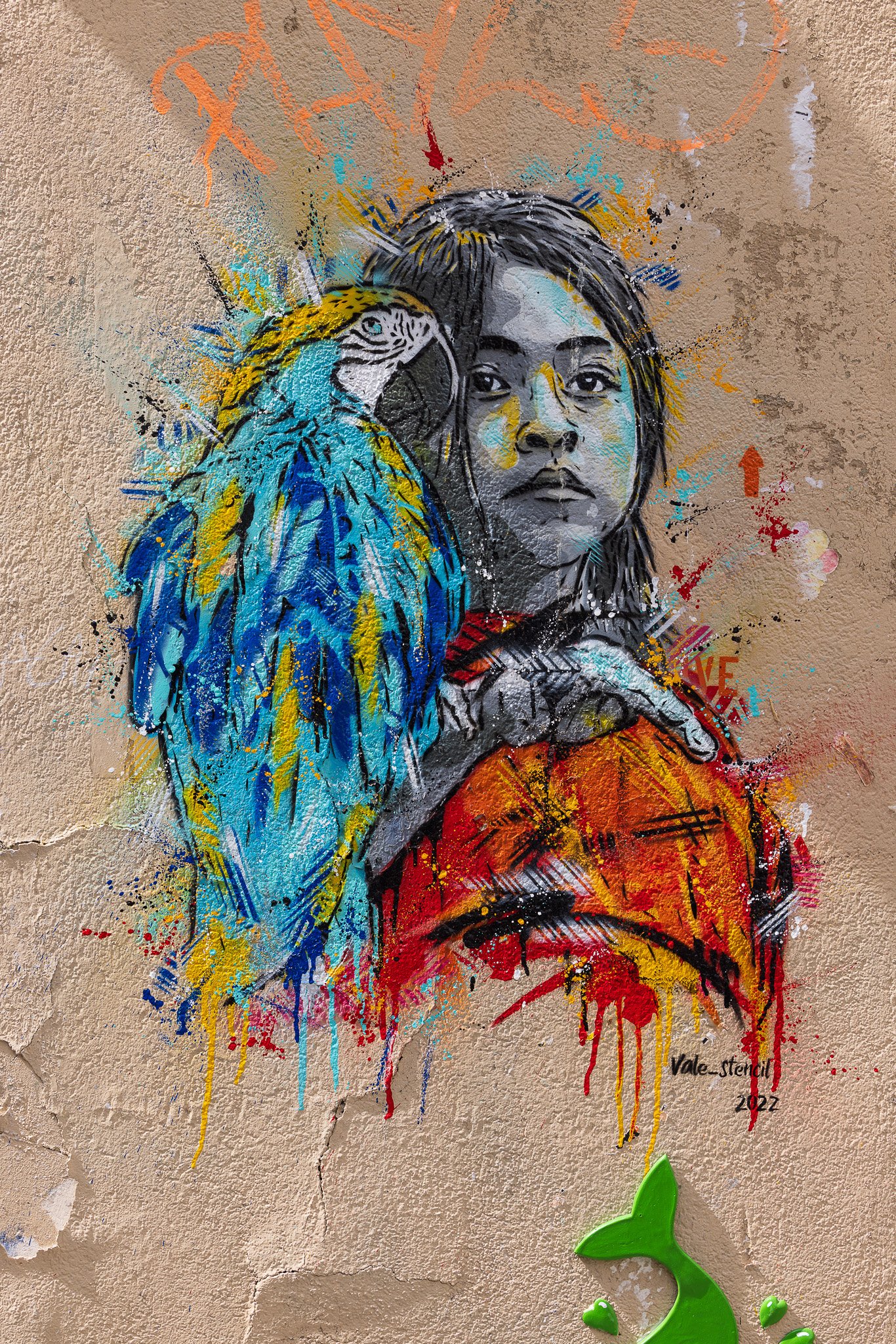
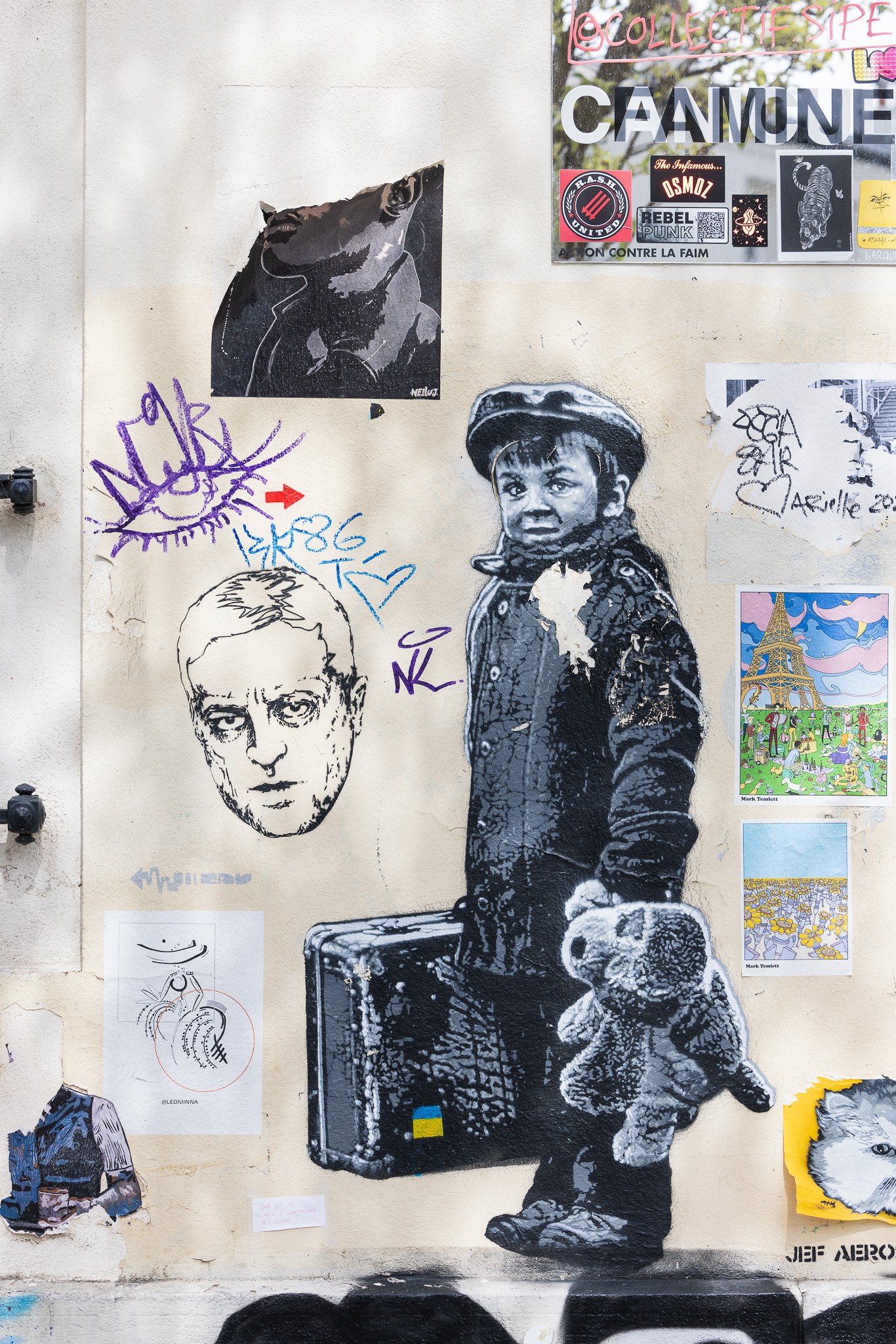
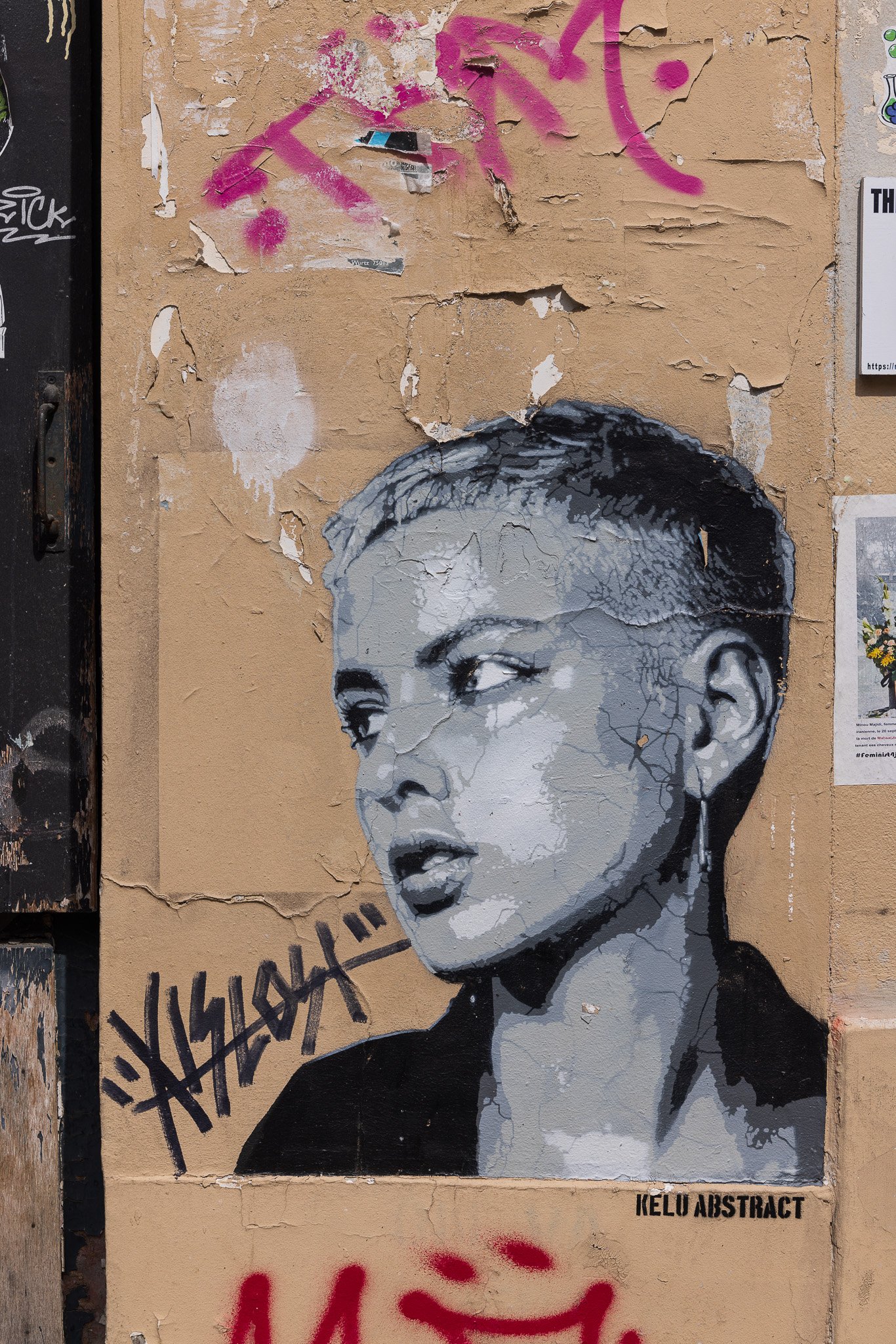
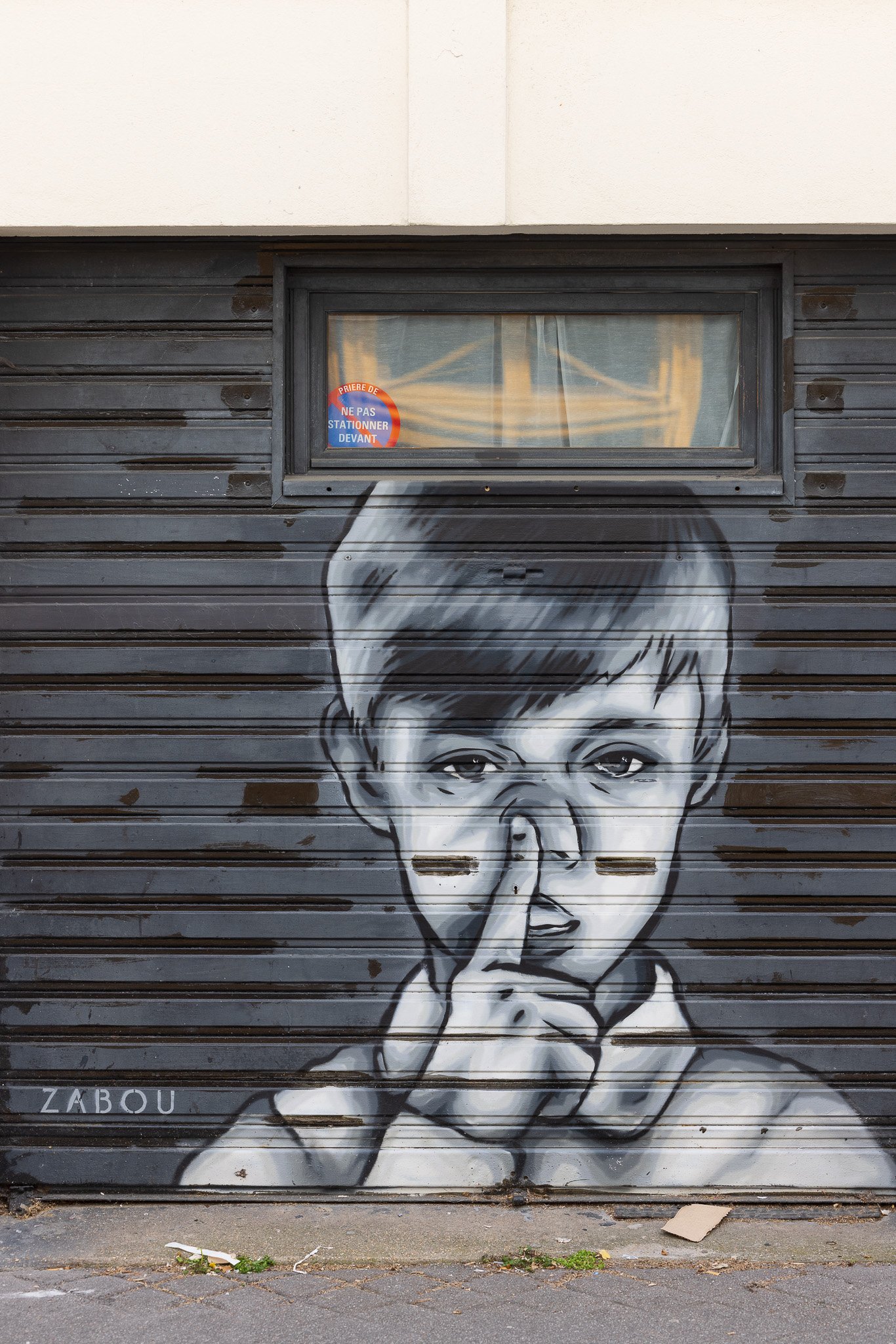
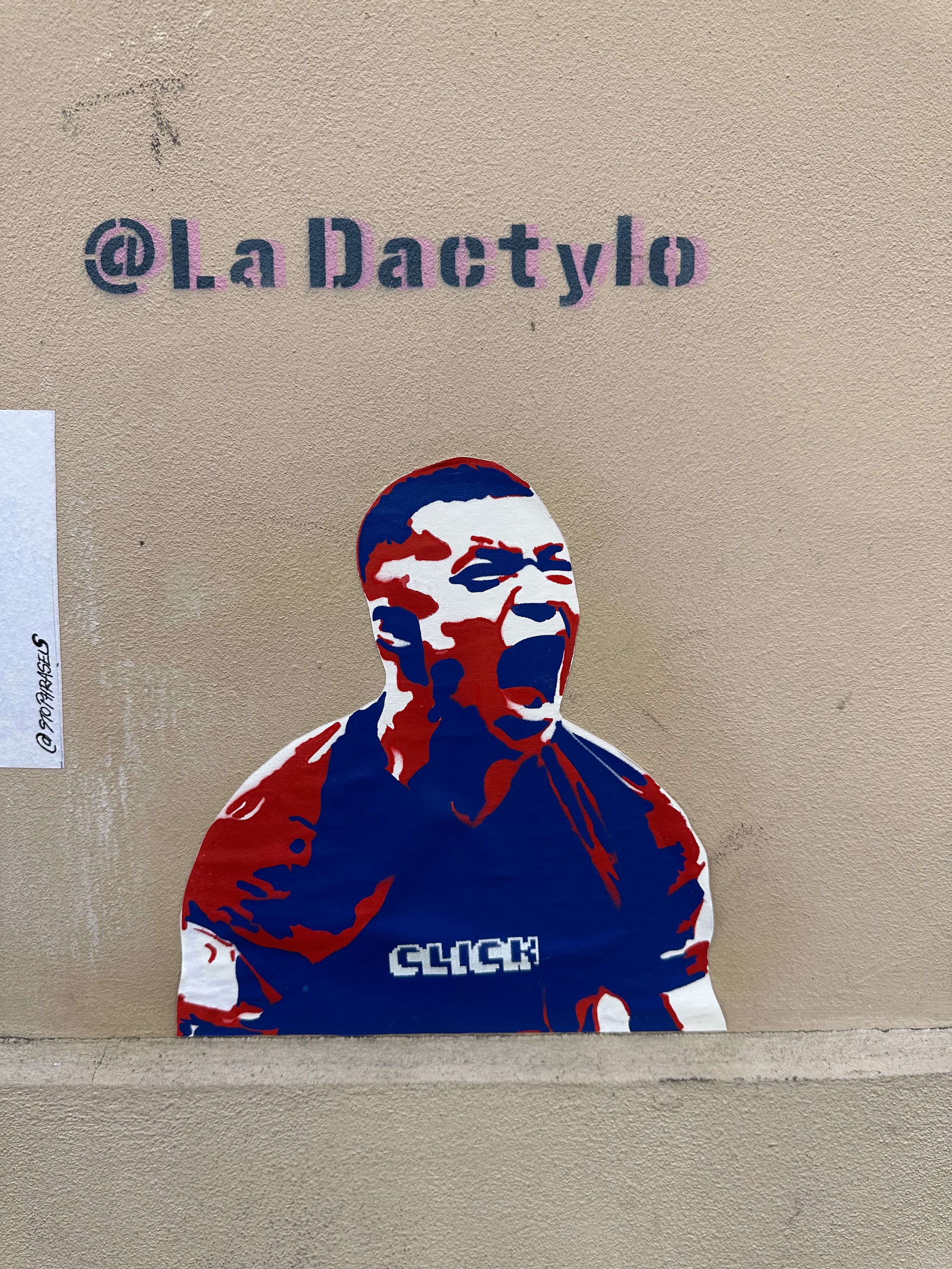
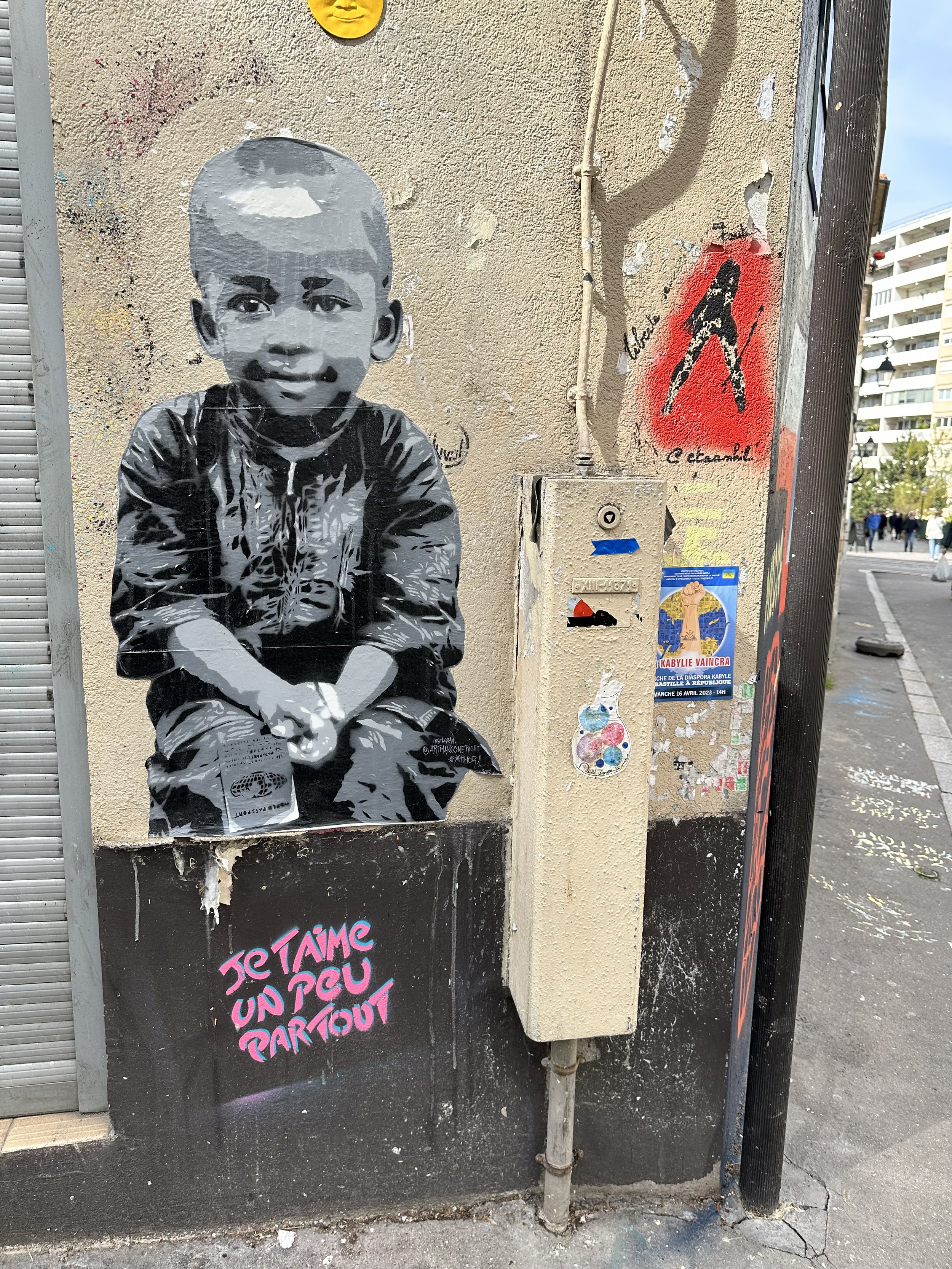
Graffiti in Paris
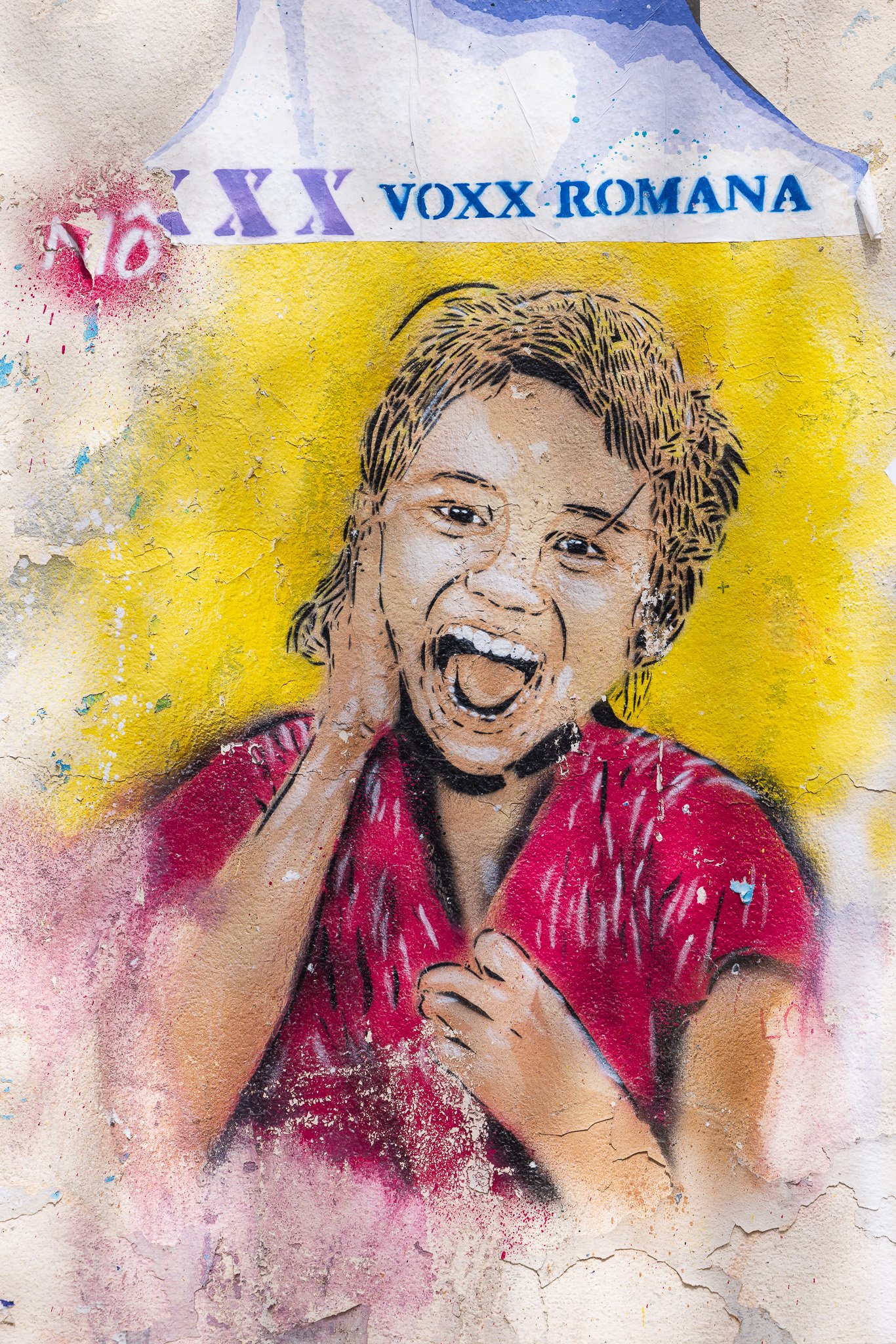
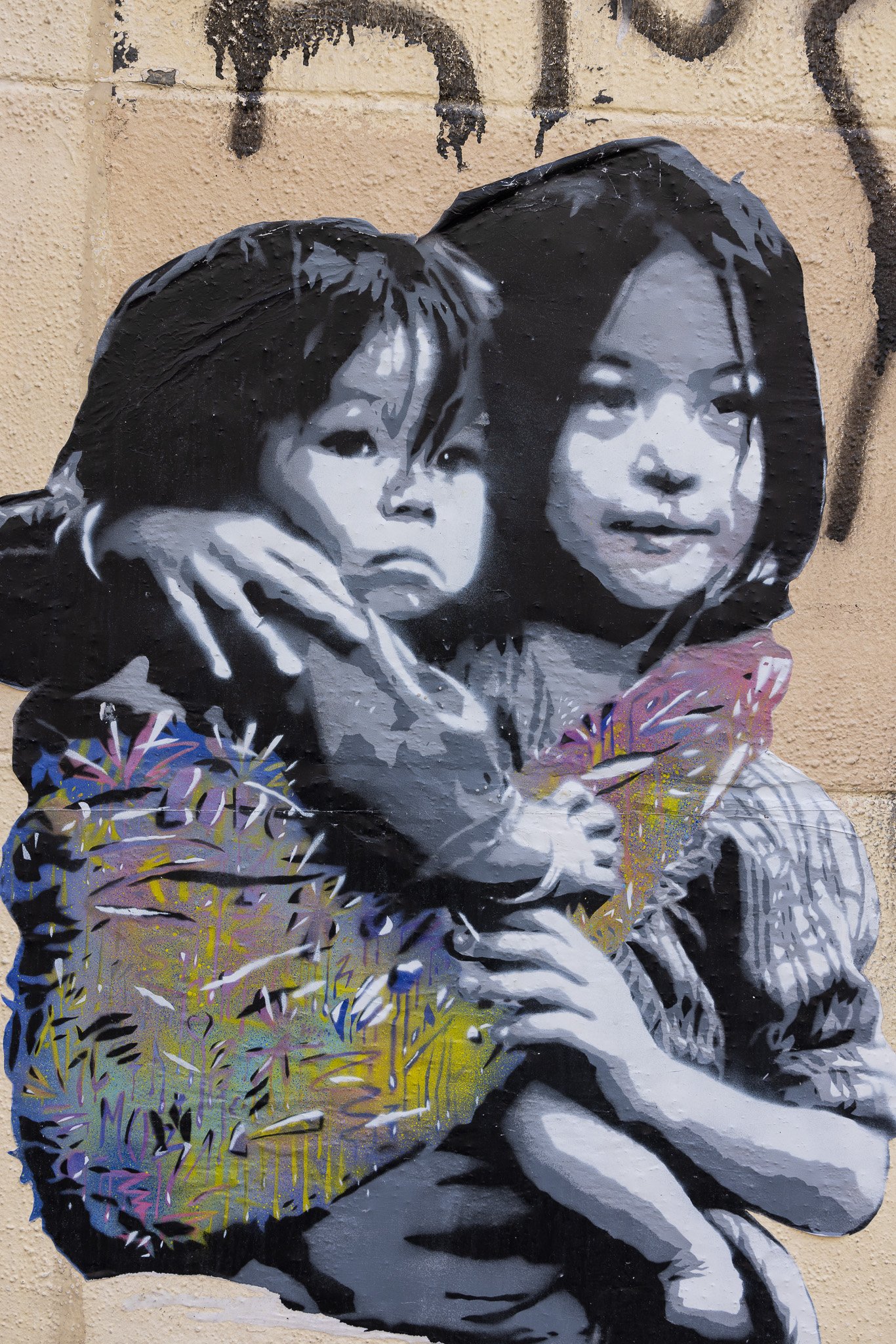
My favorite graffiti piece is located in Montmartre, and it looks like a photo. Each time I see it I just stand there for a few minutes admiring the skill of the artists.

in Montmartre,
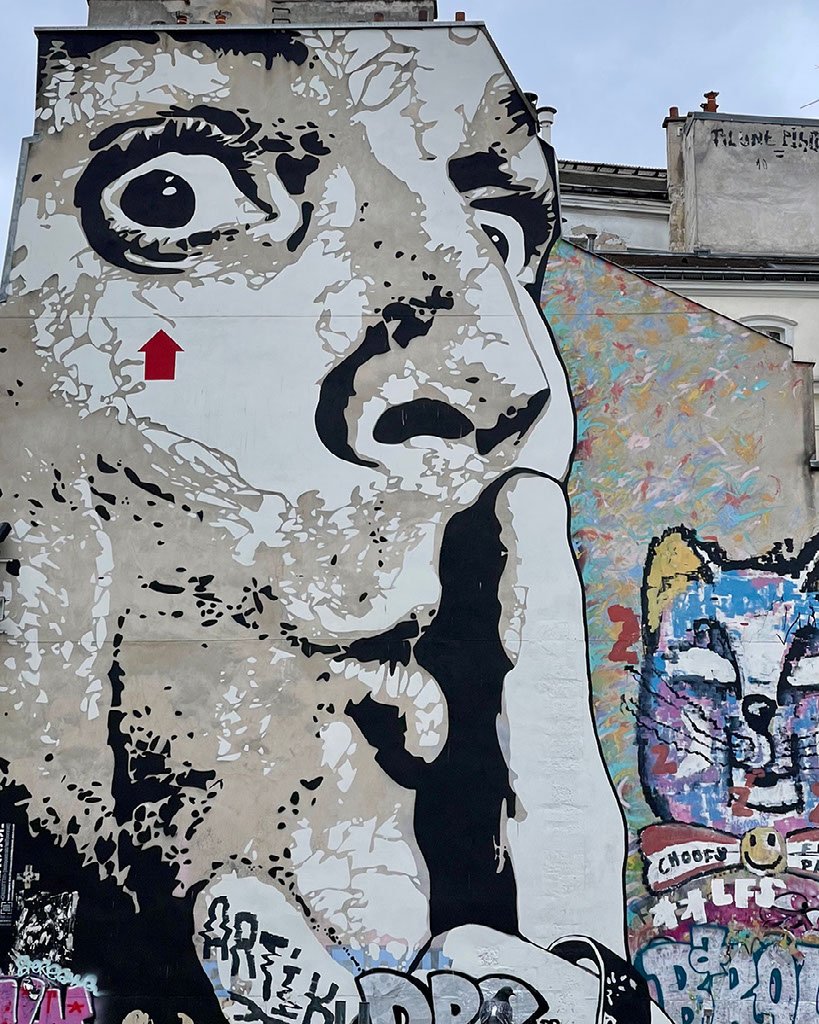
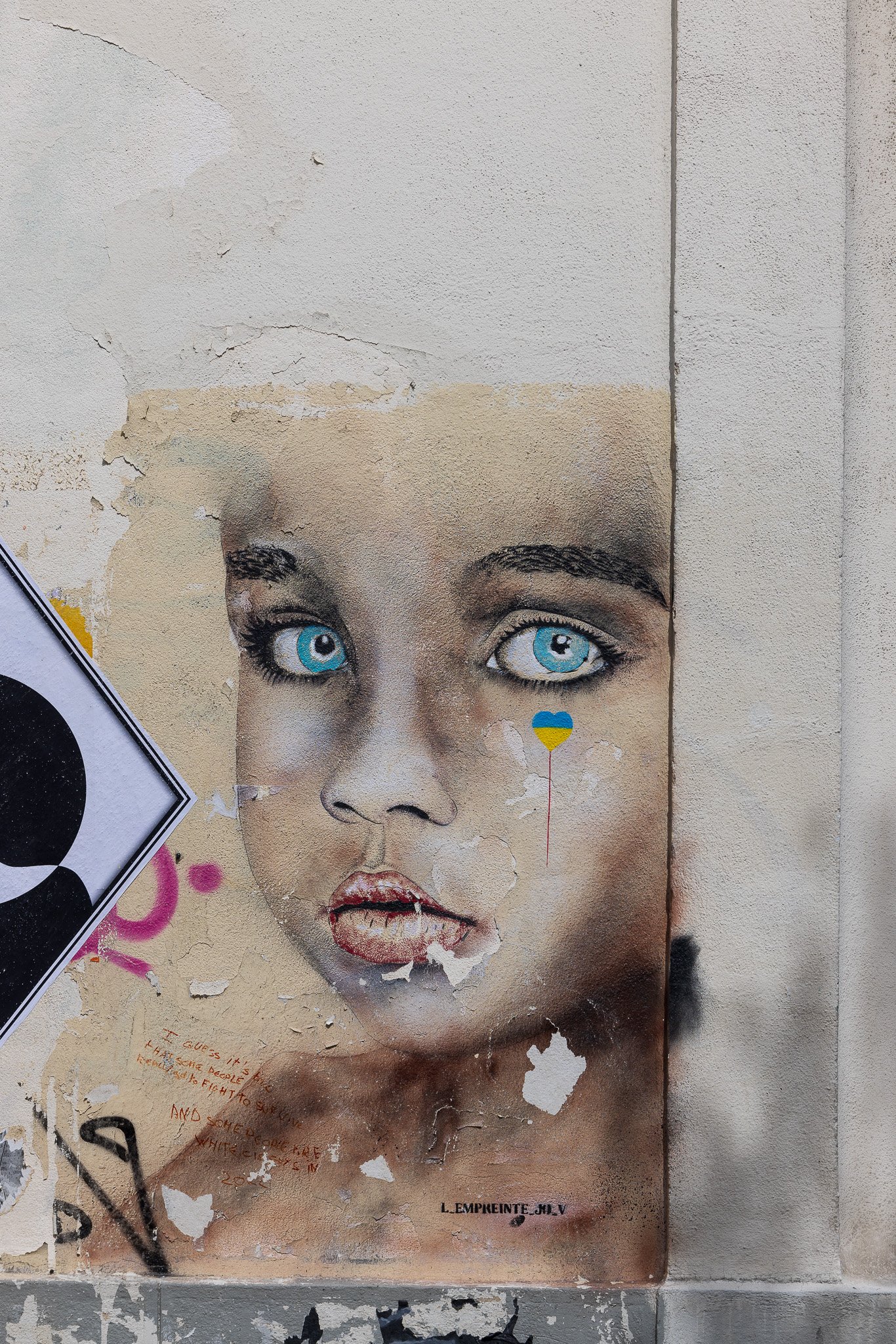
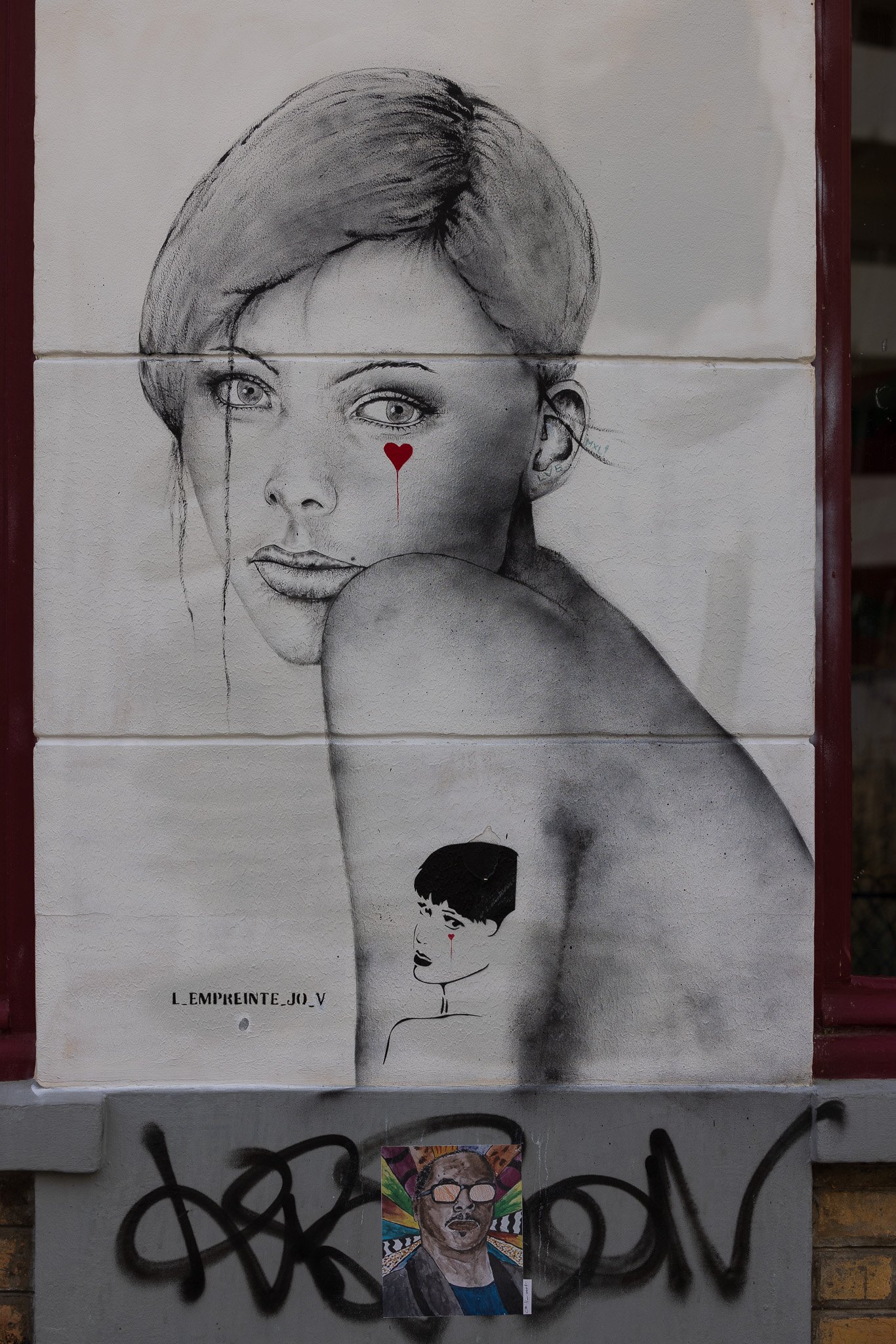
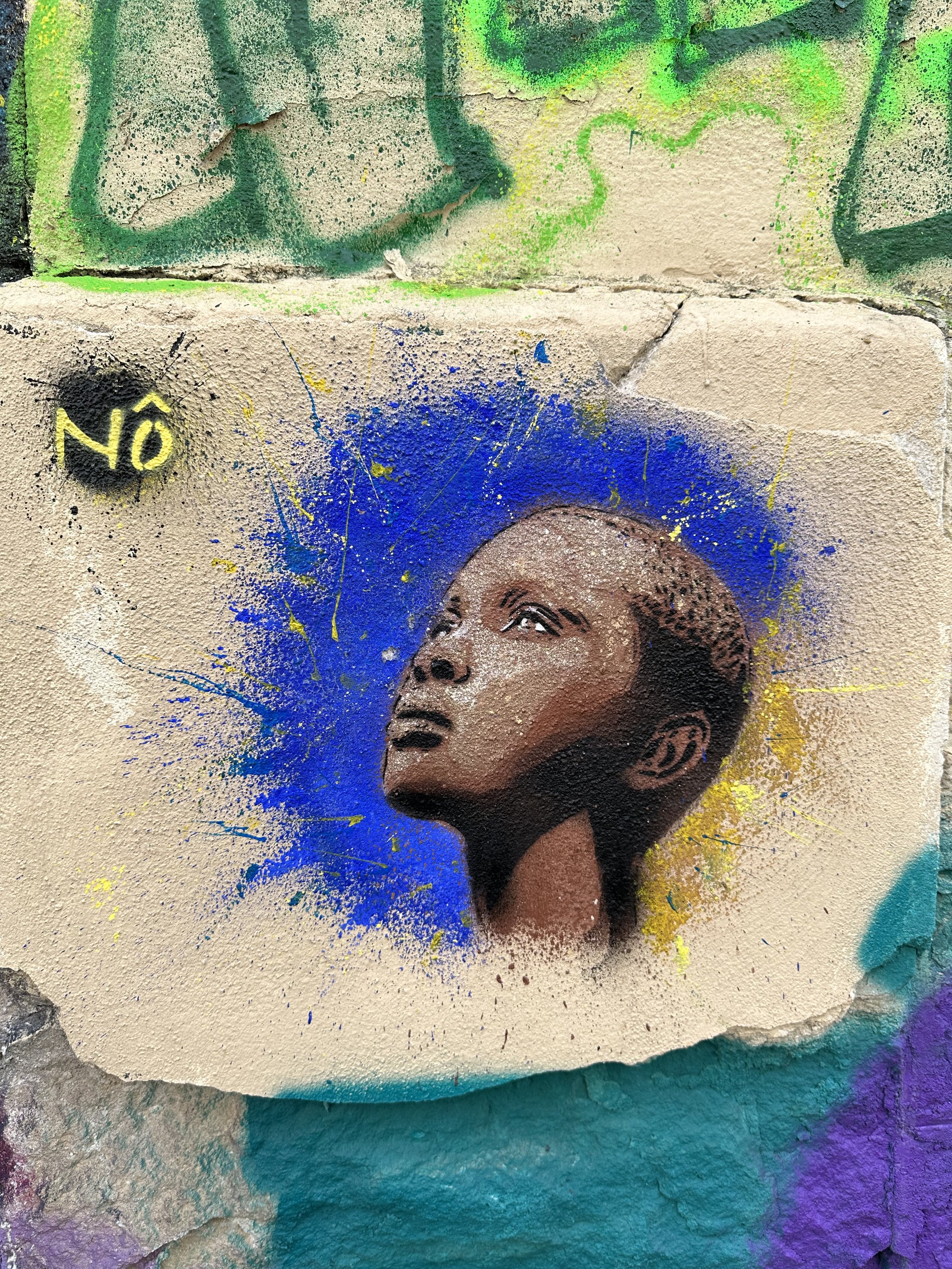
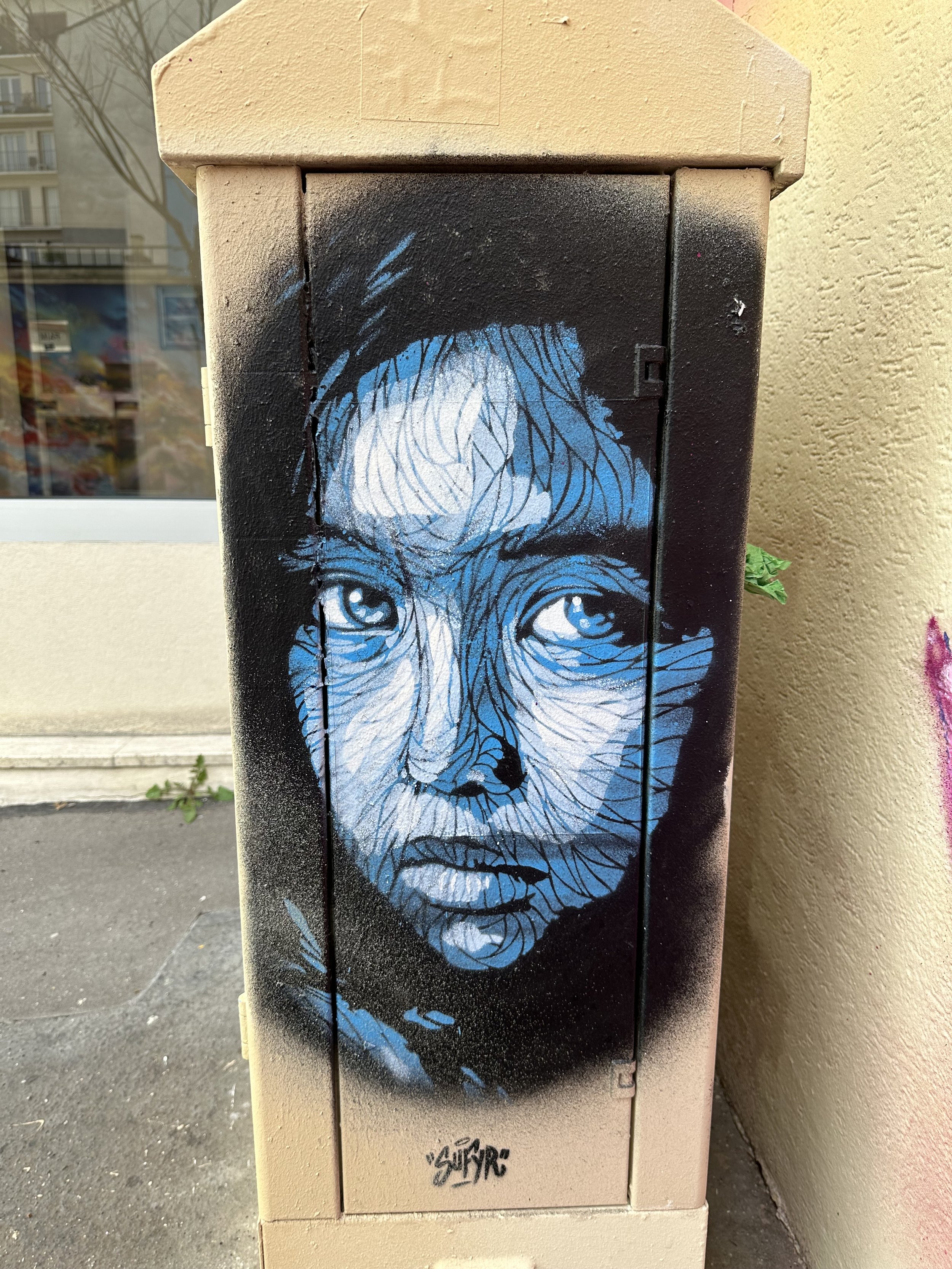
Most photographers who come to Paris for the first time do not think of it as a graffiti city. The 13th arrondissement will change that. The area around Place d'Italie and along Boulevard Vincent Auriol, Rue Pinel, Rue Jean-Marie Jego, Rue Jonas, and Rue de la Butte-aux-Cailles has one of the densest concentrations of large-format street murals in Europe. The work is serious: commissioned pieces from major international artists alongside local work, all at a scale that rewards a wide-angle lens.
My favorite individual piece in Paris is in Montmartre, not the 13th: a mural that is painted with such photographic realism that I have stopped and looked twice every time I have walked past it. But for volume and quality, the 13th is the destination.
📷 Pro Tip: Take the Metro to Place d'Italie and walk east along Boulevard Vincent Auriol before turning onto the side streets. A 15-35mm handles the large wall-scale pieces. For detail shots on individual murals, a 24-70mm gives you more control. The murals are best photographed in flat, even light, which means overcast days are actually preferable to direct sunshine, which creates harsh shadows across the painted surfaces. Early mornings on weekdays minimize foot traffic in the frame.
Best time: Overcast mornings. Access: Free. Metro: Place d'Italie (Lines 5, 6, 7).
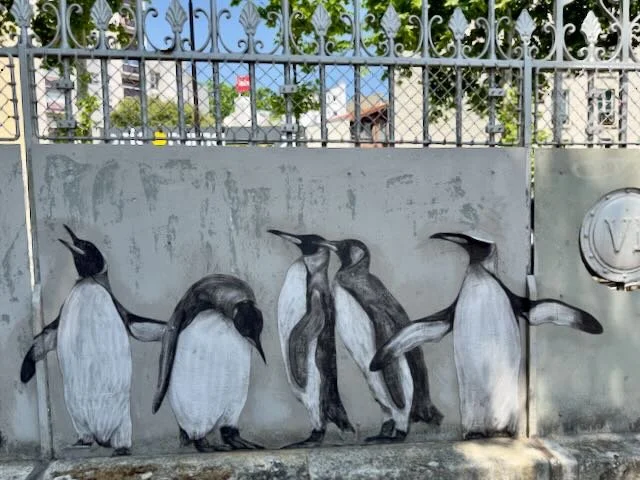
In the 13th
Then I like to walk along Rue Jean Marie Jego, Rue Jonas, and Rue de la Butte Aux Cailles.


Galeries Lafayette
One of the best department stores in Paris is Galeries Lafayette. The iron dome in the center is just beautiful.
Galeries Lafayette
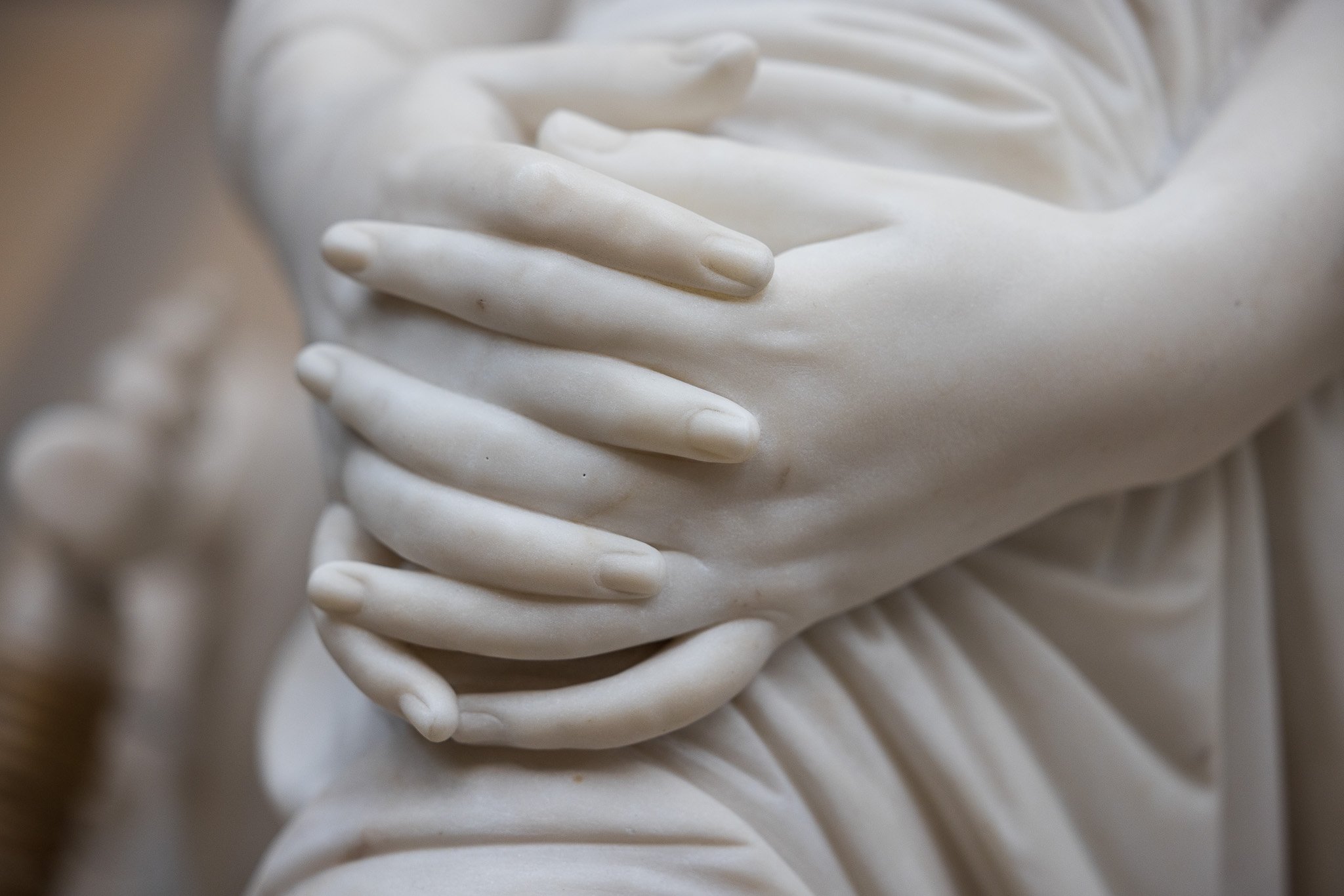
Musée Rodin Gardens
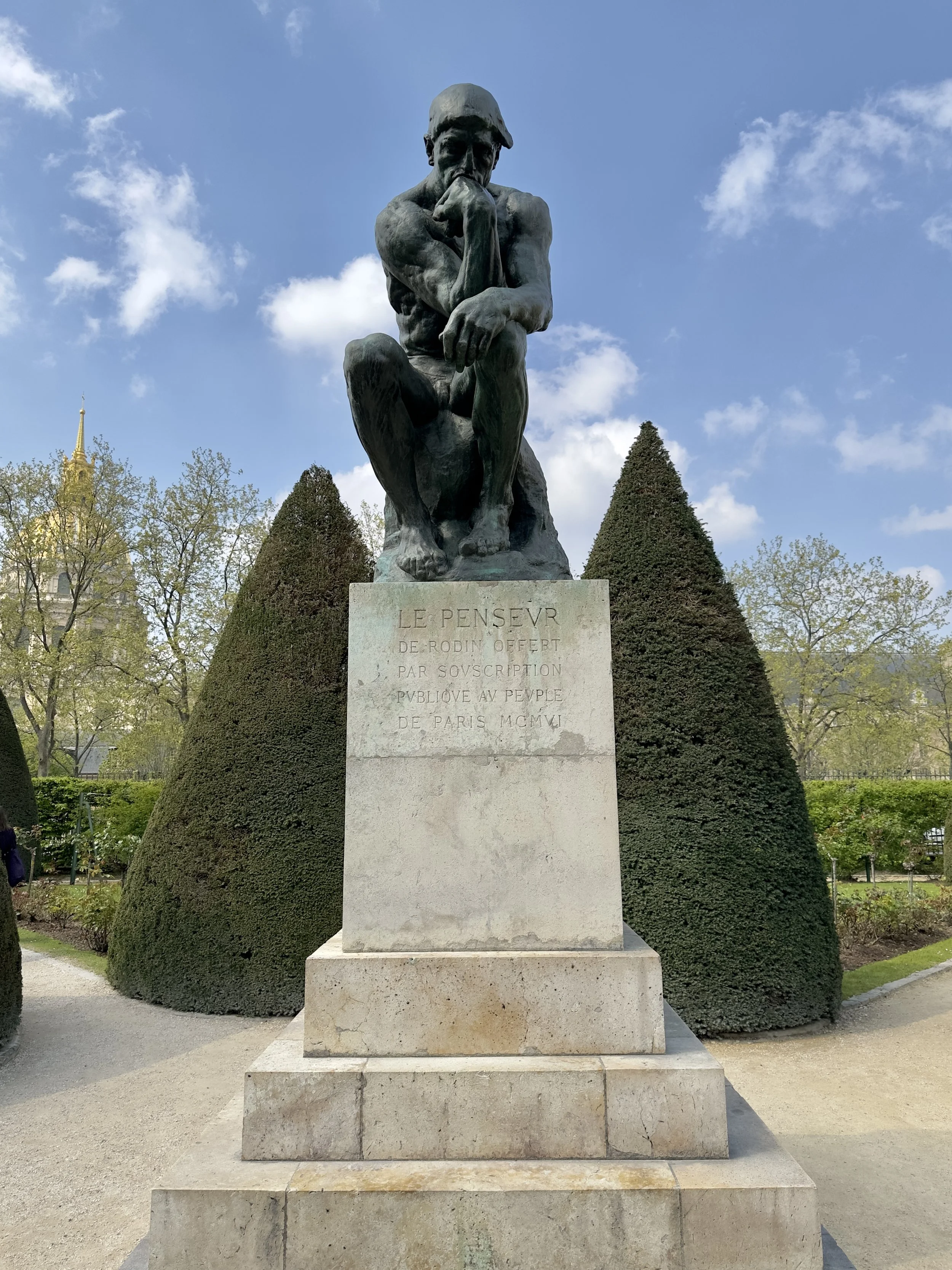
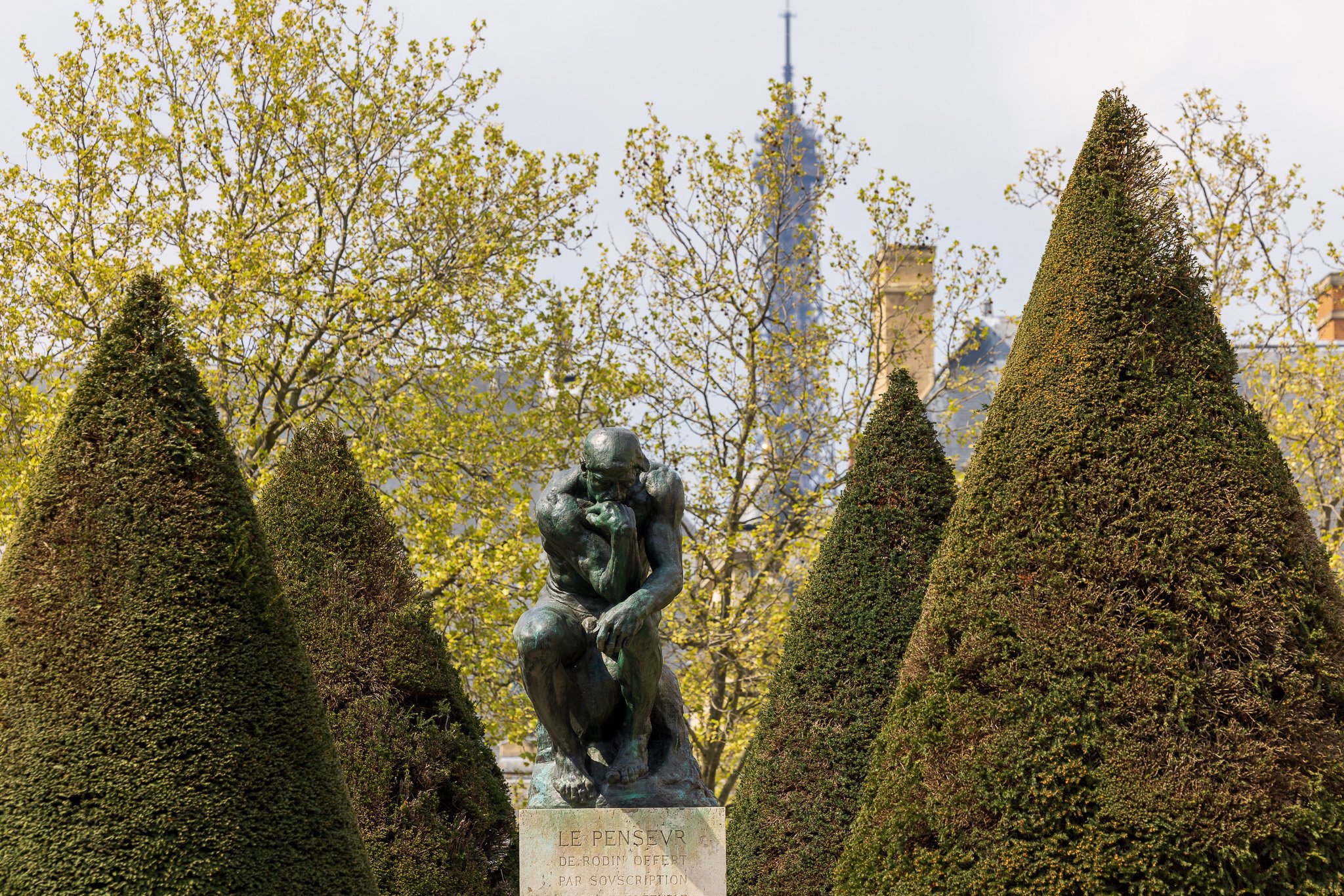
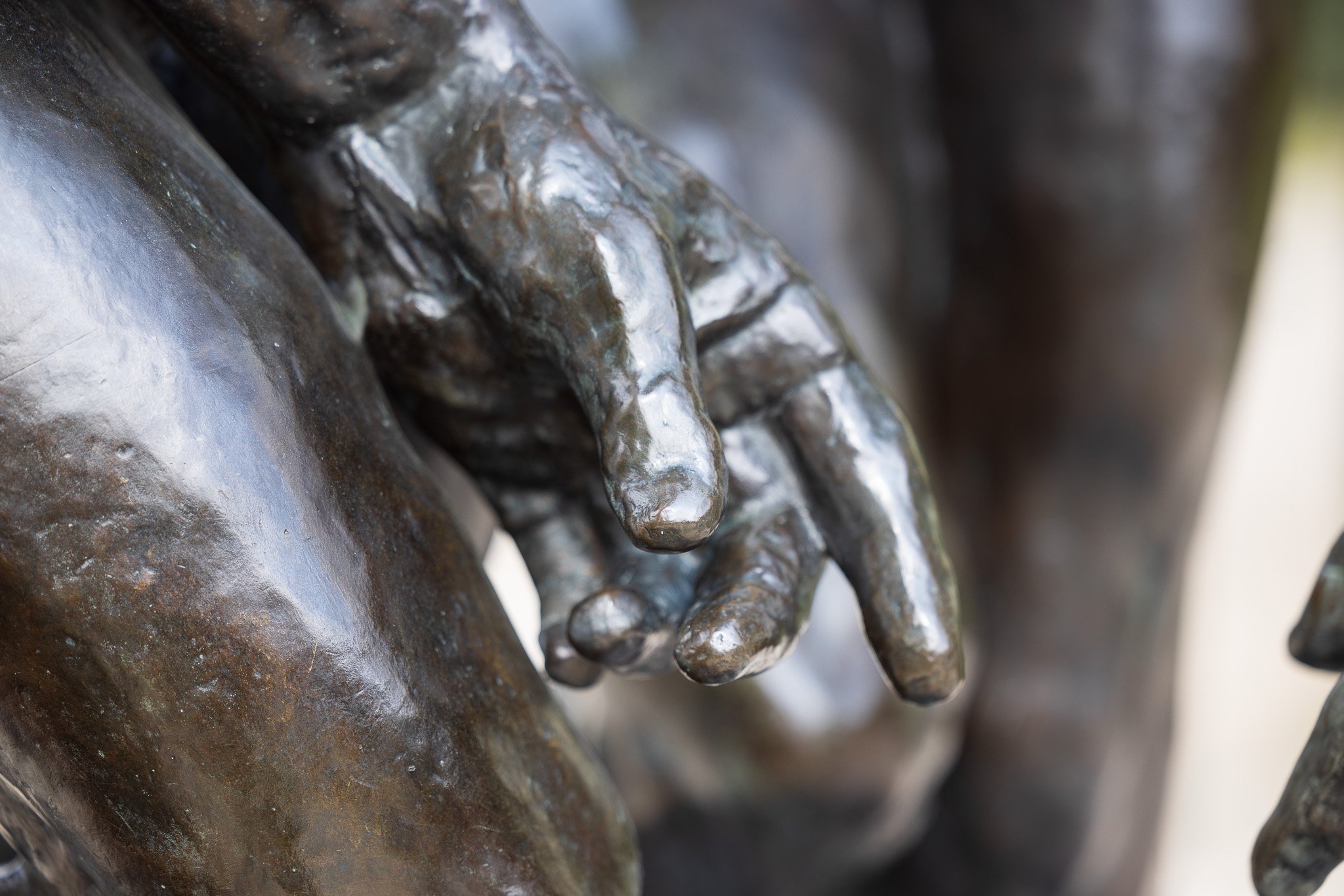
On a sunny afternoon, the Musée Rodin is one of the most enjoyable places to spend two hours with a camera in Paris. The museum itself houses Rodin's major works, but the garden is where the photography is most rewarding. The sculptures are placed in a park-like setting with the Hôtel Biron as a backdrop. The Gates of Hell, The Thinker, and The Burghers of Calais all sit in the garden, surrounded by roses and pathways.
📷 Pro Tip: Use a 70-200mm to isolate sculptures against the garden background with subject separation. The Thinker in particular reads best from slightly below and to the side, with the garden and building as a backdrop rather than the sky. At 100-135mm, you can compress the background garden into a soft wash of green. For iPhone users, Portrait Mode on the bronze sculptures with the garden behind them is excellent; the subject separation is surprisingly effective in good light. Arrive in the early afternoon for side light across the textured bronze surfaces.
Best time: Sunny afternoons. Access: Paid entry; garden-only ticket available. Metro: Varenne (Line 13).

Musée Rodin
There are so many incredible details to photograph
musée Rodin
Notre-Dame Cathedral
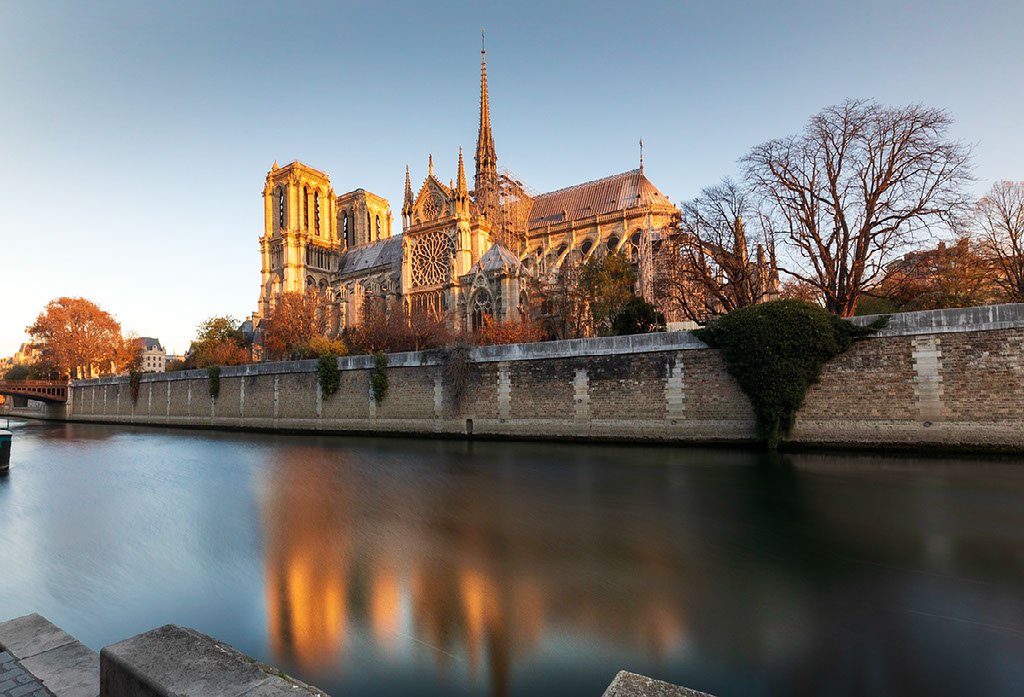
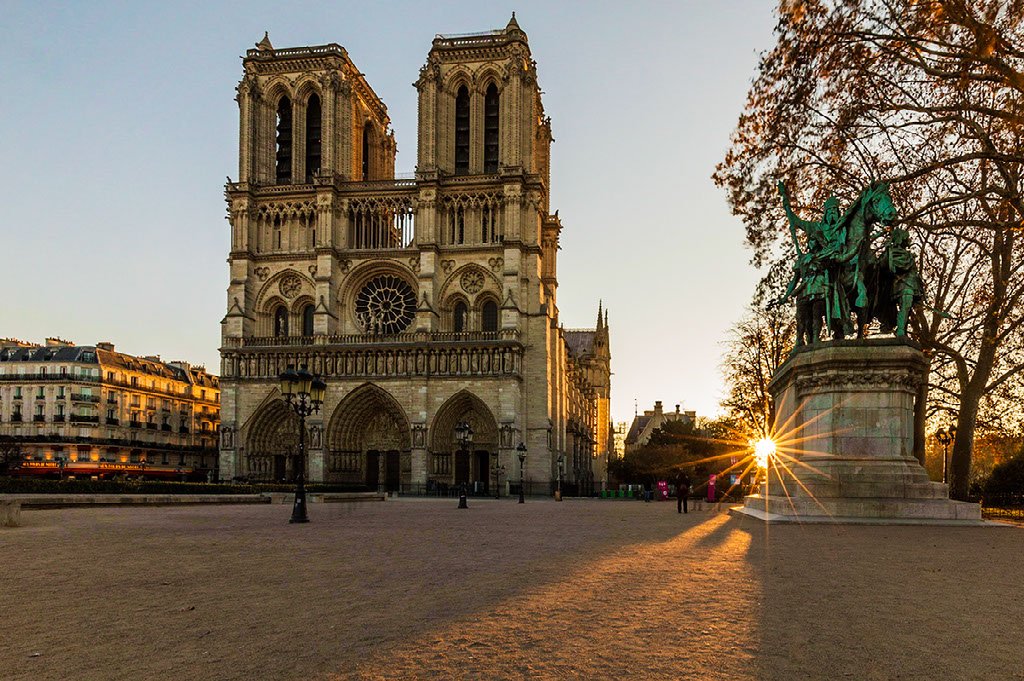
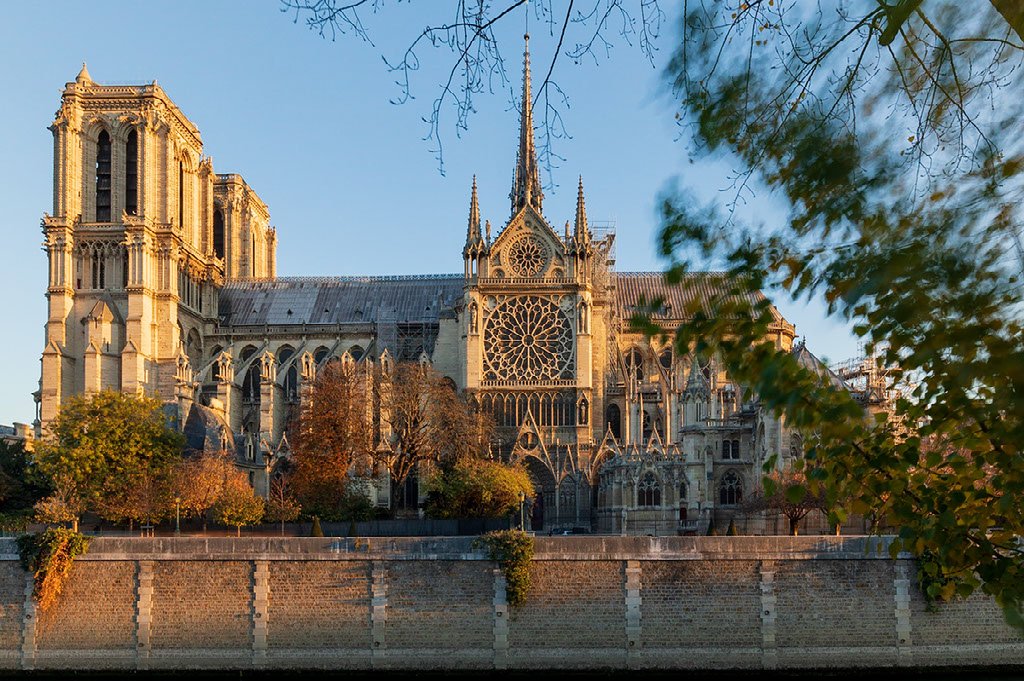
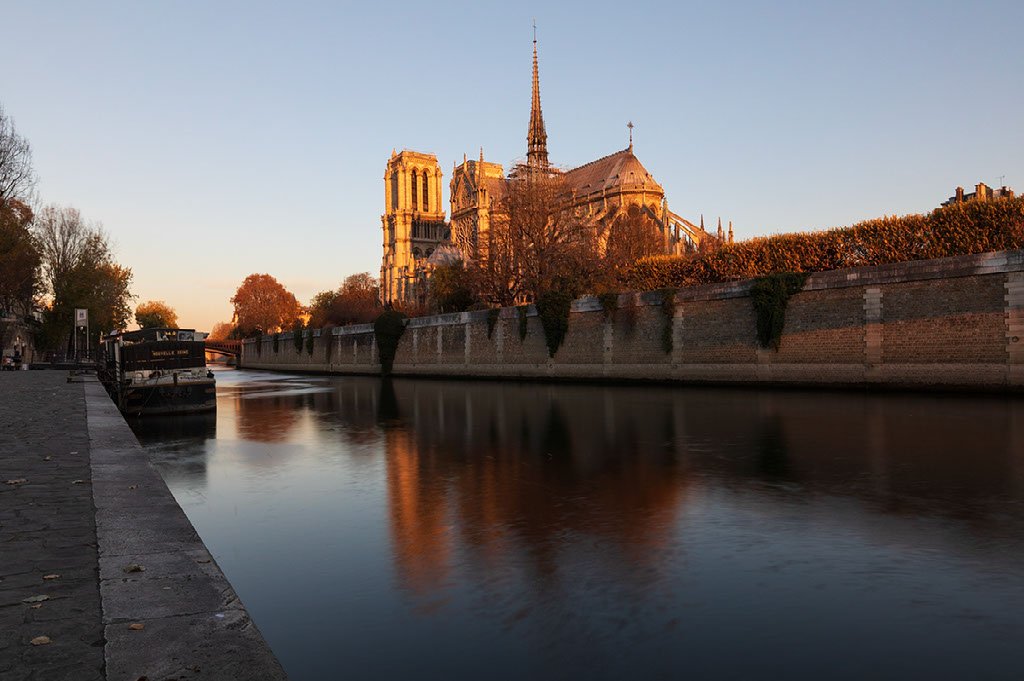
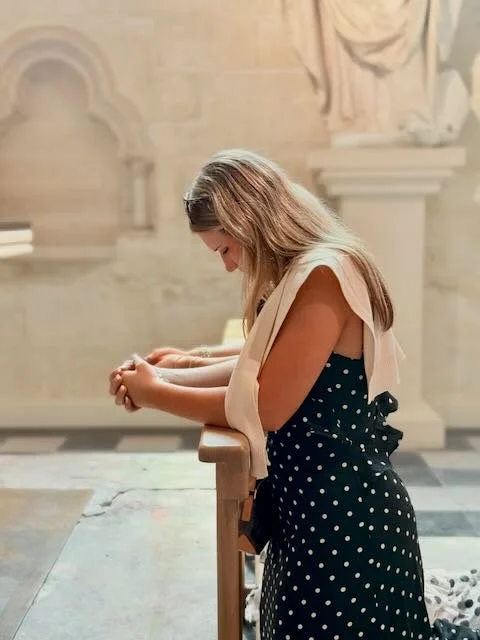
Notre-Dame reopened in December 2024 after five years of restoration following the 2019 fire. I visited in 2025, and the renovation is genuinely extraordinary. The interior is cleaner and more luminous than it was before the fire. Some might argue it is almost too perfect now; I would argue it is simply magnificent.
Some exterior restoration work continues through 2026, and certain areas have controlled access. The towers are open to visitors. The queues can be significant; book online in advance.
📷 Pro Tip: For the exterior, position yourself on the Pont de l'Archevêché bridge on the south side of the island for a clean view of the flying buttresses and the apse, which is the most architecturally complex part of the exterior. Use a 24-70mm to capture the full structure with the Seine in the foreground. For the interior, shoot from the back of the nave looking toward the altar and the rose window. The new interior lighting is exceptionally well-designed for photography: it is warm and even without being flat. A tripod is useful inside but may require permission to use on busy days.
Best time: Early morning for exterior. First entry for interior. Access: Exterior free; tower visit requires paid ticket. Metro: Cité (Line 4) or Saint-Michel-Notre-Dame (RER B/C).



Montmartre
Montmartre is a wonderful location to spend an afternoon. There are plenty of restaurants, bars, and cafes like Breizh Café. If you go to Montmartre at night, do not miss taking photos of Lamarck–Caulaincourt Metro Station in Montmartre. (Best at SUNRISE/SUNSET or NIGHT)

Metro Abbesses is one of the only Classic Metro Stations left in Paris
I think the best photos in Montmartre are taken at night after the crowds have thinned out.
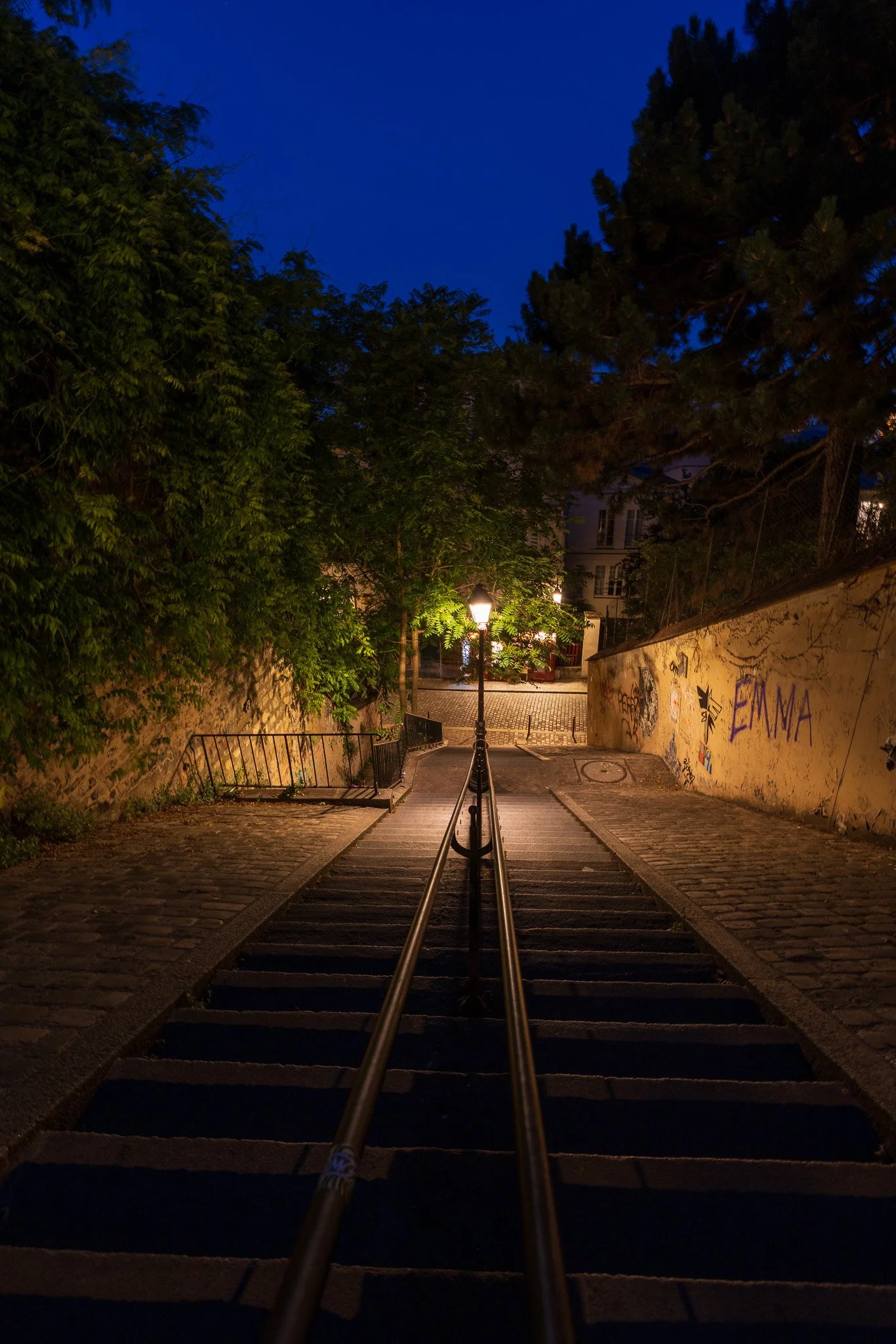
Blue Hour Montmartre
Arc de Triomphe Rooftop
The rooftop of the Arc de Triomphe is one of the best photography positions in Paris, and it is consistently underrated compared to the Eiffel Tower views. From the top, you look directly down onto the twelve avenues radiating from the roundabout at the Étoile, with the Champs-Élysées stretching east toward the Louvre. The geometry is extraordinary. At sunset and into blue hour, the car lights create light trails radiating in all directions.
There is an elevator, though I discovered this after climbing the 274 steps of the spiral staircase. Tripods are technically prohibited on the rooftop. I will leave it at that.
📷 Pro Tip: The best composition looks directly down the Champs-Élysées toward the east at sunset, with the setting sun behind you illuminating the avenue and the car lights beginning to build as rush hour starts. Use a 24-70mm for the full avenue view or a 70-200mm to compress the perspective and stack the buildings along the avenue. For light trails, a long exposure of 15-30 seconds captures the full arc of the radiating streets. Arrive thirty minutes before sunset to work through compositions in daylight before committing to your long exposure setup.
Best time: Sunset and blue hour. Access: Paid entry. Metro: Charles de Gaulle-Étoile (Lines 1, 2, 6).

Arc de Triomphe
Centre Pompidou 5th floor views of Sacre Coeur
Of course, I arrived at this location with the wrong lens. If you come here in the evening with a long lens, you can take a wonderful shot of the Sacre Coeur. And the center is open until 10:30 pm, so you can take an evening photo of Sacre Coeur. (Best at SUNSET)

Centre Pompidou
View of the Eiffel Tower from the Corner of Rue de l’Université and Avenue De La Boudonnaise
This is a spot where you’ll find numerous Instagrammers, but it’s still a fun location. If you come in the morning, it is a lot easier to take a clean photo. (Best at SUNRISE)

Morning by the Eiffel Tower
Les Deux Magots & Café de Flore
Les Deux Magots and Café de Flore are the most well-known cafes in Paris. Hemingway and other famous writers used to write from here. This is another location where you can find numerous Instagrammers. (Best Anytime)

Les Deux Magots
Do not miss trying their hot chocolate

Hot Chocolate
Opéra Garnier
The Palais Garnier is one of the most photographically rewarding interiors in Paris, and one of the most frustrating to shoot cleanly. The Grand Staircase, the Grand Foyer with its Hall of Mirrors, and the auditorium ceiling painted by Chagall are all extraordinary subjects. The problem is crowds. The tour groups move through constantly, and getting a clean frame of the staircase requires either patience, timing, or both.
I went on one of the first tours of the day and went straight to the Hall of Mirrors. Even then, it tested my patience. But the photograph is worth the effort. The gilded architecture, the layered balconies, and the scale of the space reward anyone who keeps working the compositions.
📷 Pro Tip: Book the earliest available entry time, ideally a weekday. Go directly to the Grand Staircase before the bulk of the tour group reaches it. Position yourself at the top of the staircase looking down, or at the base looking up, with a 16-35mm to capture the full sweep of the architecture. For the Hall of Mirrors, use a 24mm and shoot from the far end of the room to get the full depth of the gilded space. A small Platypod pressed against a railing helps stabilize long exposures in the dimmer sections without requiring a full tripod setup. For iPhone users, the ultrawide lens from a low position looking up the staircase produces a dramatic architectural result. Flash is not permitted inside; work with the available light and push your ISO.
Best time: First entry of the day on weekdays. Access: Paid entry for self-guided tour; separate tickets for performances. Metro: Opéra (Lines 3, 7, 8).

Opéra Garnier
To get a photo of the famous stairwell will test your patience but it can be done
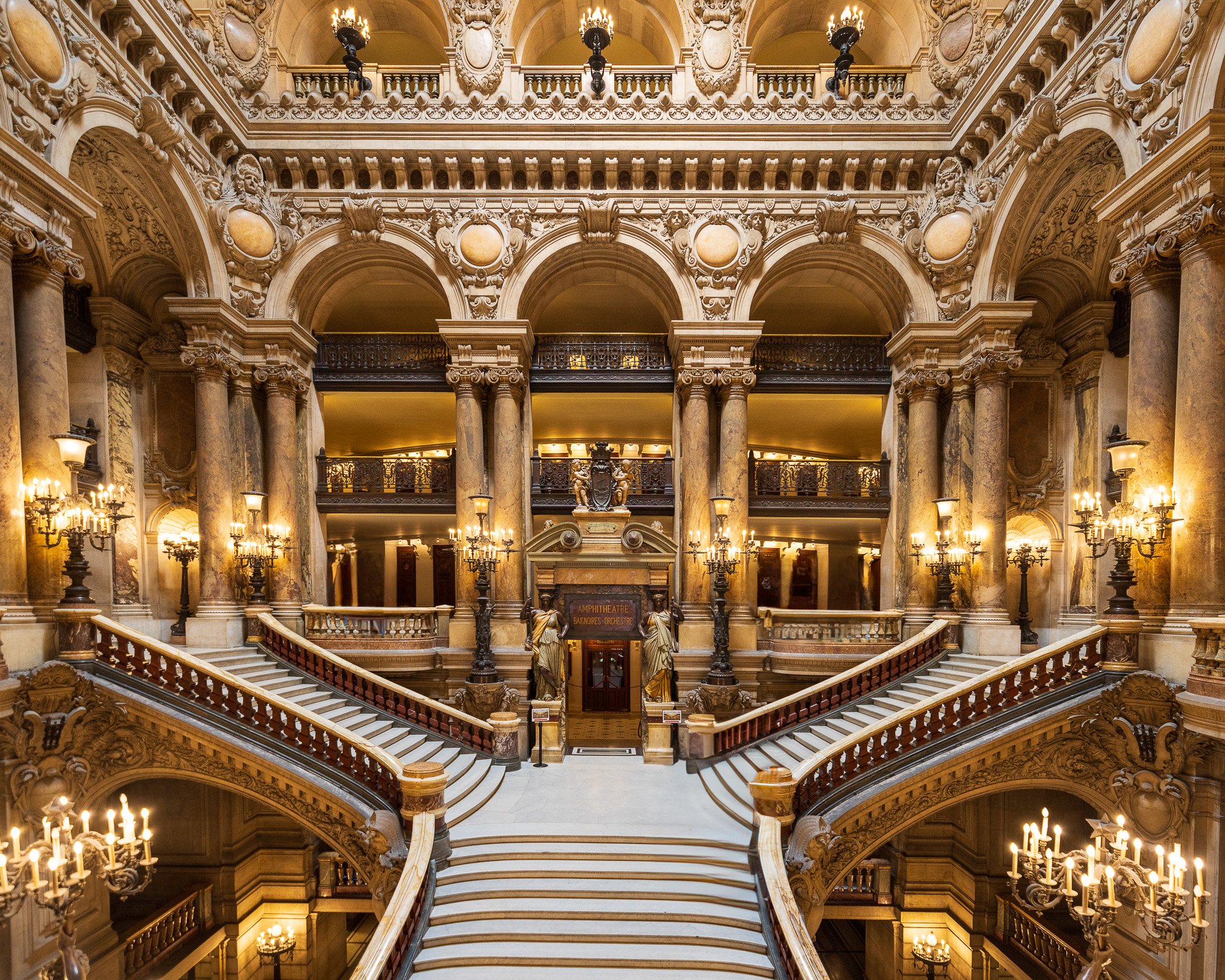
Opéra Garnier
2 Avenue de Camoens
This is a great location to get a different perspective of the Eiffel Tower from the stairwell.

2 Avenue de Camoens
Musée d'Orsay
The Musée d'Orsay is my favorite museum in Paris, and not just for the Impressionist collection. The building itself is a converted Beaux-Arts railway station, and the architecture is as worth photographing as anything hanging on the walls. The main nave, with its vaulted iron and glass ceiling, is one of the great interior spaces in Paris. The clocks are the photograph everyone comes for, and they earn the attention.
There are two clocks on the fifth floor. One is in the restaurant on the south side of the building; the other is on the north side facing the Seine. The north-facing clock is the better photograph. Stand behind the clock face and shoot through the translucent glass toward the rooftops of Paris beyond, with the Seine and the Right Bank visible below. On a sunny day the light through the clock glass is extraordinary.
📷 Pro Tip: The north clock on the fifth floor is the one to prioritize. Position yourself directly behind the clock face and use a 16-35mm to capture the full circular frame with the city visible through the glass. The best light comes from late morning through early afternoon when the sun is high enough to illuminate the city beyond without creating harsh contrast. For the main nave, a 15-35mm from the upper galleries looking down the full length of the hall captures the scale of the space. Crowds are thinnest on weekday mornings at opening time. The museum is closed on Mondays. For iPhone users, the ultrawide lens handles the clock face from behind in a single frame; tap the sky outside the clock to set exposure and let the interior darken for drama.
Best time: Sunny weekday mornings. Closed Mondays. Access: Paid entry. Metro: Musée d'Orsay (RER C) or Solférino (Line 12).

Musée d’Orsay
Do not miss the Clocks in the museum
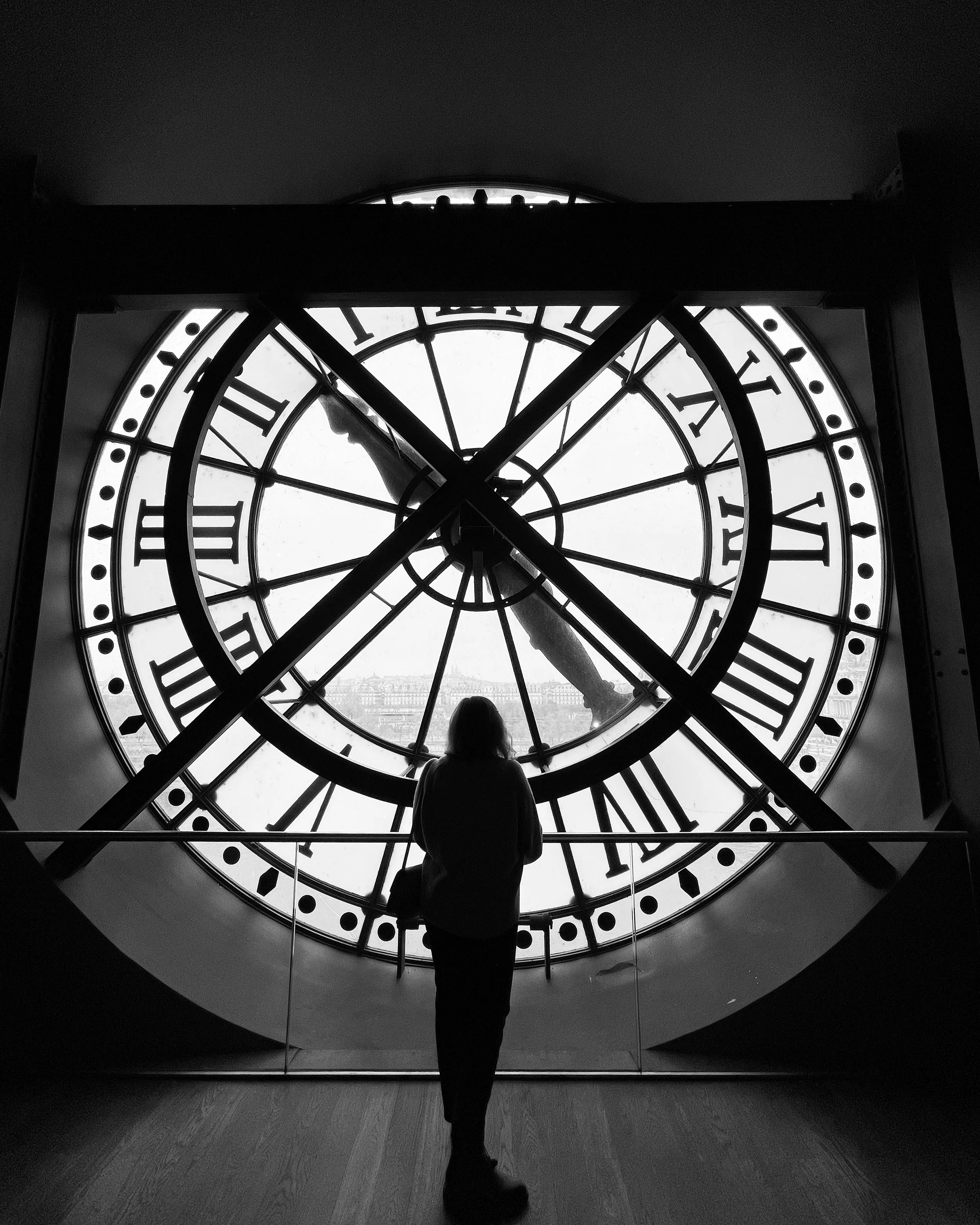
My Wife
Avenue des Champs-Élysées
I had to stand in the middle of the Champs-Élysées to get this long exposure shot. (Best at SUNSET)

Arc de Triomphe
Pont Des Arts
This is another classic location at sunrise to watch the sun come up over the Île Saint-Louis. (Best at SUNRISE). My suggestion is to shoot sunset from the Pont Des Arts and then walk into the Louvre and take photos of the Pyramids.

Pont Des Arts
Louvre Pyramids
The I.M. Pei Pyramids at the Louvre are one of the most compositionally rich locations in Paris. The glass pyramid against the classical Louvre facade, the reflections in the water basins, the symmetry of the courtyard. There are at least twenty different photographs here, depending on your position, lens, and time of day.
The practical tip for this location is timing. The Louvre is closed on Tuesdays, which means the courtyard is quiet and accessible without the usual volume of tourists. Tuesday evening is the best time to shoot the pyramids with a clean foreground.
📷 Pro Tip: For the classic symmetric composition, position yourself on the central axis facing the main pyramid with the smaller inverted pyramid behind you. Use a 16-35mm for a wide environmental shot that includes the Louvre wings, or a 24-70mm to tighten the composition on just the pyramid and facade. The water basins on each side of the pyramid produce near-perfect reflections at blue hour when the glass is lit from inside. Tuesday evenings are the best time. Sunrise is also excellent, but you will share the space with other photographers. For iPhone users, switch to the ultrawide lens from a low angle to exaggerate the pyramid's geometry against the sky.
Best time: Blue hour and Tuesday evenings. Access: Courtyard is free. Museum requires paid tickets. Metro: Palais Royal-Musée du Louvre (Lines 1 and 7).

Louvre Pyramids
There are so many compositions from this location

Louvre Pyramids
I recommend going on Tuesday evening because the Museum is closed on Tuesdays so there are not so many people.
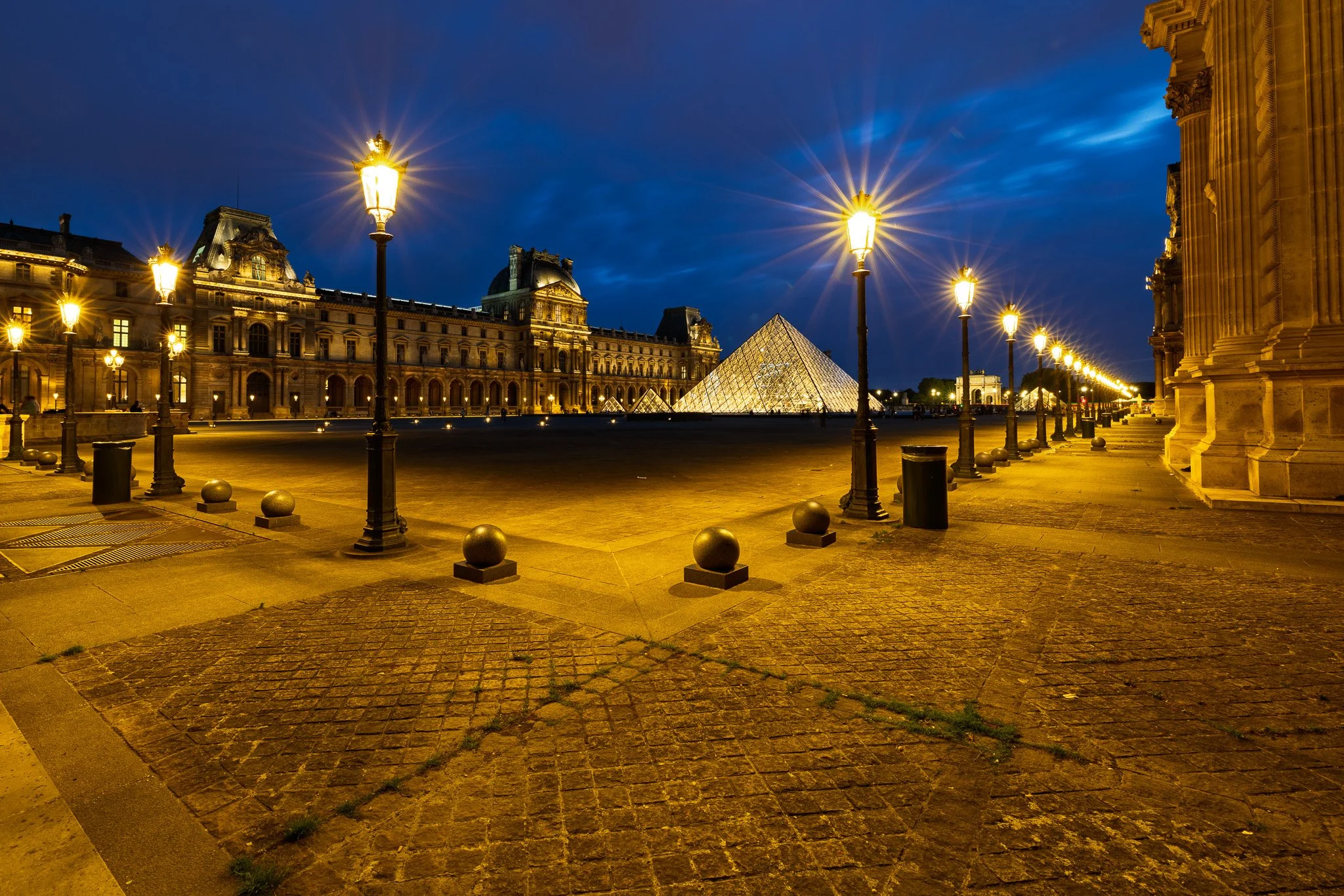
Louvre Pyramids
The Covered Passages
These are some of the most atmospheric indoor photography subjects in Paris. Galerie Vivienne, Passage des Panoramas, and Passage Brady are the three worth prioritizing. The filtered light through the glass ceilings creates a quality that is unlike anything outdoors.
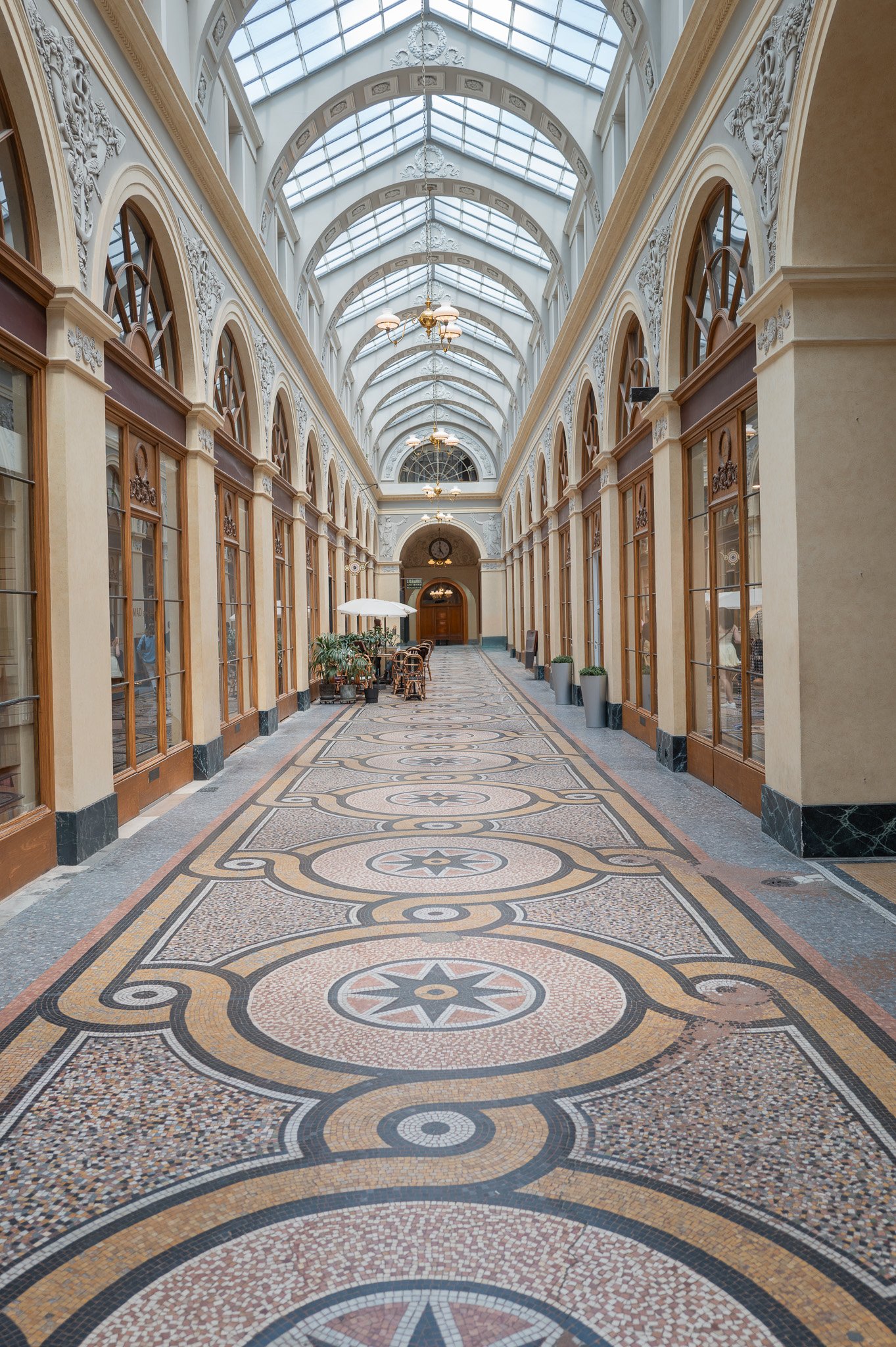
Place de la Madeleine
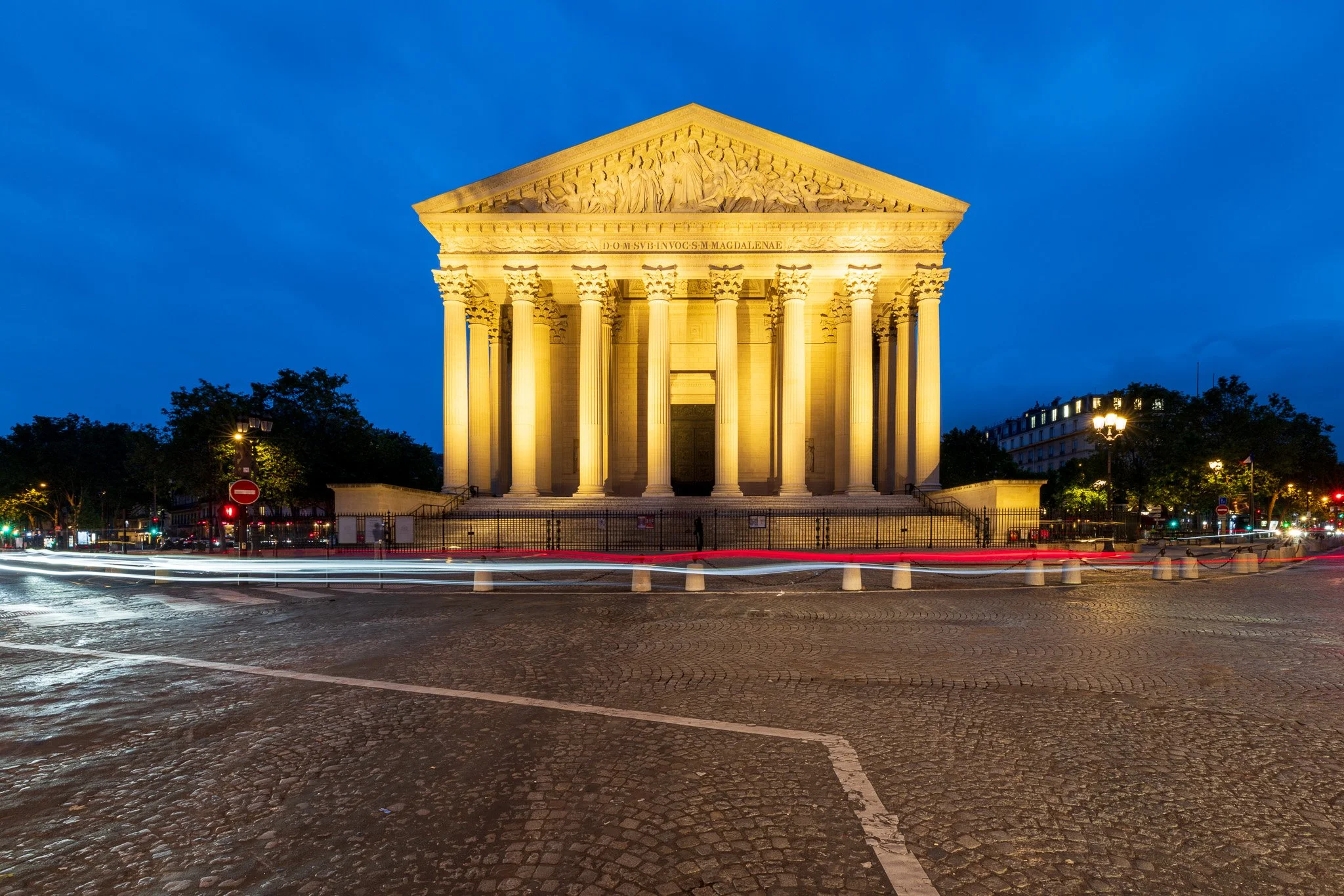
The Église de la Madeleine is one of the most architecturally striking buildings in Paris and one of the most undershot. The neoclassical temple facade, ringed by 52 Corinthian columns, looks like it was transplanted from ancient Rome and dropped into the middle of the 8th arrondissement. The scale is extraordinary and the building photographs completely differently depending on your position and focal length.
The square around it is equally worth your time. Fauchon and Hédiard, two of the great Parisian luxury food shops, frame the square and their window displays are photographically interesting in their own right. The flower market on the south side of the church runs through the week and produces strong color and texture against the stone architecture behind it.
📷 Pro Tip: For the full facade, position yourself at the far end of Rue Royale looking north, with the church at the end of the street and the Assemblée Nationale visible behind you for context. A 70-200mm compresses the perspective and makes the columns read as a solid mass. A 24-70mm from closer in captures the full height of the columns from street level with a dramatic upward angle. The best light hits the west-facing columns in late afternoon. For the flower market, a 35-50mm at eye level with the columns as background gives you strong foreground color against the stone. For iPhone users, the standard 1x lens from the end of Rue Royale with the church centered produces a strong symmetrical composition.
Best time: Late afternoon for the facade; mornings for the flower market. Access: Church is free. Metro: Madeleine (Lines 8, 12, 14).
Festivals & Events in Paris
Fête de la Musique (June): On the longest day of the year, Paris fills with music on every street corner. Outdoor concerts, spontaneous performances, and crowds that are genuinely celebratory rather than tourist-dense. The candid portrait opportunities are extraordinary. Shoot in the evening when the golden light is still strong and people are loosened up. Use a 35-50mm and shoot at f/2 for subject separation in crowded scenes.
Paris Fashion Week (January/February and September/October): The street photography possibilities during Fashion Week are unlike any other time of year. The area around the Marais venues, the Tuileries, and the Palais Royal fills with fashion professionals, photographers, and spectators who are dressed to be seen. Do not use flash. A 70-200mm from a distance gives you the best candid results; people who notice a telephoto are less likely to become self-conscious than those who notice a camera pointed in their face.
Bastille Day (July): The fireworks display at the Eiffel Tower is one of the largest in Europe. If fireworks photography is something you do, this is the event to plan for. Arrive hours in advance or book a rooftop restaurant with a view. A tripod, a wide lens, and a remote shutter release are the basics. The military parade on the Champs-Élysées in the morning is also worth photographing for the scale and the pageantry.
Christmas Markets (December): The markets along the Champs-Élysées, in Saint-Germain, and at various squares around the city light up in December in a way that is genuinely photogenic. The warm glow of the market stalls against the blue winter sky at dusk is a strong photograph. Your iPhone in Night Mode handles this better than most people expect.
Fashion Photo Season (ongoing): Instagrammers and content creators shooting in Paris are a photographic subject in their own right. The effort they put into their setups is real, with multiple outfit changes and scouted locations. I find them fun to photograph. They are most concentrated around the Eiffel Tower, the Louvre Pyramids, and the Palais Royal.
Frequently Asked Questions About Visiting Paris
Is Paris safe?
Yes, for the areas most travelers visit. Violent crime against tourists is rare in the central arrondissements. Pickpocketing near the Metro, the Eiffel Tower, and other crowded spots is the real risk, so keep your gear close and your bag zipped in crowds.
Are Parisians actually rude to tourists?
Not in my experience. Parisians are direct and fast-moving, not unfriendly. A simple "Bonjour" before you ask for anything, in English or French, changes how people respond to you.
Do you need to speak French?
No, but a few words help. Most people working in hotels, restaurants, and tourist areas speak enough English to get by. Starting with "Bonjour" and "Merci" goes a long way toward a warmer interaction.
What are the best photo spots in Paris?
Trocadéro for the Eiffel Tower, Pont Alexandre III for the lamp posts and views toward Les Invalides, and the Sacré-Cœur from Parc Marcel Bleustein-Blanchet, without the crowds, are three I return to on every trip. The full list with Pro Tips is below.
Can you use a tripod or drone in Paris?
Tripods are allowed in most public spaces but restricted on some rooftops, including the Arc de Triomphe. Drones are heavily restricted across central Paris and are effectively off-limits without advance authorization. Check current DGAC rules before you pack one.
What surprised you most about photographing Paris?
There's just an endless supply of things to photograph, from monuments to street photography to graffiti. I expected the landmarks. I didn't expect that after forty-plus trips I'd still be finding new subjects, a mural in the 13th, a staircase in a museum most visitors walk past, a metro station with better light than half the monuments.
How do you get around Paris, and is the Metro worth using with camera gear?
Walking covers most of central Paris and is genuinely the best way to see it. The Metro is fast and photogenic in its own right, but avoid it with bulky gear during rush hour, and keep an eye on your bag in crowded stations.
What's the best way to get from the airport into the city?
Use the official taxi line outside the terminal, or ask your hotel to arrange a pickup so a driver is waiting with your name on a sign. Fixed fares apply from Charles de Gaulle to central Paris, so there's nothing to negotiate.
Final Thoughts on Paris
Paris will not disappoint you. I say this having been there enough times to be past the honeymoon phase, and I still mean it. Every trip produces something I did not expect, even when I thought I knew exactly what I was going to shoot.
What makes the city worth returning to is not the monuments, though they are genuinely great. It is the combination of extraordinary photographic subjects at every level of scale: from the Eiffel Tower at blue hour down to the patina on a café table at 8 am. Paris rewards photographers who show up early, work the same location in different light, and wander without an agenda. The best photographs I have made here came from corners I was not planning to visit.
Go in April if you can. Walk more than you think you need to. Get up before sunrise at least once. Have a croissant from Poilâne and a coffee at Terres de Café, and point your camera at whatever catches your attention.
Want to improve your photography while exploring some incredible destinations? Join me on one of my photography workshops! You can find all the details, including upcoming destinations and dates, through the links below.
Let's Stay Connected!
My Photography & Travel Guide to Florence, Italy. The two cities share a relationship that runs deep for me personally. Paris is the city of modern European sophistication; Florence is where European art and architecture found their grammar. Together, they make a trip that covers the full range of what this continent offers photographers.
My Photography & Travel Guide to Mont Saint-Michel, France. Four hours from Paris by car, and one of the most photographically dramatic subjects in all of France. A tidal island with a medieval abbey rising from the bay. Plan a full day and shoot from the causeway at sunrise.
My Photography & Travel Guide to London, England. An easy Eurostar ride from Paris and a completely different photographic city. The two complement each other on the same trip: Paris for grandeur and café culture, London for museums, markets, and a street photography energy that Paris does not quite match.
Finally—a beginner-friendly photography guide that makes sense.
If you've ever picked up a camera and thought, "Now what?" this is the book for you.
Photography Made Simple is written for adults who are just starting out and want a clear, encouraging, real-world approach to learning photography. Whether you're using a DSLR, mirrorless, or just your smartphone, this guide walks you through the basics—without the jargon or tech overwhelm.
Inside, you'll learn:
The only camera settings you really need to know to get started
How to shoot sharper, more intentional photos using light and composition
Simple tips for portraits, landscapes, travel, and everyday life
What gear you do (and don’t) need
How to create better photos without upgrading your camera
You’ll also get practical exercises, cheat sheets, and tips for organizing and editing your images—plus the confidence to shoot off Auto Mode for good.
This is not a textbook. It’s a friendly guide to seeing the world with fresh eyes—and finally capturing what you see the way you imagine it.
📸 Format: PDF download
Pages: 100+
Perfect for: Beginners, hobbyists, and anyone ready to take better photos without the stress