Melbourne, Australia Travel & Photography Guide: Best Photo Spots, Things to Do & Hidden Gems
We stepped off the plane from Sydney, checked into the Park Hyatt, and walked out into the city. Within the first ten minutes, a green and gold tram rolled past on Swanston Street at eye level, clanging gently, commuters reading and staring at phones as if this were perfectly ordinary. And it was. That is the thing about Melbourne. What everywhere else would market as a major attraction, this city just uses on a Tuesday morning.
We spent four days here and loved every minute of it. The parks, first of all. Melbourne is threaded through with green, wide, and generous parks that appear between the buildings, the way good cities always seem to do by accident. Fitzroy Gardens was directly behind our hotel, so every morning we had a choice between architecture and trees before the city fully woke up. We usually choose both.
The coffee was extraordinary. Melbourne does not serve good coffee. It serves exceptional coffee with a seriousness of purpose that borders on philosophical. You do not order a large drip and move on. You stand at a well-worn counter and drink a flat white made by someone who has thought carefully about every variable, and you understand why this city has been arguing with Sydney about this subject for decades.
And then the food. Melbourne's multicultural identity is not just a demographic fact; it shows up on the plate every single meal. We had Cantonese food in a dining room that has been perfecting its kitchen for over four decades. We had modern Thai at a laneway restaurant so loud and energetic it felt like a concert. We walked through neighborhoods where Italian, Chinese, Vietnamese, Lebanese, and Greek flavors competed for the same city block, and somehow all coexisted without any of them losing their character.
The day we drove to Phillip Island stays with me. We arrived at Summerland Beach at dusk and watched hundreds of little penguins waddle up from the ocean to their burrows in the last light of the day. It is a sight that is completely ridiculous and completely wonderful at the same time. Nobody could watch it without smiling.
Melbourne is one of those cities that gives more the longer you stay. Four days were enough to fall for it. It was not enough to understand it.
In this Photography Guide to Melbourne, I share the places and experiences that continue to draw me back. You will find my favorite photography locations, guidance on when and where to shoot, practical travel tips, and gear recommendations, along with cultural insights to help you explore and photograph Melbourne with confidence, respect, and ease.

South Bank at Sunset
Photographer's Notes
Before you go, here are my own takeaways.
Favorite Season: Summer (Dec–Feb)
Favorite Sunrise Location: Fitzroy Gardens
Favorite Sunset Location: Southbank
Favorite Experience: The Penguin Parade at Phillip Island, watching hundreds of little penguins waddle up from the ocean at dusk
Favorite Neighborhood: CBD
Favorite Hotel: Park Hyatt Melbourne
Favorite Café: Proud Mary Coffee
Favorite Lens: 15-35mm f/2.8
Would I Return? Without a doubt.
Where to Stay in Melbourne
Stay in the Central Business District. Full stop. The CBD puts you within walking distance of Flinders Street Station, Federation Square, Hosier Lane, and the Yarra River. The free tram zone covers most of what you need. As a photographer, proximity to your subjects in the early morning hours is everything. There is no substitute for walking out of your hotel and being set up in ten minutes.
Luxury Hotels in Melbourne
The Langham, Melbourne
Situated on the south bank of the Yarra River in Southbank, The Langham is one of the best-positioned luxury hotels in the city for photographers. The riverside location means sunrise and blue hour along the Yarra are practically walking distance from your room. The hotel is polished, the service is genuinely warm, and the pool area with its skyline views is worth the stay on its own. This is classic five-star without the stuffiness.
Park Hyatt Melbourne
This is where my wife and I stayed, and it remains the benchmark for everything I compare Melbourne hotels against. The Park Hyatt sits near Fitzroy Gardens, which is quieter and more residential-feeling than the CBD core. The rooms are large, the design is refined without being cold, and the location puts you close to the Parliament precinct, St Patrick's Cathedral, and some of the most photogenic streetscapes in the city. After a long shooting day, this is exactly where you want to come back to.
Sofitel Melbourne on Collins
French-inspired luxury perched high on Collins Street, the Sofitel delivers sweeping city views from upper floors that are genuinely exceptional at night. The rooms feature Nespresso machines, Bose speakers, and marble bathrooms. No35, the hotel restaurant, serves Modern Australian cuisine with a view that earns its own photograph. If elevated city perspectives and a polished, European atmosphere appeal to you, this is a strong choice.
Mid-Range & Boutique Hotels in Melbourne
Ovolo Laneways
If you are in Melbourne specifically to photograph the laneways and street art scene, Ovolo puts you right in the middle of it. The location is the appeal, playful design, and walkability to every major laneway photography location in the CBD. Rates are reasonable for what you get.
The Victoria Hotel
A heritage property with character and a central location. The Victoria is reliable, comfortable, and positioned well for walking access to almost every location in this guide. Good value by Melbourne standards.
Rendezvous Hotel Melbourne
Heritage-listed, right on Flinders Lane, with architectural details that make the building itself worth photographing. A solid choice if you want historic character at a mid-range price point.
How Many Days Should You Stay in Melbourne
Four to five days is the right baseline. That gives you time to settle into the city's rhythm, shoot the CBD at different times of day, explore the neighborhoods, and still have room for a day trip.
With four days, you can cover Hosier Lane and the laneways, Federation Square and Flinders Street Station, the Yarra River at sunset and blue hour, Queen Victoria Market in the morning, Fitzroy Gardens, and the Royal Botanic Gardens. Add a half-day for Fitzroy or St Kilda.
With five days, you can add a full-day drive to the Great Ocean Road. The Twelve Apostles and Loch Ard Gorge alone justify the trip.
Melbourne is not a checklist city. It rewards slowing down. Give it five days if you can.
Best Time to Visit Melbourne
Spring (September to November) and Autumn (March to May) are the best seasons for photography. Temperatures are mild, the light is soft and long, and the city is energized. Autumn in particular delivers warm, directional light that does extraordinary things to the sandstone buildings along Collins Street and the tree canopy in Fitzroy Gardens.
Summer in Melbourne (December to February) can be harsh, with heat waves pushing temperatures above 40°C and flat midday light that challenges even the best cameras. That said, the evenings are long and the twilight hours are spectacular.
Winter (June to August) is Melbourne's quieter season. Crowds thin, accommodation is easier to find, and the moody, overcast light can work beautifully for laneway and street photography. Pack layers. The city does not stop for cold weather.
One local fact worth knowing: Melbourne's weather changes fast. Locals call it "four seasons in one day" and they are not exaggerating. Always pack a light jacket even in summer, and keep a rain sleeve accessible when you shoot.
Getting Around Melbourne
Melbourne is walkable, and for photographers, walking is almost always the right choice. The CBD is flat, the laneways reward wandering, and you will notice things at street level that you miss from a tram window.
The public tram network is excellent. Much of the inner city operates within a free tram zone, which makes moving around simple and cost-free. Trams run frequently and cover all the major neighborhoods. The City Circle tram is a useful loop for first-time visitors.
Uber and Bolt are both widely available for longer rides or late nights when you are carrying gear.
If you plan a day trip to the Great Ocean Road or Phillip Island, rent a car. Public transportation does not reach those destinations effectively, and you want the freedom to stop whenever the light is right.

Where to Eat in Melbourne
Melbourne's food scene is not one of Australia's best. It is one of the world's best. That is not hyperbole. The city is home to a significant post-war Italian community, a large Vietnamese diaspora, a Chinese food culture that predates the gold rush, and a Modern Australian culinary movement that draws on all of it. You can eat spectacularly here across every price range.

At Chin Chin
Restaurants in Melbourne
Chin Chin
Flinders Lane, CBD. The gold standard for modern Thai and Southeast Asian cooking in Australia. The room is loud and energetic, the design is sharp, and the food is consistently excellent. Kingfish sashimi, pulled pork roll-ups, corn fritters. Go hungry, go early, or expect to wait. The wait is worth it.
Attica
Ripponlea. Ben Shewry's flagship has spent years on the World's 50 Best list, and it earns its place every time. Native Australian ingredients, a ten-course tasting menu, and cooking that is genuinely creative rather than just technically accomplished. Book two to three months ahead. This is a special occasion restaurant done right.
Flower Drum
Market Lane, Chinatown. Open since 1975 and still the benchmark for Cantonese cooking in Australia. The room is elegant, the service is impeccable, and the Peking duck is one of the finest I have eaten anywhere. Do not skip the seafood soup dumpling. Bookings are essential.
The European
Spring Street, CBD. Classic European fare in a warm, well-run room near the theater district. Perfect for a long lunch after a morning shoot around the Parliament precinct or a relaxed pre-theater dinner.
Supernormal
Flinders Lane, CBD. Andrew McConnell's modern Asian restaurant has become a Melbourne institution. No reservations after 6pm for dinner, so arrive early or prepare to queue. The lobster roll is famous for a reason.
Gimlet at Cavendish House
CBD. McConnell's bistro with a French sensibility, an open kitchen, and a genuine welcome for solo diners at the bar. Excellent for lunch after a morning at the markets or Federation Square.
Coffee in Melbourne
This is where Melbourne earns a category of its own. The city is not just good at coffee. It is serious about coffee in a way that most cities are not. The flat white was arguably perfected here. Baristas train for years. Beans are sourced and roasted with the same attention a sommelier gives to wine. You will leave Melbourne with higher standards.
Proud Mary Coffee
Oxford Street, Collingwood. A serious roastery and café with a brew bar that showcases single-origin coffees you will not find everywhere. The space is beautiful and the coffee demands your full attention. Worth the short tram ride from the CBD.
Brother Baba Budan
Little Bourke Street, CBD. The chairs hanging from the ceiling make this place unmistakable, but the coffee is what keeps people coming back. A Seven Seeds café with excellent espresso and quick, focused service. Perfect mid-morning stop during a laneway photography session.
Patricia Coffee Brewers
Little Bourke Street, CBD. Standing room only, minimal aesthetic, and some of the most carefully pulled espresso in Australia. Patricia has been a Melbourne institution for fifteen years. Arrive early, order a flat white, and drink it at the counter. The second location on Lonsdale Street just opened in 2026 if you need it closer.
Axil Coffee Roasters
Hawthorn. The flagship café from a team that includes national barista competition alumni. Precision and consistency at a high level. If you care about calibration and sourcing, Axil is your reference point.
Photography Gear: What to Bring to Melbourne
Melbourne rewards versatility. You will shoot architecture, street scenes, laneways, markets, river reflections, and coastal landscape on day trips. Pack a kit that gives you range.
Camera Body: The Canon EOS R5 Mark II, Sony A7R V, or Nikon Z8 all perform well here. You want strong dynamic range for managing the contrast between bright sky and shaded laneways, and good high-ISO performance for the blue hour river shots that are among the most rewarding images you can bring home.
Wide Angle (15 to 35mm): Your essential Melbourne lens. Hosier Lane, Federation Square's angular geometry, and the Yarra River skyline all reward a wide perspective. This is the lens that lives on the camera for the first morning.
Standard Zoom (24 to 70mm): The everyday workhorse. Markets, street photography, café culture, architectural detail. You will use this more than anything else over a full day of shooting.
Telephoto (70 to 200mm): Excellent for compressing the tram against the façade of Flinders Street Station, isolating architectural details on Federation Square, or capturing candid moments at Queen Victoria Market without intruding on your subjects.
Tripod: Bring a lightweight travel tripod. Blue hour along the Yarra River produces some of the best long exposures in any Australian city, and tram light trails through the CBD at night are worth the extra weight.
ND Filters (3, 6, 10 stop): Useful for long exposure tram blur on busy intersections during the day, and for smoothing the Yarra River surface during the golden hour.
Extras: Bring two batteries minimum. Early morning and evening sessions back to back will drain one body. Extra memory cards, a Samsung T7 SSD for in-field backup, and a rain sleeve. Melbourne will test you on the weather.
Drone
Melbourne has layered drone restrictions. CASA governs federal airspace, but councils and land managers impose additional rules at the local level. Flying in the CBD, over Parks Victoria-managed areas including the Yarra River corridors, Royal Botanic Gardens, and Fitzroy Gardens, requires permits and in some cases a fully licensed commercial operator. Recreational drones are restricted or prohibited in most of the inner city locations featured in this guide. Check CASA's drone safety app before any flight, and plan permit applications well in advance if you intend to fly commercially. Do not assume the rooftop of your hotel counts as open airspace.
iPhone Tips
Melbourne is one of the most iPhone-friendly photography cities in the world. The geometry, the color, and the texture all translate exceptionally well to mobile.
At Hosier Lane, switch to your ultrawide and shoot low and straight down the laneway to capture the full width of murals on both sides. The compression of the tall walls and the visual chaos of overlapping art reads brilliantly at 13mm.
For Federation Square, use Portrait Mode on the angular geometric facade panels to create subject separation between the detail and the glass buildings behind. The geometric shapes give Portrait Mode clear subjects to work with.
At the Yarra River during blue hour, use Night Mode on a stable surface or a small Joby GorillaPod. The iPhone handles low-light reflections on the river surprisingly well. Let the exposure run for the full duration and do not move. You will get cleaner results than you expect.
Best Photography Locations in Melbourne
We truly loved our time in Melbourne. The city offers a strong mix of architecture, street life, river scenes, and creative laneways. Here are a few of my favorite photography spots from our trip.
St Paul's Cathedral
St Paul's Cathedral sits prominently at the corner of Flinders Street and Swanston Street, directly across from Federation Square. It was right in front of our hotel, which meant I could study it at different times of day.
This Anglican cathedral is stunning. The Gothic Revival architecture, intricate stonework, and tall spires create strong vertical lines and texture. It stands in beautiful contrast to the modern glass structures nearby.
When to shoot:
Early morning is ideal. The light is softer, and foot traffic is lighter. At blue hour, the warm interior glow contrasts beautifully with the cool city tones.

The church and grounds are beautiful. It is right next to Fitzroy Park so the entire setting is stunning.
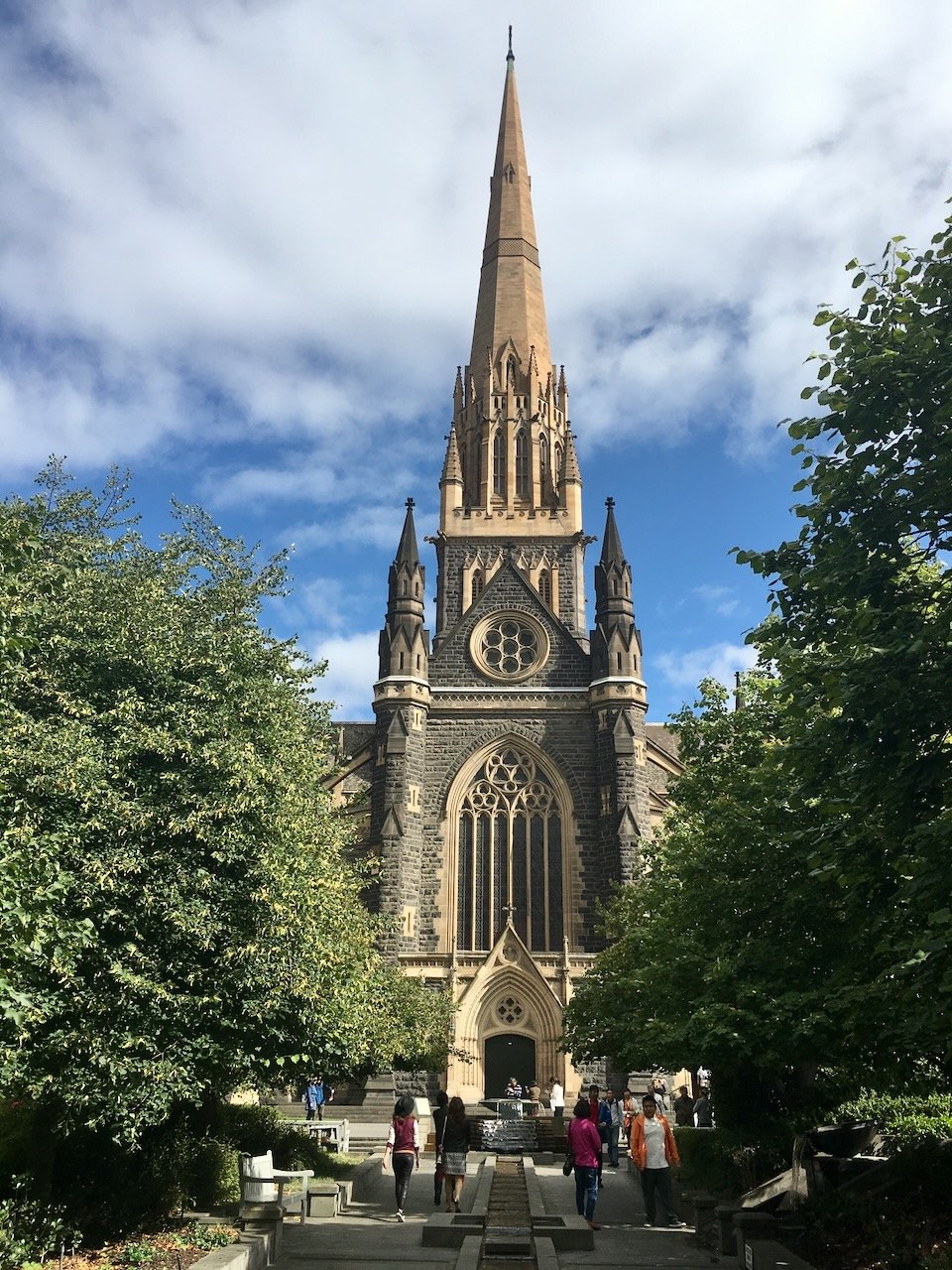
Make sure to visit the inside of the church, which is also very beautiful.

Hosier Lane
Hosier Lane is one of the most concentrated street art environments anywhere in the world. Not because it has the most walls, but because the art is constantly renewed. Artists paint over existing work, new pieces appear overnight, and the lane you photograph today will look different in six months. That impermanence is part of what makes it worth coming back to.
The lane is short, roughly 100 meters, but the walls go floor to ceiling on both sides. The floor itself is painted. Even the doors and bollards are fair game. The art ranges from detailed portraiture to abstract expressionism to political commentary, often all within a few steps of each other.
📷 Pro Tip: Arrive early, before 8am, to get the lane without crowds. Use your wide-angle (16 to 24mm) and shoot from the entrance looking straight down toward the far end, keeping the converging walls in the frame. For individual murals, switch to a 35mm or 50mm equivalent and get close. Overcast light works better than direct sun here because it eliminates the harsh shadows cast by the building edges. Come back at dusk when the colored lights along the lane create a completely different atmosphere. Photography is welcomed and expected. Just give other photographers room to work.
Best time: Early morning or dusk. Access: Free. Short walk from Flinders Street Station.
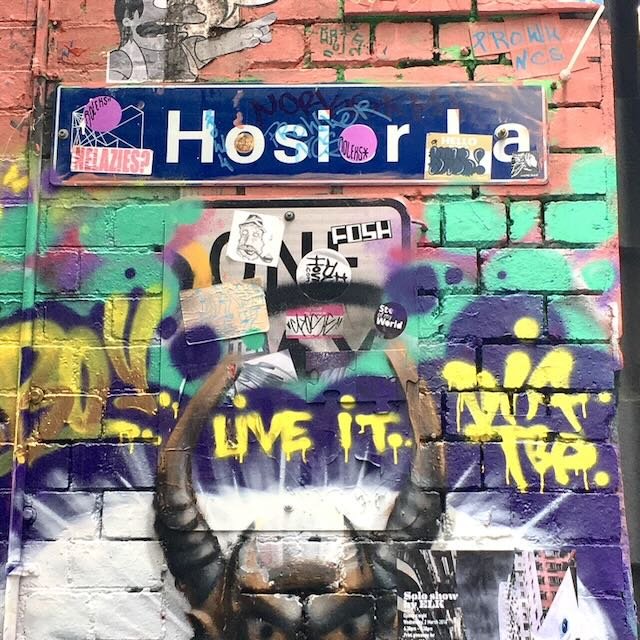
Hosier Lane is a very lively area buzzing with shopping arcades, streets, art, cafes, bar and boutiques, all with their own individual character and charm.

Some of our favorite restaurants (ChinChin, Lucy Liu Kitchen and Bar, The Little Social) are in this area.

Flinders Street Station
Flinders Street Station is Melbourne's most recognized building and one of the most photographed train stations in the southern hemisphere. Opened in 1910, the yellow ochre facade, green copper dome, and the famous row of clocks above the main entrance have appeared in countless photographs, yet there is always a fresh angle.
What makes it rewarding for photographers is the constant motion. Trams, pedestrians, cyclists, and the architecture itself compete for space in the frame. The intersection of Flinders and Swanston Streets at blue hour, with trams streaking past the illuminated facade, is one of the classic Melbourne compositions.
📷 Pro Tip: For the tram trail shot, set up on the pedestrian island at the Flinders/Swanston intersection with your tripod. Use a 24 to 35mm focal length, ISO 100 to 200, and a shutter speed between 4 and 8 seconds to capture tram movement without overexposing the building facade. Shoot about 20 to 30 minutes after sunset when the sky is still deep blue and the building lights are fully active. Shoot horizontally to include Federation Square across the intersection. Arrive 30 minutes early to secure your position as other photographers will have the same idea.
Best time: Blue hour, 20 to 40 minutes after sunset. Access: Free. Street level.
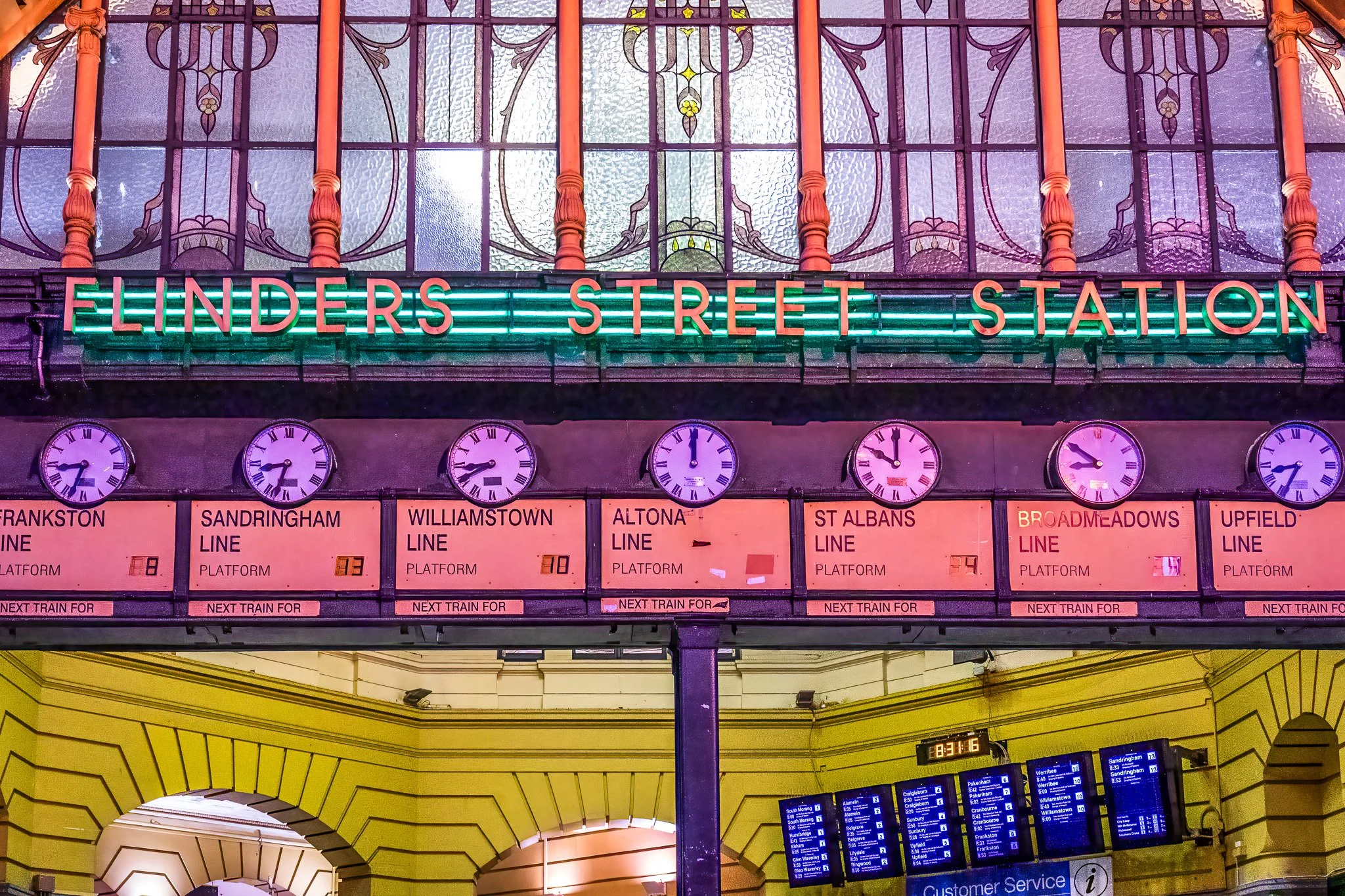
The station features Victorian architecture and large clock faces. It was the busiest railway station in the world in the 1920s and is said to currently be the busiest suburban railway station in the Southern Hemisphere.

Fitzroy Gardens
Fitzroy Gardens is one of Melbourne's oldest public spaces, established in 1848 and designed in a formal English landscape style. The gardens span 26 hectares with wide, tree-lined avenues, manicured lawns, fountains, and some of the tallest elm trees you will find in Australia. In autumn, when those elms turn gold, the gardens become exceptional.
The photographic value here is different from the laneways or the river. It is quieter, slower, and requires more patience. The light filters through the canopy in layers. Long tree-lined paths create strong leading lines. The fountains and conservatory offer architectural detail within a natural context. This is a place to slow down and look carefully.
📷 Pro Tip: The elm avenue that runs the length of the gardens is the money shot, particularly in late April and May when the leaves turn yellow and orange. Use a 50 to 70mm focal length and position yourself at one end of the avenue, low to include the path, and let the canopy fill the upper frame. Early morning light is softest and eliminates harsh shadows through the canopy. The conservatory gardens photograph well at 24mm in any season. Visit on weekday mornings to avoid weekend crowds.
Best time: Early morning, autumn for peak color. Access: Free. Adjacent to Park Hyatt Melbourne.

Federation Square
Federation Square is the city's modern gathering point, and for photographers, it is a study in geometry. The facades are covered in sandstone, zinc, and glass panels arranged in an irregular geometric grid that creates visual complexity at every focal length. The angular forms throw interesting shadows throughout the day, and the contrast with the Victorian-era Flinders Street Station directly across the road gives you both periods of Melbourne history in a single frame.
The square functions as a cultural hub. Events, markets, and public screenings animate the space regularly. On any given afternoon, you will find families, commuters, tourists, and street performers all sharing the same open space, making it one of the more rewarding locations for candid street photography in the city.
📷 Pro Tip: For architecture, position yourself in the northwest corner of the square looking southeast toward the main facade. A 24mm focal length captures the full angular geometry while including the sky. Shoot in the afternoon when the facade panels catch direct light and the geometric shadows deepen. For people photography, sit on the steps facing Flinders Street and work with a 70 to 85mm equivalent to isolate subjects against the movement of the street behind them. Early morning before 7am is the only time you will have the square to yourself.
Best time: Afternoon for architecture, any time for street photography. Access: Free.

Royal Botanic Gardens
The Royal Botanic Gardens sit on the south side of the Yarra River, within easy walking distance of the CBD, and span more than 34 hectares of curated landscape. The gardens contain over 50,000 plants from Australia and around the world, and the design weaves formal plantings around natural-looking lakes and lawns that frame skyline views in unexpected ways.
For photographers, the combination of lush foreground, reflective water, and city skyline in the background is unlike anything else in Melbourne. The gardens also offer excellent wildlife photography opportunities. Black swans, ibis, and various native birds are resident and approachable.
📷 Pro Tip: Walk to the ornamental lake in the center of the gardens and position yourself on the north bank for the most cited composition, using the water as a foreground reflection with the city skyline visible beyond the tree line. A 24mm focal length captures the full breadth of the scene. Overcast days create even reflections and eliminate the problem of bright sky blowing out your exposure. For wildlife, the ibis and cormorants that congregate around the lake are comfortable with people and photograph well at 70 to 200mm. Morning light enters the gardens from the east, which illuminates the path from the Alexandra Avenue entrance beautifully.
Best time: Morning. Access: Free. Short walk from South Yarra or CBD.

Southbank and the Yarra River
Southbank is the premier sunset and blue hour photography location in Melbourne. The promenade runs along the south bank of the Yarra River from Crown Casino toward the Arts Precinct, offering clean westward views of the city skyline, Princes Bridge, and Flinders Street Station. As the sun drops, the buildings light up individually, the river surface becomes a mirror, and the scene grows progressively more photogenic for about an hour after sunset.
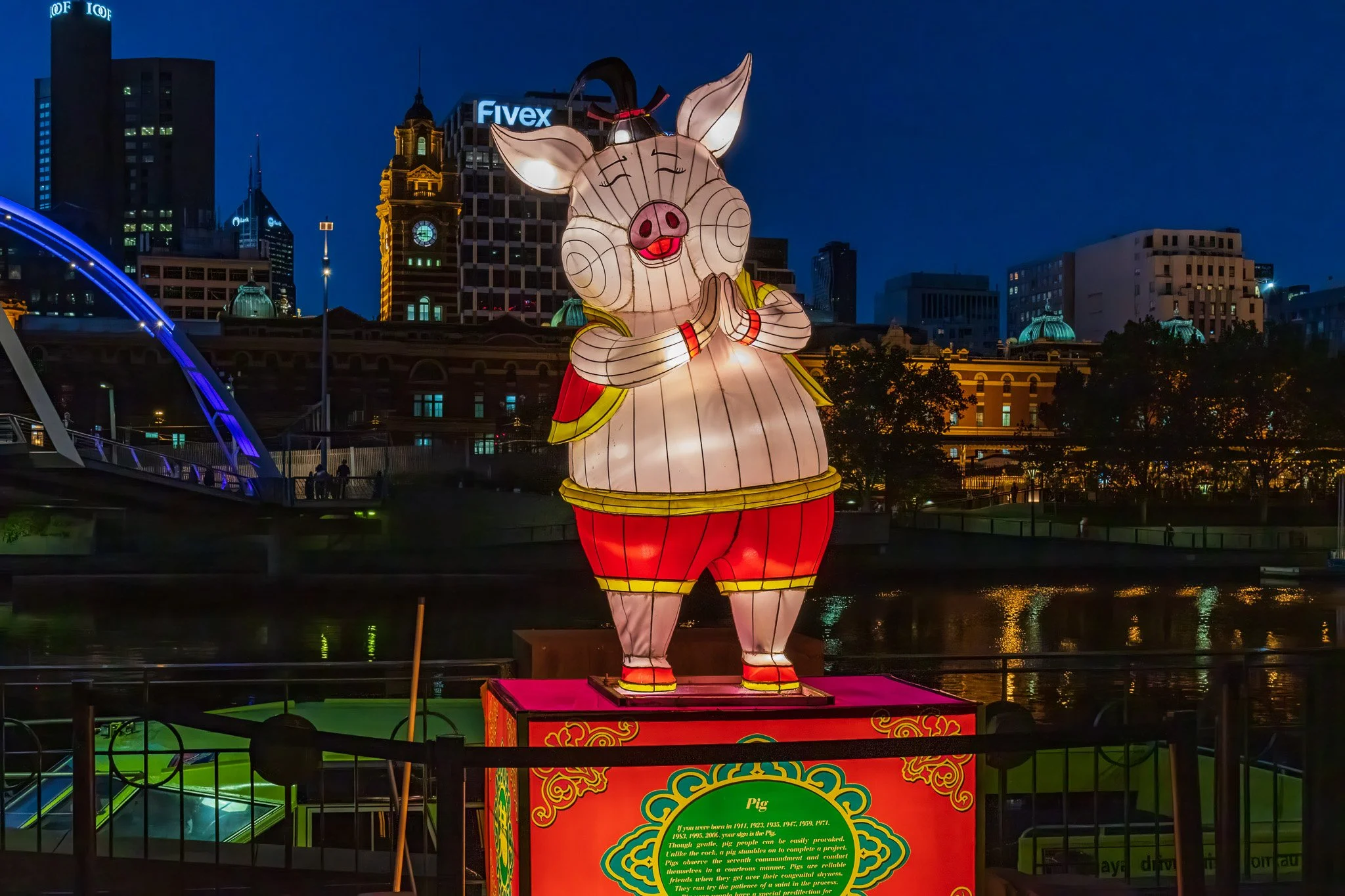
The promenade itself is active and alive. Street performers, joggers, diners, and photographers share the space in a way that feels completely natural. The energy of the waterfront is part of the photograph, not a distraction from it. My visit during Chinese New Year coincided with the lantern decorations along the river, and the combination of city reflections and hanging lanterns was extraordinary.
📷 Pro Tip: Position yourself on the north bank near Princes Bridge for the classic skyline composition, or cross to the south bank promenade for a tighter view of Flinders Street Station with the river in the foreground. Use a 24 to 35mm focal length for the full skyline, or 70mm to compress the bridge against the illuminated facade of the station. A tripod is essential here. Shoot from golden hour through the full blue hour period and keep shooting after the sky goes dark. The city reflections on the river become richer and more saturated as the night deepens.
Best time: Golden hour through blue hour. Access: Free. Short walk from CBD.
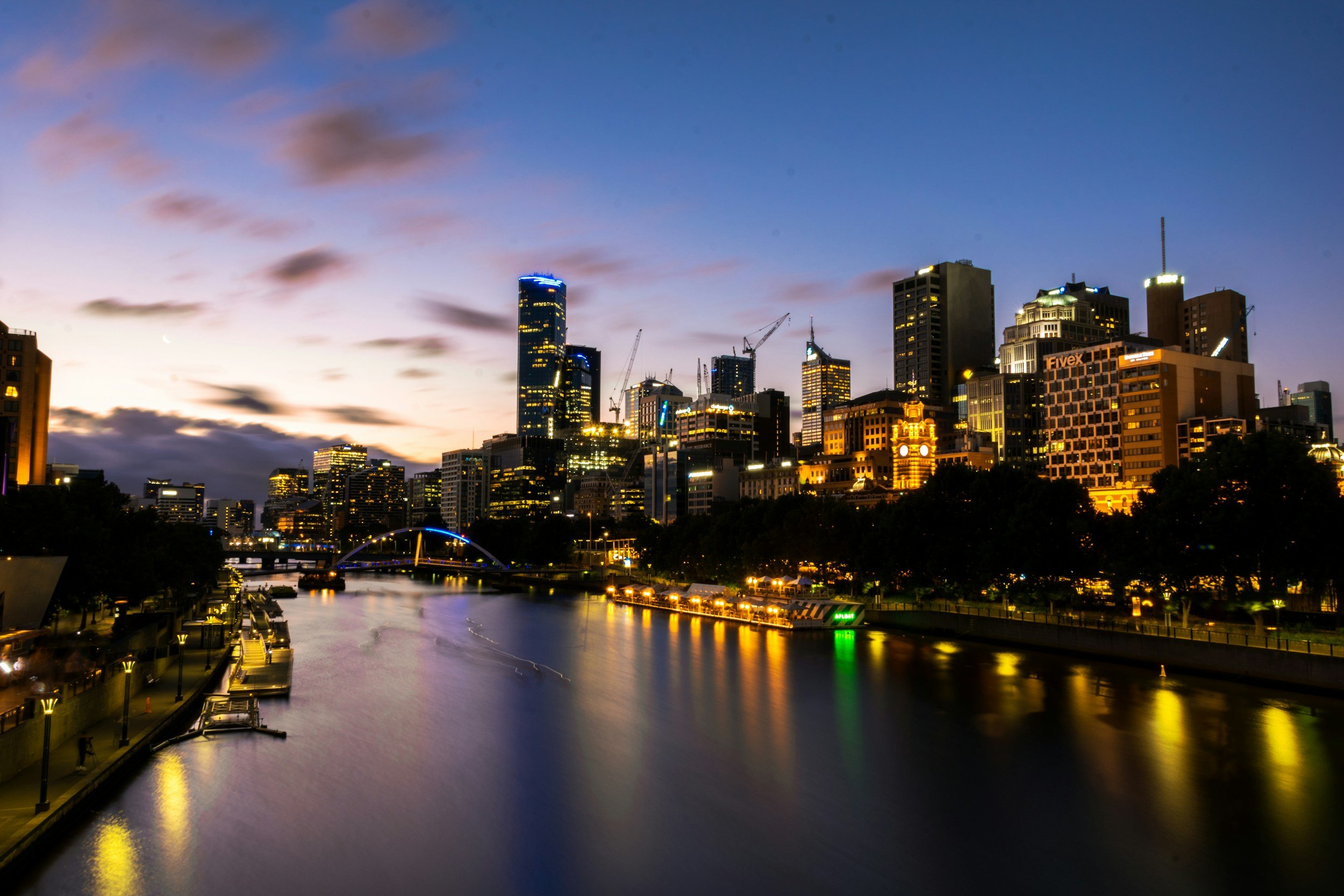
The promenade offers breathtaking views of the city skyline, especially during sunset and at night when the buildings light up. It’s a perfect spot for leisurely strolls, jogging, or simply sitting by the river to soak in the atmosphere.

We were lucky to visit during Chinese New Year when they had many Chinese Lantern decorations along the Yarra River.


Melbourne Zoo
Melbourne Zoo was such a fun experience. Seeing koalas up close was unforgettable. There is something special about watching them quietly perched in eucalyptus trees.
Established in 1862, Melbourne Zoo is the oldest zoo in Australia and one of the most historic in the world. It spans more than 55 acres and is home to over 320 species from around the globe. The grounds are spacious and thoughtfully designed, which makes walking through it enjoyable even if you are not focused solely on photography.


Queen Victoria Market
Queen Victoria Market is the largest open-air market in the Southern Hemisphere, occupying two full city blocks and operating since 1878. The indoor deli halls, outdoor produce sections, and weekend specialty markets each have their own visual character. The color and texture here are relentless. Fresh produce stacked in geometric arrangements, butchers in aprons, the smell of coffee and pastries, vendors calling across the aisles. This is street photography and food photography and documentary photography all in the same place.
The morning hours, when the produce is freshest and the traders are fully engaged, are the best time to shoot. Vendors are generally accustomed to cameras and will often acknowledge you with a nod or a joke. Always ask before photographing individuals directly, particularly in the indoor halls.
📷 Pro Tip: Arrive when the market opens for the best light and the most activity. Inside the deli halls, your wide-angle is too wide. A 35mm or 50mm equivalent gives you the intimate framing that works best in the confined space. Look for the color contrast between fresh produce and weathered hands, or between the bright overhead lighting and the shadows under the stall canopies. For the outdoor market sections, use a longer focal length (70 to 85mm) to compress the stalls and create a sense of density. Mornings midweek are less crowded than weekends, which gives you cleaner compositions.
Best time: Morning when the market opens. Access: Free entry. Short tram or walk from CBD. Check opening days by section as not all sections operate daily.

During the week, the food hall is the main draw, but the weekend offerings are bigger as sellers fill up the outdoor vending space.

The market is an excellent spot for Street Photography.


Day TRIPS - Discover Melbourne's Surroundings
Great Ocean Road: A Scenic Coastal Drive
The Great Ocean Road is one of Australia’s most iconic road trips. Stretching more than 240 kilometers along the southern coast of Victoria, it delivers nonstop ocean views, dramatic limestone cliffs, and powerful surf.
This is not just a drive. It is a photography experience.
The highlight for many is the Twelve Apostles, a formation of towering limestone stacks rising from the Southern Ocean. The name refers to the original rock formation; eight stacks currently stand, four of which have collapsed over the years. They are still extraordinary and well worth the drive.
Do not rush. Stop at scenic lookouts. Walk down to the beaches. Explore places like Loch Ard Gorge for more intimate compositions with cliffs and turquoise water.

Phillip Island: Wildlife and Adventure
Phillip Island is about two hours from Melbourne and makes for an excellent day trip or overnight escape.
It is best known for wildlife, rugged coastline, and motorsport events at the Grand Prix Circuit. But for photographers, the real highlight is nature.
The famous Penguin Parade is the main draw. At sunset, little penguins emerge from the ocean and waddle across the beach to their burrows. It is a unique experience. Photography restrictions apply during the parade, so check the rules in advance.
Beyond the penguins, the island offers dramatic coastal scenery, boardwalks, and beaches that photograph beautifully in soft light.
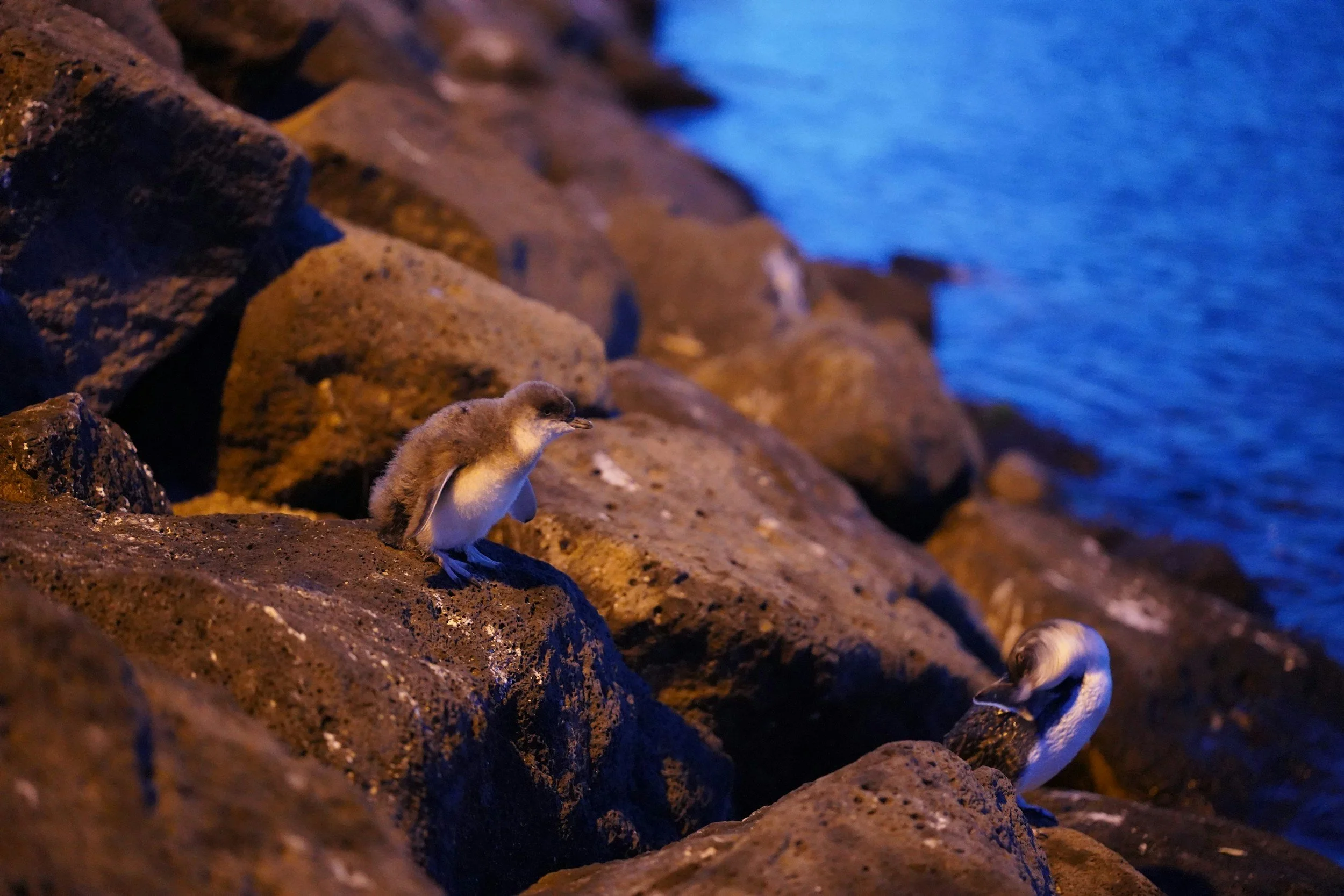
The island is renowned for the nightly Penguin Parade (when thousands of penguins return from the sea to nest). Watching the penguins walk onto the shore was an experience I will never forget.

Special Festivals and Holidays
Chinese New Year (January to February)
Melbourne's Chinatown celebration is one of the most photographic events in the city calendar. The laneways fill with lanterns, lion dances move through the streets, and Federation Square hosts overflow festivities. The combination of lantern light and urban architecture is compelling at night. Arrive early to secure a position along the parade route, and use a fast prime lens or push your ISO for the low-light street scenes. This is what I experienced during my own visit, and the Yarra River lantern decorations during that visit are among my strongest Melbourne images.
Melbourne International Comedy Festival (March to April)
The world's third-largest comedy festival takes over the city for nearly four weeks each autumn. The street energy increases noticeably, flyering in the CBD creates photogenic chaos, and the pop-up venues across every neighborhood give the city an animated, festive quality. The 2026 edition marks the festival's 40th anniversary. Photography inside venues requires permission, but the street energy is open game.
Melbourne Food and Wine Festival (March)
A city-wide celebration that draws chefs, producers, and food media from across Australia and internationally. Pop-up events, market extensions, and restaurant takeovers animate neighborhoods that already have excellent food cultures. Federation Square and the riverfront host major events. Good for food photography and for eating very well for several days straight.
White Night Melbourne (February)
An all-night arts festival that transforms the CBD with light projections, installations, and performances across major buildings and public spaces. Federation Square, Flinders Street Station, and the State Library all become canvases. This is genuinely exceptional for long-exposure photography. Bring your tripod, plan your positions in advance, and expect very large crowds. Wide-angle and ultra-wide focal lengths are your friends here.
Melbourne Cup Carnival (November)
The Spring Racing Carnival turns Melbourne into something else entirely for two weeks. The social pageantry around the racecourse is photographic in ways that go well beyond the races themselves, from elaborate fashion to genuine emotion. The Tuesday of Melbourne Cup week is a public holiday in metropolitan Melbourne. If you are in the city, go to Flemington.
Frequently Asked Questions About Visiting Melbourne
Is Melbourne expensive?
It can be, especially the standout restaurants, but coffee culture and casual dining keep everyday costs reasonable. The free tram zone also removes a real expense that most cities charge for.
Is Melbourne safe?
Yes, it's one of the more relaxed Australian cities to walk in, including the CBD and laneways at night. Normal city awareness covers most of what you need to know.
Do you need a car in Melbourne?
No, not for the city itself. Trams and walking cover the CBD and inner neighborhoods well. You'll want a car only for day trips like the Great Ocean Road or Phillip Island, since public transport doesn't reach those destinations effectively.
What are the best photo spots in Melbourne?
Hosier Lane for street art, Flinders Street Station at blue hour with trams streaking past, and Southbank along the Yarra are three I return to constantly. The full list with Pro Tips is below.
Can you fly a drone in Melbourne?
Only with permits in most cases. CASA governs federal airspace, but local councils add restrictions on top, and flying over the CBD, the Yarra corridors, or the botanic gardens generally requires authorization. Check CASA's drone safety app before any flight.
What surprised you most about photographing Melbourne?
The food culture, especially the coffee shops. It's genuinely one of the best food cities in the world, and it's an incredibly livable city on top of that, the kind of place where you stop noticing how good things are because everyone around you treats it as normal.
How many days do you need in Melbourne?
Four to five days. Four covers the CBD, laneways, and river; five gives you room for a full-day trip to the Great Ocean Road.
Is the Great Ocean Road worth the drive?
Yes, don't rush it. The Twelve Apostles get the attention, but stopping at smaller lookouts and walking down to places like Loch Ard Gorge gives you more intimate compositions than the main viewpoint alone.
Final Thoughts
Melbourne is the kind of city that photographers return to. Not because of one landmark or one famous view, but because the city is built from layers that keep revealing themselves the longer you spend time here. The laneways, the food, the coffee culture, the multicultural neighborhoods, and the genuine creative energy that runs through the whole place.
Not through a single dramatic landmark, but through accumulated texture. A tram rounding a corner with the morning light behind it. A cup of coffee served by someone who genuinely cares about how it was made. A laneway where a wall of street art changed overnight, and nobody has explained why. A park that appears between office buildings as if the city simply decided it needed one there.
We went to Phillip Island on our last afternoon and watched the penguins come in from the sea. Hundreds of them, waddling purposefully up the sand in the last light of the day, completely indifferent to the crowd of humans watching in delighted silence. It is one of the most cheerful things I have seen anywhere. If you do nothing else on your Melbourne trip, do that.
The food will stay with you too. The Cantonese at Flower Drum. The modern Thai at Chin Chin. The flat white at every café you walk into, because there is no such thing as bad coffee in this city. Melbourne is what happens when people from every part of the world decide to make one city their home and bring their best table manners with them.
Come for four days minimum. Come back for more. Walk the laneways. Ride the tram at least once when you do not have to. Give yourself an evening at Southbank for the blue hour on the Yarra. And plan the Attica reservation before you leave home, because you will not get in otherwise.
Melbourne earns every word written about it. Move it to the top of your list. You will not regret it.
If you would like to join a future photography workshop, visit my Workshops page for current offerings and upcoming dates. You can also connect with me on Instagram (@chasinghippoz) and Facebook, or subscribe to the newsletter for travel photography tips, destination guides, and behind-the-scenes stories from more than 75 countries. I look forward to sharing the journey with you.
Planning a trip to Australia and the Pacific? These guides pair naturally with Melbourne.
My Photography & Travel Guide to Sydney, Australia. The natural companion to Melbourne, and only an hour's flight away. Sydney delivers the harbor, the Opera House, and the coastal walks that Melbourne does not have. Together, they tell the full story of urban Australia. Give each city its own time.
My Photography & Travel Guide to Tasmania, Australia. Three hours south of Melbourne by ferry or one hour by air, Tasmania is one of the most rewarding photography destinations in the Southern Hemisphere. Wilderness, Gothic history, exceptional food, and light that belongs in a different category. If you are making the effort to reach this part of the world, Tasmania deserves a dedicated trip.
My Photography & Travel Guide to Bali, Indonesia. A short flight from Melbourne and one of the most photographically rich destinations in Asia. Terraced rice fields, ancient temples, volcanic landscape, and a visual culture that rewards every focal length. The contrast with Melbourne could not be greater, which is exactly why the two destinations complement each other on a longer itinerary.
Finally—a beginner-friendly photography guide that makes sense.
If you've ever picked up a camera and thought, "Now what?" this is the book for you.
Photography Made Simple is written for adults who are just starting out and want a clear, encouraging, real-world approach to learning photography. Whether you're using a DSLR, mirrorless, or just your smartphone, this guide walks you through the basics—without the jargon or tech overwhelm.
Inside, you'll learn:
The only camera settings you really need to know to get started
How to shoot sharper, more intentional photos using light and composition
Simple tips for portraits, landscapes, travel, and everyday life
What gear you do (and don’t) need
How to create better photos without upgrading your camera
You’ll also get practical exercises, cheat sheets, and tips for organizing and editing your images—plus the confidence to shoot off Auto Mode for good.
This is not a textbook. It’s a friendly guide to seeing the world with fresh eyes—and finally capturing what you see the way you imagine it.
📸 Format: PDF download
Pages: 100+
Perfect for: Beginners, hobbyists, and anyone ready to take better photos without the stress