Lake Bled, Slovenia Travel & Photography Guide: Best Photo Spots, Things to Do & Hidden Gems
Some places look better in photographs than they do in person. Lake Bled is not one of them.
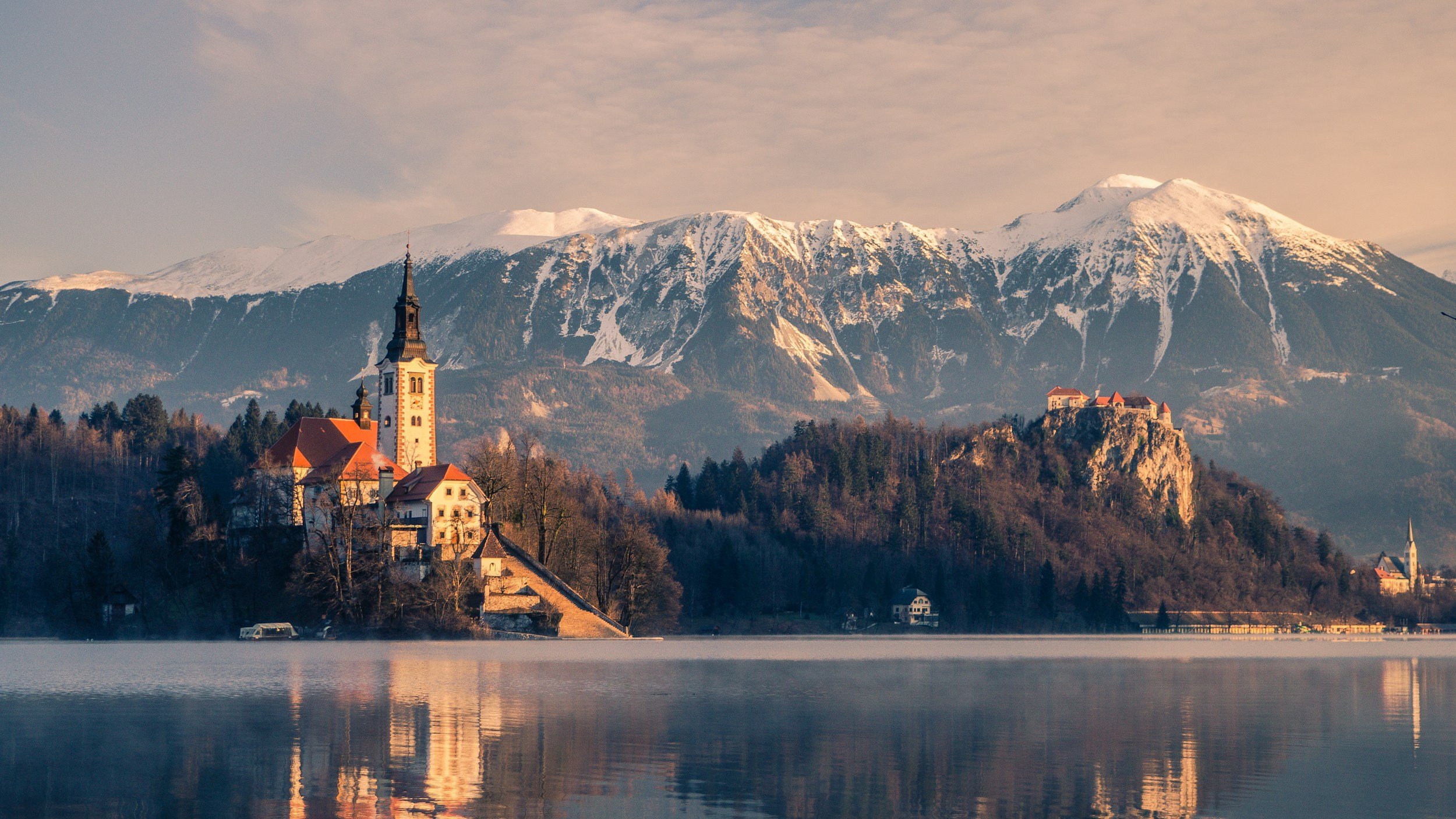
I arrived on my first visit in October, in the late afternoon when the light was already low and golden. I came around a bend in the road and the lake opened in front of me without warning — the emerald water, the island church rising from the center, the castle perched on its cliff above the southern shore, the Julian Alps filling the entire northern horizon with snow-capped peaks. I stopped walking. I stood there for several minutes before I lifted my camera.
That is what Lake Bled does. It earns its reputation the moment you see it.
The combination of elements here is remarkable: a glacier-formed lake with water so clear and so green it barely looks real. A Baroque church on its own island, accessible only by traditional wooden Pletna boats rowed by local oarsmen whose families have held this concession for generations. A medieval castle built in 1011 AD, sitting 130 meters above the southern shore, is the oldest in Slovenia. And surrounding all of it, the first peaks of the Julian Alps, which on still mornings reflect in the water with perfect symmetry.
I came back in September 2023. The lake in late summer is bluer, clearer, warmer — different again from October, when autumn leaves float on the surface, and the mountains are already dusted with snow. Both visits gave me entirely different photographs of the same place. That is Lake Bled's deeper quality: it is not a destination you exhaust. It gives you something new every time.
In this Photography Guide to Lake Bled, I share the places and experiences that continue to draw me back. You will find my favorite photography locations, guidance on when and where to shoot, practical travel tips, and gear recommendations, along with cultural insights to help you explore and photograph Lake Bled with confidence, respect, and ease.

Lake Bled in Autumn
Photographer's Notes
Before you go, here are my own takeaways.
Favorite Season: Autumn
Favorite Location: (confirm: island church, or Ojstrica/Mala Osojnica)
Favorite Hotel: Grand Hotel Toplice
Favorite Restaurant: Strelec Restaurant at Bled Castle
Favorite Lens: 16-35mm f/2.8
Would I Return? Yes, definitely, in the fall.
Where to Stay in Lake Bled, Slovenia
Staying at the lake, rather than day-tripping from Ljubljana, is the single most important decision you can make for photography here. The golden hour at sunset, blue hour after dark, and sunrise from Ojstrica are all only practical if you are sleeping in Bled. The lake is at its most magical and most empty in the early morning and late evening. That is when your best images will be made.
Luxury
Grand Hotel Toplice Cesta svobode 12, Bled | Small Luxury Hotels of the World
The Grand Hotel Toplice has stood on the lakefront since the 1930s, and in nearly a century of operation, it has never given up the finest position on the water. The hotel sits directly on the lake, with private lake access, a dock, and rowing boats available to guests — the only property in Bled where you can step outside and be in the water within minutes. The interiors carry that heritage honestly: original parquet floors, classic European furnishings, and the unhurried rhythms of a grand hotel that values tradition over trend. Rooms with lake-facing balconies are among the most coveted accommodations in Slovenia, and waking up to the island church and the castle above the still morning water, with the Alps beyond, is an experience that justifies every night spent here. Restaurant Julijana serves Slovenian and European cuisine with lake and castle views, and the spa includes a thermal pool filled each morning with natural spring water. For photographers, there is no better base.
Book the lake-view room with a balcony. Reserve well in advance for July and August.
Vila Bled Cesta svobode 26, Bled
President Josip Broz Tito used this villa as his summer residence, and it hosted some of the most significant figures of the 20th century — Winston Churchill, Jawaharlal Nehru, and Queen Elizabeth II, among them. The original furniture, artwork by celebrated Slovenian painters, and the precise formality of a preserved state residence give Vila Bled a quality that no amount of contemporary interior design can replicate. The 30 rooms and suites are furnished in the original 1950s style, some still containing pieces that belonged to Tito, and the private lakeside swimming deck offers a perspective of the lake that is completely unlike the public shoreline. Named "Best Historic Hotel in Central Europe 2024" by Historic Hotels of Europe, it remains the most historically significant hotel on the lake.
Book well ahead. The best suites sell out up to nine months in advance during peak season.
Rikli Balance Hotel Cankarjeva cesta 4, Bled
The most contemporary luxury option on the lake, the Rikli Balance Hotel is an eco-certified property with panoramic lake views from its elevated position, a full wellness center, and a modern Nordic design sensibility that sits apart from the historical properties around it. The floor-to-ceiling lake views and the outdoor infinity area make it the most visually dramatic of the newer hotels. For photographers who want to combine serious work with genuine spa recovery, this is the most complete offering.
Mid-Range
Hotel Triglav Bled Kolodvorska cesta 33, Bled
A well-run hotel with good lake views, a short walk to the lakefront, and the excellent Restaurant 1906 on site, which is one of the finer dining experiences in Bled. A reliable, atmospheric choice with genuine character that punches above its price point.
Bled Rose Hotel Ulica Gradnikove brigade 1, Bled
Stylish, comfortable rooms with lake views and a warm service quality that larger hotels cannot match. Well-positioned for lake access and the main photography locations, and the kind of place where the owners still remember your name.
Hotel Lovec Ljubljanska cesta 6, Bled
Centrally located, welcoming, and consistent. A solid mid-range base for travelers focused on the lake and the surrounding area without the premium of a lakefront property.
How Many Days Should You Visit Lake Bled, Slovenia?
Two full days is the working minimum for a photographer. Three days is the right amount.
Day 1: Arrive in the afternoon. Walk the full lake circuit as a scouting exercise, noting the angles and the light at each position. Ride the Pletna boat to the island, photograph the interior and the view from the church steps, and be back on the southern shore below Grand Hotel Toplice for sunset. Have dinner at Strelec inside Bled Castle.
Day 2: Pre-dawn alarm. Hike to Ojstrica and then Mala Osojnica for sunrise. Take your time — do not rush off the hill the moment the sun clears the mountains. The light continues to develop for 45 minutes after sunrise, and the positions you can shoot from the viewpoints shift as the angle changes. Return to the hotel for breakfast. Afternoon: visit Vintgar Gorge. Book your timed entry slot in advance. Return to the lake for the blue hour.
Day 3: Use this day for what the first two days showed you. Return to the positions that worked. Photograph the island church from a different angle. Take a Pletna boat at golden hour when the afternoon light falls on the church facade from the west. Use the extra time to sit by the lake rather than working on it.
If you have only one day, prioritize the Ojstrica sunrise, the lakeside walk on the southern shore, and the Pletna boat crossing. You will not regret the early alarm.
Best Time of Year to Visit Lake Bled, Slovenia
Lake Bled is beautiful in every season, but the timing of your visit shapes everything about the photographs you will make.
Spring (April to May) is when the crowds are low and the Julian Alps still carry snow. The lake is cold and deep blue, the surrounding forests are vivid green, and the light has a clarity that July cannot match. Early April can still bring cool mornings, but the trade-off — a quiet lake, empty viewpoints, and dramatic sky — is well worth it. May is ideal: warm enough to walk the lake comfortably, still uncrowded enough to have Ojstrica to yourself at sunrise.
Summer (June to August) is peak season, and the lake earns it. The water turns its most intense turquoise-green, the Julian Alps are clear, and the long summer evenings extend golden hour late into the night. The trade-off is crowds — Ojstrica at sunrise can have 20 or more photographers jostling for position by 6 am in July, and Vintgar Gorge requires timed entry tickets booked well in advance. If you visit in summer, the answer is simple: be earlier than everyone else. Arrive at Ojstrica before 5 am. You will have the viewpoint entirely to yourself.
Autumn (September to October) is the season I love most. The summer tourists are largely gone, the temperatures are ideal for walking, and the autumn colors around the lake — orange, yellow, bronze — create a completely different palette from summer. In late September, leaves begin to float on the lake surface and you can photograph the island church surrounded by autumn reflections. October brings a real chance of morning mist sitting low over the water, which transforms the early-morning lake into something that feels like a dream. Both of my visits were in autumn, and both produced my favorite Lake Bled images.
Winter (November to March) is quieter still and can be extraordinary on the right day. When the lake partially freezes and the Alps are white above a still, dark water, Bled in winter looks like a scene from a fairy tale. The risk is cloud cover and grey light for days at a time. Winter rewards patience and is best suited to photographers who can wait out the conditions.
Getting Around Lake Bled, Slovenia
Lake Bled is small and almost entirely walkable. The town center, the lake promenade, Bled Castle, and the starting point for the Ojstrica trail are all within walking distance of each other. For most photographers, your feet are your primary transport.
Walking the lake circuit is the single best way to orient yourself. The full loop is 6 kilometers and takes about 90 minutes at a relaxed walking pace, though plan for double that if you stop to photograph, which you will. The path is flat, paved, and accessible from any point on the lake.
Bikes are available to rent at multiple shops in the town center and are a practical option for moving between locations more quickly, particularly if you are planning early morning and late evening shoots on opposite sides of the lake.
Taxis and ride-hailing operate in Bled. Bolt is available and works reliably for trips to Vintgar Gorge or the Ljubljana airport. For the Ojstrica trailhead at Camping Bled, a 15-minute walk from the town center, it is not worth calling a car.
To and from Ljubljana, the bus connection is fast and reliable, running roughly every hour and taking about 45 to 55 minutes. The bus drops at Bled's central stop, which is a short walk to the lake. If you are arriving with significant camera gear, the bus is more practical than the train, which stops at Lesce-Bled station, about 4 kilometers from the lake.
Car rental is worth considering if you plan to visit Lake Bohinj, the Soča Valley, or the Triglav National Park as day trips from Bled. For the lake itself, you do not need one.

The Path Around the Lake
Where to Eat in Lake Bled, Slovenia
Eating at Lake Bled is a pleasure, but not a complicated one. The cuisine is rooted in the Slovenian alpine tradition: freshwater trout from the local rivers, hearty stews and grilled meats, mushroom dishes from the surrounding forests, and the dairy-rich cooking of the Julian Alps. The lake setting elevates even a simple lunch.
One culinary experience at Lake Bled is non-negotiable: the kremšnita. Do not leave without eating one.
The Kremšnita — The Bled Cream Cake
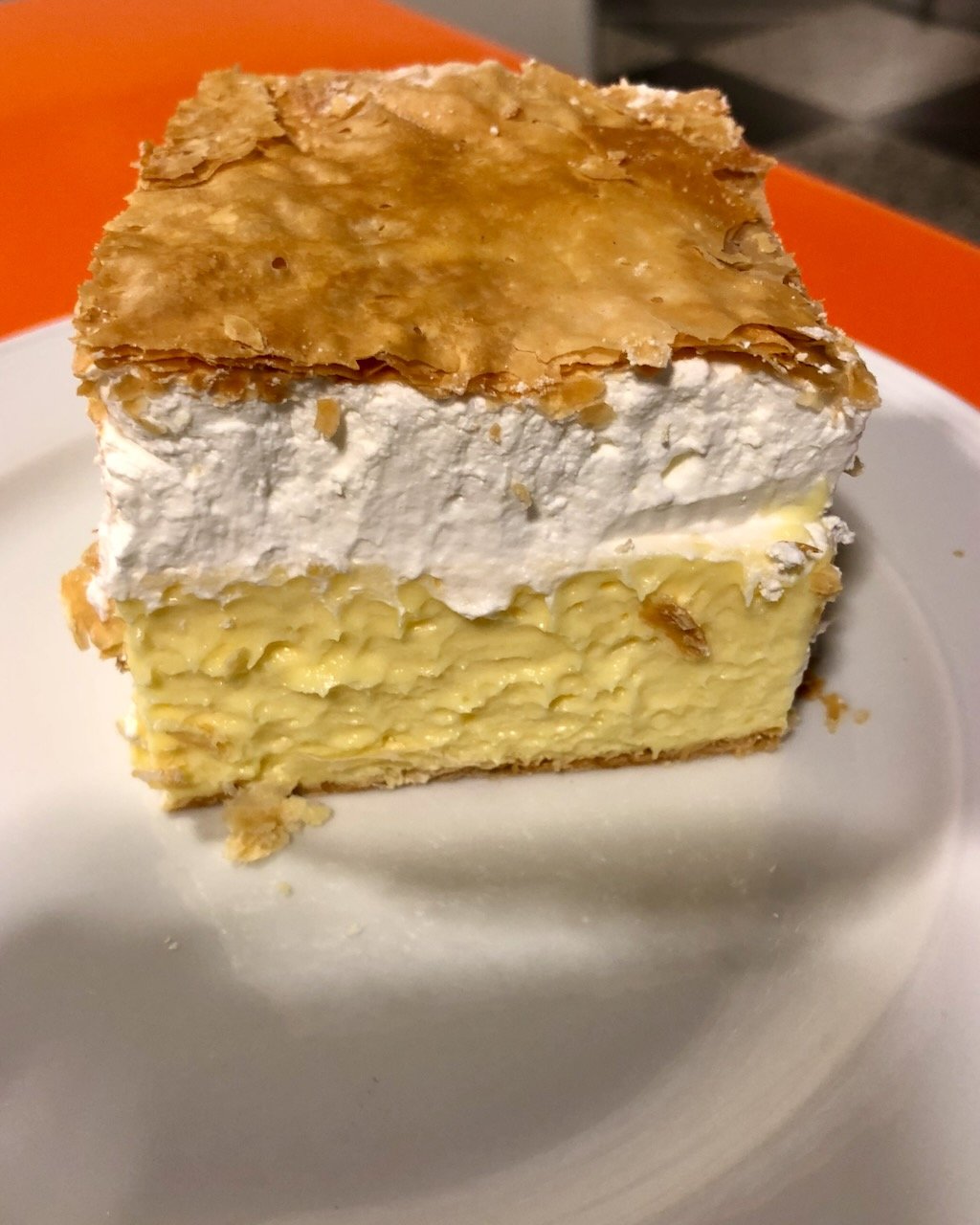
The kremšnita is the signature dish of Lake Bled and one of the most celebrated pastries in Slovenia. A double layer of light vanilla custard cream between a flaky pastry base and a whipped cream top, dusted with icing sugar and served cold — it was created in 1953 at the Park Café specifically for the guests of Lake Bled, and the original recipe has never changed. Every café in Bled serves a version. Only two serve the original.
Strelec Restaurant at Bled Castle Grajska cesta 61, Bled Castle
Dining inside a medieval castle perched 130 meters above a glacial lake, with the Julian Alps framing the windows, is not an ordinary evening. The kitchen serves contemporary Slovenian cuisine with an emphasis on local ingredients from the alpine region, and the wine list concentrates on Slovenian producers. This is the right choice for a special dinner in Bled. Reserve ahead, and request terrace seating when you book.
Restaurant 1906 at Hotel Triglav Kolodvorska cesta 33, Bled
Named for the founding year of Hotel Triglav, Restaurant 1906 is one of the more refined dining rooms in Bled, with lake views and a menu that takes Slovenian and European cooking seriously. A strong choice for a longer, more formal dinner.
Gostilna Pri Planincu Grajska cesta 8, Bled
The most authentic traditional Slovenian meal in Bled, served in a warm, unpretentious gostilna (inn) that has been feeding locals and visitors for generations. Order the jota — the hearty bean and sauerkraut soup — or the slow-roasted lamb if it is on the board. No reservations needed for lunch; arrive early for dinner.
OkarinaLjubljanska cesta 8, Bled
The most eclectic menu in Bled, with a creative mix of Slovenian, Mediterranean, and Indian-influenced dishes that give vegetarians and pescatarians more interesting choices than most lakeside restaurants offer. A reliable, welcoming option with consistently good cooking and a loyal local following.
Sova Bled Cesta svobode 17, Bled
A lakeside restaurant with outdoor terrace seating and views of the island, serving a menu that balances local Slovenian specialties with Mediterranean flavors. For a relaxed lunch with the lake in view, Sova is one of the best positions on the waterfront.
Coffee
Park Café at Park Hotel Bled holds the definitive kremšnita recipe — this is the birthplace of the original, and ordering one here is part of the Lake Bled experience. Good coffee, lake-facing terrace, and a steady stream of locals alongside the tourists.
Café Belvedere at Vila Bled offers the second-best kremšnita in a historic lakeside pavilion setting with excellent views. The atmosphere of Tito's former summer residence makes the coffee taste better than it probably should.
Slaščičarna Zima in the town center is a local bakery and pastry shop that most tourists walk right past. Stop here for coffee and house-made pastries before an early hike. It opens early, which matters when you have a 5 am alarm set.
The Famous Bled Cream Cake
Photography Gear to Bring to Lake Bled, Slovenia
I shoot with the Canon EOS R5 Mark II as my primary body and bring two lenses that cover the full range of what the lake offers.
The 16–35mm f/2.8 is essential for the elevated viewpoints — Ojstrica and Mala Osojnica — where you need every millimeter of width to capture the full sweep of the lake, the island, the castle, and the Alps in a single frame. It is also the right lens for Vintgar Gorge, where the canyon walls rise above you on both sides.
The 70–200mm f/2.8 is the other workhorse. From the southern shore, it compresses the island church and the castle above the cliff into a single layered composition that is Lake Bled's defining photograph. From the elevated viewpoints, it reaches into the mountain faces and brings distant Alpine detail into the frame.
A tripod is non-negotiable at Lake Bled. The pre-dawn hike to Ojstrica requires it. The blue-hour lake reflections require it. The long exposures at sunset on the lakeshore require it. Do not attempt the sunrise viewpoints without one.
Bring a circular polarizer — it cuts the surface glare on the lake and deepens the extraordinary green of the water in a way that is immediately visible in the viewfinder. Rotate it slowly and watch the lake transform.
A 3-stop ND filter handles slow-shutter long exposures during the day if you want to smooth the water surface on the promenade or slow down the Pletna boats as they cross. A 6-stop ND is useful for stronger midday compression.
Pack a headlamp for the pre-dawn Ojstrica hike. The trail is well-worn but steep, and you will be climbing in complete darkness. This is not optional — going without one is genuinely risky on the rocky upper section.
Bring extra batteries. Cold alpine mornings drain batteries faster than you expect, and you will be shooting continuously from before sunrise through mid-morning.
iPhone Tips for Lake Bled
If you are shooting with an iPhone, Lake Bled is one of the most cooperative destinations in Europe. The scenes here are strong enough to carry the image — your job is positioning, timing, and patience.
Use the ultrawide camera from Ojstrica and Mala Osojnica. The wide angle captures the full panorama without distortion at the edges, and the scene is grand enough to warrant every pixel of the sensor. Shoot in ProRAW if your model supports it — the tonal range of an alpine sunrise has serious latitude in post.
Use Portrait Mode on the Pletna boat. As the oarsman rows and the castle comes into view behind him, Portrait Mode separates the subject from the background beautifully. The light on the water and the castle creates exactly the bokeh conditions where the iPhone Portrait engine performs best.
Shoot reflections in the early morning from the southern shore below Grand Hotel Toplice. Get low — crouch down as close to the water's surface as you can physically get. The iPhone ultrawide at ground level, pointed slightly across the surface, creates a reflection shot that rivals what you can do with dedicated gear.
Lock exposure on the sky. In the morning, the sky is dramatically brighter than the lake and the foreground. Long-press on the sky to lock exposure and focus, then move the frame to compose the shot. This keeps the clouds from blowing out while the lake goes slightly dark — which looks better than a bright, featureless sky.
Drone note: Drone photography is permitted at Lake Bled, including from the Ojstrica area. The top-down view of the island from above is one of the classic Lake Bled compositions. Check current regulations and any Triglav National Park restrictions before flying, as rules in the wider park area apply and change. Always fly responsibly around the island church and the Pletna boats.
Photography Locations in Lake Bled
The views from the south side of the lake to Bled Castle are the best. My recommendation is to walk around the entire lake. It is very picturesque, and there are plenty of places to stop. You will get the best photos from where I marked Fotopunkt.

Bled Castle (Blejski Grad)
Perched on a 130-meter cliff above the southern shore, Bled Castle is the oldest castle in Slovenia. Records of the property date to 1011 AD. The current structure, a mixture of Gothic and Renaissance elements, houses a museum, a working wine cellar, a print workshop, and the castle restaurant. For photographers, the castle is both a subject and a platform.
The view over the lake from the castle terrace — looking down toward the island church, with the Karawanks mountain range visible to the north on clear days — is one of the most elevated perspectives available at Bled. From lake level, the castle itself reads as a powerful vertical subject above the treeline, particularly in the late afternoon when the cliff face is lit from the west.
📷 Pro Tip: From the lake level, photograph the castle in the late afternoon when the sun falls from the west and illuminates the cliff face and battlements from the side. A 70–200mm from the eastern shore compresses the castle above the treeline without including too much foreground. From the castle terrace itself, a 16–35mm captures the full panorama of the lake and island below — set up at the terrace railing and shoot both standard and portrait orientations. The castle interior courtyard, with its medieval stone, the mountain backdrop visible over the walls, and the warm afternoon light, is a strong secondary subject. Combine the visit with the wine cellar tasting, which takes you into the most atmospheric part of the structure.
Best time: Late afternoon for the cliff face and battlements in warm light; any clear morning for the view from the terrace. Access: €15 adults. Open daily 8 am to 8 pm in summer. 20-minute walk uphill from the lake promenade, well-signposted.

I loved taking photos of the church from the opposite side of the lake as I walked around.

Bled Island and the Church of the Assumption
At the heart of Lake Bled stands the Church of the Assumption — a Baroque church whose origins date to the 8th century, with the current structure built in the 17th century. The 99 stone steps from the dock to the church entrance are steeped in local tradition: it is said that if a groom can carry his bride up all 99 steps and ring the church bell, their marriage will be blessed with happiness. The bell is rung for every wish that visitors ring it with.
If there is one subject to photograph at Lake Bled, this is it. The church seen from the opposite shore, reflected in the still morning water, is one of the defining images of Slovenia.
You reach the island by Pletna boat — the traditional wooden gondola-style boats rowed by local oarsmen whose families have held the concession for generations. The crossing takes about 15 minutes. Boats depart from multiple points around the lake. Motorboats also operate but the Pletna is the traditional and most photogenic option.
📷 Pro Tip: The island photographs completely differently depending on where you stand on the lake. From the southern shore near Grand Hotel Toplice, a 70–200mm lens compresses the island and the castle above it into a tight, layered composition. From the path below Ojstrica on the western shore, a 24–50mm captures the island with the Julian Alps behind it in full panorama. From the Pletna boat itself on the crossing, shoot back toward the castle with the water in the foreground — a 24–70mm handles the changing perspective as you approach. Inside the church, photography is permitted. The interior is modest but the view from the church steps over the lake and toward the castle from the island's elevated position is one of the finest views at Bled.
Best time: Early morning from the shore before the tourist boats begin. Late afternoon for the warm light on the church facade. Access: Pletna boats from the Grand Hotel Toplice dock, Mlino, and the main lakefront. Confirm current schedules at the lake.

A Long Exposure at Sunset
You can also visit the Island by taking the traditional Pletna boat, or motor boats.

The Pletna Boats
The serene boat ride offers panoramic views of the surrounding mountains, and the medieval Bled Castle perched high on a cliff, making the experience unforgettable.

It's just a stunning location from every angle.

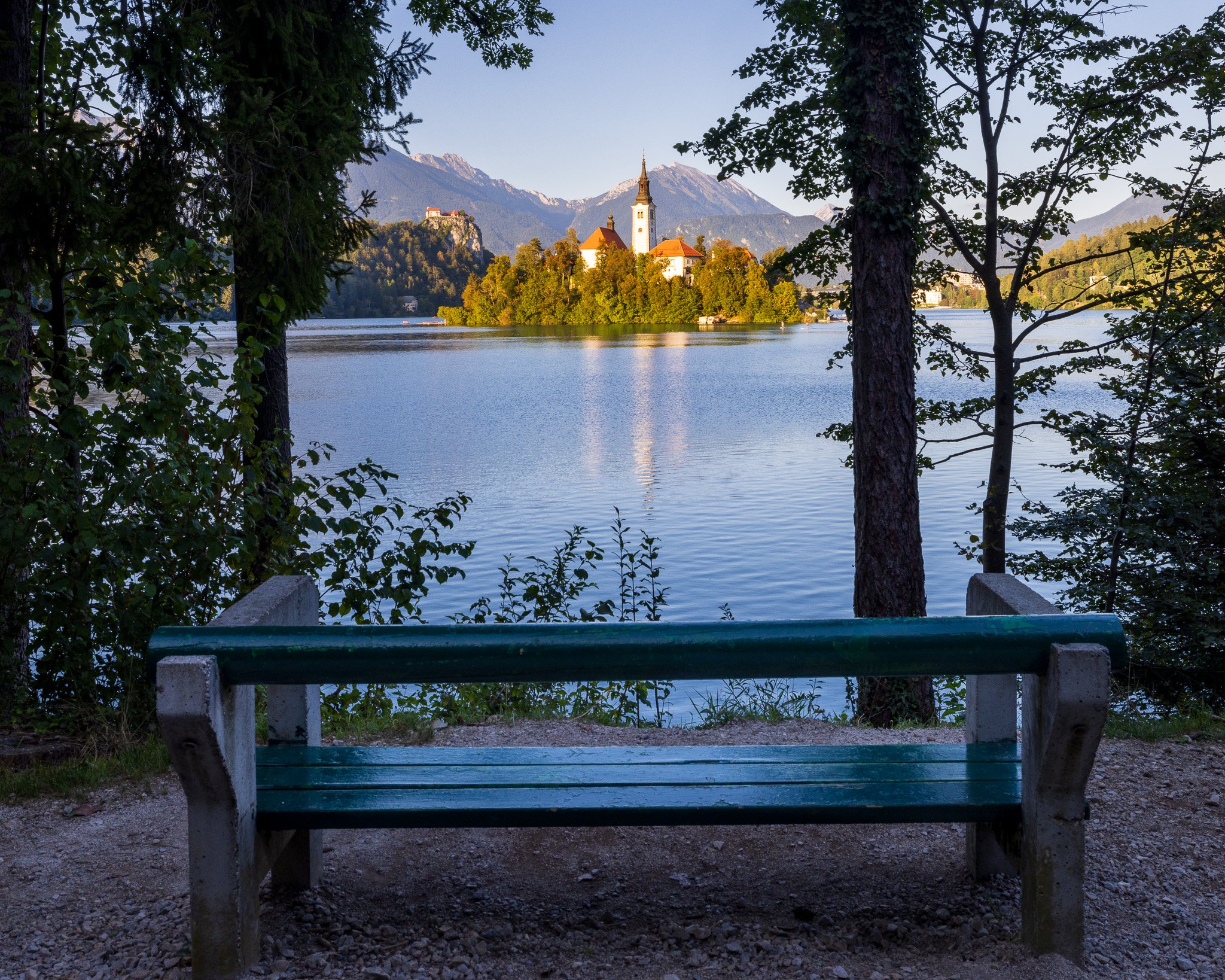
I love seeing the Church peaking through the pathway.

In the Fall, with tree leaves in the water, it made for another nice perspective.

The combination of lush greenery, crystal-clear waters, and the striking architecture of the Church of the Assumption provides endless opportunities for stunning shots.

Mala Osojnica Viewpoint
Mala Osojnica, at 670 meters, sits approximately 20 minutes further along the same trail from Ojstrica and offers a slightly elevated, slightly different perspective that many serious landscape photographers prefer. From here, the island church, the castle above the cliff, and Mount Stol align in a tighter, more compressed composition. The viewpoint is less known than Ojstrica and therefore meaningfully less crowded in the early morning.
The difference between Ojstrica and Mala Osojnica is subtle but real. Ojstrica is wider and more cinematic — great for the sweeping panorama. Mala Osojnica is more concentrated, with the three key elements stacking vertically in a cleaner arrangement. If you only have time for one, Ojstrica is the more accessible and versatile starting point. If you have good legs and arrive early enough, combine both in a single pre-dawn session.
📷 Pro Tip: Climb to Ojstrica first for sunrise, then continue to Mala Osojnica as the light develops — the 20 minutes between viewpoints is manageable at any reasonable fitness level. From Mala Osojnica, a 50–85mm is ideal for the vertical composition that stacks the island, the castle, and the mountain behind them into a single frame. A circular polarizer deepens the green of the lake below and reduces haze on the mountain faces; remember to re-adjust your polarizer if you shift from horizontal to vertical framing, as the polarization effect changes with composition angle. Bring the same headlamp you used for the uphill climb.
Best time: Sunrise through mid-morning. Access: Free. Continue past Ojstrica on Trail #6; follow signs for "Velika Osojnica," which passes Mala Osojnica.

The Heart of Bled Viewpoint
This small elevated clearing on the southwestern shore of the lake, marked on some maps as the "Heart of Bled" viewpoint, offers a directly downward-facing perspective of the lake and island that is dramatic from above — the characteristic aerial view that works so strongly as a composition. The access requires a short trail from the lakeside path.
📷 Pro Tip: This viewpoint is best suited for a wide-angle lens (16–24mm), looking almost straight down toward the lake. The compression of the water, the island, and the surrounding shoreline from this elevated but not extreme position creates a different kind of Lake Bled photograph from the classic horizon-level shots. Come in the morning when the lake surface is calm, and the light from the east falls across the water at an angle.
Best time: Morning for the light direction and calm water.

The Lake Shore Promenade
The path around the entire lake is 6 kilometers, takes roughly 90 minutes to walk, and is one of the finest lakeside walks in Europe. I recommend doing the full circuit at least once. The path is flat, paved, and accessible at every point — but the photography opportunities change dramatically as you move around the lake, and the angles on the island, the castle, and the mountains shift constantly.
The southern shore, between Grand Hotel Toplice and the Vila Bled area, offers the most direct castle-above-the-cliff compositions. The eastern end of the lake, near the Bled campsite, is the starting point for the Ojstrica and Mala Osojnica trails. The northern shore provides wide-angle mountain backdrop shots with the Alps above the far shore. The western end gives you the classic island-with-Alps composition.
📷 Pro Tip: Walk the full circuit with your camera and treat it as a scouting exercise on your first day. Note the positions that work at different times of day and return for them during the right light window. The section of the southern shore below the castle is the single most productive stretch — the direct sightline to both the island and the castle from lake level, with the reflection in still morning water, is where the classic Lake Bled photograph is made. A 70–200mm lens from this position compresses the island and castle into a single, layered composition. Come before 7 am.
Best time: Before 7 am for the morning mist and the empty path. Any clear day for the complete circuit.

I kept stopping every few minutes to take in the views and take photos.

I definitely need to go back again in the Fall. The first time I visited was in the Fall and colors were beautiful around the lake.

There are just endless shots to take of the lake and mountains.

Vintgar Gorge
Located about 4 kilometers north of Lake Bled, the Vintgar Gorge is one of the finest natural photography subjects in Slovenia. The Radovna River has carved a 1.6-kilometer canyon through the limestone rock, and the wooden boardwalk built above and alongside the river gives you extraordinary access to the water at every level. The canyon walls rise 100 meters above you in places. The water is the most vivid shade of turquoise-green I have ever seen in a river, almost impossibly clear over the white rock bed below.
I have never seen anything quite like it.
📷 Pro Tip: Wide-angle and telephoto lenses both work well in Vintgar Gorge. A 16–24mm captures the scale of the canyon walls rising above the boardwalk. A 50–105mm isolates the water's color and texture at specific points — look for the sections where the river runs over cascades or pools in deep turquoise eddies. The light in the gorge is best in the morning when the sun is low, and the canyon walls are not in full overhead shadow. Come before 10 am on a weekday to avoid the peak visitor flow. The end of the gorge at Šum Waterfall is the most dramatic single subject — a 24–50mm captures the full waterfall with the canyon above.
Best time: Morning, before 10 am. Open May to October. Access: 4 km from Bled town center. Follow the signs from the lake road. Admission charged.
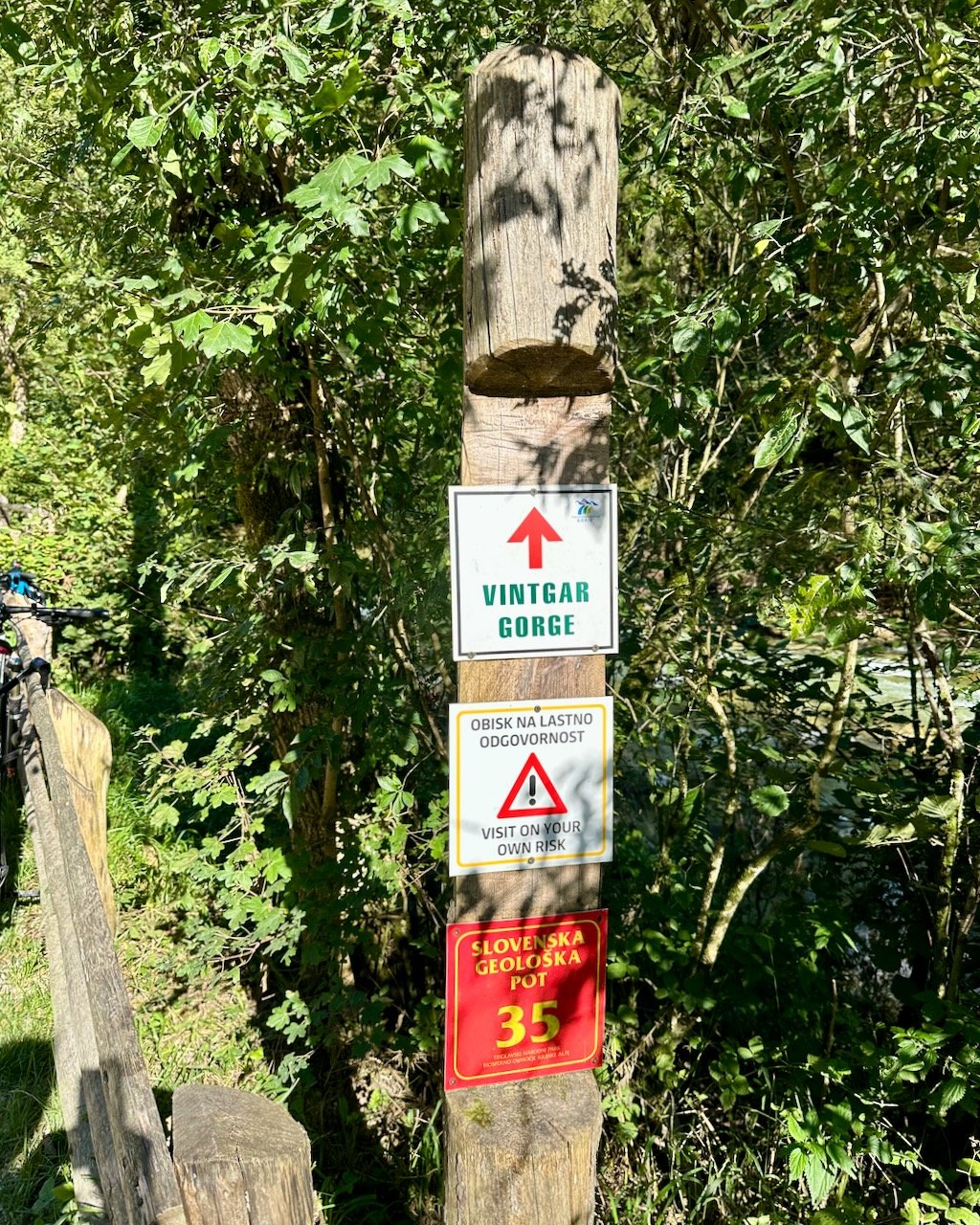
Carved by the Radovna River, the gorge stretches over 1.6 kilometers and offers visitors a stunning display of crystal-clear waters, lush vegetation, and dramatic rock formations. It’s a must-visit destination for nature lovers, hikers, and photographers alike.

As you walk the walking trail at Vintgar Gorge, you’ll be surrounded by the unspoiled beauty of nature. The water in the gorge is so crystal clear. I have never seen anything like it.

Special Festivals and Holidays
Bled Days and Bled Night (July) — A summer festival centered on the lake with local crafts, food, live music, and a fireworks display over the water. The fireworks photograph beautifully from the eastern shore using a long exposure; set up near Camping Bled with the island and castle in the frame and let the reflections do the work.
Okarina International Music Festival (July to August) — An outdoor music festival that stages performances in scenic locations around the lake, including the castle courtyard. The combination of live music and the medieval setting creates real documentary photography opportunities. The crowds are manageable compared to the peak daytime tourist traffic, and the evening light during the later performances is excellent.
Christmas Market (December) — Festive market stalls, ice skating on the lakefront, and holiday lights along the promenade. Bled in December is genuinely beautiful — the crowds thin dramatically, the Christmas lights reflect in the lake water, and on clear winter evenings the scene is as photogenic as anything the summer offers. Dress warmly.
Frequently Asked Questions About Visiting Lake Bled
Do you need a car to visit Lake Bled?
Not for the lake itself, everything is walkable from the town center. A car becomes useful only if you're adding day trips to Lake Bohinj, the Soča Valley, or Triglav National Park.
Is Lake Bled worth staying overnight, or is a day trip from Ljubljana enough?
Stay overnight, don't just day-trip it. The golden hour at sunset, blue hour after dark, and sunrise from the elevated viewpoints are only practical if you're sleeping in Bled, and that's when the lake is at its most magical and most empty.
What are the best photo spots at Lake Bled?
The island church reflected from the southern shore, Bled Castle from the lake level at late afternoon, and Vintgar Gorge's turquoise water are three that consistently deliver. The full list with Pro Tips is above.
Can you fly a drone at Lake Bled?
Yes, generally, including from the Ojstrica area, and the top-down view of the island is a classic composition. Check current Triglav National Park regulations before flying, since rules in the wider park area apply and can change.
What surprised you most about Lake Bled?
That it's not a destination you exhaust. It gives you something new every single time. My two visits, one in October, one the following September, produced entirely different photographs of the exact same place, and I still feel like I haven't finished with it.
How many days do you need at Lake Bled?
Two full days is the working minimum. Three is the right amount if you want to shoot the elevated viewpoints, the island, Bled Castle, and Vintgar Gorge without rushing between them.
Is Vintgar Gorge worth the extra time?
Yes, absolutely. It's one of the finest natural photography subjects in Slovenia, a turquoise river carved through limestone with a boardwalk giving you access at water level. Book your timed entry slot in advance; it's open May through October only.
Is Lake Bled worth combining with Ljubljana?
Yes, they're a natural pair, just 45 minutes apart. Start in Ljubljana for the medieval old town and the Triple Bridge, then drive to Bled for the lake and mountains.
Final Thoughts
Lake Bled is one of those places that almost feels unreal when you first see it. The emerald water. The tiny island church rises from the center. The Julian Alps stand quietly in the background. It looks like a painting, and it is very real and very photogenic.
What I love most about photographing Lake Bled is how much it rewards patience. Sunrise here is pure magic. When the morning mist floats across the water, and the light begins to touch the church tower, you feel like you are witnessing something arranged just for you. If you are willing to set an alarm and climb that hill, you will often have the lake almost entirely to yourself. Bring your tripod. Slow down. Let the scene unfold.
I came back twice because the first visit was not enough. The second visit was not enough either. Lake Bled is that kind of place.
Want to improve your photography while exploring some incredible destinations? Join me on one of my photography workshops! You can find all the details, including upcoming destinations and dates, through the links below.
Let's Stay Connected!
Here is where I would go next.
My Photography & Travel Guide to Ljubljana, Slovenia Forty-five minutes by car or bus from Bled. The Triple Bridge at blue hour, Ljubljana Castle at golden hour, and the Plečnik-designed architecture that makes Slovenia's capital unlike any other European city. Start in Ljubljana, then drive to Bled for your second night.
My Photography & Travel Guide to Vienna, Austria Four hours north by car or train. Schönbrunn Palace at golden hour, the Naschmarkt at morning light, and the Belvedere reflected in its formal garden pool. An elegant next chapter for any Central European photography trip.
My Photography & Travel Guide to the Dolomites, Italy Three hours west by car. Tre Cime di Lavaredo at sunrise, the meadows of Alpe di Siusi at golden hour, and the most dramatic mountain light in Europe. A natural extension of any Alpine photography trip that begins at Lake Bled.
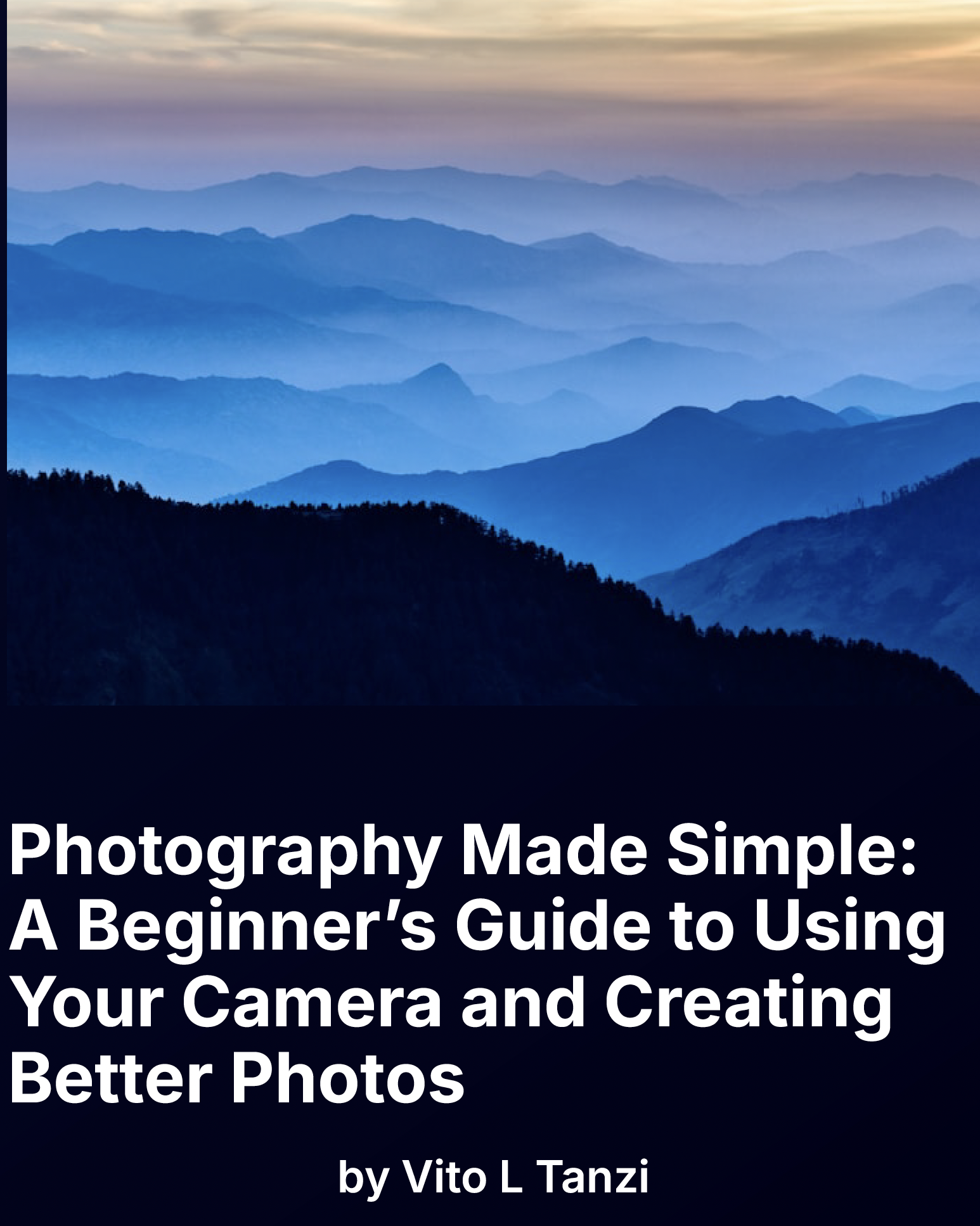
Finally—a beginner-friendly photography guide that makes sense.
If you've ever picked up a camera and thought, "Now what?" this is the book for you.
Photography Made Simple is written for adults who are just starting out and want a clear, encouraging, real-world approach to learning photography. Whether you're using a DSLR, mirrorless, or just your smartphone, this guide walks you through the basics—without the jargon or tech overwhelm.
Inside, you'll learn:
The only camera settings you really need to know to get started
How to shoot sharper, more intentional photos using light and composition
Simple tips for portraits, landscapes, travel, and everyday life
What gear you do (and don’t) need
How to create better photos without upgrading your camera
You’ll also get practical exercises, cheat sheets, and tips for organizing and editing your images—plus the confidence to shoot off Auto Mode for good.
This is not a textbook. It’s a friendly guide to seeing the world with fresh eyes—and finally capturing what you see the way you imagine it.
📸 Format: PDF download
Pages: 100+
Perfect for: Beginners, hobbyists, and anyone ready to take better photos without the stress