Bruges, Belgium Travel & Photography Guide: Best Photo Spots, Things to Do & Hidden Gems
Bruges had been on my photography bucket list for years, and the moment we arrived, I understood immediately why.
We checked into the Hotel Van Cleef on the canal, and the owners came out to welcome us personally. That kind of warmth sets the tone for a stay, the way nothing else can. The hotel is right on the water in the historic center, and from the moment you step outside, you are inside one of the most beautiful cities in Europe. Medieval guild houses, Gothic spires, cobblestone lanes, and canals threading quietly between all of it. Bruges was preserved so completely while the rest of Europe modernized around it that the whole city now feels cinematic in a way that no single photograph fully captures.
I have been to Bruges five times. I know this city well, and it rewards every return visit with something new.
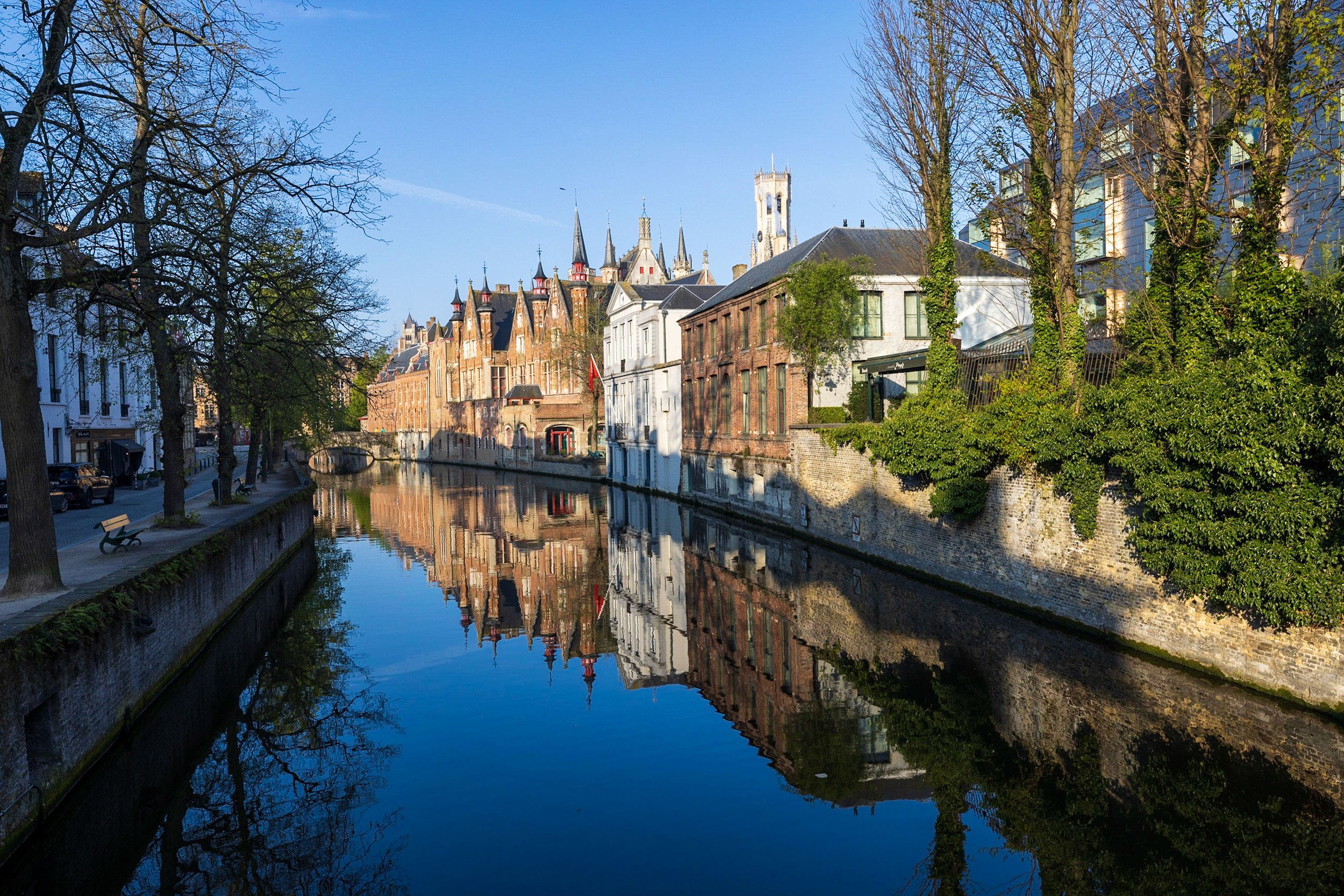
Bruges is larger than Ghent and draws more visitors, but it absorbs them more easily than you would expect. The key is timing. Arrive early in the morning or stay into the evening after the day visitors leave, and Bruges becomes something else entirely. The canals go still. The Belfry rises against a dark sky. Rozenhoedkaai at blue hour is one of the finest photography experiences in northern Europe.
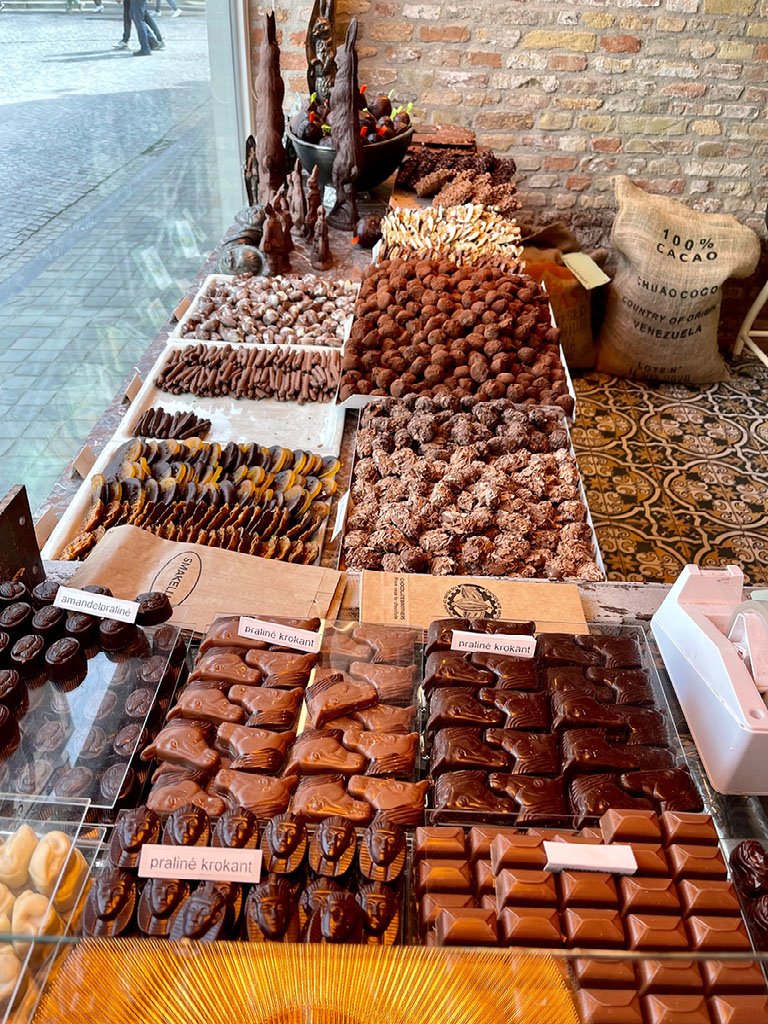
And yes, it is Belgium, so there is an embarrassment of chocolate, Belgian fries, and beer to work through. Consider it a professional obligation.
In this Photography Guide to Bruges, I share what five visits to this city have taught me. You will find my favorite photography locations, hotel recommendations, the restaurants worth planning around, practical travel tips, and the specific timing advice that separates a good Bruges visit from a great one.
Photographer's Notes
Before you go, here are my own takeaways.
Favorite Season: Spring
Favorite Sunrise/Sunset Location: Rozenhoedkaai
Favorite Neighborhood: The historic center
Favorite Hotel: Hotel Van Cleef
Favorite Restaurant: De Verloren Hoek
Favorite Café: Vero Caffè
Favorite Lens: 15-35mm f/2.8
Would I Return? Absolutely.
Bruges or Ghent? Why Not Both?
When you hear of Bruges, you often hear about Ghent in the same breath. The debate is a waste of energy. They are only 45 minutes apart, yet very different cities, and both are beautiful in their own ways. I have a full Photography Guide to Ghent as well. If you have the time, visit both.
So, Where is Bruges Located?
Bruges sits in the Flemish region of Belgium, in the west of the country, about a three-hour drive from Amsterdam. The closest major airport is Brussels Airport (BRU), and most visitors take the train directly to Bruges. The ride from the airport takes roughly 90 minutes. The city has about 100,000 residents, which makes it small, compact, and very easy to navigate on foot.

Best Time to Visit Bruges
Spring (April and May) is the sweet spot for photographers. Tulips and daffodils appear in the gardens around Begijnhof and Bonifaciusbrug; the light is soft and clean, and the crowds have not yet reached summer levels. Early April mornings can have mist on the canals, which turns an already strong shot into something genuinely special.
Fall (September and October) runs a close second. The tourists thin out, the low-angle light produces long, warm shadows across the cobblestones, and the city takes on a quieter, more contemplative feel.
Summer (June through August) brings the heaviest crowds and the longest days. Golden hour light in June lasts until nearly 10 PM, which is useful for photography, but Rozenhoedkaai and Markt Square can be shoulder-to-shoulder during the day. Worth visiting, but prioritize early mornings and evenings.
Winter (November through January) transforms Bruges in a different way. The Bruges Winter Glow light festival runs from late November into early January and turns the city into something out of a fairy tale, with large-scale light installations, a Christmas market, and ice skating on the Minnewater. The cold keeps casual tourists away, and the atmosphere is genuinely special for photography.
Where to Stay in Bruges
Stay in the historic center. Full stop. Everything worth photographing is within walking distance, and the neighborhoods closest to the canals give you immediate access at sunrise and blue hour when the light is at its best.
Luxury Hotels in Bruges
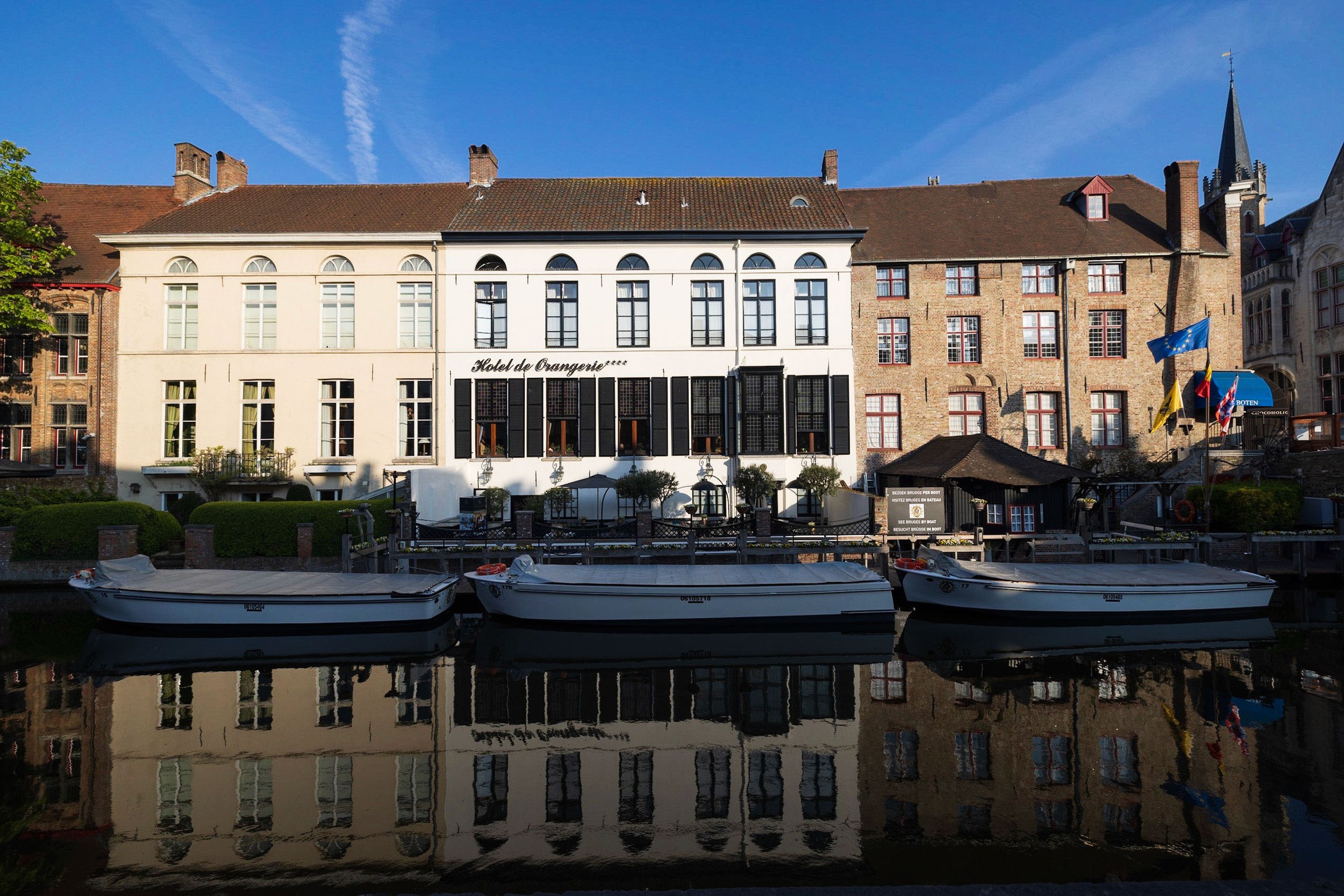
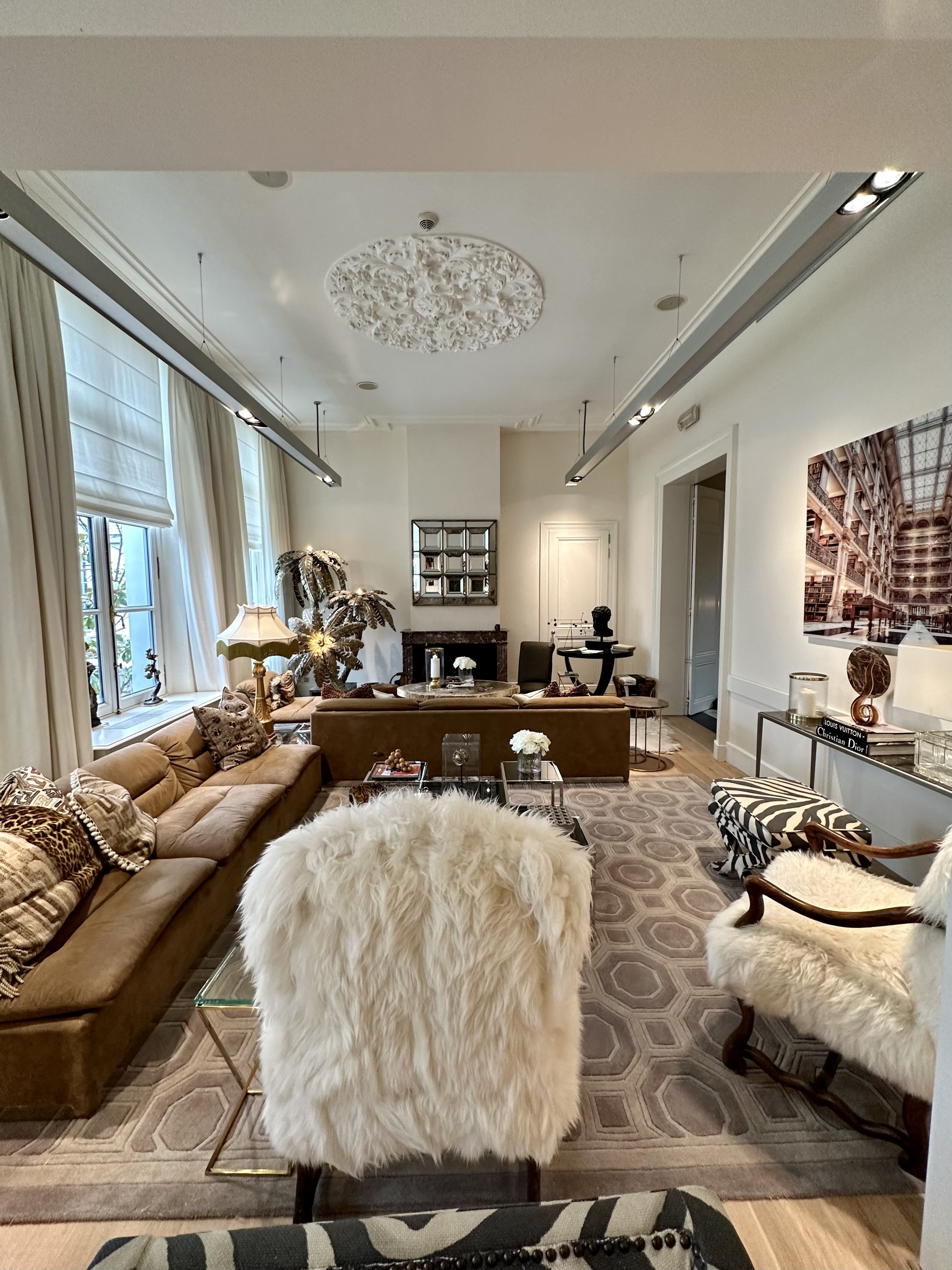
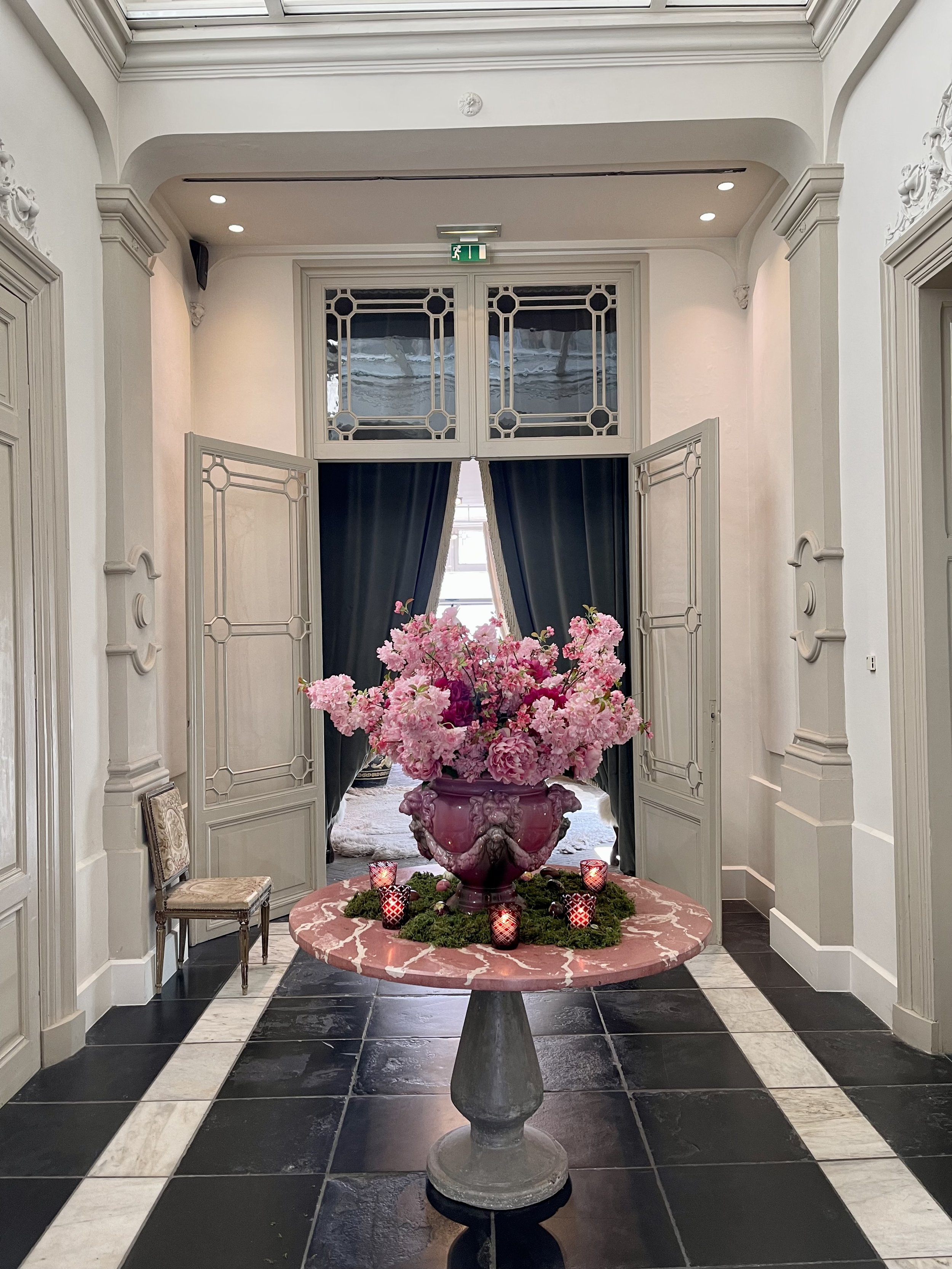
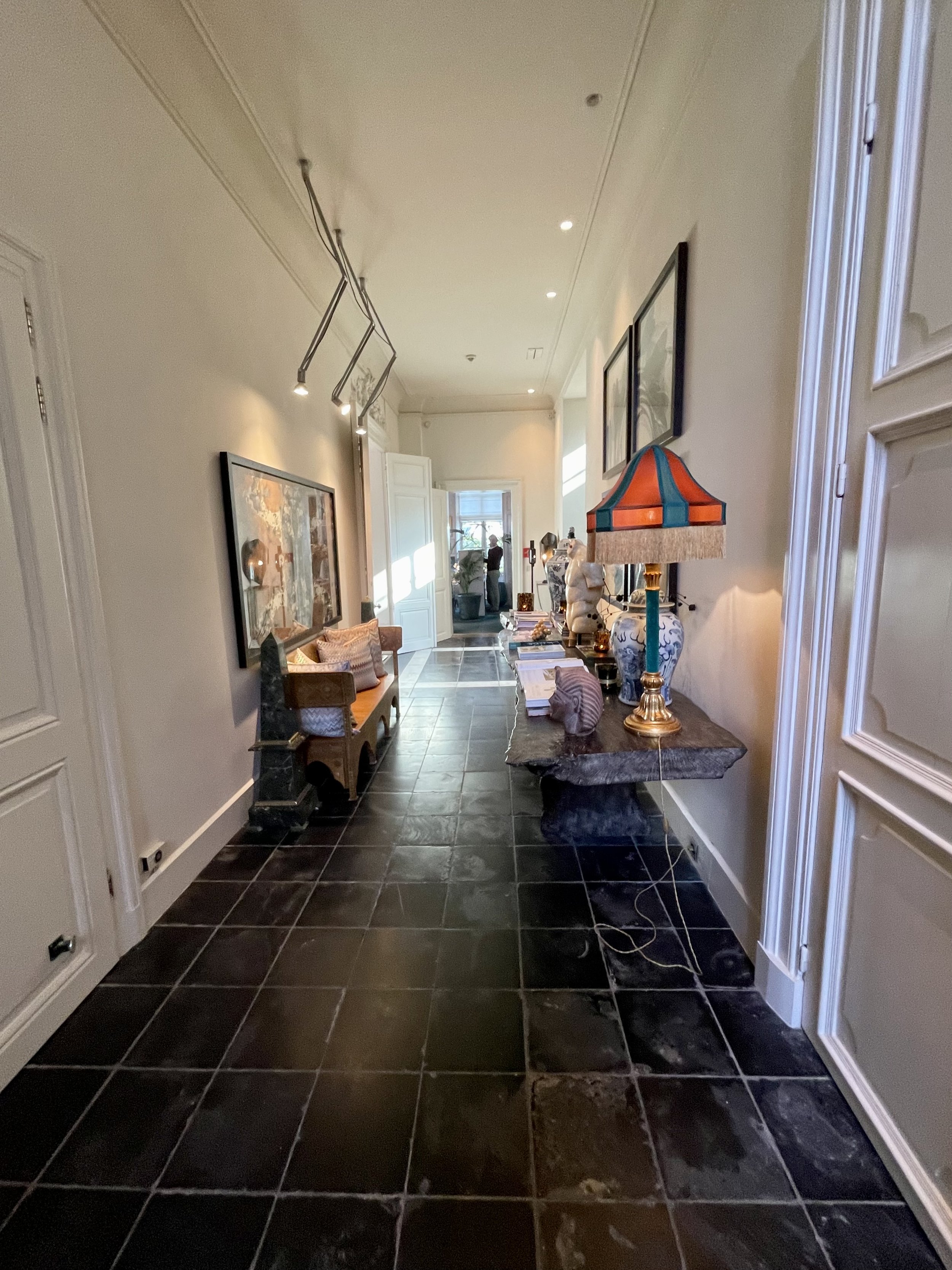
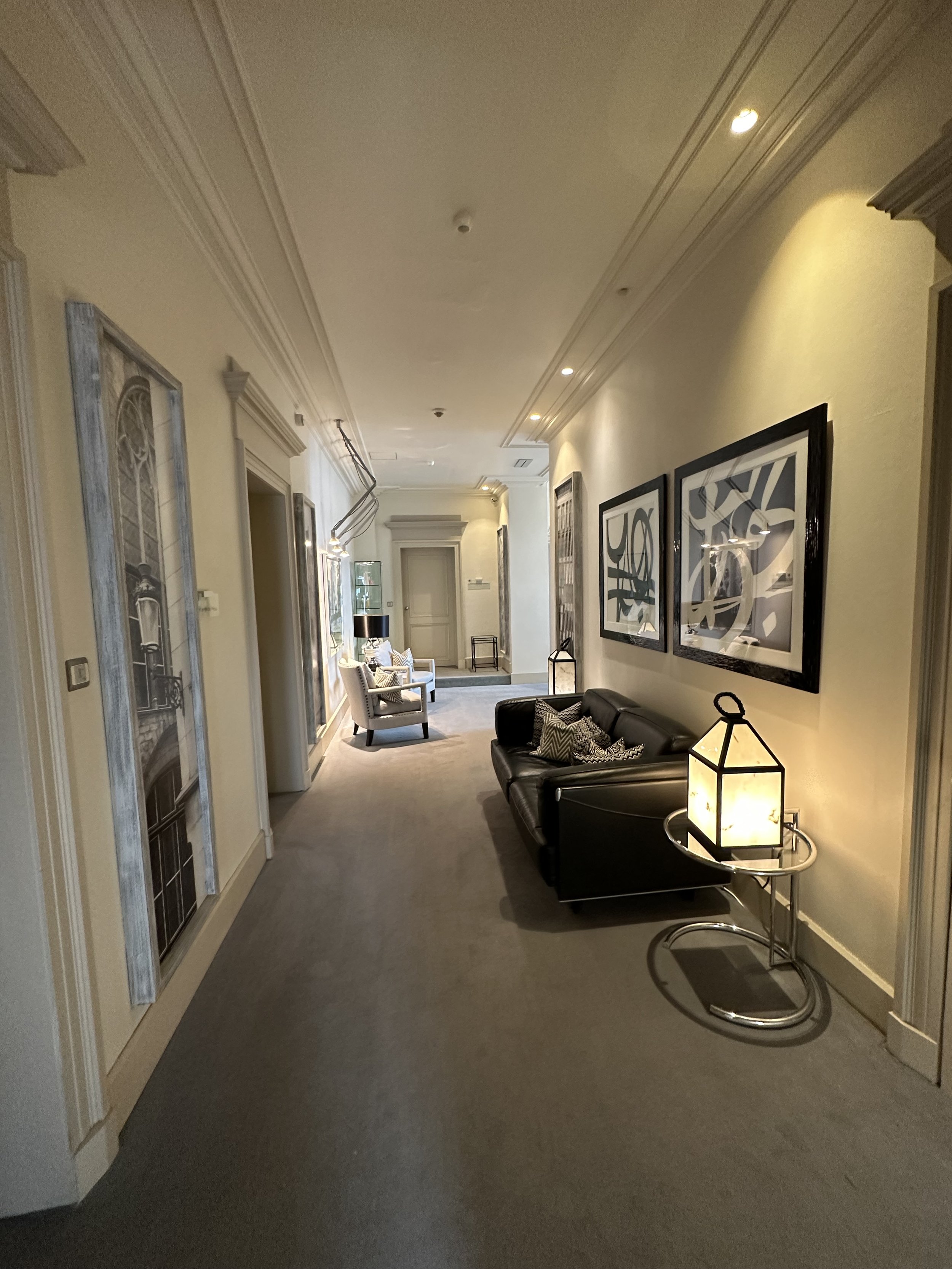
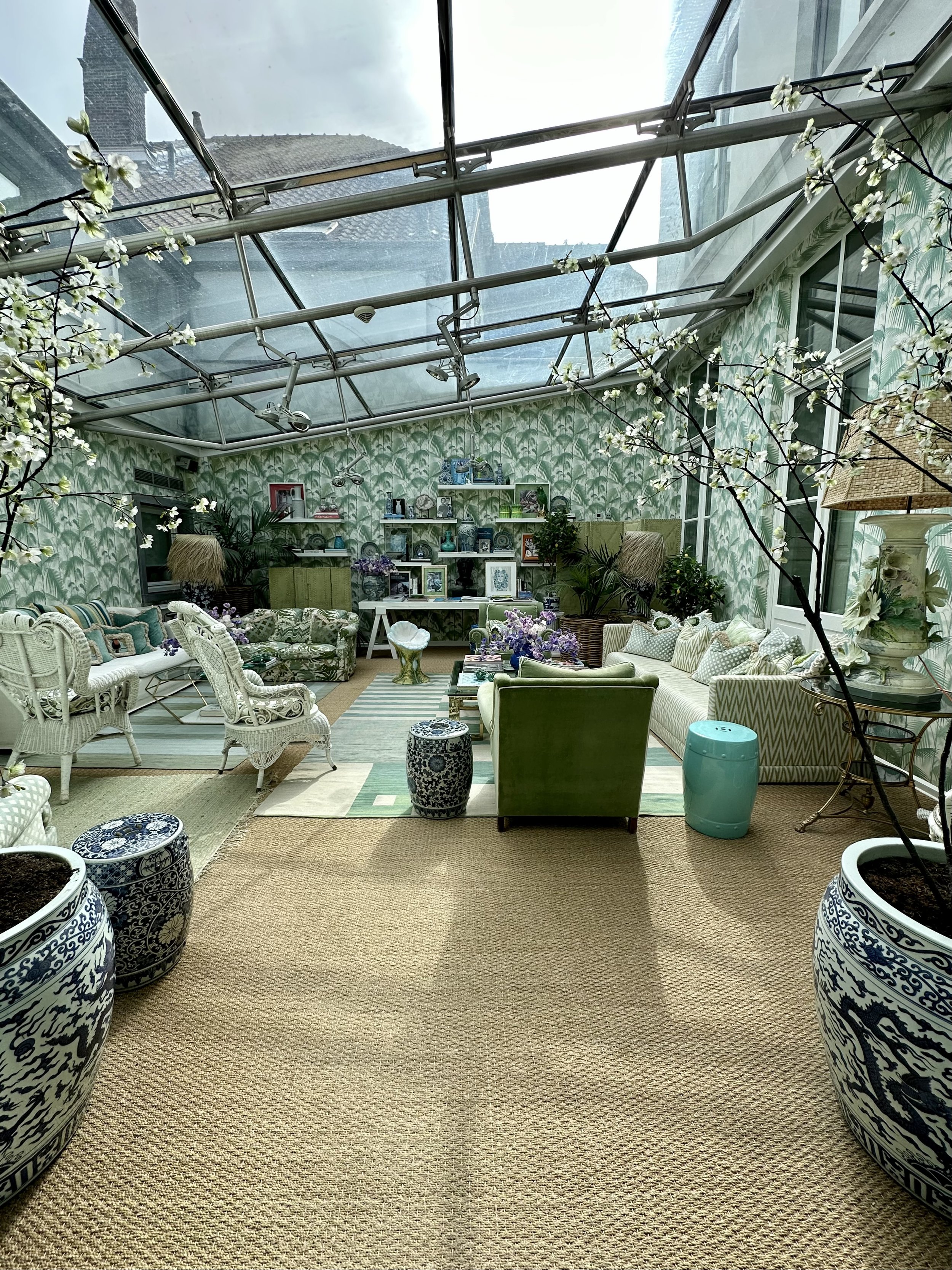
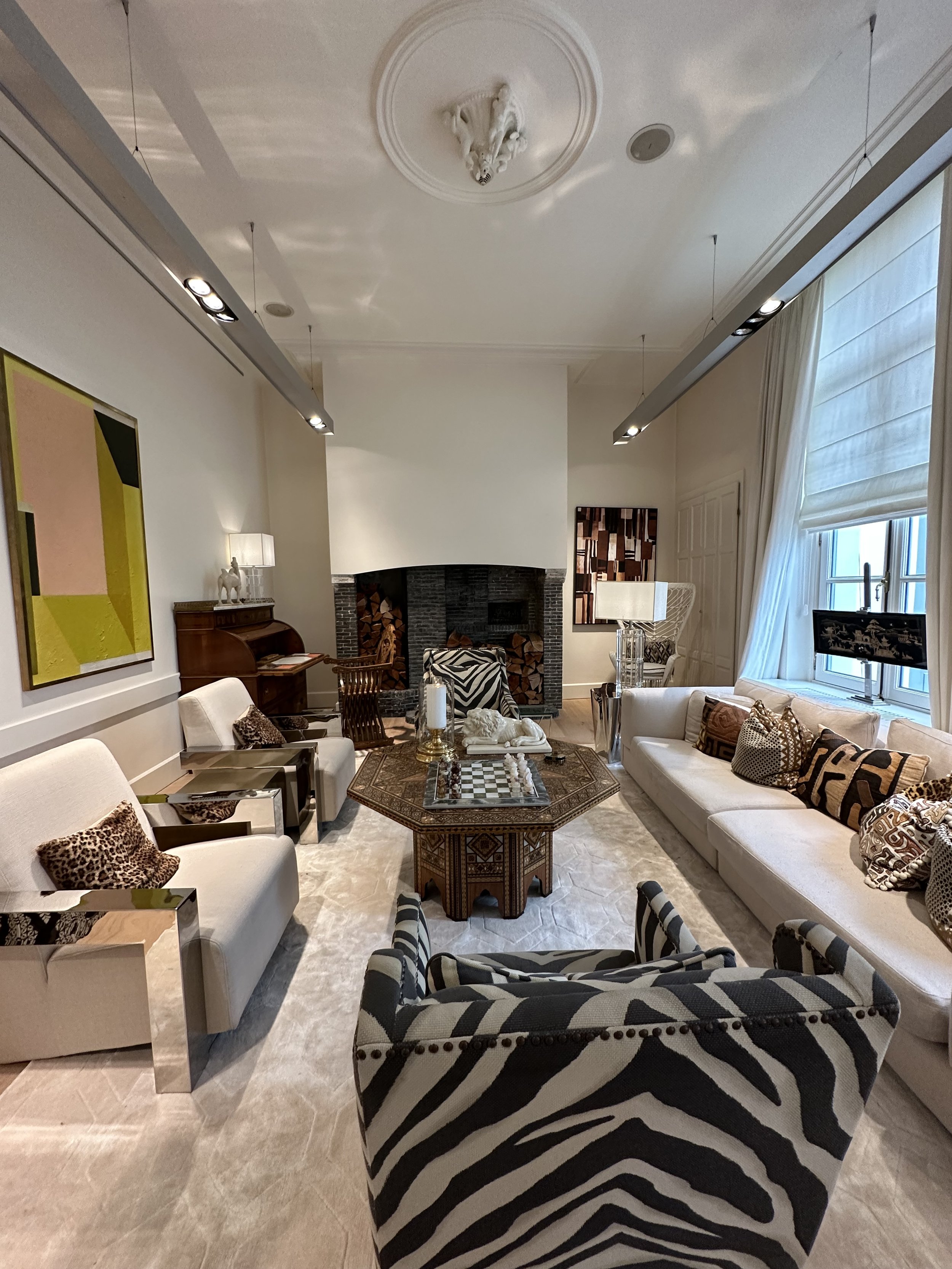
Hotel Van Cleef. This is where we stay every time, and it is our unqualified recommendation for Bruges. The hotel is a beautifully restored Italianate mansion right on one of the canals in the heart of the city, and the owners are among the most genuinely kind and welcoming hosts we have encountered anywhere in Europe. Currently ranked the best hotel in Belgium by the Michelin Guide and number one in Bruges on TripAdvisor, and those rankings are earned. Small, intimate, and personal in the way only a family-run property can be. The canal location is perfect: you step outside, and you are immediately inside the most photogenic part of the city. Saint Nicholas' Church, Markt Square, and Rozenhoedkaai are all within a few minutes' walk. We have returned specifically because of how good our first visit to this hotel was.
Hotel Dukes' Palace Bruges A five-star property set inside a former ducal palace in the heart of the old town. The most historic luxury address in Bruges, with a beautiful garden courtyard and architecture that holds its own as a photography subject.
Relais & Châteaux Hotel Heritage A 19th-century mansion with elegant rooms and the full Relais & Châteaux level of service. One of the finest properties in the city, and well located for reaching the main photography spots on foot.
Mid-Range Hotels in Bruges
Hotel Navarra Brugge A 17th-century mansion with cozy rooms, a delightful courtyard, and a reliable, central location in the Old Town. A solid mid-range choice that puts you close to everything.
Martin's Relais is well-positioned along one of the canal streets, combining modern comfort with genuine historic character. Good value for the location.
Hotel Ter Brughe, a canal-side property in the Saint Giles quarter, one of the quieter residential neighborhoods in the historic center. Excellent access to the lesser-photographed northern canals, which are worth your time early in the morning.
Getting Around Bruges
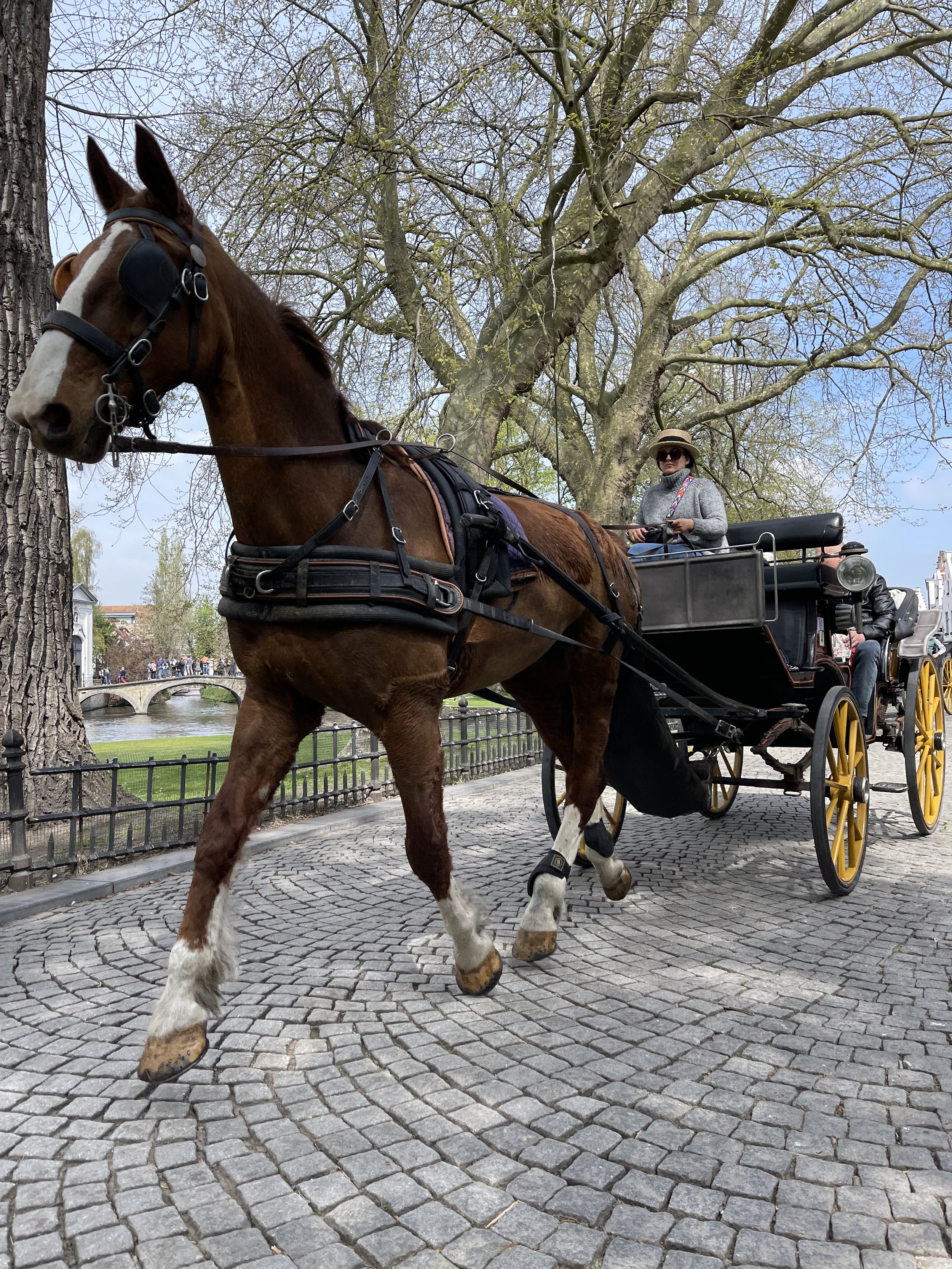
Walk. That is the honest answer for the historic center. The city is compact, the streets are pedestrian-friendly, and carrying camera gear on foot is no hardship. Most of the best photography locations are within 15 to 20 minutes of each other on foot.
Bike. Renting a bike is a great way to cover ground efficiently and reach the windmills at the Kruispoort or the quieter canal neighborhoods outside the tourist core. The city is flat, which helps with gear.
Taxis. Available if needed, and the train station is about a 20-minute walk from the historic center. Uber and Bolt are not available in Bruges, so if you need a car, plan accordingly.
The key logistical note for photographers: you do not need a car once you are in the city. Leave it parked or skip the rental entirely.
How Many Days Should You Spend in Bruges?
Two to three nights is the right amount. It is enough time to photograph the main locations at multiple different hours, explore the quieter corners that day-trippers never reach, and eat and drink properly. It is also short enough that you leave wanting to come back, which is exactly the right feeling for Bruges.
Day one: arrive, walk the canals, shoot Rozenhoedkaai at blue hour. Day two: Begijnhof and Bonifaciusbrug in the morning, the Belfry and Markt at different times of day, and night photography in the evening. Day three: explore the windmills and quieter northern neighborhoods before your departure.
Day-trippers see the main square and leave. The photographers who stay two nights see a completely different city.
What to Eat in Bruges?
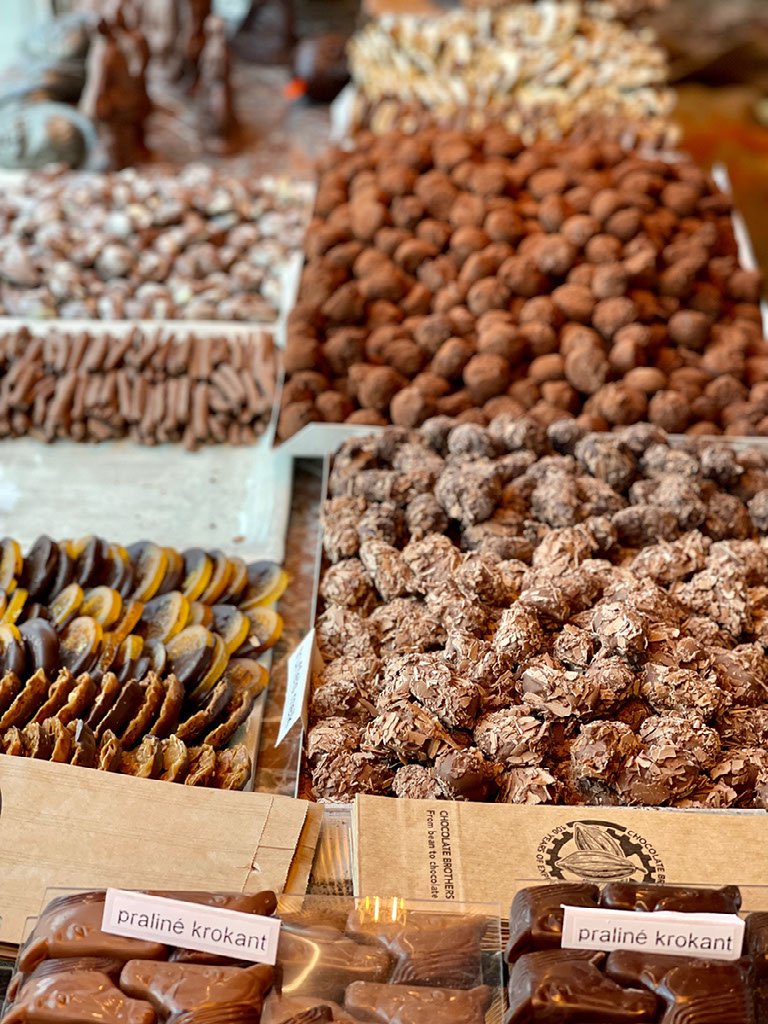
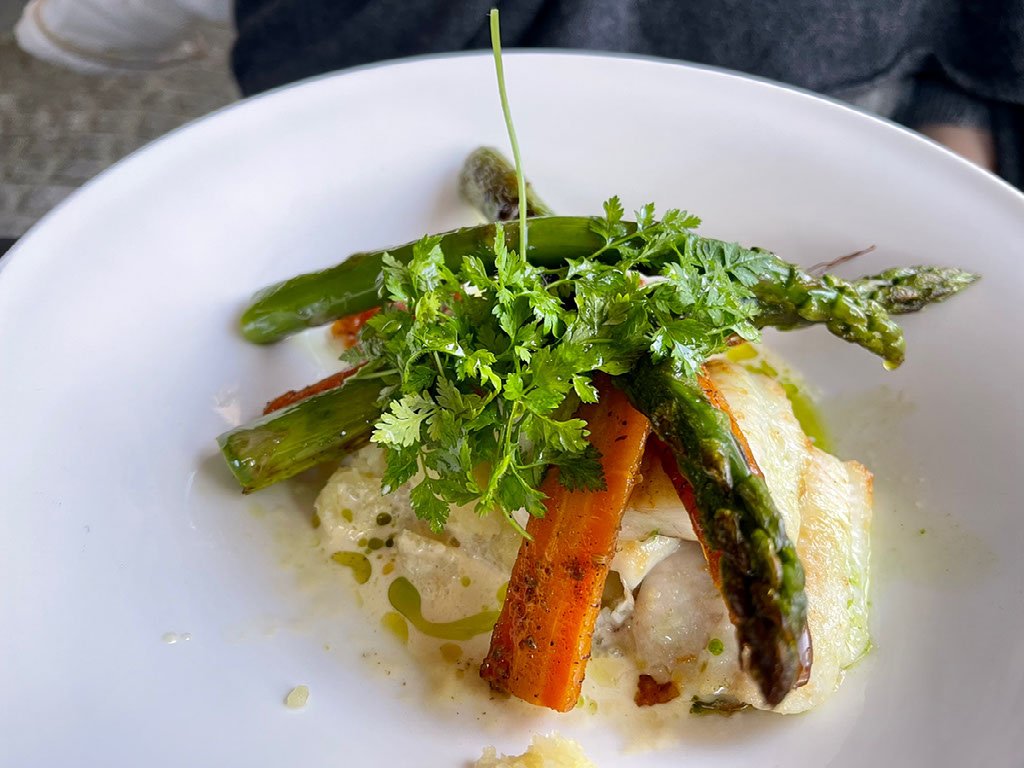
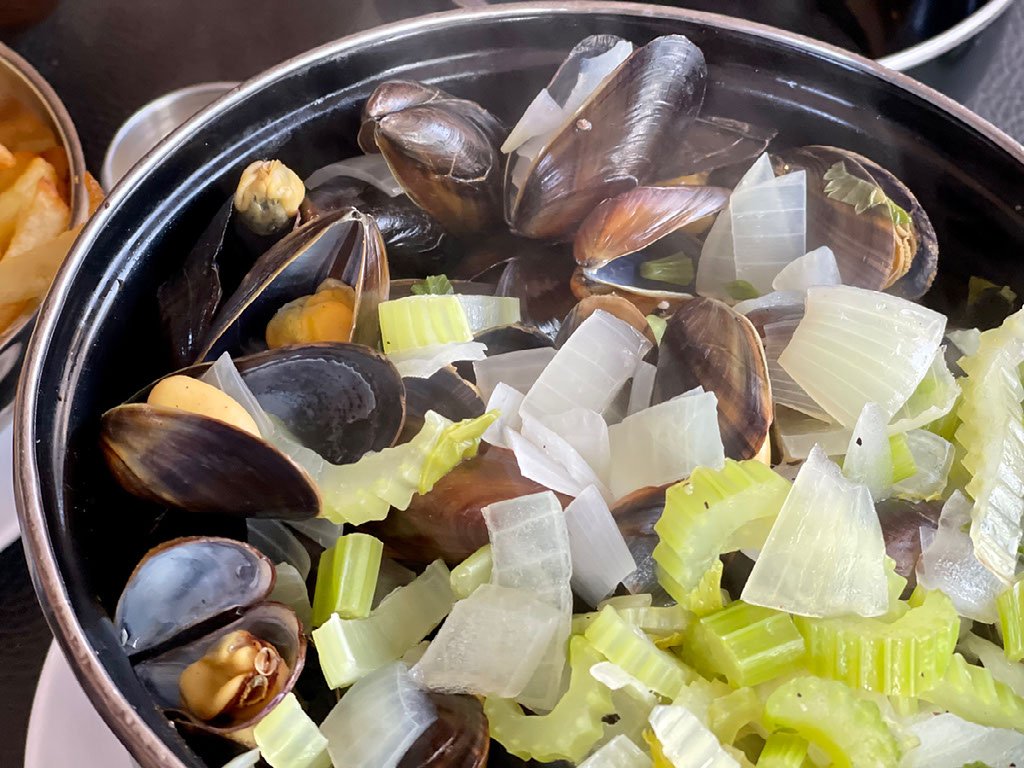
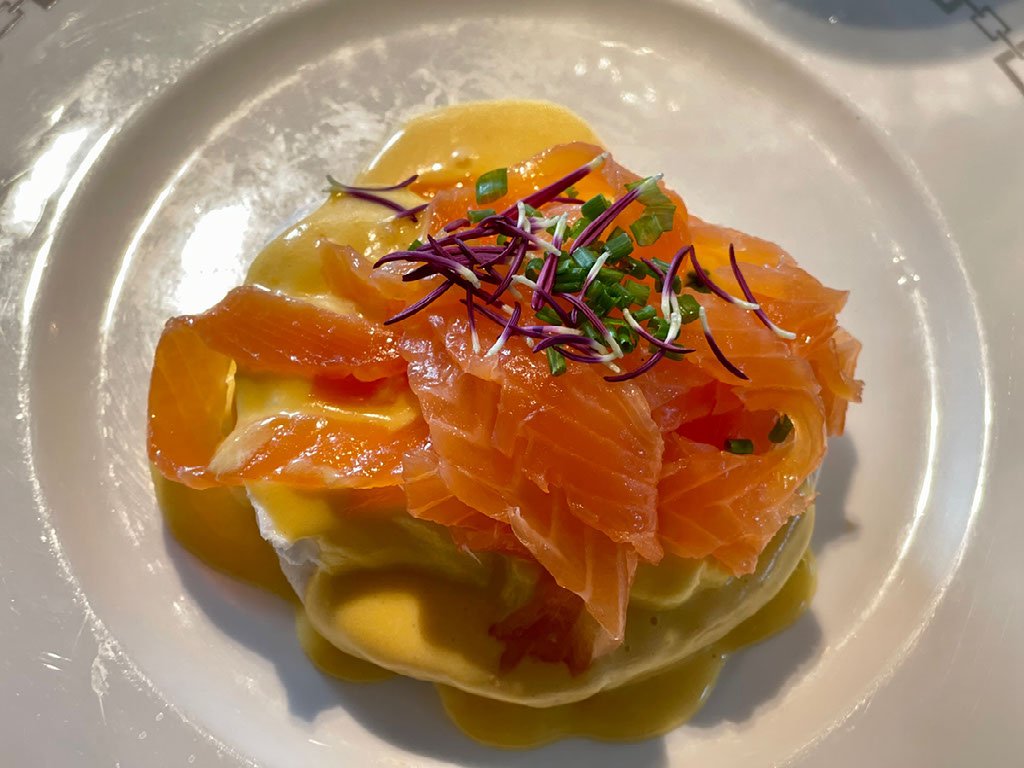
The food scene in Bruges runs from serious fine dining to excellent casual local spots, with Belgian classics threaded throughout. The three things you will not get enough of: beer, Belgian fries, and chocolate. Bruges even has its own official city chocolate, the Bruges Swan. Save room for all of it.
Our favorite meal every time has been at De Verloren Hoek. Book it first and plan the rest of the trip around it.
De Verloren Hoek, near the city ramparts and the windmills at Kruispoort, this family-run spot specializes in prime-aged meat and excellent Belgian classics. The terrace overlooks the historic mills. The owner is at the table, the food is carefully sourced, and the portions are serious. Rated 13/20 by Gault & Milau. Book early; it is small.
Den Gouden Harynck, elegant fine dining near the Groeningemuseum. One of the most respected restaurants in Bruges for classical Belgian and French cuisine. Reserve in advance.
De Stove Intimate and seasonal, with a short menu built around what is fresh and local. The kind of place that locals go on special occasions and tourists discover with genuine surprise.
Reliva Organic, locally sourced meals, and a lovely garden terrace. One of the better lunch options in the city when you want something lighter and quieter.
Bistro Christophe Cozy, casual, and genuinely loved by locals. Good for a relaxed dinner without the fine-dining formality.
Coffee in Bruges
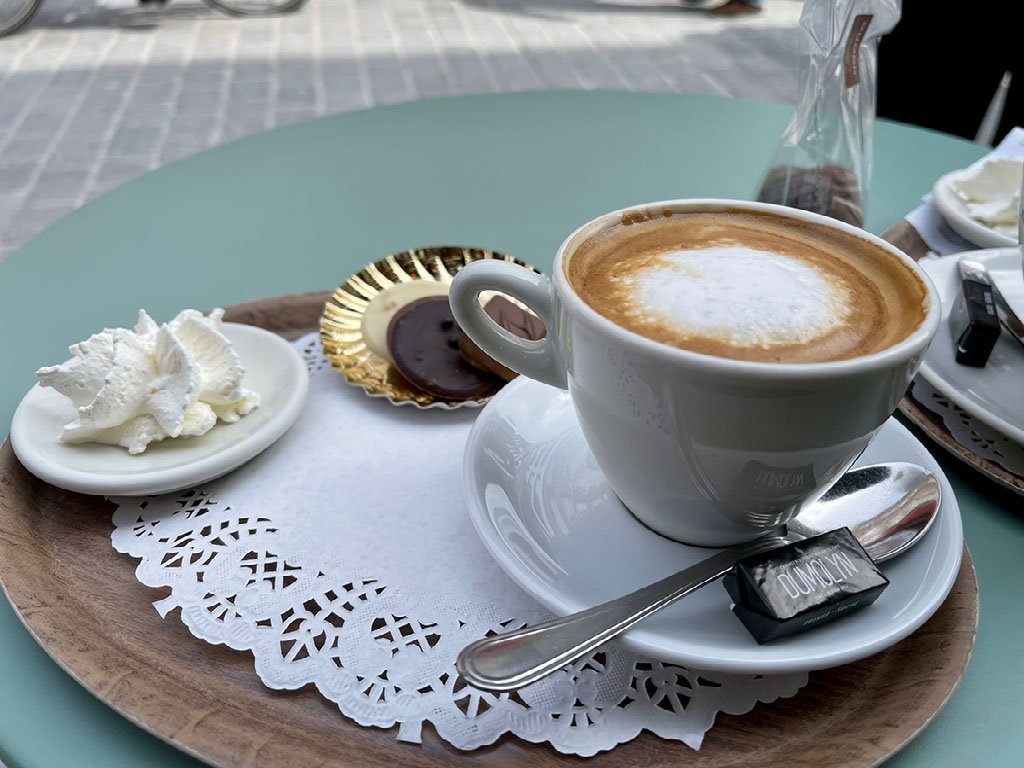
Vero Caffè: Excellent espresso, friendly service, and widely regarded as one of the best specialty coffee spots in Bruges. A reliable stop between shoots.
I Love Coffee: A cozy atmosphere and consistently good coffee. Good for a mid-morning break when your feet need a rest.
Li O Lait: A charming café with a distinctive interior, perfect for a mid-afternoon coffee and cake when you need to slow down and edit a few frames before the evening shoot.
Photography Gear for Bruges
DSLR and Mirrorless Kit
Bruges is a city for wide-angle work, long exposures, and intimate architectural detail. Pack accordingly.
Camera body: The Canon EOS R5 Mark II, Sony A7R V, and Nikon Z8 are all excellent choices. Any full-frame mirrorless body will give you the dynamic range and low-light performance that the evening and blue-hour shooting demands. The Leica Q3 is my walk-around camera here and handles the canal streets beautifully.
Wide-angle (15 to 35mm): Your primary lens for Bruges. The canal compositions, particularly at Rozenhoedkaai, are wide shots. This is where you will spend most of your time.
Standard zoom (24 to 70mm): Strong for street photography, market scenes, and tighter architectural shots in the narrow alleyways.
Telephoto (70 to 200mm): Useful for isolating architectural details on the Belfry and the guild facades around Markt Square, or for compressing canal perspective from a bridge.
Tripod: Non-negotiable. Blue hour and night photography are the most rewarding experiences in Bruges, and you cannot hand-hold them properly. A travel tripod or Platypod works well on the canal quaysides.
ND filters: A 6-stop or 10-stop ND filter will let you smooth out moving water in the canals during long exposures for a more graphic, minimal look.
Drone: Leave it at home. Drones are restricted in the Bruges historic center. There is no useful flight zone within the photography locations this guide covers.
Extras: Extra batteries (cold mornings drain them faster than expected in spring), a rain cover (Belgian weather is unpredictable), and a Samsung T7 SSD for end-of-day backups.
iPhone Photography in Bruges
Bruges is one of the best cities in Europe for iPhone photography, and here is why: the compositions are pre-built. The canals frame themselves, the Belfry fills a vertical shot naturally, and the cobblestones provide texture that renders well on a small sensor.
Use Night Mode at Rozenhoedkaai after sunset. Let the phone stabilize on a railing or a flat surface for a 3 to 5 second exposure and you will get clean canal reflections without the need for a tripod.
Use Portrait Mode on the Begijnhof white-walled houses to separate the architecture from the green garden behind it. The subject separation works especially well in spring when the background has depth and color.
Use the ultrawide lens inside the Burg courtyard to capture the Basilica of the Holy Blood against the square's full width. The standard lens gets you close, but the ultrawide gives you the full relationship between the buildings.
Shoot from low angles on the canal bridges using your phone flat to the railing for a long, low perspective on the water. This is the composition that surprises most iPhone photographers when they see the result.
Best Photography Locations in Bruges
You can download my Google Map here
Rozenhoedkaai
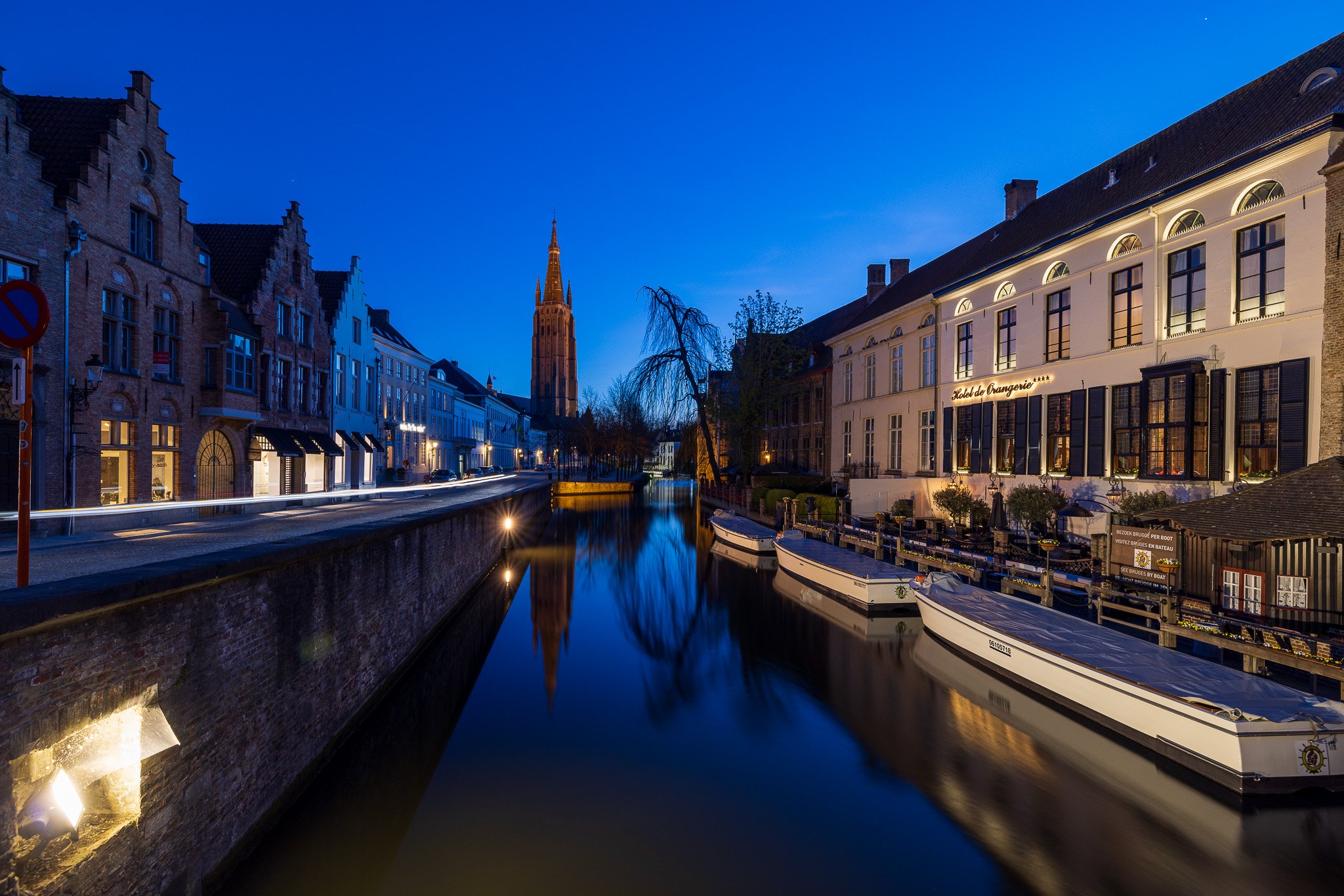
If you photograph only one location in Bruges, this is it. Rozenhoedkaai is where the Dijver Canal bends alongside a row of medieval guild houses, with the Belfry rising in the background at the end of the composition. It is a natural leading-line photograph that works from sunrise through blue hour and into full dark.
📷 Pro Tip: Position yourself on the stone quay on the south side of the canal, low to the water if possible, with the 16 to 24mm end of your wide-angle lens. The bend in the canal and the Belfry alignment happen naturally from this angle. A tripod is essential for blue hour. Arrive 30 minutes before sunset to secure your spot before other photographers fill the quay. Once blue hour ends, walk around the corner to the north side of the canal for a completely different perspective on the same scene with the reflections reversed.
Best time: Sunrise and blue hour, year-round. Access: Free, public quayside. A 5-minute walk from Hotel Van Cleef.

Right Around Sunset
At sunrise, soft morning light bathes the brick facades in warm tones, often with mist rising off the canal. At blue hour, the building lights reflect perfectly in the still water and the scene takes on a quality that no amount of post-processing can manufacture. Come during the day to scout your exact position; come back at sunrise or sunset to shoot.
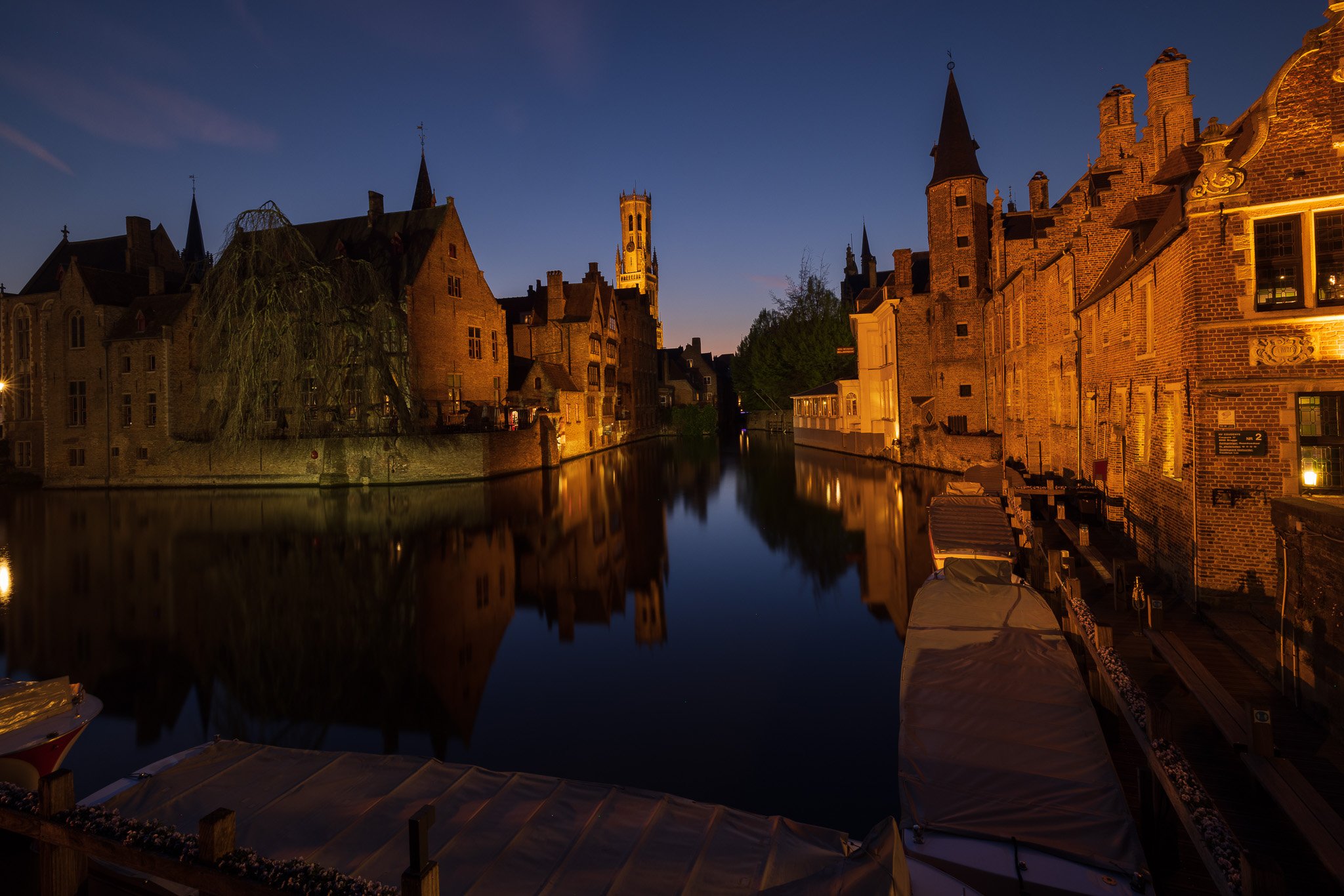
Blue Hour
Bring a tripod for long exposures, a wide-angle lens to capture the full curve of the canal, and maybe a neutral density filter for silky water effects. This one spot could easily earn you your favorite photo of the entire trip.
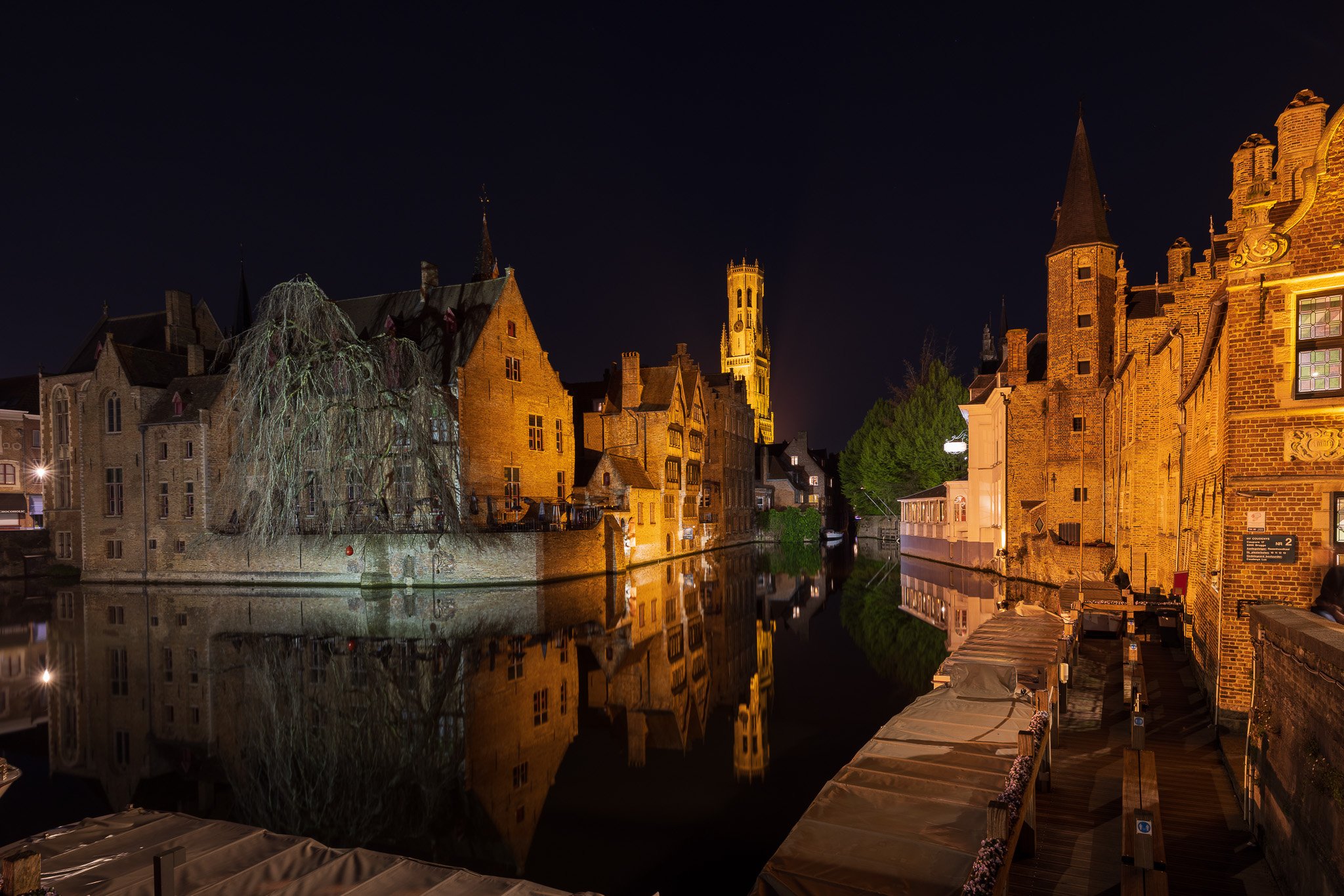
Just After Blue Hour
Once you are done if you walk around the corner you will find this locaton
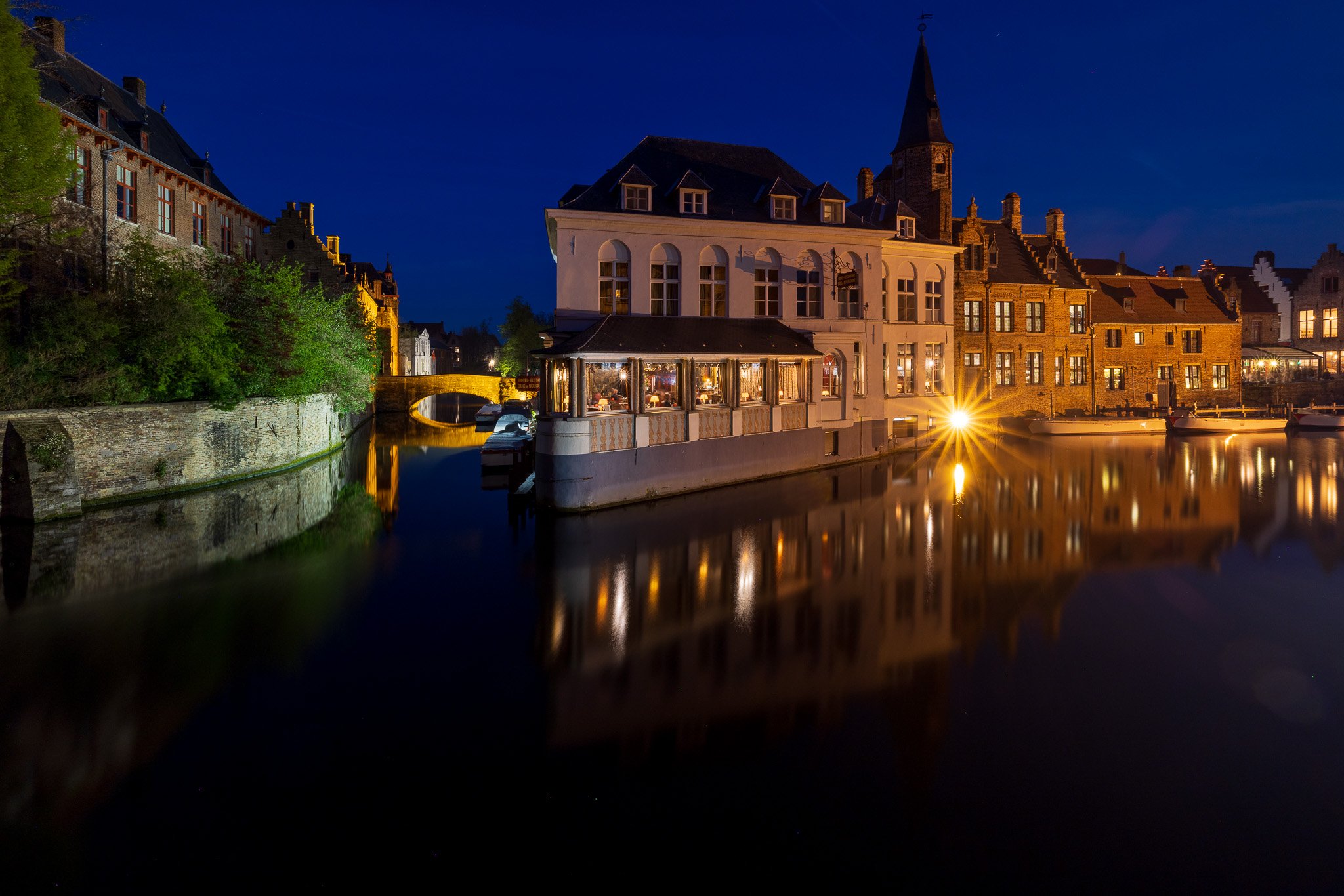
From the Opposite Side
Begijnhof (Princely Beguinage Ten Wijngaerde)
One of the most peaceful and visually distinctive places in Bruges, the Begijnhof dates to 1245 and was originally home to the Beguines, lay religious women who lived in community without taking monastic vows. Today it is a UNESCO World Heritage Site. The compound is a ring of white-painted houses around a quiet green courtyard, with a small church at one end. In spring, the grass is covered in daffodils and later tulips.
The white walls, green courtyard, and Gothic arch entrance photograph well at almost any time of day. The soft, flat light of an overcast morning is particularly good here because it eliminates harsh shadows on the white facades.
📷 Pro Tip: Enter through the Gothic arch gate on Wijngaardplein and shoot back toward the entrance from inside the courtyard with the white houses in your periphery. A 35mm focal length captures the intimacy of the space without distortion. In spring, shoot low to include the daffodils as a foreground layer against the white walls. The site opens at 6:30 AM, which makes it a viable sunrise stop before the rest of the city wakes up. Maintain silence inside; Benedictine nuns still live within the enclosure.
Best time: Spring mornings for the flowers; overcast days for even light on the white walls. Access: Free to enter the grounds. A 15-minute walk from Rozenhoedkaai.
Basilica of the Holy Blood (Burg Square)
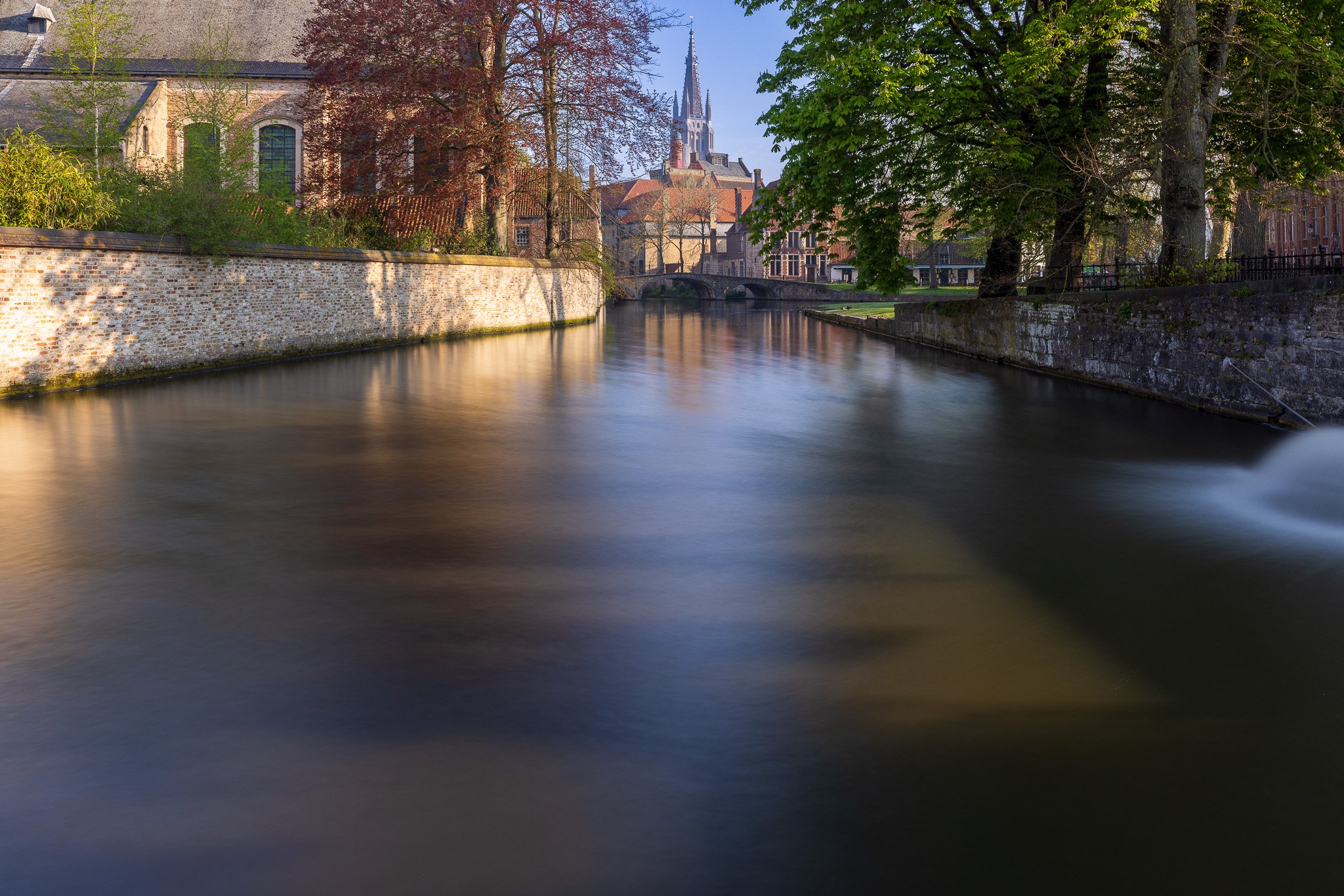
The Burg is the civic heart of Bruges, a square framed by the Town Hall, the Basilica of the Holy Blood, and the Renaissance hall facade. The Basilica itself dates in parts to the 12th century and contains a relic believed to be a vial of the blood of Christ, which is displayed each Friday and during the Procession of the Holy Blood.
The architecture around Burg Square is dense and layered, with Romanesque, Gothic, and Renaissance details in close proximity. It photographs differently depending on the light; the facade of the Town Hall is particularly strong in late afternoon when the sun comes from the west.
📷 Pro Tip: Use a 35mm to 50mm lens and shoot the Basilica facade from the opposite corner of the square to compress the scale of the building against the courtyard. The lower Romanesque chapel on the left and the more decorated upper Gothic chapel create a strong vertical contrast. For interior photography inside the lower chapel, bring a fast prime at f/1.8 to f/2.0; the light is low and tripods are not permitted inside.
Best time: Late afternoon for the Town Hall facade; any time for the Basilica exterior. Access: Free to enter the courtyard; small fee for the museum adjacent. A 5-minute walk from Rozenhoedkaai.
Bonifaciusbrug (Bonifacius Bridge)
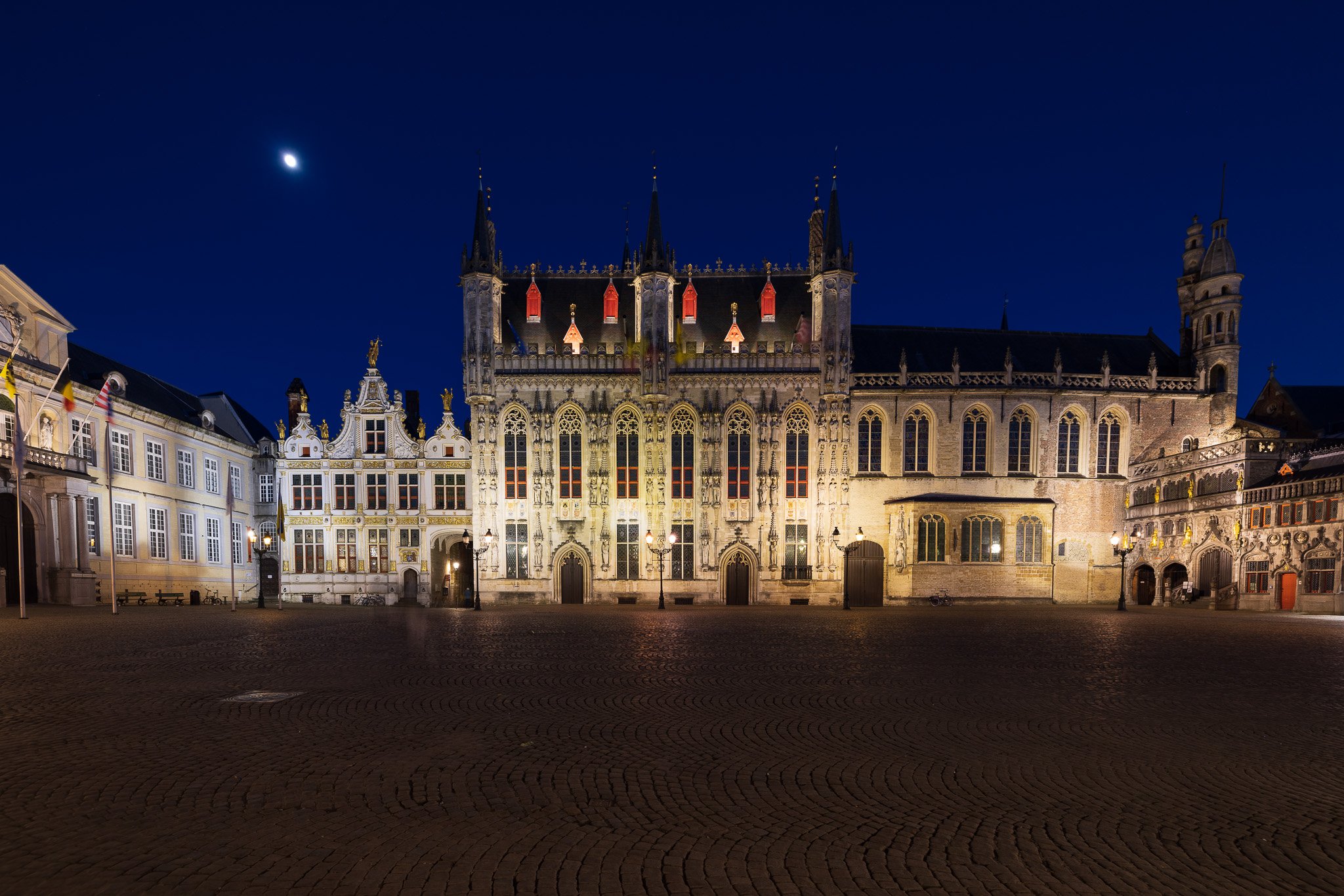
A small medieval footbridge tucked behind the Church of Our Lady, surrounded by canal water, ivy-covered walls, and the garden grounds of the Gruuthuse Museum. In spring, tulips fill the garden beds along the canal edge. It is one of the most photographed spots in Bruges and one of the few that fully lives up to its reputation when you stand there.
The bridge itself photographs well from either bank. The more interesting angle is from the bridge looking toward the Church of Our Lady, with the garden, canal, and Gothic tower in alignment.
📷 Pro Tip: Position yourself on the east bank of the canal and shoot toward the bridge with a 35 to 50mm focal length in spring when the garden is in bloom. Alternatively, stand on the bridge itself and shoot in the opposite direction toward the canal and the ivy-covered facades. The best light hits this location in the mid-morning when the sun clears the roofline of the Church of Our Lady. Arrive early; tour groups pass through from mid-morning onward, and the narrow bridge fills quickly.
Best time: Mid-morning in spring. Access: Free. A 10-minute walk from Rozenhoedkaai.
The Guild Houses of Markt Square
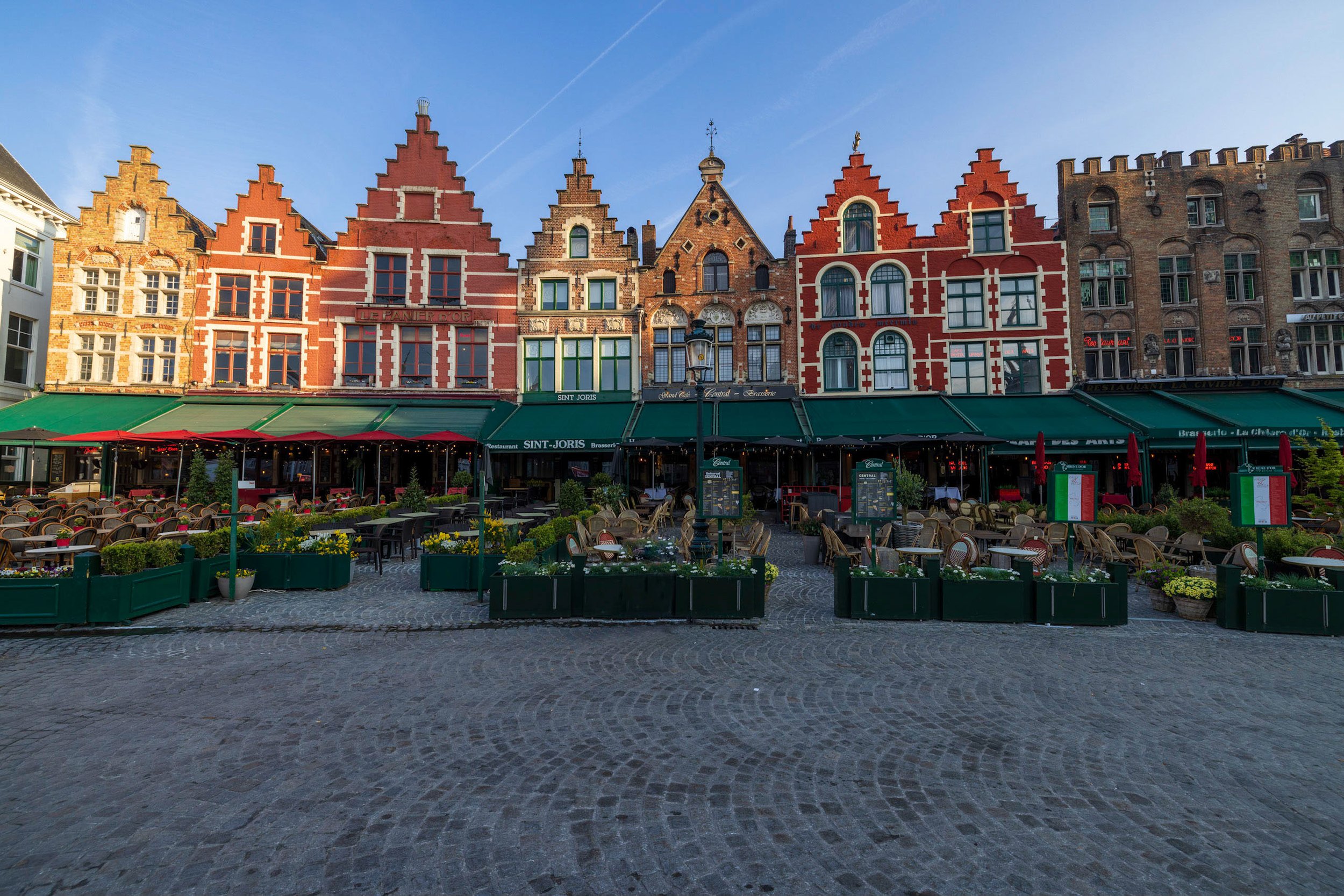
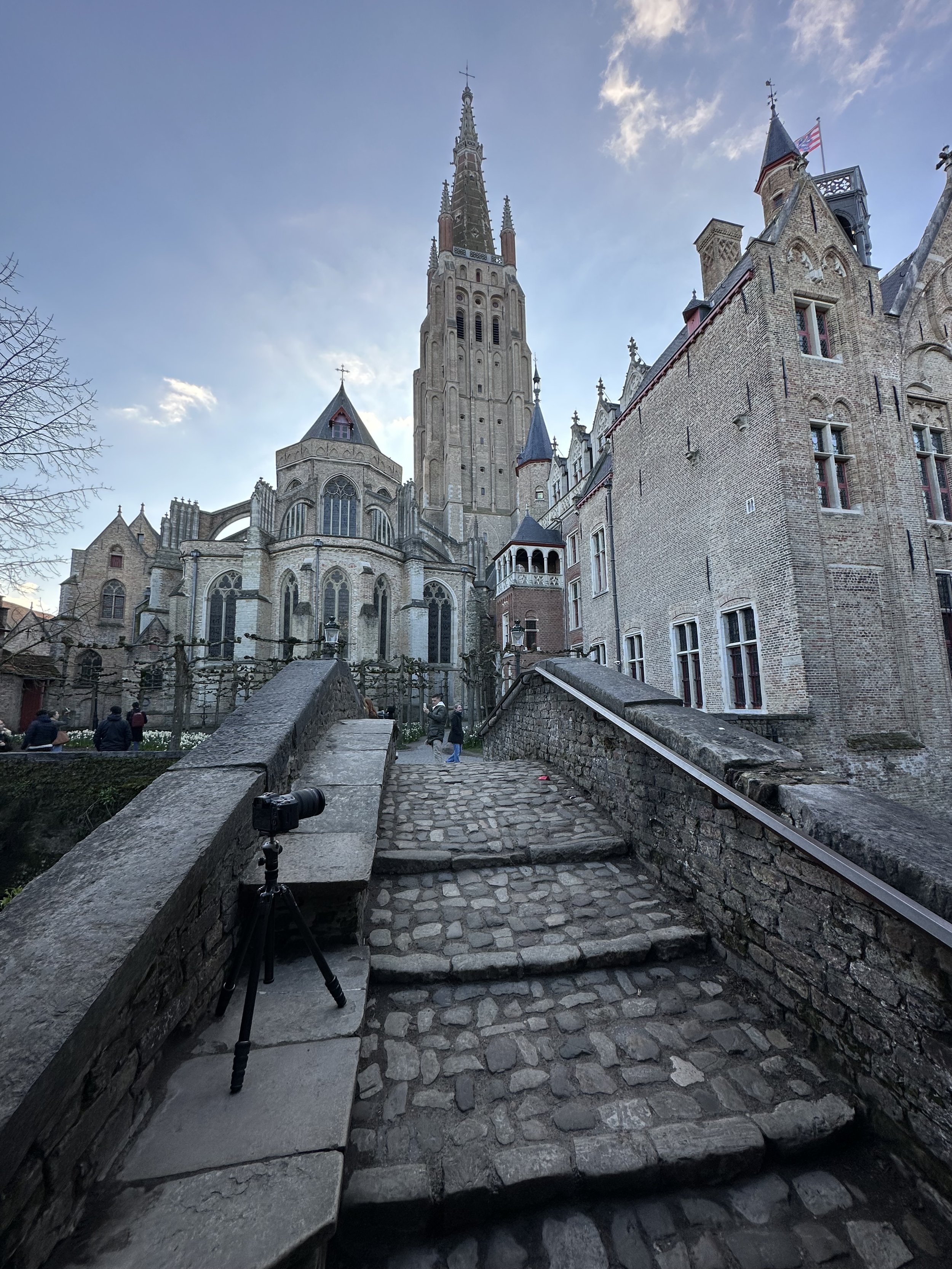
The buildings lining Markt Square are as much a part of Bruges' visual identity as the Belfry rising above them. Most date from the 17th through 19th centuries, rebuilt in a historic style after fires and renovations over the centuries, and they follow the classic Flemish step-gable form: narrow facades, stacked triangular gables climbing toward a point, in a row of ochre, red, and cream that catches the light differently depending on the hour. Many now house restaurants and cafés at street level, with their upper floors preserved largely as they've always looked.
What makes the row work photographically is its repetition and rhythm: gable after gable, in slightly different heights and colors, with the Belfry anchoring the composition at one end of the square.
📷 Pro Tip: [I don't have your specific vantage point, timing, or focal length for this shot, since it's not in the guide yet. Do you shoot this from a particular corner of the square, at a particular time of day? Once I have that, I'll finish this Pro Tip properly rather than guess at it.]
Best time: Access: Free, public square. At the base of the Belfry.
Jan Van Eyckplein
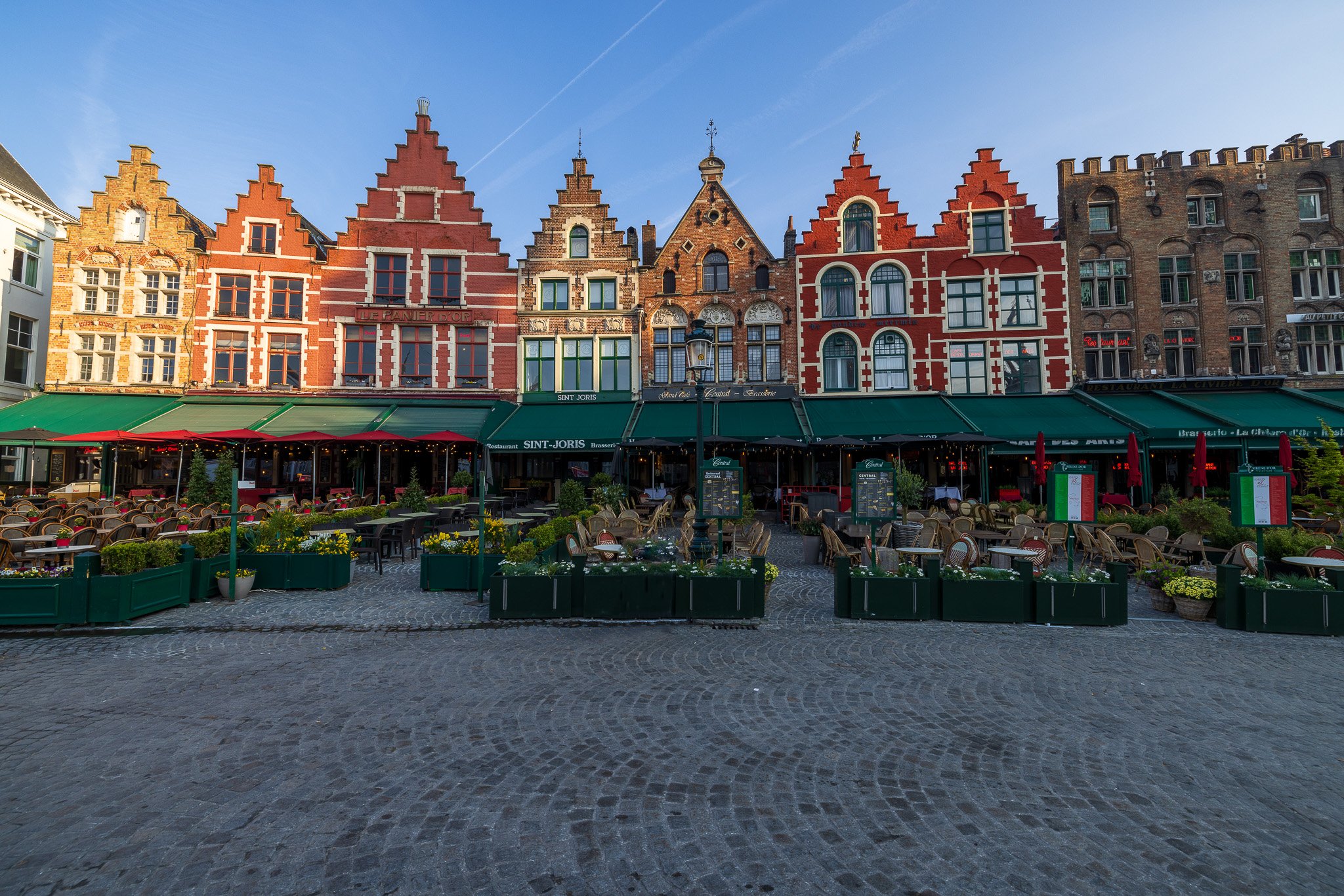
A canal-side square just north of Rozenhoedkaai, named for the Flemish painter who lived nearby. Quieter than Markt Square and significantly less photographed, it offers one of the better nighttime canal compositions in the city. The square has a bronze statue of Jan van Eyck, surrounding guild buildings, and a straight canal stretch that reflects the streetlights cleanly after dark.
📷 Pro Tip: Shoot from the stone bridge at the north end of the square looking south toward the guild facades. At night, use a 20 to 24mm wide-angle at f/8 to f/11 with a 15 to 30 second exposure on a tripod. The streetlight reflections on the canal create a long orange vertical in the frame that balances the horizontal architecture. This location is largely empty after 9 PM and gives you quiet working time that Rozenhoedkaai rarely allows.
Best time: After dark, year-round. Access: Free, public square. A 3-minute walk from Rozenhoedkaai.
Belfly
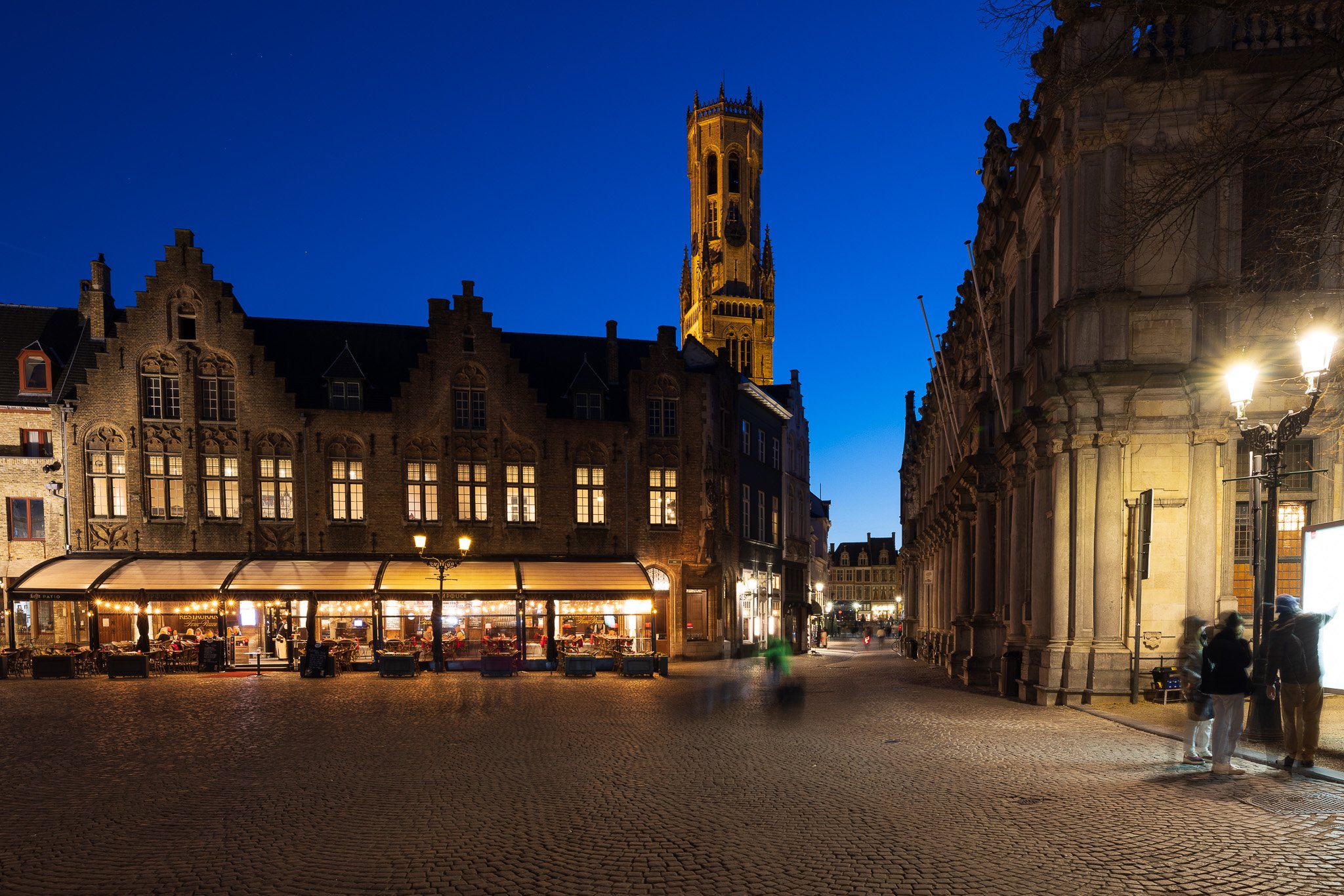
The medieval bell tower at the center of Markt Square is one of the most recognizable structures in Belgium, and it is packed during the day with visitors. The photography opportunity, however, is at night, when the tower is lit from below and the square empties out.
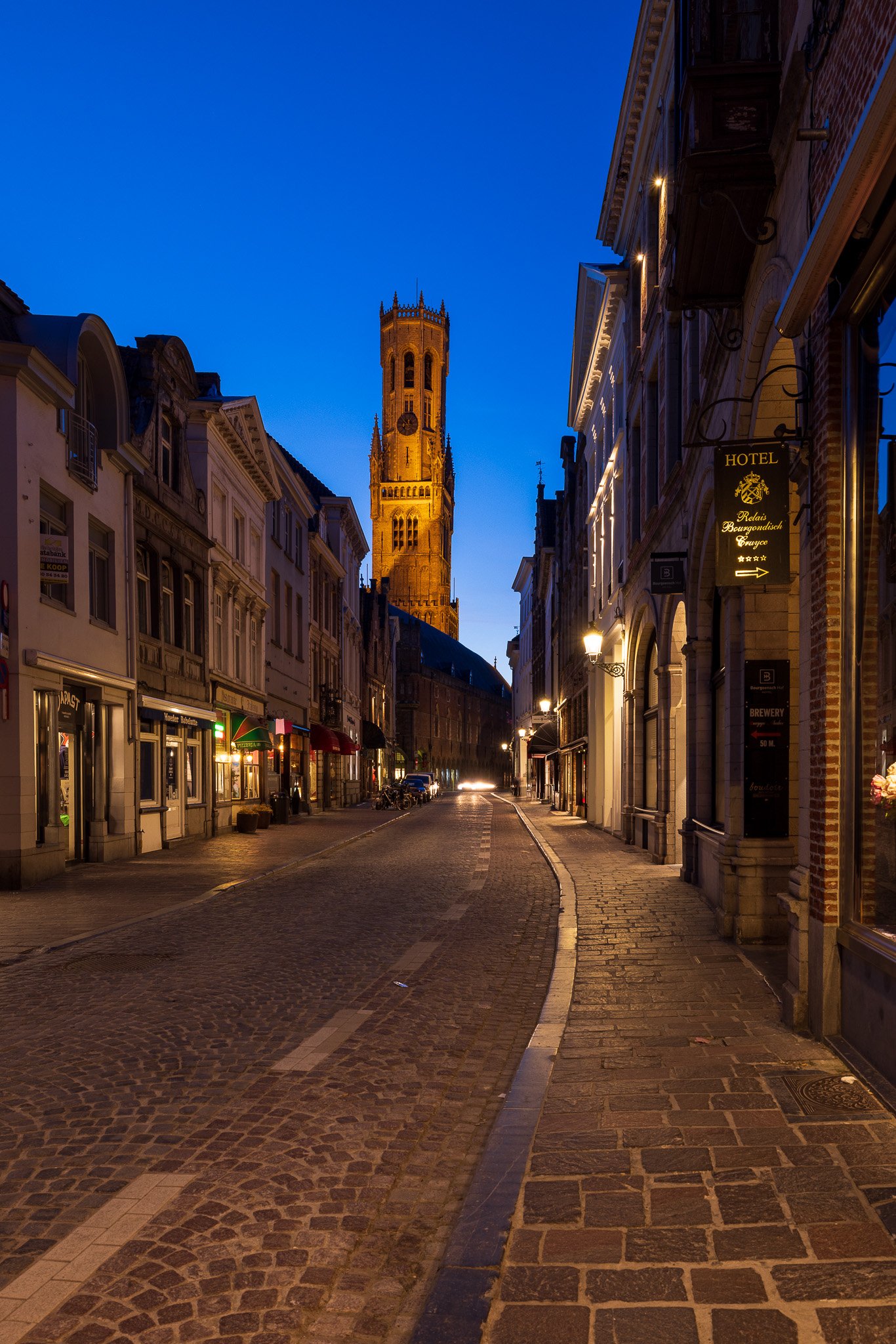
From Markt Square directly, the Belfry fills a vertical frame at virtually any focal length. But the more interesting shots come from the surrounding streets and canal viewpoints, where you can see the tower rising above rooftops with foreground context.
📷 Pro Tip: Shoot from the small alley streets to the south and west of the Belfry between 9 PM and midnight. Use a 24 to 35mm focal length to include a cobblestone foreground and at least one guild facade in the frame. A tripod at a low angle gives you a stone texture in the foreground and the lit tower in the background. Avoid shooting straight-on from Markt Square at night; the scaffolding and restaurant umbrellas clutter the base. The better angles come from the approach streets. Jan Van Eyckplein, just north of Rozenhoedkaai, also provides a clean view of the tower reflected in the canal at night.
Best time: After 9 PM for night photography; early morning for the empty square at sunrise. Access: Free from the exterior; paid entry to climb. A 5-minute walk from Rozenhoedkaai.

The Canals
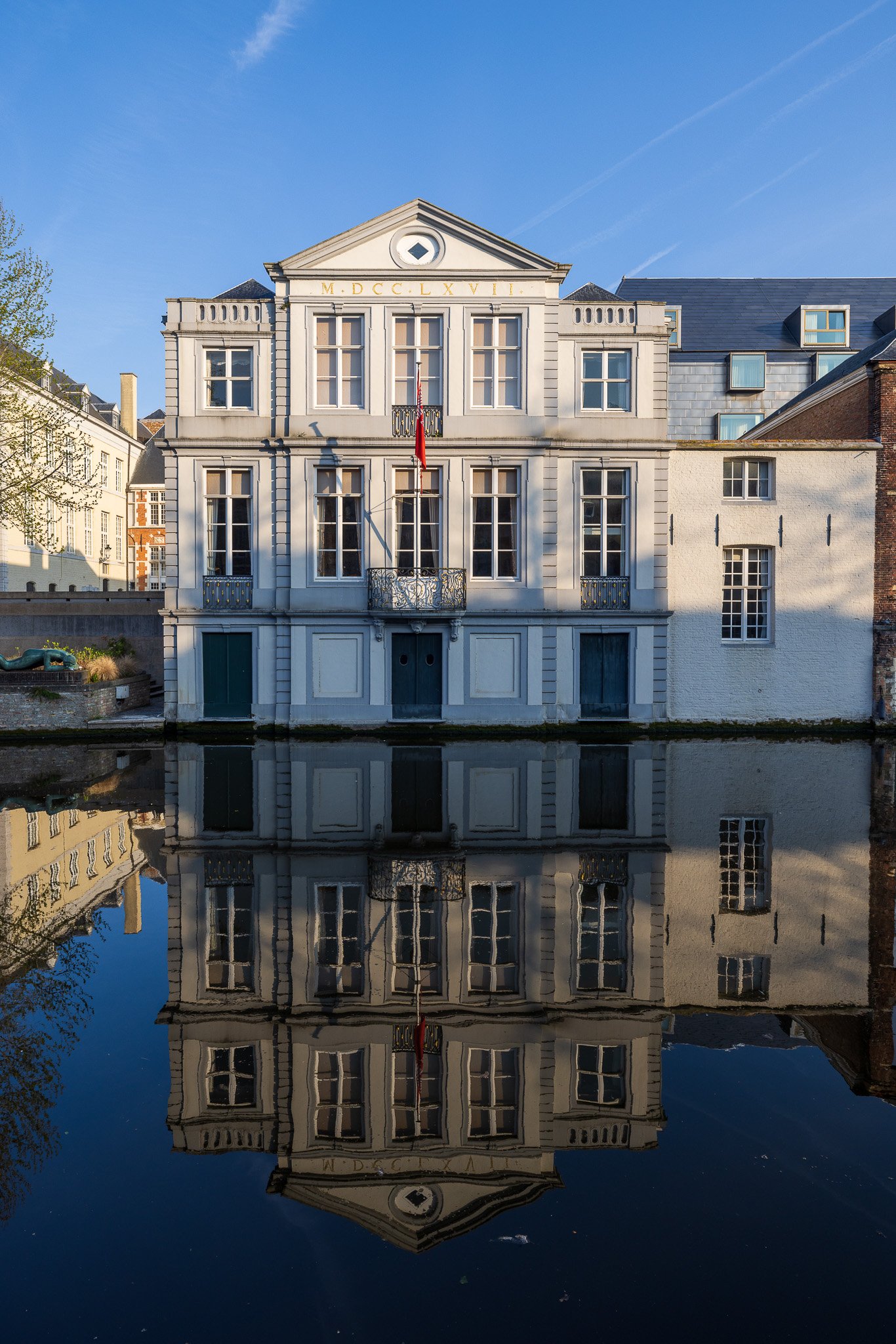
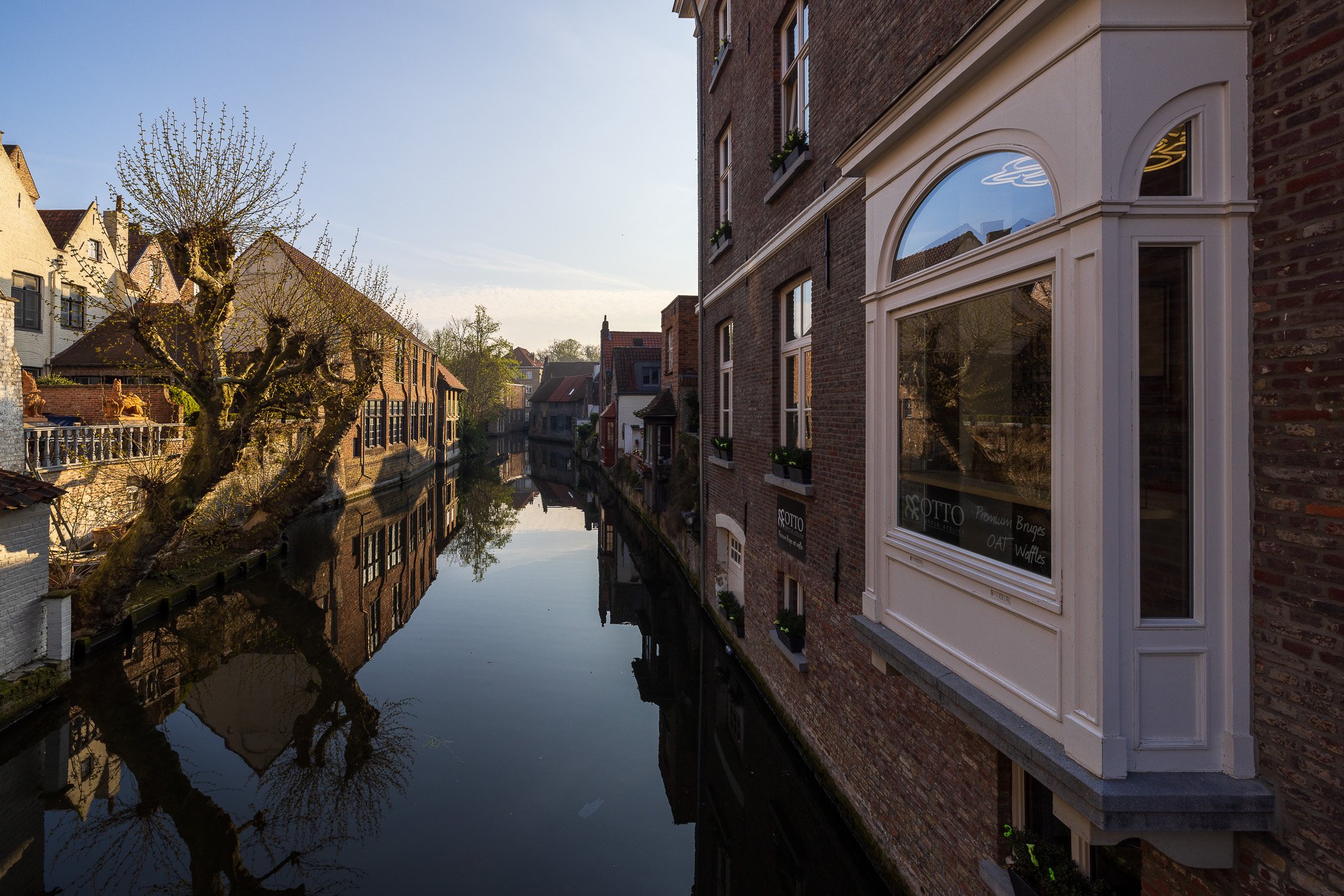
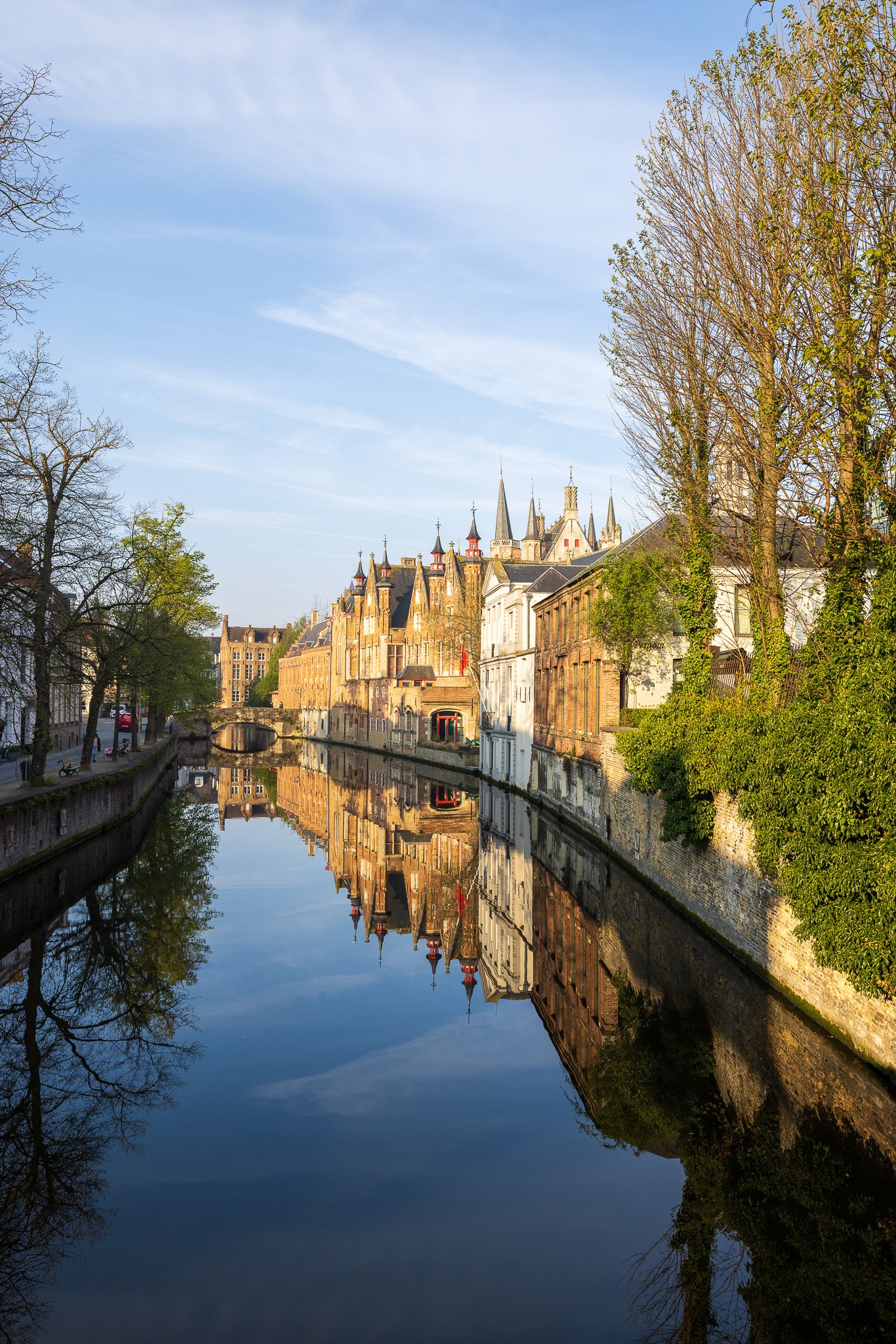
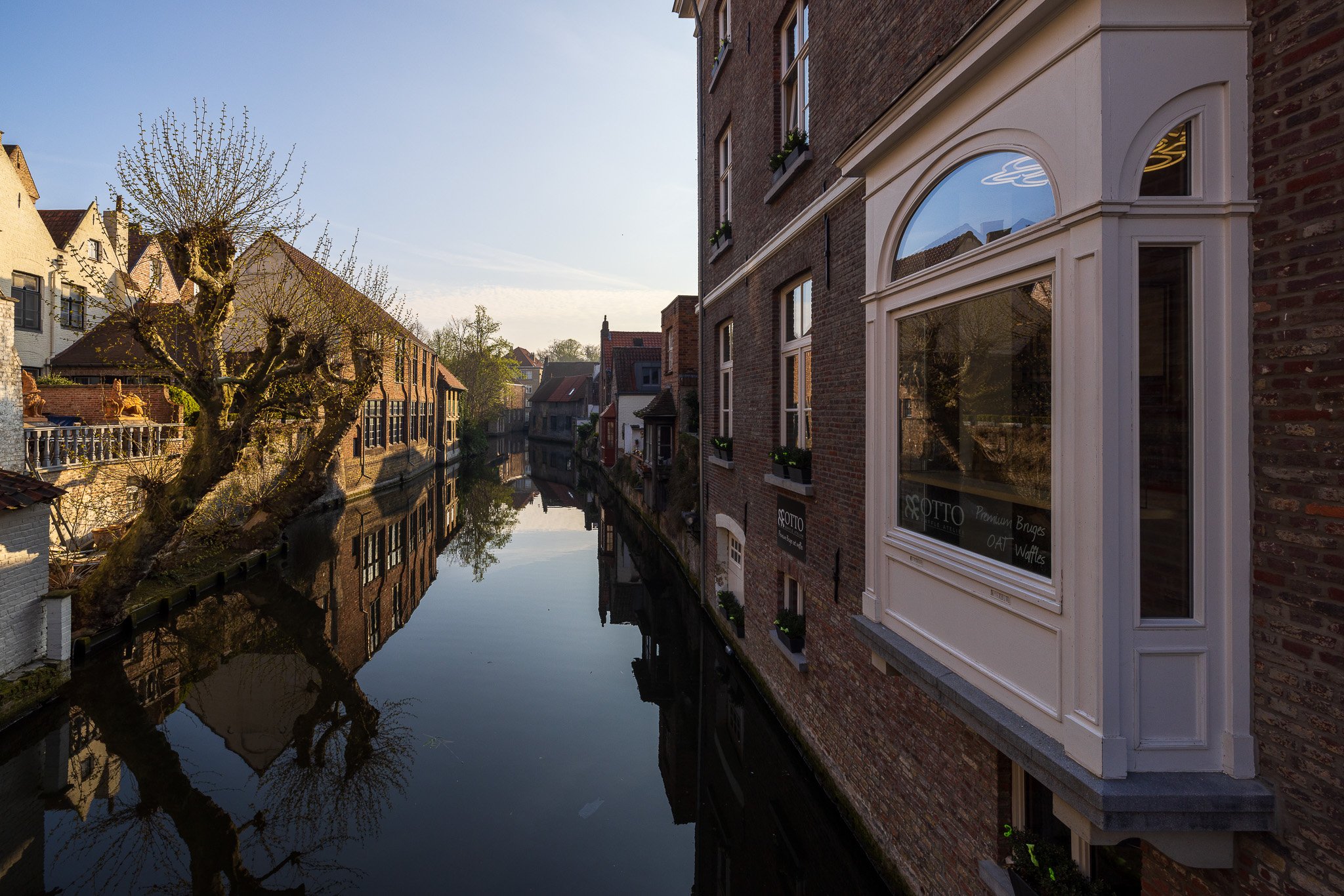
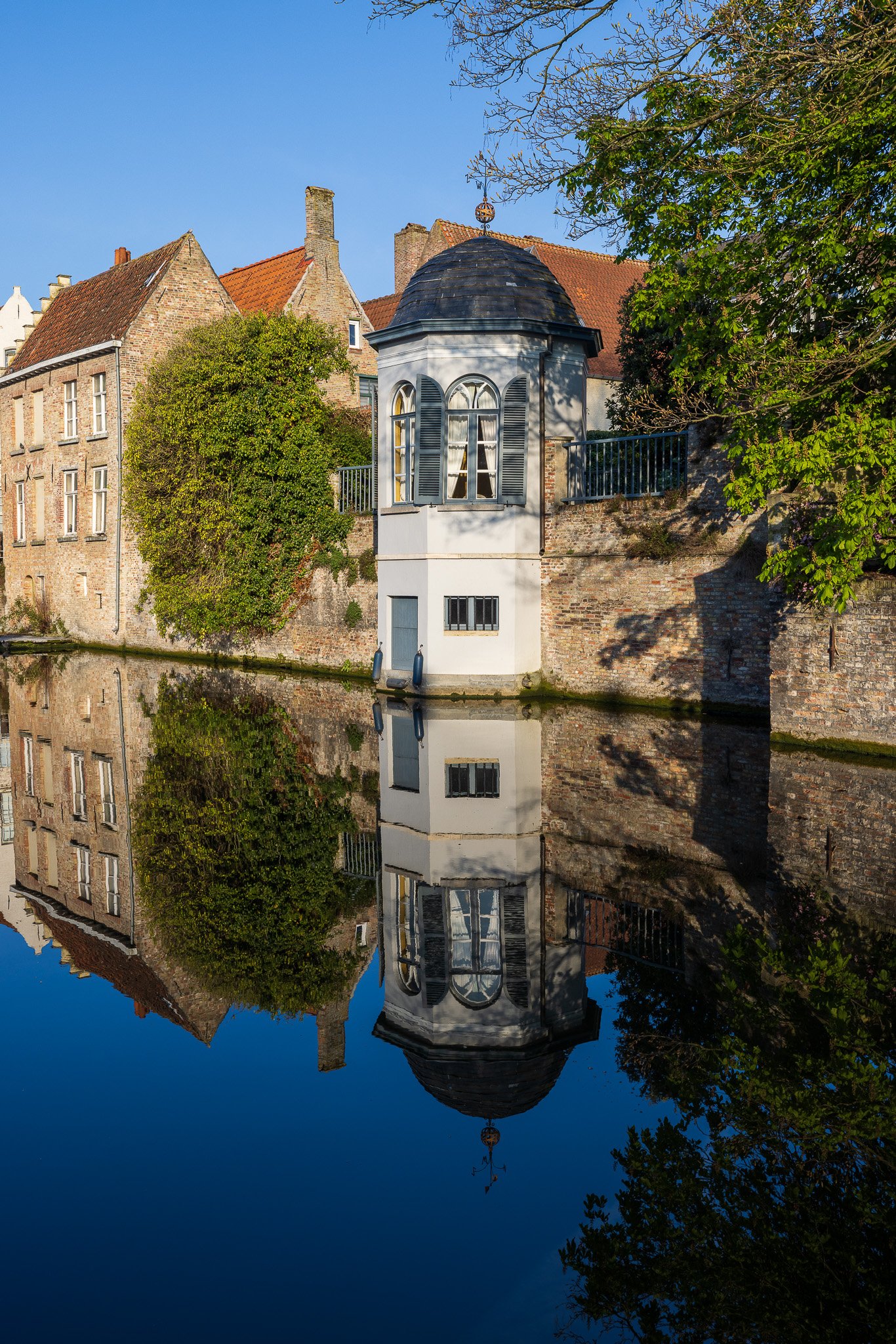
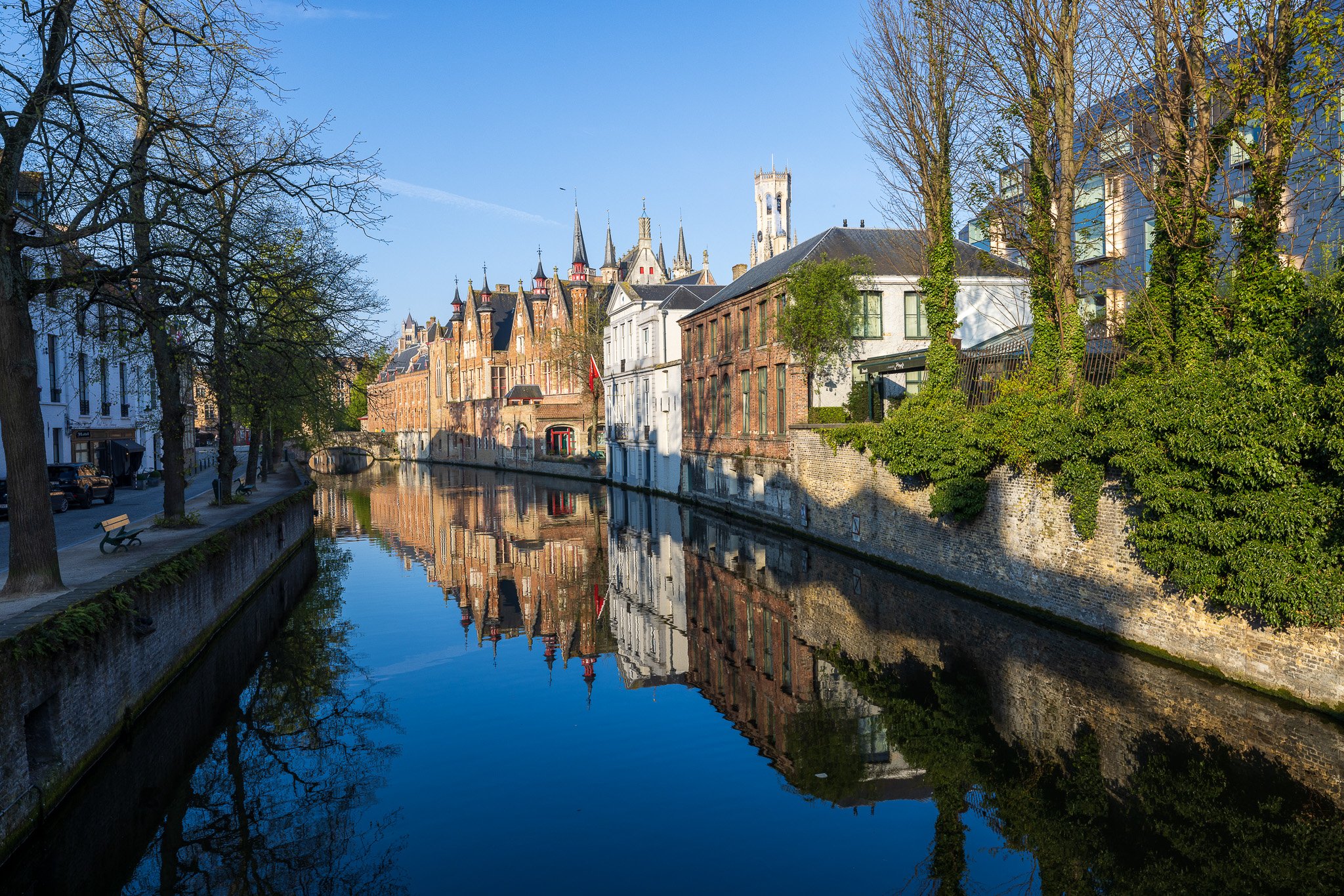
Beyond the specific named locations, the canals themselves are photography subjects. Walk along the Groenerei, the Dijver, and the quieter Langerei in the northern part of the city. Each canal street offers a different perspective, a different light, and a different set of foregrounds. Bicycles leaning against brick walls, flowers on window sills, and canal boats drifting slowly are all available to anyone willing to walk slowly and pay attention.
📷 Pro Tip: The northern canals around Langerei and the Saint Giles quarter see very few tourists. Visit in the early morning with a 35mm lens and no agenda. The compositions here are less obvious than Rozenhoedkaai, which means they are more personal. Shoot low from the canal banks to emphasize reflections. Look for arched bridge frames with canal stretches disappearing into the distance.
Best time: Early morning, any season. Access: Free, public streets. A 15-minute walk from Markt Square.
Night Photography in Bruges
This is a city made for Night Photography, so make sure to bring your tripod.
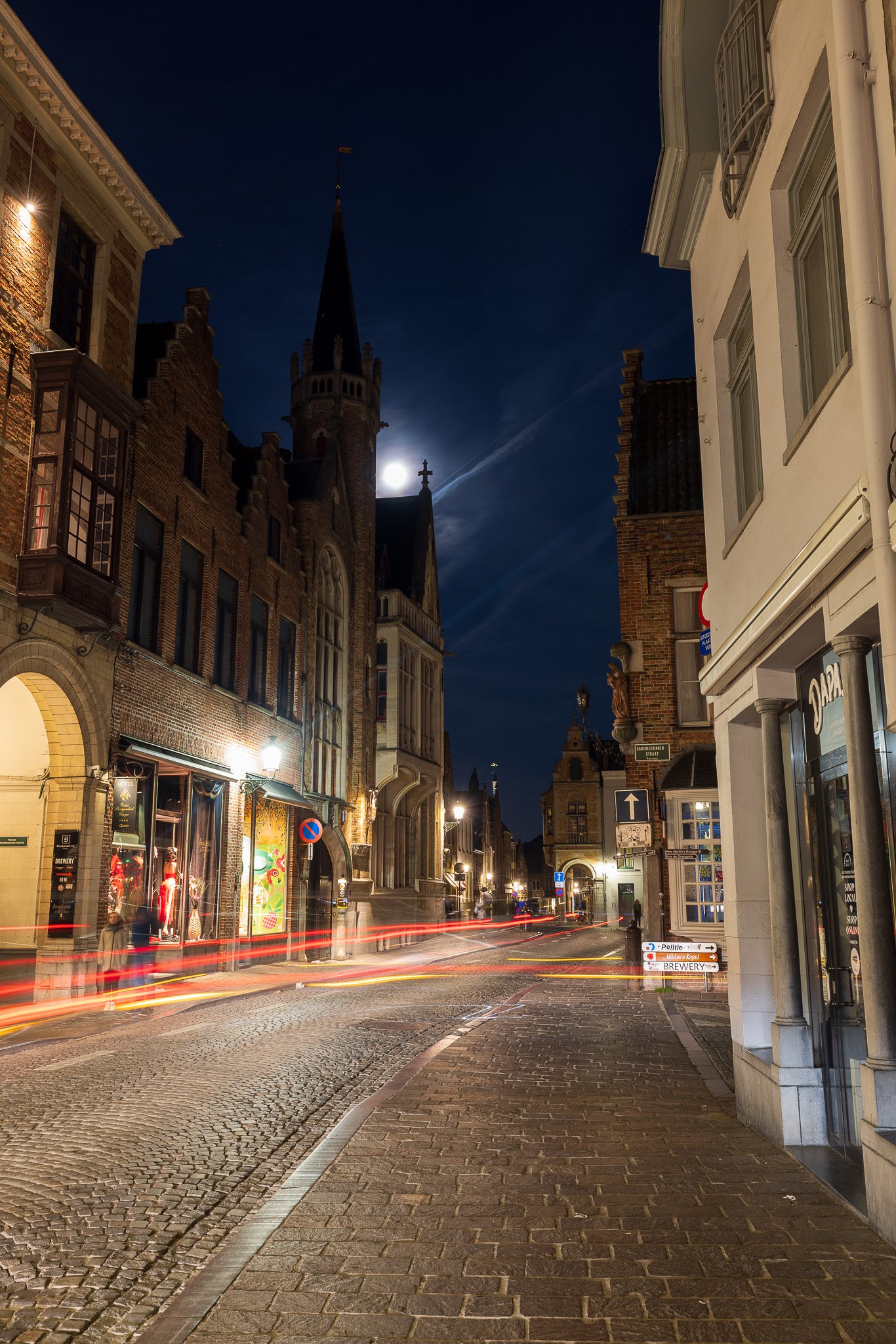
There are so many spots to take photos towards the Belfry.
Street Photography
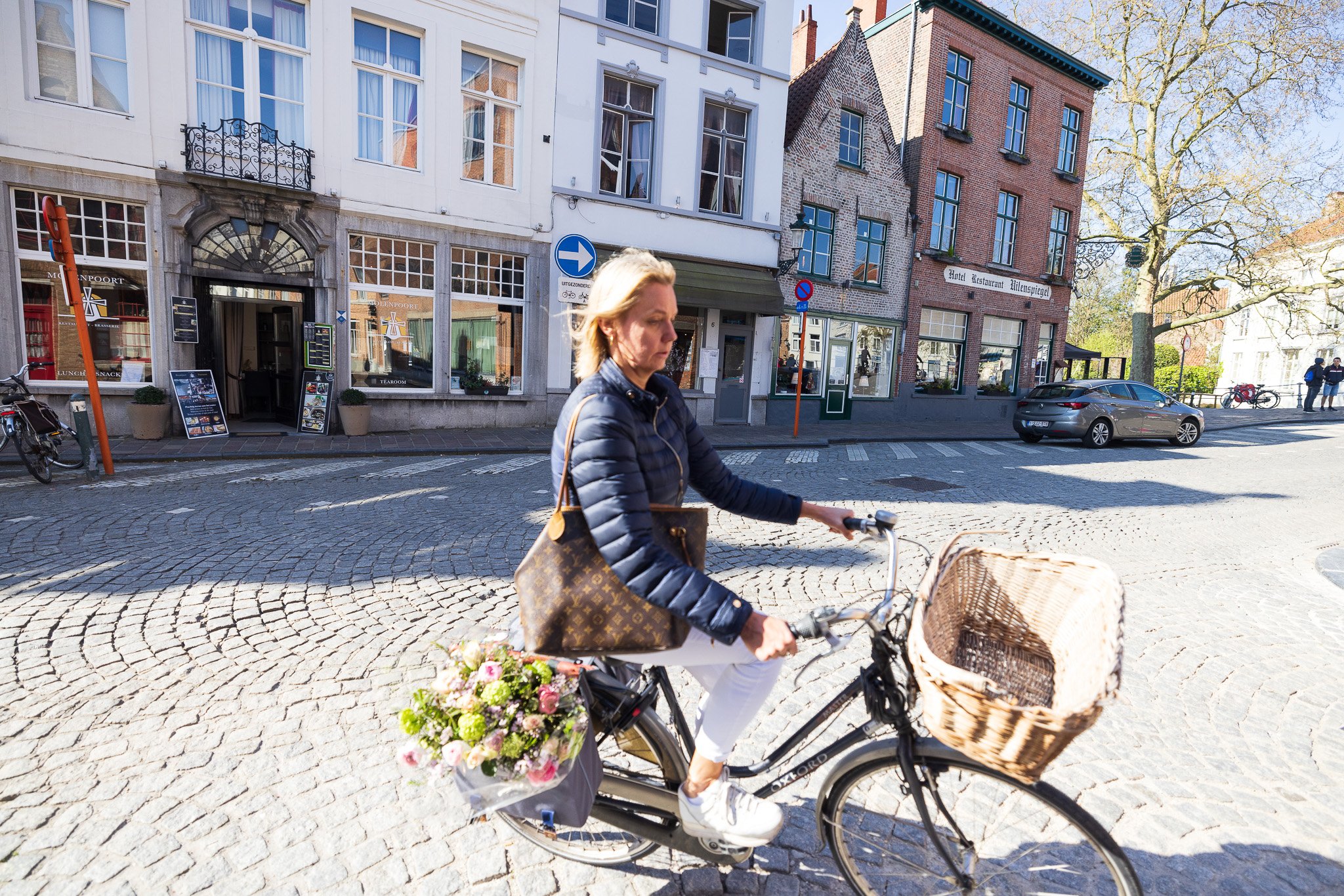
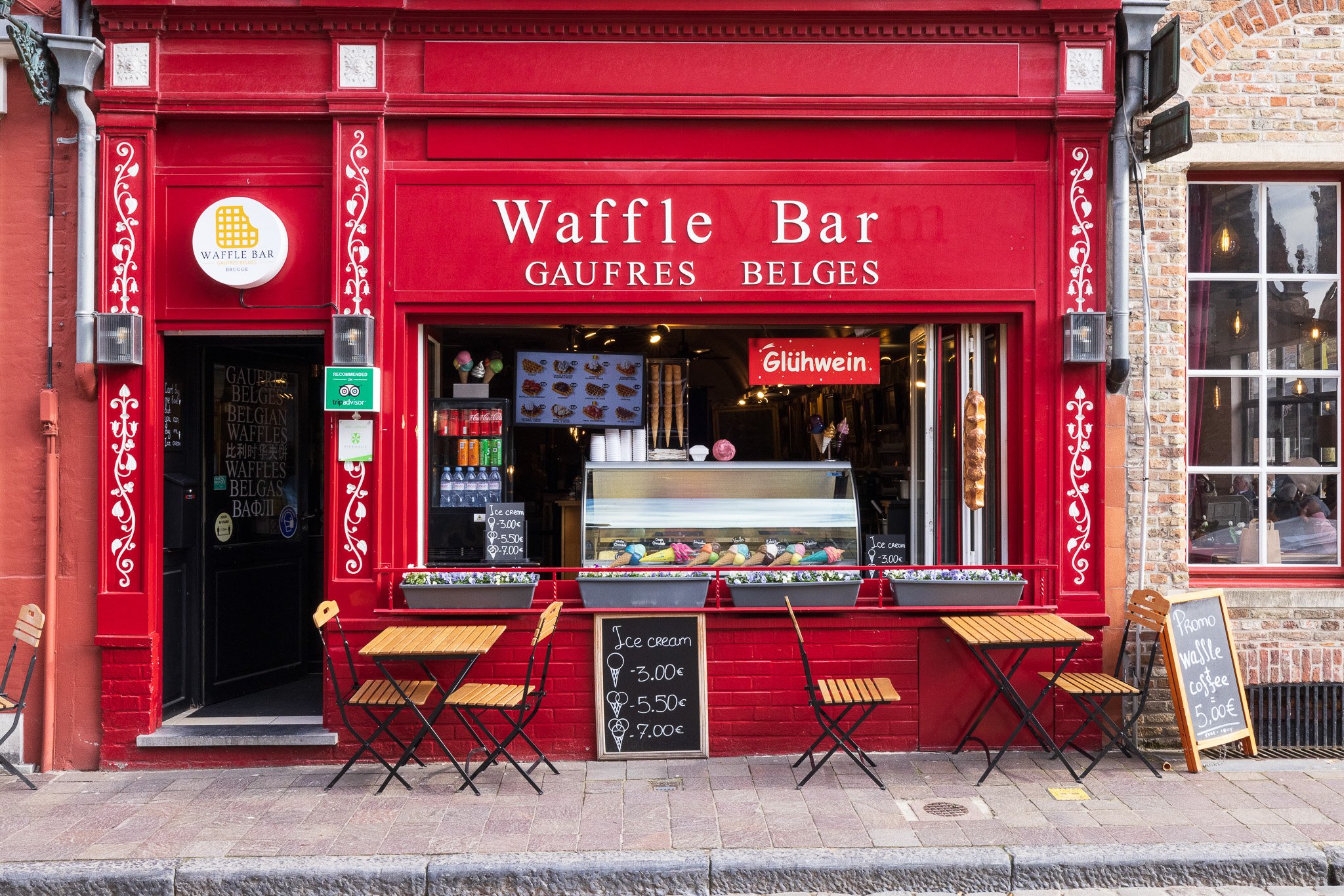
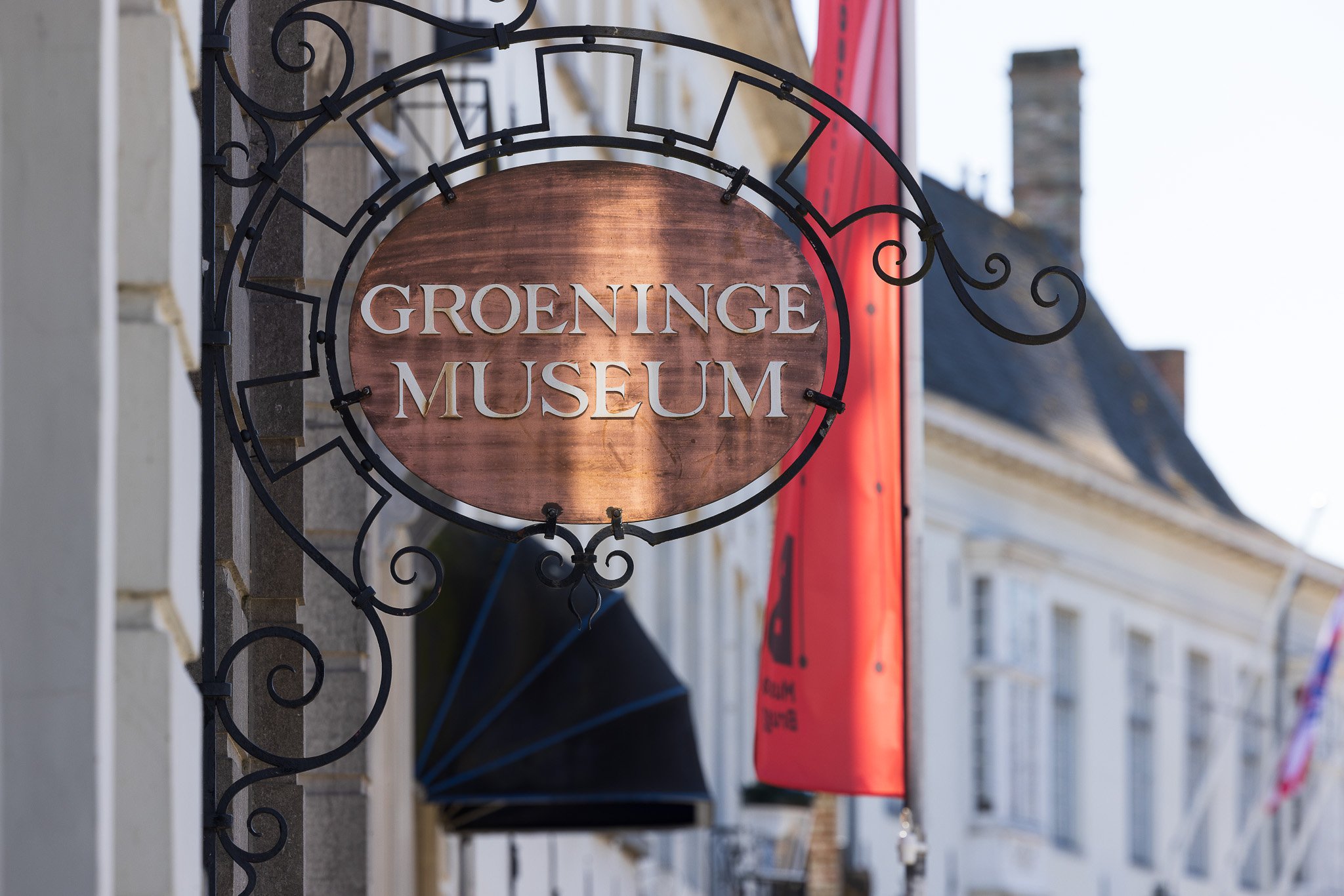
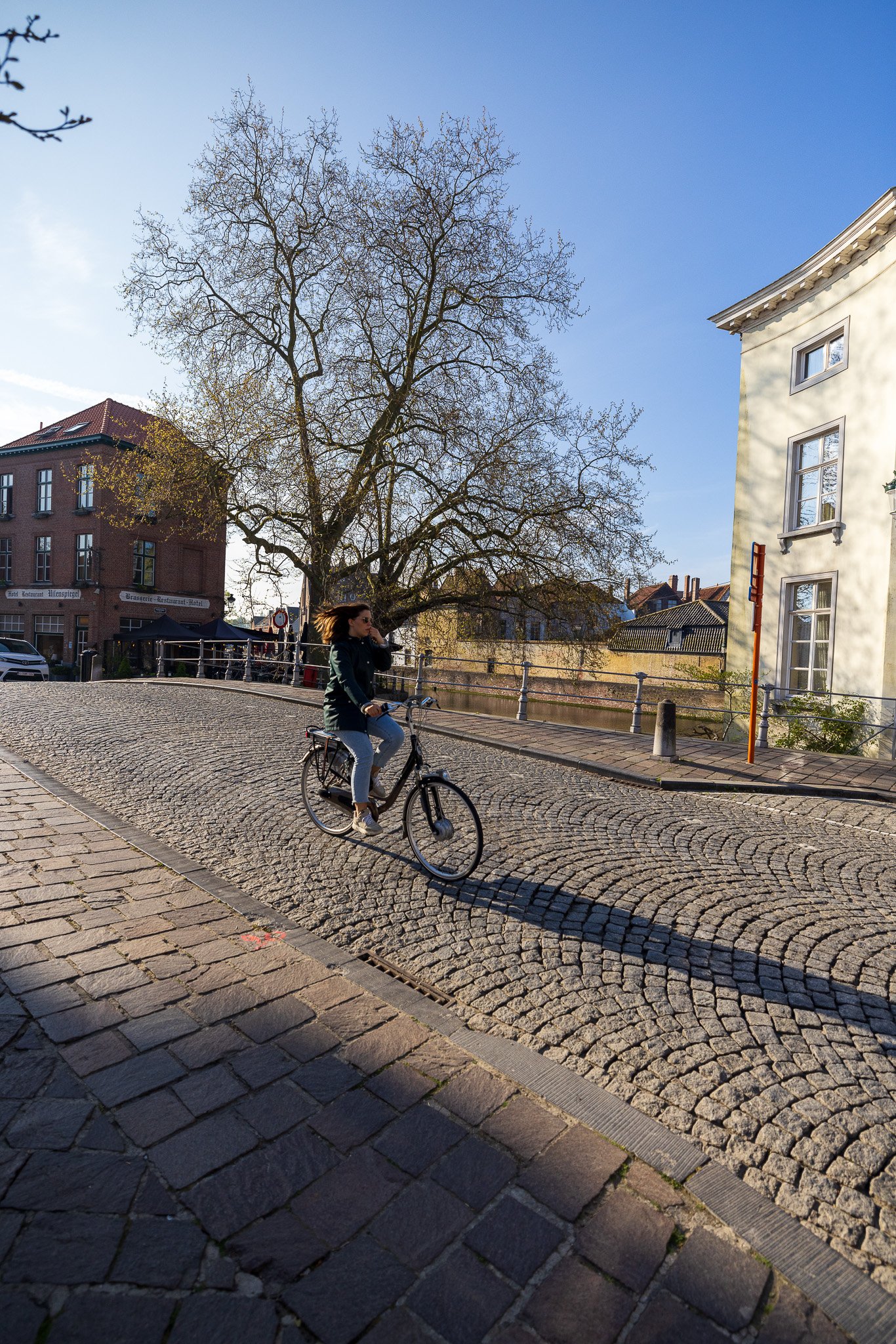
Finally, it is always fun to take some street photos.
Festivals & Events in Bruges
Bruges Winter Glow (late November through early January) The city installs large-scale light art throughout the historic center, sets up a Christmas market on Markt Square, and adds ice skating on the Minnewater lake. The combination of warm artificial light, cold dark evenings, and a near-empty city center makes this one of the best photography periods of the year. Bring a tripod for the light installations.
Procession of the Holy Blood (Ascension Day, May or June): A historic religious procession that has taken place since the Middle Ages. Participants in period costumes carry the relic of the Holy Blood through the city streets. Deeply atmospheric and visually compelling. Be respectful of the ceremonial nature of the event; shoot quietly from the side of the route rather than stepping into the crowd.
Bruges Beer Festival (February) is held in the Concertgebouw, with hundreds of Belgian beers available from dozens of breweries. A good excuse to stay in Bruges during the quietest photography season. The city is largely empty in February and the winter light on the canals is exceptional.
De Verloren Hoek Feesten (late July) A five-day neighborhood street festival near the Kruispoort windmills, with live music, local food, and a genuinely local crowd. Free to attend. One of the best opportunities for street and people photography in an authentic Bruges context.
Cactus Festival (July) Open-air music in Minnewaterpark, with the lake and its swans as a backdrop. Good for environmental portraiture and candid festival photography.
Frequently Asked Questions About Visiting Bruges
Is Bruges expensive?
It can be, especially the fine dining scene, but there's real range. Walking the canals costs nothing, and casual spots serving Belgian classics let you eat well without a special-occasion price tag.
Is Bruges safe?
Yes, it's one of the more relaxed cities in Europe to walk, day or night, including the historic center. Normal city awareness covers most of what you need to know.
Do you need a car in Bruges?
No, and it's actively discouraged. The historic center is compact and pedestrian-friendly, most photography locations sit within 15 to 20 minutes of each other on foot, and Uber and Bolt aren't even available in the city.
What are the best photo spots in Bruges?
Rozenhoedkaai at sunrise and blue hour, Bonifaciusbrug in spring when the garden blooms, and Jan Van Eyckplein after dark for quiet canal reflections are three I return to constantly. The full list with Pro Tips is above.
Can you fly a drone in Bruges?
No. Drones are restricted throughout the historic center, and there's no useful flight zone within any of the locations in this guide. Leave it at home.
What surprised you most about photographing Bruges?
The beauty of the canals. It really is the Venice of the North, and photographs don't fully prepare you for what it feels like standing at Rozenhoedkaai in person, especially at blue hour when the water goes still.
How many days do you need in Bruges?
Two to three nights. That's enough time to shoot the main locations at multiple hours, explore the quieter northern canals, and still eat and drink properly.
Is it worth visiting Bruges and Ghent on the same trip?
Yes, they're only 45 minutes apart by train and genuinely different cities. Bruges is more polished and postcard-perfect; Ghent is grittier with more raw street life. Together they tell the fuller story of Flemish Belgium.
Final Thoughts on Bruges
Bruges rewards patience and early mornings more than almost any other city in Europe. The photographers who arrive at Rozenhoedkaai before sunrise and stay through blue hour come home with images that look nothing like what everyone else shoots. The ones who show up at noon, walk the main square, and leave see a beautiful city but miss the point of it entirely.
Five visits in, I still find something new every time. The quieter neighborhoods, the light changing across the canal facades through different seasons, and the morning mist in April. This city will not exhaust you photographically; it reveals itself in layers.
Go. Stay at least two nights. Set your alarm.
Want to improve your photography while exploring some incredible destinations? Join me on one of my photography workshops! You can find all the details, including upcoming destinations and dates, through the links below.
Let's Stay Connected!
My Photography & Travel Guide to Ghent, Belgium. The perfect companion trip to Bruges, only 45 minutes away by train. Ghent is less polished and more raw, with grittier street life, excellent contemporary art, and the Graslei waterfront at night. The two cities together tell the full story of Flemish Belgium.
My Photography & Travel Guide to Amsterdam, Netherlands. A natural next chapter after Belgium. The canal architecture, the light in the morning over the Jordaan, and the visual density of the city reward the same approach that works in Bruges: arrive early, walk slowly, and stay past sunset.
My Photography & Travel Guide to Copenhagen, Denmark. Further afield but worth pairing for a broader northern Europe itinerary. The Nyhavn canal district shares a visual DNA with Bruges, and the design culture of Copenhagen adds an entirely different creative layer.
✈️ Travel Photography Planning Sessions
One-on-One Trip Planning with a Professional Travel Photographer
Don’t miss the shot. Let me help you plan for it.
Overview
Planning a photography-focused trip can be overwhelming. From figuring out the best places to shoot, to when the light is just right, to knowing which lens to pack — there are a lot of decisions to make.
This one-on-one Zoom session is your chance to get personalized travel photography advice from someone who’s spent the past 25 years exploring cities, coastlines, and wild places around the world — camera in hand.
Whether you're headed to Paris, Patagonia, Tokyo, or Tuscany, I’ll help you make sure your photography trip is well-planned and creatively inspired, so you come home with the images you dreamed of (and then some).
What’s Included
✅ Photography Location Planning
I’ll help you create a customized itinerary of the best photo spots, including off-the-beaten-path gems and iconic views.
✅ Best Times to Shoot
Get expert advice on lighting, golden hour, blue hour, and seasonal conditions for each location.
✅ Gear Recommendations
Not sure whether to bring the telephoto or the prime? We’ll walk through your gear and make sure you’re bringing the right tools for your destination and style.
✅ Hotel and Base Recommendations
Stay where it’s convenient for sunrise shoots and late-night strolls with your camera. I’ll recommend hotels that are photographer-friendly and well-located.
✅ Custom Travel Tips
From sunrise entry times to tripod rules at major landmarks, you’ll get insider tips to save time, avoid tourist traps, and make the most of your trip.
Who It’s For
This service is for anyone who:
Is planning a trip and wants to prioritize photography
Wants expert insight on the best places to shoot and how to get there
Is tired of missing the shot because of poor planning or bad timing
Is a beginner, enthusiast, or professional photographer looking for guidance before a trip
How It Works
Book a Session
Choose a time that works for you and tell me where you're headed.Share Your Plans
You’ll fill out a quick questionnaire so I know your travel dates, interests, and photography style.One-on-One Zoom Call (60 minutes)
We’ll meet via Zoom and walk through your trip together — from location ideas to gear and timing. You'll leave with a custom PDF full of notes and suggestions.Follow-Up Support
Get one round of email Q&A after your session to clarify anything as your plans evolve.
Why Work With Me?
I’ve spent the last 25 years photographing the world — from major cities to remote islands. I know what it’s like to travel and shoot under pressure, and I love helping people get the most out of their trips. This is not just about hitting “popular spots” — it’s about crafting a creative and efficient plan tailored to your trip, your gear, and your goals.
Pricing
$125 / Session
Includes:
60-minute Zoom call
Custom PDF summary with photography spots, gear tips, and travel recommendations
One follow-up email with additional Q&A
Introductory rate available through September 2025
Ready to Plan Your Trip?
Let’s make sure you’re ready — so when the light is perfect, you’re in the right place with the right gear.
Questions?
Please email me at vito@chasinghippoz.com if you're not sure whether this is right for you. I'm happy to chat.

🎓 Adobe Lightroom One-to-One Training
Master Post-Processing. Elevate Your Photography.
Post-processing is the final — and arguably most transformative — step in your photography workflow. Adobe Lightroom is an essential tool for today’s digital photographers, combining powerful editing tools with an intuitive system for organizing and showcasing your images professionally.
Whether you're just getting started or looking to refine your editing skills, I offer customized one-to-one Lightroom training designed to help you create images you’ll be proud to share.
---
💻 Why One-to-One Online Lightroom Training?
Over the years, I’ve found that personalized training is the most effective way to learn Lightroom. Unlike group sessions, a one-to-one format allows us to move at your pace, focus on your specific goals, and eliminate the frustration of mismatched experience levels.
Plus, with online sessions via Zoom, you can learn from the comfort of your home — no travel or accommodation needed. It's the most convenient, cost-effective, and time-efficient way to upgrade your editing game.
---
🧠 Tailored Topics to Match Your Goals
Our training is completely customizable, but here’s an outline of the modules we can cover — either in full or à la carte.
---
🔧 Lightroom Setup – Part 1: Getting Started
Set up Lightroom properly for long-term success. We’ll tackle the fundamentals to create an efficient, organized workflow:
- What Lightroom is (and isn’t)
- How the interface and modules work
- Setting preferences for your needs
- Understanding the Catalog and folder system
- Importing images efficiently
- Adding keywords during import
---
🗂 Lightroom Setup – Part 2: Organize Like a Pro
Build a storage system that grows with you:
- Folder structure tips and best practices
- Moving and renaming files within Lightroom
- Reviewing, rating, and filtering images
- Creating Smart Collections and Collection Sets
- Keywording strategies and metadata organization
---
🎨 Lightroom Editing – Part 1: Core Editing Skills
Master the Develop module and create consistent, polished images:
- Global adjustments in the Basic panel
- White balance, contrast, vibrance, and saturation
- Cropping and converting to black & white
- HSL panel tuning
- Sharpening and noise reduction
- Creating and saving presets
- Exporting for print, web, or social media
---
✨ Lightroom Editing – Part 2: Advanced Techniques
Take your editing to the next level with creative, selective tools:
- Radial and Gradient filters
- The Adjustment Brush
- Advanced masking and luminosity adjustments
- Enhancing portraits (skin, eyes, teeth)
- Spot removal and basic cloning
- Merging for HDR and panoramas
---
💼 Session Details & Pricing (USD)
Tailored One-to-One Lightroom Tuition:
- Single Session (2 hours): $199
Before our session, we’ll have a brief consultation to customize your training plan and ensure it meets your exact needs.
---
Ready to take control of your editing workflow and bring out the best in your images?
Let’s work together to turn your vision into vivid, powerful photos.
📩 Get in touch to schedule your personalized Lightroom session.