Oslo, Norway Travel & Photography Guide: Best Photo Spots, Things to Do & Hidden Gems
Oslo always surprises me in a good way. Each time I visit, I like the city more.
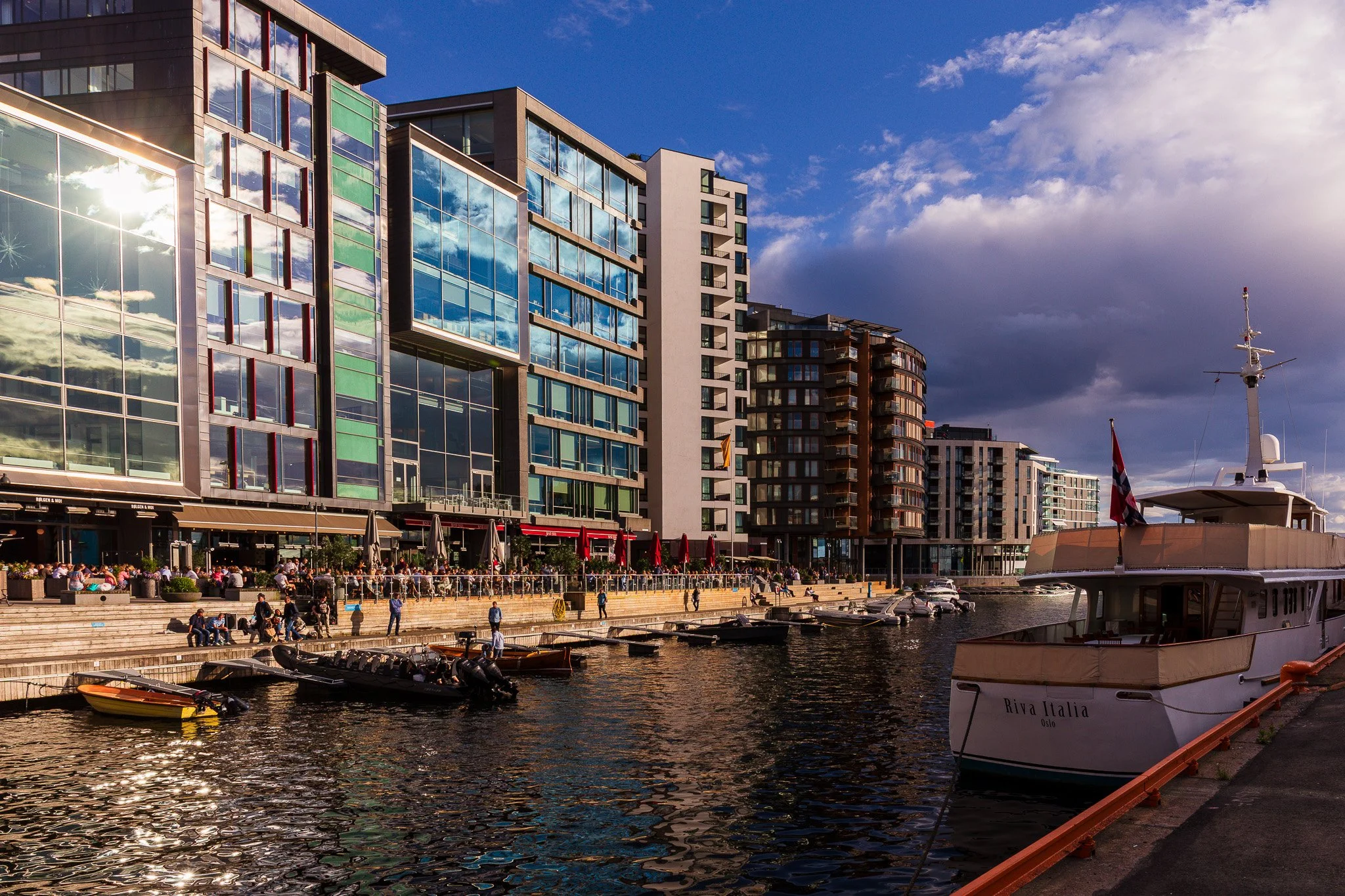
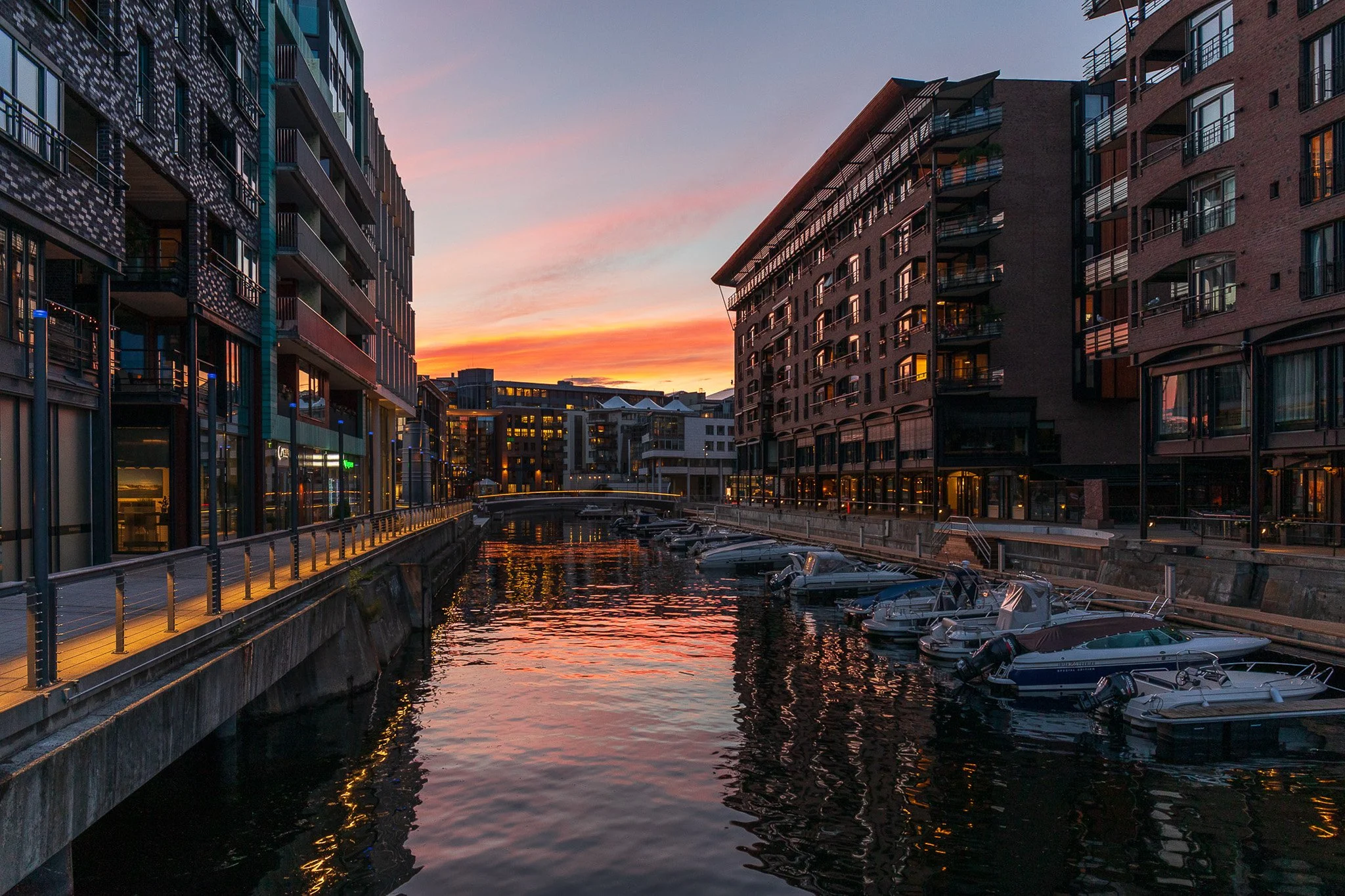
I had been walking since early afternoon — the Opera House in the morning, the Vigeland Sculpture Park at midday, Akershus Fortress in the afternoon — and by 7 pm I was on the waterfront at Aker Brygge watching the light change over the Oslofjord. The sky had been flat all day. And then, about twenty minutes before sunset, it broke open. The clouds parted, and the light came through horizontal and gold and reflected off the water in front of me, and the city suddenly looked like a completely different place.
That is the thing about Oslo. It is a patient city. It waits.
Oslo does not announce itself the way Amsterdam does or Edinburgh. The architecture is modern and clean. The streets are orderly. Everything runs. You could be forgiven, arriving for the first time, for thinking it is simply a very efficient capital in a very wealthy country. And then the light changes, or the fog comes in off the fjord, or you turn a corner in the Damstredet neighborhood and find 18th-century wooden houses that look like they belong in a countryside village, and Oslo reveals another layer entirely.
For photographers, the city works on multiple registers simultaneously. The Oslo Opera House is one of the finest pieces of contemporary architecture in Europe — a building you can walk on, whose white Carrara marble planes catch the morning light from the east and reflect in the Bjørvika harbor below. Vigeland Sculpture Park holds more than 200 bronze and granite works by Norwegian sculptor Gustav Vigeland, all free, all accessible, all available before 7am when the park is empty and the light is perfect on the human forms. The Holmenkollen Ski Jump above the city offers a panorama of Oslo and the fjord that no photograph fully prepares you for. And in summer, the midnight sun gives golden hour that lasts until 11pm and starts again at 4am.
For travelers, Oslo is world-class in the ways that matter most. The museums are extraordinary — the MUNCH, the Viking Ship Museum, the National Museum, the Kon-Tiki. The food scene, anchored by Norway's only three-Michelin-star restaurant and a generation of New Nordic chefs, is as serious as any in Scandinavia. The coffee culture is some of the finest in the world, with Tim Wendelboe alone justifying a visit for any serious coffee drinker.
Norway is expensive. Go knowing that and planning around it. The museums, the Opera House roof, Vigeland Park, and most of the best photography locations are entirely free. The costs concentrate in hotels, restaurants, and transport. Budget for those and spend the rest on experiences.
In this Photography Guide to Oslo, I share the places and experiences that continue to draw me back. You will find my favorite photography locations, guidance on when and where to shoot, practical travel tips, and gear recommendations, along with cultural insights to help you explore and photograph Oslo with confidence, respect, and ease.

Vigeland Sculpture Park
Photographer's Notes
Before you go, here are my own takeaways.
Favorite Season: Summer, for the midnight sun
Favorite Location: The Royal Palace and Palace Park
Favorite Hotel: The Thief
Favorite Restaurant: Hanami
Favorite Café: Tim Wendelboe
Favorite Lens: 16-35mm f/2.8
Would I Return? Yes, I would.
Where to Stay in Oslo
For photographers, the best bases are the Tjuvholmen/Aker Brygge waterfront — closest to the fjord, the Opera House, and the western photography circuit — and the city center/Sentrum, which puts you within walking distance of Karl Johans gate, the National Theatre, Vigeland Park by tram, and the Royal Palace. Both neighborhoods are walkable to each other and well-connected to the rest of the city.
The Thief
Luxury in Oslo, Norway
The Thief — Landgangen 1, Tjuvholmen
This is my favorite hotel in Oslo, and the one I return to every time. The Thief sits at the very tip of Tjuvholmen — the small peninsula whose name roughly translates to "Thief Island," a reference to its history as Oslo's execution grounds for thieves and smugglers in the 18th century. The neighborhood has transformed entirely. Today Tjuvholmen is Oslo's most polished waterfront development: car-free, quiet at night, lined with architecture by some of the most significant designers working in Norway, and home to the Renzo Piano-designed Astrup Fearnley Museum of Modern Art directly next door.
Three sides of The Thief face water. Every room has a private balcony. The 118 rooms and suites are furnished with bespoke pieces created by international designers and hung with original works from the Astrup Fearnley Collection — Cindy Sherman, Andy Warhol, Damien Hirst, and others. Hotel guests receive free entry to the museum by showing their room key, which is one of the better perks in Oslo hospitality. Book a room facing east, or specify a water-facing balcony when reserving. Some rooms look inward over the courtyard, which is pleasant but not the reason you came.
Hotel Continental — Stortingsgata 24–26, Sentrum
The Hotel Continental has been Oslo's most quietly distinguished luxury address since the 19th century, family-owned across multiple generations. Directly across the street from the National Theatre and a three-minute walk from Karl Johans gate, it sits at the center of Oslo's cultural and civic life. The celebrated Theatercafeen on the ground floor is an Oslo institution: an art nouveau brasserie where politicians, actors, and artists have been eating lunch since 1900, and where locals still outnumber tourists at every service. Corner suites offer views of the Oslofjord and the Nobel Peace Center.
Amerikalinjen — Jernbanetorget 2, Sentrum
Amerikalinjen occupies the former headquarters of the Norwegian America Line, the shipping company that transported thousands of Norwegian immigrants across the Atlantic between 1910 and 1980. The building's bones are extraordinary: parquet floors, high ceilings, a soaring atrium, and maritime artifacts and vintage travel posters throughout the corridors. The 122 rooms blend Art Deco heritage with contemporary Nordic comfort. The Pier 42 bar is a serious cocktail destination. The hotel is steps from Oslo Central Station, 10 minutes' walk from the Opera House, and within easy reach of both the waterfront and Grünerløkka.
Mid-Range Oslo, Norway
Hotel Bristol Oslo — Kristian IVs gate 7, Sentrum
A grand, classic hotel on a central Oslo street with a reputation for warmth and consistency that has made it a returning-guest favorite for decades. The Bristol Bar is a city landmark: atmospheric, dark-paneled, and the kind of bar that rewards a long evening. Excellent location for the National Gallery, Karl Johans gate, and Aker Brygge.
Thon Hotel Rosenkrantz Oslo — Rosenkrantz Gate 1, City Center
Well-positioned for exploring the city center on foot, with clean and comfortable rooms and easy transport connections. A reliable, photographer-friendly mid-range base that puts you close to everything.
Scandic Victoria — Rosenkrantz Gate 13, City Center
Comfortable, well-located, and accessible. A solid mid-range choice for travelers who prioritize centrality and value. The tram stop for Vigeland Park is a short walk away.
Best Time to Visit Oslo
Oslo rewards photographers in every season, but they each deliver a completely different experience.
Summer (June through August) is when the city comes alive. The midnight sun is the headline for photographers: in late June, you get workable golden light from around 10 pm through to 4 am with barely a dark hour in between. Sunrise on the Opera House roof at 4 am with no one else around is one of the great photography experiences in Scandinavia. The fjord fills with activity, the outdoor bars open, and the Bygdøy ferry runs. The tradeoff is crowds at the major attractions from mid-morning onward.
Shoulder seasons (May and September) are the smart photographer's window. May brings long, bright days, blooming trees in the parks, and manageable crowds. September brings warm golden light, foliage color beginning in the surrounding forests, and a city that has returned to its normal rhythm after summer. Both months offer excellent conditions for the Opera House, Vigeland Park, and Aker Brygge.
Winter (December through February) is genuinely beautiful if you are prepared for it. Fresh snow on the bronze sculptures at Vigeland is extraordinary. The city lights reflect in the harbor water during the long winter evenings. Blue hour comes early and lasts. Holmenkollen in winter gives you the full Nordic landscape experience. Carry hand warmers and pack extra batteries — the cold drains them faster than you expect.
The worst period for photography is overcast late autumn without snow (late October into November), when the light is flat, the days are very short, and the city has not yet acquired its winter character. Avoid it unless you have a specific reason to go.
The Waterfront
How Many Days Should I Visit Oslo
Three days give you a solid introduction to the city and time to hit the major photography locations at a reasonable pace. Four to five days is the better choice if you want to shoot each location in the right light rather than on whatever schedule the tour buses keep.
A three-day framework:
Day one: Opera House at sunrise, Bjørvika waterfront and MUNCH Museum through the morning, Akershus Fortress in the afternoon, Aker Brygge and Tjuvholmen at blue hour.
Day two: Vigeland Sculpture Park before 8am, Damstredet and Telthusbakken in the morning light, Grünerløkka for coffee and street photography at midday, Holmenkollen in the late afternoon for the panorama at golden hour.
Day three: Bygdøy Peninsula for the Viking Ship Museum and the harbor crossing, Ekebergparken for the sunset panorama, a long dinner on the Tjuvholmen waterfront.
If you have a fifth day, use it to revisit the locations where the light was not right the first time. In summer, that sunrise window at 4am is worth setting the alarm for — the Opera House roof with the first light hitting the marble and no one else around is unlike anything else in the city.
Getting Around Oslo, Norway
Oslo is highly walkable, and the public transport system is clean, efficient, and very easy to use. The Ruter travel card covers the metro (T-bane), trams, buses, and ferries within the city zones — load it up, and you will not need to think about it again. The metro is modern, well-signed, and runs frequently. Trams serve most of the photography neighborhoods you will want to reach, including Vigeland Park (Tram 12 or 19 to Frogner stadion) and Grünerløkka.
Bolt and Uber are both available in Oslo, but expensive by most standards. Use them for early morning transfers with gear when you do not want to deal with trams, or for late-night returns from distant locations.
For photographers carrying a full kit, the city's walkability is its biggest advantage. Most of the core photography circuit — Opera House, Aker Brygge, Tjuvholmen, Akershus Fortress, and the city center — can be covered on foot. Vigeland Park is 20 minutes by tram from the center. Holmenkollen is 20 minutes on the T-bane Line 1. The Bygdøy Peninsula is a short ferry ride from Aker Brygge (May through September) or a bus ride year-round.
Oslo's streets are safe at any hour, which matters when you are shooting at 4 am in summer or heading out in the dark for a winter sunrise.

A Very Cool Metro
Where to Eat in Oslo, Norway
Oslo's food scene has undergone one of the most dramatic transformations of any Scandinavian capital. The city now holds 14 Michelin stars across 11 restaurants, leads the New Nordic movement at its highest levels, and has a café culture that stands with the finest in the world. The Oslofjord and Norway's cold coastal waters provide exceptional seafood. The Norwegian landscape supplies game, foraged mushrooms, and dairy of extraordinary quality.
Norway is expensive — plan for it. A Michelin-starred tasting menu at Maaemo or Kontrast is a special-occasion commitment. The mid-range options, including the excellent food hall at Mathallen and the neighborhood restaurants of Grünerløkka, offer serious cooking at significantly more accessible cost.
My personal favorites: Fru K at The Thief for a special evening on the waterfront, Hanami for sushi after a long photography day, Tim Wendelboe for the finest single cup of coffee in Oslo.
Maaemo
Dronning Eufemias gate 23, Bjørvika
Norway's only three-Michelin-star restaurant, and one of the most significant dining experiences in Scandinavia. Chef-owner Esben Holmboe Bang's kitchen uses exclusively organic, biodynamic, or wild-sourced Norwegian produce — foraged ingredients, coastal seafood, highland game, mountain dairy. Nothing arrives from elsewhere. The dining room near the Opera House is designed to feel private and clandestine: high vaulted ceilings, candlelit, with an open kitchen and an open fire whose smoke reaches you the moment you enter. You are seated for an evening, not a meal. Reservations sell out months in advance.
Kontrast
Mariboes gate 7, Vulkan district
Two Michelin stars and the most forward-thinking kitchen in Oslo after Maaemo. Swedish-born chef Mikael Svensson has built deep relationships with local farms, fishers, and foragers, producing a menu of extraordinary ethical sourcing and technical precision. The space is deliberately industrial — exposed concrete and steel in a neighborhood that was itself working-class before Oslo's creative class arrived. The food is the counterpoint: refined, delicate, and rooted in the best the region produces. Reserve ahead.
Vaaghals
Dronning Eufemias gate 8, Bjørvika
One of the most consistently praised mid-range restaurants in Oslo, Vaaghals serves contemporary Norwegian cooking with a farm-to-table philosophy and a menu that changes with the season. The open kitchen, warm Nordic interiors, and genuine enthusiasm of the team create a dining room that feels both elevated and unpretentious. Located in the Bjørvika waterfront district, it is an easy walk from the Opera House. Reserve ahead for dinner.
Hanami
Kanalen 1, Tjuvholmen
My go-to for sushi in Oslo, and one I return to every visit. Located a short walk from The Thief in Tjuvholmen, this Japanese restaurant pairs robata grill cooking with well-sourced sushi and sashimi in a sleek waterfront setting. A focused menu that does not try to do too much, a beautiful view, and excellent fish sourcing make it one of the most reliably enjoyable meals in the city. Walk-in for lunch is usually possible; reserve for dinner.
Smalhans
Ullevålsveien 43, St. Hanshaugen
A neighborhood restaurant in a residential area north of the city center, with a devoted local following and a philosophy built around honest, seasonal ingredients without unnecessary complexity. The room is warm, the wine list thoughtful, and the cooking is the kind that makes you understand why people live in the neighborhood it anchors. Good value by Oslo standards.
Mathallen Oslo
Vulkan 5, Vulkan district
Oslo's permanent food hall, housed in a converted industrial building in Vulkan, brings together the best of Norwegian artisan food culture under one roof. Cheese counters, butchers, bakeries, fish markets, wine shops, and a dozen casual restaurant stalls serving everything from Japanese ramen to Norwegian open-faced sandwiches. For photographers and travelers who want to eat seriously without committing to a formal restaurant, Mathallen is the most interesting single dining destination in the city.

Coffee
Oslo's coffee culture is among the finest in the world, anchored by a generation of roasters and baristas who compete internationally and win.
Tim Wendelboe — Grünerløkka. A world barista champion's roastery and café. Single-origin espresso, precise extraction, the most technically serious cup of coffee in Norway. This is the one.
Supreme Roastworks — beautifully designed, with coffee that matches the aesthetic. One of the best in Oslo's newer wave.
Kaffebrenneriet — a local chain that maintains genuine quality across its locations. Reliable for a warm cup anywhere in the city, and an excellent spot to sit with a laptop and edit the morning's work.
Photography Gear to Bring for Oslo, Norway
Oslo rewards a versatile kit. I shoot with the Canon EOS R5 Mark II as my primary body, and I carry the Sony A7R V as a second body for the high-resolution work at Vigeland and the harbor panoramas. The Leica Q3 is my walk-around camera for Grünerløkka street work, and anywhere I want to move fast and light.
For lenses, three focal ranges cover everything the city offers:
A 16–35mm is essential for the Opera House roof and the wide panoramas from Holmenkollen and Ekebergparken. Oslo's architecture and its elevated viewpoints were made for ultra-wide compositions.
A 24–70mm lens handles most of the street photography, the harbor scenes, and the interior museum work. This is the lens that stays on most of the day.
A 70–200mm is worth packing for compressing the city skyline from the elevated viewpoints and for isolating individual sculptures in Vigeland Park against the sky.
A tripod is essential. Blue hour at the Opera House, harbor long exposures, and any winter shooting when Oslo's extraordinary low light demands longer shutter speeds — a tripod is not optional here. I use Kase ND filters for the harbor waterfront, where the water movement benefits from a 3 or 6-stop reduction in midday light. Bring a circular polarizer for the fjord and harbor water on bright days.
Pack spare batteries regardless of season. Oslo's cold weather, particularly in winter and shoulder seasons, drains them faster than expected. A Samsung T7 SSD for daily backup is standard. Memory cards are obvious, but bring more than you think you need — summer shooting on long days generates a lot of files.
Drone restrictions: Oslo city center is a permanent restricted area (R-102) under Norwegian civil aviation regulations, and drone flights are banned without explicit permission from CAA Norway. This applies to all the major photography locations in the city center, including the Opera House, Vigeland Park, and Aker Brygge. If you want drone footage, plan for locations outside the R-102 zone and check the SafeToFly app before flying anywhere in Norway.
iPhone Tips for Oslo
Oslo is one of the best cities in Scandinavia for iPhone photography, and the quality of light here — especially in the long summer evenings — does a lot of the work for you.
For the Vigeland Sculpture Park, use Portrait Mode on the bronze figures to separate the sculpture from the sky behind it with a shallow depth of field effect. The "Angry Boy" statue photographs particularly well with the sky as a clean background.
At the Opera House, switch to the ultrawide lens for the full sweep of the marble roof planes from the water-level position on the east side. Get low. The geometry of that building rewards an extreme perspective.
For Grünerløkka street photography, use the standard 1x lens in natural light and shoot in ProRAW if your iPhone supports it. The color rendering in ProRAW gives you more flexibility in Lightroom Mobile afterward, especially in the warm summer evening light.
The Night mode on current iPhones handles Oslo's blue hour beautifully at Aker Brygge. Put the phone on a railing or small Gorilla Pod for exposures longer than 3 seconds. The harbor reflections in the evening are exactly the kind of image that iPhone Night mode was designed for.

Vigeland Sculpture Park
Photography Locations in Oslo
Oslo Opera House
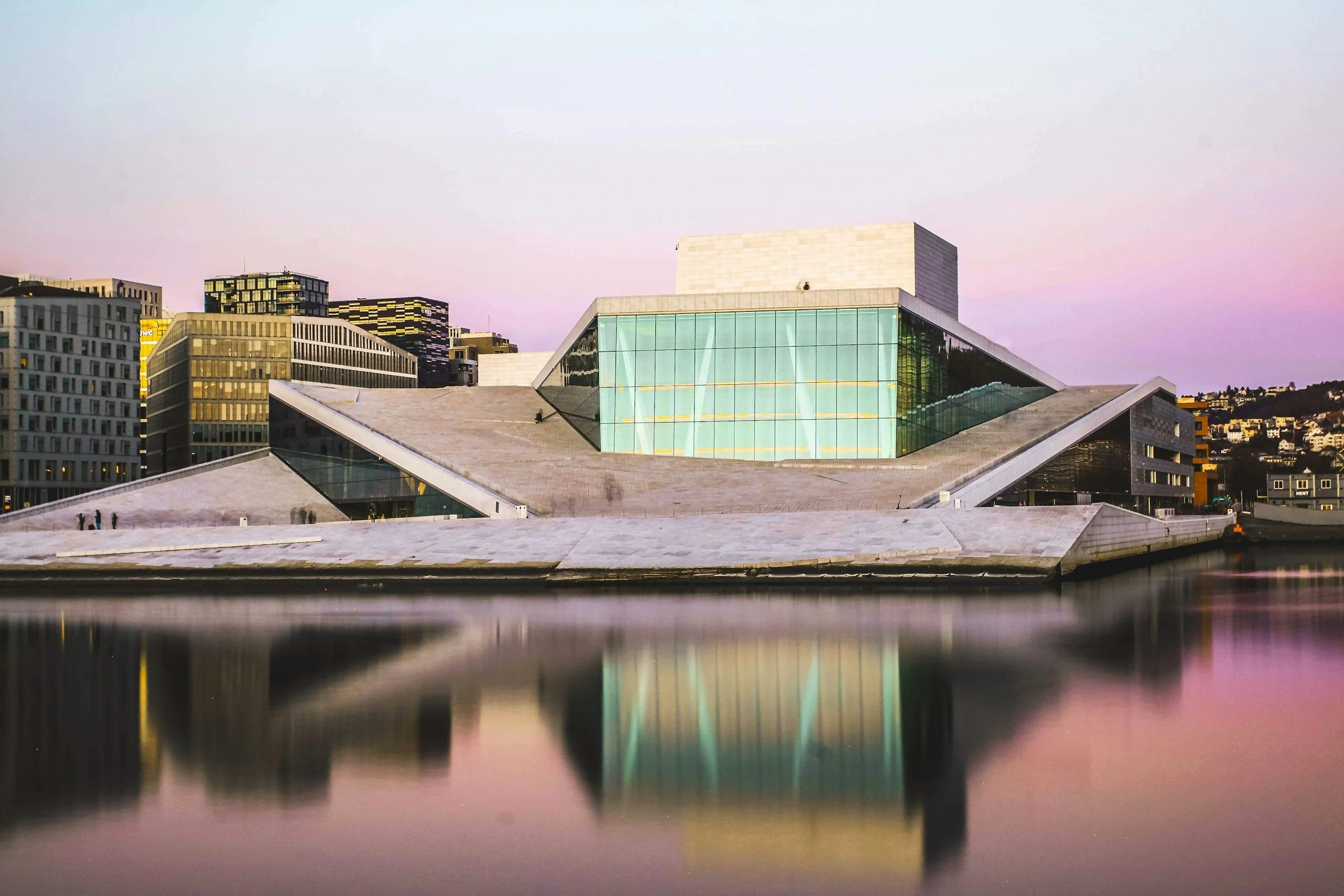
Designed by Norwegian firm Snøhetta and completed in 2008, the Oslo Opera House won the EU Prize for Contemporary Architecture in 2009 and has become one of the most visited public spaces in Norway. The building's most distinctive feature is its sloping white marble roof, which descends from the ridge of the building down to the waterline of the Bjørvika harbor — the entire exterior surface is a public plaza that anyone can walk on, free, at any time.
The white Carrara marble creates extraordinary photography conditions. At sunrise from the east, the angled planes catch the first light and glow while the harbor below reflects the building and the brightening sky. The geometric lines of the roof create natural leading compositions from almost every angle. The floating sculpture "She Lies" by Monica Bonvicini sits in the harbor adjacent to the building — a glass and steel work whose reflective surfaces change with the light and weather.
📷 Pro Tip: Arrive 30 minutes before sunrise and position yourself on the upper ridge of the roof for the first light hitting the marble planes below you. A 16–24mm captures the full geometric sweep of the sloping surface with the harbor below; a 24–70mm handles the mid-range architectural compositions. For the reflection shot, drop to the water level on the east side of the building at blue hour. Photography is permitted on the roof and in the public foyer. The marble roof can be restricted in extreme weather conditions — check conditions before a winter session. In summer, the 4 am sunrise means you may have the entire roof to yourself.
Best time: Sunrise or blue hour. Access: Free. Open 24 hours on the roof. 5 minutes' walk from Oslo Central Station.
Vigeland Sculpture Park (Vigelandsparken)
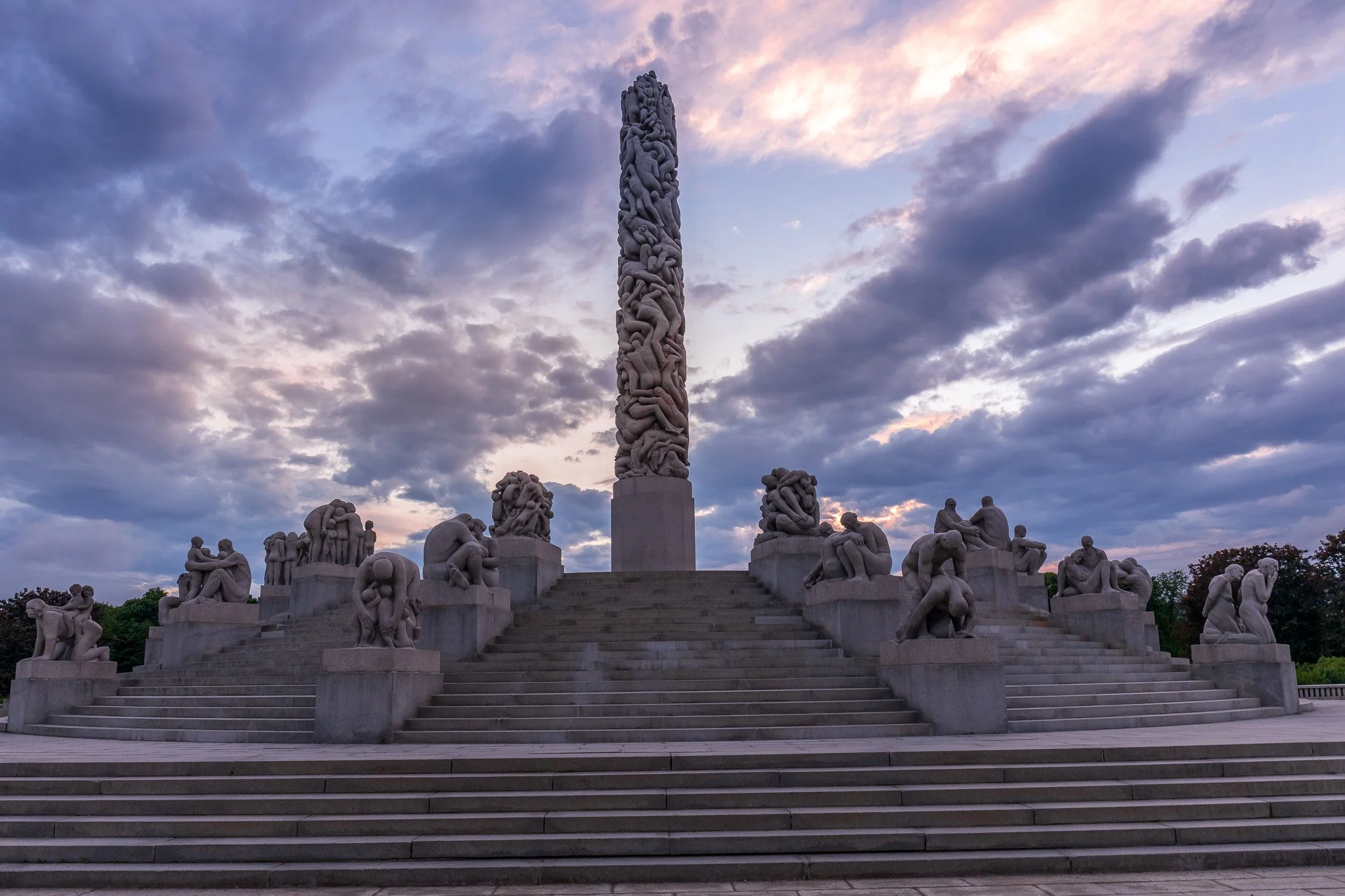
Vigeland Sculpture Park is the world's largest sculpture park created by a single artist, featuring more than 200 bronze and granite works by Norwegian sculptor Gustav Vigeland spanning 80 acres within Frogner Park. The park is free, open around the clock, and genuinely one of the most photographically rewarding locations in Norway.
The sculptural program is extraordinary in its ambition: over a lifetime of work, Vigeland explored the full spectrum of human experience — birth, childhood, love, conflict, aging, death — through the human form, rendered without clothing or temporal markers so that each figure exists outside any specific era. The centerpiece is the Monolith, a 17-meter column carved from a single piece of granite and covered with 121 human figures spiraling upward.
Most visitors start at the wrought-iron Main Gate on Kirkeveien, continue over the Bridge lined with 58 bronze figures, pause at the great bronze Fountain, and then climb to the Monolith plateau.
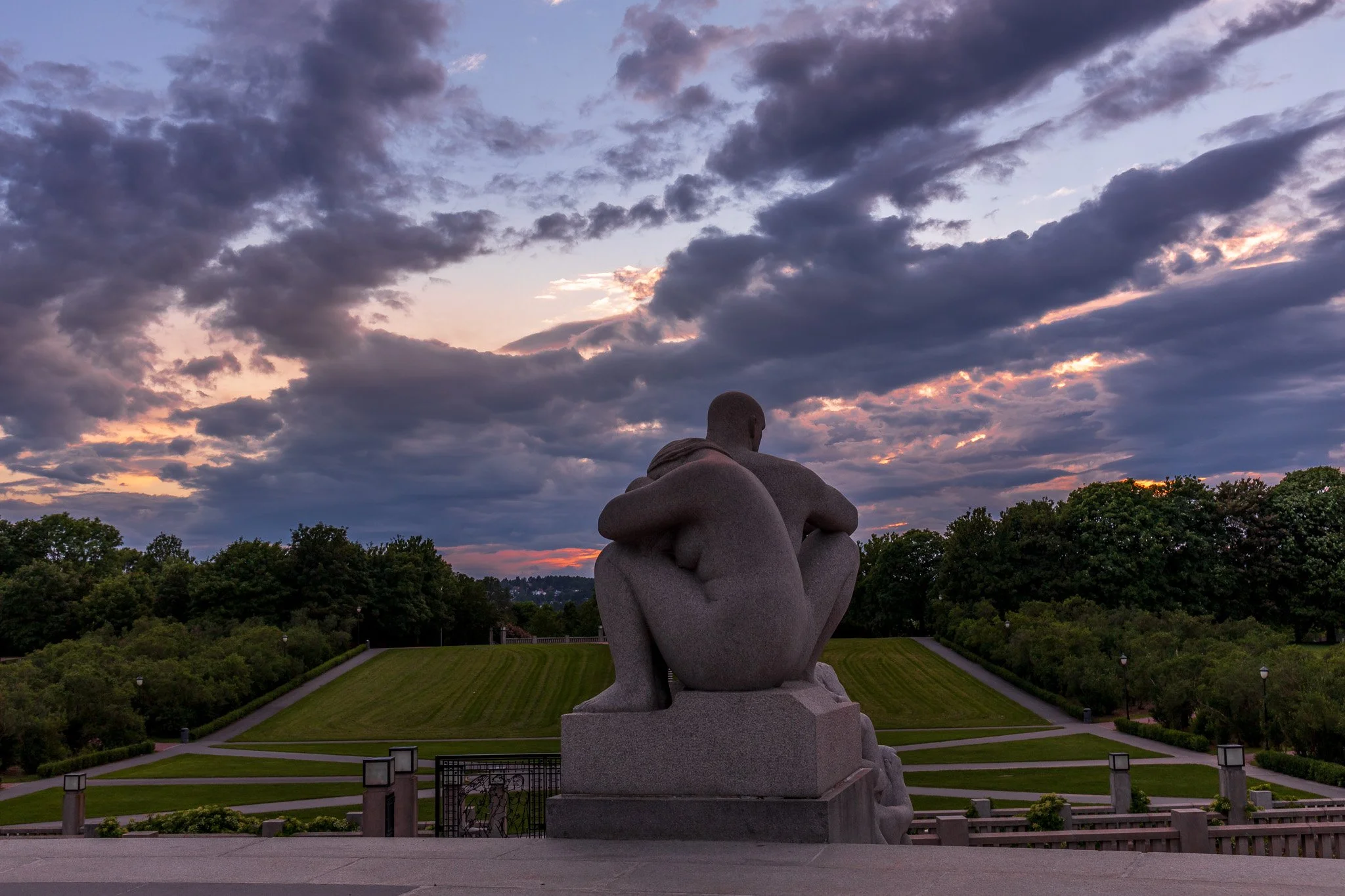
📷 Pro Tip: Aim to reach the Bridge and the famous "Angry Boy" statue before 9 am, or the Monolith plateau after 6 pm, for the most useful light and the fewest people. A 50–85mm prime is ideal for isolating individual sculptures against the sky. A 16–24mm captures the full symmetry of the Bridge from the center. The Monolith at golden hour or against a moody overcast sky is the finest single photographic subject in the park. Winter visits after fresh snow, when the bronze figures are dusted white against a pale sky, are extraordinary — bring a tripod and shoot before the snow is disturbed.
Best time: Before 9 am or after 6 pm. Winter after snow for the most atmospheric conditions. Access: Free, open 24 hours. Tram 12 or 19 to Frogner stadion.
The Oslo Opera House Neighborhood: Bjørvika Waterfront
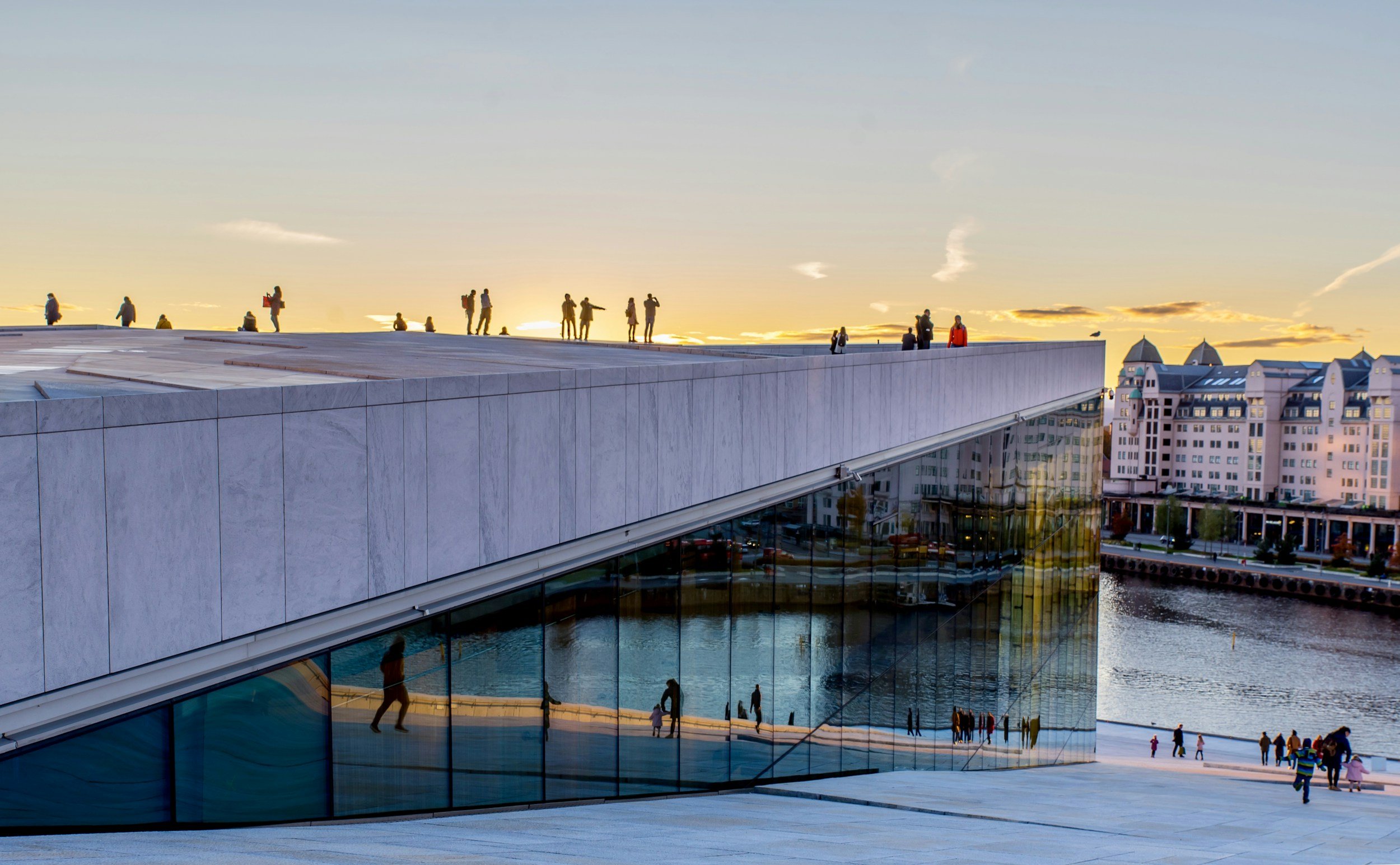
The broader Bjørvika waterfront development — Oslo's most significant urban regeneration project — is worth treating as a photography location in its own right. The MUNCH Museum opened in a new 13-story building here in 2021, its slanted tower rising above the harbor and offering a rooftop panorama that rivals any viewpoint in the city center. The Barcode Project — a row of architectural high-rises of varying heights designed by different firms to create a "barcode" skyline along the waterfront — provides strong graphic urban architecture photography.
📷 Pro Tip: Shoot the Barcode Project from the west, from the Opera House rooftop looking east, for the compressed skyline composition where the towers stack visually. The MUNCH Museum's exterior, with its angular geometry and the harbor in front, photographs well at blue hour. Combine the Opera House and the MUNCH in a single morning session — they are five minutes apart on foot.
Best time: Blue hour. The entire Bjørvika waterfront is at its most photogenic in low light. Access: 5 minutes from Oslo Central Station. MUNCH Museum admission: NOK 160.
Studenterlunden Park
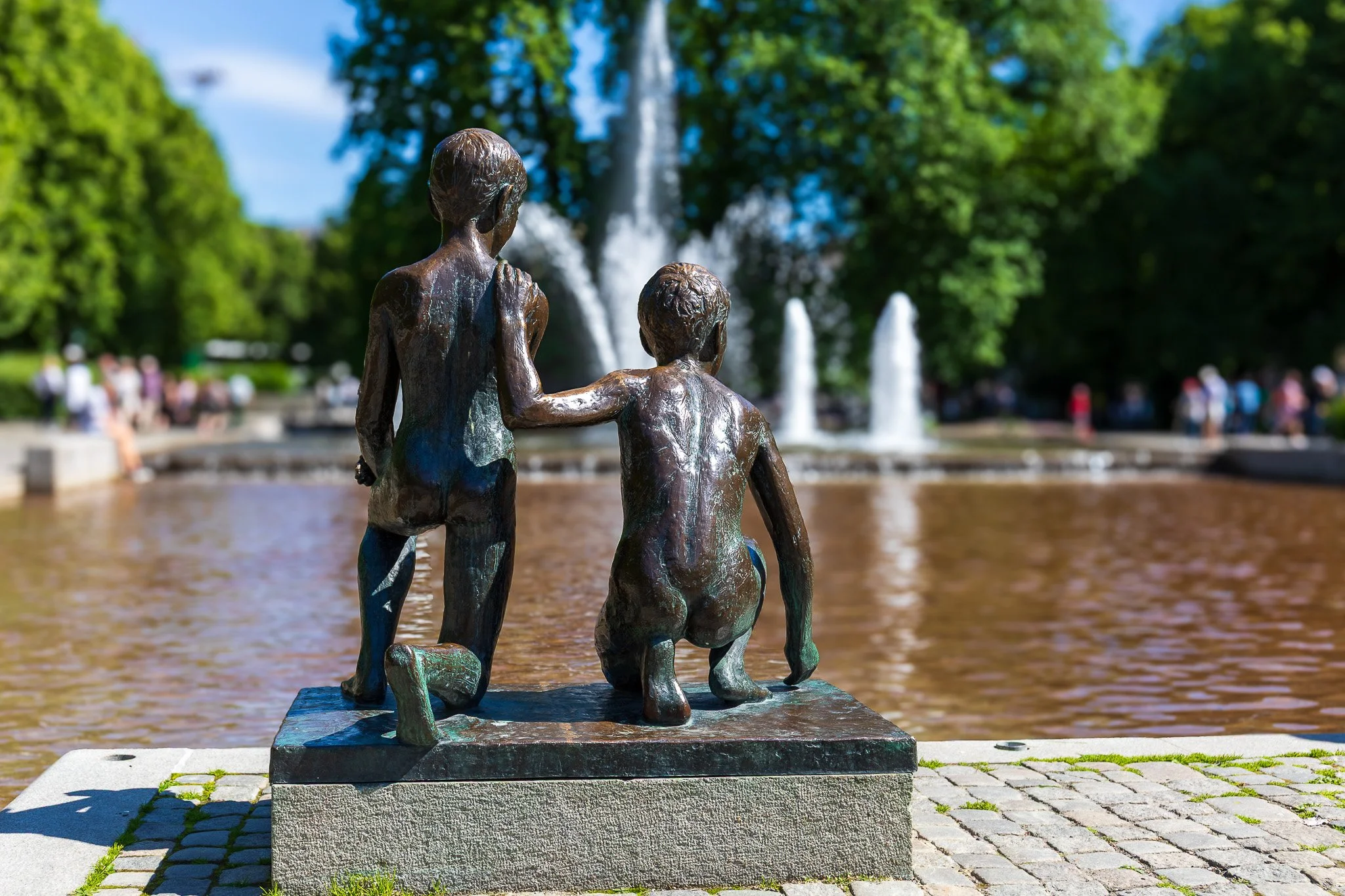
Most people walk straight past Studenterlunden without stopping, which is exactly why it is worth slowing down. The park sits right alongside the Nationaltheatret station, tucked between Karl Johans gate and the National Theatre, and it is one of those places that rewards anyone willing to take ten minutes and actually look. The central fountain is surrounded by bronze sculptures that are genuinely delightful — two boys leaning against the fountain, a woman in a flowing dress, figures that feel personal and warm rather than grand or ceremonial. It is not Vigeland in scale, but it has a quiet, human charm that photographs beautifully.
The park fills with locals throughout the day — students, people on lunch breaks, visitors resting their feet — which gives it a natural street photography energy alongside the sculptural subjects. The tree canopy filters the light in a way that softens everything, and in spring and summer the greenery around the fountain makes for a lovely natural frame.
📷 Pro Tip: A 24–70mm covers everything you need here. Use the wider end to take in the fountain and its surroundings with the National Theatre or the tree canopy as context, then zoom in to isolate the individual sculptures with the park as a soft background. The two boys leaning by the fountain are the most photographable subject — get low and shoot upward slightly to place them against the sky or the trees rather than the busy street behind. The light filtering through the trees in the afternoon creates a gentle, diffused quality that suits the intimate scale of the sculptures well. This is also a fine spot to sit, edit, and watch Oslo go by between shooting locations.
Best time: Afternoon for the filtered tree light. Any season — the park has character year-round. Access: Free. Directly beside Nationaltheatret T-bane and tram station.
Aker Brygge and Tjuvholmen
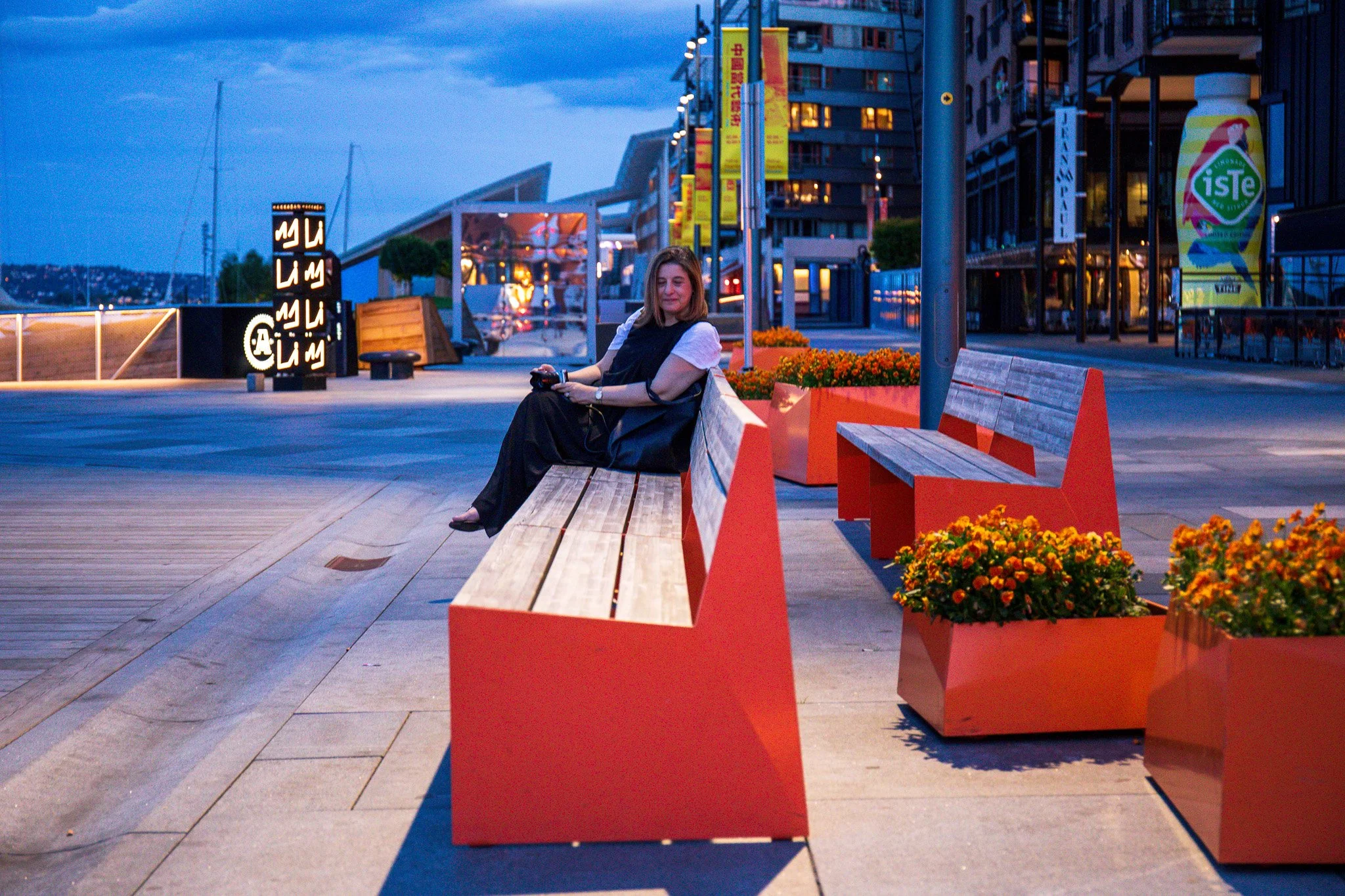
The former Aker Wharf shipyard, redeveloped into Oslo's most active waterfront neighborhood, offers the finest combination of contemporary architecture, fjord views, and urban energy in the city. Restaurants and bars line the water. The Astrup Fearnley Museum of Modern Art on the Tjuvholmen peninsula, its swooping roof designed by Renzo Piano, is one of the finest museum buildings in Norway. The harbor is active with ferries, pleasure boats, and swimmers in summer.
📷 Pro Tip: Shoot from the tip of Tjuvholmen at blue hour, looking east across the harbor toward the Opera House with the Barcode skyline behind it. A 24–70mm captures the full harbor panorama; a 70–105mm compresses the Opera House and the towers into a tight architectural frame. The Astrup Fearnley Museum is most striking from the south waterfront, where a 24–35mm captures the full sweep of Piano's curved roof with the harbor below. In summer, the swimmers at the public beach and the evening crowd add street photography energy to what is otherwise an architectural subject.
Best time: Blue hour for the illuminated skyline. Midsummer evenings for the outdoor energy. Access: Free, open at all hours.
Akershus Fortress
The medieval fortress of Akershus, perched above the Oslofjord waterfront, has stood on this site since the late 13th century. The stone walls, towers, and the courtyard within offer some of the most characterful architectural photography in central Oslo — and the views from the fortress ramparts over the harbor, toward Aker Brygge and the fjord, are among the finest elevated positions in the city center.
📷 Pro Tip: Shoot the fortress exterior from the waterfront below, where the stone walls and towers above the harbor at blue hour make a strong long-exposure subject with the harbor lights reflected in the water. Inside the fortress, the stone courtyard and the archways create leading-line compositions with a 24–50mm. From the top of the ramparts, a 70–105mm compresses the harbor, Aker Brygge, and the fjord into a layered cityscape. The fortress is best photographed in overcast light when the stone texture is richest, or at golden hour when the warm light falls on the south-facing walls.
Best time: Overcast light for texture. Golden hour for the south-facing walls. Access: Grounds free. Museum entry approximately NOK 130. Open daily.

Akershus Fortress
Holmenkollen Ski Jump
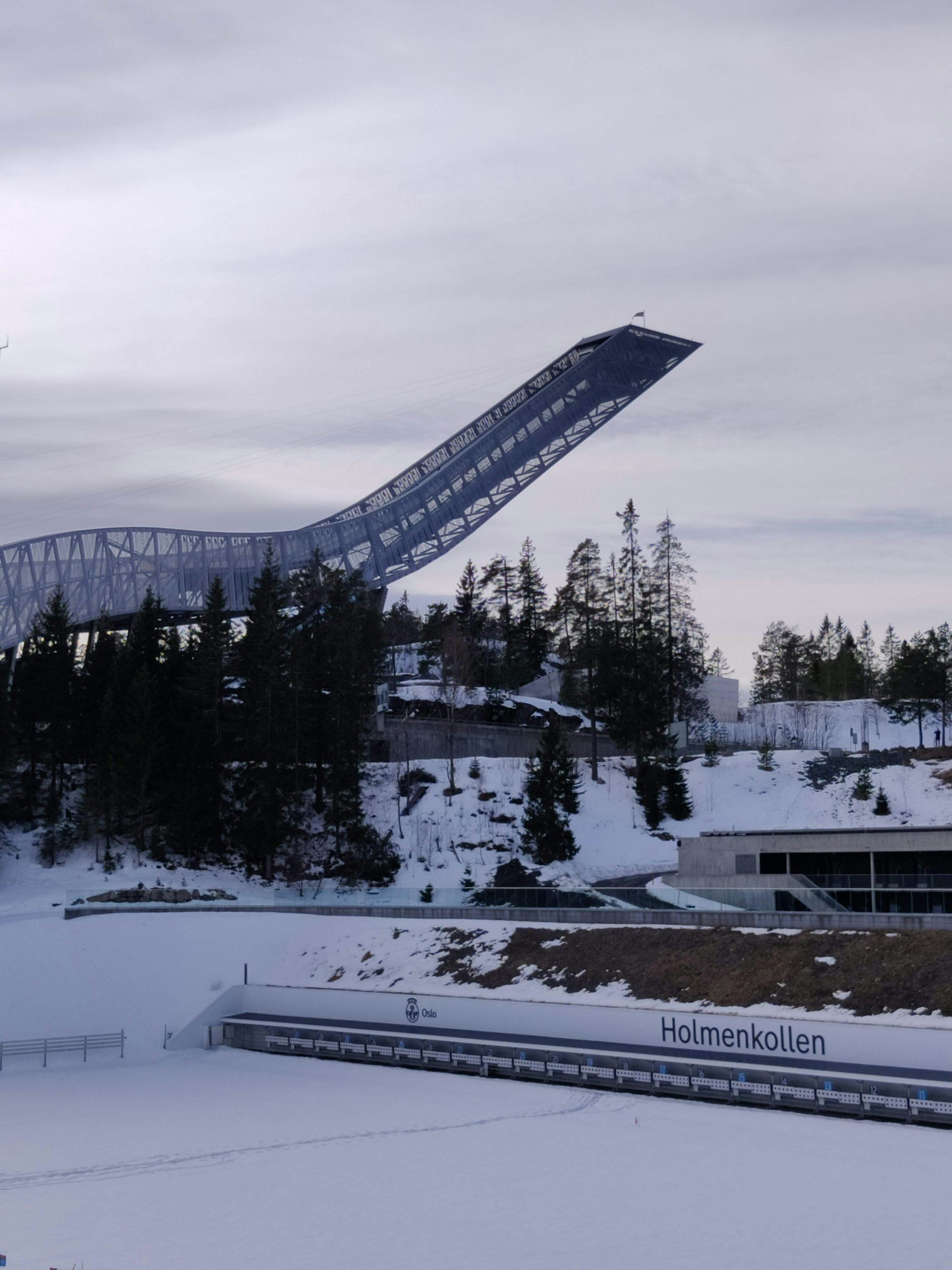
The Holmenkollen, perched on the forested hills above Oslo, is one of the world's most distinctive pieces of sports architecture — a ski jump that has stood in various forms since 1892 and in its current dramatic Arne Henriksen design since 2011. The glass observation tower at the top of the jump offers an almost vertigo-inducing panorama of the city below, the Oslofjord stretching toward the sea, and on clear days the hills on the far shore.
For photographers, this is the finest elevated viewpoint in Oslo — more dramatic than any rooftop bar and accessible by metro in 20 minutes from the city center.
📷 Pro Tip: Take the T-bane Line 1 to Holmenkollen station and walk 15 minutes to the jump. The view from the observation tower at the top of the jump (accessible by lift, included with admission) looks directly down the ramp and out over the entire Oslo basin — a 16–35mm for the panoramic view, and a wide angle pointed straight down the ramp for the vertiginous vertical composition. On clear days in autumn and winter, the Oslofjord is visible at full length. Come in the late afternoon for warm light on the city below.
Best time: Late afternoon for the warm directional light over the city. Any clear day for the panorama. Access: T-bane Line 1 to Holmenkollen. Admission: NOK 140.
Ekebergparken
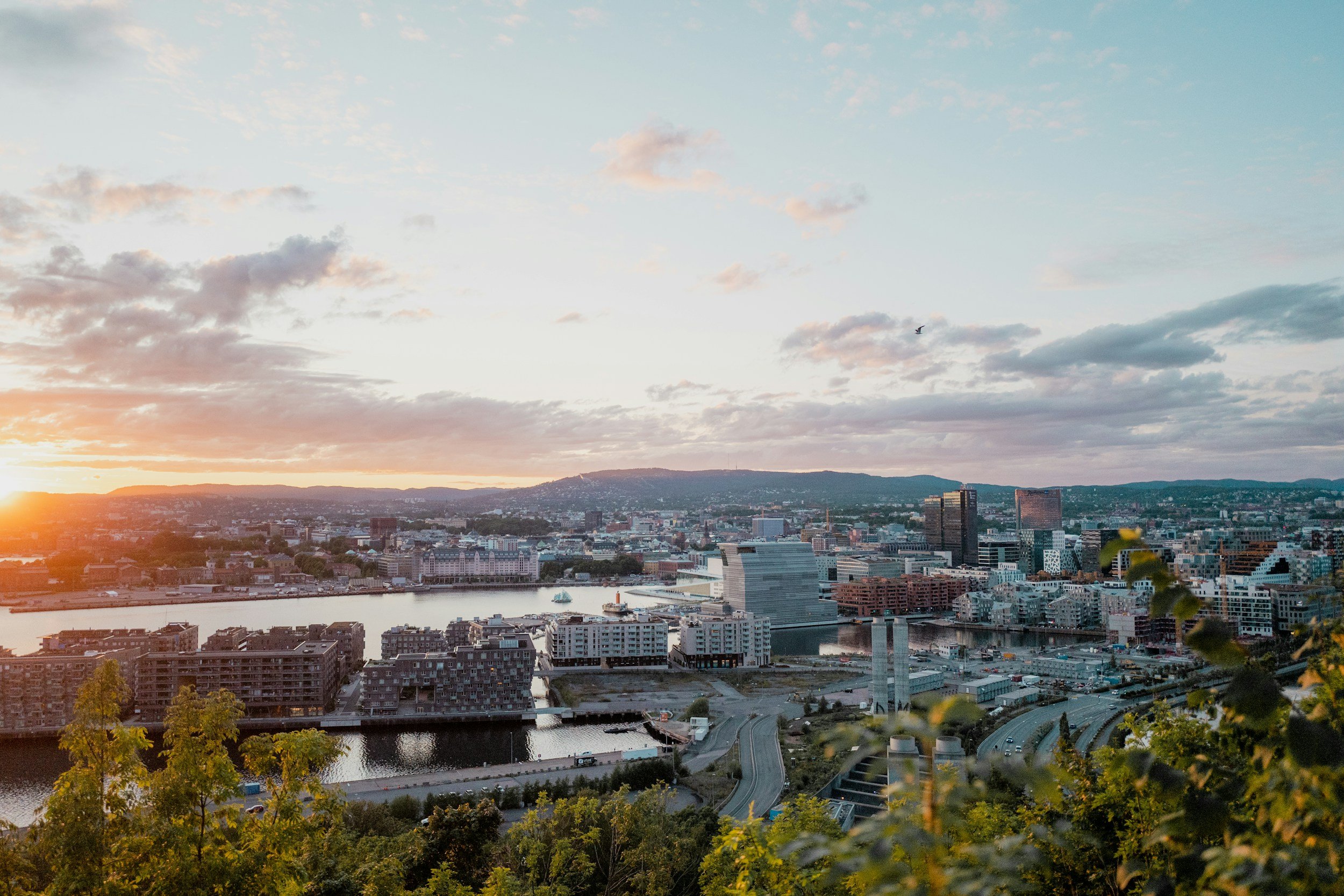
On the wooded hillside above Oslo's eastern waterfront, Ekebergparken combines 25 acres of forest walking trails with a curated collection of large-scale international sculptures, including works by Salvador Dalí and Auguste Rodin. But the photography headline is the panoramic view from the hillside: the city center, Akershus Fortress, the harbor, the Bjørvika development, and the full sweep of the Oslofjord all visible in a single westward-facing composition.
This is the view from which Edvard Munch painted the anguished sunset sky that inspired "The Scream." That context gives the view an additional weight.
📷 Pro Tip: Position yourself on the main viewing platform at the western edge of the park for the sunset composition looking toward the city. A 16–35mm captures the full panorama including the harbor and the fjord; a 70–105mm compresses the Opera House and the city towers into a tighter frame. The Dalí "Venus de Milo with Drawers" sculpture photographs well with a 50–85mm lens using the forest as a natural background. Arrive 45 minutes before sunset to find your position and let the light come to you.
Best time: Golden hour through blue hour. Access: Free. Tram 13 or 19 to Ekebergparken.
Damstredet and Telthusbakken
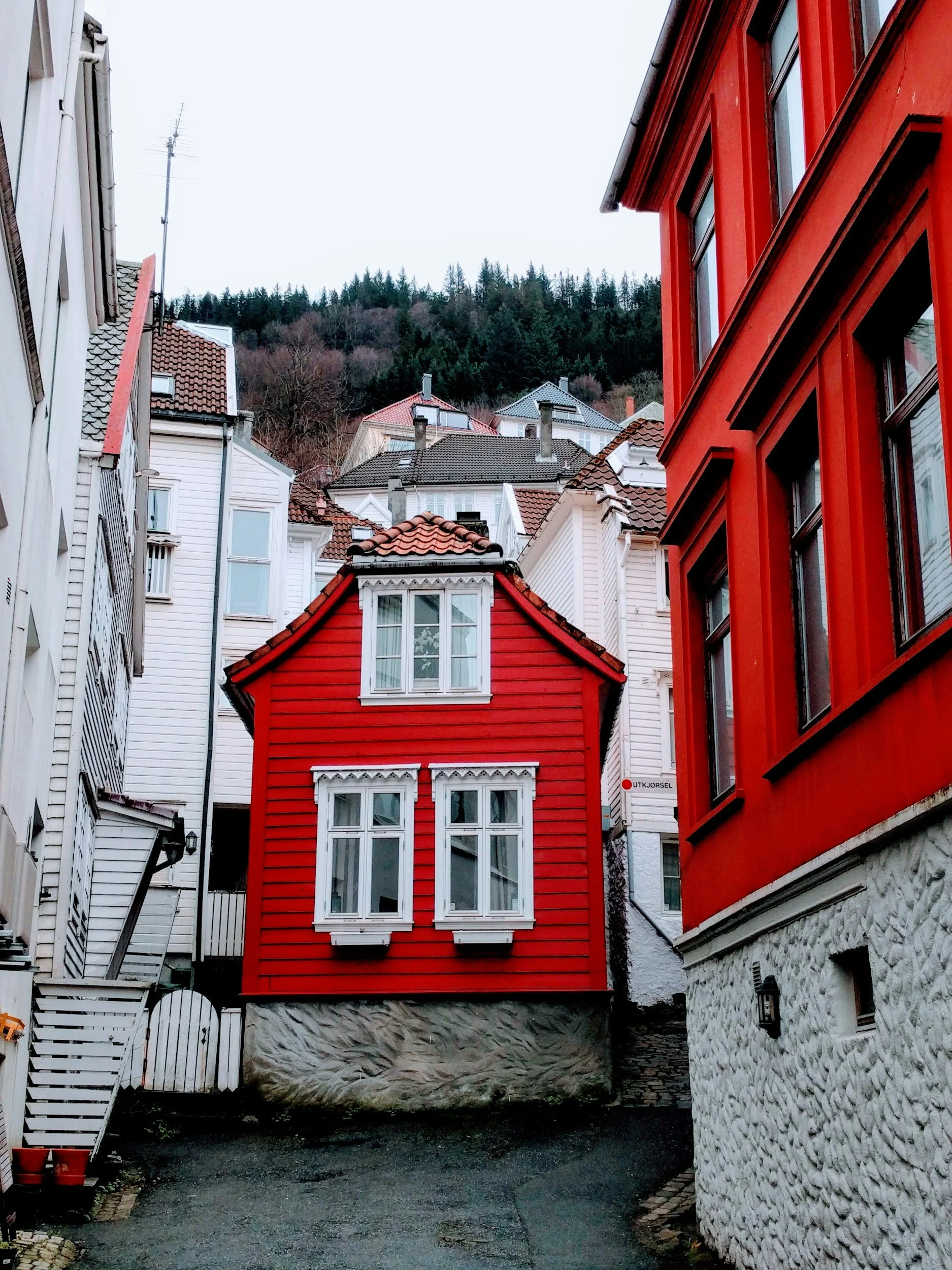
Hidden in the hilly area between the city center and the Grünerløkka neighborhood, Damstredet and the connecting Telthusbakken street preserve one of the last concentrations of 18th-century wooden houses in central Oslo. The houses, painted in faded ochre, red, and white, line cobblestone streets so steep and narrow they feel like a different era entirely — especially before 9 am when the streets are quiet and the morning light falls at a low angle across the painted facades.
📷 Pro Tip: Come on a weekday morning before 9 am. A 35–50mm prime handles both the narrow street compositions and the individual house facades. The steep staircase on Telthusbakken, looking uphill toward the old wooden houses, is the classic composition — a shot from the lower street looking up toward the buildings silhouetted against the sky. After rain, the cobblestones and the painted wood are particularly rich in color and texture, and the reflections in the wet stones are worth a wider frame.
Best time: Early morning, before 9 am. After rain for the richest colors. Access: Free. 10-minute walk from the city center.
Grünerløkka
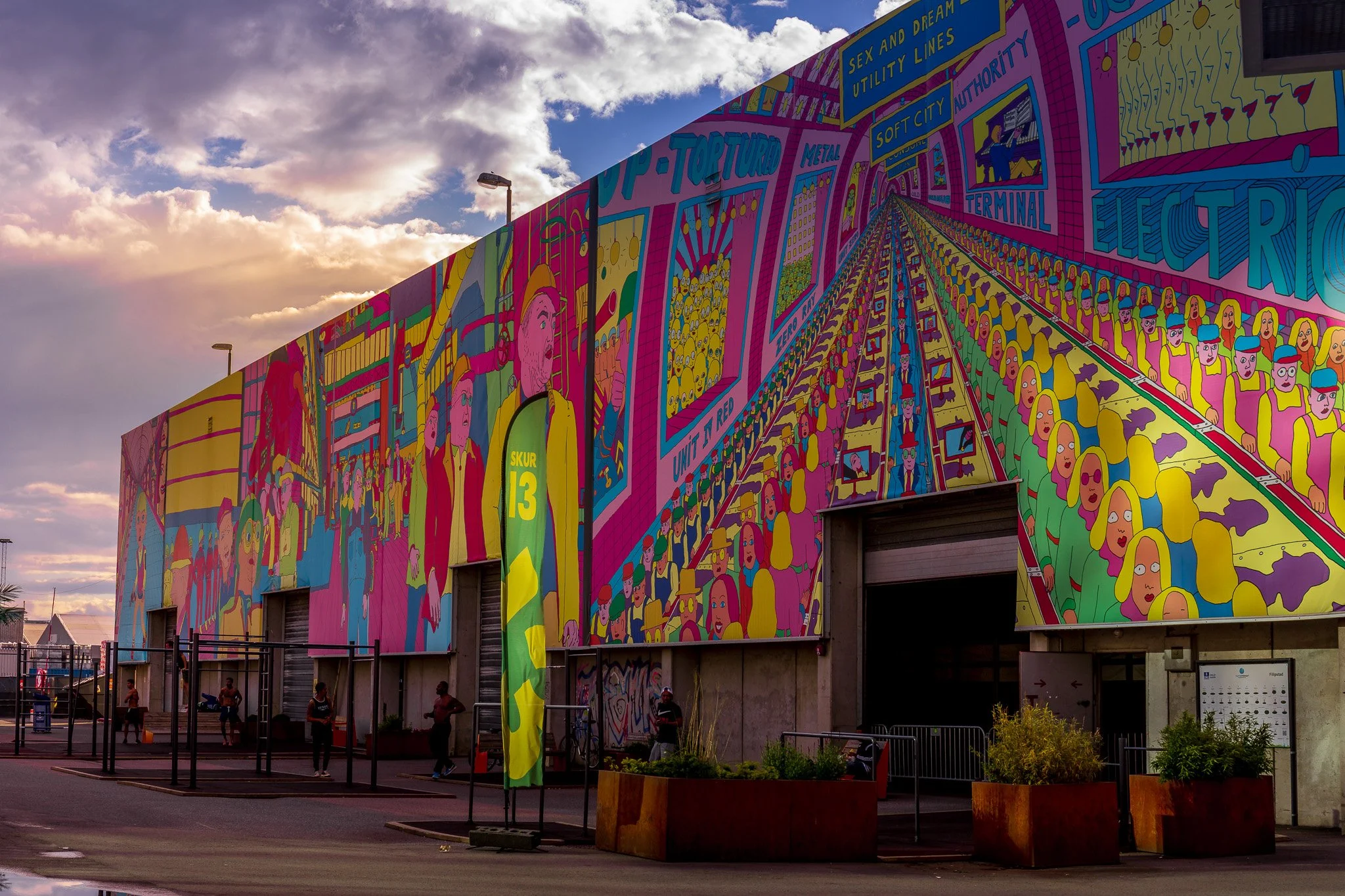
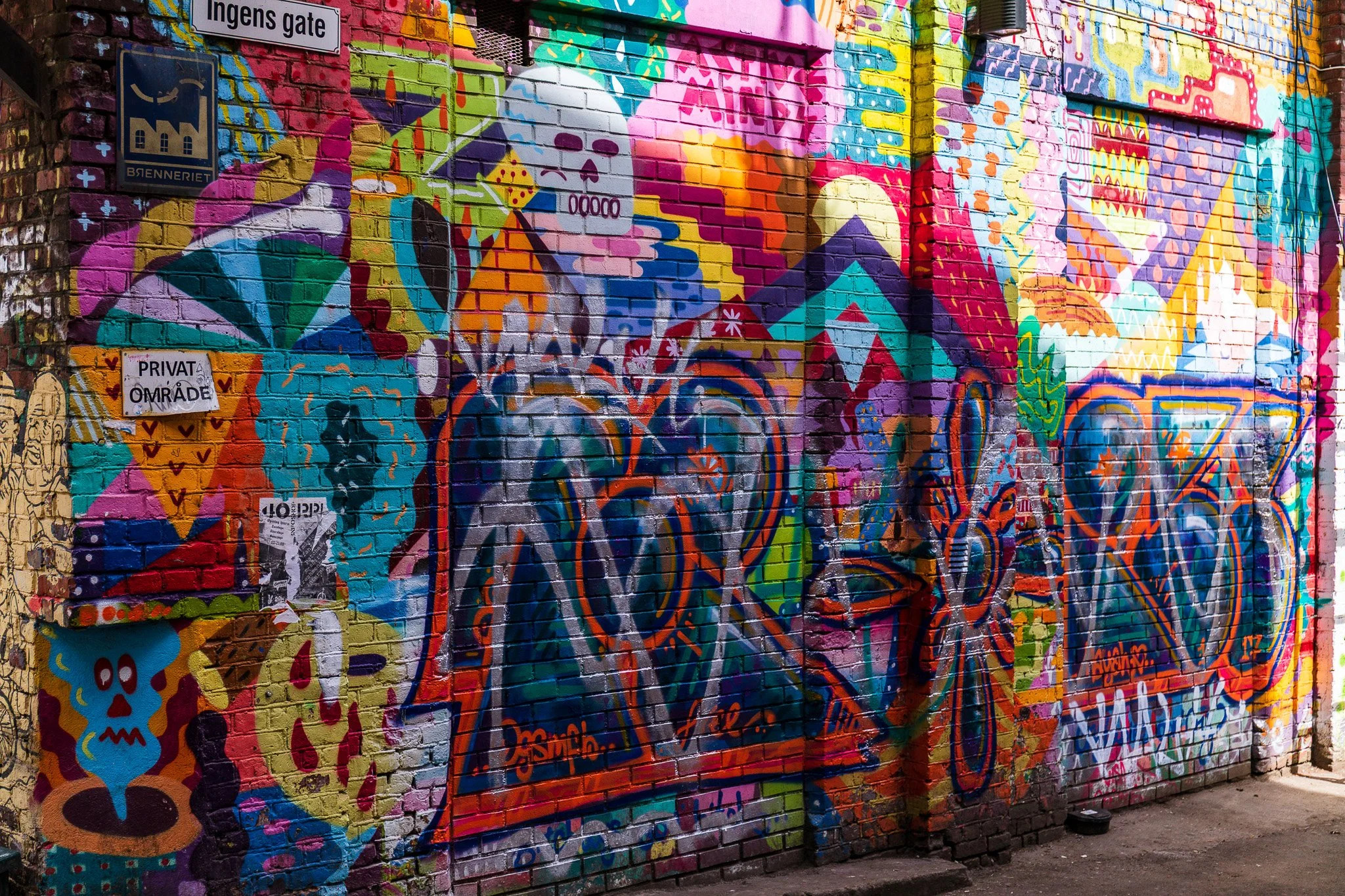
Oslo's most characterful neighborhood for street photography is Grünerløkka — the former working-class district east of the river Akerselva that has transformed into Oslo's creative hub without entirely losing its rough edges. Independent cafés, record shops, vintage stores, street murals, the Tim Wendelboe coffee roastery, and a Sunday flea market at Birkelunden Park create the energy and texture that makes street photography rewarding here.
📷 Pro Tip: Walk from Birkelunden Park down Thorvald Meyers gate, the commercial and social spine of the neighborhood. A 35mm prime is the right lens for street scenes here — it gives you enough reach to frame naturally without forcing you to crowd your subjects. Come on a Sunday morning for the flea market at Birkelunden, which fills the park with vendors and locals. The Akerselva river path, running north through former industrial buildings, offers urban landscape photography when the overhead light is too harsh for street work — the waterfalls along the river and the converted mill buildings make strong midday subjects.
Best time: Sunday mornings for the flea market. Any morning for café culture and street life.
The Royal Palace (Slottet) and Palace Park
The Royal Palace sits at the top of Karl Johans gate, Oslo's grand ceremonial boulevard, and it is one of those subjects that photographs differently depending on when you arrive. In the afternoon, the sun comes around to light up the pale yellow facade directly, and the formal gardens in front — immaculately maintained, symmetrical, and completely open to the public — glow in a way that makes the whole scene feel almost cinematic. I find myself walking up here more than almost anywhere else in the city. There is something about the combination of the long approach, the clean neoclassical lines, and those perfectly manicured grounds that is quietly irresistible.
The palace itself dates to 1849 and serves as the official residence of the Norwegian monarch. The grounds are free to enter and open year-round. The changing of the guard happens daily at 1:30pm and is one of the more low-key and accessible royal ceremonies in Europe — no crowds fighting for position, no barriers blocking the view.
📷 Pro Tip: Afternoon is the prime window here. The sun comes around to light the facade from the front and left side, which is exactly where you want to be. Position yourself from the front along the main approach on Karl Johans gate for the classic symmetrical frame with the palace centered at the top of the avenue, or move to the left side of the grounds where the angle gives you the facade with the formal gardens in the foreground. A 16–35mm handles both compositions well — wide enough to take in the full scale of the building and grounds without distorting the architecture. The changing of the guard at 1:30pm adds movement and human scale to what is otherwise a static architectural subject. Come a few minutes early to find your position before the ceremony begins.
Best time: Early to mid-afternoon for the facade light. 1:30pm daily for the changing of the guard. Access: Free. Walk straight up Karl Johans gate from the city center, approximately 15 minutes from Oslo Central Station.

The Royal Palace
Events & Festivals
Constitution Day (May 17) is the most photogenic public celebration in Norway and one of the most joyful national days anywhere in Europe. Oslo fills with people in traditional Norwegian dress — the bunad — walking in procession past the Royal Palace while the King and Royal Family greet the crowds from the balcony. The parade of schoolchildren, the flags, the traditional costumes, and the energy of the crowd make for exceptional street photography. Position yourself along Karl Johans gate early to find a good vantage point before the main procession. Photographing with respect is welcomed; people are proud to be photographed in their traditional dress on this day.
The Oslo Jazz Festival (August) is one of Scandinavia's most respected jazz events, running for about a week with performances across the city in concert halls, outdoor stages, and intimate club venues. The outdoor stages — particularly in the Youngstorget area — are accessible without tickets and offer strong performance photography in the warm summer evening light. Bring a 70–200mm for the stage work.
Øya Festival (August) is one of Norway's biggest annual music events, held at the Tøyenparken in Grünerløkka over four days. A compact festival site, serious Norwegian and international lineups, and a young, photogenic crowd. Media credentials are required for professional photography on the main stages, but the festival atmosphere outside the venues is open and worth capturing.
Oslo Culture Night (September) is a single evening when Oslo's museums, galleries, and cultural institutions stay open late — often with free entry — and the city's creative community fills the streets. It is one of the best evenings of the year to photograph the city with activity and light in unexpected places. Check the program in advance to plan which venues to prioritize.
Christmas Markets (late November through December) transform Oslo into a different city. The market at Spikersuppa in the center, the lights along Karl Johans gate, and the candlelit streets of the older neighborhoods give the city a warmth that contrasts beautifully with the long northern darkness. Blue hour comes around 3pm in December, and the shop windows and market stalls lit against a near-dark sky at 4pm are some of the most atmospheric frames you will make in Oslo.
Frequently Asked Questions About Visiting Oslo
Is Oslo expensive?
Yes, Norway is expensive across the board. Hotels, restaurants, and transport concentrate most of the cost, but the museums, the Opera House roof, and Vigeland Park, some of the best photography locations in the city, are entirely free.
Do you need a car in Oslo?
No, and it's genuinely unnecessary. The city is highly walkable, and the Ruter travel card covers the metro, trams, buses, and ferries efficiently across every neighborhood you'll want to reach.
What are the best photo spots in Oslo?
The Opera House roof at sunrise, Vigeland Sculpture Park before 9 am, and Aker Brygge at blue hour are three that consistently deliver. The full list with Pro Tips is above.
Can you fly a drone in Oslo?
No, not in the city center. Oslo's downtown is a permanently restricted area (R-102) under Norwegian aviation regulations, covering the Opera House, Vigeland Park, and Aker Brygge. Check the SafeToFly app for locations outside the zone.
What surprised you most about Oslo?
Standing on the Aker Brygge waterfront, the first time the light broke for me. The sky had been flat and grey all day, and I was beginning to wonder if I'd misread the city entirely. Then, twenty minutes before sunset, the clouds split and the light came in horizontal and gold, reflecting off the Oslofjord, and I shot for forty minutes without stopping. Oslo makes you wait, and then it delivers.
How many days do you need in Oslo?
Three days for a solid introduction; four to five if you want to shoot each location in the right light rather than on a tour bus schedule.
Is May or September a better time to visit than summer?
Both are the smart photographer's window. May brings long, bright days and blooming parks; September brings warm golden light and returning foliage, both with far fewer crowds than the midsummer peak.
Is Oslo worth combining with Bergen?
Yes, they're a natural pair, just three hours apart by train. Oslo gives you modern Nordic architecture and midnight sun; Bergen gives you Hanseatic wharves, fjords, and a completely different rhythm.
Final Thoughts
I remember standing on the Aker Brygge waterfront the first time the light broke for me in Oslo. I had been walking since morning, and the sky had been flat and grey the entire day, and I was beginning to wonder whether I had misread the city entirely. And then, twenty minutes before sunset, the clouds split and the light came in horizontal and gold and reflected off the Oslofjord, and the entire harbor turned into something I could barely believe I was standing in front of. I shot for forty minutes without stopping.
Oslo does that. It makes you wait, and then it delivers. The Opera House at sunrise, Vigeland in early morning light, the Damstredet wooden houses with the morning falling across the painted facades, the panorama from Holmenkollen on a clear autumn afternoon — this is a city that rewards photographers who are patient and willing to get up early.
Go. Set the alarm.
Want to improve your photography while exploring some incredible destinations? Join me on one of my photography workshops! You can find all the details, including upcoming destinations and dates, through the links below.
Let's Stay Connected!
My Photography and Travel Guide to Bergen, Norway — Bergen is the natural complement to any Oslo trip. The wooden houses of Bryggen reflected in the harbor, the view of the city from Mount Fløyen, and the Nærøyfjord cruise are among the finest photography experiences in all of Norway. Three hours south of Oslo by train.
My Photography and Travel Guide to the Lofoten Islands, Norway — If Oslo shows you what a modern Nordic city looks like at its best, the Lofoten Islands show you what Norway looks like before the modern world arrived. Dramatic peaks, fishing villages, and some of the most extraordinary winter light in Europe. The two together make a complete Norway trip.
My Photography and Travel Guide to Copenhagen, Denmark — Oslo and Copenhagen share a Nordic sensibility but deliver completely different photography experiences. Copenhagen is warmer, looser, and more street-photography-driven. Nyhavn at sunrise, the canals, the cycling culture — a short flight from Oslo and worth every hour.
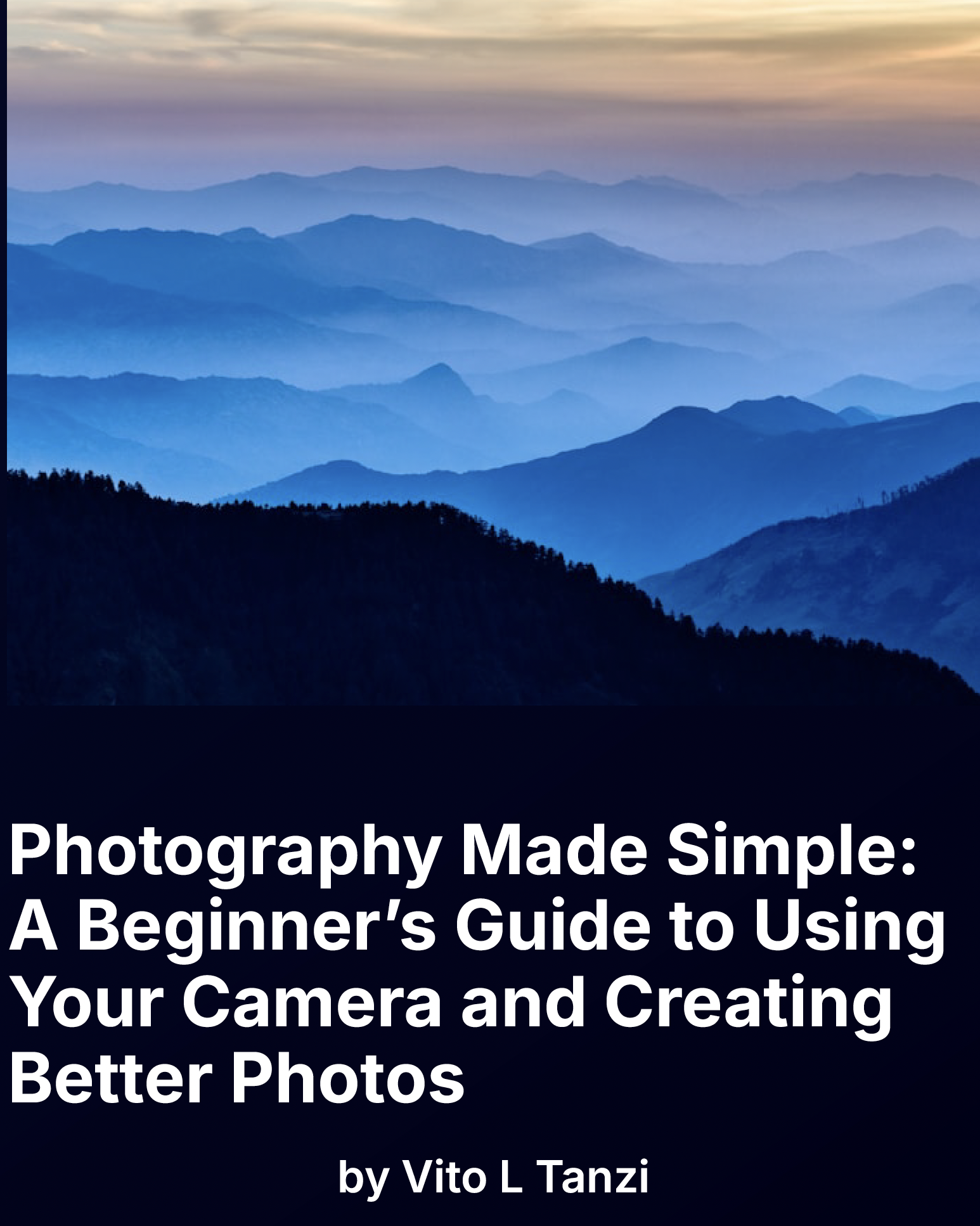
Finally—a beginner-friendly photography guide that makes sense.
If you've ever picked up a camera and thought, "Now what?" this is the book for you.
Photography Made Simple is written for adults who are just starting out and want a clear, encouraging, real-world approach to learning photography. Whether you're using a DSLR, mirrorless, or just your smartphone, this guide walks you through the basics—without the jargon or tech overwhelm.
Inside, you'll learn:
The only camera settings you really need to know to get started
How to shoot sharper, more intentional photos using light and composition
Simple tips for portraits, landscapes, travel, and everyday life
What gear you do (and don’t) need
How to create better photos without upgrading your camera
You’ll also get practical exercises, cheat sheets, and tips for organizing and editing your images—plus the confidence to shoot off Auto Mode for good.
This is not a textbook. It’s a friendly guide to seeing the world with fresh eyes—and finally capturing what you see the way you imagine it.
📸 Format: PDF download
Pages: 100+
Perfect for: Beginners, hobbyists, and anyone ready to take better photos without the stress