Galle, Sri Lanka Travel & Photography Guide: Best Photo Spots, Things to Do & Hidden Gems
I now understand why Sri Lanka is called the Pearl of the Indian Ocean.
It is an incredibly beautiful country. The people are warm and kind. The food is vibrant and full of flavor. And everywhere we went, we felt safe and genuinely welcome. That combination is powerful. It allows you to relax, explore, and really see a place.
We began our Sri Lanka adventure in Galle, in the south, and it was the perfect introduction. We spent ten days in the country, three in Galle, five in Tangalle, and two in Colombo. Honestly, we could have stayed another week without hesitation.
Galle has a rhythm that pulls you in. Inside the historic fort walls, time slows down. Colonial architecture glows in the late afternoon light. The Indian Ocean crashes against the ramparts. Narrow cobblestone streets invite you to wander without a plan. As a photographer, I found myself constantly stopping, adjusting my framing, and waiting for the right moment.
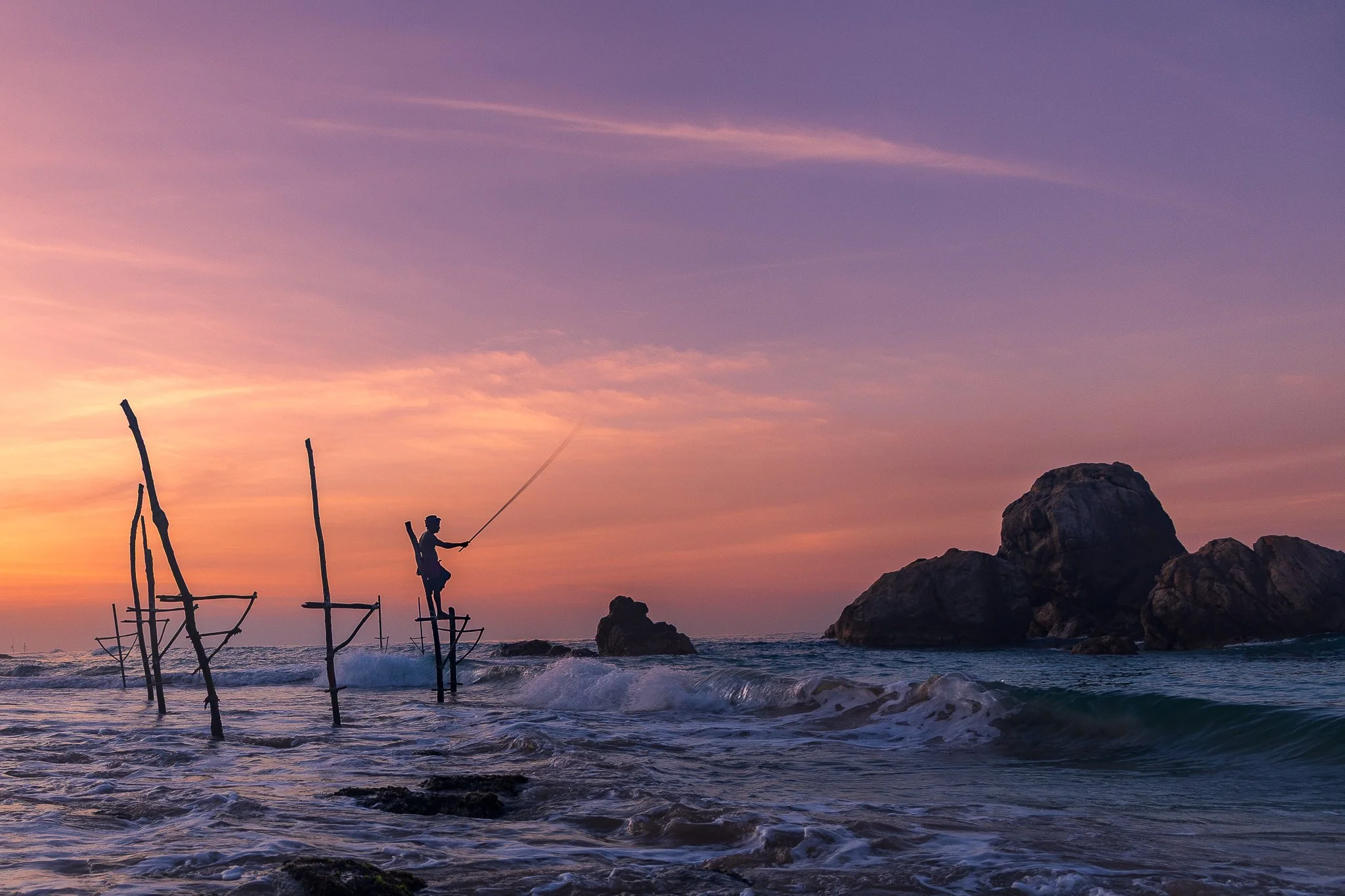
Fisherman on Stilts
Beyond the fort, beaches stretch along the coast, and daily life unfolds in simple, beautiful ways. From exploring historic temples to watching fishermen at sunrise, every day offered something meaningful and visually rich.
In this Photography and Travel Guide to Galle, I will share my best travel and photography tips to help you experience this special corner of Sri Lanka and capture it with intention.
Photographer's Notes
Before you go, here are my own takeaways.
Favorite Season: February
Favorite Location: The stilt fishermen scene
Favorite Hotel: Amangalla
Favorite Lens: 15-35mm f/2.8
Would I Return? Yes, Galle stayed with me long after I left.
Galle
Built by the Portuguese in the 16th century and later fortified by the Dutch and British, Galle Fort stands today as a UNESCO World Heritage Site and one of the most captivating historic towns in Asia.
Walking along the ancient ramparts is an experience in itself. The walls are remarkably well preserved, stretching along the edge of the Indian Ocean. Go early in the morning for soft light and fewer people, or return at sunset when the sky turns warm, and the sea begins to glow. From a photography standpoint, the ramparts offer clean leading lines, textured stone, and endless opportunities for silhouettes.
Inside the fort, life unfolds at an easy pace. You will pass historic monuments, colonial villas, and quiet courtyards. Churches stand near mosques. Old Dutch buildings sit beside art galleries and small guesthouses. The town feels curated yet authentic.
And then there is the lifestyle side of Galle. Ice cream shops tucked into heritage buildings. Cafes serving excellent Sri Lankan coffee. Small bistros with fresh seafood. Boutiques and jewelers displaying handcrafted pieces. It is the kind of place where you photograph in the morning, explore in the afternoon, and linger over dinner as the sea breeze rolls in.
Galle is not just a historic site. It is a living, breathing coastal town that rewards curiosity, patience, and a camera ready at your side.
When to Go to Galle, Sri Lanka
If you are chasing sunshine, dry days, and clean coastal light, plan your visit to Galle between December and April. In my experience, February is the sweet spot. The skies are clearer, the humidity is lower, and the light along the fort walls at sunrise and sunset is beautiful.
Sri Lanka has two monsoon seasons that affect opposite sides of the island at different times of the year. The southwest monsoon typically runs from May through September and impacts Galle and the southern coast. The northeast monsoon affects the north and east of the country from roughly October through January.
Because Galle sits on the southern coast, you want to avoid the heavier rains of the southwest monsoon if photography is a priority. Wet cobblestones can be beautiful, but consistent downpours limit your flexibility.
During the dry months, you can plan sunrise walks along the ramparts, mid-day cafe breaks, and golden hour sessions without constantly checking the radar. Better weather means more time outside, and more time outside means better images.

Shot from My Hotel in the Amangalla
Getting a Visa to Sri Lanka
You will need a visa to visit Sri Lanka, but the process is straightforward.
Sri Lanka offers an Electronic Travel Authorization (ETA), which you can apply for online before your trip. The application is simple, takes only a few minutes to complete, and requires basic passport and travel information.
We applied for the standard 30-day tourist visa and received approval by email within 24 hours. It was smooth and stress-free.
I strongly recommend applying online before departure rather than waiting until arrival. Print a copy of your approval, keep a digital version on your phone, and make sure your passport is valid for at least six months beyond your travel dates.
A quick administrative step, and you are on your way to one of the most welcoming countries in the Indian Ocean.
The Embarkation Card
Here is one small detail that can save you time at the airport.
When you land in Colombo, you will also need to complete an Embarkation Card before going through immigration. It is separate from your approved ETA visa.
The tricky part is that the signs directing you to the forms can be easy to miss, especially after a long international flight. We completely overlooked them. Confidently walked up to the immigration officer. And were politely told to head back and fill out the card first.
It is not a big deal, but it does slow you down if you are not prepared.
My advice is simple. As soon as you enter the arrivals hall, look for the counters with the forms. Fill it out before joining the immigration line. Keep your passport and ETA approval handy. It will make the process smooth and stress-free, and you can start your Sri Lanka adventure on the right foot.
Where to Stay in Galle, Sri Lanka
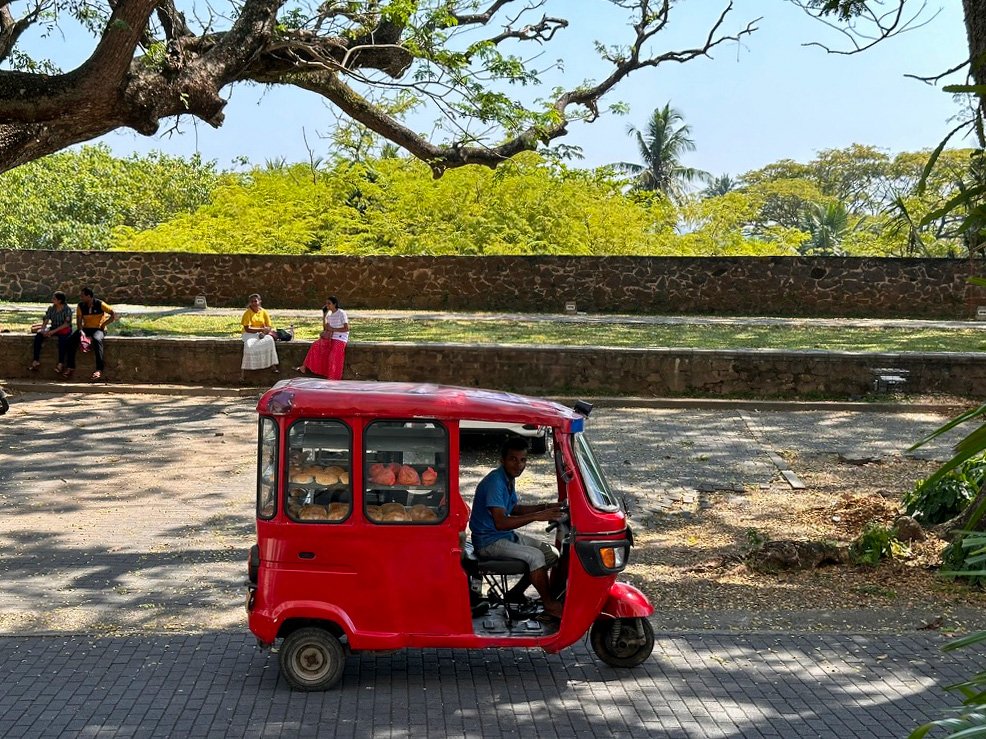
Galle Fort is where you want to be based. Almost every great photography location is within walking distance, and the light inside the fort walls at sunrise and sunset is unlike anything you will find outside them. If your budget allows, stay inside the fort. If not, a short tuk-tuk ride connects you to everything.
We stayed at the extraordinary Amangalla, and it was the perfect base for exploring Galle.
Located on the southwestern coast, about two hours from Bandaranaike International Airport, the hotel sits inside the ramparts of Galle Fort, a UNESCO World Heritage Site dating back to the 17th century.
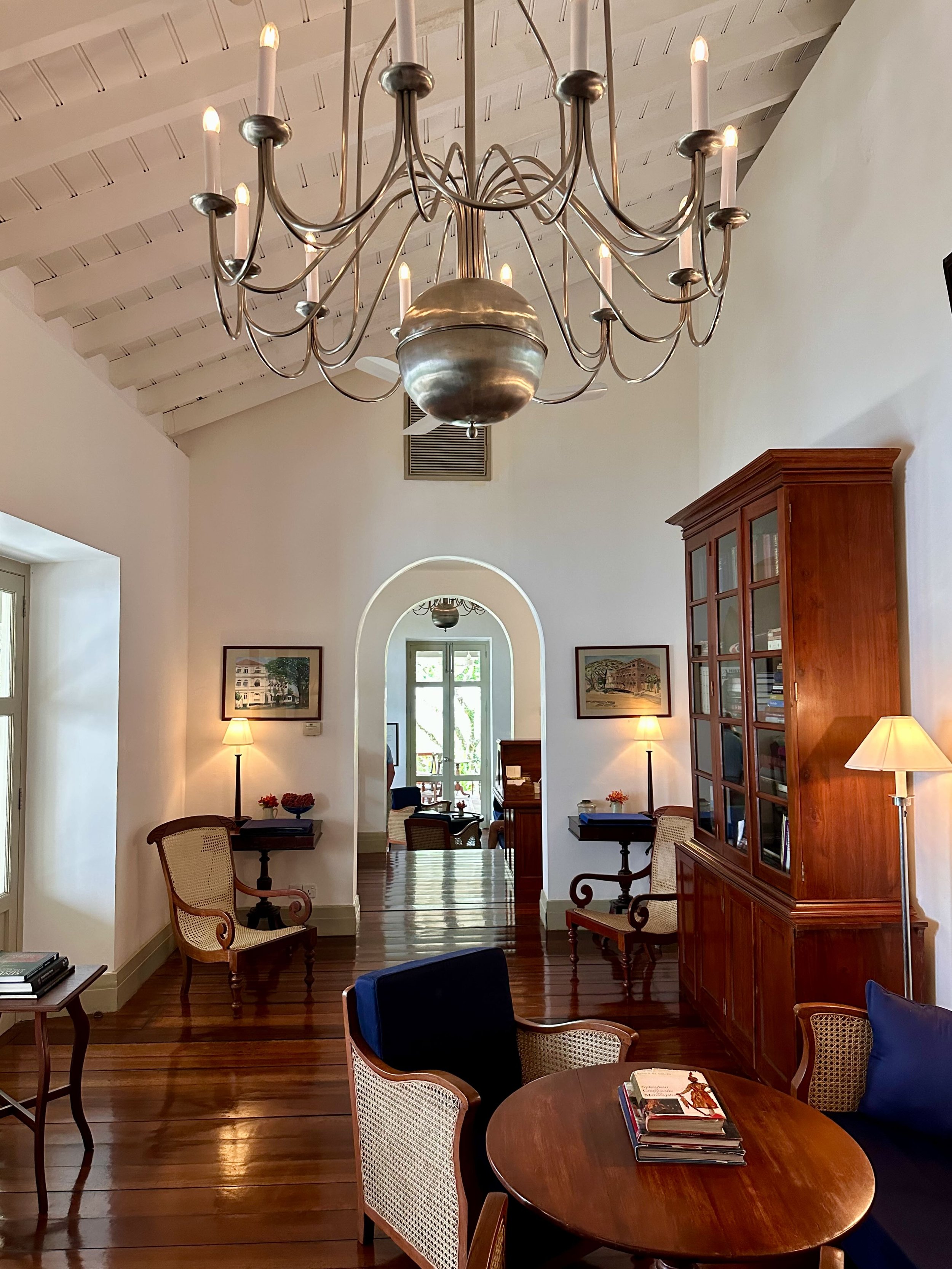
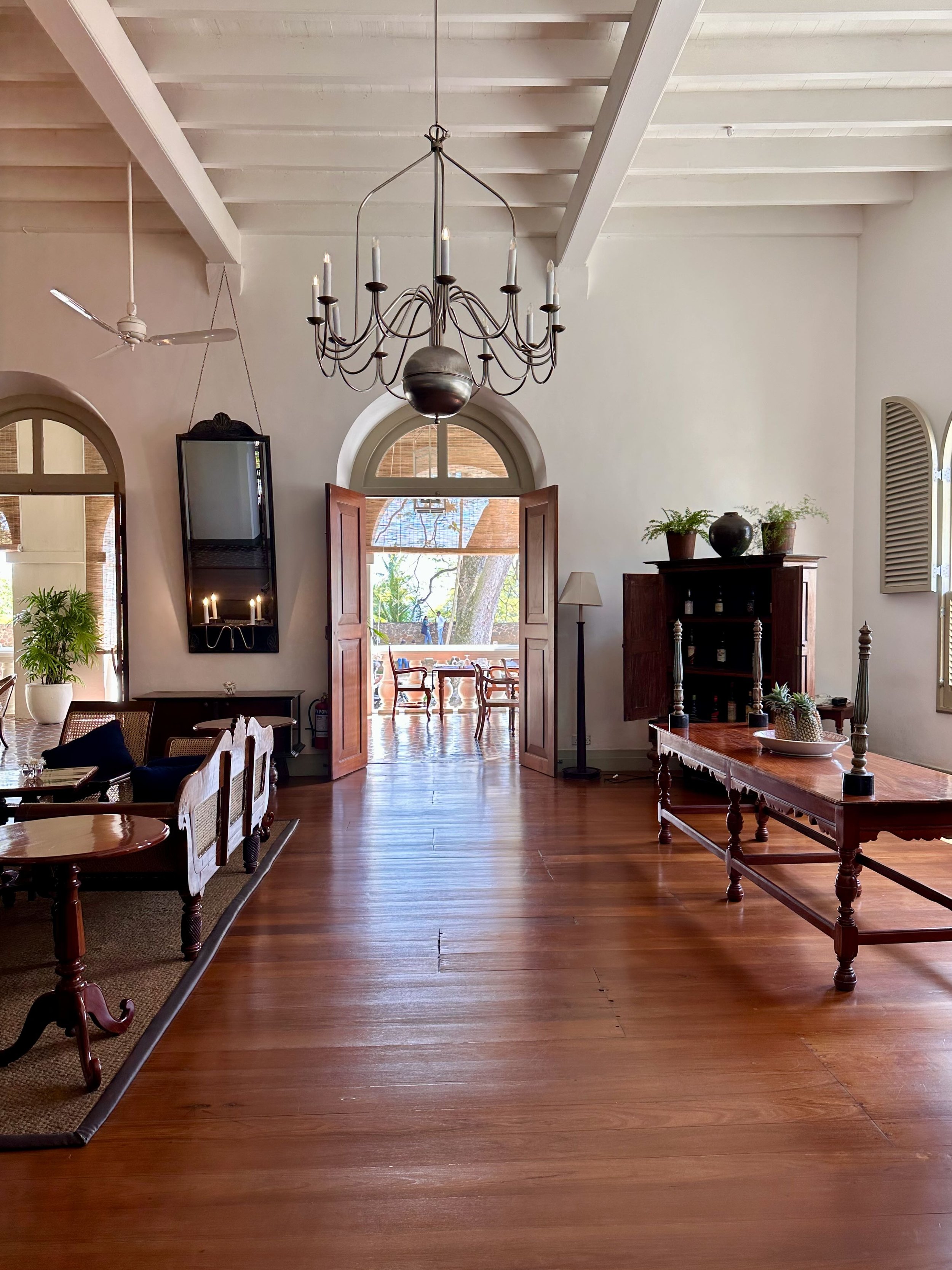
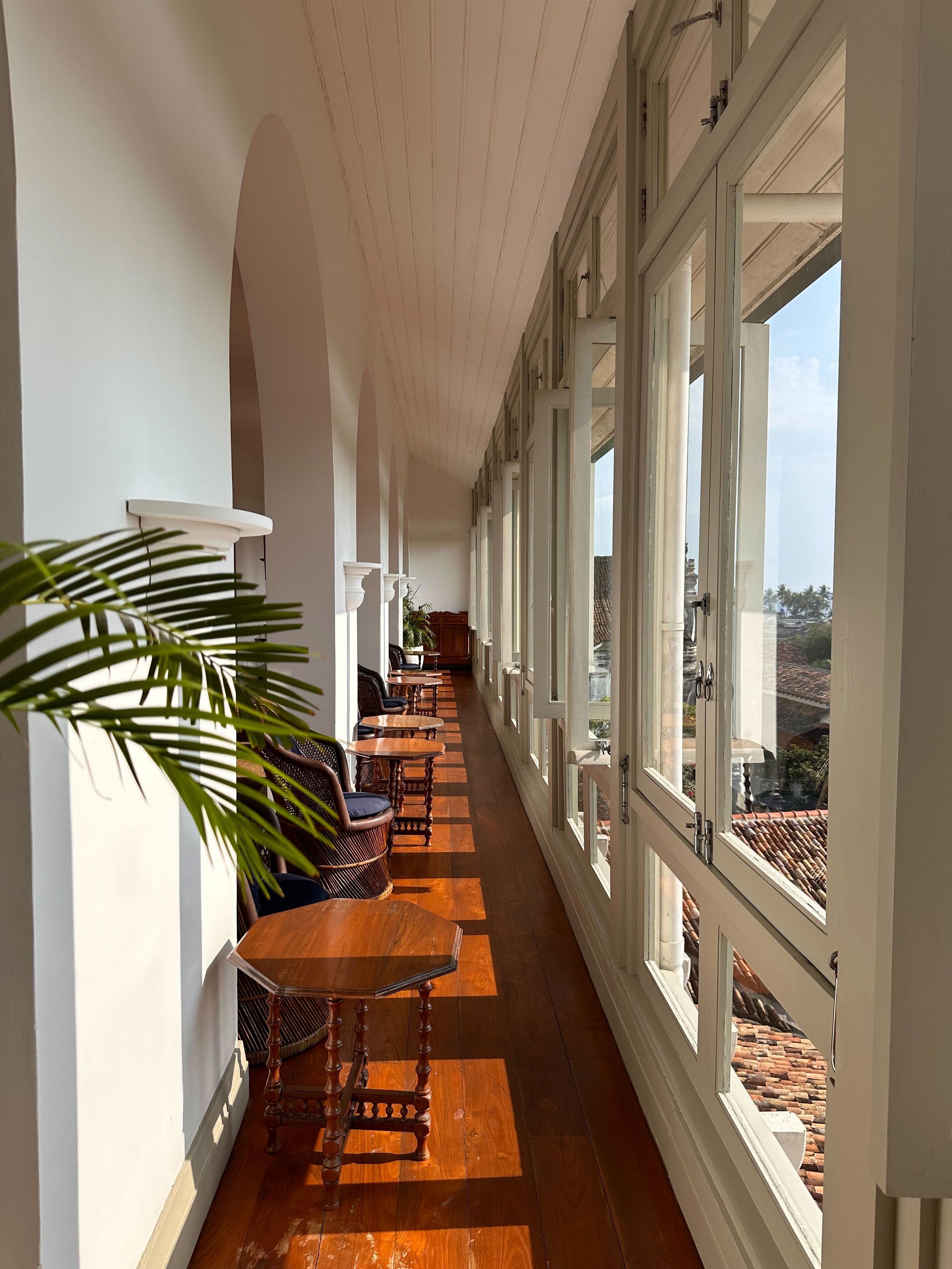
From the moment you walk through its doors, you feel the history. High ceilings. Polished wooden floors. Wide verandas with slow-turning fans. It feels refined but never stiff. The service is warm and attentive, and the property encourages you to slow down.
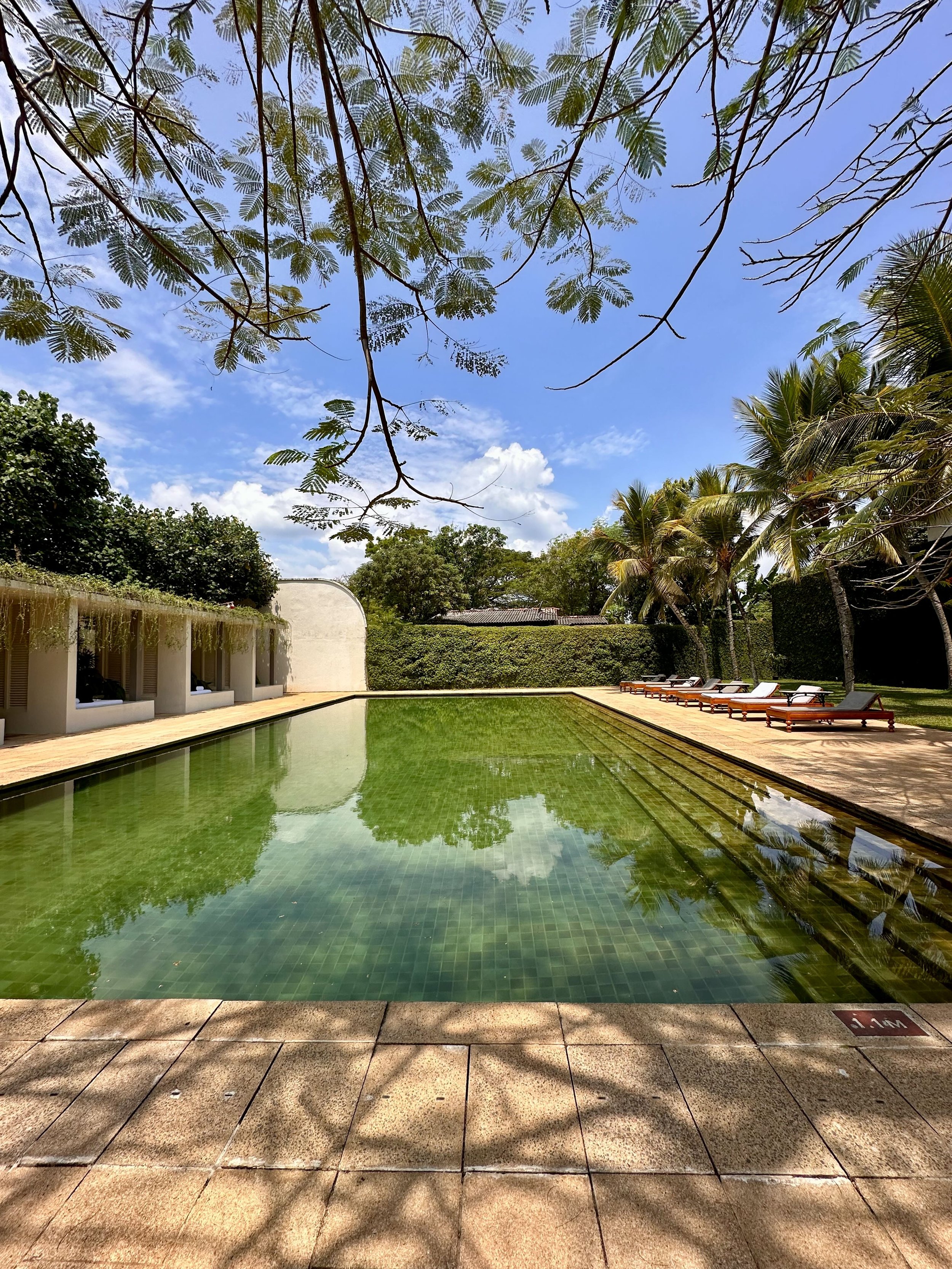
For photographers, the location is unbeatable. Step outside early in the morning, and you are already inside the fort, with empty cobblestone streets and soft coastal light. Return midday for a break by the pool, then head back out for sunset along the ramparts.
If you want to combine comfort, history, and walkable access to Galle’s best photography spots, Amangalla is hard to beat.
As you sit in the hotel lobby, you can imagine the generations of travelers who spent time having tea or a drink in this magnificent hotel.
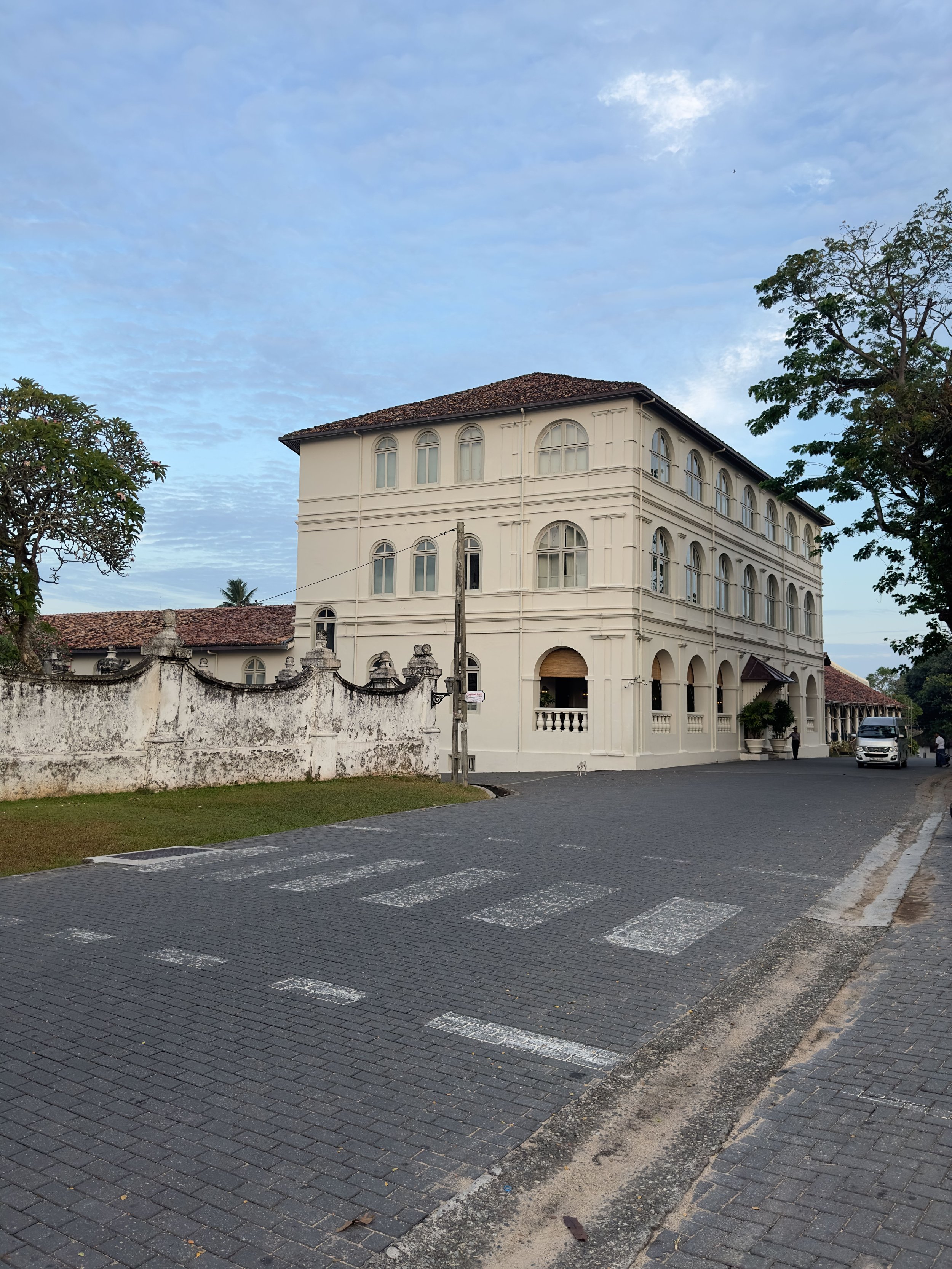
The Amangalla
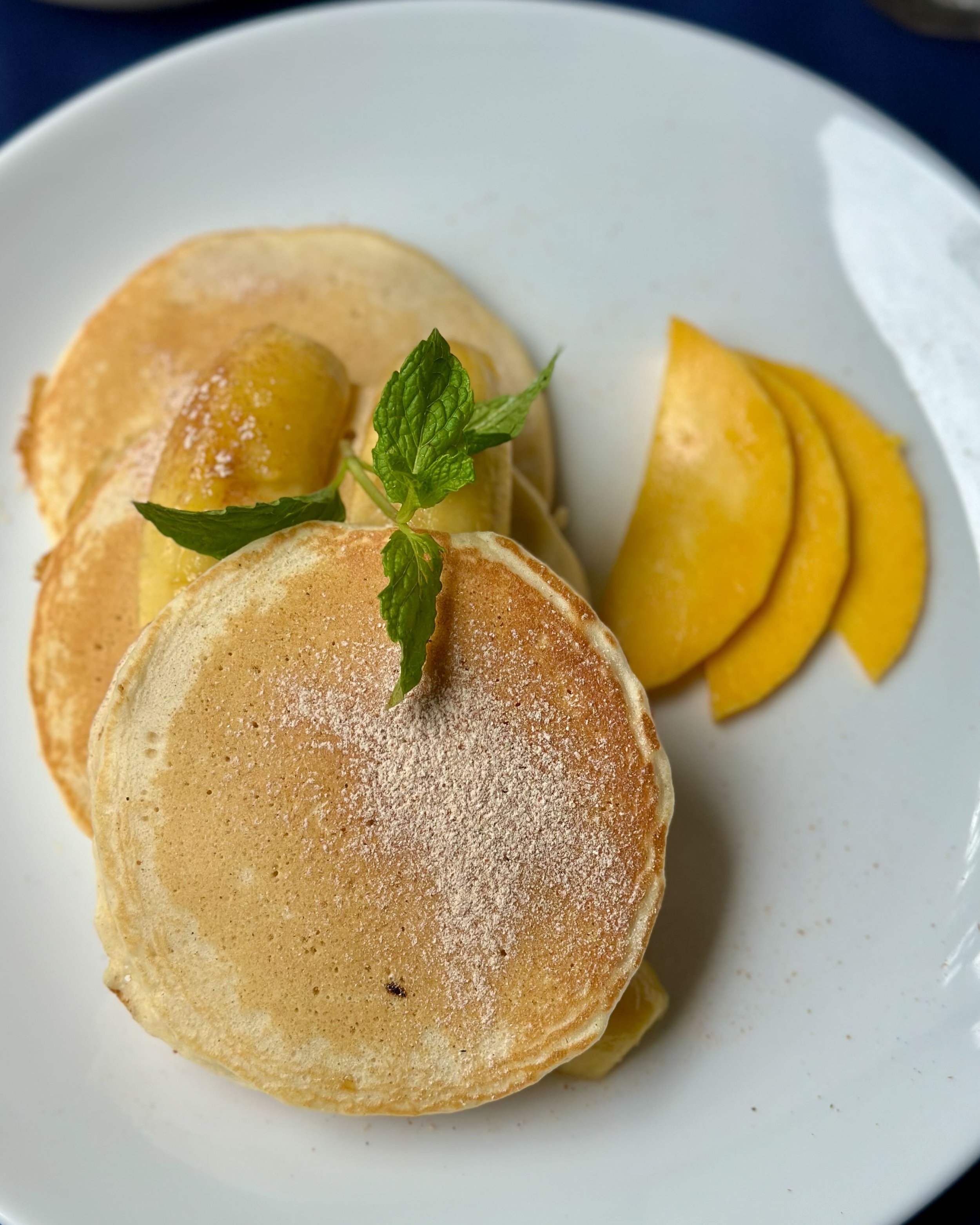
One of the best things about the hotel was the incredible food. A new discovery was something called Hoppers, which are eaten for breakfast. Hoppers are made from rice flour and coconut and have the consistency of a savory crepe. They are usually eaten with Fish or Chicken Curry.
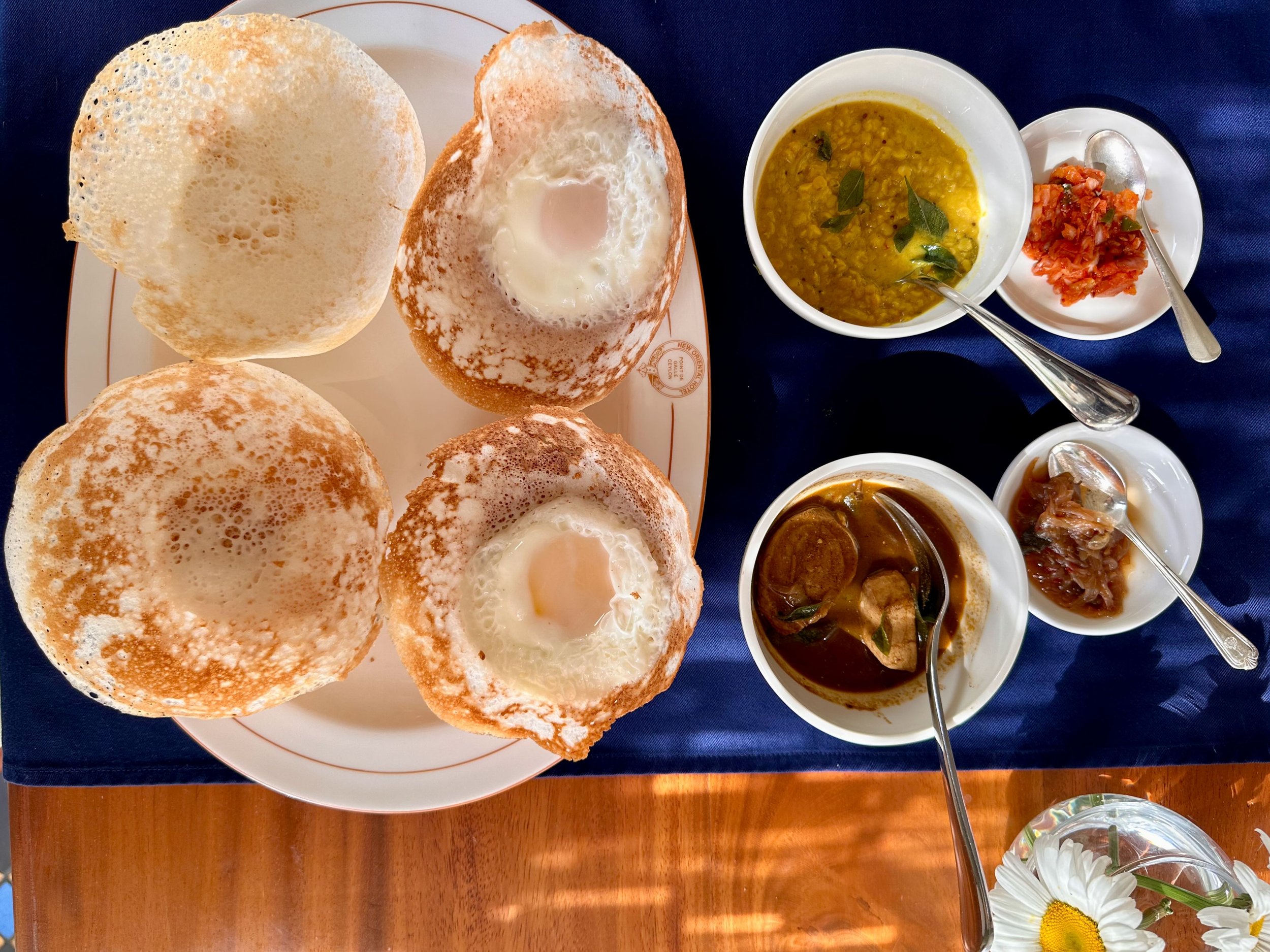
Delicious Hoppers
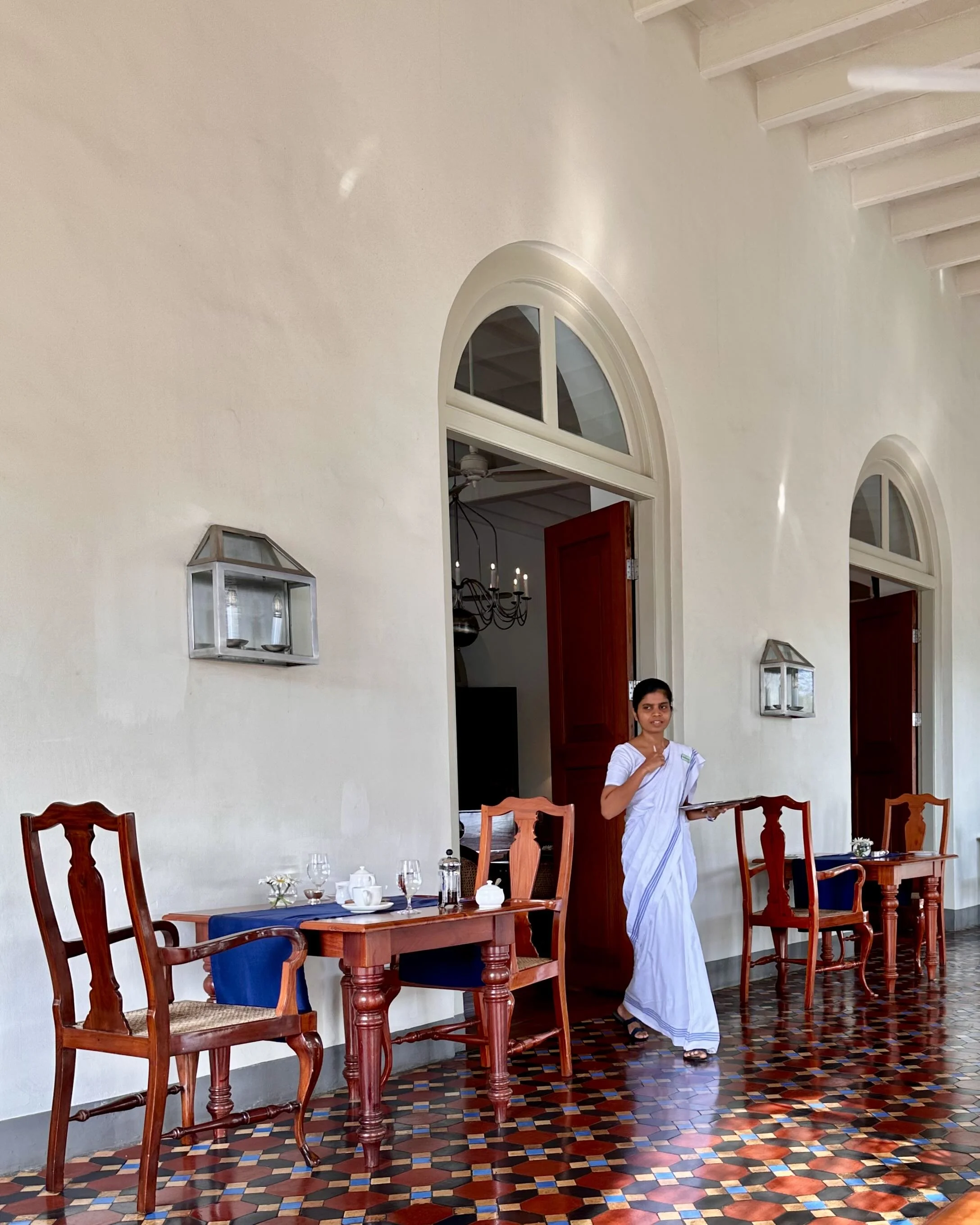
The service in the hotel was exceptional. The staff are so kind and friendly.
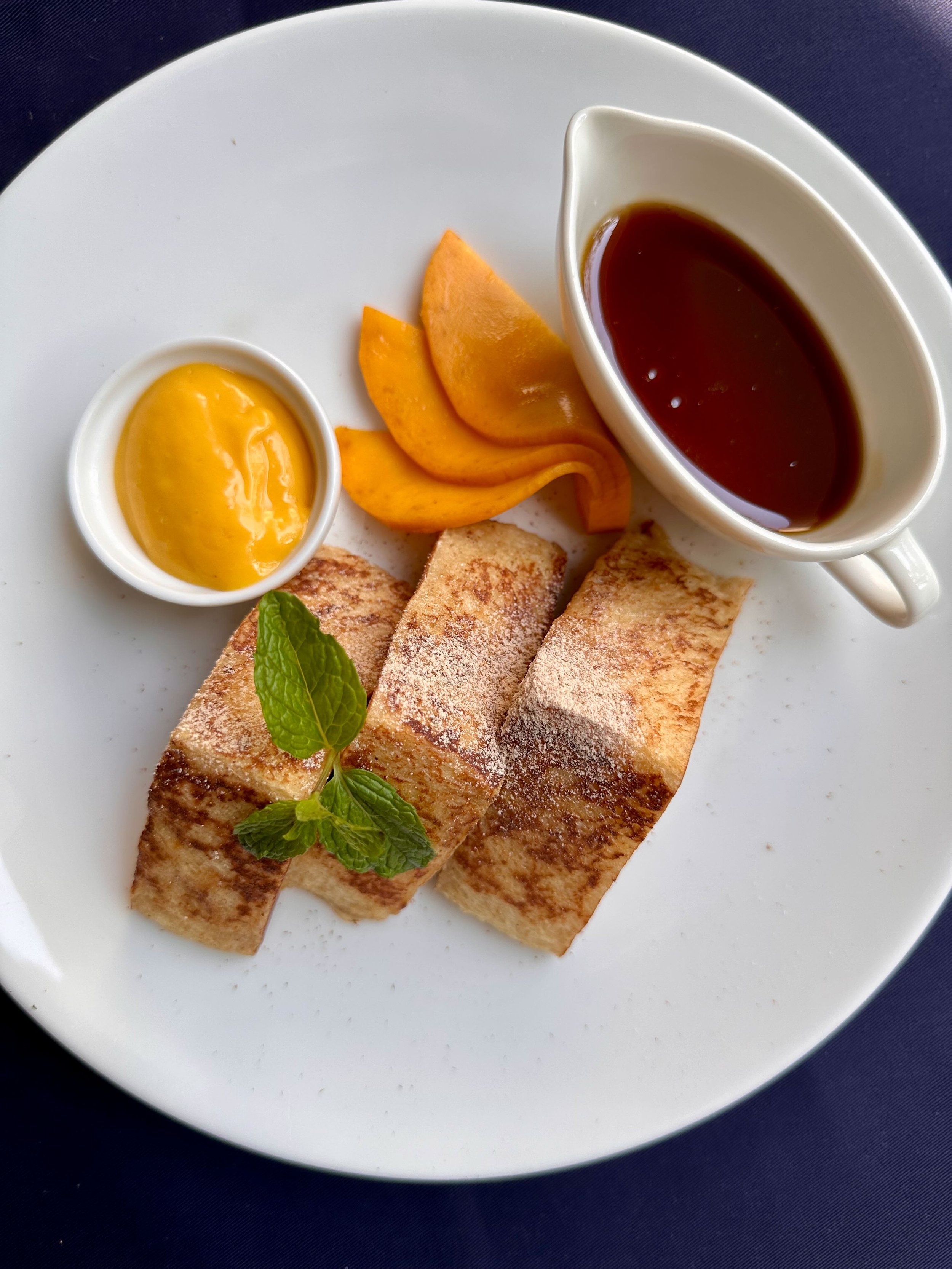
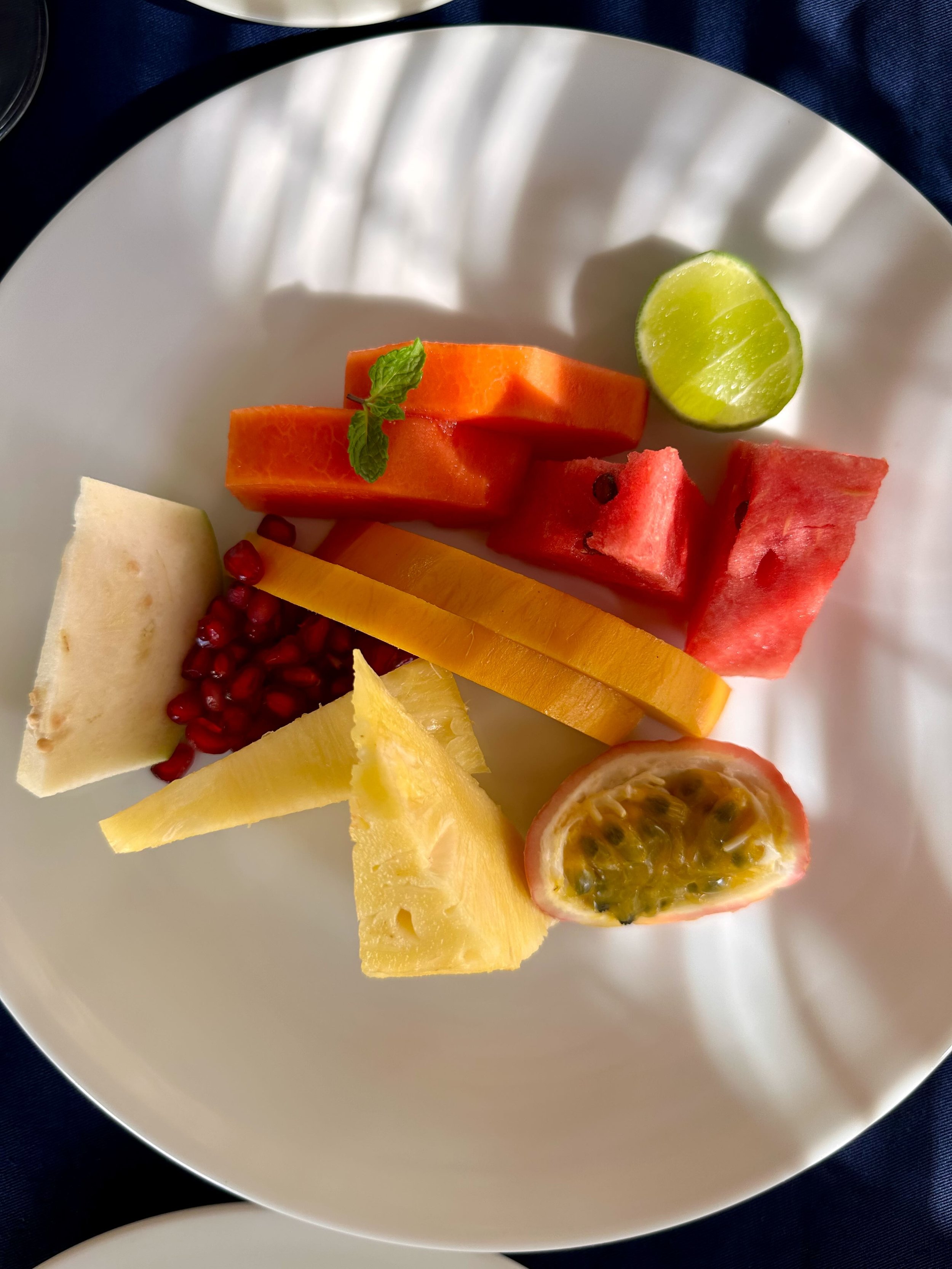
Luxury Hotels in Galle, Sri Lanka
Amangalla This is where we stayed, and I would not change that decision. The Amangalla sits inside the fort walls on Church Street, inside a building that has been welcoming travelers since the 18th century. High ceilings, polished teak floors, wide verandas with slowly turning fans, and a pool that feels absurdly civilized after a morning of shooting in the heat. As a photographer, the location is unbeatable. You walk out the front door and you are already inside the fort, on empty cobblestone streets with soft coastal light. Go at sunrise, come back for breakfast, and head out again in the late afternoon. That is the rhythm the hotel is designed for.
Jetwing Lighthouse, A Luxury Reserve Designed by Sri Lanka's legendary architect Geoffrey Bawa, Jetwing Lighthouse sits on a hillock just outside the fort, overlooking the Indian Ocean. The architecture alone is worth the visit. Sixty rooms and suites, two pools, four dining options, a spa, and views that go on forever. Bawa's signature blend of modernism, colonial references, and tropical materials makes every corner of this property worth photographing. If you are interested in architecture or design, this hotel is a destination in itself.
The Fort Printers One of the most beautifully restored properties inside Galle Fort, The Fort Printers occupies a 300-year-old Dutch colonial building on Pedlar Street. It has twelve rooms, a courtyard pool shaded by a massive frangiapani tree, and the kind of quiet, unhurried atmosphere that makes you want to stay an extra night. The restoration is meticulous without feeling like a museum. The location, deep inside the fort, puts you steps from the Dutch Reformed Church, the ramparts, and the best morning light in Galle.
Mid-Range & Boutique
Fort Bazaar Fort Bazaar is Galle Fort's most accomplished boutique hotel and one of the best-run properties on the entire southern coast. It occupies a restored 16th-century spice merchant's home on Church Street, arranged around an open-air central courtyard scented with frangipani. The 18 rooms range from courtyard-facing bedrooms to upper-floor suites with private terraces overlooking the fort's red-tiled rooftops toward the Indian Ocean. The Church Street Social restaurant inside the hotel is excellent. The location puts you at the center of everything.
Taru Villas Rampart Street Set on Rampart Street just 100 meters from the lighthouse, Taru Villas is a thoughtfully designed boutique property with a relaxed, residential feel. Rooms are airy, well-proportioned, and decorated with local textiles and handcraft. The hotel's rooftop terrace gives you direct views over the ramparts toward the sea, which makes it genuinely useful for sunset shooting without fighting for space on the wall. Good value for a fort location, and the staff are warm and genuinely helpful.
The Galle Fort Hotel A 12-suite boutique hotel set inside a restored colonial-era building near the center of the fort. The rooms are comfortable and well-styled, the breakfast is one of the better ones in Galle, and the central location means you are never more than a five-minute walk from any of the major photography spots. For photographers who want a clean, well-located base at a reasonable price point, this is a reliable choice.
Photography Gear to Bring to Sri Lanka
Sri Lanka covers an enormous range of shooting conditions in a relatively compact geography. Pack with versatility in mind.
Camera Body: Any modern full-frame mirrorless handles the range of conditions well. The Canon EOS R5 Mark II, Sony A7R V, or Nikon Z8 all deliver strong dynamic range for the high-contrast coastal light around Galle and the low-light temple interiors. Weather sealing is valuable here; coastal humidity and the occasional rain shower are part of the experience.
Lenses:
Wide angle (15-35mm): For the Galle Fort ramparts, temple interiors, and coastal landscape compositions. The wide perspective captures the scale of the fort walls and the drama of the ocean beyond.
Standard zoom (24-70mm): Your all-day lens for street photography in the fort, market scenes, food detail, and portraits.
Telephoto (70-200mm or 100-400mm): Essential if you extend your trip to Yala National Park for leopard and elephant photography. Also useful for compressing the stilt fishermen against the open sea and for detail shots on the fort architecture.
Prime (50mm or 85mm): For portraits in the markets and along the ramparts. Sri Lankan people are wonderfully photogenic subjects and a short prime keeps the interaction natural.
Accessories:
Lightweight tripod for blue hour and long-exposure coastal shots from the ramparts.
Polarizing filter for cutting ocean glare in the bright midday coastal light.
Lens cloth and a dry bag or rain cover; the humidity near the coast is persistent and salt air builds up on glass quickly.
Extra batteries; the heat drains them faster than you expect.
Drone note: Drone regulations in Sri Lanka require registration with the Civil Aviation Authority of Sri Lanka (CAASL). Flying near the Galle Fort UNESCO World Heritage Site is restricted. Check current regulations before travel and obtain any required permits in advance through the CAASL portal.
Photography Locations Galle, Sri Lanka
In Front of the Amangalla Hotel
There is a grassy area right in front of the Amangalla that attracts people from all over Galle. You will see families, couples, and photographers using the area for photography.
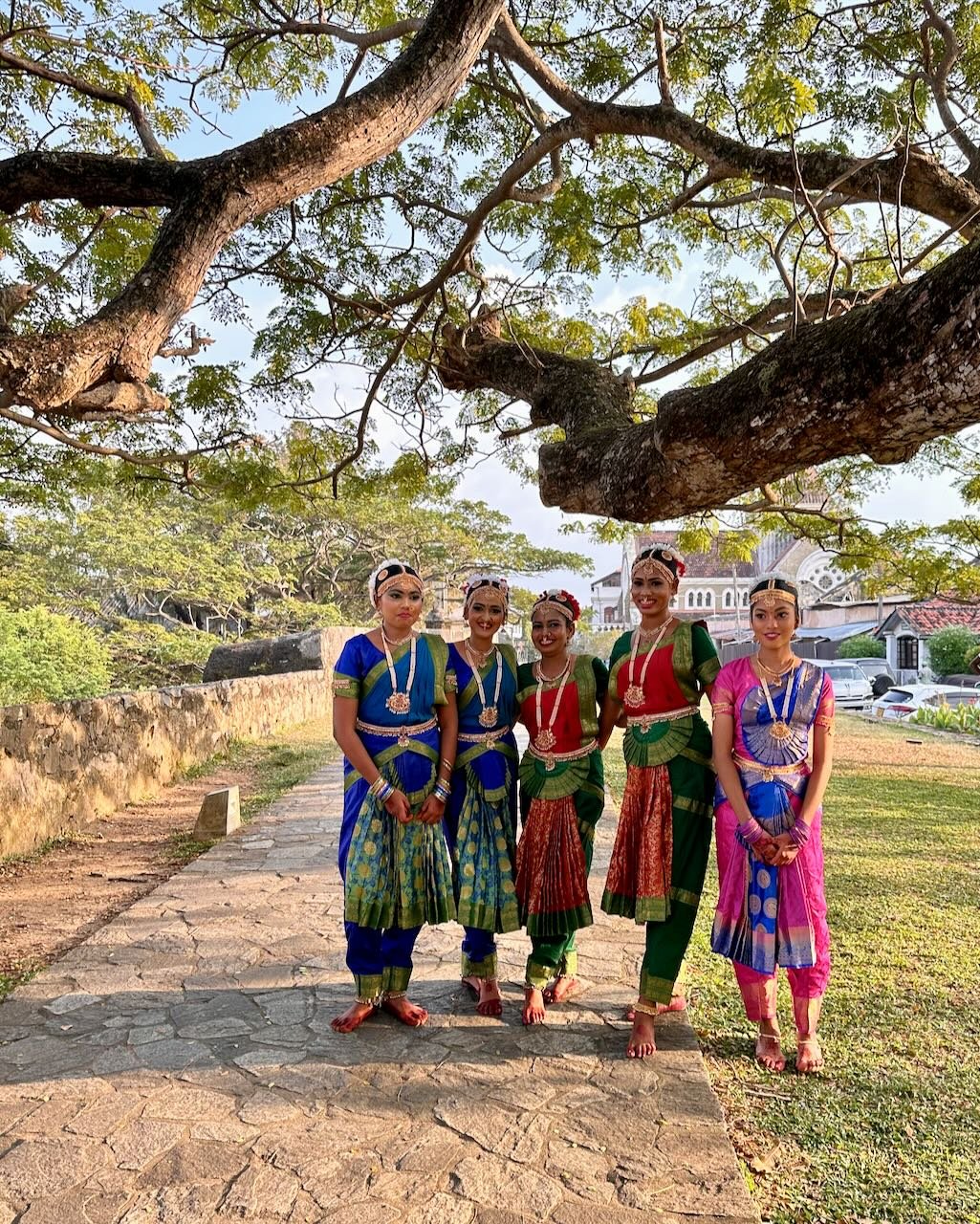
I was fortunate to see some young women dressed in traditional dress. They were very kind and let me take their photos.

Food & Vegetable Markets
Sri Lankan cuisine is among the best in the world—expect delicious curries and hoppers served in bowls, parathas, curries, lentil dhal, and fresh seafood. The food blends different cultures and colonizers, from the Portuguese and Indian to Arab and Dutch, who have kept bringing new twists.
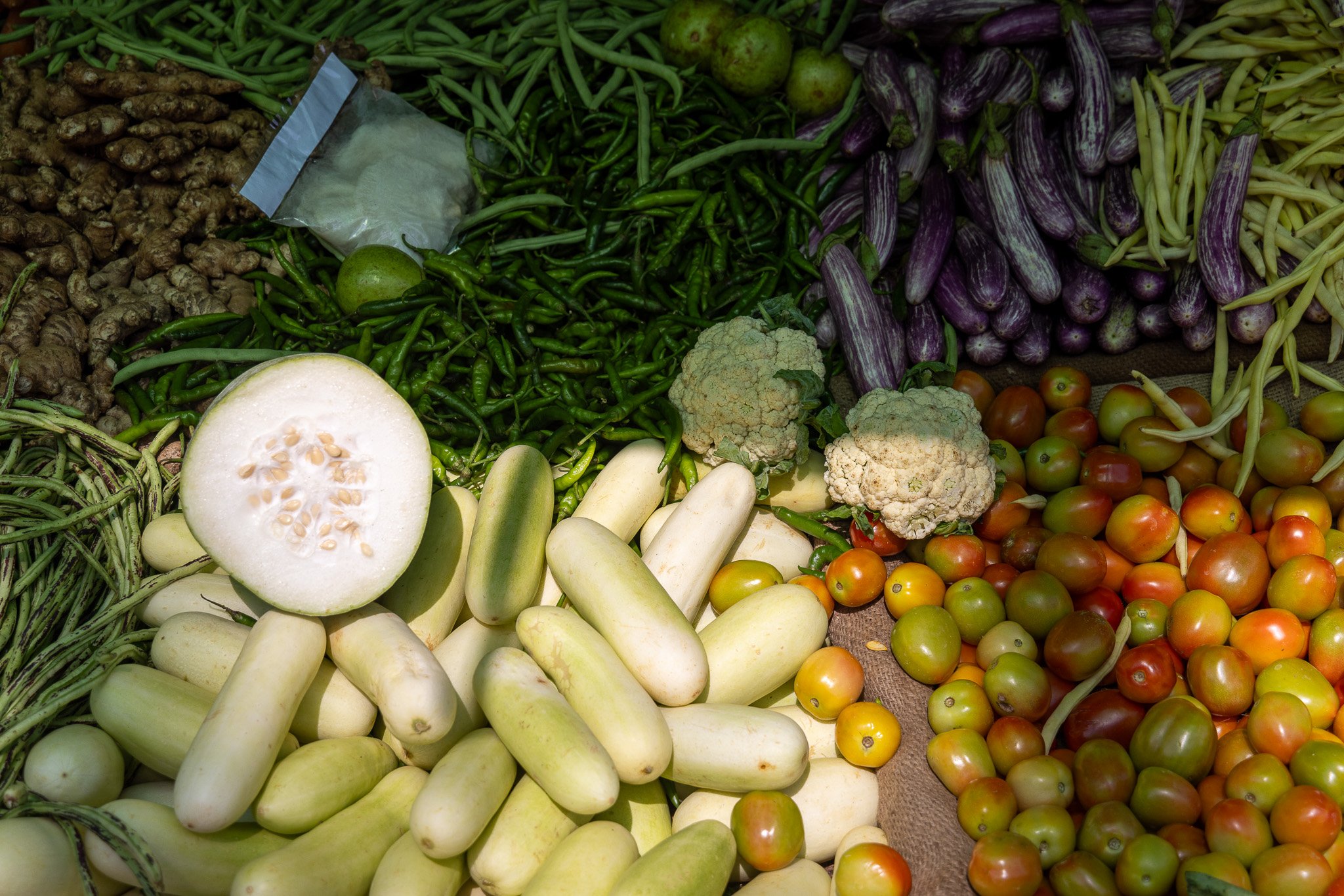
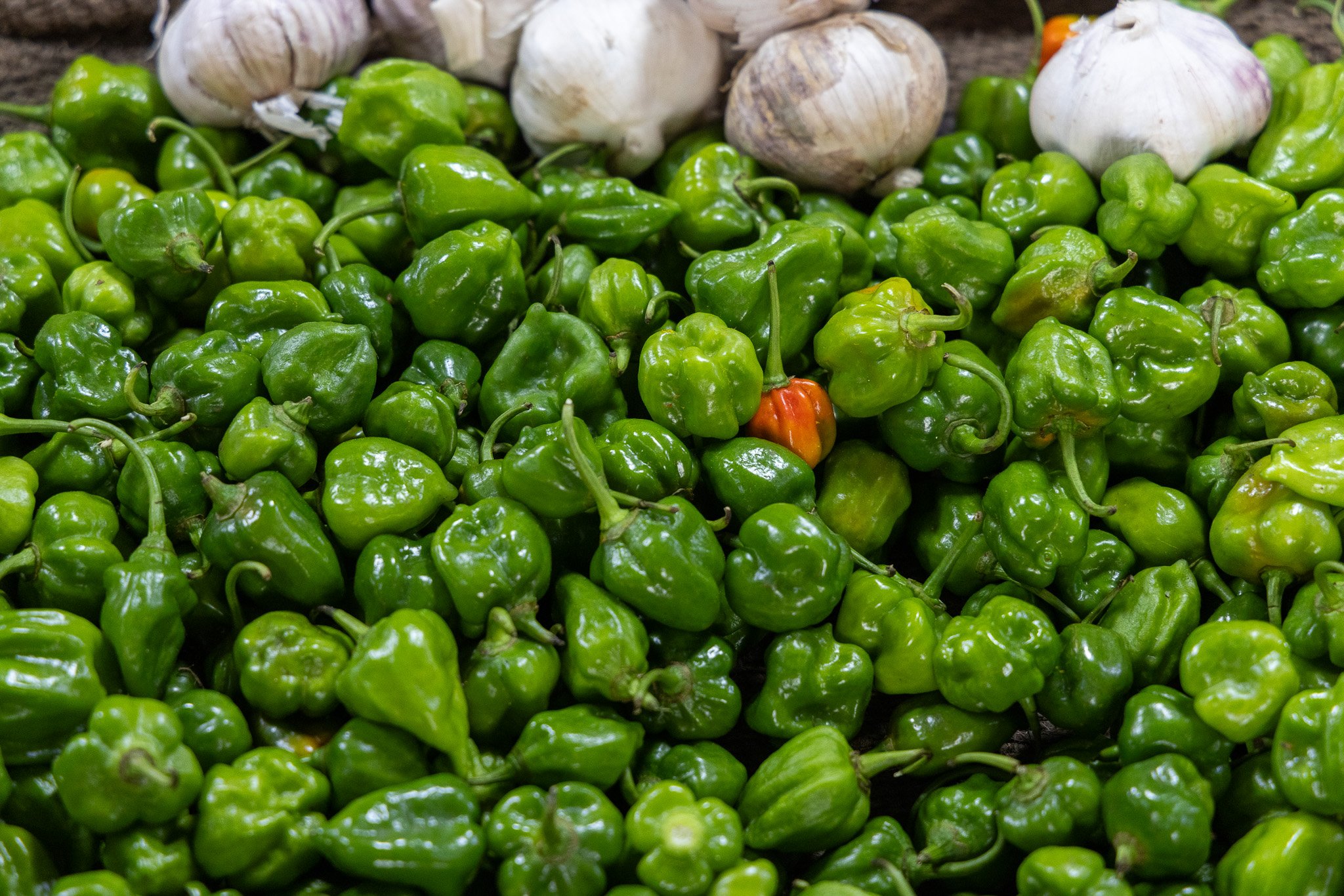
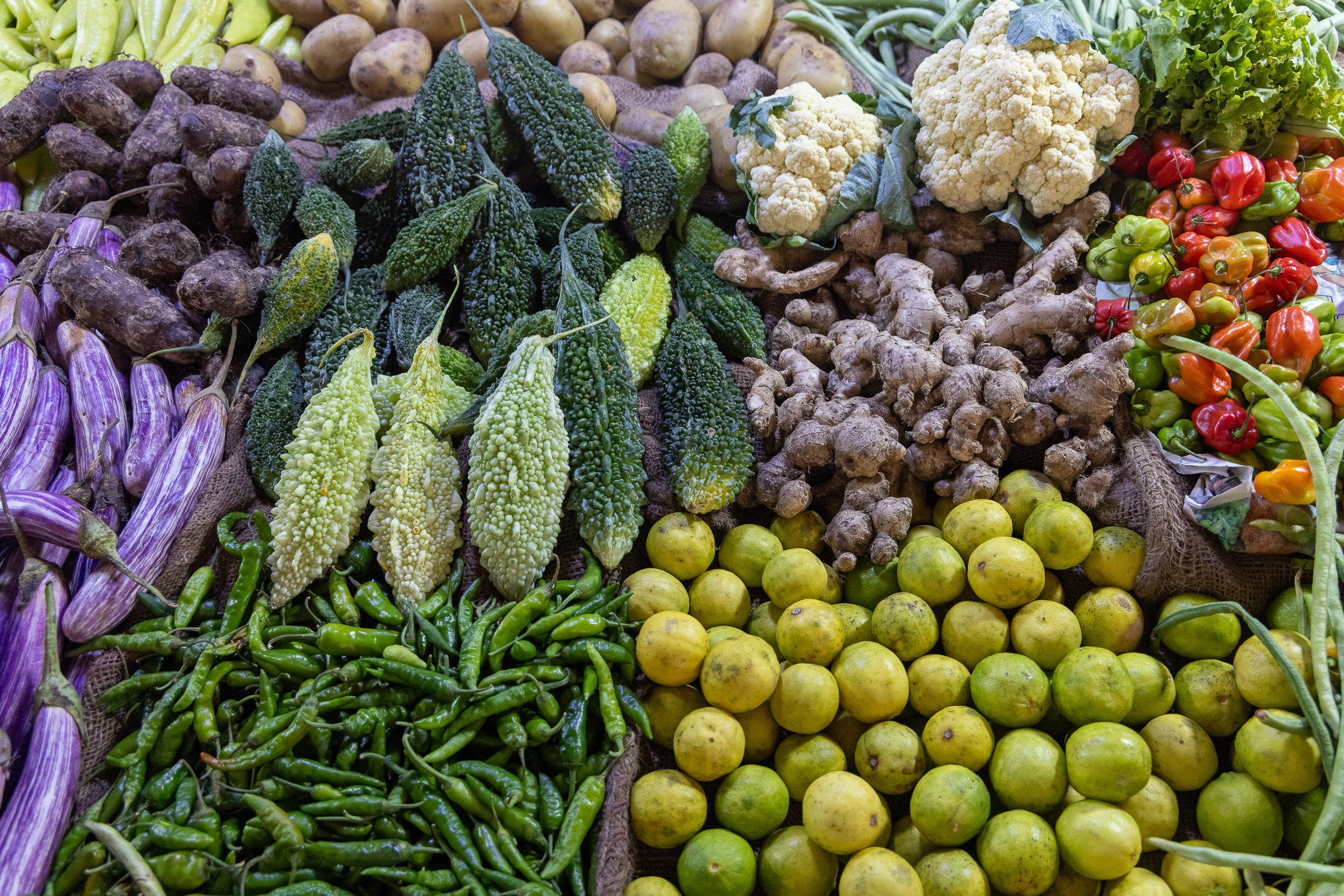
Although curries are a daily staple of the Sri Lankan diet, they are less heavy than curry from India; coconut milk and oil rather than butter or ghee, create lighter dishes.
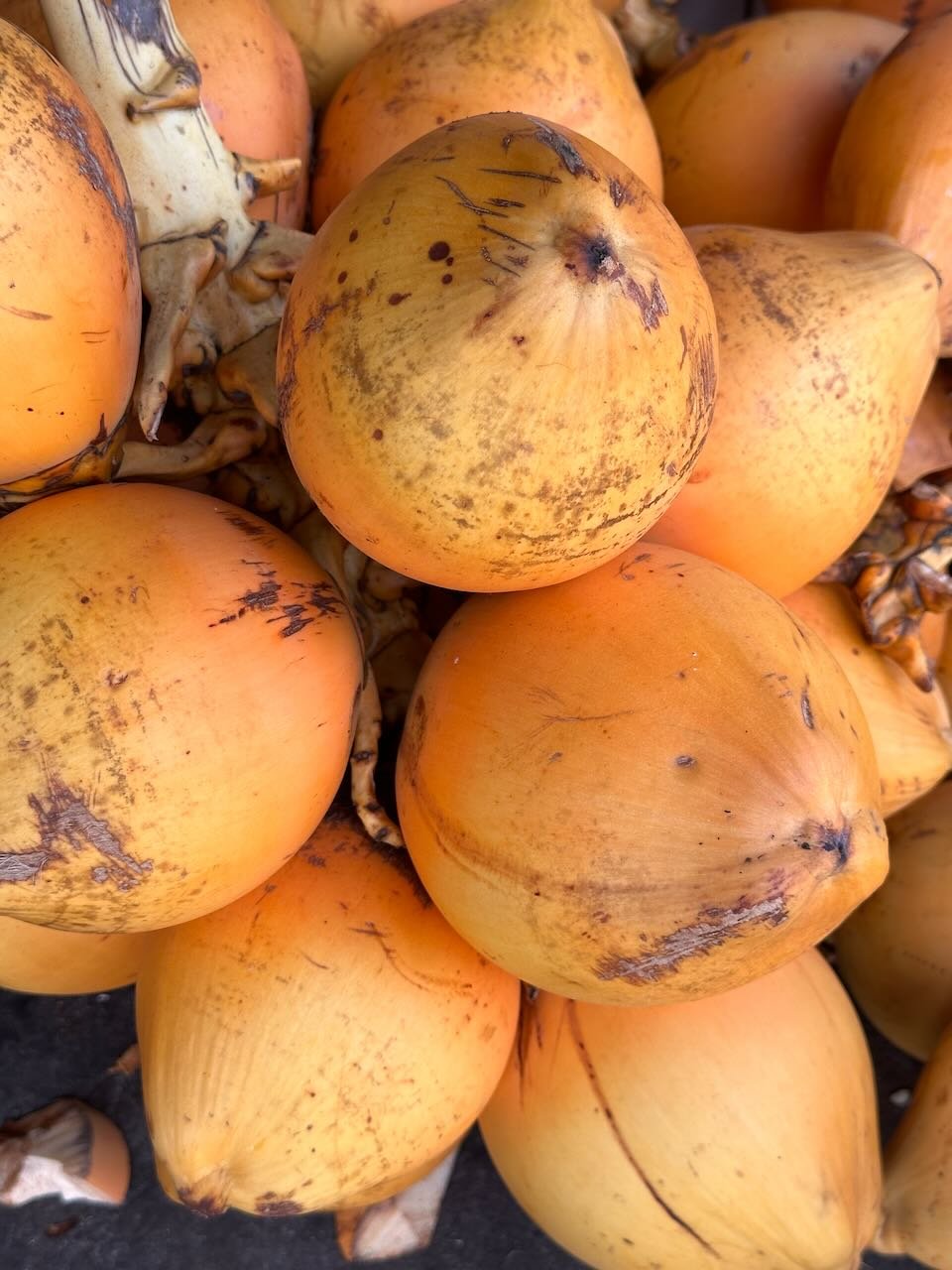
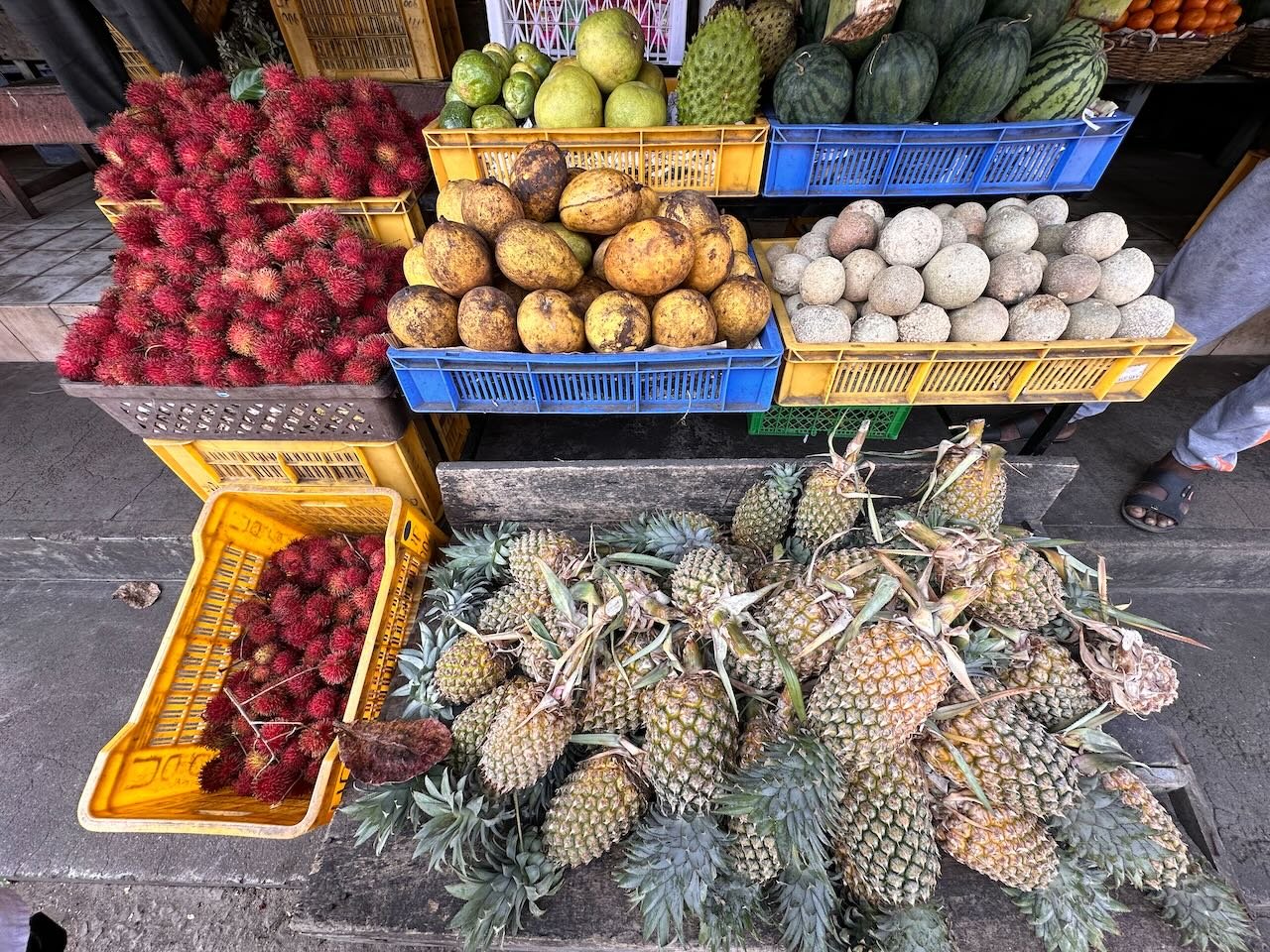
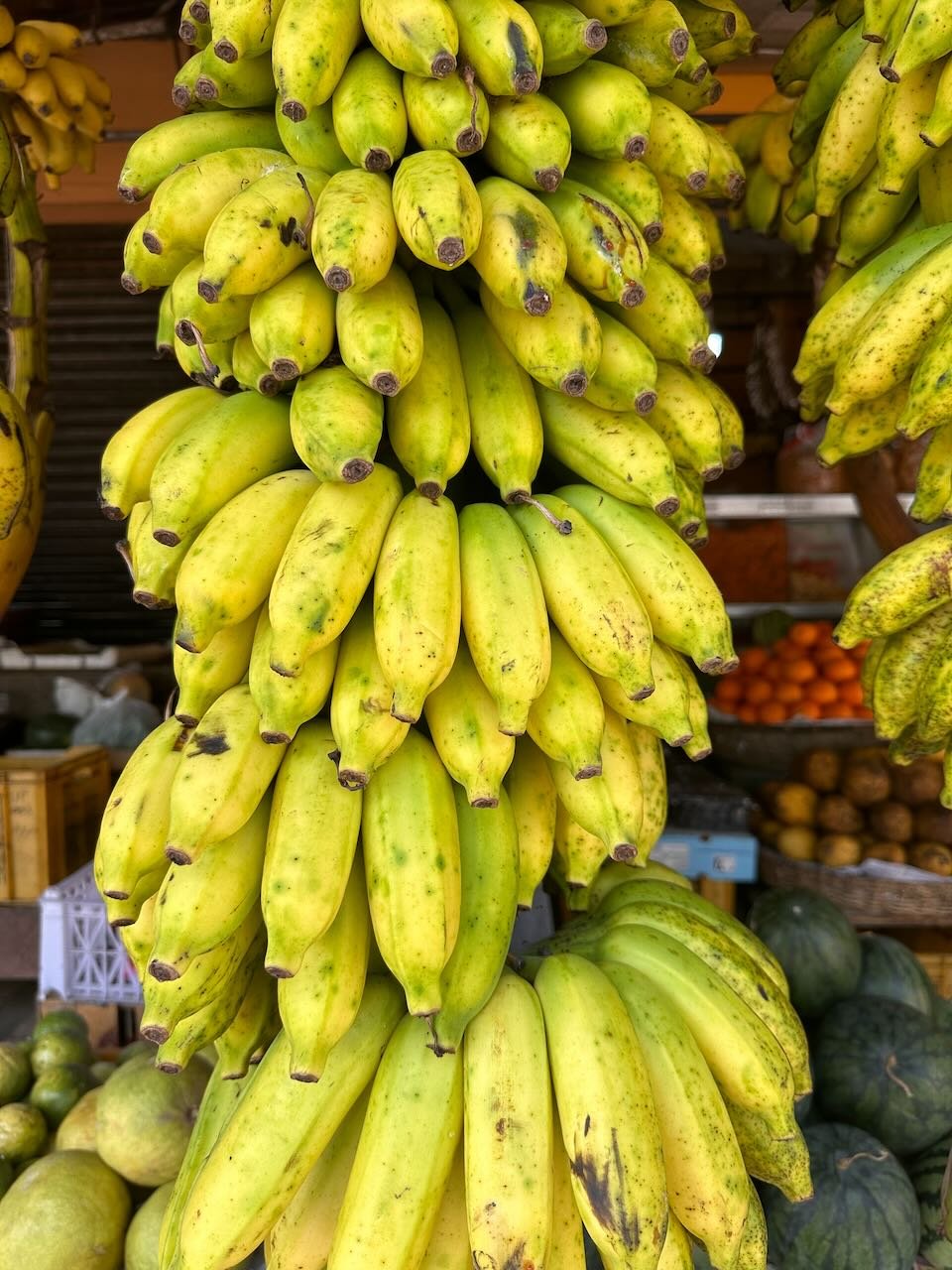
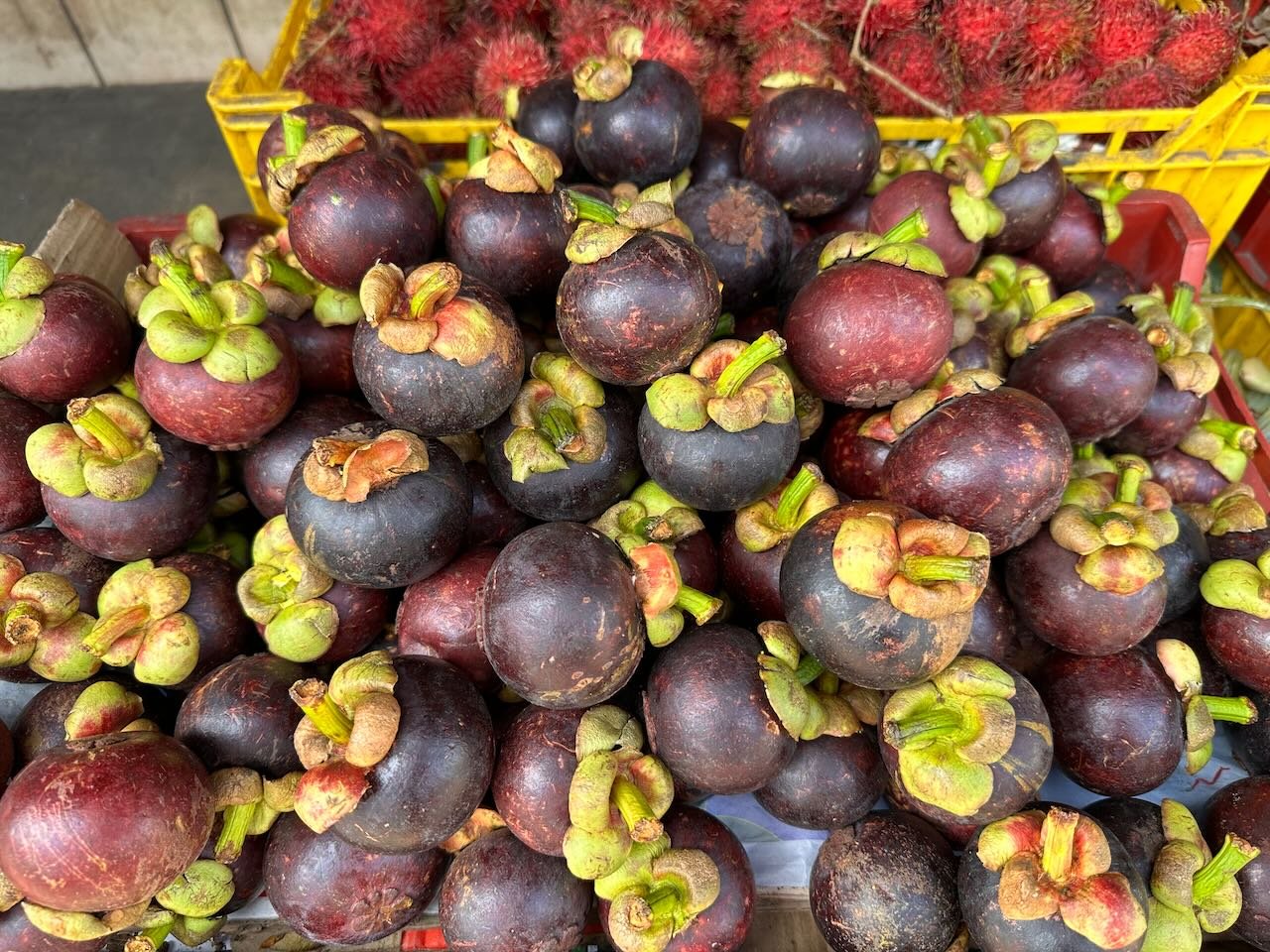
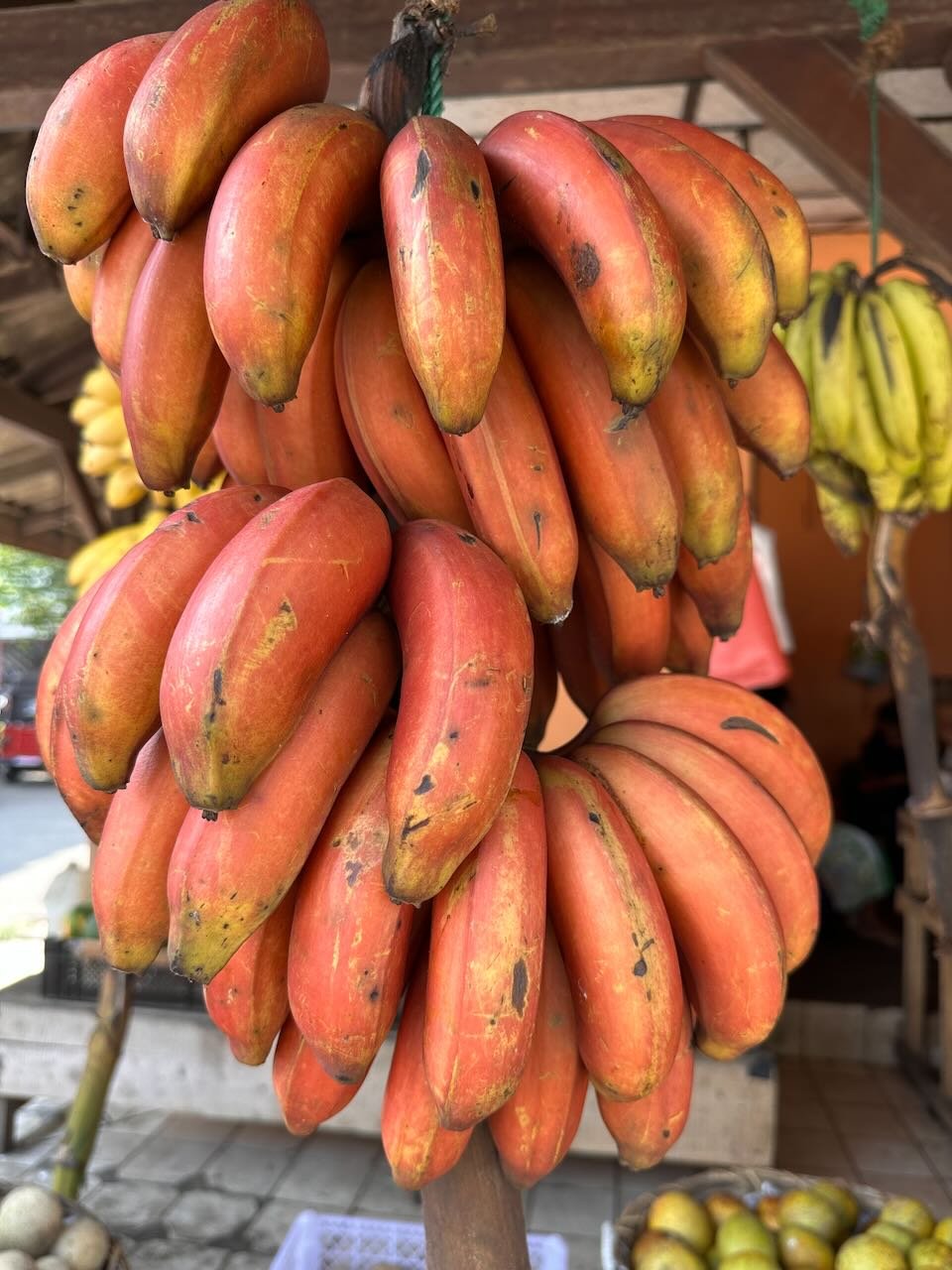
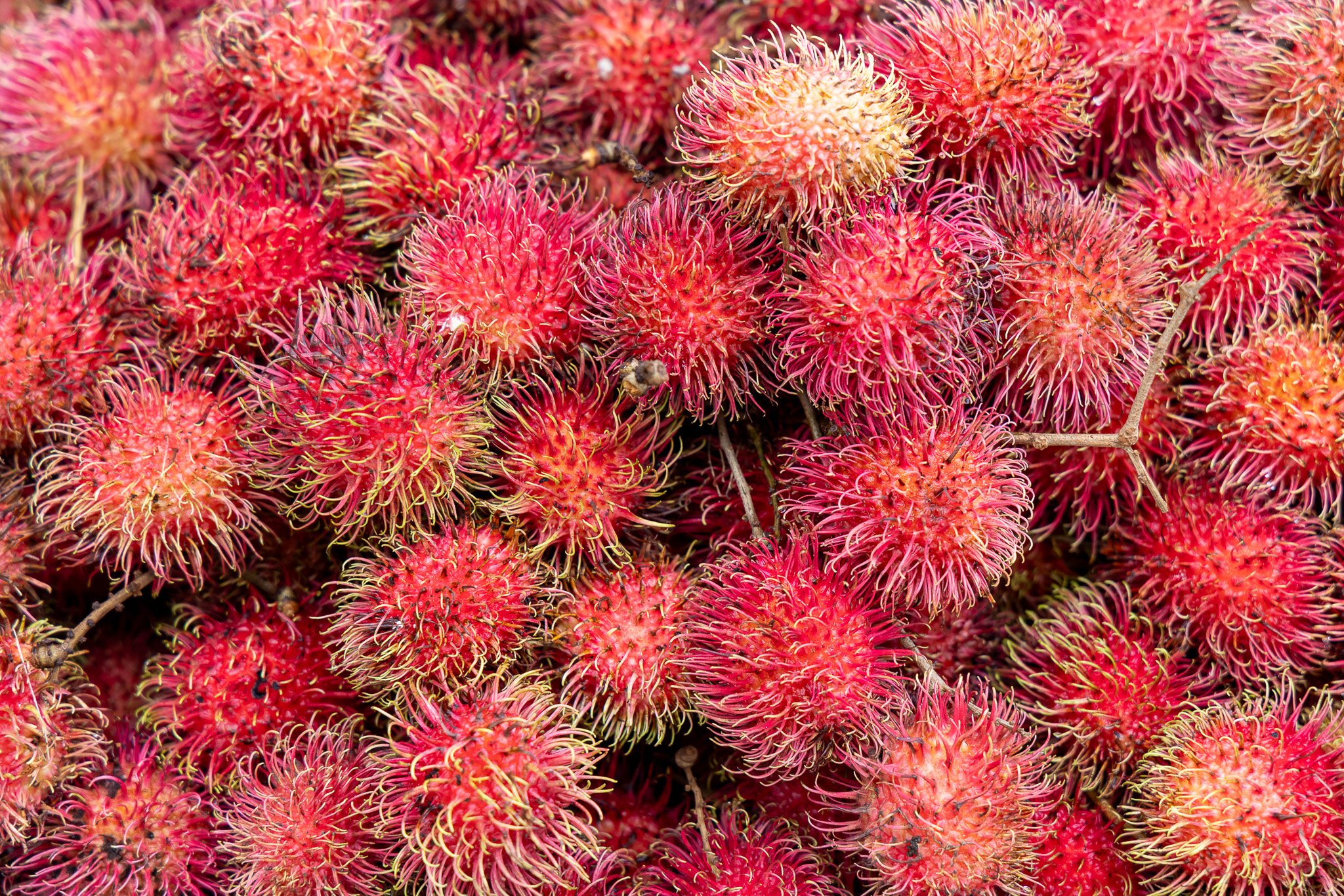
Then there are the fruit and vegetable markets offering delicious fresh produce in ever color imaginable.
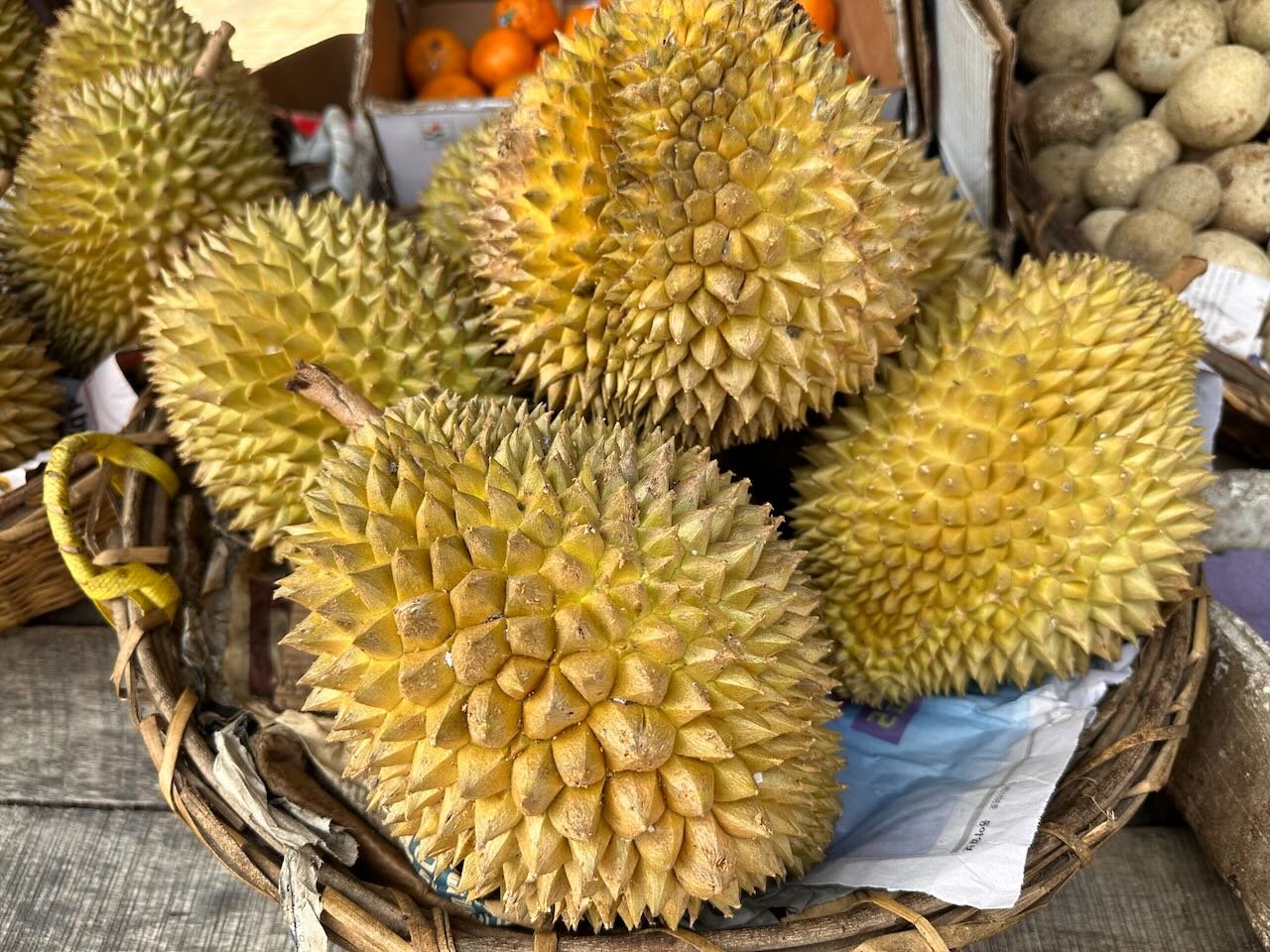
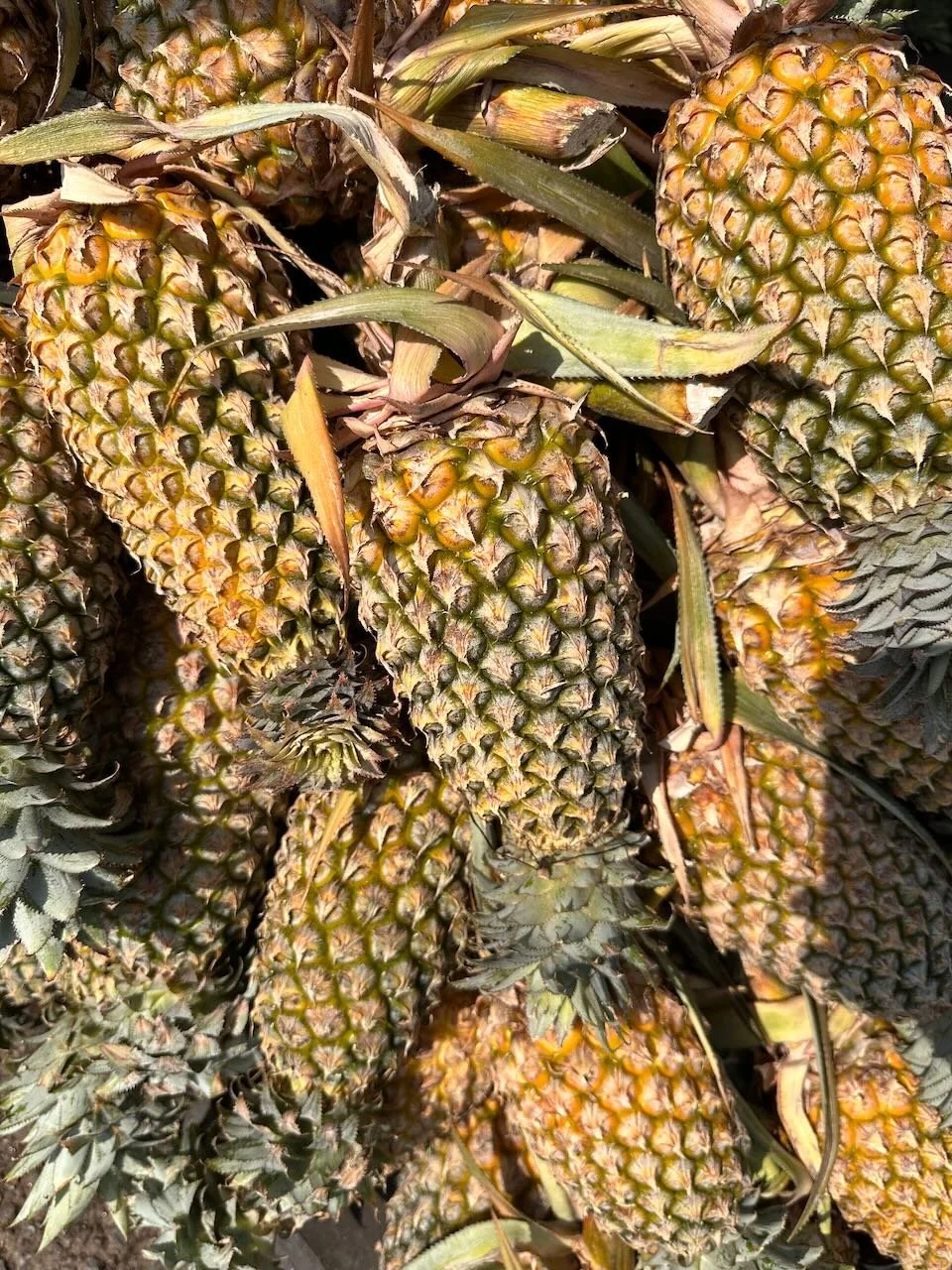
Street Photography
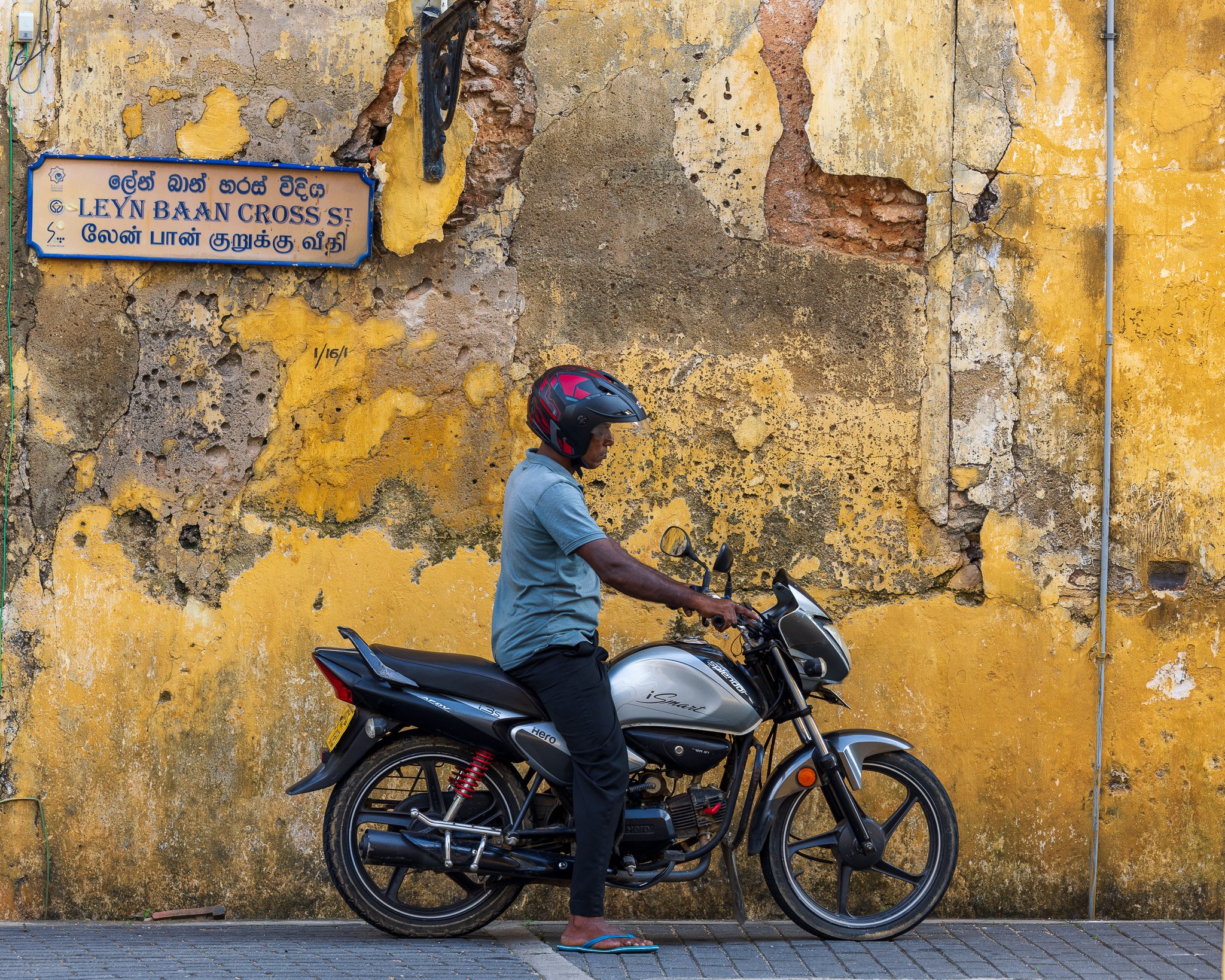
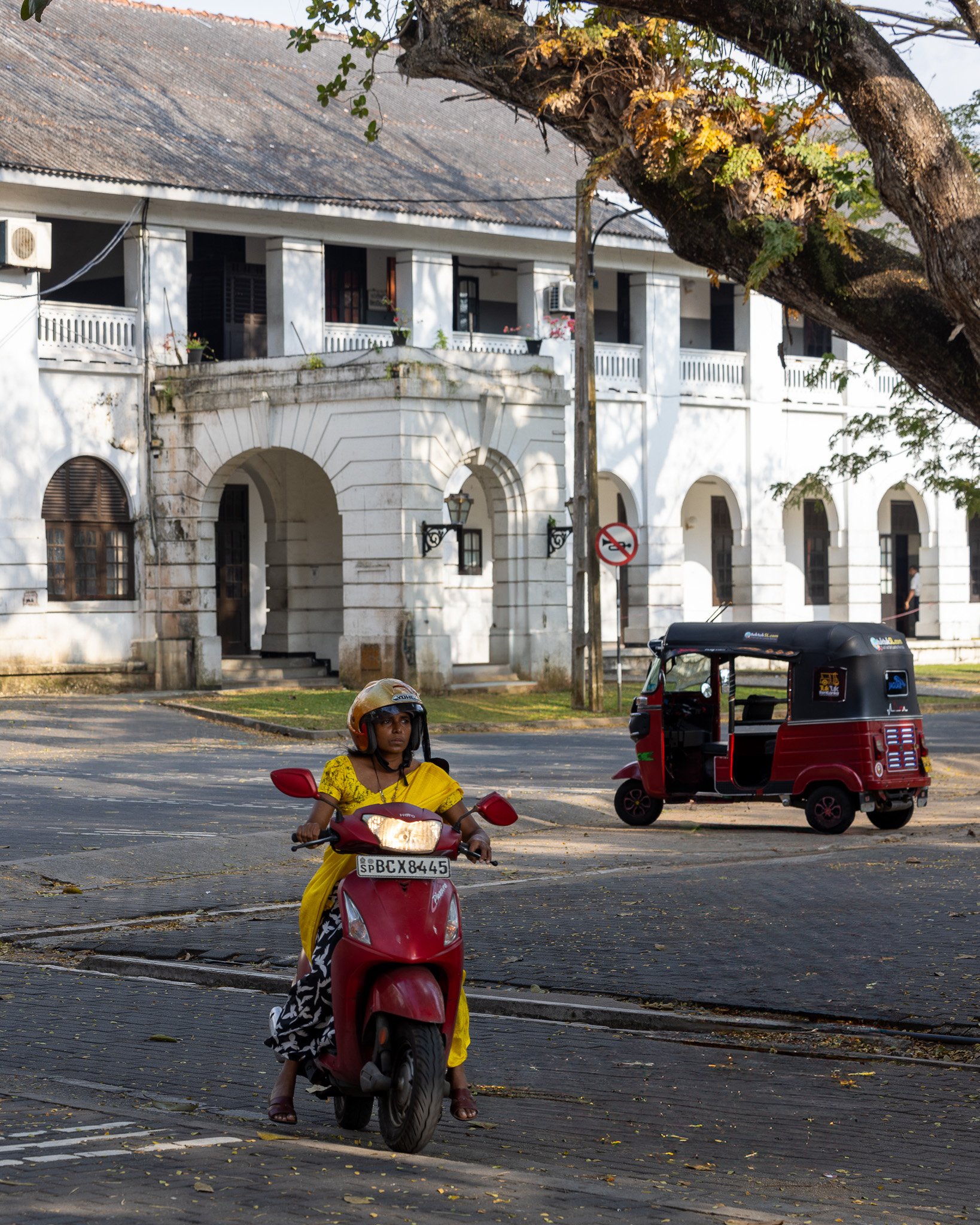
In Sri Lanka, you can always find great places to do street photography. People like to be photographed (without demanding money. I usually would point towards my camera, asking if I could take their photos, and then show them the photo.

Galle Fruit Market
Walking around Galle will provide you with many opportunities to take street photography photos.
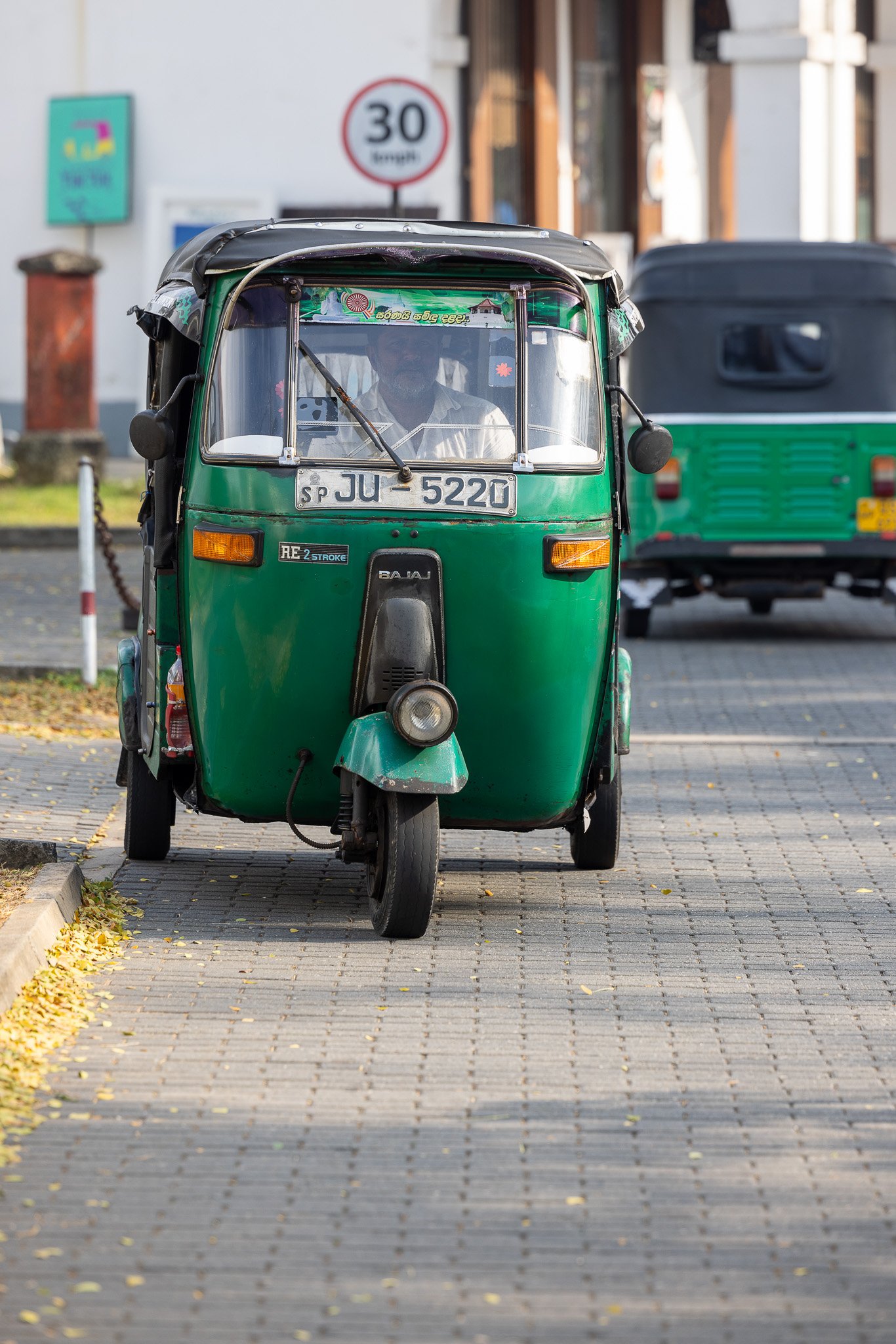
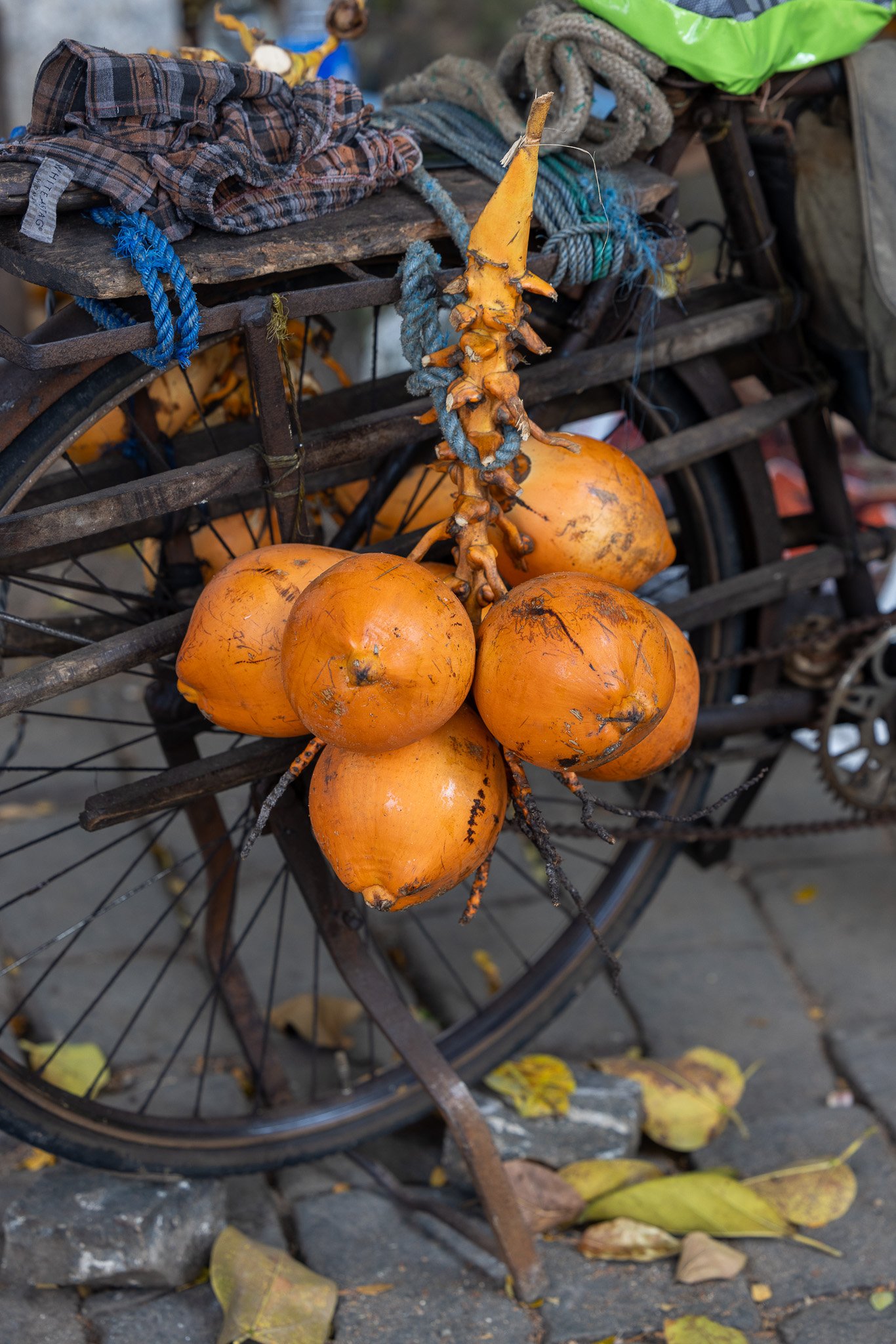
Galle Fort
Built by Dutch merchants in the 17th century, then taken over by the British in 1796, Galle Fort is a Unesco World Heritage Site filled with pastel-colored colonial buildings, ancient mosques, chic boutiques, and stylish cafés and restaurants. It has been an important trading port since the 17th century. There are also lots of beautiful shops selling clothing, gemstones, and a lot of local art.

Galle Lighthouse
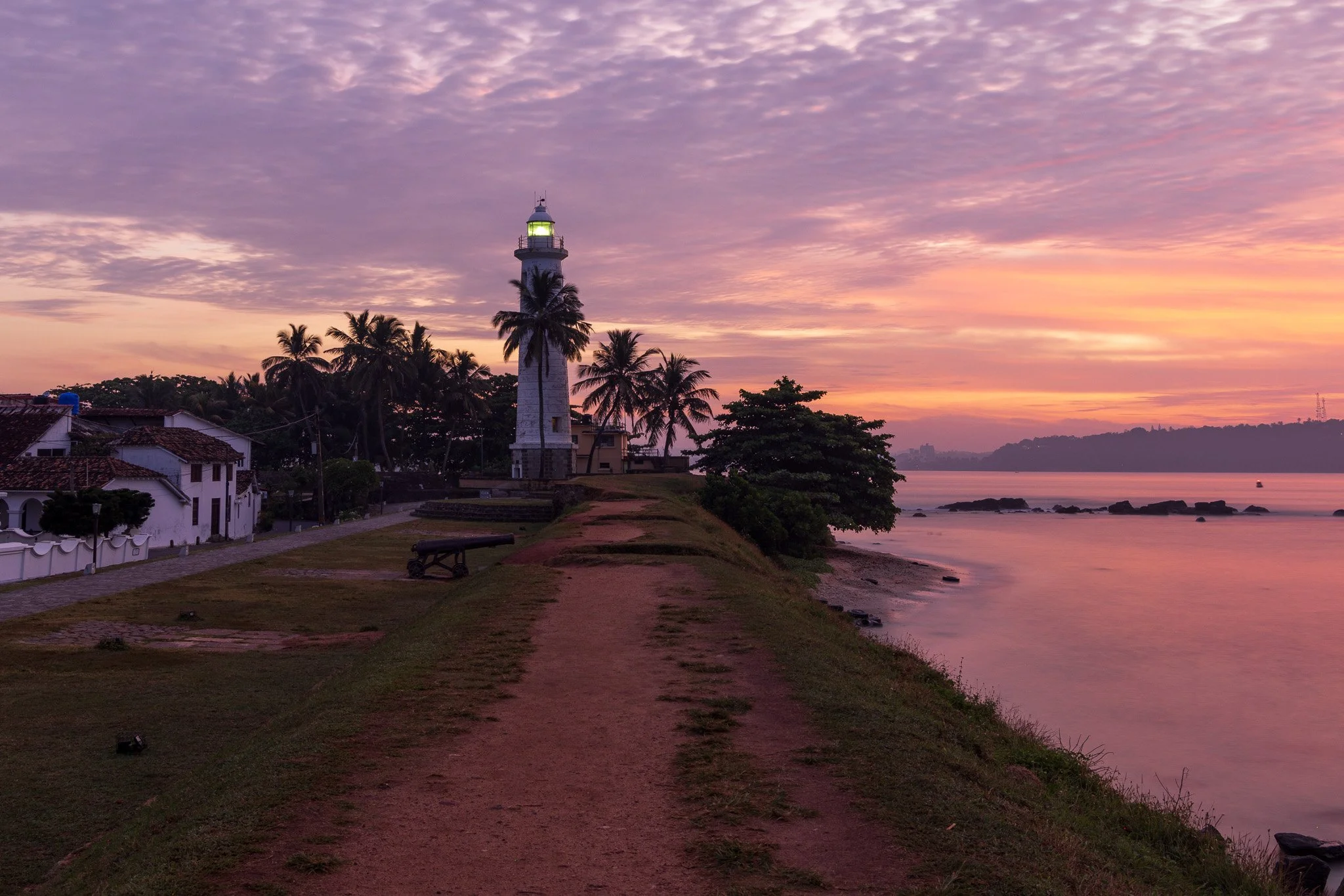
The lighthouse is the most photographed landmark in Sri Lanka for good reason. Built by the British in 1848, it is the oldest functioning lighthouse in the country. It stands at the southernmost tip of the fort, flanked by coconut palms, with the deep blue Indian Ocean on three sides. The white tower against a blue sky and palm fronds makes for one of the most graphic, clean compositions you will find anywhere in Asia.
Most photographs of the lighthouse are shot from the same angle, standing on the ramparts to the north. Try moving around to the south side where the ocean is directly behind the tower, or wait until the palms are backlit in the late afternoon for a more dramatic silhouette.
📷 Pro Tip: The classic composition is from the rampart walk, facing southwest, with the lighthouse in the left third of the frame and the Indian Ocean filling the right. Use a 35mm or 50mm prime for this shot; wider focal lengths distort the tower. For a less-seen angle, position yourself on the small grassy area directly west of the lighthouse and shoot from a low angle with a 24mm to include the coral stone wall in the foreground. If the lighthouse keeper is present, he has occasionally allowed visitors up to the top. Best time: Late afternoon for warm light on the white tower, or blue hour for long exposure light trails from passing boats. Access: Free.

Walk Along Galle Fort Wall
Galle Fort’s wall is where locals and tourists come together and enjoy the beautiful view of the city and the sea. Best of all, you can walk along the fort's perimeter.

Start at Galle Fort Lighthouse on the southeastern part of the fort and walk along the wall to see various views.

You will see lot of locals taking photos in traditional dress. They were so kind to let me take their photo.

Dutch Reformed Church
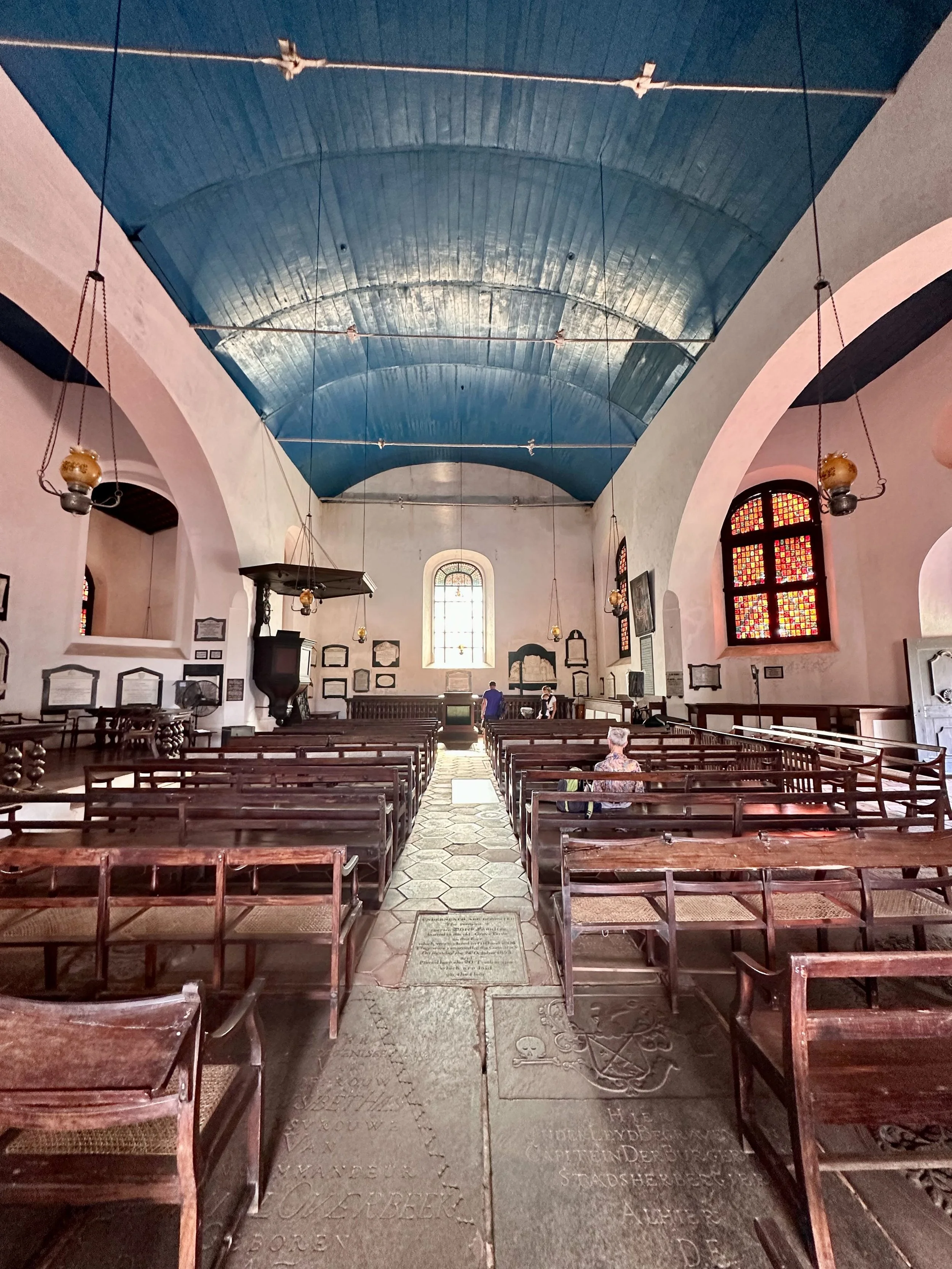
The Groote Kerk, built in 1755, is one of the most photographed interiors in Sri Lanka. The entrance archway, bleached white against a clear sky, makes a strong architectural photograph from the street. Inside, the pale whitewashed walls, arched windows, and historic tombstones set into the floor create a quietly powerful interior space that photographs beautifully in diffused light.
The church is still active. A Sunday service is held weekly, and the congregation dresses formally. If you arrive on a Sunday morning, you will find locals gathered outside in their best clothes, which is excellent for candid portrait opportunities.
📷 Pro Tip: The interior is dim, so shoot at ISO 800 to 1600 to keep your shutter speed fast enough to avoid camera shake. A 24mm gives you enough coverage to capture the full arch of the nave without distortion. The best exterior light falls on the front facade in the late morning, when the sun is high enough to illuminate the white archways without harsh shadows. Do not photograph during the service without asking first. Wait outside, and when the service ends, people are generally happy to be photographed. Best time: Late morning for exterior; interior at any time during visiting hours. Access: Free. The church is located on Church Street inside the fort.
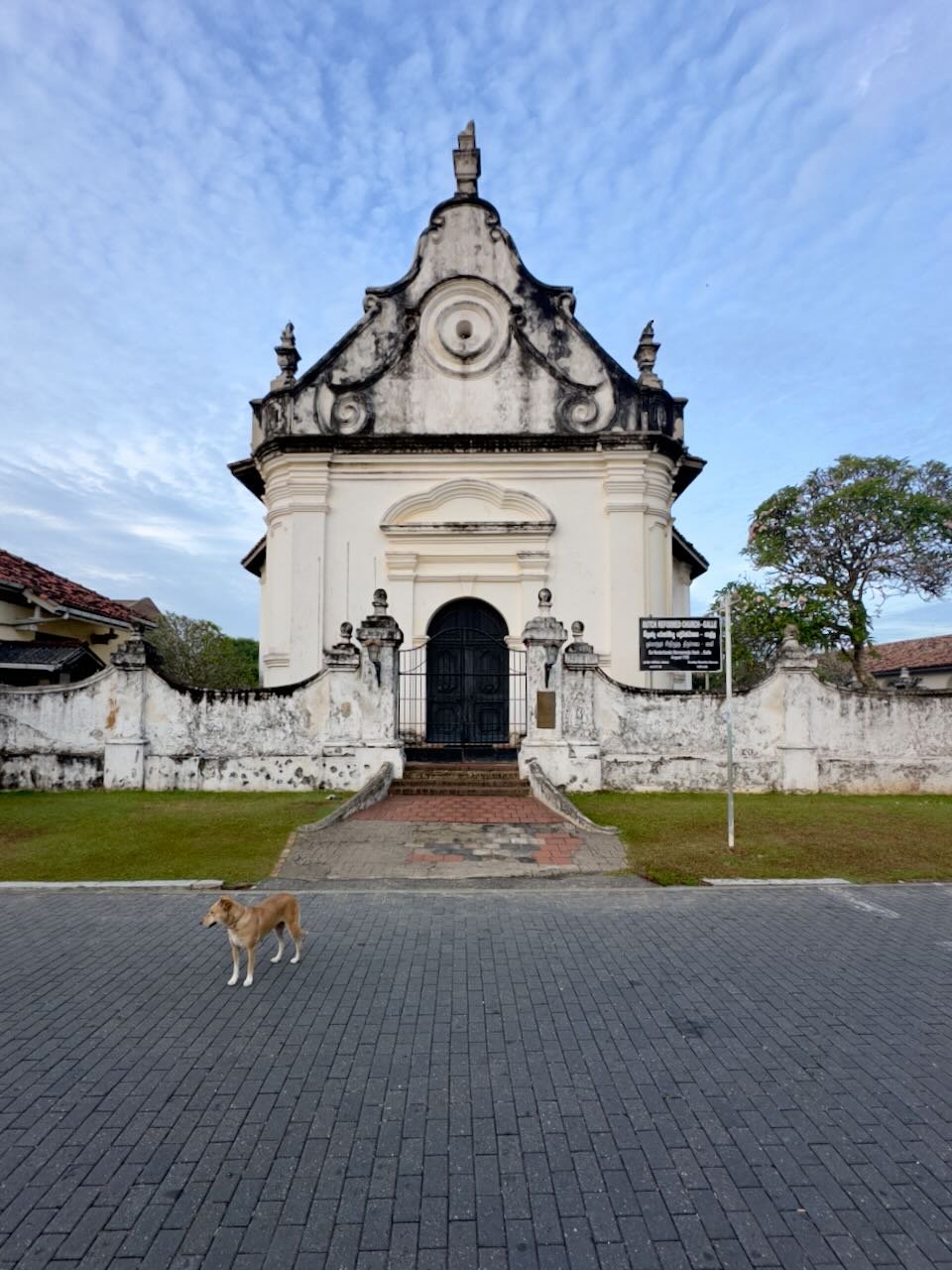
Make sure to go inside the church. The church is still in use, and it has a weekly Sunday service.
Fisherman on Stilts
Stilt fishing is unique to Sri Lanka, and the southern coast near Galle is one of the last places where you can still see it practiced. Fishermen balance on a crossbar lashed to a vertical pole driven into the seabed, a few meters from the shore, and cast their lines while seated a meter or two above the water. It is a striking, almost surreal image, and it is a genuinely old tradition.
The most accessible stilt fishing spots are along the coastal road heading east from Galle toward Weligama and Mirissa. Some fishermen now pose for tourists for a small fee, which is fine, and the photography can still be excellent. For more authentic images, head out early when the working fishermen are actually fishing rather than posing.
📷 Pro Tip: Shoot from a low angle, as close to water level as you can get, to emphasize the height of the stilts and the separation between the fisherman and the surface. A 70-200mm lets you compress the background and isolate individual fishermen without crowding them. Early morning gives you the best light and the least tourist interference. The best locations are just east of Koggala and near Ahangama, roughly 15 to 20 kilometers from Galle. Hire a tuk-tuk and ask the driver to take you to the fishing stilts at sunrise. They will know exactly where to go. Best time: Sunrise to 8 AM. Access: Free from the road. A small tip to any fisherman who lets you photograph them up close is appreciated.

As we continued down the coast, we saw a group of about a dozen fishermen on the stilts.

Surfers and Fishermen in Mirissa
The southern coast, at times, resembles Bali with all the surfers. You will see miles and miles of surfer beaches.
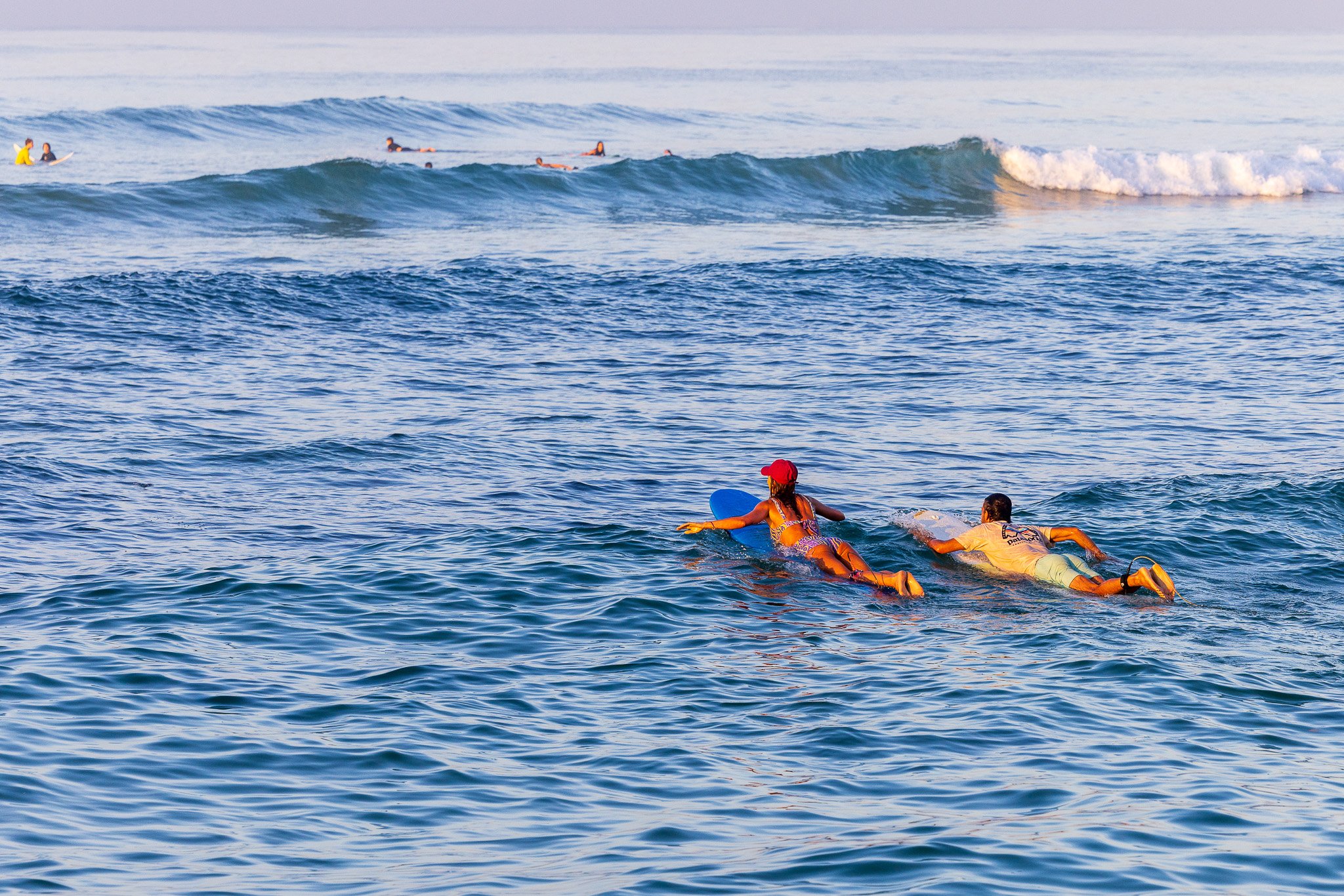
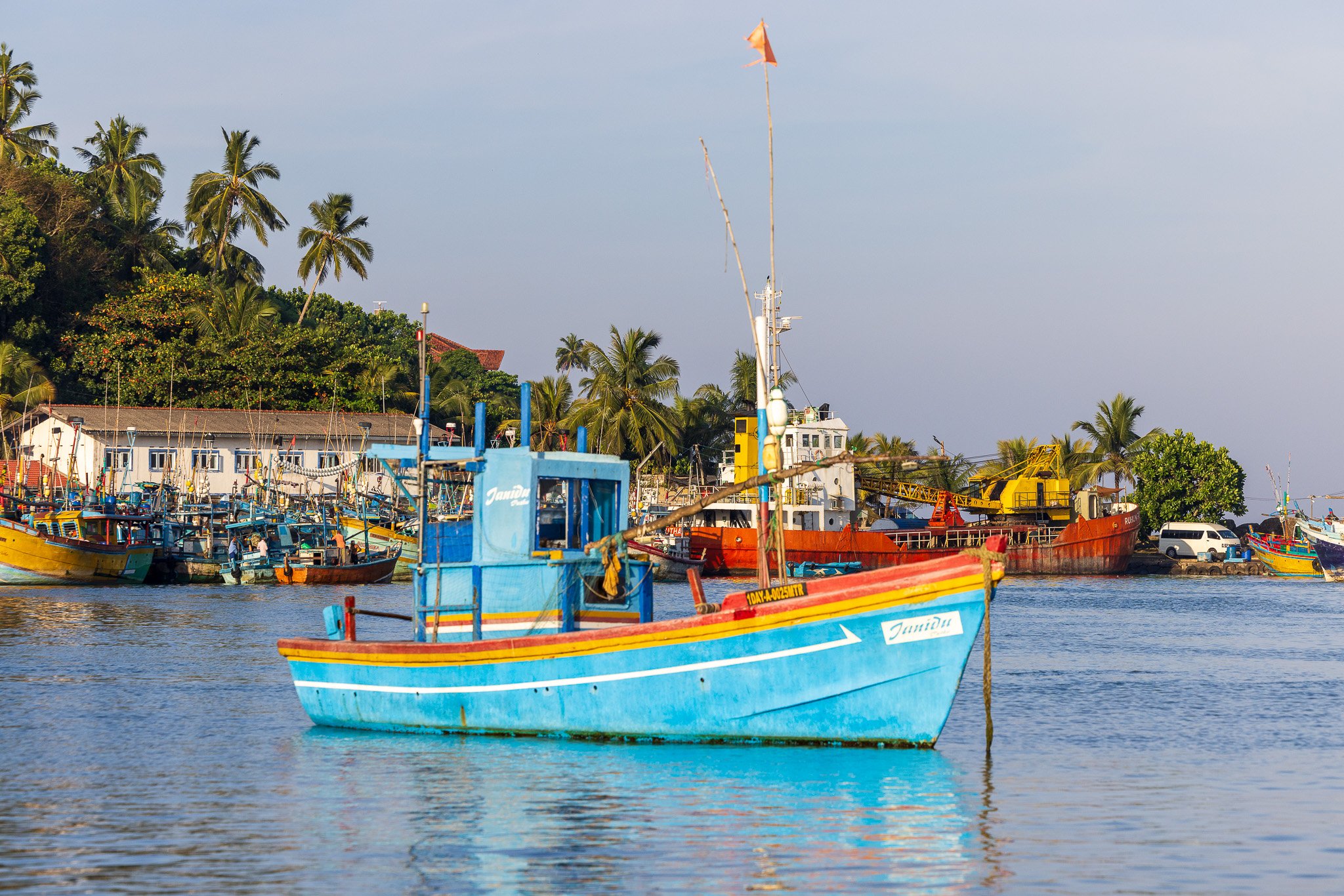
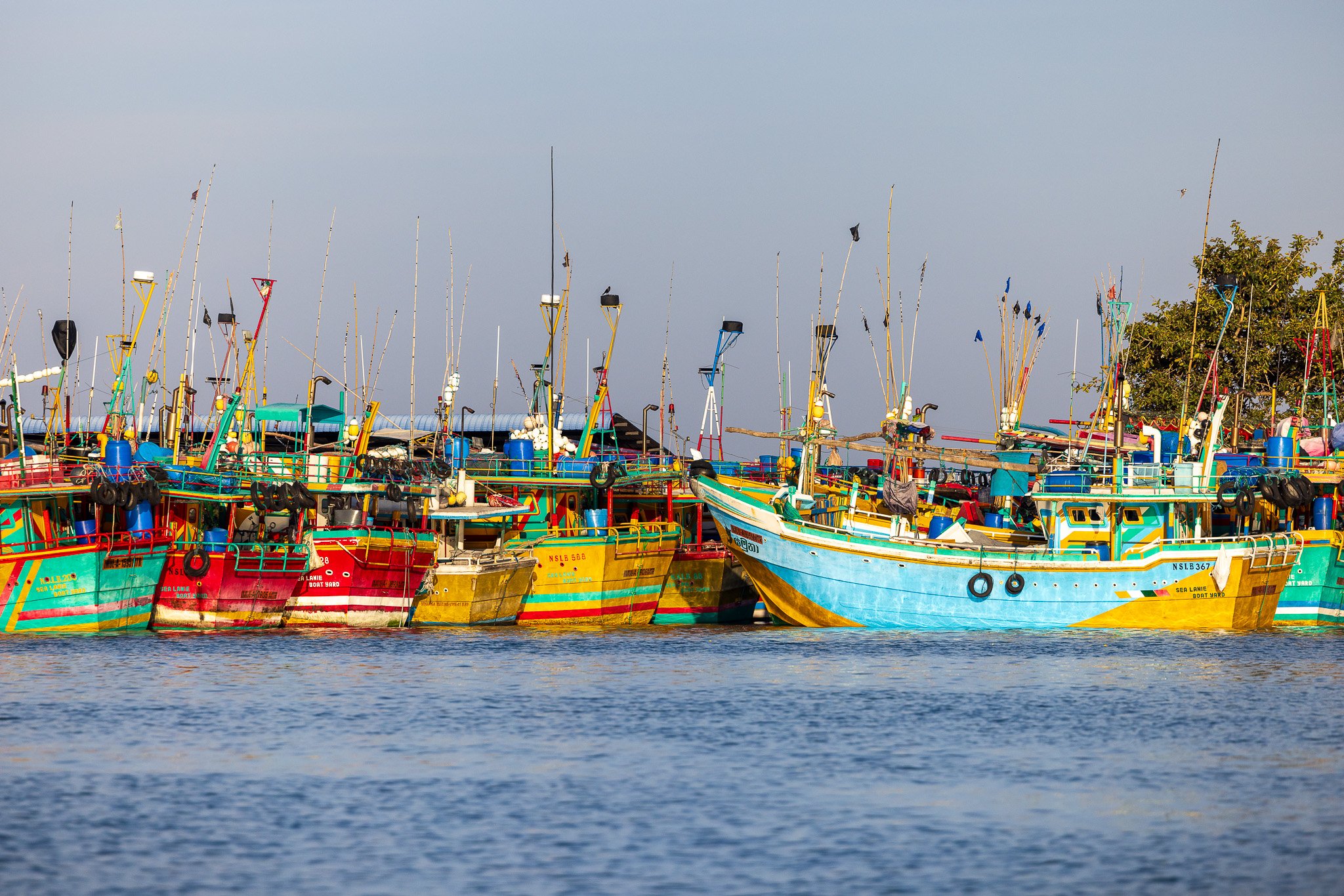
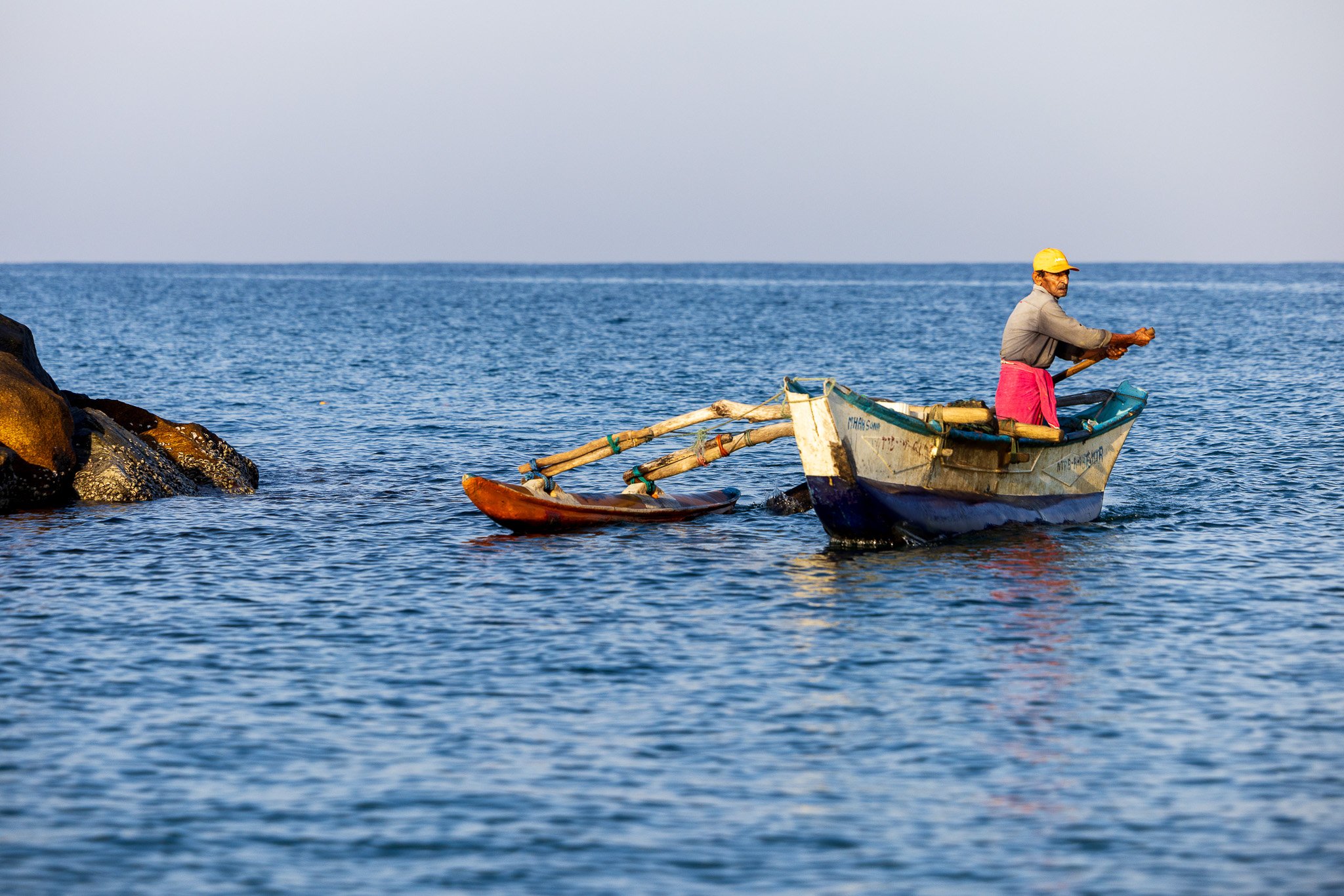
I also loved photographing the fishermen early in the morning on the beaches.

I love how colorful the fishing boats are.
Yatagala Raja Maha Viharaya
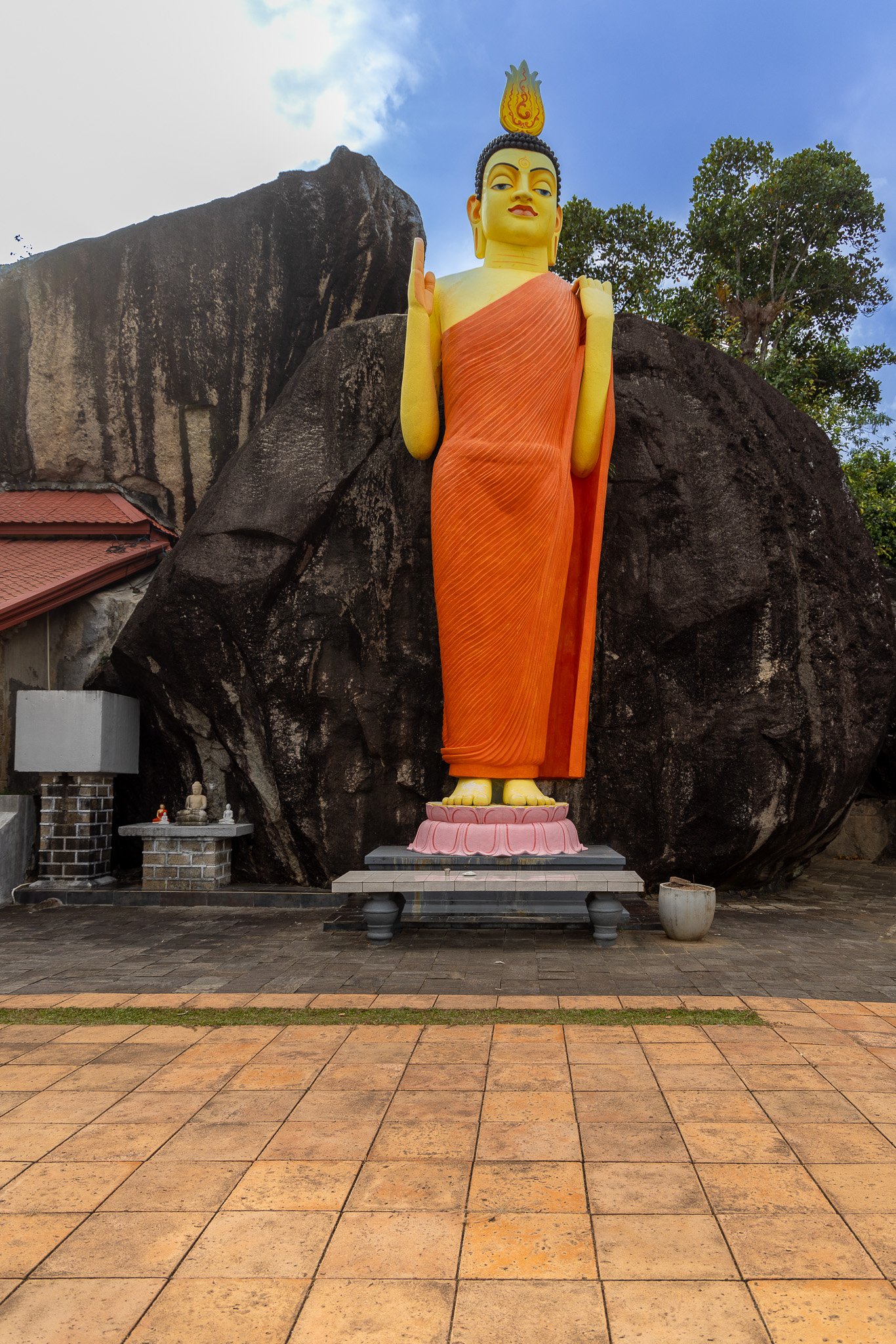
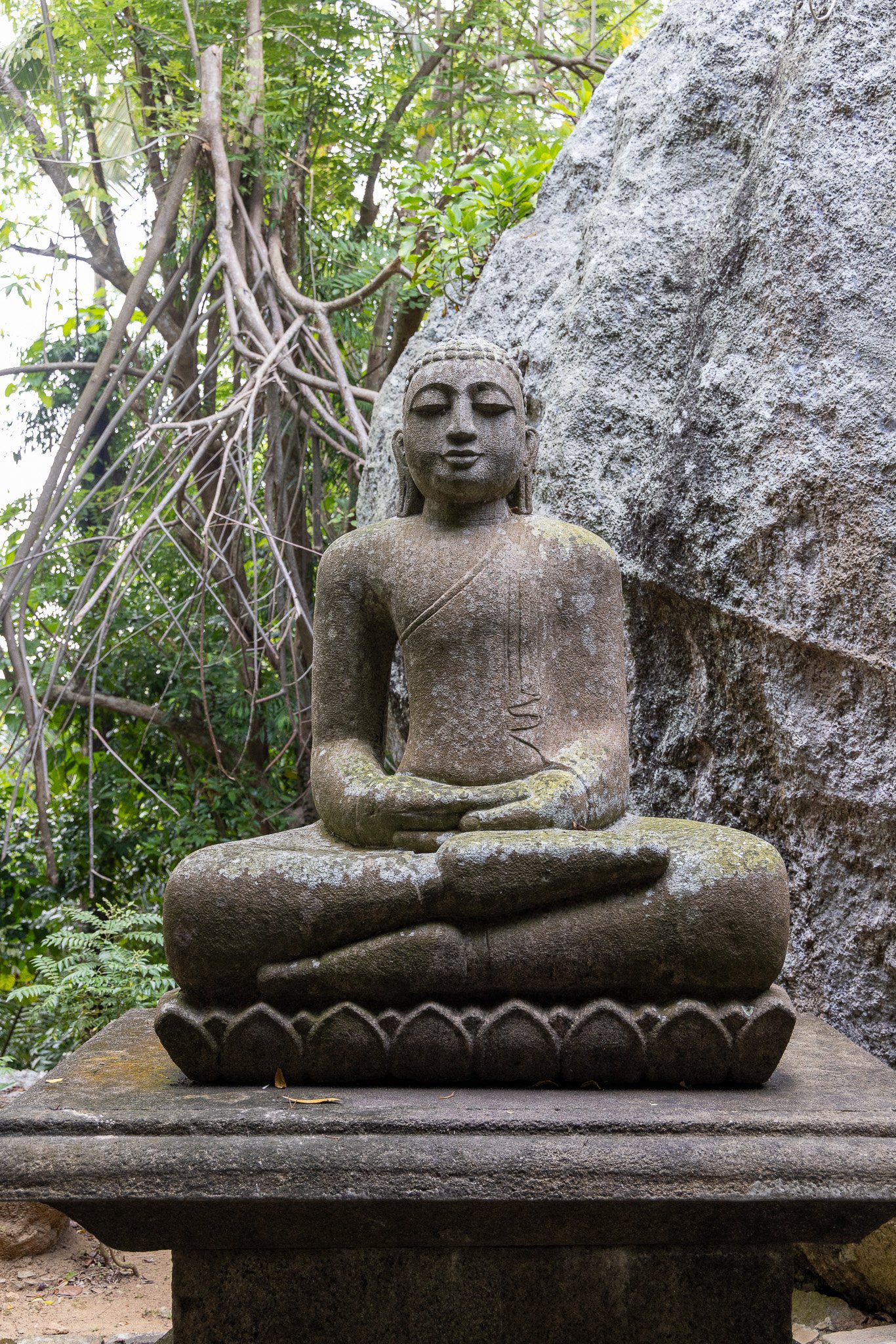
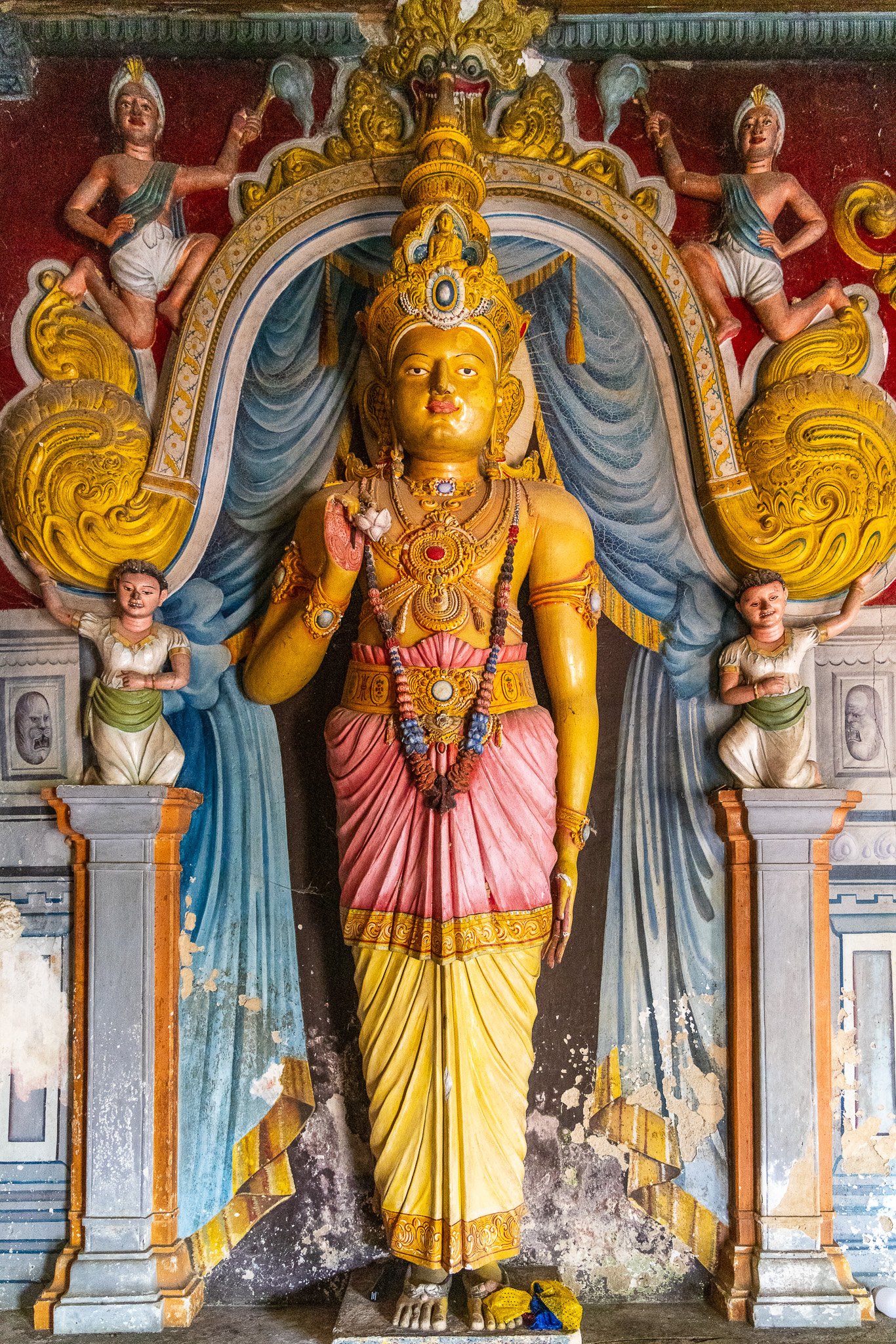
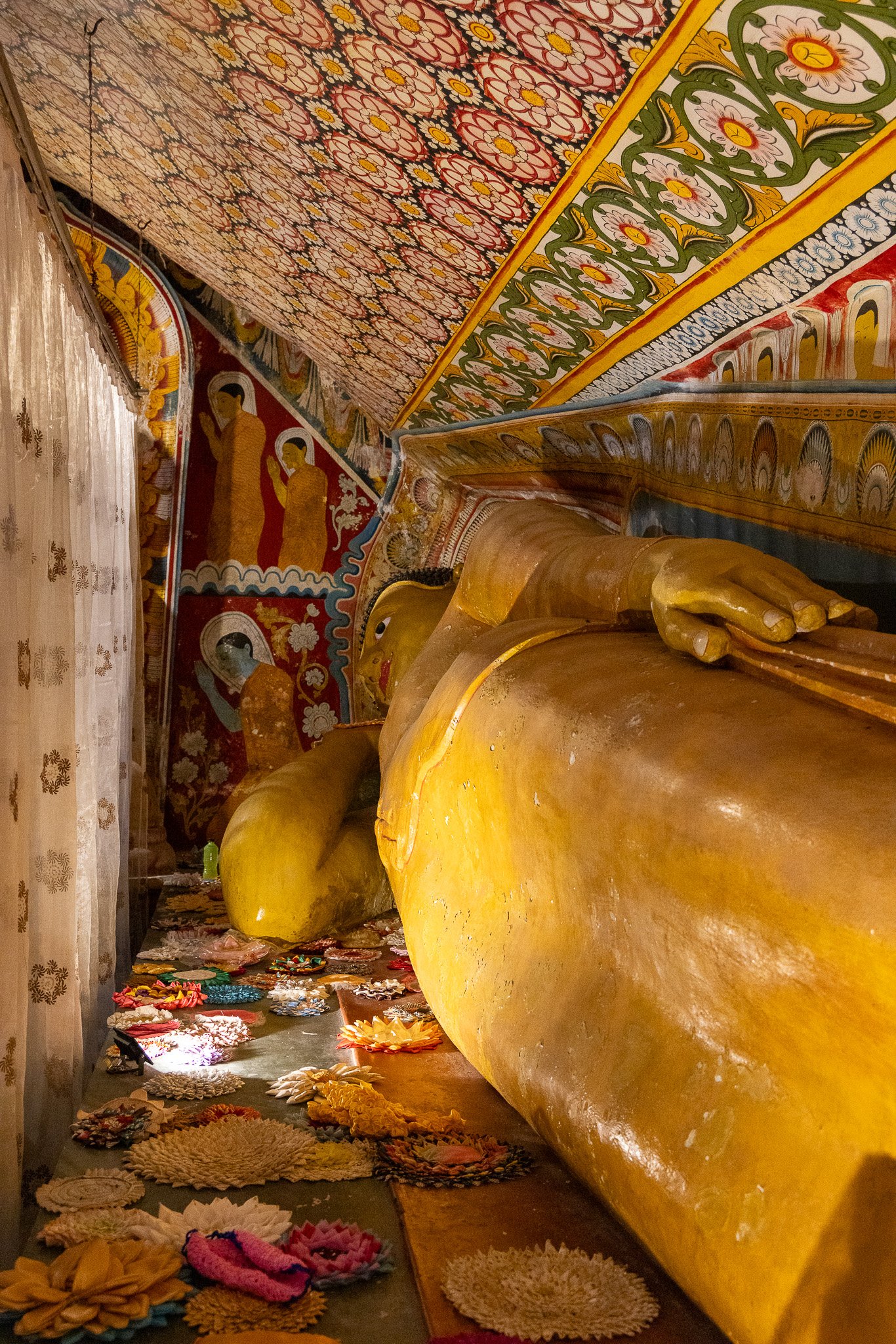
This ancient Buddhist rock temple, believed to be over 2,300 years old, sits about 12 kilometers north of Galle near the village of Udugama. The temple is built directly into a large granite rock formation, and the interior walls are covered in colorful painted murals depicting events from the life of the Buddha. A large reclining Buddha figure lies inside the cave chamber, and the complex is surrounded by quiet forest.
It is one of the most photographically interesting temples in the south, and it receives far fewer visitors than the famous cultural sites in the Cultural Triangle further north. When we visited, we had it almost to ourselves.
📷 Pro Tip: The interior of the cave is dark and the murals are intricate, so shoot with a wide aperture, 35mm f/1.8 or 50mm f/1.4, and push your ISO to 3200 if needed. Natural light filters in from the entrance and creates beautiful directional shadows across the painted surfaces. Do not use flash, as it flattens the colors and disturbs the monks and worshippers. Remove your shoes before entering, dress modestly with shoulders and knees covered, and ask before pointing your camera at monks or people in prayer. Best time: Mid-morning when natural light reaches into the cave. Access: Free, though a small donation is customary. A tuk-tuk from Galle takes about 30 minutes.
Japanese Peace Pagoda
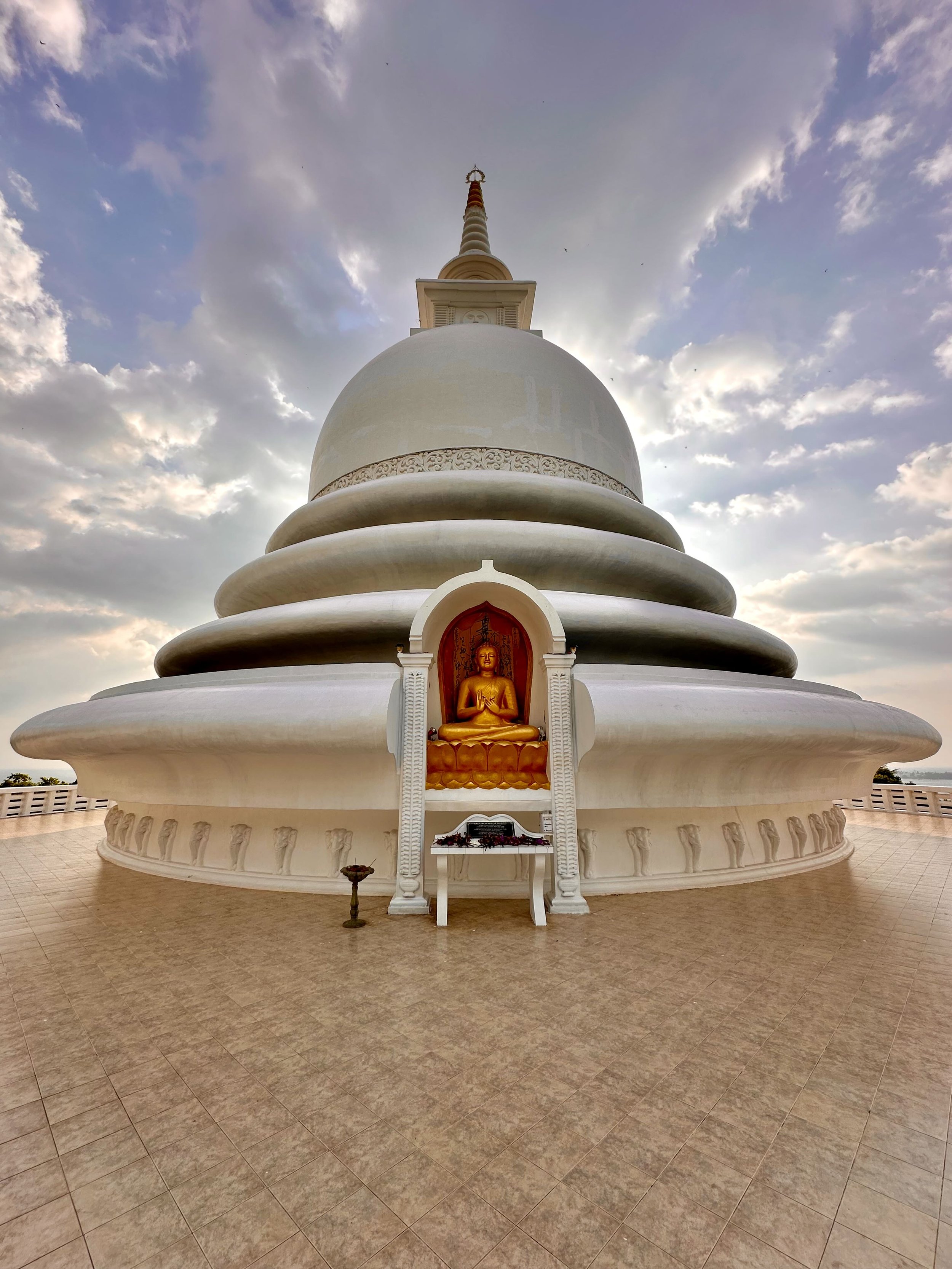
Located a few kilometers from Galle, the Japanese Peace Pagoda is a unique shrine said to guarantee peace and solitude to anyone who visits. Built by the Japaneseji order in 2005, it was made as a symbol to promote peace on the island. When you reach the top, you are rewarded with stunning views of the coast and the surrounding town of Galle below. The pagoda was built by the Nipponzan-Myōhōji Buddhist order, a Japanese monastic community dedicated to peace through prayer.
Tea Plantations
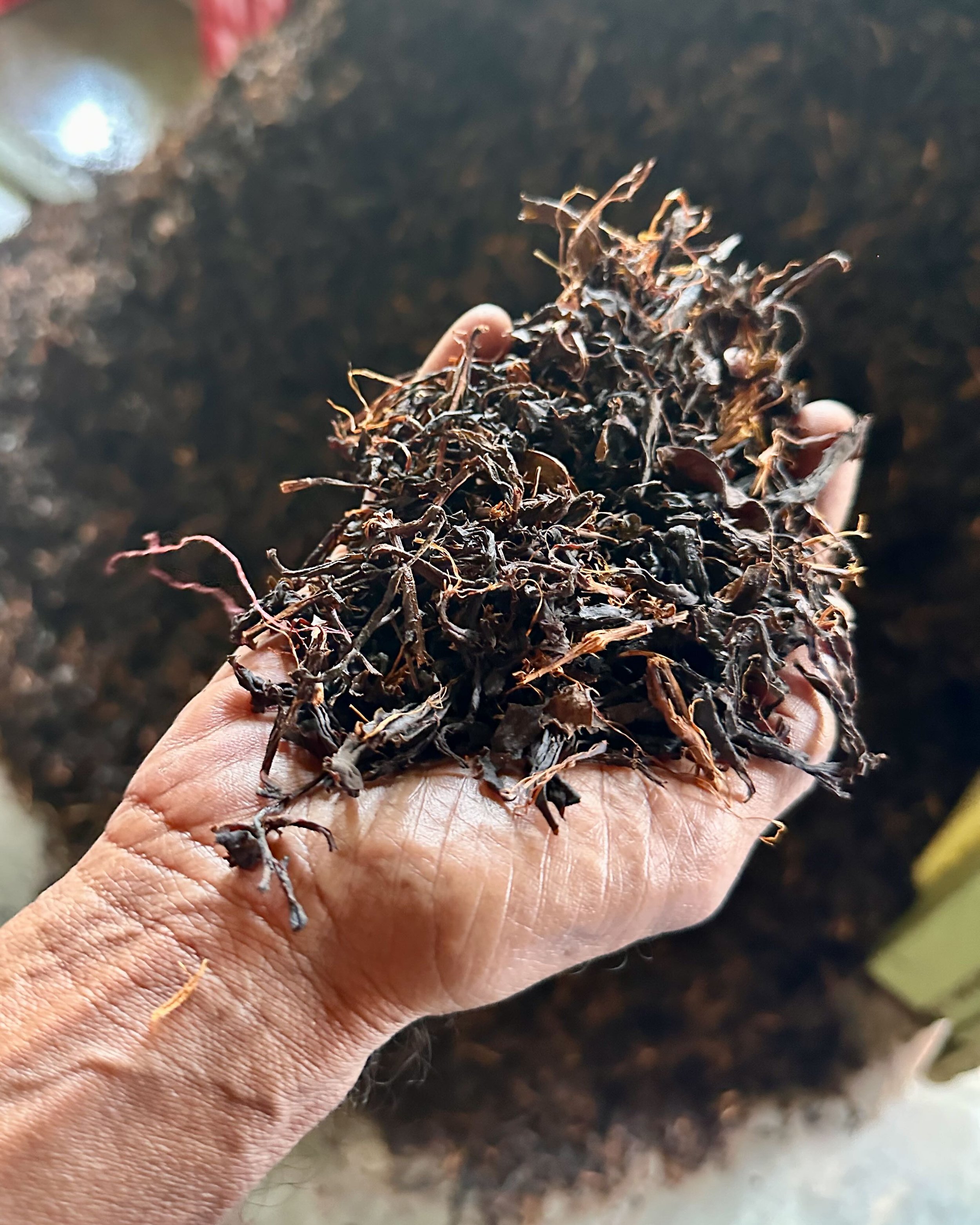
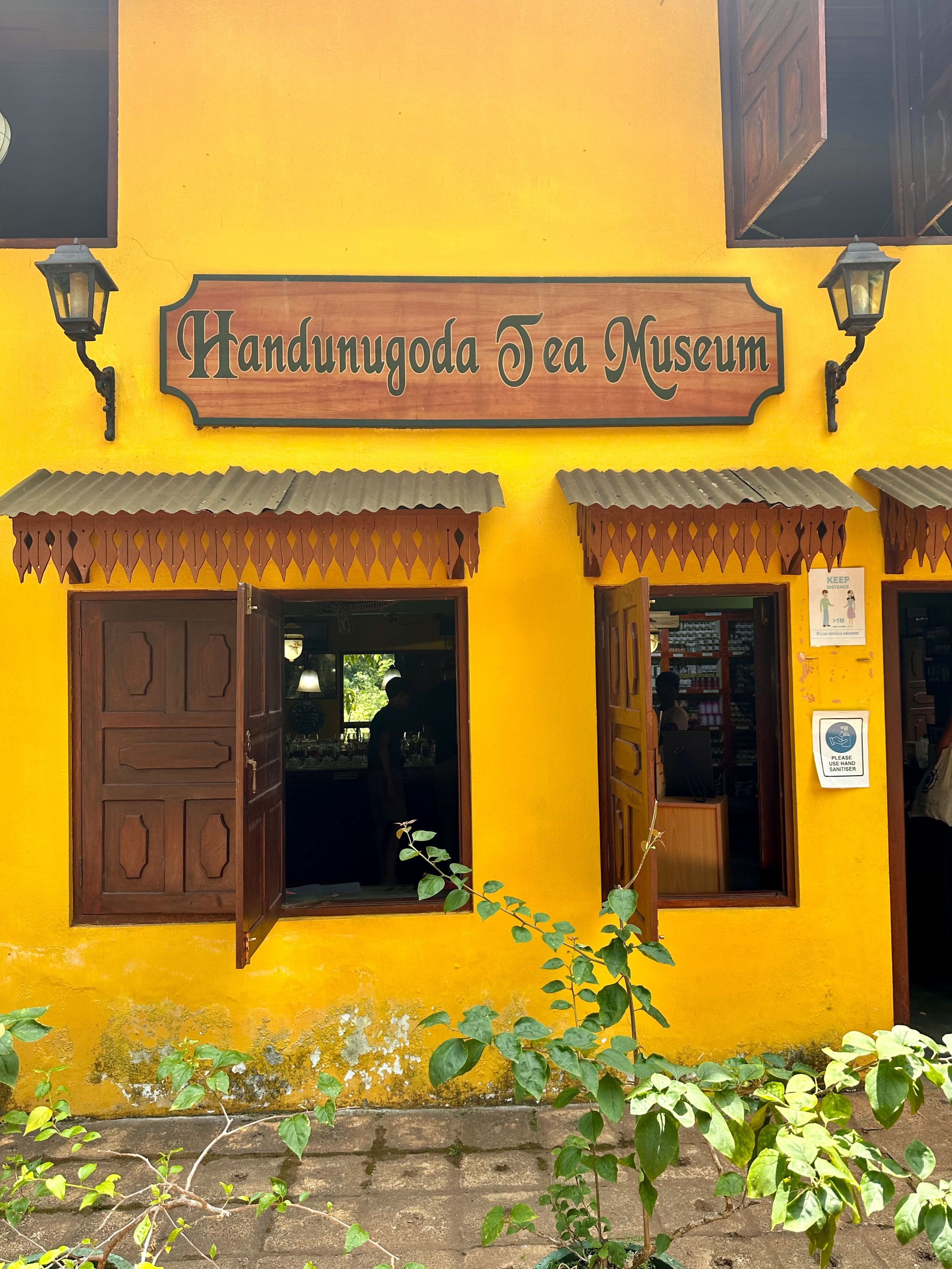
Sri Lanka is one of the world’s biggest tea producers. The country's cooler climate and humidity in its central highlands provide perfect conditions for growing great tea, most famously Ceylon. Due to strict pesticide restrictions, Sri Lankan tea is also among the cleanest.
I could not believe in this age of mass farming that White Tea leaves are cut by hand with a tiny pair of scissors.
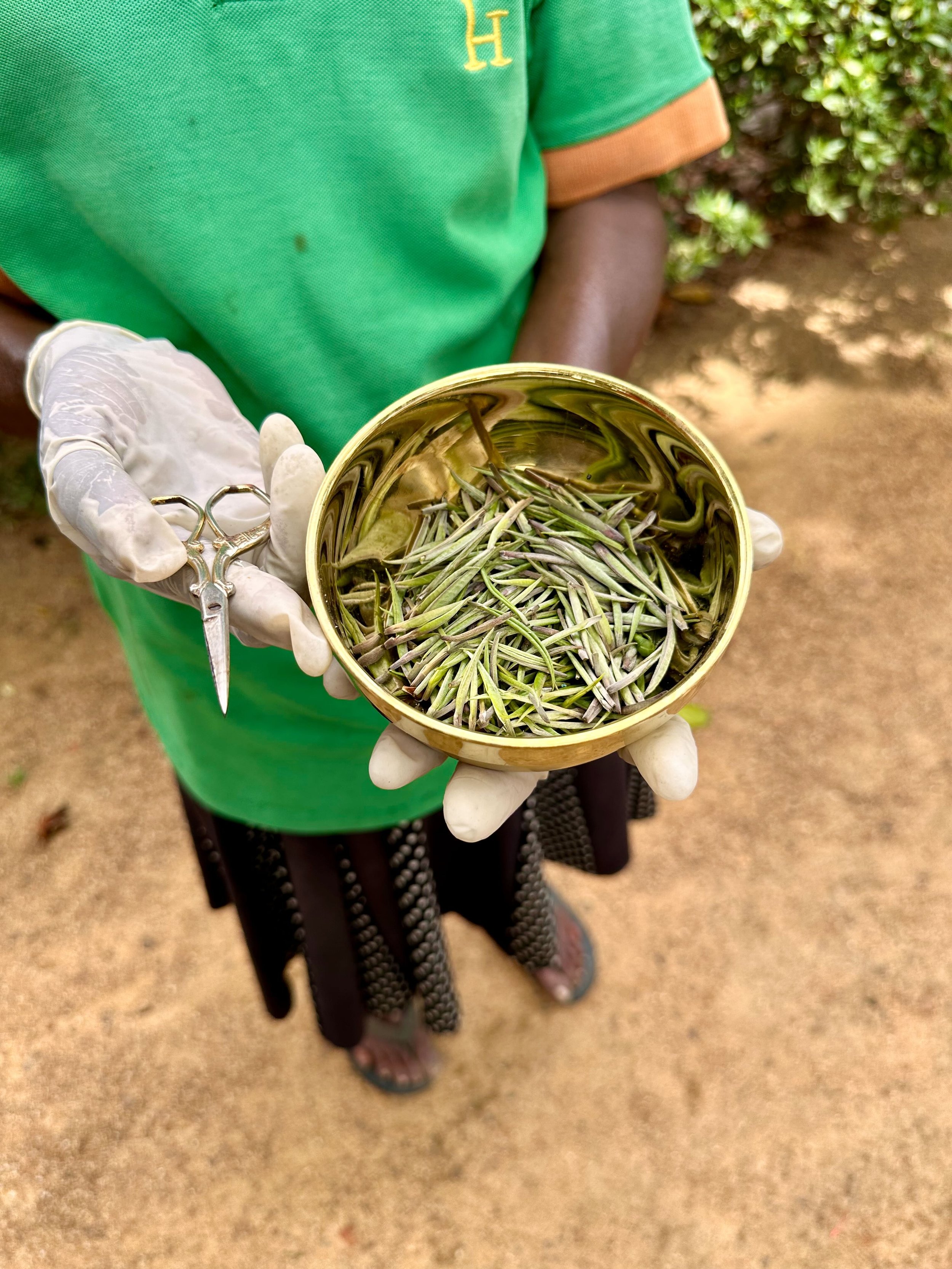
White Tea but by Hand
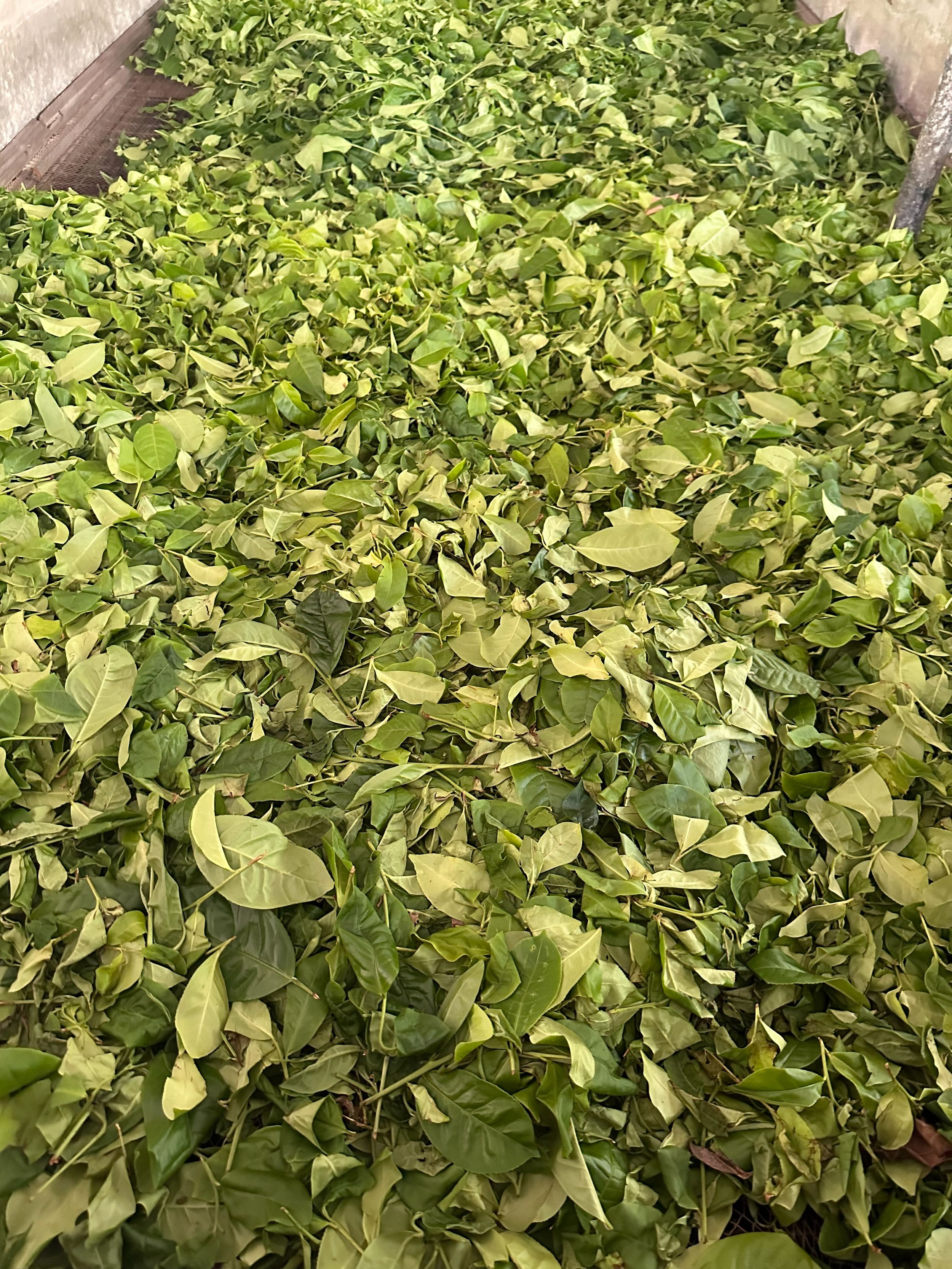
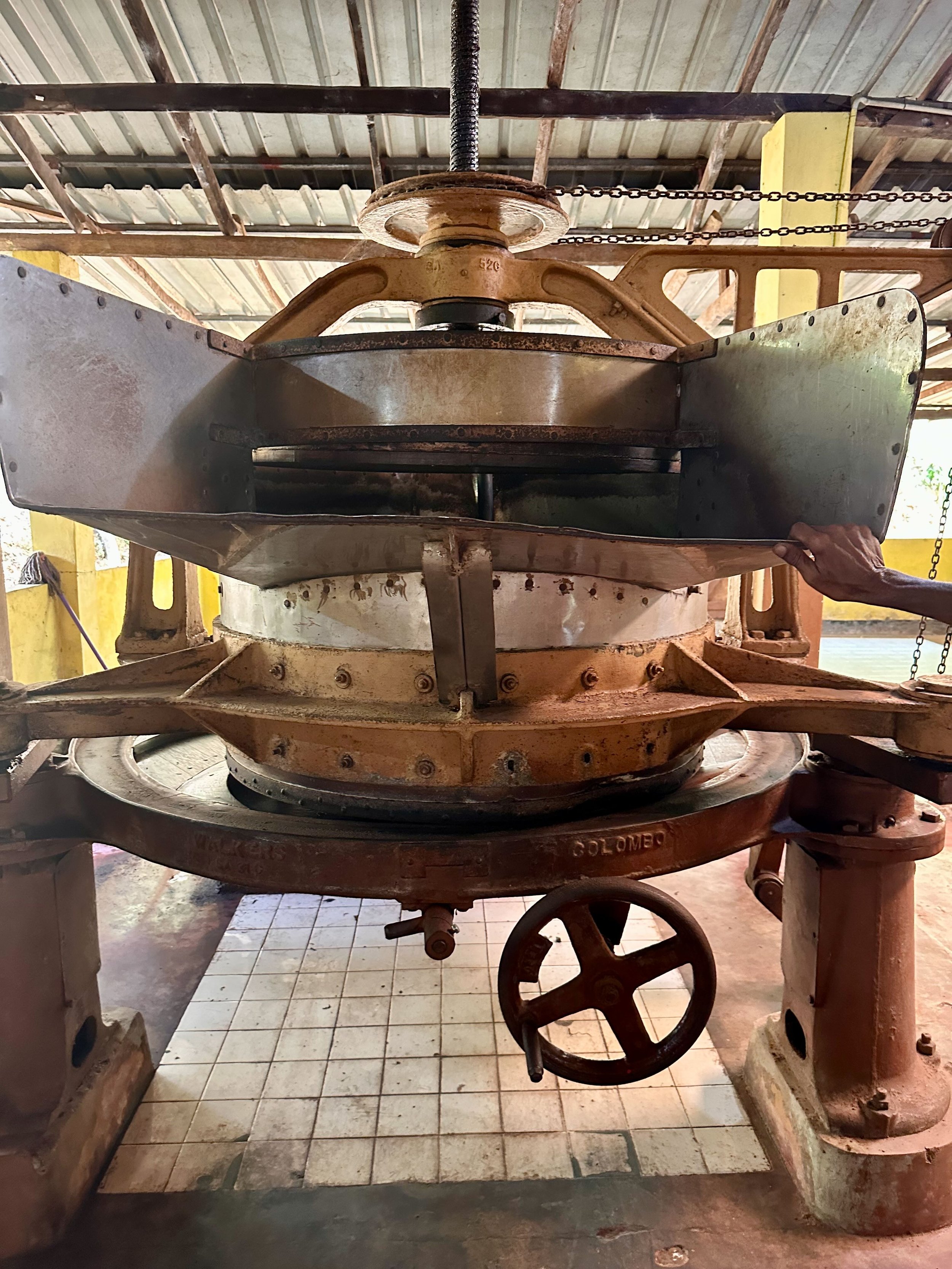
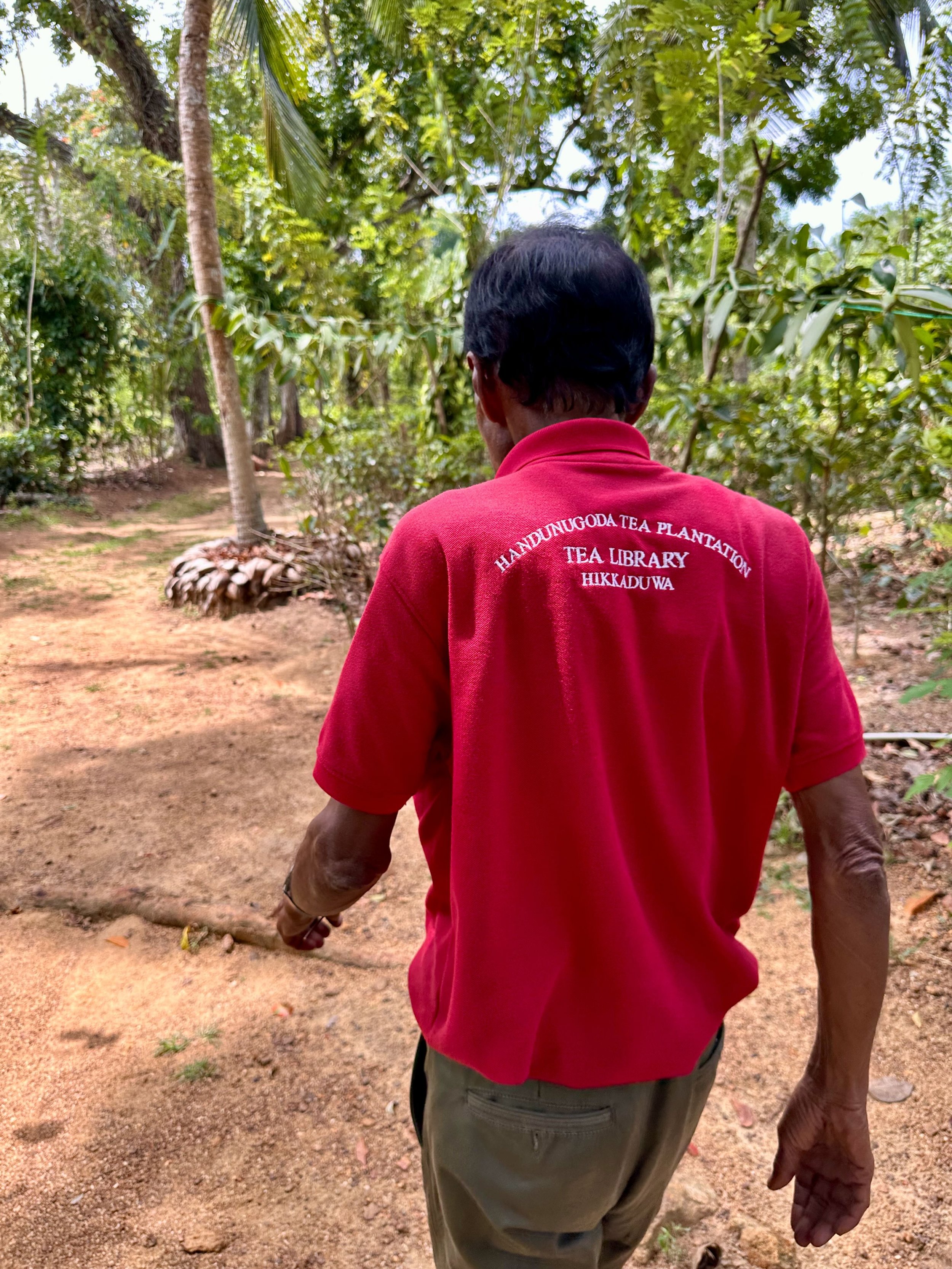
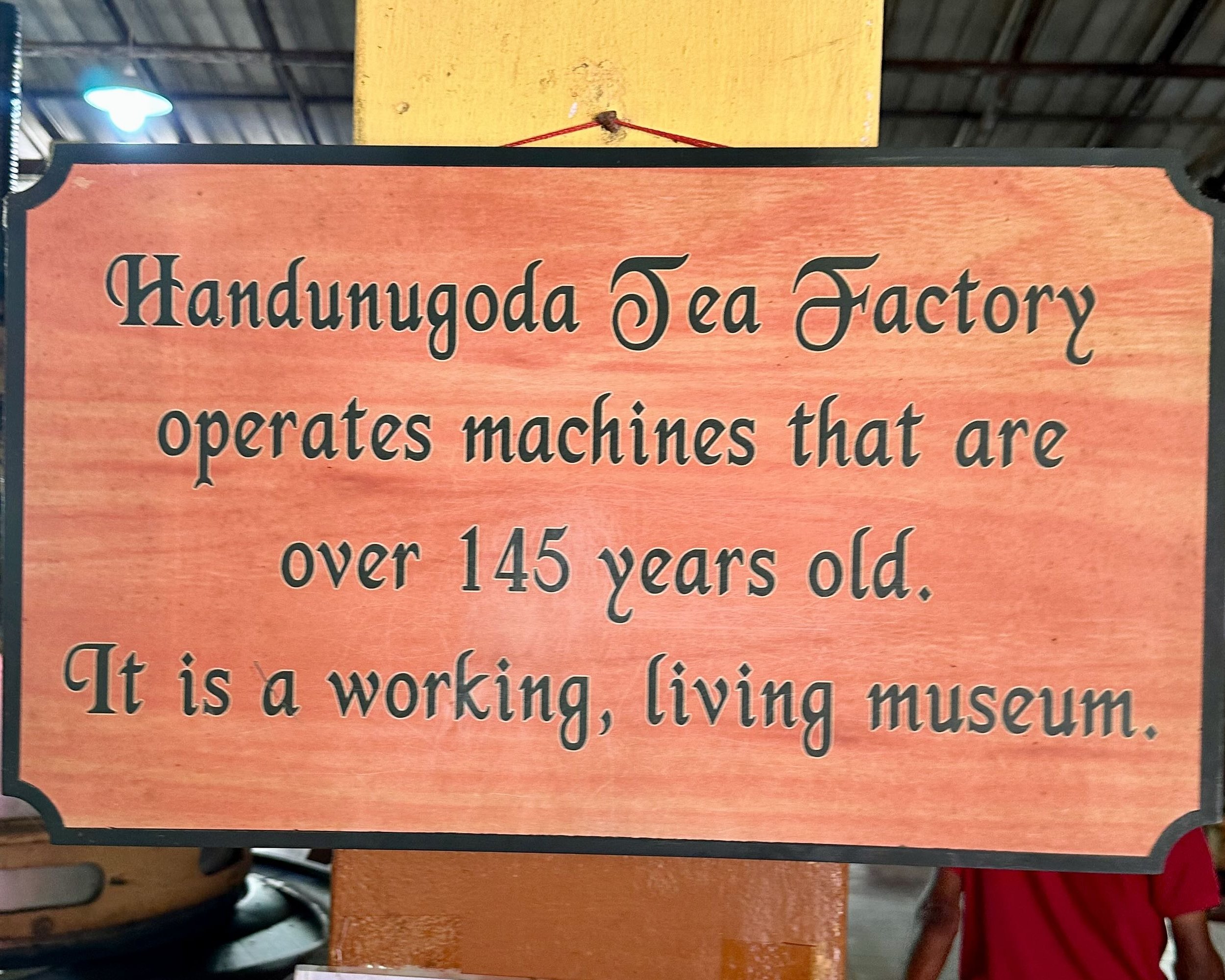
We visited Herman Tea Plantation. They showed us the process of making tea. It was fascinating to see that they still use more than 150-year-old machines. It was a very interesting visit. The next time we visit Sri Lanka, we want to visit the famous Tea Trails near Ella.
Cinnamon Farms
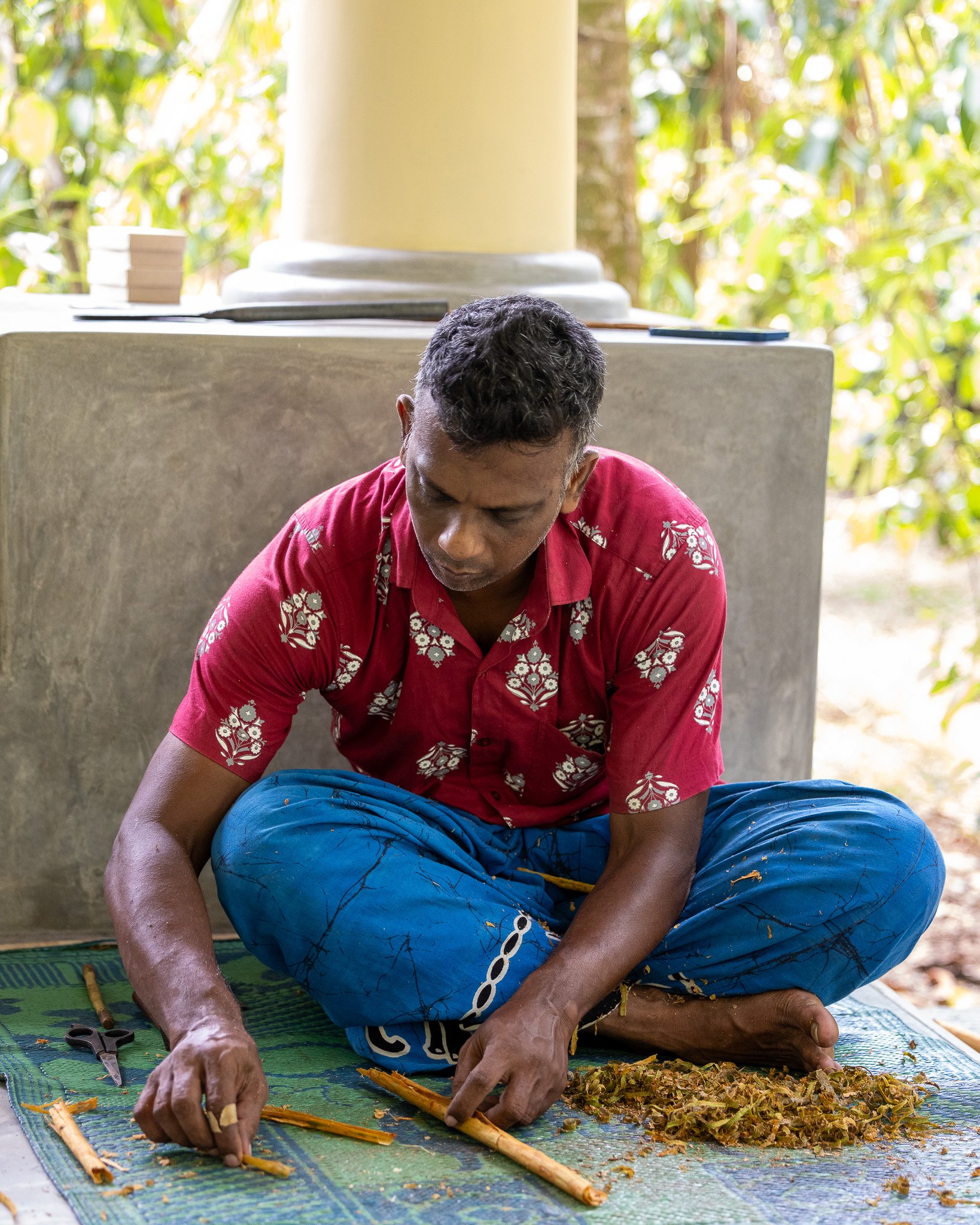
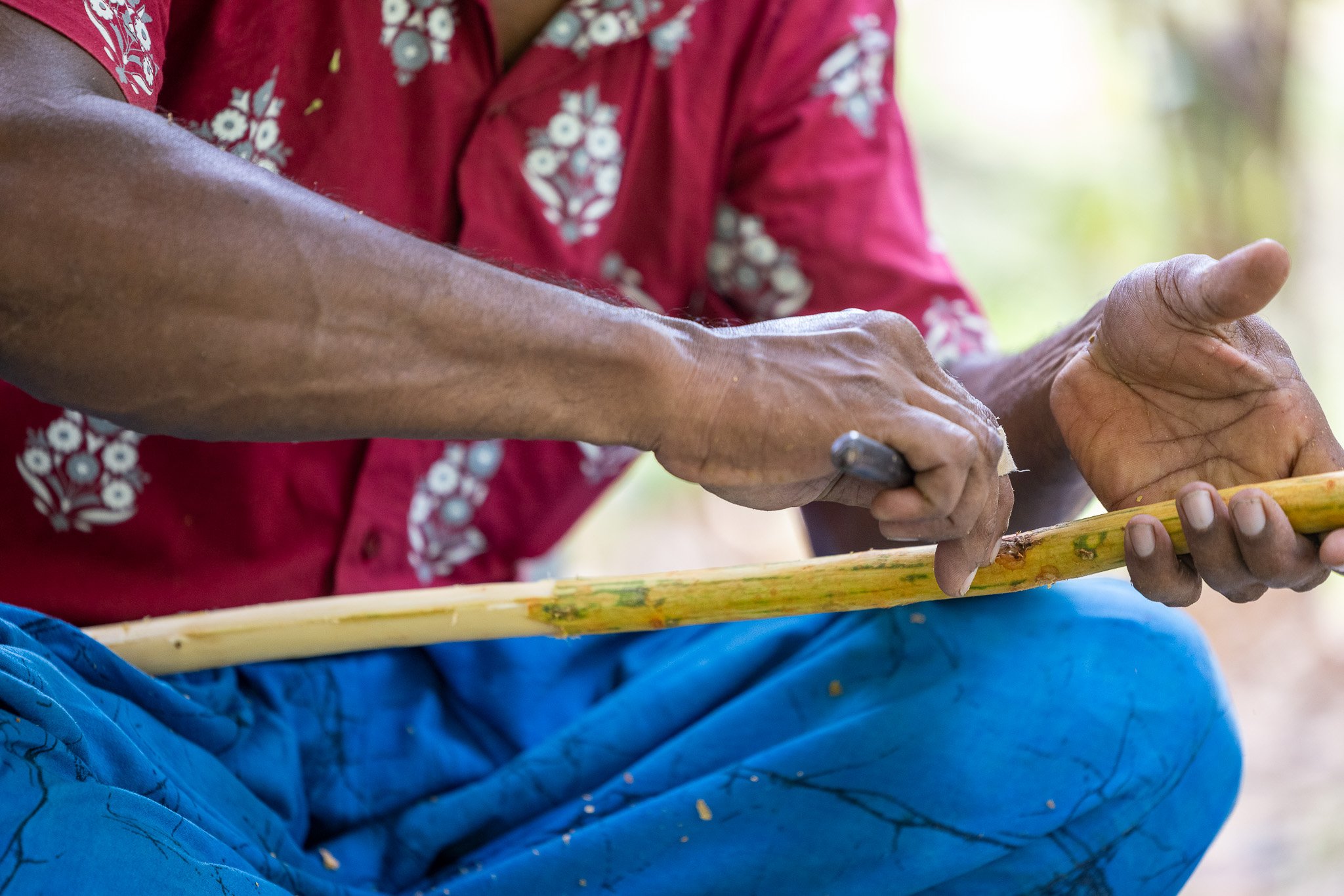
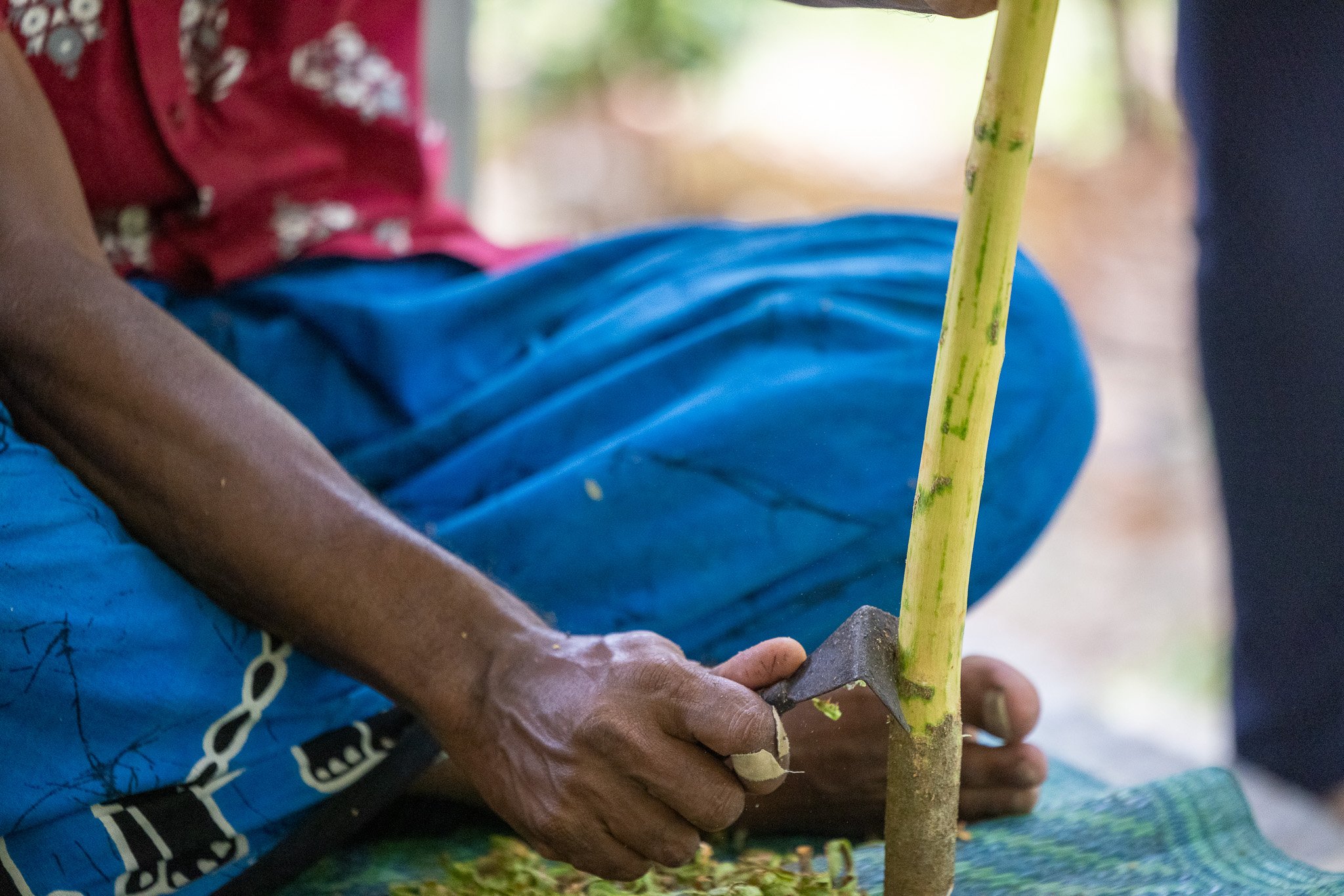
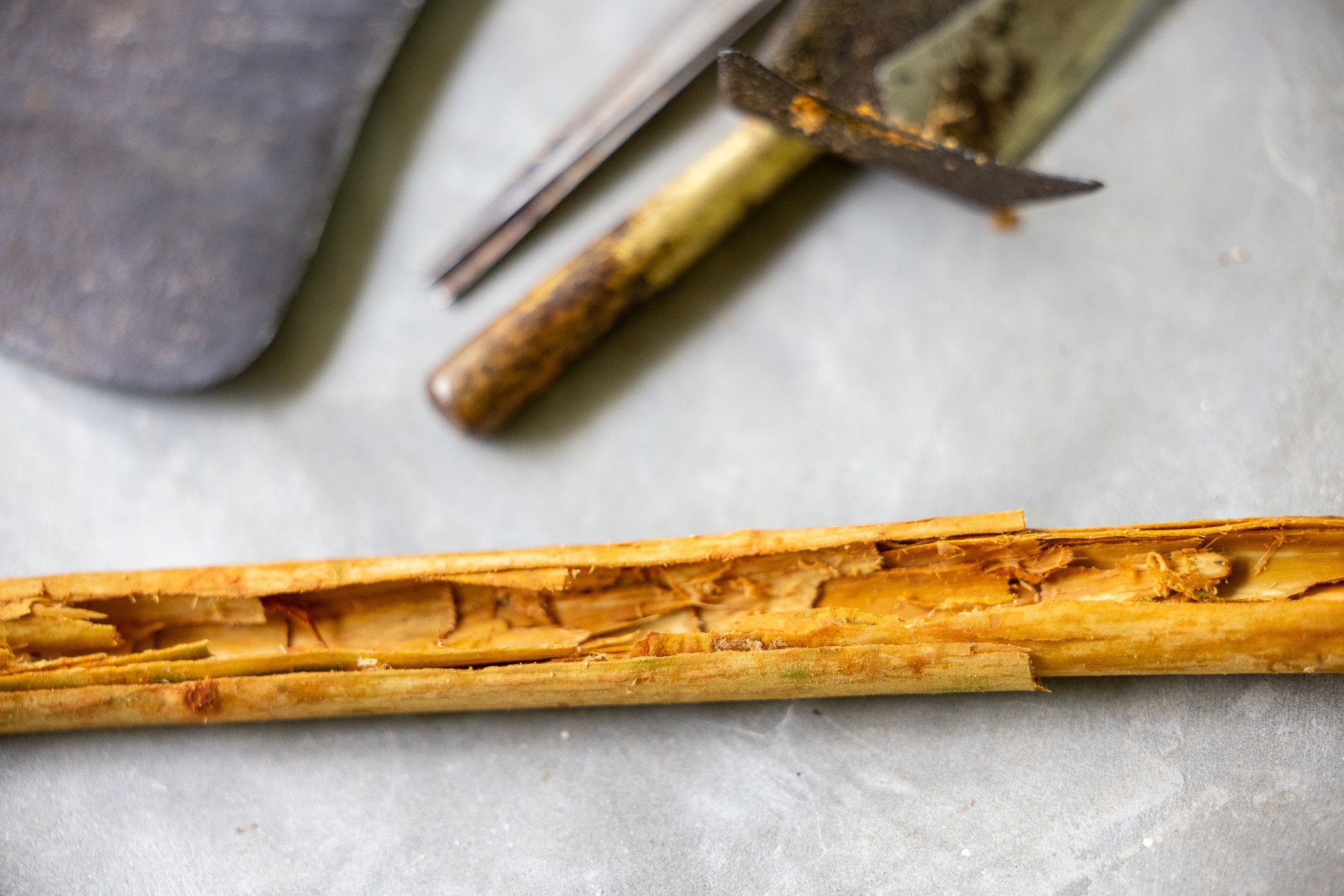
We visited a private cinnamon estate near the lake and spent time learning how cinnamon is cultivated, harvested, and processed. Watching workers strip bark from the cinnamon trees by hand and curl it into quills is a remarkable sight. The estate visit gave us access to a landscape most tourists never see.
Festivals & Events
Vesak Poya (May)
Vesak is the most important Buddhist festival in Sri Lanka, commemorating the birth, enlightenment, and passing of the Buddha. It falls on the full moon day in May. Across Galle and the surrounding villages, houses are decorated with handmade paper lanterns, and Buddhist temples hold all-night services. Streets are lit with oil lamps and colored lights. Food stalls called dansal offer free food to anyone who passes, a tradition of generosity that is central to the spirit of the festival.
For photographers, Vesak offers extraordinary opportunities after dark. The lanterns and lamplight create a warm, soft glow that is unlike anything you will experience the rest of the year. Shoot at blue hour when the ambient light and the lanterns are in balance, then push into full dark for more dramatic exposures.
📷 Photography tip: Bring a tripod. The best images come from long exposures that capture the motion blur of lanterns swaying in the evening breeze against a dark sky. Use ISO 400 to 800 and let the exposure run for one to three seconds. Respect the religious nature of the occasion. Observe quietly, keep a respectful distance from temple ceremonies, and ask before photographing families at their shrines.
Poson Poya (June)
Poson, the full moon festival in June, celebrates the arrival of Buddhism in Sri Lanka in the third century BCE. It is the second most significant Buddhist holiday after Vesak, and the celebrations across the island are similarly beautiful. Decorated pandals, electronic light displays, lanterns, and processions fill the towns. The atmosphere in Galle during Poson is quieter and more intimate than Vesak, but no less photogenic.
📷 Photography tip: The pandals, large illuminated structures depicting scenes from Buddhist scripture, are extraordinary subjects for long exposure photography at night. Position yourself across the street with a wide angle, 16-24mm, and shoot between 5 and 15 second exposures to capture the full illuminated display. Blue hour before full dark gives you a balance of sky color and artificial light that is particularly beautiful.
Galle Literary Festival (January, annual)
The Galle Literary Festival is one of South Asia's most celebrated cultural events, held annually inside the walls of Galle Fort. It brings together international and local authors, journalists, artists, chefs, and musicians for four days of talks, workshops, performances, and culinary events. The 2025 edition attracted over 8,000 attendees and featured more than 100 events.
Note: The 2026 edition was postponed. The festival is expected to return for its 13th edition; check the official website for confirmed dates before planning a trip around it.
For photographers, the festival is a gift. The fort fills with an unusually cosmopolitan, well-dressed crowd. Outdoor readings happen in courtyards and gardens. There are photography workshops, art trails, and a culinary festival component called Gourmet Galle that runs in the weeks that follow.
📷 Photography tip: A 70-200mm is ideal for pulling in candid portraits of speakers, audiences, and performers from a respectful distance. The evening events, lit with soft ambient light in historic venues, are excellent for available-light photography at f/2.8 and ISO 1600.
Gourmet Galle (January to March, annual)
Running separately from the Literary Festival, Gourmet Galle is a multi-week culinary festival that brings international chefs to the south coast for intimate dinners, masterclasses, and pop-up events at boutique hotels and private estates along the coast. The program runs across properties from Hikkaduwa to Tangalle, and the venues include some of the most beautiful properties in Sri Lanka.
Note: The 2026 edition was postponed. The festival is expected to return with confirmed dates in 2027. Verify on the official Gourmet Galle website before planning around it.
📷 Photography tip: The dinners and masterclasses are set in extraordinary locations, from candlelit colonial courtyards to open-air clifftop terraces. Request media access or book a ticket and treat the event itself as a photography opportunity. Use a 35mm or 50mm prime at f/1.8 to f/2.8 for candid images that preserve the ambient dining atmosphere.
Sinhala and Tamil New Year (April)
Sri Lanka's traditional New Year, celebrated in mid-April, marks the end of the harvest season and is one of the most joyful and visually rich events in the country's calendar. Families gather, traditional games are played in the streets, and elaborate meals are prepared. In Galle and the surrounding villages, the celebration spills outdoors.
For photographers, this is an opportunity to document genuine communal life. You will see traditional costume, food preparation, children's games, and the kind of spontaneous, unposed energy that is hard to find at dedicated tourist events.
📷 Photography tip: A 35mm prime is ideal for working within family gatherings and street celebrations at close range. Ask before pointing your camera at families in their homes or courtyards. Most people are happy to be photographed during the New Year celebrations, and showing them the image on your screen nearly always produces a smile.
Frequently Asked Questions About Visiting Galle
Is Galle safe?
Yes, it's one of the more relaxed places to travel with a camera. Normal city awareness covers most of what you need, and the openness of Sri Lankans toward visitors is genuinely notable.
Do you need a visa for Sri Lanka?
Yes, most travelers need an Electronic Travel Authorization (ETA), applied for online before departure. Approval typically arrives by email within 24 hours. Print a copy and keep a digital version on your phone.
Is there a separate form to fill out on arrival?
Yes, an Embarkation Card, separate from your ETA visa. Look for the counters in the arrivals hall before joining the immigration line, it's an easy step to miss after a long flight.
What are the best photo spots in Galle?
The stilt fishermen along the coastal road toward Weligama at sunrise, the Galle Lighthouse in late afternoon light, and the Galle Fort ramparts at blue hour are three that consistently deliver. The full list with Pro Tips is above.
Can you fly a drone near Galle Fort?
Not without registration through the Civil Aviation Authority of Sri Lanka (CAASL), and flying near the Galle Fort UNESCO World Heritage Site specifically is restricted. Check current regulations and obtain any required permits before you travel.
What surprised you most about Galle?
How kind the people of Sri Lanka are, and the food, especially the hoppers, are reason enough to come back on their own. That combination of warmth and flavor is hard to overstate until you've experienced it firsthand.
How many days do you need in Galle?
Three days minimum. Combine it with Tangalle to the east for a full week along the southern coast.
Is Galle worth combining with the Maldives?
Yes, easily. Colombo to Malé is under two hours by air, making Sri Lanka and the Maldives natural travel companions, and the contrast between the two makes both experiences more vivid.
Final Thoughts
Galle stayed with me long after I left. That is not something I say about every destination.
Part of it is the light. The way it falls on the coral stone walls of the fort in the early morning, warm and directional, then softens to something almost liquid at sunset over the Indian Ocean. Part of it is the scale. Galle is small enough to walk end to end before breakfast, but dense enough with texture, history, and life that you can photograph the same block every morning for a week and never make the same image twice.
But mostly, it is the people. Sri Lankans have an openness that is hard to describe without sounding like a travel brochure, so I will just say this: in ten days across the country, I never once felt unwelcome with my camera. People smiled, they invited me in, they asked to see the photos. That generosity changes how you shoot. It makes you braver and more curious, and the images reflect that.
If you are planning a trip to Sri Lanka, let Galle be your base. Give it at least three days, and resist the urge to fill every hour with planned activities. The best photographs I made there came when I slowed down, walked without a destination, and let the light and the street do the work.
If you would like to join a future photography workshop, visit my Workshops page for current offerings and upcoming dates. You can also connect with me on Instagram (@chasinghippoz) and Facebook, or subscribe to the newsletter for travel photography tips, destination guides, and behind-the-scenes stories from more than 75 countries. I look forward to sharing the journey with you.
Pair This Guide With
My Photography & Travel Guide to the MaldivesSri Lanka and the Maldives are natural travel companions. Fly from Colombo to Malé in under two hours, and you move from one of the most photogenic land destinations in Asia to one of the most remarkable ocean environments on earth. The contrast between them makes both experiences more vivid.
My Photography & Travel Guide to Tangalle, Sri Lanka Tangalle is the natural next stop after Galle. Head east along the southern coast and the crowds thin out, the beaches get wilder, and the pace slows down even further. We spent five days there and came away with some of our best images from the entire trip. A week split between Galle and Tangalle gives you everything the southern coast has to offer.
My Photography & Travel Guide to Colombo, Sri Lanka Most people treat Colombo as a transit city, flying in and heading straight for the south. That is a mistake. The Sri Lankan capital has genuine photographic depth: colonial architecture, a thriving street food scene, colorful markets, and neighborhoods that reward slow, unhurried walking. Spend two days there at the beginning or end of your trip and you will leave with images you did not expect.
Finally—a beginner-friendly photography guide that makes sense.
If you've ever picked up a camera and thought, "Now what?" this is the book for you.
Photography Made Simple is written for adults who are just starting out and want a clear, encouraging, real-world approach to learning photography. Whether you're using a DSLR, mirrorless, or just your smartphone, this guide walks you through the basics—without the jargon or tech overwhelm.
Inside, you'll learn:
The only camera settings you really need to know to get started
How to shoot sharper, more intentional photos using light and composition
Simple tips for portraits, landscapes, travel, and everyday life
What gear you do (and don’t) need
How to create better photos without upgrading your camera
You’ll also get practical exercises, cheat sheets, and tips for organizing and editing your images—plus the confidence to shoot off Auto Mode for good.
This is not a textbook. It’s a friendly guide to seeing the world with fresh eyes—and finally capturing what you see the way you imagine it.
📸 Format: PDF download
Pages: 100+
Perfect for: Beginners, hobbyists, and anyone ready to take better photos without the stress
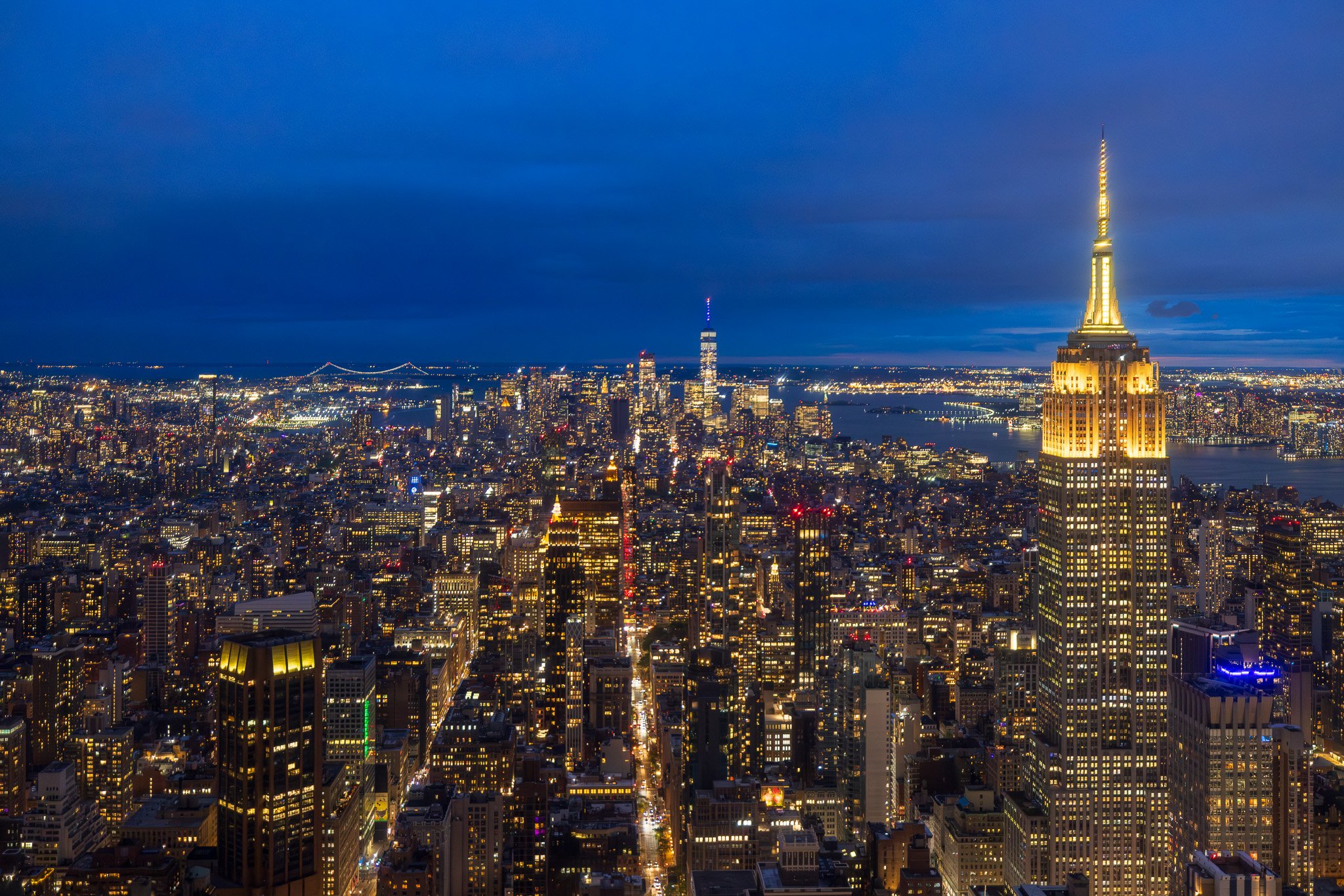
✈️ Travel Photography Planning Sessions
One-on-One Trip Planning with a Professional Travel Photographer
Don’t miss the shot. Let me help you plan for it.
Overview
Planning a photography-focused trip can be overwhelming. From figuring out the best places to shoot, to when the light is just right, to knowing which lens to pack — there are a lot of decisions to make.
This one-on-one Zoom session is your chance to get personalized travel photography advice from someone who’s spent the past 25 years exploring cities, coastlines, and wild places around the world — camera in hand.
Whether you're headed to Paris, Patagonia, Tokyo, or Tuscany, I’ll help you make sure your photography trip is well-planned and creatively inspired, so you come home with the images you dreamed of (and then some).
What’s Included
✅ Photography Location Planning
I’ll help you create a customized itinerary of the best photo spots, including off-the-beaten-path gems and iconic views.
✅ Best Times to Shoot
Get expert advice on lighting, golden hour, blue hour, and seasonal conditions for each location.
✅ Gear Recommendations
Not sure whether to bring the telephoto or the prime? We’ll walk through your gear and make sure you’re bringing the right tools for your destination and style.
✅ Hotel and Base Recommendations
Stay where it’s convenient for sunrise shoots and late-night strolls with your camera. I’ll recommend hotels that are photographer-friendly and well-located.
✅ Custom Travel Tips
From sunrise entry times to tripod rules at major landmarks, you’ll get insider tips to save time, avoid tourist traps, and make the most of your trip.
Who It’s For
This service is for anyone who:
Is planning a trip and wants to prioritize photography
Wants expert insight on the best places to shoot and how to get there
Is tired of missing the shot because of poor planning or bad timing
Is a beginner, enthusiast, or professional photographer looking for guidance before a trip
How It Works
Book a Session
Choose a time that works for you and tell me where you're headed.Share Your Plans
You’ll fill out a quick questionnaire so I know your travel dates, interests, and photography style.One-on-One Zoom Call (60 minutes)
We’ll meet via Zoom and walk through your trip together — from location ideas to gear and timing. You'll leave with a custom PDF full of notes and suggestions.Follow-Up Support
Get one round of email Q&A after your session to clarify anything as your plans evolve.
Why Work With Me?
I’ve spent the last 25 years photographing the world — from major cities to remote islands. I know what it’s like to travel and shoot under pressure, and I love helping people get the most out of their trips. This is not just about hitting “popular spots” — it’s about crafting a creative and efficient plan tailored to your trip, your gear, and your goals.
Pricing
$125 / Session
Includes:
60-minute Zoom call
Custom PDF summary with photography spots, gear tips, and travel recommendations
One follow-up email with additional Q&A
Introductory rate available through September 2025
Ready to Plan Your Trip?
Let’s make sure you’re ready — so when the light is perfect, you’re in the right place with the right gear.
Questions?
Please email me at vito@chasinghippoz.com if you're not sure whether this is right for you. I'm happy to chat.