My Photography & Travel Guide to Namibia
There are destinations you visit. And then there are destinations that completely reset your sense of scale.
Namibia does that.
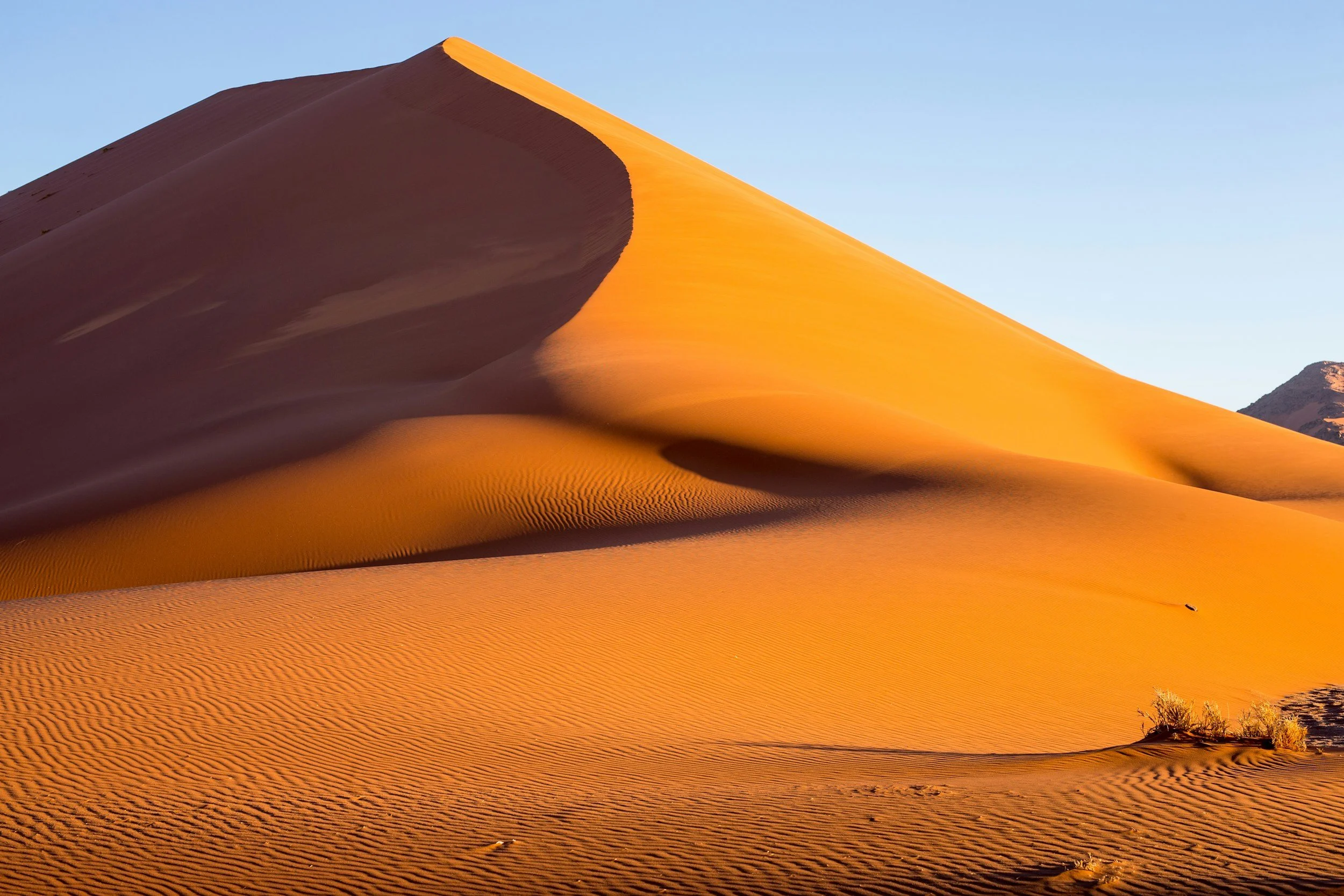
The landscapes feel ancient and untouched. In Sossusvlei, towering red dunes rise against impossibly blue skies. In Deadvlei, skeletal camel thorn trees stand frozen in white clay pans that look almost surreal. Along the coast, fog drifts in from the Atlantic and softens the stark beauty of the desert meeting the sea.
For photographers, this is visual gold. The lines are clean. The contrast is bold. The compositions feel graphic and powerful. Namibia simplifies your frame. It removes distractions. It lets you focus on light, shape, and story.
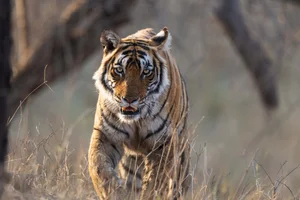
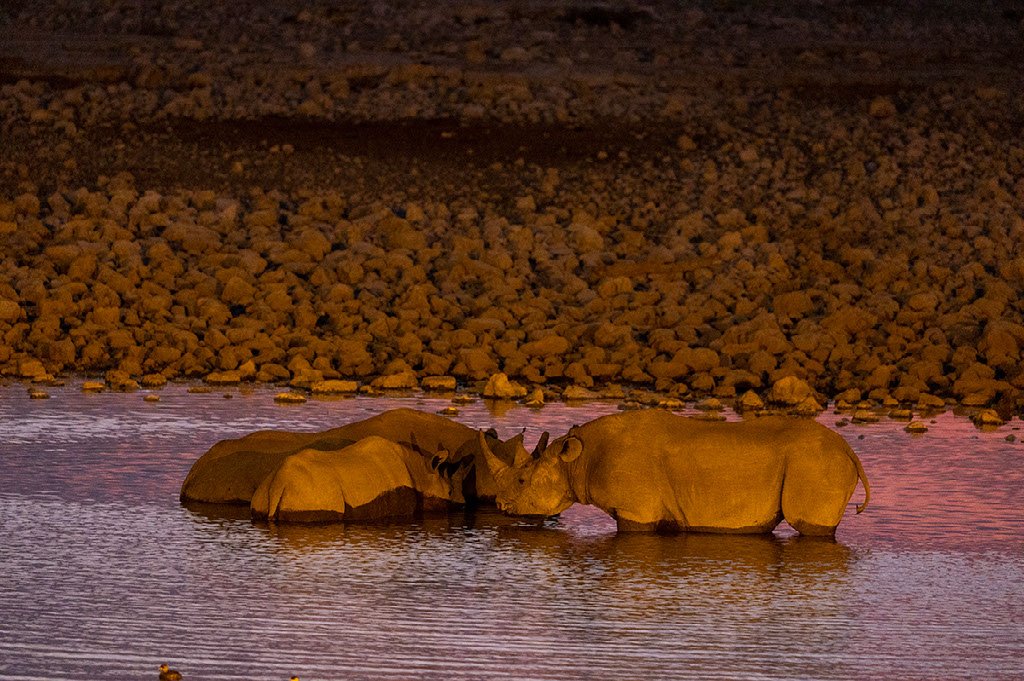
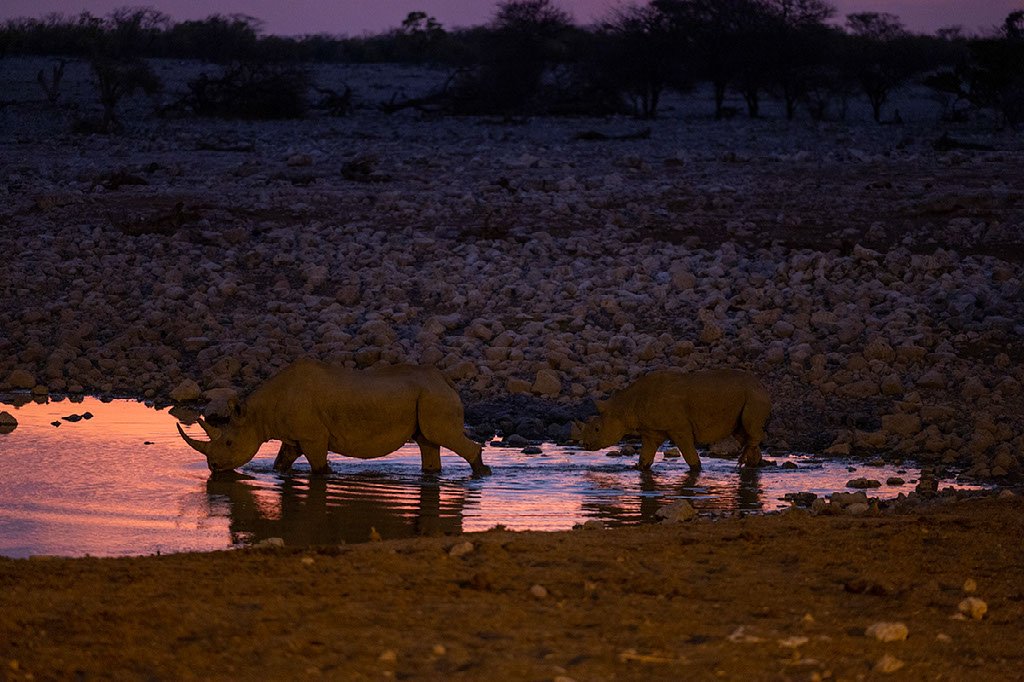
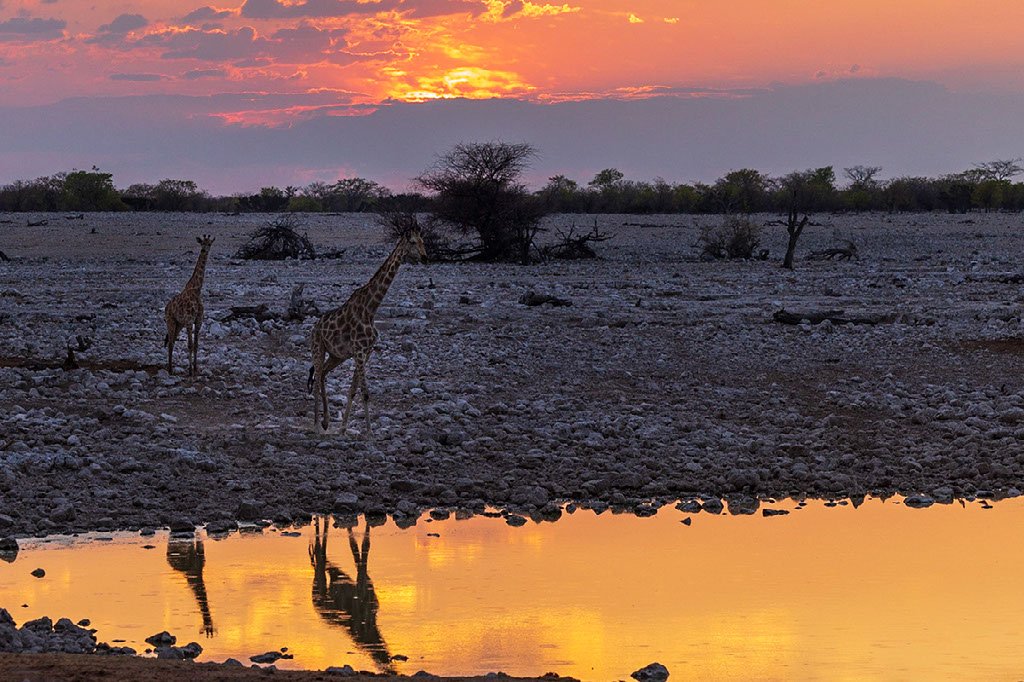
Then there is the wildlife. Etosha National Park offers dramatic waterhole scenes where elephants, giraffes, lions, and rhinos gather in open, minimalist landscapes. The dry terrain makes sightings easier. The clean backgrounds make compositions stronger. Early morning and late afternoon light create depth and drama without clutter.
Namibia is not crowded. It is not rushed. It gives you space. Space to slow down. Space to think. Space to wait for the moment when everything aligns.
I hope this guide gives you practical tips, useful insights, and the confidence to plan your own Namibia adventure. With thoughtful preparation and a little patience, Namibia will reward you in ways few places can.
How to Get to Namibia
Most international travelers arrive through Hosea Kutako International Airport, located about 45 minutes outside Windhoek. It is a small, efficient airport and an easy entry point into the country.
From the United States, there are no direct flights, so you will connect through major hubs such as Frankfurt, Doha, or Johannesburg. Many travelers fly via Frankfurt, which has regular service into Windhoek. Others connect through Johannesburg if they are already traveling within southern Africa.
If you are coming from Europe, flights are straightforward and typically overnight. From other parts of Africa, regional connections into Windhoek are simple and frequent.
Once you land, most safaris and photography workshops begin in Windhoek before heading out into the desert or toward Etosha. I recommend arranging airport transfers in advance or renting a 4x4 if you plan to self drive. Distances in Namibia are long, and you will want to be prepared.
Getting there takes effort. But once you arrive and step into that wide open landscape, you will quickly understand why it is worth it.
Best Time to Visit Namibia for Photography
Namibia is photogenic year-round, but timing changes the experience.
May to October, the dry season, is ideal for wildlife.
In Etosha National Park, animals gather around waterholes as vegetation thins out. Sightings become more predictable. Backgrounds stay clean and uncluttered. Skies are clear, and dust in the air can create beautiful golden light at sunrise and sunset.
The trade-off. Nights and early mornings can be cold, especially in the desert.
November to April brings warmer temperatures and occasional rain.
The landscape becomes greener. Dramatic clouds roll across the sky. Storm light over the dunes in Sossusvlei can be extraordinary. It is also a strong time for birdlife and newborn animals.
For landscape photographers, the shoulder months often offer the best balance. You still get strong wildlife opportunities, but with more texture in the sky and slightly softer light.
If I had to choose one window for a first-time visit focused on photography, I would aim for late May through September. Clear skies. Strong wildlife activity. Beautiful contrast. And some of the best light you will find anywhere.
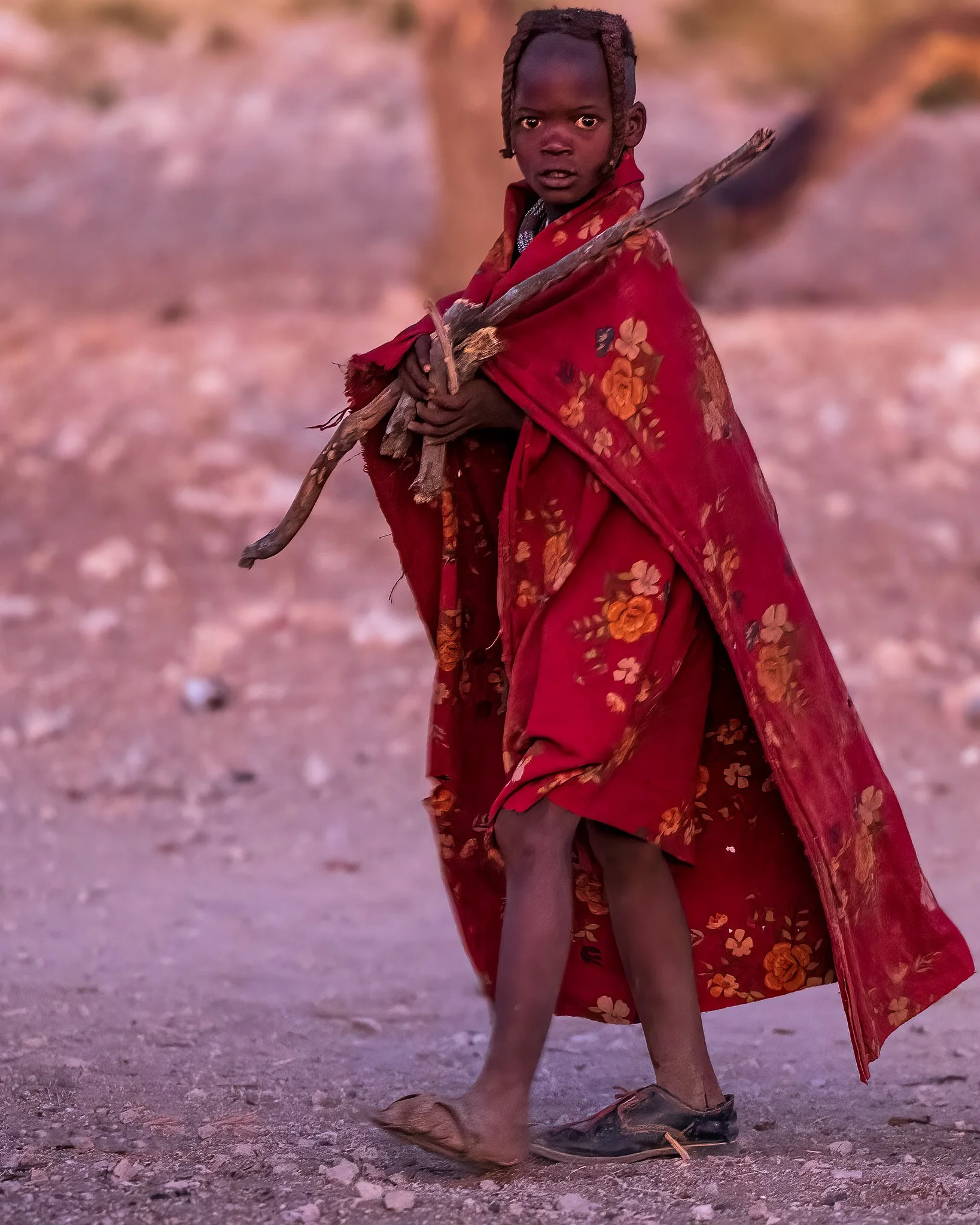
A Young Girl Collecting Fire Wood
Where to Stay in Namibia
Many photographers visit Namibia as part of a workshop or guided safari, which simplifies logistics in a country known for long distances and remote terrain. But if you are planning independently, Namibia offers some truly remarkable lodges.
&Beyond Sossusvlei Desert Lodge
Set deep in the Namib Desert, this lodge offers front-row access to the dunes of Sossusvlei. The suites feature skylights over the beds for stargazing, and the minimalist design blends seamlessly into the landscape. It is ideal for landscape and astrophotography.
Little Kulala
Located near the entrance to Sossusvlei, Little Kulala offers early access to the dunes, which is a major advantage for sunrise photography. Clean design, private decks, and desert views make it a favorite among photographers.
Onguma The Fort
Situated on the eastern edge of Etosha National Park, Onguma The Fort overlooks a busy waterhole. You can photograph wildlife without even leaving the property.
Okonjima Bush Camp
Known for its conservation efforts and cheetah-tracking experiences, Okonjima offers a strong balance of comfort and wildlife access. It is an excellent stop between Windhoek and Etosha.
Namibia is vast. Choosing the right lodge is not just about comfort. It is about location and timing. Staying close to key photography areas puts you in a position where the light is at its best.
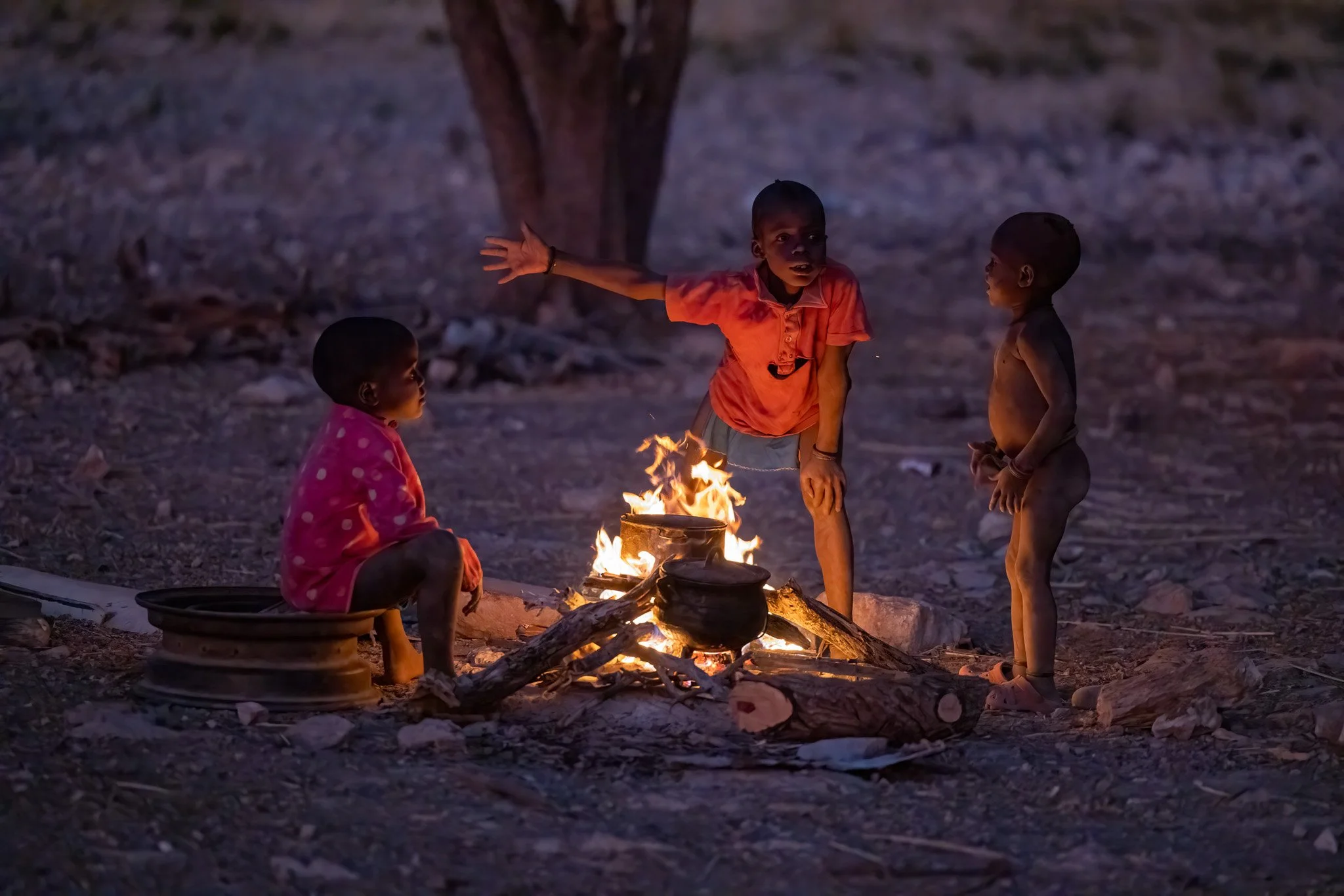
In the HImba Villages
Arriving in Namibia
Most workshops began in Windhoek, Namibia's capital and the natural gateway to the country.
For both the first and last nights of the trip, we stayed at the Hilton Windhoek. It is a comfortable, well-located base after long international flights and before heading into the desert. The rooftop views are also a nice introduction to Namibia’s wide skies.
From Windhoek, we set out on a 12-day journey across this vast country. Namibia is enormous. Distances are long, roads can be rugged, and you quickly appreciate how remote much of the landscape truly is. Even with nearly two weeks, there were still places we could not reach, including the remote Skeleton Coast.
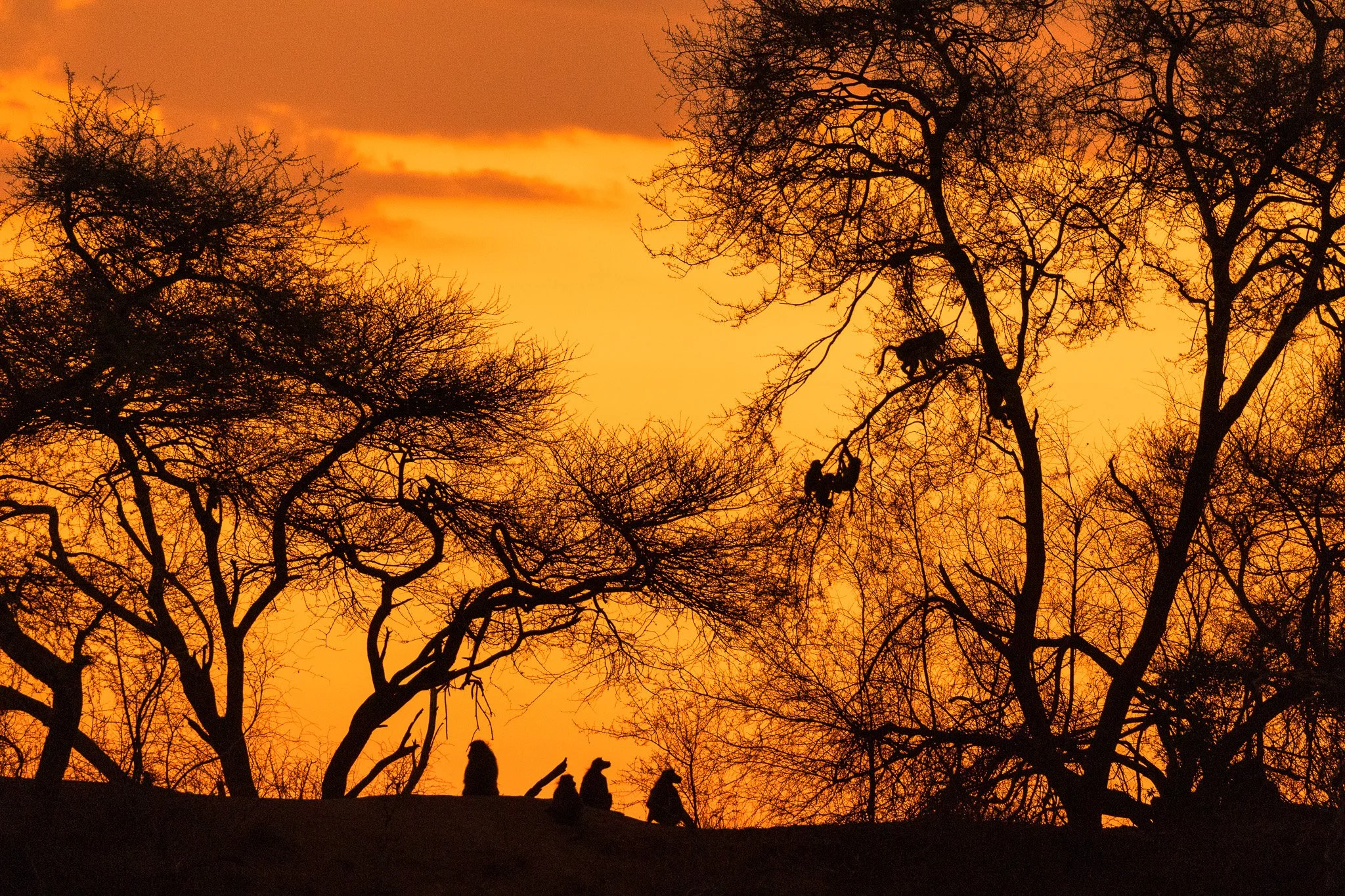
The Beauty of Namibia is the variety of Subjects to photograph
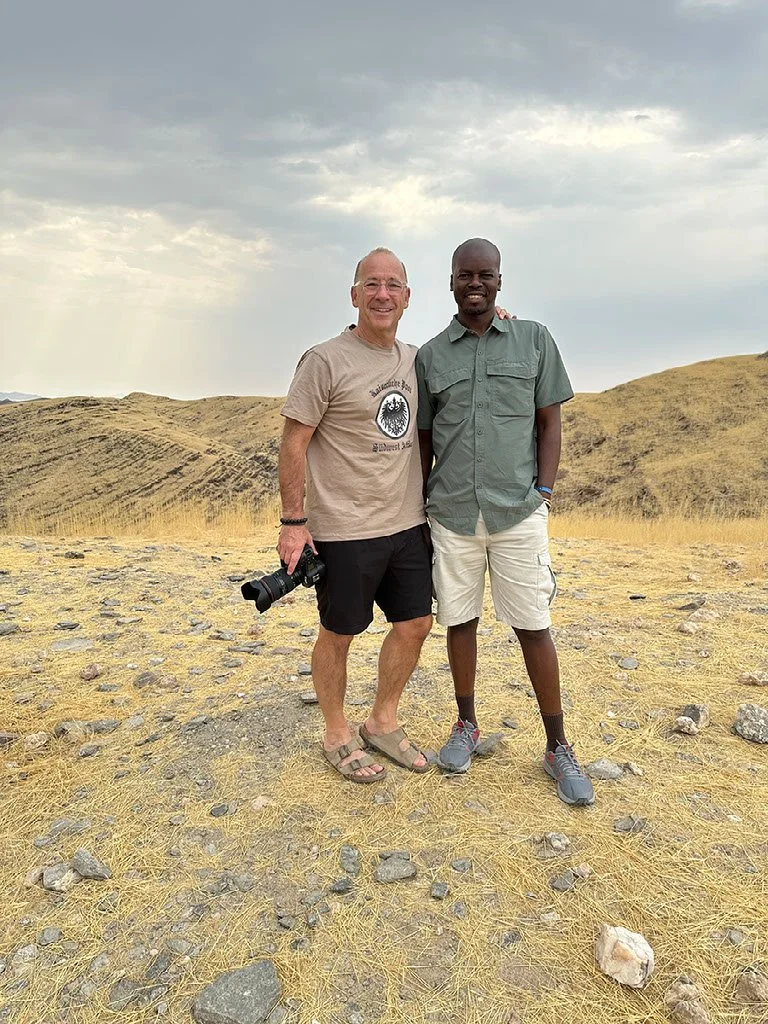
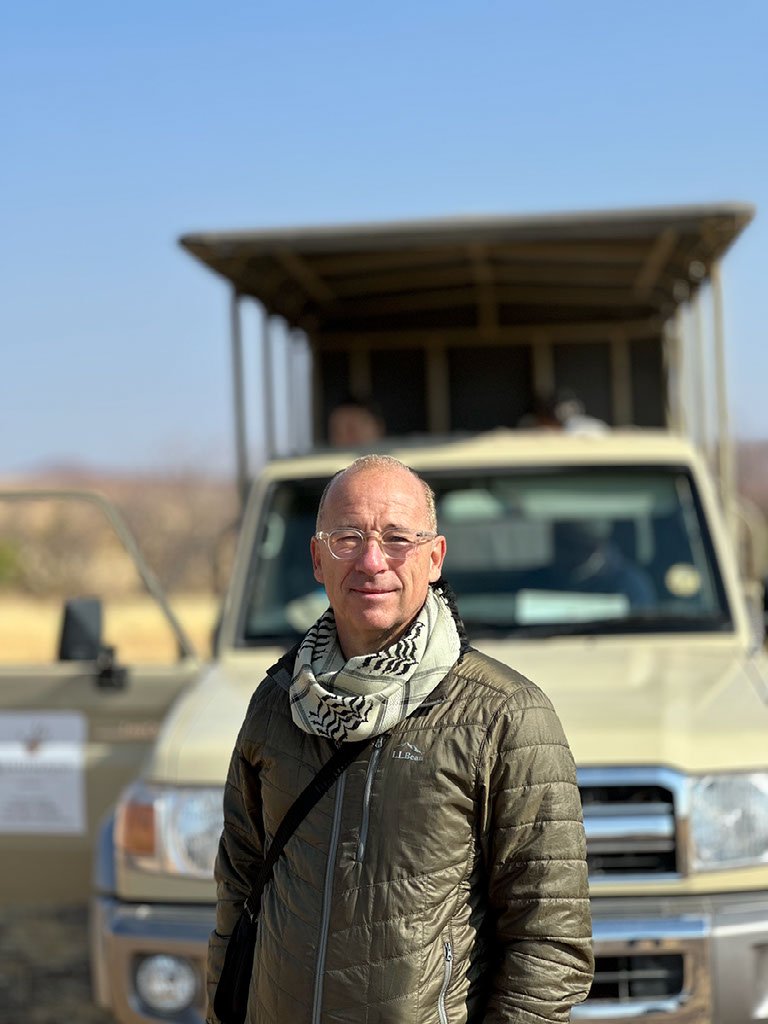
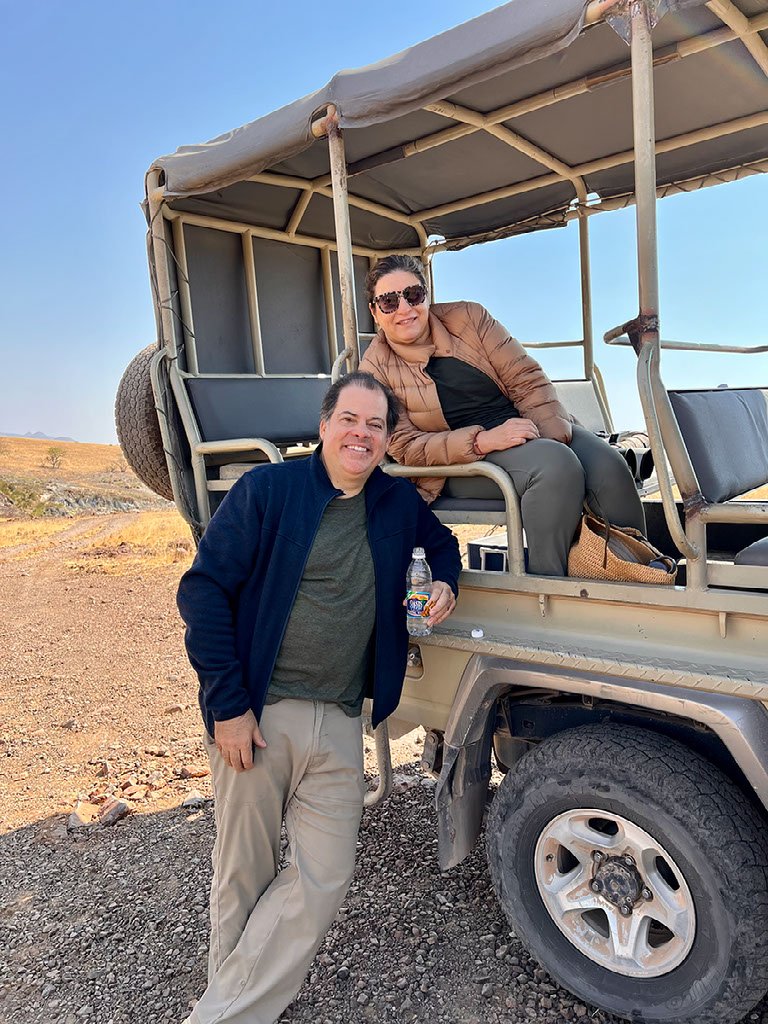
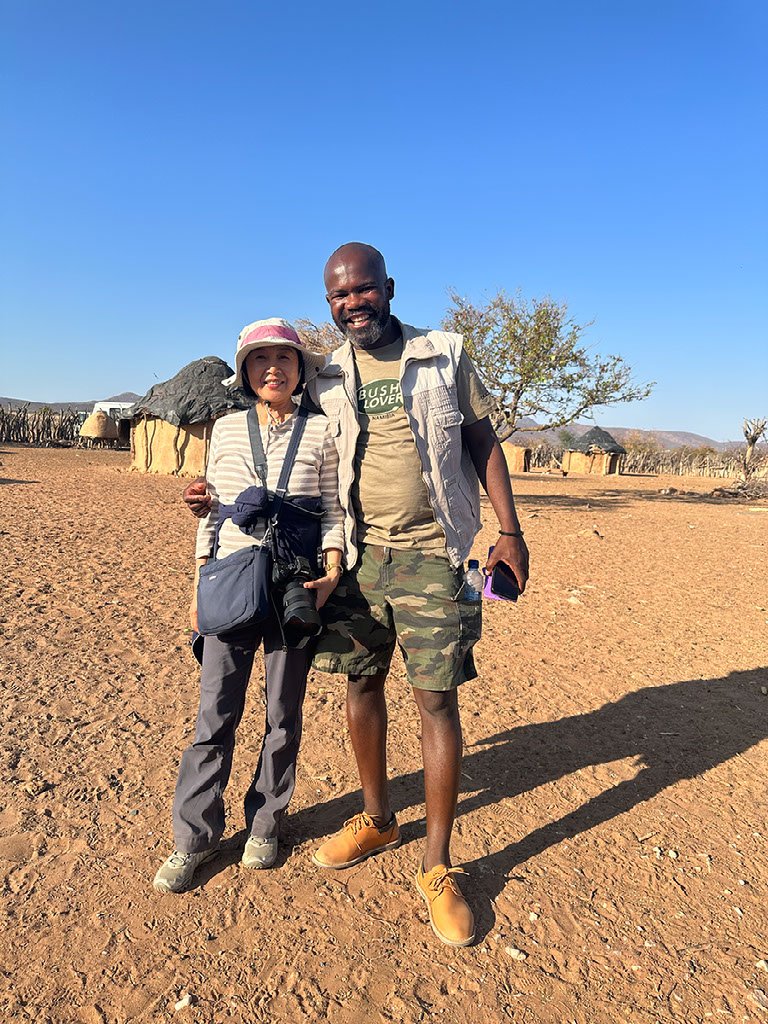
We photographed towering desert landscapes, visited Himba villages and learned about their traditions, and spent time in wildlife-rich areas that delivered unforgettable encounters. The variety was one of the biggest surprises. Namibia is not just dunes and desert. It is culture, wildlife, texture, and scale.
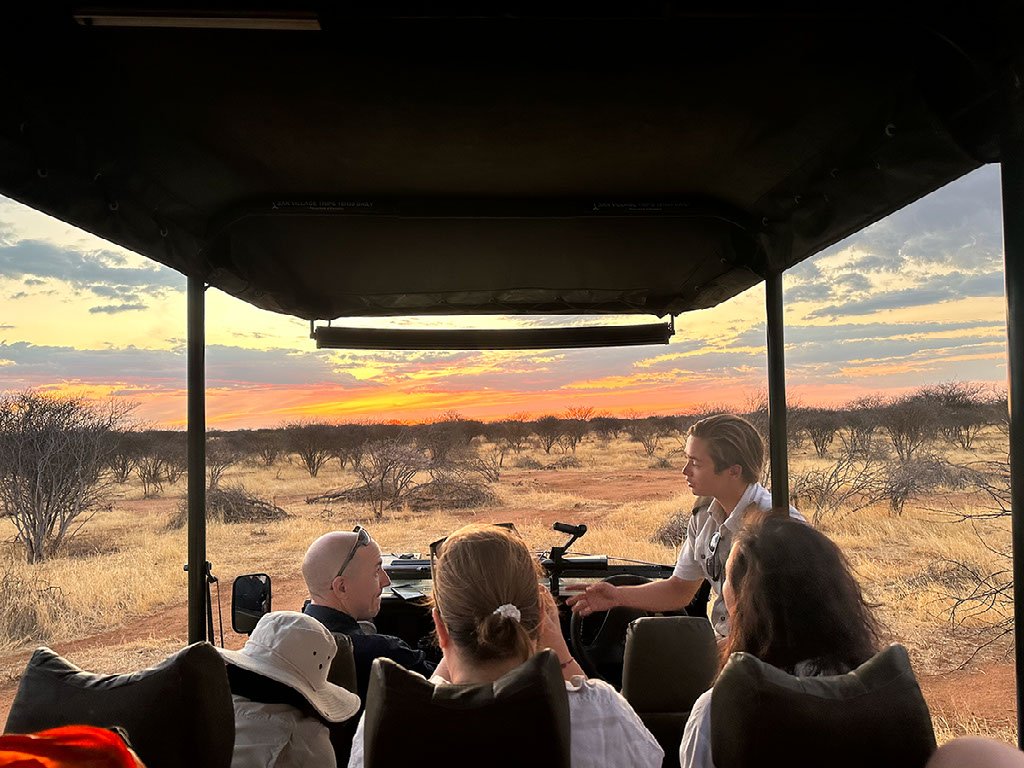
Photography Gear to Bring to Namibia
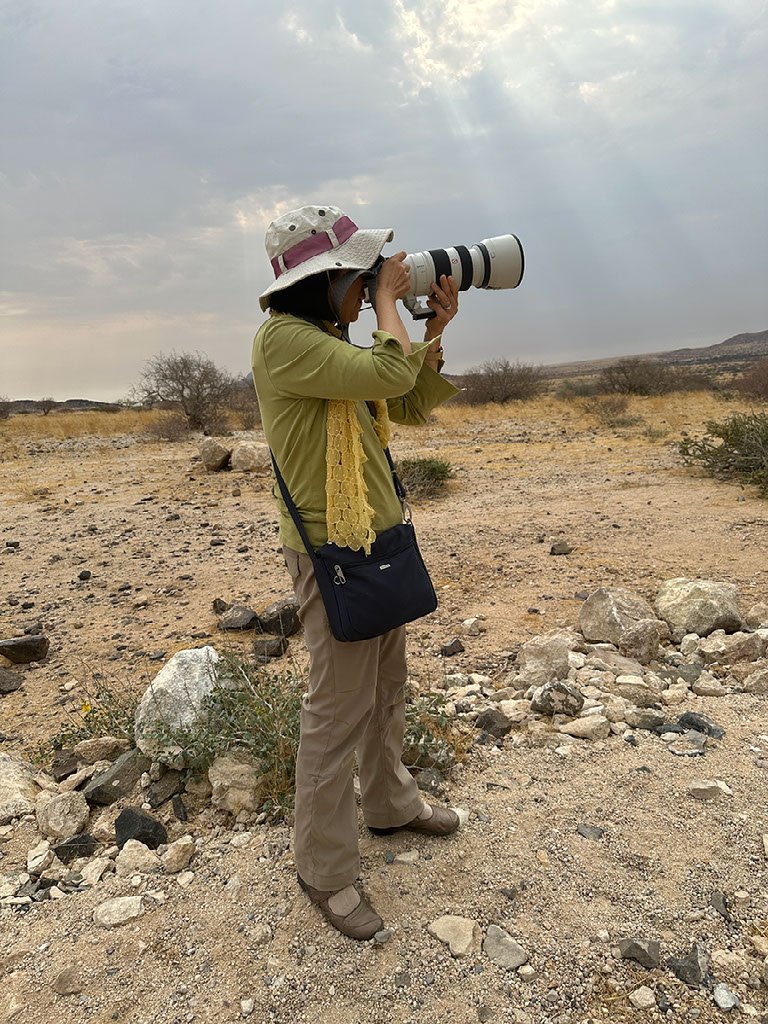
Namibia is demanding on both you and your equipment. Dust, long drives, extreme contrast, and fast-moving wildlife mean you need gear that is reliable and versatile. Bring what you will truly use. Leave the rest.
Camera Bodies
A high-resolution mirrorless body such as the Canon EOS R5 Mark 2, Nikon Z8 or Z9, or Sony A1 or A9 performs beautifully here. Dynamic range is critical in Namibia. You will often be balancing bright desert skies with darker foregrounds.
If possible, bring two bodies. Changing lenses in windy, dusty conditions is not ideal.
Lenses
Wide-angle, 14 to 35mm or 16 to 35mm
Essential for Sossusvlei and Deadvlei. The dunes demand sweeping perspectives and clean compositions.
Mid-range zoom, 70 -200 mm
Your everyday workhorse. Perfect for environmental portraits in Himba villages, lodge life, and general travel storytelling.
Telephoto zoom, 100 to 500mm or 200 to 600mm
Critical for wildlife in Etosha National Park. The longer reach gives you flexibility at waterholes and during game drives.
For Serious Wildlife Photographers
If wildlife is your primary focus, a 400mm f2.8 is a dream lens in Namibia.
The wide aperture allows you to isolate animals beautifully against clean desert backgrounds. It performs exceptionally well in low light at sunrise and sunset, when activity is highest. The subject separation is stunning, especially for lions, elephants, and close portraits of giraffes.
It is heavy. It is not subtle. But if you are serious about wildlife photography and comfortable traveling with it, the results can be extraordinary.
Accessories
Sturdy tripod or monopod
Useful for landscapes and helpful when supporting heavier telephoto lenses.
Plenty of batteries and memory cards
Game drives can last for hours.
Dust protection
Blower, microfiber cloths, and sealed bags are essential. Namibia is dry and dusty.
Fast wide lens for night photography
Namibia’s dark skies are spectacular. A wide lens at f2.8 or wider will allow you to capture the Milky Way over the desert.
Namibia rewards preparation and simplicity. Bring gear that lets you respond quickly to changing light and unpredictable wildlife. The environment will do the rest.
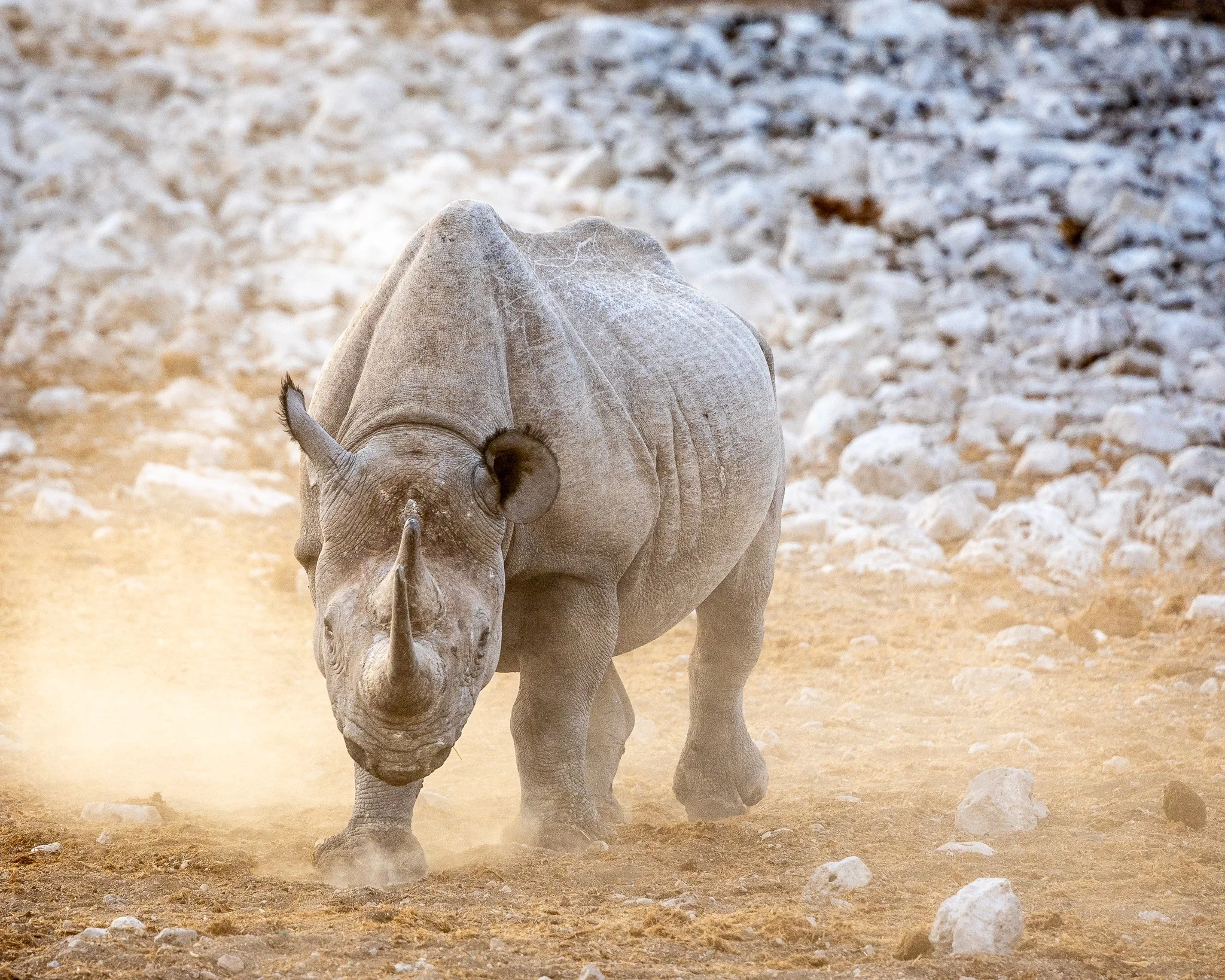
Staring down at a Rhino
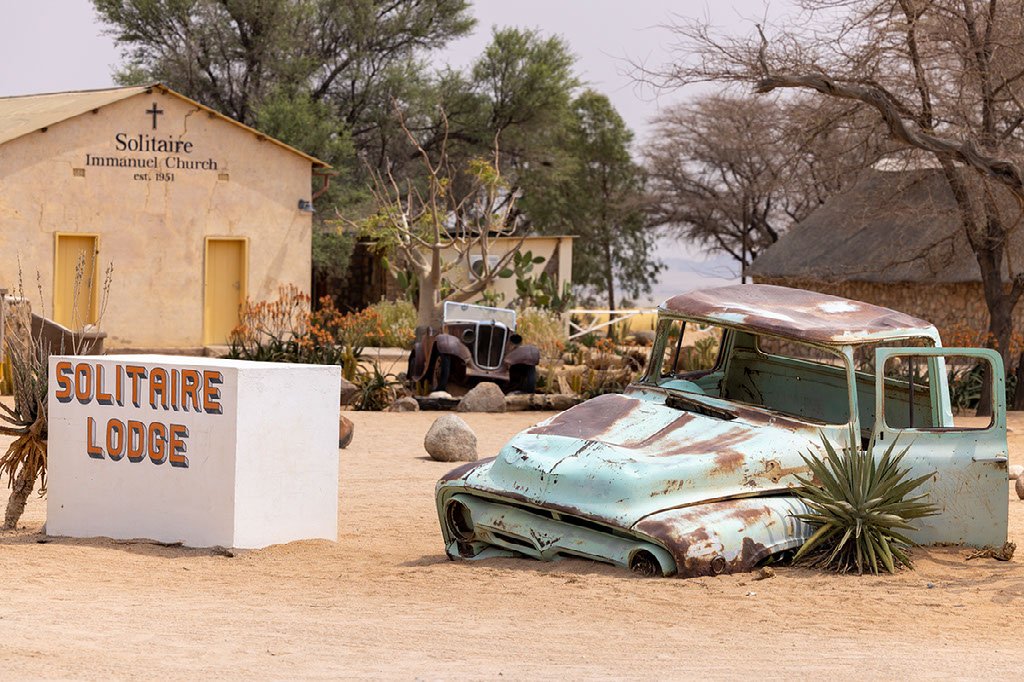
A Fun & Quirky Stop in Solitaire
On our way to Deadvlei, we pulled into one of the most unexpected stops of the entire trip.
Solitaire sits in the middle of nowhere. Truly nowhere. Desert stretches in every direction, and then suddenly, there it is.
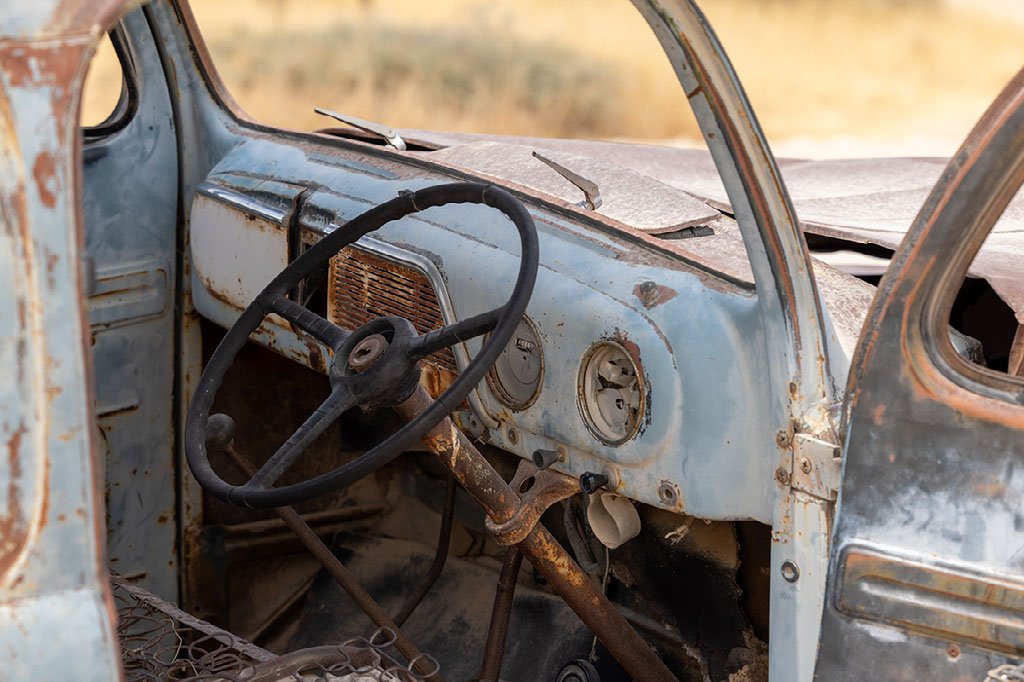
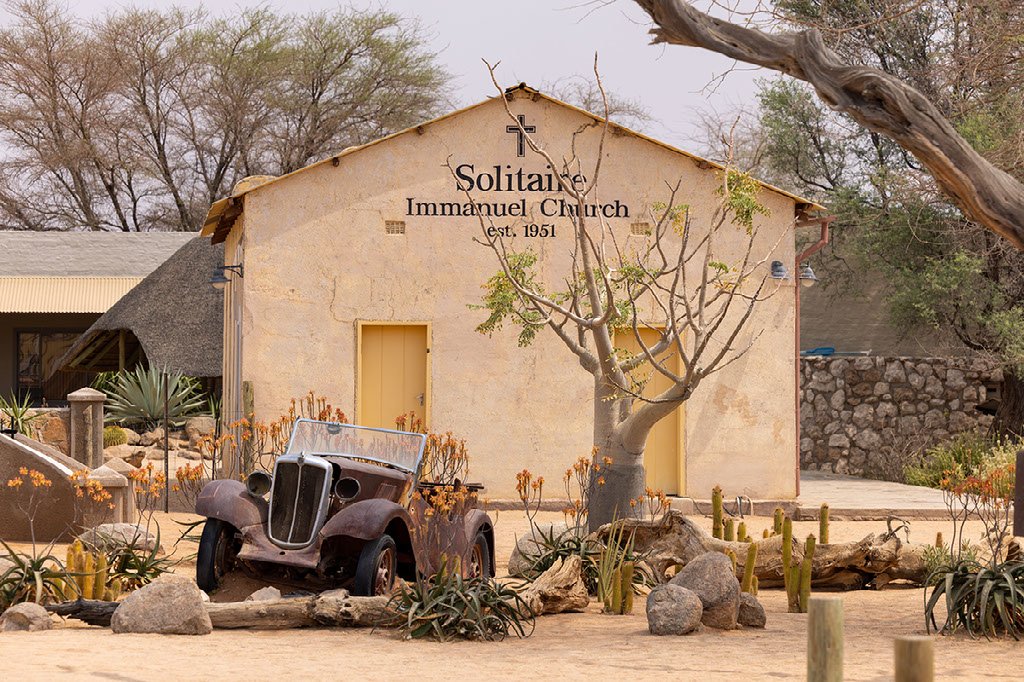
It is part gas station, part restaurant, part bakery, part car repair shop, part hotel, and even part church. Every tour group seems to stop here to refuel, stretch, and use the restrooms. But photographers stop for another reason.
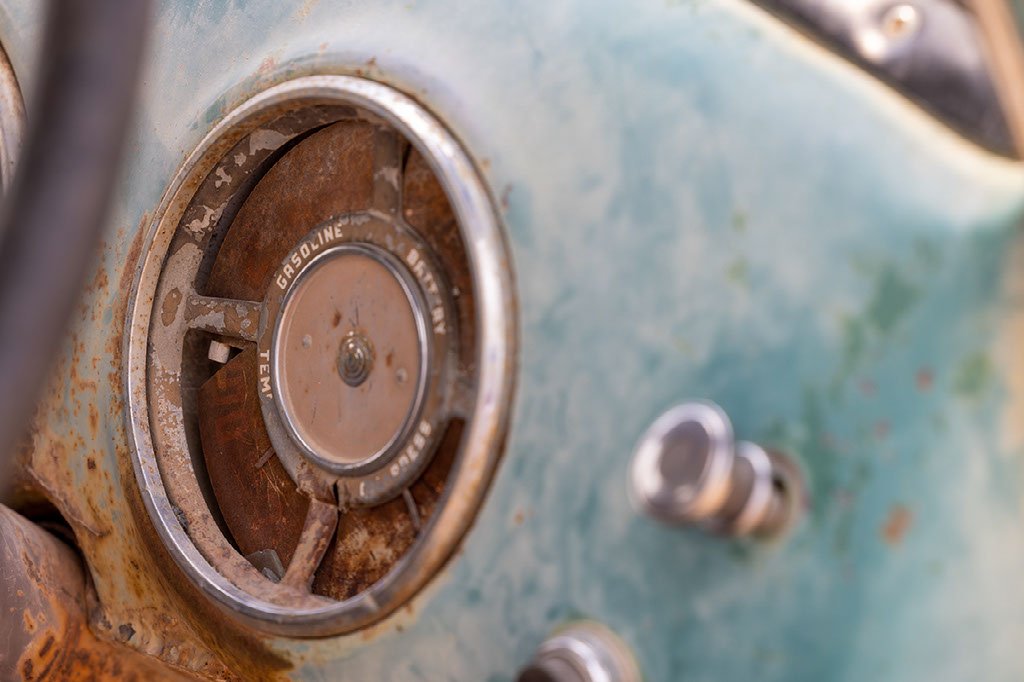
The old rusted cars scattered around the property create fantastic foreground elements against the vast desert backdrop. The textures, peeling paint, and open skies make for strong, graphic compositions.
And then there is the apple pie.
We grabbed something cold to drink and ordered their famous slice. I still have no idea where they find apples in the middle of the Namib Desert, but they do. And the pie is excellent. Warm, rich, and completely unexpected.
If you are driving toward Sossusvlei or Deadvlei, do not rush past Solitaire. It is a quick stop, but it adds personality to the journey. Sometimes the in-between moments become some of your favorite memories.
Sossusvlei
The drive from Windhoek to Sossusvlei takes about four hours, and the anticipation builds with every mile. As the landscape becomes more barren, the dunes slowly rise from the horizon.
Sossusvlei is home to some of the tallest sand dunes on the planet. They are massive, sculpted, and almost unreal in their scale.
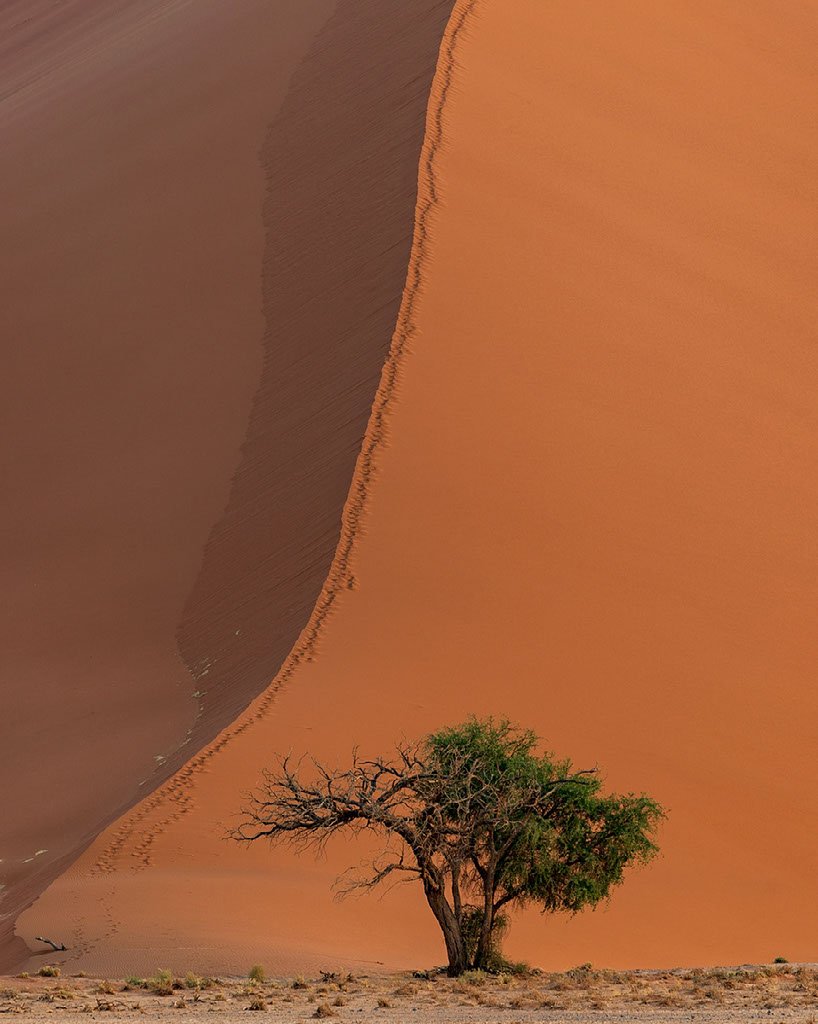
On our first photography outing, we focused on the dunes themselves. The most iconic is Dune 45. Its elegant S curve and easy access make it one of the most photographed dunes in the world.
Sunrise and sunset are prime time. I especially love how the sun illuminates one side of the dune while the other falls into deep shadow. That contrast creates strong graphic compositions and emphasizes the curves and ridges shaped by the wind.
There are dozens of dunes here. Each has its own character. Walk a little farther. Change your angle. Use a telephoto lens to compress the layers of sand against the sky. Or go wide and let the sweeping lines lead the viewer’s eye.
Sossusvlei is simple in color, red, blue, gold. But within that simplicity lies endless variation. It is a place where light does most of the work. Your job is to be there when it does.
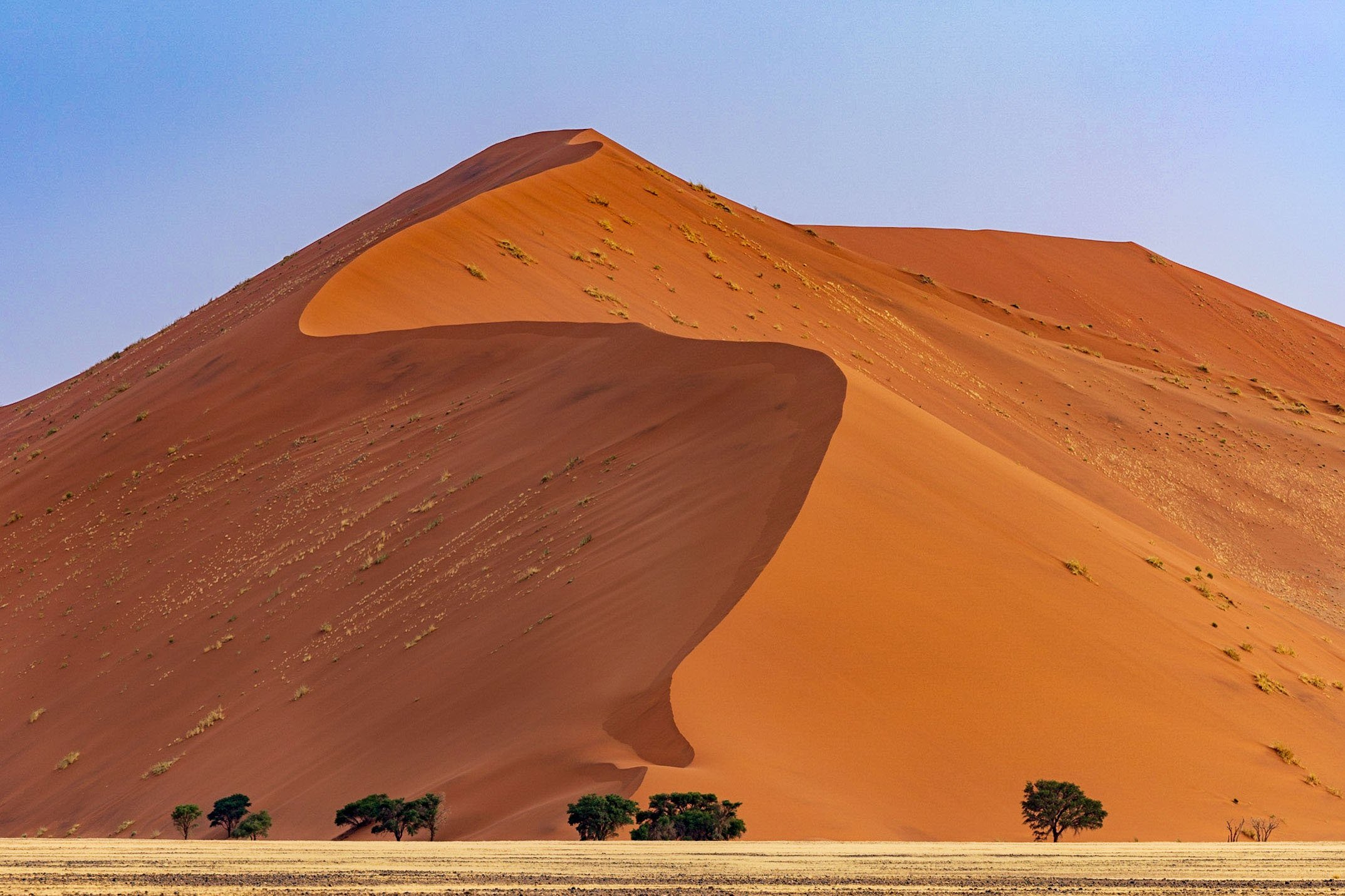
The Famous Dune 45
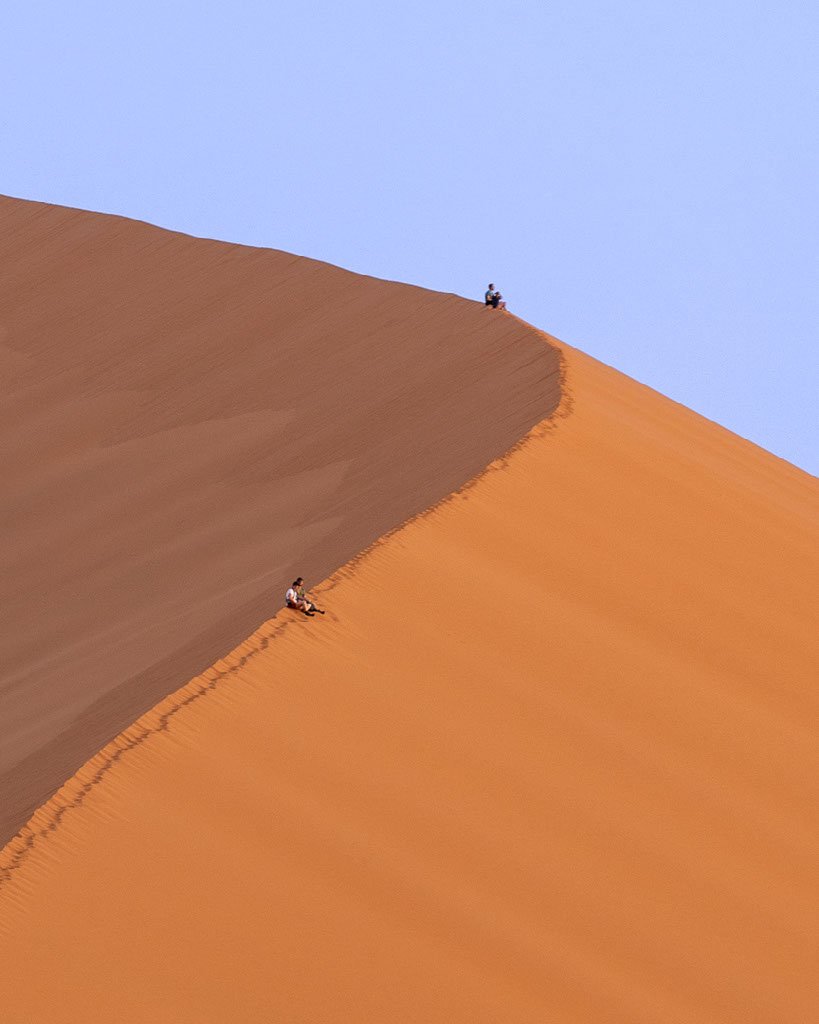
A lot of people will climb up Dune 45. I am sure there are terrific views, but it does not look like an easy climb, especially over the sand.
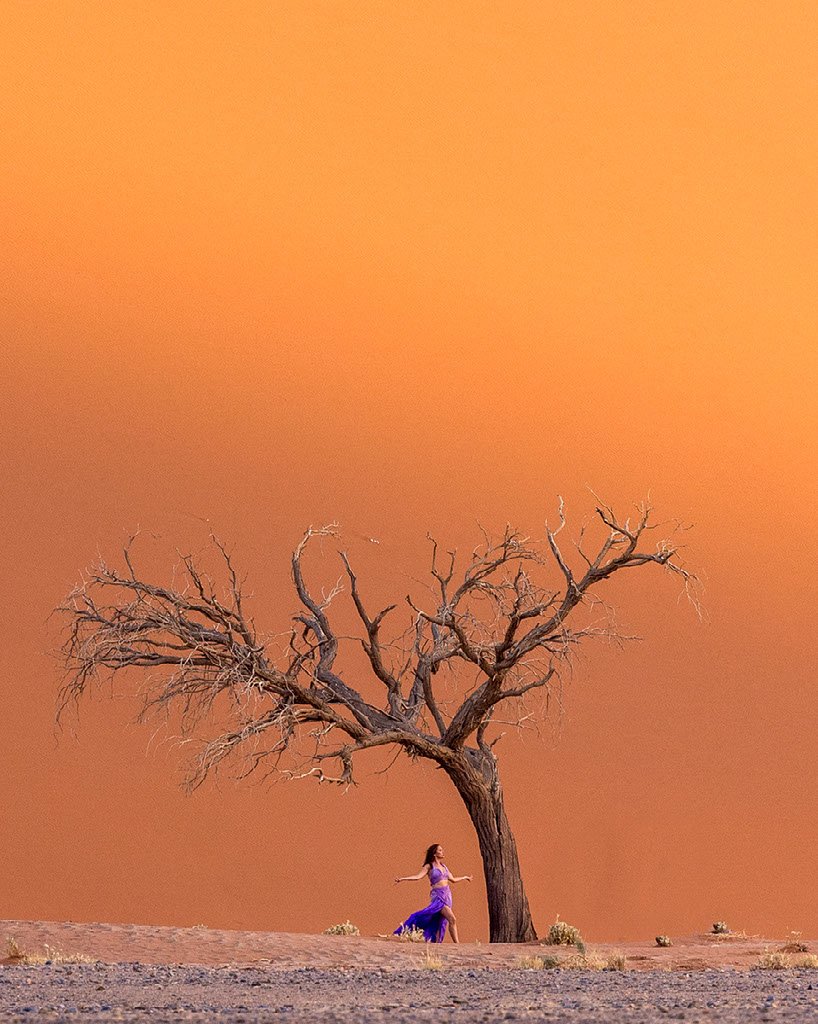
Deadvlei
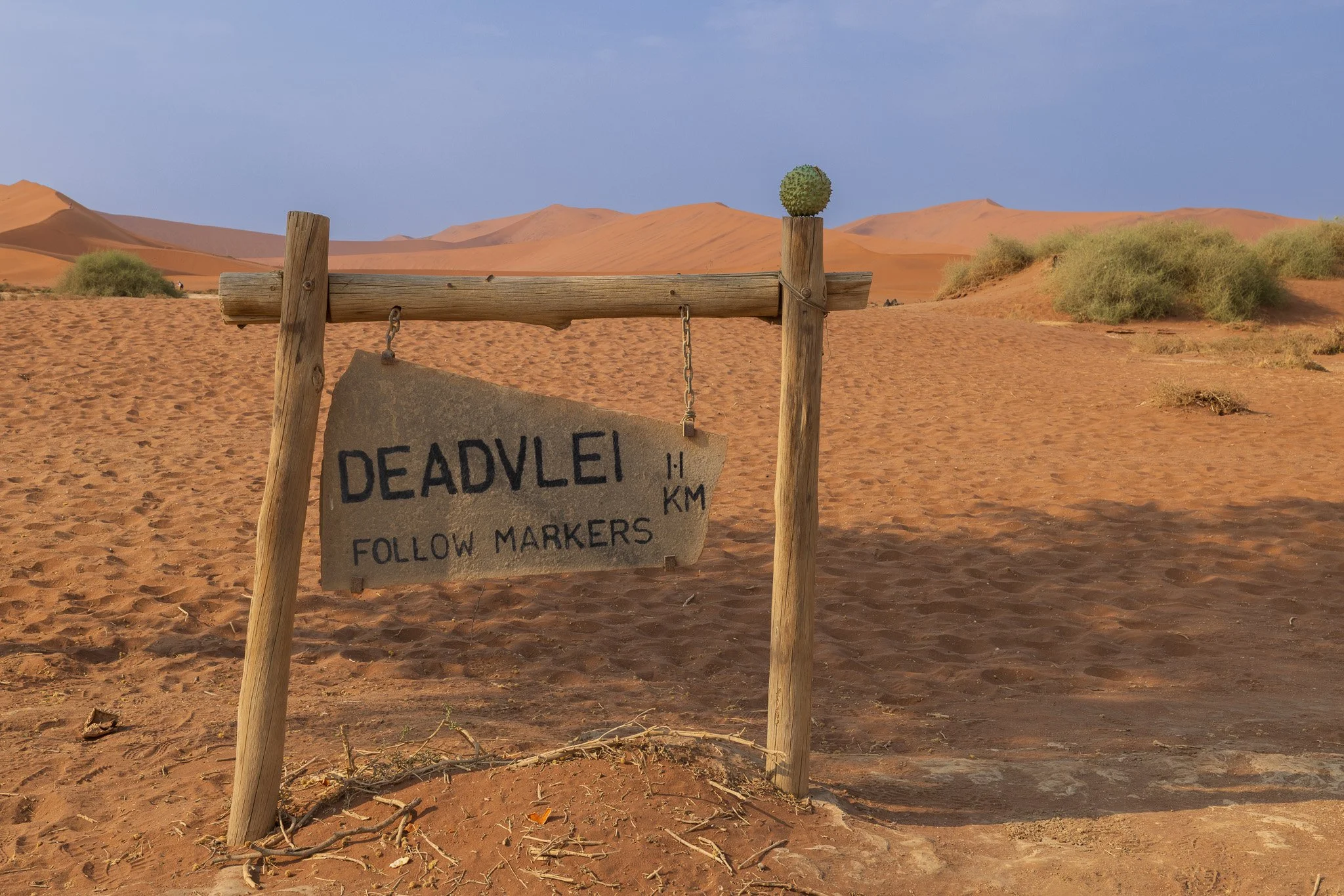
Deadvlei is one of Namibia's most iconic photography locations. For many photographers, it is the image that first sparks the desire to visit.
The scene feels almost surreal. Dark, skeletal camel thorn trees rise from a cracked white clay pan, framed by towering red dunes and deep blue skies. The contrast is dramatic and graphic. Black against white. Red against blue. It is minimalism at its finest.
The pan formed more than 900 years ago when the Tsauchab River flooded the area. When the climate shifted and the water disappeared, the trees died. Because the air is so dry, they never fully decomposed. They remain frozen in time, preserved by the desert.
Arrive before sunrise. Walk in with a headlamp. The magic happens when the first light hits the dunes behind the trees while the pan itself remains in shadow. That separation between illuminated dunes and dark foreground trees creates powerful depth.
Photography Tip
Do not just shoot wide. Use a telephoto lens to isolate individual trees against the glowing dunes. Move around. Each tree has a different personality. Small shifts in position can completely change your composition.
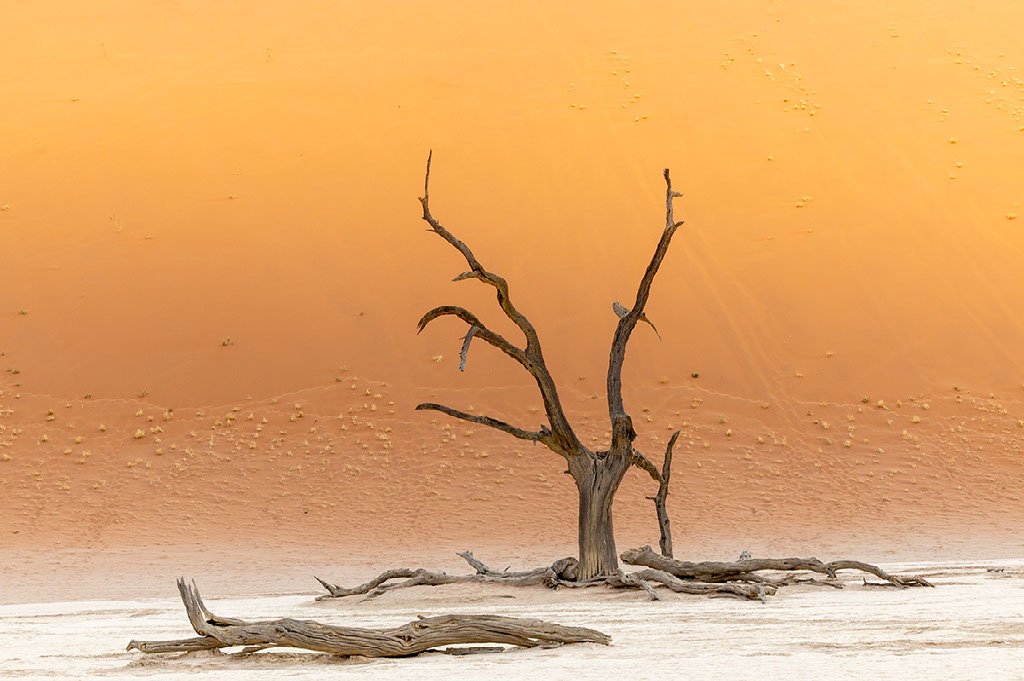
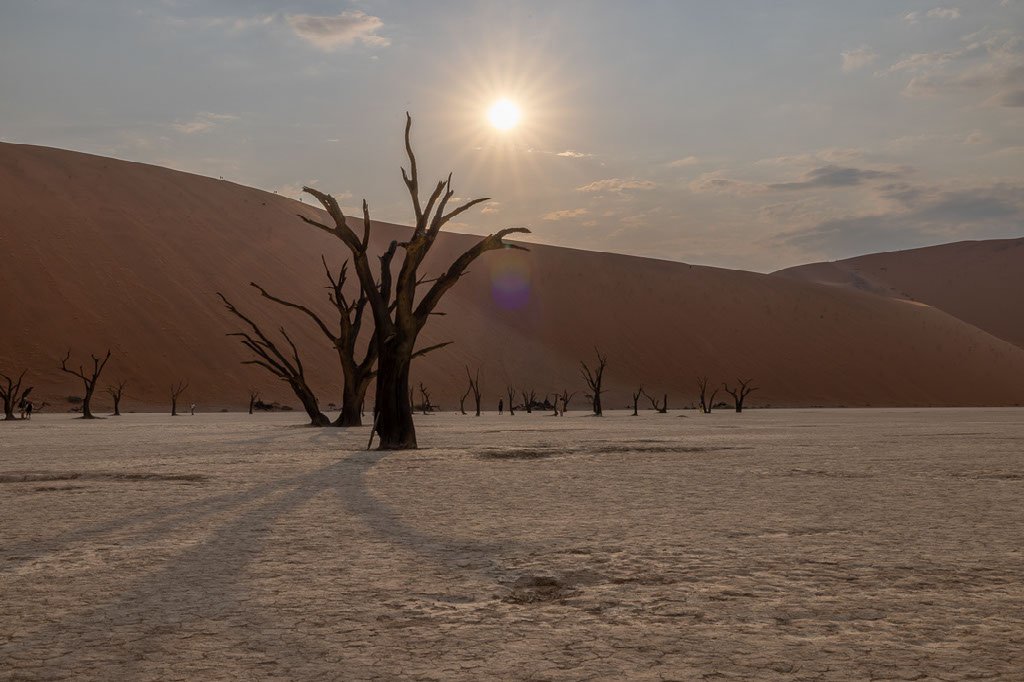
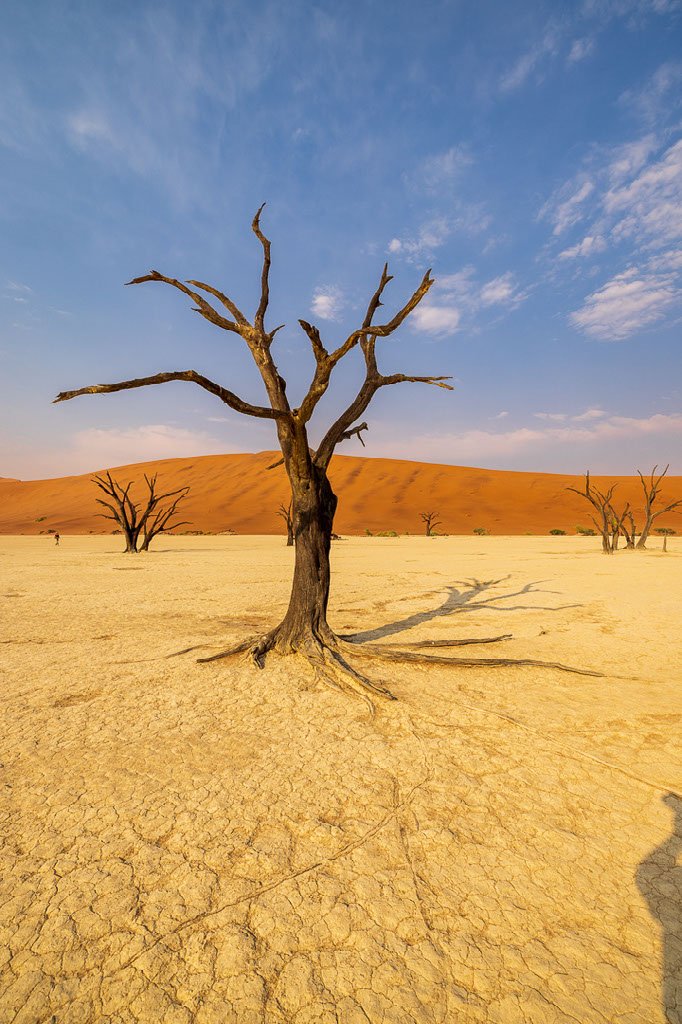
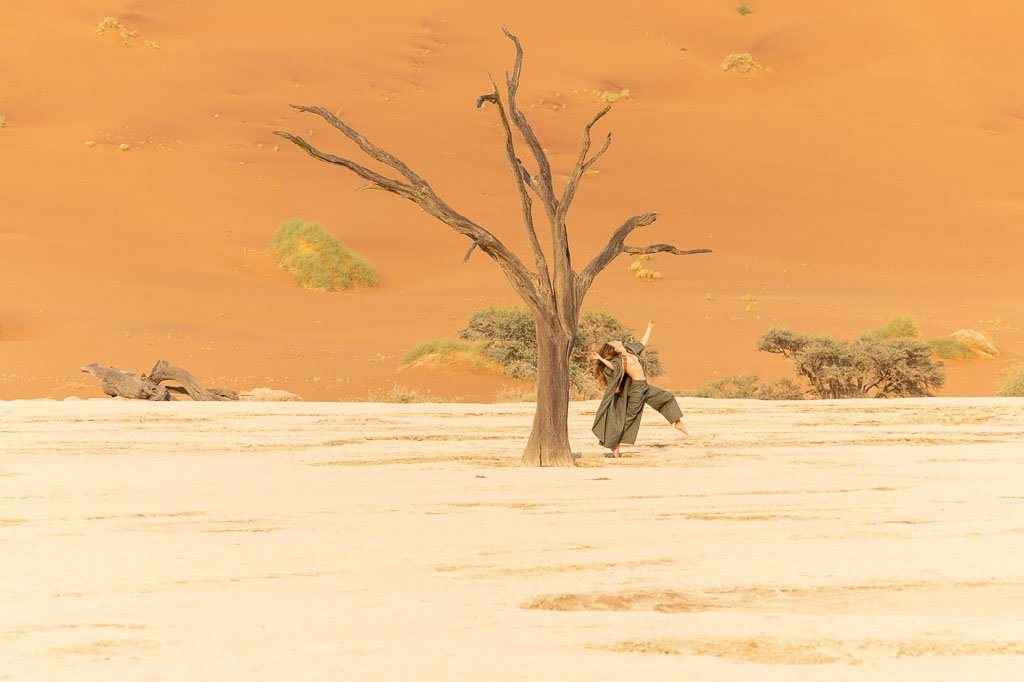
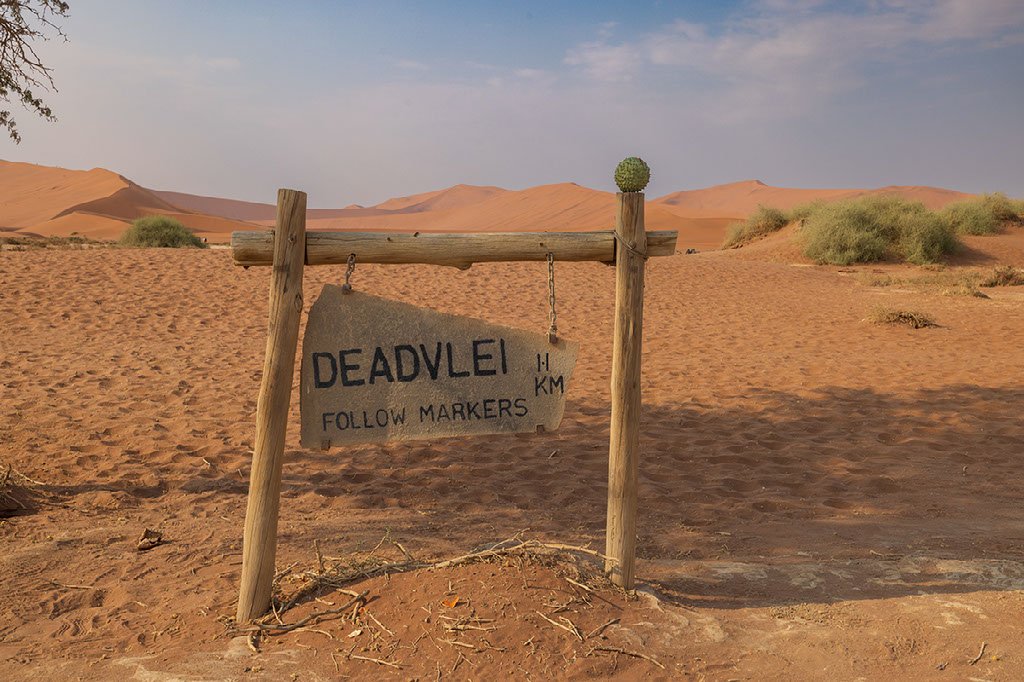
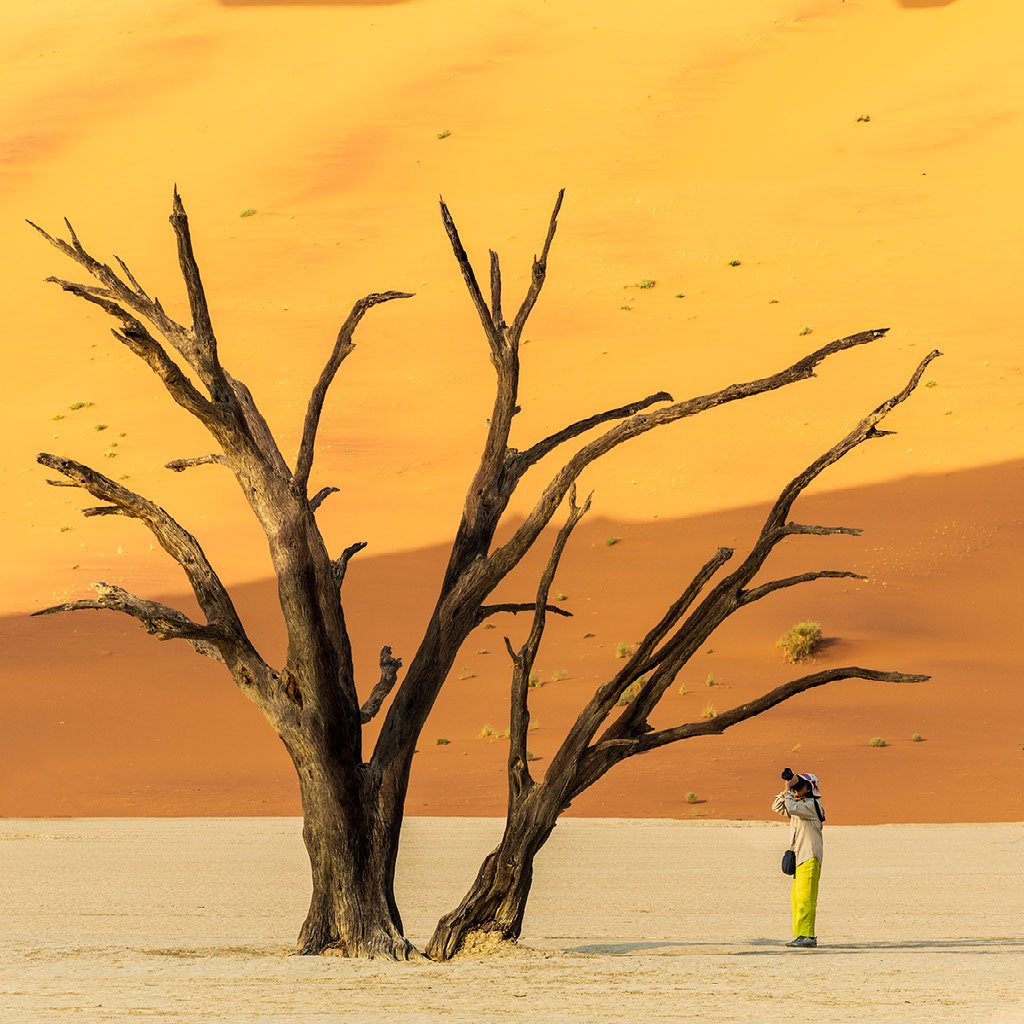
I found that it is challenging to photograph Deadviel. The composition options are tricky, especially since I was trying to get photos without people in the frame. The trick is to use a longer lens (70-200 mm) so the trees do not peek above the ridge line.

We stayed at a fabulous hotel called the Dead Valley Lodge, which I would highly recommend. I think 2 nights is the perfect amount of time for this location.
Spitzkoppen
Our next stop was Spitzkoppe.
The drive from Deadvlei to Spitzkoppe is long. Roads can be rough, and distances in Namibia always look shorter on a map than they feel behind the wheel. It was one of those travel days that tests your patience.
But the moment we arrived at Spitzkoppen Lodge, the fatigue disappeared.
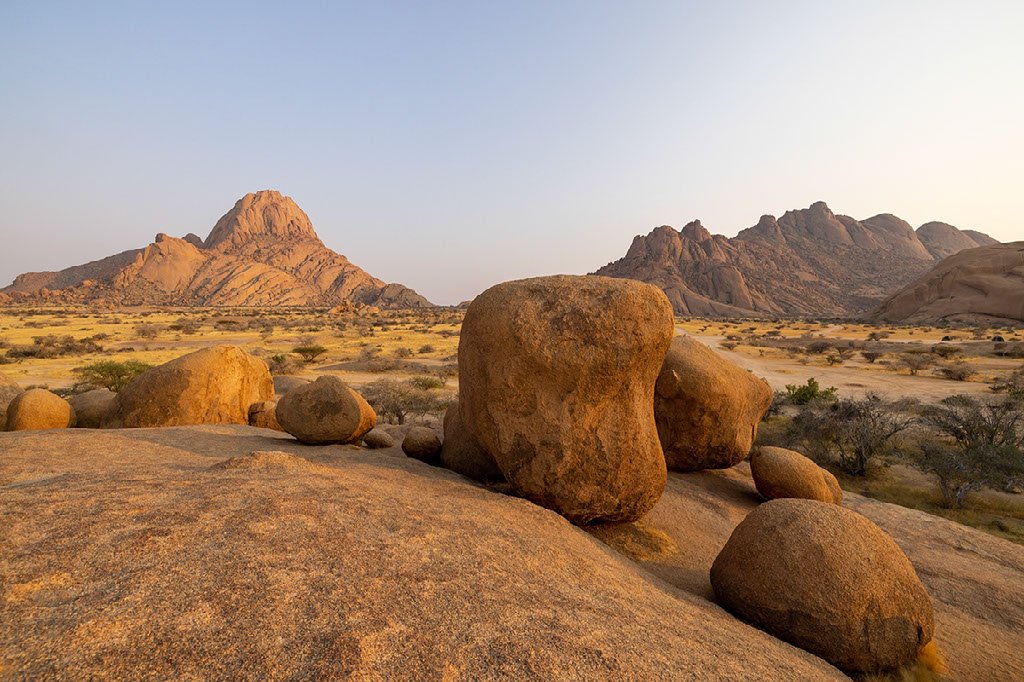
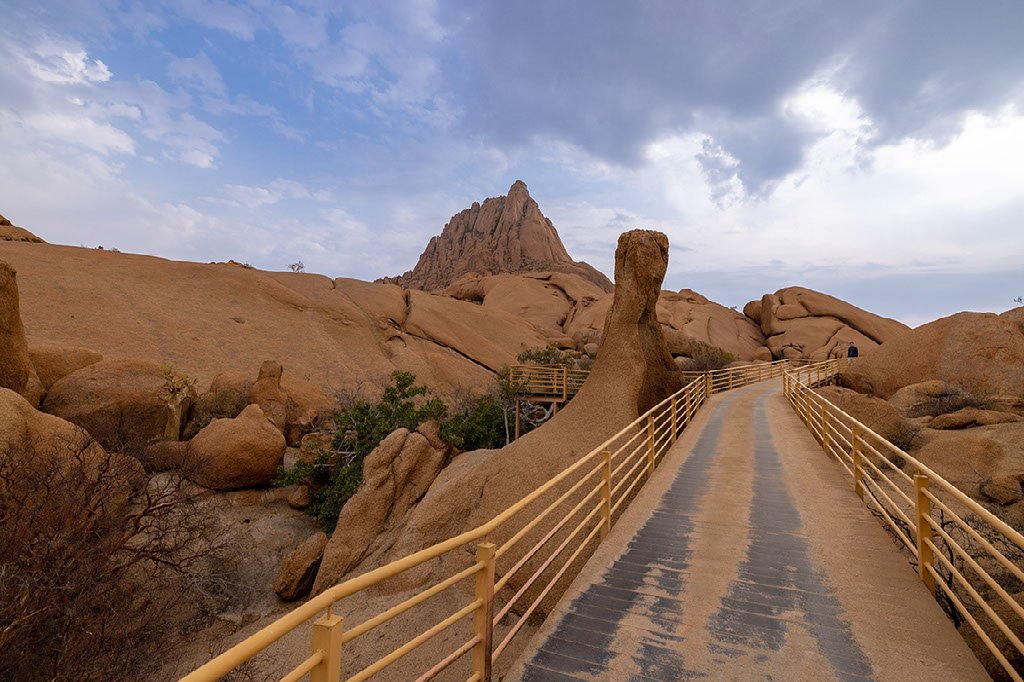
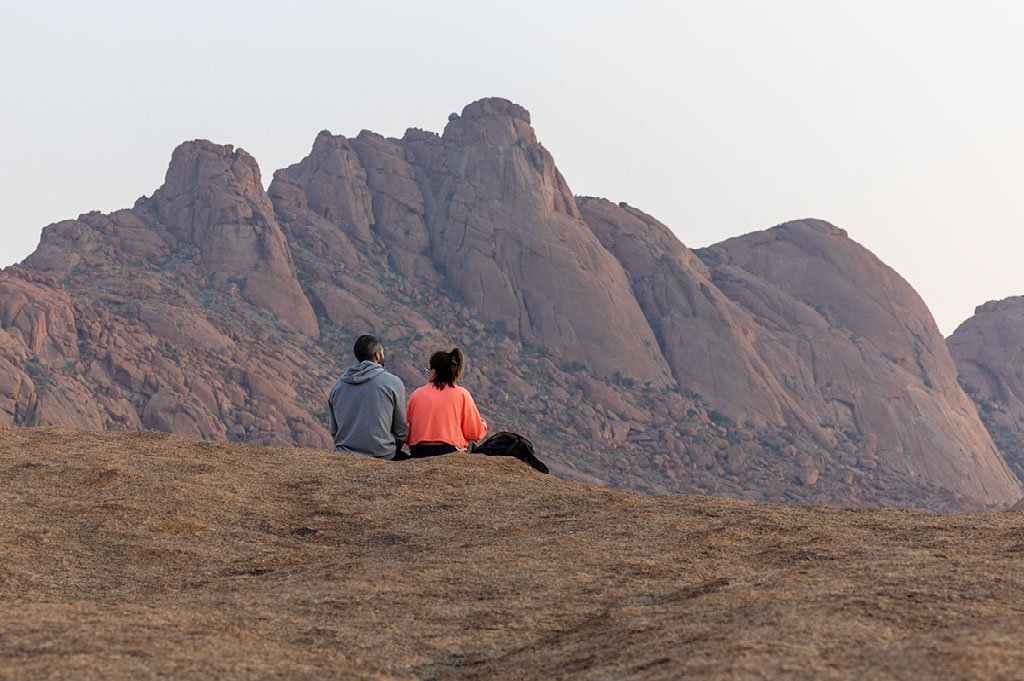
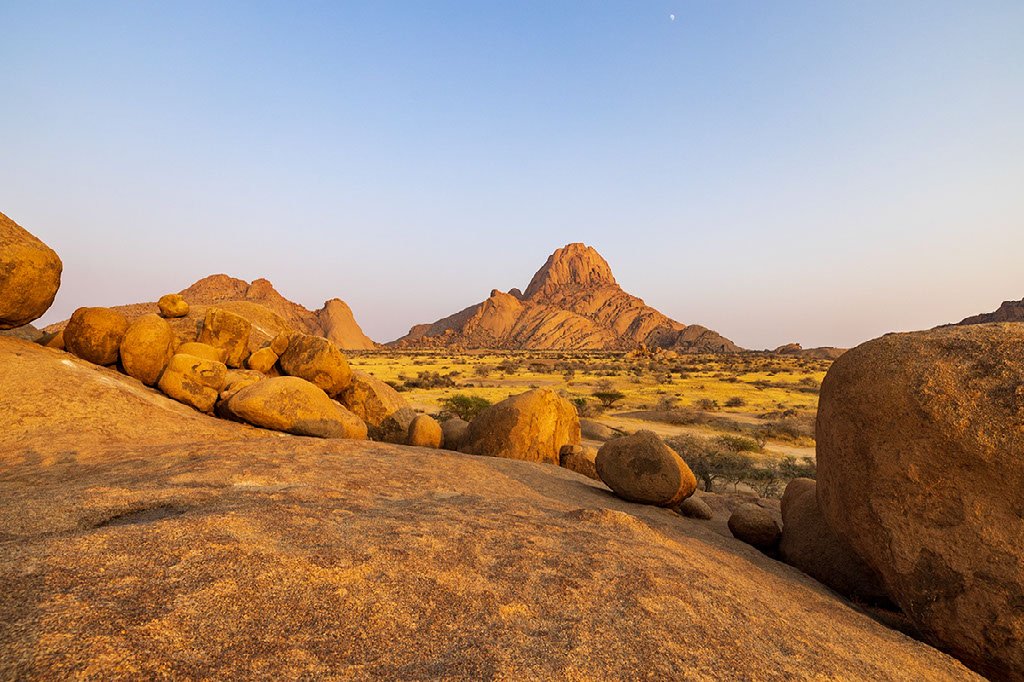
Spitzkoppe rises dramatically from the desert floor, a series of massive granite peaks often called the Matterhorn of Namibia. The rock formations feel ancient and sculptural. At sunrise and sunset, they glow with warm tones that contrast beautifully against the open sky.
For photographers, this is a playground of shapes and negative space. Wide-angle lenses work well for capturing scale. Telephoto lenses help isolate rock textures and layered ridgelines. The famous rock arch offers classic framing opportunities, especially at golden hour.
At night, the stars take over. With almost no light pollution, Spitzkoppe becomes one of the most extraordinary astrophotography locations in the country.
The drive may be long. The reward is worth every mile.

Spitzkoppen is a fabulous location for landscape and astrophotography. I would recommend staying for 2 nights.

Spitzkoppen is a range of dramatic mountain rise out of the desert plains. There are beautiful rock formations and photography options in Spitzkoppen. This would be a perfect location for Astro Photography as well. Unfortunately, when we were there, we had cloud cover.
The Himba Villages of Opuwo
After several days focused on sweeping landscapes, we shifted our attention from dunes and wildlife to people.
We drove north toward Opuwo, near the border with Angola. The terrain changed. The light felt harsher. The experience became more personal.
We stayed at the Opuwo Country Lodge, perched on a hill overlooking the town. It served as our base for visiting two Himba villages.
The Himba are an indigenous semi-nomadic people, with an estimated population of around 50,000 living in northern Namibia and southern Angola. Their traditions, dress, and way of life have remained remarkably intact.
The first village we visited was about an hour north of Opuwo. We arrived in the morning, when the light was still soft. We were welcomed by the village chief, and we spent time speaking with him and interacting with the children.
Photographing here required a completely different mindset. This was not about chasing dramatic light. It was about respect, patience, and connection. Eye contact mattered. Body language mattered. Listening mattered.
Photography Tip
Use a mid-range zoom or a short telephoto for environmental portraits. Keep your background simple. Pay attention to hands, textures, and the beautiful red ochre applied to skin and hair.
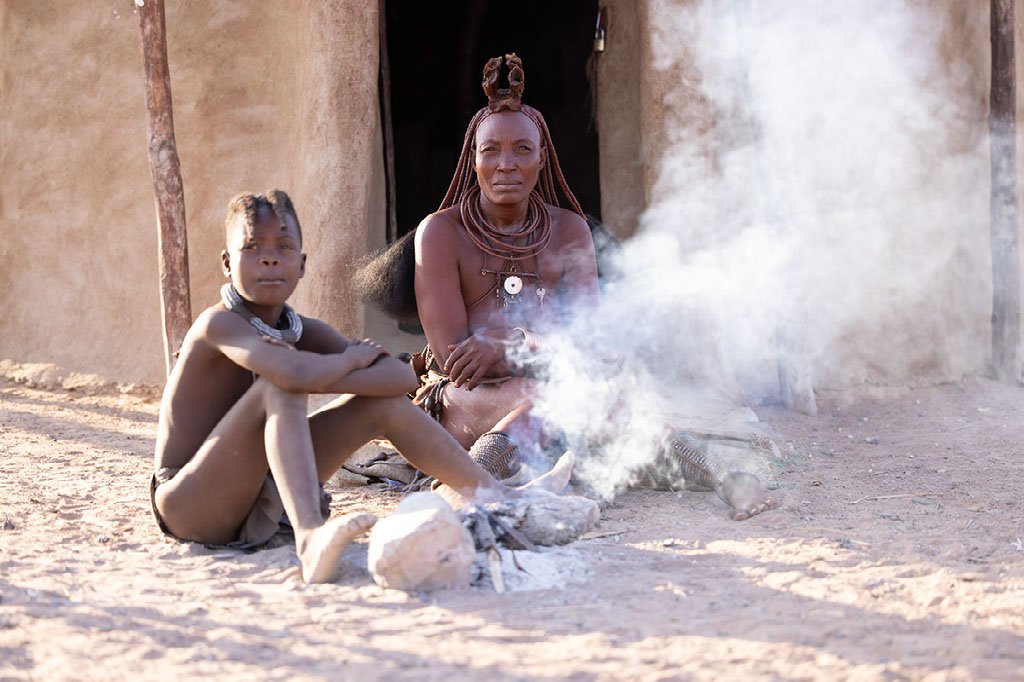
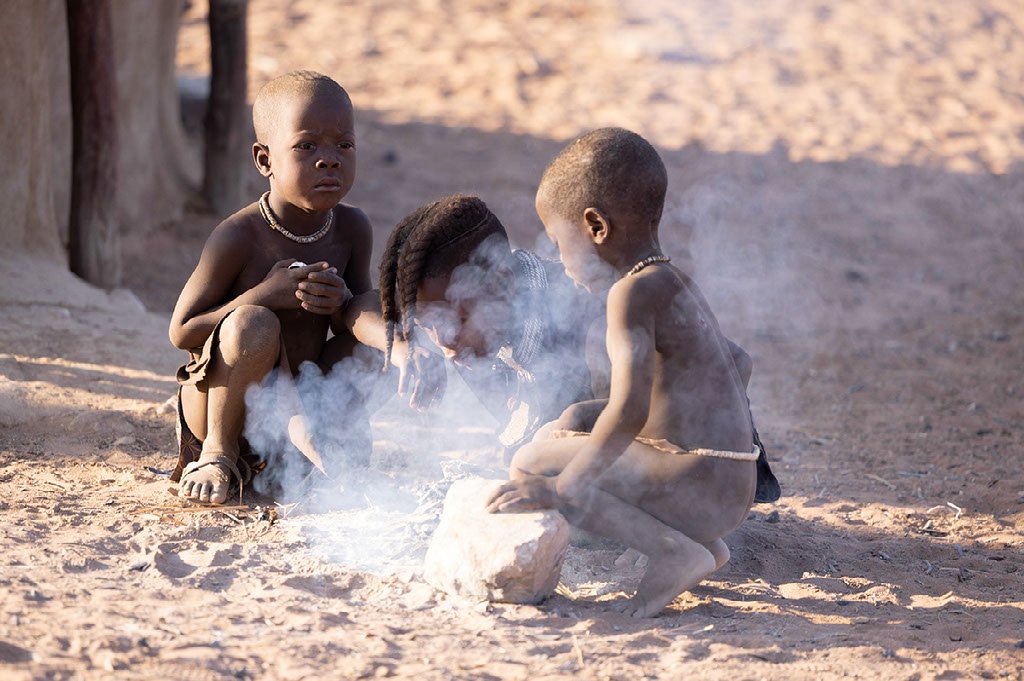
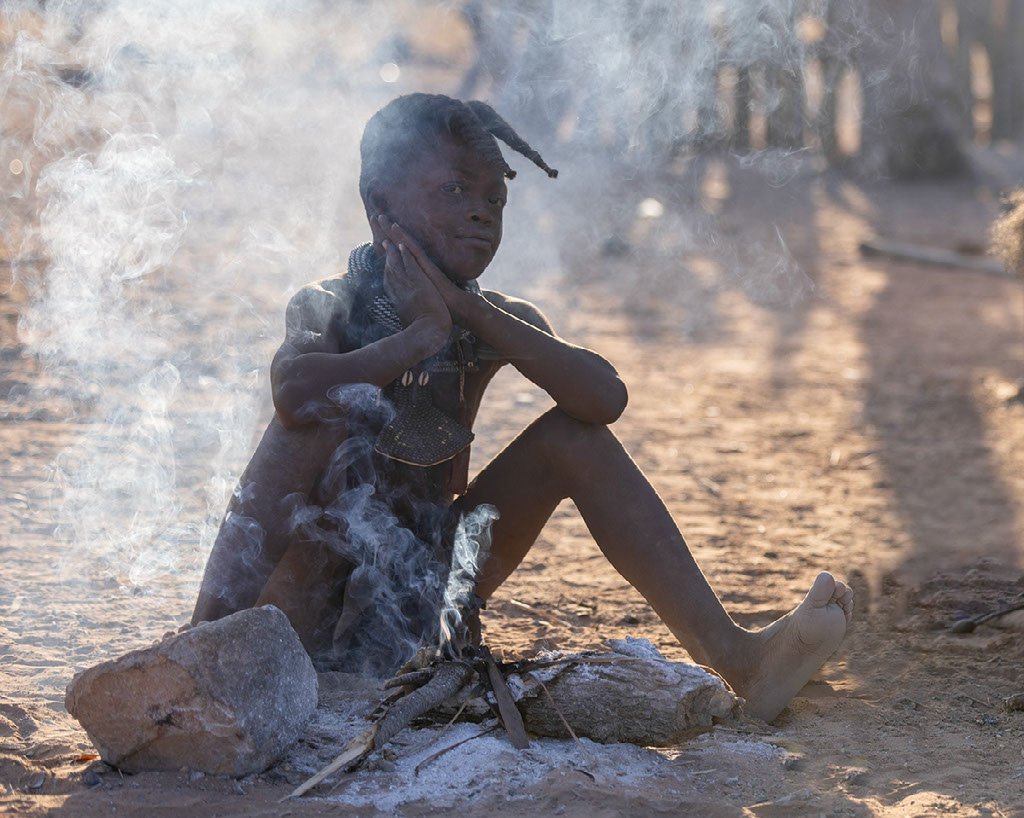
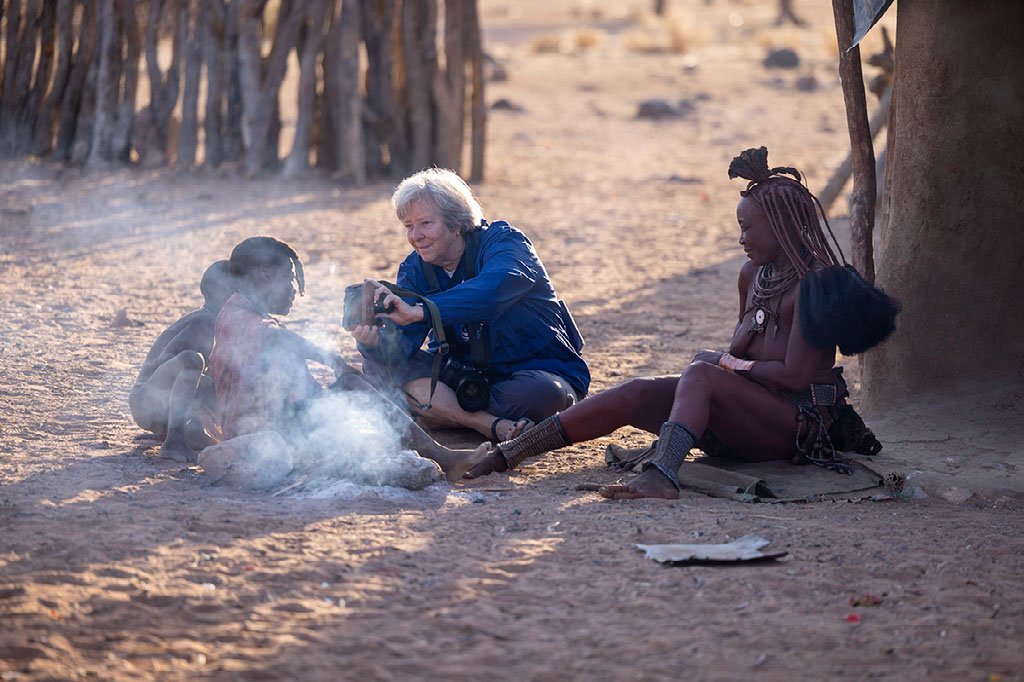
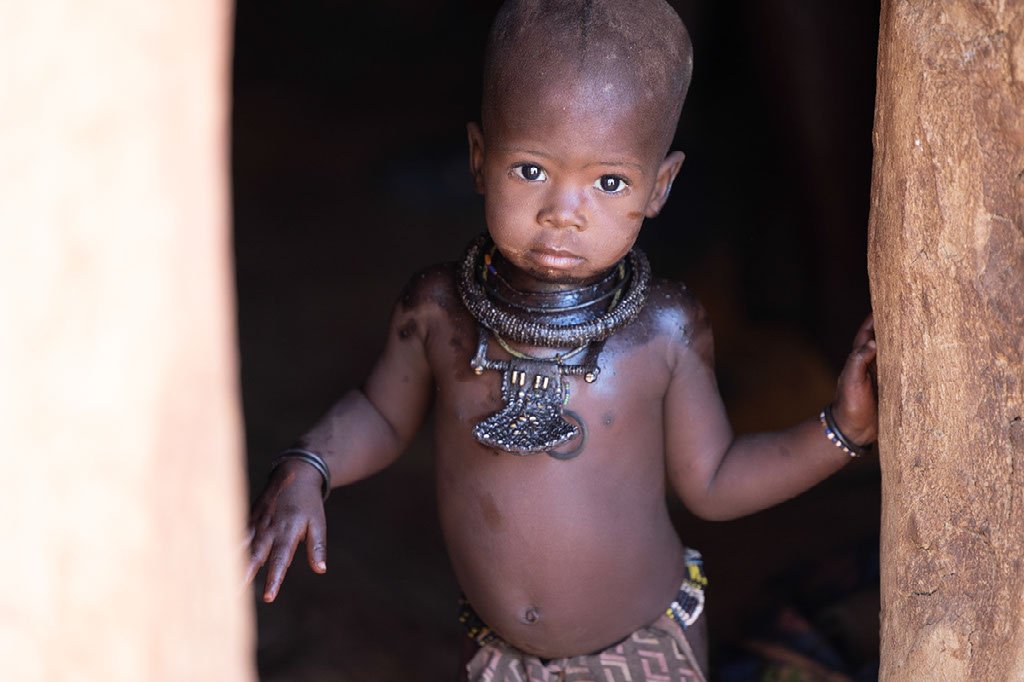
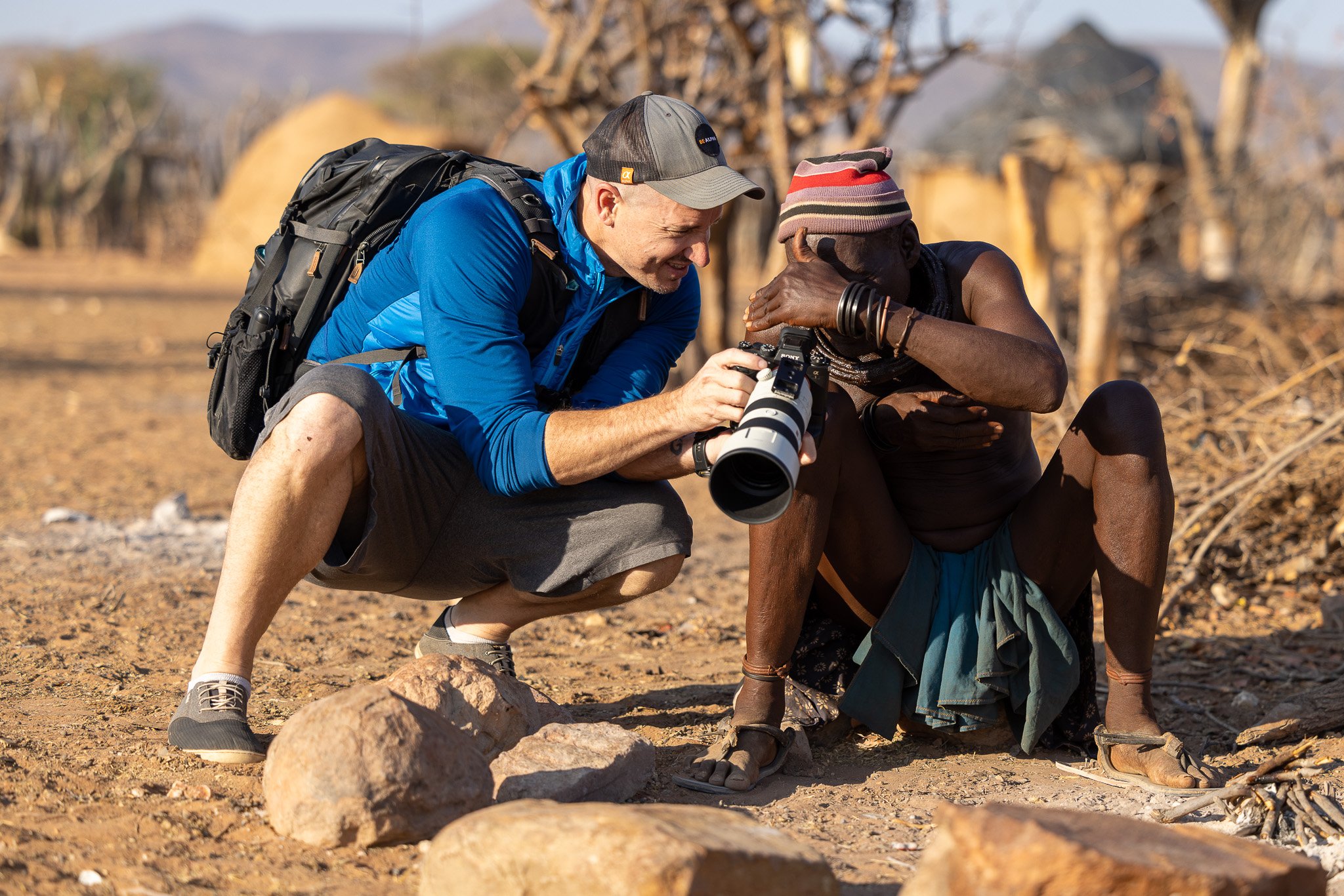
The village chief was a fascinating presence. He spoke openly about life in the village, about traditions, responsibilities, and the rhythm of daily existence. You could feel the weight of leadership in the way he carried himself.
He shared stories about how life has changed over the years. One theme was clear. He was not pleased when younger members of the community chose to leave the village and move into Opuwo. For him, it represented a shift away from tradition and communal life.
Listening to him added depth to our visit. It reminded us that we were not just photographing a visual culture. We were witnessing a community navigating change while balancing heritage with modern influences.
As photographers, moments like this matter. They move the experience beyond images and into understanding.

The Village Chief
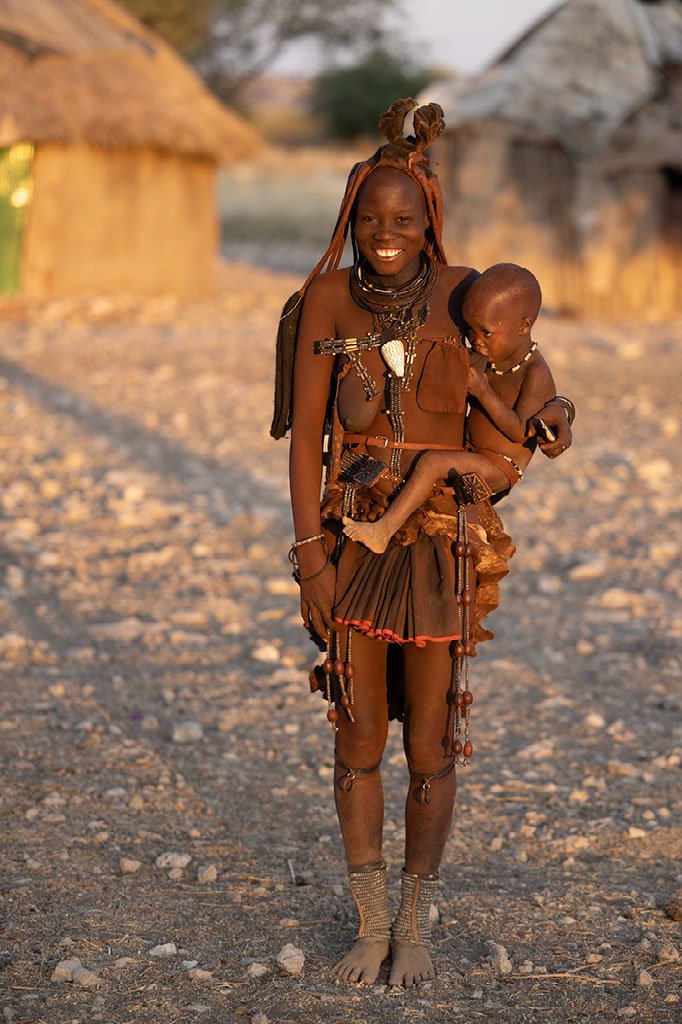
We then had a chance to visit a second Himba Village in the evening. This village was interesting because our guide named "Beauty" was originally from the village. This village was made up of only women. It seemed that the men were away for months tending to the cattle.

I really enjoyed the second village. The women and children in this village seemed happier. Maybe it was because the men were away :).
Etosha National Park and the Famous Watering Hole
After days of photographing landscapes and spending meaningful time with the Himba, we shifted into the final chapter of the trip, wildlife.
Our next stop was Etosha National Park.
Etosha is defined by its vast salt pan, so large it can be seen from space. At first glance, it feels stark and empty. But that simplicity is what makes it extraordinary for photographers.
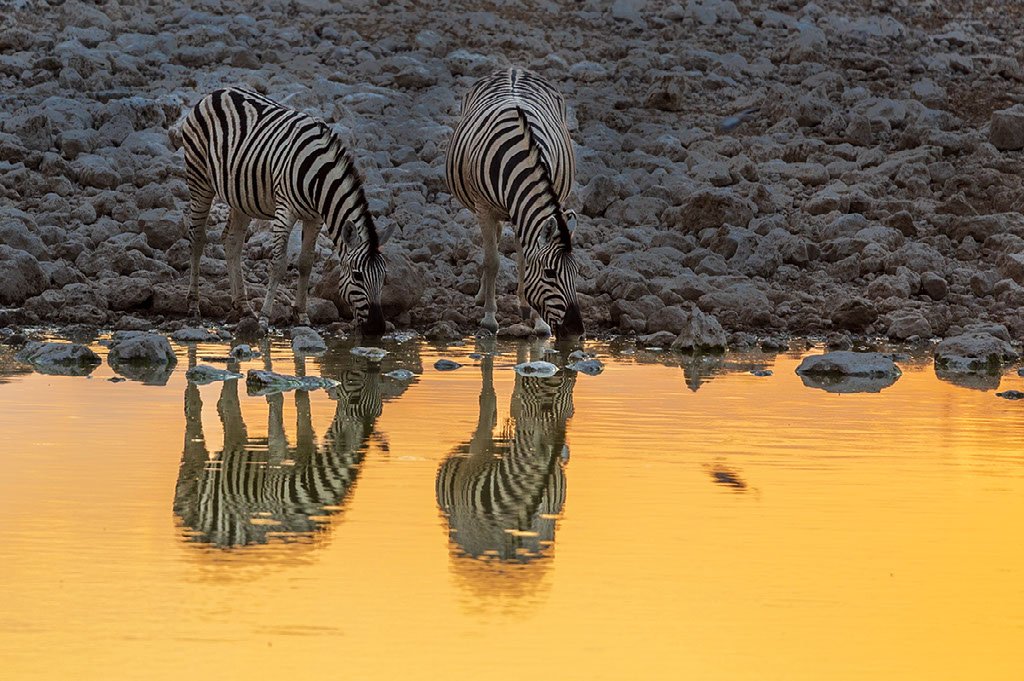
Water is the lifeline here. During the dry season, wildlife gathers around the park’s many waterholes, often creating nearly guaranteed sightings. Elephants arrive in dusty herds. Giraffes move in cautiously. Zebras line up in perfect
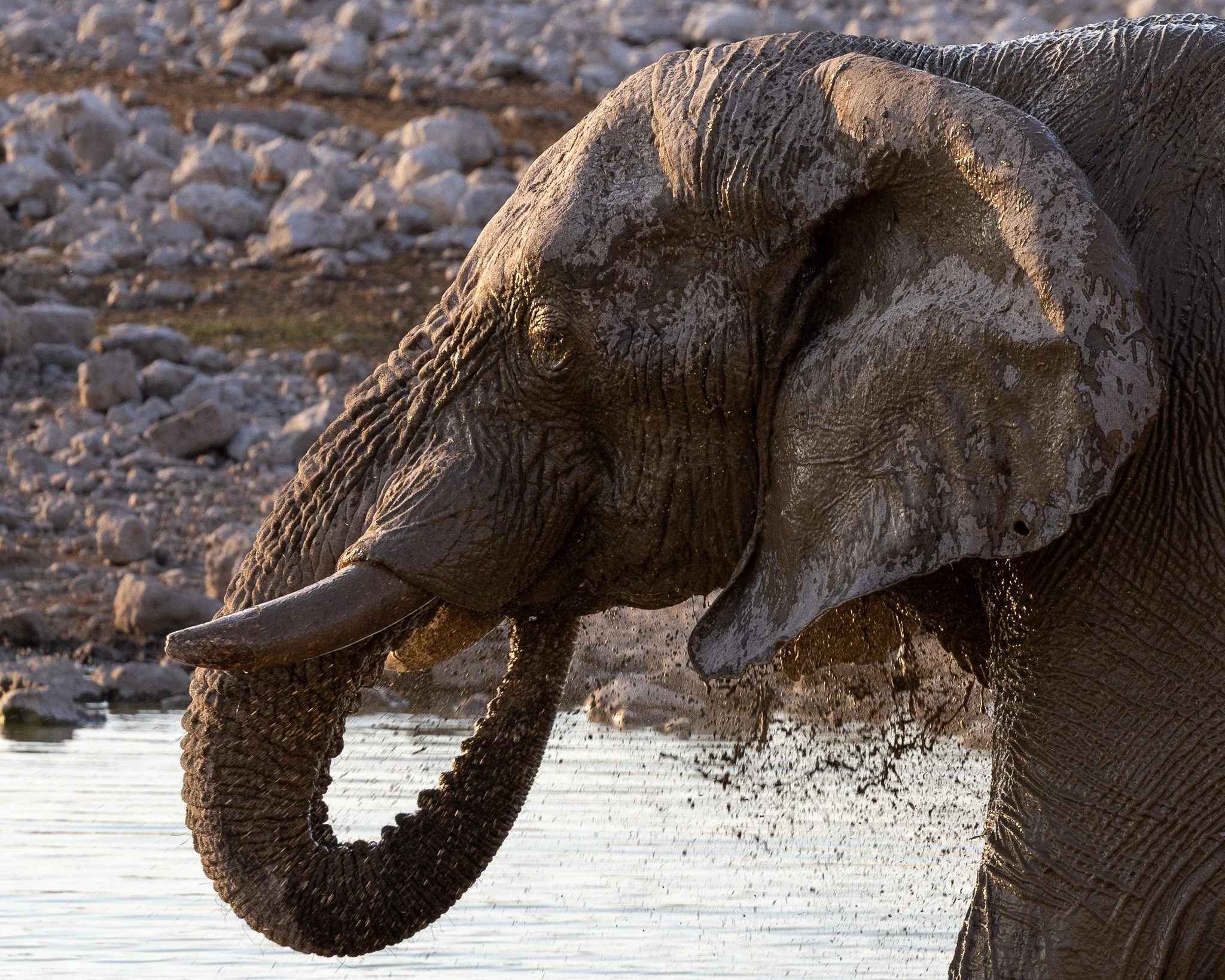
The Watering Hole in Etosha National Park is one of the main reasons this location is so famous. They even have a live webcam that you can access anytime.

In Etosha, we stayed at the Okaukuejo Resort. The hotel is okay, but the draw is the watering hole, which was less than a 2-minute walk from our rooms.
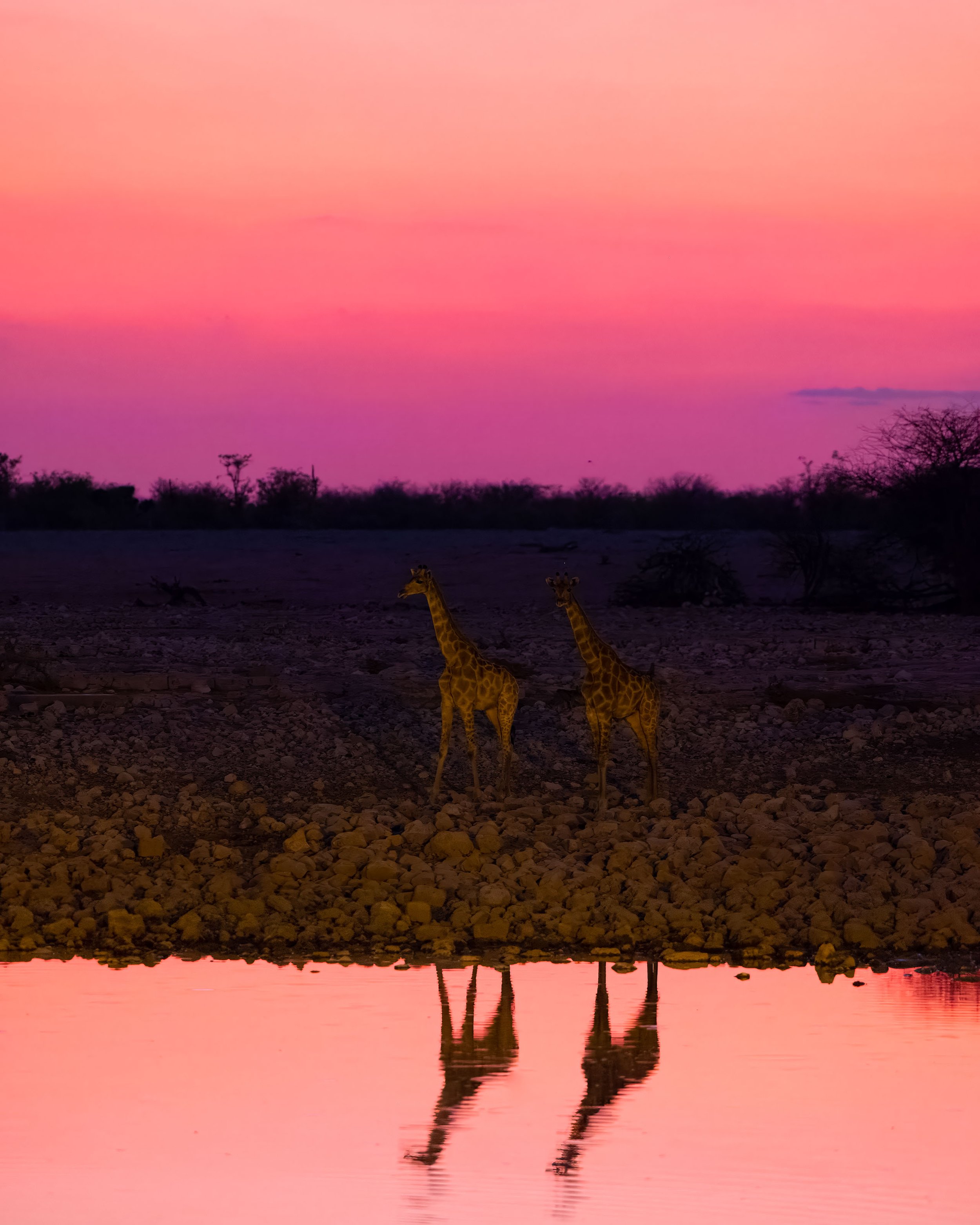
There is an abundance of wildlife in Etosha, but the park can get quite crowded. It was also not pleasant to see some of the tour operators aggressively moving towards the animals, scaring them away.
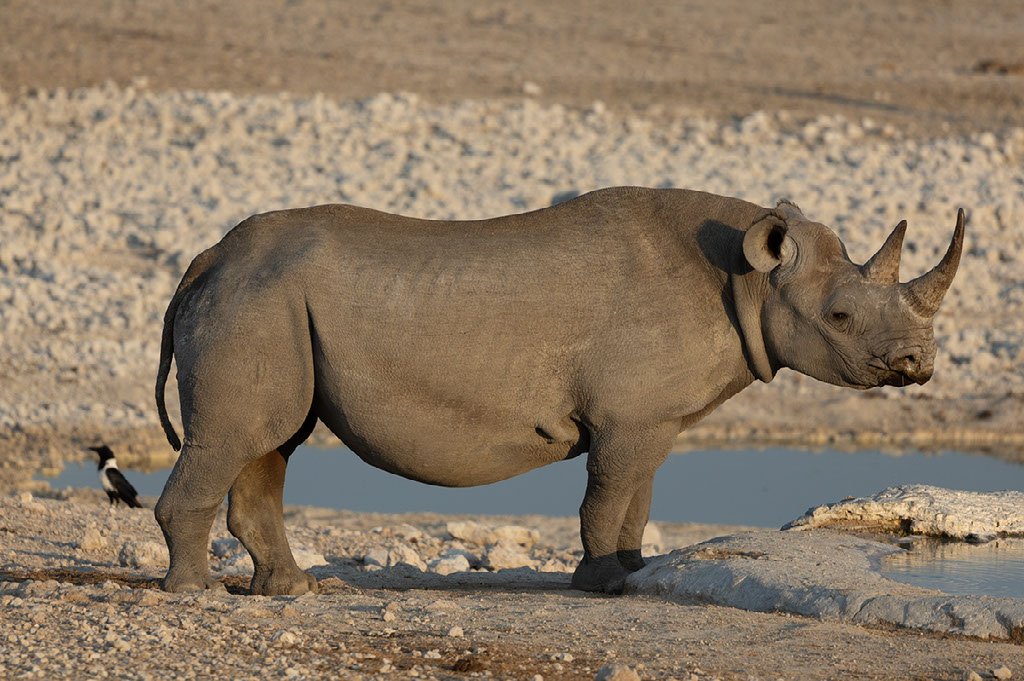
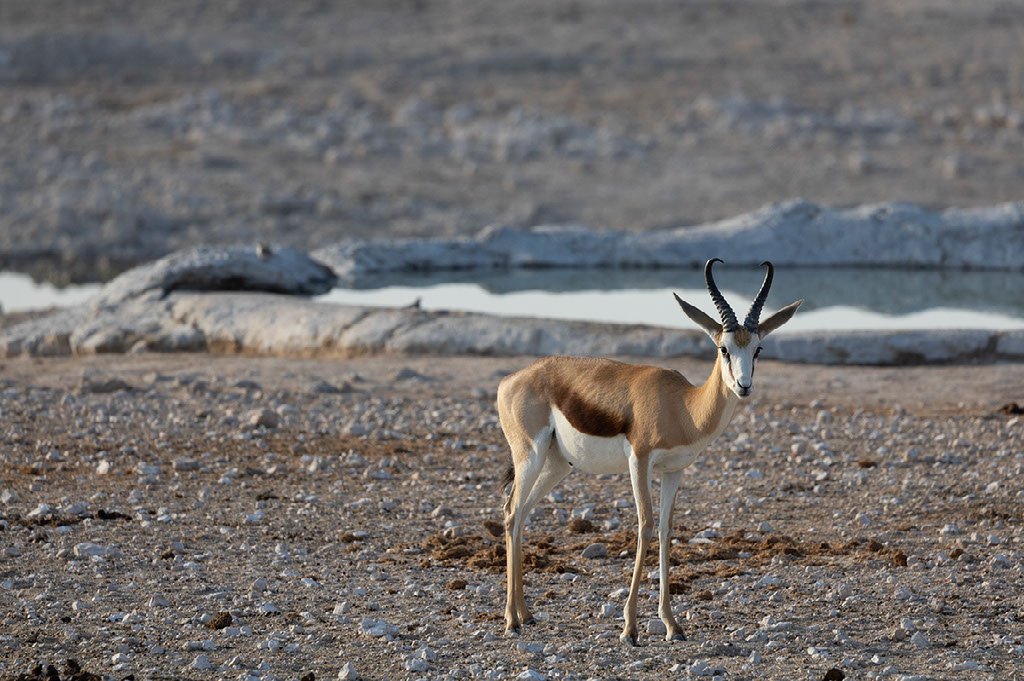
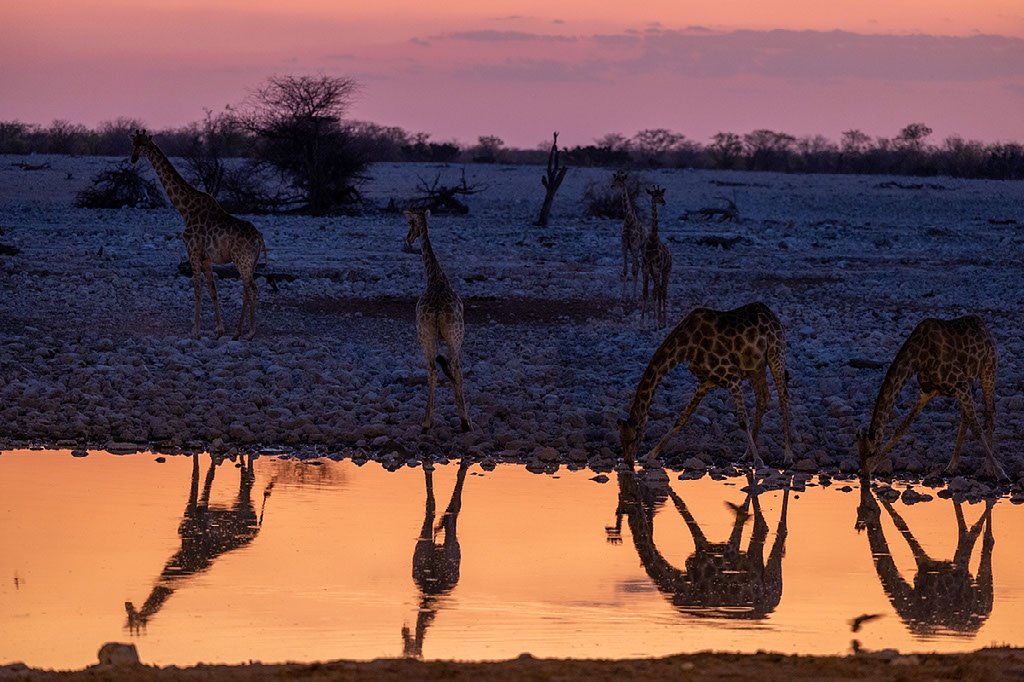
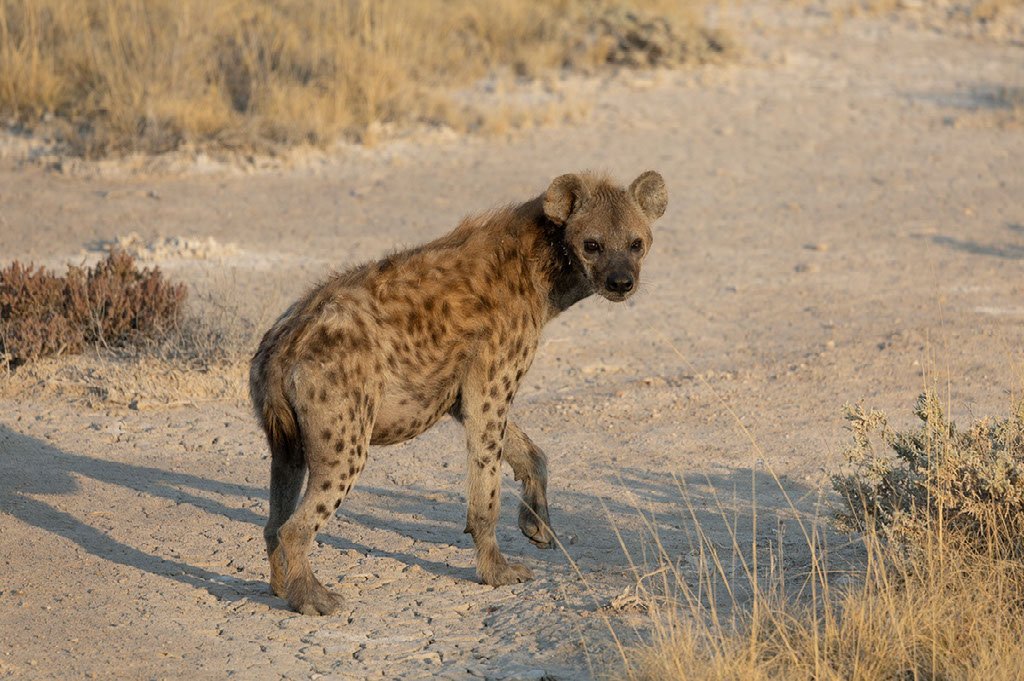
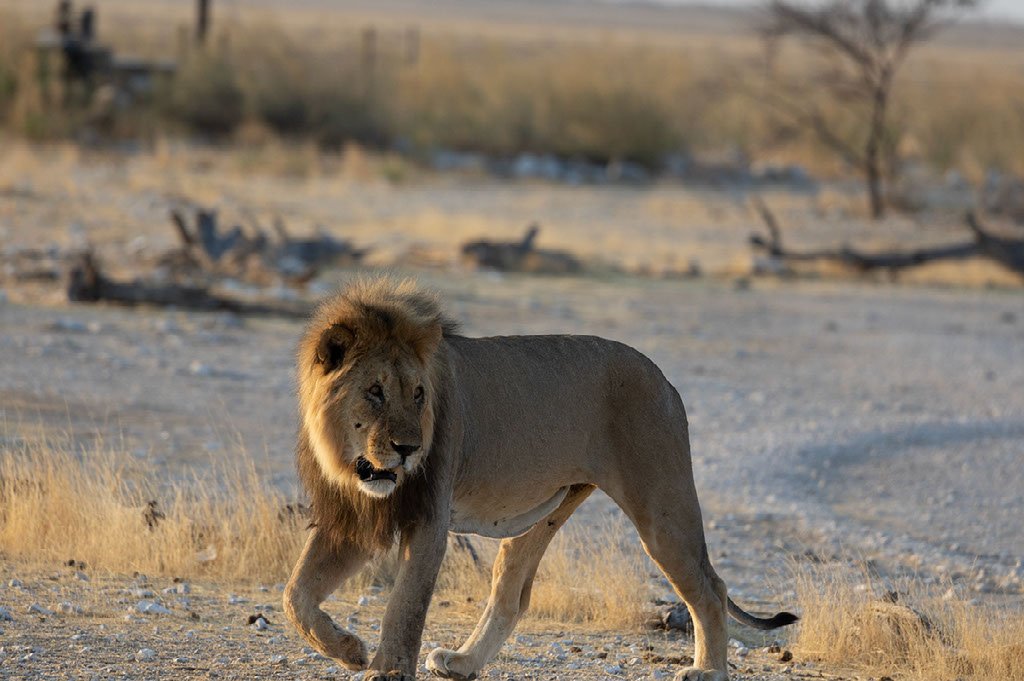
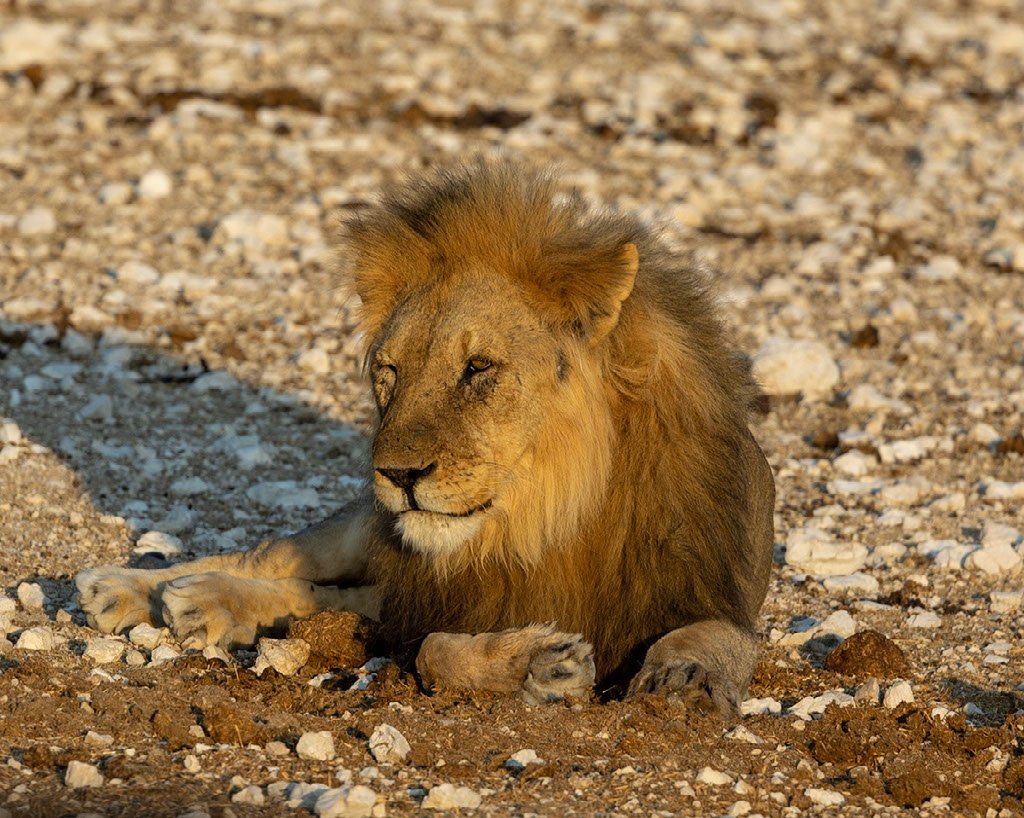
The light at sunset at the watering hole was just indescribable. Such brilliant colors!!
The Cheetah Conservancy
On our way to Erindi Private Game Reserve, our final stop, we made a visit that turned out to be one of the most meaningful of the trip.
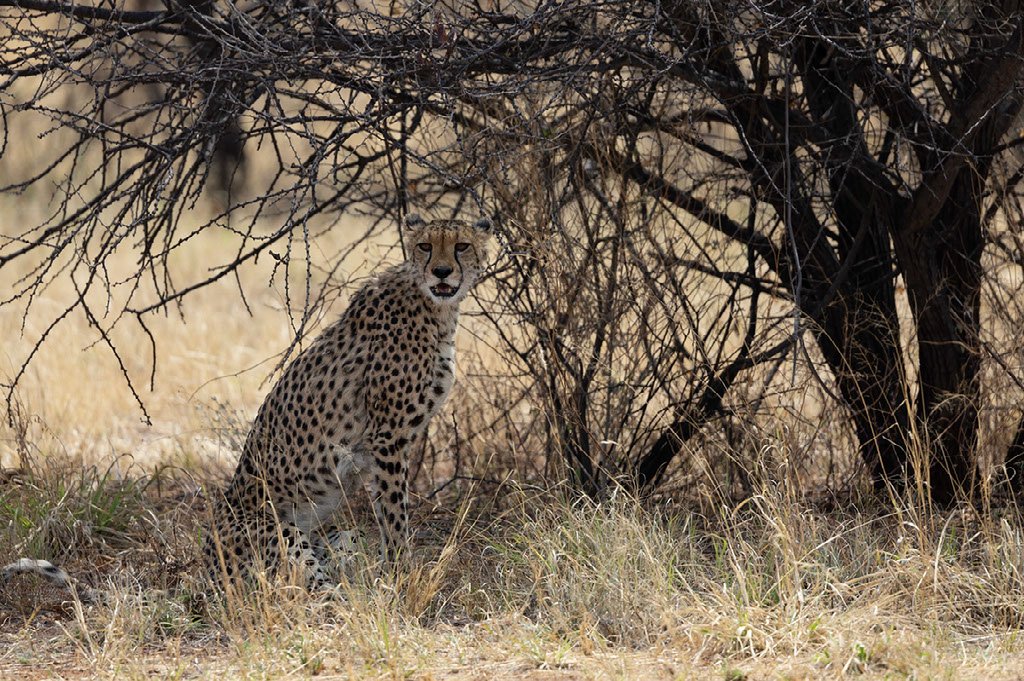
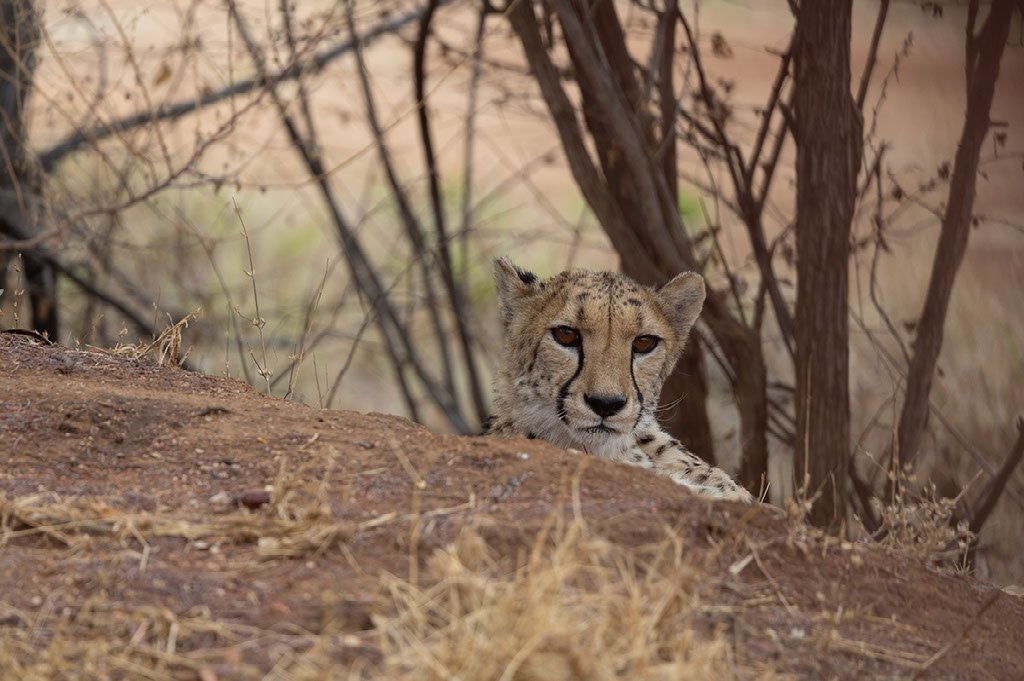
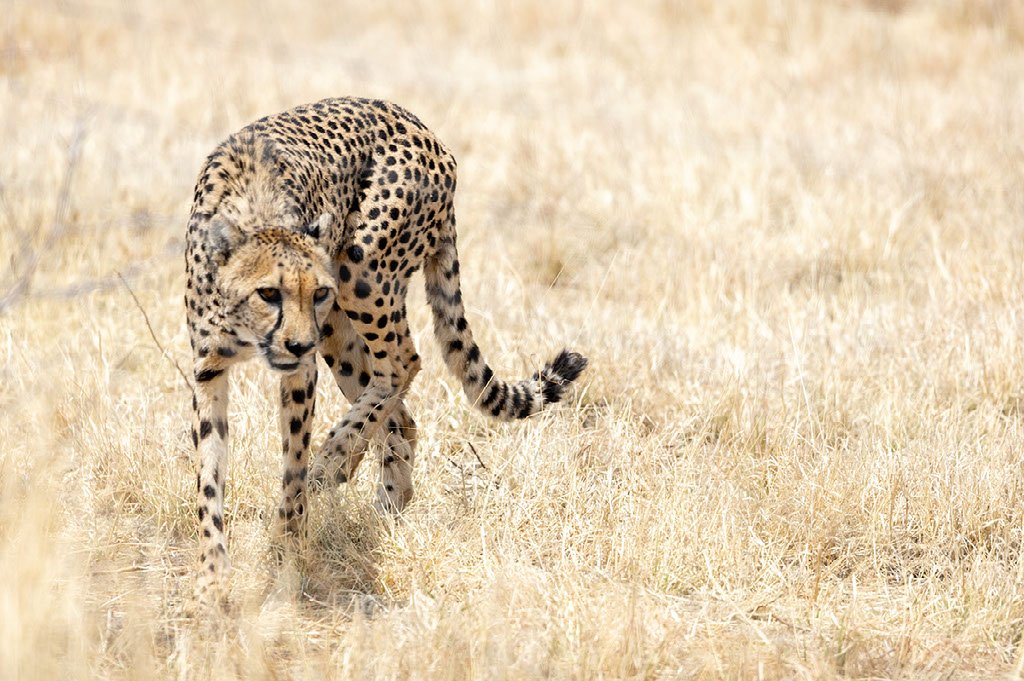
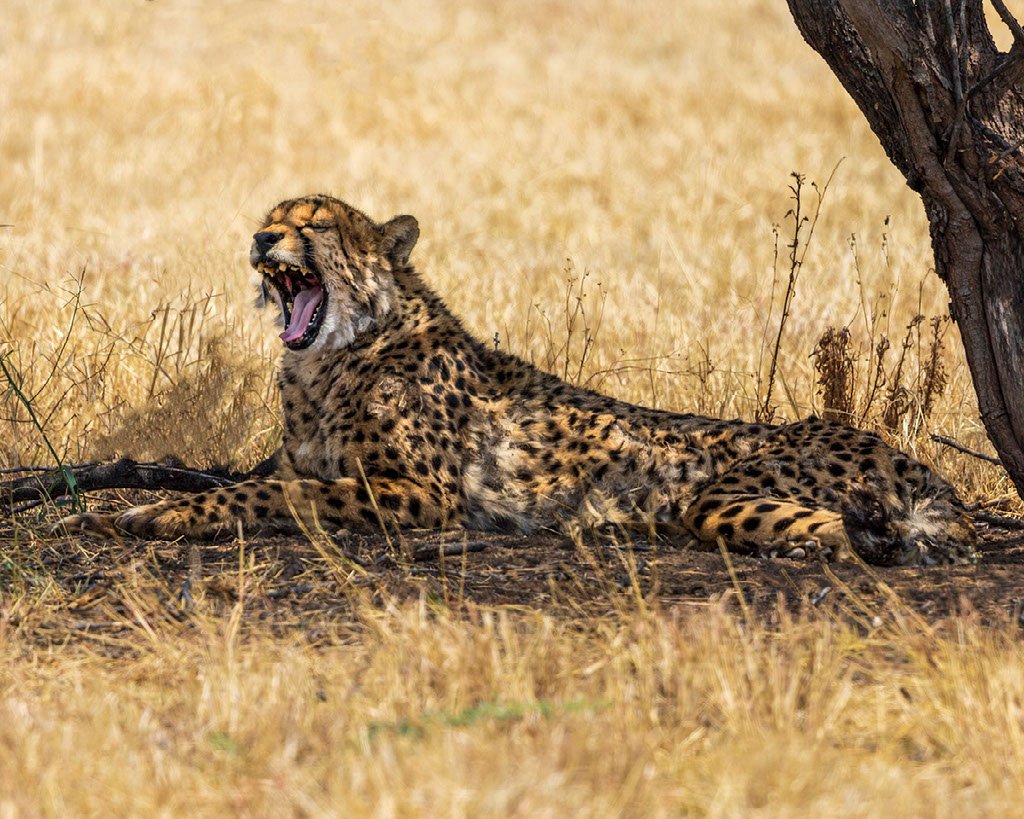
The Cheetah Conservation Fund is dedicated to protecting cheetahs and helping farmers coexist with them. In many parts of Namibia, cheetahs have historically been viewed as a threat to livestock. The CCF works directly with local communities to provide practical solutions that reduce conflict and prevent farmers from killing these incredible animals.
You can visit the center, learn about their conservation programs, and, in some cases, photograph cheetahs in controlled environments that prioritize animal welfare.
As photographers, it is important to understand the story behind the subjects we capture. Conservation is not just a headline. It is real people working on the ground to balance wildlife protection with economic survival.
If you are driving through this region, I strongly recommend stopping. It adds context to your wildlife photography and supports an organization doing essential work for one of Africa’s most iconic species.
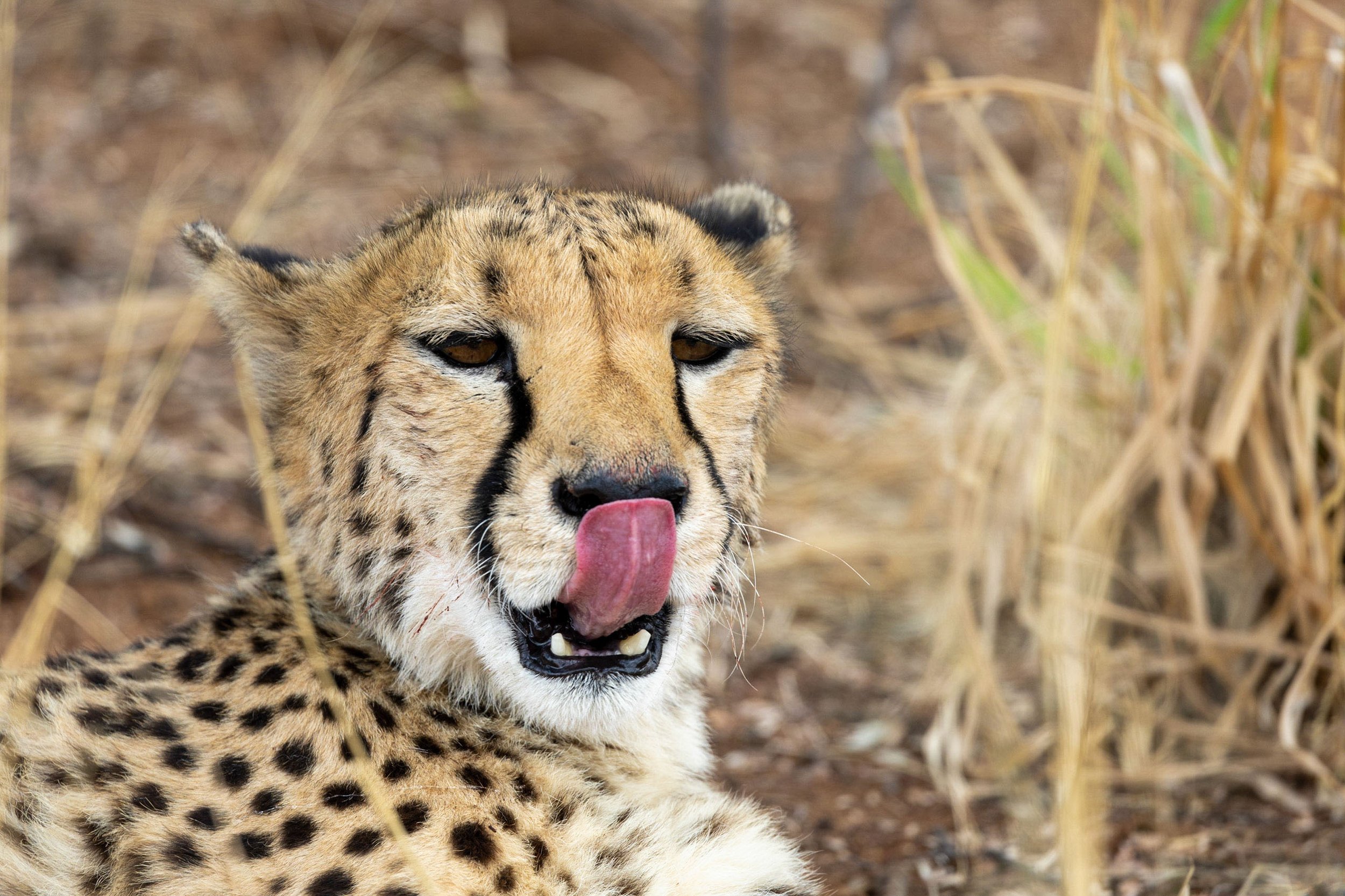
CCF works to develop best practices that benefit the entire ecosystem that the cheetah depends on.
Erindi Private Game Reserve
Our final stop was Erindi Private Game Reserve, and for several reasons, it became my favorite part of the trip.
After days of constant movement across Namibia, it felt incredible to stay in one place for three nights. We checked into Old Traders Lodge, and the comfort stood out immediately. The rooms are spacious, well-designed, and positioned to make you feel immersed in the bush without sacrificing comfort.
But what made Erindi special was not just the lodge. It was the rhythm.
Staying multiple nights allowed us to slow down. We were not rushing to pack at dawn or drive long distances between locations. We could return to the same waterholes. We could observe behavior over time. We could refine compositions rather than react quickly.
The reserve offers strong wildlife sightings, often with fewer vehicles than larger national parks. That intimacy creates better photographic opportunities and a more relaxed experience overall.
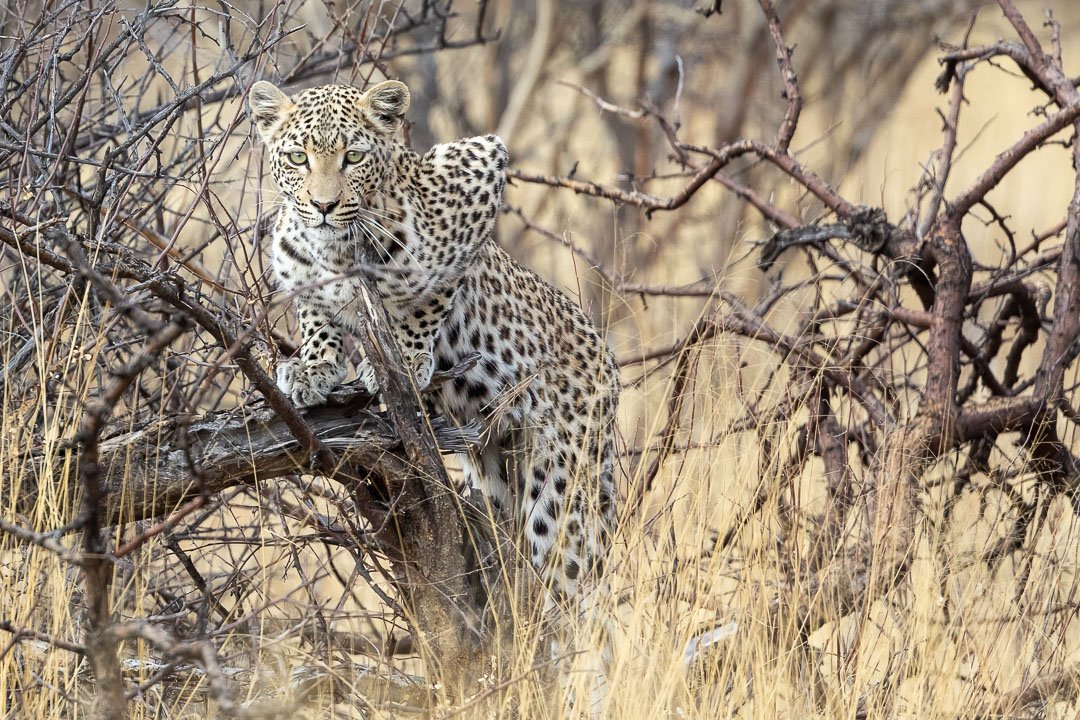
We were lucky to see a young female leopard on our first night. They are very hard to spot but sometimes the stars do align.
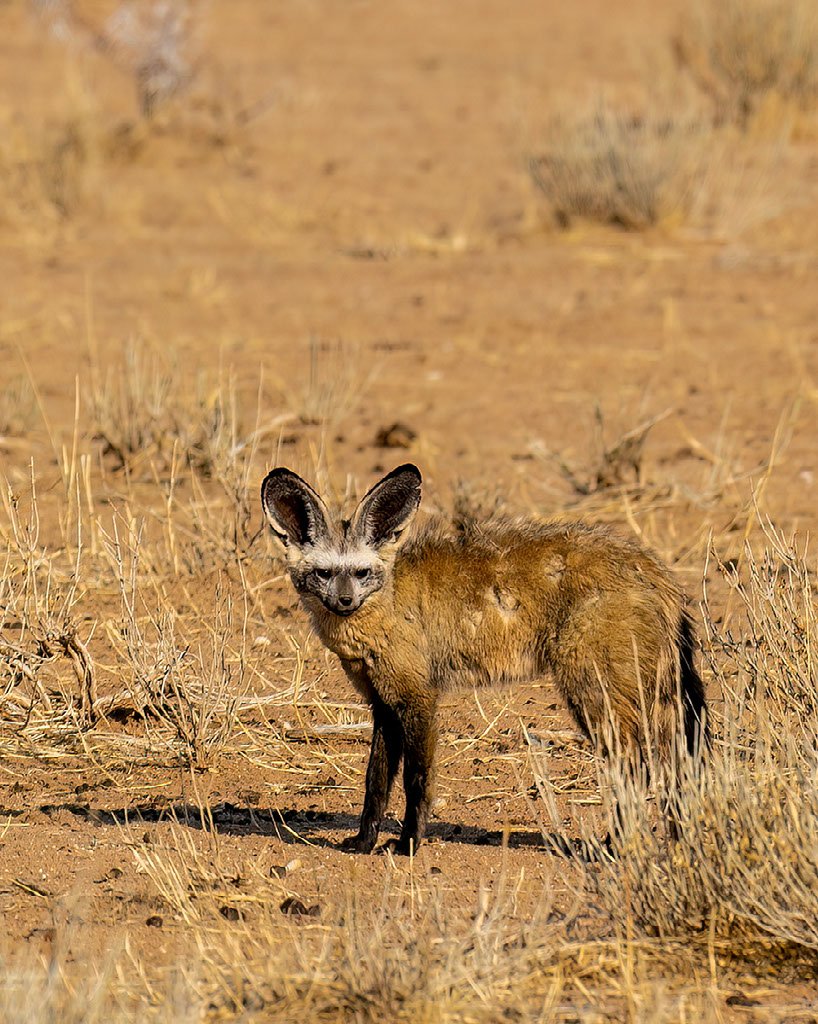
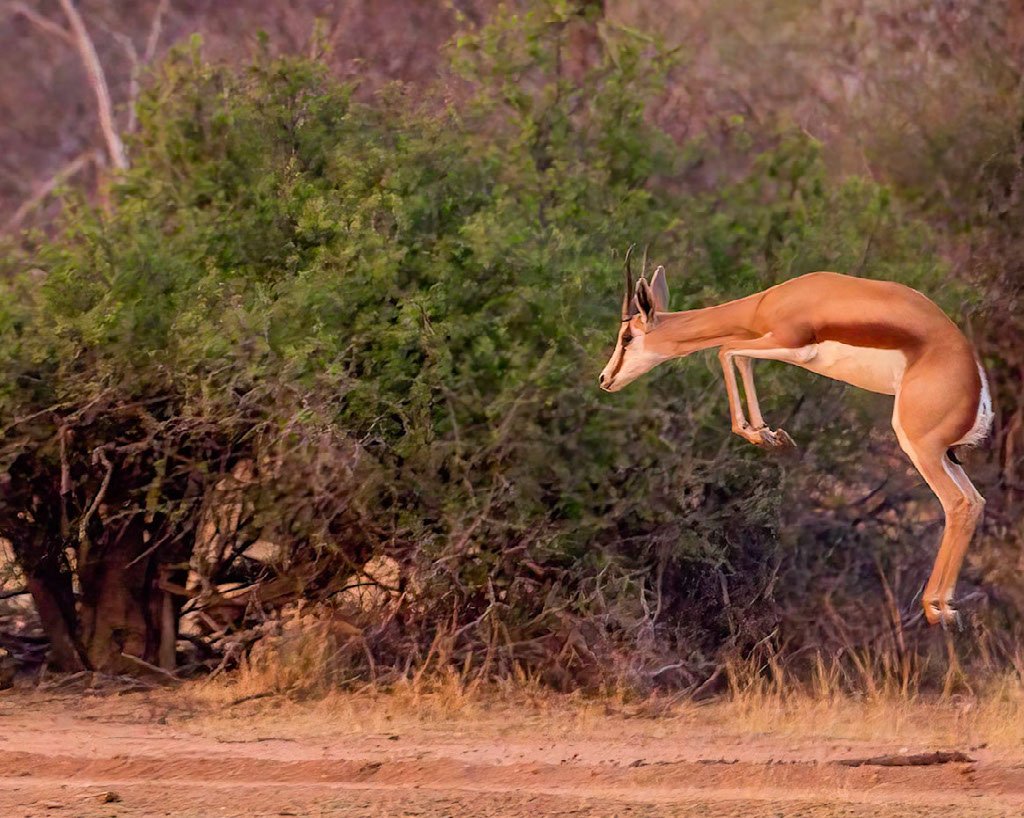
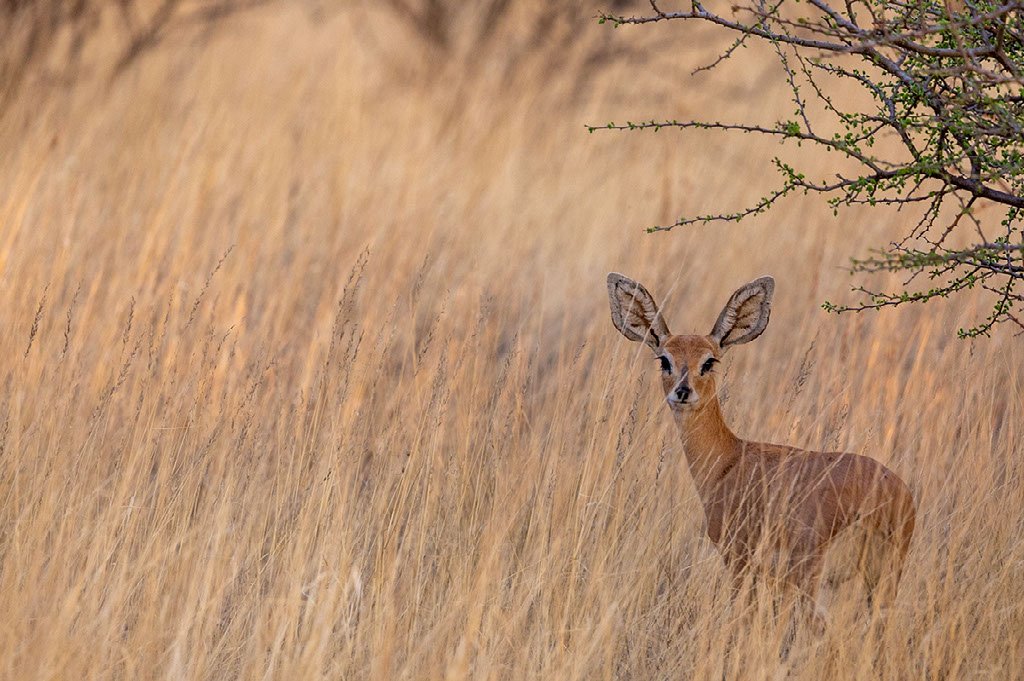
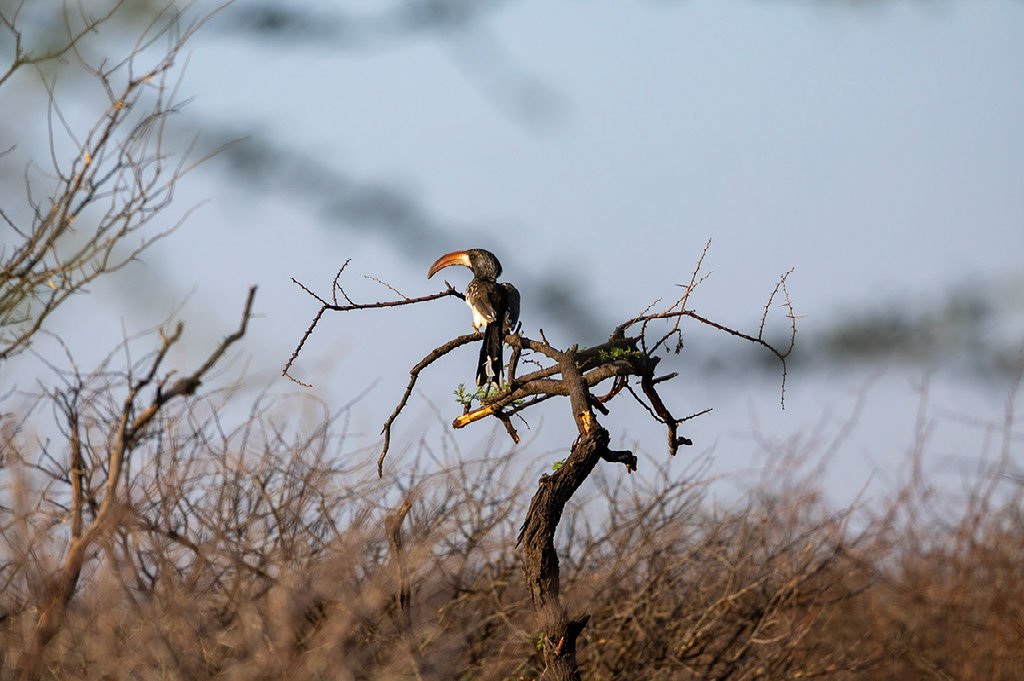
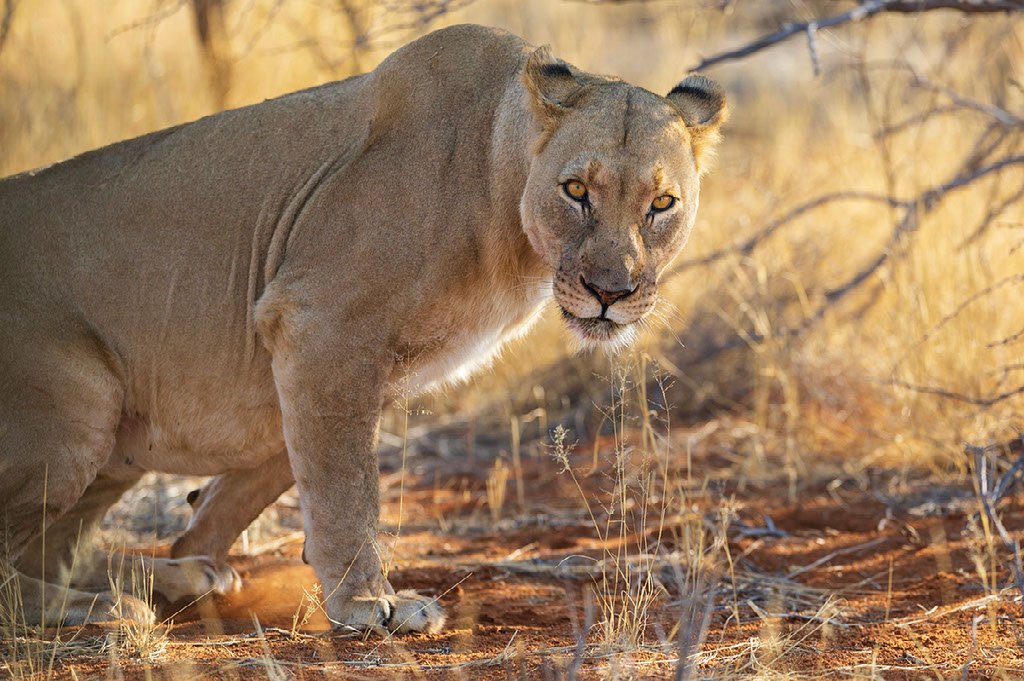
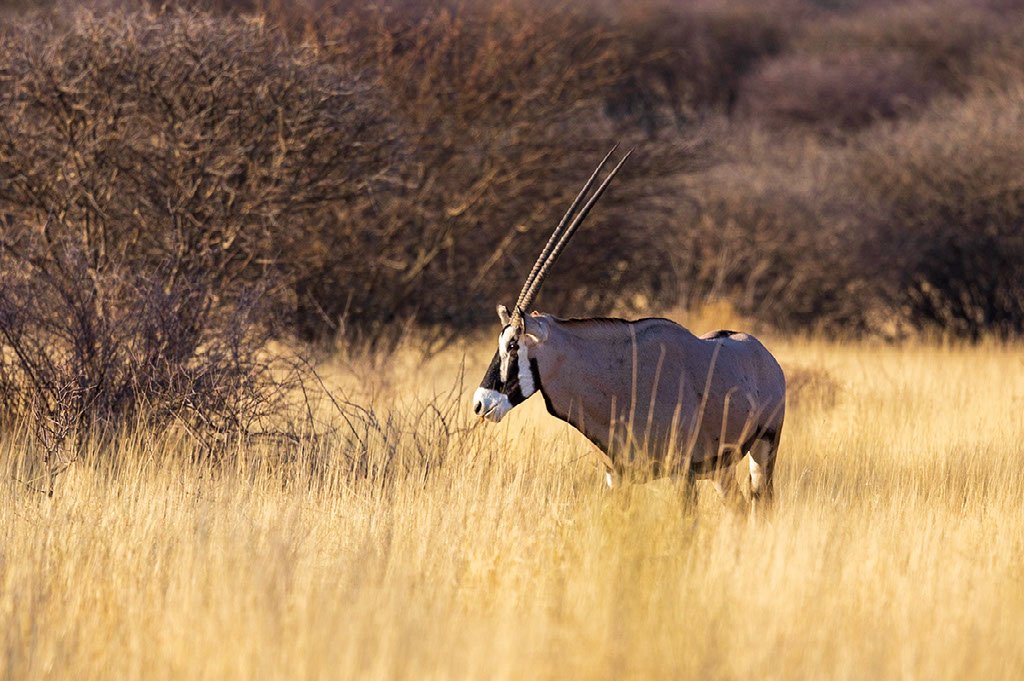
We were also able to get so close to the animals. We stopped less than 10 feet away from this lioness.

We really enjoyed our drives in Erindi. I would highly recommend staying here for 3-4 days.
Final Thoughts
Our trip to Namibia was extraordinary.
We photographed towering dunes, ancient trees, Himba villages, elephants at waterholes, and skies filled with stars. We covered immense distances and experienced landscapes that felt almost otherworldly.
But what made the trip truly special was the people.
A group of strangers gathered for a photography workshop and, within days, became friends. Long drives turned into shared stories. Early morning wake-ups turned into quiet laughter over coffee. Those connections matter just as much as the images.
I joined Colby Brown on this journey, and I cannot recommend his workshops highly enough. He is an exceptional photographer, but more importantly, he is generous with his knowledge, patient in the field, and genuinely invested in helping everyone grow.
We saw a tremendous amount. We captured images that we are proud of. And we returned home with stories that will be told for years.
Namibia gives you photographs. It also gives you perspective.
And that combination is hard to beat.
If you are interested in joining one of my photography workshops, you can find the details through the link. You can also follow along on Instagram, Facebook, or subscribe to my newsletter for more travel photography tips and behind-the-scenes insight.
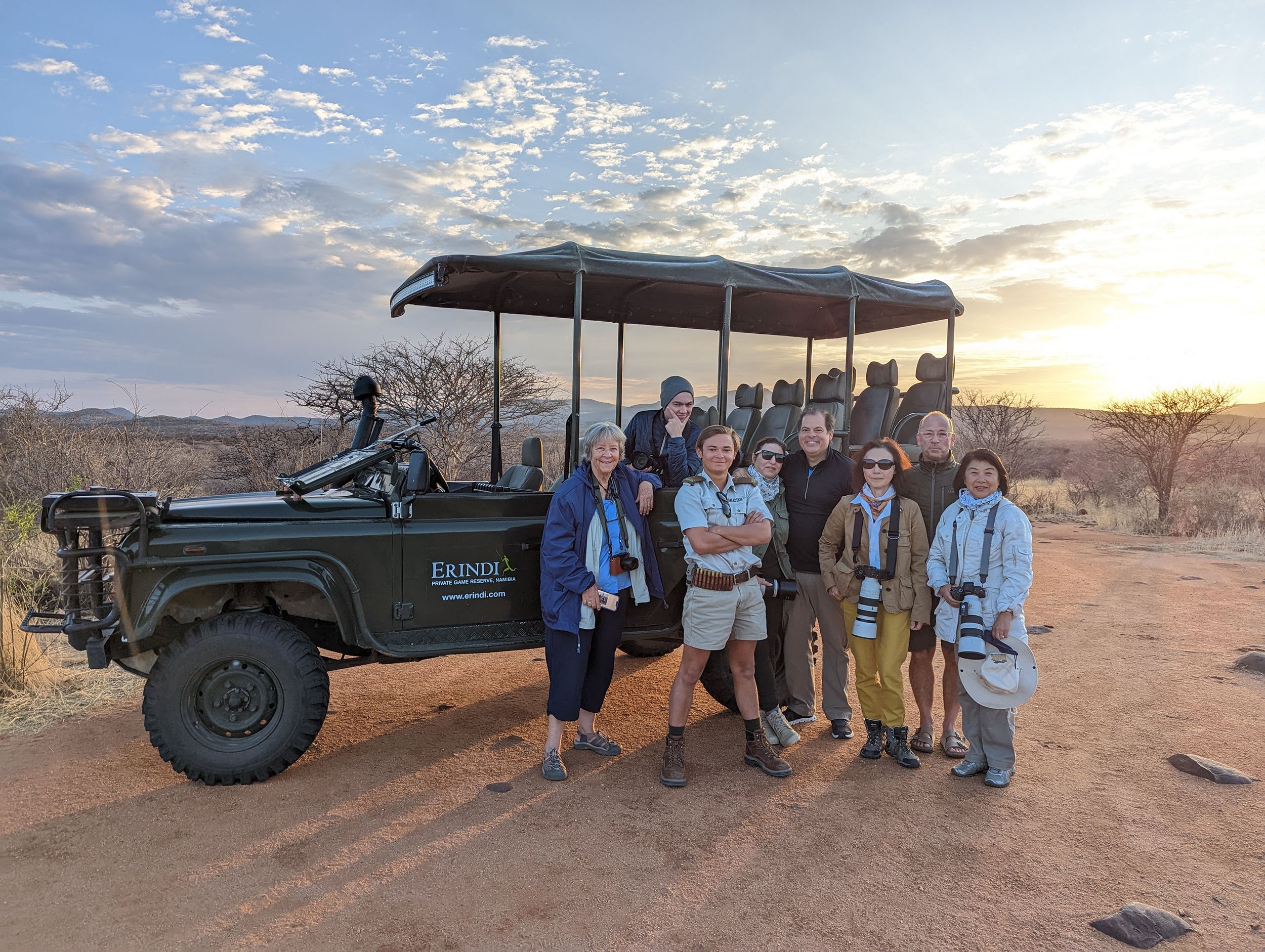
The Namibia Group
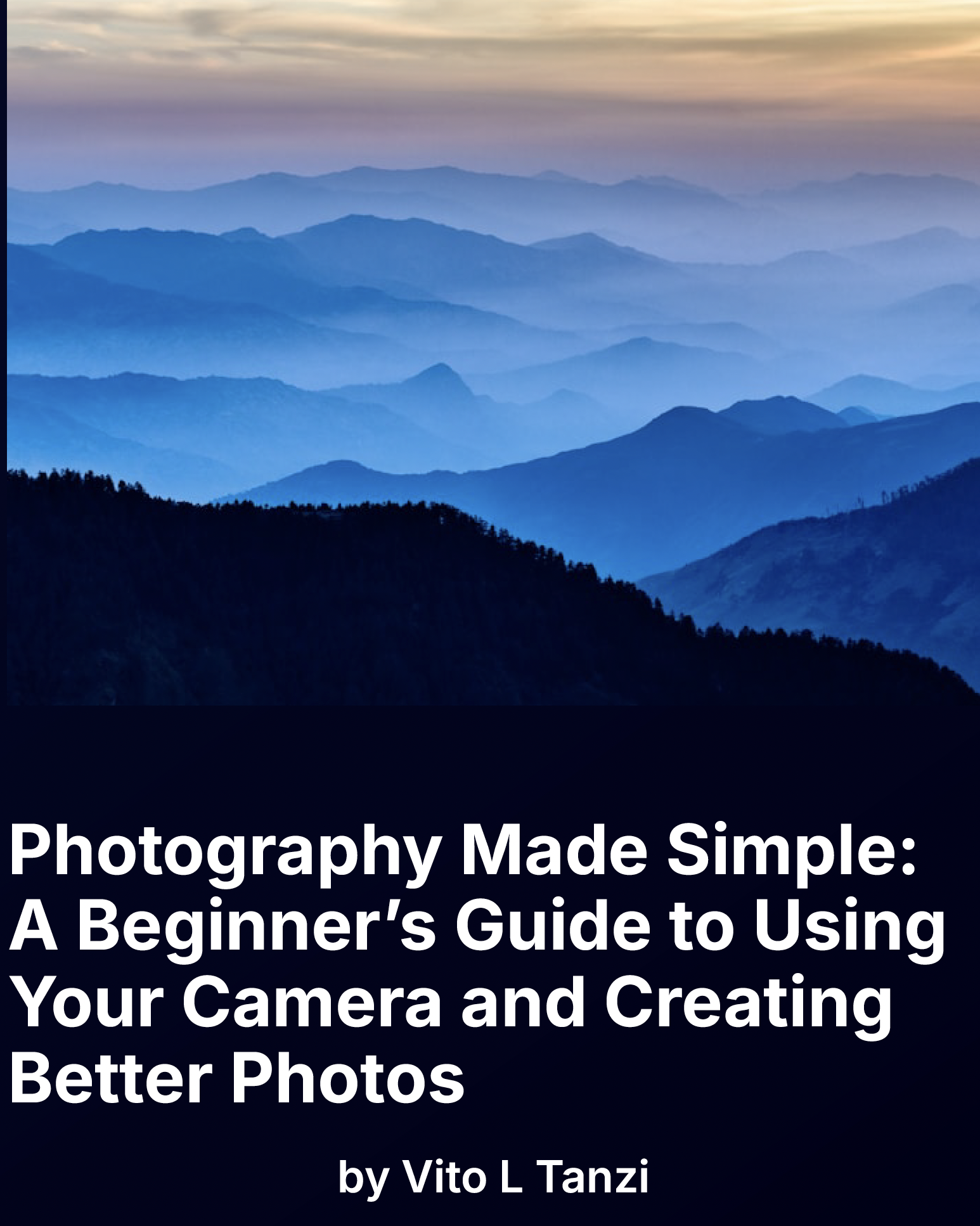
Finally—a beginner-friendly photography guide that makes sense.
If you've ever picked up a camera and thought, "Now what?" this is the book for you.
Photography Made Simple is written for adults who are just starting out and want a clear, encouraging, real-world approach to learning photography. Whether you're using a DSLR, mirrorless, or just your smartphone, this guide walks you through the basics—without the jargon or tech overwhelm.
Inside, you'll learn:
The only camera settings you really need to know to get started
How to shoot sharper, more intentional photos using light and composition
Simple tips for portraits, landscapes, travel, and everyday life
What gear you do (and don’t) need
How to create better photos without upgrading your camera
You’ll also get practical exercises, cheat sheets, and tips for organizing and editing your images—plus the confidence to shoot off Auto Mode for good.
This is not a textbook. It’s a friendly guide to seeing the world with fresh eyes—and finally capturing what you see the way you imagine it.
📸 Format: PDF download
Pages: 100+
Perfect for: Beginners, hobbyists, and anyone ready to take better photos without the stress
✈️ Travel Photography Planning Sessions
One-on-One Trip Planning with a Professional Travel Photographer
Don’t miss the shot. Let me help you plan for it.
Overview
Planning a photography-focused trip can be overwhelming. From figuring out the best places to shoot, to when the light is just right, to knowing which lens to pack — there are a lot of decisions to make.
This one-on-one Zoom session is your chance to get personalized travel photography advice from someone who’s spent the past 25 years exploring cities, coastlines, and wild places around the world — camera in hand.
Whether you're headed to Paris, Patagonia, Tokyo, or Tuscany, I’ll help you make sure your photography trip is well-planned and creatively inspired, so you come home with the images you dreamed of (and then some).
What’s Included
✅ Photography Location Planning
I’ll help you create a customized itinerary of the best photo spots, including off-the-beaten-path gems and iconic views.
✅ Best Times to Shoot
Get expert advice on lighting, golden hour, blue hour, and seasonal conditions for each location.
✅ Gear Recommendations
Not sure whether to bring the telephoto or the prime? We’ll walk through your gear and make sure you’re bringing the right tools for your destination and style.
✅ Hotel and Base Recommendations
Stay where it’s convenient for sunrise shoots and late-night strolls with your camera. I’ll recommend hotels that are photographer-friendly and well-located.
✅ Custom Travel Tips
From sunrise entry times to tripod rules at major landmarks, you’ll get insider tips to save time, avoid tourist traps, and make the most of your trip.
Who It’s For
This service is for anyone who:
Is planning a trip and wants to prioritize photography
Wants expert insight on the best places to shoot and how to get there
Is tired of missing the shot because of poor planning or bad timing
Is a beginner, enthusiast, or professional photographer looking for guidance before a trip
How It Works
Book a Session
Choose a time that works for you and tell me where you're headed.Share Your Plans
You’ll fill out a quick questionnaire so I know your travel dates, interests, and photography style.One-on-One Zoom Call (60 minutes)
We’ll meet via Zoom and walk through your trip together — from location ideas to gear and timing. You'll leave with a custom PDF full of notes and suggestions.Follow-Up Support
Get one round of email Q&A after your session to clarify anything as your plans evolve.
Why Work With Me?
I’ve spent the last 25 years photographing the world — from major cities to remote islands. I know what it’s like to travel and shoot under pressure, and I love helping people get the most out of their trips. This is not just about hitting “popular spots” — it’s about crafting a creative and efficient plan tailored to your trip, your gear, and your goals.
Pricing
$125 / Session
Includes:
60-minute Zoom call
Custom PDF summary with photography spots, gear tips, and travel recommendations
One follow-up email with additional Q&A
Introductory rate available through September 2025
Ready to Plan Your Trip?
Let’s make sure you’re ready — so when the light is perfect, you’re in the right place with the right gear.
Questions?
Please email me at vito@chasinghippoz.com if you're not sure whether this is right for you. I'm happy to chat.