My Photography & Travel Guide to Westernfjords & Snaefellsnes Peninsula of Iceland
Iceland is one of my favorite countries in the world. It is a country that is made for landscape photographers. It is truly epic and breathtaking. The country is quite small, but there is so much to photograph, from Waterfalls, Northern Lights, Lupins, Icelandic Horses, Puffins, Glaciers, Flowers, Mountains, and incredible rock formations.
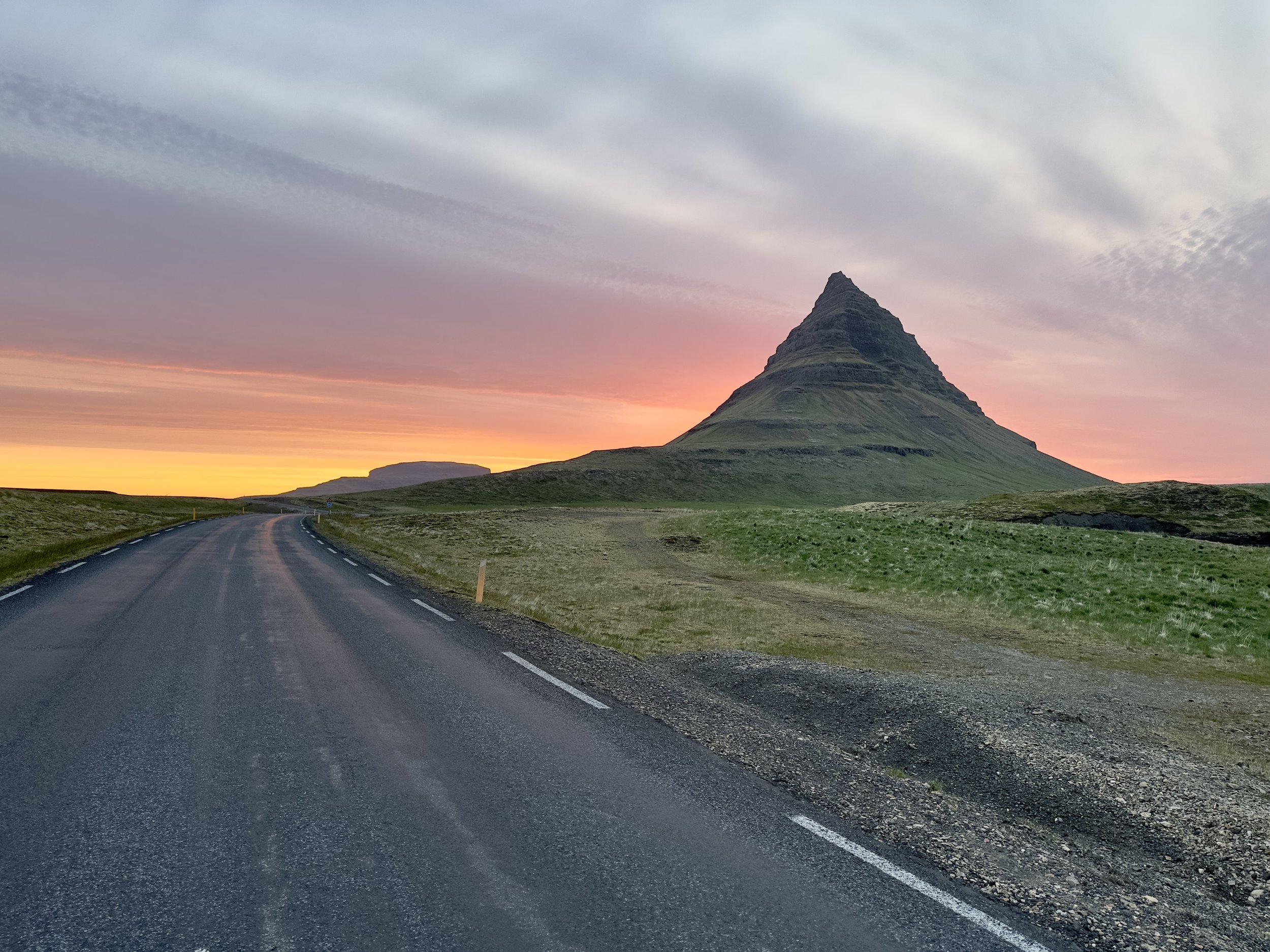
The Road to Kirkjufell
It's also a country where more than one visit will be needed; there's just too much to see. You could happily spend a couple of weeks driving around the ring road, visiting well-known locations like Diamond Beach, Black Sand Beach, Vik, Skogafoss, and Vestrahorn. Yet there are so many other locations. You will continuously stop the car and take photos of something you see along the ring road.
If Iceland were a novel, the Westfjords and Snæfellsnes would be the chapters everyone overlooks—until they stumble on them and can’t stop reading. Far from the crowds of the Golden Circle, these regions offer the kind of rugged, untouched beauty that feels like you're stepping into a story that hasn’t been told yet.
The Westfjords are raw, remote, and full of drama—steep cliffs teeming with puffins, narrow fjords reflecting golden light, and waterfalls that seem to tumble out of nowhere. Snæfellsnes, often called “Iceland in Miniature,” packs glaciers, lava fields, black sand beaches, and iconic mountains into one manageable road trip.
This is your expert Photography Guide to the Westfjords and Snæfellsnes, packed with practical travel tips, the best photography spots, gear suggestions, and local gems.
Best time to Visit
Summer (June–August): Long daylight, midnight sun, and puffins nesting in cliffs.
Late Spring (May) and Early Fall (September): Fewer visitors, beautiful soft light, and good road conditions.
Winter: Roads to the Westfjords can be closed; Snæfellsnes is still accessible but icy.

Duration of Stay
Plan on 6–8 days total—4 for the Westfjords and 2–3 for Snæfellsnes. If you’re not rushing and want time for proper sunrise and golden hour shots, this pace allows for weather wiggles and exploration.

Hotel Recommendations?
Best Base for Westfjords: Ísafjörður
This historic fishing town has charm, good food, and central access to the fjords.
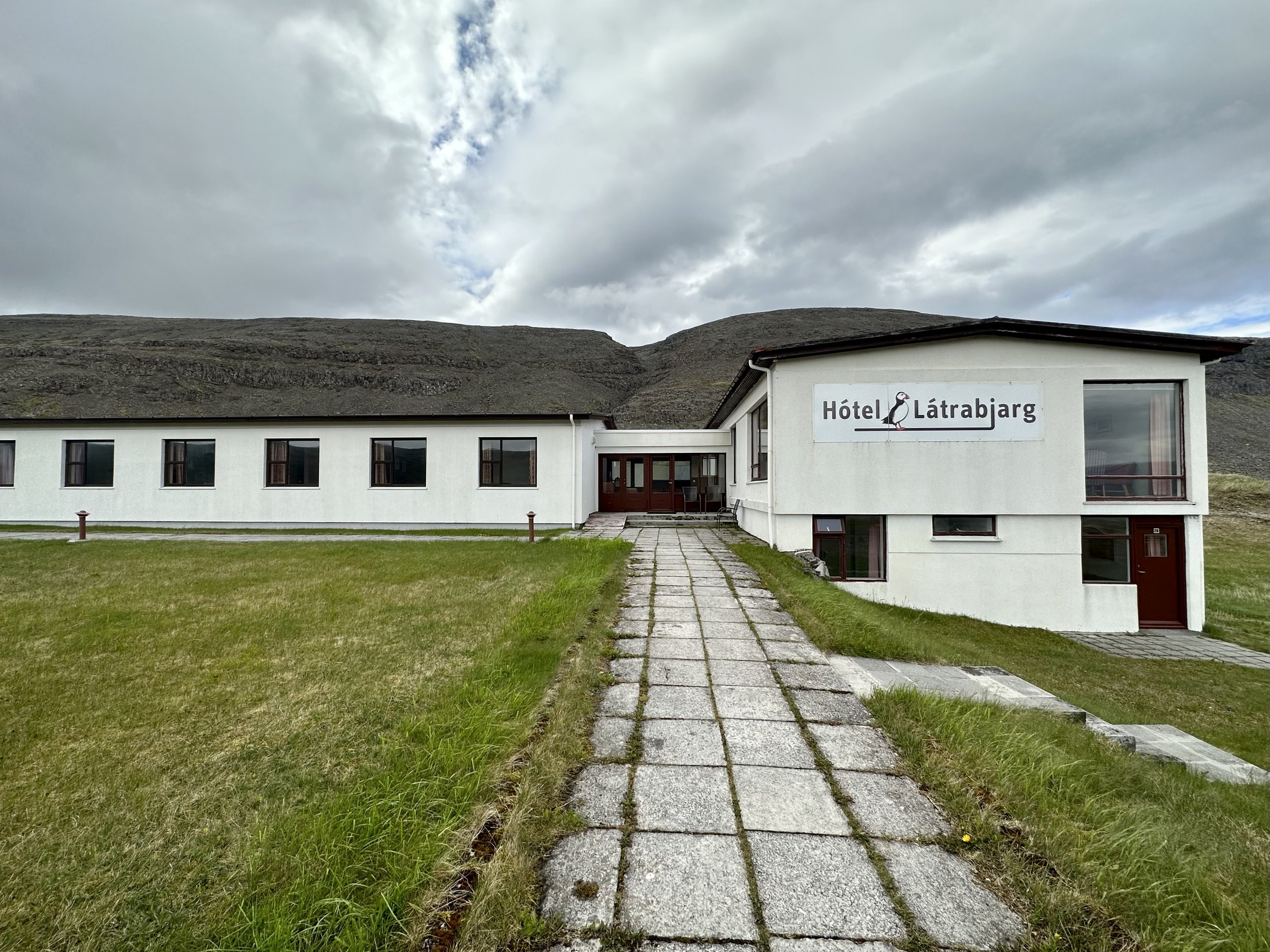
Hotel Latrabjarg - If you are going to trek to Latrabjarg, the hotel is a good choice. It is about 40 minutes from the famous cliffs where people go to photograph Puffins. The owner is quirky but very friendly.
Hotel Ísafjörður – The best upscale option in the Westfjords, with views over the fjord.
Best Base for Snæfellsnes: Stykkishólmur or Arnarstapi
Stay near Stykkishólmur for harbor views and boat tours; choose Arnarstapi for proximity to cliffs and lava formations.
Arnarstrapi Hotel - The Arnarstapi Hotel is located on the Snæfellsnes peninsula. So if you are going to Kirkjufell, this could be a great option. We were pleasantly surprised by the modern hotel. The hotel is a 5-minute walk from Arnarstapi, which is on my Photography location list for Iceland.
Fosshotel Hellnar – Right on the Snæfellsnes coast with glacier views.
Hotel Budir – Famous for its remote setting, black church, and top-notch cuisine.
Getting Around
The best way to get to the Western fjords from Reykjavik is to take the Baldur Ferry. It's about a 2.5-hour drive, and you can load your car onto the ferry. The ferry runs throughout the year, and it takes you from the town of Stykkishólmur on the Snæfellsnes Peninsula to Brjánslækur in the Westfjords via the island of Flatey.
The drive to our hotel, Hotel Latrabjarg, was easy, with beautiful views. This hotel is very remote. It's really remote. Here is a good guide to the area.
Rental Car Required – A 4x4 is recommended, especially in the Westfjords.
No Uber or Bolt – These regions are remote.
Use the Vestfjarðaleiðin coastal road in the Westfjords and Route 54 around Snæfellsnes.
Ferries (like Baldur Ferry) connect Snæfellsnes with the Westfjords via Breiðafjörður.
How is the Food?
In general, the food in Iceland is excellent. If you eat fish, you will really enjoy the fresh cod. Also, do not miss trying the cod. The only thing you might not like is the price of food. Like everything in Iceland, it is expensive.
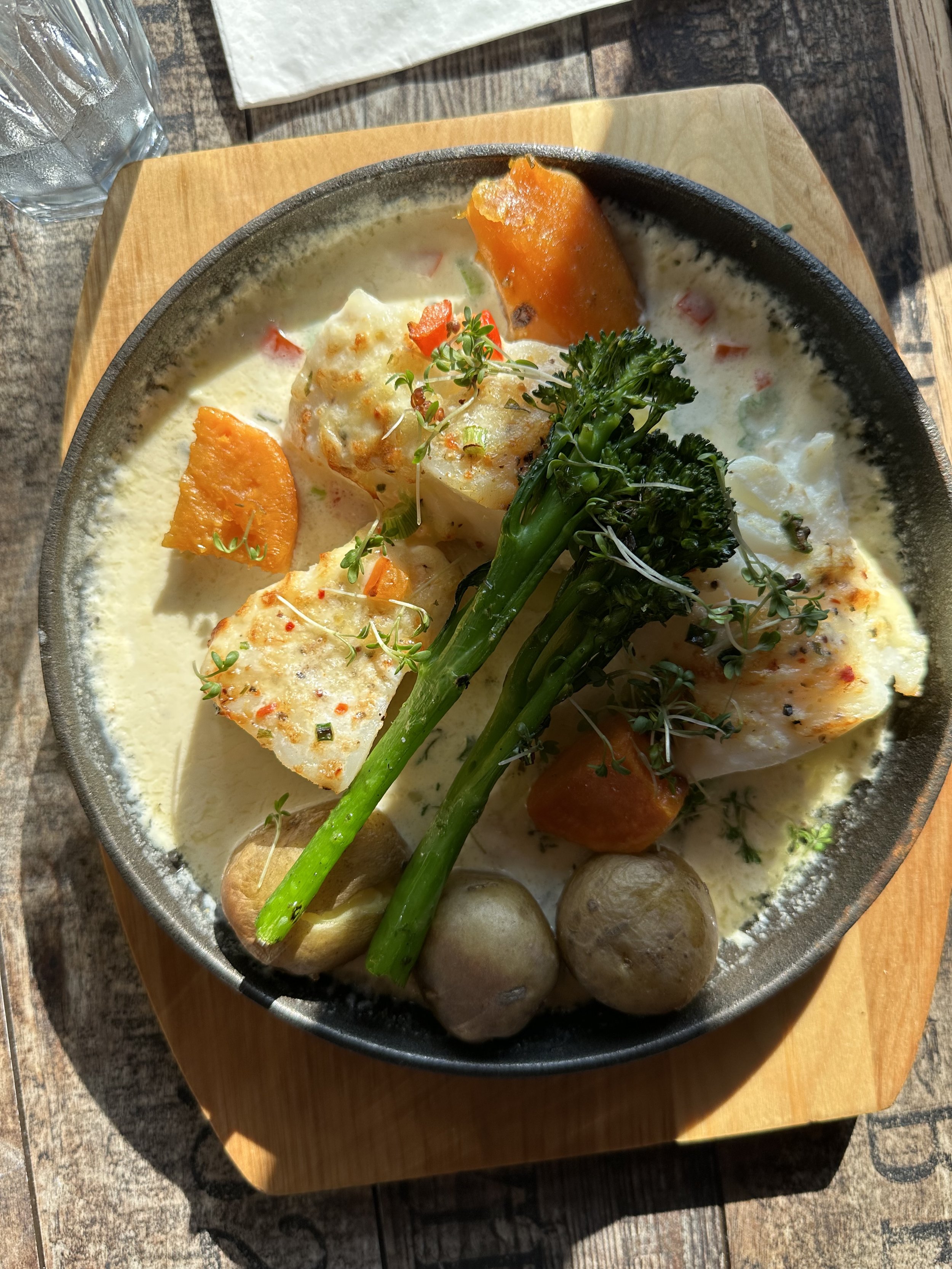
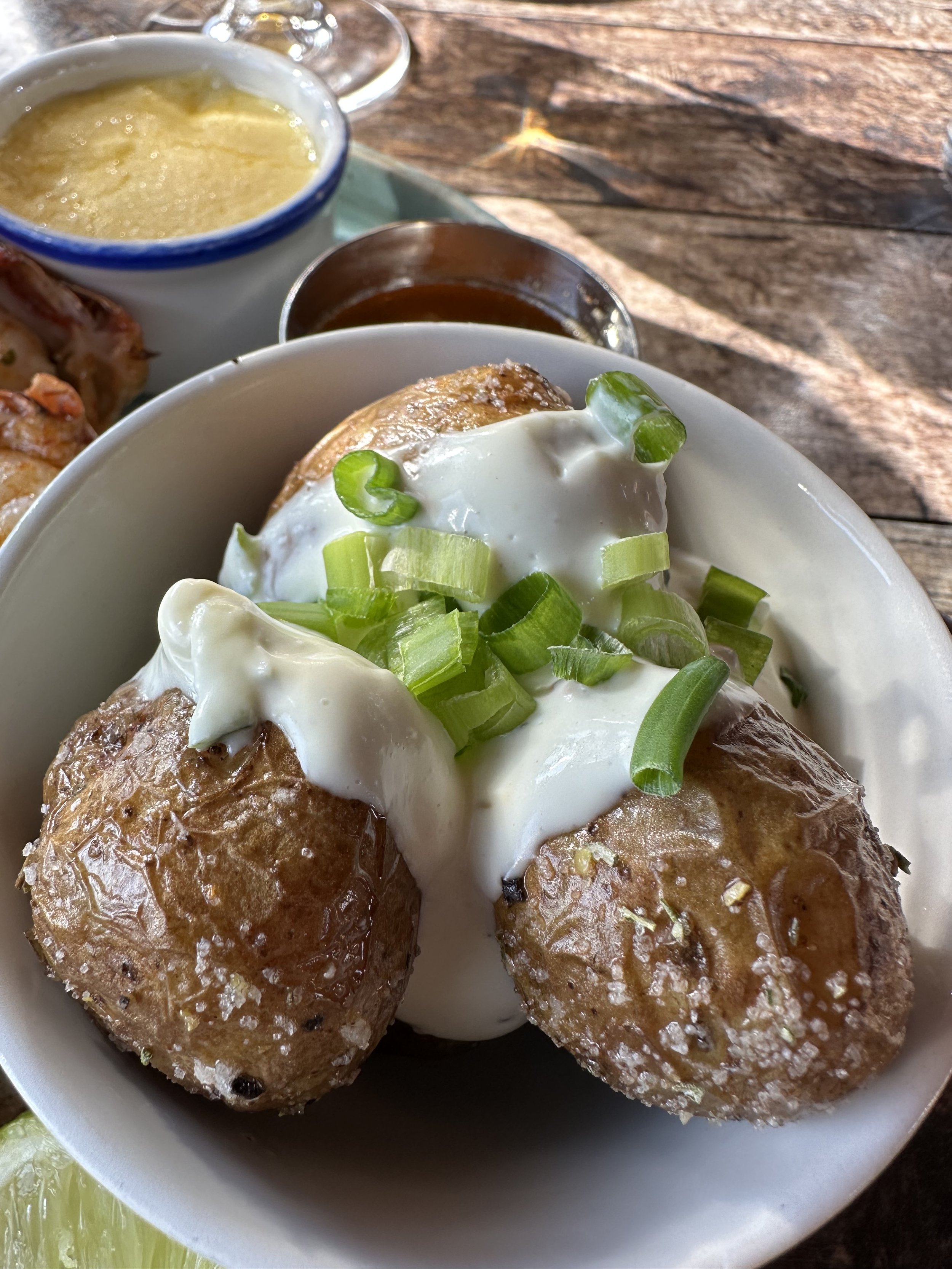
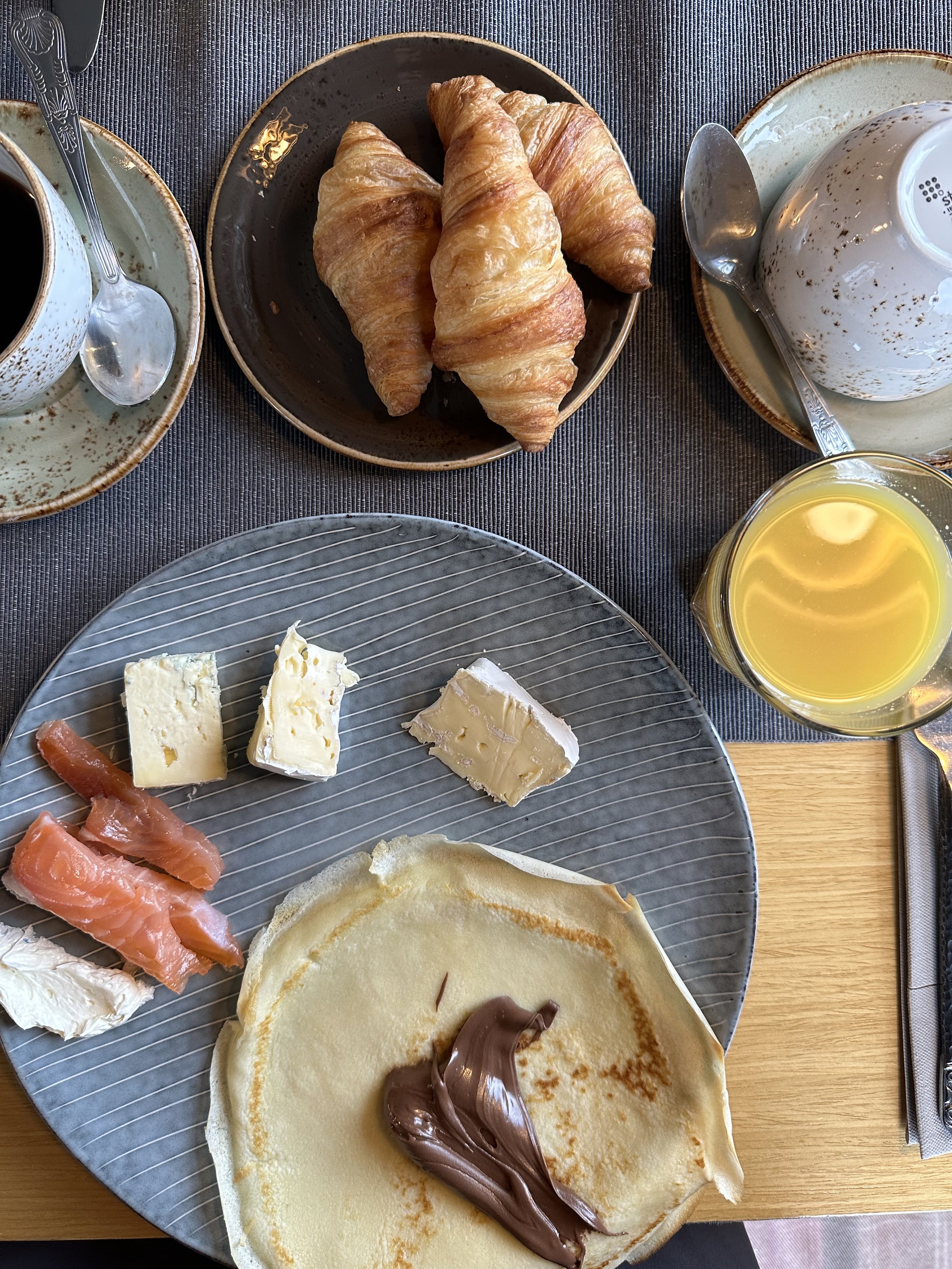
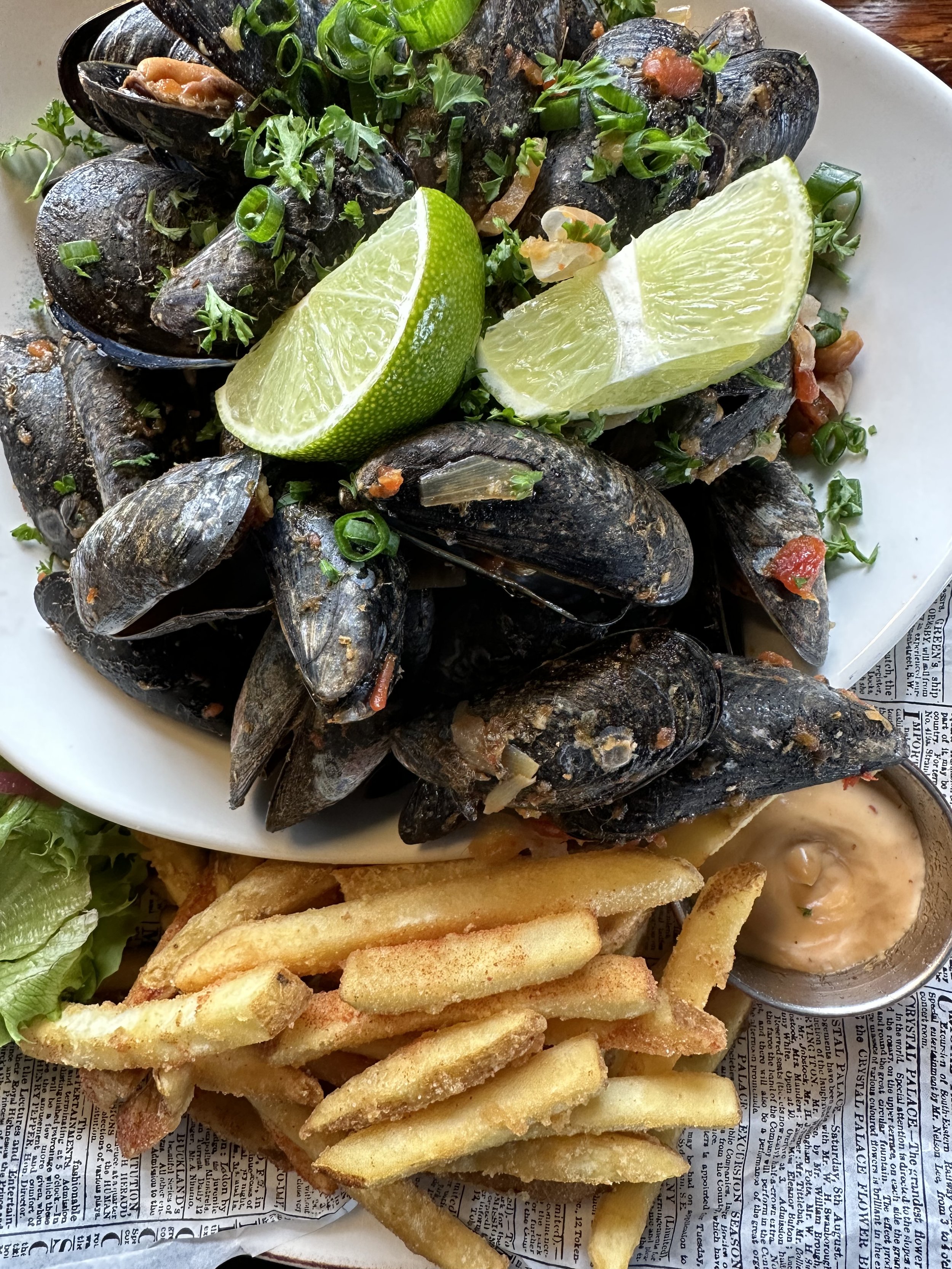
In Stykkishólmur, we had an excellent dinner at Narfeyrarstofa.
Restaurants
Tjöruhúsið (Ísafjörður) – Legendary fish buffet in a historic building.
Narfeyrarstofa (Stykkishólmur) – Fresh Icelandic fare with a view.
Fjöruhúsið (Arnarstapi) – Seafood by the cliffs.
Sjávarpakkhúsið – Elegant, harborfront fine dining.
Viðvík – A seasonal gem near Djúpavík.
Coffee Shops
Húsið – Chill café-bar in Ísafjörður.
Skúrinn (Stykkishólmur) – Cozy with good espresso and pastries.
Kaffi Emil – Bookstore café with homemade cakes.

PHOTOGRAPHY GEAR
Camera: Canon EOS R5, Nikon Z7 II, or Sony A7R V. The camera should be weather-sealed
Lenses:
16–35mm for landscapes and ice caves
24–70mm for waterfalls and portraits
70–200mm for wildlife and compression shots
100-500 mm for wildlife
Accessories:
Lightweight tripod (Manfrotto Befree or Peak Design Travel Tripod)
Polarizing and ND filters - I brought a Polarizer and a 3-stop, 6-stop, and 10-stop ND filter.
Drone (DJI Mini 4 Pro)—check local flying restrictions. I would definitely bring a Drone. If it’s not too windy, Drones are awesome in Iceland.
Rain cover and extra batteries
Tripod—I brought my RRS Travel Tripod with a BH-40 Ballhead. This particular tripod was heavy enough for Iceland. A tripod is essential for capturing the Northern Lights and in many situations in Iceland where lighting conditions are not optimal.
Camera Bag - I recommend bringing a camera bag that is waterproof or at least water-resistant, with a rain cover that protects your gear when it rains. I used my Shimoda Explore V2 30-liter backpack.
Microfiber Towels - bring a lot of microfiber towels to wipe off our camera and lenses near waterfalls. I also used them to wipe down my gear at night. There is a lot of water that will not only get on your camera but also your lens. I was constantly wiping down my camera and lenses. I would bring at least 3 microfiber towels.

The Best Photography Locations
Westfjords
Dynjandi Waterfall – A fan-shaped beauty that looks like it belongs on another planet.
Látrabjarg Cliffs – Iceland’s westernmost point; puffin paradise.
Rauðisandur Beach – Red-gold sands at sunset.
Ísafjörður Harbor – Classic fishing town scenes.
Djúpavík – Abandoned herring factory and surreal mountain backdrop.
Snæfellsnes
Kirkjufell & Kirkjufellsfoss – Iceland’s most photographed mountain. Best at sunset or under aurora.
Arnarstapi Cliffs – Columnar basalt and dramatic coastal rock arches.
Snæfellsjökull Glacier – If skies are clear, shoot it from multiple angles.
Búðir Black Church – Hauntingly simple and photogenic in any light.
Djúpalónssandur Beach – Black pebbles and shipwreck remains.
PUFFINS
On our last trip to Iceland in June, we really wanted to see Puffins again. You can see Puffins between June and August in Iceland. We saw them at the Dyrhólaey Lighthouse, Black Sand Beach, Ingólfshöfði, and the Latrabjarg Cliffs. You will also find them in the Western Islands and other locations in Iceland. They are challenging to photograph, but I just love them.

Puffins in Ingólfshöfði,
Icelandic Horses
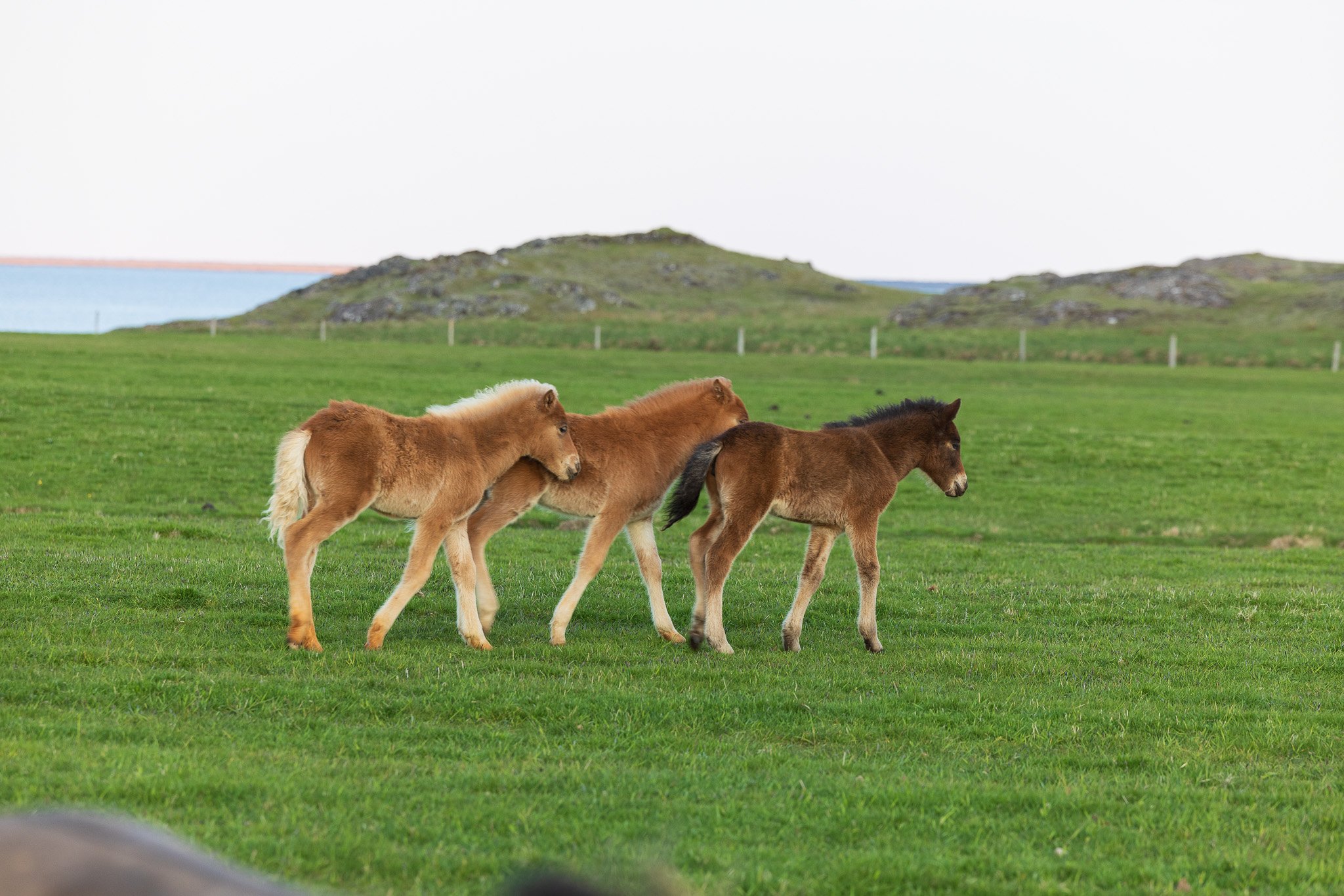
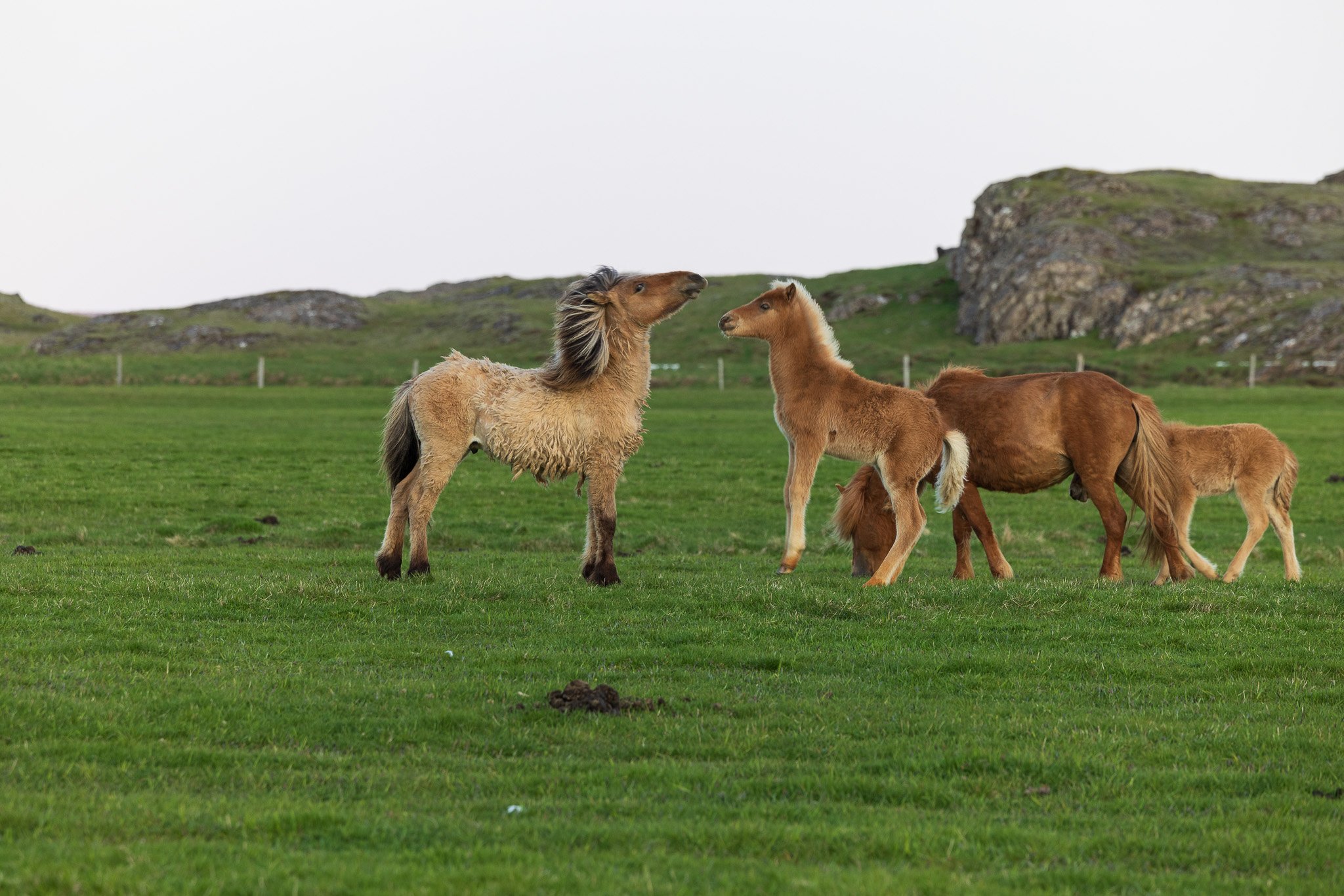
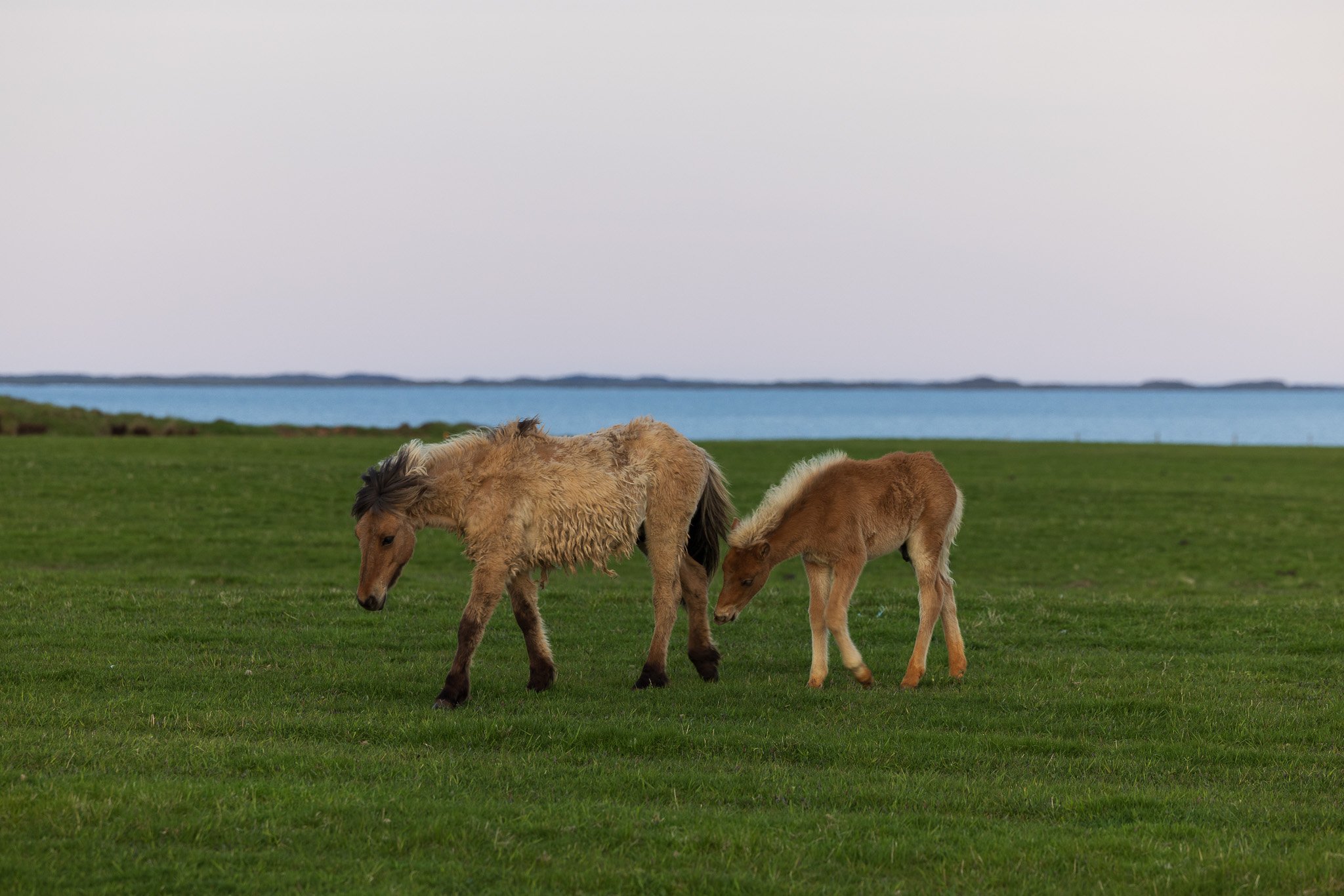
The Icelandic horse is a breed of horse developed in Iceland. They are simply beautiful to photograph. Oftentimes, you will be driving down the road and see them behind a fence along the road.
Icelandic horses tend to be smaller, at times pony-sized. Despite being small they are very strong and live long lives.
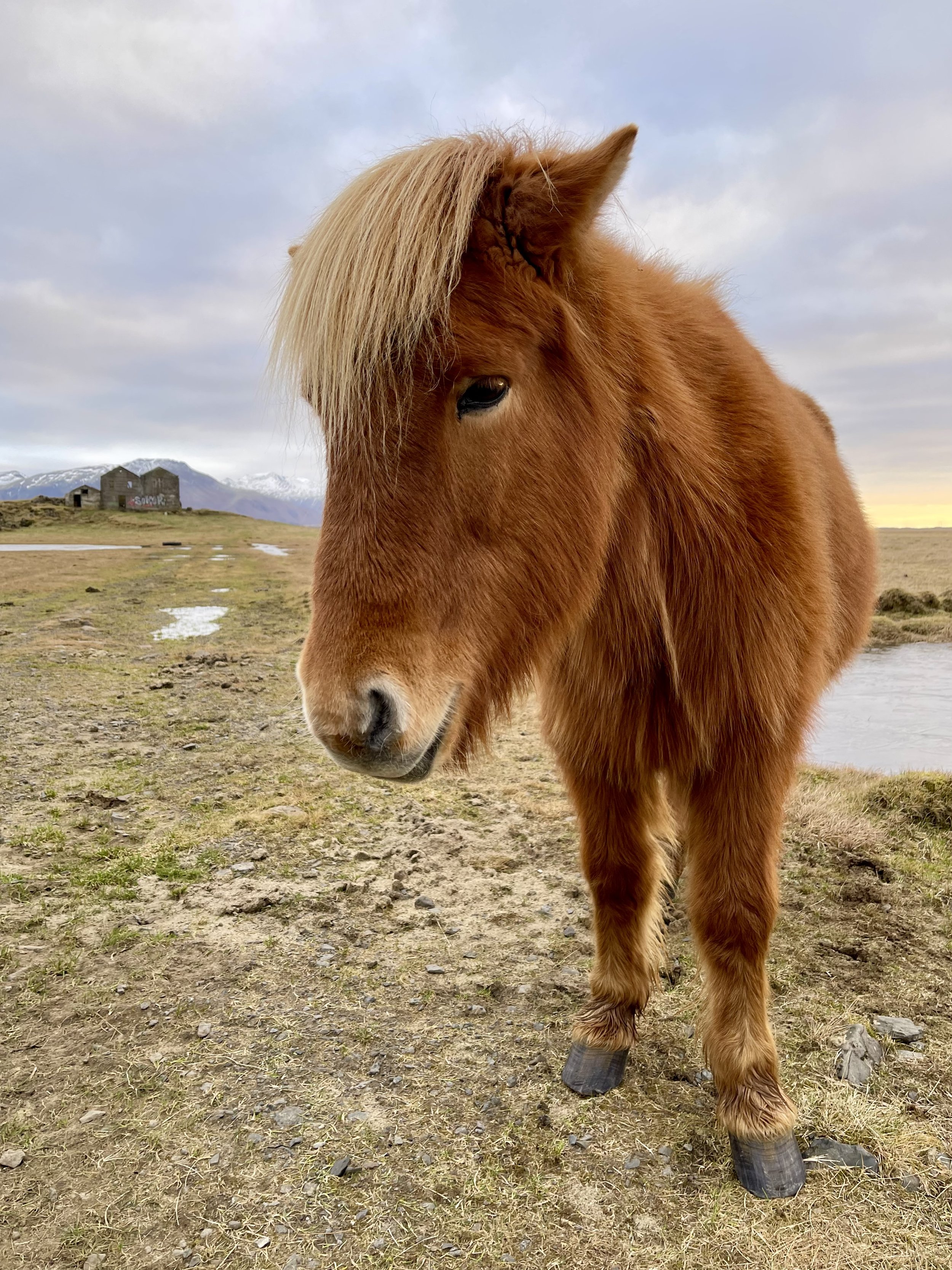
When you see them by the roads, they will often come right up to you to say hello.
Lupins
Why Does Iceland Get So Many Lupine Flowers? Lupine plants are unique because they thrive well in harsh conditions and rugged landscapes. So, how do they survive in such harsh conditions? They are able to extract nitrogen from the air and redistribute it to their roots. Basically, the lupine plant makes its own fertilizer.

Endless Fields of Lupins
Westernfjords Látrabjarg CLIFFS
The Látrabjarg cliffs in the Westfjords are the westernmost point of Iceland and Europe. It is famous because there are millions of birds, including Puffins. It is Europe’s largest bird cliff, 14 km (9 mi) long and 441 m (1,444 ft) high.

Please take a look at this video we took on our iPhone. We were only about 6 feet away.
Látrabjarg is home to a wide variety of birds, in large parts thanks to the shelter and seclusion the cliffs provide as nesting grounds.
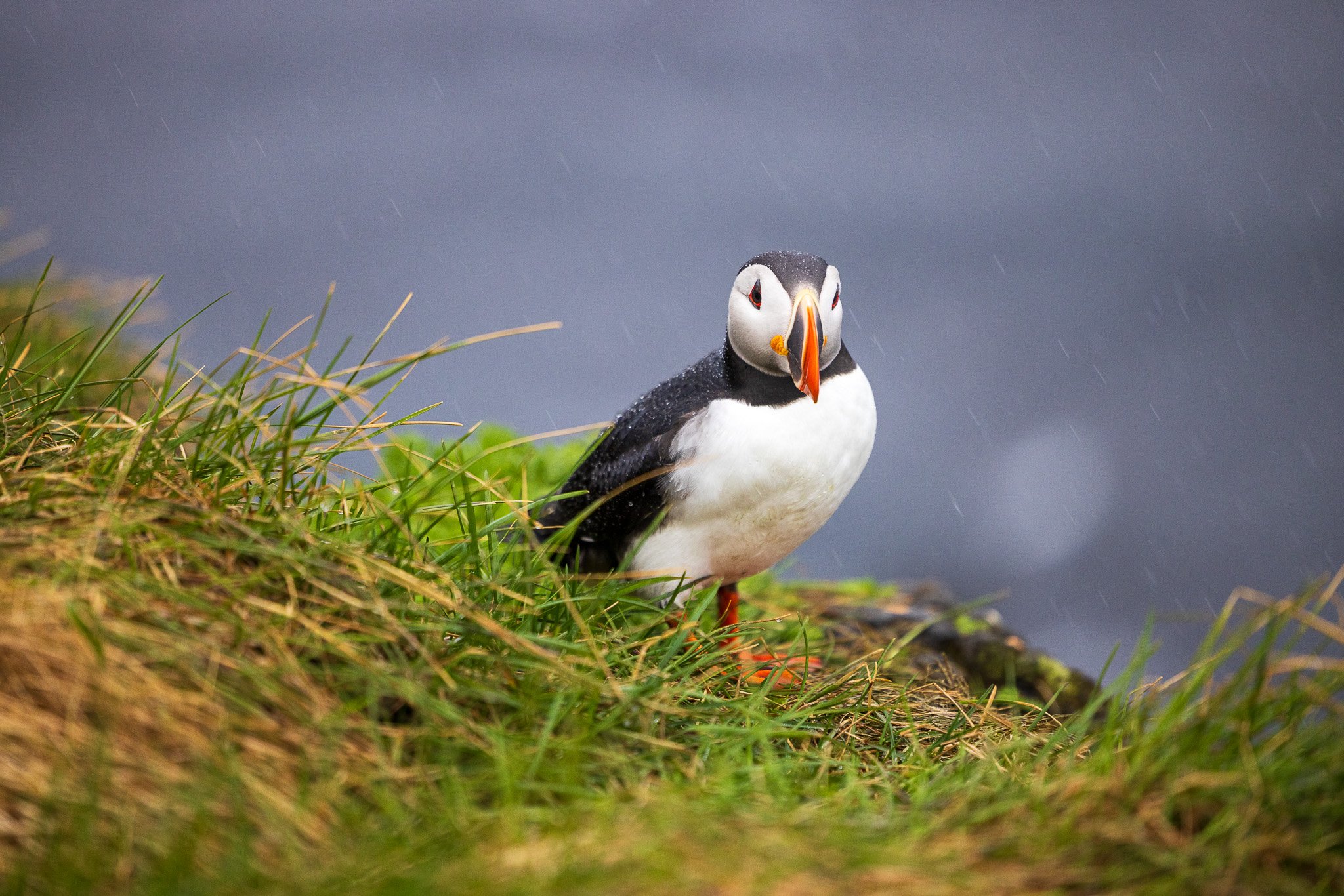
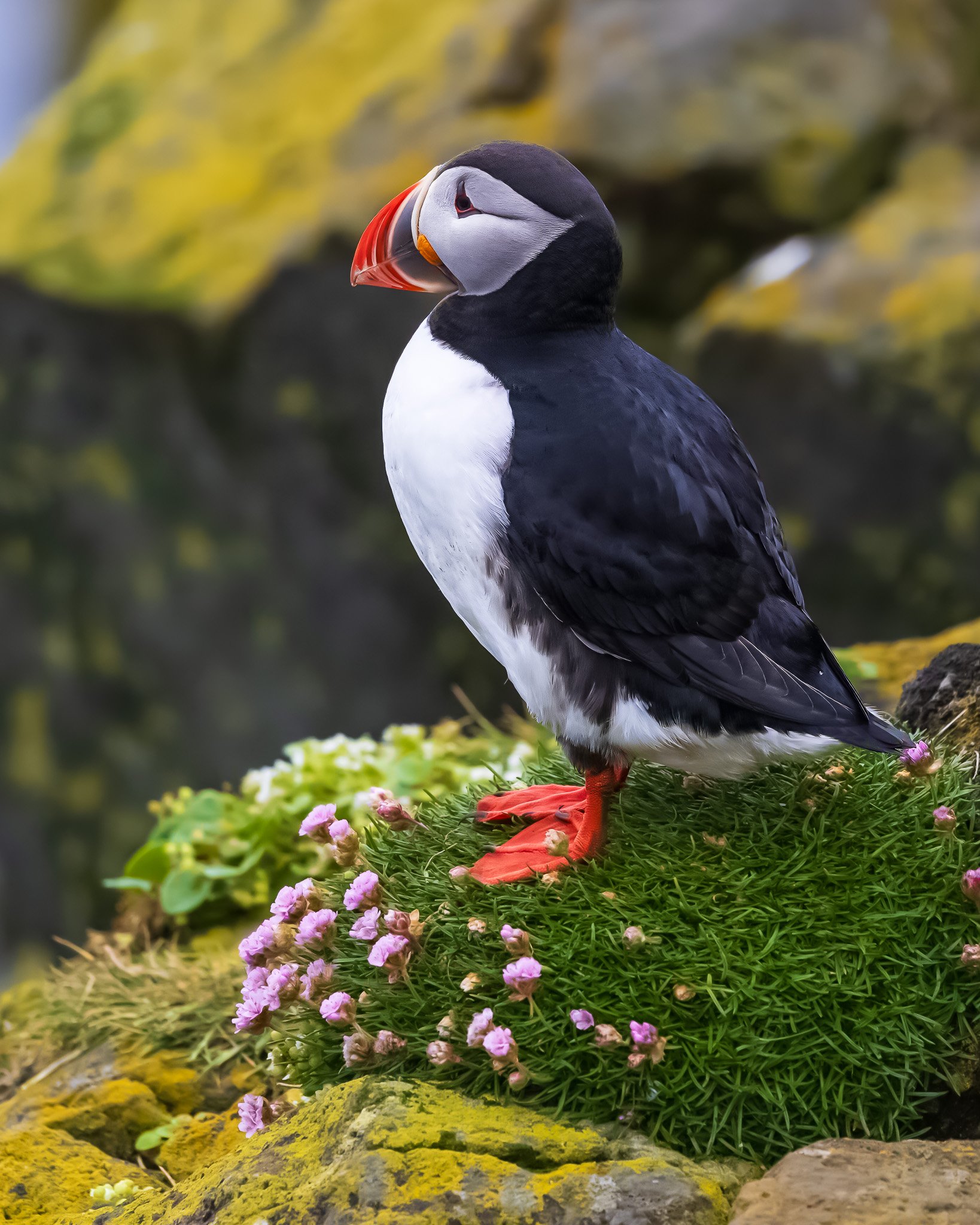
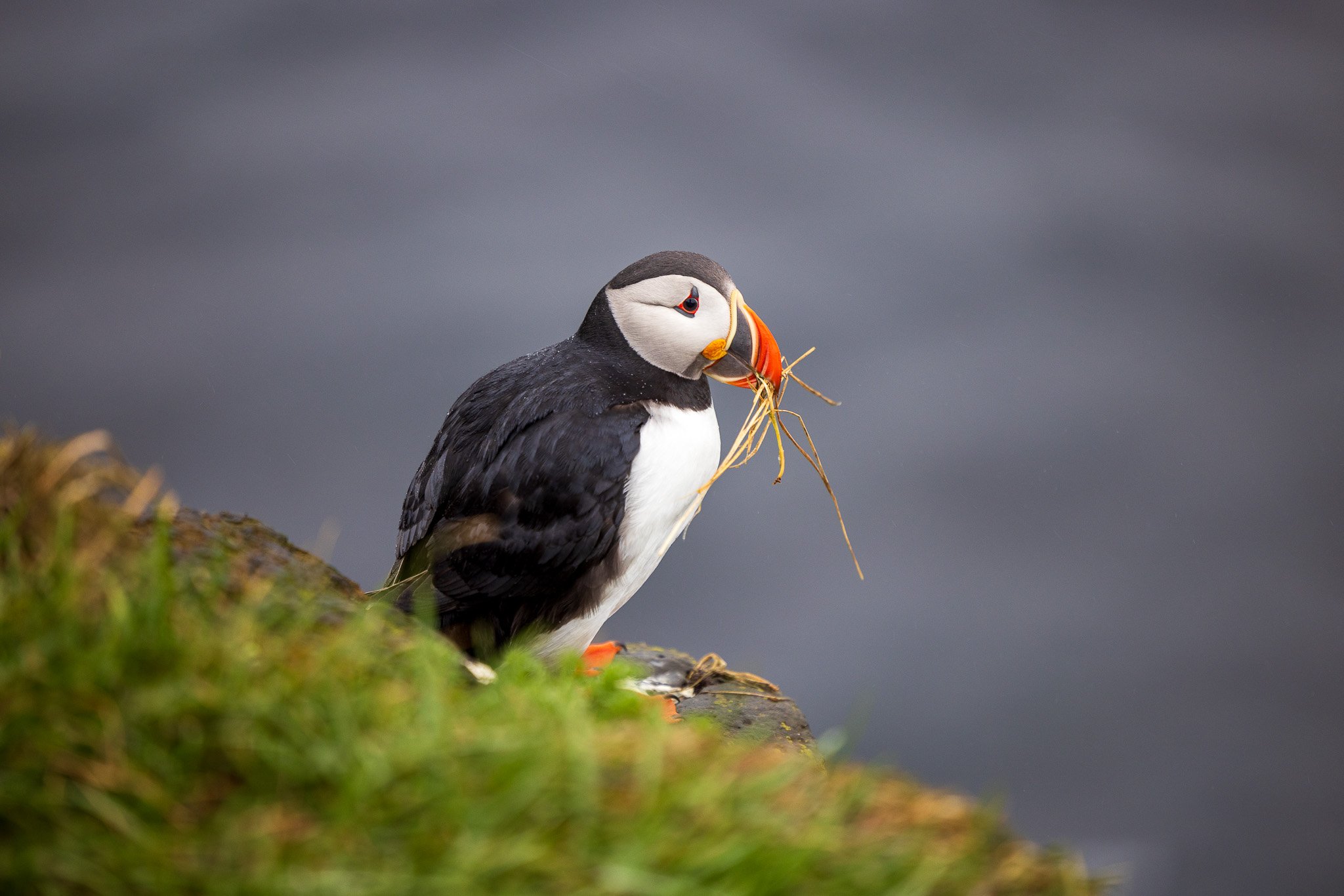
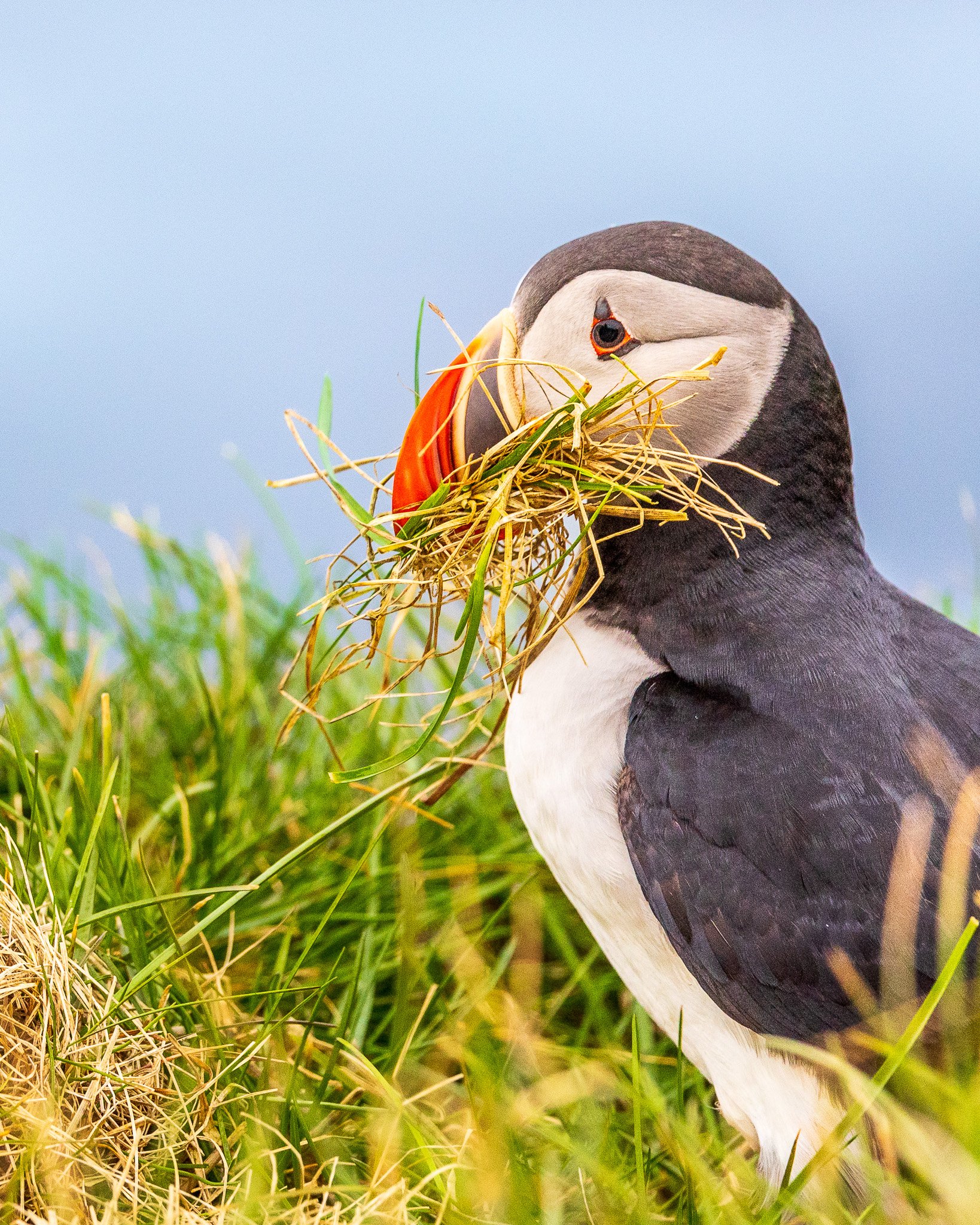
The main species are Puffins, Skuas, Arctic Terns, Guillemots, Eider Ducks and Razorbills. Of course, however, the stars of the show are the Atlantic Puffins.
Garðar BA 64 (SHIPWRECK)
The oldest steel ship in Iceland has been beached for years and is now a rusting ruin. Yet, it is fun to photograph.
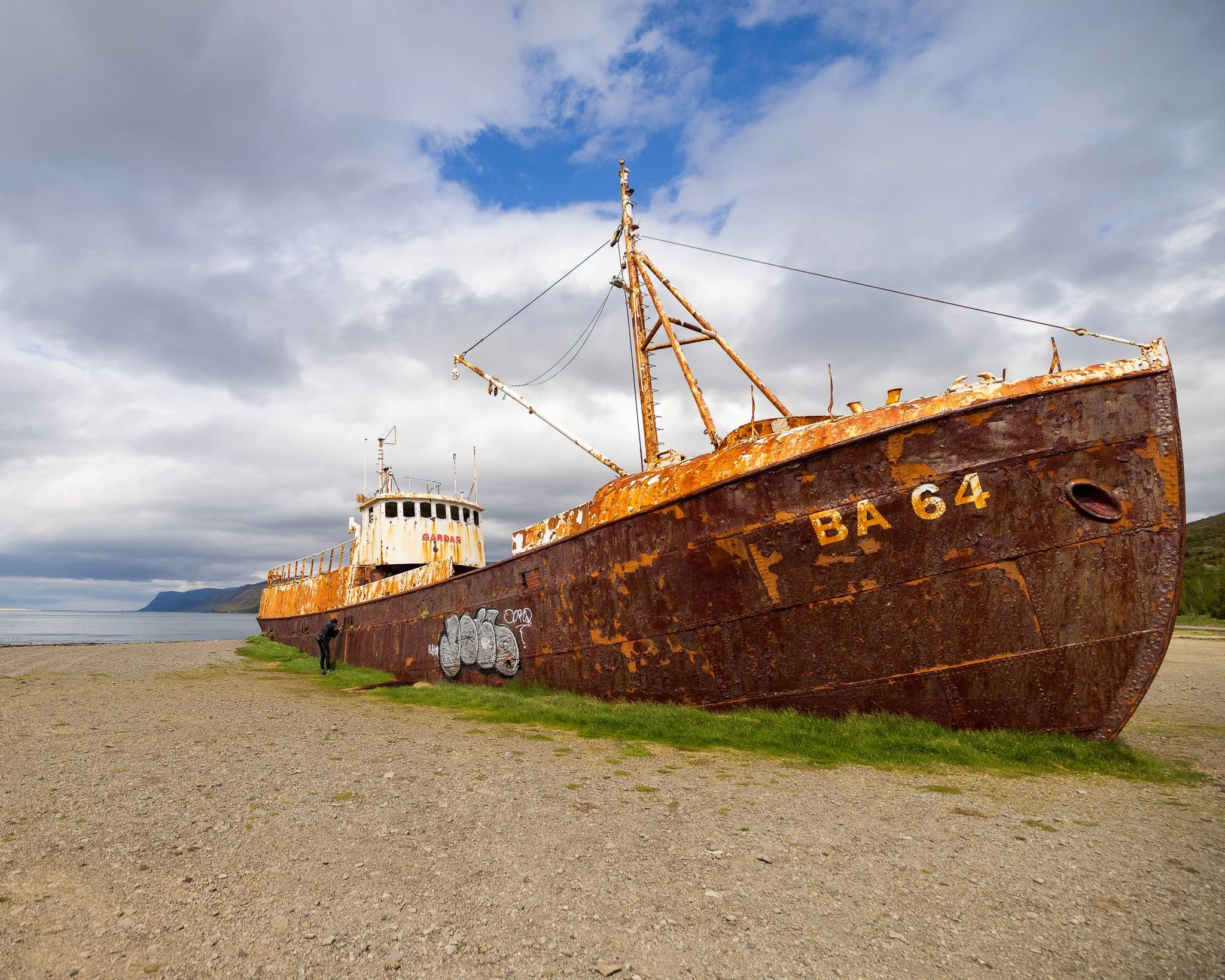
Such a Unique Thing to See
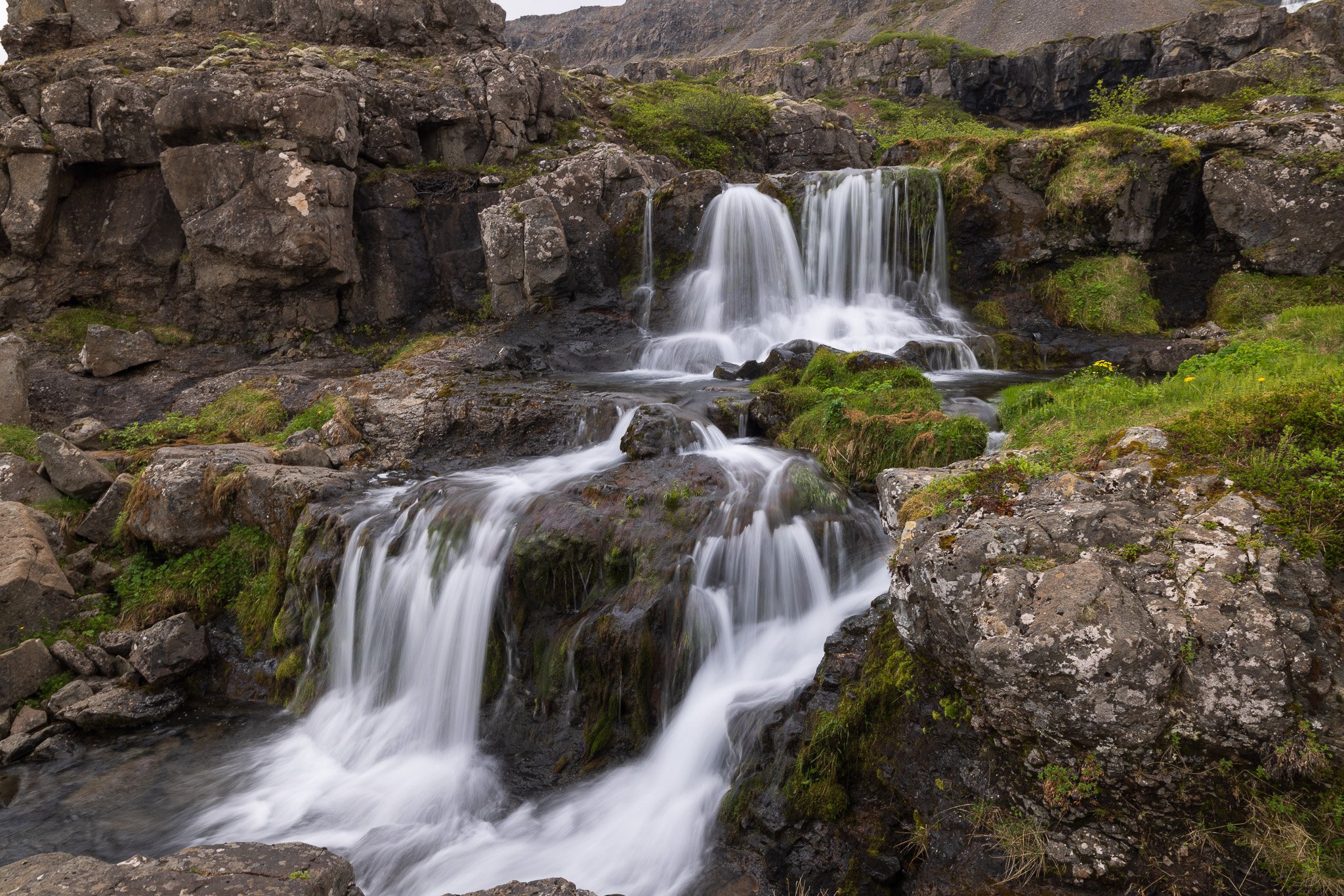
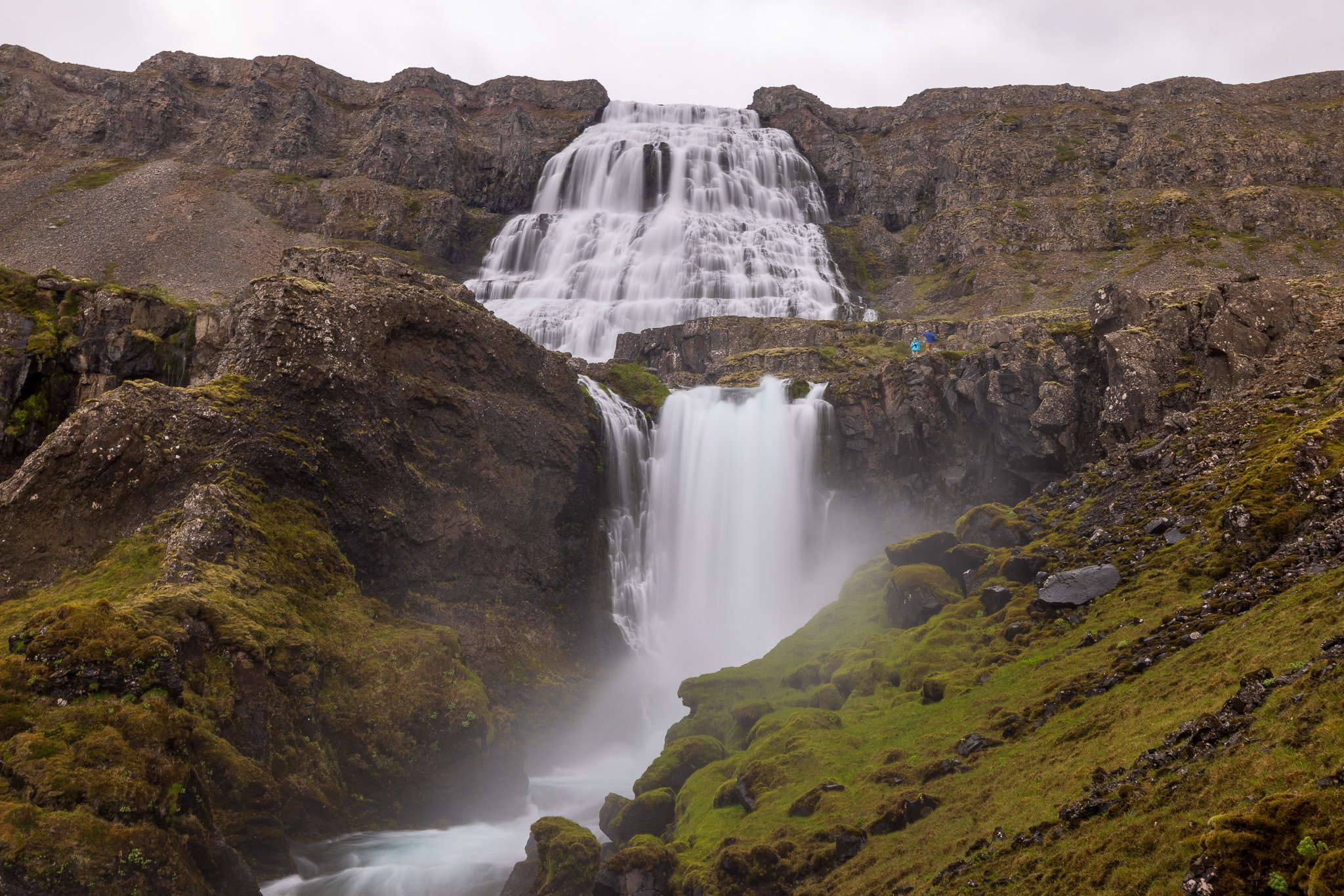
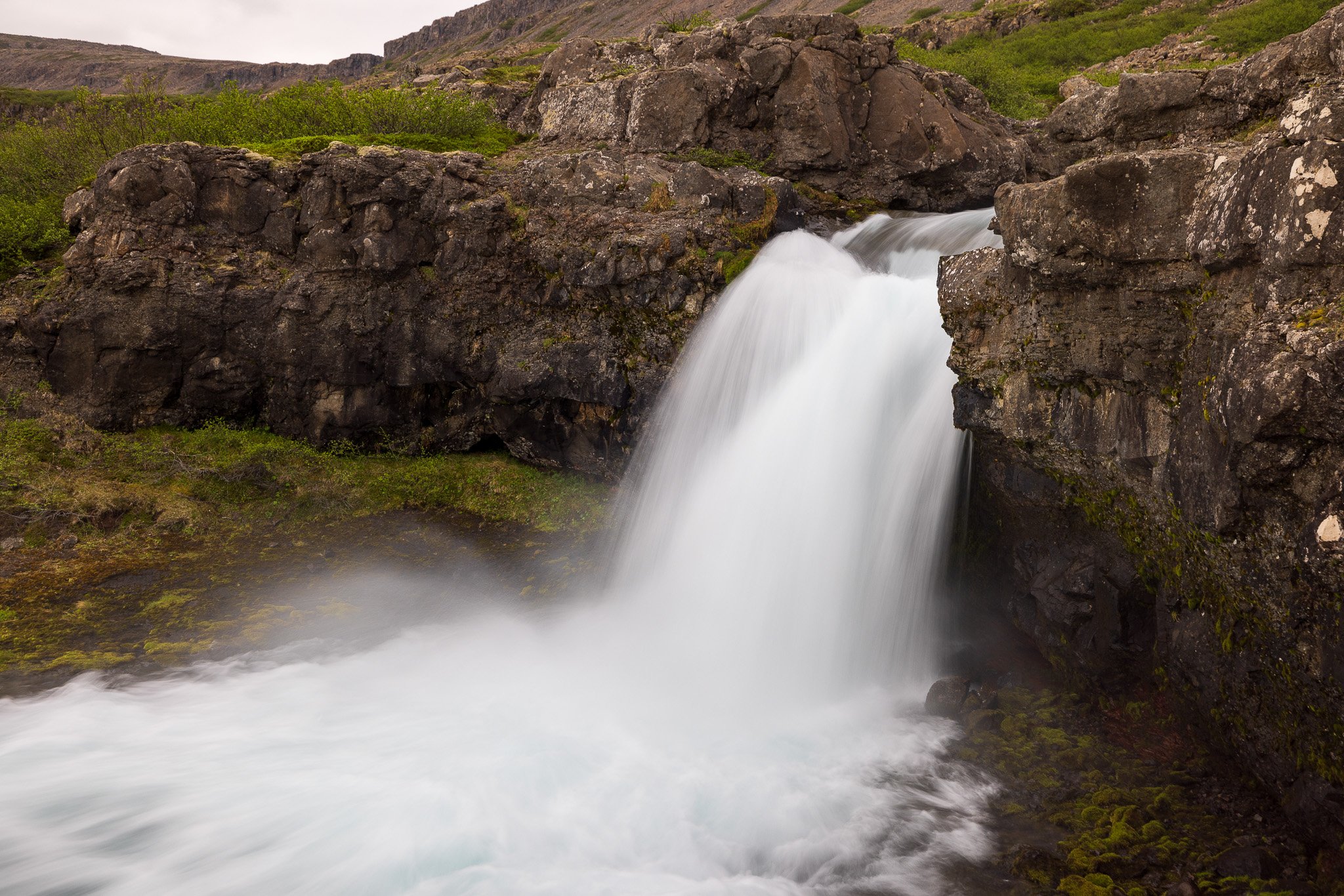
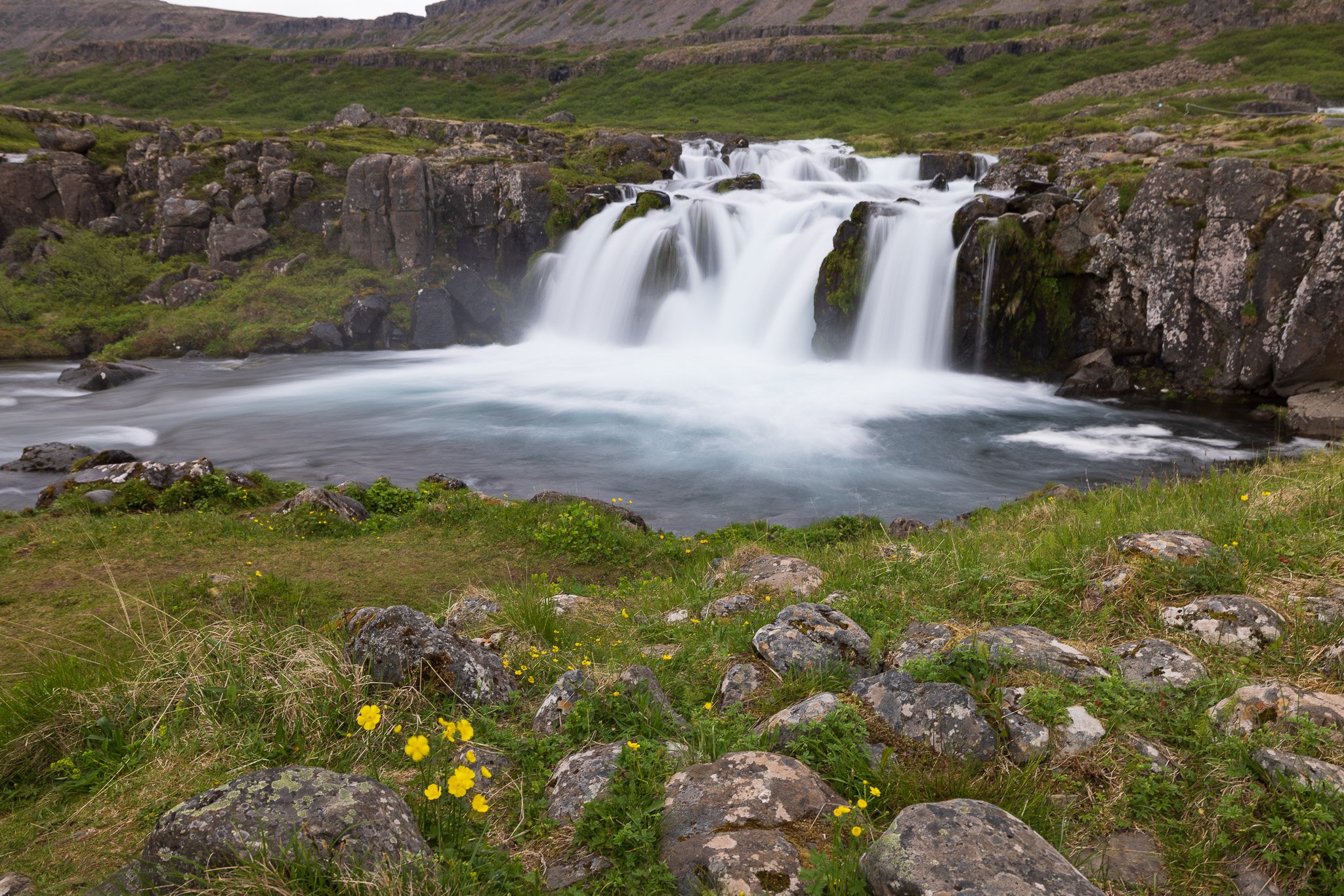
Dynjandi Waterfall
This is the largest waterfall in Iceland, and it’s massive. This spot is ideal for capturing photos with a drone.
Dynjandi is a waterfall located in Arnarfjörður in the Westfjords region of Iceland. It is the largest waterfall in the Westfjords, with a total height of 100 meters. Below it are five other waterfalls: Háifoss, Úðafoss, Göngufoss, Hundafoss, and Bæjarfoss.
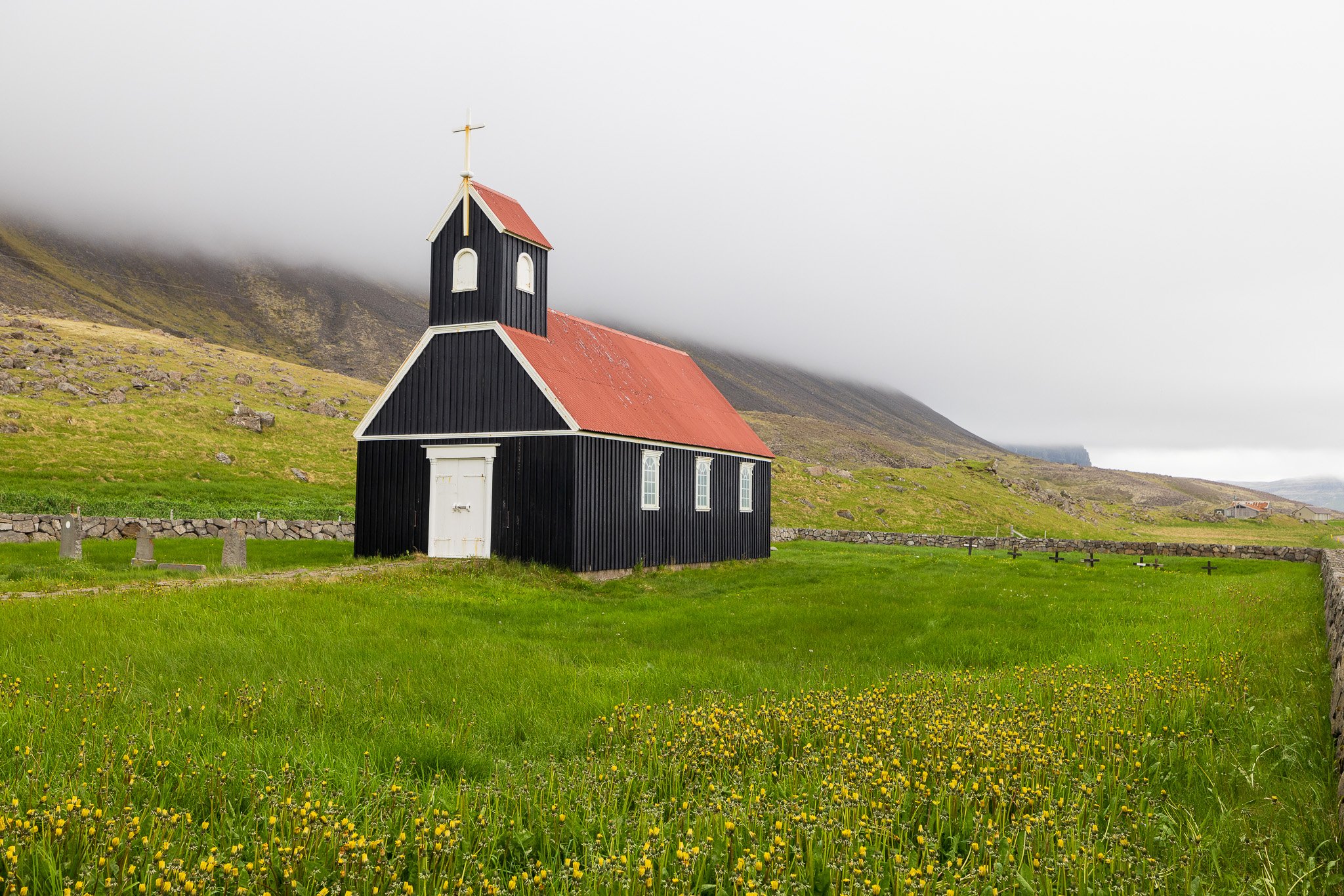
Black church in Raudisandur
The black church is one of 3 black churches in Iceland. They are black because the exterior wood is painted with pitch, just like the hull of a boat, to protect it from the harsh Icelandic elements.
Snaefellsnes Peninsula
There is so much to see in the Snaefellsnes Peninsula. If you only have a few days, I might just come to this part of Iceland. Here are my recommendations for the best photography locations in the Snaefellsnes Peninsula. Here is a good guide.
Ingjaldshólskirkja
Located near the village of Hellissandur on the western tip of the Snaefellsnes peninsula. This church is so photogenic. This is a location that we did not have on our photography list, but we noticed the church on our drive. So we had to stop and take photos.

At Sunset
Svörtuloft Lighthouse
This lighthouse is located at the westernmost tip of the volcanic Snæfellsnes Peninsula and offers spectacular views of the western coastline.

My Wife Catching a Photo of Me
Búðakirkja (Black CHURCH)
Búðakirkja is a small wooden church located on the south side of the Snæfellsnes Peninsula. It is a local parish church established in 1703, but the church was built in 1848.

Since the church is Black, I thought it would look good in Black & White.

Arnarstapi
Arnarstapi is a village on the southern side of the Snæfellsnes peninsula, once a fishing hub and now a place for travelers to refuel before entering Snæfellsjökull National Park.

At Sunset
Kirkjufell
Kirkjufell has to be one of my favorite locations in Iceland. A large parking lot is located right next to the photography spot on the opposite side of the waterfall. This is a sunset photo, but I have seen incredible Northern Lights photos from this location as well.

At Sunset
Festivals & Events
Við Djúpið Festival (June, Ísafjörður) – Chamber music in a remote setting.
Raflost Electronica Festival (August, Westfjords) – Experimental music meets nature.
Snæfellsnes Aurora Season – From September to April, this region gets some of the best aurora shows in the west.
Final Thoughts
Iceland’s Westfjords and the Snæfellsnes Peninsula feel like the edge of the world. Fewer crowds. Longer stretches of empty road. Landscapes that feel untouched and elemental. This is Iceland at its most raw and honest.
What makes this region unforgettable is the scale and solitude. In the Westfjords, fjords carve deep into the land, cliffs drop dramatically into the sea, and waterfalls seem to appear out of nowhere. Snæfellsnes, often called Iceland in miniature, offers glaciers, black-sand beaches, lava fields, and iconic peaks like Kirkjufell, all within a relatively compact area. The variety is astonishing.
For photographers, this is a playground of light and weather. Conditions change quickly, so stay flexible. Sunrise and sunset stretch beautifully in summer, while winter brings moody skies and the possibility of the Northern Lights. Bring a sturdy tripod for waterfalls and long exposures. Use wide lenses to capture sweeping fjords, and telephoto lenses to isolate distant peaks and seabirds. Embrace the wind, the rain, and the unpredictability. Some of the most dramatic images come when the weather refuses to cooperate.
For travelers, these regions reward patience. Drive slowly. Stop often. Respect the land and changing conditions. Stay overnight in small towns and experience the quiet after day visitors leave.
I hope you have enjoyed this blog and my Photography and Travel Guide to Iceland’s Westfjords and the Snæfellsnes Peninsula. If you are looking for landscapes that challenge and inspire you, this is the place. It is wild, powerful, and deeply humbling, and it will leave you with images and memories that feel truly extraordinary.
If you are interested in joining one of my photography workshops, you can find the details through the link. You can also follow along on Instagram, Facebook, or subscribe to my newsletter for more travel photography tips and behind-the-scenes insight.
Finally—a beginner-friendly photography guide that makes sense.
If you've ever picked up a camera and thought, "Now what?" this is the book for you.
Photography Made Simple is written for adults who are just starting out and want a clear, encouraging, real-world approach to learning photography. Whether you're using a DSLR, mirrorless, or just your smartphone, this guide walks you through the basics—without the jargon or tech overwhelm.
Inside, you'll learn:
The only camera settings you really need to know to get started
How to shoot sharper, more intentional photos using light and composition
Simple tips for portraits, landscapes, travel, and everyday life
What gear you do (and don’t) need
How to create better photos without upgrading your camera
You’ll also get practical exercises, cheat sheets, and tips for organizing and editing your images—plus the confidence to shoot off Auto Mode for good.
This is not a textbook. It’s a friendly guide to seeing the world with fresh eyes—and finally capturing what you see the way you imagine it.
📸 Format: PDF download
Pages: 100+
Perfect for: Beginners, hobbyists, and anyone ready to take better photos without the stress

🎓 Adobe Lightroom One-to-One Training
Master Post-Processing. Elevate Your Photography.
Post-processing is the final — and arguably most transformative — step in your photography workflow. Adobe Lightroom is an essential tool for today’s digital photographers, combining powerful editing tools with an intuitive system for organizing and showcasing your images professionally.
Whether you're just getting started or looking to refine your editing skills, I offer customized one-to-one Lightroom training designed to help you create images you’ll be proud to share.
---
💻 Why One-to-One Online Lightroom Training?
Over the years, I’ve found that personalized training is the most effective way to learn Lightroom. Unlike group sessions, a one-to-one format allows us to move at your pace, focus on your specific goals, and eliminate the frustration of mismatched experience levels.
Plus, with online sessions via Zoom, you can learn from the comfort of your home — no travel or accommodation needed. It's the most convenient, cost-effective, and time-efficient way to upgrade your editing game.
---
🧠 Tailored Topics to Match Your Goals
Our training is completely customizable, but here’s an outline of the modules we can cover — either in full or à la carte.
---
🔧 Lightroom Setup – Part 1: Getting Started
Set up Lightroom properly for long-term success. We’ll tackle the fundamentals to create an efficient, organized workflow:
- What Lightroom is (and isn’t)
- How the interface and modules work
- Setting preferences for your needs
- Understanding the Catalog and folder system
- Importing images efficiently
- Adding keywords during import
---
🗂 Lightroom Setup – Part 2: Organize Like a Pro
Build a storage system that grows with you:
- Folder structure tips and best practices
- Moving and renaming files within Lightroom
- Reviewing, rating, and filtering images
- Creating Smart Collections and Collection Sets
- Keywording strategies and metadata organization
---
🎨 Lightroom Editing – Part 1: Core Editing Skills
Master the Develop module and create consistent, polished images:
- Global adjustments in the Basic panel
- White balance, contrast, vibrance, and saturation
- Cropping and converting to black & white
- HSL panel tuning
- Sharpening and noise reduction
- Creating and saving presets
- Exporting for print, web, or social media
---
✨ Lightroom Editing – Part 2: Advanced Techniques
Take your editing to the next level with creative, selective tools:
- Radial and Gradient filters
- The Adjustment Brush
- Advanced masking and luminosity adjustments
- Enhancing portraits (skin, eyes, teeth)
- Spot removal and basic cloning
- Merging for HDR and panoramas
---
💼 Session Details & Pricing (USD)
Tailored One-to-One Lightroom Tuition:
- Single Session (2 hours): $199
Before our session, we’ll have a brief consultation to customize your training plan and ensure it meets your exact needs.
---
Ready to take control of your editing workflow and bring out the best in your images?
Let’s work together to turn your vision into vivid, powerful photos.
📩 Get in touch to schedule your personalized Lightroom session.