Hamburg, Germany Travel & Photography Guide: Best Photo Spots, Things to Do & Hidden Gems
There's a particular kind of stillness in Hamburg that sneaks up on you. One morning, I walked along the canals of Speicherstadt just before sunrise. The air was cold and smelled faintly of river mist and roasted coffee from a nearby warehouse café. Every surface — brick, iron, glass — was slick with dew. It felt like the city was holding its breath. That quiet, moody beauty? That's Hamburg.
This is a city shaped by water and trade. Founded over 1,000 years ago, Hamburg was once the jewel of the Hanseatic League. Today, it's Germany's second-largest city and still one of Europe's busiest ports, but with a distinctly elegant, laid-back personality. There's a coolness here — think Copenhagen — with a confidence that never tips into pretense. Hamburg doesn't try to charm you. It just is. And that honesty photographs beautifully.
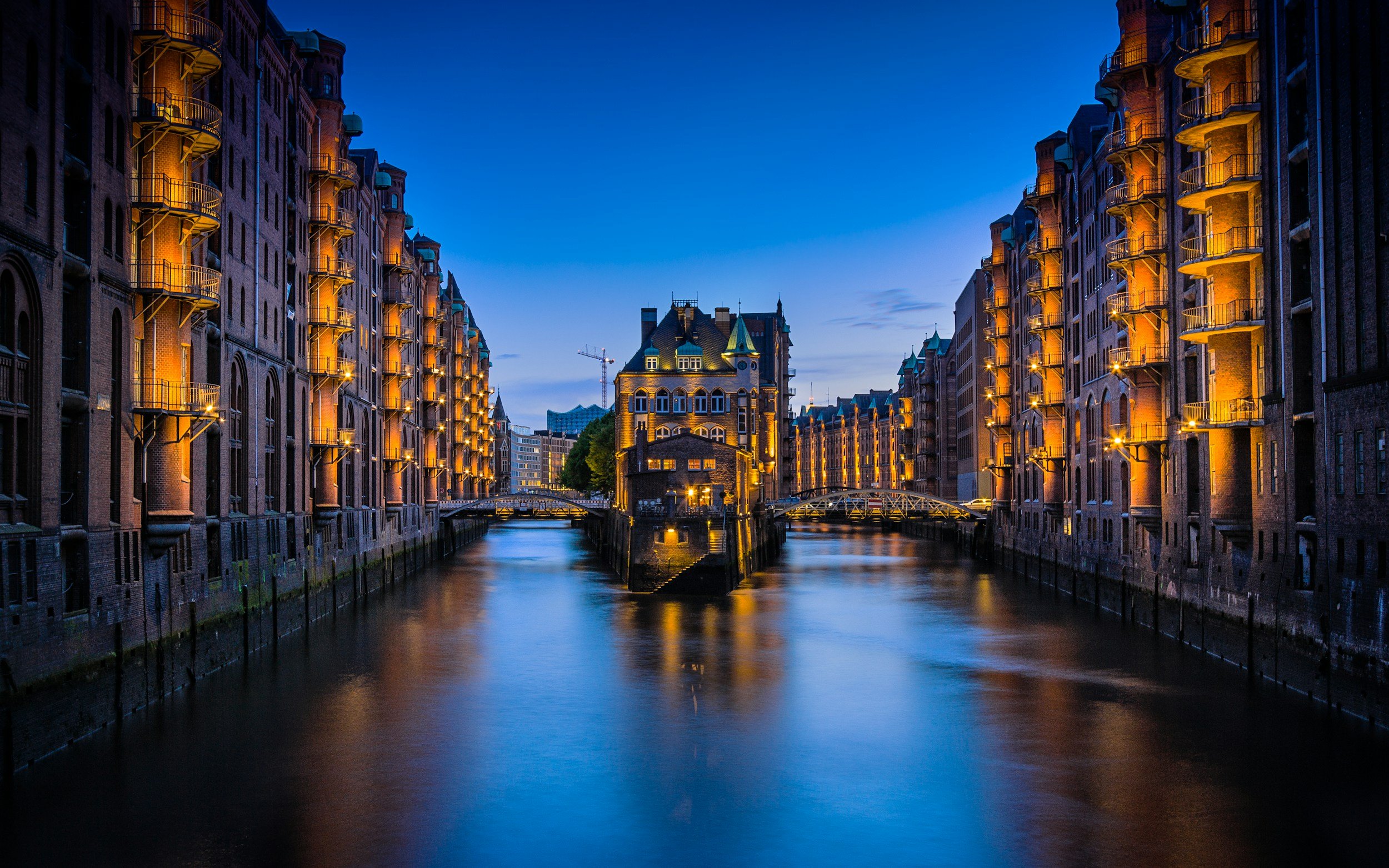
I've returned to Hamburg several times over the years. Every visit feels like peeling back another layer: discovering hidden spiral staircases tucked inside historic office buildings, watching fog roll over the Elbe at first light, or capturing the warm glow of red-brick warehouses reflected in still canals at blue hour. The food scene is genuinely excellent, the walking is extraordinary, and the number of photographic subjects per city block rivals anywhere in Europe. On one visit, I had the good fortune to meet filmmaker and photographer Greg Snell, who showed me a Hamburg most visitors never find. That trip changed how I see the city entirely.
In this Photography Guide to Hamburg, I share the places and experiences that continue to draw me back. You will find my favorite photography locations, guidance on when and where to shoot, practical travel tips, and gear recommendations, along with cultural insights to help you explore and photograph Hamburg with confidence, respect, and ease.
Photographer's Notes
Before you go, here are my own takeaways.
Favorite Season: Late spring (May into early June)
Favorite Location: Speicherstadt
Favorite Hotel: Fairmont Hotel Vier Jahreszeiten
Favorite Restaurant: The Grill
Favorite Café: Elbgold Kaffee
Favorite Lens: 16-35mm
Would I Return? I would love to go back. I love the vibe of the city.
Where to Stay in Hamburg
The historical heart of the city — Altstadt and the area around the Inner Alster — blends Neo-Renaissance architecture, winding alleys, and proximity to major landmarks including the Town Hall and the Chilehaus. It's the best base for photographers who want to walk out the door and be immediately surrounded by classic Hamburg. You're also within easy distance of Speicherstadt and HafenCity, which means early-morning shoots are genuinely accessible without a long commute.
Luxury Stays in Hamburg
The Fontenay Hamburg — A sculptural, modern hotel on the western edge of Alster Lake. Morning light off the water comes straight through the windows, and the lakefront paths outside are ideal for quiet walks with your camera before the city wakes up.
Fairmont Hotel Vier Jahreszeiten — An old-world classic overlooking the Inner Alster. Polished interiors, wrought-iron balconies, and quick access to the city's most photogenic architecture and golden-hour cityscapes. I love this hotel and would recommend it without hesitation.
Sir Nikolai Hotel — Right on the canal edge near Speicherstadt. The moody interior design photographs beautifully in low light, and the location puts you minutes from the warehouse district's most iconic spots.

Fairmont Hotel Vier Jahreszeiten
Boutique & Mid-Range in Hamburg
Henri Hotel Hamburg Downtown — Art Deco character and rich textures throughout. Great urban location for exploring on foot, and the common areas are stylish enough to inspire a few frames before you even leave the building.
25hours Hotel HafenCity — Shipyard aesthetic meets creative design, right near the harbor. Full of visual personality and ideal for lifestyle shots and creative iPhone photography indoors.
Motel One Hamburg-Fleetinsel — Affordable, well-designed, and positioned with excellent access to the harbor area. Clean, modern rooms and no frills. A solid value pick.
How Many Days to Stay in Hamburg
For photographers, four to five days is the right amount of time. Three days is enough for first-time visitors covering the main locations, but you'll want the extra days to revisit spots at different light, explore neighborhoods at your own pace, and take a half-day trip out to Blankenese.
A five-day outline:
Day 1: Arrive, settle in, and take an evening walk through Speicherstadt. Let blue hour be your first shoot. Use a tripod or Night Mode — the canals glow beautifully under amber light.
Day 2: Start early at the Elbphilharmonie Plaza before crowds arrive. Spend the morning in HafenCity, then take an afternoon break at Public Coffee Roasters. End the day with sunset from Landungsbrücken.
Day 3: Morning in Sternschanze for street scenes and graffiti. Late afternoon, take the S-Bahn out to Blankenese and shoot the Treppenviertel at golden hour.
Day 4: Spiral staircase day. Rödingsmarkt parking garage, the Emporio building, and a few office buildings in Altstadt that are accessible during business hours. End at St. Michael's Church for a skyline shot.
Day 5: Chilehaus in the morning for architecture. Leisurely brunch. A lakeside walk along the Alster in the afternoon.

Best Time to Visit Hamburg
My personal favorite window is late spring, May into early June. You get long daylight hours, blooming parks, and cleaner skies. Golden hour stretches well past 9 pm, which means you can shoot the harbor at sunset without sacrificing dinner. That said, every season has something going for it.
Spring brings fresh greens, soft shadows, and the occasional foggy morning that turns Speicherstadt into something from a moody film. The canal reflections are sharper after rain, and the light has a painterly quality that's hard to find in summer.
Summer gives you dramatic skies, warm golden-hour light, and bustling street scenes full of people and energy. The harbor is at its most active. Good for wide compositions that include human scale.
Autumn is underrated. Rust tones in the parks, crisp air, and low-angle light that lasts all day. The Alster takes on a different character as the leaves change and the crowds thin out.
Winter turns Hamburg quiet and atmospheric. Moody skies, rain-slicked reflections, and glowing Christmas markets make for contrast-rich compositions. Blue hour in December is genuinely special along the canals.
Shoulder season travelers — late April or September — get the best of all worlds: reasonable crowds, reliable weather, and light that cooperates.

Getting Around Hamburg
Hamburg rewards walkers. The city is compact enough to cover most of the key photography locations on foot, and the streets are interesting enough that the walking itself is part of the experience.
U-Bahn and S-Bahn — Reliable, clean, and safe. Most stations are well-lit and photographically interesting. The HVV app makes ticketing simple.
Harbor Ferries (HADAG) — These are public transit, covered by your standard HVV ticket, and they give you some of the best harbor shots available without paying for a private boat tour. Line 62 between Landungsbrücken and Neumühlen is worth riding for the views alone.
Bicycle — The city is mostly flat. Along the Elbe or around the Alster, a bike covers ground quickly and lets you stop whenever the light looks right.
Uber and Taxi — Both work well. Useful when you're carrying a full camera bag late at night or trying to get from one end of the city to the other quickly.
One note: if you're heading to Blankenese, take the S1 S-Bahn from the city center. It's about 25 minutes and gets you right into the neighborhood. Be cautious carrying a large tripod in the Reeperbahn area during evening hours.

Where to Eat in Hamburg
Restaurants in Hamburg
Hamburg's food scene is quietly excellent and deeply tied to its identity as a port city. The seafood here is the real thing: North Sea fish, Labskaus (a sailor's dish of cured meat, potato, and beetroot that you should try at least once), fish rolls from the Fischmarkt, and excellent oysters. Beyond the seafood, the dining scene has grown considerably — there's good international food, a strong coffee culture, and a casual confidence to how people eat here that I find refreshing. Nobody is performing for you. The food is just good.
The Grill (at Fairmont Hotel Vier Jahreszeiten) — Elegant setting, terrific service, and food that earns its room. A special-occasion dinner that delivers on the promise.
Bullerei — Located in a converted cattle hall in Sternschanze. Great for people-watching, excellent food, and an interior that photographs well. Busy on weekends; book ahead.
Fischereihafen Restaurant — A waterfront classic with old-school charm and direct harbor views. The right place for a leisurely seafood lunch with ships moving slowly past the window.
Jellyfish — A Michelin-starred fish restaurant in Schanzenviertel that takes seafood seriously. The menu is set length, sustainably sourced, and genuinely creative. Worth booking well in advance.
Alt Helgoländer Fischerstube — On the square near the Fischmarkt, with traditional nautical décor and well-executed classics. Order the Matjes or the Labskaus and sit near the window.
The Fischmarkt itself — Sunday mornings only, starting before dawn. The fish market on the Elbe is loud, chaotic, full of atmosphere, and one of the great photo experiences in the city. Go early. Bring your camera. Eat something.

The Grill
Cafés
Elbgold Kaffee — High ceilings, gorgeous morning light, and some of the best coffee in the city. Arrive early for a quiet table and soft natural light through the windows.
Nord Coast Coffee Roastery — Near Speicherstadt. The top floor gives you a bird's-eye café shot and a good excuse to linger after a morning shoot in the warehouse district.
Public Coffee Roasters — Big windows, quiet atmosphere, and a location near the docks that makes it an ideal post-shoot editing stop. The light in the afternoons is reliable.

Photography Gear to Bring to Hamburg
Camera and Lenses
Any full-frame mirrorless body handles Hamburg well. The Canon R5 Mark II, Sony A7R V, and Nikon Z8 all excel in the low-light conditions you'll encounter at blue hour and in Hamburg's shadowy alleys. High resolution pays off for the architecture, where you'll want to crop into details.
Wide-angle (16 to 35mm) — Your most-used lens here. The Elbphilharmonie plaza, Speicherstadt canal shots, and the interior staircase locations all call for wide glass.
Standard zoom (24 to 70mm) — The workhorse for everyday city shooting. Good for the harbor, street scenes, and restaurant photography.
Telephoto (70 to 200mm) — Useful for compressing harbor scenes from Landungsbrücken, isolating architectural details on the Rathaus, and pulling ships from across the Elbe.
Accessories — Tripod for blue hour and long exposures along the canals. Polarizer for reducing glare on canal reflections at midday. ND filters (6 or 10 stop) for motion blur on the water. Extra batteries; cold mornings drain them faster than you expect. Samsung T7 SSD for on-location backup.
Drone Note
Hamburg has significant drone restrictions. The port area, HafenCity, and the zones around Hamburg Airport all fall under no-fly or restricted airspace. Germany requires registration with the LBA (Luftfahrt-Bundesamt) for any drone over 250g, mandatory liability insurance, and compliance with EU EASA Open Category rules. Before flying anywhere in the city, check the Dipul geofencing map for current zone restrictions. In practice, most of the photogenic central Hamburg is either restricted or requires advance authorization. Plan accordingly, or leave the drone at home for this one.
iPhone Tips
Hamburg is exceptionally well-suited to iPhone photography. A few specific situations where it excels here:
Speicherstadt canal reflections at blue hour — Switch to Night Mode and brace against a railing or bridge wall. The iPhone handles the long-exposure blending well in this light. Use the ultrawide lens for the full canal-and-bridge frame; switch to the standard lens if you want to compress the warehouses.
Spiral staircases — This is where your iPhone outperforms a bulky DSLR kit. Point straight up from the bottom of the staircase. Turn on the grid to center the composition. The architecture does the rest. Use ProRAW if your iPhone supports it for maximum flexibility in post.
Rödingsmarkt parking garage — Same principle as the staircases: look straight up. The circular geometry is graphic and bold even on a phone. Use the standard lens, not the ultrawide, to avoid excessive barrel distortion.
Elbphilharmonie Plaza panoramas — The wraparound deck is a natural for iPhone's Panorama mode. Sweep slowly and keep the horizon level. Early morning before the crowds arrive gives you clean, uncluttered shots.
Rainy days are a bonus — Hamburg's cobblestones and canal edges become natural reflectors after rain. The iPhone's Portrait Mode handles these wet-surface reflection shots beautifully at street level.

Wasserschlösschen
Best Photography Locations in Hamburg
Speicherstadt
The historic warehouse district, and the largest warehouse district in the world, built on timber-pile foundations, Speicherstadt is Hamburg's signature photography location. Red-brick facades rise directly from narrow canals, connected by iron footbridges, and the whole neighborhood carries the weight of the city's Hanseatic trading history. The Poggenmühlenbrücke bridge offers the most iconic single frame: the Wasserschloss, a small castle-like building, sitting at the confluence of two canals.
📷 Pro Tip: Shoot from Poggenmühlenbrücke at blue hour, when the warehouse windows glow amber against the darkening sky and the canal reflects both. A 16-35mm captures the full Wasserschloss composition with the canal in the foreground. Bring a tripod for the low-light exposure, and a polarizer during the day to manage reflections and deepen the water's color. Early morning offers a quieter alternative with soft directional light on the brick facades.
Best time: Blue hour, or early morning for fewer people. Access: Free, public streets and bridges.

Elbphilharmonie Plaza
Hamburg's striking concert hall, its glass wave-shaped upper structure rising above a converted brick warehouse base, anchors the HafenCity waterfront. The free public viewing platform, the Plaza, wraps around the building and offers sweeping panoramas over the harbor and the city skyline.
📷 Pro Tip: Go at sunrise, before the crowds arrive, and while the light is softest on the harbor. A 24-70mm lens handles the plaza's architectural lines and the wider harbor views; a 70-200mm lens compresses distant cranes and ships into the frame for a more layered composition. Reserve your free timed entry ticket online in advance; walk-up access isn't guaranteed.
Best time: Sunrise. Access: Free, timed-entry ticket required, book online in advance.

Chilehaus
The Chilehaus is one of Europe's great examples of Brick Expressionism and a building that rewards slow, careful looking. Built in 1924, it was designed to resemble a ship, and the eastern tip — a razor-sharp corner where the two facades meet at an acute angle above the street — makes that intention unmistakable. The dark brickwork, every seventh course rotated 45 degrees to create a shimmering effect, changes color through the day as the light shifts.
This is a photography location where patience pays off. The building has two distinct personalities: bold and graphic when the sun is on the eastern face, and subdued and almost monochrome on overcast days. Both versions are worth shooting.
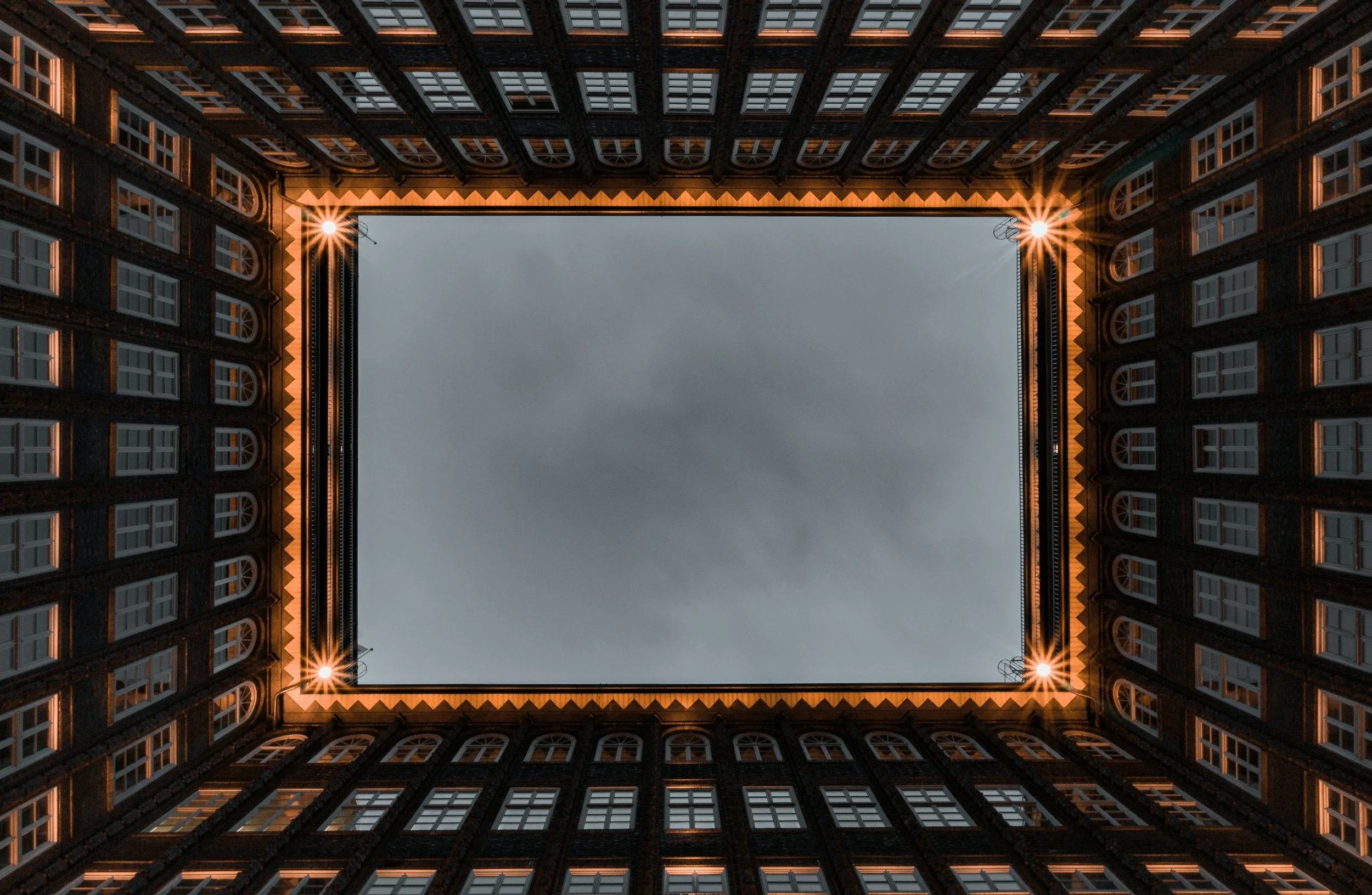
📷 Pro Tip: Position yourself at the eastern tip on Pumpen or Niedernstrasse to get the full ship's-prow effect. A moderate wide-angle (24 to 28mm) lets you include the full height of the building while keeping the prow framing tight. The best light hits the eastern face in the morning; come before 10am for warm directional light that emphasizes the brick texture. The interior courtyard is also worth exploring — it's a larger, quieter space with restaurants and a very different architectural feel from the exterior. Shooting on a day with some cloud cover eliminates the harsh contrast between the bright sky and the dark brick, which is one of the most common technical challenges at this location.
Best time: Morning for eastern face. Overcast days eliminate sky-brick contrast issues. Access: Free exterior. Interior courtyard accessible during business hours. Transit: U-Bahn to Meßberg, 3-minute walk.
Pickhuben
A quieter stretch of HafenCity where modern architecture meets the industrial grit of the surrounding docklands, Pickhuben rewards photographers who appreciate symmetry and clean architectural lines over grand landmark shots.
📷 Pro Tip: Walk the street slowly and look for repeating geometric patterns in the modern facades against older industrial structures behind them. A 24-70mm handles most compositions here; a wider 16-35mm helps when buildings crowd the frame at close range. Overcast days work well, keeping reflections on glass surfaces even rather than blown out.
Best time: Any time; overcast for even light on glass facades. Access: Free, public street in HafenCity.

St. Michael’s Church (Michel) –
Hamburg's most iconic church tower and a defining feature of the city's skyline, St. Michael's offers a climbable tower with panoramic views over the harbor and the Elbe.
📷 Pro Tip: Climb the tower in the late afternoon for warm side light across the rooftops and harbor. A 24-70mm covers the panoramic view comfortably; a 70-200mm lets you isolate specific landmarks like the Elbphilharmonie in the distance. The exterior itself is worth a separate shot from street level, especially at blue hour when the tower is illuminated.
Best time: Late afternoon for the tower view, blue hour for the illuminated exterior. Access: Paid entry for the tower climb.

Oberhafenbrücke –
Reached via Oberhafenbrücke, the Treppenviertel in Blankenese is a fairytale hillside neighborhood of pastel houses connected by a maze of staircases, with views over the Elbe River. It's one of Hamburg's most distinctive residential photography locations, worth the trip beyond the city center.
📷 Pro Tip: Visit at golden hour, when the pastel facades and the staircases catch warm, low light. A 24-70mm handles the tight, winding compositions well; a 35mm prime keeps you nimble on the narrow stairs. Wander without a fixed plan, the neighborhood's best compositions come from following the staircases rather than working from a location list.
Best time: Golden hour. Access: Free, public neighborhood. A short S-Bahn ride from the city center to Blankenese.

Classic View of the Rathaus
An imposing Neo-Renaissance building at the heart of the Altstadt, the Rathaus combines grand civic architecture with formal gardens and fountains, and offers an aerial view over both the old and new parts of the city if you climb it.
📷 Pro Tip: Photograph the classic facade view from across the gardens and fountains during the day, when the water features add foreground interest. Return at night for the illuminated light shows on the building. A 16-35mm captures the full facade and gardens; step back further for a wider environmental shot including the surrounding square.
Best time: Day for the classic view; night for illuminated light shows. Access: Free exterior; check current hours for tower access.

What most visitors miss is the courtyard at the back. Walk through the arch and you find a quieter, more contained space with the Hygieia fountain at its center. It's a completely different photographic environment from the busy square out front, and it's almost always less crowded.
📷 Pro Tip: The front facade is best shot from across the Rathausmarkt in the morning when the light comes in from the east and rakes across the carved stonework. Use a 24 to 35mm lens and include a small slice of the square in the foreground for scale. Blue hour is worth staying for: the building lights balance beautifully against the darkening sky and the reflections in the wet square pavement on rainy evenings are exceptional. For the courtyard, come at midday when diffused light fills the space evenly and the Hygieia fountain catches the light from above. A 35mm or 50mm prime works well there; the space is intimate and doesn't need a wide-angle.
Best time: Morning for facade light; blue hour for dramatic lit shots; midday for the courtyard. Access: Free exterior. Interior and courtyard accessible during business hours. Transit: U-Bahn to Rathaus, 2-minute walk.

Reeperbahn + St. Pauli
Hamburg's famous nightlife district transforms after dark into a world of neon signs, urban energy, and genuine street character. It's the strongest street photography location in the city once the sun goes down.
📷 Pro Tip: Shoot after dark with a fast prime, 35mm or 50mm at f/1.8 or wider, to handle the neon-lit, low-light conditions. Be respectful and aware of your surroundings; avoid carrying a tripod or heavy gear through the busiest stretches, and be mindful of both crowds and personal safety, particularly late at night.
Best time: After dark. Access: Free, public streets. Exercise normal city awareness, especially late at night.


Landungsbrücken + Ferry 62 –
Hamburg's historic harbor piers offer sweeping views over the working port, and riding the public Ferry 62 doubles as one of the best ways to photograph the harbor from the water itself, no special tour required.
📷 Pro Tip: Ride the ferry with your camera ready, the moving vantage point gives you angles on the harbor and skyline that you can't get from the piers themselves. From Landungsbrücken, sunset offers the strongest light on the water and the working boats. A 24-70mm covers most compositions from the ferry; a 70-200mm works well from the fixed piers for compressing distant harbor cranes and ships.
Best time: Sunset. Access: Free to walk the piers; standard public transit fare for the ferry, covered by the HVV card.

Rödingsmarkt Parking Garage
Rödingsmarkt Parking Garage — GPS: 53.54734, 9.9851. One of the most remarkable parking structures I have ever seen. The spiral ramp is architecturally extraordinary and fully accessible. Shoot looking straight up or straight down for a graphic vortex composition. Use the widest lens you have. Midday light filtering down through the open center creates a natural light well.
📷 Pro Tip: Position yourself at the very center of the lowest level and shoot straight up with a 16mm or wider. Use your phone's grid to center the composition precisely — even a small offset becomes obvious in the symmetrical frame. The best light comes in on clear mornings when the sun is directly overhead. Return after dark for an atmospheric long-exposure version with the garage's artificial lighting.

Emporio Hamburg
Nearest U-Bahn: Gänsemarkt, then 5 minutes on foot via Valentinskamp. The building's atrium staircase requires a very wide lens to capture in full. Shoot from the base of the staircase looking up. The geometry here is more restrained than the parking garage but equally compelling.
📷 Pro Tip: Use a 12 to 16mm lens and position yourself directly below the center of the staircase. The key technical challenge is balancing the bright atrium ceiling against the darker staircase structure. Expose for the highlights and recover the shadows in post, or shoot HDR. Weekday mornings during business hours are the best access window.
Spiral Staircases in Hamburg
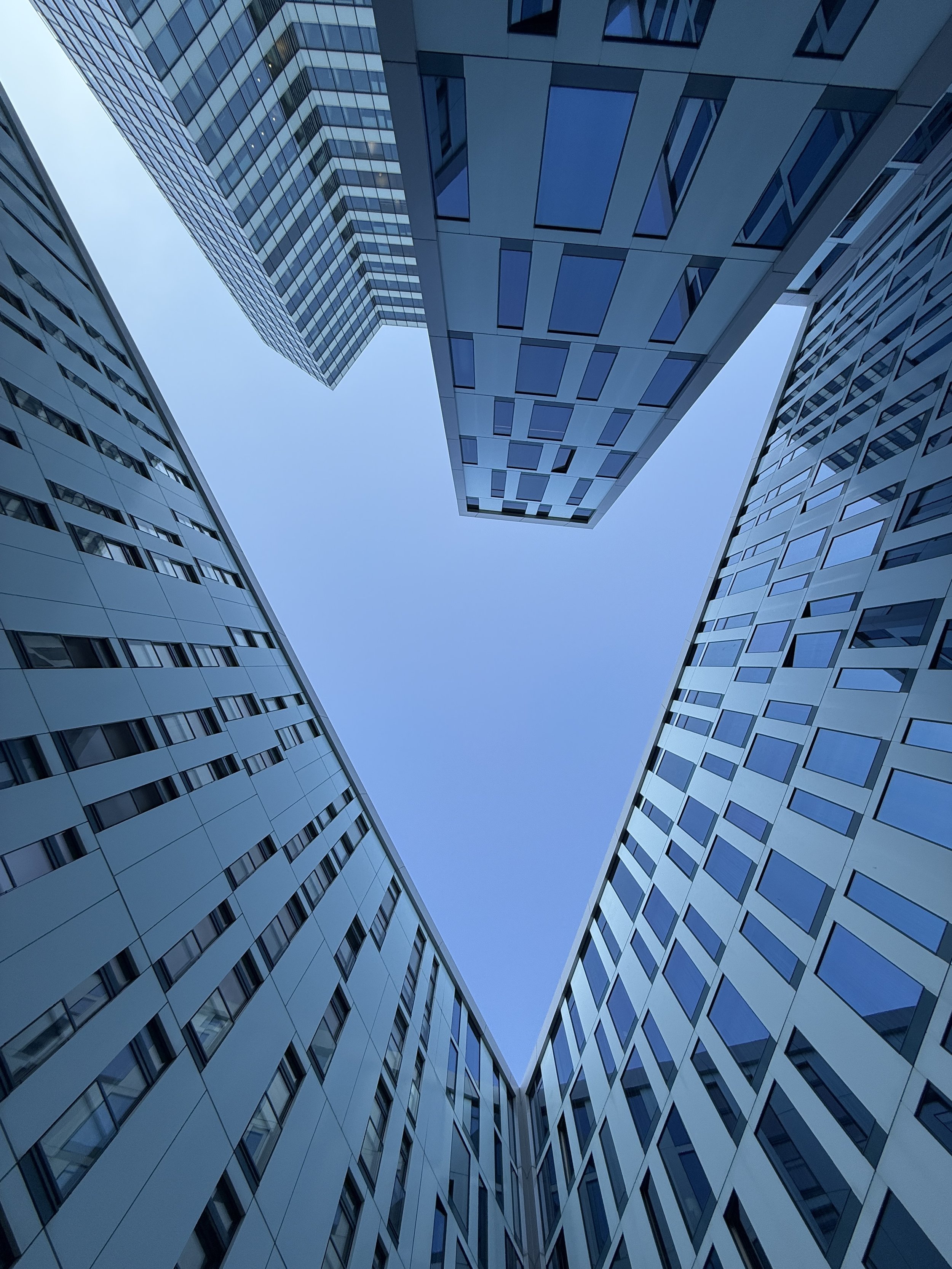
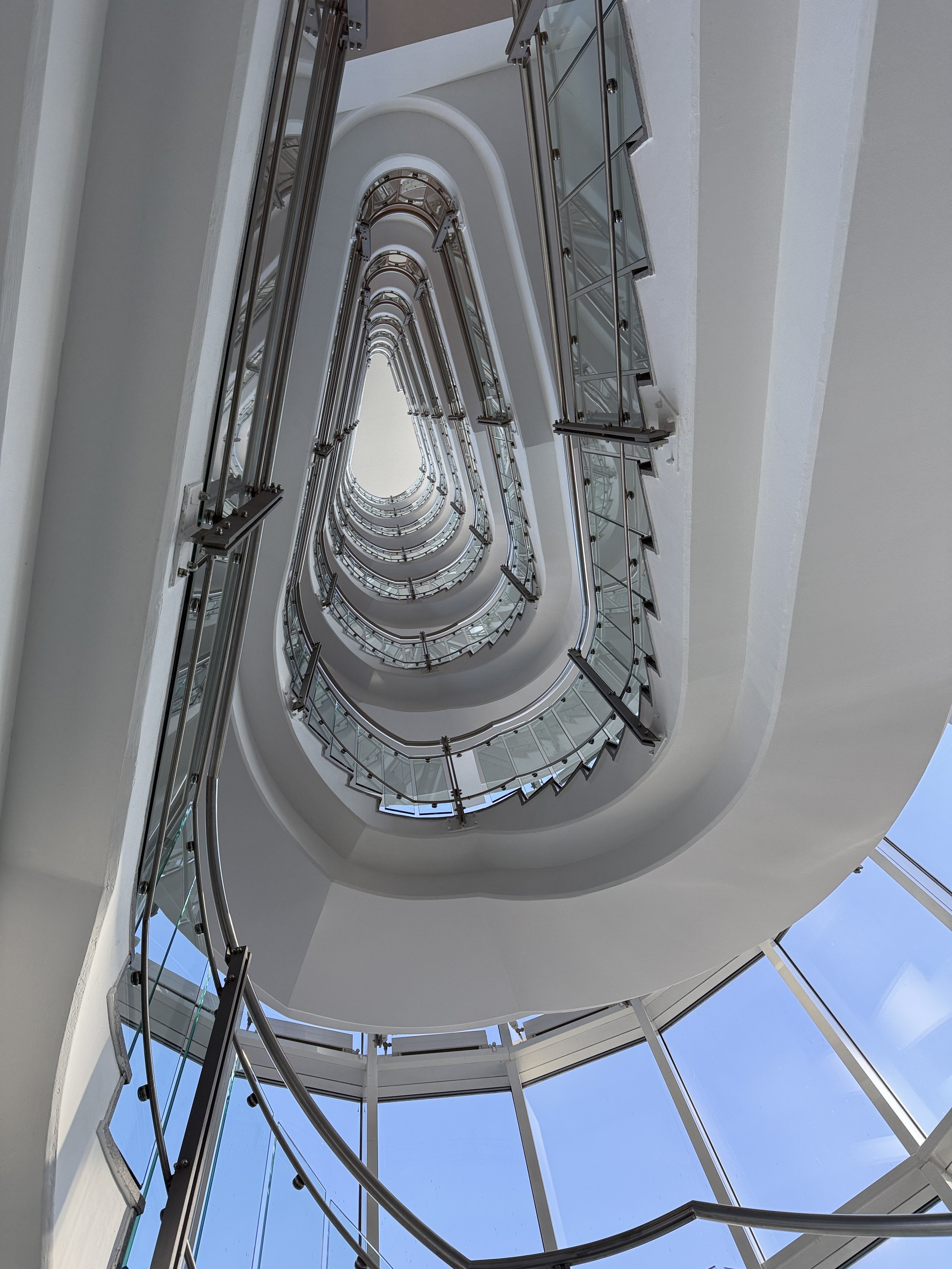
Scattered through Hamburg's office buildings, parking garages, and cultural landmarks are a surprising number of striking spiral staircases, genuinely underrated architectural subjects that most visitors never think to look for. The Rödingsmarkt parking garage offers a graphic, vortex-style composition; Emporio Hamburg near Gänsemarkt station is another strong example; and the Steigenberger Hotel's interior staircase, while not a classic spiral, has comparably striking lines and geometry.
📷 Pro Tip: Shoot straight up or straight down into the spiral for the strongest graphic composition. A very wide lens, 16mm or wider, is essential at Emporio Hamburg given the tight space. Many of the best staircases are in working office buildings with limited access, weekday business hours are your best window, and always be respectful when photographing inside active buildings. Consider booking a local photography workshop to find the harder-to-locate spots; there are reportedly dozens more scattered across the city that aren't easy to find independently.
Best time: Weekday business hours for office building access. Access: Varies by location; some are public, others require respectful entry during business hours.


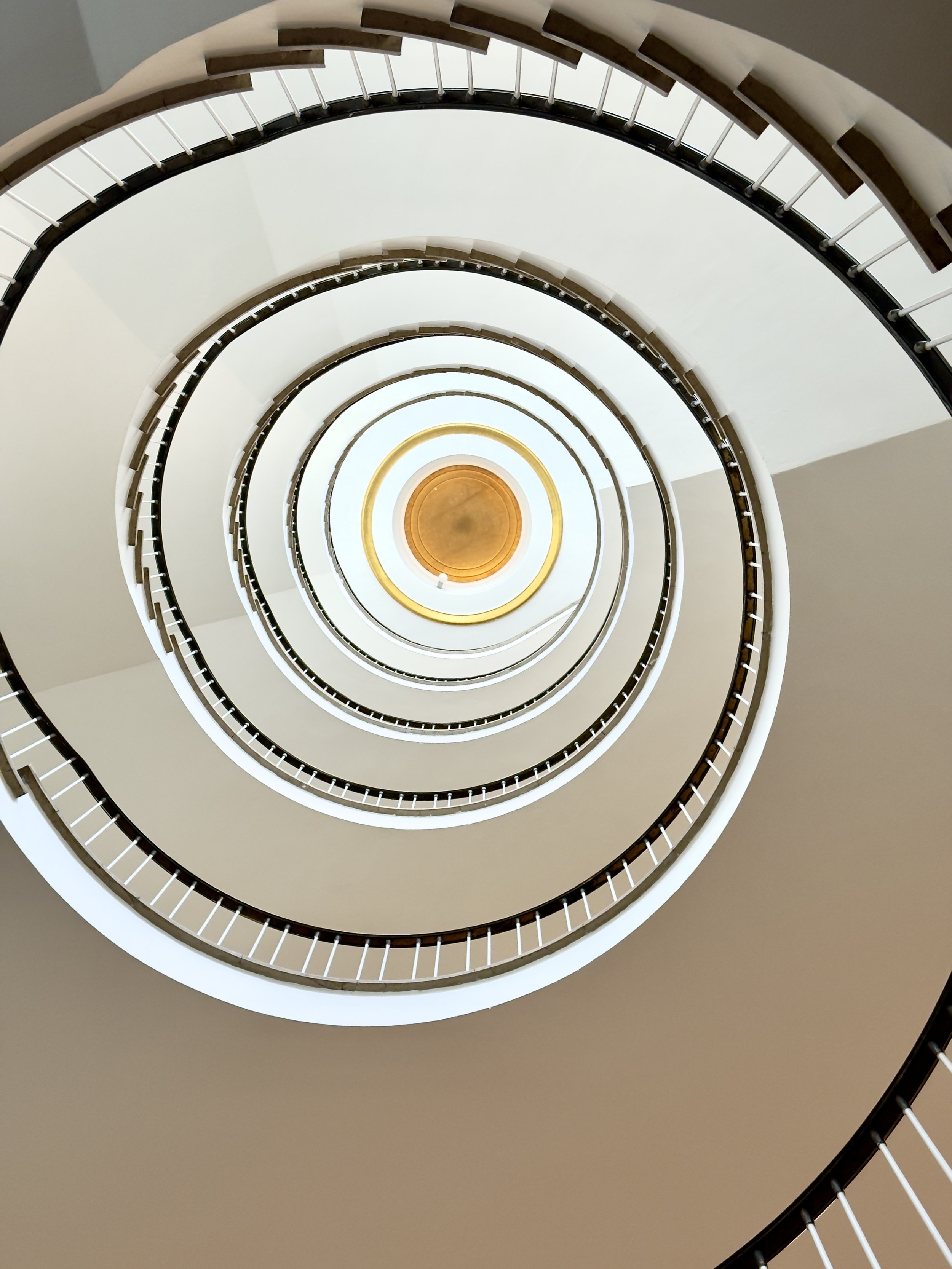


Stairs Steigenberger Hotel
Location: Steigenberger Hotel Hamburg, indoor staircase
What’s special: It's not a classic spiral, but the lines and geometry are just as visually exciting.
Photo tip: Shoot straight up
Graffiti in Hamburg
These four neighborhoods contain some of the best street art in northern Europe. The Schanzenviertel in particular has a concentrated density of murals, paste-ups, and tag work that gives any walk through it a constant stream of visual material. The Gängeviertel is a cluster of historic buildings that has been taken over by artists and collectives — it's an active creative space and one of the more unusual photography environments in the city.
📷 Pro Tip: Walk without a destination. The best graffiti in Hamburg is not always on the main streets; look at doorways, courtyards, and the sides of buildings set back from the road. A 35mm or 50mm prime is ideal for framing individual murals with some environmental context. Morning light on north-facing walls is usually flat and even, which works well for photographing murals cleanly. If you want a guided walk, several local operators run street art tours, or ask Greg Snell — he knows this neighborhood as well as anyone.

Festivals & Events in Hamburg
Hafengeburtstag (May) — Hamburg's harbor birthday celebration is one of the largest port festivals in the world. Tall ships, tugboat parades, fireworks, and enormous crowds fill the waterfront for a long weekend. For photographers, it's a rare opportunity to photograph historic vessels and maritime spectacle in the middle of a modern city. Shoot from the Landungsbrücken pier for the ship parade, or find a spot along the Elbe promenade for a wider perspective with the city skyline behind the ships.
Reeperbahn Festival (September) — Often described as Europe's SXSW, this music festival takes over the clubs and venues of St. Pauli for several days. It's primarily a music industry event, but the street activity, the crowds, and the nighttime energy in the neighborhood make for excellent photography. Good for portraits and street work in the evening.
Hamburger Dom (Spring, Summer, and Winter) — This large funfair runs three times a year on the Heiligengeistfeld. It's colorful, loud, and at night it's a photographer's playground: spinning neon rides, motion blur opportunities, food stalls, and faces lit by carnival light. Arrive after dark with a fast lens and a moderate ISO. The winter edition, with Christmas market stalls alongside the fairground rides, is the most visually layered of the three.
Sunday Fischmarkt — Not a festival, but worth treating like one. The fish market on the Altonaer Elbufer runs very early on Sunday mornings and is exactly what you'd hope: loud vendors, fresh fish, full chaos, and the kind of candid energy that produces great street photographs. Arrive before 8am for the best atmosphere.

Frequently Asked Questions About Visiting Hamburg
Is Hamburg worth visiting compared to Berlin or Munich?
Yes, and it's genuinely underrated. Hamburg doesn't try to charm you the way some German cities do, it's confident, maritime, and quietly stylish, and that honesty photographs beautifully.
Do you need a car in Hamburg?
No, the city is best explored by foot, ferry, and U-Bahn. The harbor ferries double as genuinely scenic photo opportunities, not just transit.
Is Hamburg expensive?
It can be, especially the standout restaurants, but there's real range. Casual cafés and the harbor markets let you experience the city well without a high price tag.
What are the best photo spots in Hamburg?
Speicherstadt at blue hour, the Elbphilharmonie Plaza at sunrise, and Blankenese's Treppenviertel at golden hour are three that consistently deliver. The full list is above.
Can you fly a drone in Hamburg?
Check current German and EU drone regulations before flying, particularly around the harbor and Speicherstadt, which likely carry restrictions given the density of historic warehouse architecture.
What surprised you most about Hamburg?
Meeting photographer Greg Snell and going on a spiral staircase treasure hunt through the city. Hamburg isn't the first place you'd think of for hidden architectural gems like that, but tucked inside office buildings and parking garages are some of the most striking, graphic compositions I found anywhere in the city, and I never would have found most of them without someone showing me where to look.
How many days do you need in Hamburg?
Four to five days to truly explore as a photographer, time to wander, wait on light, and revisit favorite spots beyond the postcard views.
Is Hamburg worth combining with Düsseldorf or Cologne?
Yes, though it's a longer trip, about three hours from either by train. If you're doing a broader Germany itinerary, Hamburg offers a maritime, northern character that neither Rhine city can match.
Final Thoughts
Hamburg stays with you. It's not the loudest city in Europe, and it doesn't compete for your attention the way some destinations do. But give it a few days, and it reveals itself, one canal reflection at a time. The spiral staircases that most visitors never find. The harbor light at dawn when the city is almost silent. The food that's better than you expected and the coffee that's exactly as good as you hoped.
I've come back to Hamburg three or four times now, and each visit has added a layer. That's the mark of a city worth returning to.
Want to improve your photography while exploring some incredible destinations? Join me on one of my photography workshops! You can find all the details, including upcoming destinations and dates, through the links below.
Let's Stay Connected!
More Guides to Explore
My Photography and Travel Guide to Amsterdam, Netherlands — If Hamburg appeals to you, Amsterdam will too. Both cities are built on water, both reward slow walks and patient observation, and both have a canal-and-brick character that photographs beautifully at almost any time of day. Amsterdam adds the Jordaan neighborhood, the flower markets, and a density of photographic subjects per square kilometer that is hard to match anywhere in Europe.
My Photography and Travel Guide to Copenhagen, Denmark — Hamburg and Copenhagen share a sensibility: the Nordic cool, the canal architecture, the serious coffee culture, and the confident sense of design. A two-hour train ride through the Øresund Bridge connects them. If Hamburg is the warmer cousin, Copenhagen is the original.
My Photography and Travel Guide to Sylt, Germany — Hamburg is the natural starting point for a trip to Sylt, Germany's North Sea island and one of the most extraordinary landscape photography destinations in the country. Wide tidal flats, dramatic dune landscapes, and a stark northern light that has nothing to do with the rest of Europe. Take the train from Hamburg Altona directly to the island.
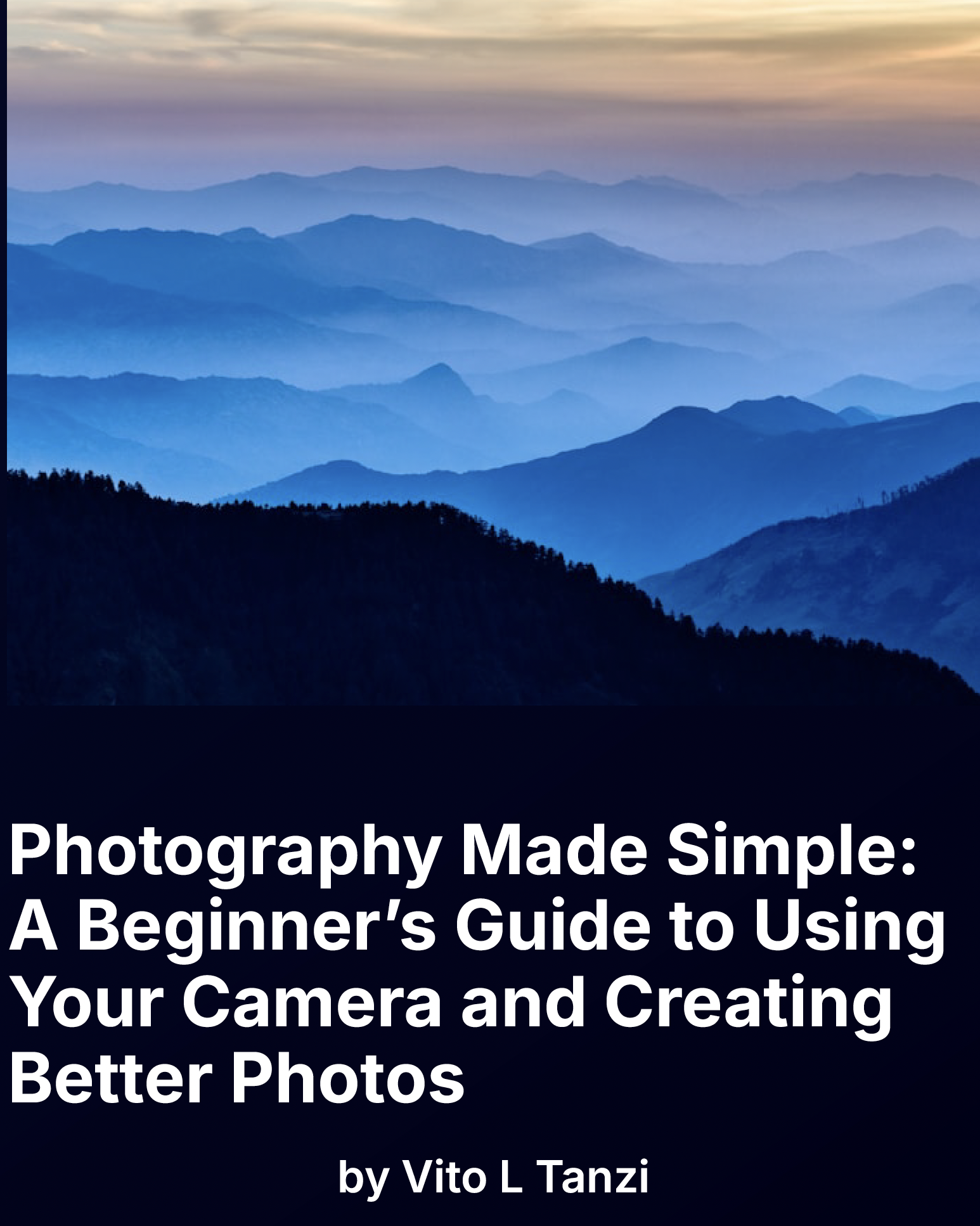
Finally—a beginner-friendly photography guide that makes sense.
If you've ever picked up a camera and thought, "Now what?" this is the book for you.
Photography Made Simple is written for adults who are just starting out and want a clear, encouraging, real-world approach to learning photography. Whether you're using a DSLR, mirrorless, or just your smartphone, this guide walks you through the basics—without the jargon or tech overwhelm.
Inside, you'll learn:
The only camera settings you really need to know to get started
How to shoot sharper, more intentional photos using light and composition
Simple tips for portraits, landscapes, travel, and everyday life
What gear you do (and don’t) need
How to create better photos without upgrading your camera
You’ll also get practical exercises, cheat sheets, and tips for organizing and editing your images—plus the confidence to shoot off Auto Mode for good.
This is not a textbook. It’s a friendly guide to seeing the world with fresh eyes—and finally capturing what you see the way you imagine it.
📸 Format: PDF download
Pages: 100+
Perfect for: Beginners, hobbyists, and anyone ready to take better photos without the stress

🎓 Adobe Lightroom One-to-One Training
Master Post-Processing. Elevate Your Photography.
Post-processing is the final — and arguably most transformative — step in your photography workflow. Adobe Lightroom is an essential tool for today’s digital photographers, combining powerful editing tools with an intuitive system for organizing and showcasing your images professionally.
Whether you're just getting started or looking to refine your editing skills, I offer customized one-to-one Lightroom training designed to help you create images you’ll be proud to share.
---
💻 Why One-to-One Online Lightroom Training?
Over the years, I’ve found that personalized training is the most effective way to learn Lightroom. Unlike group sessions, a one-to-one format allows us to move at your pace, focus on your specific goals, and eliminate the frustration of mismatched experience levels.
Plus, with online sessions via Zoom, you can learn from the comfort of your home — no travel or accommodation needed. It's the most convenient, cost-effective, and time-efficient way to upgrade your editing game.
---
🧠 Tailored Topics to Match Your Goals
Our training is completely customizable, but here’s an outline of the modules we can cover — either in full or à la carte.
---
🔧 Lightroom Setup – Part 1: Getting Started
Set up Lightroom properly for long-term success. We’ll tackle the fundamentals to create an efficient, organized workflow:
- What Lightroom is (and isn’t)
- How the interface and modules work
- Setting preferences for your needs
- Understanding the Catalog and folder system
- Importing images efficiently
- Adding keywords during import
---
🗂 Lightroom Setup – Part 2: Organize Like a Pro
Build a storage system that grows with you:
- Folder structure tips and best practices
- Moving and renaming files within Lightroom
- Reviewing, rating, and filtering images
- Creating Smart Collections and Collection Sets
- Keywording strategies and metadata organization
---
🎨 Lightroom Editing – Part 1: Core Editing Skills
Master the Develop module and create consistent, polished images:
- Global adjustments in the Basic panel
- White balance, contrast, vibrance, and saturation
- Cropping and converting to black & white
- HSL panel tuning
- Sharpening and noise reduction
- Creating and saving presets
- Exporting for print, web, or social media
---
✨ Lightroom Editing – Part 2: Advanced Techniques
Take your editing to the next level with creative, selective tools:
- Radial and Gradient filters
- The Adjustment Brush
- Advanced masking and luminosity adjustments
- Enhancing portraits (skin, eyes, teeth)
- Spot removal and basic cloning
- Merging for HDR and panoramas
---
💼 Session Details & Pricing (USD)
Tailored One-to-One Lightroom Tuition:
- Single Session (2 hours): $199
Before our session, we’ll have a brief consultation to customize your training plan and ensure it meets your exact needs.
---
Ready to take control of your editing workflow and bring out the best in your images?
Let’s work together to turn your vision into vivid, powerful photos.
📩 Get in touch to schedule your personalized Lightroom session.