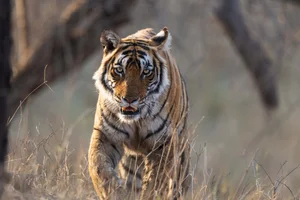
Dudhwa National Park, India Travel & Photography Guide: Best Tiger Safaris, Photo Spots, Map & Hidden Gems
Dudhwa National Park is not the kind of safari destination you stumble upon. You go there with intention.
Located near the Nepal border in Uttar Pradesh, Dudhwa lacks the fame of India's better-known tiger reserves, and that's part of its appeal. Tall grasslands stretch toward the horizon. Dense sal forests close in around narrow tracks. Mist drifts across wetlands at dawn. With fewer vehicles on safari than in more commercial reserves, sightings unfold more naturally, and you have space to compose thoughtfully instead of reacting in chaos. You may wait longer here. You may see less. But when something does happen, it feels earned.

Standing in the pre-dawn chill with your breath visible in the mist, the forest holds a kind of silence that sharpens every sense. The distant call of a sarus crane. The sudden alarm calls of langurs in the treetops. A tiger materializes through tall grass.
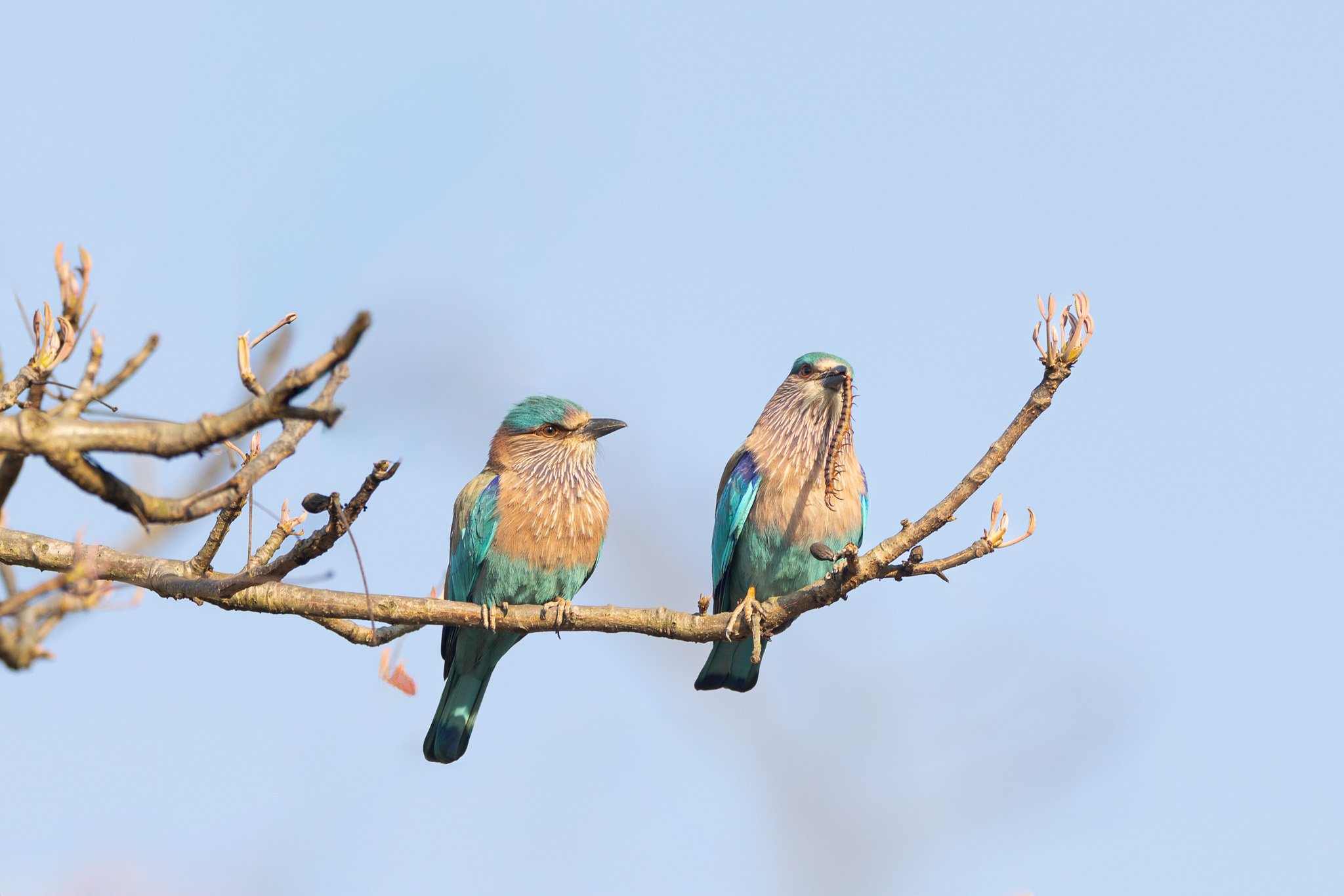
There's also the one-horned rhinoceros, reintroduced to the park decades ago and now quietly reclaiming its space. For anyone with a long lens and a love for wings, Dudhwa is heaven, over 450 bird species, including hornbills, kingfishers, raptors, and the elegant sarus wading through mirror-still ponds at sunrise.
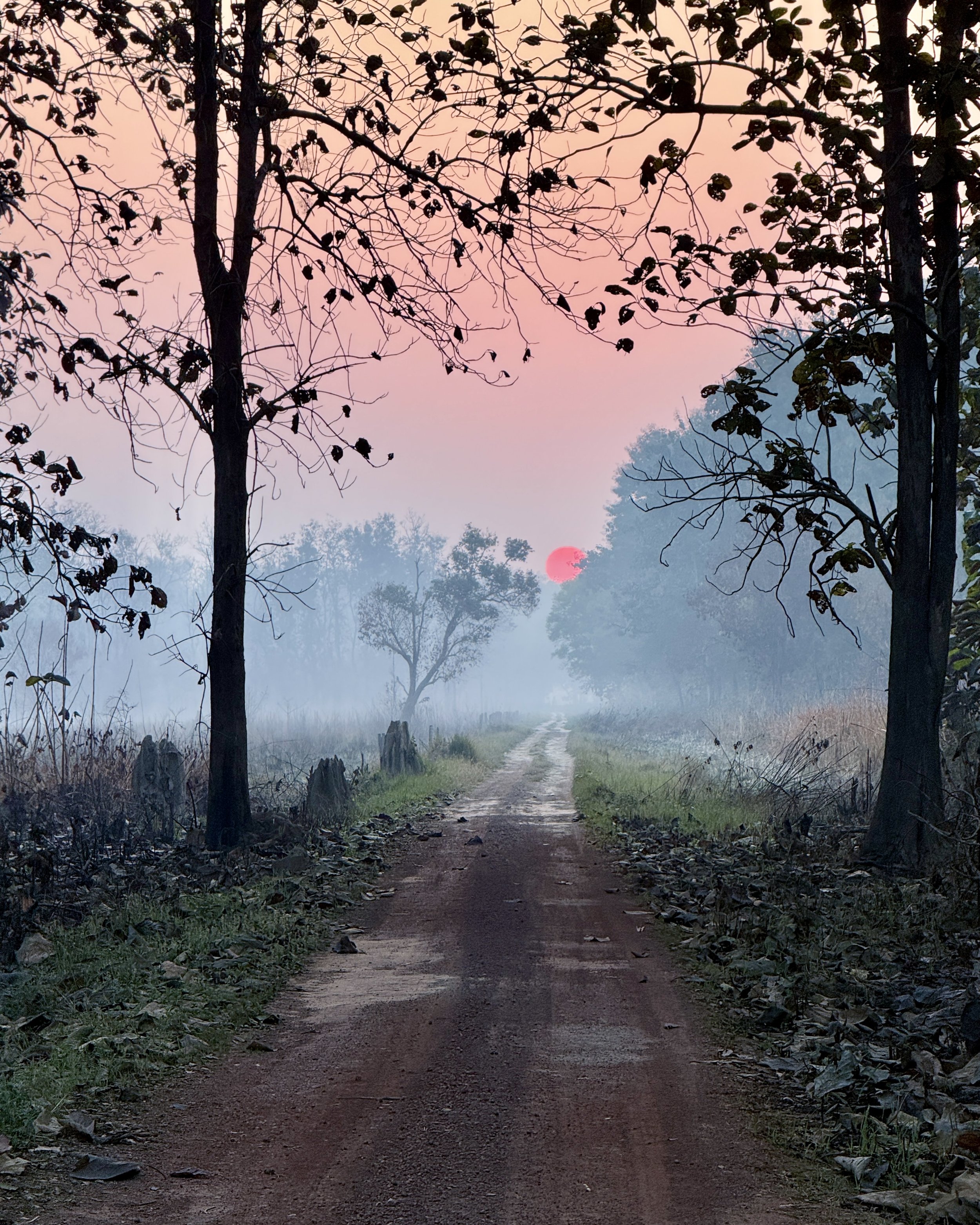
Dawn in Dundwa
Patience here is not optional; it's part of the experience. You listen more than you speak. You scan slowly. You trust your guide's instincts rather than your own impulse to chase. For photographers and travelers looking for something more authentic than a checklist safari, Dudhwa offers space, solitude, and uncertainty, the raw materials of a trip that asks something of you before it gives anything back.
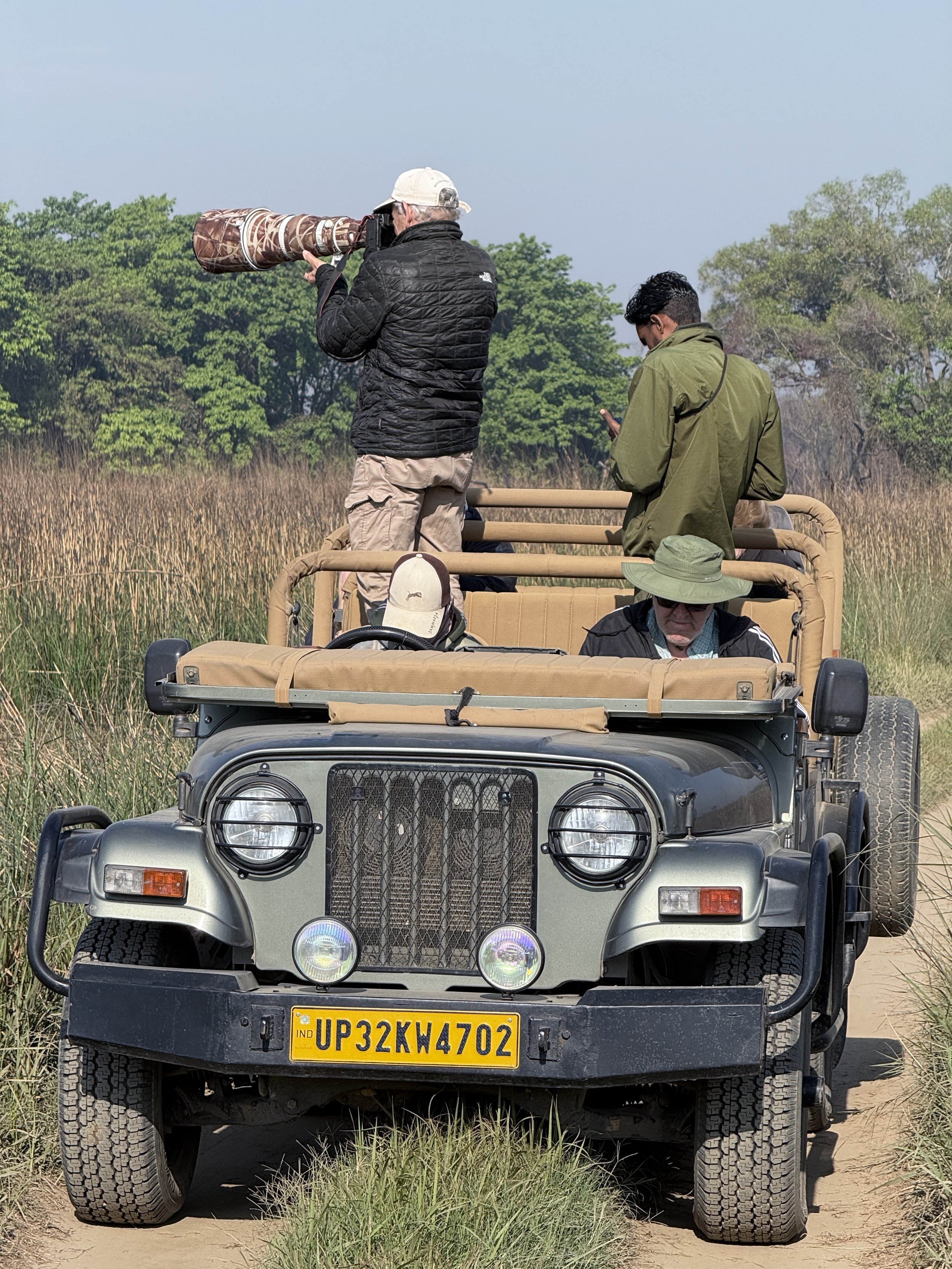
Amazing Photographers Tony Goldman and Len Cohen
This is not a park for everyone, and it shouldn't be sold as one. The remoteness that makes it quiet also makes it a real commitment to reach. If what you're after is atmosphere and unpredictability over guaranteed sightings, that trade is worth understanding honestly before you plan around it.
This Travel & Photography guide covers how to get there, when to visit, what to bring, and how to give yourself the best chance of coming home with meaningful photographs from one of India's most underrated tiger landscapes.

Photographer's Notes
Before you go, here are my own takeaways.
Favorite Season: December through March
Favorite Zone: Sathiana Range
Favorite Hotel: Jaagir Lodge by Tree of Life
Favorite Wildlife Sighting: The one-horned rhinoceros
Favorite Lens: 400mm f/2.8
Would I Return? The wildlife and quiet were real, but the distance and logistics made it a tough trip to justify.
Where to Stay in Dudhwa National Park
Choosing the right base in Dudhwa matters.
The park is divided into three primary zones: Dudhwa, Kishanpur, and Katarniaghat. Each offers slightly different terrain and wildlife dynamics. For most visitors, staying near the main Dudhwa gate provides convenient access for early morning drives. If you want broader coverage, especially for diverse habitats and fewer vehicles, basing yourself near the Kishanpur or Katarniaghat sanctuaries is a strategic choice.
Accommodations here are not large-scale luxury resorts. That is part of the appeal.
You will find:
• Intimate jungle lodges
• Conservation-focused eco stays
• Comfortable forest rest houses
The experience is immersive rather than opulent.
Expect warm hospitality, knowledgeable naturalists, and early wake-up calls for dawn drives. Electricity may be limited in some properties. Wi Fi can be inconsistent. That is not a flaw. It is part of the reset.
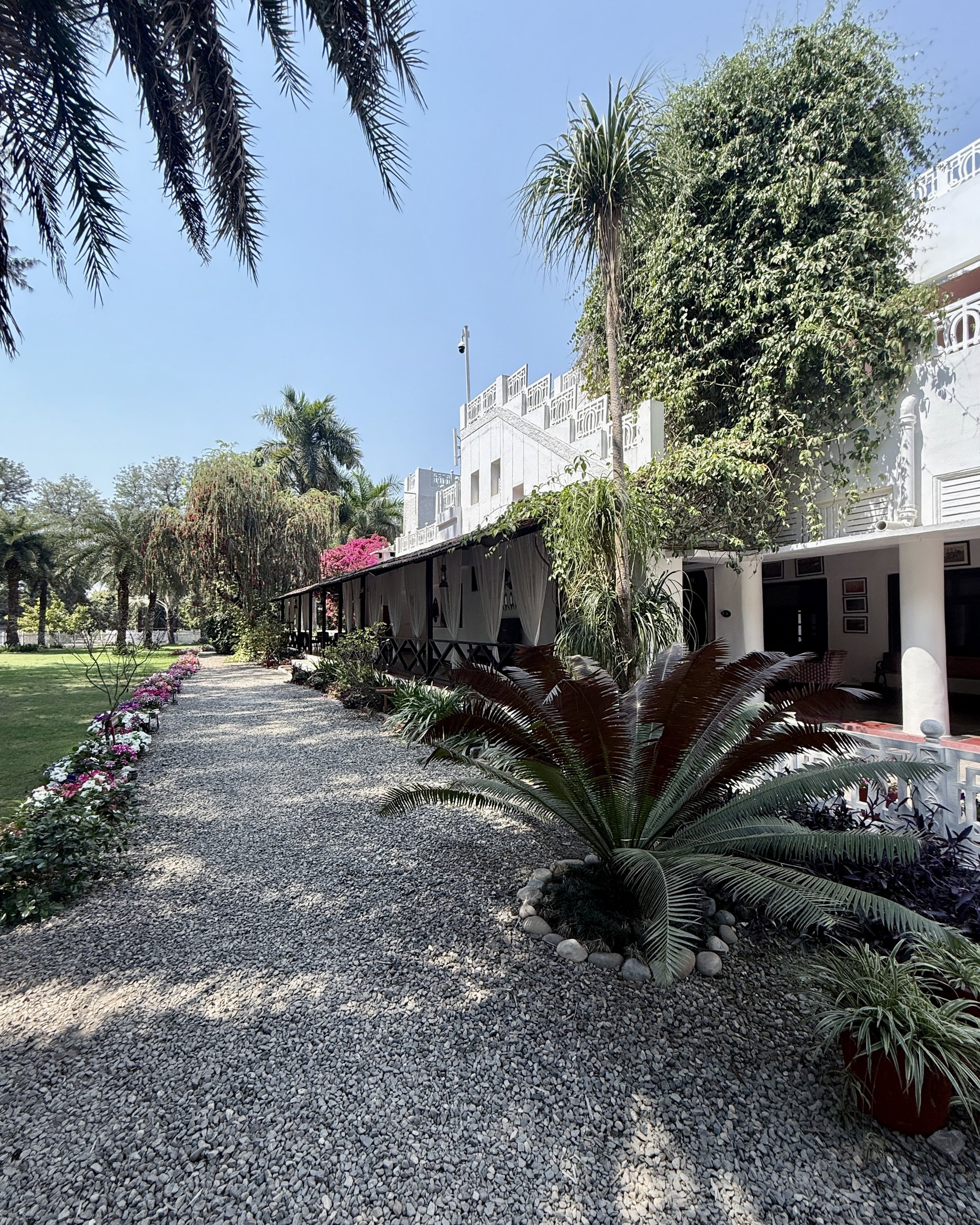
Jaagir Lodge
Luxury Hotels in Dudhwa National Park
Jaagir Lodge by Tree of Life – A heritage hunting lodge turned luxury retreat, with boutique rooms and guided safaris. This is a fantastic hotel.
The Corbett Jungle Lore – Offers packages that include Dudhwa excursions with expert naturalists.
Dudhwa Wilderness Camp – Rustic luxury with a focus on conservation and immersive wildlife experiences.

Shot on a morning walk by the hotel
Mid-Range Options in Dudhwa National Park
Dudhwa Tiger Reserve Forest Rest Houses – Basic yet well-located government-run options inside the park.
Wild Tusker Lodge – A cozy, budget-friendly lodge popular with wildlife photographers.
Eco-Hut Homestay – Offers an authentic stay with local hosts and home-cooked meals.

A Bee-Eater
How Many Days Should You Stay in Dudhwa?
Dudhwa is not a one-drive destination.
For a meaningful wildlife and photography experience, plan for three to five days.
Here is why that matters:
Wildlife in Dudhwa is not guaranteed on every drive. The tall elephant grass and dense sal forests make sightings more challenging, which is part of the park’s appeal. Multiple game drives significantly increase your chances of encountering tigers, swamp deer, rhinoceros, and birdlife in compelling light.
Three days allow for:
• Several morning and afternoon safaris
• Exploration of at least two zones
• A realistic opportunity for quality sightings
Five days provide:
• Access to all three zones, including Kishanpur and Katarniaghat
• More time for predator behavior rather than fleeting glimpses
• Flexibility for changing light and weather conditions

By our hotel on a morning walk
Best Time to Visit Dudhwa National Park
Dudhwa National Park is open from November through mid-June, with the strongest wildlife viewing typically occurring between December and March.
The winter months are ideal for photographers.
Cooler temperatures create misty mornings that add depth and atmosphere to forest scenes. Soft golden light filters through sal trees at dawn, producing layered compositions that feel cinematic. The air is clearer, and wildlife activity is steady throughout the day.
From April to mid-June, temperatures rise significantly.
This is the dry period, and water sources become more limited. That can increase the chances of predator sightings near water, but the heat is intense, and light becomes harsher by late morning. Dust levels also increase.
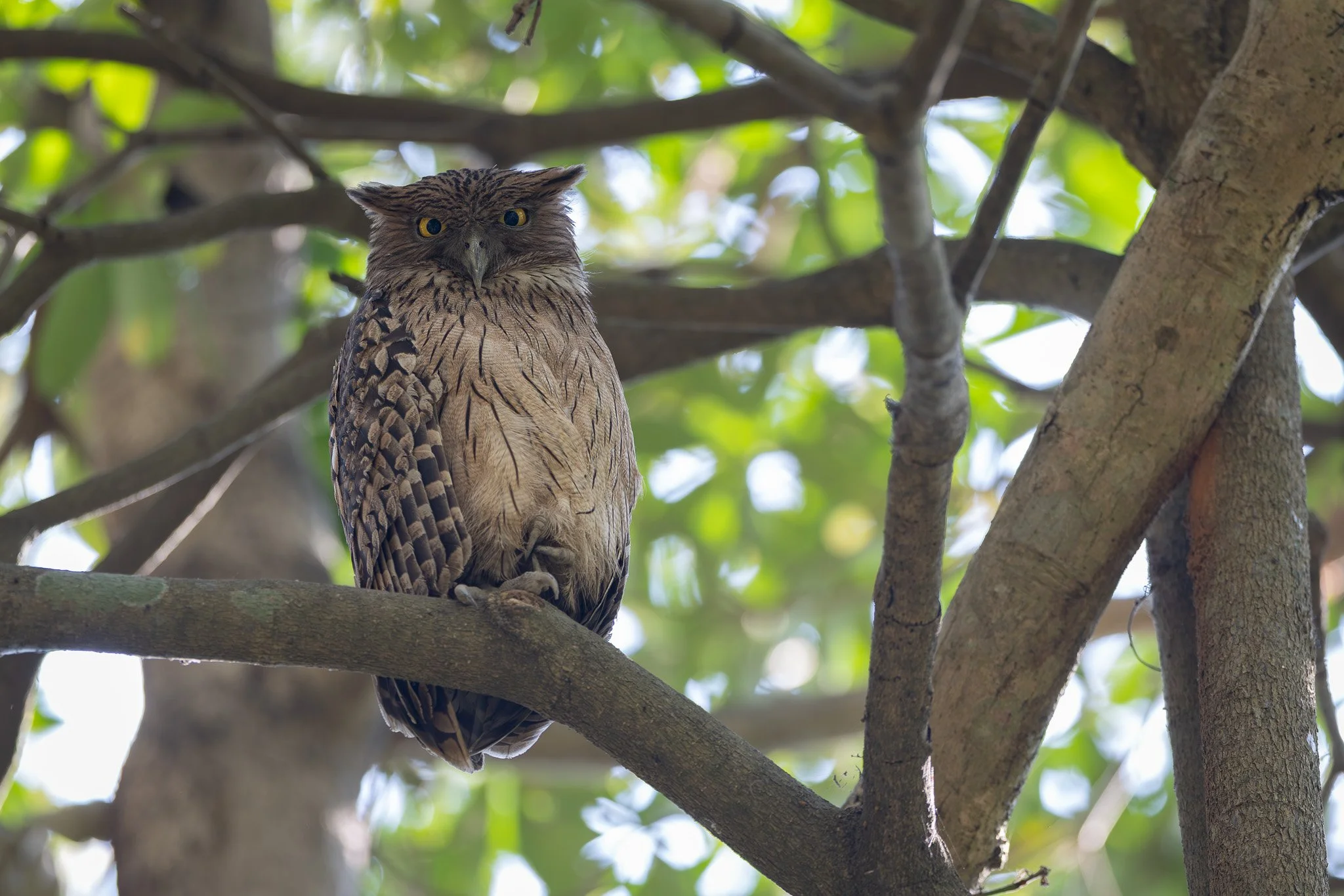
A Fish Owl
How to Get Around Dudhwa
Once you arrive, your only mode of transport inside the park will be an authorized open safari jeep.
These vehicles are operated by trained drivers and licensed naturalists who understand the terrain, animal movement patterns, and park regulations. You cannot self-drive inside Dudhwa.
Safaris are typically conducted twice daily:
• Early morning drives at sunrise
• Late afternoon drives leading into golden hour
Each drive lasts approximately three to four hours, depending on the zone and wildlife activity.
Zone Access
Dudhwa is divided into three main areas:
• Dudhwa
• Kishanpur
• Katarniaghat
Permits are zone-specific, so your lodge or operator will help secure access in advance. It is wise to rotate zones if staying multiple days, as each offers slightly different landscapes and wildlife opportunities.

Landscapes in the Park
For long-distance travelers:
Closest railway station: Dudhwa or Palia Kalan.
Nearest airport: Lucknow (230 km) or Bareilly (250 km).
Rideshare apps: Not available—arrange transport with your lodge.

Rhesus monkeys
Safari Vehicles in Dudhwa: All About the Gypsy
When you enter the forests of Dudhwa, your vehicle will almost certainly be a Maruti Suzuki Gypsy.
It may not look luxurious. That is not the point.
It is built for terrain, not comfort.
What is a Gypsy?
The Gypsy is a compact 4x4 open-top jeep used across most Indian national parks. It is favored for its reliability, maneuverability, and ability to navigate narrow jungle tracks that larger vehicles cannot access.
Its open design is ideal for wildlife photography.
You can shoot from either side. You can stand when permitted. You have a clean line of sight over tall grass. The vehicle’s size allows the driver to quickly reposition when wildlife crosses the road.
Seating & Layout
Most Gypsies seat six guests plus a driver and guide.
If photography is your priority, consider booking a private vehicle. This allows:
• Flexibility in positioning
• More space for gear
• The ability to wait longer at sightings
• Control over when to move
Middle row seats often provide the best balance of stability and viewing angle.
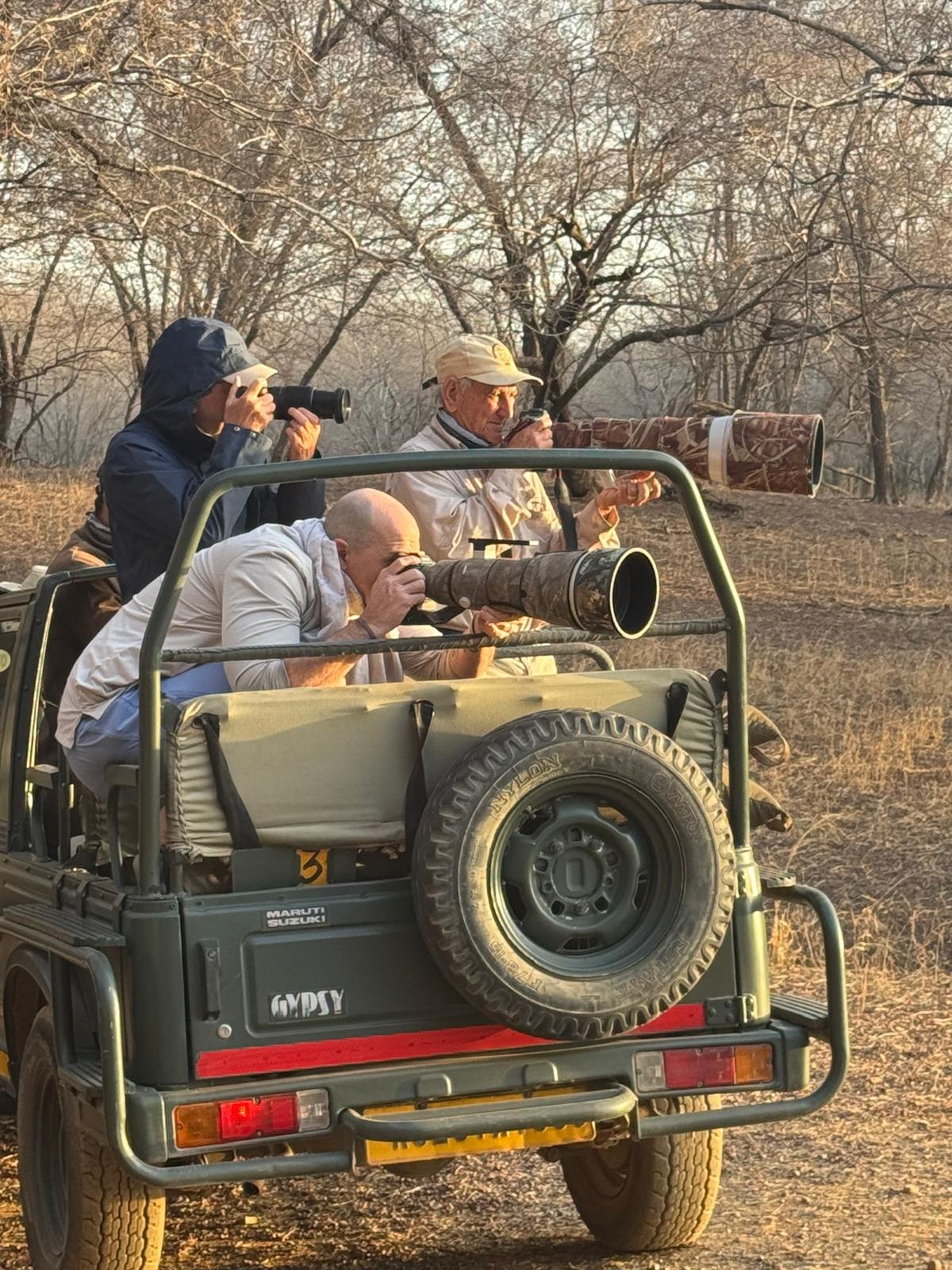
Photo Credit: Haley Blogg
What to Expect on Safari:
Seating: Typically accommodates 6 passengers, including a driver and park guide. Photographers can often book a full vehicle for more shooting flexibility.
Open Top: Offers an unobstructed 360-degree view—great for wide-angle shots, spotting birds overhead, and tracking wildlife movement.
Custom Rigs: Some lodges or private operators offer Gypsies with customized camera mounts or beanbag setups for added stability.
Pro Photography Tips for Shooting from a Gypsy:
📸 Bring a beanbag or clamp mount—tripods are tough to manage in a moving vehicle.
🔭 Sit on the back bench if you prefer a bit more elevation and side-angle flexibility.
🧢 Don’t forget a hat, sunglasses, and a dust cover for your gear during dry months.
💨 Wear layers—it can be chilly at 6 AM and scorching by 10.
Where to Eat
Jaagir Lodge Restaurant - we had all our meals in our hotel
Wild Tusker Kitchen
Eco-Hut Dining Hall
Photography Gear to Bring for Dudhwa
Dudhwa’s dense forests, tall grasslands, and soft morning light make it a dream for wildlife photographers. Here’s what you need:
Camera Bodies
A few recommendations for Camera bodies:
Canon: EOS R5M2 or R1
Sony: Alpha A1/2 or A7R V
Nikon: Z6, Z9 or Z8

Our First Sighting
Lenses
My lens recommendations:
Telephoto: 100-400 mm, 300mm f/2.8, 400mm f/2.8, 100-500mm, or 200-600mm
Zoom: 24-70mm for habitat and jeep shots
Wide-Angle: 16-35mm for landscapes, forest canopy, and storytelling images
Pro Lenses for Tiger Photography
Sony FE 300mm f/2.8 GM OSS
Canon RF 400mm f/2.8L IS USM
Nikon Z 400mm f/2.8 TC VR S
Sony FE 600mm f/4 GM OSS
Canon RF 600mm f/4L IS USM



Accessories
My recommendations:
Tripod or beanbag (for jeep setups)
ND filters & circular polarizers are not needed
High-capacity memory cards & extra batteries
Binoculars – A must for early spotting
Drone: Not allowed within park zones

Lens Tips for Tiger Photography
Focal Length: A minimum of 300mm is ideal. 400mm–600mm gives you more flexibility, especially for tighter shots without disturbing the animal.
Aperture settings of f/2.8 or f/4 allow you to shoot in early morning or low light while creating beautiful background separation.
Flexibility: Consider a second body with a 70-200mm or 100-500mm lens for environmental portraits or close encounters.
Teleconverters: Don’t hesitate to pack one—both Canon and Sony’s extenders pair excellently with their flagship glass.

Dust Protection Tips for You & Your Camera Gear
Protecting Your Gear from the Dust Recommendations:
Use rain/dust covers or zip locks
Avoid changing lenses in the field
Wipe gear daily with a microfiber cloth

Protecting Yourself from the Dust
Wear a buff or cotton scarf over your nose and mouth
Use wrap-around sunglasses
Carry a saline nasal spray
Stay hydrated with a reusable bottle

Top Photography Spots in Dudhwa
Sathiana Range – Tigers, rhinos, swamp deer
Banke Tal Wetlands – Migratory and resident birds
Sal Forests – Dramatic light at sunrise
Kishanpur Sanctuary – Leopards and deer
Katarniaghat Sanctuary – Elephants, gharials, river dolphins
Photo Tip: Best light is between 6–9 AM and 4–6 PM.
Frequently Asked Questions About Visiting Dudhwa National Park
How do you get to Dudhwa?
It's genuinely remote. The nearest airports are Lucknow (230 km) or Bareilly (250 km), and there's no rideshare available once you arrive, your lodge arranges transport. Factor the travel time into your overall trip planning, this isn't a quick add-on to a Delhi itinerary.
Are tiger sightings guaranteed?
No, and less so than at more commercial reserves. Dudhwa's tall grass and dense sal forest make sightings genuinely uncertain, which is part of its character, but worth knowing going in if a guaranteed tiger photo is your priority.
What makes Dudhwa different from Ranthambore?
Far fewer vehicles and a quieter, more remote atmosphere, plus the added draw of one-horned rhinos and over 450 bird species. It rewards patience over volume, you may see less, but what you do see feels earned.
Can you fly a drone in Dudhwa?
No. Drones are not allowed within park zones. Leave it at home.
What surprised you most about photographing Dudhwa?
How quiet the jungle is right on the Nepal border, and how few vehicles you encounter compared to Ranthambore. It's a genuinely different pace and experience.
How many days do you need in Dudhwa?
Three to five days. Wildlife isn't guaranteed on every drive here, so multiple game drives across several days meaningfully improve your chances.
Is Dudhwa worth the trip compared to more accessible reserves?
It depends on your priorities. The remoteness and lower vehicle density deliver a genuinely different experience, but the distance and logistics are real considerations, this isn't a park to add on lightly.
Final Thoughts
Dudhwa may not have the name recognition of other Indian parks, but it offers an unrivaled blend of seclusion, biodiversity, and photographic opportunity.
Want to improve your photography while exploring some incredible destinations? Join me on one of my photography workshops! You can find all the details, including upcoming destinations and dates, through the links below.
Let's Stay Connected!
If you are planning a broader India trip, Delhi pairs naturally with the following destinations:
My Photography & Travel Guide to Agra — Two and a half hours from Delhi by train and home to the Taj Mahal, the Agra Fort, and Fatehpur Sikri. Agra is the logical first extension of a Delhi trip, and the sunrise photography at the Taj Mahal is one of the defining photography experiences of a lifetime.
My Photography & Travel Guide to Jaipur — The Pink City is four to five hours from Delhi by train and an entirely different visual experience. The palaces, the blue pottery, the camel-lined roads, and the chaos of the old city all reward photographers of every level. Delhi, Agra, and Jaipur form the Golden Triangle, and it is one of the best photography itineraries in the world.
My Photography & Travel Guide to Hong Kong — If you are traveling across Asia and Delhi is part of a longer journey, Hong Kong is a five-hour flight away and an extraordinary contrast. Where Delhi is ancient, layered, and chaotic, Hong Kong is vertical, polished, and electric. The two together tell a remarkable visual story about Asia's range.
✈️ Travel Photography Planning Sessions
One-on-One Trip Planning with a Professional Travel Photographer
Don’t miss the shot. Let me help you plan for it.
Overview
Planning a photography-focused trip can be overwhelming. From figuring out the best places to shoot, to when the light is just right, to knowing which lens to pack — there are a lot of decisions to make.
This one-on-one Zoom session is your chance to get personalized travel photography advice from someone who’s spent the past 25 years exploring cities, coastlines, and wild places around the world — camera in hand.
Whether you're headed to Paris, Patagonia, Tokyo, or Tuscany, I’ll help you make sure your photography trip is well-planned and creatively inspired, so you come home with the images you dreamed of (and then some).
What’s Included
✅ Photography Location Planning
I’ll help you create a customized itinerary of the best photo spots, including off-the-beaten-path gems and iconic views.
✅ Best Times to Shoot
Get expert advice on lighting, golden hour, blue hour, and seasonal conditions for each location.
✅ Gear Recommendations
Not sure whether to bring the telephoto or the prime? We’ll walk through your gear and make sure you’re bringing the right tools for your destination and style.
✅ Hotel and Base Recommendations
Stay where it’s convenient for sunrise shoots and late-night strolls with your camera. I’ll recommend hotels that are photographer-friendly and well-located.
✅ Custom Travel Tips
From sunrise entry times to tripod rules at major landmarks, you’ll get insider tips to save time, avoid tourist traps, and make the most of your trip.
Who It’s For
This service is for anyone who:
Is planning a trip and wants to prioritize photography
Wants expert insight on the best places to shoot and how to get there
Is tired of missing the shot because of poor planning or bad timing
Is a beginner, enthusiast, or professional photographer looking for guidance before a trip
How It Works
Book a Session
Choose a time that works for you and tell me where you're headed.Share Your Plans
You’ll fill out a quick questionnaire so I know your travel dates, interests, and photography style.One-on-One Zoom Call (60 minutes)
We’ll meet via Zoom and walk through your trip together — from location ideas to gear and timing. You'll leave with a custom PDF full of notes and suggestions.Follow-Up Support
Get one round of email Q&A after your session to clarify anything as your plans evolve.
Why Work With Me?
I’ve spent the last 25 years photographing the world — from major cities to remote islands. I know what it’s like to travel and shoot under pressure, and I love helping people get the most out of their trips. This is not just about hitting “popular spots” — it’s about crafting a creative and efficient plan tailored to your trip, your gear, and your goals.
Pricing
$125 / Session
Includes:
60-minute Zoom call
Custom PDF summary with photography spots, gear tips, and travel recommendations
One follow-up email with additional Q&A
Introductory rate available through September 2025
Ready to Plan Your Trip?
Let’s make sure you’re ready — so when the light is perfect, you’re in the right place with the right gear.
Questions?
Please email me at vito@chasinghippoz.com if you're not sure whether this is right for you. I'm happy to chat.
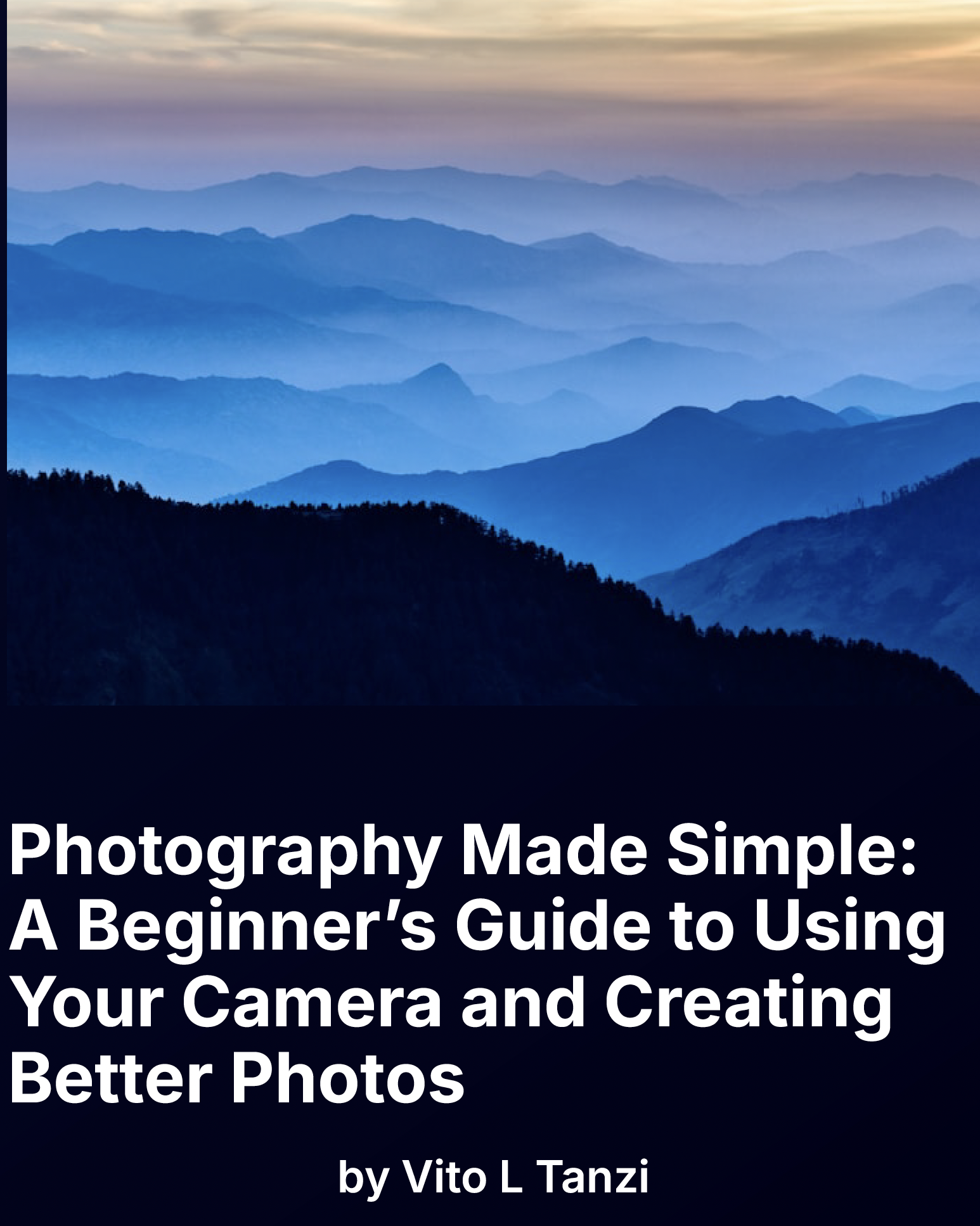
Finally—a beginner-friendly photography guide that makes sense.
If you've ever picked up a camera and thought, "Now what?" this is the book for you.
Photography Made Simple is written for adults who are just starting out and want a clear, encouraging, real-world approach to learning photography. Whether you're using a DSLR, mirrorless, or just your smartphone, this guide walks you through the basics—without the jargon or tech overwhelm.
Inside, you'll learn:
The only camera settings you really need to know to get started
How to shoot sharper, more intentional photos using light and composition
Simple tips for portraits, landscapes, travel, and everyday life
What gear you do (and don’t) need
How to create better photos without upgrading your camera
You’ll also get practical exercises, cheat sheets, and tips for organizing and editing your images—plus the confidence to shoot off Auto Mode for good.
This is not a textbook. It’s a friendly guide to seeing the world with fresh eyes—and finally capturing what you see the way you imagine it.
📸 Format: PDF download
Pages: 100+
Perfect for: Beginners, hobbyists, and anyone ready to take better photos without the stress